1. Beyond inflation targeting: assessing
the impacts and policy alternatives
Gerald Epstein and A. Erin� Y eldan 1
l. l
INTRODUCTION
Inflation targeting (IT) is the new orthodoxy of mainstream macroeco nomic thought. The approach has now been adopted by 24 central banks, and many more, including those in developing countries, are expressing serious interest in following suit. Initially adopted by New Zealand in 1990, the norms surrounding the IT regime have been so powerful that the central banks of both the industrialized and the developing economies alike have declared that maintaining price stability at the lowest possible rate of inflation is their only mandate. It was generally believed that price stability is a pre-condition for sustained growth and employment, and that 'high' inflation is damaging the economy in the long run.
In broad terms, the IT policy framework involves 'the public announce ment of inflation targets, coupled with a credible and accountable com mitment on the part of government policy authorities to the achievement of these targets' (Setterfiel<l, 2006, p. 653). As advocated, 'full fledged' inflation targeting consists of five components: absence of other nominal anchors, such as exchange rates or nominal GDP; an institutional com mitment to price stability; absence of fiscal dominance; policy (instrument) independence; and policy transparency and accountability (Bernanke et al., 1999; Mishkin and Schmi<lt-Hebbel, 2001, p.3). In practice, while few central banks reach the 'ideal' of being 'full fledged' inflation targeters, many others still focus on fighting inflation to the virtual exclusion of other goals.
For its proponents, the appropriate inflation target is typically pre scribed as maintaining price stability, though there is less agreement on the meaning of this term and on its precise measurement. Many prac titioners simply adopt the widely cited definition of Alan Greenspan, the former Governor of the US Fed, issued at the July 1996 meeting of the Federal Open Market Committee, a� ·a rate of inflation that is sufficiently low that households and businesses do not have to take it into account in
4 Beyond il1/latio11 tmxeti11K
making every day decisions'. For Feldstein ( 1997), however, price stability meant a long-run inflation rate or zero. In addition, IT is usually associ ated with appropriate changes in the central bank law that enhances the independence of the institution (Bernanke et al., 1999, p. 102; Mishkin and Schmidt-Hebbel, 2001, p. 8; see also Buiter, 2006 for an evaluation). Note that this promotion of central bank independence often is inconsistent with the above mentioned commitment to accountability, if by account ability, one means democratic accountability.
Ironically, employment creation has dropped off the direct agenda of most central banks just as the problems of global unemployment, under employment and poverty arc taking center stage as critical world issues (Heintz, 2006). The International Labour Organization (ILO) estimates that in 2003 approximately 186 million people were jobless, the highest level ever recorded ( l LO, 2004a). The employment to population ratio -a measure of unemployment-has fallen in the last decade, from 63.3 percent to 62.5 percent (ILO, 2004). And as the quantity of jobs relative to need has fallen, there is also a significant global problem with respect to the quality of jobs. The I LO estimates that 22 percent of the developing world's workers earn less than $1 a day and 1.4 billion ( or 57 percent of the devel oping world's workers) earn less than $2 a day. To reach the Millennium Development Goal of halving the share of working poor by 2015, sus tained, robust economic growth will be required. The 1 LO estimates that on average, real GDP growth has to be maintained at 4.7 percent per year to reduce the share of$ I a day poverty by half by 2015, and significantly more than that to reduce the share of $2 a day poverty by half.
Moreover, China's and India's opening up to the global markets and the collapse of the Soviet system together have added 1.5 billion new workers to the world's economically active population (Freeman, 2004, 2005; Akyuz, 2006). This means almost a doubling of the global labor force and a reduction of the global capital-labor ratio by half. Concomitant with the emergence of the developing countries in the global manufacturing trade, about 90 percent of the labor employed in world merchandise trade is low skilled and unskilled, suffering from marginalization and all too frequent violation of basic worker rights in informalized markets (see, for example, Akyuz, 2003, 2006; Akyuz et al., 2006).
Under these conditions, a large number of developing countries have suffered de-industrialization, serious informalization and consequent worsening of the position of wage-labor, resulting in a deterioration of income distribution and increased poverty. Many of these phenomena have occurred in tandem with the onset of neoliberal conditionalities� imposing rapid liberalization of trade and premature deregulation of the indigenous financial markets.
Impacts and policy alternative.I' 5 The key problem is that the ongoing 'financial globalization' appears primarily to redistribute shrinking investment funds and limited jobs across countries, rather than to accelerate capital accumulation across a global scale (Adelman and Yeldan, 2000; Akyuz, 2006). Simply put, the world economy is growing too slowly to generate sufficient jobs and it is allocating a smaller proportion of its income to fixed capital formation. Jn addition, asset price bubbles and crashes, with their attendant nnancial fall-c:nit are plaguing the system. Under these conditions,
it
OLlght to be clear that price stability, on its own, will not suflice to maintain macro economiL: stability, as it cannot suflice to secure financial stability and employment growth. In the words of Akyuz (2006, p. 46), 'the source <�/' nwcroeconomic instability now is not instability in product markets but asset markets, and the main challenge for policy makers i.,· not i,?flation, but unemployment and.financial instability' (emphasis added).Yet, surprisingly, despite a disappointing record, this almost single minded focus on commodity inflation is gaining a more secure foothold in monetary policy cirdes and the circles are widening to include an increasing number of developing countries. According to a recent report by the International Monetary Fund OMF), an increasing number of central banks in emerging markets are planning to adopt IT as their operating framework (llatini et
al., 2006; Table 1.1 ). An IM F staff survey of 88 non-industrial countries found that more than half expressed a desire to move to explicit or implicit quantitative inflation targets. More relevant to our concerns, nearly three quarters of these countries expressed an interest in moving to 'full-fledged' IT by 2010. To support and encourage this movement, the !MF is provid ing technical assistance to many of these countries and is willing to provide more (Table 1.1 and further discussion below). In addition, the IMF is considering altering its conditionality and monitoring structures to indude inflation targets. In short, despite little evidence concerning the success of IT in its promotion of economic growth, employment creation and poverty reduction, and mixed evidence at best that it actually reduces inflation itself, a substantial momentum is building up for full-fledged IT in developing countries. Promotion efforts by the IMF and Western-trained economists are at least partly responsible for this increasing popularity.
While it r;1ight seem obvious that stabilization focused monetary policy represents the only proper role for central banks, in fact looking at history casts serious doubt on this daim. Far from being the historical norm, in many of the successful currently developed countries, as well as in many developing countries in the post-Second World War period, pursuing development objectives was seen as a crucial part of the central banks' tasks (Epstein, 2007). Now, by contrast, development has dropped off the policy agenda of central banks in most developing countries.
6 /Jeyvnd fr1flali1>11 1argeLi11g
Tahle I.I lr!flation targeting countries: initial conditions and modalities
Developing countries IT Inflation Current Officially (in order of adoption) adoption rate at inflation declared
date start target policy
('Yr, per ('Y., per instrument
annum) annum)
Israel 1997Q2 8.5 1-3 headline 0/N
rate
Czech Rep. 1998Ql 13.1 J (+/-!) 2 week repo
Poland 1998Q4 9.9 2.5 (+/-!) 28 day
intervention
Brazil 1999Q2 3.J 4.5 ( +/--2) selie 0/N rate
Chile 1999Q3 2.9 2 . . 4 0/N rate
Colombia 1999Q3 9.J 5 ( +/-0.5) repo
South Africa 2000Ql 2.3 J-6
Thailand 2000Q2 1.7 0 -3.5 14 day repo
Korea 2001QI 3.2 2.5-3.5 0/N call rate
Mexico 2001QI 8.1 3 (+/-1) 91-day Cetes
Hungary 2001Q2 10.5 3.5 (+/--1) 2 week deposit
Peru 2002QI -0.8 2.5(+/-1)
The Philippines 2002QI 3.8 5 -6 reverse repo
Slovak Republic 2005Ql 3.2 3.5 (+/-!)
Indonesia 2005Q3 7.8 5.5 (+/. I) I-month SBJ
Romania 2005Q3 8.8 7.5(+/-I)
Turkey·• 2006QI 7.8 5 ( +/-2) CB 0/N rate
Turkey" 2001Q2 82.0 n.a CB net
domestic assets
Industrial Countries
New Zealnnd 1990QI 7.0 1-3 cash rate
Canada 199JQI 6.2 j •. 3 0/N funding
rate
United Kingdom 1992Q4 3.6 2 repo
Sweden 1993QI 4.8 2 (+/-1) repo
Australia 1993Q2 1.9 2-3 cash rate
Iceland 2001QI 3.9 2.5
Norway 2001Ql 3.7 2.5
Candidate Countries
Costa Rica. Egypt, Near Term
Ukraine (I 2 years)
Albania. Armenia, Medium
Botswana, Term 0 -5
lmp(l(.:/s mu/ policy alternatives Table I. 1 (continued) Rep., Gutemala, Mauritius, Uganda, Angola, Azerbaijan, Georgia, Moldova, Serbia, Sri Lanka, Vietnam, Zambia Belarus, China, Kenya, Kyrgyz Rep., Moldova, Serbia,
Sri Lanka, Vietnam, Zambia
Bolivia, Honduras, Nigeria, Papua New Guinea, Sudan, Tunisia, Uruguay, Venezuela Notes: Medium Term (J-5 years) Long Term (> 5 years)
a. Oflicial adoption datt: for Turkey.
7
b. Turkish ccntrnl bm1k declared 'disguised inOation targeting' in the aftermath or the 2001
February crisis. So11rce: 13atini et al. (2006).
The theme of this book is that modern central banking ought to have more policy space in balancing out various objectives and instruments. In particular, employment creation, poverty reduction and more rapid economic growth should join inflation stabilization and stabilization more generally as key goals of central bank policy. In introducing this volume, this chapters outlines why a shift away from IT, the increasingly fashion able, but problematic approach to central bank policies, and a move toward a more balanced approach is both desirable and feasible.
The rest of the chapter is organized as follows. In the next section, we briefly survey the macroeconomic record of IT and its current structure. Section 1.3 focuses on the role of the exchange rate as one of the key macro prices, and discusses alternative theories of its determination. We also make remarks on the issue of IT in the context of the so-called 'trilemma' of monetary policy. In Section 1.4 we discuss various alternatives to infla tion focused central banks, concentrating on the results of a multi-country research project undertaken with the support of UN-DESA, among other organizations. This section shows that there are viable, socially productive
8 Beyond i11/fa1io11 1wxe1i11K
alternatives to IT, including those that focus on employment generation, and makes the case that these alternatives should be further developed. Section 1.5 concludes the chapter.
l .2 MACROECONOMIC RECORD OF IN FLATION
TARGETING
Much of the existing literature on the record of IT has focused mostly on whether systemic risks and accompanying volatility has been reduced in the IT economies, and whether inflation has come down actually in response to adoption of the framework itself or due to a set of 'exogenously welcome' factors. On the one side, there is a fair amount of agreement that IT has been associated with reductions in inflation. Furthermore, exchange rate pass-through effects were reportedly reduced and consumer prices have become less prone to shocks (Edwards, 2005; Mishkin and Schmidt Hebbel, 2001 ). Yet existing evidence also suggests that IT has not yielded inflation below the levels attained by the industrial non-targeters that have adopted other monetary regimes (Ball and Sheridan, 2003; Mishkin and Scmidt-Hcbbel, 2001; Roger and Stone, 2005). Moreover, even if domestic monetary policy has reduced inflation, the hoped for gains in economic growth and employment have, generally, not materialized.
On the 'qualitative' policy front, it is generally argued that with the onset of central bank independence, communication and transparency have improved and that the central banks have become more 'account able'. Yet in practice, 'central bank independence' means that central banks have become less accountable to their governments, and, arguably, more accountable to financial elites and international organizations such as the IMF.
Moreover, little is known about the true costs of IT on potential output growth, employment, and on incidence of poverty and income distri bution. Bernanke et al. ( 1999) and Epstein (2007), for instance, report evidence that IT central banks do not reduce inflation at any lower cost than other countries' central banks in terms of foregone output. That is, IT does not appear to increase the credibility of central bank policy and therefore does not appear to reduce the sacrifice rati_s>(.Per contra, based on an econometric study of a large sample of inflation targeters and non targeters, Corbo et al. (200 I) concluded that sacrifice ratios have declined in the emerging market economies after adoption of IT. They also report that output volatility has fallen in both emerging and industrialized economies after adopting IT. This position is recently complemented by a study of the IMF economists, who, using a complex econometric model
lmpac/s ancl policy afremafives 9
and policy simulations, report findings that inflation targeting economies experience reductions in the volatility in inflation, without experiencing increased volatility in real variables such as real GDP (Batini et al., 2006). According to these estimates, IT central banks do enhance economic 'sta bility' relative to other monetary rules, such as pegged exchange rates and monetary rules.
However, in the assessments of 'stability', these papers do not consider the issue of the stability of asset prices, including exchange rates, stock prices and other financial asset pricey As we discuss further below, asset price stability may need to be included in a full analysis of the impact oflT on overall economic stability. Asset price stability aside, while intriguing, these results are only as strong as the simulation model on which they are based and are only as relevant as the relevance of the questions they pose. Moreover, they are only as broad as the alternatives they explore. On all these scores, these results are problematic. First, they do not simulate the impact of IT relative to other possible policy regimes, such as targeting the real exchange rate as discussed below. Second)he model is based on esti mates of potential output that are themselves affected by monetary policy (see, for example, Michl, 2007; Tobin, 1980). Hence, if monetary policy slows economic growth, it also lowers the rate or growth of potential output and, therefore, reduces the gap between the two, thereby appearing to stabilize the economy.
Equally, if not more important, is the practical problematique of setting the targeted rate of inflation itself. Even if the advocated requisites of the IT regime are taken for g,:�mted, it is not yet clear what the practically targeted rate of inflation should be. Even though there appears to be a consensus among the advocates of the IT regime that the inflation target has to be 'as low as possible', there is no theoretical justification of this assertion; and as such, it sounds more of a recommendation than a careful calculation. Most disturbing is the common belief that what is good for the industrialized/developed market economies should simply be repli cated by the developing countries as well. That this may not be the case is forcefully argued in Poll in and Zhu (2006). Based on their non-linear regression estimates of the relationship between inllation and economic growth for 80 countries over the period 196 1 -2000, Pollin and Zhu report that higher inflation is associated with moderate gains in GDP growth up to a roughly 15--18 percent inflation threshold. Furthermore they report that there is no justification for IT policies as they are currently being practiced throughout the middle-and low-income countries, that is, to maintain inflation with a 2 -4 percent band.
Moreover, we have other evidence on the negative consequences of monetary policy designed to produce extremely low levels of inflation in
10 Beyond i1!flatio11 Wrgeting
developing counlries. Braunslein and Heintz show that contractionary monetary policy used to fight inflation often has a differentially negative impact on the employment rates or women relative to men (Braunstein and Heintz, Chapter 5, this volume). Given the possible negative costs of IT on output and employment, there should be some direct survey evidence indicating people's preferences with respect to inflation and unemployment. While some studies have indicated that people have an absolute preference for low inflation, Arjun Jayadcv (Chapter 4, this volume) reports on survey results asking people in different countries and income levels what is their bigger concern, high inflation or high unemployment. His main result is that, in his sample, poorer people are concerned more about high unemployment than high inflation, while richer respondents have the opposite preferences. Hence, concerns over employment and inflation probably have an important class dimension to them, something that economists and historians have suspected for many years.
Finally, is the issue of the role or IT in the context of supply shocks, which periodically affect individual economies and, as we have seen recently, the world economy as a whole/Rigid IT rules can prove highly ( problematic in the context of supply shocks, where the main problem facing countries is too little supply, not too much demand/rhe solution is to help the economy absorb the loss of real income associated with the supply shock, without incurring collateral damage associated with greater income loss than absolutely necessary, while at the same time making the investments necessary to increase the supply of the key commodities or find substitutes for them over the medium term. Contractionary monetary policy is a decidedly highly inefficient tool for carrying out this complex task. This problem is exacerbated by rigid inflation targets and is only slightly ameliorated by the use of 'core inflation' indices which usually ostensibly exclude the first round costs or volatile energy and food prices. This is only a partial solution because in the medium term the increased costs of key commodities must filter their way through the input output structure and, even without real wage resistance on the part of workers which the central banks are presumably concerned with, will raise the core inflation rate temporarily. Hence, rigid adherence to IT in this context will lead to possibly large unnecessary costs in slower economic growth and mcome.
An overall picture on the selected macroeconomic indicators of the inflation targeters can be obtained from Tables 1.2 and 1.3. In Table I .2 we provide information on the observed behavior of selected macro aggregates as the annual average of five years before the adoption of the IT versus the annual average after the adoption date to the current period.
Impacts and policy alternatives 1 1
Table 1.3 keeps the same calendar frames and reports data on key macro prices, viz. the exchange rate and the interest rates.
Evidence on the growth performance of the IT countries is mixed. Taking the numbers of Table 1.2 at face value, we see that seven of the 21 countries report a decline in the average annual rate of real growth, while three countries (Canada, Hungary and Thailand) have not experienced much of a shift in their rates of growth. Yet clearly it is quite hard to dis entangle the effects of the IT regime from other direct and indirect effects on growth. One such factor is the recent financial glut in the global asset markets and the associated surge of the household deficit spending bubble, which is now bursting. The Institute oflnternational Finance data reveal, for instance, that the net capital inflows to the developing economics as a whole has increased from $47 billion in 1998, to almost $400 billion in 2006, surpassing their peak before the Asian crisis of 1997. As the exces sive capital accumulation in telecommunications and the dot.corn high tech industries phased out in late 1990s, the global financial markets seem to have entered another phase of expansion, and external effects such as these make it hard to isolate the growth impacts of the IT regimes.
Despite the inconclusive verdict on the growth front, the figures on unem
ployment indicate a significant increase in the post-IT era. Only three coun tries on our list (Chile, Mexico and Switzerland) report a modest decline in their rates of unemployment in comparison to the pre-IT averages. The deterioration of employment performance is especially pronounced (and puzzling) in countries such as the Philippines, Peru and Turkey where rapid growth rates were attained. The increased severity of unemployment at the global scale seems to have affected the IT countries equally strongly, and the theoretical expectation that 'price stability would bring growth and employment in the long run' seems quite far from materializing yet.
The adjustment patterns on the balance of foreign trade have been equally diverse. Ten of the 21 countries in Table 1.2 achieved higher (improved) trade surpluses (balances). While there have been large deficit countries, such as Turkey, Mexico, the Philippines and Australia, there were also sizable surplus generators such as Brazil, Korea, Thailand, Canada and Sweden. Not surprisingly much of the behavior of the trade balance could be explained by the extent of over-valuation of the exchange ratcs,,/fhis information is tabulated in Table 1.3.
Thble 1.3, like Table 1.2, calculates the annual averages of the five-year period before the IT versus annual averages after IT to date. Focusing on the inflation-adjusted real exchange rate movements, we find a general tendency towards appreciated currencies in the aftermath of adoption of the IT regimes. Mexico, Indonesia, Korea and Turkey are the most significant currency appreciating countries, while Brazil, and to some
l 2 Beyond in.flatio11 targeting
Tahle 1.2 Selected macroeconomic aggregates in the ir!/lation targeting countries
l.leforc : Annual average of 5 years prior to adoption or IT: After : Annu,11 average or adoption of IT to current
Growth Unemploy- Trade Balance Central bank rate ment rate (external foreign Tl'Servcs
balance on (US$ Million)
goods and services) IGDP ('V.,)
Year IT Before After Before After Before After Before After started New Zealand 1990 2.7 3.0 4.2 6.9 0.4 1.3 2897.9 4623.2 Canada 1991 2.9 2.8 8.4 8.7 0.5 2.7 1 1 964.0 24256.0 United Kingdom 1992 2.2 2.7 7.4 5.2 -2.5 -1.6 39666.5 37408.5 Sweden 1993 0.8 2.7 2.8 6.1 1.3 6.2 15 399.0 18521.8 Australia 1994 2.2 3.9 8.6 7.3 -0.6 .. 1.3 13 777.9 20337.1 Israel 1997 5.8 3.1 8.5 9.4 14.6 - 7.2 7 567.3 24421. l Czech Rep:' 1998 4.5 3.2 4.0 8.9 -3.4 -1.8 9 1 72.5 2 1 686.5 Poland 1998 7.9 3.7 14.3 16.7 0.0 -4.1 1 2 591.8 3 1 58 1 .8 Urazilh 1999 3.2 2.3 7.0 9.8 I. 7 1.0 47701.3 42304.5 Colombia 1999 3.3 2.3 1 1 . l 15.8 6.0 0.5 7 567.3 24421.1 Mexico 1999 1.7 4.8 2.7 1.9 · 0.5 -1.9 20630.9 51 396.6
South Africa•· 2000 2.6 3.8 n.a 27.7 0.0 0.0 15860.0 9580.0 Switzerland 2000 1.4 1.7 4.1 3.1 0.1 0.1 38 277. l 40646.5 Thailand 2000 1.5 1.7 1.9 2.4 0.0 0.1 32556.l 40474.8 Korea 2001 4.6 4.5 4.4 3.7 0.0 0.0 55299.5 157739.2 Hungary 2001 4.2 4.2 8.0 6.1 -1.3 2.9 9918.1 13652.1 Peru" 2002 2.0 5.2 7.8 I0.2 -3.2 -0.4 9264.8 1 1 222.9 Philippines 2002 3.1 5.1 10.2 1 1 .5 3.6 -0.7 1 1 281.6 14006.6 Indonesia 2005 4.6 5.6 6.5 10.3 7.3 4.6 3 1 326.7 32989.2 Turkey• 2006 4.5 7.8 9.9 10.4 -9.8 1 1.0 33 237.4 56990.4 Turkcy• 2001Q2 4.0 4.5 6.6 10.0 •7.5 9.8 20083.4 33 237.4 Not<'s:
a. The period before the inOation targeting refer.; to the period of 1994 97 for 'Growth' and 'CPI innation· for the Czech Republic.
b. The period before the inllation targeting refers to the period or 1996 .. 98 for reserves in Brazil.
c. The period before the inflation targeting refers to the period of 1994- 9 7 and after infla-tion targeting refers to the period or 1999-2004 for unemployment rate in South Africa. Note that due to change in methodology anc.l data coverage, unemployment figures arc not directly comparable before anc.l after aparthc.:id.
d. The period after the inflation targeting refers to the period of200'.l-·04 for unemployment rate in Peru.
c. Ollicial adoption date for Turkey is 2006. However, Turkish central bank declared 'c.lis-guised inllation targcting· in the aftermath of the 2001 February crisis.
/111pal"ls and policy altematives
Tahle /.3 Macroeconomic prices in the inflation targeting countri('s Bcrorc: Annual average of 5 years prior 10 adoption or IT: After: Annual average or adoption of IT lo current
1 3
Inflation rate l<�xchangc CB real Public
(variations rate real interest assets reul in CPI) dcpreciationg,I' ratc"·i interest nitc•J Year IT Before Arter Before After Before After Before After
started New Zealand 1990 1 1 .6 2.2 -7.6 0.6 7.0 5.5 2.1 5.1 Chile' 1991 19.7 7.2 -6.0 -4.0 0.0 16.0 -4.6 Canada 1991 4.5 2.1 7.5 -1.7 6.0 2.6 5.8 2.5 United Kingdom 1992 6.4 2.6 --2.4 2.2 5.4 3.0 5.0 2.8 Sweden 1993 6.9 1.5 8.5 1.2 2.8 1.7 5.0 2.9 Australia" 1994 4.2 2.5 -6.9 - 1 . I 7.1 3.2 6.3 4.0 Israel 1997 I 1.3 3.1 -4.2 0.9 2.0 5.0 1.5 5.0 Cwch Republic' 1998 9.1 3.1 -6.6 -6.2 1.9 0.7 0.0 0.9 Poland" 1998 24.1 4.7 ··4.5 -4.6 1.6 6.2 1.8 I 1.6 Brazil 1999 819.2 7.9 -428.0 5.5 -782.6 15.7 -786.9 12.4 Colombia 1999 20.4 7.5 ,9.5 0.5 18.4 6.6 1.5 2.0 Mexico 1999 24.5 7.2 2.8 4.6 7.5 5.0 3.2 3.8 Thailand 2000 5.1 2.2 4.5 -1.0 4.9 1.6 4.7 3.1 South Africa" 200() 7.3 5.1 4.3 - 2 . 5 8.6 4.4 7.3 4.2 Switzerland 2000 0.8 1.0 1.6 - - 3.7 0.2 0.1 0.9 0.3 Korea 2001 4.0 3.3 6.0 -5.0 - 0 . 2 -1.0 6.5 2.1 Hungary 2001 15.2 5.9 2.5 ,12.4 2.0 3.4 2.3 3.4 Peru 2002 5.0 I . 9 -1.6 1.4 9.3 2.0 3.8 · 0.5 Philippines 2002 6.3 5.0 8.7 - 3 . 0 5.1 0.9 5.2 1.2 Indonesia 2005 8.0 10.5 6.2 --1 .9 4.2 2.3 4.1 -2.4 Turkey' 2006 28.3 10.5 --6.3 -1.2 1 1 .7 7.5 14.8 10.5 Turkey' 2001Q2 74.1 28.3 -9.9 -6.3 -13.3 12.7 23.9 15.5 Noll's:
a. The period after the inna1ion targeting period refers 10 the period of 1993--2005; the period before the inOation targeting refers to the period or 1 987--90.
b. Treasury llill: the period after the inOa1ion targeting refers to the period of 1994 2000; CB Rate: the period after the inflation targeting refers to the period of 1994 ,95.
c. The period before the inflation targeting refers to lhc period of 1994--97.
d. Treasury Bill rates; the period after the inflation targeting refers to the period or 1 998 -2000. e. Treasury Bill: the period before the inflation targeting refers to the period of 1994-2000. f. Ollicial adoption date for Turkey is 2006. However. Turkish central bank declared
·dis-guiscd inllation targeting' in the aftermath of the 200 I February crisis.
g. A rise in value indicates depreciation. Annual average market rate is used for: UK, Canada, Turkey, Australia, New Zealand. Brazil, Peru, Israel, Indonesia, Korea and Philippines. Annual average Ollkial Rate is used for: Colombia, Thailand, Hungary, Poland and Switzerland. Principle rate is used for: South Africa, Mexico and Czech Republic.
14 Beyond il1/lution targeting Tahle 1.3 (continued)
h. Nominal values arc dcllatcd by the corresponding inllation averages (CPI column). i. Sweden, New Zealand, Canada: 13ank Rate; Mexico: 13anker's Acceptunce.
j. Colombia: lnterbankaria TBS; Peru and Chile: Saving Rate; New Zealand Newly issued three months Treasury bill rah:s; Indonesia: three Months Deposit Rate: Korea: Natio11.1I Housing Bond Rate; Thailand: Government Bond Yield Rate.
Source•: IM F (2008).
extent Columbia, have pursued active export promotion strategies and maintained real depreciation; The Czech Republic, Switzerland and Hungary are observed to have experienced nominal currency apprecia tion, and Poland seems to have maintained an appreciating path for its real exchange rate.
Clearly much of this generalized trend towards appreciation can be explained by reference to the increased expansion or foreign capital inflows due to the global financial glut mentioned above. With the IT central bankers announcing a 'no-action' stance against exchange rate movements led by the 'markets', a period of expansion in the global asset markets has generated strong tendencies for currency appreciation. What is puzzling, however, is the rapid and very significant expansion in the foreign exchange reserves reported by the IT central banky As reported in the last two columns of Table 1.2, foreign exchange reserves held at the central banks rose significantly in the aftermath or the IT regimes. The rise or reserves was especially pronounced in Korea, the Philippines and Israel where almost a five-fold increase had been witnessed. Of all the countries surveyed in Table 1.3, the UK and Brazil are the only two countries that had experienced a fall in their aggregate reserves.'
This phenomenon is puzzling because the well-celebrated 'flexibility' of the exchange rate regimes were advocated precisely with the argument that, under the IT framework, the central banks would gain freedom in their monetary policies and would no longer need to hold reserves to defend a targeted rate of exchange. ln the absence of any ofticially stated exchange rate target, the need for holding such sums of foreign reserves at the central banks should have been minimal. The proponents of the IT regimes argue that the central banks need to hold reserves to 'maintain price stability against possible shocks'. Yet, the acclaimed 'defense of price stability' at the expense of such large and costly funds that arc virtually kept idle at the IT central banks' reserves is questionable at best in an era of prolonged unemployment and slow investment growty.' and needs to be justified economically as well as socially.
Impacts mul policy alternative.1·
l . 3 THE ROLE OF THE EXCHANGE RATE UNDER
I N FLATION TARGETING
1 5
As stated above, part of the broader requirements surrounding the IT system is often argued to be the implementation of a 'floating/flexible' exchange rate system in the context of free mobility or capital. Thus, 'exchange rate flexibility and floating exchange rate system' became the new motto, and to many advocates, central bank 'policy' has typically been reduced to mean merely 'setting the policy interest rate'. The exchange rate and macro prices are, in theory at least, thereby left to the unfettered workings of the global finance markets. The role of the exchange rate as an adjustment variable has clearly increased over the last decade since the adoption of the floating exchange rate systems. In the meantime, however, the role of the interest rates and reserve movements has declined substan tially as counter-cyclical instruments available to be used against shocks4 (see Table 1.2).
Against this background a number of practical and conceptual ques tions are inevitable: what is the role of the exchange rate in the overall macroeconomic policy when an explicit IT regime is adopted? Under what conditions should the central bank, or any other authority, react to shocks in the foreign exchange market? And perhaps more importantly, if an intervention in the foreign exchange market is regarded necessary against, say, the disruptive effects of an external shock, what are the proper instruments?
To the proponents of IT, the answer to these questions is simple and straightforward: the central bank should not have any objective in mind with regards to the level of the exchange rate, yet it might interfere against the volatility of the exchange rate in so far as it affects the stability of prices. However nuances remain. To what may be grouped under 'strict conformists', the central bank should be concerned with the exchange rate only if it affects its ability to forecast and target price inflation. Any other response to the foreign exchange market represents a departure from the IT system. Advocated in the seminal works by Bernanke et al. ( 1999) and
Fischer (200 I), the approach argues that attending to IT and reacting to the exchange rate are mutually exclusive. Beyond this assertion, the con fonnist view also holds that intervention in the foreign exchange market could confuse the public regarding the ultimate objective of the central bank with respect to its priorities, distorting expectations. In a world of credibility game, such signals would be detrimental to the central bank's authority.
Yet, while maintaining the IT objective, one can also distil! a more active role for the exchange rate in the literature. As outlined by Debelle
1 6 Beyond i11/lario11 wrgering
(200 I), this 'flexible IT' view proposes that the exchange rate can also be a legitimate policy objective alongside the inflation target. More formally, an operational framework for the 'flexible IT' view was envisaged within an expanded Taylor rule.;faylor (2000) argued, for instance, that an exchange rate policy rule can legitimately be embedded in a Taylor rule that is consistent with the broad objectives of targeted inflation rate and the output gap.
In contrast to all this, the structuralist tradition asserts that irrespective of the conditionalities of foreign capital and boundaries of IT, it is very import ant for the developing economies to maintain a stable and competitive real exchange rate (SCRER) (see, for example, Cordero, Chapter 3, this volume; Frenkel and Taylor, Chapter 2, this volume; Galindo and Ros, Chapter 8, this volume; Frenkel and Ros, 2006; Frenkel and Rapetti, Chapter 9, this volume). They argue that the real exchange rate can affect employment, and the economy more generally, through a number of channels: (I) by affecting the level of aggregate demand (the macroeconomic channel); (2) by affecting the cost of labor relative to other goods and thereby affecting the amount of labor hired per unit of output (the labor intensity channel); and (3) by affecting employment through its impact on investment and eco nomic growth (the development channel). While the size and even direction of these channel effects might differ from country to countr;!tnaintaining a competitive and stable real exchange rate is likely to have a positive employ ment impaihrough some combination of these effects.
The gist of the structuralist case for SCRER rests on a recent (and unfortunately not well understood or appreciated) paper by Taylor (2004). Resting his arguments on the system of social accounting ident ities, Taylor argues that the exchange rate cannot be regarded as a simple 'price' determined by temporary macro equilibrium conditions. The main stream case for exchange rate determination rests on the well-celebrated Mundell (1963) and Fleming ( 1962) model where the model rests on an assumed duality between reserves (fixed exchange rate system) versus flexible exchange rate adjustments. The orthodox mainstream model, according to Taylor, presupposes that a balance of payments exists with a potential disequilibrium that has to be cleared. This, however, is a false presumption. The exchange rate is not an 'independent' price and has no fundamentals such as a given real rate of return (or a trade deficit) that can make it self-stabilizing. In Taylor's words, 'the balance of payments is at most an accumulation rule for net foreign assets and has no independent status as an equilibrium condition. The Mundell-Fleming duality is irrel evant, and in temporary equilibrium, the exchange rate does not depend on how a country operates its monetary (especially international reserve) policy' (Taylor, 2004, p. 212).
lmpatts and policy a/ternatil'c:s 17 The preceding discussions clearly underscore that the real world behav ior of exchange rates is quite complex and the focus of the inflation target ing regime for Boating exchange rates (in expectation of dropping it from the policy agenda altogether) is a mirage. This view of exchange rates helps to explain why many believe that there arc no viable alternatives to IT as a mode of central bank policy. However, as this book tries to demonstrate, and as we brief1y discuss in the next section, this view or no viable alterna tives to inflation targeting is not correct.
1 .4 SOCIALLY RESPONSIBLE ALTERNATIVES TO
INFLATION TARGETING CENTRAL BANK
POLICIES
One reason that 'inf1ation-focused monetary policy' has gained so many adherents is the common perception that there is no viable alternative monetary policy that can improve growth and employment prospects. There are two main factors accounting for this perception. First, as we dis cussed in the previous section, in an internationally financially integrated economy with high levels of international capital flows, monetary policy can be extremely challenging. In particular it might be very diflicult to gear monetary policy by targeting monetary aggregates, or by pegging an exchange rate along with trying to promote employment growth. This is often seen as the so-called 'trilemma' which commands that central banks can only have two out of three of the following: open capital markets, a fixed exchange rate system and an autonomous monetary policy geared toward domestic goals. While this so-called 'trilemma' is not strictly true as a theoretical matter, in practice it does raise serious issues of mon etary management (see the above arguments cited from Taylor, 2004 and Frenkel and Taylor, 2006). From our perspective, the real crux or the problem turns out to be the very narrow interpretation of the constraints of the trilemma: central banks are often thought to be restricted to choose two 'points' out of three. Yet, the constraints of the trilemma could as well be regarded as the boundaries of a continuous set of policies, as would emerge out or a bounded, yet continuous depiction of a 'policy triangle'. Thus even within the boundaries or the trilemma a menu of choices does exist, ranging from administered exchange rate regimes to capital manage ment/control techniques. In fact, many successl'ul developing countries have used a variety of capital management techniques to manage these flows in order, among other things, to help them escape the rigid con straints of the so-called 'tri-lemrna' (Epstein et al., 2005; Ocampo, 2002).
1 8 B<iyond infla1io11 twxeti11J;
team of researchers working on a Political Economy Research Institute
(PERI) (University of Massachusetts, Amherst)/Bilkent project on alter natives to inflation targeting, as well as a United Nations Development Programme (UNDP) sponsored study of employment t!trgeting economic policy for South Africa. A range of alternatives were developed by the researchers, all the way from modest changes in the IT framework to allow for more focus on exchange rates and a change in the index of infla tion used, lo a much broader change in the overall mandate of the central bank to a focus on employment targeting, rather than IT. Some of the alternative policies focus exclusively on changes in central bank policy, while for other countries changes in the broad policy framework and in the interactions of monetary, financial and fiscal policy are proposed. Some incorporate explicit goals and targets, while others prefer more flexibility and somewhat Jess transparency.
It has to be noted at the outset that 'inflation control' is revealed among the ultimate objectives in all country studies summarized below. Thus there is a clear consensus among the country authors that controlling inflation is important and desirable. However all agree that the current prescription insisting on 'very low' rates of inflation at the 2-4 percent band is not warranted, and that responsibilities of the central banks, par ticularly in developing countries, must be broader than that. Accordingly, the policy matrix of the central banks shculd include other crucial 'real' variables that have a direct impact on employment, poverty and economic growth, such as the real exchange rate and/or investment allocation. They also agree that in many cases, central banks must broaden their available policy tools to allow them to reach multiple goals, including, if necessary, the implementation of capital management techniques.
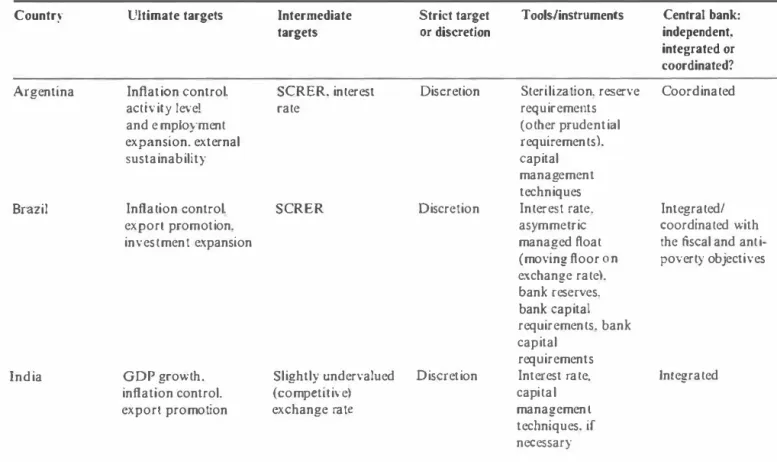
Table 1.4 presents a summary of the alternatives proposed in the PERI/
Bilkent project and is discussed further in what follows.
1.4.1 Modest but Socially Responsible Adjustments to the Inflation
Targeting Regime
Some of the country studies in the PERI/Bilkent project proposed only modest changes to the IT regime. In the case of Mexico, for example, the authors argue that the IT regime has allowed for more flexible monetary policy than had occurred under regimes with strict monetary targets or strict exchange rate targets (Galindo and Ros, Chapter 8, this volume). They suggest modifying the IT framework to make it somewhat more employment friendly. In the case or Mexico, Galindo and Ros find that monetary policy was asymmetric with respect to exchange rate movements - tightening when exchange rates depreciated, but not loosening when
Table 1.4 PER!/ Bilkent a/tematires to inflation targeting project. su111111ar_r of policy reco111mendations
Countr:r Ultimate targets Intermediate Strict target Tools/instruments Central bank:
targets or discretion independent,
integrated or coordinated?
Argentina Inflation control. SCRER. interest Discretion Sterilization. reserve Coordinated
activity level rate requirements
and employment (other prudential
expansion. external requirements).
sustainability capital
management techniques
-
Brazil Inflation control. SCRER Discretion Interest rate . Integrated/'C
export promotion. asymmetric coordinated with
investment expansion managed float the fiscal and
anti-(moving floor on poverty objectives exchange rate). bank reserves. bank capital requirements. bank capital requirements
India GDP growth. Slightly undervalued Discretion Interest rate. Integrated
inflation control. (competitive) capital
export promotion exchange rate management
techniques. if
Table 1.4 (continued)
Country Ultimate targets Intermediate Strict target Tools/instruments Central bank:
targets or discretion independent,
integrated or
coordinated?
Mexico Inflation. SCRER Implementation of Discretion Capital management Integrated
'domestic· inflation techniques
measure. SCRER, 'sliding floor· on exchange rate
South Africa Employment Real GDP growth Strict Interest rate: Integrated
"-' generation. inflation employment credit allocation
;:::, control target techniques (e.g.
(coordinated asset-based reserve
with other requirements. loan
institutions), guarantees etc.),
looser capital management
inflation techniques
constraint
Turkey Inflation control; Real interest rate. Discretion Capital management Integrated/
employment non-appreciated techniques if coordinated
generation: solvency exchange rate necessary. labor-tax with the fiscal
of public debt: reform. increased and employment
consolidate and public investments objectives
expand social in social capital
'" .._ Philippines Vietnam Inflation control; solvency of public debt Incomes growth, export promotion. inflation control SCRER SCRER Discretion Discretion
Interest rate. capital management techniques. prudential supervision of banks, targeted credit; incomes policies
Interest rate. capital management techniques . prudential supervision of banks, targeted credit. incomes policies Integrated Integrated
Note: SCRER: Stable and Competitive Real Exchange Rate: Central Banks: integrated means integrated into governmental macroeconomic policy making framework: coordinated means independent but committed to close coordination with other macroeconomic policy making institutions.
22 Beyond i11flation tarK<:lillK
exchange rates appreciated. This lent a bias in favor of an over-valued exchange rate in Mexicq;: ·so they propose a 'neutral' monetary policy so that the central bank or" Mexico responds symmetrically to exchange rate movements and thereby avoids the bias toward over-valuation without fundamentally changing the IT framework. In their own words, 'the central bank would promote a competitive exchange rate by establishing a sliding floor to the exchange rate in order to prevent excessive appreciation (an "asymmetric band'' . . . ). This would imply intervening in the foreign exchange market at times when the exchange rate hits the 11oor (i.e. an appreciated exchange rate) but allows the exchange rate to float freely otherwise'. They point out that such a floor would work against excessive capital inflows by speculators because they would know the central bank will intervene to stop excessive appreciation. lf need be, Galindo and Ros also propose temporary capital controls, as do some of the other authors from the PERI/Bilkent project.
In his study of Brazil Nelson Barbosa-Filho 2008 Chapter 7, (this volume) also proposed extending the IT framework, but in a more dra matic way. According to Barbosa-Filho: 'because of Brazil's past experi ence with high inflation, the best policy is to continue to target inflation while the economy moves to a more stable macroeconomic situation. However, the crucial question is not to eliminate inflation targeting, but actually make it compatible with fast income growth and a stable public and foreign finance'.
Given Brazil's large public debt, Barbosa-Filho proposes that the tar geted reduction in the real interest rate would reduce the Brazilian debt service burdens and help increase productive investment. In terms of the familiar targets and instruments framework, he proposes that the Brazilian central bank choose exports, inflation and investment as ultimate targets, and focus on the inflation rate, a competitive and stable real exchange rate and the real interest rate as intermediate targets. Furthermore, in order to achieve these goals, the central bank can use direct manipulation of the policy interest rate, bank reserve requirements and bank capital requirements.
Brazil is not the only highly indebted country in our project sample. Turkey is another case with that problem. Here too the authors raise con cerns to the conformist straightjacket of IT, and develop an alternative macroeconomic framework. Using a financial-linked computable general equilibrium model (CGE) for the case of Turkey, Telli et al. (Chapter 10, this volume) illustrate the real and financial sectorial adjustments of' the Turkish economy under the conditionalities of the twin targets: on primary surplus to GNP ratio and on the inflation rate. They utilize their model to study the impact of a shift in policy from a strict IT regime, to
Impacts and policy altematives 23
one that calls for revisions of the primary fiscal surplus targets in favor of a more relaxed liscal stance on public investments on social capital, together with a direct focus on the competitiveness or the real exchange rate. They further study the macroeconomics of a labor tax reform imple mented through reduction of the payroll tax burden on the producers, and an active monetary policy stance via reduction or the central bank's interest rates. They report significant employment gains due to a policy of lower employment taxes. They also find that the economy's response to the reduction of the central bank's interest rate is positive in general; yet very much dependent on the path of the real exchange rate, thus they also call for maintaining a stable real exchange rate path a la Frenkel, Ros and Taylor.
Frenkel and Rapetti (Chapter 9, this volume), in the case of Argentina, show that targeting a stable and competitive real exchange rate has been very successful in helping to maintain more rapid economic growth and employment generation. In the case of India, Jha (Chapter 12, this volume) also argues against an IT regime, and in favor of one that 'errs on the side of undervaluation of the exchange rate' with possible help from temporary resort to capital controls. Jha argues that, to some extent, such a policy would be a simple continuation of policies undertaken in India in the past. In Vietnam Packard concludes: 'a strict inflation targeting regime is not appropriate for Vietnam. Inflation targeting's rigid rules constrain policy makers to operate in a framework that requires inflation to take priority over more pressing development objectives. Thus, a stable and competitive real exchange rate is a superior alternative, precisely because it sets as a target a key macroeconomic relative price that is realistic, sustain able and growth enhancing' (Packard, Chapter 14, this volume).
1 .4.2 More Comprehensive Alternatives to Inflation Targeting
Other country case studies propose more comprehensive policy alterna tives to simple inflation-focused monetary policy, including IT. Joseph Lim (Chapter 13, this volume) proposes a comprehensive alternative to IT for the case of the Philippines. He argues that the Philippines' govern ment has been seeking to achieve a record of dramatically higher economic growth, but that its monetary policy has been inadequate to achieving that goal. He therefore proposes an 'alternative' that 'clearly dictates much more than just a move from monetary targeting to inflation targeting' with the following proposals: (I) Maintenance of a competitive real exchange rate, either by pegging the exchange rate or intensively managing it as in South Korea. (2) Implementation of capital management techniques, as in China and Malaysia, to help manage the exchange rates. This should
24 Beyond infla1io11 1wxeting
include strong financial supervision to prevent excessive undertaking or short-term foreign debt, and tax based capital controls on short-term capital flows, as was used, for example in Chile. (3) An explicit statement of output and employment goals, as the central bank transits from a purely IT regime. (4) Incomes and anti-monopoly policies to limit infla tion to moderate levels. (5) Targeted credit programs, especially for export oriented and small and medium sized enterprises that can contribute to productivity growth and employment.
These policy proposals in broad outlines are similar to those proposed
by Epstein (Chapter 1 1 , this volume) for the case or South Africa, which,
in turn, have been developed in a much broader framework and in more detail by Pollin et al. (2006). Pollin et al. developed an 'employment targeted economic program' designed to accomplish this goal, with a focus on monetary policy, credit policy, capital management techniques, fiscal policy and industrial policy. The purpose of the program is to reduce unemployment rate by half in line with the government's pledge to reduce
the official unemployment rate to 13 percent by 2014.5 Here, 'employment
targeting' replaces IT as the proposed operating principle behind central bank policy, and moderate inflatiqn becomes an additional formal con straint which the central bank must take into account when formulating its policies.
1 . 5 CONCLUDING COMMENTS
In this introductory chapter we have argued that the current day ortho doxy of central banking - · namely, that the top priority goal for central
banks is to keep inflation in the low single digits -is, in general, neither
optimal nor desirab!Vfhis orthodoxy is based on several false premises: l
first, that inflation, in any magnitude, has high costs; second, that in a low inflation environment economies will naturally perform best, and in particular, will generate high levels of economic growth and employment; and third, that there are no viable alternatives to this 'inflation-focused' monetary policy.
In fact, moderate rates of inflation episodes reveal to have very low or no costs; and whether countries where central banks have adopted formal or informal IT have not performed better in terms of economic growth or employment generation is a matter of dispute. Per contra, there are viable alternatives to IT, historically, currently, and looking forward.
Historically, countries both in the currently developed and develop ing worlds had central banks with multiple goals and tools, and pursued broad developmental as well as stabilization goals. Currently, very
Impacts and policy alternatives 25
successful economies such as Argentina, China and India have central banks that are using a broad array of tools to manage their economies for developmental purposes. And looking forward, the PERI/Bilkent project on alternatives to IT and PERl's UNDP work on South Africa have developed an array of 'real targeting' approaches lo central banking which we believe are viable alternatives to IT and, in particular, do a better job than mere IT in balancing the developmental and stabilization functions of central banks.
NOTES
1. We arc indebted to Hasan Comer!, Luis Rosero and Lynda Pickbourn for their diligent research assistance. and to Roberto Frenkel. Jose Antonio Ocampo, K.S. Jomo, Geoffrey Woglom, Rcfet Giirkaymtk. James Heintz. Leonce Ndikumana, Arjun Jayadev and Robert Pollin for their valuable comments and suggestions on previous versions or the chapter. Research for this chapter was completed when Ycldan was a visiting Fulbright scholar al the University of Massachusctls, Amherst for which he acknowledges the generous support of the J. William Fulbright Foreign Scholarship Board and the hospitality of the Political Economy Research Institute al the University or Massachusetts, Amherst. We arc also grateful 10 the funders of the PER l/13ilkcnl
'Alternatives to Inflation Targeting' project, including UN-DESA. Ford Foundation, Rockefeller Brothers Fund and PERI for their support. Needless 10 mention. the views
expressed in the chapter are solely those of the authors and do not implicate in any way the institutions mentioned above.
2. Note that with the use of the term 'conditionality' here we refer not to the IMF's stand by rules in the narrow sense of balance or payments stabilization. but to the broader set of reforms and structural adjustment agenda as advocated by the international linancc community and the transnational corporations. Often dubbed as the (post-) Washington consensus, the warranted set of policies range from IT central banks and llexible foreign exchange markets 10 broader institutional reforms such as flexible labor markets, priva
tiiation and increased governance. See Williamson ( 1993) for the original deployment of the term, and Rodrik (2003) for further discussion.
3. 8ra1.il's case is actually explained in part by the recent decision (I.tic 2005) or the Lula government to close its debt arrears with the IMF with early payments out of its reserves.
4. Though note the one sided ever increase in the aggregate reserves of the central banks. The social desirability and economic optimality or this phenomenon in the aftermath of the udoption of floating exchange rate systems is another issue that warrants further research.
5. As of March 2005, South Africa had an unemployment rate of anywhere from 26 percent to 40 percent, depending on exactly how it is counted.
REFERENCES
Adelman, 1. and E. Yeldan (2000), 'The minimal conditions for a financial crisis: a multi-regional inter-temporal CGE model of the Asian crisis', World Development, 28 (6), 1087-100.
26 Beyond inflation targeting
Akyuz, Y. (2003), The De11eloping Countries and World 1iwle. Pe1jimnance and ProsJJects, London: ZED Books.
Akyuz, Y. (2006), 'From liberalization to investment and jobs: lost in transla tion', paper presented at the Carnegie Endowment for International Peace Conference, 14-15 April 2005, Washington, DC, pp.45--6.
Akyuz, Y., H. Flassback and R. Kozul-Wright (2006), 'Globalization, inequal ity and the labour market', in A. Kose, F. Senses and E. Yeldan (eds), Neoliberal Globali:utio11 as New Imperialism: Case Studies on Reconstruction 11/' the PeriJJhery, New York: NOV A Science.
(Ball, L. and N. Sheridan (2003), 'Docs inllation targeting mailer?', International Monetary Fund working paper no. 03/129.
Batini, N., P. Breuer, K . Kochhar and S . Roger (2006). 'lnllation targeting and the IMF', International Monetary Fund staff paper, Washington, DC, March.
Bernanke, 8.S., T. Laubach, A.S. Posen and F.S. Mishkin (1999), h//lMion Targeting: Lessonsjiwn the International Experience, Princeton, NJ: Princeton University Press.
Duiter, W. (2006), 'Rethinking inllation targeting and central bank independence', paper presented at the Turkish Economic Association Conference, Ankara. September.
Corbo, V., 0. Landerretche and K. Schmidt-Hebbel (200 I), 'Does inflation target ing make a difference? Central Bank of Chile working paper no. I 06, accessed 15 January 2007 at www.bcentral .cl/Estudios/DTBC/doctrab.htm.
Debelle, G. (2001), 'The case for inflation targeting in East Asian countries', in Future Directio11s/i1r Mo11ewry Policies in East Asia, Sydney: Reserve Bank of Australia, pp. 65-87.
Edwards, S. (2005), 'The relationship between exchange rates and inflation tar geting revisited', National Bureau of Economic Research, working paper no. Wl 2163.
Epstein, G., I. Grabel and K.S. Jomo (2005), 'Capital management techniques in developing countries: an assessment of experiences from the 1990s and lessons for the future', in Gerald Epstein (ed .), Capital Flight and Capital Controls i11
Developing Countries. Che ltenham, UK and Northampton, MA, USA: Edward
Elgar, pp.301-33.
Feldstein, M . (1997), 'Capital income taxes and the benefits of price stability', National Bureau of Economic Research working paper no. 6200, September. Fischer, S. (2001 ), 'Distinguished lecture on economics in government', Journal of
Economic Perspectives, 15 (2), J - 24.
Fleming, J. Marcus ( 1962), 'Domestic financial policies under fixed and under flex
ible exchange rates', International Monetary Fund staff papers 9, p. 369-79. Freeman, R. (2004), 'Doubling the global workforce: the challenges of integrat
ing China, India, and the former Soviet Bloc into the world economy', paper presented at the conference on 'Doubling the Global Work Force', Institute
<!I'
International Economics, 8 November, Washington, DC.Freeman, Richard B. (2007), 'The great doubling: is your job going to Bombay or Beijing?', in America Works; Critical Thoughts 1111 the Exceptional US Labor
Market, New York: Russell Sage Foundation, pp.128-40.
Frenkel, R. and J. Ros (2006), 'Unemployment and the real exchange rate in Latin America', World Development, 34 (4), 631--46.
l111pact.1· and policy altematives 27 employment', United Nations Department of Economic and Social Affairs (DESA) working paper no 19, February, New York.
Heintz, J. (2006), 'Globalization, economic policy and employment: poverty and gender implications', Employment Strategy Department employment strategy paper 2006/3, International Labour Organization, Geneva.
International Labour Organization (!LO) (2004), Global E111ploy111e11t Tl'£'11d.1· 2004, Geneva: ILO.
International Monetary Fund (IMF) (2008) /11temationa/ Fi11a11cial Statistics, CD Rom, Washington, DC: IMF.
Michl, Thomas (2007), 'Tinbergen rules the Taylor rule', Levy Economics Institute working paper no. 444.
Mishkin, F.S. and K. Schmidt-Hcbbel (200 I ), 'One decade of inflation targeting in the world: what do we know and what do we need to know'?', National Bureau of Economic Research working paper no 8397, July accessed at www.nber .org/ papers/w8397.
Mundell, R .A. (1963), 'Capital mobility and stabilization policy under fixed and flexible exchange rates', Canadian Journal <f Economics and Political Science, 29, 475-85.
Ocampo, J.A. (2002), 'Capital-account and counter-cyclical prudential regulations in developing countries', World Institute for Development Economics Research discussion paper, August.
Pollin, R. and A. Zhu (2006), 'Inflation and economic growth: a cross-country nonlinear analysis', Joumal of Post Keynesian Economics, 28 (4) (Summer),
593-614.
Pollin, R., G. Epstein, J. Heintz and L. Ndikumana (2006), An Employ1ne11t-Targeted
Economic Program for South Africa, Cheltenham, UK and Northampton, MA,
USA: Edward Elgar.
Rodrick, D. (2003), 'Growth strategics', National Bureau of Economic Research working paper no. I 0050.
Roger, S. and M. Stone (2005), 'On target? The international experience with achieving inflation targets', International Monetary Fund working paper WP/05/163, Washington, DC.
Setterfield, M. (2006), 'Is inflation targeting compatible with post keynesian eco nomics?', Journal of Post Keynesian Eco110111ics, 28 ( 4), 653-7 I .
Taylor, J.B. (2000), 'Low inflation, pass-through and the pricing power of finns',
European Economic Review, 7 ( 44), 1389-408.
Taylor, L. (2004), 'Exchange rate indeterminacy in portfolio balance, Mundell Fleming and uncovered interest parity models', Cmnhridge J ourna I of Eco110111 ics, 28, 205-27.
Tobin, J. (1980), 'Stabilization policy ten years after', Brookings Papers 011
Economic Activity, I, 1 9 . .. 71 .
Williamson, J. (1993), 'Democracy and the Washington Consensus', World Development, 21 (8), 1329-36.