ABSTRACT
Objective: Blackthorn (Prunus spinosa L. (Rosaceae) is a shrup whose fruits are consumed as food in Turkey. This study was aimed to evaluate antioxidant activity of methanol extract of P. spinosa and its cytotoxic effects on cancer cell lines.
Method: Methanol extract of P. spinosa fruit was evaluated for its in vitro cytotoxic activity on multiform (GBM) brain cancer (LN229, U87 and T98G) and pancreas cancer (PANC-1 and AsPC-1) cell lines. Cell viability assays were performed by calculating the percentage of viable cells using a luminescence system, and spectrophotometrically. measuring its antioxidant ABTS and DPPH radical scavenging activities. Differences were considered as statistically significant at p*<0.001 and p**<0.0005 according to unpaired student t-test.
Results: Methanol extract of P. spinosa fruit showed 2548±18 mg GAE/100 g correspon-ding to the total phenolic content, and moderate antioxidant activity (0.1896±0.1143 and 0.0729±0.0348) by ABTS• and DPPH• assays.
Conclusion: To the best of our knowledge, after evaluating the results of brain and pancreas can-cer cell lines, significant cytotoxic activities with 50-63% cell viability of GBM brain cancan-cer cells were determined while no cytotoxicity was observed on pancreas cancer cell lines, PANC-1; and AsPC-1. The results of this study showed that the methanol extract of P. spinosa fruit has signifi-cant antioxidant capacity and leads to statistically signifisignifi-cant decreased viability on glioblastoma brain cancer cells.
Keywords: Prunus spinosa, blackthorn, cytotoxicity, cancer, antioxidant activity ÖZ
Amaç: Çakal eriği (Prunus spinosa L.), Gülgiller (Rosaceae) familyasından bir ağaççık türüdür ve Türkiye’de meyvesi besin olarak tüketilmektedir. Bu çalışma P. spinosa metanol ekstresinin antioksidan aktivitesini ve kanser hücre hatları üzerindeki sitotoksik etkilerini değerlendirmeyi amaçlamıştır.
Yöntem: P. spinosa meyvesi metanol ekstresi, glioblastoma multiform (GBM) beyin kanseri (LN-229, U-87 ve T98G) ve pankreas kanseri (PANC-1 ve AsPC-1) hücre hatları kullanılarak in vitro sitotoksik aktivitesi araştırılmıştır. Hücre canlılığı deneyleri, biyolüminesans sistemi kullanılarak canlı hücrelerin yüzdesinin ve antioksidan aktivitelerinin, spektrofotometrik olarak ABTS ve DPPH radikalleri ile ölçülmesi yoluyla gerçekleştirilmiştir. İstatiksel anlamlılık eşleştirilmemiş öğrenci t testi ile p*<0.001 ve p**<0.0005 olarak belirlenmiştir.
Bulgular: P. spinosa meyve metanol ekstresi, ABTS• ve DPPH• testlerinde toplam fenolik içeriğe karşılık gelen 2548±18 mg GAE/100 g ve orta düzeyde antioksidan aktivite (0,1896±0,1143 ve 0,0729±0,0348) göstermiştir.
Sonuç: Elde ettiğimiz bilgiler ışığında, beyin ve pankreas kanseri hücre hatlarındaki sonuçlarının değerlendirilmesinden sonra, GBM beyin kanseri hücrelerinde %50-63 arasındaki hücre canlılığı ile önemli derecede sitotoksik aktivitesi belirlenmiş ancak PANC-1 ve AsPC-1 pankreas kanseri hücre hatlarında sitotoksisite gözlenmemiştir. Sonuç olarak, P. spinosa meyvesi metanol eks-tresinin önemli antioksidan kapasiteye sahip olduğu ve glioblastoma beyin kanseri hücrelerinin canlılığında istatistiksel olarak anlamlı bir azalmaya yol açtığı gösterilmiştir.
Anahtar kelimeler: Prunus Spinosa, Çakal eriği, sitotoksisite, kanser, antioksidan aktivite
Received: 30 April 2019 Accepted: 17 July 2019 Online First: 27 September 2019
Antioxidant Activity of Blackthorn (Prunus spinosa L.)
Fruit Extract and Cytotoxic Effects on Various Cancer Cell Lines
Prunus spinosa L. Ekstresinin Çeşitli Kanser Hücre Soylarındaki
Antioksidan ve Sitotoksik Etkileri
Corresponding Author: N. Karakas ORCID: 0000-0002-9096-1512 Istanbul Medipol University, School of Medicine, Departments of Medical Biology, Istanbul Turkey and Istanbul Medipol University, Regenerative and Restorative Medicine Research Center, Istanbul, Turkey
✉
[email protected]Ethics Committee Approval: Not Applicable.
Conflict of interest: The authors declare that they have no conflict of interest. Funding: None.
Informed Consent: Not Applicable.
Cite as: Karakas N, Okur ME, Ozturk I, Ayla S, Karadag AE, Polat DC. Antioxidant activity
of Blackthorn (Prunus spinosa L.) fruit extract and cytotoxic effects on various cancer cell lines. Medeniyet Med J. 2019;34:297-304.
Nihal KARAKAS , Mehmet Evren OKUR , Irem OZTURK , Sule AYLA , Ayse Esra KARADAG Derya Çiçek POLATID
© Copyright Istanbul Medeniyet University Faculty of Medicine. This journal is published by Logos Medical Publishing. Licenced by Creative Commons Attribution-NonCommercial 4.0 International (CC BY-NC 4.0)
ID ID ID
ID ID
S. Ayla ORCID: 0000-0003-2143-5268 Istanbul Medipol University, Regenerative and Restorative Medicine Research Center and Department of Histology and Embryology, Istanbul, Turkey
I. Ozturk ORCID: 0000-0003-3552-1554 Istanbul Medipol University, Regenerative and Restorative Medicine Research Center, Istanbul, Turkey
M.E. Okur ORCID: 0000-0001-7706-6452 University of Health Sciences, Faculty of Pharmacy, Department of Pharmacology, Istanbul, Turkey
A.E. Karadag ORCID: 0000-0002-3412-0807 Istanbul Medipol University, School of Pharmacy, Department of Pharmacognosy, Istanbul, Turkey and Anadolu University, Graduate School of Health Sciences, Eskisehir, Turkey D.C. Polat ORCID: 0000-0002-4331-6828 Ankara University, Faculty of Pharmacy,
Department of Pharmaceutical Botanic, Ankara, Turkey
INTRODUCTION
Prunus spinosa L. known as “blackthorn” is called as “çakal eriği” in Turkish. P. spinosa is a member of Rosaceae family and naturally found in Europe, northwest Africa and West Asia where it is used therapeutically for many years1,2. In Turkey, P.
spinosa leaves are used for constipation, flowers are diuretic and vermicide, and fruits are being used as laxatives for a long time. Also in some re-gions fruits are also consumed as a compote be-cause of it increases resistance of body, provides blood-building effect and relieves rheumatic pain1,3. P. spinosa is a perennial plant and a spiky
dwarf tree that can reach a up to 3 or 4 meters, blooming in April-May. Its fruits are bluish black coloured, spherical shaped and sour taste, which ripens towards autumn or winter4. It is known that
there is a high rate of tannin in P. spinosa and it has aromatic and therapeutic properties5.
Different parts of P. spinosa have been used for treatment, and fruits of P. spinosa showed func-tional therapeutic properties2,6. Its fruit juices are
used as mouthwash for mucosal lesions of mouth and pharynx due to its anti-inflammatory ef-fect. It was also found that the syrups obtained from the fruits were purgative, and diuretic1. P.
spinosa is used traditionally in the treatment of hypertension, diabetes and gastrointestinal disor-ders, as diuretic, in the regulation of menstrua-tion, and making yoghurt7,8. It is rich in phenolics
and antioxidants2,9,10. The fruits of P. spinosa
con-tain many bioactive compounds such as tocoph-erols (α-tocopherol, β-tocopherol, -tocopherol, δ-tocopherol), ascorbic acid and β-carotene, an-thocyanins (cyanidin-3-routine, peonidine-3-rou-tine, cyanidin-3-glycoside) as well as polypheno-lic compounds and flavonoids (routine, quercetin, hyperosit)1,2,11. The major bioactive components
are coumarin derivatives as aesculetin, umbel-liferon and scopoletin; flavonoid derivatives as quercetin and kaempferol6,12. Due to these
impor-tant bioactive components, it has cardiovascular protective, antibacterial and antioxidant effects.
Antioxidant activities of P. spinosa fruits have been shown in several studies1,2,12,13. Wound
heal-ing properties and cytotoxic activity of P. spinosa
on some cell lines were also investigated in previ-ous studies1,14.
In the present study, total phenolic content (TPC) of methanol extract of P. spinosa fruit has been determined and investigated in respect to their in vitro antioxidant and cytotoxic activities. The flavonoid compositions of the extracts were re-vealed by LC-MS. To analyse cytotoxicity, cell viability was measured on various cancer cell lines treated with different doses (1-20 mg/ml) of methanol extract of P. spinosa fruit According to cell viability assays, significant cytotoxic ef-fects of methanol extract of P. spinosa fruit was determined in glioblastoma brain cancer cell lines while no toxicity was recorded in pancreatic can-cer cells.
MATERIALS and METHODS
Materials
The standard chemicals were purchased from Sigma Chemical Co. (St. Louis, MO, USA) and the HPLC-grade solvents from Merck. Methanol was purchased from Sigma-Aldrich, Germany. All other reagents and solvents used were of analyti-cal grade.
Preparation of samples
Fruits of P. spinosa, collected from Ahlatlıbel-Incek (Date: 15 October 2016), were pureed. The pureed sample was extracted with metha-nol using a magnetic stirrer (Heidolph MR3001, Sigma-Aldrich). After being filtered, the extracts were concentrated in vacuum at 40°C (Heidolph WB2000).
1. Total phenolic contents of the extract
Folin-Ciocalteu method was used to determine total phenolic contents of the fruit extract. The mixture was prepared with fruit extract (5 mL), Folin-Ciocalteu reagent (0.25 mL) and Na2CO3
(0.2 mL) and allowed to stand for 15 min at 45 ºC. Absorbance of samples was read at 765 nm. A calibration curve (R2=0,9999) was used for
cal-culating the total phenolic content (TPC) of the ex-tract15 and the result was expressed as mg gallic
acid equivalent (gae)/100 g extract16. 2. In vitro antioxidant assays
DPPH· scavenging assay
To determine the P. spinosa fruit extract antioxi-dant ability, the DPPH (2,2-diphenyl-1-picrylhy-drazyl) radicals were utilized according to the spectrophotometric protocol17. Equal volume of
100 μM DPPH in methanol was added to different concentrations of the extract. The absorbance was read at 517 nm using a spectrophotometer. The radical scavenging activity was calculated accord-ing to the followaccord-ing equation:
DPPH· RSA % = [(Absorbance control - Absorbance
test sample)/Absorbance control)] x 100
All experiments were done in triplicate. BHT was served as the positive control. IC50 rates were de-tected from a calibration curve15.
ABTS· scavenging assay
2,2’-azino-bis 3-ethylbenzthiazoline-6-sulfonic acid (ABTS) radical scavenging activity of P. spinosa fruit extract was determined according to Re et al.18. Stock ABTS· solution was prepared by
re-acting aqueous of ABTS· (7 mM) with potassium persulfate solution (2.45 mM). The mixed solution was incubated for 12-16 h in the dark at room temperature. The absorbance of reaction mixtures was measured at 734 nm. Three independent ex-periments were performed. An analogue of vita-min E, Trolox was used as the positive control19.
The results were compared with Trolox and ex-pressed as IC50 as follows:
% ABTS inhibition = [(Absorbance control - Absorbance
test sample)/Absorbance control)] x 100 3. LC-MS analysis
For Liquid Chromatography Mass Spectroscopy (LC-MS) analysis 1 mg methanol extract of P. spinosa fruit was dissolved in 5 mL ethanol and
filtered through 0.22 μm membrane filters. Meth-anol extract of P. spinosa fruit was analysed using LC-MS on a single quadrupole mass spectrometer (1200 LC, Agilent). For the chromatropic separa-tion, LC–MS was run on an Agilent HPLC with an inner diameter (i.d.) of 4.6x250 mm, 5 µm parti-cle size, octadecyl silica gel analytical C18 column and its temperature was maintained at 40°C. The elution gradient consisted of mobile phases of A: Acetonitrile: Water: Formic acid (10:89:1, v/v/v) and B: Acetonitrile: Water: Formic acid (89:10:1, v/v/v). The gradient elution established in the time frame of 0-40 min, B% 15-100. The solvent flow rate was maintained at 0.7 mL/min. The in-jection volume was 20 μL20.
4. In vitro Cytotoxicity Assays Cell Culture
In this study, three different brain cancer cell lines and two different pancreas cancer cell lines were used. Glioblastoma brain cancer cell lines U87-GBM (ATCC, #HTB-14), LN229-GBM (ATCC, #CRL-2611), T98G-GBM (ATCC, #CRL-1690), and pancreas cancer cell lines PANC-1 (ATCC, #CRL-1469), ASPC-1 (ATCC, #CRL-1682) cell lines were purchased from ATCC (U.S.A.). Then the cells were grown and expanded in DMEM (Gibco) me-dium with 10% fetal bovine serum (Gibco), 1% antibiotics (penicillin/streptomycin) at 37°C in 5% CO2 incubator. The cells were then removed from the flask with Trypsin/EDTA 0.25% (Gibco) and seeded at a density of 5x10³ cells/well into 96
black well plates (Corning) for cell viability assays that measures metabolically active cells.
Cell Viability Assays
Extracts were dissolved in methanol to prepare stock solutions, and serial dilutions were made using 1% methanol as a final concentration to nor-malize measurements. After seeding into 96 well plates, cells were incubated at 37°C in 5% CO2 for 24 hours. Then the culture medium was discarded and cells were treated three times with 1,5,10,20 mg/ml of methanol extracts of P. spinosa fruit.
Af-ter 24 hours of treatment, Cell TiAf-ter Glo reagent (Promega) added into each well and the percent-age of viable cells were determined by reading luminescence signals using SpectraMax i3x Multi-Mode Detection Platform.
Statistical Analysis
Statistical comparisons were performed by un-paired Student’s t-test assuming equal vari-ance. Data are descriptively represented as the mean±standard error (SE). Differences were con-sidered as statistically significant at (p*<0.001 and p**<0.0005).
RESULTS
1. Total phenolic content
The content of phenolic compounds in methanol extract of P. spinosa fruit was presented in Table 1.
2. In vitro antioxidant assays
The free radical scavenging activity of methanol extract of P. spinosa fruit was determined using ABTS and DPPH experiments and the outcomes are expressed in Table 2.
3. LC/MS Analysis
The phytochemical constituent of the extract was analysed using LC-MS, which led to the identifica-tion of different compounds. The flavonoid
com-Table 1. Total phenolic content of P. spinosa fruit methanol extract. Plant extract P. spinosa fruit methanol extract mg GA/100 g extract ± SD 2548±18
1ABTS: 2,2’-azino-bis 3-ethylbenzthiazoline-6-sulfonic acid
2DPHH: 2,2-diphenyl-1-picrylhydrazyl
Table 2. ABTS and DPPH scavenging activities P. spinosa fruit methanol extract. ABTS1 DPPH2 P. spinosa IC50±SD (mg/ml) 0,1896±0,1143 0,0729±0,0348 References 0,014±0,001 (Trolox) 0,0154±0,002 (BHT)
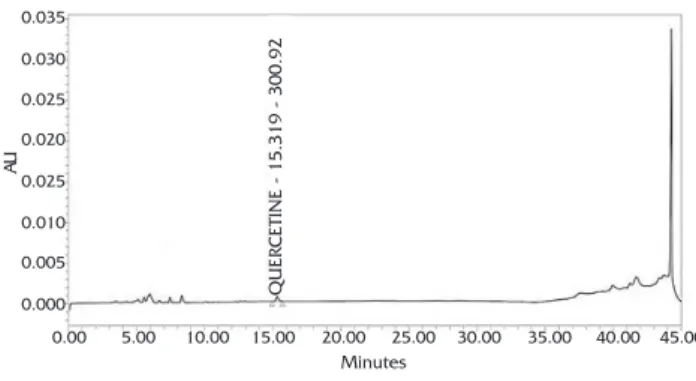
Figure 1. P. spinosa methanol extract LC-MS chromatogram.
ponent of methanol extract of P. spinosa fruit was characterized as quercetin (Figures 1 and 2).
4. In vitro Cytotoxicity Assays
We analysed cytotoxicity of methanol extract of
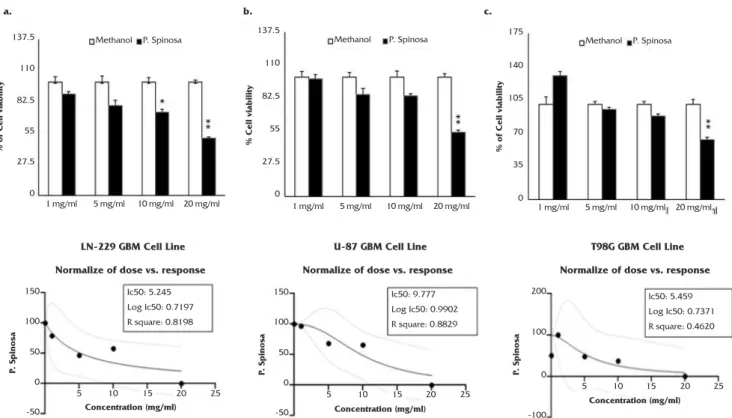
P. spinosa fruit on glioblastoma multiform (GBM) brain cancer (U87, LN229, T98G), and pancreas cancer (PANC-1, ASPC-1) cell lines. A luminescent based assay was used to measure metabolically active cells. According to our findings, among all lines treated with P. spinosa extract, only LN-229 cells showed significant decrease in viability at 10 mg/ml concentration (Figure 3a). Additionally, GBM cell lines showed decreased cell viability at varying concentrations (1 mg/ml, 5 mg/ml, 10 mg/ml and 20 mg/ml). Especially when treated with 20 mg/ml extract, statistically significant (p**<0.0005) cell death was determined in all GBM cell lines. Treatment with 20 mg/ml extracts of P. spinosa resulted in 50%, 54% and 63%
vi-0.035 QUERCETINE - 15.319 - 300.92 Minutes AU 0.030 0.025 0.020 0.025 0.010 0.005 0.000 0.00 5.00 10.00 15.00 20.00 25.00 30.00 35.00 40.00 45.00 1.40 4.00 1.20 1.00 0.80 0.60 0.40 0.20 0.00 AU 6.00 8.00 10.00 12.00 14.00 16.00 18.00 20.00 22.00
Figure 2. LC-MS standard chromatogram. Standards: 1, Gallic acid (R.T. 4,96); 2, Luteolin-7-o-glycoside (R.T. 7,62); 3, Coumaric acid (R.T. 9,21); 4, Rosmarinic acid (R.T. 10,65); 5, Myrcetin (R.T. 11,43); 6, Quercetin (R.T. 15,25); 7, Apigenine (R.T. 18,47); 8 Luteolin (R.T. 19,15) (R.T.=Retention time).
Figure 3. Cytotoxic effects of P. spinosa fruit methanol extract on different glioma cell lines. Glioma cell lines were treated with 1-20 mg/ml P. spinosa fruit methanol extract for 24 hours and significantly decreased cell viability of 20 mg/ml tre-ated a) LN229, b) U87 and c) U87 cell lines were recorded. Percentage of viable cells were determined as %50, %54 and %63 for 20 mg/ml treated LN229, U87 and T98G cell lines respectively when compared to the methanol (control) treatments only. Data are the mean ± standard error (SE) and significance was determined as p*<0.001 and p**<0.0005 when compa-red to control (methanol) treatments.
Figure 4. Cytotoxicity analysis of P. spinosa fruit methanol extract on pancreas cancer cell lines. Cell viability of a) PANC-1 and b) AsPC-1 cell lines were not affected by the treatment with 1-20 mg/ml concentrations of P. spinosa fruit methanol extract. Data are descriptively represented as the mean ± standard error (SE).
a. % of Cell viability 137.5 1 mg/ml b. c. 110 82.5 55 27.5 0 5 mg/ml 10 mg/ml 20 mg/ml Methanol P. Spinosa % Cell viability 137.5 1 mg/ml 110 82.5 55 27.5 0 5 mg/ml 10 mg/ml 20 mg/ml Methanol P. Spinosa % of Cell viability 175 1 mg/ml 140 105 70 35 0 5 mg/ml 10 mg/ml 20 mg/ml Methanol P. Spinosa LN-229 GBM Cell Line Normalize of dose vs. response
Ic50: 5.245 Log Ic50: 0.7197 R square: 0.8198 P. Spinosa 150 100 50 0 -50 5 10 15 20 25 Concentration (mg/ml)
U-87 GBM Cell Line Normalize of dose vs. response
Ic50: 9.777 Log Ic50: 0.9902 R square: 0.8829 P. Spinosa 150 100 50 0 -50 5 10 15 20 25 Concentration (mg/ml) T98G GBM Cell Line Normalize of dose vs. response
Ic50: 5.459 Log Ic50: 0.7371 R square: 0.4620 P. Spinosa Concentration (mg/ml) 5 10 15 20 25 200 100 0 -100 PANC-1 Pancreas Cancer Cell Line
% of Cell viability 170 128 85 43 0 1 mg/ml 5 mg/ml 10 mg/ml 20 mg/ml a. b. Methanol P. Spinosa AsPC-1 Pancreas Cancer Cell Line
Methanol P. Spinosa % of Cell viability 150 113 75 38 0 1 mg/ml 5 mg/ml 10 mg/ml 20 mg/ml
ability of LN229, U87 and T98G cells respectively. Accordingly, 5.245 mg/ml; 9.777 mg/ml and 5.459 mg/ml of methanol extracts of P. spinosa
fruit showed IC50 values for LN229; U87; and T98G GBM cell lines respectively (Figure 3a-c). After evaluation of cytotoxic effects against brain cancer, we further investigated whether P. spino-sa extract exerted comparable cytotoxic effects on other type of cancers. We then analysed the cell viability of two different pancreas cell lines treated with P. spinosa fruit methanol extract at the same concentrations (1-20 mg/ml). Accord-ing to our results, cytotoxic effects of methanol extract of P. spinosa fruit in both pancreas cancer cell lines (ASPC-1 and PANC-1) tested could not be revealed (Figure 4).
To sum up, although several phenolic and fla-vonoid standards were performed in the LC-MS study, a bioflavonoid, Quercetin (3,3’,4’5,7-Pen-tahydroxyflavone) was detected in the P. spinosa
fruit extract. In addition to that, we observed sig-nificant in vitro cytotoxic effects of 10-20 mg/ml methanol extracts of P. spinosa fruit in 3 different GBM brain cancer cell lines with different IC50 val-ues.
DISCUSSION
In current medical practice, use traditional and al-ternative therapeutic approaches against cancer is a phenomenon under investigation. Namely, these studies require first set of in vitro experi-ments including antioxidant and cytotoxic activi-ties of several plant extracts. P. spinosa is report-ed as one of the traditionally usreport-ed and promising plant based therapeutics for several health prob-lems involving hypertension, diabetes and gas-trointestinal disorders. However, cytotoxicity of P. spinosa extracts against cancer cells were poorly studied. Accordingly, in this study, we evaluated potential antioxidant activities and in vitro cyto-toxic effects of P. spinosa fruit extract in different cell lines of brain and pancreas cancers.
Extraction is an important step in the itinerary of phytochemical processing for the discovery of bioactive constituents from plant materials. Selec-tion of a suitable extracSelec-tion technique is also im-portant for the standardization of herbal products as it is utilized in the removal of desirable soluble constituents, leaving out those not required with the aid of the solvents. Further, selection of suit-able extraction process and optimization of vari-ous parameters are critical for upscaling purposes i.e. from bench scale to pilot plant level21. The
se-lection of solvent system largely depends on the specific nature of the bioactive compound being targeted. Different solvent systems are available to extract the bioactive compound from natu-ral products. The extraction of hydrophilic com-pounds uses polar solvents such as methanol, ethanol or ethyl-acetate22. In this study methanol
was used for extraction because of total amount of flavonoids and phenolic compounds were found to be higher in methanol extract23.
Today, application of phenolic substances takes an important place in essential industries such as food, health, pharmaceutical and cosmetic. These substances are common in the phyto world as part of human diet and are attractive as natural antioxi-dants24. Oxidative stress is one of the major
patho-logical mechanisms and has a key role in forma-tion of many diseases such as diabetes and cancer. Antioxidant phenolic compounds at least possess one aromatic ring including hydroxyl group(s) and antioxidant capacity of these compounds is mostly owing to their tendency to chelate metals by the referred groups25. In this study, the antioxidant
activity of the P. spinosa extract has been shown. Moreover, by LC-MC analysis, several active com-pounds were identified from the extract.
Nonetheless, occasionally it is hard to find a con-nection between phenolic compounds, and their anticancer and antioxidant activities, suggesting the need of more detailed studies on the antican-cer and antioxidant activities of isolated phenolic compounds25.
Quercetin is one of the beneficial flavonoids with significant bioactivities like antidiabetic, angiogen-esis inhibitory, cell cycle modulating, antioxidant, apoptosis-inducing, anti-inflammatory activities. Numerous in vitro studies have shown anticancer activities of quercetin in a variety of cancer cells such as MDA-MB-453 (breast cancer); U2.US/ MTX300 (osteosarcoma); HeLa (cervical cancer); U138MG (glioma); HT-29 (colorectal xenografts); CWR22Rv1 (prostate cancer) and also quercetin can block increase and spread of melanoma, and inhibit its metastatic potential26. Quercetin exerts
anticancer activities by inhibiting G1/S or G2/M phases of cell cycle and main cellular targets of qurcetin are topoisomerase II, p27, p21, and cy-clin B. Moreover, free radical scavenging activity of quercetin can reduce cancer by recognizing three reactive centres27.
A prior study which was conducted with differ-ent plant extracts revealed that P. spinosa extract naturally enriched with non-anthocyanin phenolic compounds demonstrated the strongest antitu-mor activity against several human tumour cells (cervical, hepatocellular, colon, breast, and lung carcinomas)14.
First of all, we made a set of experiments on a healthy control cell line (human primary fibro-blasts (HDFa), ATCC #PCS-201-012) to determine the working concentrations for cytotoxicity exper-iments. Then, we optimized a dose range (1-20 mg/ml) which is cytotoxic for cancer cells with-out any harmful effect in healthy control cells. For this reason we did not use higher doses of extract which is cytotoxic to any cells without cancer se-lectivity. According to our in vitro cellular toxicity experiments, when treated with 20 mg/ml meth-anol extract of P. spinosa fruit we observed %50; %54; and %63 significant decrease in viability of LN-229, U-87 and T98G GBM brain cancer cell lines respectively. Since P. spinosa is tradition-ally used for gastrointestinal disorders, we then tested toxic effects of the extract against pancreas
cancer. Interestingly, pancreatic cancer cell lines maintained their viability even at the highest dose of 20 mg/ml while under the same experimen-tal conditions GBM brain cancer cell lines showed significant cellular toxicity. These findings indicate that P. spinosa fruit extract has cytotoxic effects on GBM brain cancer cell lines (LN-229, U-87 and T98G) whilst no effects on pancreatic cancer cells.
CONCLUSION
Depending on the cancer types (even the hetero-genic cancer cell populations in the same tumour niche) and their underlying pathology, cytotoxic effects of therapeutics can vary remarkably. In line with this, the results of this study also revealed that P. spinosa fruit extract acts as a tissue-speci-fic manner and it is selectively cytotoxic to GBM brain cancer cells rather than pancreatic cancers. Further in vitro investigations on anti-cancer ef-fects of several P. spinosa extracts in brain cancers and determination of mechanisms that lead to its selective toxicity in GBM cell lines may induce new therapeutic inventions against brain cancers. REFERENCES
1. Ayla Ş, Günal MY, Sayın Şakul AA, et al. Effects of Pru-nus spinosa L. fruits on experimental wound healing. Medeniyet Med J. 2017;32:152-8. [CrossRef]
2. Ruiz-Rodríguez BM, de Ancos B, Sánchez-Moreno C, et al. Wild blackthorn (Prunus spinosa L.) and hawthorn ( Crataegus monogyna Jacq.) fruits as valuable sources of antioxidants. Fruits. 2014;69:61-73. [CrossRef]
3. Baytop T. Türkiye’de bitkiler ile tedavi 2. Nobel Tıp Kitabevleri, İstanbul, 1999; 204-5.
4. Davis PH. Flora of Turkey and the East Aegean Islands. Vol.4. Edinburgh University Press, Edinburgh UK, 1982; 153.
5. Çalışır S, Haciseferogullari H, Özcan M, Arslan D. Some nutritional and technological properties of wild plum (Prunus spp.) fruits in Turkey. J Food Eng. 2005;66:233-7. [CrossRef]
6. Olszewska M, Wolbis M. Flavonoids from the flowers of Prunus spinosa L. Acta Pol Pharm. 2001;58(5):367-72. 7. Kültür Ş. An ethnobotanical study of Kırklareli (Turkey).
Phytol Balcan. 2008;14:279-89.
8. Mustafa B, Hajdari A, Pajazita Q, Syla P, Quave CL, Pieroni A. An ethnobotanical survey of the Gollak region, Kosovo. Genet Resour Crop Evol. 2012;59(5):739-54. [CrossRef]
9. Velickovic JM, Kostic DA, Stojanovic GS, et al. Pheno-lic composition, antioxidant and antimicrobial activity of the extracts from Prunus spinosa L. fruit. Hem Ind. 2014;68(3):297-303. [CrossRef]
10. Sikora E, Bieniek MI, Borczak B. Composıtıon and anti-oxidant properties of fresh and frozen stored blackthorn fruits (Prunus spinosa L.). Acta Sci Pol Technol Aliment 2013;12(4):365-72.
http://www.food.actapol.net/issue4/volume/3_4_2013.pdf. 11. Fraternale D, Giamperi L, Bucchini A, Sestili P, Paolillo M,
Ricci D. Prunus spinosa fresh fruit juice: antioxidant activ-ity in cell-free and cellular systems. Nat Prod Commun. 2009;4:1665-70. [CrossRef]
12. Irizar AC, Fernandez MF, González AG, Ravelo AG. Con-stituents of Prunus spinosa. J Nat Prod 1992;55:450-4. [CrossRef]
13. Egea I, Sánchez-Bel P, Romojaro F, Pretel MT. Six edible wild fruits as potential antioxidant additives or nutritional supplements. Plant Foods Hum Nutr. 2010;65:121-9. [CrossRef]
14. Guimarães R, Barros L, Calhelha RC, Carvalho AM, Queiroz MJ, Ferreira IC. Bioactivity of different enriched phenolic extracts of wild fruits from Northeastern Portugal: a com-parative study. Plant Foods Hum Nutr. 2014;69:37-42. [CrossRef]
15. Okur ME, Ayla Ş, Çiçek Polat D, Günal MY, Yoltaş A, Biçeroğlu Ö. Novel insight into wound healing properties of methanol extract of Capparis ovata Desf. var. palaes-tina Zohary fruits. J Pharm Pharmacol. 2018;70:1401-13. [CrossRef]
16. Spanos GA, Wrolstad RE. Influence of processing and storage on the phenolic composition of Thompson Seed-less grape juice. J Agric Food Chem. 1990;38:1565-71. [CrossRef]
17. Blois MS. Antioxidant determinations by the use of a sta-ble free radical. Nature. 1958;181:1199-200. [CrossRef] 18. Re R, Pellegrini N, Proteggente A, Pannala A, Yang M,
Rice-Evans C. Antioxidant activity applying an improved
ABTS radical cation decolorization assay. Free Radic Biol Med. 1999;26:1231-7. [CrossRef]
19. Okur ME, Polat DC, Ozbek H, Yılmaz S, Yoltaş A, Arslan R. Evaluation of the antidiabetic property of Capparis ovata Paleastina Zoh. Extracts using in vivo and in vitro approaches. Endoc Metab Immune Disord - Drug Tar. 2018;18:489-501. [CrossRef]
20. Gulsoy-Toplan G, Goger F, Yildiz-Peko A, Gibbons S, Sari-yar G, Mat A. Chemical constituents of the different parts of Colchicum micranthum and C. chalcedonicum and their Cytotoxic Activities. Nat Prod Commun. 2018;13:535-8. [CrossRef]
21. Dhanani T, Shah S, Gajbhiye NA, Kumar S. Effect of ex-traction methods on yield, phytochemical constituents and antioxidant activity of Withania somnifera. Arab J Chem. 2017;10:1193-9. [CrossRef]
22. Cos P, Vlietinck AJ, Berghe DV, Maes L. Anti-infective potential of natural products: how to develop a stron-ger in vitro ‘proof-of-concept’. J Ethnopharmacol. 2006;106:290-302. [CrossRef]
23. Guimarães R, Barros L, Calhelha RC, Carvalho AM, Queiroz MJ, Ferreira IC. Bioactivity of different enriched phenolic extracts of wild fruits from Northeastern Portugal: a com-parative study. Plant Foods Hum Nutr. 2014;69:37-42. [CrossRef]
24. Shahat AA, Hidayathulla S, Khan AA, et al. Phytochemi-cal profiling, antioxidant and anticancer activities of Gas-trocotyle hispida growing in Saudi Arabia. Acta Trop. 2019;191:243-7. [CrossRef]
25. Roleira FM, Tavares-da-Silva EJ, Varela CL, et al. Plant de-rived and dietary phenolic antioxidants: anticancer prop-erties. Food Chem. 2015;183:235-58. [CrossRef] 26. Dajas F. Life or death: neuroprotective and anticancer
ef-fects of quercetin. J Ethnopharmacol. 2012;143:383-96. [CrossRef]
27. Men K, Duan X, Wei XW, et al. Nanoparticle-delivered quercetin for cancer therapy. Anticancer Agents Med Chem. 2014;14:826-32. [CrossRef]