Leader psychopathy and
organizational deviance
The mediating role of psychological safety and
the moderating role of moral disengagement
Hakan Erkutlu
Department of Economics and Administrative Sciences, Nevsehir University, Nevsehir, Turkey, and
Jamel Chafra
School of Applied Technology and Management, Bilkent Universitesi, Ankara, Turkey Abstract
Purpose– The purpose of this paper is to analyze the relationship between leader psychopathy and
organizational deviance. In particular, the authors introduce employee’s psychological safety as the mediator. Furthermore, the moderating role of moral disengagement in the relationship between leader psychopathy and organizational deviance is also considered.
Design/methodology/approach– The data of this study include 611 certified nurses from 9 university hospitals in Turkey. The proposed model was tested by using hierarchical multiple regression analysis. Findings– The results of this study supported the positive effect of leader psychopathy on organizational deviance along with the mediating effect of employee’s psychological safety. Furthermore, when the level of moral disengagement is low, the relationship between leader psychopathy and organizational deviance is weak, whereas the effect is strong when the level of moral disengagement is high.
Practical implications– The findings of the study recommend that administrators in the healthcare
industry ought to be sensitive in treating their subordinates, since it will result in positive organizational relationship, which, subsequently, will certainly reduce organizational deviance. Furthermore, they have to pay more focus on the buffering role of moral disengagement for all those subordinates with high distrust and displaying organizational deviance.
Originality/value– This paper contributes to the literature about workplace deviance by uncovering the relational mechanism between leader psychopathy and employee organizational deviance. Furthermore, it includes practical assistance to healthcare employees and their leaders interested in building trust, increasing leader–employee relationship and reducing organizational deviance.
Keywords Organizational deviance, Psychological safety, Moral disengagement, Leader psychopathy Paper type Research paper
1. Introduction
Organizational deviance initiated by employees targeting employers (Bennett and Robinson, 2003; Lian et al., 2012), continues to have a harmful influence on organizations worldwide. Employee robbery is rising yearly, with costs associated with scams increasing 40 percent from 2005 to 2007 (Needleman, 2008). Furthermore, unlawful web surfing has been approximated to cost up to $600m in lost efficiency yearly (Taylor, 2007). Organizational deviance also derives a significant human being cost. In fact, employee performance, morale and well-being are affected by such deviant behaviors (Robinson and Greenberg, 1998). Logically, these costs are a considerable affair to organizations, and researchers have consequently concentrated on the antecedents of organizational deviance. In particular, several authors have suggested that leader’s attributes, behaviors and attitudes, or “followers’ perceptions of the degree to which their leaders be a part of the sustained display of hostile verbal and non-verbal behaviors” (Tepper, 2000, p. 178), is definitely an initial reason behind organizational deviance (Tepper et al., 2009).
International Journal of Workplace Health Management Vol. 12 No. 4, 2019 pp. 197-213 © Emerald Publishing Limited 1753-8351 DOI 10.1108/IJWHM-12-2018-0154
Received 3 December 2018 Revised 3 March 2019 Accepted 19 March 2019
The current issue and full text archive of this journal is available on Emerald Insight at: www.emeraldinsight.com/1753-8351.htm
197
Leader
psychopathy and
organizational
deviance
Organizational deviance is influenced by the leader’s traits, behaviors and attitudes (Berry et al., 2007). As an attribute, leader psychopathy is a trait seen as a being anti-social, disagreeable and having uncooperative behavior (Garcia et al., 2017). Leader psychopathy greatly affects psychological exhaustion and job satisfaction (Volmer et al., 2016). In this study, we focus on the process where leader psychopathy designs significant follower outcomes such as organizational deviance and psychological safety. Yet, despite psychopathy’s long-standing existence in psychology and psychiatry literature, related research in broad management and applied psychology literature continues to be in its infancy. To our knowledge, no research uncovered how leader psychopathy relates to employees’ organizational deviance, even though leadership is one of the very most important predictors of organizational deviance (Berry et al., 2007); thus, the first goal of the study is to handle this very untapped concern.
In addition, this study investigates moral disengagement as the boundary condition for leader psychopathy, i.e. the psychological safety relationship. Existing theories and research indicate that leader traits, behaviors and followers’ individual difference variables, such as locus of control, proactive personality, political skill and moral disengagement, significantly impact employee organizational deviance (e.g. Berry et al., 2007). Prior researchers emphasized that moral disengagement can be an important way to obtain unwanted outcomes, such as organizational cynicism, workplace silence and deviance (Moore et al., 2012). Yet, scholars never considered the interactive effects of leader psychopathy and moral disengagement on workplace deviance; this concerns how leadership and organizational members have the ability to lower employee organizational deviance.
This research is supposed to contribute to the prevailing literature in several ways. First, our research looks to fill the data gap regarding the link between leader psychopathy and organizational deviance. Earlier research upholds that leadership attributes, behaviors, attitudes and leader–follower relationships are among the most crucial factors influencing organizational deviance. Second, determining how psychological safety decreases employees’ organizational deviance has received little empirical attention in workplace deviance-related literature (Liu et al., 2018). The present research uses social exchange theory (Blau, 1964), as the primary theoretical focus, and requires a step further to identify the mediating effect of psychological safety on the leader psychopathy-organizational deviance link. The results could progress our knowledge of the processes where leader psychopathy impacts workplace deviance. Finally, this study contributes to the literature by looking at how leader psychopathy reduces employees’ organizational deviance via psychological safety, which, subsequently, accounts for the moderating effect of moral disengagement. Figure 1 summarizes the theoretical model that led to this research.
2. Literature review and hypotheses
2.1 Leader psychopathy and organizational deviance
Psychopaths are individuals seen to have inadequate self-control, impaired affect regulation and high impulsivity. Psychopaths pursue self-enrichment. According to Boddy (2006),
Leader psychopathy Psychological safety Organizational deviance Moral disengagement Figure 1. Proposed moderated-mediation model
198
IJWHM
12,4
psychopathic leaders do not timid from exploiting their subordinates and using them to follow their own goals. Additionally, they might be neither emotionally mounted on their subordinates nor concerned about the results their behaviors have on other individuals (Boddy, 2006). According to Mathieu et al. (2012), leaders’ psychopathy predicts subordinates’ psychological distress. In addition, psychopathic leaders act selfishly, manipulate and exploit others to accomplish their long-term goals ( Jones and Paulhus, 2011). They may be therefore highly impulse controlled and psychologically callous ( Jones and Paulhus, 2011). Psychopaths have low degrees of consciousness and remorse (Rauthmann and Will, 2011). We, therefore, suppose that the psychopathy of leaders is adversely related to the well-being of subordinates, as leaders with such high value will probably follow their selfish goals carelessly and do not look at the needs of their subordinates.
Social exchange is one of the most crucial theoretical frameworks for the interpretation of specific workplace behavior (Blau, 1964). Researchers agree unanimously that social exchange entails some mutual obligations between two parties (Emerson, 1976). This theory argues these exchanges tend to be two-way and for that reason rely on both parties’ behavior (Blau, 1964). Among the primary features of social exchange theory is that associations among individuals develop with the passage of time into reliable, dedicated and shared obligations. In order for such mutual commitments to emerge, individuals must follow particular norms of exchange (Emerson, 1976). Therefore, the rules of exchange form the important tenet of the exchange process. Mutual exchanges include interpersonal contact where the actions of one individual engender reactions in another. If a person harms or indulges in evil deeds, the recipient of the treatment will react properly. Relating to social exchange theory, employees create a reciprocal interdependent relationship with their managers in contingency to the treatment they receive from them (Cropanzano and Mitchell, 2005). Employees give in exchange beneficial leader behavior by showing higher trust and commitment relative to the norm of reciprocity. On the other hand, every time a manager, who is the agent of the organization, treats his/her employee badly by displaying psychopathic or abusive behaviors, the latter may think that (s)he is not appreciated and respected by the organizations and, for that reason, engage in organizational deviance (Boddy, 2017; Palmer et al., 2017). Regarding psychopathic leaders, research revealed the employees of psychopathic leaders score highly on psychological distress, work-family conflict and job dissatisfaction (Mathieu et al., 2014). Furthermore, they control and limit participation in decision making (Barelds et al., 2018). In addition, they exploit, unfairly treat their followers and do not have ethical values as well as norms (Barelds et al., 2018). This, consequently, results in followers becoming less focused or ready to contribute effectively toward organizational improvement. Finally, because psychopathic leaders utilize their position and authority to fulfill their personal goals, followers will react by exhibiting less co-operative and altruistic motives toward the organization and individuals. In this exchange relationship, it might be problematic for followers to directly channel their reactions to the figure(s) of the offending authority (i.e. psychopathic leaders); however, they can do this by indirect means, such as displaying unwanted behaviors such as workplace deviance.
Particularly, we focus on organizational deviance as the consequence of being confronted with high psychopathic leadership. Previous research exhibited that followers respond to leader’s low ethical behavior with workplace deviance (Tepper, 2007). Since followers fulfilled with high psychopathic behavior frequently cannot retaliate toward their leader directly because of the power difference, they tend to retaliate toward the organization instead (Tepper et al., 2009). Thus, we hypothesize:
H1. The perception of leader psychopathy is positively related to employee’s organizational deviance.
199
Leader
psychopathy and
organizational
deviance
2.2 The mediating effect of psychological safety
Psychological safety is thought as individuals’ perceptions of the consequences of taking interpersonal risks in their workplace (Edmondson, 1999, 2004; Liu et al., 2016). In a safe environment, individuals are ready to tolerate mistake, seek assistance, encourage others, report problems and propose new ideas and insights in team (Edmondson, 1999, 2004). Research demonstrates leader traits contribute to psychological safety feelings (Nembhard and Edmondson, 2006). In particular, Edmondson (2004) and Erkutlu and Chafra (2015) suggested that if leaders show openness, availability and convenience, they might likely facilitate the introduction of psychological safety among employees at work. Leaders can encourage followers to create new ideas and take risks by interacting with the necessity for such behaviors and making certain such behavior does not have negative consequences. Being open up, available and accessible allows leaders to communicate such expectations. When the leader is open up, listens to employees is preparing to review new ways for attaining the work goals, and focuses on new opportunities, employees will probably think that it is safe to discuss new ideas without concern about negative consequences. In an identical vein, when leaders can be accessible to employees, they send an absolute signal that it is safe to approach them. Edmondson’s (2004) theory about such areas of leadership as openness, availability, and convenience is also consistent with other studies directed toward behaviors that transmit leader benevolence (e.g. genuine nurturing and concern about the follower) and leader support, increase trust (Burke et al., 2007). Further, high-quality interpersonal relationships demonstrated to facilitate the introduction of psychological safety (Carmeli et al., 2009; Carmeli and Gittell, 2009; Puccinelli and Tickle-Degnen, 2005). Nembhard and Edmondson (2006) discovered that when organizational members experienced that their leaders invited and appreciated their understanding, they developed a sense of psychological safety, not only because their voice is valued, but also because they feel convenient speaking and expressing themselves.
On the other hand, leaders with high psychopathy are seen as superficial charm, a grandiose sense of self-worth, a tendency toward boredom and reliance on stimulation. Furthermore, they have a brief history of pathological lying, cunning and manipulativeness and inadequate remorse (Paulhus and Williams, 2002). In addition, psychopathic leaders are chilly and callous, getting pleasure by contending with and humiliating everyone and anyone. They may be cruel and malicious. They often demand upon being considered faultless and are dogmatic in their opinions. However, when they need to, individuals with psychopathy can be gracious and cheerful-until they get what they want (Nolen-Hoeksema, 2014). Therefore, we presume that leaders’ psychopathy is adversely related to followers’ perception of psychological safety, as leaders with high psychopathy will most likely recklessly pursue their selfish goals and do not consider their subordinates’ needs.
Based on Chan and McAllister (2014) and Dollard et al. (2012) perspective, when employees develop low psychological safety, there may be implications for their attitudes, such as low identification toward leader and organization and high organizational deviance. Communication between leader and followers is a significant factor leading deviant behaviors (Gatling et al., 2017). The results show a positive communication will significantly improve employee involvement and identification with the leader (Guzley, 1992) because positive communication stimulates employees’ self-expression, participation in group discussions, information and suggestion sharing, as well as learning (Smidts et al., 2001). In addition, open up communication with leader makes employees feel self-worth. This helps to avoid the deviant behaviors of employees (Gatling et al., 2017). As a result, mutual trust, support and a safe psychological atmosphere help employees never to be concerned about facing interpersonal risk effects, such as ridicule, censure, overlook and scolding (Dollard and Bakker, 2010; Edmondson, 1999, 2004). In fact, when employees believe that their behavior would not receive hostile evaluations from their leaders, they will put additional time and work to their work, are more prepared to be a part of organizational
200
IJWHM
12,4
affairs, thus increasing low deviant behaviors. Given the above-mentioned arguments and empirical results, we expect psychological safety to use as a mediator in the relationship between leader psychopathy and organizational deviance:
H2. The positive relationship between leader psychopathy and employee’s organizational deviance is mediated by psychological safety.
2.3 The moderating role of moral disengagement
There has been a lot of interest in employee engagement in recent years. Several researchers have argued that employee engagement predicts employee outcomes, organizational success and financial performance (e.g. total return on shareholders) (Bates, 2004; Richman, 2006). At the same time, employee engagement has been reported to decline, and employees have become more disengaged today (Bates, 2004; Richman, 2006; Saks, 2006). One of the most important causes of this decline is leader behaviors and traits (Tepper et al., 2009). In the case of unethical or pathological leadership, employees express certain cognitions such as moral disengagement to retaliate against their leaders (Christian and Ellis, 2014).
Moral disengagement refers to an individual’s ability to deactivate moral self-regulation and self-censure, leading individuals to engage in behaviors that are inconsistent with moral standards without the associated self-sanctions and guilt (Bandura et al., 1996; Detert et al., 2008; Samnani et al., 2014). In particular, individuals deactivate moral self-regulation by reframing the situation to allow them to rationalize and justify specific behaviors that are inconsistent with moral standards.
Moral disengagement is a comparatively new construct used in organizational research. Detert et al. (2008, p. 374) claim that, because of its consequences,“our knowledge of moral disengagement remains at an early stage.” In extending previous research into moral rationalization and justification as a mechanism for justifying previous actions, they found support for moral disengagement as a predictor of future unethical behavior. In addition, they“speculate” (p. 384) that moral disengagement can affect behaviors such as deviance in the workplace.
If leader psychopathy negatively impacts psychological safety because of the leader not meeting his/her moral and behavioral obligations vis-à-vis his/her employees, then we will probably observe a weaker relationship for employees with a higher moral disengagement because they have a lesser propensity toward attending to cues encircling ethics. Thus, to be able to highlight the role of psychological safety, we examine how employees’ moral disengagement affects the relationship between leader psychopathy and psychological safety, and its particular subsequent influence on organizational deviance. Although prior work has discovered that moral disengagement functions as an antecedent of unethical behavior (e.g. Detert et al., 2008), we claim that employees’ moral disengagement moderates the relationship between leader psychopathy and organizational deviance, as mediated by psychological safety. Individuals differ in the extent to which their moral disengagement is central to their overall self-definition. This impacts the likelihood of moral considerations being deactivated when they are confronted with moral situations (Aquino et al., 2007).
Although moral individuals may respond to moral situations with malleable attitudes, they could be less likely to alter behaviors that are constant using their identity. For example, if a low moral disengagement is part of one’s self-definition, they may be less inclined to engage in organizational deviance because they need to act in ways that exemplify moral traits such as generosity and helpfulness (Aquino et al., 2009). Therefore, even though they experience high leader psychopathy, employees with low moral disengagement are improbable to boost their organizational deviance. Thus, while high leader psychopathy has a negative impact on follower psychological safety for
201
Leader
psychopathy and
organizational
deviance
employees with a low moral disengagement, they have a tendency more likely to keep up positive attitudes and behaviors and avoid organizational deviance since it is central to their self-concept.
In contrast, while employees with a higher moral disengagement are less likely to perceive the harmful effects of leader psychopathy because being ethical is less central to their self-concept, these employees should be influenced by leaders with high psychopathy so that they take part in higher levels of organizational deviance. In other words, employees, high in moral disengagement, are affected by leaders with high psychopathy because they experience lower degrees of psychological safety in comparison to what they might have observed if confronted with the non-psychopathic leader. In turn, employees high on moral disengagement, and having a leader with high psychopathy should experience a sense of low psychological safety that discourages them to reciprocate the activities of the leader by developing positive attitudes and behaviors (i.e. by increasing commitment, citizenship behaviors and decreasing organizational deviance). Thus, we claim that leader psychopathy has stronger moral reactions on employees high on moral disengagement by reducing their psychological safety and surrender to the leader and organization in ways that they normally would not. We, therefore, propose the following:
H3. Leader psychopathy influences employee organizational deviance through its relationship with psychological safety, and the indirect effect will be stronger when the moral disengagement is high rather than when it is weak.
Combining H1–H3, we propose a moderated mediation model, shown in Figure 1, to test the relationship between employees’ perceptions of leader psychopathy and organizational deviance; the model incorporates psychological safety as a mediator and moral disengagement as a moderator.
3. Methods 3.1 Participants
This study was conducted in nine university hospitals situated in all seven geographical regions of Turkey and randomly selected from a listing of 65 university hospitals in the country (Ministry of Health of Turkey, 2018). Six of these were state hospitals, while the other three were private hospitals.
We chose the healthcare industry because large private and public sector organizations seem well suited for the emerging of psychopaths. Boddy (2010) and Hare (1999) state that it really is power, prestige and money that attract psychopaths, therefore it would seem logical to allow them to be attracted to larger private organizations (as in the hospitals in this study), where accelerated progress through the ranks can result in individuals gaining these components of power, prestige and money. Moreover, public sector organizations (67 percent of the hospitals in this research) are more political in terms of internal political behavior than business organizations are. Such political environments seem to be ideal for psychopaths’ skills and manipulative talents. Public sector organizations can also be easier for psychopaths to hide their lack of effort, since performance assessments in such organizations aren’t as objective, being that they are not directly associated with external and objective performance indicators, such as profits, as they are often found in commercial organizations (Boddy, 2010). This implies that politics can possibly play a greater role in performance assessments and promotions, giving individuals who are deceiving and manipulative, such as psychopaths, the advantage.
To select the sample, a cluster random sampling method was used. First, all of Turkey’s university hospitals were stratified into seven strata according to their geographical regions in this sampling method. Hospitals in each stratum were then selected proportionally by a random cluster sampling; the study sample consisted of nurses working in the selected hospitals.
202
IJWHM
12,4
The study was completed in May 2018–June 2018. A team of three doctoral students visited nine university hospitals. Throughout their first visit and after getting approvals from the hospital’s head doctors, they gave the certified nurses within their units information about the objective of this study and were informed that the study was designed to gather information on leading psychopathy and employee deviance levels in the healthcare workforce. They received confidential assurances and stated participation was voluntary. Nurses wishing to participate in this research were asked to send out the research team members their names and departments by e-mail.
All respondents were invited to a meeting room in their departments through the second visit (two weeks later), where questionnaires were distributed, filled and collected immediately. 900 front-line nurses participated in this research. Incomplete questionnaires reduced the sample size to 611 subjects, which led to a 68 percent response rate.
Participants comprising the final sample worked in one of the following seven departments: cardiology (30 percent), neurology (19 percent), gynecology (13 percent), radiotherapy (11 percent), gastroenterology (9 percent), orthopedics (9 percent) and Ear, nose and throat (9 percent). The average age of nurses was 31.19 years. Furthermore, out of the 611 nurses, 86 percent were female. Potential non-response bias was assessed by conducting a multivariate analysis of variance (MANOVA) test on demographic variables such as age, and organizational tenure. No significant variations were discovered between respondents and non-respondents, indicating minimal, if any, non-response bias in the sample based on these factors.
3.2 Measures
Leader psychopathy. We applied the four-item from the Dirty Dozen scale to assess psychopathy developed by Jonason and Webster (2010). Sample item includes“My supervisor (the head nurse of the certified nurse) tends to lack remorse.” Responses ranged from “strongly disagree” (1) to “strongly agree” (7). The Cronbach’s α of this measure was 0.91.
Organizational deviance. The organizational deviance scale of Bennett and Robinson (2000) was used to measure deviant behaviors. Participants indicated the frequency with which they engaged in a variety of behaviors over the past year (e.g.“Come in late to work without permission”) on a seven-point Likert scale (1 ¼ never and 7 ¼ daily). Cronbach’s α of this measure turned out to be 0.90.
Psychological safety. This measure assesses the extent to which a member of an organization feels psychologically safe to take risks, speak up and discuss issues openly. Following the results of a confirmatory factor analysis (CFA) that included the removal of two items due to low standardized loadings, we adopted five items from the psychological safety scale of Edmondson (1999) (originallyseven-item). Sample items are:“It’s hard to ask for help from other members of this organization” and “This organization’s members are able to raise issues and tough issues.” All items were anchored on a scale of seven points, ranging from “strongly disagree” to “strongly agree.” For this measure, the Cronbach α was 0.88.
Moral disengagement. We used a 24-point scale developed by Bandura et al. (1996) and later modified by Detert et al. (2008) to measure moral disengagement. Respondents were asked to state to what extent they agree with each statement or disagree with it. The items were assessed from“strongly disagree” to “strongly agree” on a seven-point Likert scale. Sample items include“It is all right to fight to protect your friends,” and “If people live in bad conditions, they can’t be blamed for aggressive behavior.” The Cronbach α turned out to be 0.86 for this scale.
Control variables. We controlled the demographic factors: age and organizational tenure, which have been found to be significantly associated with organizational deviance ( Jung and Yoon, 2012). Age and tenure were measured in years.
203
Leader
psychopathy and
organizational
deviance
In two interlinked steps, we tested our hypotheses. First, we carried out a hierarchical regression analysis using Baron and Kenny’s (1986) simple mediation model (H1 and H2). Since several methodologists (Hayes and Preacher, 2010; Preacher and Hayes, 2004) recently recommended a bootstrap approach to obtain confidence intervals (CIs), we also tested the hypothesis of mediation using a bootstrapping test and the Sobel test. Second, we used an SPSS macro designed by Preacher et al. (2007) to empirically test the overall moderated mediation hypothesis. Through these procedures, we demonstrated that the strength of the hypothesized mediating (indirect) effect of psychological safety on the relationship between leader psychopathy and organizational deviance is conditional on the value of the moderator (i.e. moral disengagement) (Tables II and III).
4. Results
Before testing the hypothesized relationships, we first carried out CFA of the proposed model using the AMOS software package to ensure construct distinctiveness in the study. Results showed that the hypothesized 4-factor model of leader’s psychopathy, organizational deviance, psychological safety and moral disengagement, χ2¼ 1,258.51, df¼ 480; RMSEA ¼ 0.05; CFI ¼ 0.95 and IFI ¼ 0.95, produced a better fit to the data than any other models including a 1-factor model (i.e. combining all four study variables), χ2¼ 3,552.23, df ¼ 484; RMSEA ¼ 0.018; CFI ¼ 0.53 and TLI ¼ 0.53. These CFA results also provide support for the distinctiveness of the four study variables for subsequent analyses. The poor fit of the measurement model, with a single underlying latent variable, shows that common method bias or bias from a single source is not a major concern for our data. In addition, an explorative factor analysis, which allows us to examine whether a single factor accounts for the majority of the variability in the variables, shows that the first unrotated factor accounts for 13 percent of the variance. Therefore, the Harman single-factor test, without a factor explaining the majority of the variance, also suggests that common method bias is not a major concern (Podsakoff and Organ, 1986).
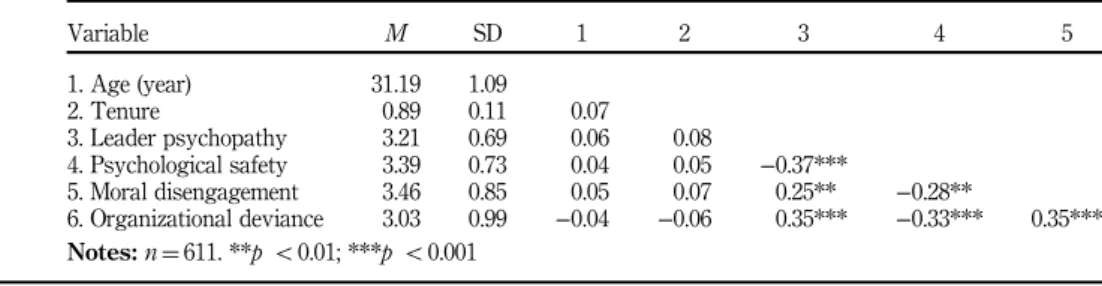
Table I shows the means, standard deviations and intercorrelations of all variables in the study. The correlations of most of the variables were in the expected direction. Furthermore, all the measures showed a high level of internal reliability.
Consistent with H1, leader psychopathy showed a positive relationship with organizational deviance (β ¼ 0.31, po0.001). H2 posited that psychological safety mediates the relationship between leader’s psychopathy and organizational deviance. In order to test our hypothesis about the mediating role of psychological safety, we adopted Baron and Kenny’s (1986) approach. There are several important features of this mediation test. First, the independent variable should be related to the dependent variable significantly. Second, the independent variable should have an important relationship with the mediator. Finally, the mediator should be significantly related to the dependent variables with the independent variables included in the equation. If the first three conditions are in place, there is at least
Variable M SD 1 2 3 4 5 1. Age (year) 31.19 1.09 2. Tenure 0.89 0.11 0.07 3. Leader psychopathy 3.21 0.69 0.06 0.08 4. Psychological safety 3.39 0.73 0.04 0.05 −0.37*** 5. Moral disengagement 3.46 0.85 0.05 0.07 0.25** −0.28** 6. Organizational deviance 3.03 0.99 −0.04 −0.06 0.35*** −0.33*** 0.35***
Notes: n¼ 611. **p o0.01; ***p o0.001
Table I. Means, standard deviations, and correlations of studied variables
204
IJWHM
12,4
partial mediation. If the independent variables in the third step have non-significant beta weights, full mediation is present.
The result of the test for H1 satisfied the first condition of mediation. Next, the result of the test for the significant relationship between leader psychopathy and psychological safety satisfied the second mediating effect criterion (β ¼ −0.35, po0.001). To test the third criterion, we regressed the dependent variable on the mediating variable, controlling for leader’s psychopathy. As reported, psychological safety was significant (β ¼ −0.30, po0.001), reducing the coefficient of the effect of leader’s psychopathy on organizational deviance (β ¼ 0.05, ns). Therefore, the result of the mediation analysis suggests that the effect of leader’s psychopathy on employee organizational deviance is fully mediated by employees’ psychological safety.
We then tested the significance of the indirect effects using the Sobel test and bootstrapping in accordance with the procedure used by Hayes and Preacher (2010). The formal two-tail significance test (assuming a normal distribution) showed a significant indirect effect (Sobel z¼ 2.93, p ¼ 0.01). The Sobel test was confirmed by the bootstrapping results. In particular, we estimated that by bootstrapping 10,000 samples, 95 percent of bias-corrected CIs had indirect effects. Lee et al. (2018) and Shrout and Bolger (2002) suggested that the researcher can be assured that the indirect effect is different from zero if zero is not in the CI. In this study, the CI is−0.10 to −0.02, excluding zero in the CI, which suggests that the indirect effect in our model is statistically significant. H2 was therefore supported.
H3 predicted that the indirect effect of psychological safety between leader psychopathy and organizational deviance would be strengthened by high moral disengagement. The results indicate that the interaction term between leader psychopathy and moral disengagement on psychological safety is significant (β ¼ 0.20, po0.01). To confirm the direction of this interaction effect, we applied conventional procedures for plotting simple slopes (see Figure 2) at one standard deviation above and below the mean of the moral disengagement measure. As expected, the slope of the relationship between leader psychopathy and psychological safety was strong for employees who assessed moral disengagement as high (simple slope¼ 0.29, t ¼ 3.79, po0.001), whereas the slope was weak for employees who assessed moral disengagement as low (simple slope¼ −0.01, t¼ −0.08, p ¼ ns).
Next, to examine the conditional indirect effect of leader psychopathy on organizational deviance (through psychological safety) at two values of moral disengagement, we used an
0 1 2 3 4 5 6 1 2 3 4 Psychological safety Low Leader psychopathy High moral disengagement Low moral engagement High Figure 2. Interaction of leader psychopathy and moral disengagement on psychological safety
205
Leader
psychopathy and
organizational
deviance
SPSS macro developed by Preacher et al. (2007). Following their recommendation, we set high and low levels of moral disengagement at one standard deviation above and below the mean score of moral disengagement. As expected, the indirect effect of leader psychopathy on organizational deviance via psychological safety was conditional upon the level of moral disengagement. The indirect effect was stronger (0.06) and significant at a high level of moral disengagement (CI ranging from −0.10 to −0.02 and not crossing zero) but was weaker (0.00) and insignificant at a low level of moral disengagement (CI ranging from−0.03 to 0.02, crossing zero). Thus, H3 was supported (Tables II–IV).
5. Discussion
We examined the positive relationship between the psychopathy of the leader (head nurses) and the organizational deviance of the followers (certified nurses). Our preliminary hypotheses were supported by data from our samples. Results demonstrated that leader psychopathy is positively associated with follower’s organizational deviance and negatively associated with psychological safety. In addition, the relationship between leader psychopathy and organizational deviance was explained by psychological safety.
Psychological safety Organizational deviance
Variables Model 1 Model 1 Model 2
Leader psychopathy −0.35*** 0.31*** 0.05 Psychological safety −0.30*** Overall F 3.65*** 2.21** 4.13*** R2 0.14 0.05 0.07 ΔF 9.69*** 6.91** 6.03** ΔR2 0.03 0.03 0.01
Notes: **po0.01; ***po0.001
Table II. Regression analysis for testing mediation
Psychological safety Organizational deviance
Variables Model 1 Model 2 Model 3 Model 1 Model 2 Model 3 Model 4
Leader psychopathy (LP) −0.35*** −0.26** −0.13* 0.31*** 0.30*** 0.23** 0.04 Moral disengagement (MD) −0.26** −0.21** 0.34*** 0.29** 0.25** LP*MD 0.20** 0.25** 0.23** Psychological safety −0.27** Overall F 3.65*** 4.66*** 5.91*** 2.21** 2.67** 3.93*** 4.59*** R2 0.14 0.17 0.19 0.05 0.05 0.07 0.08 ΔF 9.69*** 2.61* 1.53 6.91** 7.61** 8.09*** 9.13*** ΔR2 0.03 0.03 0.01 0.03 0.03 0.01 0.01
Notes: *po0.05; **po0.01; ***po0.001
Table III. Hierarchical regression results for moderated mediation
Organizational deviance
Moderator Level Conditional indirect effect SE LL 95% CI UL 95% CI
Moral disengagement High (0.96) 0.06 0.03 −0.10 −0.02
Low (−0.96) 0.00 0.02 −0.03 0.02
Notes: LL, lower limit; UL, upper limit Table IV. Moderated mediation results for organizational deviance across levels of moral disengagement
206
IJWHM
12,4
Moreover, the negative relationship between leader psychopathy and organizational deviance was effectively buffered by moral disengagement.
5.1 Theoretical contribution
This study connected two conventionally independent research areas, leader psychopathy and organizational deviance, opening new avenues to enrich each field’s development. Among the countless negative implications of leader psychopathy to an organization, workplace deviance is one of the very most serious. Employees of leaders with high psychopathy perceive that their leaders are standoffish, biased and callous (Palanski and Yammarino, 2007), unfairly dealing with their followers and having unethical values. Those leadership characteristics are obviously associated with intolerance in organizational relationships, which, subsequently, lead to high distrust in leader and workplace deviance, low leader-member-exchange quality and, organizational identification (Meurs et al., 2013). This finding places leader psychopathy as one important precedent for employee workplace deviance.
Another important contribution of this study rests on the role of psychological safety as a mediator of the link between leader psychopathy and organizational deviance. Typically, the positive effects of psychological safety have been limited to learning, creativity and voice behavior (Kark and Carmeli, 2009; Walumbwa and Schaubroeck, 2009). We have now expanded this to include the employee organizational deviance.
Given the decision of broadening the criterion domain to add organizational antecedents of employee workplace deviance (e.g. Walsh, 2014), this research adds to literature through the study of the moderating role of moral disengagement.
One notable finding of the research is the moderated mediation model that applied“Social exchange theory” (Blau, 1964) to define the mediation path. This model provided a theoretical framework on how an independent variable (leader psychopathy) may have an effect on the dependent variable (organizational deviance) through the mediator (psychological safety). As for the moderator, moral disengagement moderated the mediating effect of psychological safety on the indirect relationship between leader psychopathy and employee deviance. High levels of moral disengagement increased the mediating effect of psychological safety. Employees high in moral disengagement would feel more psychological safety when they have a highly psychopathic leader compared to when they have a low psychopath leader. They engage in unethical behaviors such as deceptive and fraudulent activities more than those with low levels of moral disengagement (Barsky, 2011). Furthermore, they are less likely to be sensitive to the ethicality (or unethicality) of their psychopathic leaders (Ko et al., 2018). They perceive more psychological safety because they observe and believe that their psychopathic leaders have similar tendencies for unethical and detrimental behaviors.
5.2 Managerial implication and conclusion
The findings of this study are consistent with previous research results ( Jones and Paulhus, 2011; Mathieu et al., 2012; Rauthmann and Will, 2011) that leader’s psychopathy has negative employee outcomes such as high levels of employee organizational deviance and low psychological safety. Moreover, this study has important implications for healthcare management. The results emphasize the importance of leader’s psychopathy as it is positively related to employee workplace deviance. In terms of managerial implications, organizations can limit the destructive behavior of leader psychopaths. Organizations have difficulty preventing the admittance of psychopaths through selection tools. It is basically because dark-triad features coexist with well-developed social skills. Thus, dark side tendencies are extremely hard to be detected in an interview; actually, the characteristics of psychopathy typically run into as positive attributes in the short term (Cohen, 2016). While there are, in fact, very limited attempts to identify psychopathy in the workplace for selection purposes, few studies have developed scales for the evaluation of the psychopathy
207
Leader
psychopathy and
organizational
deviance
level of supervisors by their employees (Mathieu et al., 2014). There is a need to carry out efforts in this direction, which is why HRM has some tools to screen potential psychopaths. However, one of the best options for organizations to avoid psychopaths ‘destructive activities is to create an environment that discourages such activities. For example, if evaluation criteria are unclear, greater reliance on factors that are not related to work behaviors will likely affect job performance evaluations; employees can avoid being held accountable and blame others for negative results (or credit for positive results). The need to carry out quality performance evaluations cannot, therefore, be overestimated and may indeed be the only way to deal with the personality of the dark triad (Chiaburu et al., 2013). If organizations develop and maintain a solid culture of social responsibility, it will be problematic for psychopaths in the workplace to accomplish their goals. Higher degrees of transparency and accountability (Frink and Klimoski, 2004) will be the best tools organizations could use to limit the activities of psychopaths. Delbecq (2001) argues that one of the best ways to handle “evil” is to determine clear group norms regarding collegial behavior, decision processes and cultural values in the organization. It is important an organization will not leave managers and employees to rely on the moral intuition and good judgment alone but instead creates a culture where the difference between ethical and unethical behavior is clear (Kaptein, 2011). Relating to Delbecq (2001), culture does matter and behavior that is normatively deviant can be recognized much earlier when a strong organizational culture is established. Taking time to determine the cultural norms, and keeping written records of deviation, all help provide harmful behavior to the surface. Greater clarity should decrease the possibility of its occurrence.
The findings of this study claim that psychological safety acts as a link between leader’s psychopathy and employee deviance. By demonstrating that psychological safety functions as an essential cognitive mechanism in organizational deviance, this study pinpoints a more proximal focus on antecedent of workplace deviant behaviors that leader training can promote. When designing such training programs, primary efforts may focus on ways to improve employees’ rely upon the leader rather than more distal behavioral outcomes for the sake of efficiency. For instance, leaders may learn to improve psychological safety through effective social persuasion and enactive or vicarious moral encounters using case studies and scenarios (Lee et al., 2016). As a result, better-equipped leaders can be more skillful at instilling a “can do” belief in the morally courageous behaviors (such as low workplace deviance) of their subordinates.
Our research showed that low-moral disengagement lowers the negative effect of leader psychopathy on psychological safety, which, in turn, decreases employee organizational deviance. Managers should focus on the buffering role of moral disengagement specifically for those employees with low psychological safety and displaying organizational deviance. Moreover, organizations, attempting to prioritize reducing organizational deviance, should design a workplace where employees and their managers have a chance to work toward establishing common moral values. The existence of moral disengagement offers fertile ground to make a more disengaged workforce, which, subsequently, escalates the possibility that employees choose activities that contradict the interests of their organization. A culture that embraces supportive leadership such as transformational, servant or authentic leadership may be influential in this respect since supportive leaders tend to align followers’ interests effectively with those of the organization (Stone et al., 2004) and cause a decrease in organizational stress which is an emotional response for employee deviance (Mucci et al., 2015). In contrast, organizations must be aware that when moral values differ between employees and managers, the resulting uncertainty and insufficient control may lead employees to carry out activities that only meet their personal interests, even if these activities can damage their organization. At a more general level, top management should activate their employee base, across hierarchical ranks, to move from looking at their personal goal setting
208
IJWHM
12,4
through a self-interested lens. Instead, employees should be encouraged to see themselves and managers as“partners” who share a set of common moral values and interests in order to help the organization achieve its objectives.
5.3 Limitations and future research
One limitation of our study is that our sample was only drawn from university hospitals in Turkey, thus external validity is a concern. Another limitation comes from the cross-sectional data, as no causal relationships can only be established without longitudinal studies. Moreover, demographic factors might have affected the results. Most of the participants were relatively young (31.19 years old) with a job tenure under one year.
Future research can be carried out to address this study’s limitations. We call for empirical research into the relationship between leader psychopathy and organizational deviance based on hospital samples operating in other economies. Since consensus can only be achieved by collecting evidence from a more representative mix of samples, we provide the current findings as a basis for further research. Longitudinal studies to examine how changes in leader psychopathy affect organizational deviance would be even more meaningful. Moreover, future research could be reiterated with participants of different demographic characteristics (for example participants with relatively older ages and higher organizational tenure) and be obtained different results as the participants perceive the leader’s psychopathy, organizational deviant behaviors, psychological safety and moral attitudes at different levels. Furthermore, future leader psychopathy research might benefit from concentrating on the role of context in reducing or exacerbating the impact of relationship between leader and follower on work outcomes. In line with Johns’s (2006) admonition about the need to recognize and integrate the impact of the context in research, we claim that situational factors such as perceived organizational politics or organizational culture can have a significant impact on employee behavior. Finally, the economic crises, which are frequently seen in today’s global business world, cause many employees to feel insecure (Giorgi et al., 2015). This feeling of insecurity increases the perception that their psychological contracts, antecedents of employee deviance, have been compromised. Therefore, we can assume that employees may experience more organizational stress during economic crisis periods which in turn to employee deviance. For this reason, the effects of economic crises on employee deviant behaviors can be investigated in future studies.
References
Aquino, K., Reed, A., Thau, S. and Freeman, D. (2007),“A grotesque and dark beauty: how moral identity and mechanisms of moral disengagement influence cognitive and emotional reactions to war”, Journal of Experimental Social Psychology, Vol. 43 No. 1, pp. 385-392.
Aquino, K., Freeman, D., Reed, I.I., Lim, V.K. and Felps, W. (2009),“Testing a social cognitive model of moral behavior: the interaction of situational factors and moral identity centrality”, Journal of Personality and Social Psychology, Vol. 97 No. 1, pp. 123-141.
Bandura, A., Barbaranelli, C., Caprara, G.V. and Pastorelli, C. (1996), “Mechanisms of moral disengagement in the exercise of moral agency”, Journal of Personality and Social Psychology, Vol. 71 No. 2, pp. 364-374.
Barelds, D.P.H., Wisse, B., Sanders, S. and Laurijssen, L.M. (2018),“No regard for those who need it: the moderating role of follower self-esteem in the relationship between leader psychopathy and leader self-serving behavior”, Frontiers in Psychology, Vol. 9 No. 1, pp. 1-12.
Baron, R.M. and Kenny, D.A. (1986), “The moderator-mediator variable distinction in social psychological research: conceptual, strategic, and statistical considerations”, Journal of Personality and Social Psychology, Vol. 51 No. 6, pp. 1173-1182.
209
Leader
psychopathy and
organizational
deviance
Barsky, A. (2011),“Investigating the effects of moral disengagement and participation on unethical work behavior”, Journal of Business Ethics, Vol. 104 No. 1, pp. 59-75.
Bates, S. (2004),“Getting engaged”, HR Magazine, Vol. 49 No. 2, pp. 44-51.
Bennett, R.J. and Robinson, S.L. (2000),“Development of a measure of workplace deviance”, Journal of Applied Psychology, Vol. 85 No. 3, pp. 349-360.
Bennett, R.J. and Robinson, S.L. (2003),“The past, present, and future of workplace deviance research”, in Greenberg, J. (Ed.), Organizational Behavior: The State of The Science, Erlbaum, Mahwah, NJ, pp. 247-281.
Berry, C.M., Ones, D.S. and Sackett, P.R. (2007),“Interpersonal deviance, organizational deviance, and their common correlates: a review and meta-analysis”, Journal of Applied Psychology, Vol. 92 No. 2, pp. 410-424.
Blau, P.M. (1964), Exchange and Power in Social Life, Transaction Publishers, London.
Boddy, C.R. (2006), “The dark side of management decisions: organisational psychopaths”, Management Decision, Vol. 44 Nos 9/10, pp. 1461-1475.
Boddy, C.R. (2010),“Corporate psychopaths and organizational type”, Journal of Public Affairs, Vol. 10 No. 4, pp. 300-312.
Boddy, C.R. (2017),“Psychopathic leadership: a case study of a corporate psychopath CEO”, Journal of Business Ethics, Vol. 145 No. 1, pp. 141-156.
Burke, C.S., Sims, D.E., Lazzara, E.H. and Salas, E. (2007),“Trust in leadership: a multi-level review and integration”, The Leadership Quarterly, Vol. 18 No. 1, pp. 606-632.
Carmeli, A. and Gittell, J.H. (2009),“High-quality relationships, psychological safety, and learning from failures in work organizations”, Journal of Organizational Behavior, Vol. 30 No. 1, pp. 709-729. Carmeli, A., Brueller, D. and Dutton, J.E. (2009),“Learning behaviors in the workplace: the role of high-quality interpersonal relationships and psychological safety”, Systems Research and Behavioral Science, Vol. 26 No. 1, pp. 81-98.
Chan, M.E. and McAllister, D.J. (2014), “Abusive supervision through the lens of employee state paranoia”, Academy of Management Review, Vol. 39 No. 1, pp. 44-66.
Chiaburu, D.S., Muñoz, G.J. and Gardner, R.G. (2013),“How to spot a careerist early on: psychopathy and exchange ideology as predictors of careerism”, Journal of Business Ethics, Vol. 118 No. 3, pp. 473-486.
Christian, J.S. and Ellis, A.P. (2014),“The crucial role of turnover intentions in transforming moral disengagement into deviant behavior at work”, Journal of Business Ethics, Vol. 119 No. 2, pp. 193-208.
Cohen, A. (2016),“Are they among us? A conceptual framework of the relationship between the dark triad personality and counterproductive work behaviors (CWBs)”, Human Resource Management Review, Vol. 26 No. 1, pp. 69-85.
Cropanzano, R. and Mitchell, M.S. (2005),“Social exchange theory: an interdisciplinary review”, Journal of Management, Vol. 31 No. 6, pp. 874-900.
Delbecq, A.L. (2001), “ ‘Evil’ manifested in destructive individual behavior: a senior leadership challenge”, Journal of Management Inquiry, Vol. 10 No. 3, pp. 221-226.
Detert, J.R., Treviño, L.K. and Sweitzer, V.L. (2008),“Moral disengagement in ethical decision making: a study of antecedents and outcomes”, Journal of Applied Psychology, Vol. 93 No. 1, pp. 374-391. Dollard, M.F. and Bakker, A.B. (2010),“Psychosocial safety climate as a precursor to conducive work environments, psychological health problems, and employee engagement”, Journal of Occupational and Organizational Psychology, Vol. 83 No. 3, pp. 579-599.
Dollard, M.F., Opie, T., Lenthall, S., Wakerman, J., Knight, S., Dunn, S., Rickard, G. and MacLeod, M. (2012),“Psychosocial safety climate as an antecedent of work characteristics and psychological strain: a multilevel model”, Work & Stress, Vol. 26 No. 4, pp. 385-404.
210
IJWHM
12,4
Edmondson, A. (1999),“Psychological safety and learning behavior in work teams”, Administrative Science Quarterly, Vol. 44 No. 1, pp. 350-383.
Edmondson, A. (2004),“Psychological safety, trust, and learning in organizations: a group-level lens”, in Kramer, R.M. and Cook, K.S. (Eds), Trust and Distrust In Organizations: Dilemmas and Approaches, Russell Sage Foundation, New York, NY, pp. 239-272.
Emerson, R.M. (1976),“Social exchange theory”, Annual Review of Sociology, Vol. 2 No. 1, pp. 335-362. Erkutlu, H. and Chafra, J. (2015),“The mediating roles of psychological safety and employee voice on the relationship between conflict management styles and organizational identification”, American Journal of Business, Vol. 30 No. 1, pp. 72-91.
Frink, D.D. and Klimoski, R.J. (2004),“Advancing accountability theory and practice: introduction to the human resource management review special edition”, Human Resource Management Review, Vol. 14 No. 1, pp. 1-17.
Garcia, D., MacDonald, S. and Rapp-Ricciardi, M. (2017),“Factor analysis of the Swedish version of the dark triad dirty dozen”, PsyCh Journal, Vol. 6 No. 1, pp. 166-167.
Gatling, A., Shum, C., Book, L. and Bai, B. (2017),“The influence of hospitality leaders’ relational transparency on followers’ trust and deviance behaviors: mediating role of behavioral integrity”, International Journal of Hospitality Management, Vol. 62 No. 1, pp. 11-20.
Giorgi, G., Arcangeli, G., Mucci, N. and Cupelli, V. (2015),“Economic stress in the workplace: the impact of fear of the crisis on mental health”, Work, Vol. 51 No. 1, pp. 135-142.
Guzley, R.M. (1992),“Organizational climate and communication climate: predictors of commitment to the organization”, Management Communication Quarterly, Vol. 5 No. 4, pp. 379-402.
Hare, R.D. (1999), Without Conscience: The Disturbing World of The Psychopaths Among Us, Guilford Press, New York, NY.
Hayes, A.F. and Preacher, K.J. (2010),“Estimating and testing indirect effects in simple mediation models when the constituent paths are nonlinear”, Multivariate Behavioral Research, Vol. 45 No. 1, pp. 627-660.
Johns, G. (2006), “The essential impact of context on organizational behavior”, Academy of Management Review, Vol. 31 No. 1, pp. 386-408.
Jonason, P.K. and Webster, G.D. (2010),“The dirty dozen: a concise measure of the dark triad”, Psychological Assessment, Vol. 22 No. 2, pp. 420-432.
Jones, D.N. and Paulhus, D.L. (2011), “The role of impulsivity in the dark triad of personality”, Personality and Individual Differences, Vol. 51 No. 5, pp. 679-682.
Jung, H.S. and Yoon, H.H. (2012),“The effects of emotional intelligence on counterproductive work behaviors and organizational citizen behaviors among food and beverage employees in a deluxe hotel”, International Journal of Hospitality Management, Vol. 31 No. 2, pp. 369-378.
Kaptein, M. (2011), “Understanding unethical behavior by unraveling ethical culture”, Human Relations, Vol. 64 No. 6, pp. 843-869.
Kark, R. and Carmeli, A. (2009),“Alive and creating: the mediating role of vitality and aliveness in the relationship between psychological safety and creative work involvement”, Journal of Organizational Behavior, Vol. 30 No. 6, pp. 785-804.
Ko, C., Ma, J., Bartnik, R., Haney, M.H. and Kang, M. (2018),“Ethical leadership: an integrative review and future research agenda”, Ethics & Behavior, Vol. 28 No. 2, pp. 104-132.
Lee, K., Kim, E., Bhave, D.P. and Duffy, M.K. (2016),“Why victims of undermining at work become perpetrators of undermining: an integrative model”, Journal of Applied Psychology, Vol. 101 No. 6, pp. 915-924.
Lee, S., Kim, S.L. and Yun, S. (2018),“A moderated mediation model of the relationship between abusive supervision and knowledge sharing”, The Leadership Quarterly, Vol. 29 No. 3, pp. 403-413. Lian, H., Ferris, D.L. and Brown, D.J. (2012),“Does taking the good with the bad make things worse?
How abusive supervision and leader-member exchange interact to impact need satisfaction and organizational deviance”, Organizational Behavior and Human Decision Processes, Vol. 117 No. 1, pp. 41-52.
211
Leader
psychopathy and
organizational
deviance
Liu, W., Zhang, P., Liao, J., Hao, P. and Mao, J. (2016),“Abusive supervision and employee creativity: the mediating role of psychological safety and organizational identification”, Management Decision, Vol. 54 No. 1, pp. 130-147.
Liu, Y., Fuller, B., Hester, K., Bennett, R.J. and Dickerson, M.S. (2018),“Linking authentic leadership to subordinate behaviors”, Leadership & Organization Development Journal, Vol. 39 No. 2, pp. 218-233.
Mathieu, C., Neumann, C.S., Hare, R.D. and Babiak, P. (2014),“A dark side of leadership: corporate psychopathy and its influence on employee well-being and job satisfaction”, Personality and Individual Differences, Vol. 59 No. 1, pp. 83-88.
Mathieu, C., Babiak, P., Jones, D.N., Neumann, C. and Hare, R.D. (2012), “What are the effect of psychopathic traits in a supervisor on employees’ psychological distress?”, Journal of Organizational Culture, Communications, and Conflict, Vol. 16 No. 2, pp. 91-94.
Meurs, J.A., Fox, S., Kessler, S.R. and Spector, P.E. (2013),“It’s all about me: the role of narcissism in exacerbating the relationship between stressors and counterproductive work behaviour”, Work & Stress, Vol. 27 No. 4, pp. 368-382.
Ministry of Health of Turkey (2018), Health Statistics Yearbook, Ministry of Health, Ankara. Moore, C., Detert, J.R., Trevino, L.K., Baker, V.L. and Mayer, D.M. (2012),“Why employees do bad
things: moral disengagement and unethical organizational behavior”, Personal Psychology, Vol. 65 No. 1, pp. 1-48.
Mucci, N., Giorgi, G., Cupelli, V., Gioffrè, P.A., Rosati, M.V., Tomei, F., Tomei, G., Breso, E. and Arcangeli, G. (2015), “Work-related stress assessment in a population of Italian workers. the stress questionnaire”, Science of the Total Environment, Vol. 502 No. 1, pp. 673-679.
Needleman, S.E. (2008), “Businesses say theft by their workers is up”, The Wall Street Journal, December, pp. 8-9.
Nembhard, I.M. and Edmondson, A.C. (2006),“Making it safe: the effects of leader inclusiveness and professional status on psychological safety and improvement efforts in health care teams”, Journal of Organizational Behavior, Vol. 27 No. 1, pp. 941-966.
Nolen-Hoeksema, S. (2014), Abnormal Psychology, 5th ed., McGraw-Hill, New York, NY.
Palanski, M.E. and Yammarino, F.J. (2007), “Integrity and leadership: clearing the conceptual confusion”, European Management Journal, Vol. 25 No. 3, pp. 171-184.
Palmer, J.C., Komarraju, M., Carter, M.Z. and Karau, S.J. (2017),“Angel on one shoulder: can perceived organizational support moderate the relationship between the dark triad traits and counterproductive work behavior?”, Personality and Individual Differences, Vol. 110 No. 1, pp. 31-37.
Paulhus, D.L. and Williams, K.M. (2002),“The dark triad of personality: Narcissism, Machiavellianism, and psychopathy”, Journal of Research in Personality, Vol. 36 No. 6, pp. 556-563.
Podsakoff, P. and Organ, D. (1986),“Self-reports in organizational research: problems and prospects”, Journal of Management, Vol. 12 No. 4, pp. 532-544.
Preacher, K.J. and Hayes, A.F. (2004),“SPSS and SAS procedures for estimating indirect effects in simple mediation models”, Behavior Research Methods, Instruments, & Computers, Vol. 36 No. 4, pp. 717-731.
Preacher, K.J., Rucker, D.D. and Hayes, A.F. (2007),“Addressing moderated mediation hypotheses: theory, methods, and prescriptions”, Multivariate Behavioral Research, Vol. 42 No. 1, pp. 185-227. Puccinelli, N.M. and Tickle-Degnen, L. (2005),“Knowing too much about others: Moderators of the relationship between rapport and eavesdropping in social interaction”, Journal of Nonverbal Behavior, Vol. 28 No. 4, pp. 223-243.
Rauthmann, J.F. and Will, T. (2011), “Proposing a multidimensional machiavellianism conceptualization”, Social Behavior and Personality, Vol. 39 No. 3, pp. 391-404.
Richman, A. (2006),“Everyone wants an engaged workforce how can you create it?”, Workspan, Vol. 49 No. 1, pp. 36-39.
212
IJWHM
12,4
Robinson, S.L. and Greenberg, J. (1998),“Employees behaving badly: dimensions, determinants, and dilemmas in the study of workplace deviance”, in Cooper, C.L. and Rousseau, D.M. (Eds), Trends in Organizational Behavior, Wiley, New York, NY, pp. 1-30.
Saks, A.M. (2006),“Antecedents and consequences of employee engagement”, Journal of Managerial Psychology, Vol. 21 No. 7, pp. 600-619.
Samnani, A.K., Salamon, S.D. and Singh, P. (2014),“Negative affect and counterproductive workplace behavior: the moderating role of moral disengagement and gender”, Journal of business ethics, Vol. 119 No. 2, pp. 235-244.
Shrout, P.E. and Bolger, N. (2002),“Mediation in experimental and non-experimental studies: new procedures and recommendations”, Psychological Methods, Vol. 7 No. 4, pp. 422-445.
Smidts, A., Pruyn, A.T.H. and Van Riel, C.B. (2001),“The impact of employee communication and perceived external prestige on organizational identification”, Academy of Management Journal, Vol. 44 No. 5, pp. 1051-1062.
Stone, A.G., Russell, R.F. and Patterson, K. (2004),“Transformational versus servant leadership: a difference in leader focus”, Leadership & Organization Development Journal, Vol. 25 No. 4, pp. 349-361. Taylor, A. (2007),“Gambling at work ‘costs employers? 300M a year”, Financial Times, January 4, p. 4. Tepper, B.J. (2000),“Consequences of abusive supervision”, Academy of Management Journal, Vol. 43
No. 2, pp. 178-190.
Tepper, B.J. (2007), “Abusive supervision in work organizations: review, synthesis, and research agenda”, Journal of Management, Vol. 33 No. 3, pp. 261-289.
Tepper, B.J., Carr, J.C., Breaux, D.M., Geider, S., Hu, C. and Hua, W. (2009),“Abusive supervision, intentions to quit, and employees’ workplace deviance: a power/dependence analysis”, Organizational Behavior and Human Decision Processes, Vol. 109 No. 2, pp. 156-167.
Volmer, J., Koch, I.K. and Goritz, A.S. (2016),“The bright and dark sides of leaders’ dark triad traits: effects on subordinates’ career success and well-being”, Personality and Individual Differences, Vol. 101 No. 1, pp. 413-418.
Walsh, G. (2014), “Extra-and intra-organizational drivers of workplace deviance”, The Service Industries Journal, Vol. 34 No. 14, pp. 1134-1153.
Walumbwa, F.O. and Schaubroeck, J. (2009),“Leader personality traits and employee voice behavior: mediating roles of ethical leadership and work group psychological safety”, Journal of Applied Psychology, Vol. 94 No. 5, pp. 1275-1286.
About the authors
Hakan Erkutlu is Associate Professor at the Faculty of Economics and Administrative Sciences, Nevsehir University, Turkey. He received a PhD Degree from the Gazi University, Turkey. His research interests include leadership, organizational conflicts, innovation and change. Hakan Erkutlu is the corresponding author and can be contacted at: [email protected]
Jamel Chafra is Senior Lecturer at the School of Applied Technology and Management, Bilkent University, Turkey. His research interests include empowerment, group dynamics and organizational conflicts.
For instructions on how to order reprints of this article, please visit our website: www.emeraldgrouppublishing.com/licensing/reprints.htm
Or contact us for further details: [email protected]