Atıf Gösterimi/How to Cite: Kunter D, Gezer N. The Effect of Cold Application Before Breathing
Exercises on Sternotomy Pain: A Quasi-Experimental Study. Adıyaman Üni. Sağlık Bilimleri Derg. 2019; 5(3); 1776–1787. doi:10.30569.adiyamansaglik.623953
Doi: 10.30569.adiyamansaglik.623953
Araştırma/Research
The Effect of Cold Application Before Breathing Exercises on Sternotomy Pain: A Quasi-Experimental Study
Dilara KUNTER1, Nurdan GEZER2
1, 2 Aydın Adnan Menderes Üniversitesi, Hemşirelik Fakültesi, Cerrahi Hastalıkları Hemşireliği
Anabilim Dalı Efeler/ AYDIN Türkiye
1ORCID: 0000-0003-0304-6621 / 2ORCID: 0000-0001-8690-9052
ABSTRACT
Aim: The effect of peripheral cold application on sternotomy pain before deep breathing and coughing exercises was investigated.
Methods: The research was carried out between November 2015 and April 2016 at a hospital in the western part of Turkey as a quasi-experimental study. The study sample consisted of 20 patients with median sternotomy. Breathing exercises were performed on the sternotomy incisions of the patients without cold application and with cold application (first application) and the same procedure was repeated a second time (second application). Pain associated with breathing exercises was assessed by numerical pain scale. ‘Patient Identification Form’ and ‘Data Collection Form’ which were formed by the researchers in line with the literature, were used in collecting the research data.
Results: In the first and second applications, the pain scores associated with breathing exercises in which cold application was administered were statistically significantly lower than in which cold application was not administered. 90% of the patients felt comfortable during cold application, 85% preferred to do cold application before deep breathing and coughing exercise and 95% said that they can recommend this application to other patients.
Conclusions: In this study, it was found that peripheral cold application on sternotomy before deep breathing and coughing exercise reduced sternotomy pain. According to the results of the study, peripheral cold application is recommended to reduce sternotomy pain before deep breathing and coughing in patients with sternotomy.
Keywords: breathing exercises; peripheral cold application; sternotomy; pain
Yazışmadan Sorumlu Yazar:
Dilara KUNTER
Adres: Aydın Adnan Menderes Üniversitesi, Hemşirelik Fakültesi, 09100 Aydın, Turkey
Telefon: +90256 2138866
e-mail: [email protected] , [email protected] ORCID: 0000-0003-0304-6621
Geliş Tarihi : 24.09.2019 Kabul Tarihi : 02.12.2019
Sayfa 1777 Sternotomi Ağrısında Nefes Egzersizleri Öncesi Periferik Soğuk Uygulamanın
Etkisi: Yarı Deneysel Bir Çalışma
ÖZ
Amaç: Derin solunum ve öksürük egzersizi öncesi sternotomi insizyonu üzerine yapılan periferik soğuk uygulamanın sternotomi ağrısına etkisi incelendi.
Yöntem: Araştırma yarı deneysel bir çalışma olarak Türkiye’nin batısında yer alan bir hastanede Kasım 2015-Nisan 2016 tarihleri arasında gerçekleştirildi. Çalışma örneklemini median sternotomisi olan 20 hasta oluşturdu. Hastalara sternotomi insizyonları üzerine soğuk uygulama yapılmadan ve soğuk uygulama yapılarak nefes egzersizleri (birinci uygulama) yaptırıldı ve birinci uygulamanın aynısı ikinci kez tekrarlandı (ikinci uygulama). Nefes egzersizleriyle ilişkili ağrı, sayısal ağrı skalası ile değerlendirildi. Araştırma verilerin toplanmasında literatür doğrultusunda araştırmacılar tarafından oluşturulan ‘Hasta Tanıtım Formu’ ve ‘Veri Toplama Formu’ kullanıldı.
Bulgular: Birinci ve ikinci uygulamalarda, soğuk uygulamanın yapıldığı nefes egzersizleriyle ilişkili ağrı puanları soğuk uygulamanın yapılmadığı duruma göre istatistiksel olarak anlamlı bir şekilde daha düşüktü. Hastaların %90’ı soğuk uygulama sırasında kendini rahat hissettiğini, %85’i derin solunum ve öksürük egzersizi öncesi soğuk uygulama yapmayı tercih ettiği ve tekrar kullanmak istediğini ve %95’i bu uygulamayı başka hastalara da önerebileceğini ifade etmişlerdir.
Sonuç: Çalışmada derin solunum ve öksürük egzersizi öncesi sternotomi üzerine uygulanan periferik soğuk uygulamanın sternotomi ağrısını azalttığı saptanmıştır. Çalışma sonuçlarına göre sternotomi olan hastalarda derin solunum ve öksürük egzersizi öncesi sternotomi ağrısını azaltmak için periferik soğuk uygulama önerilmektedir.
Anahtar sözcükler: Nefes egzersizleri; periferik soğuk uygulama; sternotomi; ağrı
INTRODUCTION
Open heart surgery is one of the common treatment methods used in cardiac patients[1]. There are a number of complications associated with anesthesia and the cardiopulmonary by-pass (CPB) device used during this operation[2-3]. Median sternotomy pain after open heart surgery interferes with patients’ breathing capability[4-5], and limits lung expansion, resulting in respiratory complications such as atelectasis and pneumonia[6]. These complications can be
Sayfa 1778
prevented by breathing exercises allowing lungs to reventilate[7]. However, the pressure developed during these exercises in the sternotomy area due to enlargement of lungs causes pain in median sternotomy patients. The methods used in pain management after open heart surgery include music therapy[8], relaxation exercises[9], massage therapy[10] and cold application on sternotomy[11]. The cold application method used in sternotomy pain management during breathing exercises performed after open heart surgery may be a cost-effective intervention with its easy accessibility and use.
Cold application has an important place among non pharmacological pain treatment methods used in pain management. It has been reported to stimulate cold receptors in the skin, which results in blocked pain pathways and transmission to the posterior horn and spinal cord through A delta and C fibers, thereby avoiding the conduction of other stimuli[12]. As cold application continues, acetylcholine production in the body region decreases, which slows neural transmission and creates transmission blockage[13-14]. Patients do not perceive the cold after a short time because of cold receptors adapt to the decreasing regional body temperature; therefore, the duration of cold application should belimited to 15¬-20 minutes[13]. In addition, although cold packs can be applied for a long time without losing coolness due to their low conductivity, pack temperature increases noticeably after 15th minute of the application[15]. So, it is recommended that cold application be performed for 20 minutes at two-hour intervals[16]. As a result, although there are different opinions on its duration, studies show that cold application has a local anesthetic effect and reduces pain severity[12].
Nurses have important responsibilities to patients after open heart surgery such as having them perform breathing exercises, preventing complications, and managing pain symptoms[11]. For instance, studies in various countries showed that cold application using cold gel pack on sternotomy incision before deep breathing and coughing exercise reduced the intensity of pain in the patients who had undergone coronary artery bypass surgery (CABG)[17,11,18,19]. However, because the respiratory problems developed after open heart surgery prolong patients’ hospital stay, can cause re-hospitalization and increase healthcare costs, there is a need to produce more evidence-based information tested in different patient groups using breathing exercise techniques.
This study examines the effect of peripheral cold application on the sternotomy incision before deep breathing and coughing exercise on sternotomy pain in patients undergoing median sternotomy before CABG or heart valve surgery.
Sayfa 1779 METHODS
This quasi-experimental study with pre-test and post-test control groups was conducted between November 2015 and April 2016 at the Cardiovascular Surgery Service and Cardiovascular Surgery Intensive Care Unit of a University Hospital in the west of Turkey. The participant patients’ pain scores were assessed creating a pre-test and post-test control group based on their subjective pain assessments; the applications were repeated twice to improve the reliability of the application results. The study sample consisted of patients undergoing median sternotomy before CABG or heart valve surgery. According to the results of the power analysis, with power 0.78, a selection of 20 samples was sufficient. Cohen's effect size classification is given as small (0.20), medium (0.50) and large (0.80)[20]. Inclusion criteria of the study were; being over 18 years of age, being open to communication and cooperation, having mental health, having no sensory problems such as seeing, hearing and speaking, having Turkish literacy, having cardiac surgery for the first time, being able to perform deep breathing and coughing exercise and not having breathing problems. Exclusion criteria of the study were; alcohol addiction, emergency cardiac surgery, previous thoracotomy or mastectomy surgery, connected to the mechanical ventilator on the day of application and having chest tube or drain, raynaud's syndrome, cryoglobulinemia, sickle cell anemia or cold allergy, postoperative complications development (infection, bleeding, uncontrolled atrial fibrillation, wound site opening).
The research data were collected using a questionnaire and the Numerical Pain Rating Scale. The questionnaire was prepared by the researchers based on literature[17,11]. The Numerical Pain Rating Scale (NPRS): It is recommended to perform assessment of the communicable and orientable patients who are hospitalized in intensive care units[21]. This pain scale is ranked from 0 (absence of pain) to 10 (worst pain). This scale has already used in some previous studies[22-23]. In this study, peripheral cold application was performed using a cold gel pack, the 12.7 x 17.8 cm MEGE brand cold gel pack was used after being kept for two hours in a freezer at + 4 °C, as suggested by the manufacturer. It was wrapped in a single-layer sterile gauze patch, placed on sternotomy incision without dressing and kept for 15 minutes. The skin were assessed for redness, bluish-purple mottled at the 5th and 15th minute of the peripheral cold application. And also, Plusmed Plus-50DL finger type pulse oximeter was used for oxygen saturation and Erka Perfect Aneroid blood pressure monitor was used for blood pressure.
Sayfa 1780
Patients were contacted using the clinic’ weekly surgery list. Patients who met the study criteria were informed about the research purpose and procedure on the day prior to the surgical operation. The patients who agreed to participate in the study were trained using a booklet on deep breathing and coughing exercise which was prepared by researchers based on literature[24,5,25,26]. In addition, they were informed on the use of NPRS. Interventions were initiated on the day second post-operative. All applications (first and second) were carried out while the head of the patient’s bed was supported between 45° and 90°. The hemodynamic parametres and pain severity level before and after each set of deep breathing and coughing exercise in the first and second applications was measured and recorded. First application: deep breathing and coughing exercise was performed. Two hours later, peripheral cold application was applied on the sternotomy incision for 15 minutes, and the deep breathing and coughing exercise were repeated. Second application: two hours after the first application was over, all procedures and interventions in the first application were repeated. After all applications were completed the patient was assessed on how he/she felt during peripheral cold application and whether he/she would prefer to continue using peripheral cold application during subsequent exercises. To demonstrate the reliability of the application the same procedure was performed twice.
A written clinical study permit (Protocol No: 2015/616) from Aydın Adnan Menderes University Application and Research Hospital Chief Physician and a written approval (Ethics Committee No: 56989545 / 050.04-298) from University Faculty of Medicine Ethics Committee for Non-Interventional Clinical Studies were obtained to carry out the research.Verbal and written approvals (informed consent) were received from each patient. The study was made to the Helsinki Declaration.
The research data were analyzed using the SPSS (Statistical Package for Social Sciences) for Windows 21 (SPSS Inc., Chicago, IL, USA) packet program. Descriptive statistics and the Wilcoxon test were used for data analysis, and p values of less than 0.05 were regarded as statistically significant within 95% confidence interval.
RESULTS
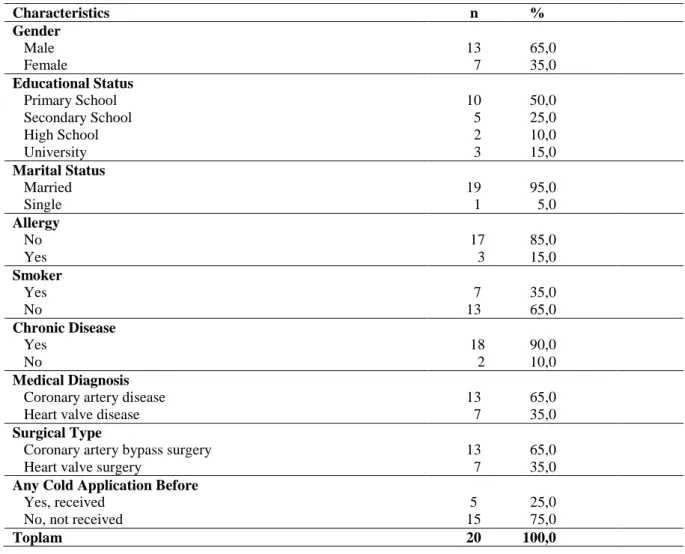
The mean age of patients was 57.05 ± 10.95 years; and mean body mass index was 28.14 ± 4.85. Among them, %65,0 percent were male, %50,0 were primary school graduates, %95,0 percent were married, %15,0 percent had allergies, %35,0 percent were smokers, %90,0 percent had a chronic disease, %65,0 percent were diagnosed of coronary artery disease and had
Sayfa 1781
undergone CABG, and %75,0 percent had not experienced cold application prior to this study (Table 1).
Table 1. Patients characteristics (N = 20)
Characteristics n % Gender Male Female 13 65,0 7 35,0 Educational Status Primary School Secondary School High School University 10 50,0 5 25,0 2 10,0 3 15,0 Marital Status Married Single 19 1 95,0 5,0 Allergy No Yes 17 3 85,0 15,0 Smoker Yes No 7 35,0 13 65,0 Chronic Disease Yes No 18 2 90,0 10,0 Medical Diagnosis
Coronary artery disease Heart valve disease
13 65,0
7 35,0
Surgical Type
Coronary artery bypass surgery Heart valve surgery
13 65,0
7 35,0
Any Cold Application Before
Yes, received No, not received
5 25,0 15 75,0
Toplam 20 100,0
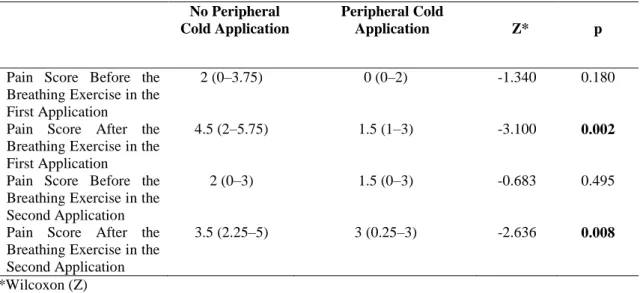
Table 2 provides a comparison of the patients’ pain scores before and after deep breathing and coughing exercise according to the cases with and without peripheral cold application. The patients’ pain scores before the deep breathing and coughing exercise with and without peripheral cold application in the first and second applications were also statistically similar. However, the patients’ pain scores after the deep breathing and coughing exercise with peripheral cold application in the first and second applications were statistically significantly lower than their pain scores received after the deep breathing and coughing exercises without peripheral cold application in the first and second applications (respectively, Z=-3.10, p=0.002; Z=-2.63, p=0.008; Table 2). The patients described their pain levels before, during, and after deep breathing and coughing exercise in all applications most frequently using the words/phrases of painful, being cut, rending, whining, and burning.
Sayfa 1782 Table 2. Comparison of pain scores before and after deep breathing and coughing exercise according to the cases with and without peripheral cold application (N = 20) (median and 25th-75th percentile values)
No Peripheral Cold Application
Peripheral Cold
Application Z* p
Pain Score Before the Breathing Exercise in the First Application
2 (0–3.75) 0 (0–2) -1.340 0.180
Pain Score After the Breathing Exercise in the First Application
4.5 (2–5.75) 1.5 (1–3) -3.100 0.002
Pain Score Before the Breathing Exercise in the Second Application
2 (0–3) 1.5 (0–3) -0.683 0.495
Pain Score After the Breathing Exercise in the Second Application
3.5 (2.25–5) 3 (0.25–3) -2.636 0.008
*Wilcoxon (Z)
Table 3 provides a comparison of the patients’ hemodynamic parameters before and after deep breathing and coughing exercise for the cases with and without peripheral cold application. Hemodynamic parameters before and after deep breathing and coughing exercise with and without peripheral cold application in the first and second applications were statistically similar. Table 3. Comparison of hemodynamic parameters before and after deep breathing and coughing exercise according to the cases with and without peripheral cold application (median and 25th¬-75th percentile values)
No Peripheral Cold Application
Peripheral Cold Application
Z* p
Before Breathing Exercises in the First Application
Systolic Blood Pressure** 125 (110–130) 120 (110–137.5) -0.147 0.883
Diastolic Blood Pressure** 70 (60–70) 70 (60–80) -1.941 0.052
Pulse Rate*** 99.5 (88.5–108) 101.5 (90.25–112.25) -1.019 0.308
Respiration Rate **** 28 (26–31.5) 28 (24.5–35) -0.229 0.819
Arterial Oxygen Saturation***** 92.5 (90–94.75) 93 (91–94.75) -0.264 0.792
After Breathing Exercises in the First Application
Systolic Blood Pressure 120 (110–130) 120 (112.5–137.5) -0.293 0.769
Diastolic Blood Pressure 70 (60–80) 70 (60–80) -0.707 0.408
Pulse Rate 101.5 (87–108) 98.5 (91.25–111.75) -0.830 0.406
Respiration Rate 30 (28–32) 29.5 (26.25–33) -1.486 0.137
Arterial Oxygen Saturation 95 (92.25–96.75) 94.5 (92–97) -0.236 0.813
Before Breathing Exercises in the Second Application
Sayfa 1783
Diastolic Blood Pressure 70 (60–77.5) 70 (60–80) -1.793 0.073
Pulse Rate 99 (91.25–108.5) 98 (89.25–110.75) -1.250 0.211
Respiration Rate 28 (24–31.25) 28.5 (24.25–32) -0.236 0.813
Arterial Oxygen Saturation 92.5 (92–95.75) 93 (91–95.75) -0.095 0.924
After Breathing Exercises in Second Application
Systolic Blood Pressure 120 (102.5–140) 120 (110–130) 0 1.000
Diastolic Blood Pressure 70 (60–70) 70 (60–80) -1.387 0.166
Pulse Rate 99.5 (89–111.75) 104.5 (88.75–112.75) -0.469 0.639
Respiration Rate 28 (26–35) 29.5 (26–32) -0.402 0.687
Arterial Oxygen Saturation 93.5 (92.25–96) 94 (93–96) -0.381 0.704
*Wilcoxon (Z) ** mmHg *** Beats/min **** Breath/min ***** %
Of the patients, 90% stated that they felt comfortable during peripheral cold application, 85% preferred it before deep breathing and coughing exercise and wanted to use it again, and 95% reported that they could recommend this application to other patients (Table 4). None of the patients complained of cold-related skin complications during peripheral cold application in the first application; all of them voluntarily agreed to receive it in the second application (Table 4). Table 4. Patient's thoughts on Peripheral Cold Application (N=20)
n %
Feeling during peripheral cold application
I was relieved I was very relieved
18 90,0
2 10,0
Preference for peripheral cold application before deep breathing and coughing exercise
I prefer I do not prefer 17 3 85,0 15,0
Preference for using peripheral cold application again before deep breathing and coughing exercise
I prefer I do not prefer 17 3 85,0 15,0
Recommendation of peripheral cold application to other patients before deep breathing and coughing exercise
I recommend I do not recommend 19 1 95,0 5,0 Toplam 20 100,0
Sayfa 1784 DISCUSSION
This quasi-experimental study was conducted to examine the effect of a peripheral cold application on sternotomy pain in patients with median sternotomy incision. Application reduced pain scores after deep breathing and coughing exercise. In addition, most of the patients reported that they were satisfied with the peripheral cold application. More over, study found statistically similar hemodynamic parametres values as measured before and after deep breathing and coughing exercise with and without peripheral cold application in the first and second application. These results could be useful to manage sternotomy pain after open heart surgery.
There are many studies in the literature report that deep breathing and coughing exercise to increase lung capacity after cardiac surgery cause sternotomy pain[27,28,29,30]. A study by 2010 year showed that the cold application on the second day after surgery over the sternotomy dressing of patients who underwent CABG relieved their sternotomy pain associated with deep breathing and coughing exercise[17]. Khalkhali et al. (2014) and Emrahimi-Rigi et al. (2016) also used a cold gel pack in the management of pain caused by sternotomy and stated that it reduces the pain of patients[11,18]. A study conducted in Turkey reported that cold application by using a cold gel pack before breathing exercises performed using spirometers after open heart surgery was not significant in pain scores before and after deep breathing and coughing exercise in cold gel pack group, but the difference was significant for patients with no cold gel pack group[19]. Similar results were reported in other studies conducted on this subject[11,18]. Taken together, these results suggest that the present study together with four other above-mentioned studies show that cold application is effective in managing the sternotomy pain associated with deep breathing and coughing exercise.
In the present study, patients described their sternotomy pain levels before and after deep breathing and coughing exercise most frequently with the words/phrases of painful, being cut, rending, whining, and burning. Similarly, patients in a study on this subject described their pain as tiring, frightening, and nauseating[29], whereas patients in another study on this subject described their pain as sharp, burning, palpitating, and repressive[31]. In a study conducted with 300 patients who underwent cardiac surgery in our country, 28% of the patients were defined as painful, 23.5% throbbing, 10.6% sharp and 6.5% burning and 4,9% breathlessness[27]. These results are important because they show that pain can be described using different expressions in different cultural contexts.
Sayfa 1785
Most of the patients who participated in the present study felt comfortable, preferred peripheral cold application before doing deep breathing and coughing exercise and wanted to use it again. Also, most of them reported that they would recommend this application to other patients. In a study aimed at reducing the pain associated with deep breathing and coughing exercise in patients with sternotomy, 69% of the participants preferred cold application before deep breathing and coughing exercise, 6% did not, and 25% did not[17]. Similarly, in other study reported that 90% of patients would use the gel pack for pain management in the future[11]. These results are important because they show that patients who have undergone open heart surgery may prefer cold application for the management of their sternotomy pain.
CONCLUSION
This study concludes that peripheral cold application on the median sternotomy incision before deep breathing and coughing exercise is effective in relieving patients’ sternotomy pain. Depending on these results, the cardiovascular surgery nurses are recommended to benefit from peripheral cold application a non-pharmaceutical method for the management of sternotomy pain, and to inform patients of the possibility of relief.
ACKNOWLEDGEMENT
This study was carried out as a master’s degree thesis, the requirement of Surgical Diseases Nursing Department of the Health Sciences Institute at Aydın Adnan Menderes University. We thank to Prof. Dr. Zekiye KARAÇAM who provided support for the writing of the research report and ‘Kalite Tercümanlık’ who made English translation of this article.
Conflict of Interest
Authors have not reported any conflict of interest. Research Funding
This study was carried out as a master’s degree thesis, the requirement of the Master's Program in the Surgical Diseases Nursing Department of the Health Sciences Institute at Aydın Adnan Menderes University. The research costs and expenses were covered by the Unit of Faculty Member Training Program at Aydın Adnan Menderes University.
Sayfa 1786 REFERENCES
1. Kervan Ü, Koç O, Özatik Ali M, Bayraktar G, Şener E, Çağlı K, et al. Distribution and servicequality of the cardiovascular surgery clinics in Turkey. Turk Gogus Kalp Dama 2011;19: 483-489.
2. Huffmyer JL, Groves DS. Pulmonary complications of cardiopulmonary bypass. Best Pract Res Clin Anaesthesiol 2015; 29: 163-175.
3. Badır A, Korkmaz FD. [Heart and Circulatory System-Coronary Artery Diseases]. Dahili ve Cerrahi Hastalıklarda Bakım. Adana: Nobel Tıp Kitapevleri; 2011. p. 473-508.
4. Karakaya D.[Principles of Postoperative Intensive Care in Patients Undergoing Cardiac Surgery]. Yoğun Bakım Sorunları ve Tedavileri. İstanbul: Nobel Tıp Kitabevi; 2011. p. 784-791.
5. Çam R. [Perioperative Nursing]. Bektaş H, ed. Taylor Klinik Hemşirelik Becerileri Bir Hemşirelik Yaklaşımı. Ankara: Nobel Akademik Yayıncılık; 2015. p. 277-308.
6. Baumgarten MCDS, Garcia GK, Frantzeski MH, Giacomazzi CM, Lagni VB, Dias AS, et al. Pain and pulmonary function in patients submitted to heart surgery via sternotomy. Rev Bras Cir Cardiovasc 2009; 24(4): 497-505.
7. Freitas ERFS, Soares BGO, Cardosa JR, Atallah AN. Incentive spirometry for preventing pulmonary complications after coronary artery bypass graft. Cochrane Database Syst Rev 2012; 9: 1-62.
8. Özer N, Özlü ZK, Arslan S, Günes N. Effect of music on postoperative pain and physiologic parameters of patients after open heart surgery. Pain Manag Nurs2013; 14(1): 20-28.
9. Ray BS, Natha H, Nageshwar V. Foot Reflexology: Effect on Pain and Anxiety In Postoperative Pain. IERJ 2017; 3(5): 49-51.
10. Miozzo AP, Stein C, Bozzetto CB, Plentz RDM. Massage therapy reduces pain and anxiety after cardiac surgery: A systematic review and meta-analysis of randomized clinical trials. Clin Trials Regul Sci Cardiol 2016; 23: 1-8.
11. Khalkhali H, Tanha ZER, Feizi A, Ardabili SS. Effect of applying cold gel pack on the pain associated with deep breathing and coughing after open heart surgery. Iran J Nurs Midwifery Res2014; 19(6): 545-549. 12. Hasanzadeh F, Kashouk NM, Amini S, Asili J, Emami SA, Vashani HB, et al. The effect of cold therapy and
lavender oil inhalation in cardiac surgery patients undergoing chest tube removal. EXCLI J 2016; 15: 64-74. 13. Kazan EE. [Cold applications and nursing care]. Hacettepe Üniversitesi Hemşirelik Fakültesi Dergisi
2011; 18(1): 73-82.
14. Güneş Z. [Skin Integrity and Wound Care]. Bektaş H, ed. Taylor Klinik Hemşirelik Becerileri Bir Hemşirelik Yaklaşımı. Ankara: Nobel Akademik Yayıncılık; 2015. p. 359-435.
15. Yağız OA. [Cryotherapy and use in sporty soft tissue injuries]. BESBD 1996; 1(4): 2-12.
16. Dundon JM, Rymer MC, Johnson RM. Total patellar skin loss from cryotherapy after total knee arthroplasty. J Arthroplasty 2013: 28(2); 376-e5.
17. Chailler M, Ellis J, Stolarik A, Woodend K. Cold therapy for the management of pain associated with deep breathing and coughing post-cardiac surgery. Can J Cardiovasc Nurs 2010; 20(2): 18-24.
18. Ebrahimi-Rigi H, Feizi A, Abdollahimohammad A, Ebrahimi-Rigi Z, Salehi-Ardabili S. Effect of cold therapy on the pain of deep-breathing and coughing in patients after coronary artery bypass grafting. Der Pharmacia Lettre 2016; 8(10): 201-205.
Sayfa 1787 19. Zencir G, Eser İ. Effects of Cold Therapy on Pain and Breathing Exercises Among Median Sternotomy
Patients. Pain Manag Nurs 2016; 17(6): 401-410.
20. Kılıç S. [Impact Size]. Journal of Mood Disorders 2014; 4(1): 44-46.
21. Barr J, Fraser GL, Puntillo K, Ely EW, Gélinas C, Dasta JF, et al. Clinical practice guidelines for the management of pain, agitation, and delirium in adult patients in the intensive care unit.Am J Health Syst Pharm 2013;41(1): 263-306.
22. Bjørnnes AK, Rustøen T, Lie I, Watt-Watson J. Leegaard M. Pain characteristics and analgesic intake before and following cardiac surgery. Eur J Cardiovasc Nurs 2016; 15(1): 47-54.
23. Bjørnnes AK, Parry M, Lie I, Fagerland MW, Watt-Watson J, Stubhaug A, et al. The impact of an educational pain management booklet intervention on postoperative pain control after cardiac surgery. Eur J Cardiovasc Nurs 2017; 16(1): 18-27.
24. Bulut H. [Preoperative and Postoperative Care]. Karadağ A ve Atabek Aştı T, eds. Klinik Uygulama ve Becerileri Yöntemi. Adana: Nobel Kitabevi; 2011.p. 1178-1214.
25. Erkal İlhan S. [Perioperative Care]. Akbayrak N, ed. Hemşirelik Bakım Planları (Dahiliye-Cerrahi Hemşireliği ve Psikososyal Boyut). Ankara: Alter Yayıncılık. 2007. P. 631-646.
26. Hoch CR. [Nursing Managment Postoperative Care]. Lewis S, Dirksen SR, Heitkemper MM, Bucher L, Camera IM, eds. Medical Surgical Nursing. USA: Elseiver. 2011. p. 366-382.
27. Eti Aslan F, Badır A, Karadağ Arlı S, Cakmakcı H. Patients’ experience of pain after cardiac surgery. Contemp Nurse 2009-2010; 34(1): 48-54.
28. Milgrom LB, Brooks JA, Qi R, Bunnell K, Wuestefeld S, Beckman D. Pain levels experienced with activities after cardiac surgery. Am J Crit Care 2004; 13(2): 116-125.
29. Yorke J, Wallis M, McLean B. Patients' perceptions of pain management after cardiac surgery in an Australian critical care unit. Heart Lung 2004; 33(1): 33-41.
30. Van Valen R, Van Vuuren H, Van Domburg RT, Van der Woerd D, Hofland J, Bogers AJ. Pain management after cardiac surgery: experience with a nurse-driven pain protocol. Eur J Cardiovasc Nurs 2012; 11(1): 62-69.
31. Hamid M, Gangwani AL, Akhtar MI. A Quality Improvement Survey to Assess Pain Management in Cardiac Surgery Patients. Open J Anesthesiol 2015; 5(05): 105.