INVESTIGATING THE RELATIONSHIP BETWEEN LEARNING STYLES AND THE EFFECTIVENESS OF ON-LINE SUPPLEMENTARY MATERIAL
A Master‘s Thesis
by
HAKAN CANGIR
The Department of
Teaching English as a Foreign Language Bilkent University
Ankara
INVESTIGATING THE RELATIONSHIP BETWEEN LEARNING STYLES AND THE EFFECTIVENESS OF ON-LINE SUPPLEMENTARY MATERIAL
The Graduate School of Education of
Bilkent University
by
HAKAN CANGIR
In Partial Fulfillment of the Requirements for the Degree of Master of Arts
in
The Department of
Teaching English as a Foreign Language Bilkent University
ANKARA
BĠLKENT UNIVERSITY
THE GRADUATE SCHOOL OF EDUCATION MA THESIS EXAMINATION RESULT FORM
July 9, 2010
The examining committee appointed by the Graduate School of Education for the thesis examination of the MA TEFL student
Hakan Cangır
has read the thesis of the student.
The committee has decided that the thesis of the student is satisfactory.
Thesis Title: Investigating the Relationship between Learning Styles and the Effectiveness of On-line Supplementary
Material
Thesis Advisor: Asst. Prof. Dr. JoDee Walters
Bilkent University, MA TEFL Program
Committee Members: Asst. Prof. Dr. Philip Durrant
Bilkent University, Graduate School of Education
Prof. Dr. Arif Altun
ABSTRACT
INVESTIGATING THE RELATIONSHIP BETWEEN LEARNING STYLES AND THE EFFECTIVENESS OF ON-LINE SUPPLEMENTARY MATERIAL
Hakan Cangır
M.A., Department of Teaching English as a Foreign Language Supervisor: Asst. Prof. Dr. JoDee Walters
July 2010
This study investigated (a) the effectiveness of CALL supplementary materials on students‘ overall classroom achievement, (b) the relationship between students‘ learning styles and their classroom achievement after instruction supported by online supplementary material, and (c) differences in students‘ approaches to using the CALL material due to their various learning styles. The study was conducted in two different settings, Ankara University and Trakya University, School of Foreign Languages with 98 participants, who were tertiary level intermediate students. An online program was used as an instrument and the data were collected through unit tests, a learning style survey, and a CALL features questionnaire.
The analysis of the quantitative data revealed that CALL as a supplement had a positive influence on students‘ overall classroom achievement. In addition,
although some significant correlations were seen, students‘ learning style preferences did not have a strong effect on their classroom achievement. Finally, some
they used the online supplementary material. However, the findings were not strong enough to generalize. Aside from the significant correlations, it was concluded that the features of the online program appealed to the students on both sides of the dichotomies and they appeared to benefit from the online program equally.
ÖZET
ÖĞRENME STĠLLERĠ ĠLE ÇEVRĠMĠÇĠ DĠL ÖĞRENĠM DESTEK
MATERYALLERĠNĠN ETKĠLĠLĠĞĠ ARASINDAKĠ ĠLĠġKĠNĠN ĠNCELENMESĠ
Hakan Cangır
Yüksek Lisans, Yabancı Dil Olarak Ġngilizce Öğretimi Bölümü Tez Yöneticisi: Yrd. Doç. Dr. JoDee Walters
Temmuz 2010
Bu çalıĢma, (a) Bilgisayar Tabanlı destek eğitim materyallerinin, öğrencilerin genel sınıf baĢarıları üzerindeki etkisini, (b) öğrencilerin Bilgisayar Tabanlı destek materyalleriyle yapılan eğitim sonrasındaki sınıf baĢarılarıyla öğrenme stilleri arasındaki iliĢkiyi, ve (c) öğrencilerin, farklı öğrenme stillerine bağlı olarak Bilgisayar Destekli dil öğretim programına karĢı değiĢen yaklaĢımlarını incelemektedir. ÇalıĢma iki ayrı üniversitede (Ankara Üniversitesi ve Trakya Üniversitesi) gerçekleĢtirilmiĢtir. Yabancı Diller Yüksek Okullarında yapılan çalıĢmada, 98 hazırlık sınıfı öğrencisi katılımcı olarak yer almıĢtır. AraĢtırma aracı olarak bir çevrimiçi dil öğretim programından faydalanılmıĢtır ve veri; ünite testleri, öğrenme stili anketi ve Bilgisayar Destekli Program özellikleri anketi ile
toplanmıĢtır.
Sayısal veri analizi, Bilgisayar Bazlı Ġngilizce Öğrenme destek programının öğrencilerin genel sınıf baĢarıları üzerinde olumlu etkisi olduğunu ortaya koymuĢtur. Buna ek olarak, araĢtırma kapsamında bağzı önemli korrelasyonlar gözlemlenmesine rağmen, öğrencilerin öğrenme stillerinin genel sınıf baĢarıları üzerinde etkisinin
olmadığı görülmüĢtür. Son olarak, öğrencilerin öğrenme stilleri ile çevrimiçi programı kullanma Ģekilleri arasında önemli korrelasyonlar saptanmıĢtır. Fakat, sonuçlar genelleyecek kadar kuvvetli değildir. Önemli korrelasyonların yanı sıra, çevrimiçi program özelliklerinin zıt öğrenme stillerine sahip öğrenci gruplarının her iki tarafına da hitap ettiği ve öğrencilerin programdan eĢit ölçüde yararlandıkları sonucuna varılmıĢtır.
Anahtar Kelimeler: Bilgisayar Destekli Dil Öğrenimi, öğrenme stilleri, etkililik, çevrimiçi destek materyaller.
ACKNOWLEDGEMENTS
I owe my deepest gratitude to my advisor, Dr. JoDee Walters for her guidance, patience, endless support, and encouragement throughout this research work. This thesis would not have been possible without her continuous assistance from the initial to the final level.
I am also thankful for the insightful suggestions and valuable comments of Dr. Julie Mathews-Aydınlı, Dr. Philip Durrant, and Dr. Kimberley Trimble.
Last but not least, I am indebted to my many of my colleagues to support me. Bless you my dear friends, Anıl Nalkıran, Halim Eden, and Gökhan Albayrak.
TABLE OF CONTENTS ABSTRACT………iv ÖZET………...vi ACKNOWLEDGEMENTS………...viii TABLE OF CONTENTS……….ix LIST OF TABLES……….xiv CHAPTER I: INTRODUCTION………..1 Introduction ... 1
Background of the study ... 2
Statement of the problem ... 7
Research questions ... 9
Significance of the study ... 9
Conclusion ... 10
CHAPTER II: LITERATURE REVIEW………...11
Introduction ... 11
Historical Background of CALL ... 12
CALL in the 1950s and 1960s ... 13
CALL in the 1970s and 1980s ... 13
CALL in the 1990s ... 14
Recent CALL ... 15
Advantages and Disadvantages of CALL ... 18
Attitudes towards CALL ... 20
Effectiveness of CALL ... 24
Learning Styles ... 30
Types of learning styles ... 31
CALL and Learning Styles ... 34
Research on the relationship between Learning Styles and CAL ... 34
Research on the relationship between learning styles and CALL ... 39
Conclusion ... 40
CHAPTER III: METHODOLOGY………42
Introduction ... 42
Setting ... 42
Ankara University ... 43
Trakya University ... 44
Participants ... 45
Instruments & Materials ... 46
Longman English Interactive Online (Learning Management System) . 46 Success Pre-Intermediate/Intermediate Course Book Unit Tests ... 47
Learning Style Survey (LSS) ... 47
CALL features questionnaire ... 49
Data Analysis ... 51
Conclusion ... 52
CHAPTER IV: DATA ANALYSIS………...53
Introduction ... 53
Data Analysis Procedure ... 53
Results ... 54
What are the effects of online classes as supplementary materials on tertiary level EFL students‘ classroom achievement? ... 54
What is the relationship, if any, between learners‘ learning styles and their performance on the classroom achievement tests supported by online supplementary material? ... 56
How do students with different learning styles respond to the various features of the online program? ... 64
Conclusion ... 75
CHAPTER V: CONCLUSION………..77
Introduction ... 77
Findings and Discussion ... 78
What are the effects of online classes as supplementary materials on tertiary level EFL students‘ classroom achievement? ... 78 What is the relationship, if any, between learners‘ learning styles and their performance on the classroom achievement tests supported by
online supplementary material? ... 80
Perceptual Learning Styles ... 80
Extroverted/Introverted Learning Styles ... 82
Random-Intuitive/Concrete-Sequential Learning Styles ... 83
Closure-Oriented/Open Learning Styles ... 84
Deductive/Inductive Learning Styles ... 85
Field-Dependent/Field-Independent Learning Styles ... 85
How do students with different learning styles respond to the various features of the online program? ... 86
Perceptual Learning Styles ... 87
Extroverted/Introverted Learning Styles ... 88
Random-Intuitive/Concrete-Sequential Learning Styles ... 89
Closure-Oriented/Open Learning Styles ... 90
Deductive/Inductive Learning Styles ... 92
Field-Independent/Field-Dependent Learning Styles ... 94
Limitations ... 95
Pedagogical Implications ... 96
Suggestions for Further Research... 98
Conclusion ... 99
REFERENCES……….101
APPENDIX B: LEARNING STYLE SURVEY (ENGLISH VERSION),
INFORMED CONSENT FORM………..115 APPENDIX C: LEARNING STYLE SURVEY (TURKISH VERSION),
INFORMED CONSENT FORM………..119 APPENDIX D: CALL FEATURES QUESTIONNAIRE
(ENGLISH VERSION)………123 APPENDIX E: CALL FEATURES QUESTIONNAIRE
LIST OF TABLES
Table 1 – Typology by Warschauer (2004) ... 12
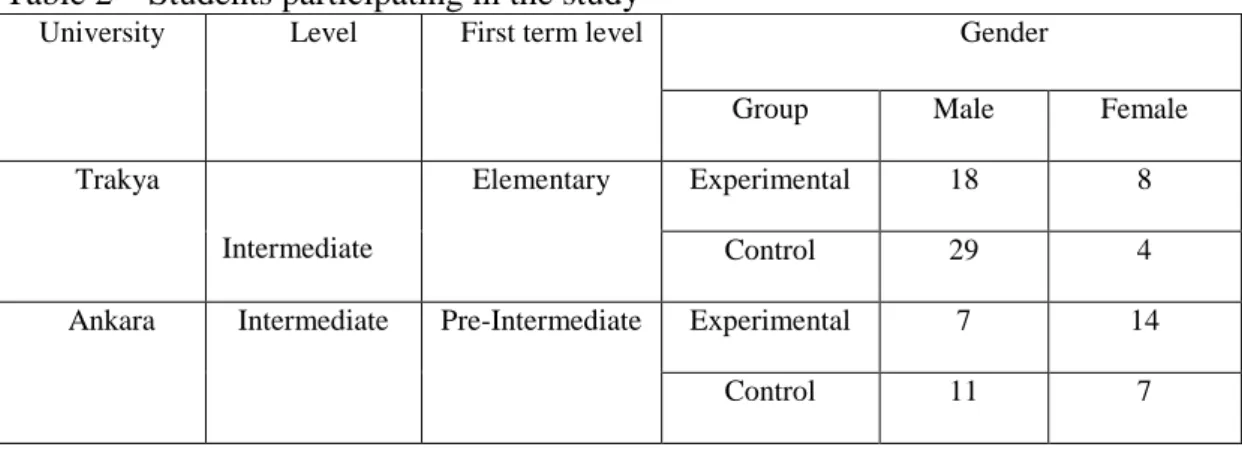
Table 2 – Students participating in the study ... 46
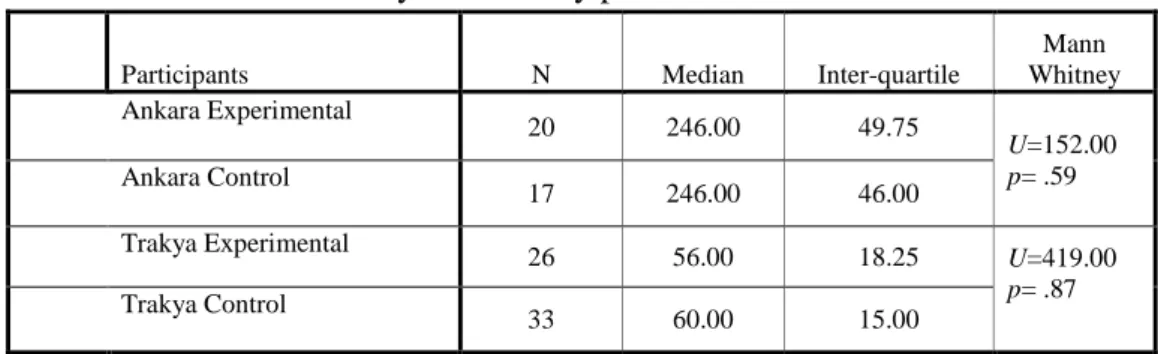
Table 3 – Ankara and Trakya University pre-test means ... 55
Table 4 – Ankara and Trakya University achievement test means ... 55
Table 5 - Cronbach alphas for learning style survey... 57
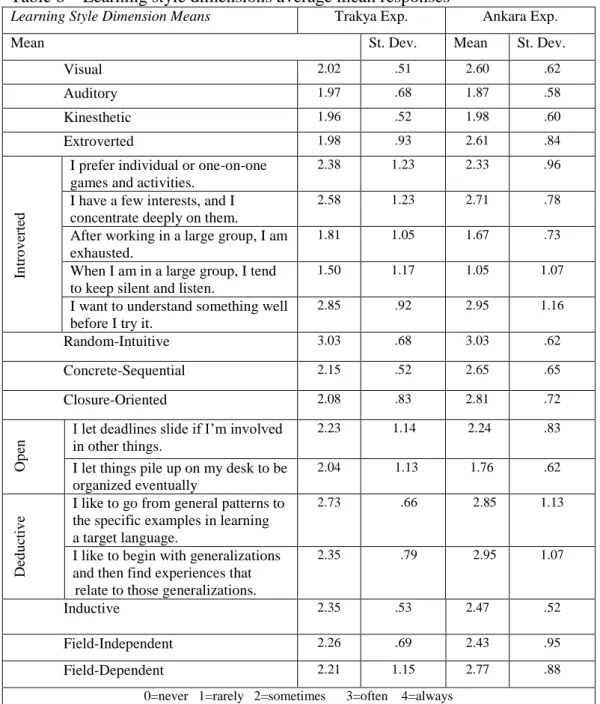
Table 6 – Learning style dimensions average mean responses ... 58
Table 7 – Perceptual learning style preference and quiz means correlations ... 60
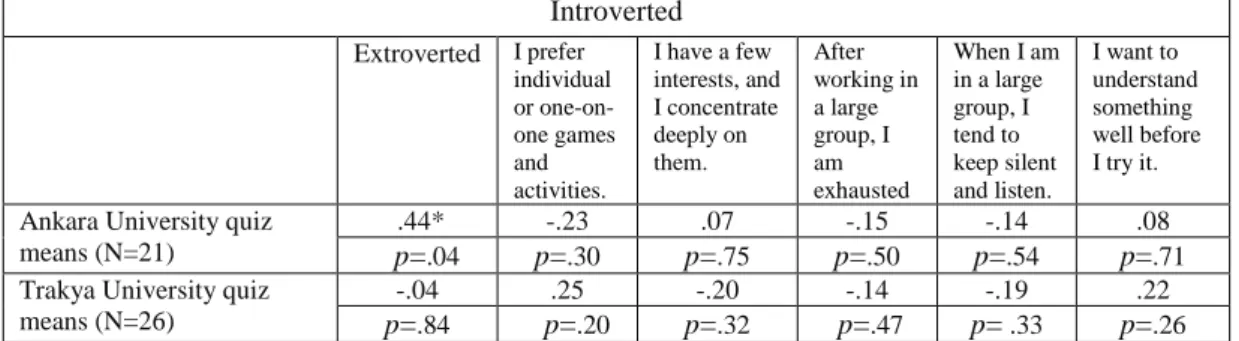
Table 8 – Introverted/Extroverted learning style preferences and quiz means correlations ... 61
Table 9 – Concrete-Sequential/Random-Intuitive learning style and quiz means correlation ... 62
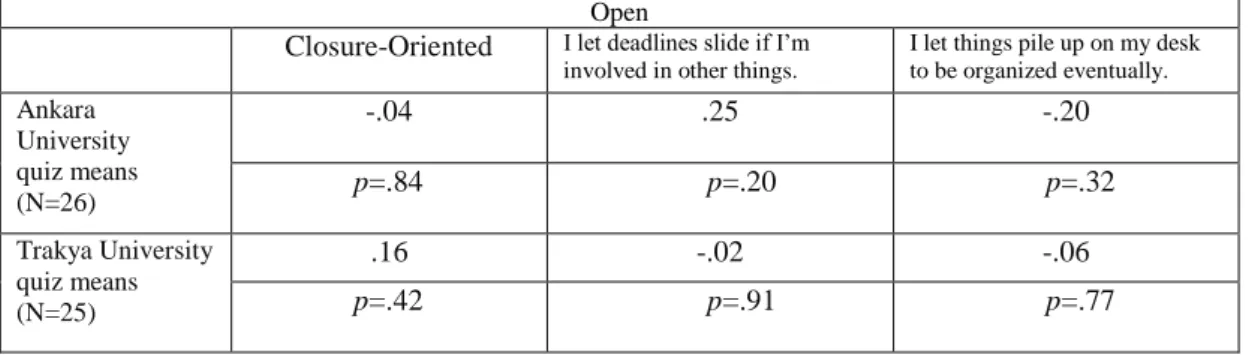
Table 10 - Open/Closure Oriented learning style and quiz means correlations ... 62
Table 11 – Deductive/Inductive learning style preferences and quiz means correlations ... 63
Table 12 – Field-Independence and quiz means correlation ... 63
Table 13 – Field-Dependence and quiz results correlation ... 64
Table 14 – Responses to the CALL features questionnaire ... 65
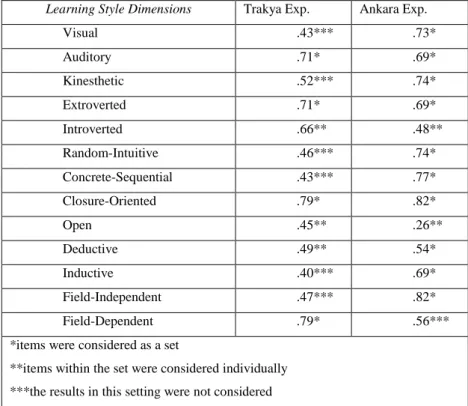
Table 15 – Cronbach alphas for the collapsed groups, (LSS) ... 66
Table 16 – LSS and CALL features questionnaire correlation (visual) ... 67
Table 18 – LSS and CALL features questionnaire correlation (kinesthetic) ... 68 Table 19 – LSS and CALL features questionnaire correlation (extroverted) ... 68 Table 20 – LSS and CALL features questionnaire correlations (introverted) ... 69 Table 21 – LSS and CALL features questionnaire correlations (random-intuitive) .. 70 Table 22 – LSS and CALL features questionnaire correlation (concrete-sequential) 70 Table 23 – LSS and CALL features questionnaire correlations (closure-oriented) ... 71 Table 24 – LSS and CALL features questionnaire correlations (open) ... 72 Table 25 – LSS and CALL features questionnaire correlations (deductive) ... 73 Table 26 – LSS and CALL features questionnaire correlations (inductive) ... 73 Table 27 – LSS and CALL features questionnaire correlations (field-independent) . 74 Table 28 – LSS and CALL features questionnaire correlations (field-dependent) .... 74
111 CHAPTER I: INTRODUCTION
Introduction
There are many language learners around the world and the way they are exposed to language differs according to their preferences, culture, status, family background, and so forth. However, it is an undeniable fact that learning English with the help of computers is a common feature shared by many students worldwide. As a result of the huge demand by English as a Foreign Language (EFL) and English as a Second language (ESL) students, in the last four decades, Computer-Assisted Language Learning (CALL) materials have gone from an emphasis on basic textual gap-filling tasks and simple programming exercises to interactive multimedia presentations with sound, animation, and full-motion video. The field of CALL has also undergone some changes due to developments in computers and the use of the internet. The focus has shifted from the need for computers in the classroom or comparisons between CALL and classroom teaching to applications in computer labs or web-based tools. CALL is now seen to be complementary to classroom activities (Beatty, 2003). Additionally, research in CALL covers an enormous range. Because the computer potentially interacts with all the key variables in language learning such as teachers, learners, methods, and materials, CALL research can involve almost any of the dimensions of instructed second language learning (Hubbard, 2003). However, since language learners have various ways for intake and comprehension of new information, their gains from a computer-assisted language class are likely to differ considerably. Learning styles, as part of this framework, have been used to describe an individual‘s natural, habitual, and preferred way of absorbing, processing, and retaining new information and skills (Reid, 1998). This study attempted to
investigate the relationship, if any, between learners‘ learning styles and their
achievement in a class supported by online supplementary material. Furthermore, the effectiveness of CALL in EFL students‘ classroom achievement was investigated. Lastly, the study sought to explore whether there were any differences in the students‘ approaches to using the CALL material due to their various learning style preferences.
Background of the study
Educational technology, also called learning technology, is the study and ethical practice of facilitating learning and improving performance by creating, using, and managing appropriate technological processes and resources (Richey, 2008). The World Wide Web, internet, multimedia, CD-ROM, and e-mail are some of the terminologies involved in educational technology. Although the terminology of technology is important, it is not the most crucial information that educators are expected to know. What is important, though, is an understanding of good pedagogy and the relationship among teaching, learning, and technology (Egbert & Smith, 1999). CALL is regarded as a framework for teaching and learning with technology. As access to hardware, software, telecommunication, and internet spread throughout the world, the need for an underlying pedagogical framework to support the use of these innovative technologies in the language classroom becomes even more critical (Egbert & Hanson-Smith, 1999). At the beginning of the 1980s, technology in the classroom came into use with films, television, and language labs with audio tapes. As technology developed, brand new programs were introduced in an attempt to provide the learners with a far more interactive and interesting language learning environment and as a result, computers started to gain importance in the classroom,
which eventually made technology-dominated classes common. Technology-assisted learning represents an attractive alternative or complement to face-to-face classroom learning, particularly because of its greater cost effectiveness (Hui, Hu, Clark, Tam & Milton, 2008. Furthermore, the idea of web classes was aroused and distance learning through these web-based classes integrated into traditional classes provided students with more flexibility in that these web classes met their needs more
effectively than merely face-to-face methods (Winter, 2002). As Fredericksen, Picket, Pelz, Swan, and Shea (1999) also state, on-line courses are, by nature, learner-centered and can have more active participation by all students in the class than in a traditional classroom. Without the structure of weekly classes, students are generally expected to take a more active role in their own learning. A fundamental difference is that instead of simply showing up to make their presence known, in an on-line class students must do something. For example, they must submit an
assignment, ask a question, or participate in a discussion.
In language teaching, CALL has long been the focus of research studies. However, since the field is growing rapidly and various new concepts are being introduced, the emphasis put on a specific aspect of CALL is changing accordingly. As Chambers and Bax (2006) state, CALL is in a developing process which will lead to a state where computers are fully integrated into pedagogy, a state of
normalization. Normalization is the stage when a technology is invisible, hardly even recognized as a technology, and taken for granted in everyday life (Bax, 2003).
Previous research studies in this area mostly focused on considering the advantages and disadvantages of CALL. Brown, as one of the first researchers (1997), for instance, listed some advantages of CALL, which are accurate scoring
and immediate feedback.According to Ikeda (1999), drill-type CALL materials are appropriate for repetitive practice, enabling students to learn concepts and key elements in a subject area. In another study, Winter (2002) emphasized the
importance of flexible learning, learning anywhere, anytime, anyhow, and anything you want, which is very proper for web-based instruction and CALL. Learners are given a chance to study and review the materials as many times they want without a time limit. Furthermore, according to Arias and Garcia (2000), using CALL in a classroom has many assets, such as increased motivation of the students,
individualization of the learning process, immediate feedback, non-linear access to information, and the introduction of new exercise types in the classroom.
Aside from the studies conducted on advantages and disadvantages, there have also been studies investigating students‘ attitudes towards CALL. Finkbeiner (2001) conducted a survey with the aim of understanding students‘ perceptions of CALL and he suggested that the learners had positive attitudes towards CALL and that integrating it into EFL classrooms would bring success in terms of students‘ proficiency levels. In another study, Palmer and Holt (2008) used a questionnaire to investigate students‘ perceptions of studying in the wholly online mode. Five items in the questionnaire were found to significantly contribute to a model that explained approximately 70% of reported student satisfaction with studying an entirely online unit. Students‘ satisfaction was principally related to how confident they felt about their aptitude for communication and learning online, and also students‘ contentment with having a clear understanding of what was required to achieve in the unit and how well they thought they were performing in the unit. As a result of the statistical analysis, they found that learner satisfaction is correlated with quality of learning
outcomes. In another study, Özerol (2009) investigated the perceptions of EFL teachers towards CALL. She used a questionnaire and conducted some interviews in an attempt to analyze their attitudes, which revealed in the end that most of the teachers who participated in the study reported being interested or very interested in CALL.
In addition to the aspects of CALL mentioned above, there also emerged a debate regarding the effects of CALL and thus a number of studies have been conducted with the idea that knowledge of differences between computer-based classes and traditional classes has great importance in terms of both academic purposes and in-class applications. Among the studies conducted on the effects of CALL, not only positive but also some neutral conclusions have been drawn. Felix (2008) conducted a study in order to summarize the research done to explore the effectiveness of CALL. He suggested that there were enough data to indicate positive effects on spelling, reading, and listening. Kılıçkaya (2007), who conducted a study to analyze receptive skills, states that web-based classes have a significant effect on EFL students‘ listening and reading proficiency in TOEFL (Test of English as a Foreign Language) but not on grammar. In another study, Tanyeli (2009) claimed that the participants of her study were more successful at reading comprehension when taught through web-assisted instruction than when they were taught
traditionally. It must also be noted that, regarding the influence of CALL, more studies seem to be focusing on receptive skills than productive skills.
In addition to the effectiveness of CALL on language learning, the relationship between learning styles and the effectiveness of CALL on students‘ classroom achievement is another key concept to be taken into consideration.
Learning styles can be defined as internally based characteristics, often not perceived or consciously used by learners, for the intake and comprehension of new
information (Reid, 1998). We can talk about various learning style dimensions, but six of them are the main focus of this study. Those six learning style dimensions are visual/auditory/kinesthetic, extroverted/introverted, random-intuitive/concrete-sequential, closure-oriented/open, deductive/inductive, and field- independent/field-dependent.
The relationship between learning styles and computer-assisted learning has been investigated in several studies so far and it has been suggested that students with certain learning styles benefit more from computer-assisted learning (Clariana, 1997; Soylu & Akkoyunlu, 2009). Luk (1998) investigated the relationship between field-dependence and academic achievement in the context of online learning. Fifty-one nursing students took part in the study. The students‘ academic achievement scores at the end of the units in the online program were correlated with their learning style preferences. The analysis revealed that field-independent students scored significantly higher in the academic achievement tests than the
field-dependent students. To be more precise, the more field-infield-dependent a student was, the better his academic achievement was.
Ross and Schulz (1999) investigated the influence of learning styles on human computer interaction. Seventy undergraduate volunteers from Calgary University took part in the study and ―The Gregorc Style Delineator‖ and pre- and post-tests were used. The results indicated that learning styles significantly
influenced learning outcomes and also there seemed to be a relationship between dominant learning styles and achievement scores. The researchers also noted that,
based on the findings, abstract-random learners may be at risk for doing poorly with particular forms of computer-aided instruction.
Although considerable research has been devoted to the effects of CALL on EFL students‘ reading, listening, grammar, and vocabulary skills, no attention has been paid to the improvement in students‘ overall classroom achievement. Another important point is that very little information exists on different learning styles and their correlation with CALL effectiveness. Furthermore, the previous studies have only looked at one or two learning style dimensions at a time. The main purpose of the experiment reported here is to analyze the relationship between learning styles and the effectiveness of computer-assisted language learning on tertiary level EFL students‘ classroom achievement. The present work also differs from previous studies by investigating the students‘ overall classroom achievement rather than focusing only on receptive skills. Finally, no studies exploring the relationship between students‘ learning style preferences and their different approaches to using an online program have been conducted.
Statement of the problem
Many research studies have been conducted on the attitudes and perceptions of EFL learners towards CALL (Finkbeiner, 2001; Palmer & Holt, 2008; Özerol, 2009). In addition, a great number of researchers have focused on comparing CALL with traditional classes and have found it to be advantageous in some aspects, but disadvantageous in others (Ikeda, 1999;Arias & García, 2000; Winter, 2002). Last but not least, recent research studies have focused attention on the effects of CALL on EFL students‘ proficiency, mostly in terms of receptive skills, such as reading and listening. However, no study has attempted to analyze the relationship between
learners‘ learning styles and their achievement in a class supported by CALL
materials. Furthermore, no study has ever investigated students‘ approaches to using CALL materials in terms of their learning styles.
At the local level, my home institution, Ankara University, has undergone various changes so as to supply the best learning opportunities for its tertiary level students. For instance, the preparatory school has been moved to a new building which is equipped with numerous technological facilities such as computer labs, DVDs, and projectors in each class, wireless connection all around the building, and a web class application called ―Longman English Interactive Online‖. However, the desired outcome does not seem to have been achieved. I have observed that few teachers seem to be taking advantage of many of these facilities. This might be because of the fact that they do not believe in the effectiveness of CALL or they think that it is not applicable in the classroom environment. Another important point to be mentioned is that they may not be aware of the extensive research that has suggested the benefits of CALL and the possible learning opportunities and flexibility it provides. Furthermore, although the program ―Longman English Interactive Online‖ was used by the university a year ago, the decision makers claimed that it was ineffective. One possible reason for the ineffectiveness of the online program may be the students‘ different learning styles. In other words, in deciding that the web-class was ineffective, the students‘ possible different
approaches to using the online program due to their various learning styles were not taken into consideration by the administrators. Thus, there is a need for an
investigation of the students‘ approaches to using the online program in terms of their learning styles.
Research questions
This study will investigate the following research questions:
1. What are the effects of online classes as supplementary materials on tertiary level EFL students‘ classroom achievement?
2. What is the relationship, if any, between learners‘ learning styles and their performance on the classroom achievement tests supported by online supplementary material?
3. How do students with different learning styles respond to the various features of the online program?
Significance of the study
Though CALL is not a newly recognized framework for technology in language learning, studies conducted to examine its effectiveness do not appear to cover all the necessary language skills, reading, listening, speaking, and writing. This study will contribute to the literature by analyzing the effectiveness of CALL on tertiary level EFL students‘ overall classroom achievement. More importantly, since no research studies have been conducted on the correlation between EFL students‘ learning styles and the effectiveness of CALL materials on students‘ classroom achievement or on the way students use the CALL program, this study will also contribute to the field by showing the different outcomes and approaches, if any, for different learning styles.
At the local level, this study might provide evidence to encourage teachers to incorporate CALL into their classes. It might also raise awareness of taking students‘ learning styles into consideration when deciding whether or how much CALL to incorporate.
Conclusion
This chapter has covered the background of the study, statement of the problem, and significance of the study. The research questions to be addressed throughout the thesis have also been presented. The next chapters will present a detailed literature review, the methodology followed, data analysis, and conclusion, respectively.
CHAPTER II: LITERATURE REVIEW
Introduction
Computer-assisted language learning (CALL) is an approach to teaching and learning through which the materials to be learned are presented, promoted and evaluated with the help of the computer and computer-based materials, such as the Internet and software, and it is generally reinforced by interactive aspects. The field of CALL also includes the search for and the investigation of applications in
language teaching and learning (Levy, 1997). CALL can also be considered as any process in which a learner uses a computer and, as a consequence, improves his or her own language. As the term itself suggests, CALL has a rapidly changing nature due to technological innovations and thus the direction of the research conducted changes.
There are also other terms which are peripheral to CALL. For instance, CALI, which originated in the USA in the 1960s and was in common use until the early 1980s, stands for ―Computer-Assisted Language Instruction‖. Furthermore, the term CMC symbolizes ―Computer- Mediated Communication‖ and it refers to a situation in which computer-based discussion may take place but without necessarily
involving learning. Thirdly, TELL (Technology-Enhanced Language Learning) refers to any technology used in the classroom, such as video, tape recorders or even entire listening labs (Beatty, 2003).
This study sets out to investigate the relationship between the effectiveness of CALL and learning styles. It also explores the students‘ different approaches to online supplementary materials due to their various learning style preferences. In this
chapter, after detailed information regarding the historical background of CALL, some more information about the advantages/disadvantages of CALL, attitudes towards CALL, and the effectiveness of CALL will be presented. Finally, as the second major concept in the study, the literature on learning styles and the research on the relationship between computer-assisted (language) learning will be
synthesized.
Historical Background of CALL
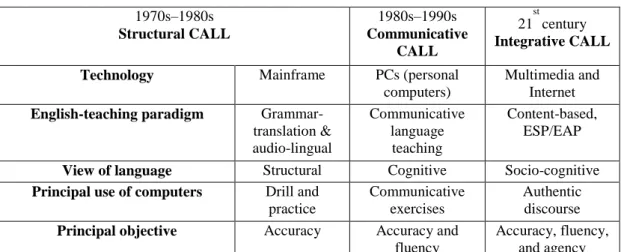
Although CALL history dates back to the 1950s, according to Warschauer, there are three stages of CALL, which are Structural CALL (1970s-1980s),
Communicative CALL (1980s-1990s) and Integrative CALL (21st century). Table 1 gives a picture of Warschauer‘s view of CALL history.
Table 1 – Typology by Warschauer (2004)
We learn from this table that over the years, technology and English teaching methods, the reasons for using computers, and the objectives for language learning have changed. The following sections will briefly review the history. The account given here is based on Beatty (2003) and Bax (2003).
1970s–1980s Structural CALL 1980s–1990s Communicative CALL 21 st century Integrative CALL
Technology Mainframe PCs (personal
computers)
Multimedia and Internet
English-teaching paradigm Grammar-translation & audio-lingual Communicative language teaching Content-based, ESP/EAP
View of language Structural Cognitive Socio-cognitive
Principal use of computers Drill and practice
Communicative exercises
Authentic discourse
Principal objective Accuracy Accuracy and fluency
Accuracy, fluency, and agency
CALL in the 1950s and 1960s
The first time computers were used for language learning was in the 1950s and they were only available at research facilities on university campuses. That caused problems since students had to leave their regular classes and move to another class to get computer instruction. Additionally, the high cost of these earlier
machines was regarded as a huge problem. Nevertheless, as finding means for effective language teaching was vital, time and funds were provided for research. The first CALL programs were created at three pioneering institutions: Stanford University, Dartmouth University, and the University of Essex. PLATO
(Programmed Learning for Automated Teaching Operations) was among the first and most important applications for language learning with the help of computers and it was designed at the University of Illinois. Much of the language work on the program was done using a grammar translation approach. Richards and Rodgers (1994) noted that the grammar translation method dominated European and foreign language teaching from the 1840s to the 1940s. As this was the trend of the period, applying this approach to computer-assisted language learning was inevitable. However, this method appeared to work to only a limited degree because it did not appeal to all learning styles and students with various learning strategies.
CALL in the 1970s and 1980s
During the 1970s and 80s, computers were classified as mainframe, mini, and microcomputers. One focus of CALL research during this period was videodisc technology, a high-volume storage system. Unlike videotape, videodisc players enabled users to access multiple points on a disc. Thanks to the high speed and storage capacity of videodisc technology, computers were capable of providing
video-based exercises, where previously they were only capable of supplying
learners with textual exercises. Bush (1997, p. 287) stated that the use of video-based exercises made practice more meaningful than traditional text-based exercises. Video provides students with a context in which they have the chance to see the real life reflections of the structure or vocabulary they learn. ―Macario‖, ―Montevidisco‖, and ―Interactive Digame‖ are some of the early examples of videodisc programs. Some other more advanced programs such as ―No Recuerdos‖ and ―A la rencontre de Phillippe‖ opened to learners the door of a semi-authentic language environment. These approaches served to encourage language acquisition in that learners were made to explore and interpret the information essential for a particular given task.
CALL in the 1990s
In the 1990s, the approach of teaching with computers became
communicative. The principal aim of the programs in this period was to provide students with as many communicative exercises as possible in an attempt to get students to gain not only accuracy but also fluency. As Bax (2003), who seems to object to some of the terms used by Warschauer, states, this period, which includes simulations and games, can be regarded as ―Open CALL‖ because it is relatively open in all dimensions, such as the feedback given to students and the role of the teacher. According to him, in this period, the role of the teacher was to facilitate language learning with the help of computers. Some teachers in this period found computers frightening, while others were awed. As for CALL‘s position in the syllabus, it was an optional and extra practice and it was not part of the normal lesson. Students used to go to separate labs where they spent the whole class time with computers.
Recent CALL
Nowadays, we have the potential to use computers for real communication means. However, the open dimension of technology and software doesn‘t seem to be matched by an open attitude in other principal areas, such as teachers‘ attitudes, administrators‘ perceptions, and the time issue. Additionally, a great amount of software being developed today, though innovative, is still of a comparatively restricted type. It can be concluded that we are in still Bax‘s (2003) ―Open phase of CALL‖. However, it is also true that there are some institutions and classes which are still in the ―Restricted‖ phase and also some which are in the ―Integrated‖ phase. More recent researchers in CALL have preferred a learner-centered exploratory approach, where students are encouraged to work out possible solutions to a
problem. To illustrate, the use of concordance programs, which is also described as data-driven learning (DDL), a term invented by Johns (1986), has become popular over the last few years. Integrated CALL and integrated language skills are concepts that will probably be taken into account more frequently in the upcoming years. Bax (2003) states that the end goal for CALL is ―normalization‖, explaining that this concept is relevant to any kind of technological innovation and refers to the stage when technology becomes invisible, embedded in everyday practice and hence normalized (p.23).
As technology has advanced in time, the applications used in the language classroom have also evolved. As Warschauer (2004) explains in his overview of CALL history, due to the changes in language teaching aims and thanks to
technological developments, the materials used in the language classroom have also changed. The following part of the literature review will provide insight into the
basic types of applications employed in computer-assisted language learning environments.
CALL Applications
Beatty (2003) states that of the many CALL applications which are widely used and can be considered as essential, four may be considered as the most common ones and also a fifth is the most relevant to the topic of the present study since it is one of the instruments to be exploited. First of all, word processing is an application which is widely used worldwide; nowadays computers are sold with a version of it already installed. It is seen as a useful tool by language learners in that it has some practical features such as spell checking and word counting. In terms of research, attention appears to have shifted from spell checking or grammar checking to computer-based composition.
Secondly, educational games are used to make the classes fun and they can be considered as implicit ways of teaching, since learners are not fully aware that they are learning something. There are a number of game programs which aim to teach language in an enjoyable way. Most course book designers also attempt to support their books with interactive CDs which include different types of games for different purposes, such as vocabulary learning and grammar reinforcement. Excitement is necessary in computer-based learning materials, particularly if they are used for young learners.
Wu (1992) states that corpora are also other current and useful devices for learning a language through computers. Not only teachers, but also students can use online corpora in the classroom so as to find common and real life usages of a word or group of words.
Warschauer (1995) states that email is one of the most popular activities on the Internet for language learners. Students can use email to communicate with peers, their teachers, and native speakers. Additionally, email can also be employed to set assignments.
Internet resources are the tools most favored by learners these days as the Internet is easily accessible from almost every house and most institutions have either a cable or wireless Internet connection. The fact that laptops are common and affordable can be given as another reason for students‘ interest in Internet resources. To give an example for an internet resource, which was also used as an instrument in the present study, as it is presented in the publishing company‘s website, Longman
English Interactive Online, is a four-level video-based, integrated-skills web-class
application including over 100 hours of instruction per level. The online class application provides presentation and practice in grammar, vocabulary, reading, writing, listening, speaking, and pronunciation
(http://www.longmanenglishinteractive.com/whatis.html).
The change in technology has brought about more opportunities in terms of CALL materials to be used in the language classroom. The advent of new CALL applications has provided both teachers and learners with numerous tools which are likely to help learners develop their language skills. However, these new
technologies have also caused some problems and some disadvantages have emerged as well as their advantages. The following section will give brief information about the experts‘ views on the advantages and disadvantages of CALL. Additionally, research conducted to investigate the advantages and disadvantages of CALL will be presented.
Advantages and Disadvantages of CALL
Educators (Jonassen, 1996; Rost, 2002; Salaberry, 1999) state that current computer technology has many advantages for second language learning. Computers, English Language Teaching programs, and the Internet could supply second
language learners with more independence and enable them to study at any time they want without any limitations. Lee (2000) further states several reasons that we should employ computer technology in second language learning. Firstly, computers are able to supply the students with practice opportunities by means of experiential learning. Secondly, they can foster students‘ motivation and as a result, enhance student achievement. Thirdly, they have the capacity to provide students with authentic materials. Finally, it is also true that computers and language learning programs are able to get students to interact more and develop global understanding.
Brown (1997) stated the advantages of CALL in his study conducted to investigate the advantages of computers in language testing. According to him, CALL is advantageous in many aspects. For instance, he stated that computers are more accurate at reporting scores and much more immediate at giving feedback. Computer-adaptive testing allows testers to target the particular ability levels of individual students, thus providing more accurate estimates of language skills. Winter (2002) also laid emphasis on the flexible learning opportunities CALL provides. He stressed the advantage as ―learning anytime, anywhere, and anyhow‖, ―learning whatever you want‖, and ―learning at your own pace in your own style‖ (p. 26).
In a recent study, Yağcıoğlu (2008) explored the use of web classes in language teaching. She tried to explore the advantages of websites in language
learning by asking the opinions of the scholars in the field. According to one of the professors mentioned in the study, distance learning can be advantageous especially when some factors make students unable to attend the classes, and thus using
websites for improving your language skills on your own could be the best option in certain circumstances. This remark is particularly important since part of the main focus in this study is online supplementary materials, learning on your own, and online classes.
On the other hand, although there are numerous advantages of computer-assisted language learning, it also has its limitations and drawbacks. Gips, DiMattia, and Gips (2004) suggested that one of the utmost disadvantages of CALL was its high cost and the possibility of its harming equity of education. To be more precise, schools with high incomes have the means to reach new technologies, unlike schools with low incomes. In order to get the best out of computers in language learning and teaching, both students and teachers should have basic computer knowledge.
Therefore, the benefits of computer technology for students who are not familiar with computers are non-existent (Robyler, 2003). What is more, the differences among students‘ familiarity with computers may lead to discrepancies in their performances on a computer-based test (Hicks, 1989).
In addition, the software of CALL is far from being perfect. Computers are only able to deal with three of the four basic skills in language learning - reading, listening, and writing - for the time being. Although there are some recently developed speaking programs, it is obvious that their functions are highly limited. Warschauer (2004) points out that a language learning program needs be able to understand a speaker‘s input and evaluate it not only for correctness but also for
appropriateness. It needs to be able to detect a student‘s problem with pronunciation, syntax, or usage and then help him/her fix it. However, this aim does not seem to have been achieved yet.
Although most of the studies claim that CALL is more advantageous than the traditional type of learning, some studies regarding CALL as disadvantageous can be given as examples. To give an example, Brown (1997) in the same study mentioned above also indicated some disadvantages of CALL. First of all, he states that
computer equipment may not always be available or be in working condition. The message he tries to convey here is that not every country has the necessary sources of electricity in order to meet their basic needs, let alone computers. Additionally, he states that limited screen size could be another problem. In terms of performance consideration, doing a test on computer might produce different results from a test done on paper (Brown, 1997).
The advantages and disadvantages of CALL lead to various beliefs regarding its applicability in the language classroom. Whether replacing traditional instruction completely with CALL or supplementing the regular classes with it, its effectiveness on different language skills, and its cost, as well as its practicality are some of the issues that have been raised by teachers and language learners. The following section will present the research studies exploring the students‘ and teachers‘ attitudes and perceptions towards CALL.
Attitudes towards CALL
Since the time computers first appeared in the classroom, the attitudes of students and teachers towards technology use in the classroom have been of great interest for research because integrating technology into the second language
classroom presents an unfamiliar situation for the learners, in which traditional instruction loses its intensity (Beatty, 2003). Students‘ perceptions of this shift shape their comprehension, interaction, and performance. When we think of the current situation, it is possible to say that most students these days tend to like using computers in language learning. It can be explained by the fact that they are
technology natives and they prefer learning with a practical approach, without much effort (Karpati, 2009). However, in order to get a clearer picture of what students‘ and teachers‘ attitudes towards CALL are, we need to explore some of the research conducted and the articles written on this issue.
Ayres (2002) conducted research with 157 non-native speaker undergraduate ESL participants who were enrolled in various certificate and diploma courses at the School of English and Applied Linguistics at UNITEC Institute of Technology. The researcher explored whether the students believed that an improvement in language competency had resulted from using CALL. The results of the study revealed that 80% found CALL to be relevant to their needs. Secondly, 77% said that the
computer tasks supplied useful information to them and lastly, 60% had the opinion that CALL should be used more. Although they favored computer-assisted learning, they did not see it as a worthwhile replacement for classroom-based learning. Another important point to note is that though 60% of the students saw their
computer skills as at a beginner level, the majority stated that they found CALL easy to use (68%) and relevant to their needs (80%). To sum up, learners saw CALL as enhancing but not a replacement for their classroom-based instruction.
Palmer and Holt (2008) did a study to examine student satisfaction with wholly online learning. Seven hundred and sixty one students were surveyed.
Respondents were asked to indicate the significance of, and their satisfaction with a range of aspects of their wholly online study. Surprisingly, the items which were rated as least important were those that might be regarded as fundamental
requirements for online learning, such as being able to learn without face-to-face contact and interacting online with other students. The items with the highest
satisfaction were unit-related activities supported by the online environment, such as assignment submission and access to digital resources. Participants were also asked to indicate their level of agreement with a range of statements. Items with the highest agreement were related to the students‘ positive functional use of the online learning environment, while items with the lowest agreement were related to the quality of assignment feedback. The researchers stated that empirical findings could suggest design and management strategies for online learning environments to maximize satisfaction and thus positive student learning outcomes.
Sagarra and Zapata (2008) investigated the attitudes of 245 learners of Spanish as a second language towards online workbooks. The participants were exposed to four hours of classroom instruction and one set of online homework per week. Students‘ attitudes towards the online workbook were assessed by means of a survey administered after eight months of exposure to the online material. The
majority (71.7%) of the students expressed strong to moderate agreement, stating that the online homework helped them learn Spanish, and only a small number (5.6%) strongly disagreed with this statement. One-third of the learners moderately agreed that their listening (30.5%), pronunciation (34.44%) and reading skills (34.5%) in Spanish had improved after they did the online activities, and approximately two-thirds of the respondents (66.1%) agreed that completing online homework promoted
their L2 grammatical and lexical knowledge. Students were also given tests to analyze the effectiveness of the online workbook. The results of the second semester final test during which the online workbook wasn‘t being used were compared with the results of the third semester final test when students were exposed to the online material. The results were parallel with the positive findings of students‘ perceptions about the online workbook and the results were also consonant with the previous studies which underline the benefits of CALL and positive attitudes towards it. However, some negative features, such as the amount of time required to finish the activities, were revealed.
Jarvis and Szymczyk (2009) examined students‘ attitudes to learning
grammar in autonomous contexts. In total, 38 students were surveyed and 13 of them were provided with web and paper based materials. Then, they completed a series of questionnaires related to what they favored and disliked about the two different types of materials. After that, an interview was conducted with four students to get their responses in more detail. The findings revealed that in spite of the prospective advantages of the computers and though most participants could be considered to be digital natives, they preferred working with paper-based materials. The researchers conclude that the tutorial CALL has a role but is not yet likely to replace paper-based materials.
The attitudes and perceptions of both the learners and the teachers were based on either the effectiveness or the ineffectiveness of CALL materials. Their
satisfaction with online learning, its effectiveness on the students‘ language skills, and the relationship between the students‘ perceptions and the effectiveness of CALL
were the major issues previous research has focused on. The next section of the literature review will present research investigating the effectiveness of CALL.
Effectiveness of CALL
The effectiveness of computers in education has long been a concern. Educators and educational institutions have an urgent necessity to realize the extent of the impact of computers on learning so that they can decide whether to incorporate CALL into their regular classes (Dunkel, 1991). One of the major problems in
examining the effectiveness of CALL in general is that research conducted up to now is rather rare in comparison with other disciplines (Dunkel, 1991; Windschitl, 1998). Although we can say that a flawless research design to explore CALL effectiveness remains unachieved, a positive inclination towards blending quantitative and
qualitative methods can be observed. The majority of the studies in regard to CALL effectiveness have focused on particular language skills, such as grammar, listening, writing, or the students‘ vocabulary knowledge. The following research studies will present findings explaining the effectiveness of CALL in terms of certain language skills.
Nagata (1996) stated that many studies have failed to indicate the
effectiveness of CALI (Computer-Assisted Language Instruction) when compared with non-CALI instruction. He attempted to compare the effectiveness of CALI with non-CALI workbook instruction. Two first-semester Japanese classes at the
University of San Francisco took part in this study. The results of the study demonstrated that intelligent computer feedback is more effective than workbook answer keys for improving students‘ grammar competencies. A significant difference between CALI and the workbook instruction was discovered in the production tests.
A similar study focusing on the same skill was conducted by Abuseileek and Rabab‘ah (2007). Their paper presents an experimental study in which they aimed to analyze the effect of ―Computer-Based Grammar Instruction‖ on the acquisition of verb tenses in an EFL context. There were two differently taught groups. One of them was taught with computer-based grammar instruction, whereas the other was taught traditionally with a teacher‘s instruction. Two methods of grammar teaching were used in each group, which were the ―initial rule-oriented approach‖ and the ―structure guessing approach‖. The results revealed that the experimental group which was using the computer-based grammar instructional method performed better on the classroom achievement tests than the control group.
In a study showing the same skill to be positively affected by CALL, Ikeda (1999) analyzed the use of sound hints in the computer-aided grammar instruction with 21 Japanese upper and lower level participants. He stated that lower level learners used sound hints more frequently than the upper level learners when studying grammar. Furthermore, when dealing with grammar, lower level learners used sound hints before answering, whereas upper level students used hints after answering. On the whole, it can be concluded from Ikeda‘s article that drill-type CALL materials are more effective for repetitive practice and they strengthen grammar.
In another study focusing on students‘ vocabulary knowledge, Ghabanchi and Anbarestani (2008) conducted research in order to analyze the effect of a CALL program on expanding the lexical knowledge of Iranian intermediate EFL learners by comparing two groups of students. Fifty six participants who were assigned to the level as a result of a placement test took part in the study. Since the participants were
willing to prepare for the Test of English as a Foreign Language (TOEFL), a vocabulary class was planned to assist them in enhancing their lexical knowledge. The participants were selected voluntarily from among the students who had personal computers at home. The participants of both groups were studying a TOEFL practice book (Essential Words for TOEFL) in their classes. The experimental group students were required to work with a computer and some CDs, whereas the control group used a dictionary and bilingual word lists. The scores obtained from the pre-test, aiming to assess the difference in the students‘ vocabulary knowledge, indicated that the great majority of subjects were homogeneous. CALL users preformed better in not only immediate but also delayed cloze tests and researchers came to the
conclusion that CALL produced better outcomes in contextualized vocabulary learning than did the conventional dictionary approach.
In a study analyzing the same language skill, Allum (2004) did research to explore whether CALL is advantageous in initial vocabulary learning. Students were assigned three matching tasks which included some receptive and some productive vocabulary. Both receptive and productive retrieval groups gained 50% on the immediate post-test on the whole. This resulted in an average final score of about 80%, which means that the CALL work resulted in the learning of nearly 30 words in total. Additionally, as an extension to the same study to analyze whether pre-teaching vocabulary with CALL would be beneficial for the students, they were assigned to do homework designed to help them learn vocabulary before they came to class. Students having completed the homework came to class knowing roughly 85% of the total of 74 targeted words. Thus, Allum suggested that pre-teaching by CALL is very effective for targeted vocabulary learning and this is very advantageous in terms of
class time by allowing much more productive and less restricted exercises. However, the study couldn‘t clearly answer whether CALL used in productive retention
exercises would give a specific advantage. Furthermore, Allum also revealed in his study that students tend to do more homework with CALL than they do with the printed media alone.
Ekane and Maiken (1997) conducted a quasi-experimental study focusing on the same language skill with 40 secondary school students in Cameroon. The main aim of this study was to compare the effects of teaching vocabulary with computers with the conventional method. Results revealed that, unlike the findings of
Ghabanchi and Anbarestani, there was very little significant difference in the academic performance of both groups. However, the students in the experimental group showed positive attitudes towards vocabulary learning with the help of
computers. The difference between the two studies may be explained by the different settings or the different features of the CALL instrument.
A later field experiment addressing both vocabulary and listening skills by Hui et al. (2008) compared the effectiveness of and satisfaction with technology-assisted learning with face-to-face learning. The participants were freshman students at a prominent university in Hong Kong. The control group participants met in the class twice as often as the experimental group but the former had no access to the course website. The researchers had a presupposition that the use of technology in language learning could improve students‘ vocabulary skill better than face-to-face learning but may weaken their listening comprehension. As initially predicted, the face-to-face group performed better in listening than the technology-assisted group,
but the latter revealed enhanced vocabulary skills. The findings regarding vocabulary knowledge reflect the findings of Ghabanchi and Anbarestani, and Allum.
Another study which was conducted in the same year explored the
effectiveness of CALL on Turkish learners‘ achievement on the TOEFL. Kılıçkaya (2007) conducted a quasi-experimental study with 34 sophomore students in Middle East Technical University. The experimental group was exposed to CALL, while the other group received a traditional type of teaching. The results of the study indicated that there was no statistically significant difference between the control and the experimental group regarding the overall scores and in the structure section of the TOEFL test. However, a significant difference was observed in the reading and listening sections, which was contradictory to the results of the study conducted by Hui et al. (2008) in which they found that the technology-assisted group did worse in listening. The reason for the this difference may be due to the fact that in Hui et al.‘s study, the control group participants met in the classroom twice as often as did the treatment-group subjects. However, in Kılıçkaya‘s research, the groups spent the same amount of time in the classroom. Additionally, the setting and the features of the CALL programs may have created the difference.
In a study concentrating on another language skill, Neri, Mich, Gerosa, and Giuliani (2008) investigated whether computer-assisted pronunciation instruction could help young learners advance their word-level pronunciation skills in an ESL environment, and also compared the CALL experience with traditional teacher-led training. The 28 subjects were all 11-year-old native speakers of Italian attending the same public school. The results of the study showed that the pronunciation quality of isolated words developed considerably for both groups. Additionally, both groups
raised their level of pronunciation quality of words regarded as particularly difficult to pronounce and that were probably unknown to them before the training. Finally, the researchers also concluded that training with a computer-assisted pronunciation program could result in short term improvements in pronunciation that are
comparable to those achieved by way of teacher-led pronunciation training. In another comparative study focusing on the writing skill, Sullivan (1996) compared 38 students in two ESL writing environments, one of which was a computer-assisted classroom, and the other was a traditional oral classroom. The time spent to conduct this study was over fifteen weeks. In an attempt to avoid any effect resulting from style of teaching and materials employed, the participants were chosen from two classes taught by the same teacher. The researcher found that the writing quality of the students in the CALL class improved, whereas the mean score of the traditional class decreased significantly.
In another study, Felix (2008) conducted a meta-analysis of research into the effectiveness of CALL over the period 1981-2005. The researcher concluded that there seemed to be sufficient data in CALL to show that computers have a positive impact on spelling, reading and writing. This meta-analysis confirms the findings of Sullivan in terms of writing and also the findings of Kılıçkaya in terms of reading.
To sum up, the research so far has investigated the effectiveness of CALL in terms of students‘ grammar and vocabulary knowledge, listening, writing, and reading skills, pronunciation and spelling. However, no study has explored the effectiveness of CALL on students‘ overall classroom achievement.
The variability in the effectiveness of CALL on the different language skills has been revealed with the help of the previously conducted studies. Learning styles
might be an explanation for the variability in the effectiveness of CALL. The next part of the literature review will address the other major concept in the present study and shift from computer-assisted language learning to learning styles and the
relationship between learning styles and online learning.
Learning Styles
Learning styles are regarded as various methods, individual approaches or means of learning. The term ―learning styles‖ has been used to depict ―an
individual‘s natural, habitual, and preferred way of absorbing, processing, and retaining new information and skills‖ (Reid, 1998, p.59). Moreover, Keefe (1979) defines learning styles as "the composite of characteristic cognitive, affective, and physiological factors that serve as relatively stable indicators of how a learner perceives, interacts with, and responds to the learning environment‖ and Griggs (1991) explains cognitive styles as intrinsic information-processing patterns that represent a person's typical mode of perceiving, thinking, remembering, and problem solving. How learning styles relate to success in the classroom has been of interest to many researchers for quite some time. Also, the question of whether students have only one best learning style or whether they make use of a combination of those has been analyzed. As Ehrman (1996) states, very few people operate in only one style all the time. In other words, a student‘s preference to learn by seeing does not mean that he cannot do it another way if circumstances require it. Guild (1994) states that a broad understanding of learning styles will enable students to take control of their learning and maximize their potential for learning.
Kang (1999) considers leaning style as being multidimensional, which means each learning style has different features and various classifications. Some learning
style dimensions have been classified into five main categories: environmental elements (sound, light, temperatures, and design), emotional elements (motivation, persistence, and responsibility), physical elements (perception, intake, time, and mobility), sociological elements (self, partner, team, mentor, varied), and
psychological elements (global/analytical, impulsive/reflective) (Dunn & Dunn 1993, p.2; Keefe, 1982). As Reid also suggests in the book she edited in 1998, every person has one or more learning styles that stem from not only nature but nurture as well.
Types of learning styles
In this thesis, types of learning styles will be discussed under the headings of ―cognitive‖ and ―perceptual‖ dimensions. The perceptual dimension includes visual, auditory, kinesthetic, extroverted, and introverted learning styles. The cognitive dimension includes concrete-sequential, random-intuitive, closure-oriented, open, deductive, inductive, field-dependent, and field-independent learning style
preferences.
As Reid (1995) describes in her perceptual learning-style preference questionnaire, visual learners learn well from seeing words in books, on the board, and on the computer. They remember and understand information and instructions if they read them. Students with this learning style do not need as much oral
explanation as an auditory learner and also they can learn on their own with the help of a book. Auditory learners learn better through hearing words and with the help of oral explanations. They remember information by reading aloud or moving their lips while they read. They make the most of hearing audio tapes, lectures, and class discussions. Kinesthetic learners learn best through experience, by way of being physically engaged in classroom activities. They recall information well when they
actively take part in activities, field trips, and role-playing in the classroom. A combination of factors, such as an audiotape integrated with an activity, will help ease their understanding of the new material. Students with extroverted learning styles learn more easily when they study at least in pairs and they succeed better when they work with others. They value group interaction and class work with other students and they recall information better when they work in pairs, triads or in groups. On the other hand, students with introverted learning styles learn best when they work on their own and they remember information they learn by themselves. They make better progress in learning when they work by themselves (p. 165-166).
Ehrman (1996) defined cognitive learning styles under four dichotomies, which are random-intuitive/concrete-sequential, closure-oriented/open,
deductive/inductive, and field-independent/field-dependent. A concrete-sequential learner demands to learn step by step, following a logical order usually provided with a course book or syllabus. A highly sequential learner is likely to become
disappointed with very open-ended classroom activities such as free conversations and discussions. Most concrete-sequential students prefer mastering one thing before moving on to the other. Concrete-sequential learners almost never miss a point since they make sure that all the materials are covered. On the other hand, random-intuitive learners are inclined to find their own learning sequence and it may vary from time to time. In fact, most random learners are remarkably systematic, but their systems are frequently idiosyncratic, and their approach to learning appears random to the outsider. The way those people store and recall information resembles that of computers. To be more precise, data are stored in various places, and the computer can find them quickly, in whatever order they are requested. Random-intuitive
learners tend to put up with ambiguity relatively well and tolerate the surprises that are likely to disrupt the learning of others (p. 65-72).
Deductive learners prefer to begin with a rule and apply it to specific cases, whereas inductive learners prefer to begin with the data and seek the generalization that can be extracted. To illustrate, deductive learners don‘t like the idea of seeing a grammar structure in a text and working out the rules by themselves by looking at the given samples, whereas the inductive learners do enjoy this kind of activity (p.73).
Closure-oriented students want quick clarity while learning. They favor written information and tasks with deadlines. Sometimes their desire for closure impedes the development of fluency (Ehrman & Oxford, 1990). Unlike closure-oriented learners, open learners take L2 learning less seriously and see it like a game, having fun while learning. Additionally, open learners dislike tasks with deadlines, unlike closure-oriented students. Closure-oriented and open learners provide a balance for each other in L2 classrooms. The former are the task-driven learners, and the latter know how to have fun (Ehrman & Oxford, 1990).
The last two cognitive learning style dichotomies on which much research has been conducted are field-dependence and field-independence (Witkin, Moore, Goodenough & Cox, 1977). Also called global vs. analytical thinking, this concept is all about how learners consider and deal with information. The field-dependent learner processes information globally. This learner is less analytical, ignores details, and he/she sees the perceptual field as a whole. On the other hand, breaking the field down into its component parts is easy for a field-independent person. The existing structure generally does not influence him/her and he/she can choose what to pay attention to, independent of the perceptual field. Field-dependent people are more