Determination of fatty acids and volatile compounds in fruits of rosehip (Rosa
L.) species by HS-SPME/GC-MS and Im-SPME/GC-MS techniques
Article in Turkish Journal of Agriculture and Forestry · January 2016
CITATIONS
3
READS
525
3 authors, including:
Some of the authors of this publication are also working on these related projects:
Tıbbi Bir Bitki Olan Arum maculatum'un Biyoaktivitesinin AraştırılmasıView project
Paviot X Sakıt-1 F1 Melez Bireylerinin S-Allel Uyuşmazlık Allellerinin ve Açılımlarının PCR ile BelirlenmesiView project Zehra Tuğba Murathan
Malatya Turgut Özal Üniversitesi 43PUBLICATIONS 129CITATIONS SEE PROFILE Mozhgan Zarifikhosroshahi Cukurova University 27PUBLICATIONS 73CITATIONS SEE PROFILE
http://journals.tubitak.gov.tr/agriculture/ © TÜBİTAK
doi:10.3906/tar-1506-50
Determination of fatty acids and volatile compounds in fruits of rosehip
(Rosa L.) species by HS-SPME/GC-MS and Im-SPME/GC-MS techniques
Zehra Tuğba MURATHAN1,*, Mozhgan ZARIFIKHOSROSHAHI2, Nesibe Ebru KAFKAS2
1Department of Food Engineering, Faculty of Engineering, Ardahan University, Ardahan, Turkey 2Department of Horticulture, Faculty of Agriculture, Çukurova University, Adana, Turkey
1. Introduction
Horticulture is concerned with plants that are used by people for food, either as edible products or for culinary ingredients, for medicinal use, or for ornamental and aesthetic purposes. They are a genetically very diverse group and play a major role in modern society’s end economy. They are important components of traditional food, but are also central to healthy diets of modern urban populations (Bajpai et al., 2014; Feng et al., 2014; Ruttanaprasert et al., 2014; Mlcek et al., 2015).
Rosehips are members of the genus Rosa, which contains about 200 species in the world, 25 of which are found in Turkey (Ku and Robertson, 2003). They are mostly grown in central and northeastern Anatolia in Turkey (Davis, 1972) and the fruits are an important source of vitamin C, antioxidants, phenolics, carotenoids, organic acids, fatty acids, and minerals (Uggla et al., 2003, 2005; Çınar and Çolakoğlu, 2005). They have economic value and are also consumed for medicinal purposes (Ercisli, 2005). Rosehips have laxative and diuretic properties, help regulate the menstrual cycle, and are used as a cure
for flu, infections, inflammatory diseases, and chronic pain (Nojavan et al., 2008; Yildiz and Alpaslan, 2012). In addition, rosehip fruits are generally consumed in the form of tea, wine, jam, jellies, and marmalade (Guimarães et al., 2010).
Extensive fatty acid research has been carried out on seeds of rosehips, but only a few studies have been done on rosehips (Nowak, 2005; Ercisli, 2007; Barros et al., 2011). Rosehips contain both monounsaturated fatty acids (MUFAs) and polyunsaturated fatty acids (PUFAs). Unsaturated fatty acids are a nutritional requirement due to their health benefits. Consumption of MUFAs, such as oleic acid, has been shown to decrease plasma triacylglycerol and cholesterol concentrations (Kris-Etherton et al., 1999). Similarly, PUFAs, such as linoleic and linolenic acids, contribute to the prevention of atherosclerosis, cancer, heart disease, and diabetes (Ha et al., 1989; Houseknecht et al., 1998; Chahoud et al., 2004). Daily intake of fatty acids in fruit or vegetables may reduce the risk of cardiovascular disease by approximately 20% to 30% (Engelfriet et al., 2010). Essential oils provide the specific smell to plants and they Abstract: In this study, we aimed to compare fatty acid and volatile compound compositions of four rosehip species, namely Rosa pimpinellifolia, R. villosa, R. canina, and R. dumalis, by gas chromatography with flame ionization detector (GC/FID) and headspace
and immersion solid-phase microextraction gas chromatography-mass spectrometry (HS-SPME/GC-MS and Im-SPME/GC-MS) techniques. The total lipid contents in fruits of the rosehip species varied from 5.83% (R. villosa) to 7.84% (R. dumalis). A total of 21 fatty acids were detected and quantified. In all species, except R. canina, polyunsaturated fatty acids (PUFAs) predominated over saturated fatty acids (SFAs) and monounsaturated fatty acids (MUFAs). Palmitic acid is the major SFA in R. villosa (5.50%), R. canina (8.27%), and R. dumalis (7.46%). Oleic acid is the most abundant MUFA, and linoleic and α-linolenic acids are the most abundant PUFAs. Sixty-two volatile compounds were detected by the HS-SPME/GC-MS technique, and 54 volatile compounds were determined by the Im-SPME/GC-MS technique. Fifty-three volatile components of rosehips have been detected for the first time in this study. While 19 acids, 9 aldehydes, 6 ketones, 18 alcohols, 5 esters, 2 terpenes, and 2 phenols were identified by HS-SPME/GC-MS, 20 acids, 5 aldehydes, 8 ketones, 13 alcohols, 5 esters, 1 terpene, and 2 phenols were identified by Im-SPME/GC-MS. The HS-SPME/GC-MS technique allowed identification of a larger number of volatile compounds and thus is more efficient than the Im-SPME/GC-MS technique.
Key words: Fatty acid, HS-SPME/GC-MS, Im-SPME/GC-MS, rosehip, volatiles
Received: 18.06.2015 Accepted/Published Online: 21.12.2015 Final Version: 05.02.2016 Research Article
have cytotoxic and antioxidative properties (Aridogan et al., 2002; Haze et al., 2002). Essential fatty acids are required but cannot be synthesized by the human body (Cunnane and Anderson, 1997).
The aroma and flavor of fruit is a mixture of many low-molecular-weight volatile compounds, which vaporize at room temperature (Baldwin, 2002; Lara et al., 2003; Dunlevy et al., 2009). Aroma compounds are naturally present in all fruits. The mixture of flavor and aroma compounds in fruits is important for fruit quality. Volatile compounds are synthesized during fruit growth and may change both qualitatively and quantitatively (Amira et al., 2011). Volatile substances are strongly related to the species, agricultural conditions, environment, and stage of maturity (Vendramini and Trugo, 2000; Soares et al., 2007). A total of 52 volatile compounds have previously been identified in rosehip species. They include alcohols, aldehydes, ketones, monoterpenes, sesquiterpenes, total sesquiterpene esters, and other miscellaneous compounds (Demir et al., 2014).
Various tests have been developed for the determination of volatile compounds in different fruits, with the use of gas chromatography mass spectrometry (GC-MS) techniques (Lopez et al., 1998; Chen et al., 2004; Cheistophe and Celine, 2007; Zhang et al., 2007). Solid phase microextraction (SPME) was developed in the 1990s as an alternative technique for separation of volatiles from interfering nonvolatile matrix compounds. SPME is considered a fast, simple, affordable, sensitive, solvent-free, and easily automated technique, and it has been extensively used for the analysis of flavor compounds in fruits (Arthur and Pawliszyn, 1990; Kataoka et al., 2000; Jelen et al., 2012). SPME is based on the interaction with a fiber of the vapor phase of solid, liquid, and gaseous samples (Alver et al., 2012).
Until now, few studies of rosehip fruit have focused on its bioactive components, such as phenolics, minerals, ascorbic acid, and flavonoids, as well as on its antioxidant properties. Only one study reported the volatile compounds determined by headspace (HS)/GC-MS in
Rosa canina, R. dumalis, R. gallica, R. dumalis subsp. boissieri, and R. hirtissima (Demir et al., 2014). As far as
we know, this is the first comparative study of the volatile compound profiles of major rosehip species grown in Turkey using immersion solid-phase microextraction gas chromatography-mass spectrometry (Im-SPME/GC-MS). We also aimed to compare the lipid contents (%) and fatty acid compositions of the species.
2. Materials and methods 2.1. Plant material
Ripe fruits of the R. pimpinellifolia, R. villosa, R. canina, and R. dumalis species were harvested from Ardahan
Province of Turkey in September 2014. Those species are the main rosehip species found in Turkey (Ercisli, 2005). Rosehip species were identified by morphological key characteristics described by Davis (Davis, 1972). The harvested fruits were immediately transferred to the laboratory in polyethylene bags and stored at –20 °C until analysis. The analyses were carried out in triplicate. In total, 75 fruits were used for each species and each replicate consisted of 25 fruits. The rosehip fruits were homogenized using a blender, and the homogenates were used for the identification of fatty acids and volatile components.
2.2. Oil extraction
Oil extraction was performed according to Bligh and Dyer (1959). A sample of 20 g of fruits was extracted using diethyl ether as a solvent for 1 h using automatic Soxhlet equipment (Gerhardt Soxtherm). The residue was placed in a drier and weighed up to a constant value. Boron trifluoride/methanol was used for the preparation of fatty acid methyl esters (FAMEs) (AOAC, 1990).
2.3. GC with flame ionization detector (GC/FID) analysis
Fatty acids were analyzed using a Clarus 500 gas chromatograph with an autosampler (PerkinElmer, Shelton, CT, USA) equipped with a flame ionization detector and a fused-silica capillary SGE column (30 m × 0.32 mm, ID 0.25 µm, BP20 0.25 UM; PerkinElmer, Austin, TX, USA). The oven temperature was held at 140 °C for 5 min and then raised to 200 °C at a rate of 4 °C
min–1 and to 220 °C at a rate of 1 °C min–1, while the injector
and the detector temperatures were set at 220 and 280 °C, respectively. The sample volume was 1 µL, and the carrier gas was controlled at 16 psi. The split ratio was 1:100. Fatty acids were detected by comparing the retention indices of the FAMEs with a standard 37-component FAME mixture (Supelco, Bellefonte, PA, USA). Triplicate GC analyses were performed and the results were expressed as a mean GC area (%) value ± standard deviation. The results were analyzed in a completely randomized design using analysis of variance (ANOVA). Means were separated by LSD multiple range test at 0.05 levels.
2.4. Extraction and identification of volatile compounds
The automatic HS-SPME/GC-MS (purge/trap) and Im-SPME/GC-MS techniques were used for extraction of volatile compounds in rosehips (Kafkas and Paydaş, 2007). For HS- and Im-SPME techniques, a Supelco fiber holder and a 100-µm polydimethylsiloxane (PDMS)-coated fused-silica fiber were used, being the most suitable fiber for adsorbing volatile compounds from the rosehip fruits. Prior to the first extraction, the fiber was equilibrated in the GC injector port at 250 °C for 1 h according to the manufacturer’s recommendation. The samples were homogenized with saturated sodium chloride (1 g) and 5 mL for HS-SPME of sample for each extraction was placed into a 100-mL glass vial. For Im- and HS-SPME analysis,
the PDMS fiber was inserted into the headspace of the glass vial and PDMS fiber was immersed into the sample for 30 min at 30 °C. During this time, experimental samples were stirred with a magnetic stirrer. After equilibration the fiber was removed from the sample and the analytes were thermally desorbed in the injector port of the GC-MS instrument for analysis. Thermal desorption was conducted in the injector glass liner at 250 °C for 10 min. The analyses were carried out in triplicate.
2.5. GC-MS analysis
Aroma compounds in the samples were analyzed by GC-MS. A PerkinElmer Clarus 500 instrument equipped with a CPSil5CB (25 m × 0.25 mm ID, 0.4 µm film thickness) fused-silica capillary column was used. The flow rate of helium as a carrier gas was 1 mL/min. The injector temperature was set at 250 °C for splitless injection. The column temperature was 6 °C//5 °C//min//260 °C (20 min). Mass spectra were taken at 70 eV. The mass range was between m/z 30 and 425. A library search was carried
out using the Wiley GC-MS Library and the Flavor Library of Essential Oil Constituents. The mass spectra were also compared with those of reference compounds and confirmed based on retention indices from published sources. Relative percentage amounts of the separated compounds were calculated from total ion chromatograms by a computerized integrator.
2.6. Statistical analyses
A sample of 25 fruits was randomly selected for evaluating each species. Three replicates were carried out for each species. The results were analyzed in a completely randomized design using ANOVA. Means were separated by LSD multiple range test at 0.05 levels. Triplicate GC analyses were performed and the results were expressed in GC area % as a mean value ± standard deviation.
3. Results and discussion
The lipid contents (%) and fatty acid compositions of the rosehip species are given in Table 1. As seen from the Table 1. Fatty acid composition (%) of four rosehip species.
Fatty acids R. dumalis R. canina R. pimpinellifolia R. villosa
Capric acid C10:0 nd 0.09a nd 0.04b Lauric acid C12:0 0.03c 0.60a 0.56a 0.32b Myristic acid C14:0 0.10c 0.32b 0.67a 0.27b Pelargonic acid C9:0 0.26b 0.12c 0.33a nd Pentadecanoic acid C15:0 0.06b 0.07b 0.14a 0.12a Palmitic acid C16:0 7.46b 8.27a 7.01b 5.50c Margaric acid C17:0 0.23a 0.24a 0.14b 0.12b Lignoceric acid C24:0 0.05b 0.08a nd nd Nonadecylic acid C19:0 nd 0.02 nd nd Arachidic acid C20:0 1.90a 1.67c 0.78b 1.74b Heneicosylic acid C21:0 nd 0.07b nd 0.12a Cerotic acid C26:0 0.26 nd nd nd Behenic acid C22:0 0.60c 1.05a 0.76b 0.71b Stearic acid C18:0 0.12b 0.12b 8.81a 0.09c
Oxirane octanoic acid C19:0 0.44b 0.70a nd nd
∑SFA 11.51b 13.42ab 19.2a 9.03c Oleic acid C18:1 40.98b 44.63a 26.75c nd Palmitoleic acid C16:1 0.22d 0.62c 0.90b 36.25a Gondoic acid C20:1 1.31b 1.31b 0.83c 1.72a ∑MUFA 42.51ab 46.56a 28.48c 37.97b Linoleic acid C18:2 33.71b 27.97c 41.21a 32.35b α-Linolenic acid C18:3 11.88b 11.48b 10.08c 20.36a Eicosadienoic acid C20:2 0.39b 0.57ab 1.02a 0.29c ∑PUFA 45.98b 40.02c 52.31ab 53a Total lipid % 7.84a 6.92ab 6.38b 5.83c
Different letters (a–d) in the same line show statistically significantly differences among sampling dates by Duncan’s multiple range test at P < 0.05. nd: not detected.
table, the lipid contents varied from 5.83% to 7.84% and constituted 7.84% for R. dumalis, 6.92% for R. canina, 6.38% for R. pimpinellifolia, and 5.83% for R. villosa. Ercisli (2007) reported that the total lipid content varied depending on the rose species. Twenty-one fatty acids were identified and quantified. The main fatty acids were oleic acid in R. dumalis and R. canina, palmitoleic acid in
R. villosa, and linoleic acid in R. pimpinellifolia.
It is known that a diet rich in saturated fatty acids (SFAs) increases the risk of hypercholesterolemia, diabetes, and atherosclerosis, whereas PUFAs and MUFAs have several beneficial health-related effects (Simopoulos, 1999). In fruits, PUFAs were shown to predominate over SFAs and MUFAs (Bastos et al., 2015). As shown in Table 1, all of the rose species, except R. canina, contained PUFAs > MUFAs > SFAs. The highest SFA content was found in
R. pimpinellifolia (19.2%), while the lowest content was
detected in R. villosa (9.03%). Palmitic acid was found to be the major SFA, and its levels varied from 5.50% (R.
villosa) to 8.27% (R. canina). Palmitic acid is considered
as an atherogenic compound when consumed in high amounts (Lai et al., 2015). The second most abundant SFA was determined to be arachidic acid, and its levels varied from 0.78% (R. pimpinellifolia) to 1.90% (R. dumalis). Nonadecylic acid was found to be the least abundant SFA. The highest MUFA content was found in R. canina (46.56%), while the lowest content was found in R.
pimpinellifolia (28.48%). Oleic acid was the most abundant
MUFA, and its levels varied from 26.75% (R. pimpinellifolia) to 44.63% (R. canina). Gondoic acid was the second most abundant MUFA after oleic acid, and its content was 1.72% in R. villosa. PUFAs represented a considerable part of the fatty acids. The highest PUFA amount was found in
R. pimpinellifolia (52.31%), while the lowest amount was
found in R. canina (40.02%). Linoleic acid was determined to be the most abundant PUFA, and its levels varied from 27.97% (R. canina) to 41.21% (R. pimpinellifolia). Linoleic acid is an important component of the cell membranes and is a precursor of other substances involved in many physiological responses (Lai et al., 2015). Eicosadienoic acid was the least abundant PUFA detected in all species. The most abundant fatty acids reported for berries (bilberry, cranberry, rosehips, strawberry, elderberry, and black currant) in the literature are also linoleic, linolenic, and oleic acids (Helbig et al., 2008). Similar to our results, Barros et al. (2011) found that R. canina had 23 fatty acids, with linoleic and α-linolenic acids being the major fatty acids, and the total lipid content was 0.67%. α-Linolenic and linoleic acids are known as essential fatty acids, but they are not synthesized by the human body (Guney et al., 2015). In addition, it was reported that the total lipid content was 1.52% in R. villosa, 1.78% in R. canina, and 1.85% in R. dumalis subsp. boissieri, and the main fatty
acids in these species were α-linolenic, palmitic, and linoleic acids (Ercisli, 2007). The differences may be due to different extraction methods, the ripening stage of the rosehips, environmental conditions, or plant genotypes. It was reported that palmitic and palmitoleic acids are the main fatty acids in sea buckthorn fruits (Cakir, 2003). The dominant fatty acids in rosehip seeds are linoleic and α-linolenic acids (Szentmihalyi et al., 2002). Oleic, linoleic, and linolenic acids are important cell components (Berti and Johnson, 2008). Sánchez-Salcedo et al. (2016) identified and quantified 14 fatty acids in mulberry fruits. They determined that the most abundant fatty acids are linoleic, palmitic, oleic, and stearic acids in M. alba and
M. nigra.
The fruit aroma is formed by a mixture of chemical substances (e.g., aldehydes, alcohols, ketones, esters, lactones, and terpenes) (Riu-Aumatell et al., 2004). Most fruits produce significant numbers of volatile compounds as indicators of fruit ripening (Goff and Klee, 2006). Volatiles are biosynthesized from amino acids, membrane lipids, and carbohydrates (Sanz et al., 1997). Numerous studies have been published on volatile compounds from
Rosa petals. More than 400 volatile compounds have been
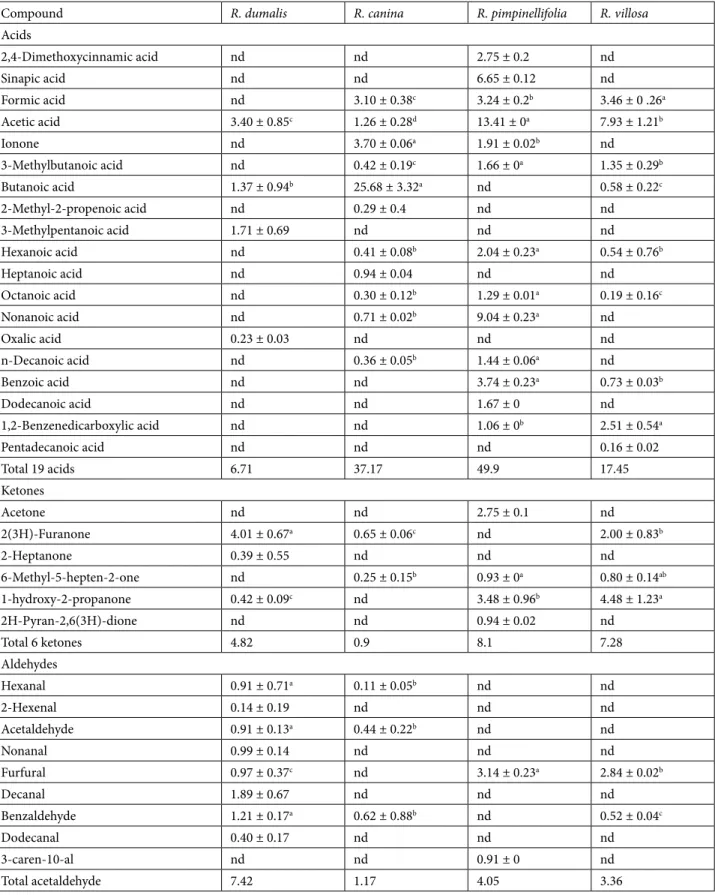
described in the floral flavor of various rose varieties (Dobson et al., 1987; Pavlov et al., 2005; Rusanov et al., 2011). As far as we know, volatile compounds in fruits of rosehip species were determined by HS-SPME/GC-MS in only one study (Demir et al., 2014), and no research has been previously performed by Im-SPME/GC-MS. In the present study, a total of 62 volatile compounds were identified by HS-SPME/GC-MS in the rosehip species. These compounds included 19 acids, 9 aldehydes, 6 ketones, 18 alcohols, 5 esters, 2 terpenes, and 2 phenols (Table 2). Of the compounds detected, 53 compounds have not been previously reported in the literature. The contents of 9 compounds (6-methyl-5-hepten-2-one, hexanal, 2-hexenal, nonanal, decanal, benzaldehyde, 1-pentanol, 2-ethyl-1-hexanol, and dodecanoic acid) were found to be similar to the results of previous studies (Nowak, 2005; Demir et al., 2014). Demir et al. (2014) detected 52 volatile compounds in rosehip species by HS-SPME/GC-MS. These compounds included 10 alcohols, 10 aldehydes, 2 ketones, 24 terpenoids, 2 esters, and 4 miscellaneous compounds. Although their contents varied depending on the species, acids (6.71%–49.9%) and alcohols (7.53%– 67.53%) were found to be dominant volatile compounds.
R. pimpinellifolia had the highest total acid content
(49.9%). Acetic acid was the most abundant acid in R.
villosa (7.93%), R. dumalis (3.40%), and R. pimpinellifolia
(13.41%); butanoic acid was the most abundant acid in R.
canina (25.68%). In the previous study, no aromatic acids
could be detected in rosehip species (Demir et al., 2014). Kraujalyte et al. (2012) reported that 3-methyl- and 2-
Table 2. Volatile components of four rosehip species detected by HS-SPME/GC-MS (%).
Compound R. dumalis R. canina R. pimpinellifolia R. villosa
Acids 2,4-Dimethoxycinnamic acid nd nd 2.75 ± 0.2 nd Sinapic acid nd nd 6.65 ± 0.12 nd Formic acid nd 3.10 ± 0.38c 3.24 ± 0.2b 3.46 ± 0 .26a Acetic acid 3.40 ± 0.85c 1.26 ± 0.28d 13.41 ± 0a 7.93 ± 1.21b Ionone nd 3.70 ± 0.06a 1.91 ± 0.02b nd 3-Methylbutanoic acid nd 0.42 ± 0.19c 1.66 ± 0a 1.35 ± 0.29b Butanoic acid 1.37 ± 0.94b 25.68 ± 3.32a nd 0.58 ± 0.22c 2-Methyl-2-propenoic acid nd 0.29 ± 0.4 nd nd 3-Methylpentanoic acid 1.71 ± 0.69 nd nd nd Hexanoic acid nd 0.41 ± 0.08b 2.04 ± 0.23a 0.54 ± 0.76b Heptanoic acid nd 0.94 ± 0.04 nd nd Octanoic acid nd 0.30 ± 0.12b 1.29 ± 0.01a 0.19 ± 0.16c Nonanoic acid nd 0.71 ± 0.02b 9.04 ± 0.23a nd Oxalic acid 0.23 ± 0.03 nd nd nd n-Decanoic acid nd 0.36 ± 0.05b 1.44 ± 0.06a nd Benzoic acid nd nd 3.74 ± 0.23a 0.73 ± 0.03b Dodecanoic acid nd nd 1.67 ± 0 nd 1,2-Benzenedicarboxylic acid nd nd 1.06 ± 0b 2.51 ± 0.54a Pentadecanoic acid nd nd nd 0.16 ± 0.02 Total 19 acids 6.71 37.17 49.9 17.45 Ketones Acetone nd nd 2.75 ± 0.1 nd 2(3H)-Furanone 4.01 ± 0.67a 0.65 ± 0.06c nd 2.00 ± 0.83b 2-Heptanone 0.39 ± 0.55 nd nd nd 6-Methyl-5-hepten-2-one nd 0.25 ± 0.15b 0.93 ± 0a 0.80 ± 0.14ab 1-hydroxy-2-propanone 0.42 ± 0.09c nd 3.48 ± 0.96b 4.48 ± 1.23a 2H-Pyran-2,6(3H)-dione nd nd 0.94 ± 0.02 nd Total 6 ketones 4.82 0.9 8.1 7.28 Aldehydes Hexanal 0.91 ± 0.71a 0.11 ± 0.05b nd nd 2-Hexenal 0.14 ± 0.19 nd nd nd Acetaldehyde 0.91 ± 0.13a 0.44 ± 0.22b nd nd Nonanal 0.99 ± 0.14 nd nd nd Furfural 0.97 ± 0.37c nd 3.14 ± 0.23a 2.84 ± 0.02b Decanal 1.89 ± 0.67 nd nd nd Benzaldehyde 1.21 ± 0.17a 0.62 ± 0.88b nd 0.52 ± 0.04c Dodecanal 0.40 ± 0.17 nd nd nd 3-caren-10-al nd nd 0.91 ± 0 nd Total acetaldehyde 7.42 1.17 4.05 3.36
Different letters (a–d) in the same line show statistically significantly differences among sampling dates by Duncan’s multiple range test at P < 0.05. nd: not detected.
Table 2. (Continued).
Compound R. dumalis R. canina R. pimpinellifolia R. villosa
Esters
Ethyl acetate nd 0.95 ± 0.34a nd 0.67 ± 0.05b
3-Methyl-butanoic acid, 3-methylbutyl ester 3.81 ± 0.27 nd nd nd
Acetic acid, methyl ester nd 0.58 ± 0.01 nd nd
Hexanoic acid, butyl ester 1.58 ± 0.23 nd nd nd
Hexanoic acid, hexyl ester 1.57 ± 0.29a 0.30 ± 0.42b nd nd
Total esters 6.96 1.83 0 0.67 Alcohols 1,2-Propanediol 2.28 ± 0.22b 22.52 ± 5.51a nd nd Ethanol nd nd nd 28.72 ± 4.61 1-Penten-3-ol 10.37 ± 3.54 nd nd nd 2-Methyl-1-propanol 8.72 ± 1.33a 1.10 ± 0.55b nd nd 3-Methyl-1-butanol 14.24 ± 20.14a 2.16 ± 3.05c nd 11.62 ± 1.43b 1-pentanol 0.89 ± 0.12b 0.73 ± 0.03b nd 7.64 ± 0.6a 4-Methyl-1-heptanol nd 0.35 ± 0.01 nd nd 2-Nonen-1-ol 4.05 ± 0.04b nd 5.65 ± 1.23a nd 4-Hexen-1-ol 2.01 ± 0.84 nd nd nd 2-Furanmethanol 3.29 ± 0.65b 3.00 ± 0.54b 1.88 ± 0.04c 3.72 ± 0.47a 3,7-Dimethyl-1,6-octadien-3-ol 3.77 ± 0.36a 0.55 ± 0.04b nd 0.21 ± 0.03c 2-Ethyl-1-hexanol 6.42 ± 0.69 nd nd nd Dodecanol 2.01 ± 0.08 nd nd nd a,a,4-Trimethyl-3-cyclohexene-1-methanol 2.36 ± 0.49b 1.01 ± 0.29c nd 2.93 ± 0.14a Phenylethyl alcohol 1.27 ± 0.09b 5.36 ± 1.77a nd nd 1-Hexadecanol nd 0.29 ± 0.41 nd nd 1-Butanol 5.85 ± 0.27 nd nd nd Total alcohols 67.53 37.07 7.53 54.84 Terpenes a-Caryophyllene nd 8.28 ± 0.27a nd 6.06 ± 0.13b Naphthalene 0.22 ± 0.01c 6.63 ± 0.09b 26.65 ± 0.25a 6.02 ± 0.51b Total terpenes 0.22 14.91 26.65 12.08 Phenol
2,4-bis (1,1-dimethylethyl) phenol 4.29 ± 0.78b 5.94 ± 0.64a 1.83 ± 0.01c 0.45 ± 0.04d
Phenol 1.97 ± 0.47b 0.44 ± 0.27c 1.94 ± 0.32b 3.83 ± 0.42a
Total phenol 6.26 6.38 3.77 4.28
Other compounds
1,3-Dimethylbenzene 0.14 ± 0.02 0.13 ± 0.08 nd nd
Different letters (a–d) in the same line show statistically significantly differences among sampling dates by Duncan’s multiple range test at P < 0.05. nd: not detected.
methyl-butanoic acids were the major aroma constituents of Viburnum opulus fruits.
The alcohol contents were the highest at 67.53% (R.
dumalis) and 54.84% (R. villosa), and the lowest alcohol
content was found in R. pimpinellifolia (7.53%). R. canina had the highest 1,2-propanediol content (22.52%), R.
dumalis had the highest 3-methyl-1-butanol content
(14.24%), and R. villosa had the highest ethanol content (28.72%). 1,2-Propanediol has been reported to be a flavor precursor in strawberries (Zabetakis and Gramshaw, 1998). Methyl butanoate, ethyl butanoate, 3-methyl-1-butanol, and 1-butanol have been found to be the major components in papaya fruits (Pino et al., 2003). 4-Methyl-1-heptanol and 1-hexadecanol were found at very low levels of 0.35% and 0.29% (R. canina). Demir et al. (2014) revealed that aldehydes and alcohols are the major volatile compounds in rosehips and, differently from our results, 2-hexen-1-ol and 1-hexanol could be identified as the most abundant alcohols. This could be due to variation between species, differences in methods, maturation period, ecologic conditions, or the altitude at which the rosehips were grown.
Aldehydes and ketones are important flavor and fragrance volatiles in many fruits (Paull et al., 2008). Regarding the aldehyde group, 9 different volatile compounds (hexanal, 2-hexenal, acetaldehyde, nonanal, furfural, decanal, benzaldehyde, dodecanal, and 3-caren-10-al) were detected. The aldehyde contents varied from 1.17% in R. canina to 7.42% in R. dumalis. Among those, furfural was the most abundant aldehyde in R.
pimpinellifolia (3.14%) and R. villosa (2.84%), while decanal
and benzaldehyde were the most abundant aldehydes in R.
dumalis and R. canina, respectively. Some volatiles may be
common to many fruits, such as 2-hexenal. In a previous study, 2-hexenal, hexanal, and 2-heptanal were identified as the major aldehydes in R. canina, R. dumalis, R. gallica, and R. hirtissima (Demir et al., 2014). Ren et al. (2015) reported decanal and 2-hexenal as important compounds contributing to orange aroma. Similarly, it was reported that 2-hexenal is the most abundant volatile compound in Riesling and Cabernet Sauvignon grapes (Kalua and Boss, 2010).
Volatile esters contribute to the characteristic aroma of many fruits (Macku and Jennings, 1987). Esters are formed by combining alcohols with acyl-CoA derivatives of fatty acids by the action of alcohol acyltransferase (Park et al., 2006). In this study, 6 ketones and 5 esters were found in the rosehips. The highest ketone content was found in R. villosa (7.28%), and the most abundant ketone was 1-hydroxy-2-propanone (4.48%), whereas the lowest ketone content was determined in R. canina (0.9%). The highest ester content was found in R. dumalis (7.42%). Only 2 terpenes and 2 phenols could be detected in the
rosehips. R. pimpinellifolia had the highest naphthalene content (26.65%), and R. canina had the highest phenol content (6.38%). Demir et al. (2014) reported that 4-octen-3-one and 6-methyl-5-hepten-2-one are the most abundant ketones and there are only 2 esters (methyl benzoate, salicylic acid methyl ester). The quality and quantity of all volatile compounds may be influenced by factors such as the species, region, climate, soil, altitude, and harvest time.
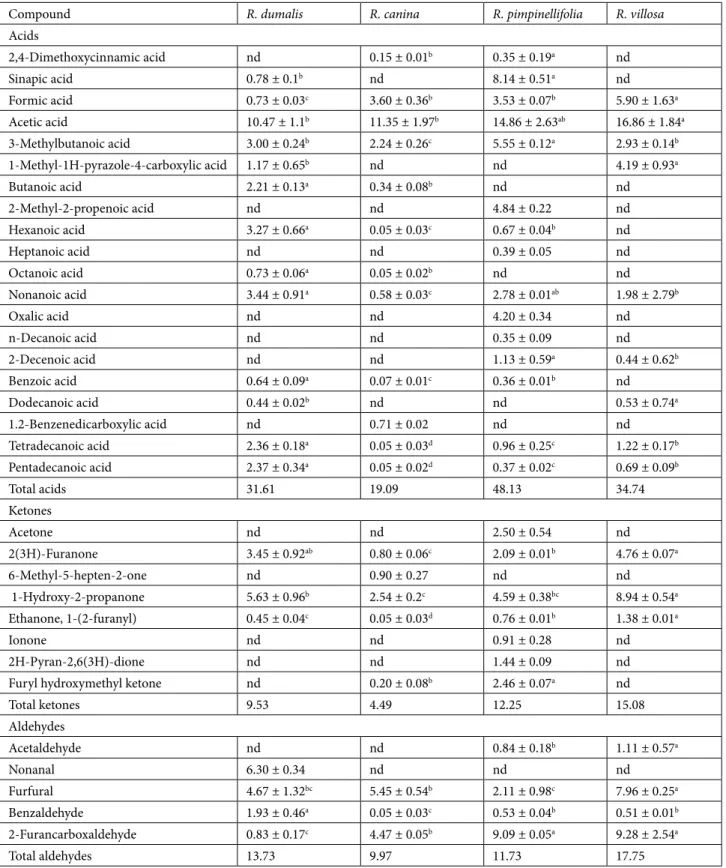
Volatile compounds in rosehips have not been studied by the Im-SPME/GC-MS technique until now. This study is the first time that 54 compounds were detected by this technique. These compounds include 20 acids, 5 aldehydes, 8 ketones, 13 alcohols, 5 esters, 1 terpene, and 2 phenols. Similar to the HS/GC-MS results shown in Table 3, acids and alcohols were found to be the major volatile compounds (19.09%–48.13% and 8.16%– 40.74%, respectively). R. pimpinellifolia had the highest acid content (48.13% of the total amount of volatile compounds). Similar to the HS-SPME/GC-MS results, acetic acid was determined to be the most abundant acid in the rosehip species. R. dumalis had the highest alcohol content (40.74%), while the lowest content was found in R. villosa. 1-Pentanol and 3-methyl-1-butanol were the most abundant compounds in R. dumalis (10.51% and 12.93%, respectively). Five aldehydes were found in the rosehips, and R. villosa had the highest aldehyde content. The maximum furfural content was detected in R.
dumalis (4.67%) and R. canina (5.45%), and the maximum
2-furancarboxaldehyde level was found in R. villosa (9.28%) and R. pimpinellifolia (9.09%). Eight ketones were also detected by this method. The highest ketone content was detected in R. villosa (15.08%), and the most abundant ketone was 1-hydroxy-2-propanone (8.94%). At the same time, R. villosa was found to have the highest ester content (19.24%). Only 1 terpene and 2 phenols were detected in the rosehips. Unlike the HS-SPME/GC-MS results, R.
canina had the highest naphthalene content (40.7%) and R. dumalis had the highest phenol content (2.27%).
HS-SPME/GC-MS and Im-SPME/GC-MS generally showed similar results with few minor differences. Sixty-two compounds were identified by HS-SPME/GC-MS, whereas 54 components were detected by Im-SPME/ GC-MS. As seen in the tables, the compounds varied according to the rosehip species. In addition, the number of acids and ketones was found to be higher by Im-SPME technique compare to the HS-SPME technique, while esters, terpenes, and phenols were found to be similar. As for the aldehydes, the highest number was obtained from the HS-SPME technique.
Here we have shown that the rosehip species are a rich source of fatty acids and that there are important differences between the different species. In all species,
Table 3. Volatile components of rosehip species detected by Im-SPME/GC-MS (%).
Compound R. dumalis R. canina R. pimpinellifolia R. villosa
Acids 2,4-Dimethoxycinnamic acid nd 0.15 ± 0.01b 0.35 ± 0.19a nd Sinapic acid 0.78 ± 0.1b nd 8.14 ± 0.51a nd Formic acid 0.73 ± 0.03c 3.60 ± 0.36b 3.53 ± 0.07b 5.90 ± 1.63a Acetic acid 10.47 ± 1.1b 11.35 ± 1.97b 14.86 ± 2.63ab 16.86 ± 1.84a 3-Methylbutanoic acid 3.00 ± 0.24b 2.24 ± 0.26c 5.55 ± 0.12a 2.93 ± 0.14b 1-Methyl-1H-pyrazole-4-carboxylic acid 1.17 ± 0.65b nd nd 4.19 ± 0.93a Butanoic acid 2.21 ± 0.13a 0.34 ± 0.08b nd nd 2-Methyl-2-propenoic acid nd nd 4.84 ± 0.22 nd Hexanoic acid 3.27 ± 0.66a 0.05 ± 0.03c 0.67 ± 0.04b nd Heptanoic acid nd nd 0.39 ± 0.05 nd Octanoic acid 0.73 ± 0.06a 0.05 ± 0.02b nd nd Nonanoic acid 3.44 ± 0.91a 0.58 ± 0.03c 2.78 ± 0.01ab 1.98 ± 2.79b Oxalic acid nd nd 4.20 ± 0.34 nd n-Decanoic acid nd nd 0.35 ± 0.09 nd 2-Decenoic acid nd nd 1.13 ± 0.59a 0.44 ± 0.62b Benzoic acid 0.64 ± 0.09a 0.07 ± 0.01c 0.36 ± 0.01b nd Dodecanoic acid 0.44 ± 0.02b nd nd 0.53 ± 0.74a 1.2-Benzenedicarboxylic acid nd 0.71 ± 0.02 nd nd Tetradecanoic acid 2.36 ± 0.18a 0.05 ± 0.03d 0.96 ± 0.25c 1.22 ± 0.17b Pentadecanoic acid 2.37 ± 0.34a 0.05 ± 0.02d 0.37 ± 0.02c 0.69 ± 0.09b Total acids 31.61 19.09 48.13 34.74 Ketones Acetone nd nd 2.50 ± 0.54 nd 2(3H)-Furanone 3.45 ± 0.92ab 0.80 ± 0.06c 2.09 ± 0.01b 4.76 ± 0.07a 6-Methyl-5-hepten-2-one nd 0.90 ± 0.27 nd nd 1-Hydroxy-2-propanone 5.63 ± 0.96b 2.54 ± 0.2c 4.59 ± 0.38bc 8.94 ± 0.54a Ethanone, 1-(2-furanyl) 0.45 ± 0.04c 0.05 ± 0.03d 0.76 ± 0.01b 1.38 ± 0.01a Ionone nd nd 0.91 ± 0.28 nd 2H-Pyran-2,6(3H)-dione nd nd 1.44 ± 0.09 nd
Furyl hydroxymethyl ketone nd 0.20 ± 0.08b 2.46 ± 0.07a nd
Total ketones 9.53 4.49 12.25 15.08 Aldehydes Acetaldehyde nd nd 0.84 ± 0.18b 1.11 ± 0.57a Nonanal 6.30 ± 0.34 nd nd nd Furfural 4.67 ± 1.32bc 5.45 ± 0.54b 2.11 ± 0.98c 7.96 ± 0.25a Benzaldehyde 1.93 ± 0.46a 0.05 ± 0.03c 0.53 ± 0.04b 0.51 ± 0.01b 2-Furancarboxaldehyde 0.83 ± 0.17c 4.47 ± 0.05b 9.09 ± 0.05a 9.28 ± 2.54a Total aldehydes 13.73 9.97 11.73 17.75
Different letters (a–d) in the same line show statistically significantly differences among sampling dates by Duncan’s multiple range test at P < 0.05. nd: not detected.
except R. canina, PUFAs predominate over SFAs and MUFAs. Palmitic acid is the major SFA, while arachidic acid is the second most abundant SFA in R. villosa, R.
canina, and R. dumalis. Stearic acid is the major SFA in R. pimpinellifolia. Oleic acid is the most abundant MUFA.
Linoleic and α-linolenic acids are the most abundant PUFAs. α-Linolenic acid is the most important essential fatty acid in the human diet. Due to the high percentage of PUFAs and MUFAs, consumption of rosehip fruits is recommended. In the present study, 62 compounds were identified by the HS-SPME/GC-MS technique and 54 compounds were detected by the Im-SPME/GC-MS
technique. Of the compounds detected, 53 compounds have not been previously reported in the literature. These compounds include acids, aldehydes, ketones, alcohols, esters, terpenes, and phenols. Alcohols and acids are the main volatile compounds found in rosehip species by both techniques. The application of both methods to the rosehip species showed that the HS-SPME/GC-MS method provides better results compare to the Im-SPME/GC-MS technique. In addition, it is clear that R. pimpinellifolia is quite different from the other species in terms of all examined parameters. That species has black fruits while the others have orange fruits.
Table 3. (Continued.)
Compound R. dumalis R. canina R. pimpinellifolia R. villosa
Esters
Ethyl acetate nd 4.29 ± 0.33 nd nd
Acetic acid, 2-propenyl ester nd nd nd 14.99 ± 0.12
3-Methyl-butanoic acid, 3-methylbutyl ester nd 0.38 ± 0.03 nd nd
Acetic acid, methyl ester nd nd 6.49 ± 0.18 nd
2-Furancarboxylic acid, methyl ester nd nd nd 4.25 ± 0.74
Total esters 0 4.67 6.49 19.24 Alcohols 1,2-Propanediol 2.99 ± 0.22b 3.81 ± 1.39a nd 0.73 ± 0.03c Ethanol 1.72 ± 0.01b nd 10.43 ± 0.23a nd 1-Penten-3-ol 5.60 ± 1.09a nd 0.51 ± 0.01c 1.70 ± 0.41b 2-Methyl-1-propanol nd 7.03 ± 1.93 nd nd 3-Methyl-1-butanol 12.93 ± 1.28a 4.80 ± 0.53b nd 1.07 ± 0.51c 1-Pentanol 10.51 ± 1.29a nd nd 2.75 ± 0.89b 2-Nonen-1-ol nd nd 0.35 ± 0.09 nd 2-Furanmethanol 1.18 ± 0.59a 0.62 ± 0.08bc 0.38 ± 0.03c 0.99 ± 0.01b 3,7-Dimethyl-1,6-octadien-3-ol 0.68 ± 0.06b nd nd 0.92 ± 0.29a a,a,4-Trimethyl-3-cyclohexene-1-methanol nd 0.09 ± 0.02b 1.43 ± 0.02a nd Benzyl alcohol 3.74 ± 0.78 nd nd nd Phenylethyl alcohol 1.39 ± 0.96b 2.85 ± 0.03a nd nd Total alcohol 40.74 19.2 13.1 8.16 Terpenes Naphthalene 1.08 ± 0.52c 40.7 ± 7.56a 1.19 ± 0.68c 3.24 ± 0.57b Total terpenes 1.08 40.7 1.19 3.24 Phenols 2,4-Bis(1,1-dimethylethyl) phenol 1.15 ± 0.62b nd 2.15 ± 0.53a nd Phenol 2.27 ± 0.06a 0.06 ± 0.03c 0.81 ± 0.04b 0.75 ± 0.16b Total phenols 2.27 0.06 0.81 0.75 Other compounds 1,3-Dimethylbenzene nd 1.72 ± 0.43a 0.56 ± 0.19b nd
Different letters (a–d) in the same line show statistically significantly differences among sampling dates by Duncan’s multiple range test at P < 0.05. nd: not detected.
References
Alver E, Demirci A, Ozcimder M (2012). Microextraction methods. J Eng Nat Sci 30: 75–90.
Amira EA, Guido F, Behija SE, Manel I, Nesrine Z, Ali F, Mohamed H, Noureddine HA, Lotfi A (2011). Chemical and aroma volatile compositions of date palm (Phoenix dactylifera L.) fruits at three maturation stages. Food Chem 127: 1744–1754. Aridogan BC, Baydar H, Kaya S, Demirci M, Ozbasar D, Mumcu
E (2002). Antimicrobial activity and chemical composition of some essential oils. Arch Pharm Res 25: 860–864.
Arthur CL, Pawliszyn J (1990). Solid-phase microextraction with thermal desorption using silica optical fibers. Anal Chem 62: 2145–2148.
AOAC (1990). Official Methods of Analysis. 15th ed. Washington, DC, USA: AOAC.
Bajpai PK, Warghat AR, Sharma RK, Yadav A, Thakur AK, Srivastava RB, Stobdan T (2014). Structure and genetic diversity of natural populations of Morus alba in the Trans-Himalayan Ladakh Region. Biochem Genet 52: 137–152.
Baldwin EA (2002). Fruit flavor, volatile metabolism and consumer perceptions. In: Knee M, editor. Fruit Quality and Its Biological Basis. Boca Raton, FL, USA: CRC Press, pp. 89–106.
Barros L, Carvalho AM, Ferreira ICFR (2011). Exotic fruit as a source of improving the traditional use of Rosa canina fruit in Portugal. Food Res Int 44: 2233–2236.
Bastos C, Barros L, Duenas M, Calhelha RC, Queiroz MJRP, Santos-Buelga C, Ferreira ICFR (2015). Chemical characterisation and bioactive properties of Prunus avium L.: the widely studied fruits and the unexplored stems. Food Chem 173: 1045–1053. Berti MT, Johnson BL (2008). Physiological changes during seed
development of cuphea. Field Crops Res 106: 163–170. Bligh EG, Dyer WJ (1959). A rapid method for total lipid extraction
and purification. Can J Biochem Physiol 37: 911–917. Cakir A (2003). Essential oil and fatty acid composition of the fruits
of Hippophae rhamnoides L. (Sea buckthorn) and Myrtus communis L. from Turkey. Biochem Syst Ecol 32: 809–816. Chahoud G, Aude YW, Mehta JL (2004). Dietary recommendations
in the prevention and treatment of coronary heart disease: do we have the ideal diet yet? Am J Cardiol 94: 1260–1267.
Cheistophe A, Celine M (2007). Distribution of the volatile compounds in the different parts of a white-fleshed peach (Prunus persica L. Batsch). Food Chem 102: 375–384.
Chen MX, Chen XS, Feng BC (2004). GC-MS analysis of fruit aroma components of two apricot cultivars. Acta Hortic Sin 31: 663– 665.
Çınar I, Çolakoğlu AS (2005). Potential health benefits of rose hip products. Acta Hort 690: 253–257.
Cunnane S, Anderson M (1997). Pure linoleate deficiency in the rat: Influence on growth, accumulation of n-6 polyunsaturates, and (1–14C) linoleate oxidation. J Lipid Res 38: 805–812.
Davis PH (1972). Flora of Turkey and the East Aegean Islands. Vol. 4. Edinburgh, UK: Edinburgh University Press.
Demir N, Yildiz O, Alpaslan M, Hayaloglu AA (2014). Evaluation of volatiles, phenolic compounds and antioxidant activities of rose hip (Rosa L.) fruits in Turkey. LWT-Food Sci Technol 57: 126–133.
Dobson HEM, Bergstrom R, Bergstrom G, Groth I (1987). Pollen and flower volatiles in two Rosa species. Phytochemistry 26: 3171–3173.
Dunlevy JD, Kalua CM, Keyzers RA, Boss PK (2009). The production of flavour & aroma compounds in grape berries. In: Roubelakis-Angelakis KA, editor. Grapevine Molecular Physiology & Biotechnology. Berlin, Germany: Springer Science+Business Media, pp. 293–340.
Engelfriet P, Hoekstra J, Hoogenveen R, Büchner F, van Rossum C, Verschuren M (2010). Food and vessels: the importance of a healthy diet to prevent cardiovascular disease. Eur J Prevent Cardiol 17: 50–55.
Ercisli S (2005). Rose (Rosa L. spp.) germplasm resources of Turkey. Genet Resour Crop Ev 52: 787–795.
Ercisli S (2007). Chemical composition of fruits in some rose (Rosa spp.) species. Food Chem 104: 1379–1384.
Feng SG, Lu JJ, Gao L, Liu JJ, Wang HZ (2014). Molecular phylogeny analysis and species identification of Dendrobium (Orchidaceae) in China. Biochem Genet 52: 127–136. Goff SA, Klee HJ (2006). Plant volatile compounds: sensory cues for
health and nutritional value. Science 311: 815–819.
Guimarães R, Barros L, Carvalho A, Ferreira ICFR (2010). Studies on chemical constituents and bioactivity of Rosa micrantha: an alternative antioxidants source for food, pharmaceutical, or cosmetic applications. J Agr Food Chem 58: 6277–6284. Guney M, Oz AT, Kafkas E (2015). Comparison of lipids, fatty acids
and volatile compounds of various kumquat species using HS/ GC/MS/FID techniques. J Sci Food Agric 95: 1268–1273. Ha YL, Grimm NK, Pariza MW (1989). Newly recognized
anticarcinogenic fatty acids: identification and quantification in natural and processed cheeses. J Agr Food Chem 37: 75–81. Haze S, Sakai K, Gozu Y (2002). Effects of fragrance inhalation on
sympathetic activity in normal adults. Jpn J Pharmacol 90: 247–253.
Helbig D, Bohm V, Wagner A, Schubert R, Jahreis G (2008). Berry seed press residues and their valuable ingredients with special regard to black currant seed press residues. Food Chem 111: 1043–1049.
Houseknecht KL, Heuvel JPV, Moya-Camarena SY, Portocarrero CP, Peck LW, Nickel KP (1998). Dietary conjugated linoleic acid normalizes impaired glucose tolerance in the Zucker diabetic fatty fa/fa rat. Biochem Bioph Res Co 244: 678–682.
Jelen HH, Majcher M, Dziadas M (2012). Microextraction techniques in the analysis of food flavor compounds: a review. Anal Chim Acta 738: 13–26.
279 Kafkas E, Paydaş S (2007). Evaluation and identification of volatile
compounds of some promising strawberry types using HS-SPME technique by GCMS. World J Agric Sci 3: 191–195.
Kalua CM, Boss PK (2010). Comparison of major volatile compounds from Riesling and Cabernet Sauvignon grapes (Vitis vinifera L.) from fruitset to harvest. Aust J Grape Wine R 16: 337–348. Kataoka H, Lord HL, Pawliszyn J (2000). Applications of solid-phase
microextraction in food analysis. J Chromatogr A 880: 35–62. Kraujalyte V, Leitner E, Venskutonis PR (2012). Chemical and
sensory characterisation of aroma of Viburnum opulus fruits by solid phase microextraction-gas chromatography– olfactometry. Food Chem 132: 717–723.
Kris-Etherton PM, Pearson TA, Wan Y, Hargrove RL, Moriarty K, Fishell V (1999). High-monounsaturated fatty acid diets lower both plasma cholesterol and triacylglycerol concentrations. Am J Clin Nutr 70: 1009–1015.
Ku TC, Robertson KR (2003). Rosa (Rosaceae). In: Wu ZY, Raven PH, editors. Flora of China. Beijing, China: Science Press, pp. 339–381.
Lai TNH, André C, Rogez H, Mignolet E, Nguyen TBT, Larondelle Y (2015). Nutritional composition and antioxidant properties of the sim fruit (Rhodomyrtus tomentosa). Food Chem 168: 410–416.
Lara I, Miró RM, Fuentes T, Sayez G, Graell J, López ML (2003). Biosynthesis of volatile aroma compounds in pear fruit stored under long-term controlled-atmosphere conditions. Postharvest Biol Tec 29: 29–39.
López ML, Lavilla MT, Riba M, Vendrell M (1998). Comparison of volatile compounds in two seasons in apples: Golden Delicious and Granny Smith. J Food Quality 21: 155–166.
Macku C, Jennings WG (1987). Production of volatiles by ripening bananas. J Agric Food Chem 35: 845–848.
Mlcek J, Valsikova M, Druzbikova H, Ryant P, Jurikova T, Sochor J, Borkovcova M (2015). The antioxidant capacity and macroelement content of several onion cultivars. Turk J Agric For 39: 999–1004.
Nojavan S, Khalilian F, Kiaie FM, Rahimi A, Arabanian A, Chalavi S (2008). Extraction and quantitative determination of ascorbic acid during different maturity stages of Rosa canina L. fruit. J Food Compos Anal 21: 300–305.
Nowak R (2005). Chemical composition of hips essential oils of some
Rosa L. species. Z Naturforsch 60: 369–378.
Park S, Sugimoto N, Larson MD, Beaudry R, van Nocker S (2006). Identification of genes with potential roles in apple fruit development and biochemistry through large-scale statistical analysis of expressed sequence tags. Plant Physiol 141: 811– 824.
Paull RE, Irikura B, Wu P, Turano H, Chen NJ, Blas A, Fellman JK, Gschwend AR, Wai CM, Yu Q et al. (2008). Fruit development, ripening and quality related genes in the papaya genome. Trop Plant Biol 1: 246–277.
Pavlov A, Popov S, Kovacheva E, Georgiev M, Ilieva M (2005). Volatile and polar compounds in Rosa damascena Mill 1803 cell suspension. J Biotechnol 118: 89–97.
Ren JN, Tai YN, Dong M, Shao JH, Yang SZ, Pan SY, Fan G (2015). Characterisation of free and bound volatile compounds from six different varieties of citrus fruits Food Chem. 185: 25–32. Riu-Aumatell M, Castellari M, López-Tamames E, Galassi S,
Buxaderas S (2004). Characterisation of volatile compounds of fruit juices and nectars by HS/SPME and GC/MS. Food Chem 87: 627–637.
Rusanov K, Kovacheva N, Rusanova M, Atanassov I (2011). Traditional Rosa damascena flower harvesting practices evaluated through GC/MS metabolite profiling of flower volatiles. Food Chem 129: 1851–1859.
Ruttanaprasert R, Banterng P, Jogloy S, Vorasoot N, Kesmala T, Kanwar RS, Holbrook CC, Patanothai A (2014). Genotypic variability for tuber yield, biomass, and drought tolerance in Jerusalem artichoke germplasm. Turk J Agric For 38: 570–580. Sánchez-Salcedo EM, Ángel AES, Barrachina C, Martínez JJ,
Hernández F (2016). Fatty acids composition of Spanish black (Morus nigra L.) and white (Morus alba L.) mulberries. Food Chem 190: 566–571.
Sanz C, Olias JM, Perez AG (1997). Aroma biochemistry of fruits and vegetables. In: Tomas-Barberan FA, Robins RJ, editors. Phytochemistry of Fruit and Vegetables. New York, NY, USA: Oxford University Press, pp. 125–155.
Simopoulos AP (1999). Essential fatty acids in health and chronic disease. J Am Coll Nutr 70: 560–569.
Soares FD, Pereira T, Marques MOM, Monteiro AR (2007). Volatile and nonvolatile chemical of the white guava fruit (Psidium guajava) at different stages of maturity. Food Chem 100: 15–21. Szentmihalyi K, Vinkler P, Lakatos B, Illes V, Then M (2002). Rosehip (Rosa canina L.) oil obtained from waste hip seeds by different extractions methods. Bioresource Technol 82: 195–201.
Uggla M, Gao X, Werlemark G (2003). Variation among and within dog rose taxa (Rosa sect. Caninae) in fruit weight, percentages of fruit flesh and dry matter, and vitamin C content. Acta Agr Scand B-S P 53: 147–155.
Uggla M, Gustavsson KE, Olsson ME, Nybom H (2005). Changes in colour and sugar content in rose hips (Rosa dumalis L. and
Rosa rubiginosa L.) during ripening. J Hortic Sci Biotech 80:
204–208.
Vendramini AL, Trugo LC (2000). Chemical composition of acerola fruit (Malpighia punicifolia L.) at three stages of maturity. Food Chem 71: 195–198.
Yildiz O, Alpaslan M. (2012). Properties of rose hip marmalades. Food Technol Biotechnol 50: 98–106.
Zabetakis I, Gramshaw JW (1998). 1,2-Propanediol in strawberries and its role as a flavour precursor. Food Chem 61: 351–354.
Zhang X, Jiang YM, Peng FT, He NB, Li YJ, Zhao DC (2007). Changes of aroma components in ‘Hongdeng’ sweet cherry during fruit development. Sci Agric Sinica 40: 1222–1228.