T.C. DOĞUŞ UNIVERSITY INSTITUTE OF SOCIAL SCIENCES
DEPARTMENT OF PSYCHOLOGY
THE EFFECTS OF EARLY ADVERSE EXPERIENCES ON RELATIONAL AND EMOTIONAL DIFFICULTIES AS PREDICTORS OF WELL-BEING OF
UNIVERSITY STUDENTS
Ph.D. DISSERTATION
GÖKÇEN DUYMAZ SİDAL 2011180005
SUPERVISOR:
PROF.DR. FALİH KÖKSAL
T.C. DOĞUŞ UNIVERSITY INSTITUTE OF SOCIAL SCIENCES
DEPARTMENT OF PSYCHOLOGY
THE EFFECTS OF EARLY ADVERSE EXPERIENCES ON RELATIONAL AND EMOTIONAL DIFFICULTIES AS PREDICTORS OF WELL-BEING OF
UNIVERSITY STUDENTS
Ph.D. DISSERTATION
GÖKÇEN DUYMAZ SİDAL 2011180005
SUPERVISOR:
PROF.DR. FALİH KÖKSAL
i PREFACE
This has been a very long journey for me… There have been so many times that I wanted to leave it aside…If it was not for my supervisor, Prof. Dr. Falih Köksal, that could have happened. I am not sure whether there is a right way to show my gratitude and respect for my supervisor for his endless support, understanding, acceptance and encouragement. Not only he was my mentor in my academic life but also he helped me to be a better person in many ways. And also a better mother…I feel so lucky and priviliged that I had the opportunity to be his student. Thank you sincerely for believing in me…
I would also like to thank Dr. Hasan Bahçekapılı for his support and encouragement. It has always been surprising for me to see his genius humor and warm heart when he started to talk… the conversations that we have shared are the ones that I miss the most.
I am grateful to Dr. Süreyya Elif Aksoy for her support during the data collection process and for her sincere interest and encouragement as a jury member. Her contribution to our psychology department for all the research is priceless and it has been a privilege to share this experience with her.
I am thankful to Doç. Dr. Hanife Özlem Sertel Berk for being a part of the jury and her valuable feedback for this thesis.
I also would like to thank Mehmet Harma for dealing with all my silly questions on statistics. If it was not your help and supervision, this could be a much longer process. Your students are all so lucky to learn from you, including me…
Dear Hilal and Şebnem… It has been a pleasure to share this experience with you. Even after going through so many unfortunate incidents, I believe we were able to comfort and motivate each other. Not only as friends but also as colleagues, I believe you are unique in so many ways. Thank you for all…
My dearest, Merve Yılmaz… I had enjoyed so much working with you… And after we fall apart, you were always there. Thank you for all you have done… I can’t wait to meet you in the terrace again ;)
Special thanks to Hülya Sözsoy. You made it possible. Or else I would have never had the time to finish this thesis. You have become a part of our family…Thank you for loving and taking care of my son.
You were always with me, my dear parents. I know, sometimes, it had been hard for you to understand why I chose this profession. But, thanks to your support, I am doing what I love most as a career. I believe we have learned so much from each other. You were my strength and comfort when I needed. Thank you for who I am, all you have done for me…
ii
My sweet, lovely sister… I can not imagine what I would have done without you. Despite all the differences we have, you are my best friend. Even when we are far away, you are my biggest support and motivation. I love you…
My husband and my friend, Oytun Sidal, you deserve the biggest thanks for your patience and support… Throughout many years, you were there to listen to my complaints, and put up with my endless hours of studying. And actually, we made it together…
My dear son, Can… I did my best while writing this thesis not to steal from the time we can spend together… All my effort I have taken was to be a “good enough” mother for you… We grew up together again… And I promise you, for a very long time, there will be no “computer working”… I love you so much…
Finally, there are many precious people that I would like to thank who are the reason for this journey… Prof. Dr. Kadir Özer, Doç. Dr. Serap Özer, Doç. Dr. Aslı Akdaş Mitrani, Doç. Dr. Ekin Eremsoy, Dr. Nilüfer Kafesçioğlu, Dr. Aslı Çarkoğlu, Dr. Münire Özlem Çevik, Dr. Müjgan İnözü… You are all with me in my heart and everyday of my professional life, I feel honored and blessed to have the chance to be your student. Thank you for making this possible, thank you for this amazing opportunity.
iii ABSTRACT
The purpose of the present study was to examine the effects of early experience as conceptualized by the early adverse traumatic experiences and perceived parenting styles on relational patterns and emotion regulation difficulties as determinants of well being and psychopathology among Turkish university students. For this purpose, 356 students between the ages of 21 and 45 participated in the study. The assessment battery consisted of Demographic Form, Adverse Childhood Experiences (ACEQ), Short-EMBU (Egna Minnen Betraffande Uppfostran- My Memories of Upbringing), Experiences in Close Relationships-Revised (ECR-R), Separation Individuation Inventory (SII), Depression Anxiety Stress Scale (DASS) and Satisfaction With Life Scale (SWLS). For the data analysis, firstly the associations of ACEQ with other variables were first investigated to reveal the specific effects of early traumatic experiences. The results of regression analyses revealed that ACE significantly predicted the attachment anxiety, separation individuation pathology, emotion regulation difficulties, life satisfaction ve psychopathology. Secondly, in order to examine the association between the study measures path analysis were conducted. The results revealed that maternal overprotection was significantly associated with relational problems and emotion regulation difficulties. Moreover ACE were predictors of emotion regulation difficulties as well. As for well-being, separation individuation pathology and emotion regulation difficulties were associated with depression, anxiety, stress and the satisfaction of life. Finally, the difficulties in adopting emotion regulatory strategies was found to be a mediator between ACE and psychopathology as well as maternal overprotection and psychopathology. The findings of the present study were discussed in the light of the relevant literature with clinical implications and future suggestions.
Keywords: Early adverse experience, parenting styles, attachment, emotion regulation, life satisfaction
iv ÖZET
Bu çalışmanın amacı, erken dönem olumsuz çocukluk yaşantılarının ve ebeveyn tutumlarının, ilişkisel örüntüler, duygu regülasyonu zorlukları ve yaşam doyumu ve psikopatoloji üzerindeki etkisini incelemektir. Bu amaçla, çalışmaya 21-45 yaşları aralığında 356 öğrenci katılmıştır. Katılımcılara verilen araştırma bataryası, Demografik Bilgi Formu, Olumsuz Çocukluk Yaşantıları Envanteri (OÇYE), Kısaltılmış Algılanan Ebeveyn Tutumları-Çocuk Formu (KAET-ÇF), Yakın İlişkilerde Yaşantılar Envanteri (YIYE-II), Ayrımlaşma Bireyleşme Envanteri (ABE), Depresyon Anksiyete Stres Ölçeği (DASS), Yaşam Doyumu Ölçeği’ni (YDÖ) içermektedir. Çalışma verisinin analizi için öncelikle olumsuz çocukluk yaşantılarının, çalışmanın diğer değişkenleri ile ilişkisine bakılmıştır. Bu bağlamda yapılan regresyon analizinin sonuçlarına göre olumsuz çocukluk yaşantılarının, bağlanma anksiyetesi, ayrımlaşma bireyleşme patolojisi, duygu regülasyonu zorlukları, yaşam doyumu ve psikopatoloji üzerinde anlamlı düzeyde yordayıcı bir etkisi olduğu bulunmuştur. Bunun yanında, çalışmada ele alınan değişkenlerin birbirleri ile olan ilişkisi araştırılmıştır. Bu amaçla yapılan yol analizi sonuçlarına göre, erken dönem deneyimlerin bir uzantısı olarak annenin aşırı korumacı tutumunun, ilişkisel sorunları ve duygu regülasyonu alanında yaşanılan zorlukları yordadığı görülmüştür. Bunun yanında, olumsuz çocukluk yaşantılarının da duygu regülasyonu zorlukları üzerinde yordayıcı etkisi olduğu bulunmuştur. Genel iyilik hali üzerinden, ayrımlaşma bireyleşme patolojisinin ve duygu regülasyonu zorluklarının depresyon, anksiyete, stress ve yaşam doyumunu anlamlı düzeyde yordadığı görülmüştür. Son olarak, duygu düzenleme stratejilerinin, hem olumsuz çocukluk yaşantıları ve psikopatoloji arasında hem de annenin aşırı korumacı tutumu ve psikopatoloji arasında aracı bir etkisi olduğu görülmüştür. Çalışma bulguları, ilgili literatür ışığında tartışılmış, çalışmaya dair kısıtlılıklar ele alınmıştır. Gelecek araştırma ve uygulamalar için önerilere yer verilmiştir.
Anahtar kelimeler: Olumsuz çocukluk yaşantıları, ebeveyn tutumu, bağlanma, duygu regülasyonu, yaşam doyumu
v TABLE OF CONTENTS PREFACE ... i ABSTRACT ... iii ÖZET ... iv LIST OF TABLES ... ix LIST OF FIGURES ... xi ABBREVIATIONS ... xii 1. INTRODUCTION ... 1 2. LITERATURE REVIEW ... 3
2.1. Psychological Significance of Early Childhood Experiences on Development ... 3
2.1.1. Adverse childhood experiences (ACE) ... 3
2.1.2. Adverse childhood experiences (ACE) study ... 4
2.1.3. ACE study in Turkey ... 7
2.1.4. Parenting styles and primary attachment experience ... 10
2.1.4.1. Parenting behaviors ... 11
2.1.4.2. Primary attachment experience ... 14
2.1.5. Separation-individuation process ... 16
2.2. The Effects of Early Experiences and Psychopathology ... 20
2.2.1. Attachment as a life long process ... 20
2.2.1.1. The neurological basis of attachment ... 20
2.2.1.2. The stability of attachment: “From cradle to the grave…” ... 23
2.2.1.3. Attachment and adult psychopathology ... 26
2.3. Emotion regulation ... 29
2.3.1. Early experience and neurological development of emotional processing .... 29
2.3.2. Emotion regulation strategies ... 31
2.3.3. Development of emotion regulation in attachment relationships ... 33
2.3.4. Emotion regulation in adulthood ... 36
2.4. The Hypotheses of the Present Study... 39
3. METHOD ... 43
3.1. Participants ... 43
3.1.1. Student information ... 44
vi
3.2.Instruments ... 46
3.2.1. Adverse Childhood Experiences Questionnaire ... 47
3.2.2. Short - EMBU (Egna Minnen Betraffande Uppfostoran- Own Memories of Upbringing) ... 47
3.2.3. Experiences in Close Relationships-Revised (ECR-R) ... 48
3.2.4. Separation-Individuation Inventory (SII) ... 49
3.2.5. Difficulties in Emotion Regulation Scale (DERS) ... 50
3.2.6. Depression Anxiety Stress Scale (DASS) ... 50
3.2.7. Satisfaction with Life Scale (SWLS) ... 51
3. 3. Procedure ... 51
4. RESULTS ... 53
4.1. Preliminary Analysis ... 53
4.2. Tests of Normality ... 54
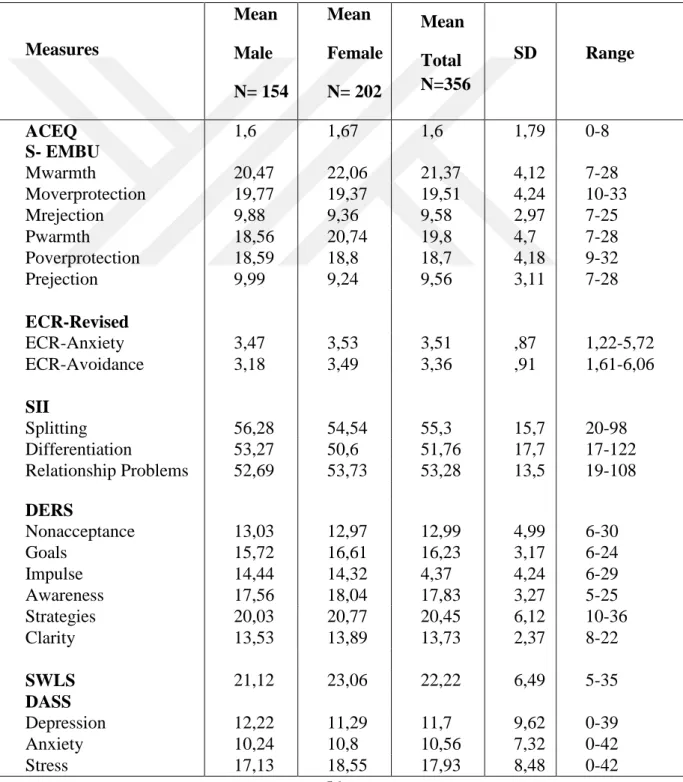
4.3. Descriptive Statistics of the Measures of the Study ... 55
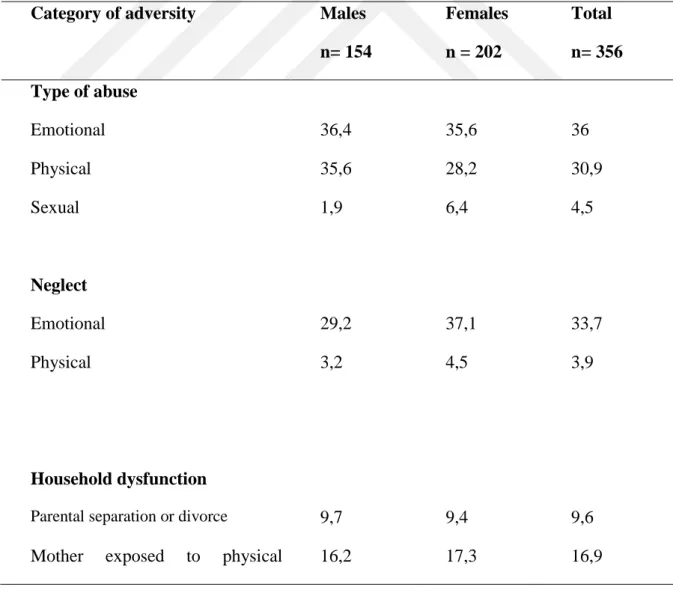
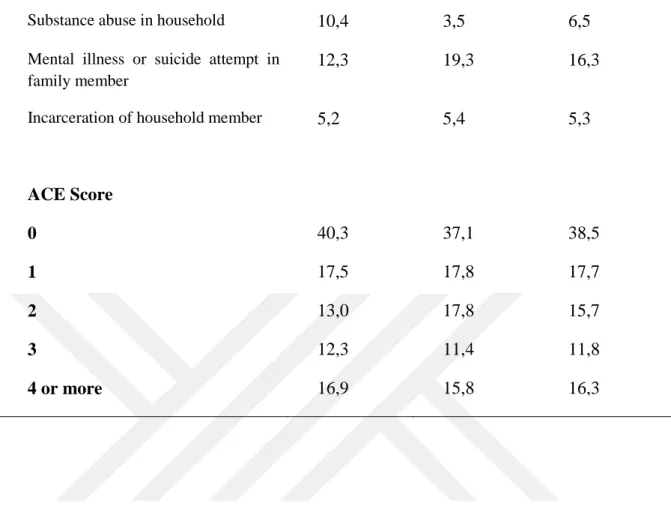
4.4. ACE Prevalence Rates ... 57
4.5. The Differences of Demographic Characteristics on the Study Measures ... 58
4.5.1. Differences of age, gender and SES on ACE ... 59
4.5.2. Differences of age, gender and SES on perceived parenting styles ... 60
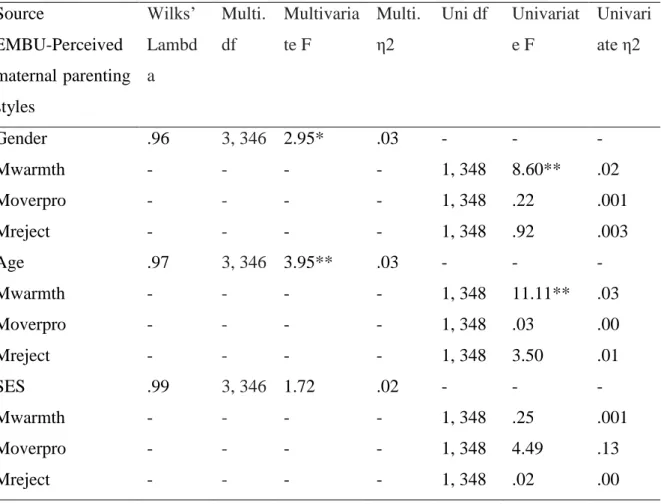
4.5.3. Differences of age, gender and SES on separation individuation pathology . 64 4.5.4. Differences of age, gender and SES on attachment dimensions ... 66
4.5.5. Differences of age, gender and SES on difficulties in emotion regulation .... 67
4.5.6. Differences of age, gender and SES on psychopathology ... 69
4.5.7. Differences of age, gender and SES on life satisfaction ... 71
4.6. Correlational analysis of the study variables ... 72
4.6.1. Early experience and relational consequences ... 72
4.6.2. Early experience and emotion regulation difficulties ... 74
4.6.3. Emotion regulation difficulties and well-being ... 77
4.6.4. Early experience and well-being ... 78
4.7. The Associations Between ACEQ Scores and Other Study Variables ... 79
4.7.1. ACEQ and health problems ... 80
4.7.2. ACEQ and parenting behaviors ... 81
4.7.3. ACEQ and attachment dimensions ... 85
vii
4.7.5. ACEQ and separation-individuation pathology ... 89
4.7.6. ACEQ and well-being ... 91
4.7.6.1. Subjective well-being: Life satisfaction ... 91
4.7.6.2. ACEQ and psychopathology ... 93
4.8. The Effects of Different Types of Childhood Adverse Experiences ... 95
4.8.1. The effects of different types of chilhood adverse experiences on attachment insecurity ... 95
4.8.2. The effects of different types of chilhood adverse experiences on separation individuation pathology ... 98
4.8.3. The effects of different types of chilhood adverse experiences on emotion regulation difficulties ... 99
4.8.4. The effects of different types of chilhood adverse experiences on satisfaction of life 100 4.8.5. The effects of different types of chilhood adverse experiences on psychopathology ... 102
4.9. The Results for the Hypothesized Model Using Path Analysis ... 104
5. DISCUSSION ... 109
5.1. Differences of Demographic Characteristics as Functions of Measures ... 110
5.2. Discussion of Findings Related to Adverse Childhood Experiences Questionnaire (ACEQ) ... 113
5.2.1. The comparison of prevalence rates of ACE ... 113
5.2.2. ACE as a risk factor ... 116
5.2.2.1. ACE and parenting styles ... 116
5.2.2.2. ACE and relational problems ... 117
5.2.2.3. ACE and emotion regulation difficulties ... 118
5.2.3. The effects of different types of chilhood adverse experiences ... 119
5.3. Findings Related to Correlational Analysis of the Study Measures ... 120
5.3.1. Parental behaviors ... 121
5.3.2. Separation individuation pathology and attachment insecurity ... 121
5.3.3. Emotion regulation difficulties ... 122
5.3.4. Well being ... 123
5.4. From Early Experience to Adulthood Well-being ... 123
5.5. Critical Parenting Behaviors ... 126
5.6. Childhood Adversity and Well-being ... 128
viii
5.8. Limitations and Future Directions ... 130
References ... 133 APPENDIX I ... 160 APPENDIX II ... 162 APPENDIX III ... 164 APPENDIX IV ... 169 APPENDIX V ... 170 APPENDIX VI ... 173 APPENDIX VII ... 176 APPENDIX VIII ... 178 CURRICULUM VITAE ... 181
ix
LIST OF TABLES
Table 2.1. Prevalence rates of adverse childhood experiences in the regional ACE Study of
WHO in Turkey ... 8
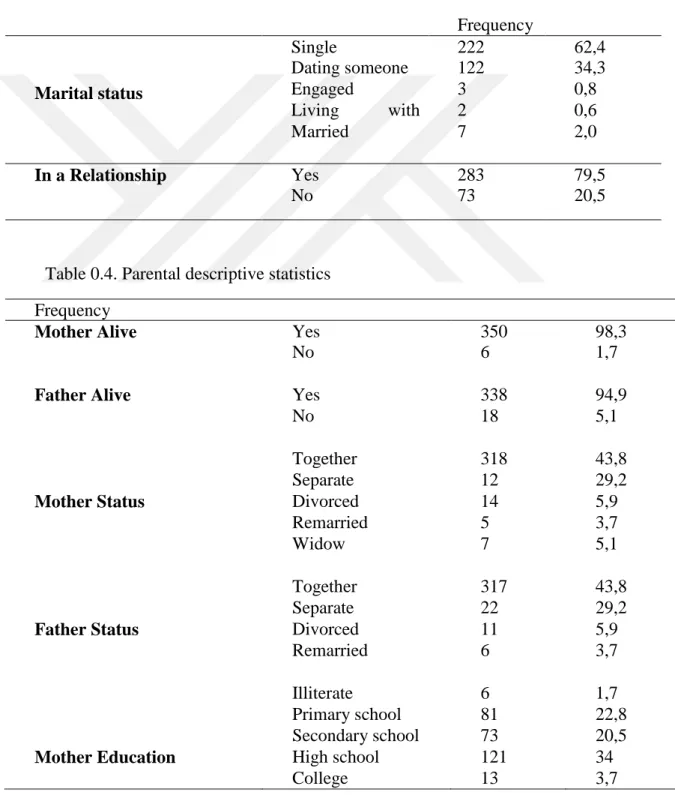
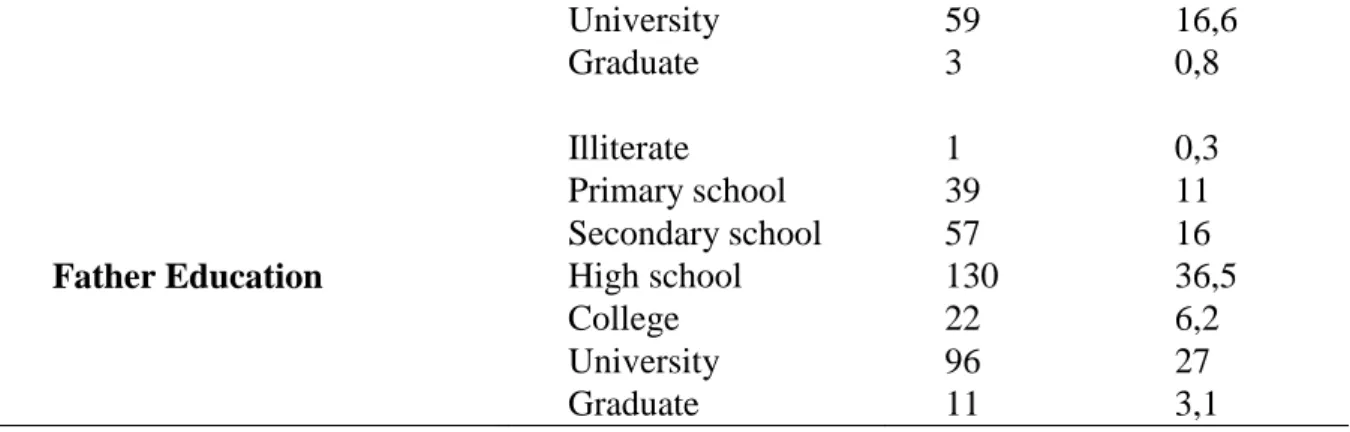
Table 3.1. Descriptive statistics of demographics of the participants ... 43
Table 3.2. Descriptive statistics of school information ... 44
Table 3.3. Descriptive statistics of relationship status ... 45
Table 3.4. Parental descriptive statistics ... 45
Table 3.5. Descriptive statistics of health condition ... 46
Table 4.1. Results for the tests of distrubution of normality for the study variables ... 55
Table 4.2. Descriptive statistics of the measures of the study ... 56
Table 4.3. Prevalence (%) of childhood adversity by category in the present study ... 57
Table 4.4. The recategorizations of the variables ... 59
Table 4.5. Demographic differences on ACEQ ... 60
Table 4.6. Demographic differences on perceived maternal parenting styles ... 61
Table 4.7. Demographic differences on perceived paternal parenting styles ... 63
Table 4.8. Demographic differences on separation individuation pathology ... 64
Table 4.9. Demographic differences on attachment dimensions ... 66
Table 4.10. Demographic differences on emotion regulation difficulties ... 68
Table 4.11. Demographic differences on psychopathology ... 70
Table 4.12. Demographic differences on satisfaction with life ... 71
Table 4.13. Intercorrelations between measures of early experience and relational consequences ... 74
Table 4.14. Intercorrelations between measures of early experience and emotional regulation difficulties ... 76
Table 4.15. Intercorrelations between emotion regulation difficulties and well-being ... 77
Table 4.16. Intercorrelations between measures of early experience and well-being ... 79
Table 4.17. The presence of a health problem among ACE respondents ... 80
Table 4.18. The mean and standart deviation scores of perceived parenting styles ... 82
Table 4.19. Tests of between subjects effects for ACEQ scores on perceived parenting styles ... 83
Table 4.20. Mean and standart deviation scores of attachment dimensions by ACEQ scores ... 85
x
Table 4.21. Means and standart deviations of emotion regulation difficulties by ACEQ
scores ... 87
Table 4.22. Tests of between subjects effects for ACEQ scores on emotion regulation difficulties ... 88
Table 4.23. Mean and standart deviation scores of separation individuation pathology ... 90
Table 4.24. Results of ANOVA for ACEQ scores on subjective well-being ... 91
Table 4.25. Mean and standart deviation scores for life satisfaction by ACEQ scores ... 92
Table 4.26. Tests of between subjects effects for ACEQ scores on psychopathology ... 93
Table 4.27. Mean and standard deviation scores of psychopathology by ACEQ scores .... 94
Table 4.28. Summary of hierarchical regression analysis for demographic variables and questions of ACEQ predicting attachment anxiety for men ... 96
Table 4.29. Summary of hierarchical regression analysis for demographic variables and questions of ACEQ predicting attachment anxiety for women ... 97
Table 4.30. Summary of hierarchical regression analysis for demographic variables and questions of ACEQ predicting separation individuation pathology for men ... 98
Table 4.31. Summary of hierarchical regression analysis for demographic variables and questions of ACEQ predicting difficulties in emotion regulation strategies for men ... 99
Table 4.32. Summary of hierarchical regression analysis for demographic variables and questions of ACEQ predicting difficulties in emotion regulation strategies for women .. 100
Table 4.33. Summary of hierarchical regression analysis for demographic variables and questions of ACEQ predicting satisfaction of life for men ... 101
Table 4.34. Summary of hierarchical regression analysis for demographic variables and questions of ACEQ predicting satisfaction of life for women ... 102
Table 4.35. Summary of hierarchical regression analysis for demographic variables and questions of ACEQ predicting psychopathology for men ... 103
Table 4.36. Summary of hierarchical regression analysis for demographic variables and questions of ACEQ predicting psychopathology for women ... 104
Table 4.37. Path analysis ... 107
xi
LIST OF FIGURES
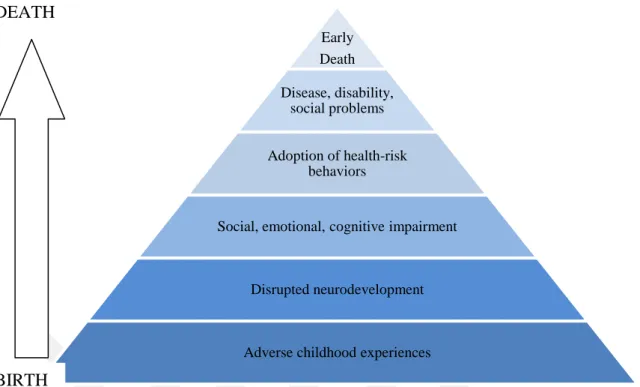
Figure 2.1. Possible trajectory of the influence of Adverse Childhood Experiences
throughout the lifespan ... 7
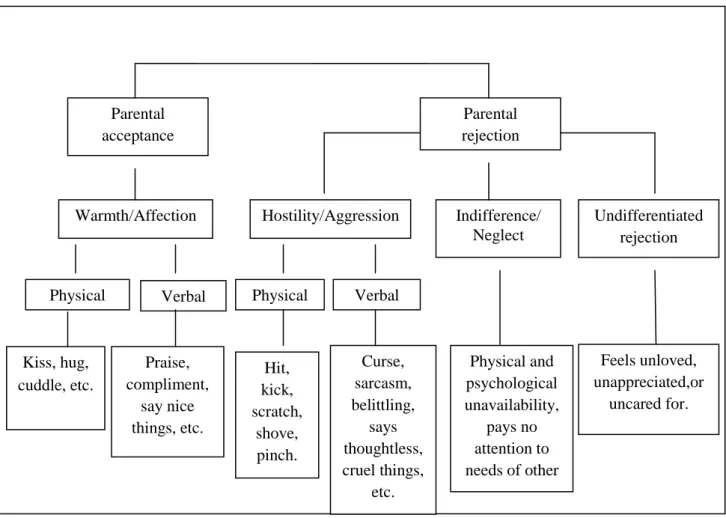
Figure 2.2. The warmth dimension of parenting ... 12
Figure 2.3. Two dimensional model of attachment ... 26
Figure 2.4. The activation of the attachment system ... 37
Figure 2.5. The hypothesized model of the present study ... 42
Figure 4.1. The presence of a health problem among ACE respondents ... 81
Figure 4.2. The attachment dimension scores among ACE respondents... 86
Figure 4.3. Strategies scores among ACE respondents ... 89
Figure 4.4. Separation individuation pathology scores among ACE respondents ... 90
Şekil 4.5. Life satisfaction scores among ACE respondents ... 92
Figure 4.6. Psychopathology scores among ACE respondents ... 95
Figure 4.7. Mediation between maternal overprotection and psychopathology ... 106
xii
ABBREVIATIONS
ACE: Adverse childhood experiences
ACEQ: Adverse childhood experiences questionnaire ANOVA: Analysis of variance
DASS: Depression anxiety stress scale
DERS: Difficulties in emotion regulation strategies ECR-R: Experiences in close relationships-revised
EMBU: Egna Minnen Betraffande Uppfostoran- Own Memories of Upbringing HMO: Health Maintenance Organization
MANOVA: Multivariate analysis of variance MVA: Missing value analysis
SD: Standard deviation SES: Socioeconomic status
SII: Separation Individuation Inventory SWLS: Satisfaction with life scale WHO: World Health Organization
1
1. INTRODUCTION
“The parent-child connection is the most powerful mental health intervention known to mankind.”
Bessel van der Kolk
Early childhood is a time period which is characterized by continous physiological, psychological and social change. The sensitivity of young children to the outside world during this period allows the rapid and healthy development of cognitive and emotional abilities such as language acquisition and emotional regulation. On the other hand, this sensitivity also means a heightened susceptibility to adversity during these early years and may lead to the disruption of healthy development (Lomanowska, Boivin, Hertzman & Fleming, 2017). In early years, these disruptions are usually irreversible as they occur on a biological level which cause changes in the brain structure leading to long term effects (Hertzman & Boyce, 2010). Thus, the climate of social environment and early relational experiences become vital for the vulnerable child.
There is a tremendous amount of research investigating the enduring effects of childhood experiences. Both retrospective and longitudinal studies have revealed that childhood adversity is associated with adult psychopathology, health and academic problems and low socioeconomic status in later life (Kessler, et al, 2010; Garner, Forkey, & Szilagyi, 2015). However, considering the complex nature of human development through the dynamic processes between genetic factors and environmental influences, it is quite difficult to make deterministic assumptions, especially taking the resilient individuals with aversive histories into consideration.
The source of childhood adversity can be quite different, either stemming from the family or the community and the exposure may be chronic or short-term. However, parental adversity is accepted as exceptionally important since the infant is highly dependent on the caregivers in order to develop both behavioral and emotional regulation skills which are the cornerstones of psychological well-being (Bornstein, 1995; Kochanska et al., 1998). Thus, it is essential to investigate the various long term
2
effects of different types of childhood adversities along with parenting practices and attachment quality of the primary relationships.
In the light of the previous literature, this present study aimed to investigate the potential effects of early experience on relational problems and emotion regulation difficulties as predictors of well-being. For this purpose, early experiences were conceptualized by the adverse experiences exposed in childhood and parenting behaviors as perceived by the children. Furthermore, relational problems were investigated through the perspective of different theories as attachment theory and Mahler’s separation-individuation theory, thus were assessed with both attachment dimensions and separation individuation pathology. Finally, depression, anxiety and stress levels as well as the satisfaction of life were measured as the predictors of well being of the sample.
The present study would be the first study investigating the set of aforementioned variables simultaneously. The chapters of the present study proceed as the literature review which covers the theoretical background of the concepts as well as the relevant research outcomes; the method section in which the sample characteristics and assessments that are used are explained; the results section which contain the results of the current study and finally the discussion section in which the results are discussed in the light of the relevant literature and the limitations, suggestions and the clinical implications of the study are given.
3
2. LITERATURE REVIEW
2.1.Psychological Significance of Early Childhood Experiences on Development 2.1.1. Adverse childhood experiences (ACE)
Over the last few decades, it has been shown that child maltreatment is a global and prevalent problem leading to serious life-long outcomes. Considering its complex nature, it has been recognized as a public health and human rights issue (Reading, et al., 2009). World Health Organization defines child maltreatment as, “all forms of physical and/or emotional ill-treatment, sexual abuse, neglect or negligent treatment or commercial or other exploitation, resulting in actual or potential harm to the child’s health, survival, development or dignity in the context of a relationship of responsibility, trust or power.” (World Health Organization [WHO], 1999). Every year, it has been reported that millions of children are the victims or witnesses of some kind of violence and unfortunately, it has been assumed that many cases of childhood abuse remain unreported (WHO, 2016).
In the psychology literature, child maltreatment has been mostly studied focusing in few specific types of abuses, such as sexual and physical abuse. However, these types of abuse frequently occur in the presence of other psychological abuses, neglect or familial problems (Finkelhor, Baron, Peter & Wyatt, 1986). The failure of addressing these possible co-occurrences may lead to fallacious causal explanations between the type of maltreatment and particular adulthood problems. Thus, it is crucial to understand the long-term consequences of multiple types of child maltreatment that co-occur in one’s history in order to develop effective prevention strategies.
Adverse childhood experiences, as a term, is firstly used by Anda and his collagues (2010) in order to emphasize the interrelated adverse experiences in childhood and their possible future impact on various outcomes such as health and psychological well-being. The content of this term is derived in accordance with the findings of one of the widest studies concerning public health, Adverse Childhood Experiences Study (Anda, Butchart, Felitti & Brown, 2010).
4
2.1.2. Adverse childhood experiences (ACE) study
The Adverse Childhood Experiences (ACE) Study, which is considered as one of the widest epidemiological study on childhood experiences, is conducted with more than 17,000 adult Health Maintenance Organization (HMO) members. The study analyzed the impact of the interrelated traumatic childhood experiences before the age of 18 on later physical health, well-being, disease burden, and death (Felitti, Anda, Nordenberg, Williamson, Spitz, Edwards, Koss & Marks, 1998). The study was conducted with long years of collaboration between Kaiser Permanente’s Department of Preventive Medicine in San Diego and US Centers for Disease Control and Prevention (CDC) and provided the researchers with a massive detailed data including biopsychosocial information of the participants (Felitti & Anda, 2010). Even though research about health behaviors and diseases have evolved from a biomedical perspective to a biospychosocial perspective and revealed many risk factors concerning the lifestyle and behaviors of individuals for different kinds of illnesses, the underlying mechanisms of these risk factors and behaviors are not yet fully understood and should be further studied (CDC, 2010, U.S. Department of Health and Human Services, 2010, McGinnis JM, Foege, 2010). In support of this view, ACE Study has arisen out of the observations made for a weight loss program. The high drop-out rate of this Weight Loss Program-which exclusively comprised people who are succesfully losing weight made researchers recognize that early experiences of childhood “are not lost, but like a child’s footprints in wet cement, are often life long.” (Felitti & Anda, 2010, p.77).
In ACE Study, over than 17,000 participants responded to Adverse Childhood Experiences Questionnaire (ACEQ) which was developed by Felitti et al. (1998) particularly for this study. This scale consists of ten questions about adverse experiences that adults were exposed before the age of 18. In particular, the adverse experiences that are covered in the scale are physical, emotional and sexual abuse, emotional and physical neglect, five forms of household dysfunction as witnessing domestic violence, parental loss, drug and alcohol abuse of family members, presence of mental illnesses and criminal behaviors.
The results of the original study revealed that only one third of the participants had never exposed to any kind of adverse experience during childhood. However, if any one category was reported to be present, the likelihood of the presence of at least one
5
more category was found to be 87%. Moreover, 12,5% of the participants reported to have an ACE score of 4 or more (Dong, Anda, Dube, Giles & Felitti, 2003). Most likely, these are the people health professionals encounter more in both counselling and physical health settings. In terms of gender differences, women were found to be %50 more likely to be exposed five or more types of adverse experiences and this finding was regarded as the social explanation for many undefined illnesses such as fibromyalgia, chronic fatigue syndrome, irritable bowel syndrome and pain disorders which are more likely to be observed among women. It is also important to note that the ACE categories had an equal effect on later functioning; thus similar findings were demonstrated for people with a score of 4 resulting from any of the four categories.
The prevalence rates that have been demonstrated for this original study are as follows; emotional abuse (11%), physical abuse (28%), sexual abuse (28% women, 16% men; 22% overall), physical neglect (10%), emotional neglect (15%), mother treated violently (13%), alcohol or drug use by a household member (27%), imprisonment by a household member (6%), household member was depressed, suicidal, had a mental illness or in psychiatric hospital (17%), not raised by biological parents (%33).
The retrospective analysis of childhood experiences in the ACE Study were found to be related to many physical and psychological health, social and economical problems. Specifically, the total ACE score of individuals, in other words, the number of adverse childhood experiences that one was exposed to were found to be strongly associated with the lifetime risk of depressive disorders (Chapman, Whitfield, Felitti, Dube, Edwards & Anda, 2004), hallucinations (Whitfield, Dube, Felitti, & Anda, 2005), (Chapman, Wheaton, Anda, Croft, Edwards, Liu, Sturgis & Perry, 2011), smoking (Anda, Croft, Felitti, et al., 1999), unintended pregnancy (Dietz, Spitz, Anda, et al., 1999), sexually transmitted diseases like HIV (Hillis, Anda, Felitti, Nordenberg & Marchbanks, 2000), having multiple sexual partners (Dube, Felitti, Dong, Wayne & Anda, 2003), male involvement in teen pregnancy (Anda, Felitti, Chapman, et al. 2001), alcohol abuse (Dube, Anda, Felitti, Edwards & Croft, 2002; Anda, Whitfield, Felitti, Chapman, Edwards, Dube & Williamson, 2002), suicide attempts (Dube, Anda, Felitti, Chapman, Williamson & Giles, 2001), illicit drug use (Dube, Anda, Felitti, Chapman & Giles, 2003) and several physical illnesses leading to death including obesity, diabetes,
6
schemic heart disease, chronic lung disease, any kind of cancer, skeletal fractures, and liver disease (Felitti, Anda, Nordenberg, et al., 1998). Furthermore, chronic obstructive pulmonary disease (COPD) which is one of the important cause of mortality all around the world had a 2.6 times higher risk of occurrence in people with a ACE score of ≥5 (Anda, Brown, Dube, Bremner, Felitti, & Giles, 2008). Moreover, it was demonstrated that there was a graded relationship between ACE and sexual victimization in adulthood (Ports, Ford & Merrick, 2016).
The relation between adverse childhood experiences and medical conditions have been explained in two ways (Felitti, 2009). Firstly, people who are exposed to various of traumatic experiences are more prone to emotional problems with which they try to cope with unhealthy behaviors like smoking, drug or alcohol using, overeating, etc. in order to get an immediate relief. As a result of these compensatory behaviors, the risk of having a chronic illness increases. Secondly, the exposure of chronic stress during childhood in which the nervous, immune and endocrine systems go through profound changes, lead to enduring effects on the person throughout his life (Danese & Even, 2012). Thus, the changes in the biological systems as a result of trauma exposure will inevitably have an impact on cognitive and emotional processing throughout life. The trajectory that was suggested as a result of the insight that ACE study had provided has been demonstrated in Figure 2.1.
7
Figure 0.1. Possible trajectory of the influence of Adverse Childhood Experiences throughout the lifespan
Source: Felitti, et al., (1998).Relationship of childhood abuse and household dysfunction to many of the leading causes of death in adults. American Journal of Preventive Medicine, 14,4, p.256
2.1.3. ACE study in Turkey
The number of studies on childhood adverse experiences in Turkey are limited and the prevalence rates of specific childhood traumas have revealed inconsistent results, though suggesting an increasing trend throughout the past years (Erol Sahillioğlu, 2017). However, previous research on understanding the magnitude of childhood traumatic experiences in Turkey estimated the prevalence of physical abuse ranging between 13-48%, emotional abuse as 36 to 60% and finally sexual abuse as 10-28% (Zoroğlu, Tüzün, Sar, Tutkun, Savaş, Öztürk, et al, 2003; Eskin, Kaynak-Demir, Demir, 2005; Alikaşifoğlu, Erginoz, Ercan, Albayrak-Kaymak, Uysal & İlter, 2006; Yılmaz Irmak, 2008). Moreover, the prevalence of neglect was estimated as 20% (Ağırtan, Akar, Akbaş, Akdur, Aydın, Aytar et al; 2009). Given the prevalence rates, it has been known that emotional abuse is the most common form of childhood abuse in Turkey (Erol Sahillioğlu, 2017). Furthermore, these rates have been considered to be the tip of the iceberg since it has been estimated that many of the cases go unreported in Turkey. However, it has been known that childhood adverse experiences do not usually
Early Death Disease, disability, social problems Adoption of health-risk behaviors
Social, emotional, cognitive impairment
Disrupted neurodevelopment
Adverse childhood experiences
BIRTH DEATH
8
occur in isolation. Taking this intermingled nature of childhood experiences into account, there have been a lack of a more comprehensive approach regarding different types of childhood adversity.
The survey of ACE Study was conducted as a regional study of WHO in Turkey in 2013 with 2,257 participants from different universities in order the identify the prevalence rates of ACE in Turkey as well as the associated health risk factors (Ulukol, Sethi & Kahilogullari, 2014). As for prevalence rates of ACE, half of the participants reported at least one ACE. Moreover, among all ACES, physical abuse had the highest prevalence rate, followed by the exposure to domestic violence, emotional abuse, emotional neglect and sexual abuse. Whereas ACE scores increased by the number of siblings in the family, they were negatively associated with the education level of the parents. The overall prevalence rates of this study was summarized in Table 2.1.
Table 0.1. Prevalence rates of adverse childhood experiences in the regional ACE Study of WHO in Turkey Male (%) Female (%) Total (%) Type of abuse Physical abuse 26.2 16.3 21.1 Sexual abuse 8.7 7.2 7.9 Emotional abuse 10.7 8.9 9.8 Neglect Emotional neglect 11.3 6.5 8.8 Physical neglect 7 4.6 5.7 Household dysfunction Exposure to domestic violence 20.9 16.1 18.4 Divorced or separated parents 4.9 5.4 5.2
9 Depression or suicide attempt 7.1 11.3 9.3 Alcohol use 7.5 5.3 6.4 Drug use 4.8 2.0 3.4 Household incarceration 12.0 8.7 10.3 ACE Score 0 44.6 55.3 50.3 1 25.2 22.8 23.9 2 14 10.6 12.2 3 7.5 5.7 6.5 4 or more 8.7 5.7 7.1
Source: Ulukol, B., Sethi, D., Kahilogullari, A.K. (2014). Adverse Childhood Experiences Survey among University Students in Turkey. Copenhagen: WHO Regional Office for Europe.
As for health risk factors, the risk of smoking, problematic alcohol use and drug use were found to be significantly associated with increasing ACE scores. Furthermore, the prevalence of emotional problems as defined by crying spells, depression, uncontrolled anger, high stress level, nervousness and trouble refusing requests increased along with the increase in ACE scores (by 6-8 times). The history of adverse experiences also predicted family, school and financial problems. Furthermore, among the cerebrovascular problems, frequent headaches, attacks of dizziness, seizures and convulsions, loss of consciousness, temporarily lost control of hand or food were more likely to be reported as the ACE scores increased. Similarly, participants with a history of ACE, reported more gastrointestinal problems including stomach ulcer, abdominal pains, frequent indigestion, constipation and diarrhea. With the complaints listed in the survey, the overall perception of health were more negative with the increasing number of ACEs (Ulukol, Sethi & Kahilogullari, 2014).
10
The results of this study revealed different rates of childhood adversity compared to other childhood trauma studies conducted with children in Turkey. Taking the recall bias into consideration as well as the reluctance of disclosing traumatic experiences in early adulthood, the inconsistent results of the variety of studies are reasonable. Moreover, the limited range of age in the aforementioned study obscure the association of ACE and risk of health problems as the chronic diseases are more likely to occur in advanced ages as a result of unhealthy coping behaviors. Most importantly, this study have been conducted with medical professional, thus the questions investigated the presence or absence of sypmtoms instead of a continuous range. However, it has relatively been a more comprehensive study regarding investigating the association between the different types of childhood adversity and health risks.
2.1.4. Parenting styles and primary attachment experience
Family is where the child evolve into a unique human being. A child’s first social contacts mostly occur within his family. Transformation of the child which includes the process of becoming a fully independent individual from a dependent baby is inevitably prone to environmental factors. Thus, familial factors are important for explaining the origins of both psychopathology and psychological well-being in adulthood. Attachment experience and parenting styles, which mostly seem interconnected, are considered as the most important determinants in the child’s personality development.
For understanding the effects of early experience on adult well-being, both internal and external environment and their interactions should be taken into consideration. Children are born with a capacity for basic biological functions such as circulation and respiration. However, since their nervous system is not fully matured, they need continous assistance of their caregivers for many other functions (van der Kolk, 2003). In other words, the physical development of the brain occurs thoroughout the social interactions of the child. Thus, it would be misleading to discuss childhood trauma without addressing the attachment interactions between children and caregivers. Expectedly, in most cases, parental abuse or neglect cooccur with accidents or more victimization (Claussen & Crittenden, 1991; Edwards, et al., 2001). Moreover, in
11
considerable amount of cases, the attachment relationships and parenting practices become the source of trauma and stress themselves.
2.1.4.1. Parenting behaviors
Parenting is a set of complex social behaviors which are stemmed from parents’own personal history, genetic make up and personality (Boivin, et al. 2005). Even though parenting is supposed to be a biological mechanism with the boost of hormones and the regulatory function of HPA axis, the disruptions that have occurred in the childhood history of parents may also have detrimental effects on their own relationships with their infants (Lomanowska, Boivin, Hertzman & Fleming, 2017). The intergenerational transmission of parenting has also been demonstrated in other studies and constitutes a risk factor across generations besides genetic background (Belsky, Jaffee, Sligo, Woodward & Silva, 2005; Bailey, Hill, Oesterle, & Hawkins, 2009). Furthermore, the caregiving and attachment patterns are usually activated simultaneously (Doinita & Maria, 2015).
Parenting behaviors creates the emotional climate of the family and this very first relationship between the parent and child, provides the general basis for all the further intimate relationships of that child including peer relationships and parenting (Bartholomew, 1990; Shaver, Collins, & Clark, 1996). Moreover, the perception of the child regarding the parental behaviors is considered to be more important rather than the real behaviors of parents. Specifically, studies have revealed two different dimensions of parenting styles that have been found to be associated with the psychological development of the child. These are parental warmth and parental control (Grolnick & Gurland, 2002).
The first dimension, parental warmth includes all the caring behaviors such as the responsiveness of the family to the child, the expression of positive regard, support and acceptance. Simply put, parental warmth can be described as the love the child experiences from their parents or caregivers. Parental warmth can be also regarded as emotional warmth and has been found to be a protective factor against adult depression (Eisemann, 1997), whereas low levels of perceived parental warmth has been found to be associated with psychological problems in later life (Fauber et al. 1990; Garber, Robinson, & Valentiner, 1997). On the other hand, rejection and criticism are the
12
reverse side of warmth and can be described as the lack of all aforementioned positive feelings. Rejection and criticism can be quite traumatic for the child and can even be regarded as emotional abuse. These dimensions can appear in several ways: cold and distant behaviors, hostile and aggressive behaviors, neglectful behaviors and the belief of being rejected that the child has even though there is no explicit sign of rejection in terms of negative behaviors (Rohner, 2004; Rohner, 2016). The parental warmth dimension is presented in detail in Figure 2.2.
Many years of cross-cultural research has revealed that the individuals who report parental rejection tend to have some common psychological characteristics. These are aggression and hostility problems, higher levels of dependence or defensive independence, lower levels of self-esteem and self-adequacy, emotional numbness or instability and a negative view of the world and people (Rohner, 2016). To put it
Parental acceptance Parental rejection Warmth/Affection Kiss, hug, cuddle, etc. Curse, sarcasm, belittling, says thoughtless, cruel things, etc. Hit, kick, scratch, shove, pinch. Undifferentiated rejection Indifference/ Neglect Hostility/Aggression Praise, compliment, say nice things, etc. Verbal
Physical Physical Verbal
Feels unloved, unappreciated,or uncared for. Physical and psychological unavailability, pays no attention to needs of other
Figure 0.2. The warmth dimension of parenting
Source: “Introduction to Interpersonal Acceptance-Rejection Theory (IPARTheory) and Evidence.” by R.P., Rohner, 2016, Online Readings in Psychology and Culture, 6(1). Copyright © 2016 International Association for Cross-Cultural Psychology.
13
differently, individuals who feel rejected by their caregivers experience an intense psychological pain which then can lead to overwhelming feelings like aggression and hostility. Thus, they can either have problems in the management of these feelings or they can emotionally become numb in order to protect themselves from further pain. Furthermore, these individuals can become overly dependent in the need of constant reassurance and support as a result of the lack of it during their early social environment. On the contrary, some others may have defensive independence which means the refusal of the need for warmth and likewise positive responses from other people. While these individuals say “I don’t need you!”, they mostly do not recognize their internal craving for positive interactions. This disposition may then turn into a vicious cycle aggravating the relational problems (Rohner, 2016).
People who have experienced higher levels of parental rejection may develop “rejection sensitivity” which can be described as the hypervigilance to any emotional cues or signs that can imply an emotional undependability (Ibrahim, Rohner, Smith, & Flannery, 2015). This phenomenon occurs following the cognitive processes as selective attention, selective perception, incorrect and biased causal attribution, and impaired information processing. Consistent with this view, studies conducted with PTSD or developmental trauma disorder, as an enduring effect of perceived rejection, have confirmed that these individuals have hypervigilance and anxiety problems as well as self hatred and suicidality (van der Kolk, 2010; Courtois, 2004).
The second dimension, parental control includes both behavioral and psychological control (Barber, Olsen, & Shagle, 1994). Rewards and punishments as a way of shaping and controlling child’s behaviors can be regarded as behavioral control whereas psychological control includes parents’ emotional reactions and expressions such as disapproval or dissappointment towards the child (Aunola & Nurmi 2004; Barber 1996). High levels of parental control is detrimental to the child and can be identified as overprotection. Parental overprotection and also the lack of encouragement for autonomy can result in low self-esteem and social skills, high levels of internalizing and externalizing problems (Barber and Harmon, 2002; Barber and Olsen, 1997; Garber et al., 1997; Laible and Carlo, 2004). Moreover, especially during late adolescence, high psychological control may impair the identity formation and individuation process in particular (Luyckx et al. 2007; Barber and Harmon, 2002).
14
Negative parental attitudes are considered as overprotection and rejection and the cross-cultural studies have demonstrated that these behaviors are consistently associated with internalizing problems as anxiety and depression; externalizing problems as conduct disorder and delinquency and even substance abuse (Rapee, 1997; Rohner, 2016). Moreover, there is considerable amount of research demonstrating that parenting styles are related to emotion regulation abilities and psychological well-being of children (Morris et al., 2007; Arrindell, Emmelkamp, Gerlsma, 1990).
2.1.4.2. Primary attachment experience
The theory of attachment, which was originally developed by John Bowlby, emphasizes the effects of early emotional bonding between the infant and caregiver on the personality development and future relationships (Bowlby, 1969, 1973, 1979, 1980). Bowlby drew his theory on a combination of scientific concepts, including psychoanalysis, cognitive and developmental psychology and ethology.
According to Bowlby, the infant is born with an innate and biological capacity to achieve proximity to the caregiver for survival. Bowlby described the concept of the attachment behavioral system that was evolved to operate in the environmental adaptedness in which the genetic selection favored the attachment behaviors since they increase the chances of survival by providing the protection of the caregiver. This is referred as “the biological function of the attachment behavior” (Bowlby, 1988). Bowlby explained the operation of these behavioral systems in an environmental adaptedness as “When we come to consider with what instinctive behavior - or, more properly, with what behavioural systems mediating instinctive behavior - humans may be endowed, a first task to consider is the nature of the environment within they are adapted to operate.” (Bowlby, 1969, p.58). This instinctive behavior of the infant is predictable and similar in the species and crucial for the survival and finally it does not necessarily develop with learning. The attachment behaviors of the infant is composed of responses such as smiling, clinging, sucking as well as crying (Bowlby, 1958) to elicit the caregiver’s nurturing behavior. Thus, these behaviors can also be called as proximity seeking behaviors. These behaviors are mostly triggered especially in times of distress with the desire to regain the feeling of security. The responsive caregivers are
15
well aware of the needs of the infants and able to help them to regulate their emotions with nurturing behaviors (Sroufe & Waters, 1977). The soothing behaviors of the caregiver help the infant modulate the physiological arousal and regulate their stress-induced affective states (Hofer, 1994; Schore, 1994). Consistent with this perspective, attachment is also defined as the dyadic emotion regulation (Sroufe, 1996). The synchronicity of these reciprocal interactions is accepted as fundamental for a healthy affective development of the individual (Penman, Meares, & Milgrom-Friedman, 1983).
Although the basic assumptions of attachment theory were introduced by Bowlby, it can actually be considered to be the joint work of Bowlby and Mary Ainsworth (Bretherton, 1992). Ainsworth started to work with Bowlby late in 1950s and contributed to the development of attachment theory, especially with her empirical studies observing early mother-infant relationships (Ainsworth, 1979). Ainsworth developed an experimental procedure called ‘The Strange Situation” to investigate the attachment behaviors of the infants, especially the infant’s behaviors using the mothers as a secure base for exploration (Ainsworth & Wittig, 1969). The studies conducted with this procedure revealed three different types of attachment styles: “secure”, “avoidant” and “anxious-ambivalent”. The securely classified children were eager to explore the environment in the presence of the mother, and they wanted to be close to the mother following reunion and then could go on exploration after a while. The avoidant children appeared to ignore that the mother was gone and would refuse to contact or interact and even ignore the mother when she was back. On the other hand, the anxious-ambivalent children showed inconsistent behaviors at the procedure. Even before the mother left, some infants showed signs of anxiety and their anxiety was intensified with the separation. When their mothers were back, they would cry for contact but at the same time, they would not cuddle or “sink in” when they were held. These interaction patterns were found to be related to the maternal sensitivity of the mothers.
In the 1986, Main and Solomon observed infants who exhibit diverse behaviors without an observable goal or intention and cannot be classified into any of the present Ainsworth criteria. The behaviors of these infants include disorganized and disoriented behaviors such as displays of fear or contradictory behaviors or emotions, stereotypic and undirected movements or expressions, confusion or freezing. The observation of
16
these behaviors led the researchers to classify them as disorganized. The disorganized attachment pattern, in later studies, was found to occur more frequently in the presence of parent psychopathology, child abuse, or very high social risk (Carlson, Cicchetti, Barnett, & Braunwald, 1989; Crittenden, 1988; Lyons-Ruth, Connell, Zoll, & Stahl, 1987).
To sum up, attachment is a behavioral regulatory system as suggested by Bowlby (1969) and includes proximity seeking behaviors as well as coping behaviors with stress which occurs as a result of a separation from or loss of the attachment figure (real or perceived) in the early childhood. The infant’s coping behaviors and emotion regulation strategies mostly depend on the quality of the relationship with his caregiver. The literature has already demonstrated the role of emotion regulation in the development and maintenance of different disorders and it is believed to be one of the main mechanisms that interconnect attachment and psychopathology (Chaplin & Cole, 2005). The attachment security predicts effective emotion regulation-that is the secure infant is more able to tolerate and manage negative emotions, where as insecure infants may use maladaptive strategies such as minimization or exaggeration of emotions (Guttmann-Steinmetz & Crowell, 2006).
2.1.5. Separation-individuation process
The period of early childhood is characterized by the development of self in relation to the experiences with significant “others”. This developmental period has been attempted to be explained by various psychodynamic theories beside of attachment theories. Among the psychodynamic approaches, object relations theory has emphasized the mental representations of the self and others and how these representations influence the personality development and actual relationships (Greenberg & Mitchell, 1983). Compared to attachment theory which investigates the patterns of attachments as secure and insecure, object relations theory is more concerned with the functioning of the insecure patterns of relationships and psychopathology development (Wright, 1986).
One of the pioneers of object relations theory, Margaret Mahler formulated her theory of Separation-Individuation process with the premise that the infant goes through
17
an ongoing process from a full symbiotic relationship with the mother to establishing a separate and autonomous self. As Mahler named, “the psychological birth of an infant”, is characterized by gaining a sense of separateness and independency from the caregiver (Mahler, Pine & Bergman, 2002). Mahler was the first pediatrician and psychoanalyst who attempted to systematically and longitudinally investigate the infants (Gergely, 2000). She tried to understand the development of the mental representations of self and others within the infant caregiver interactions. The process of individuation, as explained by Mahler enables the individual to engage in mature adult relationships (Mahler et al., 1975). With the observation of normal and disturbed children, Mahler proposed that the ego development occurs through sequential stages. The first stage is referred as the normal autistic stage and sometimes as “awakening” phase and includes the first three or four weeks of the baby’s life (Mahler, Pine & Bergman, 1975). During this phase, the infant is in a continuous inward state and dependent on the caregiver for the satisfaction of the physiological states or needs. Even though the infant does not have the cognitive maturity to develop mental representations and the capacity to differentiate between the self and object, this stage constitutes as the foundation for the representations of self and object.
In the second stage which is referred as the “the normal symbiosis phase”, lasts until about five months. In this stage, the infant starts to crack out of the “autistic” shell and experience the mother as a need-gratifying object. Different from the biological meaning of symbiosis which includes mutual benefits, this stage describes the absolute dependency of the infant to the mother whereas the mother is not dependent to the infant. Rather, the symbiosis refers to the fusion and dual unity in the mother-infant relationship which means that “I” is not differentiated from “not-I” and there is a delusional common barrier between the infant and the mother and the external world as the infant experiences. The physiological incidents that result in unpleasurable tension such as hunger, vomiting, urinating, defecating, etc are followed by the mother’s tension reducing attempts. Thus, the infant learns to differentiate between good/pleasurable and bad/painful qualities of experiences (Mahler & Gosliner, 2017). These are the primary forms of internal mental representations. This stage is also characterized by the splitting as a developmental phenomenon. The infant starts to organize his mental world by splitting the good and bad mental representations of him and the object. The last stage of the separation-individuation starts about five to six
18
months of age as the baby starts to develop cognitive abilities which enable him to experience the outer world and a sense of identity. “Separation Individuation” process consists of four sub-phases as (a) Differentiation or hatching (b) Practicing (c) Rapprochement (d) Emotional object constancy and individuation.
In the sub-phase of differentiation, the infant’s attention shifts from inward to outward and starts to explore his surroundings, especially the mother. This phase is also the beginning of the self-object distinctions (Mahler, Pine & Bergman, 1979). In practicing stage, with the developing the psychomotor abilities, the infant seeks for active exploration of the environment. The differentiation from the mother increases emotionally with the feeling of omnipotence (Mitchell & Black, 1995). The third sub-phase, rapprochement, is characterized by the ambivalent feelings of autonomy and closeness. As the infant becomes frustrated with his environment and becomes aware of his limited capacities, they need “emotional refueling” and desire the closeness with the mother. The urge for both autonomy and closeness at the same time creates an anxiety which the infant attempts to resolve by splitting- separating mental representations of good from bad-, only this time as a defense mechanism. This crisis is resolved through his interaction with the mother and creating his own individuality by keeping an optimal distance from her (Lamb, 1986; Mahler et al., 1975).
In the final stage of separation individuation, object constancy and individuation, the infant achieves a differentiated and individuated self and internalizes the parents by integrating the split mental representations as a whole. According to Mahler, failure to achieve an individual identity and prolonged use of splitting as a defense mechanism may leave the child prone to separation individuation pathology throughout life (Mahler et al, 1975). Moreover, the adequate nurturance received in each stage results in “good” object representations and the individual achieves object constancy which gives the individual the capacity to tolerate different emotions and regulate them efficiently in times of distress (Zosky, 2008).
Mahler proposed that during these sequential phases, successful individuation requires connection to others without enmeshment or isolation. The disruptions that have been experienced may be manifested in different types of psychopathology in adulthood such as narcissistic and borderline personality, social dysfunction and
19
depressive symptomatology (Lapsley & Stey, 2010). Moreover, it was also pointed out that the earlier these disruptions occur, the more severe psychopathology an individual would have (Lyons-Ruth, 1991).
The aim of the individuation process is relational autonomy which involves a balance between connectedness and separation and the achievement of this goal is facilitated through secure and supportive relationships (Josselson, 1988). Consistently, the studies pointed out that secure attachment provides a solid base for individuation process facilitating both autonomy and interpersonal relatedness (Levy, Blatt & Shaver, 1998). On the other hand, controlling and overprotecting parenting may disrupt this individuation process creating the feelings of anxiety or guilt (Kins et al., 2012). Despite of the limited number of studies on separation individuation process in adulthood, they showed that separation problems as dependency conflicts were predictors of eating disorders, perception of self-inadequacy and mistrust (Friedlander & Siegel, 1990) whereas emotional independence was associated with better academic adjustment (Hoffman, 1984). However, these studies were conducted within the borders of normal separation individuation and were not sensitive enough to detect the more serious outcomes of the separation individuation process (Rice, Cole & Lapsley, 1990).
Pine (1979) described the pathology of separation individuation process in lower-order and higher-lower-order disturbances considering the failures in organizing the self-other differentiation. The lower-order symptoms are characterized by the failure in differentiation the self from others which may result in merging or enmeshment and the loss of sense of separateness. Thus, individuals with the lack of differentiation may feel panic over this merging or may have acceptance of this dual unity in a pathological manner. Furthermore, these individuals may even act rebellious against the significant others as any similarity between them and their parents would lead to a loss of self. The higher-order symptoms, on the other hand, refers that the self is already differentiated from significant others. However, a fear of loss of the differentiated figure is experienced and these higher-order symptoms are manifested as the inability to tolerate aloneness, desire to gain omnipotent control over others and object constancy deficits (Christenson & Wilson, 1985; Pine, 1979). Furthermore, these individuals have difficulties holding a constant inner representation of self and others and use splitting as
20
a defense mechanism which then leads to extreme perceptions as well as responses causing problematic relationships as clearly seen in borderline patients.
Christenson & Wilson (1985) developed “Separation Individuation Inventory” for the assessment of separation individuation pathology in terms of use of splitting, having “good/bad” representations of self and others, differentiation problems and relational problems. The findings demonstrated that separation individuation pathology was associated with insecure attachment styles and was negatively correlated with individual and social adjustment to college (Lapsley & Edgerton, 2002) and also psychopathological symptoms such as depression, anxiety, somatic complaints, and obsessive-compulsive behaviors (Lapsley, Aalsma, & Varshney, 2001). Moreover, separation individuation pathology was found to be associated with borderline personality disorder which is characterized by the heightened emotions triggered in close interpersonal relationships (Dolan, Evans, & Norton, 1992).
2.2. The Effects of Early Experiences and Psychopathology 2.2.1. Attachment as a life long process
2.2.1.1.The neurological basis of attachment
Bowlby, while proposing the classic attachment theory, aimed at integrating psychological and biological concepts in explaining the human development. The recent advances in neurobiology, in line with Bowlby’s purpose, provided a large amount of interdisciplinary data that supports that the attachment processes can be traced in the structures of the brain (Schore & Schore, 2008). Thus, neurological research provides a deeper understanding of attachment theory and how early relationships have lifelong consequences throughout lives.
Attachment, described as an activated behavioral system, is a vital process for an infant to survive. The amount and the quality of the infant’s interaction with the mother and the maternal sensitivity together constitute the attachment dynamics as a “reciprocal interchange” (Bowlby, 1969, p.346). With the control systems perspective, it was proposed that the goal of the infant is not only to maintain the physical proximity, but also have the presence of an emotionally available and responsive attachment figure.
21
The activation of this control system especially occurs in times of danger and stress and leads to regulatory behaviors of the infants, thus the attachment is referred to as a regulatory mechanism. The neurobiological studies of the control system have identified that the area that is associated with the control of behavior, especially when it is related to affect, is the orbitofrontal cortex which is also called “the senior executive of the emotional brain” (Joseph, 1996). It is involved in the perception of visual, facial and auditory information (Scalaidhe, Wilson & Godman-Rakic, 1997; Romanski et al., 1999), coordinates both positive and negative responses to sensory information (Francis, Diorio, Liu & Meaney, 1999; Blair, Morris, Frith, Perrett & Dolan, 1999) and provides feedback when environmental conditions change (Elliott, Frith & Dolan, 1997). Thus, it has a crucial role in the modulation of the control of goal-directed behavior which is central to the Bowlby’s attachment theory (Tremblay & Schultz, 1999). Moreover, the limbic system that are in a critical period of development for the first two years of life in which the infant-mother attachment is established was found to be involved in the emotionally focused learning for the development of attachment behaviors such as imprinting and adaptation to a changing environment (Anders & Zeanah, 1984; Mesulam, 1998).
The orbitofrontal system has direct connections to autonomic nervous system and reticular formation which is responsible for arousal reflex. These connections enable this system to regulate the social and emotional responses and affect that are the key elements of attachment processes (Westin, 1997). Furthermore, the right cortical hemisphere with its reciprocal connections to limbic and subcortical areas is responsible for the process of self-related and emotional information and regulation of psychobiological states (Schore, 1999). The support for the importance of the right hemisphere is acquired from many studies. Firstly, the right hemisphere is dominant in preverbal infants for the first few years of life (Chiron, et al., 1997). Secondly, early social experiences have an impact on the physical maturation process of this region (Schore, 1994) meaning that infant-mother interaction in the first years of the infant promotes “the development and maintenance of synaptic connections during the establishment of functional circuits of the right brain” (Schore & Schore, pp.3, 2008). Furthermore, the right brain is also responsible for the processing of nonverbal affective cues between the infant and the caregiver in the early attachment (Schore, 1994).