FATİH SULTAN MEHMET VAKIF ÜNİVERSİTESİ LİSANSÜSTÜ EĞİTİM ENSTİTÜSÜ
MİMARLIK ANABİLİM DALI
MİMARLIK İNGİLİZCE YÜKSEK LİSANS PROGRAMI
AN EVALUATION OF SKYSCRAPER FACADES IN
TERMS OF SUSTAINABILITY: IN CASE OF
BUYUKDERE AVENUE
YÜKSEK LİSANS TEZİ
ELA AKTA
YÜKSEK LİSANS TEZİ
FATİH SULTAN MEHMET VAKIF ÜNİVERSİTESİ LİSANSÜSTÜ EĞİTİM ENSTİTÜSÜ
MİMARLIK ANABİLİM DALI
MİMARLIK İNGİLİZCE YÜKSEK LİSANS PROGRAMI
AN EVALUATION OF SKYSCRAPER FACADES IN
TERMS OF SUSTAINABILITY: IN CASE OF
BUYUKDERE AVENUE
ELA AKTA
(180202034)
İSTANBUL, 2020
Danışman
BEYAN/ ETİK BİLDİRİM
Bu tezin yazılmasında bilimsel ahlak kurallarına uyulduğunu, başkalarının eserlerinden yararlanılması durumunda bilimsel normlara uygun olarak atıfta bulunulduğunu, kullanılan verilerde herhangi bir tahrifat yapılmadığını, tezin herhangi bir kısmının bağlı olduğum üniversite veya bir başka üniversitedeki başka bir çalışma olarak sunulmadığını beyan ederim.
ELA AKTA
ACKNOWLEDGMENTS
Initially, I would like to express my gratitude to my advisor Asst. Prof. Dr. Hakkı Can ÖZKAN, for his masterful guidance through the thesis phase.
I especially thank my mother Hala and my father Ammar for their unlimited patience, encouragement, and support through the thesis process and at every moment of my life. I express my thanks to my sisters Selin and Aya for all their support during the thesis writing process.
I owe a debt gratitude to Mr. Ulaş İSSİ the Technical Coordinator of Tekfen Tower for providing the necessary information to complete the research.
Last but not least, I would like also to thank all my friends who have motivated and supported me during the thesis writing process.
v
SÜRDÜRÜLEBİLİRLİK KAPSAMINDA YÜKSEK YAPI
CEPHELERİNİN DEĞERLENDİRMESİ: BÜYÜKDERE
CADDESİ ÖRNEĞİ
ELA AKTA
ÖZET
21. yüzyılda dünyanın pek çok şehrinde yüksek katlı yapılar inşa edilmektedir ve sayıları gün geçtikçe artmaktadır. Bu süreçte çözülmesi gereken bazı sorunlar ortaya çıkmaktadır.Yüksek katlı yapılar, az katlı yapılara göre çok daha fazla enerji tüketmektedir. Bu enerji tüketimi, sürdürülebilir cephe tasarım kriterlerine uyarak büyük ölçüde azaltılabilmektedir. Bu yapıların enerji tüketimini azaltıp verimini arttırmak için yüksek katlı bir yapı tasarlanırken sürdürülebilir cephe tasarım kriterleri dikkate alınmalıdır.
Bu tez çalışmasında, Büyükdere Caddesi’nde 2000’li yıllardan sonra inşa edilen ofis ve/veya konut fonksiyonlu gökdelenlerin cepheleri incelenecektir. Cepheler, tez kapsamında vurgulanacak olan sürdürülebilir gökdelen cephe tasarım parametrelerine göre incelenmiştir. Ayrıca, araştırma güneş-gün ışığı, doğal havalandırma ve malzeme katagorilerine odaklanmıştır. Katagorilere ait parametreler belirlenip bina cepheleri hakkında toplanan verilere, belirtilen parametreler kapsamında değerlendirme yapılmıştır. Bu sonuçlar neticesinde Büyükdere Caddesi için sürdürülebilir gökdelen cephe tasarımı için tasarım önerisinde bulunulmuştur. Son olarak, toplanan verilerden dikkate alınan parametrelerin yüzdelik sonuçlarından değerlendirme çizelgeleri çıkartılıp çalışma sonuçlandırılmıştır.
Anahtar kelimerler; Sürdürülebilir cephe tasarımı, Sürdürülebilir gökdelen,
vi
AN EVALUATION OF SKYSCRAPER FACADES IN
TERMS OF SUSTAINABILITY: IN CASE OF
BUYUKDERE AVENUE
ELA AKTAABSTRACT
The high-rise buildings are consuming much more energy compared to the low-rise buildings. This energy consumption can be reduced by following sustainable facade design criteria. Therefore, sustainable facade design parameters should be considered while designing a high-rise building in terms of reducing the building's energy consumption.
This thesis investigated the facades of the office and/or residential functioned skyscrapers built after the 2000s at Buyukdere Avenue. It studied the facades according to the sustainable skyscraper facade design parameters, which will be emphasized within the thesis content. Furthermore, the research focused on sun-daylight, natural ventilation, and material parameters. Determining a set of parameters and then evaluating the collected data of the buildings facades features within the stated parameters. Thereafter, an evaluation chart was constructed from the collected data having results with the consideration percentile of the parameters, ending up with a suggestion of sustainable skyscraper facade design for Buyukdere Avenue.
Keywords; Sustainable facade design, Sustainable skyscraper, Facade, Energy
vii
PREFACE
The study investigated the facades of skyscrapers built in the 21st century at
Buyukdere Avenue within the scope of the thesis, in terms of sustainable facade design parameters. Aiming to determine the sustainable parameters of the examined facades. Also, the high-rise buildings are consuming much more energy compared to the low-rise buildings. This energy consumption can be reduced by following sustainable facade design criteria.
In general, I was interested in concepts such as skyscrapers, sustainability, ecology, and eco-material. Thus, I chose this thesis topic to improve my knowledge, and I really gained very beneficial information while researching the thesis. During the research, I became more interested in skyscraper facade designs, and I also observed in detail how important the facade design is to the building. While writing the thesis, my aim was to raise awareness on this subject.
viii
TABLE OF CONTENTS
ÖZET ... v ABSTRACT ... vi PREFACE ... vii SYMBOLS ... x LIST OF IMAGES ... xiLIST OF TABLES ... xiv
ABBREVIATIONS ... xv
1. INTRODUCTION ... 1
2. THE CONCEPT OF SUSTAINABILITY AND ITS HISTORICAL BACKGROUND ... 8
2.2.1. Eco-materials Definition and Classification ... 11
2.5.1. Skyscraper Classification Within Functionality and Height ... 19
2.7.1. Bioclimatic Design: ... 29
2.7.2. Passive Design Method ... 29
ix
2.7.3.1. Facade Design Features Within Sun-Daylight Parameters ... 33
2.7.3.2. Facade Design Features Within Natural Ventilation Parameters ... 42
2.7.4. Examples of Energy Efficient Buildings ... 52
3. CASE STUDY: EXAMINATION OF FACADE ELEMENTS OF SKYSCRAPERS BUILT AFTER 2000S IN BUYUKDERE AVENUE ... 56
3.3.1. Istanbul Sapphire Tower ... 67
3.3.2. Levent 199 ... 69
3.3.3. Istanbul Tower 205 ... 71
3.3.4. Kanyon ... 74
3.3.5. Tekfen Tower ... 76
3.3.6. QNB Finance Bank Crystal Tower ... 78
3.3.7. Metrocity Office Tower ... 80
3.3.8. Olive Grove Tower - Garanti Bank Headquarters (BBVA) ... 82
3.3.9. Diamond of Istanbul ... 84
3.3.10. Spine Tower ... 86
3.3.11. River Plaza - Ozdilek Plaza Tower A –B ... 88
3.3.12. Is Bank Tower I... 90
3.3.13. Iz Plaza Giz ... 92
4. RESULTS OF STUDY AND SUGGESTIONS ... 119
REFERENCES ... 128
x SYMBOLS
ac/h : Air Changes Per Hour CO2 : Carbon dioxide
℃ : Degree Celsius
kg/m : Kilo Gram Per Meter
Km : Kilo Meter
kWh/m2 : Kilowatt Hour Per Square Meter
kWh/y : kWh Per Year
kWs/m2 : Kilowatt Hour Per Square Meter
M : Meter
m2 : Square Meter
mm : Millimeter
m/s : Meter Per Second
xi LIST OF IMAGES
Page
Image 2.1: Dymaxion House (Url-3). ... 8
Image 2.2: Cyclatron Geodesic Dome (Url-4). ... 8
Image 2.3: The 3 Pillars of Sustainability (Von Keyserlingk, 2013)... 10
Image 2.4: Strip System (Eren, 2019). ... 22
Image 2.5: Panel System (Eren, 2019). ... 22
Image 2.6: Spider Glass Facade (Url-7). ... 23
Image 2.7: Spider Glass Facade Detail ... 23
Image 2.8: Schematic Of The Working Modes Of Double-Skin Facade: A- Inner Circulation Mode, B- Supply Mode, C- Inner Circulation Mode, D- Exhaust Mode (Zhang et. al., 2016). ... 24
Image 2.9: Box-Type Wall System (Eren, 2019). ... 24
Image 2.10: Box-Type Wall System, Section (Eren, 2019). ... 24
Image 2.11: Shaft Type Double-Skin Facade (Eren, 2019). ... 25
Image 2.12: Shaft Type Double-Skin Facade, Section (Eren, 2019). ... 25
Image 2.13: Torre Agbar Tower’s Double-Skin Facade Detail (Eren, 2019)... 26
Image 2.14: Torre Agbar Tower’s Double-Skin Facade Louvers (Eren, 2019). ... 26
Image 2.15: Torre Agbar Tower’s Double-Skin Facade Shutters Detail (Eren, 2019)... 26
Image 2.16: Torre Agbar Tower’s Double-Skin Facade, The Gap Between Inner And Outer Shells (Eren, 2019). ... 26
Image 2.17: Different Connection Typed Of Double-Skin Facades (Zhang et. al., 2016). ... 27
Image 2.18: Passive Solar Energy (Url-9). ... 34
Image 2.19: Active Solar Energy (Url-9). ... 35
Image 2.20: Active and Passive Solar Systems (Url-10). ... 35
Image 2.21: Low-E Coated Glass (Url-12). ... 37
Image 2.22: Leeza SOHO Skyscraper, Zaha Hadid (Url-13). ... 39
Image 2.23: Leeza SOHO Skyscraper, Zaha Hadid, Atrium (Url-13)... 39
Image 2.24: Window Shading Types (Url-14). ... 42
Image 2.25: Bahrain World Trade Center, Tom Wright (Url-15). ... 44
Image 2.26: Bahrain World Trade Center, Tom Wright (Url-16). ... 44
Image 2.27: Bahrain World Trade Center, Wind Power (Url-17). ... 44
Image 2.28: Swiss Re Headquarters, Norman Foster ... 45
Image 2.29: Swiss Re Headquarters, Ventilation System (Url-19). ... 45
Image 2.30: Vertical Shading Element (Url-20). ... 47
Image 2.31: The Bioclimatic Tower of Singapore, Ken Yeang (Url-21). ... 47
Image 2.32: Istanbul Sapphire Tower, Facade Natural Ventilation Grill (Url-22). ... 48
Image 2.33: Vertical Landscape Elements (Url-23). ... 49
Image 2.34: Paper Arbor, Nagoya, Japan, 1989, Shigeru Ban (Url-24). ... 51
Image 2.35: Apol Offıce Building - Jakarta, Indonesia, Shigeru Ban (Url-25). ... 52
Image 2.36: National Commercial Bank Jeddah (Url-26). ... 53
Image 2.37: National Commercial Bank, Jeddah (Mahmoud, Elbelkasy, 2016). ... 53
xii
Image 2.39: Menara Mesiniaga Building, Kuala Lumpur, Ken Yeang (Url-27). ... 55
Image 3.1: Istanbul’s Wind Rose (Url-31). ... 57
Image 3.2: Istanbul’s Solar Path (Url-32). ... 57
Image 3.3: Buyukdere Avenue, 1966 ... 59
Image 3.4: Buyukdere Avenue, 1970 (Url-36). ... 59
Image 3.5: Buyukdere Avenue, 1982 (Url-36). ... 60
Image 3.6: Buyukdere Avenue, 2006 (Url-36). ... 60
Image 3.7: Buyukdere Avenue, 2013 (Url-36). ... 60
Image 3.8: Buyukdere Avenue, 2018 (Url-36). ... 60
Image 3.9: Istanbul’s Silhouette (Url-37). ... 61
Image 3.10: Istanbul Sapphire (Url-59). ... 67
Image 3.11: Istanbul Sapphire's Facade (Url-24). ... 68
Image 3.12: Istanbul Sapphire Eastern Facade (Url-24). ... 68
Image 3.13: Istanbul Sapphire Double Skinned Facade System (Url-59). ... 68
Image 3.14: Istanbul Sapphire's Vertical Gardens (Url-24). ... 68
Image 3.15: Istanbul Sapphire Double Skinned Facade, Eastern Facade, (Url-24 ). ... 68
Image 3.16: Istanbul Sapphire's Curtain System (Url-59). ... 68
Image 3.17: Levent 199 (Url-60)... 69
Image 3.18: Levent 199's Facade (Url-60). ... 70
Image 3.19: Levent 199’s Western Facade ... 70
Image 3.20: Levent 199’s Western Facade (Url-60 ). ... 70
Image 3.21: Levent 199 (Url-60)... 70
Image 3.22: Istanbul Tower 205 (Url-61). ... 71
Image 3.23: Istanbul Tower 205 Facade's System (Url-56). ... 72
Image 3.24: Istanbul Tower 205 Facade's System (Url-56). ... 72
Image 3.25: Istanbul Tower 205 Facade's System (Url-56). ... 73
Image 3.26: Istanbul Tower 205 Facade's System (Url-56). ... 73
Image 3.27: Kanyon Office Tower (Url-62). ... 74
Image 3.28: Kanyon's Facade Shading Element From The Inside (Schulze, 2015). ... 75
Image 3.29: Kanyon's Facade (Url-63). ... 75
Image 3.30: Internal Vertical Blinds (Schulze, 2015). ... 75
Image 3.31: Kanyon Office Tower Eastern Facade (Url-63)... 75
Image 3.32: Tekfen Tower (Url-64). ... 76
Image 3.33: Tekfen Tower's Northern and Western Facades (Url-64). ... 77
Image 3.34: Tekfen Tower's Eastern and Southern Facades (Url-65). ... 77
Image 3.35: QNB Crystal Tower (Url-45). ... 78
Image 3.36: Soyak QNB Crystal Tower's Facade Shape (Url-45). ... 79
Image 3.37: Soyak QNB Crystal Tower's Facade Detail (Url-45). ... 79
Image 3.38: Soyak QNB Crystal Tower's Facade From The Podium (Url-45). ... 79
Image 3.39: Soyak QNB Crystal Tower (Url-45). ... 79
Image 3.40: Metrocity Office Tower (Url-66). ... 80
Image 3.41: Metrocity Office Tower's Facade (Url-66). ... 81
Image 3.42: Metrocity Office Tower (Url-67). ... 81
Image 3.43: Olive Grove Tower (Url-53). ... 82
Image 3.44: Olive Grove Tower's Curtain Glass Facade System – Southern Facade (Url-68). ... 82
Image 3.45: Olive Grove Tower's Curtain Glass Facade System – Southern Facade, (Metal Yapı, Url-68). ... 83
Image 3.46: Olive Grove Tower's Curtain Glass Facade System – Eastern Facade, (Antre Design, Url-69). ... 83
xiii
Image 3.47: Olive Grove Tower's Curtain Glass Facade System – Northern Facade (Architizer,
Url-70). ... 83
Image 3.48: Olive Grove Tower's Curtain Glass Facade System – Western Facade (GKV Architects, Url-53). ... 83
Image 3.49: Olive Grove Tower's Curtain Glass Facade System – Southern Facade, Curtain Wall System, Ventilation Louvers (Url-53). ... 83
Image 3.50: Olive Grove Tower's Curtain Glass Facade System – Southern Western Facade (Architizer, Url-70). ... 83
Image 3.51: Diamond of Istanbul ... 84
Image 3.52: Diamond of Istanbul (Alchetron, Url-72). ... 85
Image 3.53: Spine Tower (Url-73). ... 86
Image 3.54: Spine Tower, Roof’s Reflective Glass ... 87
Image 3.55: Spine Tower, Elegance 72 Panel System (Url-75). ... 87
Image 3.56: Spine Tower, View From The Interior Facade (Url-73). ... 87
Image 3.57: Spine Tower, Western Facade, Horizontal Sunshade Elements (Url-73). ... 87
Image 3.58: Spine Tower’s Facade (Url-73). ... 87
Image 3.59: Spine Tower (Url-74). ... 87
Image 3.60: River Plaza (Url-49). ... 88
Image 3.61: River Plaza, Western Facade ... 89
Image 3.62: River Plaza, Eastern Facade ... 89
Image 3.63: River Plaza, Northern Eastern Facade (Url-49). ... 89
Image 3.64: River Plaza, Northern Facade ... 89
Image 3.65: River Plaza, Interior Place ... 89
Image 3.66: Is Bank Tower I (Url-76). ... 90
Image 3.67: Is Bank Towers Eastern Facade (Url-76). ... 91
Image 3.68: Is Bank Towers Western Facade (Url-76). ... 91
Image 3.69: Iz Plaza Giz (Url-51). ... 92
Image 3.70: Iz Plaza Giz (Url-51). ... 92
Image 3.71: Iz Plaza Giz Facade (Url-51). ... 93
Image 3.72: Iz Plaza Giz (Url-51). ... 93
xiv
LIST OF TABLES
Page
Table 2.1: Chronological Development of the Sustainable Development Approach (Karakurt, 2019). 9 Table 2.2: Some Examples Of Eco-Materials Which Are Currently Commercialized İn Japan)
(Yamamoto et. al.). ... 11
Table 2.3: Conceptual Model Of Eco-Materials Within The Context Of Material Science (Nowosielski et. al., 2007). ... 14
Table 2.4: Framework For Evaluating Sustainability Of The Construction Industry (Sev, 2009). ... 15
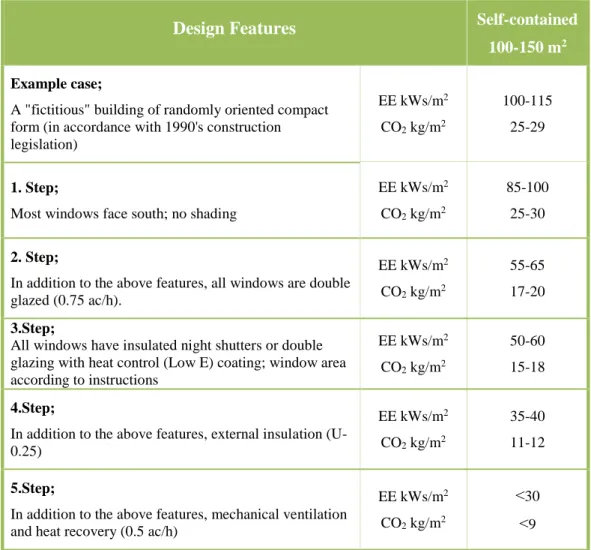
Table 2.5: Energy Index (EE) And Carbon Dioxide (CO2) Emission Index For Residential Buildings (Yeang, 2012). ... 30
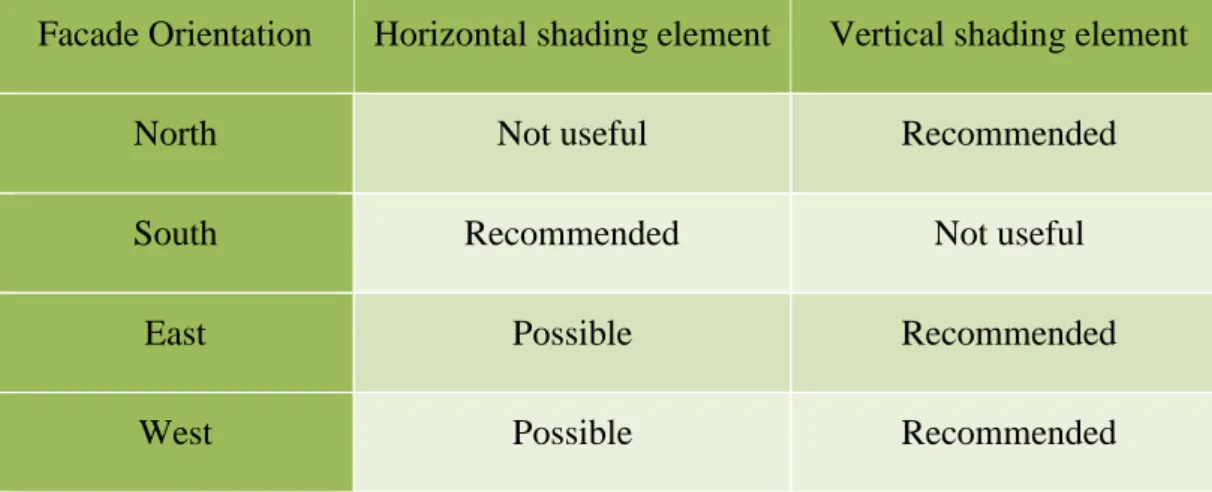
Table 2.6: Facade Shading Element Per Orientation (Yeang, 2012). ... 41
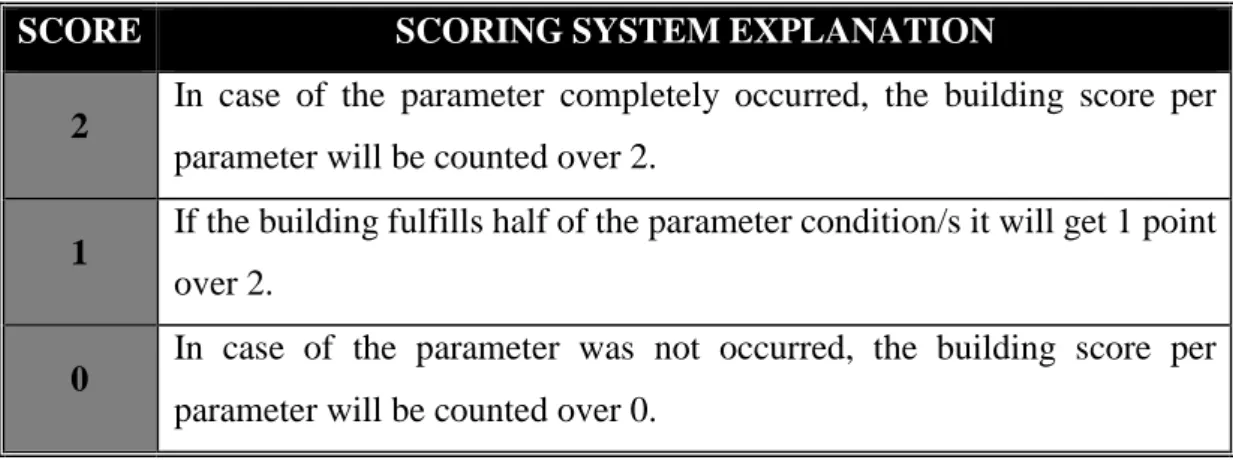
Table 3.1: Evaluation Scoring System. ... 64
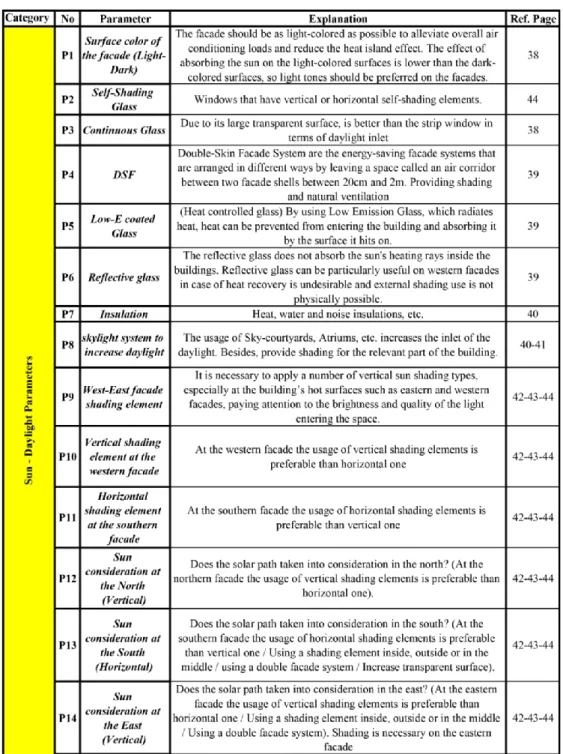
Table 3.2: Evaluation Parameters Table. ... 65
Table 3.3: Evaluation Parameters Table (Continues). ... 66
Table 3.4: Sun-Daylight Parameters Data Table. ... 95
Table 3.5: Sun-Daylight Parameters Data Table (Continues). ... 96
Table 3.6: Natural Ventilation Parameters Data Table. ... 97
Table 3.7: Natural Ventilation Parameters Data Table (Continues). ... 98
Table 3.8: Material Parameters Data Table. ... 99
Table 3.9: Material Parameters Data Table (Continues). ... 100
Table 3.10: Sun-Daylight Parameters Score... 110
Table 3.11: Natural Ventilation Parameters Score. ... 111
Table 3.12: : Material Parameters Score. ... 112
Table 3.13: Total Summation of Evaluated Parameter Scores. ... 113
Table 3.14: Evaluation Chart of Buildings Parameters. ... 114
Table 3.15: Total Summation Evaluation Chart. ... 115
Table 3.16: Sun-Daylight Parameters Evaluation Chart. ... 116
Table 3.17: Natural Ventilation Parameters Evaluation Chart. ... 117
Table 3.18: Material Parameters Evaluation Chart. ... 118
Table 4.1: Evaluation Parameters Consideration Percent. ... 119
Table 4.2: Final Evaluation Chart. ... 119
Table 4.3: High-Rise Buildings Annual Heating Energy Consumption. ... 125
xv
ABBREVIATIONS
a.gr. Above ground
Arch. height Architectural height
ASHRAE The American Society of Heating, Refrigerating and
Air-Conditioning Engineers
BBVA Banco Bilbao Vizcaya Argentaria
BD+C Building Design+Construction
BRE Building Research Establishment
BREEAM Building Research Establishment Environmental Assessment
Method
CASBEE Comprehensive Assessment System for Built Environment
Efficiency
CBD Central Business District
Const. Date Contruction
CTBUH Council on Tall Buildings and Urban Habitat
DSF Double-Skin Facade
EE Energy Emision
Ex. Example
Func. Function
HK-BEAM Hong Kong-Building Environmental Assessment Method
HVAC Heating, Ventilation and Air Conditioning
ISO International Organization for Standardization
LEED Leadership in Energy and Environmental Design
Low E Low Emission
MIPIM The World’s Property Market
NFPA National Fire Protection Association
NY New York
xvi
Ref. Page Referance Page
RICS Royal Institution of Chartered Surveyors
SHCA Swanke Hayden Connell Architects
TEM Transit European Motorway
UK United Kingdom
UL Underwriters Laboratories
USA United States of America
USGBC United State Green Building Council
UV Ultraviolet
VAV Variable Air Volume
VRV Variable Refrigerant Volume
WGBC World Green Building Council
1. INTRODUCTION
In the 21st century, the skyscraper construction which originated in the 1880s, increased rapidly in Turkey in general and in Istanbul especially. Therefore, the energy consumption of the building leads to environmental harm. According to Ayaz (2002), when we divide the environment into natural and built environments, it is seen that 50% of energy use, 40% of raw material use, 50% of the use of chemicals harmful to ozone are created by buildings located in built environments (Ayaz, 2002, cited by Kahraman, 2015).
The aim of the thesis is to examine the facades, which are one of the main elements of the buildings that make up the built environment and to propose approaches that are designed to cause the least harm to the environment.The first steps that will reduce the impact of a building on the environment and enable it to become a green building should be taken at the design stage. However, according to Tekeli and Atöv (2017), as they mentioned at their Sustainable Society and Built Environment (Sürdürülebilir Toplum ve Yapılı Çevre) book, people show the tendency to over-consumption mostly in buildings (Tekeli & Atöv, 2017, p.59).
According to Alakavuk et. al. (2015), approximately 33% of the energy consumed in buildings. 70% of the energy spent on buildings is spent on heating and cooling. However, according to the research done in the literature review, the well designed building facade has an important role at reducing the energy consumption of the building (Alakavuk et.al., 2015).
Buyukdere Avenue is located at the Levent district. Levent in the globalization process has been positioned as Istanbul’s Central Business District and started to become a commercial and financial center. Due to its location and due to the density of the skyscrapers settlements in this area, it was deemed appropriate to be selected as a project investigation area.
Accordingly, this thesis will investigate the facades of the skyscrapers, built after the 2000s at Buyukdere Avenue, in terms of sun-daylight, natural ventilation and material categories, within the sustainable facade design parameters determined.
2
Resulting with the consideration percentile of the sustainable facade design criteria, which was explained within the thesis scope. Ending up with a suggestion of sustainable skyscraper facade design for Buyukdere Avenue.
1.1. LITERATURE REVIEW
In the 21st century, sustainability criteria gained huge importance in the construction industry. The foundation of sustainable development dates back to the 1970s. The Human and Environment Conference, which was established by the United Nations in Stockholm in 1972, is the first international organization in the field of environment. The usage of natural resources without wasting was emphasized at this conference (Karakurt, 2019).
The first official definition of the concept of sustainable development was made in Our Common Future Report published in 1987 by the World Environment and Development Commission, which operates within the United Nations. Sustainability is defined in the report as “Humanity can sustain development by providing daily needs without compromising the ability of nature to respond to the needs of future generations” (Brundtland, 1987).
Furthermore, the basis of human-induced climate change was developed by scientists from the 19th century. In 1896, according to the research conducted by the Swedish scientist Svante Arrhenius, who won the Nobel Prize in Chemistry, he found that doubling the density of CO2 gas in the atmosphere would cause an increase in the
average temperature of the planet by about 5℃, which is one of the main reasons that causes the global warming (Sachs. 2019, p.362). However, as a result of researches conducted by different independent organizations, it has been revealed that global warming is a reality and the environment is polluted in a way that will affect the living conditions of the next generations (Kahraman, 2015).
Thereupon, to improve the built environment, it is necessary to select the components of the built environment in a way that the building materials do not harm the environment (Kahraman, 2015).
3
Skyscraper terminology was first used in the 1880s with the construction of 10-20 storey buildings in the USA. The technological developments brought by the industrial revolution, which coincided towards the end of the 19th century, had an obvious effect
on the construction of high-rise buildings. As well as advances in building design and the construction industry, enabled multi-storey buildings to be built. The production of modern steel, the invention of the elevator, reinforced concrete building material, the telephone, water pump, central heating systems are the most important of them (Hasol, 2014).
Modern skyscrapers began to be built in the United States in Chicago and New York cities in the late 19th century. For this reason, the names given to such buildings mostly originate from the American Architectural Literature. So, they used terms like Multistory Structure, High- Rise Building, Tall Building, Skyscraper, Supertall and Megatall Building (Sağlam, 2016).
According to (CTBUH) Council on Tall Buildings and Urban Habitat, high building lower limit is defined as a minimum of 14 storeys or 50m (165 feet) and buildings exceeding this limit are considered as high buildings (Url-1). Despite the diversity in the definition of a high-rise building in various references, according to the German standards, the building that exceeds 22m is classified as a high-rise building. 12th storey and above in the United States, while in Europe and Turkey 10th storey and above referred to be a high-rise building(Kıasıf & Selçuk, 2016). Moreover, according to the criteria of CTBUH: Buildings exceeding 300m (984 feet) are defined as “supertall buildings” and buildings exceeding 600m (1.968 feet) as “Megatall Building” (Ur-l).
Norman Foster is a British architect who won the Pritzker Architecture Prize in 1999, has mentioned at, the Harvard Center for Green Buildings and Cities Inaugural Lecture, that there is a direct relationship between the pollution and the climate change, and he emphasized that it is the strongest threat to the global society and the planet. In 1997, he designed the world’s first breathable skyscraper, with a green landscape in the middle of the building which is providing natural ventilation by openable windows
4
into it. Additionally, by giving examples from his studies and projects it has been progressed within the thesis scope (Url-2).
On the other hand, Elif Karakurt Tosun (2019) described green architecture in her book, Sustainable Urbanization (Sürdürülebilir Kentleşme), as a type of architecture that is sensitive to energy saving, effectively insulated, utilizing solar rays and using recyclable materials as much as possible (Karakurt, 2019).
In addition, for centuries, we see that climate is a dominant factor for architects and architecture all over the world. The shape of the structures has been substantially influenced by environmental requirements. The building shell defined at Sustainable building design guide (Sürdürülebilir yapı tasarımı kılavuzu) book by Alakavuk et.al. (2015) as, the building’s main elements that distinguish the interior from the external environment and thus, are in direct contact with the external climate conditions, which is the main determinant of the indoor climate conditions. The elements that compose the building shell are the exterior facades and roof of the building (Alakavuk, et.al., 2015). This study will focus on the importance of the skyscraper building facade design, in Buyukdere Avenue, and discuss the appropriate criteria for skyscraper facade designing.
According to Alakavuk et.al. (2015) they mentioned that throughout the world in general and Turkey in particular, about 33% of the energy consumed in buildings, 30% in industry, 19% in transportation, and 18% are used in other areas. Besides, 70% of the energy consumed on buildings is spent on heating and cooling. In other words, it is used to keep the interior volume of the spaces in comfort conditions (Alakavuk, et.al., 2015).
On the other hand, according to the evaluation at the article (General Evaluation of Energy Outlook in Turkey and The World), 2016 year-end sectoral distribution of primary energy consumption in Turkey was shown with 24.8% consumed at buildings, 25% at energy, 24.6% at cycle and energy, and 19.4% consumed at transportation (Koç et. al., 2018).
5
Furthermore, the materials to be used in the project application phase have embedded energy. This embedded energy is the energy spent during the construction phase of the material. At the same time, the wastes and gases emitted by the material during the production process can be called as buried environmental performance (Kahraman, 2015). Accordingly, it is beneficial to examine the roof and exterior facade elements that form the building shell, where the heat conduction is the highest.
Ken Yeang, another architect, whose examples and design techniques were beneficial within the scope of the thesis. He is an architect, ecologist, planner and author from Malaysia, best known for his ecological architecture and ecomaster plans that have a distinctive green aesthetic. Talked about his practical work on the ecological design of facades and emphasized the importance of the design of the facade for human comfort and health, referring to it as the third skin of a human. He also mentioned that a well-designed building shell saves significant energy. He briefly introduced the facade as “An ideal exterior wall should act as an environmentally friendly filter” (Yeang, 2012).
He stated the main tasks of the facade as; providing natural ventilation, controlling cross-ventilation, presenting the exterior appearance of the building, protecting from the sun, arranging windy rain, draining heavy rainwater, providing insulation in cold
24.8%
25% 19.4%
24.6%
2016 YEAR-END SECTORAL DISTRIBUTION OF
PRIMARY ENERGY CONSUMPTION IN TURKEY
Building Industry Transport Cycle and Energy Other
Image 1.1: 2016 Year-End Sectoral Distribution of Primary Energy
6
seasons, meeting the requirements arising between two seasons, summer and winter in temperate regions. In order to develop a more direct relationship with the natural environment, it should have interchangeable openings that function like sieve filters
with various parts (Yeang, 2012).
1.2. AIM OF THE STUDY
This study aims to determine the sustainable parameters in the facades designs of the high-rise buildings examined within the scope of the thesis and then make suggestions to improve the design of the facades in terms of sustainability. The study will focus on sun-daylight, natural ventilation, and material parameters.
The high-rise buildings are consuming much more energy compared to the low-rise buildings. This energy consumption can be reduced by following sustainable facade design criteria.
Sustainable facade design parameters should be considered while designing a high-rise building in terms of reducing the building’s energy consumption.
1.3. SCOPE AND METHODOLOGY
Scope:
Among the study, the relationship between the high-rise building facade design and buildings energy consumption was emphasized. Sustainable facade design methods were discussed within the scope of the thesis, the importance of the sustainable facade design was emphasized and worldwide high-rise buildings that have considered the sustainable facade design were given as an example.
The high-rise buildings selected among the scope of the study were evaluated according to sustainable facade design criteria in terms of sun-daylight, natural ventilation, and material categories. Evaluation parameters had been determined for each category and buildings were evaluated within the scope of those parameters. The main criteria used at the selection of high-rise buildings to be investigated were;
High-rise buildings located at Buyukdere Avenue.
Built or finished construction after the 2000s (21st century).
High-rise buildings with office and/or residential functions. High-rise buildings of 22 floors and above and higher than 91m.
7 Methodology:
Evaluation parameters were extracted according to sustainable facade design criteria which have been emphasized within the theoretical part of the thesis. As, 15 parameters for sun-daylight category, 12 parameters for the natural ventilation category, and 3 parameters for the material category. In total thirty evaluation parameters were chosen under the relevant categories. A mixed-method was used to determine the evaluation parameters. It was chosen according to the main requirements of sustainable facade design criteria which were used as evaluation parameters in other different sustainable facade design studies and extracted Also from the literature review that have been done through the thesis study.
In order to evaluate the buildings according to the parameters, necessary data about each building were collected. The data of the buildings was accomplished with mixed-method by contacting the building’s relevant companies, scanning resources, and examining the buildings with bare eyes.
Resource scanning of the buildings was fulfilled by investigating the articles, magazines, newspapers, and research papers, etc. that provide information about the building. Also by reviewing the website of the building, and the authorized companies such as (The firm of the architectural offices that designed the building, the facade manufacturers company, etc.).
The weak and strong aspects of the examined high-rise buildings facades were discussed within the scope of the evaluation. Finally, it was achieved to a score for every building according to the scoring system which was created within the study. As a result, evaluation charts for each parameter were extracted from the collected data, founding out the consideration percent for each parameter. Consequently, the examined high-rise buildings were ordered according to their sustainability. Finally, taking into account the strong aspects of the evaluation results, a proposal has been made to create a substructure for future studies.
8
2. THE CONCEPT OF SUSTAINABILITY AND ITS
HISTORICAL BACKGROUND
Through the history of human development, until the industrial revolution, manufacturing styles and quantities did not create negative effects on nature. However, after the industrial revolution in a capitalist order, the manufacturing and resource utilization approaches of the industry and the consumption forms, developed in parallel with this, have brought the negative effects of the human on the environment to an alarming level (Tekeli & Atöv, 2017). Therefore, it turns out that the lifestyle of consumers harms the balance of nature, as the amount of consumption has increased despite the decrease in production. Which led them to find a new system of life. So the term sustainability, which means continuity, appeared.
2.1. SUSTAINABILITY AND ITS APPEARANCE IN HISTORY
The origin of sustainability goes back to the 1940s. When Buckminster Fuller built the Dymaxion House and Cyclatron Geodesic Dome as a “self-sustaining” design call, in the 1940s and 1950s. Fuller is an American architect dealing with new forms of technology. His designs are based on the rule of doing more with less. According to Buckminster’s dictum, “The imperative is to do more in less”, in case of the demand of producing more energy, then, the cleanest way to produce that energy should be considered. Because there is a direct relationship between the pollution that occurred from producing energy and climate change (Mimarlıkta Malzeme, 2012).
9
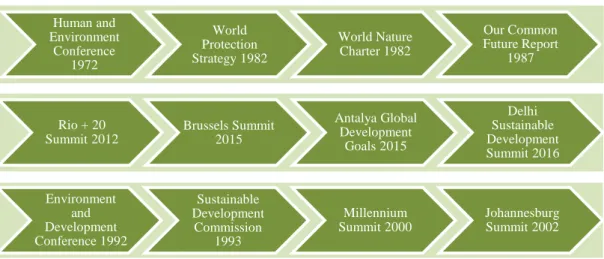
Subsequently, local and international organizations held by the United Nations play an important role in the formation of today’s definition of sustainability. The chronology of the building blocks related to the growth of the sustainable development approach is shown in the (Table 2.1) below;
Table 2.1: Chronological Development of the Sustainable Development Approach (Karakurt, 2019).
However, the first definition of the concept of sustainable development, as used today, was made in the Common Future Report published in 1987 by the World Environment and Development Commission. Due to the Common Future Report, Sustainability is the maintenance of natural resources by controlling current resources usage to avoid the planet running out of them. So, it is important to mention that if the resources run out, the planet will corrupt in the future. Therefore, we have to control our usage in the present to save the planet for future generations.
There are more than 300 definitions for the term “Sustainability”, but the most accepted one is the definition of the Brundtland Report (1987), “Sustainable development means meeting presents requirements without compromising the needs of future generations” (Brundtland, 1987).
This report also mentioned the three dimensions of sustainability, social, environment and economy (Image 2.3). The sustainable part is where the three intersect. Therefore, the “Sustainability” term can not be mentioned without talking about the economy, social system and the environment (Sorguç, 2009, p. 39).
Human and Environment Conference 1972 World Protection Strategy 1982 World Nature Charter 1982 Our Common Future Report 1987 Rio + 20 Summit 2012 Brussels Summit 2015 Antalya Global Development Goals 2015 Delhi Sustainable Development Summit 2016 Environment and Development Conference 1992 Sustainable Development Commission 1993 Millennium Summit 2000 Johannesburg Summit 2002
10
Image 2.3: The 3 Pillars of Sustainability (Von Keyserlingk, 2013).
2.2. ECOLOGY AND ITS APPEARANCE IN HISTORY
The term Ecology is defined for the first time by the German biologist Ernst Haeckel in his book (General Morphology), written in 1866 on philosophy and resurrection. This new term is derived from the Greek words “Oikos”, and “Logos”. Which means “Oikos” house, and “Logos” science. Then, it was translated to English as “Ecology”.
Ecology: (noun) used also as “Oecology” (eco+logy). “It is a living science that deals
with the interrelationships between living things and their environment” (Sevgi, 2015). Ecology is an approach that treats each entity with its environment and evaluates its relations with other living things. To indicate this approach, the ecological word or (eco) abbreviation, has been used in various research fields as a prefix. Accordingly, there are many physical problems experienced during the 20th century.
The rapidly expanding and strengthening technological advances and the widening of the activity area of the human have caused many negative consequences that threaten the living environment of human beings and other living creatures (Atıcı 2002).
Environment
Social
Economic
Viable Bearable Equitable Sustainable11 2.2.1. Eco-materials Definition and Classification
Eco-materials were defined by Halada and Yamamoto (2001) at (Modul H) book as, “Those materials that improve the environment’s perfection during the whole life cycle with preserving its responsible effectiveness” (Yamamoto et. al.). Furthermore, in North America and Europe, eco-materials are frequently called “environmentally-friendly materials” or “environmentally preferable materials”.
On the other hand, according to Professor Yagi, (2002), an eco-material should pass at least one of ten principal properties compared to traditional materials (Yamamoto et. al.). These properties are: 1- Energy saving ability, 2- Resource saving ability, 3- Reusability, 4- Recyclability, 5- Structural reliability, 6- Chemical stability, 7- Biological safety ability, 8- Substitutability, 9- Amenity, and 10- Cleanability.
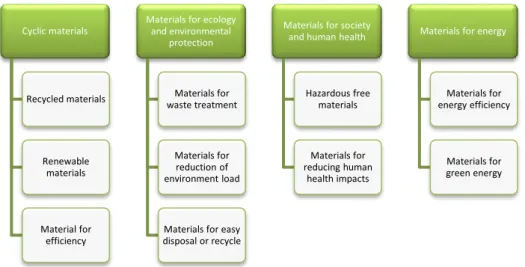
Moreover, eco-materials were classified within the sustainability concept, following these four sustainable principles; 1- Cyclic materials, 2- Materials for ecology and environmental protection, 3- Materials for society and human health, and 4- Materials for energy (Yamamoto et. al.). After that, ten sub-categories were extracted from these four main categories. Sub-categories were like it is shown at (Table 2.2);
Table 2.2: Some Examples Of Eco-Materials Which Are Currently Commercialized İn Japan)
(Yamamoto et. al.).
Cyclic materials Recycled materials Renewable materials Material for efficiency
Materials for ecology and environmental protection Materials for waste treatment Materials for reduction of environment load
Materials for easy disposal or recycle
Materials for society and human health
Hazardous free materials
Materials for reducing human
health impacts
Materials for energy
Materials for energy efficiency
Materials for green energy
12
Accordingly, ecological materials are mostly reusable, renewable, or recyclable/recycled materials. Examples of such materials can be shown like; sheep wool, paper panels, compacted soil, adobe, terracotta, clay, flax, hemp, seaweed, cork, wood, fiber, sandstone, rubble, timber, reusable brick, cut stones, volcanic pumice stone, linoleum, straw bales for insulation, polyurethane blocks.
Although bamboo is an environmentally friendly material growing quickly, it is not a material growing in Turkey. In this case, it is not considered as an eco-material in Turkey. Thus, it is only ecological in terms of the environment in which it grows. So, according to the geographical location of the buildings, their ecological meanings and the use of appropriate ecological materials also differ for each environment (Aytis & Polatkan, 2010).
2.3. SUSTAINABLE BUILDING MATERIALS
The sustainability of material is the main component of sustainable architecture. By adapting the concept of “sustainability”, which aims to protect the artificial and natural environment by ensuring the continuity of the resources, to the building materials, the concept of “sustainable building material” comes out.
Sustainable building materials are defined by Orhun (2012) as,“materials harmless to the environment and human health during their life cycle, which includes, consume minimal energy, obtain raw materials, process them, use them, maintain and repair and waste phases” (Orhun, 2012).
The energy used and the amount of CO2 released into the atmosphere during the
manufacture of a product or service are important indicators in terms of sustainability. These indicators are defined as follows:
Embedded Energy: It is the total amount of energy used during the production of the
material.
Embedded CO2: Defines the amount of CO2 (Carbon dioxide) released into the
atmosphere during the production of the material. It is known also as (CO2 emissions
13
The concept of sustainability in terms of materials can be divided into two groups: Direct acquisition approaches.
Indirect acquisition approaches.
Direct acquisition approaches:
The approaches that aim to increase the sustainability of building material/components during the production processes. All sustainability approaches that reduce the embedded CO2 (and hence embedded energy) value in the construction
process of the material or component fall into this group.
Indirect acquisition approaches:
The approaches that aim to increase the sustainability of building in the usage process by using building material/components in accordance with its nature. All approaches that take into account the nature of the material to make buildings effective during the design process are included in this group (Orhun, 2015).
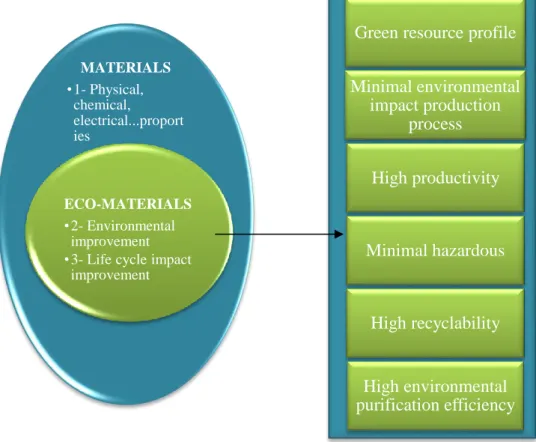
However, according to Shinohara (2004), if any material could fulfill the preconditions (1) and the required circumstances of eco-materials (1 and/or 2), then it could be an eco-material (Shinohara, 2004), as it is shown at the (Table 2.3) below;
14
However, in order to save energy spent between the production and the construction area, it is important to be noted whether the material used in the buildings is in the immediate vicinity. For example, traditional building techniques and vernacular structures that used local materials are natural and spontaneous sustainable structures, as they are completely a product of their environment (Aytis & Polatkan, 2010).
2.4. SUSTAINABLE ARCHITECTURE AND CERTIFICATIONS
The methods of application of the sustainability concept, which is put forward as a solution proposal for human and environmental health problems, are discussed in the field of architecture as in many other disciplines.
Table 2.3: Conceptual Model Of Eco-Materials Within The Context Of Material Science
(Nowosielski et. al., 2007).
MATERIALS •1- Physical, chemical, electrical...proport ies ECO-MATERIALS •2- Environmental improvement •3- Life cycle impact
improvement
Green resource profile
Minimal environmental impact production process High productivity Minimal hazardous High recyclability High environmental purification efficiency
15
Furthermore, Aysin Sev (2009) has defined sustainable architecture as;
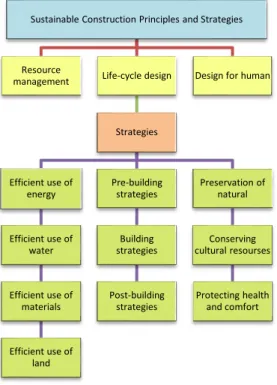
“Sustainable architecture is to design buildings that protect the health and comfort of people, prioritizing the use of renewable energy sources, using energy, water, materials and the area where it is located, efficiently. Taking into consideration the future generations, in the conditions it is in and in every period of its existence” (Sev, 2009). According to Sev (2009), we can gather the principles of sustainable architecture under three headings;
Resource management principle; It foresees reduction of resource use, reuse and
recycling of resources.
Life-cycle design principle; It enables the analysis of the building’s effects on its
existence and its surroundings.
Design for human principle; It focuses on the relationships between people and the
natural world (Zinzade, 2010).
Table 2.4: Framework For Evaluating Sustainability Of The Construction Industry (Sev, 2009).
Sustainable Construction Principles and Strategies
Resource
management Life-cycle design
Strategies Efficient use of energy Efficient use of water Efficient use of materials Efficient use of land Pre-building strategies Building strategies Post-building strategies Preservation of natural Conserving cultural resourses Protecting health and comfort Design for human
16
To design and operate a healthy building environment that holds on ecological resources, some principles should be considered during the construction and design process of the building aiming to achieve the basic target of sustainable architecture (Solmaz & Kaya, 2015).
These principles are:
Effective use of building land and resources. Efficient use of energy.
Efficient use of water. Efficient use of materials.
Provide interior comfort and observance of human health. Waste management.
Sustainable architecture concept, including ecological environment, social and economic concepts, aiming to control the building’s negative effects on the environment. Therefore, these concepts are used to measure and define the sustainability of the building.
In order to measure and evaluate the environmental impact of buildings, a wide range of certain evaluation criteria is used. These evaluation methods can be categorized in three ways;
Tools and information sources to compare products and components used in building construction.
Supporting databases used in the design and decision stages of the whole structure.
Environmental assessment methods that take the structure as a whole (Solmaz & Kaya, 2015).
17
Furthermore, in different countries, organizations based on volunteering studies conducted, in order to measure and evaluate the environmental impacts of buildings, within the framework of certain criteria. As of 2012, there are 27 different methods developed in different countries.
Apart from sustainable building certification systems, BREEAM in the UK, and LEED in America, which are popularly used in the world, many sustainable building certification systems, such as SBTOOL, HK-BEAM and CEPAS used in Hong Kong, SBAT used in South Africa, GREEN STAR used in Australia, and CASBEE used in Japan, emerged in Canada but defined itself as an international system.
While the purpose of these certification systems is to create a unique system by considering each country’s local standards, climatic data and living conditions. With the international identity of LEED and BREEAM evaluation systems, countries that do not have their own evaluation system have accepted these two certification systems as an evaluation system. Today, in many countries that are members of the World Green Building Council (WGBC), SBTool also has been adapted to the local standards in various countries as well as BREEAM, LEED, Green Star and CASBEE systems (Aytis & Polatkan, 2010).
The most popular evaluation organizations ( LEED - BREEAM – SB TOOL – CASBEE). These organizations are categorized under environmental assessment methods that take the structure as a whole evaluation method.
These methods, which consider the whole structure within the life processes it has undergone, assess within the framework of the determined criteria and present a certificate as a result. Because there is no local certification system in Turkey, the most accepted certification systems in the world LEED and BREEAM systems are used (Solmaz & Kaya, 2015).
18
2.5. SKYSCRAPER AND ITS APPEARANCE IN HISTORY
The skyscraper term is used for the giant size building or tower in terms of height. High-rise buildings have different definitions. According to the famous engineer Ali Armstrong, the multi-storey structure/high-rise building are buildings where, fast elevators are used, the carrier system is specially designed, the ones that reflect the urban physical economic and technological power
In the 21st century, buildings higher than 100 m are considered as skyscrapers. These
kinds of structures appeared for the first time in the USA in the 1880s, in 1890 the Pulitzer building reached 26 floors and 94 meters. It was impossible to go beyond this with traditional building materials. Subsequent developments accelerated with the presenting of the steel structure system.
Next developments like materials (Steel, reinforced concrete), vehicles (elevator), new construction and lifting techniques, started from the end 19th century, facilitated the construction of higher buildings. The first tall structures were mostly symbolic. For the history of skyscrapers, it is necessary to look at the USA, especially Chicago and New York City. In combination with the industrial production of steel, the development of glass and reinforced concrete, the development of elevators, other vehicles and water pumps, in addition to the fact that the land is less and expensive in urban centers, the passion of people to build high buildings for prestige, combined with the ambition of engineers, were main reasons that caused a skyscrapers race, started in USA, primarily in Chicago and NY Cities.
The tallest skyscraper before WWI is the C. Gilbert’s Woolworth building (240 m) in New York. Later, in 1930-1931, the Empire State Building was built again in NY (380 m). The height of the sharp endpoint of this building reaches 449 m. Subsequently, buildings built through the later years, the Rockefeller Center (259 m, NY 1940), the 100-storey John Hancock-Center (344 m, Chicago, 1968), the 110-storey World Trade Center twin towers (417 and 415 m, NY, 1973, destroyed in 2001), Sears building (442 m, Chicago, 1974) and Petronas towers (452 m, 1998) in Kuala Lumpur are among the famous skyscrapers of the 20th century (Hasol, 2014, p. 188-190).
19
Burj Khalifa (828 m), which was completed in 2010, is at the top of this list. Skyland Office Tower in Istanbul (284 m) is the highest skyscraper in Turkey now (Url-5). Kizilay in Ankara Emek Building (24th floor, 76 m, 1959-1965) is considered as the first skyscraper in Turkey, therefore, in Ankara, it still named as “Skyscraper” (Hasol, 2014).
Recently, the number of skyscrapers primarily in Istanbul is increasing rapidly in Turkey. A density and highness contest continues with plot decisions based on parcels, far from holistic planning and urban planning.
In general, high-quality concrete and steel, post-stress, corrosion-resistant reinforcement, fire-resistant steels, cast parts, mixed systems and composite materials are technological determinants in today’s skyscraper designs.
From an architectural perspective, in the 21st century, performance-based design, delicacy, structural expression, advanced technology, free architectural form (sculptural appearance), green character and transparency are at the forefront (Hasol, 2014).
2.5.1. Skyscraper Classification Within Functionality and Height
The Emporis site (Url-6), which analyzes tall buildings, defines 12-storey and 35m-high structures as multi-storey buildings. German Research Centers accept 22m and above as a high building. The Council on Tall Building and Urban Habitat (CTBUH) in America, states that 14-storey buildings do not count as high-rise in places such as Chicago and New York, where multi-storey buildings are dense, while it can be described as high-rise building in many cities of Europe. In addition, over than 300m high structures are described as “Super High” and over than 600m structures as “Mega High” structures (Eren, 2019).
Building Use In Terms Of Function:
If more than fifty percent of the building height is designed as a usage area, the building enters the skyscrapers category. If not, the building falls into the tower class (Such as a cruise tower or communications antenna).
20
Tall buildings are also classified according to their usage functions (Sağlam, 2016).
Single Function Buildings:At least 85% of the total floor area is designed for the same use function (Like an office).
Mixed Function Buildings:In the high building, if there are two or more different usage areas, the building has a mixed function. Sports areas with supportive areas, parking areas, and sanitary installation areas do not change this description.
2.6. SKYSCRAPER ARCHITECTURE WITHIN SUSTAINABILITY CONCEPT
In the 21st century, the concept of sustainability in architecture is often mentioned through skyscrapers. Especially since skyscrapers have larger scales and larger numbers of people than other buildings, the impact of them on the city and the environmental effects they create are higher.
Moreover, skyscrapers can create unhealthy conditions in the city by blocking the sunlight of the buildings and living organisms in their surroundings, bringing loads of traffic, installation and communication infrastructure to the city due to the large number of users, and may cause the formation of unpleasant strong winds for pedestrians by changing the wind movements of the region where they are built. On the other hand, skyscrapers are also buildings in which the heating-cooling-ventilation, mechanical, circulation and lighting systems are required, and both the initial investment cost and the cost during the use of the building are higher than other buildings.
Internationally, there are two different views on the sustainability of skyscrapers (Begeç & Yalıner, 2017).
The first one as Wood (2014) stated is that the skyscrapers are naturally sustainable, prevent the urban sprawl and grow vertically by providing a high settlement density, which reduces the transportation costs and the economy of the building.
21
The second is that a large amount of energy is consumed during the construction of skyscrapers and is not sustainable because of its negative effects on the city’s systems (Wood, 2014).
Within architecture, the necessity of three methods for low energy consumption is mentioned. These methods include; material and component selection, supplier economies (including a life cycle approach from the source to the waste water channel), and the basic design. As a non-traditional building type, the high-rise building needs its own design setup and principles based on the design of new service systems, based on the climatic data (Sarı, 2016).
From the second point of view, we may see that the image of the skyscrapers is not in the sense of sustainable architecture, even though we can see that the newly built skyscrapers use renewable energy sources with the help of the developing technology.
Briefly, sustainable high-rise building, is a structure that is sensitive to resource use in every period, observes the health and comfort of the user, does not create environmental pollution, does not impose an unnecessary burden on the infrastructure of its location and fulfills all these criteria economically (Kıasıf & Selçuk, 2016).
2.7. SKYSCRAPER FACADE DESIGN WITHIN SUSTAINABILITY CONCEPT
Facade systems have a great role in creating healthy and comfortable use areas by protecting the interior from the negative effects of the external environment conditions as well as contributing aesthetically to the architectural forming of a building.
SKYSCRAPER FACADE SYSTEMS:
Metal Facade Systems;
The main reasons for the application of metal facade systems in multi-storey buildings are; easy to assemble, require low maintenance, and allow for individual design.
In case of the increase in the height of the building, due to the increase of the effect of the wind on the facade, the wind absorption level of the coating during the design, the
22
corrosion resistance due to the structure of the metal and elongation levels under the influence of heat, etc. should be taken into consideration (Eren, 2019).
Metal facade elements consist of three main parts. These;
1. Panels
2. Carrier structure
3. The joints that connect the panels together. Curtain Wall Systems:
Curtain wall systems are made of a carrier skeleton. It is made of fasteners and facade panels used to fix the skeleton to the carrier system of the structure. Curtain walls can be produced in three different ways as strip systems, half panels, and panel systems. The most widely used system is the strip systems (Eren, 2019).
Image 2.4: Strip System (Eren, 2019). Image 2.5: Panel System (Eren, 2019).
Glass Facades In Steel High-Rise Buildings:
In steel structures, glass facade panels are used to take natural light into the interior, to hamper the system, etc. There is a common use area for reasons.
There is a widespread usage area of the glass facade because it allows the natural light penetration inside and it lightens the system, etc.
23
There are many different shapes of spider glass holders from point connection applications (Image 2.6-7).
Before the application starts, designs of anchorage elements should be made after the studies depending on the regional climate conditions and the direction of the building. It should not be forgotten that the use of sliding bearings against horizontal loads should be used in all facade applications, especially in multi-storey buildings (Eren, 2019).
Image 2.6: Spider Glass Facade (Url-7). Image 2.7: Spider Glass Facade Detail (Url-8).
Double-Skin Facade-(DSF):
The Double-skin facade systems, which gained common use in multi-storey buildings, are the energy-saving facade systems that are arranged in different ways by leaving a space called an air corridor between two facade shells between 20cm and 2m.
The control elements used to prevent the unwanted effect of the sun’s rays are placed between the two shells and it is ensured that the use of the daylight is protected from the undesired effect.
The second facade layer in the system allows windows to be opened on the upper floors, despite the strong wind pressure in high-rise buildings. Thus, natural ventilation (Image 2.8) of the office significantly contributes to saving the building user’s energy consumption (Eren, 2019).
24
Box-Type Double-Skin Facade:
Box-type windows are the oldest form of Double-skin facades. It is the panel with vents that provide air inlet and outlet at the top and bottom of the panels consisting of double glass inside and single glass outside. In these floor-height systems, laminated single glass on the outside and double insulated glass on the inside are used. Between the two shells, there is 200-400 mm of space, which depends only on the size of the window. Shutter elements can also be placed in this section if desired. Each panel works on its own without being associated with windows on other floors (Eren, 2019).
Image 2.9: Box-Type Wall System (Eren,
2019).
Image 2.10: Box-Type Wall System, Section
(Eren, 2019).
Image 2.8: Schematic Of The Working Modes Of Double-Skin Facade: A- Inner Circulation
Mode, B- Supply Mode, C- Inner Circulation Mode, D- Exhaust Mode (Zhang et. al., 2016).
Box-type wall system
Shaft opening Exterior layer Interior layer Horizontal divider
25
Shaft Type Double-Skin Facades With Box Windows Proportional To The
Floor Height:
Chimney system works with box windows on shaft type box facades. The heated dirty air used in the spaces rises and is sent to the chimney from the outlets on the box windows, and thrown out of the exhaust vents at floor level inside the chimney. It takes the opposite of this process in the fresh air. The fresh air is taken from the lower part of the floor alignments to the chimney-shaft, and from there the box enters through the lower part of the window. At shaft type double-skin facades with box windows proportional to the floor height, the gap between two shell layers is interrupted at floor height. By placing grilles on each floor level, dirty air delivery and fresh air intake circulation is performed. Each floor is naturally ventilated by the operation of these grill systems within itself. Solar control elements are placed between the inner shell of the interior (Eren, 2019).
Image 2.11: Shaft Type Double-Skin Facade
(Eren, 2019).
Image 2.12: Shaft Type Double-Skin Facade,
Section (Eren, 2019).
Double-Skin Facades With Shutters Proportional To The Building
Height:
The double-skin facades with shutters proportional to the building height (Image 2.13-16) shows almost the same features as the multi-storey ventilated facades. While the outer shell is a louver system, the inner shell can be made from different systems.
Even when the louvered system in front of this facade is completely closed, there is no air impermeability (Eren, 2019).
Shaft type double-skin facade
Interior layer Exterior layer Horizontal divider
26
Image 2.13: Torre Agbar Tower’s Double-Skin
Facade Detail (Eren, 2019).
Image 2.14: Torre Agbar Tower’s Double-Skin
Facade Louvers (Eren, 2019).
Image 2.15: Torre Agbar Tower’s Double-Skin
Facade Shutters Detail (Eren, 2019).
Image 2.16: Torre Agbar Tower’s Double-Skin
Facade, The Gap Between Inner And Outer Shells (Eren, 2019).
27
Corridor Type Double-Skin Facade:
Corridor facade is the type of facade where two facade layers are divided by the floor alignments. Air exchange in the facade cavity can be done vertically and/or horizontally at the floor level from the corners of the building.
If the Double-skin facade is ventilated horizontally, the pressure in the facade cavity must be kept under control. In this way, the facade grilles are designed to be controlled according to the desired pressure level, wind direction, and speed. This reduces the energy cost required for ventilation by making it suitable for certain pressure conditions in the building (Eren, 2019).
28 Performance criteria expected from all facade systems are as follows;
At the junction of the facade with spaces such as body and window-door, heat bridges should be designed to be minimized.
The heat retention properties of the materials used in the construction of the facade elements should be high.
Details should be designed to prevent metal facade panels from rubbing against each other and making noise.
The performance of the joint panels arranged between the panel, panel-carrier system, etc. of the facade panels should be high against water, sound, and heat.
In order for the fire resistance of the facade panels to be high, special attention should be paid to choosing the insulation materials used behind the façade, which are highly fire-resistant (Eren, 2019).
Moreover, curtain walls, one of the most preferred facade systems in high-rise buildings, have ceased to be passive elements with the help of advancing technology. Furthermore, natural ventilation and natural lighting are provided with bioclimatic facade designs. Thus, large savings are obtained from the energy consumed in order to meet the building’s transfer and lighting needs.
The control of the heat, light and sound transition between the indoor and outdoor environment is provided with the energy-efficient facade design, and the negative features of the outdoor environment are filtered like a strainer.
Energy-efficient facades are created with energy-producing facade systems such as the right glass selection, double-glazed facade systems, structural silicon facades, solar collectors and photovoltaic panels (Kıasıf & Selçuk, 2016 ).
Therefore, functional, structural, aesthetic, cultural and environmental factors should be taken into consideration while designing the facade of the building. In terms of sustainability, environmental factors such as heat, light and sound are important factors in the design of the building facade (Alakavuk, et. al., 2015).
29
Depending on environmental factors, the main functions of the building facade are: Providing thermal comfort by controlling the effects of climatic elements. Providing visual comfort by controlling natural light.
Providing auditory comfort by reducing the noise to an acceptable level (Oral et.al., 2004).
“Comfort can be defined as; achieve the highest level of satisfaction by consuming the least amount of energy physically, under the conditions facing the human being”
(Sezer, 2004).
2.7.1. Bioclimatic Design:
Bioclimatic Design is an effective approach that can provide the best way of climatic comfort of the people with minimum energy. While aiming to reduce energy consumption through passive methods, it also achieves important results in terms of sustainability by considering material selection and conservation of natural energy resources (Kıasıf & Selçuk, 2016).
Ken Yeang, an English-based Malaysian architect, who is one of the most well-known names in bioclimatic architecture worldwide, defined the high bioclimatic structure as follows; “It is a type of structure that uses passive, low energy techniques, interacts with the natural environment, according to the meteorological and climatic data of the region, and uses less energy during its construction and operation.” (Yeang, 2012). On the other hand, high building models, box-shaped have the same four-sided facade characteristics, regardless of the climate and region factors for long periods, were encountered. whereas buildings must have forms and facade systems adaptive with their different meteorological, physical and geographical conditions (Kıasıf & Selçuk, 2016 ).
2.7.2. Passive Design Method
The passive design method is actually bioclimatic design and it requires understanding the climate of the region in order to take advantage of the energies and climate features in the immediate surroundings. Passive design method systems