“SERVANT PRINCESS” OF THE MODERN HOME:
DOMESTICITY AND FEMININITY IN TURKEY AFTER
ELECTRIFICATION, 1923-1950
A Ph.D. Dissertation
by
BAHAR EMGİN ŞAVK
Department of
Art, Design and Architecture İhsan Doğramacı Bilkent University
Ankara
To the memory of my father
“SERVANT PRINCESS” OF THE MODERN HOME:
DOMESTICITY AND FEMININITY IN TURKEY AFTER
ELECTRIFICATION, 1923-1950
Graduate School of Economics and Social Sciences of
İhsan Doğramacı Bilkent University
by
BAHAR EMGİN ŞAVK
In partial Fulfillment of the Requirements for the Degree of DOCTOR OF PHILOSOPHY
in
THE DEPARTMENT OF
ART, DESIGN AND ARCHITECTURE İHSAN DOĞRAMACI BİLKENT UNIVERSITY
ANKARA October 2014
I certify that I have read this thesis and have found that it is fully adequate, in scope and in quality, as a thesis for the degree of Doctor of Philosophy in Art, Design and Architecture. ---
Assist. Prof. Dr. Özlem Savaş Supervisor
I certify that I have read this thesis and have found that it is fully adequate, in scope and in quality, as a thesis for the degree of Doctor of Philosophy in Art, Design and Architecture. ---
Assoc. Prof. Dr. Dilek Kaya Co-Supervisor
I certify that I have read this thesis and have found that it is fully adequate, in scope and in quality, as a thesis for the degree of Doctor of Philosophy in Art, Design and Architecture. ---
Assist. Prof. Dr. Ahmet Gürata Examining Committee Member
I certify that I have read this thesis and have found that it is fully adequate, in scope and in quality, as a thesis for the degree of Doctor of Philosophy in Art, Design and Architecture. ---
Assoc. Prof. Dr. Sevilay Çelenk Özen Examining Committee Member
I certify that I have read this thesis and have found that it is fully adequate, in scope and in quality, as a thesis for the degree of Doctor of Philosophy in Art, Design and Architecture. ---
Assist. Prof. Dr. Bülent Batuman Examining Committee Member
I certify that I have read this thesis and have found that it is fully adequate, in scope and in quality, as a thesis for the degree of Doctor of Philosophy in Art, Design and Architecture. ---
Assist. Prof. Dr. Kıvanç Kılınç Examining Committee Member
Approval of the Graduate School of Economics and Social Sciences. ---
Prof. Dr. Erdal Erel Director
ABSTRACT
“SERVANT PRINCESS” OF THE MODERN HOME: DOMESTICITY AND FEMININITY IN TURKEY AFTER
ELECTRIFICATION, 1923-1950
Emgin Şavk, Bahar
Ph.D., Department of Art, Design and Architecture Supervisor: Assist. Prof. Dr. Özlem Savaş Co-Supervisor: Assoc. Prof. Dr. Dilek Kaya
October 2014
This dissertation deals with the question how modern domesticity and modern femininity were discursively constructed in the advertisements and other promotional texts of electric appliances published between 1923 and 1950 in popular women’s and family magazines in Turkey. The issue is framed within socio-historical technology studies and the feminist histories of the early republican period. Moving forward from the claim that electricity had to be first domesticated to enter the homes, the study searches for the gendered connotations of this process. Besides, it ponders over the ways women are interpellated as modern subjects by the representations in question. To this end the dissertation carries on a discourse analysis of the visual and textual representations of electricity and electric powered domestic appliances. The images are discussed in their potential to bring forth the ambiguities in the definitions of modern domesticity and femininity. Analysis revealed that neither the middle-class ethos of domesticity nor the chaste woman of this family was the only idealized form of domesticity and femininity by the official discourses. There were rather different modernities defined distinctly based on various class positions all of which were approved by the republican cadres.
Keywords: Domestic Electrification, Electric Appliances, Domesticity, Femininity, Modernization
ÖZET
MODERN EVİN “HİZMETÇİ PRESES”İ: TÜRKİYE’DE
ELEKTRİKLENDİRME SONRASI EV HAYATI VE KADINLIK, 1923-1950
Emgin Şavk, Bahar
Doktora, Sanat, Tasarım ve Mimarlık Bölümü Tez Yöneticisi: Yrd. Doç. Dr. Özlem Savaş
Ortak Tez Yöneticisi: Doç. Dr. Dilek Kaya
Ekim 2014
Bu tez, Türkiye’de 1923-1950 yılları arasında popüler kadın ve aile dergilerinde yayınlanan elektrikli ev aletleri reklamlarında ve diğer tanıtıcı metinlerde modern ev hayatı ve modern kadınlığın söylemsel olarak nasıl inşa edildiği sorusuyla ilgilenir. Sorun sosyo-tarihsel teknoloji çalışmaları ve erken cumhuriyet dönemi feminist tarih yazımının sağladığı kavramsal çerçeve dahilinde ele alınmıştır. Elektriğin evlere girmesi için öncelikle bir evcilleştirme sürecinden geçmesi gerektiği iddiasından hareketle çalışma bu sürecin toplumsal cinsiyet çağrışımlarına odaklanır. Ayrıca bu temsiller yoluyla kadınların modern özneler olarak inşa edilme biçimleri üzerinde durulur. Bu amaçla elektriğin ve elektrikli ev aletlerinin sözel ve görsel temsilleri söylem analizine tabi tutulur. Reklam imgeleri modern ev hayatı ve modern kadınlık tanımlarındaki belirsizlikleri açığa çıkarma potansiyelleri açısından tartışılır. Analiz ne orta sınıf ev hayatının ne de bu ailenin iffetli kadınının resmi söylemlerde idealize edilen biçim olduğunu ortaya çıkarmıştır. Aksine cumhuriyetçi kadrolar tarafından farklı sınıf pozisyonlarına göre ayrı ayrı tanımlanmış ama hepsi aynı ölçüde kabul gören modernlik biçimleri olduğu öne sürülmüştür.
Anahtar kelimeler: Evlerin Elektriklendirilmesi, Elektrikli Ev Aletleri, Ev Hayatı, Kadınlık, Modernleşme
ACKNOWLEDGEMENTS
The writing of this thesis has spread over such a long period of time that throughout the process both my life and the course of this research has considerably changed. One of the most influential changes was first my and then three years later my supervisor’s move from Ankara. As a result of this, she could not officially continue to be my supervisor despite she perfectly guided the research from beginning to the end. Luckily we started to work in the same institution, which helped me to accelerate again after a period of lag. For this reason I would like to thank first of all to Dilek Kaya, who is now my co-supervisor. Above all, I am indebted to her a lot because she always believed in me. From the moment she got involved in the research my supervisor Özlem Savaş also supported me a lot and I thank her for the productive feedback she gave. My examining committee members Sevilay Çelenk Özen and Ahmet Gürata put a considerable critical effort to this study and they guided me very well at the moments that I got lost.
At the early stages of this study Gökhan Akçura generously shared his vast archive of advertising images with me. This did not just save me from a great labor but also the richness of the material he supplied encouraged me to move on.
I also shared my journey with some great friends. Duygun Erim, who is also my office mate, helped me a lot to overcome my confusions regarding the study with her insightful remarks. I am thankful to her for not only taking time to read the draft texts but also for bringing fun into our office life. Ayşen Akçay Senem, my buddy, sister and companion, and her husband Sinan Senem hosted me very well in Ankara. I have to thank Ayşen for just being there whenever I need and Sinan for the delicious and eye-opening breakfasts he prepared. During my visits to İstanbul I stayed at my cousins’ Pınar Balıklı Ülkü and Göksan Ülkü, who were also very helpful to take the pictures of the material that I collected from libraries until late at night.
This thesis critically interrogates the role of domestic appliances in facilitating women’s work at home. However I owe more to some women than appliances in easing my life during the long period of research and study. Hafize Abla let me to neglect the housework. I was lucky to have the luxury of not doing a single household chore but still having the home clean all the time. My mother-in-law Filiz Şavk kept cooking for us tirelessly and with pleasure all the time. It was invaluable to find the meal ready in-between a tiring day at school and a night of hard study. I of course would not make it without my mother Mürşide Emgin’s support. The surprise packages full of my favorite dishes and small notices made my day. She was always very considerate whenever I replied her that I had to study. Above all, her love and calm energy that I envy have always backed me up.
I believe that as a post-graduate couple we got through this long and tough process very well with Serkan Şavk. He has been a supportive husband and an emphatic fellow. What is more his intellectual curiosity, determination and studying methods
have always inspired me a lot. Our lovely and naughty cat Pele was always a good excuse for both of us to take a little breath.
Finally I would like to thank my dear son Yunus, without whom I would never find the motivation to finish this thesis. I was pregnant at the final stages of my study and I did my best to not allow this research steal any more time from us.
TABLE OF CONTENTS
ABSTRACT ... iii
ÖZET ... v
ACKNOWLEDGEMENTS ... vii
TABLE OF CONTENTS ... x
LIST OF FIGURES ... xii
CHAPTER 1: INTRODUCTION ... 1
1.1 Theoretical and Conceptual Framework ... 7
1.2 Method and Resources ... 16
1.3 Limitations and Scope of the Study ... 28
1.4 Overview of the Chapters ... 31
CHAPTER 2: ELECTRICITY: THE TRANSFORMATIVE POWER OF MODERNITY ... 34
2.1 Electricity for the National Development ... 38
2.1.1 Nationalization of Electric Production ... 40
2.1.2 Electricity as a Progressive Power ... 47
2.2 Electricity as an Ordering Power ... 51
2.3 Domestication of Electricity ... 58
2.3.2 Domestic Appliances ... 66
CHAPTER 3: GENDERING ELECTRICITY ... 74
3.1 The Gender of Technology ... 79
3.2 Gendered Representations of Electricity ... 89
3.2.1 Mythification ... 89
3.2.2 Anthropomorphization ... 102
CHAPTER 4: MODERN KITCHEN AFTER ELECTRIFICATION ... 113
4.1 Early Debates on Domestic Technologies ... 116
4.2 Emergence of the Modern Kitchen in Europe ... 124
4.3 American Way of Modernizing the Kitchen ... 131
4.4 Appropriations of the Modern Kitchen in Turkey ... 137
4.4.1 Architectural Interventions ... 138
4.4.2 Taylorization of the Housework ... 148
4.4.3. Comfort: Necessity or Luxury? ... 157
CHAPTER 5: MODERN WOMEN AS THE USERS OF DOMESTIC APPLIANCES ... 168
5.1 Debating Female Emancipation through Domestic Technologies ... 169
5.2 The Republican Ideal of Modern Woman and Its Critiques ... 177
5.3 Social Stratification of Modern Femininity in Turkish Ads... 193
5.3.1 Addressing Women as Consumers ... 200
5.3.2 The Caring Mother ... 209
5.3.3 The Ambiguously Charming Woman ... 215
CHAPTER 6: CONCLUSION ... 224
LIST OF FIGURES
Figure 1 Image of the 20th century... 48
Figure 2 Cover of Ameli Elektrik Issue 43, May-June 1930 ... 56
Figure 3 The cost of four hours of electric lighting compared to daily expenditures... 60
Figure 4 Osram light bulb ad, 1932 ... 62
Figure 5 Osram light bulb ad, 1938 ... 63
Figure 6 General Electric light bulb ad, 1947 ... 63
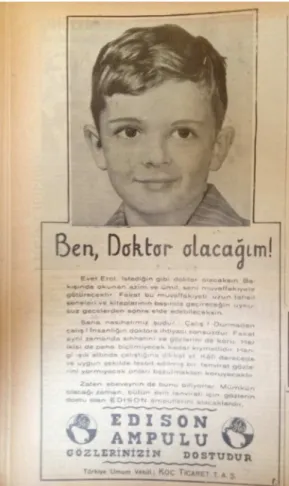
Figure 7 Edison light bulb ad, 1946 ... 65
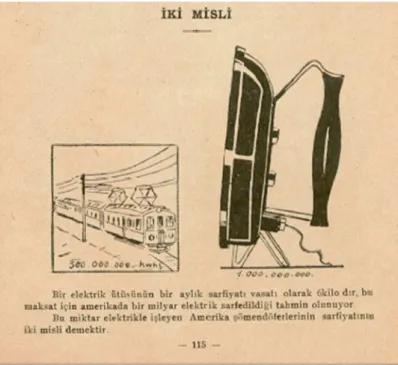
Figure 8 A comparison of electric consumption of trams and irons in the U.S. ... 69
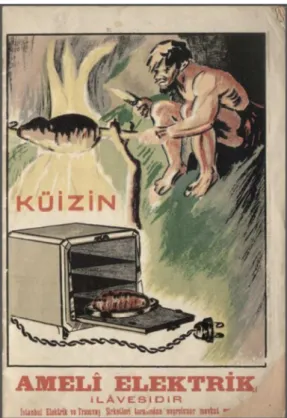
Figure 9 Cover of Ameli Elektrik supplement Küizin ... 70
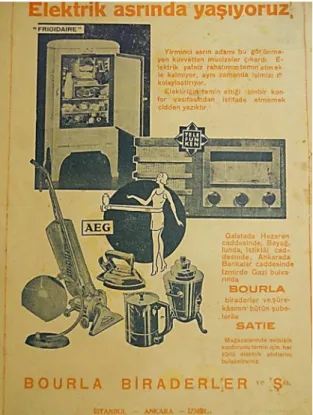
Figure 10 Appliances of the 20th century, 1936 ... 71
Figure 11 Ameli Elektrik 1930 Calendar Page November ... 76
Figure 12 Ameli Elektrik 1930 Calendar Page August ... 77
Figure 13 Turkey of the Future, 1908 ... 82
Figure 14 Vacuum cleaner promotion, 1929 ... 95
Figure 16 Cover of Ameli Elektrik Issue 25, March 1928 ... 97
Figure 17 Cover of Ameli Elektrik Issue 26, April 1928 ... 98
Figure 18 Mazda light bulb ad, 1929 ... 100
Figure 19 Figure 19 The servant princess ... 101
Figure 20 English Electric washing machine ad, 1952 ... 109
Figure 21 Cover of Ev-İş Issue 34, January 1940 ... 146
Figure 22 Cover of Ev-İş Issue 70, February 1943 ... 147
Figure 23 Cover of Ev-İş Issue 37, April 1940 ... 147
Figure 24 Frigidaire refrigerator ad, 1935 ... 162
Figure 25 Frigidaire refrigerator ad, 1935 ... 162
Figure 26 Frigidaire refrigerator ad, 1933 ... 163
Figure 27 Frigidaire refrigerator ad, 1938 ... 203
Figure 28 Frigidaire refrigerator ad, 1938 ... 204
Figure 29 Frigidaire refrigerator ad, 1935 ... 205
Figure 30 Cover of Ameli Elektrik Issue 41, January-February 1930 ... 206
Figure 31 Modern vacuum cleaner ... 207
Figure 32 Cover of Ameli Elektrik Issue 34, March 1929 ... 210
Figure 33 Cover of Ameli Elektrik Issue 24, February 1928 ... 211
Figure 34 Hoover vacuum cleaner ad, 1952 ... 212
Figure 35 Frigidaire refrigerator ad, 1938 ... 213
Figure 36 Frigidaire refrigerator ad, 1935 ... 214
Figure 37 Refrigerator promotion by SATIE, 1931 ... 217
Figure 38 Hoover washing machine and vacuum cleaner ads, 1952 ... 218
Figure 39 Frigidaire refrigerator ad, 1935 ... 219
Figure 41 Electric fan promotion by SATIE, 1932 ... 221 Figure 42 Electric fan ad, 1935 ... 222
CHAPTER 1
INTRODUCTION
Although electricity is quite an old technology, neither has it been surpassed by new alternatives diminishing our dependency on it, nor has its history been fully written. In fact, as David Nye (1991: xi), a scholar of American studies, reminds in
Electrifying America: Social Meanings of a New Technology, 1880-1940 it has been
long since Valéry blamed historians for their disregard of “the conquest of the earth by electricity” as a notable subject of social history. As Nye further underscores, the history of electricity should be more than the chronology of the developments and innovations regarding the technology as opposed to the way the issue is handled to date. Electrification is not merely a technological development that takes place in a vacuum but it occurs within, and brings with it, a specific social, economic and political agenda. Therefore, it is rather a multifaceted issue that intersects with the history of “the city, transportation, labor, the professions, industry, business, engineering, physics, women, agriculture, medicine, advertising, art, architecture and more” (Nye, 1991: xi).
As a late response to Valéry’s call, this dissertation will be an attempt to reframe the history of electrification in Turkey. Within the broad fields of history that the subject addresses the specific concern will be on domestic electrification and its dialogue with the construction of a particular understanding of domesticity and femininity. In other words, the fundamental question that motivates this study is how the promotion of domestic electrification and related technologies in Turkey (re)defined modern home and modern women that inhabit it as part of a broader project of national modernization.
The major engagement with the issue of modernity derives from two concerns. First of all, the temporal coincidence of the breakthrough of modernization project in Turkey with the introduction of electric power into the country makes it inevitable to link the two processes. Actually, the modernizing cadres of the period considered technologic advancement as a crucial step towards progress and adopted electrification as part of this preoccupation with technology as the catalyst of modernization. Electrification was thus welcome all in the industrial, urban and domestic levels as an agent to cultivate republican reforms in economic, social and daily life.
Arguably technology transfer from the West constituted one of the backbones of the process of modernization in Turkey. Such that, the prominent histories of modernization in Turkey begin with the eighteenth and nineteenth century Ottoman encounters with Western civilization on various fronts (Zürcher, 2007; Berkes, 2009; Mardin, 2007a). Particularly with the rising economic and political power of the West over the Ottoman Empire, the supremacy of the West’s military technology
came into question as the background behind such power. From that point on transferring Western military technologies, techniques and institutions turned out to be a central concern of reforms (Mardin, 2007a: 10). The identification of the West with sciences, technology and the power deriving from them was especially instilled in the Harbiye (military colleges), Mülkiye (school of political sciences) and Askeri
Tıbbiye (military medical school) in which most of the ruling elites of the republic
were educated (Mardin, 2007a: 15). In the republican years, the Ottoman attention paid to limit the influence of the West with only technological realm began to mitigate and its impact spread into the cultural field as well (Belge, 1983: 260). This dissertation is intended to focus on the home as one of the realms where the technological borrowings from the West begin to intertwine with the cultural influences.
This study was also inspired by the motive to contribute to the expanding debates on Turkish modernization with a particular focus on the home. As a hot topic of scholarly interest, the discussions on Turkish modernization developed around a rich strand of theoretical positions, and lately with a wide range of interest including the political, economic, social and the cultural. The issue of domesticity, of course, had its share in this prevalent interest and has been handled from various perspectives. In her comprehensive research on the history of modern Turkish architecture Sibel Bozdoğan (2001) gave hints regarding the understanding of domesticity that such architectural style favors. Yael Navaro-Yaşın (2000: 57) pondered over the role of home economics movement, largely carried out by Girls’ Institutes, in inculcating the values of “order, rationality, and discipline” to the middle-class household. In a similar manner, Elif Ekin Akşit (2005) elaborated on the history of Girls’ Institutes
in order to uncover the role that women graduates negotiated both the rational and scientific household and the modernization project. The interest in Girls’ Institutes is not arbitrary because it provides a wide range of resources to dwell on including their curriculum, the course books of particularly home economics classes, the alumni, media coverage of these institutes, and even the architectural structure of the school buildings. Kıvanç Kılınç (2010) based his research on the building plans of single-sex girls’ schools and some other lower-class dwellings to interrogate the ways the prevailing projection of modern domesticity was constructed and then contested.
All these studies already dwell on the hitherto overlooked obscurities and discrepancies of the definitions of modern. As Reşat Kasaba (1997) points out, the approaches to modernization in Turkey, either against or for it, depend on a rigid definition of and sharp distinction between what modern is and is not. This attitude is visible in both the literature on the subject and the manner of political elite towards the project. The best part of the histories and sociologies of Turkish modernization, Kasaba argues, is restricted to an understanding that overlooks the ambiguities and uncertainties that marked the Ottoman-Turkish experience. What the Western historians of the twentieth century Ottoman-Turkish scene like Bernard Lewis did was to assess the particular knowledge they derived from the field with respect to a putative conception of the modern (Kasaba, 1997: 20).1 On the other hand, the political elite were easy to categorize what is at hand into dichotomous categories so as to facilitate their supposed task of reformation (Kasaba, 1997: 24). These “reductive” analyses helped the researcher and reformer instantly distinguish between the modern and the traditional or the new and the old and hence easily
1
Here Kasaba refers to Lewis, Bernard. 2002. The Emergence of Modern Turkey (3rd ed.). New York and Oxford: Oxford University Press.
determine what to get rid of. However, as Kasaba (1997: 18-19) underlines, the alluring aspect “was not the certainties that were later invented but the ambivalence and excitement of modernization as it unfolded as a world-historical process.” Therefore to introduce the ambivalences as to modernity back into the researches is of crucial importance to reframe the processes in their complexity and dynamism.
Home, as Bozdoğan (2001) draws attention, is particularly a proper place that shelters such ambiguities. The abovementioned studies exemplify the productive potential of the emphasis on particularly the agency of people to enrich our understanding. However, as some other scholars point to, there are still new directions of analysis that may further disclose the ambiguities that underlie the very discourses of modernizers. For instance Deniz Kandiyoti (1997) points to the lack of interest in the mundane, which she found crucial to contemplate on the peculiarities of the Turkish experience. As Kandiyoti (1997: 120) further purported, the construction of the modern cannot be divorced from material cultural practices informing notions of class and social status. Therefore, she (1997: 114) calls for “the ethnographies of the modern” with a particular emphasis on the following questions:
How has the field of meanings and practices designated as ‘modern’ been constituted in Turkey? Have these meanings shifted and altered through time? What sources of legitimacy did discourses about the ‘modern’ seek? How did they construct and define what they sought to displace? What sorts of relationships between the indigenous and the foreign, the local and the global were at stake? Did these relationships coalesce into items of taste and style and into discernible cultural codes?
These questions indicate a predisposition towards an inquiry of the construction of certain social values and lifestyles through consumption among many other possibilities. Through such perspective I directed my attention to the analysis of articles on electrified life and advertisements of electrical appliances for their
potential to deepen our understanding of Turkish modernization from various perspectives. Thus the major interest of analysis concentrated on the ways domesticity and gender identities were expected to be re-defined through the consumption of a new technology and the ways the anticipated uses of the devices interpenetrated into the discourses on the modern. To this end the following questions were addressed: How was electricity incorporated in the home? How was electricity defined within the domestic context? How did discourses on technology merge with the construction of gender patterns, particularly femininity? How was electricity anticipated to change housework structurally and ideologically? What were the wider discourses on gender that influenced the women technology relation in question? How was technologization or electrification of household justified? How were the gendered representations of electricity? How was electricity instrumentalized to represent the desired modes of femininity? What did these representations tell regarding the enclosure of the modern? How did these images function in class coding of modernity?
The answers to these questions require an additional attention on the dialogues between gender and technology and gender and modernity apart from the initial weight placed on the relation between modernity and technology. These complementary relations that the analysis implies placed the study on the intersection of various scholarly fields including history and sociology of technology, cultural analysis, and the history of modernization in Turkey with a particular gendered approach to all.
1.1 Theoretical and Conceptual Framework
The underlying rationale of this research is that the advertisements and articles on electrified life at home contributed to both practical and ideological redefinition and transformation of domesticity and consequently femininity. Posed in this way, the question concerns the relation between technological development and social change in one respect. This kind of questioning might confine the subject with a technological determinist approach emphasizing the impacts of technology on societal processes. Two scholars of sociology, Donald MacKenzie and Judy Wajcman (1999a) develop a subtle critique of technological determinism in their introductory essay to the collected volume The Social Shaping of Technology. In their work, MacKenzie and Wajcman (1999a) distinguish between “technological determinism as a theory of society” and “technological determinism as a theory of technology.” As a theory of society, the authors argue, technological determinism provides reductionist answers to the properly posed question whether technology influences society through a crude cause and effect relation (1999a: 3-4). On the other hand as a theory of technology, technological determinism is defective in explaining technological change. Within this perspective technology is handled as an autonomous power per se while the user is defined as a passive recipient who needs to “adapt” to technological change rather than an active agent who can “shape” it (MacKenzie and Wajcman, 1999a: 5). This distinction prevents a total negligence of the influence of technology on social change approving that “technology matters”, yet technology alone would not be a sufficient factor that impinges on our social lives (MacKenzie and Wajcman, 1999a: 2). Concisely, MacKenzie and Wajcman lay emphasis on the requirement to handle technology society relation in its complexity
and reciprocity to subtly uncover social change. The idea is that technological development is a matter of choices based on ideological grounds.2 Therefore, the social histories of technology would better be elaborated by an emphasis on the relations of power that shape the technology and its uses. Building on this argument, this research will unravel how the process of domestic electrification intertwined with the wider project of republican modernization to re-frame the domestic culture.
Placing the emphasis on the relations of power that shape creation and promotion of technologies does not amount to inattentiveness to the fact that “what is being shaped in the social shaping of artifacts is no mere thought-stuff, but obdurate physical reality” (MacKenzie and Wajcman, 1999a: 18). That is to say that the technology society relation cannot be comprehended independent of the very materiality of things that has a considerable agency. In a nutshell, following the actor network theory MacKenzie and Wajcman (1999a: 24) argue that assuming technology as free from society is as defective as to consider the other way round. In this reciprocal relation no one agent is privileged over the other entailing “symmetry in the analytical treatment of human and non-human actors.”
2
The phases of design and production of new technological artifacts is out of scope of this study. For an inquiry of the relation between emergence and design of devices and the socio- political context, the social constructivist approach is inspiring. As elucidated by Pinch and Bijker (1997: 19) social constructivist view underlines that all knowledge, and scientific knowledge in particular, is a social construct and “there is nothing epistemologically special about the nature of [it].” That is to say that, the success of a certain technology is not the result of its inherent superior qualities but every successful artifact is the product of a gradual advancement often following a moment of circumstantial choice. For more information and case studies on SCOT see Bijker, Wiebe E., Hughes, Thomas Parke, and Pinch, Trevor J. (eds.) 1997. The Social Construction of Technological Systems: New Directions in the
Sociology and History of Technology. Cambridge, Massachusetts, and London: The MIT
Shirley Strum and Bruno Latour (1999), former an anthropologist and the latter a sociologist of science, provide an unconventional example to the significance of the material world to the construction of societies through a comparison between baboon and human societies. Strum and Latour (1999: 117) base their argument on the performative view that defines society as “constructed through the many efforts to define it” rather than an already existing entity in which individuals participate. Thus, the concentration shifts from the search of the link between actors, to the search of the ways to construct such a social link. Within this framework materials and symbols at disposal of a society turn out to be resources to perform a complicated society. According to Strum and Latour (1999) the basic distinction between complex baboon societies and complicated human societies arise from the difference between the amounts of the material resources available to them. The more complicated the society the more material means they have at hand. Technology, as such, is “a further resource in the mobilization of individuals in the performation of society” (Strum and Latour, 1999: 123). In the light of these discussions, domestic technologies will be handled throughout the study as significant means to perform a certain ideal of domesticity and femininity. However, rather than the ways these appliances are used in households I will scrutinize the ideals projected on to the electric appliances to privilege the performing of certain domesticities and femininities.
The way technology is conceptualized is also influential in making the analysis prone to technological determinism. Conventionally, technology is attributed “a host of metaphysical properties and potencies, thereby making it seem to be a determinate entity, a disembodied autonomous causal agent of social change” (Marx, 1994: 249).
Such traditional view of technology “as a non-negotiable finished product” as Anne-Jorunn Berg (1994: 95) puts it, leaves no room other than to discuss “social impacts” of it. However, as Berg (1994: 94) further accentuates, treating technology rather “as a social process involving relations and negotiations where the tangible ‘thing’ or artefact can be analysed as a non-human actor” would open up new possibilities for analyses of technology in which the user’s agency in shaping technologies can also be acknowledged. This opens up the possibility to analyze the ways how technologies are shaped particularly to fix within or lead to certain social outcomes as well as how their emergence facilitate to shape societies in certain ways. To acknowledge the mutual relation between society and technology, in this study technology is conceptualized following Wajcman (2009: 149) “as a sociotechnical product—a seamless web or network combining artefacts, people, organisations, cultural meanings and knowledge.”
Gendered focus on technology also stems from such an understanding of “technology-in-the-making” which challenges technological determinism (Berg, 1994: 100). Feminist studies of technology were encouraged by the orientations towards the user-centered studies of technology and emphases on the polysemy of artifacts. Berg (1994) celebrates the concentration on users’ agency and diversity of the uses of objects and meaning making processes as the direction that will free the studies from both gender blindness and a concentrated focus on the impacts of technology on women’s lives.
As it is seen in Wajcman’s (1991) review of the feminist body of literature on science and technology, such an occupation with the impacts of technology on
women’s lives was particularly peculiar to the emergent studies of the 1970s. As she recounts, women’s movements of the early 1970s inspired the gender analysis of the relation between society and technology. Technology reviews were conducted simultaneously with the studies of science from which it borrowed certain concepts and approaches. At the beginning, feminist interpretation was substantially involved in the depiction of the impact of technology on women’s life and work marked by the controversy over its emancipatory values (Wajcman, 1991: 13). Another point of interest was to disclose the role that women played in technological progress, which remained hitherto latent. However, according to Wajcman (1991: 17), these attempts failed to undermine the conventional understanding of technology as male domain and reduced the problem to the limited access of women to the institutions that would enable them to get actively involved in technology.
In the 1980s feminist interest shifted from questioning the women’s place within technology spheres to the interrogation of the patriarchal character of the technology itself (Wajcman, 1991: 17). Awareness of the “gendered character of technology” lead women to pose the question “how a science apparently so deeply involved in distinctively masculine projects can possibly be used for emancipatory ends” (Wajcman, 2009: 146). Besides, the discussions regarding technology was extended beyond women’s limited access to the technologic spheres through the emphases on “the social factors that shape different technologies” and “the way technology reflects gender divisions and inequalities” (Wajcman, 2009: 146). As Wajcman states (1991: 19) to hit the nail on the head it is also crucial to question the gendered divisions of labor in order to expose the processes that separated the so-called women’s values from technological domains. To undermine the male biased
definition of technology feminist scholars introduced the studies of household, childcare, and communication technologies into the field of technology studies (Wajcman, 2009: 144).
Following the line of those studies, I will attempt to describe the ways electrification was ideologically appropriated to be incorporated within the household throughout the period from the mid 1920s to 1950s in Turkey. My aim through such a concentration is to answer the question how representations of domestic technologies were articulated with the dominant discourses of domesticity and femininity of the period. In other words, I will dwell on the ways representations of domestic technologies were instrumentalized to construct a certain ideal of femininity in line with the republican ideology.
Gendered approaches to the history of Turkey have been a flourishing field particularly beginning in the 1980s with the influence of rising international feminist movements (Arat, 1996: 403). Among these studies, a considerable amount of research has concentrated on the early republican period to examine the gender regimes fostered by Kemalist reforms. In this respect the extent of women’s emancipation and the boundaries framing the construction of new feminine identities were put under scrutiny. These studies were marked by an exclusive interest to the issues of nationalism, religion, education and other institutional practices in the formation of modern gender identities. However, as Kandiyoti (1997: 128) notes definition of female subjectivities cannot be thought independent from “mediations through multiple codes articulated through fashion and modes of consumption.” She directs attention to the symbolic meanings that modes of dress and consumption and
the way these class, status, ethnicity and gender based meanings articulate with conceptions of traditional and modern. This dissertation is motivated by the conviction that domestic appliances also constitute a promising subject of study to examine the inscriptions of modern femininity through patterns of consumption and taste.
Any discussion of the construction of modern feminine identities through the consumption of domestic appliances relates inevitably to the issue of technology as a Western import. This is caused majorly by the way modernization of Turkey was based on a complicated relation to the West just from the very beginning and the construction of modern Turkish femininity was one of the realms where these complications explicitly surfaced (discussed in detail in Chapter 5). On the one hand the West was the measure of the state of modernization while on the other hand the mimicry of the West formed the accurate limit for the attempts towards modernization. Such a stance is largely prompted by the fact that modernization as a project was imposed as a way to challenge the increasing domination of the West. As a result attempts to modernize were confined in between the urgency to follow the West and the pressure to avoid mimicking it. However, as Mahmut Mutman (2002: 206) states “imitation was inevitable for an Ottoman-Turkish elite aspiring to modernize particularly while being hegemonized by an imperial power relation.”
The concentration of modernization around the concerns regarding the limits of the mimicry carries the potential to confine the analyses of Turkish experience with its fidelity to the Western model. Measuring the experience of Turkish modernization against the West centers the analysis on the differences, which would be presumed as
failure or deficiency. Whereas, Mutman (2002: 206) refers to the relation of imitation in question as “mimesis” in order to suggest a more complicated relation than simple mimicry. The core idea of mimesis is that, the copyist bases its subjective construction on an imaginary model or subject to follow (Mutman, 2002: 207). This means that the West, which is taken as a model is not actually a complete and definite entity in itself. The West rather refers to a fantasy imagined by modernizing agents than to a reality existing independent from such imaginations. In this case, building the analysis on the accuracy of the mimesis would be methodically misleading.
To avert from pondering over Turkish modernization through a model copy relation, the idea of the multiplicity of the definitions and experiences of modernity would be copious. The concept of “alternative modernities” devised by Dilip Parameshwar Gaonkar (1999) is grounded on such an approach. The concept suggests, without denying the Western authority over the concept, to make “a site-based reading” of the experience of modernity in the non-Western contexts paying attention to the negotiations it forms with the local contexts and the hybrid forms that it takes as a result of these interactions (Gaonkar, 1999: 14-15).
Following the idea of “alternative modernities” I will focus on the Turkish experience to emphasize its particularities deriving from the dialogues between the precepts of modernity and local realities. Nilüfer Göle (2000: 43) warns against the possibility of the emphasis on the notion alternative to induce “claims for authenticity” based on the denial of foreign influences. To evade the threat Göle (2000) offers the concept non-Western modernities. The advantage of the concept
over alternative modernities is that it acknowledges the hierarchical relation between the West and its others. As Göle (2000: 44) approves herself, the concept does not help to undermine the integrity of the category of the West, however it still offers new methods and approaches to contemplate on other modernities in themselves. Methodologically, the concept requires attention on the following premises: First of all, the idea of “decentering the West” proposes to “revisit modernity as it is shaped by the Western” (Göle, 2000: 45). This acknowledges the agency of the non-Western in negotiating modernity. Second, in order to introduce the particularity of non-Western modernities it is required to abandon studying them as belated experiences. On the contrary, the idea of “coeval time” should be introduced in place of “the sequential and evolutionary time notion of modernity” in order to emphasize “the simultaneity of experience deriving from the global expansion of capitalism” (Göle, 2000: 47). Third premise is to emphasize the extrinsic character of modernity to the non-West despite its concurrency. The concept of “extra modernity” would explicate the obsessive relation of the non-West to modernity that ends in “a surplus, excess of modernity in some domains of social life” (Göle, 2000: 50). Finally, the concentration on “dissonant traditions” would open up new ways to ponder over non-Western modernities. The concept relates to the incongruity of the traditions which solidify instead of transforming with the changing social and cultural life through modernization (Göle, 2000: 53).
The introduction of electric appliances into Turkish homes beginning from the 1920s would corroborate the simultaneity of the experience of modernity and hence constitute a promising point to focus on in order to frame the ways modernity is appropriated in Turkey. Therefore, the dissertation will seek to elucidate the
interpretations of modernity in Turkey through a focus on the way domestic appliances are intended to be incorporated into the modernizing homes and daily lives within them.
1.2 Method and Resources
As Ruth Oldenziel and Karin Zachmann assert (2009: 10) kitchen and related technologies emerged as a propitious field of inquiry to grasp the “biography of an artifact and its many dimensions—political, cultural, economic, and ecological.” The biography of an artifact spans through the phases of production, distribution, promotion, use and disposal. Each of the phases offers a set of concepts and methods to elaborate on the cultural, political and economic dimensions of the object in question, and each approach produces a different insight into the matter. This study is concerned with the range of meanings attributed to domestic technologies throughout the phase of promotion. The underlying rationale of such an attempt is that the advertisements and articles on electrified life at home contribute to both practical and ideological redefinition and transformation of domesticity and femininity.
The twentieth century witnessed the breaking of the direct interaction between the producer and the user or the client, creating a necessity to the construction of a bridge between both by professional mediators (Oldenziel and Zachmann, 2009: 10). Home was one of the fields that suffered most from this communication outage, because of the conflicts between the male prescriptions, which are embodied in the design and organization of the objects, spaces and systems, and female practices with
them (Oldenziel and Zachmann, 2009: 10). In order to overcome the problem various actors such as advertisers, consumer associations, home economists “articulated and aligned product characteristics and user requirements” (Oldenziel, de la Bruhéze and de Wit, 2005: 111). By means of these attempts to interlink production and consumption “products’ characteristics, use and users are defined, constructed, and linked” (Oldenziel and Zachmann, 2009: 11).
Oldenziel, de la Bruhéze and de Wit (2005) refer to these grounds of dialogue as “mediation junction” inspired by the concept of “consumption junction” proposed by Ruth Schwarz Cowan. Cowan (1987: 263) presents the notion of “consumption junction” as a guideline to the study of the diffusion of technologies and the concept refers to “the place and time at which the consumer makes choices between competing technologies.” The concentration on the consumption junction introduces users’ agency in directing the development of technologies through the choices they make within a network consisting of “a temporal association between heterogeneous and interacting elements” (Cowan, 1987: 262). With this concept Cowan pointed at the necessity to focus on the processes of consumption along with that of production in order to comprehend better the trajectories of technologies. The concept of mediation junction also follows the idea to integrate the studies of production and consumption. Yet, its conceptual power derives from its recognition of the power relations involved in the mediation practices as well as introducing new actors like advertisers and consumer groups along with consumers into the histories of technologies. As Oldenziel, de la Bruhéze and de Wit (2005: 114) denote “mediation often involves heterogeneous practices, depending on location, social actors, and historical context” and certain power relations also guide these practices. While the
producers define certain user characteristics and inscribe them into their products within the mediation practices, users still keep their chance to negotiate those characteristics (Oldenziel, de la Bruhéze and de Wit, 2005: 114). Thus, the concept mediation junction constitutes “a useful research site that avoids either putting exclusive focus on users without proper attention to power relations or, alternately, falling into the trap of thinking in terms of the dominance of corporate control” (Oldenziel, de la Bruhéze and de Wit, 2005: 110).
This study focuses on the mediation junction of the electrified domestic technologies within the early republican period in order to figure out the ways the potential consumers are imagined. To this end I will contemplate on the textual and visual material devoted to the promotion of electric appliances. A considerable amount of the material in question consists of the advertisements of the devices produced by various corporations.
The credibility of advertisements as resources to reconstruct the social reality of a given period has been discussed in length by Roland Marchand (1986) in Advertising
the American Dream: Making Way for Modernity, 1920-1940. As Marchand (1986:
xviii) argues, there are many reasons that make ads dubious resources of information such as the reliance of advertisers on their understanding of the world while depicting ads or the tendency rather to foster aspirations than to represent realities in the ads. Nevertheless, ads give us clues worthy of consideration as particularly “social tableaux” depicting stereotypical snapshots from daily life. In Marchand’s (1986: 167) words, “the social tableaux depicted an ideal modern life-one to which consumers presumably aspired, but also one specifically discerned by the eyes of ad
creators.” What is more, ads play rather a constitutive role rather than a reflexive one, which means that they “establish broad frames of reference, define the boundaries of public discussion, and determine relevant factors in a situation” and “also [contribute] to the shaping of a ‘community discourse’ an integrative common language shared by an otherwise diverse audience” (Marchand, 1986: xx). In this study, I will capitalize on this reflexive and constitutive function of ads and will clarify the ways a particular visual vocabulary is utilized to construct a specific ethos of modern femininity along with its tensions and discrepancies.
Moreover, I believe that ads constitute an important but relatively neglected part of the visual repertoire of the modernization project and process in Turkey. As Bozdoğan and Kasaba (1997: 5) assert “institutional, ritual, symbolic, and aesthetic manifestations of modernity have become constituent elements of the Turkish collective consciousness since the 1920s.” The popular collection of images hinting at the mindset of the modernizing republic includes the images of
Unveiled women working next to clean-shaven men in educational and professional settings, healthy children and young people in school uniforms, the modern architecture of public buildings in republican Ankara and other major cities, the spectacular performances of the national theater, symphony orchestra, opera, and ballet, and proud scenes of agriculture, railroads, factories, and dams ... Not only have these been charged with a civilizing agency for the greater part of Turkey’s republican history, but they have also come to set the official standards of exterior form and behavior against which people, ideas and events have been measured and judged. (Bozdoğan and Kasaba, 1997: 5)
The question with this visual repertoire is that it almost totally consists of images representative of the ruling ideology of governing bureaucrats. The exclusive focus on official representations in the visual culture of Turkish modernization limits the perspectives on the subject. To enrich the discussions regarding the way modernity is
visually interpreted I find it crucial to introduce the advertisements and hence corporate appropriations of modernity.
At this point I should note that the resources of the electric appliance ads that are analyzed for this study are not clear. That is, it is not evident whether the advertising images are produced by local designers or taken from foreign resources. Mengü Ertel (1983: 828), a prominent graphic designer in Turkey, suggests that in the early years of the republic most ads for consumer goods were exported from abroad. I also came across a few examples in which the same images were used in the advertisements published both in the U.S. and Turkey.3 Especially in the Frigidaire ads the images were similar. However, the number of advertisements with the similar images was a few when compared to the number of advertisements in Turkey that are analyzed for this study. What is more, the conditions of borrowing and appropriation are not clear. To be able to make analytic deductions the following questions should be answered: Were the same products being marketed simultaneously in both contexts? Was the use of similar images in each country a corporate strategy or was it arbitrary? Depending on which criteria were the images to borrow selected? The uncertainty regarding the answers of these questions makes it speculative to make an analysis as to the ways of translation and appropriation. Another brief history of advertising in Turkey (Nebioğlu, 1983) puts forth that publication of advertisements in the early years of the republic was at the monopoly of İlancılık Kollektif Şirketi (Advertising Unlimited Company) which was founded in 1909. However, again the details of their mediation are not made clear. The involvement of the copywriters and designers of
3
The website Vintage Ad Browser contains many examples of advertisements for various ranges of products. For the collection of domestic household ads published from 1800s to 2000s please see the link http://www.vintageadbrowser.com/household-ads.
the company in the appropriation of the original images is vague. But still, independent from the processes of borrowing that they underwent, the images are awaiting analysis as to the meanings they produce and the ways these meanings interrelate with the local context. Even if the images are foreign originated this does not make the resulting analysis irrelevant to the local context. This derives from the fact that the images are published with Turkish copies that are appropriated for the local audience by the local ideologues and producers. The act of interpretation involved in the use of images and the very fact that these images are offered for the local audiences makes the question regarding the origin of them negligible.
Then, the question how to interpret the advertisements constitutes the methodological core of the present research. A prevalent strategy of analysis would be to attend to advertisements as texts in order to delve into the meanings they produce regarding the objects they promote. The semiotic concentration on the texts, objects, and visuals treats them as signs within languages and hence aimed at unraveling the meanings carried through them. However, as Stuart Hall (1997: 41) takes attention, the weak point of the semiotic approach is that it misses out the multifaceted nature of meaning making based on “larger units of analysis – narratives, statements, groups of images, whole discourses which operate across a variety of texts, areas of knowledge about a subject which have acquired widespread authority.” Thus semiotics treats representation as a matter of language merely and overlooks the “social practices and questions of power” involved in the processes of meaning making (Hall, 1997: 42).
To fully comprehend the representational practices by introducing into their analysis the power relations in their making Michel Foucault suggests focusing rather on discourse than language (Hall, 1997: 44). Foucauldian concept of discourse refers to “a group of statements which provide a language for talking about – a way of representing the knowledge about – a particular historical moment” (Hall, 1997: 44). That is, as Gillian Rose (2001: 136) explains, the notion of discourse stands for “groups of statements which structure the way a thing is thought, and the way we act on the basis of that thinking” or “ a particular knowledge about the world which shapes how the world is understood and how things are done in it.”
Among all other textual and linguistic practices, images and objects can also be treated as discourses. As Peter R. Grahame (1994: 285) proposes in his research on the way refrigerators are constructed in certain ways in the consumer discourses about them during the interwar period, “the constitution of each object within a specific complex of texts and practices” would be understood by treating the object in question as discourse. The analysis of the “refrigerator as a discursive object” entails the disclosure of not the meanings attached to the device during a particular period, but the “textually supported” conceptions of the device in a certain way (Graheme, 1994: 286). In other words, discursive analysis of the refrigerator reveals how the object was constructed as a device to bring along certain practices of food preparation, cooking and storage. Graheme (1994) accomplishes this by the analysis of product advertisements, popular magazine articles mentioning about the device and several refrigerator test reports.
In a similar manner, domestic appliance ads can be discursively analyzed to unfold how they were represented in order to construct certain modern domestic practices, habits and lifestyles during the formation years of the Turkish republic when modernization project was also at its peak. Thus, methodologically, this research will be formed around discursive analysis of the visual and textual material devoted to the promotion of electrification at home in order to put forth how they articulated with the dominant ideologies about modern household and domesticity.
Main concentration of the analysis will therefore be on the images in order to figure out the questions how domestic appliances are naturalized as modern household devices, how their consumption and use came to identify a modern domestic lifestyle and how it articulated with the wider discourses about modernity and even constructs modernity itself. Yet, these questions cannot be thought free of power relations that command particular answers as prevalent among many others. As Foucault has conceptualized “knowledge [is] always inextricably enmeshed in relations of power because it [is] always being applied to the regulation of social conduct in practice” (Hall, 1997: 47). This means that the power of the discourse operates in a productive manner asserting itself as true and valid and hence gains primacy in “regulation and disciplining of the practices” (Hall, 1997: 49). In Rose’s (2001: 137) words:
Discourse disciplines subjects into certain ways of thinking and acting, but this is not simply repressive; it does not impose rules for thought and behaviour on a pre-existing human agent. Instead, human subjects are produced through discourses. Our sense of our self is made through the operation of discourse. So too are objects, relations, places, scenes: discourse produces the world as it understands it.
Thus, certain characteristics and subjectivities regarding the users of the electric appliances are also discursively constructed through their visual and textual representations on various ads and articles. Since majorly these household appliances
are targeted at women as primary homemakers, the discourses on devices construct them as subjects with certain characteristics. The discursive analysis of the electric appliance ads in this study is also aimed at unfolding the female subjectivity naturalized as modern through the representational practices.
The Foucauldian concept of discourse is based on intertextuality which means that it “never consists of one statement, one text, one action or one source. The same discourse … will appear across a range of texts, and as forms of conduct, at a number of different institutional sites within society” (Hall, 1997: 44). The visual materials as discourses also do not acquire their meaning and impose a knowledge merely in themselves but rather work in dialogue with various relevant images and texts to construct their objects and subjects. The discursive construction of modern domesticity and femininity through the promotion of electric household appliances could be fully comprehended through a focus on its intersections with the discourses on the rationalization of housework and modern domesticity, architectural discourses on the modern house, and the wider women’s question. The scope designated by the intertextual relations that domestic appliance ads are involved in also brings forth certain resources as primary materials.
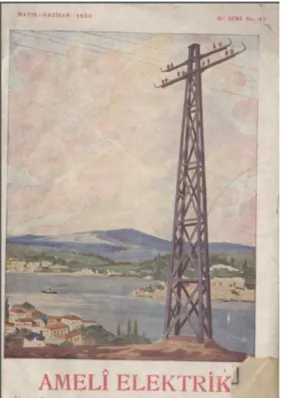
The direct mail journal Amel-i Elektrik, published by Société Anonyme d’Installations Eléctriques (SATIE) in collaboration with Dersaadet Electricity and Tramway Corporation came to be a prominent tool to promote domestic electrification. The journal was published bi-monthly in both Turkish and French and distributed to electricity subscribers. There is no accurate knowledge regarding the
total number of the issues published. The available issues date from 1926 to 1934.4 Most of the articles in each issue are translations of meeting reports of the Electric Corporation or other articles published in foreign journals. Other than that the journal includes short texts of introduction, promotion and advice as well as the advertisements of the very products that SATIE exports. In this sense the magazine provides a good opportunity to dwell on how electricity was conceptualized, which functions it was anticipated to fulfill, and what kind of a domestic organization those functions favored.
Women’s or family magazines emerge as prominent resources in terms of the richness of information they provide on dominant habits of household, the spatial organization of the modern house as well as the social position of women. As the most popular and long lasting publications of period the issues of Yedigün and Ev-İş are surveyed for this study. Yedigün was published from 1932 to 1950 and achieved to take place among the most popular and prominent illustrated magazines during the years of publication. The journal does not exclusively address women. However its motto “Yedigün is the ornament of each home” reveals its strong preoccupation with the issues of family (Hiçyılmaz and Evren, 1984: 158). Ev-İş published from 1937 to 1953 more clearly posited itself as a magazine addressing the issues regarding home as the heart of Kemalist reforms. Addressing at women the journal urged on the virtues of productivity and concentrated on such issues like handicrafts like sewing or knitting, cooking, fashion, etiquette and personal care (İlyasoğlu and İnsel, 1984: 174).
4
Although the full collection is not available, the majority of the issues are available in the collections of National Library in Ankara. Bilgi University Library has also digitized all the issues at their hand and the collection can be accessed on-line through the library website.
As Nye (1991: 270) accentuated the role of home economics movement was indisputable for the success of domestic electrification and its promotion because most of the advertisements of electrical appliances drew on “the domestic-science ideas of efficiency and progressivism.” Therefore resources on scientific housework and home economics inevitably constitute a side of the intertextual dialogue. For this reason home economics textbooks and almanacs of Girls’ Institutes were also analyzed within the context of this study especially to trace the grounds on which housework is re-conceptualized within the modernization project. To this end the available issues of İzmir Cumhuriyet Kız Enstitüsü Yıllığı (Almanac of İzmir Cumhuriyet Girls Institute) from 1936 to 1942 were also defined as primary resources.
The histories of electrification both in Turkey and in the international context were also influential in identifying the historical background of the study as well as framing it both theoretically and methodically. Nye’s (1991) Electrifying America:
Social Meanings of a New Technology, 1880-1940 and Graeme Gooday’s (2008) Domesticating Electricity: Technology, Uncertainty and Gender, 1880-1914 has
guided me too much in determining the kind of resources that would be useful, the theoretical positions within the histories of technology that would inform the study and the methods to analytically treat the resources.
Additionally, the histories of electrification in Turkey provided the chronological and statistical information regarding the development of technology. Recently, there has been a rising architectural and historical interest in the old electric production plants in Turkey as part of the ongoing urban renewal projects. Within this context the
Silahtarağa Power Plant was restorated by Bilgi University to be used as a campus area. One part of the plant was also restorated as a public energy museum. Throughout those studies a book on the history of the power plant entitled The Story
of The Silahtarağa Power Plant (Aksoy et. al, 2009) was also published. In a similar
manner, Övgü Pelen (2008) traces the history of electrification in Turkey through the iconic place that Ankara Gas and Electricity Factory, built in 1928, occupies within the republican modernization project with a particular emphasis on the ways the plant interacted with the urban space and electricity transformed urban life. Corporations also got involved in writing histories of electrification. Two prominent household appliances producers in Turkey, Arçelik and Vestel have contributed to the publication of books on the development of electric technology in Turkey in accordance with company histories and interests. Sanayi Devrimi'nin Etkisinde İmparatorluk'tan Cumhuriyet'e Türkiye (Sezgin, 2011) published by the former
frames the history of electrification in Turkey within the attempts towards industrialization in the country under the influence of the Industrial Revolution. Önce
Ateş Vardı: Türkiye'de Enerji Devrimi ve Modern Hayatın Etkileşimi (Bayrıl,
Erözçelik and Yılmaz, 2009), published by the latter, traces the transformations of daily life with the influence of electrification and introduction of related technologies including domestic appliances. All these resources supply substantial and comprehensive historical information about the process of electrification in Turkey. Yet since histories told in each are repetitive I derived merely from the book on the Silahtarağa Power Plant to clarify the historical background of electric production and consumption in Turkey. What is more, the way all these texts unquestioningly situated electricity among the modernizing agents encouraged me to delve into the relation between both.
1.3 Limitations and Scope of the Study
To retain the emphasis on the ways modernization was intended to be constructed through electrification I limited the study with the period from the mid-1920s to the beginning of the 1950s, which is widely referred to as the early republican period. Despite electric appliances were first introduced into the country towards the 1930s, they began to popularize only after the 1950s particularly with the beginning of the domestic production in the 1960s (Tanyeli, 1998: 145). Notwithstanding the limited access to electric powered appliances within the public during the years before the 1950s, these devices still occupied an important place in the discursive formations of modern everyday life. Defining a desired transformation that would embrace all segments of the society through the material means that could be owned by only a small minority would point at the idea that the definition of modernity within the republican discourse was not that definite and consistent or modernity was not inclusionary enough just from the very beginning. To reveal the ambiguities behind the definitions of the modern is the first motive behind limiting the study with the period in question.
At the same time, the dominant narratives of modernization in Turkey point to a break in the 1950s all in political, economic, cultural and social dimensions. The process beginning with 1945 is marked by certain developments in both the national and world history, among which the interrelated processes of the end of the single party regime and the World War II are the most prominent. During the years of war
hardening economic conditions brought about the emergence of the commerce bourgeoisie and industrialists as a powerful economic and social actor (Boratav, 1983: 416; Çavdar, 1983a: 2062). While these groups were increasing their accumulations owing to the conditions of war economy, the masses were getting more impoverished and hence income inequality was considerably deepening. This incited a social dissent against the existing government creating the social base for the new government (Çavdar, 1983a: 2063; Zürcher, 2007: 299). On the other hand, raising commerce and capital groups were creating a considerable pressure group against the statist policies of the existing government. This disfavor merged with the criticisms from the United States against the statist system and caused a liberal economic transformation beginning in 1947 (Zürcher, 2007: 312). The emergence of America in triumph from the war as a very strong state caused to get further closer to the country, through such attempts to join International Monetary Fund (IMF), in order to achieve financial support (Zürcher, 2007: 313). The Democrat Party came to power with the elections in 1950 against the backdrop of such developments. A considerable emphasis was placed on economic development based on American support through such loan projects like the Marshall Plan (Çavdar, 1983a: 2068). The cultural modernization projects fostered by the single party regime were also shifted with a completely diverse attention on popular culture to secure the support of the masses who felt repressed by the earlier Kemalist applications (Çavdar, 1983a: 2073). This ended in the redefinition of the “American way of life” as the “new and supreme manifestation of civilization and modernity (Bora, 2002: 153).
The apparent direction towards Americanization was not welcome by the republican ruling elites and was harshly criticized as deterioration, corruption, deviation, and