T.C.
ISTANBUL AYDIN UNIVERSITY INSTITUTE OF SOCIAL SCIENCES
THE IMPACT OF AUTONOMOUS LEARNING ON GRADUATE STUDENTS’ PROFICIENCY LEVEL IN FOREIGN LANGUAGE
LEARNING
Ph.D.
Prepared By Halil KÜÇÜKLER
(Y1112.620018)
DEPARTMENT OF ENGLISH LANGUAGE AND LITERATURE ENGLISH LANGUAGE AND LITERATURE PROGRAM
Advisor
Prof.Dr.Birsen TÜTÜNİŞ
DECLARATION
I declare that the dissertation “The impact of Autonomous Learning on Graduate Students’ proficiency level in Foreign Language Learning” was written by me in accordance with academic rules and ethical values. I also confirm that I benefitted from a lot of works and showed them in reference part. 29.07.2016
To my dearest daughters, Sevdenur and Suedanur and my wife Melek, who always supported me in every phase of this study
FOREWORD
The success of this study depends largely on the encouragement and guidelines of many others.
I take this opportunity to express my gratitude to the people who have contributed to this study. I would like to express my deep gratitude to Prof.Dr.BirsenTütüniş, my supervisor, for her great interest, invaluable guidance, feedback and encouragement during the preparation of this research. Her patience and persistence encouraged me to complete this study.
I would also like to thank Assoc.Prof.Dr.TürkayBulut and Assist. Prof.Dr.NecmiyeKarataş for their fruitful comments and feedback on this research. They directed me through various situations, allowing me to reach this accomplishment.
I owe special thanks to the participants of this study for making great contribution to this study.
I would like to express my sincere gratitude to Neşet Hoca for his guidance in the statistical analysis(SPSS) of this research.
Finally, I would like to thank to my family who supported and helped me along the course of this dissertation by providing the moral and emotional support.
TABLE OF CONTENTS
Page
FOREWORD ... ix
TABLE OF CONTENTS ... xi
ABBREVIATIONS ... xv
LIST OF FIGURES ... xix
ÖZET ... xxi
ABSTRACT ... xxiii
1. INTRODUCTION ... 1
1.1 Background of the study ... 1
1.1.1 Foreign language learning ... 2
1.1.2 Importance of Proficiency ... 3
1.1.3 Importance of Autonomous Learning ... 4
1.2 Statement of the Problem ... 5
1.3 The Purpose of the study ... 7
1.4 The Hypothesis of the Study ... 7
1.5 Research Questions ... 7
1.6 Research methods ... 8
1.6.1 Sampling and participants ... 8
1.6.2 Data collection ... 9
1.6.3 Data analysis ... 9
1.7 Significance of the Study ... 10
1.8 Permission of the study ... 10
1.9 Limitations of the study ... 10
2. LITERATURE REVIEW ... 11
2.1 Introduction ... 11
2.2 Threshold Level Common European Framework of Reference (CEFR) .. 11
2.3 Zone of Proximal Development (ZPD) and Scaffolding ... 14
2.4 The Zone of Proximal Development (ZPD) ... 14
2.5 Scaffolding and Motivation for Autonomous Learning ... 16
2.6 Scaffolding and Autonomous Learning ... 18
2.7 History of Autonomous Learning ... 19
2.8 Learner Autonomy ... 20
2.9 Theoretical Framework... 21
2.10 The Autonomous Learner and the Role of an Autonomous Learner ... 22
2.11 Conditions for Autonomous Learning ... 24
2.12 Learning strategies ... 24 2.12.1 Cognitive strategies ... 24 2.12.2 Metacognitive strategies... 26 2.13 Learner attitudes ... 27 2.13.1 Learner motivation ... 28 2.13.2 Self-esteem ... 30
2.14 Teachers’ role in autonomous learning ... 31
2.15 The impact of autonomous language learning on learners’ proficiency .... 34
2.16 Classroom Foreign language learning compared to autonomous learning 36 2.17 Preparing foreign language learners for proficiency exams ... 37
2.18 An autonomous learner is likely to be more prepared for exams ... 39
2.19 Current situation of autonomous learning ... 41
2.20 The future of autonomous language learning ... 42
2.21 Related empirical studies ... 42
2.22 Conclusion ... 48
3. METHODOLOGY ... 49
3.1 Introduction ... 49
3.2 Subjects of the study ... 49
3.2.1 Control Group ... 49
3.2.2 Experimental Group ... 49
3.3 Research Methods and Procedures ... 50
3.4 Tools of Research ... 50
3.4.1 Questionnaires ... 50
3.4.2 Sample YDS Exam and Syllabus ... 51
3.4.3 Language Learners Histories ... 51
3.4.4 Proficiency tests ... 51
3.4.5 Foreign Language Proficiency Course ... 51
3.4.6 Course materials ... 51
3.4.7 Course Procedure ... 53
3.4.8 Reflection of question types ... 53
3.4.9 Formal YDS Proficiency exam ... 54
3.4.10 The Questionnaire responses of participants who passed the YDS exam ... 54
3.4.11 Questionnaire ... 54
3.5 Research Ethics ... 54
3.6 Data analysis procedures ... 54
3.7 Reliability and validity ... 55
4. DATA AND DATA ANALYSIS ... 57
4.1 Introduction ... 57
4.2 Sources of Primary Data ... 57
4.3 Learner Autonomy Questionnaire Analysis ... 57
4.3.1 Between-Subjects Factors ... 58
4.3.2 Group Statistics ... 58
4.3.3 Learner awareness ... 58
4.3.4 Broader autonomous activities ... 63
4.3.5 Self-esteem ... 66
4.3.6 Use of reference materials ... 66
4.3.7 Motivation ... 67
4.3.8 Use of technology in Learning ... 68
4.4 The Perceptual learning style preference questionnaire analysis ... 68
4.4.1 The learners’ perceptions of roles in learning English ... 68
4.4.2 The role of the teacher ... 72
4.5 Data analysis of the Questionnaire of SILL (Learning Strategy Inventory for Language Learners Survey) ... 75
4.6 The analysis of the correlation of six categories of SILL (LearningStrategy Inventory for Language Learners Survey) ... 82
4.7 Strategies based on the statistical results of the questionnaire of the SILL ..
... 85
4.8 Analysis of Language Learners Histories ... 86
4.9 The results of the sample YDS exams of language course... 87
4.10 Analysis of English proficiency course results... 87
4.10.1 Descriptive analysis ... 87
4.10.2 The responses of control and experimental groups who passed the proficiency exam ... 98
4.11 Analysis of questionnaires of participants of control group who passed YDS exam ... 99
4.12 Analysis of questionnaires of participants of experimental group who passed the YDS exam ... 100
4.13 Questionnaire about language course administered on the control group participants ... 101
5. RESULTS AND DISCUSSION ... 105
5.1 Introduction: ... 105
5.2 Questionnaires: ... 107
5.2.1 The autonomy questionnaire: ... 107
5.3 Evaluation-Sheet for Perception of the Roles: ... 114
5.3.1 To what degree are graduate students autonomous in their foreign language proficiency development? ... 115
5.4 What is the difference between instructed and non-instructed EFL proficiency development and does this have any correlation with the graduates’ YDS results? ... 118
5.5 Can learners improve their language proficiency through autonomous learning? ... 121
5.6 The degree of graduate students autonomy in their foreign language proficiency development ... 122
5.7 Strategy adoption ... 125
5.7.1 The results of the questionnaire of SILL (Learning Strategy Inventory for Language Learners) questionnaire ... 128
5.7.2 The result of the correlation of six categories of SILL (Learning Strategy Inventory for Language Learners Survey) ... 130
5.7.3 Analysis of why there is no meaningful difference between the two groups? ... 130
6. CONCLUSION ... 133
6.1 Overall Concluding Remarks ... 133
6.2 Recommendations for future study... 134
REFERENCES ... 137
APPENDICES ... 147
RESUME ... 167
ABBREVIATIONS
CALL : Computer assisted language learning EFL : English Foreign Language
SCL : Student Centred Learning
SILL : Strategy Inventory for Language Learning SRL : Self-Regulated Learning
ELT : English Language Teaching L1 : The student’s native language
L2 : The language being learned or studied ALQ : Autonomy Learner Questionnaire SPSS : Statistical Package for Social Sciences SAC : Self-access Centre
YDS : English Proficiency Exam for Turks
LIST OF TABLES
Page
Table 4. 1: The number of participants who answered the questionnaires. ... 58
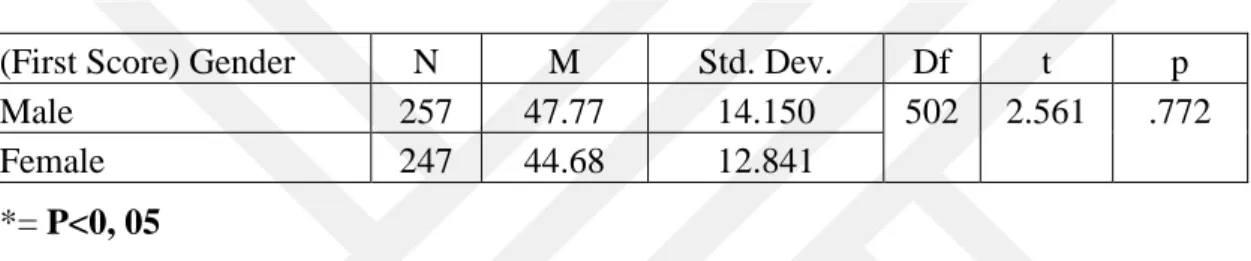
Table 4. 2: The group statistics of the results of previous proficiency exam before the study. ... 58
Table 4. 3: The Classification of SILL (Oxford, 1990). ... 75
Table 4. 4: Mnemonic strategies of the control class and experimental class. ... 76
Table 4. 5: Cognitive strategies of the control class and experimental class. ... 77
Table 4. 6: Compensation strategies of the control class and experimental class. .... 78
Table 4. 7: Metacognition strategies of the control class and experimental class. .... 79
Table 4. 8: Affective strategies of the control class and experimental class. ... 80
Table 4. 9: Social strategies of the control class and experimental class. ... 80
Table 4. 10: The results classification of strategies of research and control groups of SILL. ... 81
Table 4. 11: The Classification suggested by Cohen, J (1988). ... 82
Table 4. 12: The summary of the correlation among the six categories of the total participants of the groups adapted version of SILL (total participants)... 83
Table 4. 13: The summary of the correlation among the six categories of the adapted version of SILL (Control group). ... 84
Table 4. 14: The summary of the correlation among the six categories of the adapted version of SILL (Experimental group). ... 84
Table 4. 15: Internal consistency reliability coefficient for the whole and six sub-categories of the adapted version of SILL. ... 85
Table 4. 16: Gender descriptive analysis at the beginning and end of the semester and final score of the sample tests... 87
Table 4. 17: Complete Group Statistics of all results of the sample YDS test scores. ... 88
Table 4. 18: The first sample, mid-term and the last YDS scores... 90
Table 4. 19: The first YDS exam scores of graduate students before the treatment. 91 Table 4. 20: Sample YDS exam scores of graduate students before the course. ... 91
Table 4. 21: The first sample YDS exam for the graduate students during the course. ... 91
Table 4. 22: The second sample YDS exam for the graduate students during the course. ... 92
Table 4. 23: The third sample YDS exam for the graduate students during the course. ... 92
Table 4. 24: The fourth sample YDS exam for the graduate students. ... 92
Table 4. 25: The fifth sample YDS exam for the graduate students. ... 93
Table 4. 26: The sixth sample YDS exam for the graduate students. ... 93
Table 4. 27: The mid-term sample YDS exam for the graduate students. ... 93
Table 4. 28: The seventh sample YDS exam for the graduate students. ... 94
Table 4. 30: The ninth sample YDS exam for the graduate students. ... 94
Table 4. 31: The tenth sample YDS exam for the graduate students. ... 95
Table 4. 32: The eleventh sample YDS exam for the graduate students. ... 95
Table 4. 33: The final sample YDS exam for the graduate students at the end of the course. ... 95
Table 4. 34: The formal final YDS exam for the graduate students at the end of the course. ... 96
Table 4. 35: The results of the first sample YDS exam scores. ... 96
Table 4. 36: The results of the midterm sample exam. ... 97
Table 4. 37: The results of formal proficiency exam (YDS). ... 97
Table 4. 38: Comparison of the responses of participants who passed the proficiency exam ... 98
LIST OF FIGURES
Page
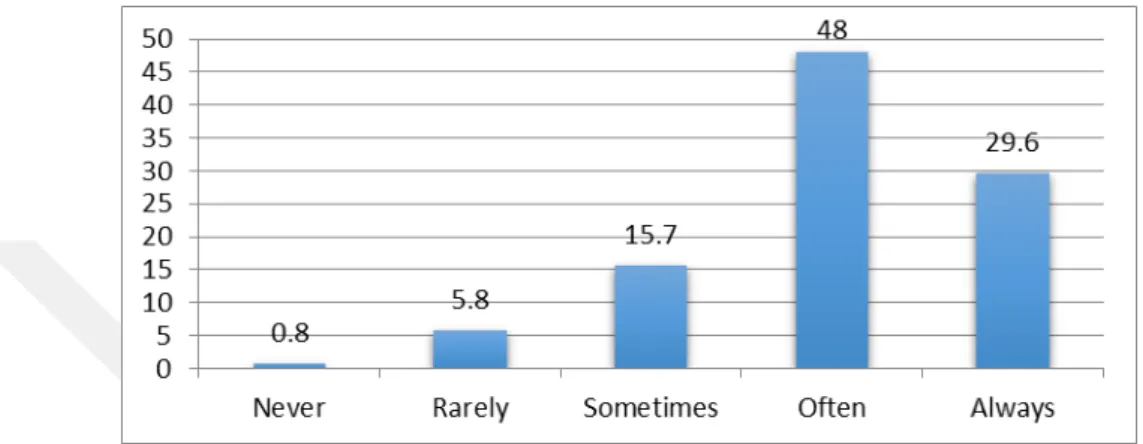
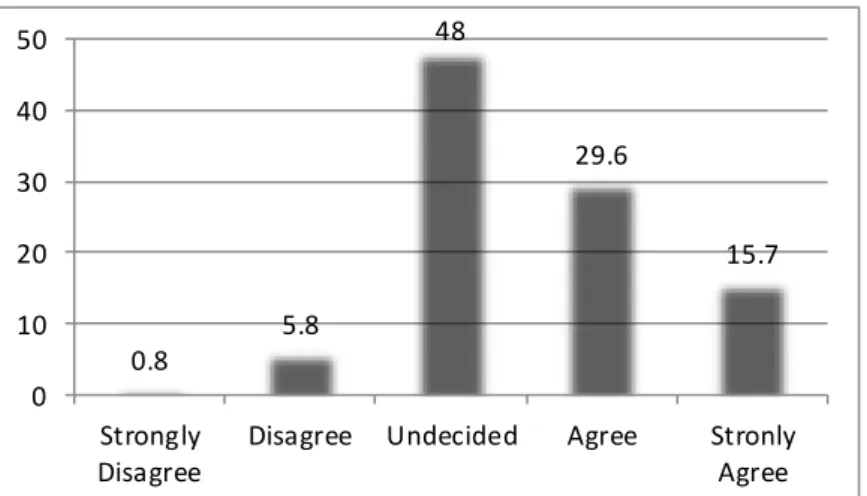
Figure 4.1: I think I have the ability to learn English well. ... 58
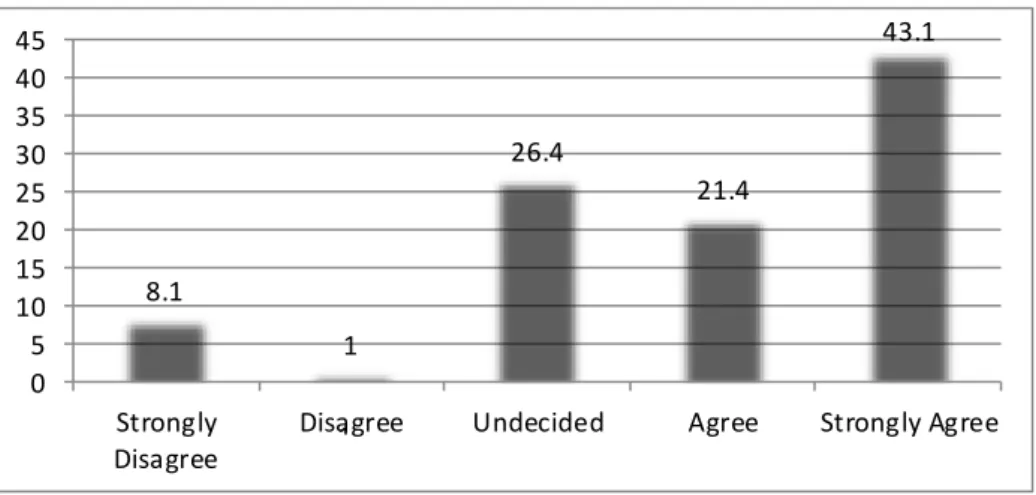
Figure 4.2: I make decisions and set goals of my learning. ... 59
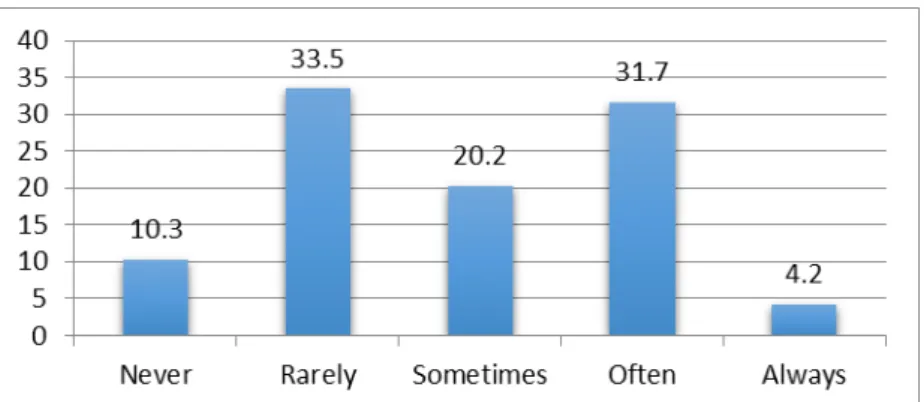
Figure 4.3: I make good use of my free time in studying English. ... 59
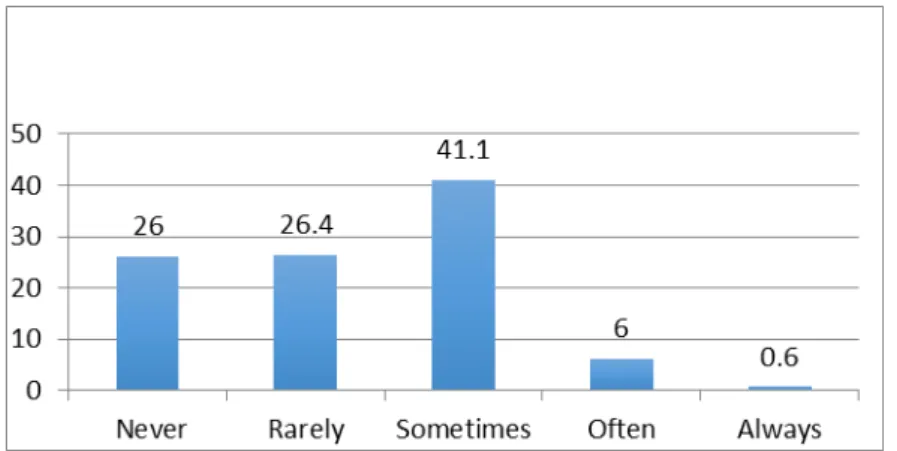
Figure 4.4: I preview before the class (i.e. see summary, lessons etc.). ... 60
Figure 4.5: In the class, I try to use every opportunity to take part in the activities where and when I can speak in English. ... 61
Figure 4.6: I speak confidently in front of people... 61
Figure 4.7: I make notes and summaries of my lessons. ... 62
Figure 4.8: I talk to the teachers and friends outside the class in English. ... 62
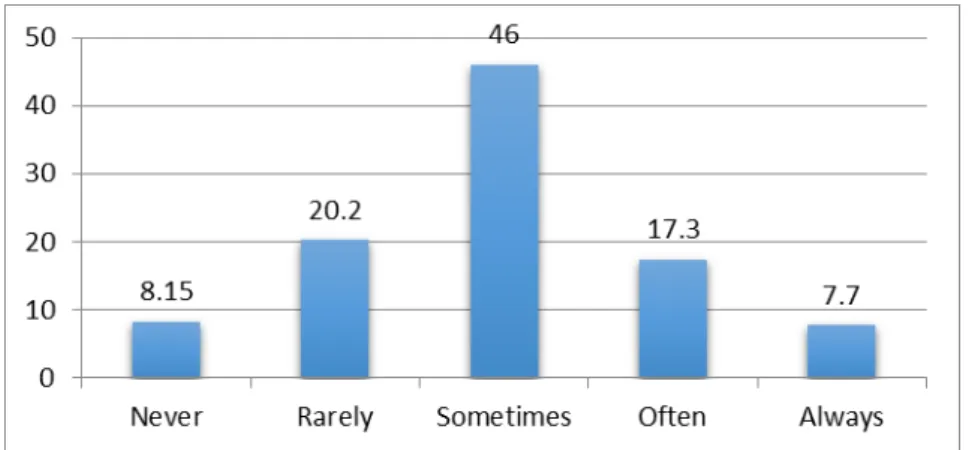
Figure 4.9: I practice English outside the class also such as: record my own voice; speak to other people in English. ... 63
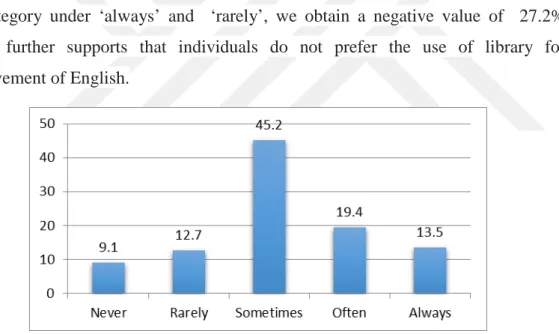
Figure 4.10: I use library to improve my English. ... 64
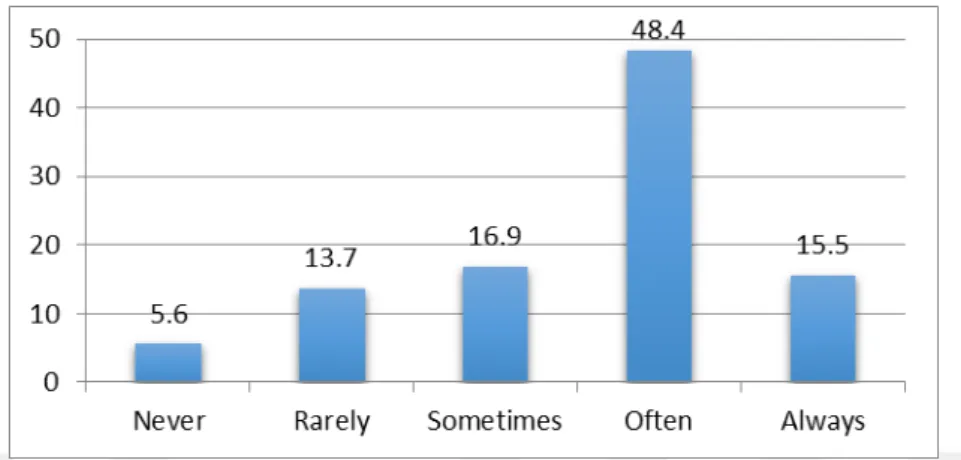
Figure 4.11: I use audio-visual materials to develop my speech. ... 64
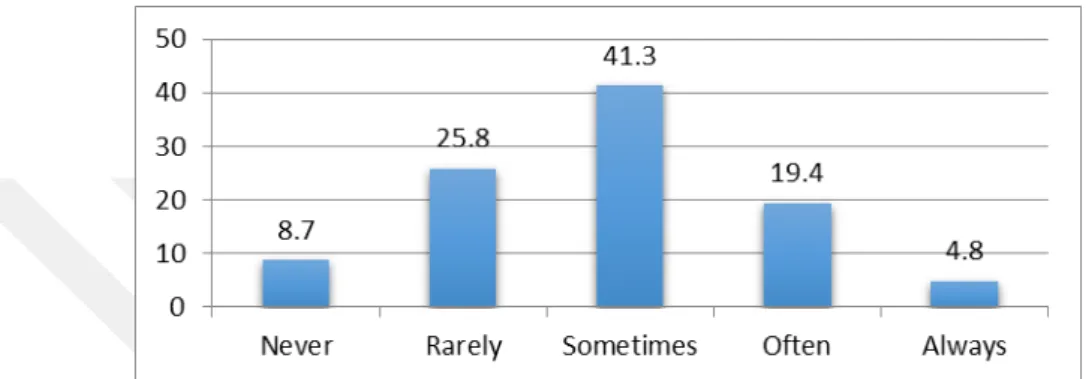
Figure 4.12: I attend different seminars, training courses, conferences to improve my English. ... 65
Figure 4.13: I take risk in learning the English language. ... 65
Figure 4.14: I note my strengths and weaknesses in learning English and improve them. ... 66
Figure 4.15: I revise lessons and seek the reference books. ... 66
Figure 4.16: Besides the contents prescribed in the course, I read extra materials in advance. ... 67
Figure 4.17: When I make progress in learning, I reward myself such as: buying new things and celebrate parties etc... 67
Figure 4.18: I use internet and computers to study and improve English. ... 68
Figure 4.19: Students have to be responsible for finding their own ways of practicing English. ... 69
Figure 4.20: Students should use much self- study materials to learn English. ... 69
Figure 4.21: Students have to evaluate themselves to learn better. ... 70
Figure 4.22: Students should mostly study what has been mentioned under the course because studying English course is actually for exam purpose. .. 70
Figure 4.24: Students should build clear vision of their learning before learning English. ... 71
Figure 4.25: A lot of learning can be done without a teacher. ... 72
Figure 4.26: Teachers have to be responsible for making students understand English ... 72
Figure 4.27: Teachers should point out the students’ errors. ... 73
Figure 4.28: Teachers should teach the ‘what’ and the ‘how’ of English ... 73
Figure 4.30: Students’ failure is directly related to the teachers’ classroom
YABANCI DİL ÖĞRENMEDE LİSANSÜSTÜ ÖĞRENCİLERİNİN YETERLİLİK SEVİYELERİNDE ÖZERK ÖĞRENMENİN ETKİSİ
ÖZET
Bu çalışmanın amacı, özerk öğrenmenin lisans üstü öğrencilerin yabancı dil yeterlilik düzeyleri üzerindeki etkisini araştırmaktır. Bu çalışma(tez), 2014-2015 öğretim yılında, Balıkesir Üniversitesinde gerçekleştirilen iki çalışmaya dayanmaktadır. Çalışmanın birinci bölümü, lisans mezunu öğrencilerin kullandıkları yabancı dil öğrenme strateji ve yöntemlerinde ne oranda özerk olduklarıyla ilgili bir anket çalışmasını içermektedir. Çalışmanın ikinci bölümü, öğrencilerin ders alma ve almama durumlarına göre ortaya çıkan öğrenme farklılıklarını belirlemek için lisans üstü iki grup öğrencinin sınav sonuçlarını karşılaştıran deneysel bir çalışmadan oluşmaktadır.
Bu çalışmanın birinci bölümü için lisans üstü öğrencilere iki farklı anket uygulanmıştır. Birinci anket, Zhang ve Li tarafından (2004) yılında yabancı dil olarak İngilizce öğreniminde öğrencilerin nasıl özerk olduklarını belirlemek üzere geliştirilen ‘Özerk Öğrenme Aktiviteleri ve Planları’ anketidir. İkinci anket, Reid tarafından (1987) yılında geliştirilen ‘Algısal Öğrenme Stili Tercih Anketi’dir. Bu anketler, 2014-2015 öğretim yılında Balıkesir Üniversitesi Sosyal Bilimler Enstitüsü, Sağlık ve Fen Bilimleri Enstitülerinde yüksek lisans yapan 750 öğrenciye gönderilmiş; bu öğrencilerden 504’ü bu anket sorularına cevap vermiştir. Bu
anketlerden sonra aynı üniversitede yüksek lisans yapan öğrenciler için YDS sınavına hazırlık amaçlı iki farklı kurs programı uygulanacağı ilan edilmiştir. Bu anketlerin değerlendirilmesi sonucunda 30 öğrenci bu kurs programına katılacağını belirtmiştir. Bu 30 kişilik gruba ileri düzeyde İngilizce yeterlilik sınavı uygulanmıştır. Daha sonra 30 kişilik bu öğrenci grubu, gönüllülük esasına göre 15’er kişilik kontrol ve araştırma grubu olmak üzere ikiye ayrılmıştır.
Bu araştırmada kontrol grubuna sınıf ortamında geleneksel yöntemle düzenli olarak ders verilmiştir. Deney grubu ise derse katılmadan özerk öğrenme modeliyle sınava hazırlanmıştır. Çalışmaya katılan her iki grubun öğrenme ve strateji farklılıklarını görmek için katılımcılara SILL (Dil Öğrenme Stratejileri, Oxford, 1990) anketi de uygulanmıştır.
Bu çalışmanın birinci bölümünün anket sonuçlarına göre katılımcıların % 73,2’sinin sınıf ortamında, % 25,8’inin özerk öğrenme yöntemiyle İngilizce öğrenmeyi tercih ettikleri ortaya çıkmıştır. Bu çalışmanın ikinci bölümünde uygulanan SILL (Dil Öğrenme Stratejileri) anketinin sonuçlarına göre katılımcıların dil stratejilerini kullanma eğilimlerinin ileri düzeyde (M:3,5-5.00)değil de orta düzeyde (M:2,9) olduğu belirlenmiştir. Yine bu çalışmanın ikinci bölümünde yer alan ve kontrol ve araştırma grubu olmak üzere yapılan deneysel çalışmanın sonucuna göre özerk öğrenme ile sınıf ortamında yabancı dil öğrenme arasında anlamlı bir fark olmadığı
ortaya çıkmıştır. Kontrol grubu % 48, 03; araştırma grubu % 47, 25 değerlerine sahiptir. Çalışmanın genelinden çıkan sonuçlara göre Yabancı Dil Yeterlilik Sınavı (YDS)’na hazırlanmada sınıf ortamında öğrenim gören kontrol grubunun özerk öğrenme grubu olan araştırma grubuna göre daha başarılı olduğu sonucuna ulaşılmıştır.
Anahtar Kelimeler: özerk öğrenme, özerk dil öğrenme, özerk öğrenci, öğrenme stratejileri
THE IMPACT OF AUTONOMOUS LEARNING ON GRADUATE STUDENTS’ PROFICIENCY LEVEL IN FOREIGN LANGUAGE
LEARNING
ABSTRACT
The purpose of the study is to investigate the impact of autonomous learning on graduate students’ proficiency level in foreign language learning. This study is based upon two types of research conducted at Balıkesir University in the academic years of 2014-2015. The first one is survey analysis on the graduate (Master of Arts) students’ foreign language learning styles and strategies to find out what extent they are autonomous. The second one is an experimental study which compares the exam results of two groups of graduate students to find out the instructed and non-instructed learning differences.
Two kinds of questionnaires were administered. The first one was learner autonomy survey questionnaire developed by Zhang and Li (2004), which was administered to investigate how autonomous the participants were in learning English as a foreign language. The second one was the perceptual learning style preference questionnaire (PLSPQ) developed by Reid (1987). The two questionnaires were administered to 750 graduate students enrolled in the Institution of Social, Science Institution and the Health Institution at Balıkesir University in the academic years of 2014-2015. Only 504 graduate students responded the questionnaires. Then it was announced that there would be two types of English YDS preparation courses for the participants enrolled at Balıkesir University, Institute of M.A programs. 30 participants applied to join the courses. The participants are assigned to two groups, as instructed (control group) and non-instructed (research group) on voluntary bases. The instructed group attended English classes but non-instructed group worked for YDS exam in their free times, on their own and did not receive any lectures. During the study, one more questionnaire SILL (Oxford, 1990)(the learning strategy inventory for language learners’ survey) was also administered to the instructed and non-instructed groups of students (30) to see the learning and strategy differences of both groups. The duration of the study was six months.
The results of data analysis showed that most of the participants preferred to learn English in class. But few students believed that they would be successful by self-study. The learners did not use strategies in high level (M:3,5-5.00) but they used them in medium (M:2,9) level. The findings revealed that there is not a significant difference between the instructed and non-instructed classes based on the results of the sample language proficiency tests (YDS) and real YDS scores. The mean of last formal YDS exam of the experimental group is 47, 25 and the mean of the control
group is 48, 03. We can, thus, come to conclusion that YDS exam preparation is more teacher dependent than individual autonomous study.
Keywords: autonomous learning, language learning autonomy, learning strategies, learner autonomy
1. INTRODUCTION
1.1 Background of the study
Student-centred learning has been given much consideration over the last two decades, especially in foreign language learning where research concern has changed from teacher centred instruction to learner-centred view. Similarly, learner autonomy has been given much emphasis in foreign language education, particularly in relation to lifelong learning skills. Learner autonomy has transformed old practices in language classes. It has become the basis for the establishment of self-access language learning centres all over the world. Holec (1981) defines autonomous learning as the ability of an individual to reflect own experiences and subsequently take control of his or her learning thereafter. Compared to non-autonomous learning, autonomous learning is considered more effective. On the other hand, language proficiency is generally defined as the ability of a person to effectively use a language for various purposes such as writing, reading, listening, and speaking (Birgit, 1990).
Various studies have concluded that experts in various fields use more systematic and effective native-language reading comprehension strategies than novices (Rebecca & Martha, 1999). Language learners who end up with better language proficiency use language learning strategies that suit their age, personality, the purpose of learning, the stage of learning, and the type of language (Rebecca & Martha, 1999). In essence, suitable learning strategies fundamentally explain the performance of good language learner whereas unsuitable learning strategies explain the recurrent failure of poor language learners, and occasional weakness of good language learners.
Other than autonomous learning, other learning strategies include learner-centeredness and learning-learner-centeredness (Richard et al., 1996). Learner-learner-centeredness is characterized by what is taught, when it is taught, how it is taught, and the type of assessment that is made, in reference to the learner. On the other hand,
learning-centeredness is characterized by dual complementary aims that include focusing on language content and focusing on learning process (Jeffrey & Nancy, 2005). This paper focuses on autonomous learning in respect to proficiency level of graduate students in foreign language learning.
1.1.1 Foreign language learning
Foreign language learners acquire a new language in many ways, which include hearing and seeing, reasoning logically and intuitively, reflecting and acting, and memorizing and visualizing (Richard & Eunice, 1995). The speed at which a student learns a foreign language depends not only on the student’s prior preparation and native ability, but also on the instructor’s criterion of teaching and the student’s characteristic approach to learning. The means in which a foreign language learner acquires, stores, and retrieves acquired information largely depend on his or her learning style and strategy. According to Felder & Silverman (1988), a mismatch between the teaching style of an instructor and learning strategy of a student is potentially detrimental to the acquisition of a foreign language. The mismatch is characterized by things such as students being bored and inattentive in class, students performing poorly in tests, and students concluding that they are not good at acquiring the foreign language and ultimately dropping out of the course (Richard & Eunice, 1995). In addition, the type of presentation mode of a foreign language determines the level of acquisition of the language. Generally, there are two main types of language presentation mode namely deductive and inductive presentation. Deductive presentation entails a foreign language learner beginning with the axioms, rules, or principles, deducing consequences, and formulating applications (Michael & Anna, 1990). On the other hand, inductive presentation is characterized by a student making an observation and inferring the governing principles.
The distinction between deductive and inductive presentation in respect to foreign language learning is fundamental in the acquisition of a foreign language (Graham, 2011). Language acquisition hereby means to gradually pick up the language, and to gain the ability to effectively communicate the language without necessarily articulating the rules. In essence, foreign language learners gradually absorb what they can from the constant input that bombards them, that is, everyday increasing their ability to make sense of, retain, and put into practice what they have absorbed
(Richard et al., 1996). Throughout the learning process, the learners improve their abilities to transfer learning styles and strategies, make assumptions on the emerging language system, and formulate and test principles and rules and either keep or discard them. This process, which is basically subconscious, continues until the learners fossilize. Fossilization happens when learners feel they have acquired what is necessary to communicate in the new language. The overall presentation that progresses from specifics to generalizations is fundamentally an inductive process (Graham, 2011). Thus, foreign language learners generally use inductive process to acquire a new language.
1.1.2 Importance of Proficiency
The importance of language proficiency in improving educational performance through enhanced communication can never be emphasized enough (Ludo & John, 1992). It has been observed that students who portray difficulties in language proficiency may not function effectively, not only in language related fields but also in other academic fields. When language proficiency of an individual is high, it consequentially improves the academic performance of the individual. Likewise, individuals with low language proficiency have demonstrated low academic performance. In a study conducted by Yushau and Omar (2015) focusing on the importance of English language proficiency in the performance of Mathematics, it is concluded that individuals with high English proficiency concurrently demonstrate high performance in Mathematics.
In a case where academic instructions are given using a language that a learner is less proficient, the learner faces the dual challenge of having to learn in a foreign language while concomitantly learning content from another discipline through the second language (Ludo & John, 1992). This considerably slows down or at times totally impairs the learning of the subject in which a foreign language is the medium of learning. Notably, English second language learners have often been considered less competent in academic related fields in countries where English is the native language partly because of the challenges they encounter while using English as the medium of learning other academic disciplines (Yushau, 2015).
Mastering proficiency in a given language is important as it allows an individual to effectively communicate using that language (Richard & Eunice, 1995).
Communication is essential in various aspects of life, right from personal life to corporate life. In an organization setting, language proficiency enhances good communication, which in turn is a vital tool in enhancing productivity and building a strong working relationship among one’s colleagues and at various levels of the organization (Ana, 2005). Learners who invest time in building their language proficiency often deliver clear instructions. Clear instructions and communication, in turn, enhance the level of trust among one’s peers and morale in general. In contrast, poor language proficiency leads to poor communication. In a case where an individual poorly communicates, especially within the context of an organization, the staff often become demotivated and at times question their abilities to perform the required tasks. Moreover, language proficiency enhances the employability of an individual (Ludo & John, 1992). An individual with excellent command of the language that an employer is targeting has a greater chance of being employed than an individual with low language proficiency in the target language. According to Ana (2005), high powered business executives often hire language consultants to coach them on how to effectively communicate.
1.1.3 Importance of Autonomous Learning
In the current world, most graduate students prefer to take charge of their learning as they work toward specific goals and objectives. When such students are allowed to take control of their actions, they work towards mastering and gathering information that will increase their knowledge, improve their abilities, and enrich the overall learning experience. This is something that can be achieved through autonomous learning. According to Holec (1981), autonomous learning is a pedestal of individuals’ self-study where students are largely responsible for their learning. It allows students to acquire knowledge, attitudes, and skills through interaction and self-study. Therefore, this approach to learning strives to meet the need of students to take control over their learning process by facilitating the intrinsic acquisition of knowledge.
Graduate students, just like other learners, have unique learning, evaluation, planning, and reflection strategies that determine the extent to which they achieve learning goals and objectives. Moreover, their learning process is affected by a range of affective and cognitive factors. Autonomous learning takes such unique factors and preferences into account by promoting learning independence. Moreover, it
appreciates the fact that each student can learn independently. Students’ desire to exercise their independent learning skills is linked to the endeavour of being independent in life. According to Holec (1981), the tendency to ignore or underestimate students’ independent learning ability leads to a gradual loss of student independence, which can have an adverse impact on the overall development of the student. Therefore, autonomous learning gives students the opportunity to learn independently and use unique learning, evaluation, planning, and reflection strategies to achieve learning goals.
In any learning environment, students and teachers strive to come up with unique ways of achieving learning goals, acquiring knowledge and mastering concepts. Since each student is unique in his or her way, the strategies used by each to master concepts are often different. Autonomous learning provides an environment that allows both students and teachers to be innovative (Cao, 2000). In such an environment, students find new ways of acquiring knowledge while teachers come up with creative ways of enhancing teaching. Central to autonomous learning is the need for students to continually strengthen their comprehensive ability by being innovative throughout the process of learning and teaching (Holec, 1981). Furthermore, it allows teachers to know how best to interact with learning and impact knowledge in different learning contexts. In the long run, students will be better placed to acquire new knowledge, adopt learning strategies that work for them, and master new concepts.
1.2 Statement of the Problem
In Turkish universities, there has been a growing concern for academicians to publish their research work or articles using different languages, especially English. Therefore, the lack of proficiency in second languages hampers their publishing role as academicians and hence create the need to solve this problem. Notably, research academicians in various universities in Turkey defend or communicate their research findings in conferences, presses, and other forms of gatherings. Academicians with low language proficiency find themselves unable to communicate clearly during such functions, and hence the need to solve this problem. Finally, graduate scholars in different universities in Turkey are mandated to pass proficiency exam (YDS), failure to which they cannot proceed with their education. This can be frustrating and
hence helping to solve failure in YDS exam can be of importance to the scholars. For this reason, this research advocates that if scholars can embrace autonomous learning after university graduation, they are more likely to overcome the problems. As such, investigating the effect on autonomous learning on graduates’ proficiency in foreign language will help to solve the problems faced by the scholars in Turkish universities that use the YDS exam. It has been observed that both prospective English teachers and academicians have difficulties in passing the YDS exam. The fact is that some people take private courses such as “dersane” to pass the exam and end up paying a lot of money. However, it is believed that students can prepare for this test based on autonomous learning model because it involves the willingness on the part of the learner to become responsible for one’s own instruction.
The growing population of English language learners in Turkey has created the necessity for courses that can give learners a more advanced understanding of English so that they can use the foreign language in academic settings. Yet, many learners have limited English language proficiency and exhibit a lot of difficulties. Many academicians face difficulties in passing their foreign language proficiency exam (YDS), and as such, their academic achievements are delayed.
After graduating from high school, students take university exam and settle in different departments such as English Department, English Philology, etc. in accordance with their scores in the Foreign Language Examination (YDS). In universities that use English as the main communication medium, students take an English proficiency test. In other universities where the medium of instruction is not English, they are completely exempted from English courses. Some of the departments stated above offer intensive English program.
There is no course that specifically prepares students for YDS (English Language Proficiency exam). Therefore, students do not know much about the YDS exam, thus, a special preparation is needed. In order to work as an English teacher in the Ministry of Education schools or at the universities, a prospective teacher must take an exam called YDS and achieve a high score. The problem is that the academicians also must take the same exam to be able to continue their PhD studies.
1.3 The Purpose of the study
The aim of this study is to research the impact of autonomous learning on graduate students’ proficiency level in EFL learning and encourage them towards independent learning, with the use of the strategies applied for developing their proficiency level in foreign language. Investigating the impact of autonomous learning on graduates’ proficiency in foreign language will help to solve the problems faced by scholars in passing of YDS exam in Turkish universities, publishing research work and presenting research work in international conferences. The following are the specific research objectives that underpin this study:
1. To understand the graduate students’ level of autonomy and the strategies they apply while coping with proficiency problems.
2. To help learners build and enrich their language proficiency. 3. To help learners develop their metacognitive skills.
4. To find out the proficiency difficulties of graduate students in EFL.
1.4 The Hypothesis of the Study
You can teach students English in primary and secondary schools, and also in university the graduate levels but it is their own obligation, not the teachers’, to develop initiative of autonomous learning in order to enhance their foreign language proficiency development. In the light of this postulation, the hypothesis of this study is as follow: Graduate students are expected to have better language proficiency score through autonomous learning.
1.5 Research Questions
In order to achieve the desired goal and to approve or disapprove the hypothesis of the research, the following research questions will be answered:
1. What are the graduate students’ learning styles and strategies?
2. To what degree are graduate students autonomous in their foreign language proficiency development?
3. What is the difference between instructed and non-instructed FL proficiency development and does this have any correlation with the graduate students’ YDS results?
4. Can learners improve their language proficiency through autonomous learning?
1.6 Research methods
The present study embraced an experimental approach to research, gather data and analyse it. The data that was collected regards the influence of autonomous learning on graduate student’s proficiency level in English learning. Experimental research design involves the manipulation of a variable of interest while randomizing the dependent factors. The experimental research design included a ‘study group’ of respondents whose results were compared with that of another group referred to as the ‘control group’. Another part of the study involved a survey. The experimental research design was quantitative in nature, as opposed to qualitative. Quantitative research was ideal for the present project because it allows the researcher to analyse data using statistical manipulation, as opposed to analysis based on story narrations as in the case of the qualitative approach. Quantitative research facilitated quantification of the degree to which the graduate students are autonomous in their foreign language proficiency development. In addition, the approach enabled comparison of whether there is a difference between autonomous and instructed learners based on language proficiency tests (YDS) and real YDS scores.
1.6.1 Sampling and participants
The research used purposive sampling to recruit participants. Purposive sampling was convenient for the researcher because it saves time. This characteristic of purposive sampling is accrued to the fact that, in this sampling strategy, the researcher had the freedom to recruit participants purposively as long as they were willing to take part in the study. All the research participants were from the Institutes of Health and Social Sciences of Balıkesir University. For the case study, the sample comprised of 30 graduate students enrolled at the Institute of Social, Institute of Science and Institute of Health for MA program at Balıkesir University. The subjects took a proficiency test at the beginning of November (academic year 2014-2015) and the results were used to establish two groups for the research.
1.6.2 Data collection
Data was collected using a combination of two techniques. The first was the use of autonomous Learner Questionnaire (Zhang and Li, 2004). The second one was the perceptual learning style preference questionnaire (PLSPQ) developed by Reid (1987). The first technique guided the use of questionnaires for the survey and the second technique guided the use of proficiency tests for the English course case study that involved students who enrolled into the language course. The Learner Autonomy Survey questionnaire was administered to see how autonomous the learners were in learning English. Learner autonomy survey questionnaire enabled the researcher to recognize the independent learning styles and methods that participants used to improve proficiency in English. The PLSPQ was also employed to profile the roles of learner and the teacher. At the beginning of the English course, The SILL (Strategy Inventory for Language Learning; Oxford, 1989) was applied to the learners. The questionnaire was used to identify what sort of language learning strategies graduate students use for YDS exam. Before the research, the contents of the course for both autonomous group and control group were prepared and the treatment for the experimental group was designed. In addition to this, a sample YDS was employed every two weeks. In short, data was collected from the control and experimental groups that passed YDS proficiency exam.
1.6.3 Data analysis
The goal of this research was to study the effect of autonomous learning on graduate students’ proficiency level in English learning. To analyse the research data collected from both the questionnaires survey and English course case study, a combination of both descriptive and inferential statistics was used.
Descriptive statistics involves calculation of measures of central tendency such as the mean, percentiles, and standard deviation and graphical and tabulation techniques. In addition to this, inferential statistics was used to generalise the descriptive results of the population from which the research sample was drawn (Trochim, Donnelly & Arora, 2015)
In this research, the study population includes graduates who aim to improve their proficiency level in foreign language learning. The inferential statistics include calculation of mean comparison techniques, such as the independent samples t-tests.
1.7 Significance of the Study
This research will contribute to the understanding of the differences that exist between the traditional teacher-centred and autonomous graduate learners based on the results of the sample English proficiency tests (YDS) and real YDS scores. This will help to come to conclusion on whether YDS exam preparation is more dependent on teacher or individual autonomous study.
1.8 Permission of the study
The permission to conduct this empirical study was sought from the Balıkesir University in writing. The request was meant to get the university’s consent to carry out the research. A letter was written to the head of Department of Foreign Language Studies. In addition, the researcher sought the informed consent of the participants. By signing an informed consent form, they acknowledged that they were fully informed about what the research involved and that their participation in this study was voluntary.
1.9 Limitations of the study
The research was conducted by a single researcher, a student, with limited time and financial resources. Therefore, the sample used, though adequate, may not have been entirely representative of the entire population of ESL learners. Since all the learners were drawn from the Science, Social and Health Institutes, the study is limited to the Institutes of Balıkesir University.
2. LITERATURE REVIEW
2.1 Introduction
Teaching is a complex practice and can sometimes be very demanding especially when dealing with learners who do not have self-motivation. McCombs (2011, p. 1) emphasizes that teachers need to recognize the important connection between learner motivation and self-determination. Thanasoulas (2000) noted that these concepts have gained momentum since the 1980s, especially within the context of language learning. This is because of the widely held belief that more communicatively oriented language learning as well as teaching is largely dependent on the learner’s role in the process of language learning. (Wenden 1998, p. xi). This means that language learning process is shifting responsibility from the teacher to the learner, or in other words, from teacher-centred to a more learner-centred learning. This marks a power shift in the teaching/learning process which was primarily held by the teacher in the traditional classroom. It allows some capacities for detachment, analytical reflection, and decision-making in the learning process, as well as autonomy of action since autonomous learners are supposed to have greater responsibility for, as well as taking control of, their learning (Thanasoulas 2000). McCombs (2011, p. 1) argued that motivation for learning is highly associated with whether or not a learner has opportunities to be autonomous and make important academic decisions. Learner-centred teaching/learning or autonomous learning however does not mean that the teacher abdicates his/her role in the language teaching/learning process. The teacher ought to help the learner to assume greater responsibility of his/her own learning and to become aware of as well as identify strategies that the learner could use to achieve this (James& Garrett 1991, p. 198).
2.2 Threshold Level Common European Framework of Reference (CEFR) The Common European Framework of Reference (CEFR) was published by the Council of Europe to be used as a reference for language teaching and learning at all levels as well as a European Language Portfolio which the council defined as a
common instrument that allows individuals who desire to maintain a record of the various elements of their language learning experience and achievement, be it formal or informal. This framework has been adopted by various countries in Europe . According to the recommendations, the framework will be used in the planning of language learning programmes, self-directed learning, and language certification (Little, 2001).
The original aim of CEFR was to provide guidance and a method of teaching, assessing and learning languages (İlin & Yildirim 2012). Little (2001) explains that the purpose of the framework is provide a common basis for elaboration of curriculum guidelines, language syllabuses, textbooks, and examinations among other related elements across Europe so as to serve the agenda of the Council of Europe with regards to cultural, educational and political matters. According to this author, this framework seeks to promote the development of learner autonomy and gives as much importance to learner self-assessment as it does to assessment by teachers and external authorities. By referring to CEFR’s common reference levels, it means that language learning goals as well as content, irrespective of the context can be articulated as a collection of “I can” descriptors (Little, 2016). According to Little, the CEFR is an effective application to language learning in higher education particularly with regards to the definition of aims as well as learning outcomes and fostering of learners’ capacity to manage their own learning (autonomous learning). Studies on the effectiveness of this framework are scarce. While the framework is has been widely adopted across Europe and education programs implemented to provide in-service language teachers with ground to familiarize themselves with the framework, not much is known how teachers view this framework and its effectiveness in teaching or learning languages. İlin (2014) sought to establish this by conducting a study in Turkey which involved examining the opinion of teachers and students regarding the framework in terms of its positive and negative aspects. The views were explored from three viewpoints. First, the opinions of the participants regarding CEFR in general, secondly, their opinions on the efficacy as well as feasibility of CEFR, and third, their views on the negative and positive features of what CEFR brings to foreign language teaching. The study found that both teachers and students find the framework to be effective in terms of how it contributes to
language skills of the learner as it fosters communication as well as integration of all the four skills which the participants regard as a positive change in the way of teaching languages. The framework insists on placing the language learners as the centre of the lesson and emphasizes on modifying the assessment processes so that they are more relevant to the characteristic of the student at different levels of their learning process (Figueras, 2007). This process, according to the surveyed teachers and students, effectively satisfies learner needs in today’s globalised world as it emphasizes on cultural interaction (İlin, 2014). The study also found that CEFR is viewed to be an effective means for ensuring that standards are maintained in the area of language learning.
Although the framework was found to be effective, it was found not to be feasible in the Turkish context from the perspective of the participants (İlin, 2014). The study identified that the main inhibiting factors that prevent feasible use of the framework include; the fact that most teachers still utilize the traditional approaches, economical inequalities in the country, and inability to synchronize objectives with practices so that more self reliant language learners can be trained. According to this study, there is need for in-service teacher education programmes that will enable language teachers to refresh their skills and knowledge, be informed of the latest development in the area of language teaching and learning, and have the opportunity to discuss and exchange ideas with their trainers as well as colleagues on how to improve the language teaching. İlin (2014) also emphasize on the need for teachers to be motivated with rewards and better wages or international exchange programs, and for schools to create better teaching conditions by making the classes less crowded and providing the required technological support as key to ensuring effective utilization of CEFR and reducing resistant to the change associated with its application. On the question of the positive and negative sides of the framework, İlin (2014) established more positive remarks than negative ones. The negative comments mainly criticized the irrelevance of CEFR to the Turkish context and not the framework itself.
Similar results were found by Hismanoglu (2013) who sought to establish whether the English language teacher education curriculum established in the year 2006 promotes the recommendations and language teachers; awareness of the CEFR framework that seeks to bring standards to modern teaching of language. The study
established that teachers have positive perceptions as well as high awareness levels regarding the CEFR framework and have great willingness to apply the framework in the ELTE curriculum as they believe that the framework offers more concurrent and better instructional skills. This study also established that use of the framework fosters self-reliance among language learners and enhances autonomous learning.
2.3 Zone of Proximal Development (ZPD) and Scaffolding
The linked notions of ZPD and scaffolding are key to many recent studies on teaching and learning. Bruner (1978) defines scaffolding as cognitive support that is provided by teachers to the students to assist them solve tasks that they would otherwise not be able to resolve working on their own without this support. He further describes it as a vicarious consciousness of sorts in which learners are taken beyond themselves through engagement in the consciousness of the instructor /teacher. This concept is closely associated with the ZPD concept developed by Vygotsky who describes it in his own words as “The distance between the actual developmental level as determined by independent problem solving and the level of potential problem solving as determined through problem solving under adult guidance or in collaboration with more able peers (1978: 86).”
Whereas collaboration with colleagues is mentioned by Vygotsky, it is apparent that he refers only to ‘more capable peers”, meaning that there must exist an intellectual asymmetry between the participants in any joint event. This is in line with Vygotsky’s view of teaching and learning in which he assumes the same asymmetry (Fernández et al., 2001). Other studies have however noted that learning also takes place in collaboration between students whose conceptual understanding levels are similar. This implies symmetrical interactions can also lead to learning and development (Shabani et al., 2010).
2.4 The Zone of Proximal Development (ZPD)
Vygotsky suggests ZPD as a dynamic alternative to frameworks and models used in conventional psychological testing of individual ability (1978). This author suggested assessment of what an individual can do with the help of a teacher or an adult rather than assessing what they can do without help. Vygotsky hypothesized
that children who have achieved similar levels of conceptual development might differ in their readiness or potential to attain higher levels of understanding and that such differences can be exposed by providing structured help. This hypothesis has however been left to other scholars to explore so as to establish the implications as well as potential of the ZPD for educational as well as psychological research.
Shabani et al., (2010) explored the implications of Vygotsky's ZPD theory on instruction and professional development of teachers by exploring the contribution of ZPD to scaffolding and dynamic assessment concepts. This study established that ZPD through dynamic assessment notion, which it influences, provides an operational view of the actual level of the learner as well as a measure of both emerging and imminent development. It was also found that using ZPD concept unites instruction, traditional assessment, intervention and remediation. These scholars established that although ZPD offers an attractive framework for designing instruction and assessing learning, putting the model into practice poses serious challenges.
Rogoff et al (1989) found that ZPD is a crucial element in a learning process that is based on culture whereby children learn appropriate skills and knowledge from members of their society who have more expertise. This is in line with Vygotsky’s argument that cognitive processes come out first at social level after which they are internalized and then transformed as individual ways of doing things or thinking (Vygotsky, 1987). Fernández et al., (2001) applied the ZPD concept in analysis of language interactions between teachers and students. These authors explain that a parent, teachers or a peer who is more capable offers directions and modeling to the child, to which the child responds through imitation. This implies that the concept needs to be reformulated and expanded beyond the asymmetrical and individual focus as is argued by Vogotsky. Fernández et al., argue that culture and cognition are dependent on each other as they create each other. They argue that symmetrical interactions enable children develop ways of understanding which is a result of their effort to apply the tools provided by their culture. Culture is therefore regenerated by the learners’ efforts as they work together to apply and adapt these tools. Interaction with culture is therefore viewed as giving the children an opportunity to participate in
tasks and goals that they would not have been able to achieve alone (Fernández et al., 2001).
2.5 Scaffolding and Motivation for Autonomous Learning
The scaffolding concept has its origin in the works of Vygotsky (a psychologist) and in the early language learning studies. This concept was first used in educational context by Wood et al., (1976) who sought to explain how adults assist infants learn how resolve problems. These authors argued that for learning to occur, there must be appropriate social interactional frameworks. Wood et al., (1976) found that adults do not just demonstrate to infants how to solve problems or simply tell them how to do it, instead adults use the following six strategies; recruitment, direction and maintenance, reducing degree of freedom, frustration control, marking crucial features, and demonstration to support children’s efforts temporarily until they attain sufficient skill. These are considered to be the original scaffolding strategies and it is important to note that three of them (frustration control, recruitment, and direction maintenance) are motivational while the remaining three are cognitive (Belland et al., (2013). Therefore scaffolding originally sought to enhance motivation and provide cognitive support in equal measures.
Instructional scaffolding notion was used by Applebee and Langer (1983) as a way of describing essential features of formal instruction. These authors argue that learning is a process that involves gradual internalization of the procedures as well as routines that are available to the learner from the cultural and social context in which the learning process occurs. In instructional scaffolding, the language student is assisted in tackling a new task by a language user who is more skilled and who models/designs the language task that is to be used either in writing or verbally (Applebee & Langer, 1983). Scaffolding is provided through modeling as well as through leading and probing questions that seek to elaborate or extend the knowledge already possessed by the learner. The teacher supports, encourages and provides additional props to the learner rather than evaluating their answers. Scaffolding gradually reduces as the learner’s proficiency and competence grows until that point they are able to function autonomously with regards to that specific task and generalize to comparable circumstances.
Aphlebee (1986) identifies the following five criteria for effective scaffolding; 1. Ownership of the learning episode/event by the learner
The instructional task should allow the learners to make their own individual contribution to the activity as it progresses
2. How appropriate the instructional task is
This implies that the tasks should seek to build upon the knowledge as well as skills already possessed by the student but need to also be difficult enough to allow new and further learning to take place
3. A structured learning environment
Such an environment will provide a natural sequence of thought and language hence present the learner with useful strategies as well as approaches to tackle the task.
4. Shared responsibility
This implies that tasks should be solved jointly (by both the student and the teacher) as they interact in the course of instruction so that the teacher’s role is collaborative rather than evaluative.
5. Transfer of control
As the learners internalize new routines and procedures, they should be guided to take greater responsibility for controlling the learning process and progress of the specific task such that the level of interaction actually increases as the student becomes more proficient and competent in the language.
Aphlebee (1986) highlights that the most interesting features of the five principles is that they present a new way of thinking about teaching routines that one is familiar with rather than encouraging wholesale abandonment of one’s previous knowledge. Other scholars such as Long and Sato (1984) view conversational scaffolding as the starting point for language acquisition. According to Hatch (1978), language learning develops out of learning how to make a conversation from which syntactic constructions then develop. According to Hatch, the learner/student first learns how to conduct a conversation and then out of this interaction, they develop syntactic forms rather than what is assumed that form is learned and then used in discourse. This authors explains that constructing a conversation with a partner (termed as vertical construction), enables the learner to establish the prototypes that will be used for future syntactic development.
2.6 Scaffolding and Autonomous Learning
Belland et al., (2013) explain that teachers dynamically support the motivational needs of learners by applying teacher scaffolds. According to these authors, motivational support can be enhanced by incorporating motivational support computer-based scaffolds. Motivation in this context is regarded as the motivational goals of promoting autonomy, belonging, mastery goals, emotion regulation and expectancy for success Belland et al.,(2013) explain that these are the widely recommended goals in motivational literature. These scholars explain that autonomy is positively linked to positive learning processes as well as outcomes including deep learning and cognitive flexibility. Since autonomy is an inner approval of one’s actions as emanating from oneself and acknowledging that they are one’s own, an environment that supports autonomy can result in motivation for it being more intrinsic (Rienties et al., 2012). According to the authors, autonomy support can be achieved by providing opportunities for the learners to make choices, start self directed goals, and reducing pressures and threats directed at them.
In their explanation of how scaffolding can be used to promote autonomy, Belland et al., (2013) identify the following three guidelines which are borrowed from motivational literature; providing cognitive choices that are meaningful, using non-controlling language, and helping/encouraging learners to direct and take charge of their own learning. According to the authors, teachers can build the perceptions of their students regarding autonomy by providing cognitive choices as this allows the students to feel that they are in charge of their own decisions and actions. Secondly, the authors explain that teachers should use non-controlling language in any conservation they have with students. This implies that any language that will direct the students to act or think in a particular way through a threat such as assigning a bad grade or through pressure should be shunned as controlling language deters development of self-regulation and self-interest. According Su and Reeve (2010), explanatory rationales should instead be used o enable students understand the benefit of doing the specific target action. These authors point out that this can be achieved in two ways; 1) by incorporating in the scaffolding messages only non-controlling language, and 2), by portraying to the learners how beneficial learning of the scaffolded processes is to self-development. Thirdly, Belland et al., (2013)
explain that students should be able to direct and take charge of their own learning, identify learning problems, identify and employ strategies to tackle the learning problems/issues, and assess the effectiveness of the deployed strategies. Su and Reeve (2010) point out that self direction of learning is key in promoting autonomy and does not come naturally to individuals hence students need to be supported to develop it through scaffolding.
2.7 History of Autonomous Learning
The concept autonomous learning emerged in the 1970s (Little 2004, p. 15; Peters 2001, p. 46). During this period, the behaviourist approach to learning dominated education practice. It was used to refer to the ‘determination’ concept (or self-determination of students in this context). The deterministic perspective of behaviourists such as B. F. Skinner was based on the idea that people have free will to choose how they act; in other words, our behaviours are self-determined (Deci& Ryan 2006, p. 1560). In Moore’s (1973) understanding, self-determination of students referred to students learning autonomously, deciding on their learning themselves of their own accord (Peters 2001, p. 1). The behaviourist’s perspective defined autonomy as the regulation by the self (Deci& Ryan 2006, p. 1557). Moore (1973) used this concept to develop work for distance education and to argue against hegemony of educational technologists when the world was focusing on massive technological change in pedagogics and programmed instruction. Hegemony means “controlled regulation or regulation that occurs without self-endorsement” (Deci& Ryan 2006, p. 1557). Moore (1973) argued that adult education should be characterized by greater autonomy where adult learners engage in some form of self-directed learning.
Autonomous learning concept has since received greater attention from scholars and authors and has been widely applied in teaching/learning context. Several terms are today used to refer to autonomous learning, including: ‘self-controlled learning’, ‘self-regulated learning’, ‘self-organized learning’, and ‘self-determined learning’, which show the growing importance and acceptance of autonomous learning (Peters 2001, p. 47). The concept has been used to develop distance education programs and to engage students in experiments. In the 1990s, the concept was widely being applied in language pedagogy, including in foreign language classrooms (Little 2004,
p. 15). Interest in autonomous language learning has grown significantly in the 21st century to the extent that the number of books and papers published since the turn of the century matches those published between 1970 and 2000 (Benson 2011, p. 3)
2.8 Learner Autonomy
Autonomous learning, sometimes referred to as learner-centred or flexible learning, is a complex concept and therefore does not have precise definition (Little 2004). It is generally associated with the change in focus in classroom learning from the teacher to the learning. As MacDougall simply put forward autonomous learning is a kind of learning that is featured by “personalization, self-directedness, and less dependency on the educator for affirmation, and which therefore enhances rather than hinders the capacity for constructive collaborative participation in the learning process”. (2008, p. 224) Self-directed learning is very important because it helps achieve effective engagement or quality participation in the learning process. It means that the learner is encouraged to restructure his/her existing knowledge or beliefs into a system of beliefs, conceptualizations, and values, as well as forming of reasoning which are the characteristics cognitive development of a mature. Holec (1981, p. 3) provided a more comprehensive definition of learner autonomy in the context a university language learner and described it as the learner’s skill to take control of learning and the responsibility for the decisions that are relevant to all features of learning including: deciding about the learning goals ; describing the content of learning as well as progressions such as; “choosing the suitable methods and the techniques used for learning; and checking the acquisition procedures necessary for proper and fluent speaking (rhythm, time, place, etc.)”; and assessing or reflecting on acquired knowledge. Holec, who later summarized the explanation of learner autonomy as “the ability to take charge of one’s own learning” was one of the earliest proponents of leaner autonomy in learning process (Holec 2001, p. 48). Holec’s perspective on the definition of learner autonomy is shared by Dickson’s (1987), who defined it as “a situation in which the learner is totally responsible for all of the decisions concerned with his or her learning and implementation of those decisions” (cited in Gardner & Miller 1996, p. 6). From these definitions, autonomous learning can be noted to be characterized by learner independence and learner taking greater responsibility of his/her learning, with the help of the teacher.
Taking responsibility in this case means taking ownership, fully or partially, of the many learning process including setting objectives, deciding about the methods to be used, as well as assessing the learning process (Yan 2012, p. 558), which were traditionally the roles of the teacher. This means that the learner is helped and encouraged to assume maximum amount of responsibility for what he/she wants to learn as well as how to learn it.
2.9 Theoretical Framework
Autonomous learning or learner-centred learning is founded on the constructivist theory of learning, initially developed by John Dewey, Lev Vygotsky, and Jean Piaget. Constructivism is largely based on Piaget’s work. For Constructivists learning is knowledge constructing process through “active, mental process of development” or active construction of meaning (Gray 1997). Knowledge construction is dependent on four principles: what the learner already knows; ability to build new ideas by adapting or changing the old ones; ability to invent new ideas rather than mechanically accumulating facts; and ability to evaluate and reflect on the old ideas to come to new conclusions.
According to Piaget (1977), learning occurs through active construction of meaning as opposed to passive recipient. Piaget noted that when a learner encounters an experience or situation that contradicts the current thinking or knowledge held, a state of disequilibrium or imbalance occurs. The brain would then make attempts to restore equilibrium by making sense to the new information. This is done by associating the new information with what the learner already knows or by assimilating it into the existing knowledge. When the assimilation does not occur, the accommodation of the acquired knowledge occurs with the old way of thinking through reconstructing the present knowledge to a higher degree of thinking.
Piaget’s view is consistent with the proposition of Kelly’s theory of personal constructs. Kelly (1991) hypothesized that mental constructs and structures that they create determine the way people perceive the world. People’s experiences determine how they construe or understand the world such that when they encounter new experiences, they attempt to fit the patterns over the new experiences.