ASSESSMENT OF GROUNDWATER METAL-METALLOID CONTENT USING GEOSTATISTICAL METHODS IN KARABAĞLAR POLJE (MUĞLA, TURKEY)
Bulletin of the Mineral
Research and Exploration
http://bulletin.mta.gov.tr
Bedri KURTULUŞa*, Çağdaş SAĞIRa and Özgür AVŞARa
Keywords: Groundwater, Heavy Metal, Muğla, Karst, Geostatistic
ABSTRACT
In this research, heavy metals (Ti, Cr, Mn, Fe, Co, Ni, Cu, Zn, Mo, Cd, Ba, Pb) and a metalloid (As) sampled from 84 wells used for drinking water and irrigation in Karabaglar Karstic Polje (Muğla, Turkey) were analyzed. The results were evaluated by different statistical methods in order to investigate the interaction between elements. Ti, Mn, Fe, Zn, Mo and Pb were detected in many wells. According to findings, the strongest correlation is between As and Cu (R=0.832). As-Ni (R=0.789) and Cu-Ni (R=0.776) are the other strong correlations. The relationship between these elements were also shown by Cluster Analysis (CA). With respect to CA, the closest proximity distance matrix are found for these three elements. Also, elements examined composed 3 main clusters in dendrogram created from CA result matrix. These clusters match up with the findings of Principal Component Analysis (PCA) too. PCA gathers all elements up in 3 components: As, Cu and Ni at the first component; Mo and Cd at the second; Cr and Ba at the third. The accumulation of the elements studied were investigated by Kruskal-Wallis and Mann-Whitney U tests. According to the results, the least and the most common elements are Cu and Ba, respectively. The differences in the amount of all elements except Ni and Mo were statistically significant (p<0.05). In addition, both the amount of the elements and some water quality parameters were compared with EPA (U. S. Environmental Protection Agency) and Turkish inland water quality classes and no hazardous situation has been found.
* Corresponding author: Bedri Kurtuluş, [email protected] Received: 03.01.2016
Accepted: 05.04.2016
a T. C. Muğla Sıtkı Koçman University, Geological Engineering Department, 48000 Menteşe, Muğla, Turkey.
Research Article
BULLETIN OF THE MINERAL RESEARCH AND EXPLORATION
BULLETIN OF THE MINERAL RESEARCH AND EXPLORA TION Phone : +90 (312) 201 10 00 Fax : +90 (312) 287 91 88 Adress : MTA 06520 - Ankara - TURKEY
154
2017
CONTENTS
Foreign Edition 2017 154 ISSN: 0026-4563
One of the Main Neotectonic Structures in the NW Central Anatolia: Beypazarı Blind Thrust Zone and Related Fault-Propagation Folds
...Gürol SEYİTOĞLU, Korhan ESAT and Bülent KAYPAK Structural Features of the Niğde Massif in the Çamardı (Niğde) District ...Ramazan DEMİRCİOĞLU and Yaşar EREN Stratigraphy and Structure of the Southeastern Part of Piramagroon Anticline, Sulaimani Area, Northeast Iraq ...Kamal Haji KARIM and Polla Azad KHANAQA An Approach to Coast Edge Line at the Eastern Antalya Marginal-Marine Sea Sides ...Muhittin GÖRMÜŞ, Levent BAŞAYİĞİT and Ahmet UYSAL Grain Size, Total Heavy Mineral and Element Distribution and Control Factors Of Current Sediments on the Floor of Hisarönü and Datça Bays
...Barbaros ŞİMŞEK, Mustafa ERGİN, Murat EVREN, Özgür TÜRKMEN, Serkan PALAS, Hakan PEHLİVAN, Bahri Serkan AYDEMİR and Füsun ÖCAL Maastrichtian-Selandian Planktonic Foraminifera Biostratigraphy and Palaeoecological Interpretation of Akveren Formation in Bartin Area (Western Black Sea, Turkey) ... Caner KAYA ÖZER Sedimentology, Mineralogy and Origin of the First Discover Magnesite-Dolomite Belt in Ma’rib District, SW Arabian Peninsula
... Sa’ad Zeki A.kader AL-MASHAIKIE Sodium Sulfate (Glauberite-Bloedite) - Halite Association in the Tertiary (Upper Miosene - Pliocene) Katrandedetepe Formation, Ereğli-Bor Basin, Turkey ... Gökhan KADINKIZ, Memet PEKGÖZ, Mustafa KARAKAŞ and Abdurrahman MURAT Permeability of Savcıbey Dam (Bilecik) Axis Location and Design of Grout Curtain ...Mustafa Can CANOĞLU and Bedri KURTULUŞ The Importance of Amount of Settlement in Determining the Bearing Capacity of Soils ...Selçuk ALEMDAĞ, Aslıhan CİNOĞLU and Elif GACENER Investigation of Güllük (Muğla) Wetland Using Stable Isotopes (δ18O, δD) ... Melis A. SOMAY Assessment of Groundwater Metal-Metalloid Content Using Geostatistical Methods in Karabağlar Polje (Muğla, Turkey) ...Bedri KURTULUŞ , Çağdaş SAĞIR and Özgür AVŞAR An Investigation on Single-Particle Impact Breakage Functions of a Gold Ore by Drop-Weight Technique ... Ömürden GENÇ The Reaction of Physical Transformation of the Gravity Data And Linearity Dilemma ... Ertan TOKER Response to the “Reaction of the Physical Transformation of the Gravity Data and Linearity Dilemma” ... Uğur AKIN Bulletin of the Mineral Research and Exploration Notes to the Authors ... 1 15 27 41 59 83 109 135 157 169 181 193 207 215 219 221 1. Introduction
Since surface waters have very low resistance to external factors, the use of groundwater in many parts of the world is increasing day by day. The fact that city network water cannot reach everywhere and that people can use groundwater free of charge by opening wells to their land increases the importance of underground water resources. For these reasons, groundwater has become an alternative to surface waters as a source of drinking water (Girish et al., 2013). People use groundwater daily and in field irrigation. This raises the importance of knowing the pollution status, especially heavy metal pollution and the quality of groundwater. Studies have shown that metal pollution in groundwater, particularly in urban areas, is often not noticed and remains confidential (Huang et al., 2014). Metal contamination of waters can occur both by natural means and by human origin. Many metals such as Cu, Fe, Zn, Mn and Ni are essential for the survival of life. Metals such as Cd, Pb and As are not essential, but they are highly poisonous even at low concentrations. However, whether or not
it is essential or not, each metal has a toxic effect above a certain threshold value (Pavlovic et al., 2014). The accumulation properties, permanence and toxic effects of metals make them the most important common contaminants to the world’s genera (Okbah et al., 2014).
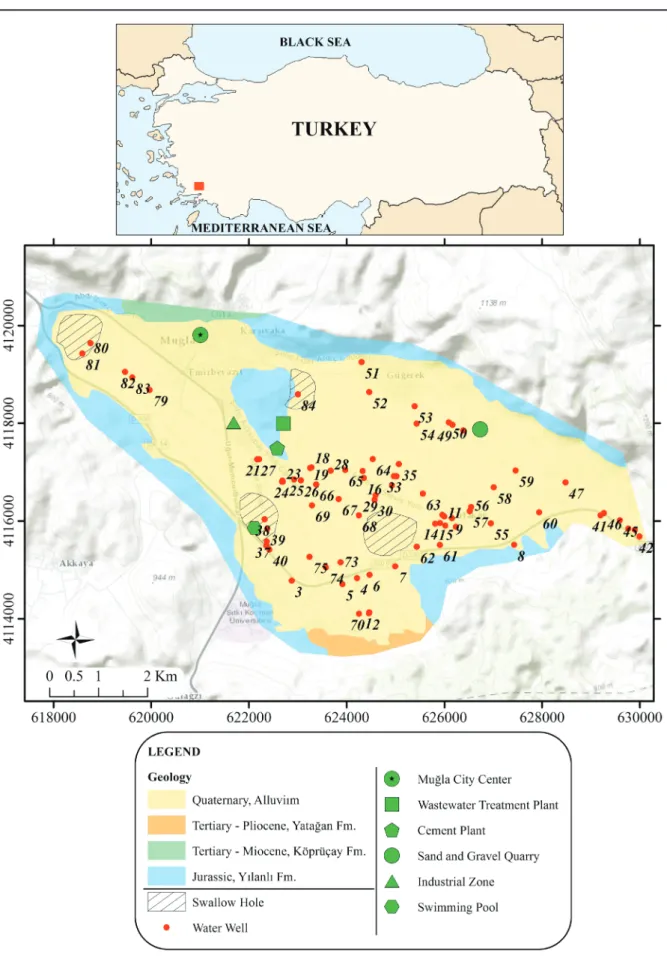
Karabağlar Plate (polje), which is selected as the study area, is located in Muğla province (Turkey) (Figure 1). The study area is about 40 km2 and the altitude ranges from 606 to 717 meters except for the surrounding hills. Karabağlar Plate is an active settlement area located in the center of Menteşe district of Muğla province. Typical Mediterranean climate prevails in the region, with hot and dry summers and warm and abundant rains in the winters, with an average annual rainfall of 1185 mm which is above the Turkish average. These rains cause floods and material damage every year in the spring season. In addition to being one of the most important tourism centers of Turkey, Muğla also contributes very much to the regional economy through its wide agricultural land. The dense population and intensive agricultural activities in the
study area cause the underground waters to be used extensively in the direction of irrigation and domestic purposes and cause undesirable pollution to be found in the groundwater. For this reason, the importance of determining and regularly monitoring the metal content of the groundwater in the region is increasing. Because these elements accumulate intensively in the plants that grow on agricultural land, which is irrigated with heavy metals contaminated waters. An example is the arsenic pollution that occurs in rice fields in Bangladesh (Alam et al., 2003, Polizzotto et al., 2013). This accumulation in the plants poses a danger to all living beings consuming these plants (Kafadar and Saygıdeğer , 2010). Determination of the amount of metal in the region was carried out by Yıldıztekin and Tuna (2011). This study was conducted seasonally at 20 wells in February-November 2006 and it was researched whether these wells were suitable for irrigation purposes. Yıldıztekin and Tuna (2011) have shown that the wells investigated do not pose a risk for irrigation, but the importance of long run monitoring including the other wells, has been emphasized.
The studied wells which are water samples taken from are shallow and the depths vary between 8-20 meters. The geology of the study area is given in figure 1 and all wells sampled are within the Quaternary alluvium unit. The thickness of this unit varies between 80 and 100 m (Atalay, 1980). Alluvial deposits cover the Jurassic Yılanlı Formation (Jkmu) in much of the land. Kurttaş (1997) stated that this formation consists of dolomite-dolomitic limestone and limestone. It is estimated that the Yılanlı Formation is the most important karstic unit in the region and that the most important karstic structures in the region have developed in this unit (Ekmekçi et al., 2012; Açıkel, 2003). As a result of the field studies, water sinks were determined and it was also determined that these structures drained the flood waters accumulated in the field during the high flow period in the spring to the karst system (Figure 1). Ekmekçi et al. (2012) and Açıkel (2003) have formed a detailed hydrogeological conceptual model of the region and the broader region with the studies they have conducted and have shown that the studied area is in the drainage basin of Gökova sources.
Tertiary-Miocene Köprüçay formation (Tk) is found in the south of the study area. Ekmekçi et al. (2012) stated that this formation consists of
conglomerate and limestone formed by very large limestone pebbles bonding with a carbonate cement. Tertiary-Pliocene Yatağan formation (Tya) is found in the northwest of the study area. This unit consists of sandstone, conglomerate, siltstone, marl, claystone, limestone and coal deposits (Ekmekçi et al., 2012).
Examination of metal content of groundwater, investigation of the interaction between the metals by different statistical methods, determination whether the current situation poses a risk in terms of ecosystem and public health and determination of possible sources of pollution were aimed in the present study carried out in Karabağlar Polje, Muğla.
2. Method
Within the scope of the field study conducted in April 2013, water samples were taken from 84 different wells to perform chemical analyzes. In addition, the specific electrical conductance (SPC), total dissolved solid (TDS), salinity, pH and ammonium (NH4-N) values of the samples were determined.
2.1. Chemical Analyzes
Elemental analyzes were performed for 47Ti, 52Cr, 55Mn, 56Fe, 59Co, 60Ni, 65Cu, 66Zn, 75As, 95Mo, 111Cd, 137Ba and 208Pb by using ICP-MS (Inductively Coupled Plasma – Mass Spectrometer). The values of 47Ti, 55Mn, 56Fe, 66Zn, 95Mo and 208Pb were not included in the results because they were below the detection limits in most of the analyzes performed. The detection limits for the elements are 0.1, 0.5, 0.06, 0.9, 0.1, 0.1, 0.01, 1.4, 1.2, 0.04, 0.04, 3 and 0.04 ppb, respectively. ICP-MS measurements were performed at Bilkent UNAM Laboratories with the devices; Thermo Scientific X-Series II and Cetac Asx-260 Autosampler. Water samples were first filtered (pore size 0.22 µm) and then acid treated (%65 HNO3) to both increase mobility and solubility of elemental ions and equate acidity of the samples to the medium of the instrument (which is about 2% HNO3). Ultra-pure distilled water was used. High Purity Standards branded QCS-27 series standard reference material with 27 elements was used in order to preparing of calibration curves. Calibration curves for all elements were determined as the correlation coefficient is higher than 0.99 by taking account of the element concentrations of samples and keeping the searching
metal concentration on the calibration curve. 10 ppb 209Bi was used as internal standard. Number of main run was assigned 3 as the analyses parameters. Sample drawing and washing periods were decided as 60 seconds by the consideration of tubing length.
2.2. Statistical Analyzes
All the statistical analyses were carried out by SPSS 19.0 (IBM, USA).
2.2.1. Comparison of Quantity Difference Between Metals (Mann-Whitney U)
This test was used to determine which of the studied metals in the region had accumulated more. Shapiro Wilk test was used to determine whether the data normally distributed or not. No data appeared to be normally distributed. On this, nonparametric Kruskal Wallis and Mann-Whitney U tests were preferred in the comparison of the averages (Tunca et al., 2013a).
2.2.2. Correlation Analysis
Correlation Analysis was used to determine whether there were correlations between amounts of metal quantity change in all samples collected during the study. Spearman’s Correlation Analysis was chosen as the correlation analysis to be applied, because it was determined that the data were not normally distributed with the Shapiro Wilk Test (Tunca et al., 2013b).
2.2.3. Principal Component Analysis (PCA)
PCA, one of the most frequently used factor analyzes, is used to collect data in common components, depending on the relationships of the data with each other. For his study, this means collecting elements whose variabilities are statistically similar to each other in a common component. The PCA applied within the scope of this study was performed according to Varmuza and Filzmoser (2009) method.
2.2.4. Cluster Analysis (CA)
CA is an analysis that classifies similar features in dense data by proximity matrix. Moreover, the created dendrogram makes it easier to understand the relations visually. From here, it was desired to cluster samples according to the variations of elements quantities. In the proximity matrix, the shorter the distance
between the elements, it means that the variations in the amounts of those elements are so similar. The analysis was carried out with the “Z-score” correction in the Euclidean distance according to Ward’s method (Lopez et al., 2004).
3. Results and Discussion
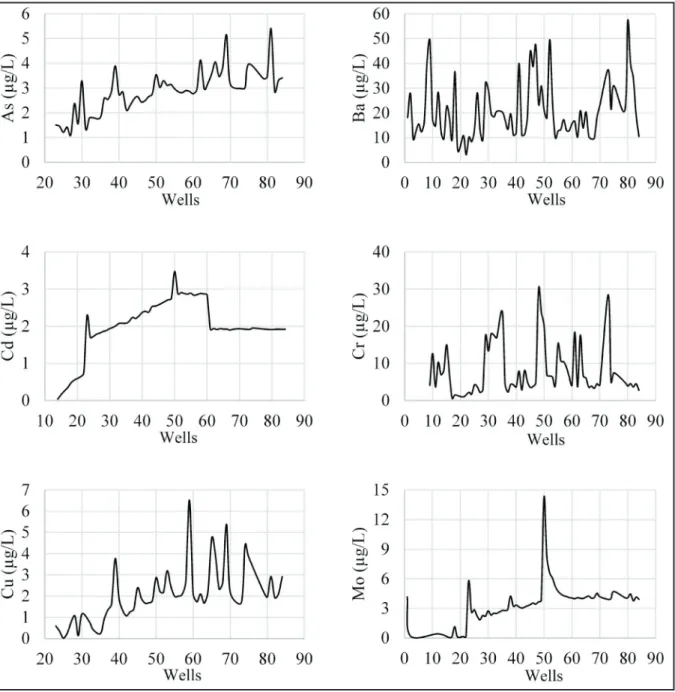
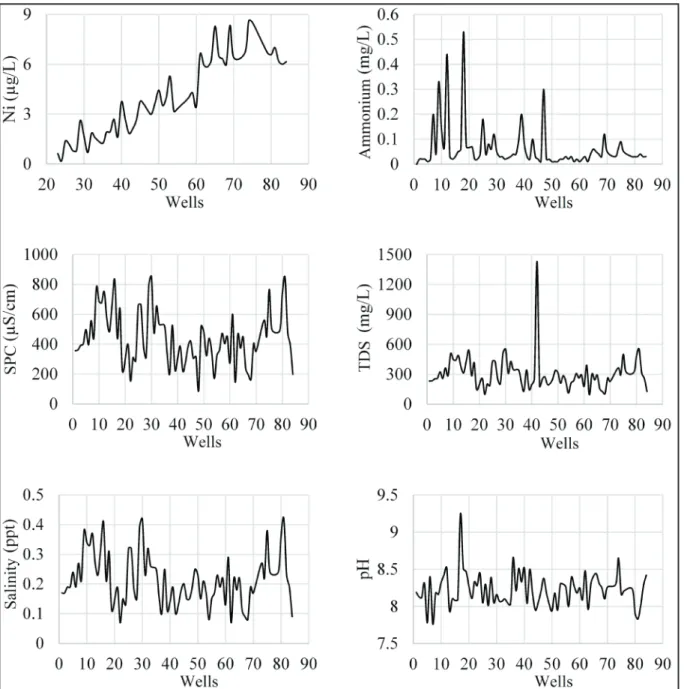
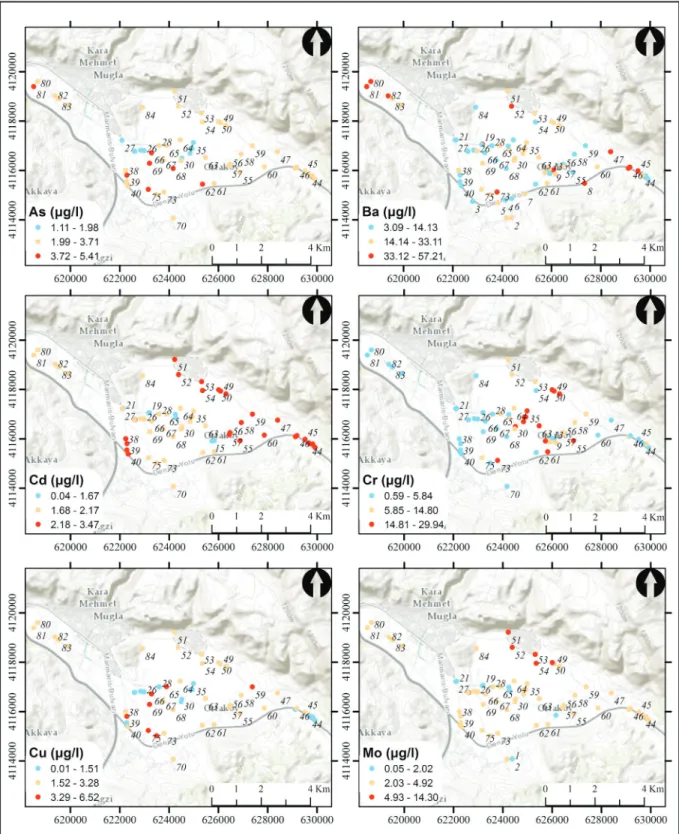
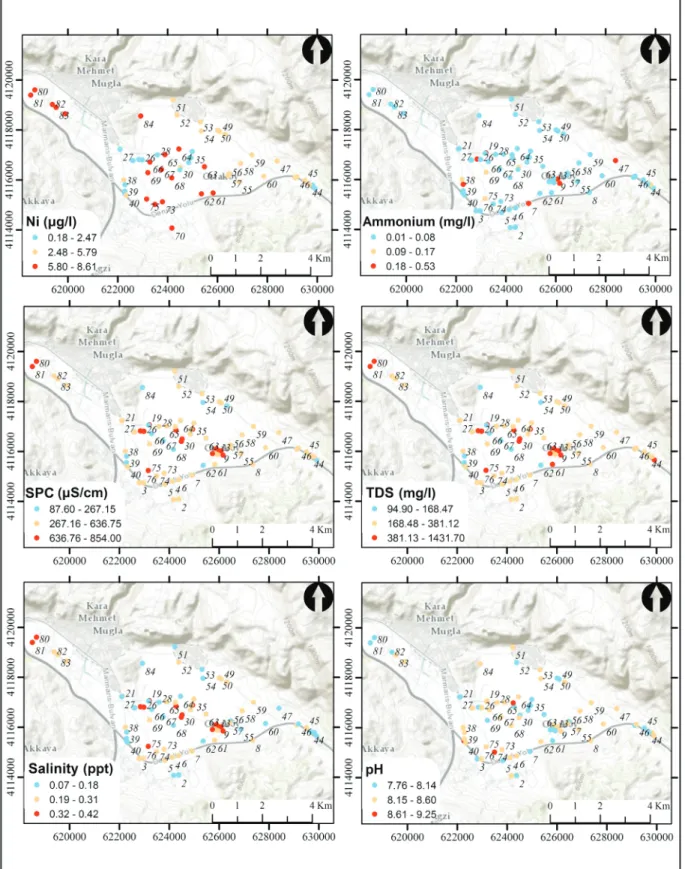
In this study carried out at the Karabağlar Polje in Muğla province, water samples from a total of 84 wells were taken for metal-metalloid analysis and some principal parameters (SPC, TDS, salinity, pH and ammonium) of these wells were determined (Figure 2). The metal-metalloid values of 23 from these wells were below the measurement detection limits and were therefore excluded from the study. In this study; 47Ti, 52Cr, 55Mn, 56Fe, 59Co, 60Ni, 65Cu, 66Zn, 75As, 95Mo, 111Cd, 137Ba and 208Pb parameters were determined. 47Ti, 55Mn, 56Fe, 66Zn, 95Mo and 208Pb were not included because their values were below the detection limits for the majority of the wells investigated. The spatial distributions of the assessed elements and the water quality parameters are given in figure 3.
Statistical relationships of elements with each other were investigated by Correlation Analysis, CA and PCA. These are generally very reliable methods which are frequently used in studies related to both the environment and the earth sciences, to clarify the relationships between variables (metal-metalloid in this case). Therefore, they are frequently preferred in many studies (Tsai et al., 2003; Gergen and Harmanescu, 2012; Pandey et al., 2014).
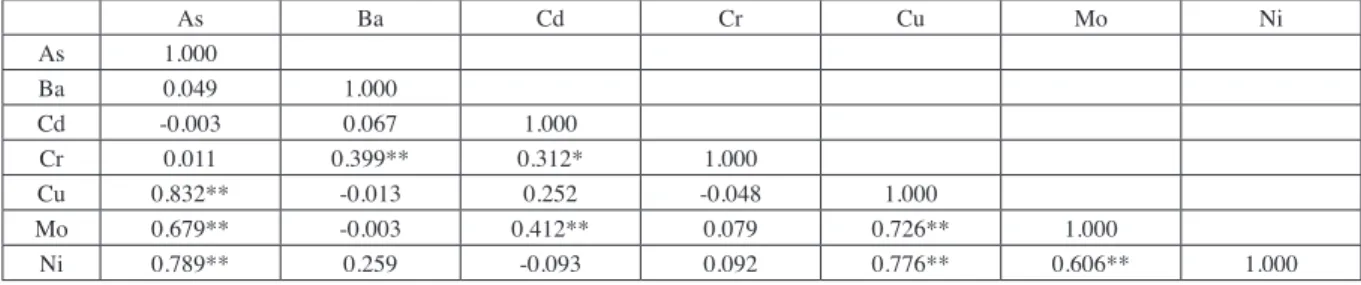
According to Correlation Analysis, the strongest correlation is between As and Cu (R=0.832) (Table 1). From these elements, arsenic can be mixed with groundwater by natural processes, pesticides, industrial activities and industrial wastes. As is carcinogenic to humans as well as can lead to chronic-acute diseases, kidney and liver disorders and anemia (Fatrorini et al., 2006; Thorsen et al., 2009; Rodriguez-Sosa et al., 2013). Copper found in groundwater can be originated from metal coatings, industrial & domestic waste and mining. Cu is essential for all known organisms and serves as the cofactor for many different enzymes (Franco et al., 2009). It even enters the structure of the hemocyanin, the oxygen carrier protein, in the crustaceans (Tunca et al., 2013a, b). Cu can cause stomach, intestinal, liver, kidney and anemia diseases. Although copper is an extremely vital element, there
are many studies showing toxic effects in different organisms; in mice (Wang et al., 2014), in fungus (Klimek and Niklinska, 2007), in bacteria (Wang et al., 2009), in aquatic floating plants (Üçüncü et al., 2013), in rooted plants (Wodala et al., 2012), in crustaceans (Luis Gama-Flores et al., 2009), in mollusks (Ramakritinan et al., 2012) and in mammals (Matos et al., 2010).
Correlation of As-Ni is also very strong (R=0.789). Ni is one of the vital elements like Cu (Serafim et al., 2012). Nickel can be found naturally in soil, groundwater and surface water, and is used in the coating of stainless steel and alloy products. Nickel
can be toxic to mammals and can lead to heart and liver disorders (Gathwan et al., 2013).
Other strong correlations were found between Cu-Ni (R = 0.776) and Mo-Cu (R = 0.726). Besides these, moderate correlations were observed between Mo-As and Mo-Ni. Molybdenum is not only naturally found in low concentrations in groundwater, but it can also cause acute diseases in humans, although it is one of the vital elements that can be sourced from long-term domestic waste storage areas, mine tailings and sewerage (Alonso et al., 2004). But its role in metabolism and the interaction with other elements are not yet fully understood.
Figure 2 b- Analysis and in-situ measurement results; The amount of 60Ni and the values of water quality parameters; ammonium, SPC, TDS,
Figure 3 b- Spatial display of analysis and in-situ measurement results; The values of 60Ni and water quality parameters; ammonium, SPC,
These strong correlations between Cu, Ni and As observed in Correlation Analysis are also noted in other methods in which relations between elements are investigated. The Euclidean distance between these 3 elements is closest to each other in the proximity matrix in CA (Table 2). However, unlike the Correlation Analysis, the nearest in the matrix, that is, the strongest relationship, appears between As and Ni (As-Ni=5.154 Euclidean distance). Then Cu-As (5.357 Euclidean distance) and Ni-Cu (5.762 Euclidean distance) stand out.
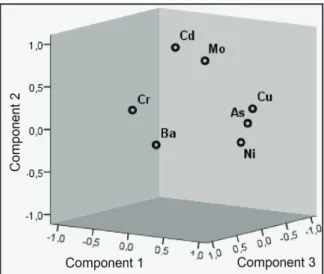
PCA findings also support Correlation Analysis and CA outcomes (Figure 4 and Table 3). The elements assessed in this study were collected in 3 different groups according to PCA results. These 3 components cover 77.89% of all data. The first component contains Cu, Ni and As, while the second component contains Mo and Cd. Cadmium dissolves in rocks with acidic water and can mix with groundwater at low concentrations. Other sources are industrial-mining waste, metal waste, water pipes, batteries and paints. Cd is one of the elements that are not essential for living things, which can cause liver, kidney, anemia and hypertension diseases in humans (Gallego et al., 2012). In addition, EPA has incorporated the Cd into the B1 class, which includes possible carcinogens for humans. The third component consists of Cr and Ba. The source of chromium content in groundwater can be represented by old mining operations, fossil fuel
consumption and cement plant waste. Cr is an element which can be found in different valences from -2 to +6 but trivalent and hexavalent valences are more common (Ergül-Ülger et al., 2014). Especially, hexavalent form is extremely important. Hexavalent Cr is not vital for the living creatures and has a high toxic effect (Bankar et al., 2009). Chromium is mutagenic and carcinogenic to humans and can lead to liver, kidney, internal bleeding, respiratory, skin inflammation and ulcer disorders (Mishra and Doble, 2008). Barium is an element that can be found naturally in some limestones, sandstones and soils, and whose concentration in the soil can be relatively higher than other metals (Suwa et al., 2008). It does not have a known biological function, but certain forms may cause heart, digestive and hypertension disorders, while showing a highly toxic effect (Llugany et al., 2000).
Table 3- PCA rotated component matrix. Components 1 2 3 As 0.911 Cu 0.847 Ni 0.920 Cd 0.916 Mo 0.803 Ba 0.822 Cr 0.674
Table 1- Correlations of elements.
As Ba Cd Cr Cu Mo Ni As 1.000 Ba 0.049 1.000 Cd -0.003 0.067 1.000 Cr 0.011 0.399** 0.312* 1.000 Cu 0.832** -0.013 0.252 -0.048 1.000 Mo 0.679** -0.003 0.412** 0.079 0.726** 1.000 Ni 0.789** 0.259 -0.093 0.092 0.776** 0.606** 1.000
* Correlation is significant at 0.05 (2-tailed). ** Correlation is significant at 0.01 (2-tailed). Table 2- CA proximity matrix.
As Ba Cd Cr Cu Mo Ni As 0.000 Ba 9.827 0.000 Cd 10.284 10.167 0.000 Cr 11.280 9.656 9.552 0.000 Cu 5.357 10.628 9.328 11.526 0.000 Mo 8.238 10.257 6.877 9.967 8.405 0.000 Ni 5.154 9.375 11.338 10.836 5.762 8.841 0.000
The PCA results also coincide with the CA results. In the dendrogram formed by CA matrix, it is seen that the elements constitute 3 main clusters (Figure 5). The element distributions of these clusters are similar to those of PCA.
The accumulation of the elements has also been revealed (Figure 6). Nonparametric Kruskal Wallis and Mann-Whitney U tests were used to compare the amount of the elements, since the data was not normally distributed. This test combination is one of the most frequently used non-parametric comparison tests (Blazewicz et al., 2013; Farmaki et al., 2014). According to the results, Cu is the least common element and Ba is the most common element in the study area (p <0.05). The amounts of all the elements except Ni and Mo are statistically significant. There is no statistically significant difference only between the amounts of Ni and Mo (p> 0.005).
When the relations of the elements studied in this paper are evaluated as holistic, the highest statistical relationship was found between As and Cu, followed by As-Ni, Ni-Cu, Cd-Mo, Cu-Mo, As-Mo, Mo-Ni and Cr-Ba. When the statistical relationships and the spatial distributions shown in figure 3 are evaluated together in order to determine the common sources of the elements studied, the main sources of the elements in the region are the mine and the industrial activities. In addition, household waste, agricultural activities and rock dissolution can be considered as potential sources.
The values of all metal and metalloids studied do not exceed EPA’s limits for drinking water (EPA, 2012). The total dissolved matter (TDS), one of the water quality parameters, is compared by considering EPA and Turkish inland water quality classifications. The upper limit determined by EPA as 500 mg/l corresponds to the 2nd class water quality group from 4 different level found in the Turkish inland water quality classification. (ÇOB, 2004). The TDS values of the water in the examined wells were generally less than 500 mg/l and were included in the 1st and 2nd grade Turkish quality groups. A few values above 500 mg/l are point-based and do not represent a specific area. The TDS measurements determined above this value are in 3rd grade group according to the Turkish inland water quality classifications. Again according to this classification, no wells in 4th grade class were found in the study area. The range determined by EPA for pH is 6.5-8.5. This range corresponds to the 1st and 2nd degree quality groups according to the Turkish inland water quality classifications. Only 3 of the wells Figure 5- The dendrogram formed by CA matrix.
Figure 6- Box plots of studied elements. Figure 4- Components of PCA.
examined in the study are not within this range. In terms of ammonium, most of the water samples are in the 1st degree class according to Turkish classification. Only a few of them are at the limits of the 2nd degree class. No water samples in 3rd or 4th degree classes were found. None of the parameters examined constitute health risk by the standards of the United States and Turkey and no pollution could be mentioned for the groundwater in the region. In addition, the quantities of the parameters studied do not exceed the natural limits for the water (Hem, 1985).
Yıldıztekin and Tuna (2011) obtained similar findings in the same study area. However, due to the fact that Yıldıztekin and Tuna (2011) did not specify the locations of the sampling wells in the study they performed, time-based and well-based comparisons could not be done, only general comparisons were performed.
Sampling and in situ measurements made in April, the rainy season for the region, are more likely to result in rare values due to the high water content from the rainfall. For this reason, it is recommended that the same field studies be carried out again in August, which is an arid period for the region, in order to be able to monitor and evaluate each parameter more accurate.
If the values of the elements and the other parameters examined in the study increase to the level that can be considered as “pollution”, the source or sources of this pollution should be determined urgently and necessary precautions should be taken. In this context, actively operated waste water treatment plant, cement plant, sand and gravel quarry, industrial site, swimming pool and agricultural activities can be predicted as potential sources of pollution. Furthermore, it is important that the region be monitored in a stable manner, as the probability of a certain and continuous source of pollutants will increase pollution over time.
4. Conclusion
Within the scope of the study, heavy metal and metalloid analyzes of 84 water wells used for drinking and irrigation in Karabağlar Polje (Muğla, Turkey) were made and water quality parameters were measured. No evidence has been identified to threaten human health and ecosystem in terms of metals
and metalloids studied. Water quality parameters measured in place do not indicate the presence of any pollution in the area. However, the high interaction and correlations found in the context of statistical evaluation of the relationship between metal and metalloids have shown that some elements may have common sources.
Acknowledgement
This study was funded by Muğla Sıtkı Koçman University Scientific Research Project Office (12/124) and TÜBİTAK and ERANETMED (GRECPIMA and Project No: 115Y843). The authors offer their gratitude to Assoc. Dr. Evren Tunca and Dr. Esra Üçüncü Tunca who do not spare any kind of support. The authors also thank Res. Asst. Göksu Uslular for his contributions to field works.
References
Açıkel, Ş. 2012. Gökova-Azmak (Muğla) karst kaynaklarının akım ve tuzlu su karışımı dinamiğinin kavramsal modellenmesi. Doktora Tezi, Hacettepe Üniversitesi, 140p. Ankara (unpublished).
Alam, M. G. M., Snow, E. T., Tanaka, A. 2003. Arsenic and heavy metal contamination of rice, pulses and vegetables grown in Samta village, Bangladesh. Arsenic Exposure and Health Effects V 5, 103. Alonso, M.L., Montana, F.P., Miranda, M., Castillo, C.,
Hernandez, J., Benedito, J.L. 2004. Interactions between toxic (As, Cd, Hg and Pb) and nutritional essential (Ca, Co, Cr, Cu, Fe, Mn, Mo, Ni, Se, Zn) elements in the tissues of cattle from NW Spain. Biometals 17, 389-397.
Atalay, Z. 1980. Muğla – Yatağan ve yakın dolayı karasal Neojen’inin stratigrafi araştırması. Türkiye Jeoloji Kurumu Bülteni 23, 93-99.
Bankar, A.V., Kumar, A.R., Zinjarde, S.S. 2009. Removal of chromium (VI) ions from aqueous solution by adsorption onto two marine isolates of Yarrowia lipolytica. Journal of Hazardous Materials 170, 487-494.
Blazewicz, A., Klatka, M., Astel, A., Partyka, M., Kocjan, R. 2013. Differences in trace metal concentrations (Co, Cu, Fe, Mn, Zn, Cd, and Ni) in whole blood, plasma, and urine of obese and nonobese children. Biological Trace Element Research 155(2), 190-200.
ÇOB. 2004. Su Kirliliği Kontrolü Yönetmeliği. Çevre ve Orman Bakanlığı, Ankara.
Ekmekçi, M. Tezcan, L., Kurttaş, T. 2012. Gökova-Azmak (Muğla) Karst kaynaklarında tuzlu su karışımının oluşum ve dinamiğinin duraylı izotop ve karışım hücreleri modeleme teknikleriyle belirlenmesi. TÜBİTAK, ÇAYDAG Project No: 109Y302, 158p. Ankara (unpublished).
EPA. 2012. Edition of the Drinking Water Standards and Health Advisories. U.S. Environmental Protection Agency, Washington DC.
Ergül-Ülger, Z., Özkan, A.D., Tunca, E., Atasagun, S., Tekinay, T. 2014. Chromium(VI) biosorption and bioaccumulation by live and acid-modified biomass of a novel morganella morganii isolate. Separation Science and Technology 49, 907-914.
Farmaki, E.G., Thomaidis, N.S., Pasias, I.N., Baulard, C., Papaharisis, L., Efstathiou, C.E. 2014. Environmental impact of intensive aquaculture: Investigation on the accumulation of metals and nutrients in marine sediments of Greece. Science of the Total Environment 485, 554-562.
Fatrorini, D., Notti, A., Regoli, F. 2006. Characterization of arsenic content in marine organisms from temperate, tropical, and polar environments. Chemistry and Ecology 22, 405-414.
Franco, R., Sanchez-Olea, R., Reyes-Reyes, E.M., Panayiotidis, M.I. 2009. Environmental toxicity, oxidative stress and apoptosis: Menage a Trois. Mutation Research-Genetic Toxicology and Environmental Mutagenesis 674, 3-22.
Gallego, S.M., Pena, L.B., Barcia, R.A., Azpilicueta, C.E., Lannone, M.F., Rosales, E.P., Zawoznik, M.S., Groppa, M.D., Benavides, M.P. 2012. Unravelling cadmium toxicity and tolerance in plants: Insight into regulatory mechanisms. Environmental and Experimental Botany 83, 33-46.
Gathwan, K.H., Al-Karkhi, I.H.T., Al-Mulla, E.A.J. 2013. Hepatic toxicity of nickel chloride in mice. Research on Chemical Intermediates 39, 2537-2542.
Gergen, I., Harmanescu, M. 2012. Application of principal component analysis in the pollution assessment with heavy metals of vegetable food chain in the old mining areas. Chemistry Central Journal 6-156. Girish, G., Resmi, T.R., Seralathan, P. 2013. Assessment
of groundwater quality in Kavaratti Island in the Lakshadweep Archipelagos. Chemistry and Ecology 29, 309-319.
Hem, J.D. 1985. Study and interpretation of the chemical characteristics of natural water. U.S. Geological Survey Water-Supply Paper 2254. Washington (unpublished).
Huang, G.X., Chen, Z.Y., Sun, J.C. 2014. Water quality assessment and hydrochemical characteristics of groundwater on the aspect of metals in an old town, Foshan, south China. Journal of Earth System Science 123, 91-100.
Kafadar, F.N., Saygıdeğer, S. 2010. Gaziantep İlinde Organize Sanayi Bölgesi Atık Suları ile Sulanan Bazı Tarım Bitkilerinde Kurşun (Pb) Miktarlarının Belirlenmesi. Ekoloji 19, 41-48.
Klimek, B., Niklinska, M. 2007. Zinc and copper toxicity to soil bacteria and fungi from zinc polluted and unpolluted soils: A comparative study with different types of biolog plates. Bulletin of Environmental Contamination and Toxicology 78, 102-107. Kurttaş, T. 1997. Gökova (Muğla) karst kaynaklarının
çevresel izotop incelemesi. Doktora Tezi, Hacettepe Üniversitesi, 220p. Ankara (unpublished).
Llugany, M., Poschenrieder, C., Barcelo, J. 2000. Assessment of barium toxicity in bush beans. Archives of Environmental Contamination and Toxicology 39, 440-444.
Lopez, F.J.S., Garcia, M.D.G., Vidal, J.L.M., Aguilera, P.A., Frenich, A.G. 2004. Assessment of metal contamination in Donana National Park (Spain) using crayfish (Procamburus clarkii). Environmental Monitoring and Assessment 93, 17-29.
Luis Gama-Flores, J., Sarma, S.S.S., Nandini, S. 2009. Combined effects of exposure time and copper toxicity on the demography of Moina macrocopa (Crustacea: Cladocera). Journal of Environmental Science and Health Part B 44, 86-93.
Matos, R.C., Vieira, C., Morais, S., Pereira, M.L., Pedrosa, J. 2010. Toxicity of chromated copper arsenate: A study in mice. Environmental Research 110, 424-427.
Mishra, S., Doble, M. 2008. Novel chromium tolerant microorganisms: Isolation, characterization and their biosorption capacity. Ecotoxicology and Environmental Safety 71, 874-879.
MTA, 2002. 1/500.000 scale Turkey Geological Maps (Denizli Section), Editor, Konak, N., Şenel, M., MTA Publisher, Ankara
Okbah, M.A., Nasr, S.M., Soliman, N.F., Khairy, M.A. 2014. Distribution and Contamination Status of Trace Metals in the Mediterranean Coastal Sediments, Egypt. Soil and Sediment Contamination 23, 656-676.
Pandey, B., Agrawal, M., Singh, S. 2014. Assessment of air pollution around coal mining area: Emphasizing on spatial distributions, seasonal variations and heavy metals, using cluster and principal component analysis. Atmospheric Pollution Research 5, 79-86. Pavlovic, A.N., Laketic, T.J., Mitic, S.S., Savic, M.J.,
Tosic, S.B., Dordevic, M.S. 2014. Multielement determination using inductively coupled plasma optical emission spectrometry for metal characterization of water from artesian wells in Semberija region: Multivariate analysis of data. Hemijska Industrija 68, 247-256.
Polizzotto, M. L., Lineberger, E. M., Matteson, A. R., Neumann, R. B., Badruzzaman, A. B. M., Ali, M. A. 2013. Arsenic transport in irrigation water across rice-field soils in Bangladesh. Environmental Pollution 179, 210-217.
Ramakritinan, C.M., Chandurvelan, R., Kumaraguru, A.K. 2012. Acute Toxicity of Metals: Cu, Pb, Cd, Hg and Zn on Marine Molluscs, Cerithedia cingulata G., and Modiolus philippinarum H. International Journal of Mathematics and Statistics 41, 141-145. Rodriguez-Sosa, M., Garcia-Montalvo, E.A., Maria Del
Razo, L., Vega, L. 2013. Effect of Selenomethionine Supplementation in Food on the Excretion and Toxicity of Arsenic Exposure in Female Mice. Biological Trace Element Research 156, 279-287.
Serafim, A., Company, R., Lopes, B., Rosa, J., Cavaco, A., Castela, G., Castela, E., Olea, N., Bebianno, M.J. 2012. Assessment of essential and nonessential metals and different metal exposure biomarkers in the human placenta in a population from the south of portugal. Journal of Toxicology and Environmental Health Part A 75, 867-877.
Suwa, R., Jayachandran, K., Nguyen, N.T., Boulenouar, A., Fujita, K., Saneoka, H. 2008. Barium toxicity effects in soybean plants. Archives of Environmental Contamination and Toxicology 55, 397-403. Thorsen, M., Perrone, G.G., Kristiansson, E., Traini, M., Ye,
T., Dawes, I.W., Nerman, O., Tamás, M.J. 2009. Genetic basis of arsenite and cadmium tolerance in Saccharomyces cerevisiae. BMC Genomics 10-105.
Tsai, L.J., Ho, S.T., Yu, K.C. 2003. Correlations of extractable heavy metals with organic matters in contaminated river sediments. Water Science and Technology 47, 101-107.
Tunca, E., Üçüncü, E., Kurtuluş, B., Özkan, A.D., Atasagun, S. 2013a. Accumulation trends of metals and a metalloid in the freshwater crayfish Astacus leptodactylus from Lake Yeniçağa (Turkey). Chemistry and Ecology 29, 754-769.
Tunca, E., Üçüncü, E., Özkan, A.D., Ulger, Z.E., Tekinay, T. 2013b. Tissue Distribution and Correlation Profiles of Heavy-Metal Accumulation in the Freshwater Crayfish Astacus leptodactylus. Archives of Environmental Contamination and Toxicology 64, 676-691.
Üçüncü, E., Tunca, E., Fikirdesici, S., Özkan, A.D., Altindag, A. 2013. Phytoremediation of Cu, Cr and Pb Mixtures by Lemna minor. Bulletin of Environmental Contamination and Toxicology 91, 600-604.
Varmuza, K., Filzmoser, P. 2009. Introduction to Multivariate Statistical Analysis in Chemometrics. CRC Press, 336p.
Wang, W., Lampi, M.A., Huang, X.D., Gerhardt, K., Dixon, D.G., Greenberg, B.M. 2009. Assessment of Mixture Toxicity of Copper, Cadmium, and Phenanthrenequinone to the Marine Bacterium Vibrio fischeri. Environmental Toxicology 24, 166-177.
Wang, X., Wang, H., Li, J., Yang, Z., Zhang, J., Qin, Z., Wang, L., Kong, X. 2014. Evaluation of Bioaccumulation and Toxic Effects of Copper on Hepatocellular Structure in Mice. Biological Trace Element Research 159, 312-319.
Wodala, B., Eitel, G., Gyula, T.N., Oerdoeg, A., Horvath, F. 2012. Monitoring moderate Cu and Cd toxicity by chlorophyll fluorescence and P-700 absorbance in pea leaves. Photosynthetica 50, 380-386.
Yıldıztekin, M., Tuna, A.L. 2011. Muğla karabağlar yöresi kuyu sularının sulama suyu kalitesi yönünden araştırılması. Ege Üniversitesi Ziraat Fakültesi Dergisi 48, 1-10.