ISTANBUL BILGI UNIVERSITY INSTITUTE OF SOCIAL SCIENCES
INTERNATIONAL POLITICAL ECONOMY MASTER’S DEGREE PROGRAM
PUBLIC ACCEPTABILITY OF CARBON TAX
Fehime DİKMENER 111674005
Associate Prof. Ayşe UYDURANOĞLU
ISTANBUL 2020
iii
ACKNOWLEDGEMENTS
I would like to thank to my supervisor Associate Prof. Ayşe Uyduranoğlu for offering her support, assistance and encouragement. I express my sincere appreciation to my spouse Gökhan Dikmener for his great support and motivation.
iv TABLE OF CONTENTS ABBREVIATIONS ...vi LIST OF FIGURES ... ix LIST OF TABLES ... x ABSTRACT ... xi ÖZET ... xii INTRODUCTION ... 1 CHAPTER 1 ... 4
1.1 GLOBAL CLIMATE CHANGE ... 4
1.2 WHY DOES HUMAN-CLIMATE OCCUR? ... 5
1.3 GREENHOUSE GAS TREND ... 7
1.4 WHY THIS IS A PROBLEM? ... 8
1.5 INTERNATIONAL EFFORTS ... 10
Kyoto Protocol (1997) ... 12
Paris Agreement (2015) ... 14
CHAPTER 2 ... 17
2.1 CLIMATE CHANGE AS A MARKET FAILURE ... 17
2.2 CARBON PRICING ... 18
2.3 ENVIRONMENTAL TAXES ... 19
2.4 CARBON TAX ... 21
2.4.1 Carbon Tax Approach And Hypothesis ... 21
2.4.2 Carbon Tax Definition ... 25
2.5 EMISSION TRADING SYSTEM ... 30
2.5.1 Transferable Emission Certificates ... 31
2.5.2 Project Based Mechanisms ... 33
2.5.3 The European Union Emissions Trading System ... 37
CHAPTER 3 ... 41 3.1 IMPACT ON COMPETITIVENESS ... 41 3.2 DISTRIBUTIONAL CONCERN ... 43 3.3 PUBLIC DISTRUST ... 46 3.4 PERCEPTION ... 50 CHAPTER 4 ... 55 4.1 DENMARK ... 56
v 4.2 FINLAND ... 59 4.3 SWEDEN ... 62 4.4 NORWAY ... 64 4.5 NETHERLANDS ... 66 CONCLUSION ... 69 REFERENCES ... 74
vi
ABBREVIATIONS
ACX: Australian Climate Exchange
AMS: American Meteorological Association
BAAQMD: Bay Area Air Quality Management District BAU: Business as Usual
CCX: Chicago Climate Exchange CDM: Clean Development Mechanism
CEIT: Countries with Economies in Transition CER: Certified Emission Reduction
CFC: Chlorofluorocarbon CH4: Methane
CO₂: Carbon Dioxide COP: Conference of Parties
DEPA: Danish Environmental Protection Agency EEA: European Environment Agency
EPA: United States Environmental Protection Agency ERU: Earn Emission Reduction Units
vii ETS: Emission Trading System
EU ETS: The European Union Emissions Trading System EU: European Union
GDP: Gross Domestic Product GHG: Greenhouse Gas
IEA: International Energy Agency
INDC: Intended Nationally Determined Contributions IPCC: The Intergovernmental Panel on Climate Change ISO: The International Organization for Standardization JI: Joint Implementation
JISC: Joint Implementation Supervisory Committee NASA: National Aeronautics and Space Administration NGO: Non-Governmental Organisation
NLG: Netherlands Guilder
OECD: The Organisation for Economic Co-operation and Development R&D: Research and Development
REC: Renewable Energy Credits TRCS: Tradable Renewable Certificates UK: United Kingdom
viii UN: United Nations
UNDP: United Nations Development Program UNEP: United Nations Environment Program
UNFCC: United Nations Convention on Climate Change USA: United States of America
ix
LIST OF FIGURES
Figure 1: Total annual human induced greenhouse gas emissions between 1970
and 2010 ... 6
Figure 2: Carbon Tax Ratess r buyers a more grounded programs... 28
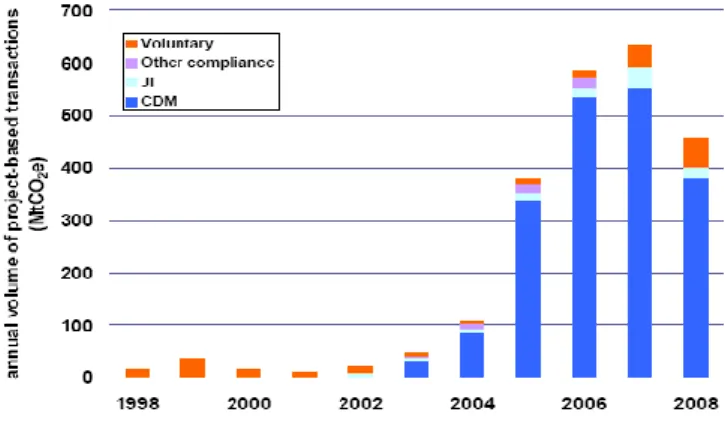
Figure 3: Project-Based Emission Reductions Transactions (Annual Volumes of MtCO₂e) ... 34
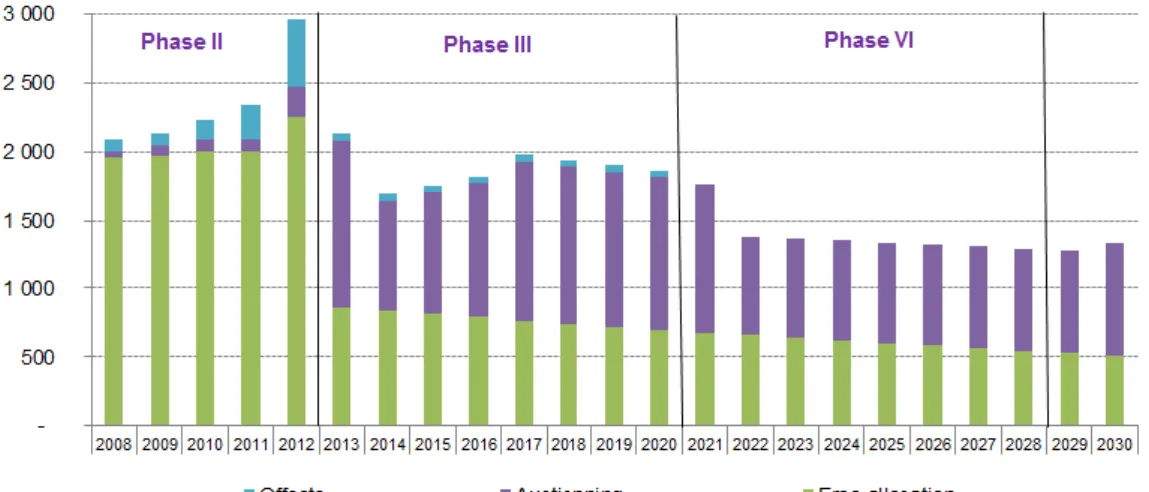
Figure 4: EU ETS emissions cap and allocation by 2030 ... 38
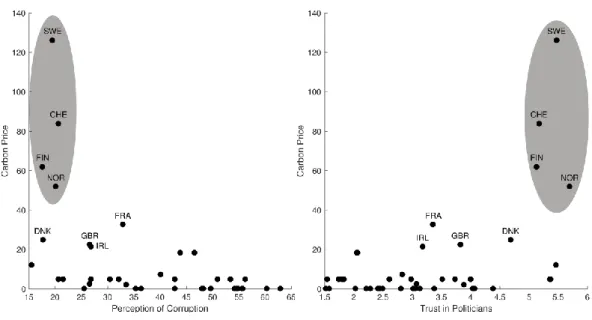
Figure 5: Carbon prices, corruption and trust(2012) ... 47
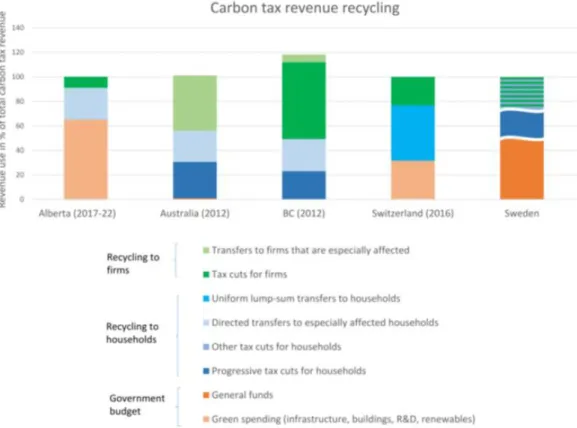
Figure 6: Real world revenue recycling ... 48
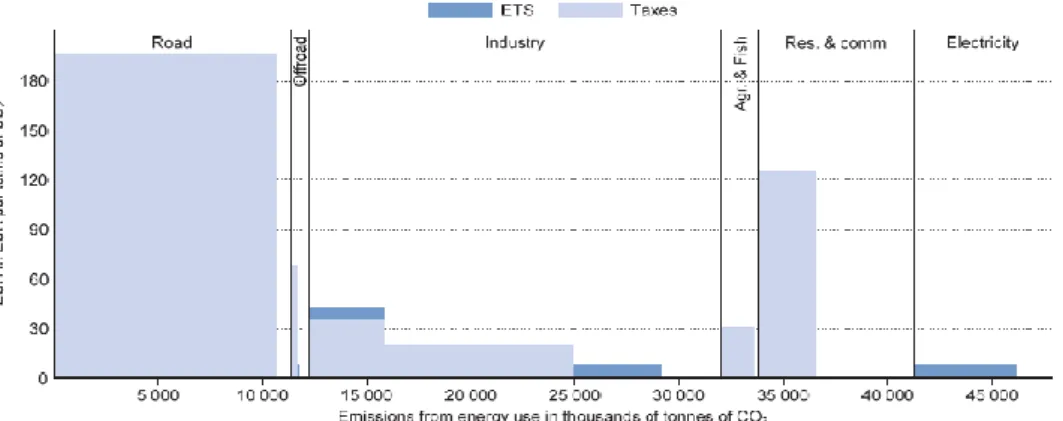
Figure 7: Denmark effective carbon rate averages by sector and component (2015) ... 58
x
LIST OF TABLES
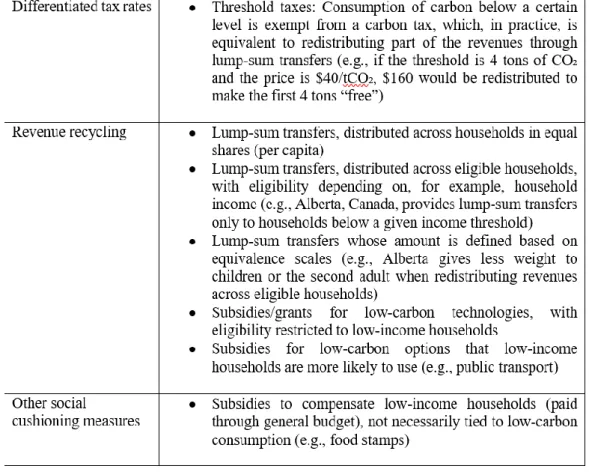
Table 1: Progressive Carbon Tax Design Modalities ... 50
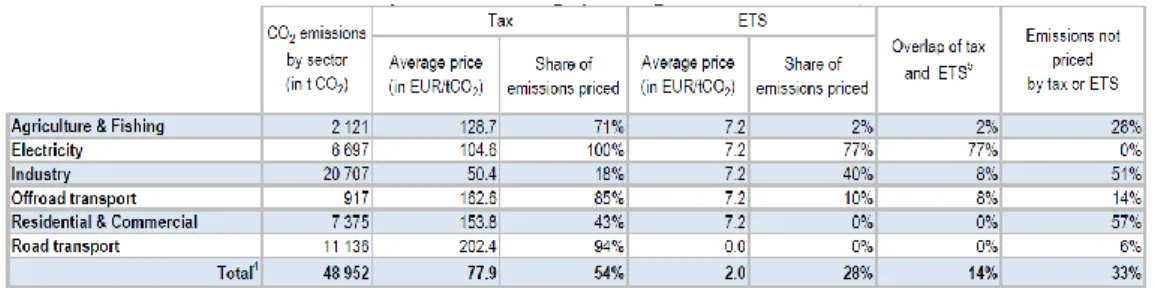
Table 2: CO2 Emission Tax & ETS, Denmark ... 59
Table 3: CO2 Emission Tax & ETS, Finland ... 61
Table 4: CO2 Emission Tax & ETS, Sweden ... 63
Table 5: CO₂ Tax Rates in Norway (in NOK, as of January 1999) ... 65
Table 6: CO2 Emission Tax & ETS, Norway ... 66
xi ABSTRACT
The main objective of this thesis is to identify factors affecting the public acceptability of carbon tax, which is one of the financial instruments used for emission reduction. In this study, the factors that cause climate change, international efforts, carbon pricing mechanisms and carbon tax best practices on country basis are discussed. The factors such as impact of carbon tax on competitiveness, distributional concerns, public distrust and perception of the carbon tax that negatively affect the acceptability of carbon tax by the public are examined. The effect of carbon tax on competition is insignificant because tax effect on final price is minor. Similarly, the impact of carbon tax on income distribution is found not influential on public acceptability since tax revenues can be used to reduce the rates of existing taxes and tax exemptions can be defined for low-income households. However, public distrust and tax perception are the more important determinants of public acceptability. Public skepticism on government intention, the perceived corruption and inefficiency leading to decrease in political legitimacy are main drivers for public distrust. Also, the perception of carbon tax is concluded to be ‘inefficient in terms of changing behavior’, ‘a type of penalty’, ‘a decrease in consumption and purchasing power’, ‘a restriction on the freedom of choice’. The conclusion section provides recommendations to increase public acceptability such as earmarking tax revenues, using revenues for limiting its negative impact on income distribution and applying tax at municipal level.
Key Words: Carbon Tax, Global Climate Change, Emission Trading System, Public Acceptability
xii ÖZET
Bu tez çalışmasının temel amacı; karbon salınımının azaltılmasında kullanılan mali araçlardan biri olan karbon vergisinin toplum tarafından kabul edilebilirliğini etkileyen etmenleri ortaya koymaktır. Bu çalışmada iklim değişikliğine neden olan etkenler, uluslararası girişimler, karbon fiyatlama mekanizmaları ve ülke bazında karbon vergisi uygulamalarının üzerinde durulmuş, karbon vergisinin toplum tarafından kabul edilebilirliğini olumsuz yönde etkileyen rekabet ve gelir dağılımı üzerindeki etkisi, kamuoyu güvensizliği ve vergi algısı gibi etmenler incelenmiştir. Tez çalışmasının sonucunda, karbon vergisinin rekabet üzerindeki etkisinin sınırlı olduğu görülmüş, bunun sebebi verginin nihai fiyat üzerindeki etkisinin düşük olması ile açıklanmıştır. Benzer şekilde, karbon vergisi geliri mevcut vergi oranlarını düşürmek için kullanılabileceğinden ve düşük gelirliler için karbon vergisi muafiyetleri tanımlanabileceğinden, karbon vergisinin gelir dağılımı üzerindeki etkisi toplumda kabul edilebilirliği açısından çok etkili olmadığı kanaatine varılmıştır. Ancak, kamu güvensizliği ve vergi algısı, verginin toplumda kabul edilebilirliği açısından daha önemli belirleyicilerdir. Toplumun devletin niyetine olan şüphesi, siyasi meşruiyetin azalmasına neden olan yolsuzluk ve verimsizlik algısı, toplum güvensizliğinin temel nedenleridir. Ayrıca, karbon vergisi algısının ‘davranış değişikliği açısından verimsiz', 'bir tür ceza', 'tüketim ve satın alma gücünde azalma', 'seçim özgürlüğünde kısıtlama' olduğu sonucuna varılmıştır. Sonuç bölümü, vergi gelirlerini tahsis etmek, verginin gelir dağılımı üzerindeki olumsuz etkisini sınırlamak için vergi gelirlerini kullanmak ve karbon vergisini belediye seviyesinde uygulamak gibi karbon vergisinin toplumda kabul edilebilirliğini artırmak için öneriler sunmaktadır.
Anahtar Kelimeler: Karbon Vergisi, Küresel İklim Değişikliği, Emisyon Ticaret Sistemi, Kabul Edilebilirlik
1
INTRODUCTION
The climate change is a global concern, affecting all and causes ecological, sociological and economic burden. Increasing use of hydrocarbons with the industrialization, the deforestation for agriculture, industry, housing needs, increasing population, industrialization, misimplementations in agriculture and waste management, and the destruction of areas such as lakes, streams and forests that absorb greenhouse gases, has increased the greenhouse gases in the atmosphere. Increasing greenhouse gas emissions due to human activities are the main causes of global climate change.
Greenhouse gas emissions can be evaluated within the scope of negative externalities and are the biggest market failures encountered on a global scale. Global warming is a concrete example of market failure. In this context, global cooperation is essential for the solution of the global climate change problem. Since the environment is a global public good, the solution of environmental problems requires global cooperation and joint action of all countries. It is inevitable that all countries in the world should take precautions together because without any cooperation the market cannot find a solution for the increasing global warming caused by greenhouse gas accumulation in the atmosphere starting with the industrial revolution.
In order to limit the cause and impacts of climate change within the free market system, the pricing of carbon and similar gases causing climate change is mandatory. In this context, economic units will have to review their carbon intensive production or consumption.
There are two important financial instruments for government intervention, the most effective ones are; carbon tax and emission trading systems. Carbon taxes are probably the simplest, most effective idea in which fossil fuels are taxed based on their carbon content. The emission trading system allows carbon emissions and
2
allow the price of the allowances to occur in free markets. Both systems ultimately apply a price on emissions and support emission reductions.
In terms of the public acceptability of both tools, it is seen that although carbon tax idea is older than emission trading system, the level of public acceptability of carbon tax is lower. This thesis will examine the reason for low public acceptability and the factors affecting acceptability will be discussed.
The thesis consists of four chapters with introduction and conclusion parts. The first chapter will initially give general explanatory information about the definition and the reasons of climate change, human factor in climate change and greenhouse gas trend. Furthermore, how this issue was evaluated in terms of United Nations Framework Convention on Climate Change (UNFCCC) and other international efforts focusing on Kyoto Protocol and Paris Agreement will be explained.
In the second chapter the carbon pricing mechanism and environmental taxes, the theory and approaches, the structure of carbon tax in terms of its subject, base, rate, income usage will be explained and the other market-based mechanism –Emission Trading System- will be examined.
The third chapter is the core part in which the main idea of this thesis is discussed. In this chapter, main factors affecting public acceptability of carbon tax will be examined. Implications of carbon tax on income distribution and competition will be discussed and the importance of perception of tax, and public distrust will be examined.
The last chapter will explain the general characteristics of the carbon taxes imposed by Denmark, Finland, Norway, the Netherlands and Sweden, which are the five countries that impose the carbon tax, and a review of the carbon taxes imposed by the five countries since the 1990s.
3
In the light of all the investigations and evaluations, the factors affecting the acceptability of carbon tax by the society will be discussed and conclusions and recommendations will be presented.
4 CHAPTER 1
1.1 GLOBAL CLIMATE CHANGE
The average state of all weather conditions experienced or observed in any given area over a given period of time defines the climate. The World Meteorological Organization has determined this period to be 30 years. The formation process of climate systems consists of the heating process with short wave radiation from the sun and the cooling process with long wave infrared radiation from space (IPCC Synthesis Report, 2015).
The use of fossil fuels, deforestation, and industrialization are human activities, which make greenhouse gas accumulation in the atmosphere resulting in greenhouse effect. Greenhouse affect acts like a shield all around the Earth and make Earth temperature increase. This rapid increase in average temperature results in change in climate globally.
The Intergovernmental Panel on Climate Change (IPCC) gives a broader framework on climate change. According to IPCC 2007, “Climate change in IPCC usage refers to a change in the state of the climate that can be identified (e.g. using statistical tests) by changes in the mean and/or the variability of its properties and that persists for an extended period, typically decades or longer. It refers to any change in climate over time, whether due to natural variability or as a result of human activity” (IPCC, 2007).
United Nations Convention on Climate Change (UNFCC) Article 1 defines climate change as the “…means a change of climate which is attributed directly or indirectly to human activity that alters the composition of the global atmosphere and which is in addition to natural climate variability observed over comparable time periods” (United Nations Framework Convention on Climate Change, 1992).
IPCC, a United Nations body, conducts the most detailed analyzes of climate change, including its socioeconomic and environmental impacts. The evaluation
5
reports produced by the IPCC are gathering the global studies on climate change. The relevant reports are therefore considered to be the most basic data source on climate change. IPCC published its final evaluation report in 2014. The 5th Assessment Report, published by the IPCC, explaining climate change and its impacts in the light of scientific data, includes data on climate change. According to this report: “The period from 1983 to 2012 was likely the warmest 30-year period of the last 1400 years in the Northern Hemisphere. The globally averaged combined land and ocean surface temperature data as calculated by a linear trend show a warming of 0.85 [0.65 to 1.06] °C over the period 1880 to 2012, when multiple independently produced datasets exist” (IPCC Synthesis Report, 2015).
1.2 WHY DOES HUMAN-CLIMATE OCCUR?
High levels of greenhouse gas emissions is a major cause of global climate change and can be mainly attributed to human activities. Human-induced activities are the main cause of climate change and anthropogenic greenhouse gas emissions cause an unnatural increase in greenhouse gas concentrations, particularly CO₂ and CH4. With the introduction of fossil fuels with the industrial revolution, the amount of greenhouse gases in the atmosphere begins to increase. This carbon, created by human activities, is called anthropogenic carbon. As Etheridge et al. have shown, CO₂ and CH4 emissions in the atmosphere have been steadily increasing since the Industrial Revolution (Etheridge et al., 1999).
The main cause of emissions to the atmosphere is the use of hydrocarbons. According to the 5th Assessment Report published by the IPCC, global greenhouse gas emissions increased by 2 percent in the 1970s, 1.4 percent in the 1980s, 0.6 percent in the 1990s, and 2.2 percent between 2000 and 2010 (IPCC Synthesis Report, 2015).
According to the IPCC data, the increase in the concentration of CO₂, methane, nitrous oxide and chlorofluorocarbon gases in the atmosphere is a consequence of the human impact, and this has been going on since 1750, with the main reason for
6
the increase in fossil fuel consumption. Human-induced greenhouse gas emissions predates the industrial revolution due to both the presence of economic factors and the increase in population rates.
These gases absorb radiation and disrupt the world's current energy circulation and affect the climate. The IPCC reports state that at the end of the 20th century there will be an increase in the temperature of the earth's surface by 0.6 degrees, and with this increase there will be some deterioration and changes in the climate elements. Various distortion to environment such as; average increase in the sea level 0.1-0.2 m, decrease in snow-covered areas, El Niño and La Niña climatic changes, increasing droughts in Asia and Africa continents can be observed (Betsill and Bulkeley, 2003).
Figure 1: Total annual human induced greenhouse gas emissions between 1970 and 2010
Of all these gas concentrations, water vapor accounts for 60% of greenhouse gas, CO₂ accounts for 26% and other gases account for 14%. Calculations in climate
7
forecasting models have shown that if the increase in CO₂ and other greenhouse gases continue, as it is now, the temperature measured on the earth's surface will increase by 3 °C at the end of the 21st century (Ahrens, 2009).
As stated by the IPCC, “most of the observed increase in globally averaged temperatures since mid-20th century is very likely (90% of possibility) due to the observed increase in anthropogenic greenhouse gas concentrations” (IPCC, 2007). Human activities change the dynamics of the climate system. According to the American Meteorological Association (AMS), “the climate is always changing. However, many of the changes observed are beyond what can be explained by the natural change of climate. Based on extensive scientific evidence, it is clear that climate change observed in the past century is due to greenhouse gas emissions from human-induced activities” (AMS, 2012).
The research titled “Contributions of Anthropogenic and Natural Forcing to Recent Research on Tropopause Height Change” reveals that due to greenhouse gas emissions, it thickens tropopause, a layer of solar radiation (Santer et al., 2003). The study shows that there is an increase in the height of tropopause after the second half of the 20th century and that this increase is predominantly caused by human activities (Santer et al., 2003). In fact, human activities have more impact on climate change than natural processes.
1.3 GREENHOUSE GAS TREND
Temperature on the Earth's surface is set by the balance between solar energy and disappearance of this energy in the space cavity after reflection. Certain gases in the atmosphere play a role in setting this balance. These gases are called greenhouse gases. The sunrays coming to the surface have ultraviolet radiation and have a short wavelength. 1/3 of these rays are reflected from the surface of the earth into space. The remainder is held by the soil and ocean surface. As the earth warms, it emits a long wave of infrared radiation. Greenhouse gases keep this long wavelength
8
radiation and provide heating in the atmosphere. This situation is explained as a blanket effect, and the world temperature heats up to about 35 °C (Maslin, 2009). Scientific and academic studies show that there have been significant changes in greenhouse gas concentrations since the pre-industrial period. The highest greenhouse gas emissions were measured between 2000 and 2010. The most important of these gases is CO₂, which is produced by burning of fossil fuels. Although CO₂ is not the only gas that causes climate change, CO₂ is the most important one, and the presence of methane, nitrous oxide and fluorine-containing gases has a significant impact on global climate change (Remuzgo and Trueba, 2017).
CO₂ is also described by NASA as the most important cause of climate change. A small but important part of the atmosphere, CO₂ emerges through natural processes such as breathing and volcanic activities, or human activities such as deforestation, land use and the use of fossil fuels. People have increased the CO₂ concentration in the atmosphere by a third since the industrial revolution. CO₂ is the longest and most important cause of climate change (NASA, 2019). In addition, according to EPA the majority of the greenhouse gases emitted by human activities is CO₂ (EPA, 2019). The latest report of the IPCC, states that CO₂ produces the biggest radiative greenhouse effect between 1750 and 2011 (IPCC, 2014).
1.4 WHY THIS IS A PROBLEM?
United Nations Framework Convention on Climate Change (Rio 1992)
UNFCCC is a milestone in the international climate change cooperation and it is an outcome of all the efforts towards combating climate change in the second half of the 20th century. In addition, it establishes the principles and general framework for the future cooperation actions against climate change. The main purpose of the Convention is; to achieve a level that prevents greenhouse gas accumulations in the atmosphere at a level that avoids the dangerous human-induced impact on the climate system. Such a level should be achieved by adapting to the ecosystem's
9
climate change in a natural way, without harming food production and allowing sustainable economic development.
The principle of “common but differentiated responsibilities” has been adopted because some countries emit more greenhouse gases that cause climate change to the atmosphere after the industrial revolution. This principle was developed on the grounds that countries that emit more greenhouse gases to the atmosphere take more responsibility. In line with this principle, the contract has divided the countries into three groups with respect to designation of different commitments to the parties. These groups are “Annex I and Annex II and non-Annex countries” (Hayrullahoğlu and Hayrullahoğlu, 2012).
Annex-I Countries are grouped into two. The first one includes industrialized members of the OECD as of the year 1992; the second group includes economies in transition (CEITs) such as the Russian Federation, the Baltic States and several other Central and Eastern European countries. Turkey is a member of the OECD in that period included in the first group. Annex I countries are obliged to limit greenhouse gas emissions, to develop and protect greenhouse gas sinks, to report the policies and take the measures to prevent climate change, and to record and transmit data on existing greenhouse gas emissions. This group includes the EU and 42 countries (MFA, 2019).
Annex II Countries include only OECD members of Annex-1 and exclude the countries with economies in transition. In addition to the obligations that these countries undertake to comply with as Annex I; they are responsible for “promoting, facilitating and financing the transfer of environmentally sound technologies and know-how” to CEITs and developing parties in order to enable them to implement the provisions of the UNFCCC (Binboğa, 2014).
Developing countries are Non-Annex Countries and recognized as the countries vulnerable to the effects of climate change and to the impacts of the implementation of climate change measures. These countries have not yet taken any obligation and
10
they are encouraged to protect greenhouse gas sinks, to reduce greenhouse gas emissions, and to cooperate on technology and research (MFA, 2019).
Conference of Parties (COP), the subsidiary bodies and the secretariat established by the UNFCCC have played a vital role in the development of the climate change regime. COP is an indispensable body in terms of its lawmaking power as well as its role in promoting the cooperation by means of adopting new protocols and making amendments. COP, as the supreme decision making body of the UNFCCC, is mainly responsible for ensuring the proper implementation of the UNFCCC. It reviews and promotes the implementation of objectives and the compliance with the commitments within the scope of the UNFCCC. It also makes decisions on the issues related to the rules and procedures for negotiations of new commitments under the UNFCCC. COP meets every year regularly, unless the parties decide otherwise.
Following the ratification and enforcement of the Rio convention in 1994, the COP-1 Berlin Summit in Germany was signed in COP-1995 and the COP-2 Geneva convention was signed in Switzerland in 1996. As a more comprehensive international agreement, UNFCCC has paved the way for a united operation. As a result, in 1997 Kyoto protocol was issued.
1.5 INTERNATIONAL EFFORTS
French scientist- Jean Baptiste Joseph Fourier who argued that the gases in the atmosphere could have a warming effect, was one of the first to put forward the greenhouse effect occurred in the atmosphere in 1827 (Alfsen and Skodvin, 1998). Around the 1860s, the British scientist John Tyndall suggested that concentration of some gases in the atmosphere, mainly CO₂, block the infrared radiation and thus lead to climate change (Weart, 2008). The Swedish scientist Svante Arrhenius took a further concrete step with regard to climate change science in 1896 with his study aiming at measuring the effects of increasing concentration of greenhouse gases. He predicted that a doubling of the CO₂ concentration in the atmosphere compared
11
to the pre-industrial levels could result in a rise of global temperature by 5ºC to 6ºC, a very close estimate to the current scientific findings (Houghton, 2004). Then, the English scientist Guy Stewart Callendar contributed to this scientific progress made in the field of climate change through his studies shedding light on the link between global warming and increased concentration of CO₂. He discovered that CO₂ levels had increased about 10% in the 19th century (Sample, 2005).
The global environmental policy, which can be described as the first at the international level, came to the agenda with UNEP (United Nations Environment Program), which came into force after the meeting in Stockholm in 1972, covering countries around the world. It is accepted that international environmental law is born with Stockholm Conference which was the first international UN conference on the environment (Sürer, 2011).
For the first time in 1976, UNEP's management council discussed the importance of ozone depletion. In 1977, in cooperation with the World Meteorological Organization, an Ozone Layer Coordination Committee was established within UNEP.
In 1979 World Meteorological Organization led the second international step with the First World Climate Conference. It was emphasized that if the use of fossil fuels continues at the same rate and the destruction of forests continues, the amount of CO₂ in the atmosphere will rise to dangerous levels (Arı, 2010).
In 1981, the first intergovernmental efforts to reduce ozone depleting chemicals began. Because of this initiative, the “Vienna Convention for the Protection of the Ozone Layer” was adopted in 1985. The Convention encouraged intergovernmental cooperation in monitoring and sharing information on chlorofluorocarbon (CFC) production, systematic monitoring of the ozone layer and research.
Following the Vienna Convention, the Montreal Protocol was signed in 1987, which included studies on ozone depleting substances. It focuses on controlling the use and production of ozone depleting substances. The Montreal Protocol is widely
12
recognized as a highly successful multi-directional agreement in terms of its high level of participation, its effectiveness, and its verified development and institutional structure for correcting ozone depletion (Birdal, 2015).
As an international target at the Toronto Conference (1988), it has been agreed to reduce CO₂ emissions by 20% globally by 2005. At the same time, it was decided to prepare an environmental climate convention to be developed by protocols. After the Toronto Conference, it was understood that CO₂ gas was the most important factor in greenhouse gases in the early 1990s, and therefore the formation of climate change and global warming led to the discussion of carbon taxes (Aktan et al., 2006). The first application was in Finland in the 1990s. After Finland, carbon taxes have been introduced in Sweden and Norway since 1991 (Hotunluoğlu and Tekeli, 2007).
Kyoto Protocol (1997)
Following the UNFCCC, the formation of climate change regime continued with the Kyoto Protocol and several other decisions made during the COP sessions throughout the negotiations on climate change. According to Article 25 para. 1 of the Protocol, “ratification of 55 parties to the UNFCCC, which accounted in total for at least 55% of the total CO₂ emissions for 1990 of the parties included Annex-1 is required for the Protocol to be entered into force”. The protocol has not been effective for a long period of time, particularly since the United States, which has largely caused greenhouse gas emissions, is not a party in the Protocol. Later, when this rate reached 42%, Russia, another major greenhouse gas emitter, was included in the protocol on 18 November 2004, reaching 55% of the 1990's carbon emissions. 90 days after Russia's accession, on 16.02.2005, the protocol was formally put into effect (Binboğa, 2014).
This meeting, also called the COP-3, was given great importance throughout the world. The Montreal agreement and the UNFCCC meeting were important pillars of the Kyoto protocol. The overall objective of the Protocol is to ensure that
13
sustainable development and related environmental measures are taken (Aktan, Dileyici and Vural, 2006). As a result of the studies carried out in the Kyoto Protocol, it was decided in Article 3 that the developed countries would reduce their human-induced CO₂ equivalent greenhouse gas emissions by at least 5% below 1990 levels in the commitment period 2008 to 2012 (Turgut, 2014). The parties committed to reduce the greenhouse gas emission reduction to 18% below the 1990 level in the second period between 2013-2020 (Doha Amendment to the Kyoto Protocol, 2012).
Article 28 of the Protocol has two annexes, Annex A and Annex B. Annex A shows the greenhouse gases, sectors and resource categories subject to the protocol, and Annex B shows the parties' numeric target commitments for emission limitation or reduction. After the Kyoto protocol, the COP-4 conferences were held in Buenos Aires in 1998, the COP-5 in Bonn, Germany in 1999 and the COP-6 conferences in Hague, Netherlands (United Nations, 2016).
The 7th COP was held in 2001 in Marrakech, Morocco. The aim of the meeting was to agree on a legal text on the key technical aspects of the agreement on how to implement the Kyoto Protocol in Bonn in July 2001 (Shah, 2001). When the UNFCCC came into force in 1992, Turkey was in Annex I and Annex II List of the contract. Since it was a developing country, Turkey has endeavored to get out of the annexes of UNFCCC from COP I in 1995 to COP 6 in 2000. In Hague Conference, convened in 2000, Turkey proposed to limit her responsibility with reducing greenhouse gas emissions and be removed from the Annex II countries and this proposal was decided on (Dağdemir, 2005). After the decision of the COP-7, Turkey's position in the Annex 1 list accepted as different from other countries. Turkey has been removed from Appendix II list of the UNFCCC, there is no change in its position in the Annex I list. The meeting in Marrakech was unsuccessful. After the conference, in March 2001, US President George W. Bush announced that they had opposed the Kyoto Protocol decisions (Boyd, 2002). Between 2002 and 2008, the meetings were held in New Delhi, Milan, Buenos Aires, Montreal, Nairobi, Bali and Poland, respectively.
14
In 2009 during COP-15, The Copenhagen Accord was designed by America, China, India, Brazil and South Africa, and the provisions of the agreement were prepared by the United States. The memorandum adopted on 19 December 2009 is a political statement that outlines the UNFCC (UNFCC, 2009). Due to the limited number of countries preparing the agreement at the COP and not considering the other countries during the preparation of the agreement, countries opposing the global system such as Sudan, Venezuela and Bolivia rejected the adoption of a conference decision. Thus, the memorandum remained as a “consensus” for annex of the decision of the COP. After the Copenhagen Accord, meetings were held in Cancun, Durban, Doha, Warsaw and Lima respectively until 2015 within the UNFCCC. Paris Agreement (2015)
In 2014, the climate march of more than four hundred thousand people in New York took place. Seven weeks after the march, world's two major climate change powers, the American and Chinese presidents, came together, and the two countries agreed on greenhouse gas reduction and the development of clean energy. The joint action of China and the USA in 2014 and their constructive attitude was one of the important factors in the realization of the Paris Agreement (Karakaya, 2016). The protocol ended on 12 December 2015 with the announcement of the Paris Agreement. Approximately 40 thousand delegates from 195 countries participated and the protocol was unanimously adopted by all countries. All parties are obliged to take responsibility for emission reduction; developing countries are given targets to reduce according to their current capacities. Developed countries have been asked to take more mitigation commitments and make absolute mitigations and to become “carbon neutral” after 2050 (Karakaya, 2016).
Many world countries have called for limiting global warming to 1.5 degrees, but this view generally represented developing countries in Africa, South America and Asia. The major powers, the USA, China and the European Union, have agreed to limit global warming to 2 degrees. An important issue that attracted attention at the Paris Conference was that, unlike the Copenhagen Accord, all countries around the
15
world agreed to reduce emissions. If the emission reduction target agreed at the meeting was not successful, it was calculated by experts that global warming would be 2.7 degrees by the end of the current century. This will be a political and economic failure to prevent global warming. Therefore, to maintain the mechanisms agreed in the Paris Agreement on the 2 degree limit, meetings will be held and strengthened every five years in order to sustain the developments (Hertsgaard, 2015). The first reporting will be made in 2020, and the first evaluation meeting will be held in 2023. Developed countries will give developing countries a grant or loan of $ 100 billion every 5 years to achieve their emission reduction targets (Paris Agreement, 2015).
Turkey, - before "Paris Climate Summit"- within the scope of the fight against climate change, has submitted the INDC to UN Climate Secretariat voluntarily in 2015. Turkey's INDC, aims at reducing greenhouse gas emissions up to 21 percent from the BAU level by 2030.
For the ratification of the Paris Agreement covering the above-mentioned principles, at least 55 countries had to ratify and the ratifying countries had to account for 55% of the total greenhouse gas emissions. The agreement entered into force on 04 November 2016 with the fulfillment of the requirements (Rumney, 2016).
US President Trump, after coming to power in 2017, on 1 July 2017, arguing that the Paris Agreement imposes very heavy rules on the economy and has a negative impact on employment, announced that the United States would exit the agreement (McBride, 2017).
The 24th COP of the UNFCCC was held between 02 and 15 December 2018 in Katowice, Poland. In a report released by the United Nations, it was stated that the emission reduction plans of the countries in Paris were insufficient. In this case, the world's average temperature would increase by at least 1.5 °C until 2030 and if it was not taken more strict measures, the increase would reach 3 °C.
16
Climate change contribution financing to help developing countries was discussed and it was decided to provide $ 100 billion loan from 2020 onwards. Such loans may also be used if the carbon is trapped in the sinks, forest, ocean and soil. It was also decided to apply standards appropriate to the situation of the countries and to add items that would make it difficult to give up the commitments (Harvey, 2018).
17 CHAPTER 2
2.1 CLIMATE CHANGE AS A MARKET FAILURE
As a result of increasing greenhouse gas emissions, climate change is the most significant result of global warming. Climate change is one of the 21st century's biggest challenges to humanity. Climate change has serious socio-economic consequences and pose a threat to human health, ecosystems, and even the survival of the human race. It is at the top of the international agenda, especially in recent years.
Climate change has been the biggest market failure created by economic agents all around the world and has been one of the most concrete examples of market failure in environmental issues. It is inevitable that all countries in the world will take precautions together because the market cannot find a solution to the global warming caused by greenhouse gas. In this context, the Kyoto Protocol should be described as the first important step towards the solution of this global problem (Akkaya, 2017).
All researches on climate change's economic and humanitarian aspect have a common feature underlining that if the planet is subjected to a temperature rise above the 2 °C, large-scale decreases in the world economy and, more significantly, human development would halt irreversibly. This critical temperature increase will be much higher if the new industrialization and associated energy policies are not under control. The density of carbon emissions in air must be maintained at 450 particles per million in order to maintain the temperature rise at 2°C. Otherwise, the carbon density in the atmosphere will increase to 750 particles by 2050. The world's cumulative carbon emissions must be decreased to a minimum of 4 gigaton levels in order to reach 450 particle levels in terms of CO2 density. This means that the current CO2 emissions will be reduced by 80% by 2050 (UNDP, 2007).
18 2.2 CARBON PRICING
Greenhouse gas management is an important international issue. Efforts have been made in many parts of the world since the 1970s in order to reduce greenhouse gas emissions. Three mechanisms are addressed to reduce greenhouse gas emissions. The first is to give instructions to companies and individuals to change their behavior with regard to technology choices that result in pollution, the second is to subsidize businesses and individuals to invest in innovation and promote the use of cleaner goods and services. The third is setting a price on greenhouse gas to internalize externality costs (Zubair, 2013).
Carbon pricing -a market-based tool - can certainly affect behavior via market alerts and dispose the need for compulsory behavior- objectives setting a charge on carbon emission, in order that the expenses of climate affects and the opportunities for low-carbon energy options are higher pondered in our production and consumption choices. Putting a price on each unit of CO2 generated provides a strong incentive for innovations to create new, cheaper and safer solutions. It also allows the government to generate revenue.
Carbon pricing can be provided directly by “carbon tax” or indirectly by “emission trading”. Both means lead producers and consumers to a low-carbon economic system by making fossil fuels with carbon content expensive (Anderson and Ekins, 2009).
Whether it is through carbon tax or emissions trading, setting a price on carbon will be an important signal for businesses and could shape their production processes accordingly. After carbon price implementation, those who are responsible for pollution can stop the activity. They may cut down completely or have to pay a certain price for the emissions they cause as long as the pollution continues. In this way, greenhouse gas reduction could be achieved with a flexible approach at a low cost. The price of carbon can also become a tool for low-carbon economic growth
19
by triggering the transition to clean technologies and innovation (Anderson and Ekins, 2009).
Although it is accepted that putting a price on carbon will provide an effective and low cost way of greenhouse gas reduction, the practice of carbon tax and emission trade may have different consequences in practice. In carbon tax practice, while the cost of pollutants can be known, it is not known how much emission reduction could be achieved. In the emission trading practice, it is clearly known how much the amount of the emission will be limited, while the emission price will not be known as a result of this limitation.
2.3 ENVIRONMENTAL TAXES
One of the most important public instruments used to prevent environmental problems or internalize negative externalities is environmental taxes. In other words, environmental taxes eliminate the difference between private and social costs and add the cost of environmental damage to the cost of the polluter or the price of the product. According to the definition made by the working group formed by the European Commission, environmental taxes are defined as “a tax whose tax
base is a physical unit (or a proxy of it) of something that has a proven, specific negative impact on the environment”. According to this definition, possible targets
of environmental tax include toxic gas and water emissions, energy products (used in transportation and other forms), transport (mileage, annual tax and sales taxes), waste water, agricultural inputs (fertilizer, pesticides), waste (general waste collection services and personal products such as batteries, tires, packaging materials), ozone-depleting products (CFC) and pollution (Ferhatoğlu, 2003). Environmental taxes are defined by OECD as a tax imposed on the physical unit of scientifically proven production that has a negative impact on the environment (EU, 2013). Based on the definition of environmental taxes, in 1997 Eurostat, the European Commission's General for Environment and the Directorate-General for Taxation and Customs Union, OECD and the International Energy
20
Agency (IEA) agreed on a list of environmental taxes. The tax base is determined in four main categories (Energy, Transportation, Pollution and Resources). The purpose of this list is to provide a framework on which taxes should be included in the category of environmental taxes (EU, 2013).
Energy taxes are taxes on all forms of energy, from electricity to nuclear energy, especially fossil fuels in almost all countries. Renewable energy sources are generally exempted (Jamali, 2007). Energy products for which tax is imposed are; “energy products for transportation, unleaded gasoline, leaded gasoline, diesel, other energy products for transportation (LPG, natural gas, kerosene or fuel oil), energy products used for fixed purposes, light fuel oil, heavy fuel oil, natural gas, biofuels, electricity consumption and production, district heat consumption and production, other energy products used for fixed consumption, greenhouse gases, carbon content of fuels greenhouse gas emissions (including revenues from emission permits recorded as taxes)” (EU, 2013).
Environmental taxes are the first application tool of the “polluter pays” principle (Çelikkaya, 2011). The objective of environmental taxes is to stop or reduce the use of hazardous substances and practices or to prevent the destruction of natural resources. If the tax-setting goal is well established, the tax adds a cost to the subject of payment. If a cost is added to a production within the boundaries of a country or state, it will have an impact on the competitive environment if such a cost is not added to the production in other countries or states in which the economic relationship exists. As a result, in countries or geographies where environmental standards are high environmental taxes can reduce pollution, however in geographies that are less concerned about environmental standards pollution may increase due to the competition (Sollund, 2007).
The use of energy taxes for environmental protection was first introduced in Northern European countries such as Denmark, Finland, Sweden and Norway. Thus, the pioneers of carbon taxes were Scandinavian countries. These countries introduced carbon taxes in the early 1990s (Ptak, 2010). By the year 2000, Finland's
21
carbon emissions are 2-3% below the level required and 3-4% below Sweden, Norway and Iceland. During the 1990s, however, overall emission rates have risen. Even Denmark had a decline in absolute emissions relative to the 1990s among the Scandinavian countries. The reason of this is that the tax revenues in Denmark has been used for environmental and energy-saving programs (Soares, 2011).
Not all energy taxes are introduced for environmental purposes, but the main motivation for the introduction of some traditional energy taxes has been increasing tax revenue (Akkaya, 2004). Although such taxes arise as a result of the taxation of a number of polluting outputs after production such as some energy inputs, their main purpose is to generate income. These taxes, which aim to generate income, also have positive effects on the prevention of environmental pollution. Therefore, such taxes can be called secondary environmental taxes. Taxes aimed directly at preventing environmental pollution are called primary environmental taxes (Üstün, 2012). They can be shaped as taxes on goods rather than pollution taxes in order to provide ease of application (Akkaya, 2004).
2.4 CARBON TAX
2.4.1 Carbon Tax Approach And Hypothesis
Many approaches and hypotheses have been developed regarding environmental taxes. Pigovian Approach, Coase Theorem, Double Divident Hypothesis can be listed as the most important ones:
2.4.1.1 The Pigovian Approach
In 1920, Pigou argued that if the polluters pay an amount equal to the marginal social costs caused by pollutants, the externalities can be internalized by the markets (Nimubona and Desgagne, 2005). The impact of the Pigovian policy is to impose taxes on carbon emissions. This encourages individuals and companies to internalize carbon externalities when they decide how long to drive, how much electricity they will use, and the technologies of the power plants they will establish
22
(Mankiw, 2009). Theoretically, a Pigovian carbon tax is that the marginal damage caused by the emission generated at a level equivalent to one ton of CO₂ (Hsu, 2011).
In other words, the tax will increase or decrease in proportion to the marginal damage caused by each ton of CO₂ (Hayrullahoğlu, 2012). According to this approach, a company's marginal special costs can be reduced to a social bearable level by raising the taxes to be incurred by the marginal cost of society's loss. As long as taxes increase the cost of the production of pollutants to compensate social costs, companies will try to maximize their profits by reducing their activities to a social optimum level.
Pigovian taxation was started to be used as a tool in environmental policies around 1970s. According to this view; to prevent negative externalities, additional tax should be established for each unit of goods produced by the firm, which produces more than necessary and wastes economic resources (Bilgin and Orkunoğlu, 2010). Therefore, increasing tax increases the operating costs of the firm and leads to a decrease in negative externalities. In fact, it is not possible for the firm that cause negative externalities to sustain its activities without environmental tax (Milne and Andersen, 2009).
Carbon taxes are inspired by Pigovian taxes but they are not a perfect example of Pigovian taxes. Both Pigovian Taxes and carbon taxes aim to lead to behavioral change in favor of the environment and thus to internalize the negative externalities associated with the use of fossil fuels. However, there is a difference between these taxes. In theory, the optimal rate of the Pigovian tax equals to the marginal external cost, whilst carbon taxes do not cover all the external costs because of both associated estimation difficulties and public acceptability. Although the main intention of carbon taxes is to reduce greenhouse gas emissions by placing a price on carbon emission, current carbon taxes implemented in various countries are far from the required level in order to achieve the target set by the Paris Agreement owing to public acceptability. Half of the emissions priced at less than
23
US$10/tCO2e which is far below the required level (US$40-80/tCO2 by 2020) by the Paris Agreement (World Bank and Ecofys, 2018; Stern and Stiglitz, 2017). 2.4.1.2 Coase Theorem
Coase approached the problem of externality from a different perspective. If the property rights are full and the parties can negotiate without cost, then the parties can always find an effective solution for externalities. If there is no activity between the parties while distributing property rights, the parties will agree to redistribute the rights in order to ensure efficiency (Baştürk, 2014). The law may determine who will pay this cost, but the result will not change. Coase assumes that the conditions for the formation of competitive markets are met (Autor, 2004). According to Coase, the problems caused by externalities can be solved through the market. Coase argues that the problem of externality may arise from ordinary economic activities among market actors, and the negotiation method can be used to solve the problems and in finding the most effective solution (Baştürk, 2014).
Hurwicz, in a study conducted in 1995, showed that an additional assumption of “zero income effect” was required to obtain Coase's result. After this assumption of Hurwicz, we can express the Coase Theorem as follows: “Imagine an economy in which there is a commodity that creates externality. If transaction costs are negligibly low (zero) in this economy and there is no income effect, bargaining between the parties is provided if the property rights through an effective solution. This result is independent of how property rights are distributed.” (Hurwicz, 1995). 2.4.1.3 Double-Divident Hypothesis
The double- dividend hypothesis claims that social welfare improves more than competitiveness when environmental tax is applied. A second benefit of environmental taxes in addition to protecting the environment is that tax revenues are capable of compensating for the increase in the income due to other taxes paid by the obliged party. When governments use their pollution tax revenue to reduce
24
other distortionary taxes, environmental taxes may result in a double dividend (Mireille and Mouez, 2002).
The claim of double-dividend was further extended by Bovenberg and De Mooij. From the public finance view, they pointed to the existence of a “tax interaction effect that could offset the income recycling effect of environmental taxes”. The mechanism of tax interaction is that environmental taxation leads to an increase in commodity prices and a decrease in the real value of post-tax income. Since the income tax reduction provided by environmental taxes is too low to offset price increases, the net impact of environmental taxes is often claimed to be negative due to labor supply flexibility. According to the hypothesis of double-dividend, environmental taxes both reduce the tax burden on labor and cause a decrease in employers' social security shares and contribute to the decrease in unemployment in general. In addition, reducing the carbon emissions caused by global warming and climate change provides an important application advantage for countries (De Mooij and Bovenberg, 1998).
There are three types of hypothesis with weak, moderate and strong effects. Weak effective type of hypothesis; cost savings can be made if revenues from environmental taxes are used to reduce the marginal tax rate of a distorting tax. For example, lowering taxes on labor or social insurance premium costs. Moderately effective type; it is possible to neutralize the income of a carbon tax and the effects of a deflecting tax on income. For example, not to cause any loss of welfare through taxation (Alagandram, 2011). A strong form of the double dividend hypothesis is green tax reform. The Green Tax Reform will not only improve the environment, but can also be used as a tool to reduce the overall tax burden on the tax system, reduce poverty, and support employment and technological innovation (Schob, 2003). If consumers can choose between dirty and clean goods, if the environmental quality is very good and the labor market is open, i.e. there is no unemployment situation, the double dividend hypothesis may not work, but firms can choose between dirty and clean production factors, and if there is unemployment, the environment for the dual benefit effect is ready (Koskela et al., 1998).
25 2.4.2 Carbon Tax Definition
One of the basic policies that the government can use to reduce the emission volumes is taxation. While the main objective of environmental taxes is to protect nature or reduce pollution, the main objective of some environmental taxes is to generate income. Carbon taxes were initially designed without environmental intent but then had an impact on protecting the environment. There are two ways to directly implement a carbon tax. These are; environmental taxes where a part or all of their income is used for environmental purposes; and taxes that affect climate change targets in various aspects.
Carbon taxes are applied to fossil fuels to reduce greenhouse gas emissions including CO2. Carbon taxes could be charged as sales and/or emission taxes, to reduce CO₂ emissions depending on the carbon content of the fossil fuel consumed. In the case of a carbon tax, the tax-generating event is triggered by activities exceeding the CO₂ ceiling limit set by the provisions of the relevant law. Carbon taxes price CO₂ and other greenhouse gas emissions and thus internalize some of the costs associated with their environmental impact. While all carbon taxes naturally fulfill this function, policy objectives may change. While carbon taxes primarily serve to reduce greenhouse gas emissions by putting costs on emissions, they can increase revenues or generate market signals to raise funds for carbon reduction programs. Issues to be considered in the policy design for the implementation of carbon taxes include determining the tax base, which sectors will be taxed, how the tax rate is determined, how tax revenues will be used, how the impact on consumers will be assessed, and how the tax achieves emission reduction targets (Summer et al., 2009).
A carbon tax to be applied should be directed towards reducing emissions during production rather than reducing output due to tax. A method to solve this problem is; rather than taxing the outputs, choosing a Pigovian style taxation method for each emission that occurs (Rosen and Gayer, 2008). A Pigovian type tax is applied on the producer's initial input cost. After tax, the cost of production increases and
26
this increase puts pressure on the producer to reduce negative externalities. The purpose of a carbon tax is to internalize externalities. It implies that the final price of the commodity includes not only the initial price, but also the cost due to externalities. This is similar to the polluter pays principle. This principle gained an international character at the 1992 Rio summit. Those who simply cause environmental costs pay all the social costs incurred by their actions (Rosen and Gayer, 2008).
Carbon taxes can benefit beyond reducing greenhouse gas emissions. Even where the elasticities are low and the effects are relatively small, carbon taxes can bring other benefits. Such as, they internalize the social cost of emissions and increase revenue. In fact, where flexibility is low, more revenue is likely to be generated, as emissions levels remain fairly constant. This income can be used to reduce other taxes or to finance social and environmental programs. It also applies “the polluter pays” principle and can increase the efficiency of the tax system (Worldbank, 2017).
For the preparation of carbon tax laws, politicians must focus on a number of criteria. These criteria are;
Deciding the tax subject and its bases, Which sectors will be taxed,
At which level the tax rate will be established, How to use the revenues,
Evaluating the consumer effect,
How tax will ensure emission reduction objectives,
What can be done about concerns about competitiveness and distributional effects,
How to negotiate, conclude and record carbon tax agreements at the international level (Keen, De Mooij and Parry, 2012)
27 2.4.2.1 Subject and Base of Carbon Taxes
In order to apply carbon taxes, governments should decide which fuels or resources are taxed. Often, carbon taxes are imposed on gasoline, coal and natural gas. However, some governments exempt certain industries from carbon taxes or allow them to pay lower tax rates. Governments should also determine the upper and lower limits of taxes and decide whether they should be levied on carbon resources. Taxation of fuel resources can provide an administratively efficient tax collection method, while taxation of resources such as taxing consumer electricity from the lower limit can provide a more direct signal to consumers (Summer, Bird and Smith, 2009).
Tax base; is the economic value, physical measure or technical amount of the tax subject dealt with in order to calculate the tax liability.
According to the US Department of Finance's Tax Analysis Office report No. 115 published in 2017, the potential environmental tax base is divided into three categories;
Fossil fuel emissions,
Non-fuel emissions, (emissions from industrial production and product use, fluorinated gas emissions and other non-fuel emissions)
Biomass fuels, such as ethanol (Horowitz, 2017)
The tax base should be adjusted according to the amount of CO₂ contained in all greenhouse gases. As environmental hazards are due to the amount of carbon rather than the value of the burning fossil fuel, carbon taxes should be designed as specific taxes, not ad valorem taxes.1
1 If the tax base is a physical measure or a technical amount, then the tax is called specific tax, if the tax base is determined on an economic value, then the ad valorem is a tax.
28 2.4.2.2 Tax Rates
The basic principles for determining the correct level of tax rates have been proposed by Pigou. The tax rate for any given emission level should be equal to the social marginal loss caused by the production of an additional unit of emission, or likewise to the marginal social benefit of one unit of carbon reduction.
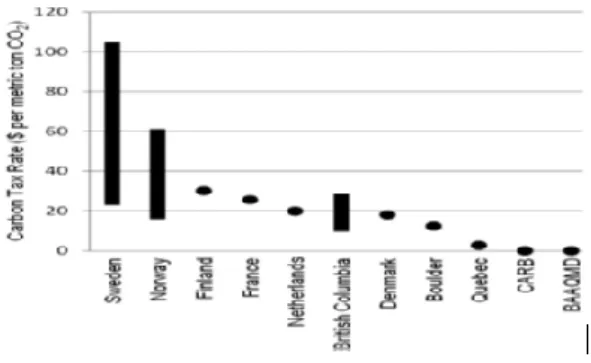
Figure 2: Carbon Tax Rates
s
Carbon tax rates vary in their application ranges depending on their capacities. Higher carbon tax rates deliver buyers a stronger signal to alter behavior, whereas lower rates may not do much to alter buyer behavior, but they can subsidize carbon lessening programs. High carbon tax rates are observed in Europe. Standard tax rate in Sweden is equal to $ 105 per ton of CO₂ where for industry, the rate is less than $ 23 per ton of CO₂. Gasoline tax in Norway is $ 62 and Finland's tax is $ 30 per ton of CO₂. France's proposed tax rate is modeled after the cost pertinent to CO₂ allowances within the European Union's tax framework and is set at a value of around $ 25 per ton of CO₂ (Summer, Bird and Smith, 2009).
Low-rate practice is seen in California. BAAQMD (Bay Area Air Quality Management District) has a tax rate of $ 0.045 per ton of CO₂, it has explicitly designed taxes to increase revenue to support local greenhouse gas reduction programs, rather than encouraging behavior change. The proposed carbon tax rate
29
is relatively low at $ 0.155 per metric ton of CO₂ and is designed to generate funds for greenhouse gas reduction programs (Summer, Bird and Smith, 2009).
2.4.2.3 Income Usage
The income from carbon taxes are managed in different ways; specifically managed in the form of carbon emission reduction programs, as deductions in income taxes for individuals, to be added to the State budget. The preference for income distribution provides political sustainability of the tax (Summer, Bird and Smith, 2009).
One of the important benefits of carbon taxes is the strong fiscal policy. If carbon taxes or regulatory restrictions raise the prices of goods, some problems arise due to pre-existing taxes on the same goods (Nordhaus, 2007). To solve these problems, it is the simplest method to use carbon tax revenues in order to reduce other taxes which have a disruptive effect on the economy. Income, salary and general consumption taxes reduce the participation of labor power. It also directs production towards the informal sector. Similarly, taxes on profits tend to economically reduce capital accumulation below the productive level (Keen, De Mooij and Parry, 2012). The rationale for this is the existing taxes or regulatory restrictions raise the prices of goods. The addition of new taxes or regulatory systems on existing taxes may lead to inefficiency or social losses. This double tax burden should be considered as a cost-effective aspect of global warming policy (Nordhaus, 2007). Using carbon tax revenues to prevent large-scale damages due to these costs benefits producers by providing incentives to increase working capital and accumulation (Keen, De Mooij and Parry, 2012).
In the event of a loss of income due to economic crises, carbon tax revenues will allow governments to put an end to the implementation of carbon tax and raise other taxes without the reaction of the society (Keen, De Mooij and Parry, 2012).
30 2.5 EMISSION TRADING SYSTEM
One of the legal tools available for policy makers to reduce greenhouse gas emissions is the emission trading system (ETS). It is based on the payment of greenhouse gas emissions to pollutants through the market mechanism.
This market-based approach allows regulators to reduce or control carbon. The ETS functions by limiting the total amount of carbon that can be released by the energy sector, by issuing allowances (certificates, permits representing a certain amount of carbon emission right), and allowing organizations to buy and sell these allowances. Allowances are created and allocated by a regulatory system and generally by Cap and Trade Regime.
Emission trading practice is based on the cap-and-trade system. The operation of the emission trading system can be explained in general terms as follows; the competent authority sets a reduction target for the emission amount and asks each enterprise in the selected sector to achieve the specified reduction by the end of the period by limiting the amount of greenhouse gas emitted by the selected sector. To this end, the regulator issues the right to pollute (emission permits) for the limited amount of emissions of each entity. Pollution rights form the basis of emissions trading. Each emission permits gives the plant the right to pollute a certain amount (a perm = 1 ton CO₂ emission permit). The relevant governmental organization distributes the exported emission permits (allowances) to the related entity at the beginning of the period by the total amount of emissions limited based on the unit account of 1 ton CO₂. Emission permits can be distributed free of charge to enterprises and each ton of permits can be given for a certain price. At the end of one year, the enterprises must deliver the emission permits with the maximum pollutant rights assigned to them. In summary, for every 1 ton of CO₂ emissions they emit into the atmosphere, they must deliver the permit corresponding to that amount to the relevant government agency.
31
However, the most important feature of this system is that companies have the right to buy and sell the emission permits distributed to them in the designated market. Enterprises that reduce emissions below the reduction target will be able to sell these pollution rights to enterprises that have exhausted their pollution rights. In terms of its features and functioning, emissions trading system can be seen as a policy tool strengthened by the market mechanism. This is because it is desirable to reduce emissions to a certain extent, such as performance-based standards. Achieving the determined reduction target is a necessity for businesses. However, in cases that it fails to meet its target, it achieves this reduction target by purchasing certified reduction units from those who achieve the target (Anderson and Ekins, 2009).
Carbon markets are formed by two different methods. The first method is programs that require compliance with mandatory rules. The second method is voluntary programs. Mandatory rules are created and regulated by national, regional and international systems. Programs that require complying with mandatory rules are generally Emission Trading (ET), Joint Implementation (JI), and Clean Development Mechanism (CDM) developed by the Kyoto protocol.
Emission trading transactions can be grouped under two main categories; emission allowances trade and project-based transactions. Project based processes are applied in the form of Carbon Offsets.
2.5.1 Transferable Emission Certificates
In this model, the pollution prevention method is considered to allow the use of pollutants in the specified amount. A certificate fee is charged to the total amount of emissions that occur, not to the amount of each emitted unit. These certificates can be purchased and sold. Since the total number of certificates can be controlled, pollutants and the resulting contamination can be controlled. In the implementation of emission permits, the responsible public authority sets a pollution limit and puts it on the market through these certificates, which entitles the right to pollute equal
32
and divided shares to this level. These permits are distributed to companies in a way that corresponds to a certain amount of pollution. Requests for commercial permits are made according to the costs incurred by firms to improve the amount of pollution (Çiçek and Çiçek, 2012). If a firm's pollution reduction cost is less than or equal to the price of a commercial permit, it may prefer to bear the said improvement costs instead of obtaining a commercial permit. If the cost of pollution reduction remains more expensive than the emission certificates, then the firm is going to purchase the emission certificates (Jamali, 2007). In this context, the mechanism defined in the Kyoto Protocol as Cap and Trade Program.
2.5.1.1 Cap and Trade Program
This program uses market-based mechanisms to achieve greenhouse gas reduction. The Program set a limit on aggregated emissions and provide a limited number of allowences. The emission limit can be divided into emission allowences. Typically, an emission allowance represents one (metric) ton of CO₂ equivalent right. The institutions are obliged to receive allowance for each unit emission they generate, while at the same time they can trade the allowances among themselves. The system is implemented through stock exchange allowances to minimize the cost of affected resources. In the system, allowances or credits are given to companies showing how much pollution is allowed (Hoffman J., Hoffman M., 2008). Emission rights are shared between the institutions participating in the system. Sharing may be done free of charge, in which case rights may be assigned to institutions by the authority. Auctions can also be held for all or a certain percentage of rights. In this case, auction revenues are generally used in Research & Development or policy development financing to develop climate change adaptation or low carbon technology. In the following process, emission right holders monitor, verify and report their emissions (Atilla, 2013). If these companies use renewable resources, try to limit energy consumption and cause less pollution than the specified amount, credit surpluses will arise for this amount. These loans can be sold or deposited in banks. However, if a company exceeds the limit given to it, it must buy credit (Hoffman J., Hoffman M., 2008). If a company decreases its carbon emissions very