255
Organic Product Consumption and Customer Preferences in Urban
Sections of Bingol Province
aHakan İNCİ*, bErsin KARAKAYA, aBünyamin SÖĞÜT, aTurgay ŞENGÜL
a Bingöl University Agricultural Faculty Animal Science Department, Bingöl bBingöl University Agricultural Faculty Agricultural Economics Department, Bingöl
*Corresponding author: [email protected]
Received: 18.02.2013 Received in revised form: 11.03.2014 Accepted: 12.03.2014
Abstract
The present study was conducted to determine the consumer attitudes toward organic products and to investigate the factors effecting consumption levels and preferences of consumers in urban sections of Bingol Province. Data were collected through a survey conducted on 392 consumers living in the city center of Bingol. Results revealed that organic product preferences of consumer varied based on demographic characteristics. While significant differences were observed between consumer perceptions of organic products and their genders, occupations, monthly incomes. The differences between consumer perceptions and their ages, marital status, educational levels and number of households were not significant.
Keywords: Organic products, Income level, education, consumer preference, consumption level
Bingöl İli Kentsel Alanında Organik Ürün Tüketimi ve Tüketim Tercihleri
ÖzetBu çalışma, Bingöl ili kentsel alanında tüketicilerin organik ürünlere olan ilgilerini, tüketim tercihlerini ve tüketim düzeylerini etkileyen faktörlerin incelenmesi amacıyla yürütülmüştür. Araştırmada anket yöntemiyle veriler toplanmıştır. Bu amaçla, Bingöl il merkezinde ikamet eden 392 tüketici ile görüşülmüştür. Tüketicilerin organik ürün tercihlerinin demografik özelliklere bağlı olarak değişkenlik gösterdiği görülmektedir. Tüketicilerin organik ürünleri algılamaları ile tüketicilerin cinsiyetleri, meslek durumları, ailelerinin aylık ortalama gelirleri arasında anlamlı farklılıklar bulunurken, yaşları, medeni durum, eğitim seviyesi ve ailelerinde kaç kişi olduğu arasında anlamlı farklılıklar bulunamamıştır.
Anahtar kelimeler: Organik ürün, gelir düzeyi, eğitim, tüketici tercihi, tüketim düzeyi Introduction
Organic market is an ever growing sector worldwide. Organic production in Turkey was initiated at the beginning of 1985 by a small producer group along with the demands of importer countries. It has widespread to large masses in time and became a significant commercial market. Market development is mostly oriented by consumer preferences. Consumers are commonly concerned about certificates of organic production and reliability of the organic products Karabaş and Gürler, (2012).
Organic agriculture is a certificated production without use of any chemicals and under
control from the beginning and end of production process. The basic objectives of organic production are to preserve soil and water resources and to protect the health of environment, plant, animal and human Deniz, (2009). Organic agriculture is practiced worldwide over 32.7 million ha land area. Taking naturally grown sites (41.9 million ha) into consideration, this area reaches to 79.1 million hectares. Such sum corresponds about 0.9% of world total agricultural lands. With regard to continental distribution of organic agricultural lands, Australia has the first place with 12.2 million ha land area and it is followed by Europe with 9.3 million ha, South America with 8.6 million ha, Asia
TURKISH
JOURNAL of
AGRICULTURAL
and NATURAL
SCIENCES
TURKISH JOURNAL of AGRICULTURAL and NATURAL SCIENCESTURKISH
JOURNAL of
AGRICULTURAL
and NATURAL
SCIENCES
TURKISH
JOURNAL of
AGRICULTURAL
and NATURAL
SCIENCES
www.turkjans.com TÜRKTARIM ve DOĞA BİLİMLERİ DERGİSİ
TURKISH
JOURNAL of
AGRICULTURAL
and NATURAL
SCIENCES
TURKISH
JOURNAL of
AGRICULTURAL
and NATURAL
SCIENCES
256 with 3.6 million ha, North America with 2.7 million ha and Africa with 1 million ha land area Anonymous, 2012b).
Large part of the soils of Bingol Province (81.4%) is unavailable for agricultural production and mostly covered by meadow-pasture and forests. Total surface area of the province is 8.253 km² and of which 53.2% is meadow-pasture, 38.2% is forest, 7.3% is agricultural land and 2.85% is other types. Irrigated agriculture is practiced over almost half of the agricultural lands. Cultivated agriculture
is practiced over 59.140 ha land area of Bingol Province (Anonymous, 2011). Organic agricultural values of the province are provided in Table 1.
This study aims to determine consumers' behavior towards organic products in the city center of Bingol and the factors affecting the preference to organic products. This study put forward about the preferences of consumers on organic products and determine the factors that affect the likelihood of organic product consumption is thought to be important.
Table 1. Organic agricultural values of Bingol Province (Anonymous, 2012a)
Year Number of
Producer
Production Area (ha)
Naturally Grown
Lands (ha) Fallow Lands (ha) Total Area (ha)
2006 23 96 0 56 152 2007 44 189 0 141 330 2008 28 161 0 139 299 2009 40 256 0 140 396 2010 113 649 0 304 953 2011 54 295 0 126 421
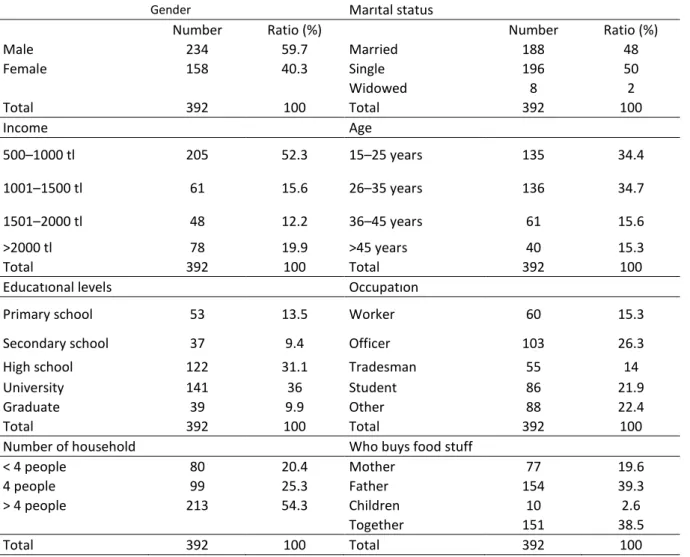
Table 2. Demographic characteristics of survey participants
Gender Marıtal status
Number Ratio (%) Number Ratio (%)
Male 234 59.7 Married 188 48 Female 158 40.3 Single 196 50 Widowed 8 2 Total 392 100 Total 392 100 Income Age 500–1000 tl 205 52.3 15–25 years 135 34.4 1001–1500 tl 61 15.6 26–35 years 136 34.7 1501–2000 tl 48 12.2 36–45 years 61 15.6 >2000 tl 78 19.9 >45 years 40 15.3 Total 392 100 Total 392 100
Educatıonal levels Occupatıon
Primary school 53 13.5 Worker 60 15.3
Secondary school 37 9.4 Officer 103 26.3
High school 122 31.1 Tradesman 55 14
University 141 36 Student 86 21.9
Graduate 39 9.9 Other 88 22.4
Total 392 100 Total 392 100
Number of household Who buys food stuff
< 4 people 80 20.4 Mother 77 19.6
4 people 99 25.3 Father 154 39.3
> 4 people 213 54.3 Children 10 2.6
Together 151 38.5
257
Material and Methods
Survey data, gathered through face to face interviews with randomly sampled consumers living in Bingol Province to determine the consumer awareness and preferences with regard to organic products, is constituted the material of this study. Surveys were conducted in urban parts of Bingol in the year 2013. Also, the data provided by Turkish Institute of Statistics was considerably used in present study.
Sample size was determined by using un-clustered single-stage probability sampling method based on mass ratios Collins, (1986).
n = t2 * [1 + (0.02) (b–1)]* (p * q) / e2 Where;
n: Sample size
t: Table value corresponding to 95% significance level
b: Sampling stage (taken as 1 since the method is single-stage)
p: Occurrence probability of the relevant case within the main mass (taken as 50%).
q: Occurrence probability of the relevant case (1-p)
e: Accepted margin of error ( taken as 5%) When b=1, equation becomes;
n = t2 * (p*q)/e2 Then, the sample size is;
n = 1.962*(0.50 * 0.50 )/0.052 → n = 384 Sample size was calculated as 384 but it was taken as 392 by considering possible missing values in surveys.
Objectives of this study were to determine the attitudes of the consumers living in Bingol city center toward the organic products and the factors affecting their preferences for organic products. Data was gathered through questionnaire forms inquiring personal and nourishment information about the consumers. In questionnaire forms,
beside socio-economic and demographic
characteristics, information was also inquired about easy access to organic products, acceptance to pay more to organic products, awareness about the health impacts of food products, think of negative impacts of inorganic products and sufficient knowledge about organic agriculture.
The present research was thought to be significant since it investigates consumer preferences about organic products and the factors affecting their preferences. Proposed outcomes will definitely provide great supports to policy makers and organic agriculture firms. Consumer replies to some survey questions were taken as “definitely disagree”, “disagree”, “I have no idea”, “agree” and “definitely agree”. Relationships between organic product consumption and socio-economic and demographical characteristics of consumers were also investigated in present study. Statistical analyses were performed with SPSS 19.0 statistical analysis software.
Table 3. Information sources for organic products and their significance scores
Factors 1 2 3 4 5 Mean Total
Internet 47.7 21.4 11.2 7.1 12.5 2.15 100.0
TV 31.1 41.8 11.2 9.4 6.4 2.18 100.0
Friends 9.2 9.9 44.1 23.2 13.5 3.22 100.0
Magazine, Newspaper 4.8 17.1 27.0 42.6 8.4 3.33 100.0
Sale representative 7.1 9.9 6.6 17.3 59.1 4.11 100.0
1: the most, 2: high, 3: medium, 4: low, 5: the least.
Table 4. Organic product consumption of participants and preferred product groups
Organic product
consumption Number Ratio (%)
Consumed organic product
group Number Ratio(%)
Yes 330 84.2 Organic fresh vegetable-fruit 200 60.6
No 62 15.8 Organic meat (beef-poultry) 34 10.3
Milk and dairy products 75 22.7
Egg 9 2.7
Honey 12 3.6
Total 392 100.0 Total 330 100.0
Results
Demographic characteristics of survey participants are provided in Table 2. About 59.7% of survey participants were male and 40.3% were female. The t-tests revealed significant
relationships between organic product preferences and gender of participants (t: 56,561, p: 0,000). Kacur (2009) also reported significant differences in “positive attitudes” and “negative attitudes” of different genders toward organic products.
258 Therefore, current findings support the findings of Kacur, (2009). Akın et al., (2010) indicated that such
differences were mainly resulted from female individuals.
Table 5. Significance levels of factors effecting organic product preference of participants
Factors 1 2 3 4 5 Mean
Price 14.5 3.1 3.3 4.1 75.0 4.2
Nutritional value 22.4 19.1 14.3 39.5 4.6 2.5
Confidence 28.8 24.7 29.8 11.7 4.8 2.9
Healthiness 18.9 36.5 20.4 18.4 5.9 2.6
Natural and ecological 15.3 16.8 31.9 26.3 9.7 2.98
1: the most, 2: high, 3: medium, 4: low, 5: the least.
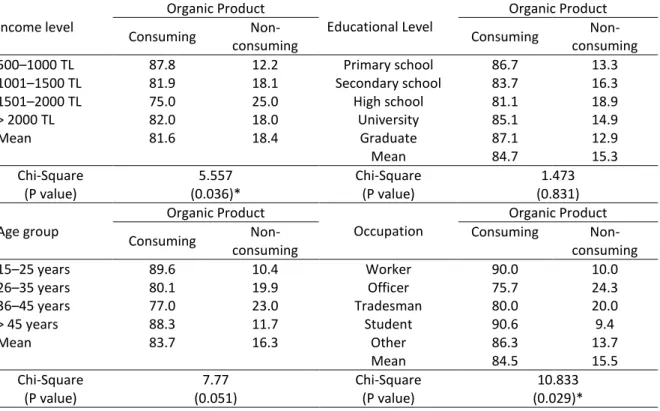
Table 6. Organic product consumptions of different socio-economic and demographic groups
Income level Organic Product Educational Level Organic Product Consuming Non-consuming Consuming Non-consuming 500–1000 TL 87.8 12.2 Primary school 86.7 13.3 1001–1500 TL 81.9 18.1 Secondary school 83.7 16.3 1501–2000 TL 75.0 25.0 High school 81.1 18.9 > 2000 TL 82.0 18.0 University 85.1 14.9 Mean 81.6 18.4 Graduate 87.1 12.9 Mean 84.7 15.3 Chi-Square (P value) 5.557 (0.036)* Chi-Square (P value) 1.473 (0.831) Age group Organic Product Occupation Organic Product Consuming Non-consuming Consuming Non-consuming 15–25 years 89.6 10.4 Worker 90.0 10.0 26–35 years 80.1 19.9 Officer 75.7 24.3 36–45 years 77.0 23.0 Tradesman 80.0 20.0 > 45 years 88.3 11.7 Student 90.6 9.4 Mean 83.7 16.3 Other 86.3 13.7 Mean 84.5 15.5 Chi-Square (P value) 7.77 (0.051) Chi-Square (P value) 10.833 (0.029)*
With regard to marital status of the participants, 48% were married, 50% were single and 2% were widowed. Chi-square tests revealed that marital status of the participants did not have significant effects on customer preferences of organic products (F: 0.526, p: 0.592). Akın et al (2010), on the other hand, observed significant relationships between marital status of customers and their attitudes toward organic products.
With regard to age of participants, 34.4% were between 15–25, 34.7% were between 26–35. 15.6% were between 36–45 and 15.3% were above 45 years of age. A significant relationship was not observed between age groups and organic product preferences of customers (F: 2.619, p: 0.051). Current findings comply with the findings of Sarıkaya, (2007).
Participants had different occupations and 15,3% were worker, 26,3% were officer, 14% were tradesman, 21,9% were student and 22,4% had
other occupations (like homemaker). A significant relationship was observed between occupations and organic product preferences of participants (F: 2.750, p: 0.028).
With regard to monthly incomes of participants, 52.3% had incomes between 500-1000 TL, 15.6% between 1001-1500 TL, 12.2% between 1501-2000 TL and 19.9% had an income over 2000 TL. While 29.3% of participants of the study carried out by Karabaş and Gürler, (2012) had an income between 2001 - 3000 TL, 33.2% of them had an income below 1500 TL. F test of the present study revealed significant relationships between income levels and organic product consumption of the participants and increasing consumption levels were observed with increasing income levels (F: 1.858, p: 0.036). Kacur, (2009) reported significant differences among different income levels with regard to “negative attitudes toward organic products” and “organic product and price factors”.
259 Such findings of Kacur, (2009) supported the findings of current study.
When the educational levels of the participants were evaluated, it was observed that 13.5% had primary school, 9.4% secondary, 31.1% high school, 36% university and 9.9% had graduate level of education. A significant relationship was not observed between educational level and organic product consumption of participants (F: 0.365, p: 0.834). While these findings were similar to findings reported by Karabaş and Gürler (2012), they were different from the findings of Armağan and Özdoğan (2005). Akın et al. (2010) reported that consumer attitudes toward organic and inorganic products varied with educational levels and such variations were especially more distinctive at high school or higher level of education of participants.
With regard to number of households in families of participants, 54.3% was composed of more than 4 people, 25.3% had 4 people and 20.4% was composed of less than 4 people. While fathers were buying foodstuffs in 39.3% of families, it was followed by all family members with 38.5%, mother with 19.6% and children with 2.6%.
Current knowledge of consumers about organic products was also evaluated in present study. Results revealed that 88% of them stated that they knew about organic products and 12% stated that they had no idea about organic products. When the source of information about organic products was evaluated, internet, TV, friends, magazine and newspapers and sale representatives were identified as the main information sources. Participants asked to score their preferences of these sources as “the most, high, medium, low and the least”. Internet was found to be the mostly-used information source for organic products and it was respectively followed TV-programs, friend recommendations, magazine-newspapers and sale representatives (Table 3).
Whether or not the participants were consuming organic products, what kind of products were consumed by the consumers and the significant factors affecting their consumption preferences were also analyzed. While 84.2% of participants were consuming organic products, 15.8% of them were not consuming organic products (Table 4). With regard to type of organic products consumed by participants, it was observed that 60.6% were consuming fresh vegetables and fruits and it was followed by milk-dairy products, organic meat, honey and egg (Table 4). Similarly, Sarıkaya, (2007) also observed that fresh vegetable and fruits had the first place among organic products.
When the significance level of factors effecting the organic product consumption of
participants were evaluated, it was observed that “confidence” had the first place with 28.8% and it was followed by “nutritional value” with 22.4%, “healthiness” with 18.9%, “being natural” with 15.3% and “price” with 14.5% (Table 5). It is worth to point out that consumers assign a little significance to “price”. In a research carried out by Armağan and Özdoğan, (2005), 75.8% of participants indicated the reasons for preferring organic products as “confidence and healthiness” and such findings support the results of current study.
Participants were asked about the place where they bought organic products and 55.4% stated that they supplied such products from villages. The factors affecting the organic product purchasing places were also analyzed and preferences were scored as again “the most, high, medium, low, the least”. Results revealed that participants assigned the highest significance (51% with a mean value 1,93) to “hygiene and cleanliness” of the seller place and “price” had the least significance in selecting a purchasing place (60.7%, mean: 4.15).
Value judgments of participants and their agreements with the statements about organic product consumption were provided in Table 6. While consumers were definitely agree with the value judgments of “it is necessary to consume organic products (mean:1.34)”, “I take package information into account (mean: 1.66)”, “genetically modified products are harmful (mean: 1.89)”; they were disagree with the value judgment of “organic products are harmful (mean: 3.50)”. Participants stated their indecisiveness about beef and poultry products (mean: 3.00) in the markets.
A significant relationship was observed between income level and organic product consumption, decreasing consumption levels were observed with increasing income levels but increased consumptions were observed in the highest income group (Table 6).
Considering the educational levels, while higher consumption levels were observed in graduate levels, non-consuming participants were mostly high school graduated ones. Initially increasing organic product consumption rates with increasing educational levels exhibited a decrease later on. The relationship between educational groups and organic product consumption was not found to be significant (Table 6).
Organic product consumption levels of young and old age groups were higher than the levels of middle-aged group. The differences between the age groups were not found to be significant.
260 With regard to occupational groups, worker and student groups had higher organic product consumption levels than the other occupational groups. The differences between occupational groups were found to be significant and occupations had significant effects on organic product consumption levels (Chi-Square: 10.833, p: 0.029).
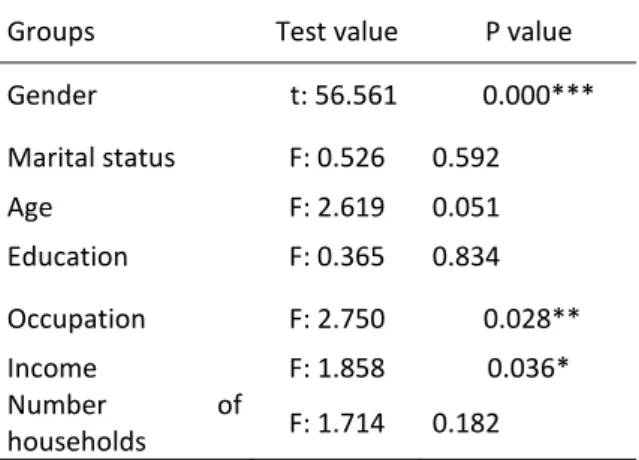
While the relationships of organic product consumption with gender, occupation and income groups of participants were found to be significant, the relationships with other groups were not found to be significant (Table 7).
Table 7. Test analyses for Organic product
consumptions of different socio-economic and demographic groups
Groups Test value P value
Gender t: 56.561 0.000*** Marital status F: 0.526 0.592 Age F: 2.619 0.051 Education F: 0.365 0.834 Occupation F: 2.750 0.028** Income F: 1.858 0.036* Number of households F: 1.714 0.182 Discussion
Consumer attitudes toward organic products and their ideas about such products were investigated in present study. Significant relationships were observed between organic product consumption and some factors (gander, income and occupation) effecting such consumptions. One of each 2 participants (every other participant) was in low-income group. A significant relationship was observed between income level and organic product consumption levels and increasing consumption levels were observed with increasing income levels. Armağan and Özdoğan, (2005) also reported significant
relationships between organic product
consumption and income levels and such findings support the results of the present study.
Consumers mostly informed about organic products via Internet (47.7%) since organic products were sold through Internet and number of cyber shops were ever increasing. Sarıkaya, (2007) also reported similar results. Results revealed that 84.2% of participants were consuming and 15.8% were not consuming organic products. Consumers usually stated the reason of their organic product consumption as confidence. Price was found to be
the least significant factor effecting organic product consumption and such finding indicated that consumers were able to pay more for organic products. Cleanliness and hygiene were two main factors affecting the place from where the consumers buy the organic products. Cheaper or more expensive prices of organic shops were the least significant factor. Consumer statements of “it is necessary to consume organic products”, “I take the information over packages into account” and “genetically modified products are harmful” are all indicate a certain level of consumer awareness about organic products.
Among the possible implementations about organic foodstuff, organic producers may diverse their production activities by taking the daily feeding habit of people and may especially focus on main and snack meals. Producers may also increase the sales points to reach out to consumer through school canteens and cafeterias. Consumers may also be informed about health impacts, reasonable prices and certification of organic products through written and visual media and their chance to coincide with organic products should be increased.
Present study, investigating the consumer attitudes toward organic products and the factors affecting their preferences, pointed out the awareness level of consumers about such products of the market and will definitely provide supports to organic production firms in their decisions and implementations by taking customer preferences into account.
References
Akın, M. and Çiçek, R., 2010. A Research on the differentiation of investigation socio-demographic characteristics of consumers and individual values and attitudes toward organic foods in Nigde. Dokuz Eylul University. Journal of the Institute of Social Sciences, 12: (1): 29–56.
Anonymous, 2011. Organic Farming Status of Bingol province. (http://www.fka.org.tr).
Anonymous, 2012a. Indicators of Organic Farming in Bingol province over the years. (http://organik.tarim.gov.tr).
Anonymous, 2012b. Annual Organic Agricultural Production Indicators. OTBİS Records. Armağan, G. and Özdoğan, M., 2005. Determination
of ecological characterization of egg and poultry meat consumption and consumer trends. Animal Production, 46 (2): 14–21. Collins, M., 1986. Sampling (Editör: R. Worcester ve
ark. 1986), Consumer Market Research Handbook.
261 Deniz, E., 2009. Organic Agriculture Sector Report.
Page 2/23 Enterprise Europe Network -Karadeniz.
Kacur, L., 2009. Erciyes University, faculty of economics and business administration with academic and administrative staff and the second day of students perceptions of organic products. Erciyes University. Journal of the Faculty of Economics and Administrative Sciences, 33: 249–277. Karabaş, S. and Gürler, Z. A., 2012. The organic
product choices effective factors on consumer behavior estimating with Logit regression analysis. Adıyaman University. Institute of Social Sciences, 5: (10) : 115-122. Sarıkaya, N., 2007. A field study on factors influencing consumption of organic products and Attitudes. Kocaeli University. Journal of the Institute of Social Sciences, 14 (2): 110– 125.