THE REPUBLIC OF TURKEY
BAHÇEŞEHİR UNIVERSITY
CONSUMERS’ GIFT SELECTION: GIFT GIVING
ATTITUDES IN TODAY’S MARKETING ENVIRONMENT
Master’s Thesis
BERNA BAŞAR
THE REPUBLIC OF TURKEY
BAHÇEŞEHİR UNIVERSITY
THE GRADUATE SCHOOL OF SOCIAL SCIENCES MARKETING GRADUATE PROGRAM
CONSUMERS’ GIFT SELECTION: GIFT GIVING
ATTITUDES IN TODAY’S MARKETING ENVIRONMENT
Master’s Thesis
BERNA BAŞAR
Thesis Supervisor: Assistant Prof. A. BANU ELMADAĞ BAŞ
ACKNOWLEDGEMENTS
First and foremost, I would like to express my deep appreciation and sincere gratitude to Assistant Prof. Dr. A. Banu Elmadağ BaĢ, my supervisor, for her wisdom, invaluable guidance and professionalism from the beginning to the end of my research. I would also like to extend my heartiest thanks to 32 in-depth interview participants for their patience and kind involvement in this study. In addition, I owe my mother and my father for their motivational support, which has given me the strength to complete this thesis.
ABSTRACT
CONSUMERS’ GIFT SELECTION: GIFT GIVING ATTITUDES IN TODAY’S MARKETING ENVIRONMENT
BaĢar, Berna Marketing Management
Thesis Supervisor: Assistant Professor A. Banu Elmadağ BaĢ January 2011, 108 pages
This study examines gift selection behavior of Y Generation in today’s marketing environment. The motives and factors influencing the gift giving decisions of adults have been explored using qualitative data. Previous studies have not focused on the relation between the gift buying habits and buyers’ reaction to marketing elements as a whole.
In order to get insight about gifting habits of Y Generation, thirty two in-depth interviews were carried out. Besides its availability, this group has been chosen since the technology, mass marketing, and popular culture in which today’s youth grew up differentiated Y Generation from previous youth cultures.
Research results show that females are more interested in gift giving in comparison to males. Females buy more gifts and care more about buying gifts regularly since they see gift giving as a way for showing the recipient how much they care about them. On the other hand, males do not enjoy buying gifts and do not attach any meaning to gift giving unless the receiver is someone very special for him and/or they are buying a ring for engagement.
Giving gifts to parents and/or romantic partners are considered to be the most important gift giving occasions. While the gifts bought for family members are more utilitarian, are bought without any price limit and without reciprocial obligation; gifts bought for romantic others are more expressive, customized and requires some amount of reciprocity. In addition, male participants spend the highest amount of money on gifts when they are buying a wedding gift to their romantic partner.
According to the answers of the participants the second most important group consists of people from higher position and best friends followed by extended kin and regular friends. Unlike the gifts given to friends, family members and romantic others; gifts given to someone from a higher position than the gift giver should be bought according to the standards set within the community. In such a case, gifts should be bought from specific stores and should not be cheap and simple.
Although there is no consensus on the importance of brand name in gift giving, quality is considered as a gift selection criteria by most of the participants. These participants prefer to buy gifts according to the quality standards set within their environment. It is also obvious that some brand stores deliver high quality gifts in the eyes of the customers.
All of the participants attach importance to packaging since it affects the first impression of the receiver about the gift. Even in some instances, participants consider packaging more important than the gift itself, as a result of seeing visuality more important than anything.
Despite the fact that local shops may be preferred because of their low prices and their unusual product alternatives, in general chain stores are usually considered as more convenient places for buying gifts. Although participants prefer buying gifts on sale, they usually can not do that since gifts should be bought at a specific period of time. Key Words: Gift Selection, Marketing Environment, Consumer Behavior
ÖZET
MÜġTERĠLERĠN HEDĠYE SEÇME DAVRANIġLARI: BUGÜNÜN PAZAR ORTAMINDA HEDĠYELEġME EĞĠLĠMLERĠ
BaĢar, Berna PazarlamaYönetimi
TezDanıĢmanı: Yrd. Doç. Dr. A. Banu Elmadağ BaĢ Ocak 2011, 108 Sayfa
Bu çalıĢma Y jenerasyonunun bugünün pazar ortamındaki hediye seçme eğilimlerini incelemektedir. Niceliksel veri ile bu grubun hediye verme kararlarını etkileyen faktörler araĢtırılmıĢtır. Daha once yapılan çalıĢmalar müĢterilerin genel olarak tüm pazarlama öğelerine tepkileri ve hediye alma eğilimleri arasındaki iliĢkiyi incelememiĢtir.
Y jenerasyonunun hediye alma eğilimlerini incelemek için 32 mülakat gerçekleĢtirilmiĢtir. Y jenerasyonu hem kolayda örnekleme yöntemine uygun olduğu için hem de teknoloji, yoğun pazarlama ve popüler kültür ortamı bu jenerasyonun önceki jenerasyonlara gore daha farklı bir ortamda büyümesini sağladığı için seçilmiĢtir. AraĢtırmanın sonuçlarına göre bayanların erkeklere oranla hediye alma ile daha çok ilgili oldukları görülüyor. Bayanlar daha çok hediye alıyorlar be düzenli bir sıklıkta almaya dikkat ediyorlar. Bunun nedeni hediye vermenin karĢısındakine verilen değeri gösterdiğini düĢünmeleridir. Bunun aksine, erkekler hediye almaktan zevk almıyorlar ve hediye aldıkları kiĢi çok özel biri olmadıkça ve/veya niĢan hediyesi almadıkları sürece hediyeleĢmeye büyük bir anlam yüklemiyorlar.
Katılımcılar en çok yakın aile bireylerine veya sevgililerine aldıkları hediyelere önem veriyorlar. Ailelerine hediye alırken daha iĢlerine yarayacak ve kullanabilecekleri bir hediye alıyorlar. Bunun yanında ailelerine hediye alırken hiçbir fiyat limiti konulmuyor ve aldıkları hediyeye bir karĢılık beklemiyorlar. Sevgililere alınan hediyelerde ise karĢılık bekleniyor, daha çok kiĢiye özel ve anlamlı hediyeler tercih ediliyor. Buna ek olarak, erkekler en çok niĢan ve düğün hediyesi alırken para harcıyorlar.
Katılımcıların cevaplarına gore hediye alırken en çok önem verilen ikinci grup ise yakın arkadaĢlar ve üst pozisyonda görevli kiĢilerden oluĢuyor. Bu grubu ise akrabalar ve orta yakınlıktaki arkadaĢlar takip ediyor. ArkadaĢlara, aile bireylerine ve sevgililere verilen hediyelerin aksine üst makamlardaki kiĢilere verilen hediyeler toplumda kurulmuĢ yazılı olmayan temel kurallara gore alınıyor. Bu durumlarda, hediye belirli mağazalardan alınmalı, ucuz ve basit olmamalı.
Hediyenin markasının önemi konusunda katılımcılar arasında bir fikir birliği olmasa da, kalite çoğunlukla bir hediye seçme kriteri olarak görülüyor. Bu kiĢiler çevrelerinde belirlenmiĢ olan kalite standartlarına uygun hediyeler almayı tercih ediyorlar. Ayrıca bazı markalar tüketicilerin gözünde diğerlerine kıyasla daha yüksek kalite değerine sahip.
Bütün katılımcılar ilk izlenim açısından önemli olduğu için ambalaja önem vermekte. Hatta bazı katılımcılar,görselliği herĢeyden önemli görerek ambalajın hediyenin kendisinden daha önemli olduğunu düĢünmektedir.
Yerel dükkanlar düĢük fiyatları ve değiĢik hediye alternatifleri sundukları için bazı durumlarda tercih edilseler de, büyük alıĢveriĢ merkezleri hediye için en çok tercih edilen alıĢveriĢ mekanı konumunda. Katılımcılar, indirimde hediye alabilmiĢ olmayı istedikleri halde, hediyeĢerin belirli bir zamanda verilmesi gerektiği için hediye alırken indirimi takip edemediklerini belirtiliyor.
TABLE OF CONTENTS
LIST OF TABLES………..……….x
LIST OF FIGURES……..………...xi
1. INTRODUCTION………...1
1.1.RESEARCH OBJECTIVES……….…....1
1.2. WHY SHOULD THIS SUBJECT BE ANALYZED? …………...…...2
2. GIFT BUYING……….5
2.1.WHAT IS GIFT? ...5
2.2. GIFT VERSUS COMMODITY PURCHASE………...……8
2.3. CULTURAL VALUES & PERCEPTION OF GIFT ADEQUACY…..………11
2.4. MARKETING ENVIRONMENT ………14
3. RESEARCH METHODOLOGY………16
3.1. QUANTITATIVE VS. QUALITATIVE RESEARCH…...………16
3.2. WHY IN-DEPTH INTERVIEWS? ……….……….17
3.3. THE Y GENERATION……….……….19
4. LITERATURE REVIEW……….23
4.1. RESEARCH GAP………...23
4.2. LITERATURE RELATED WITH GIFT SELECTION…..……...24
4.2.1. Motivation………...24
4.2.1.1.Reciprocity………..……26
4.2.1.2. Self- Concept & Status………...28
4.2.1.3. Altruism versus Self- Interest………29
4.2.2. Cross Cultural Gift Giving………...30
4.2.3. Relationship Type………...31
4.2.4. Occasion Specific………...32
4.2.5. Demographics……….33
4.2.6. Recipient’s Characteristics………...34
4.2.7. Gifting Rules………...36
5. RESEARCH FRAMEWORK FOR THE PRESENT STUDY………...38
5.1. SAMPLING………...38
5.2. INTERVIEW SCHEDULE AND CONTENT………39
6.1. DEMOGRAPHIC DIFFERENCES IN GIFT
GIVING ATTITUDES………..42
6.2. GIFT SELECTION CRITERIA IN THE MARKETING ENVIRONMENT………..……….…………..44 6.2.1. Quality……….…..……..…..46 6.2.2. Brand….……….……..……....48 6.2.3. Features……….……….……….50 6.2.4.Packaging….……….…………..……....………53 6.2.5. Price………..………….……….54 6.2.6. Convenience in Access………59 7. DISCUSSION………..64
7.1. DEMOGRAPHIC DIFFERENCES IN GIFT GIVING ATTITUDES………64
7.2.GIFT SELECTION CRITERIA IN THE MARKETING ENVIRONMENT……….65 8. CONCLUSION………71 9. IMPLICATIONS………..…………..76 10. FUTURE RECOMMENDATIONS………..………..77 11.LIMITATIONS………...………..……….79 12. LITERATURE TABLE……….………..….…80 REFERENCES………..…….….…91 APPENDIX………..…………..….105
LIST OF TABLES
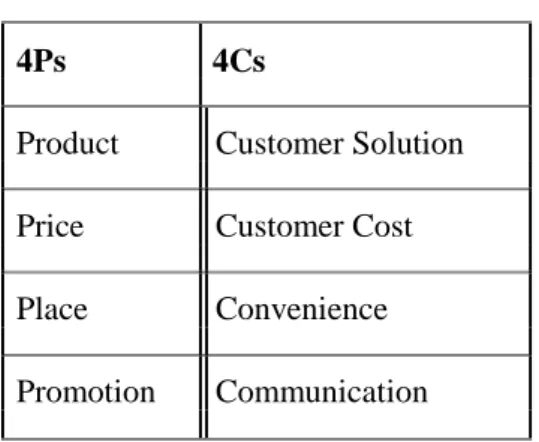
Table 4.1.: Gifting Rule Definitions………37 Table 5.1.: Participants’ Demographics………40 Table 8.1.: Kotler’s Four P’s Concept………..…72
LIST OF FIGURES
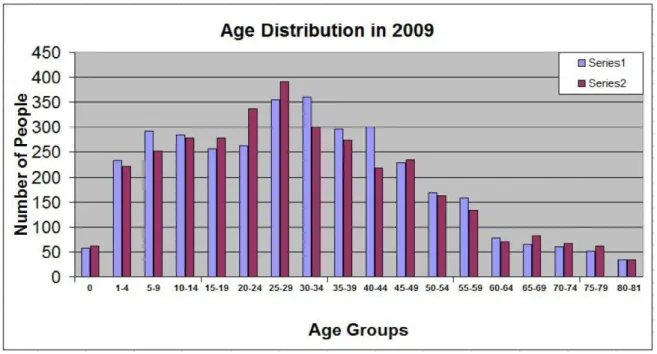
Figure 3.1.: Age Distribution of Turkey in 2009………...19
Figure 3.2.: Make up of Adult Internet Population by Generation………21
Figure 4.1.: Gift Giving Research from the 1920s to the Present………..23
Figure 4.2.: Gift Satisfaction Model………..26
Figure 5.1.: Buyer Decision Process...………...38
Figure 6.1.: Gift Card as The Most Planned Purchased Gift of the Year in U.S…..52
Figure 6.2.: The Level of Importance Given for Buying Gift According to Recipient Type………55
1. INTRODUCTION
In order to gain a deeper understanding of consumers’ gift selection attitudes, motives and factors influencing the gift giving decisions of adults have been explored using qualitative data. The main research question for this exploratory study is ‘What kind of gift giving habits does the Y Generation have in today’s marketing environment?’
Since both self and others are closely implicated in gift giving, it is reasonable to expect that different dimensions of the self will be activated in different gift giving contexts depending on who the receiver is and the occasions for the gift (Weisfeld 2009). The main idea is that, different self-conceptions can be made accessible at different times and in different situations and relatively conflicting traits may exist in a person’s self-concept (Aaker 1999).
This study examines how marketing environment effect gift selection and explore these conditions in detail. This research explores our gift giving patterns with the evolution of marketing environment and other dominant factors related with gift giving value system. As a result, new insight is provided by analyzing and integrating the components, dimensions, and models of gift giving from past research and develops testable hypotheses on gift selection criteria with a qualitative research for future verification. In order to get insight about gifting habits of Y Generation in Turkey thirty two in depth interviews were carried out.
Gift selection analysis provides managers insights to develop specific strategic initiatives for driving purchases of each individual gift category, brand and channel. The insights of this dissertation offer marketers targeting gift buying customers a better guidance and a greater opportunity to enhance giver and receiver utilities in gift giving practice in order to increase business profitability.
1.1.RESEARCH OBJECTIVES
This study aims to carry out a comprehensive literature review about gift selection, so that the components, dimensions and models of gift giving will be analyzed and the
contribution of this study to the literature will be explained. In order to analyze gift selection behavior of Y Generation in Turkey, this study has focused on the following research objectives.
Primary objective of this research is to answer the following questions. How is gift giving behavior is perceived by the Turkey’s Y Generation in today’s marketing environment? How do the customers react to the elements of marketing? What are the motives and factors influencing gift giving decisions of this sample?
It is aimed to access information about gift givers feelings, thinking and habits through in depth interviews with participants living in Istanbul and belonging to Millennial Generation. In addition to that, these interviews will contribute to analysis of culture’s and gift selection circumstances’ effect on gifting behavior in Turkey.
Finally, this study aims to analyze the information gained from these interviews and develop our understanding of gift buying process and its relation with marketing environment. Through comparing and combining the results of this research and prior studies all of this research’s objectives will be fulfilled.
1.2. WHY SHOULD THIS SUBJECT BE ANAYLYZED?
Gift giving as a concept in consumption may be one of the few remaining crucial incidents of true significance or sufficient periodicity that test the social ties that consumers have formed in their relationships with others (Sherry 1983). Although its examination by researchers has started during the last century, gift as a tangible product of our social relationships, has come into existence and has become a universal habit since ancient times. In this sense Marcel Mauss (1954) pioneered other researchers by his book The Gift in which he analyzed gift giving in a systematic way.
Gift buying behavior is interesting in the sense that we play a different role and apply a distinct gifting strategy in each gifting occasion. Given that each relationship is unique, gift giving varies with the circumstances and the relationship- making it highly contextual (Sherry 1983). The depth of these circumstances is greater than it is
estimated and it offers a rich area for researchers to examine. The same person can prefer to buy totally different and unrelated gifts in different conditions according to the identity attached to the gift giver at each gift selection process. Markus and Kunda (1986) indicate that self-concept is not as stable and unresponsive to variations in situations as researchers had previously believed, but rather that the self is dynamic and malleable. In other words, different self-conceptions can emerge during different times and situations, so that conflicting traits may exist in a person’s self-concept. While there is no doubt that gifts reflect the importance that the giver attaches to expressing a particular social role (Sherry 1983), different gift-selection strategies may reflect the importance of these roles as well (Otnes, Lowrer & Kim 1993) . Since each individual considers the product or service on offer in relation to their own culture and attitudes, gift selection process becomes complicated.
The share of gift purchases in overall purchases is larger than it is estimated. For instance; Garner and Wagner (1993) have estimated that at least $78 billion are spent annually for gifts outside the household. Belshaw (1965) estimated that 10 percent of retail sales in North America are for gift giving and according to another research gift giving has been estimated to account for an additional two percent of the household budget when charitable contributions are included (Lamale & Clorety 1959). More recently, Household Spending (2004) estimated that over $110 billion are spent each year in the United States for gifts and American Generations (2005) estimated that an average of 2.5 percent of household expenditures were for gifts in 2003. As a result of this market’s size and its contributions, gift giving is a valuable subject for consumer behavior and marketing.
Researches related with gift buying behavior have usually focused on psychological inputs and marketing inputs have not taken enough attention. Incursion of western holidays into Turkish life has altered the nature of gift giving within the society. Advertisings which focus on gifting and aim to increase gift purchases are countless. Special days, such as Valentine’s Day, Mother’s Day, Father’s Day, Teacher’s Day, become big opportunities for marketers in the sense that marketers offer their products in a more meaningful way in the eyes of the customers during these times.
In many instances, marketers touch people’s feelings and make their potential customers believe that buying their products is an indication of caring more about relationships. For instance; it has been shown that web sites that offer distinctive features for gift presentation are preferred by gifting communities because gift presentation expresses special thought, thus ensuring responsibility on behalf of the giver (Hollenbeck, Peters & Zinkhan 2006). In addition to that, other marketing tools such as; brand image, customer relations, pricing, fashion etc. can be effective factors for gift buyers. This study will also analyze the effects of marketing environment during gift selection process.
Furthermore, most of the studies related with gift giving have been carried out and conducted in and limited to American culture (Park 1993). Consumer behavior studies have not put much effort on analyzing gift giving behavior in other cultures. Although there has been studies exploring gifting habits in recent years, there has never been a study which explores gift selection behavior of millennial generation in the Turkish culture.
Finally, most of the researches till now related with gift selection behavior have either focused on cultural or psychological attitudes instead of combining the two. As Befu (1980) states; both cultural and psychological approaches to cross cultural behavior should be analyzed and synthesized in order to develop a more comprehensive interpretation of exchange. This research does not ignore the importance of the both and analyzes these themes focusing more on the marketing elements.
The ancient practice of gift giving has significantly influenced cultures around the world, and it remains a crucial part of the process of creating and maintaining social relationships today (Sherry 1983). It is inevitable that it will continue to be crucial part of our social relations in the future.
2. GIFT BUYING
2.1. WHAT IS GIFT?
In fact, any resource, tangible or intangible, can be transformed into a gift in the sense that the transformation from resource to gift occurs through the vehicles of social relationships and giving occasions (Sherry 1983). Researchers have defined gift in different ways in relation with their different perspectives. Belk (1970) defines gift in a simple way: ‘Gift is a good or service (including the giver’s time, activities, and ideas) voluntarily provided to another person or group.’ Webster’s Third New International Dictionary (Gove 1993, p.953) defines a gift as something that is voluntarily transferred by one person to another without compensation. In fact, there is some kind of compensation in many gifting occasions which is not explicit as it is the case in commodity exchange. This is why researchers segregate pure gifts from other gifts at which some kind of return expectations exist (Parry (1986), Belk& Coon (1993)). Mauss also focuses on the obligations related with gift giving in the sense of reciprocity which will be mentioned later.
Gift is defined by Spoilter (2009) as the circulation of goods to promote ties and bonding between individuals. In relation with this definition, this thesis will ignore free gifts which companies offer their customers in order to test their products or build a relationship between the brand and the customer. In addition, bonuses given to employees by the companies as a result of high performance also will not be included in the analysis of this research because of the same reason. According to Spoilter’s definition, excluding all other tradeoffs only product exchanges which aim to promote ties between individuals can be called as gift exchange.
Finally, self-gifts are ignored by this study too which is a term explored by Mick and Demos (1990, p.328). The main reason for not analyzing self-gifts in this thesis, is that it is nearly impossible to distinguish our daily shopping from self-gift shopping which would create a problem both during the collection of information and analyzes.
Gifts have many roles which change according to each single situation in the gift giving scenario. For instance; Carmichael and MacLeod (1997) think that use of gifts at the beginning of a relationship can support long-term cooperation. Belk (1979) looks from a more broad perspective and attributes four functions to the gift; communication, social exchange, economic exchange and socialization. While socialization can be the main function for one gifting situation, economic exchange can be the main function for the other. It’s the interesting nature of gift giving that both all of those functions may exist at the same time whereas only one of them may exist for another scenario. Sherry (1983, p.159) looks from a socialization and communication perspective and sees gift giving as a way of exchange for partners for modulating their relationship to maintain the desired degree of intimacy. In this sense, people gain different roles and prefer the appropriate gifts in order to fulfill the requirements of these roles. With this perspective Sherry (1983) defines gifts as tangible expressions of social relationships. In other words, gifts are the only tangible proofs of our socialization in our nature. As McCracken (1988, p.78) indicates; gift exchange allows individuals to insinuate certain symbolic properties into the lives of the gift recipient and to initiate possible meaning transfer. In some instances, gifts enables us to show our feelings which we could not show otherwise because of our fears and/or shyness.
Guo (2005) sees gift giving as an important social activity. Gift has different functions in various gift giving occasions. For instances, it helps to define the status of people in the society. Furthermore, gift giving serves as a symbol of social support during the passage from one life stage to another, such as for graduations, religious confirmations, engagements, and weddings (Belk, 1975). Gift giving is prominent in ceremonial occasions such as Father’s Day, Mother’s Day, and Secretary’s Day (Belk, 1979). Many researchers examined gift from an opportunistic view and ignored the altruistic benefits of it. For example, Bienenstock and Bianchi (2004) see gift giving as type of interaction which can generate status differences and they state that it is not the possession of resources that brings about status, but the use of those resources. In addition, Apparudai (1986) noticed that what social anthropologists have described as gift exchange in small-scale societies, is in reality not a simple act of generosity, but like commodity exchange – just a matter of self-interested calculation. It is also claimed that
commodity-exchange and gift exchange do not strictly represent two entirely different and mutually exclusive societal forms, but rather just two ideal types of exchange (Rus 2008). In reality, any economy will be a mix of these two types of exchange.
According to Gregory (1980, 1982, 1997), gifts belong to the sphere of the household and personal relationships, while commodities belong to the sphere of trade and impersonal relationships. Although this view is acceptable most of the time, this kind of a distinction which separates gifts and commodities with a strict line can be misleading in many instances. For example, if you buy your medicines from a specific pharmacy regularly it is a possibility that you form some kind of a personal relationship with the pharmacist. In addition to talking about their illnesses customers start talking about their daily lives when they shop at a specific pharmacist regularly over a period of time. Even in some extreme cases customers feel guilty when they purchase goods from another pharmacy. Although it is a type of trade relationship we cannot claim that it is impersonal. This shows that the distinction between the commodity and gift can be not so clear in each occasion However, when we compare gift exchange with commodity exchange it is obvious that gift exchange is much more personal than the latter.
When we buy a product we value it with its monetary value whereas we may value the gifts we receive with their monetar values and/or symbolic values. As Mauss (1969) states it ‘They have a name, a personality, a past and even a legend attached to them. Baudrillard (1988) agrees with Mauss and says that ‘Once it has been given- and because of this- it is this object and not another. The gift is unique, specified by the people exchanging it and the unique moment of the exchange’. Since the gift’s level of uniqueness and symbolic meanings attached to it change from one occasion to another, its value can not be compared with commodities purchased daily.
Bourdieu (1977) has argued that very often the only thing that makes gift exchange different from simple barter is the mere lapse of time between gift and counter gift. Although it is difficult to accept that this is the only difference, it is a valid statement partially in the sense that you have to pay instantly for what you want to purchase whereas it would be rude to buy a counter gift instantly when you receive a gift from your friend. For example, if your friends buy you a chic vase for your new house, it would be better to wait some time for reciprocity.
2.2. GIFT VERSUS COMMODITY PURCHASE
In order to analyze interpersonal gift selection behavior as the main subject of this research, we should make a clear distinction between gift purchases and the rest consisting of both commodity purchases and self-gifts. Although many research studies aiming gift buying, analyzes both self-gifts and interpersonal gifts, this study focuses only on interpersonal gift selection because distinction between self-gifts and commodity purchases is not always so much clear. It would be useful to define some general characteristics of two main purchasing types in order to understand and analyze this subject better.
When we buy a product for personal use we evaluate it with its use value and exchange value rather than the symbolic value it may have. On the other hand, in some cases when we purchase a product as a gift or receive a gift we may evaluate it with its symbolic value. For instance, a boy can buy greeting cards, roses to his girlfriend which may mean a lot as a gift but they have no meaning in terms of use value or symbolic value when this boy buys these things for himself. Carmichael and MacLeod (1997) explains this point in his study and states that; although gift goods may have little use value even at low levels of consumption, the institution is not useless. In other words whatever the use value of the gift is, gift has a useful function in our social environment.
As both utilitarian and hedonic shopping value play predominant roles in non-gift shopping (Babin & Attaway 2000), previous research stresses the utilitarian nature of gift shopping. Gift shopping is complicated by numerous social rules and interpersonal expectations that can render the pursuit of a gift into a quite arduous task (Sherry (1983); Caplow (1984); Otnes, Lowrey& Kim (1993); Laroche (2000); Wooten (2000), Lowrey, Otnes & Ruth (2004)). Gronhaug (1972) as well as and Belk (1978) found that in most cultures, compared to purchases for self-use, gift purchases generally involve visiting more stores, considering more alternatives, and spending more time searching for information.
Hart (1974) found higher levels of perceived risk in buying for others as a gift rather than for one’s self. In contrast to shopping for self-use gift shopping can become both joyful and tortured. Shopping for self-giving has been a way for indulging, relaxing or enjoying yourself especially for women. Because you buy it for yourself and you know that you like it, then you do not take any risk during self-giving at all. If you buy a gift you take into account some benchmarks other than your own taste and needs, so that you can fulfill the aim of buying that gift. These benchmarks can change according to the role which you want to gain through gift giving. According to the research findings of Wooten (2000, p.85) indicates that people become anxious when they are highly motivated to elicit desired reactions from their recipients but are pessimistic about their prospects of success. In addition, he points out that as interpersonal stakes increase, actors are likely to be more concerned about their performances. In other words, gift selection may not always be enjoyable because of your expectations and ambiguity of the future.
One of the important issues is the communication problem in interpersonal gift giving whereas it is not the case for shopping for self-use. Interpersonal gifts often have communication errors because of the indirect and polysemous nature of social symbols with potential ambiguity (Belk 1979). Hart (1974) fount higher levels of perceived risk in buying for others as a gift rather than for one's self. According to a research carried by Mick and Demoss in 1990 true self gifts are distinct from others and unquestionable special due to their rarity, particularity or function for the individual and sometimes due to aspects of sacredness. The reason for this assumption can be that no one else can know our needs and tastes better than we know. Unlike interpersonal gifts, the private coding of self-gifts ensures no misunderstanding of intended messages, a fact that not only demarcates these two forms of gift giving along the communication dimension but also enhances the value of self-gifts a personal acquisitions (Mick and DeMoss 1990, p.326).
As another point, it is useful not to overlook the difference of the definition of success between purchases for self-use and gift purchases. For instance, if we like the taste of the chocolate we bought from a supermarket or like the smell and durability of a perfume we bought from a store we can call it as a success. On the other hand when gift
purchasing is the case it is more difficult to be sure about our success. As Fischer (1990) also describes in his journal, success in gift selection means that recipients do not (to the giver’s knowledge) return or exchange the gifts given to them. He further explains that, some gifts may be returned without the knowledge of the giver, so only giver reported success can be assessed. In addition to that, success is only partially determined by the giver since recipients may vary in their propensity to return gifts or to communicate the inappropriateness of them (Fischer 1990, p.339). According to the same research, although casual observation of the return counters in department stores after Christmas suggests that many gifts are returned, few respondents reported gifts being returned or exchanged. This, together with the low correlations between success and the other measures, could raise questions about the success measure’s validity.
While no study has yet compared psychological states between buying for self-use and interpersonal gift giving, Clarke and Belk (1979) found that in most cultures, compared to purchases for personal use, gift purchases generally involve visiting more stores, considering more alternatives, and spending more time searching for a suitable gift. Gronhaug (1972) found that compared to recent buyers of tableware for personal use, those giving tableware as a gift reported considering more alternative choices, shopping at more dealers, seeking more advice from others, and reading dealers' brochures more thoroughly. In addition to that, there can be several reasons leading to this research results. May be, it is because the gift giver does not personally know the receiver very well or the giver wants to impress the receiver or want to reciprocate to a special gift with a special one, etc.
According to Belk (1982) the main difference between the gift purchase and personal purchase is that gift selection is a more involving activity than making a comparable selection for personal use. There are at least two types of involvement with which we might be concerned in gift-giving. One is item-specific and the other is purchase situation-specific. The item-specific form of involvement has been called "importance of purchase" (Howard & Sheth 1969), "enduring involvement" (Rothchild 1977) and "product involvement" (Clarke & Belk 1979). The essence of the construct involved in these phrases is that the consumer who is high in purchase item-specific involvement cares more about that item and is more interested in the purchase outcome. According to
Belk, the second type of involvement of concern in gift-giving is task involvement (Belk (1975), Clarke & Belk (1979)). Rather than attaching to a particular product, this type of involvement arises from the consumer's goals in a particular shopping situation ant includes the usage situation envisioned for the product. As Clarke and Belk (1979) point out, "the task may be highly involving either because it entails important immediate goals (e.g. find a coat which is the least expensive wool coat in town), or because the intended usage situation involves important goals (e.g. find a dress to wear to the prom)."
This study seeks to explore the effects of different levels of gift‐giving involvement on the gift selection process in order to resolve the apparent conflicts in prior research findings. The major assumption is that gift‐giving situations differ in involvement and that these differences in involvement directly influence the amount of effort devoted to the purchase selection process.
2.3. CULTURAL VALUES& PERCEPTION OF GIFT ADEQUACY
Culture is defined in various ways according to the different perspectives of different researchers. Hofstede (1980, p.21) explains culture as:
Systems of values; and values are among the building blocks of culture… Culture could be defined as the interactive aggregate of common characteristics that influence a human group’s response to its environment. Culture determines the identity of a group the same way as personality determines the identity of an individual.
According to another researcher culture is defined as an evolving system of concepts, values and symbols inherent in a society- a learned system of behavior that organizes experience, determines an individual’s position within social structures and guides actions in a multitude of situations, both known and unknown (Yau, Chan & Lau 1999, p. 98). In brief, culture can be defined in many different ways, in brief, a culture is a group of people sharing common beliefs, norms and customs (Yau, Chan & Lau 1999). Study of Hofstede (1977) resulted in a model with four important cultural dimensions:
Individualism vs. Collectivism ( ties between individuals)
Masculinity vs. Femininity (authority vs. negotiation)
Uncertainty Avoidance (the extent to which the citizens feel threatened)
The culture of Turkey expresses the duality of Western and Eastern culture which is built on traditional values (Kazan & Ilter 1994). According to the Hofstede’s (1997) categorization of Turkey as a collectivist culture, people are not afraid of showing feelings and are emotionally integrated. In addition, he categorizes Turkey as a country where high power distance and masculinity is dominant. As a result, Turkish citizens are considered as success oriented focusing on social advancement. Finally, in terms of uncertainty avoidance Turkey keeps its high rankings according to the Hofstede’s classifications (1997).
As it is clear, members of the same culture share the same value system, attitudes and behavioral characteristics which differentiate them from other cultures. Interestingly, the differences in value systems across various cultures appear to be associated with major differences in consumers’ behavior (Gong 2003). Because culture also effects the buying decisions of the customers, marketers have always attached importance to the issue of culture. As an example, Kacen and Lee (2002) has pointed out that differences between the cultural values of individualism versus collectivism, as well as differences between the ideas of independent and interdependent notions of the self, influence impulsive purchasing behavior among Australian, American, and Asian consumers. In the West, the individual is generally identified as a separate entity, a decision making- unit (Markus & Kitayama 1991), and while in Chinese culture an individual is inherently connected to others and fosters relationships through reciprocity, sentiment and kinship networks. But even within interdependent cultures an element of individuality exists (Belk 1988).
The most popular gift types changes from one country to another according to its culture, lifestyle, etc. For example, Sherif and Sherif (1963) stated that Navajo Indians judged that a gift of wearing apparel for a loved one had to cost in excess of 11 dollars before it would bring pride to the giver, while for Black and White respondents, a 6 dollar gift was seen as adequate to pride.
Whereas sporting goods and handmade items are among the most frequent gift items in the U.S. (Belk 1979), in other cultures besides clothing, favorite gift items vary. For instance, in France and Mexico, toys are very popular as Christmas gifts (Jolibert & Fernandez-Moreno 1982). In Asian countries such as Korea and Japan, fruit and meat are given as gift items, while these items are seldom found on the gift lists of Americans (Gehrt & Shim (2002), Park (1998)). Koreans also frequently give practical gift items, especially cash (Park 1998).
Obviously, there has been little gift given research in Turkey compared to Western countries. As a result, Turkish people’s gifting behavior appears to be an area in which further research is a necessity. Although gift giving is a universal process (Belk 1976), gift selection criteria can depend on culture and may change from one country to another. When gift giving literature is examined, it can be seen that research results proves this dependency. As a result, it is a necessity for this subject to test the validity of the hypothesis suggested by other researchers for Turkish culture and to try to get new findings about gift giving for this culture.
Turkish sociocultural context has been characterized by close interpersonal relationships, group ties, loyalty and kinship (Aygün & Ġmamoğlu (2002), FiĢek (1982), KağıtçıbaĢı (1982)). Emotions of collectivist cultures such as Turkish culture belong to the self-other relationship rather than being confined to the subjectivity of the self (Mesquita 2001). Since gifts are tangible expressions of social relationships (Shery 1983), they constitute an important element of Turkish people’s social life who attach importance on intimate relationships within the community.
In the Ottoman community, gifts are the main elements in the social relationships, particularly in formal celebrations, rituals and ceremonial parade review (Önal 2008). Wedding ceremony is one of these ceremonies at which giving jewelry as a gift is a tradition. In the Ottoman culture, gifts are used to expose the communication between the gift giver and the gift receiver and to show the power and to be the vehicle to contact with different countries’ people (Önal 2008). According to the study of Önal, gifts given in the Ottoman society can be classified in the following form: dresses, clothes,
other representation equipments, valuable ornaments, jewels, perfumes, cosmetic materials, slaves, books, horologe and decoration materials.
In Turkish history, as the west was equated with the very principle of ‘civilization’, the logic of westernization had come to seem necessary and inevitable (Robins 1996). As a result, Turkish culture started to be shaped by western culture which is also introduced as the ‘universal culture’ by the west (Robins, 1996). Today, when gifting occasions are considered such as Valentines’ day, Mothers’ day, Fathers’ day; effect of the Western culture on the Turkish gifting habits are obvious. Special days of the Turkish culture such as Bayrams are replaced by the western special days. In Turkey at Valentines’ Day jewelers make ten times more revenue than it is the case at other times (Fortune 2010). According to another information source of Turkey, in 2010 682 million TL is spent for Mothers’ Day and 639 million TL is spent for the Valentines’ Day (Vatan 2010). This data confirms that western holiday habits have been adopted by the Turkish citizens. 2.4. MARKETING ENVIRONMENT
Designations of ‘gift’ may arise through cultural convention, or through such directed intervention strategies as advertising (Sherry, 1983). One of the aims of this research is to explore impact of marketing environment on attitudes about gift selection. Marketing experts, advertisers and retailers should have a clear understanding about the process of gift selection because it is an important part of consumption as it has been mentioned before. Through the contributions of Belk (1976) the relation between the marketing and gift giving gained a different perspective. Belk (1976) concludes that gift giving spread because it was a solution for manufacturers who were looking a way to increase demand. Belk identifies 19th century as the starting point for buying mass produced gifts. During that time, American industry began to pump excess goods into the US market and firms have started to promote the idea of a holiday filled with gifts in order to sell their excess supply. When we think about these special days, multiple types of them come in to our minds such as; Christmas, Fathers’ Day, Mothers’ Day, Valentines’ Day, Teachers’ Day, and many others which may also change from one country to another.
The impact of advertising on how and what people think, believe and feel has been widely researched, both in psychology and marketing. Billions of dollars each year are spent internationally to create and distribute advertising messages promoting their products or ideas. Incursion of western holidays into Turkish life has altered the nature of gift giving within the society. Advertisings which focus on gifting and aim to increase gift purchases are countless. Special days, such as Valentine’s Day, Mother’s Day, Father’s Day, Teacher’s Day, become big opportunities for marketers in the sense that they offer their products in a more sentimental way in the eyes of the customers during these times. Marketers have continued to ‘invent’ new gifting occasions such as Grandparents’ Day, Secretaries’ Day and so on. Not only do the advertisements promote products, they enhance the pressure on the consumer to give, invoking the ‘obligation to give’ (Mauss 1954).
In fact, special days became big opportunities for marketers whose main objective is to make people buy their products. While trying to fulfill these aims, marketing professionals applied different strategies. For example, in order to make people buy a gift for Mother’s Day, they touch into the feelings of people and remind them about the unique relationship between them and their mothers. When emotion is the issue, the object which is promoted a lot by marketers through touching feelings comes into mind; diamond ring. For instance, at an advertising of a diamond ring of ‘… the slogan is: ‘your beloved deserves ‘this small thing’’. Sherry (1983, p.160) also focused on the relation between marketing and gift selection and pointed out that the extent to which items are perceived as gifts as a result of their availability in gift stores, the power of such institutions to shape consumer behavior and the response of consumers to the manipulation of traditional conceptions of ‘gift’ are worthy of additional field investigation.
Consumers are under considerable pressure due to the aggressive advertising strategies of companies to make customers purchase and give gifts. Marketers touch people’s feelings in order to feel them obligated to buy a gift for people within their social environment.
3. RESEARCH METHODOLOGY
3.1. QUANTITATIVE VERSUS QUALITATIVE RESEARCH
Both quantitative and qualitative techniques are applied in the area of consumer behavior by marketing experts. Although both of these methods are very helpful, each one of them offer solutions to specific needs. As a result, it is an important decision for researchers to choose the appropriate research method for their study.
Quantitative research which assumes that individuals have direct, unmediated access to the real world subscribes to the theory that it is possible to obtain hard, secure, objective knowledge about this single external reality (Carson, et al. 2001). According to this research type, the thought should be supported by explicitly stated theories and hypothesis. The main advantages of the quantitative research is that it is relatively easy to reach many respondents and draw conclusions for generalizations. In quantitative research methodology the data is collected through surveys, experiments and time series analysis (Lekvall & Wahlbin 1993). The collected data is comparable or measurable and often systematically standardized and easily presented in a short space (Patton 1990). However, it is difficult to reach underlying factors, as attitudes and valuations.
Instead of trying to explain casual relationships by means of objective ‘facts’ and statistical analysis, qualitative research methodology avoids the rigidities of quantitative research methodology and uses a more personal process in order to understand the reality (Carson et al. 2001). In addition to that, the qualitative research is more focused on detailed data and the number of respondents and cases are limited. This limitation in the number of participants reduces to ability of making generalizations. Qualitative investigations consist of interpretations of the reality which provide rich descriptions aiming to set the qualitative results into the human context (Jackson & Trochim 2002). Common ways of collecting qualitative data is interviews and observations. (Patel & Davidsson 1994). These methods are optimal for interpretation of emotions and obtaining rich descriptions (DeMarrais & Tisdale 2002). In order to understand participant’s perceptions and attitudes qualitative method is preferred for this research.
3.2. WHY IN-DEPTH INTERVİEWS?
When we look through the researches done in the area of gift giving it stands out that many important researchers have preferred to depend on qualitative data (Belk & Coon (1993), Fischer & Arnold (1990), Park (1993), Otnes, Lowrey & Kim (1993), Wooten (2000), Joy (2001), Schiffman & Cohn (2008)). As Atkinson and Silverman (1997) states it, use of interviewing in order to gain information is so extensive today that it has been said that we live in an ‘interview society’. There are several reasons for using in depth interviews instead of other research methods for this study.
First of all, personal in depth interviews were chosen as the method for collecting qualitative data since they provide a rich description of the behavior of cultural and social settings (Geertz, 1973; McCracken 1988). As a complex subject gift selection links consumers’ social and economic backgrounds with influences from the market. Personal in depth interviews were widely adapted in previous gift related studies by researchers (e.g. Arnould, Price & Curasi (1999); Durgee and Sego (2001); Hill and Romm (1996), Joy (2001); Otnes and Zolner (2004)).
Besides these issues, in depth interview is appropriate for this subject since this study aims to answer the underlying motives for gift selection decision instead trying to get rigid answers. As a result, reaching the participants feelings is essential in order to explore this subject. In this sense, the numerical values of a survey research can mean nothing without knowing the underlying motives for the actions of the participants. Although surveys are preferable when reaching more participants and making generalizations are the main objectives, it is not preferred when it is aimed to explore deep feelings. Through in depth interviews the participant can feel important and may be eager to help, the researcher can see the interest and intention of the participants and get information about the participants’ deeper feelings.
In-depth interviews allow the interviewer to probe key areas of interest, so that the interviewer takes on the responsibility to guide the discussion to uncover the pertinent
issues (Homick 2007). In other words, the interviewer can lead the conservation according to the research objectives.
Furthermore, through in-depth interviews the participant has freedom to express his/her opinions about the topic. One of the researches show, that in in-depth interviews the critics are more acid than it is the case in focus groups (Milena, Diainora & Alin 2008). As a result, the participants feel more confident and they express their concerning and rejection regarding an activity which is considered too difficult or unnecessary (for some) from their point of view (Milena, Diainora & Alin 2008). In this sense, interviews are also appropriate for addressing sensitive topics that people might be reluctant to discuss in a group.
Additionally, during in-depth interviews the candidate feels more important because the interviewer spends much time with him in order to get more information from the candidate. On the other hand, it is vice versa when surveys are the issue. A survey applicant may not care much about the survey because he knows that hundreds of people will be filling in that survey and his ideas nothing will mean more than a numerical value to the researcher. In addition to that, during a survey no one spends much time with him and makes him feel himself important. As a result this candidate does not care much about questions in the survey and may answer them randomly.
Finally, if the candidate answers the survey questions without any attention or even without reading some of the question, it may be difficult for the researcher to find out that. During a survey research, the researchers do not watch the participants most of the time when they are filling out the survey and this decreases the probability of knowing the intention of the participant. On the other hand, during an in depth interview a researcher can easily see if the candidate really cares about this researcher and want to be helpful or not. The participant shows his/her level of interest through many ways, such as willingness to answer all questions with detail, giving positive reactions to the prompts of the researcher, his/her motivation, mood ,etc.
3.3. THE Y GENERATION
Otnes and Woodruff (1991) argue, that the gift giver’s stage in the life cycle can explain variations gift selection behavior. This statement implies that people from different life cycles may show different characteristics. The sample of this qualitative study consists of participants who live in Istanbul and who are from Y Generation which is also called the Global Millennial. Although it is not strictly defined, for this generation, an age range from 18 to 32 is acceptable by most of the scholarly resources (Keene and Handrich 2010). According to a research done by the Ministry of Health in Turkey in 2009 this generation has the highest population in contrast to other generations. As it is clear, generational theory seeks to understand and characterize cohorts of people according to their birth generation. Generations are defined not by formal process, but rather by demographers, the press and media, popular culture, market researchers, and by members of generation themselves (Pendergast 2007). This research aims to develop strategic directions to target millennial generation in the market. Besides its availability, there are specific reasons for analyzing Y generation in Istanbul.
Figure 3.1.: Age Distribution of Turkey in 2009
Source: http://www.velimeseso.saglik.gov.tr/images/ist.ht2.jpg
The technology, mass marketing, politics and pop culture in which today's youth have
McCrindle2009). In contrast to other generations, Y generation is more educated and more financially endowed than any generation preceding them (Wolfinger 2009). Furthermore, according to a recent study, Y Generation has considerable effect on the buying behavior of their parents (Dyk 2008). As a result, the effect of Y generation on sales is more than it is estimated. Finally, understanding Y generation will show an insight about future’s adult population that will probably be the one possessing largest financial resources. As it is pointed out by Pendergast in 2007, understanding that we each belong to a generation, and that generations have unique predictable values, cycles, strengths and weaknesses-generational dynamics- is a strategic way of embracing the future.
One of the most important communalities within the Y Generation members is that they were born into the Information Age during which rapid technological developments occurred influencing their everyday life and buying behavior. According to the research Pew Internet Project (2009), the web continues to be populated largely by younger generations, as over half of the adult internet population is between 18 and 44 years old. These young people dominating the online population, access communication technologies and unlimited information on the web, so that they overcome the constraints of time, distance and space. ‘They've never known life without a computer-they can take in 20 hours' worth of information in seven hours. There isn't a brand or a trend these kids aren't aware of’, says Nancy Kramer, CEO of Resource Interactive. (Dyk 2008).
Figure 3.2.: Make up of Adult Internet Population by Generation in U.S. Source: Pew Internet Project Data Memo, 2009
According to the research carried by Dyk (2008), although Y generation’s income is lower than that of most boomers, yet core Millennials are much more psychologically engaged in luxury than their parents’ generation. For instance, when we look at the university parking lots we see more luxury cars such as Audi, BMW, and Mercedes than it is the case for other parking lots.
Moreover, the impact of the Y Generation on their parents buying behavior has been explored by the researchers. According to another study which is carried by Resource Interactive, an Ohio-based marketing company, young adults influence 88 percent of household apparel purchases (Dyk 2008). Parents trust their children’s taste may be because the Millennials are perceived to be the more informed consumers. Millennials and their parents go out shopping together most of the time and consult each other on what to buy.
While older generations were not included in the sample because of their traditionalist views younger generations were not preferred because they do not have enough experience to make a research in gift giving and draw conclusions. As Otnes(1993) has stated, younger givers may not have experienced selecting gifts for a wide variety of recipients.
To sum up, taking into account their population size, their effect on the buying behavior of the adults, their willingness to pay for luxury good even before they start to earn money, their familiarities with technology and their growth during information age without any limitation of time, space, it can be concluded that they share so many similarities which differentiate them from others and that they have a huge impact on the sales which was not the case for previous generations at this age range.
4. LITERATURE REVIEW
4.1. RESERCH GAP
As a leading researcher in gift giving, Marcel Mauss (1954) became a source of inspiration for many other researchers who are interested in the subject of gifting. Although relatively little research was conducted on gift giving from the 1920s through the 1960s, an increase in the number of studies as the topic received greater research attention in more recent years which can be seen on the table below (Homick 2007, p.10). This rapid increase may be a result of the increasing popularity of gift giving in the culture which couldn’t be the case during world wars avoiding a friendly and peaceful environment for gift giving. Marcel Mauss’ work, whose original version is in French, was translated into English in 1954 by Cunnison and till that time none of the researchers has contributed to this subject.
Figure 4.1.: Gift Giving Research from the 1920s to the Present Source: Homick, 2007
As a result of its unique nature gifting has gained the attention of many researchers from different subject areas during 1960s. In addition to its existence in social relationships and gaining attention of the anthropologists (ex: Levi Strauss 1965), sociologists (ex: Gouldner 1960) and psychologists (ex: Schwartz 1967); gifting also
became an important subject in business world because of its market share and gained the attention of researchers in the area of economic (ex: Belshaw 1965), consumer behavior (ex: Lowes, Turner & Wills 1968) and marketing. Examination of gift giving in many different subject areas enables us to gain a broader and deeper understanding of gift giving behaviors.
Researches related with gift buying behavior have usually focused on psychological inputs and marketing inputs have not taken enough attention. Furthermore, most of the studies related with gift giving have been carried out and conducted in and limited to American culture (Park 1993). Although behavioral research studies across cultures have focused on a wide range of topics, consumer behavior studies have not put much effort on analyzing gift giving behavior in other cultures. Incursion of western holidays into Turkish life has altered the nature of gift giving within the society. Although there has been studies exploring gifting habits in recent years, there has never been a study which explores gift selection behavior of millennial generation in the Turkish culture.
4.2.LITERATURE RELATED WITH GIFT SELECTION
Existing theories and research studies related to present study will be analyze according to their primary subjects. Researchers have tried to analyze this issue from different perspectives. Instead of being mutually exclusive, most of these themes are related with each other and they can exist at the same time.
4.2.1. Motivation
Motivation triggers people for exchanging gifts within their social environment (Hill and Rom 1996). The type of the motivation which enables people to buy gifts changes from one situation to another. Whereas the gift giver may aim to make the recipient happy with an altruistic motivation, he may also aim to satisfy himself/herself with an agonistic motivation. As Sherry (1983) indicates it, gift exchange results from multiple motives that fall between the poles of altruism and agonism on a motivation continuum. Several categories of motivations have been identified in previous studies on gift giving, and include obligatory and voluntary motives (Goodwin, Smith & Spiggle (1990);
Mauss (1954); Park (1993)), practical and experiential motives (Wolfinbarger and Yale 1993), altruistic motives (Lowes, Turner & Wills (1971); Sherry (1983); Wolfinger (1990); Laidlaw (2000)), compliance with social norms (Wolfinbarger 1990), self-interest (Lowes et al. (1971); Mauss (1954); Sherry (1983); Wolfinbarger (1990)), and reciprocal needs (Lowes et al. 1971). Specifically, Goodwin et al. (1990) have classified gift giving according to the obligatory and voluntary natures of different gift giving motives. Lowes, Turner and Wills (1971) have postulated that the most important reasons for giving gifts are to obtain pleasure from giving, to exhibit friendship and love, to meet others’ expectations, to give pleasure to others, and to show appreciation for others. Wolfinbarger (1990) have suggested three categories of motivation: self-interest, compliance with social norms, and altruism. Wolfinbarger and Yale (1993) have proposed experiential, obligated and practical motivations. Gift giving may be driven not purely by a single motivation, but rather by motivations that may span several categories: ‘The giver’s motive may be predominantly voluntary, predominantly obligatory, or some combination of the two’ (Goodwin et al. 1990, p.690).
Banks (1979) focuses on reciprocity as a kind of motivation in gift exchange. He introduces reciprocity with pure gift (altruism) at one end total reciprocation (reciprocity) at the other end of continuum. In case of a pure gift, nothing is given or expected in return. Altruism as a motivation for gift giving arises when the receiver is capable of appreciating the gesture but is incapable of returning the gift or favor; the very old, the very young, the very sick, and the very poor (Banks 1979). Reciprocity belonging to the other end of the continuum involves social obligation to give, to accept and to repay. Reciprocation may be mediated by other variables such as ability to return a gift and position of the recipient in the society (Banks 1979). According to the rules set in the community, the recipient must reciprocate to avoid feeling inferior and to safeguard reputation, the recipient must reciprocate and a failure to reciprocate appropriately can result in an asymmetrical relationship (Sherry 1983).
Babin, Gonzales and Watts (2007) introduced a gift satisfaction model which is shown below. This models consists of key constructs addressing a consumer’s approach to gift shopping. Consumer’s satisfaction with the gift shopping experience is depicted as the final dependent variable. According to this model, satisfaction is an outcome
determined by personal shopping value and spending of money time and effort which are predicted by two shopping orientations and two motivation types.
Figure 4.2.: Gift Satisfaction Model
Source: Babin, Gonzales, Watts; 2007
People in different cultures demonstrate various gift-giving motivations. Betty et al. (1993) have suggested that Japanese, typical collectivistic cultures, give more non-obligatory gifts than Americans do. Park (1993;1998) has concluded that cultural values such as face saving, pressure to reciprocate and group conformity are found to be more dominant among Koreans, while altruism is found to be more dominant among Americans. Hill and Romm (1996) have suggested that Australian mothers emphasize short-term goals in gift giving, whereas Vietnamese mothers focus on long terms.
4.2.1.1. Reciprocity
As it is stated earlier, Marcel Mauss (1954) who is both an anthropologist and a sociologist is one of the most important researchers contributing to the gifting subject with his study; The Gift. He interpreted gifting as a collective formation and as a system at the center of society consisting of mutual obligations such as; the obligation to give, the obligation to receive and the obligation to repay. This obligation cycle enables gifting to continue in the future. In Mauss’ classic formation denying these obligations means violating the public expectations and denying the existence of a social relationship with the other party. As a result of seeing the importance of gifting early in
the twentieth century and putting forward a new understanding during these years he became a pioneer in this subject and number of the studies which cited his book is countless.
Carrier (1991) examines both the habit of gift giving and Mauss’ statements. Carrier (1991) confirms Mauss’s theories about obligations in gifting and states that gift transactions are obligatory for stable relationships at which gifting cycle goes on as long as the relation continues. For instance, if one neighbor helps another move some stones, and if later the second loans the first a tool, this does not simply discharge the obligation. It also reaffirms the neighborly relationship, and so reaffirms the obligation to continue to give and receive in this way (Bulmer 1986).
Schwartz (1967) is one of the few researchers who analyzed gift giving with his study of ‘The Social Psychology of the Gift’ during a period when the amount of effort given to explore the gifting behavior was limited in the academic world. Schwartz (1967) preferred to categorize gifts into two groups with respect to giving motivations. According Schwartz, the first gift group consists of Christmas, birthday and anniversary gifts, Mother’s Day and Father’s Day presents, and so forth. The second group consists of prizes and trophies which are the purest form of the achievement gifts. Mixed forms involve achievement gifts for persons of a certain (usually kinship) status, for example, graduation presents. Like Mauss, Barry also focuses on the principle of reciprocity and indicates that; a gift giver will experience discomfort if reciprocity fails to occur; but the idea that over-reciprocation will produce disturbance in the original giver is more interesting and leads into the area of undeserved reward. As a result, quality of gift exchange provides a social relationship, in the form of grace or disgust.
In gift giving there is the risk of losing face if the gift one gives is not appropriate, if one refuses another's gift offer, or if a gift is not appropriately reciprocated. Although the practice of calculating and comparing the value of gifts given and received is frowned upon, it is not considered uncommon according to Joy (2001). By exchanging material and non-material goods, people become mutually dependent on each other and this mutual dependence is regulated by a power balance between the actors in the