Procedia - Social and Behavioral Sciences 210 ( 2015 ) 368 – 377
1877-0428 © 2015 The Authors. Published by Elsevier Ltd. This is an open access article under the CC BY-NC-ND license (http://creativecommons.org/licenses/by-nc-nd/4.0/).
Peer-review under responsibility of the International Conference on Leadership, Technology, Innovation and Business Management doi: 10.1016/j.sbspro.2015.11.384
ScienceDirect
4
thInternational Conference on Leadership, Technology, Innovation and Business Management
A research about the effect of the leadership qualities of public
administrators on the motivation of the employees
Sudi Apak
a, Sefer Gümüş
b, a
a,b Beykent University, İstanbul, 34396, Turkey
Abstract
Public administration is the set of law, regulations and rules. Administrators are shaped and assigned in accordance with these variables. Though administration and leadership in public are regarded as very similar, they reflect different kinds of people and understanding. In recent times, administrator and leadership variables differ greatly and become subjects for analysis. In this research, the effect of different models of leadership and administrators on the motivation and job performance of the employees have been studied with a specific focus on public administration. In the research, firstly, frequency tables that indicate the distribution of socio economic characteristics of public employees were included. Then, every question that measures the effect of the administrators’ leadership qualities on the employees’ motivation and job performance were analyzed separately and frequency tables were formed. In the decoding process, the relationship between the leadership types and qualities that increase motivation and the socio demographic characteristics of the employees was examined. In this research, a questionnaire formed of 27 questions was used as a data collecting method. Before the application of the questionnaire, a short written notice was given to the participants about the aims of the study. In the questionnaire, questions measuring the demographic factors of the employees, the effect of the leadership qualities of the administrators on the motivation and job performance of the employees were used. The research was conducted in a big district of Istanbul, on 100 public employees who are single and married with an age range between15-56. In this study about Public Administration and Motivation, The Effects of The Leadership Qualities of the Administrators on The Motivation and Job Performances of the Employees, SPSS 21.0 statistical method were used as the decoding method; in accordance with the conclusions drawn, some proposals were brought forward.
Keywords: Motivation, Performance, Leadership
© 2014 Published by Elsevier Ltd. Selection and/or peer-review under responsibility of 4th International Conference on Leadership, Technology and Innovation Management
1. Introduction
Human beings live in a society. During this living, common goals and fate occurred; some people came to the fore and led the others. This leading was sometimes conducted by stronger or talented ones or dynasties and chosen people throughout the history. Thanks to the advancement in the technology and increase in the population, societies changed and developed, forming new administration models and administrator types. Administration styles and differing
Corresponding author. Tel. + 90-533-436-7258 fax. +90-212-289-6490 Email address: [email protected]
© 2015 The Authors. Published by Elsevier Ltd. This is an open access article under the CC BY-NC-ND license (http://creativecommons.org/licenses/by-nc-nd/4.0/).
administration types have become a very important issue especially after the industrial revolution and this issue has been a topic of scientific discussion since 1830s.
Though administration and leadership are regarded as being very similar, they actually reflect the different understandings of administration and different human types. Nowadays, especially with the varying understandings of administrators and leadership, different administration styles have come to existence and thus, which administration style will be the most utilized has become an important research question. In this research, the effect of different leadership models on the motivation and job performances of employees were examined. The most effective powers that will increase the performance and job performances of the employees were discussed. The study was conducted on 100 employees working in public institutions. The sample of the study is the employees working in different public institutions in a district of Istanbul. In the research, firstly, frequency tables that indicate the distribution of socio demographic characteristics of public employees were included. Then, every question that measures the effect of the administrators’ leadership qualities on the employees’ motivation and job performance were analyzed separately and frequency tables were formed. In the decoding process, the relationship between the leadership types and qualities that increase motivation and the socio demographic characteristics of the employees was examined.
In this research, a questionnaire was used as a data collecting method. Before the application of the questionnaire, a short written notice was given to the participants about the aims of the study. A total of 27 questions were included in the questionnaire. In the questionnaire, questions measuring the demographic factors of the employees, the effect of the leadership qualities of the administrators on the motivation and job performance of the employees were used. 2. Literature Review
2.1. Administration and Leadership
Once we study the historical development of the concepts of administration and leadership, we can see that they often concentrate on the qualities of leadership, effective leader behaviors, and intercultural changes in leadership. If we attempt to define leadership, we observe that there are various definitions in very different and wide space in literature. In this section of the study, firstly, the definitions of leadership and administration were attempted to explain. Primarily, the definitions about these concepts were mentioned.
According to İncir, “The strategy of assigning the executives who are able to stimulate the motivation of the employees- in other words, leaders- to the administrative staff is an effective strategy in motivation management.” (İncir, 2002: 71).
Nowadays, “the views indicating that leadership and administration are definitely different than each other, administration is about preserving and maintaining the present while leadership is about guiding and providing change gain importance.” (Yüksek, 2005: 50). For this reason, it will be useful to mention the differences in the definitions of administration and leadership. To explain these concepts by İncir’s words; “While the administrator quietly and calmly sets a target and explains it to the employees, the leader forms his vision that will make him effective for a long time and shapes it in a colorful and persuasive way, then explains it to the employees and share his enthusiasm. The administrator distributes tasks to the employees according to their present abilities, while the leader gives new responsibilities to the employees and makes them gain new abilities. The administrator controls the employees constantly while the leader develops the employees’ abilities and motivates them, thus creating a self-control process.
2.2. The Qualities of the Administrator
Specific qualities looked in the administrators who will work in certain levels in the administration varies according to the needs of the job in every institution and every level. However, there are basic qualities which every administrator shall have. This is because in the administration process, a bad administrator can’t bring success regardless of the success of the resources, work force, and labor. “Even though the resources and opportunities are the same, the success gained in the administration varies in accordance with the abilities and qualities of the administrators” (Aytürk, 1999: 4). Actually at this point, if we look at the qualities of a successful leader, we see that in a common ground, the leader is the person who gathers the people around the common goals of the institution,
provides communication amongst the people, and gets disconnected power and information together. Additionally, we can define a successful leader as the person who is critical and patient, not always out front but shares his authority to the employees when necessary, pays attention to their ideas and make them participate in the decisions, gives them freedom of speech in certain levels of the institution, is open to change and makes decisions with the employees.
When we define leadership alone, we can’t ignore the fact that it may be lacking. To define this concept, I believe it will be useful to mention administration and administrator primarily.
Başaran explained the qualities a leader shall have in accordance with the results of the study, saying that leaders are smarter than his followers on the average, makes better connections and relations with his followers, shall be more adequate in the given tasks, will be more interested in the goals, shall evaluate the power of his followers better and use in the proper place (Başaran, 1992:57)
2.3. Styles of Administrator and Leadership
It is possible to reach different resources among so many periodically about administrator and leader models. This is because every society, period and culture has its own way of expressing itself as well as its own understanding of administration. In this section of the study, both traditional leadership models which have been existent from past to present management and contemporary leadership models that are modernized thanks to the changing society were attempted to be examined. Başaran said “In determining administrator models, a distinction shall be made considering the qualities of the administrator, his behavior in constructing the structure of the task, his behavior during the task, his behavior in relationship, hypothetical characteristics of the employee and work environment variables.” (Başaran, 1992:80) In the resources, traditional leadership styles include autocratic leadership style, democratic-participatory leadership style, liberal leadership style, and contemporary leadership styles that have been brought to agenda with the modernization of the society involve charismatic leadership style, coach style leadership style, transactional (interactionist) leadership style and transformational leadership style.
Charisma is a Greek word that means gift. Thus, the qualities that determine charismatic leadership behavior are still debatable. (Gibson et al., 2002: 336.) If we look at the historical background of charismatic leadership model, it can be argued that even though its history is based on Greeks and quotations from the Bible, nowadays it gained popularity by the work of Robert House and its most important qualification is the extraordinary effect these leaders create on the other people thanks to their personal qualifications. House defined the characteristic qualifications of the charismatic leaders as self-confident, trusted by their subordinates, having high expectations and ideological vision. According to Luthans, subordinates of the leader identify themselves with the leader and his vision; have great loyalty and trust towards the leader, take leader’s values and behaviors as an example (Luthans, 1992: 283.). Charismatic leadership is a model that comes forward during crisis and critical situations generally. Thus, there are some common personal qualifications found in this leadership model. These are self-confidence, bravery, creating admiration amongst the subordinates, persuasion and motivation.
3. Incentive in Public Administration
The concept of motivation was used as movere in Latin, meaning “to move” and its English version “motivation” was derived from the word “motive” (Adair, 2005; ). This concept which is used as motivation in foreign literature is mentioned as “incentive” (Sabuncuoğlu, Tüz, 2005:36), encouragement or fomentation in our language. The concept of incentive is generally defined in relation with the behaviors of the person. If we examine the theories about incentive from past to present, it can be argued that the most important concept has been administrator. That’s why İncir defines motivation as “The strategy of assigning the executives who are able to stimulate the motivation of the employees- in other words, leaders- to the administrative staff is an effective strategy in motivation management.” (İncir, 2002:71).
In fact, when we look at the concept of leadership and administrator, we may say that the basic difference that separates leader from the administrator is the leader’s function of motivating the employees and interacting with them. For the motives to occur, some needs in the person which he can’t fulfill must come to the surface. Thus, it can be argued that the most important power source that forms the behaviors of the person is the motives. For a person to
behave, these needs have to be fulfilled primarily. When he behaves, only this need is fulfilled. However, the most important thing here to know what is the need. Because, as long as the need is not known or clear, incentives won’t occur. These needs may include the psychological and social needs that the person feels the absence of in a given period.
Whether in public or private sector, in every institution, the key to a successful administration is directly related to the success of the leader or the administrator and the success of the administrator is linked to the productivity, efficiency and commitment of the employees. On the other hand, the success of the employees are connected to being administered in the right way and motivated towards this. For an administrator to be able to motivate the employees, he needs to be informed about it and open to education. In fact, when looked at the studies done nowadays, it can be argues that one of the most significant incentive powers is letting the employees to improve themselves.
4. Aims and Method
The aim of this study is to detect the administrator models that the administrators working as executives in different levels in public institutions use, to determine the effects of these models on the leadership behaviour and to examine the reflections of these models on the motivation and job performances of the employees in the light of the understandings of administration that the administrators present. In the data collection process of the study, snowball method was used. The data used in the study was transferred to computer and decoded through SPSS 21.0. Before the statistical analysis, the validity and reliability of the questionnaire was tested and for the questions measuring the effects of the leadership qualities of the administrators on the motivation and job performances of the employees, the cronbach alpha value was detected as 0,73. After these results, the data was assumed to be reliable and the decoding process began. In the research, firstly, frequency tables that indicate the distribution of socio demographic characteristics of public employees were included. Then, every question that measures the effect of the administrators’ leadership qualities on the employees’ motivation and job performance were analysed separately and frequency tables were formed. In the decoding process, the relationship between the leadership types and qualities that increase motivation and the socio demographic characteristics of the employees was examined. For the conclusion of this study, Fisher Exact test which is an alternative for the chi square test was used. In the case where the rule of chi square test that the frequencies of the predictions shall be bigger than 5 wasn’t fulfilled, Fisher Exact Test is conducted. Level of significance was selected as α=0.05.
4.1. Universe and Sampling
The study was conducted on 100 employees working in public institutions. The universe of the study was formed of 100 employees working in public institutions in Istanbul. The sample of the study includes the employees working in different public institutions in a district of Istanbul.
4.2. Data Collecting
In this research, a questionnaire was used as a data collecting method. Before the application of the questionnaire, a short written notice was given to the participants about the aims of the study. A total of 27 questions were included in the questionnaire. In the questionnaire, questions measuring the demographic factors of the employees, the effect of the leadership qualities of the administrators on the motivation and job performance of the employees were used.
4.3. Analysis of the Data
The data derived from the questionnaire which was conducted on 100 single and married people with the age range of 15-56 and living in a district of Istanbul was transferred to computer and decoded through SPSS 21.0. Before the statistical analysis, the validity and reliability of the questionnaire was tested and for the questions measuring the effects of the leadership qualities of the administrators on the motivation and job performances of the employees, the cronbach alpha value was detected as 0,73.
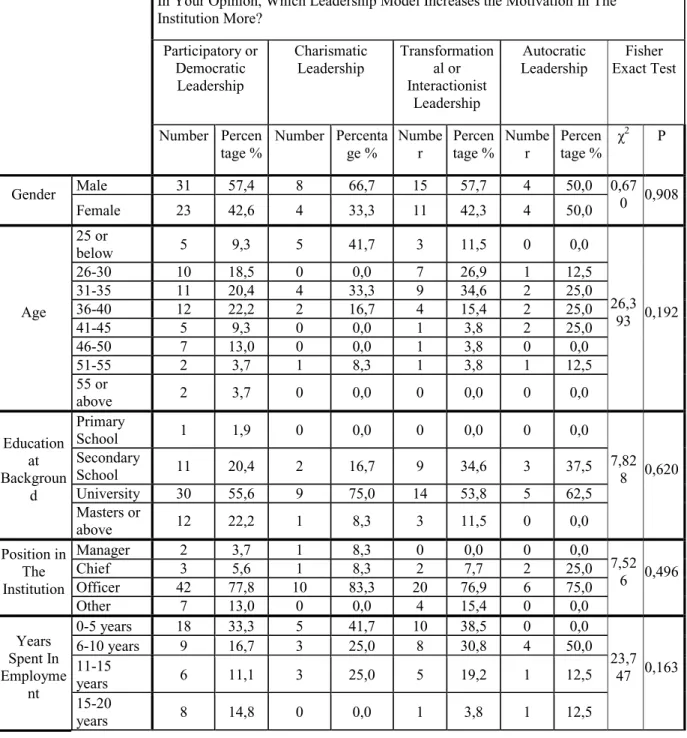
Table 1. The Correlation between the Socio Demographic Characteristics of the Public Employees and Leadership Models
In Your Opinion, Which Leadership Model Increases the Motivation In The Institution More? Participatory or Democratic Leadership Charismatic Leadership Transformation al or Interactionist Leadership Autocratic Leadership Fisher Exact Test Number Percen tage % Number Percenta ge % Numbe r Percen tage % Numbe r Percen tage % χ2 P Gender Male 31 57,4 8 66,7 15 57,7 4 50,0 0,67 0 0,908 Female 23 42,6 4 33,3 11 42,3 4 50,0 Age 25 or below 5 9,3 5 41,7 3 11,5 0 0,0 26,3 93 0,192 26-30 10 18,5 0 0,0 7 26,9 1 12,5 31-35 11 20,4 4 33,3 9 34,6 2 25,0 36-40 12 22,2 2 16,7 4 15,4 2 25,0 41-45 5 9,3 0 0,0 1 3,8 2 25,0 46-50 7 13,0 0 0,0 1 3,8 0 0,0 51-55 2 3,7 1 8,3 1 3,8 1 12,5 55 or above 2 3,7 0 0,0 0 0,0 0 0,0 Education at Backgroun d Primary School 1 1,9 0 0,0 0 0,0 0 0,0 7,82 8 0,620 Secondary School 11 20,4 2 16,7 9 34,6 3 37,5 University 30 55,6 9 75,0 14 53,8 5 62,5 Masters or above 12 22,2 1 8,3 3 11,5 0 0,0 Position in The Institution Manager 2 3,7 1 8,3 0 0,0 0 0,0 7,52 6 0,496 Chief 3 5,6 1 8,3 2 7,7 2 25,0 Officer 42 77,8 10 83,3 20 76,9 6 75,0 Other 7 13,0 0 0,0 4 15,4 0 0,0 Years Spent In Employme nt 0-5 years 18 33,3 5 41,7 10 38,5 0 0,0 23,7 47 0,163 6-10 years 9 16,7 3 25,0 8 30,8 4 50,0 11-15 years 6 11,1 3 25,0 5 19,2 1 12,5 15-20 years 8 14,8 0 0,0 1 3,8 1 12,5
21-25 years 6 11,1 0 0,0 0 0,0 1 12,5 26-30 years 6 11,1 1 8,3 0 0,0 0 0,0 31-35 years 1 1,9 0 0,0 2 7,7 1 12,5
H0: There is no correlation between the Socio Demographic (Gender, Age, educational background, position in the
institution, years spent in employment) of the public employees and Leadership model types. H1: There is no correlation between the Socio Demographic (Gender, Age, educational background, position in the institution, years spent in employment) of the public employees and Leadership model types. In the Table, the relationship between the socio demographic characters of the public employees participated in the study and administrative leader types they assume are increasing the motivation was examined. Fisher Exact Test which is an alternative to Chi Square Test was used within 95% reliability. According to this, the result that the variables of gender, age, educational background, position in the institution, years spent in employment in the socio demographic characteristics of the public employees participated in the study had a statistically meaningful correlation with administrative leader types they assume are increasing the motivation was not reached. (P>0,005, H0 hypothesis is accepted.)
Hypothesis of the Study: H0: The attitudes and behavior of the public administrators towards motivation aren’t
reflected in their motivational behavior towards the employees. H1: The attitudes and behavior of the public administrators towards motivation aren’t reflected in their motivational behavior towards the employees.
Table 2. The Correlation between the Attitudes of the Administrators towards the Motivation of the Employees and the Case Where the Institution Is Motivational
Do You Think That The Institution You Are Working In Has a Motivational Vision?
Yes No Undecided Maybe Fisher’s Exact
Test Num ber Percen tage% Nu mbe r Perce ntage % Nu mbe r Perce ntage % Nu mbe r Perce ntage % χ2 P
Do You Think That Administrators Should Be Informed About Motivating The Employees? Yes 35 40,7 36 41,9 9 10,5 6 7,0 16,061 0,01 6 No 0 0,0 3 75,0 1 25,0 0 0,0 Undecide d 2 40,0 0 0,0 3 60,0 0 0,0 Maybe 0 0,0 3 60,0 1 20,0 1 20,0
In the Table, the correlation between the employees’ thought that the administrators should be informed about motivating them and the institution they work having a motivational vision was examined. According to this, there is a statistically meaningful relationship between the institution having a motivational vision and employees’ thought that
the administrators should be informed about motivating them (χ2 =17,819 p<0, 05). Amongst the public employees who think that administrators should be informed about motivating the employees, 41, 9% thinks that their institution has no motivational vision and 40, 7 % thinks that their institution has motivational vision.
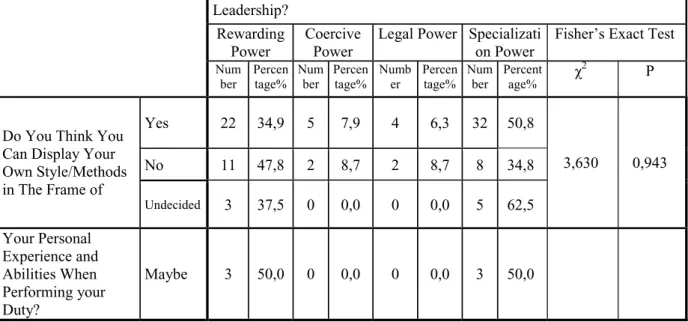
Table 3. The Correlation between the Case Where Public Employees Perform Their Tasks Completely and The Case Where the Power Source in Leadership is More Effective for Motivation
Which Power Source Do You Think Is More Effective In Motivation In Leadership?
Rewarding Power
Coercive Power
Legal Power Specializati on Power
Fisher’s Exact Test
Num ber Percen tage% Num ber Percen tage% Numb er Percen tage% Num ber Percent age% χ 2 P
Do You Think You Can Display Your Own Style/Methods in The Frame of Yes 22 34,9 5 7,9 4 6,3 32 50,8 3,630 0,943 No 11 47,8 2 8,7 2 8,7 8 34,8 Undecided 3 37,5 0 0,0 0 0,0 5 62,5 Your Personal Experience and Abilities When Performing your Duty? Maybe 3 50,0 0 0,0 0 0,0 3 50,0
H0: Public employees being able to use their authorities completely don’t affect their view of the effect of the power source in motivation in leadership.
H1: Public employees being able to use their authorities completely affect their view of the effect of the power source in motivation in leadership. In the Table, the case where the public employees use their whole personal experience and abilities when performing their duties and which power source of the leadership effects their motivation when using those characteristics were examined. According to this, among the public employees who think they display their own methods in the frame of their own personal experience and abilities when performing their duties, 80.8% think that specialization power, 34, 9% think that rewarding power, 7.9% think that coercive power and 6.3% think that legal power is the power source that enables motivation in leadership. There was no statistically meaningful correlation found between the case where public employees use their whole personal experience and abilities when performing their duties and which leadership power source is more effective in motivation while using those (χ2 =3,630 p>0,05).
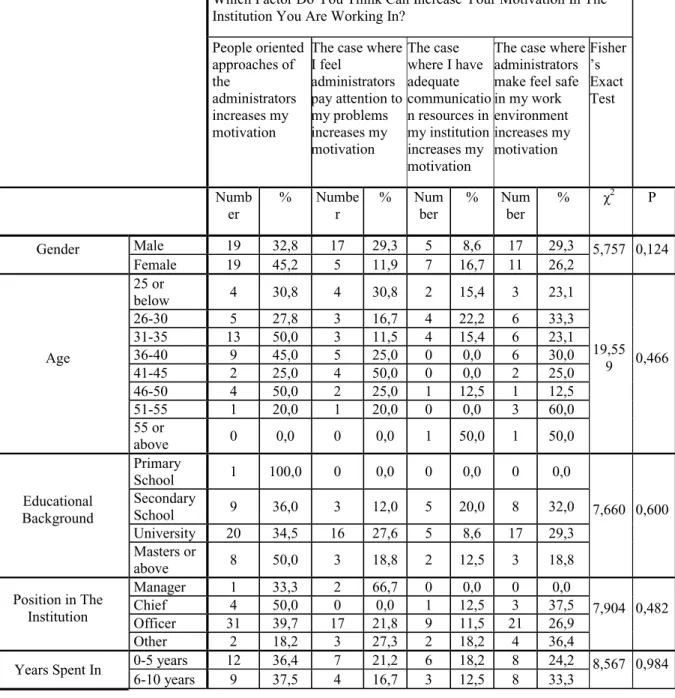
Table 4. The Correlation between Socio Demographic Characteristic of Public Employees and the Methods in the Institution That May Motivate Them
Which Factor Do You Think Can Increase Your Motivation In The Institution You Are Working In?
People oriented approaches of the administrators increases my motivation
The case where I feel administrators pay attention to my problems increases my motivation The case where I have adequate communicatio n resources in my institution increases my motivation
The case where administrators make feel safe in my work environment increases my motivation Fisher ’s Exact Test Numb er % Numbe r % Num ber % Num ber % χ2 P Gender Male 19 32,8 17 29,3 5 8,6 17 29,3 5,757 0,124 Female 19 45,2 5 11,9 7 16,7 11 26,2 Age 25 or below 4 30,8 4 30,8 2 15,4 3 23,1 19,55 9 0,466 26-30 5 27,8 3 16,7 4 22,2 6 33,3 31-35 13 50,0 3 11,5 4 15,4 6 23,1 36-40 9 45,0 5 25,0 0 0,0 6 30,0 41-45 2 25,0 4 50,0 0 0,0 2 25,0 46-50 4 50,0 2 25,0 1 12,5 1 12,5 51-55 1 20,0 1 20,0 0 0,0 3 60,0 55 or above 0 0,0 0 0,0 1 50,0 1 50,0 Educational Background Primary School 1 100,0 0 0,0 0 0,0 0 0,0 7,660 0,600 Secondary School 9 36,0 3 12,0 5 20,0 8 32,0 University 20 34,5 16 27,6 5 8,6 17 29,3 Masters or above 8 50,0 3 18,8 2 12,5 3 18,8 Position in The Institution Manager 1 33,3 2 66,7 0 0,0 0 0,0 7,904 0,482 Chief 4 50,0 0 0,0 1 12,5 3 37,5 Officer 31 39,7 17 21,8 9 11,5 21 26,9 Other 2 18,2 3 27,3 2 18,2 4 36,4
Years Spent In 0-5 years 12 36,4 7 21,2 6 18,2 8 24,2 8,567 0,984
Employment 11-15 years 7 46,7 5 33,3 1 6,7 2 13,3 15-20 years 3 30,0 2 20,0 1 10,0 4 40,0 21-25 years 3 42,9 2 28,6 0 0,0 2 28,6 26-30 years 2 28,6 2 28,6 1 14,3 2 28,6 31-35 years 2 50,0 0 0,0 0 0,0 2 50,0
H0: The factors that affect the motivation of the public employees in work place vary according to the socio demographic characteristics (gender, age, educational background, position in the institution, years spent in employment) of the person. H1: The factors that affect the motivation of the public employees in work place don’t vary according to the socio demographic characteristics (gender, age, educational background, position in the institution, years spent in employment) of the person. In the Table, the case if the factors that affect the motivation of the public employees participated in the study vary according to the demographic characteristics of the person was examined. According to this, there was no statistically meaningful correlation found between the socio demographic characteristics (gender, age, educational background, position in the institution, years spent in employment) of the public employees participated in the study and the factors that increase motivation in the workplace (p>0,05).
5. Results and Evaluation
Administration in the public is determined with laws, regulations and rules. Generally, it’s not important if the administrator is very talented and successful. Since it’s prominent to apply laws and rules in the enforcement, success and performance are shaped in accordance with these variables. It’s not always possible to be fair in public administration. In the study concerning this issue, 84% of the participants stated that applying disciplinary rules fairly to all of the employees in the institutions they work increases motivation.
In the results, it was observed that pressure as well as tedious mobbing have a significant effect in the motivation and performances of the employees and due to keeping silent against these factors because of underemployment, 13% of the employees said that they have psychological support. Additionally, in the cases where employees don’t get organizational consultancy support about their jobs, they get consultancy from various organizations in the market.
The motivation and success of the employees is not possible if the administrator doesn’t share information and experience with them. In the orders, transactions and actions based only on fear, administrations based on pressure, it is the employee who is harmed. However, the work of the state and public continue. It has to continue. In this sense, success and motivation of the employees is not a preferred option and evaluation. If the public administrator is not autocratic but democratic, specialized in the field, carries charismatic and interactionist leadership characteristics and uses these in their action, discourse and transactions, the employees will be motivated and their job performances will increase.
There is no correlation between socio demographic characteristics (gender, age, educational background, position in the institution, years spent in employment) of the public employees and leadership model types. The attitudes and behaviors of the administrators towards motivation are reflected in their motivational behaviors towards the employees. Public employees’ complete usage of their authority affects their view of power resource in motivation in leadership. The factors that will increase the motivation of the public employees in the workplace don’t vary according to their socio demographic (gender, age, educational background, position in the institution, years spent in employment) characteristics. There is no statistical correlation between the socio demographic variables such as
gender, age, educational background, position in the institution, years spent in employment of the public employees participated in the study and which administrator leadership type they think increases the motivation.
If the institution in which the public employees participated in the study has a motivational vision and if the administrators are informed about the motivation of the employees, the morals of the employees are boosted, the employee and the administrator achieve success together. Because success and performance are matters of plan, program and team work in organizations and work places.
References
Açıkalın, A. (2000) İlköğretim okulu yöneticilerinin dönüşümcü liderlik özellikleri ve empati becerileri arasındaki ilişki [The relationship between primary school administrators transformational leadership features and empathy skills], MA Thesis, Ankara, Gazi University, Institute of Educational Sciences.
Adair, J. (2005), Etkili Motivasyon [Efiicient Motivation], 2nd. ed., İstanbul, Babıali Kültür Publishing, April 2005.
Arıkan, S. (2001), Liderlik, Yönetim ve Organizasyon [Leadership, Management and Organization], ed. Salih Güney, Ankara, Nobel Publishing, 2001.
Ataman, G. (2002), İsletme Yönetimi Temel Kavramlar Yeni Yaklaşımlar [New Approaches to Business Management Basic Concepts], İstanbul, Türkmen Publishing.
Aytürk, N. (1999), Başarılı Yönetim ve Yöneticilik Teknikleri [Successful Management and Management Techniques], 3rd. ed., Ankara, Yargı Publishing.
Barutçugil, İ. (2004), Stratejik İnsan Kaynakları Yönetimi [Strategic Human Resource Management], İstanbul, Kariyer Publishing. Başaran, İ.E. (1992), Yönetimde İnsan İlişkileri Yönetsel Davranış [Human Relations in Management, Managerial Behavior], Ankara, Gül
Publishing.
Baysal, C. and Tekarslan, E. (1996), İşletmeciler için Davranış Bilimleri [Behavioral Sciences for Business Managers], 2nd ed., İstanbul, Avcıol Publishing.
Bilgin, K.U. (2004), Kamu Performans Yönetimi Memur Hak ve Yükümlülüklerinin Performansa Etkisi [Government Performance Management, Effects of the Rights and Obligations of Officers on Performance], Ankara, TODAŞE Publishing.
Can, H., Akgün, A., Kavuncubaşı, Ş. (1995), 2nd ed., Kamu ve Özel Kesimde Personel Yönetimi [Personnel Management in Public and Private Sectors], Ankara, Siyasal Publishing.
Can, H. (1985), Başarı Güdüsü ve Yönetsel Başarı: Türk Kamu ve Özel Kesim Yöneticileri Arasında Karşılaştırmalı Bir Araştırma [Achievement Motivation and Managerial Success: A Comparative Study Between Public and Private Sector Leaders in Turkey], Bizim Büro Publishing, Ankara.
Ekici, K.M. (2006), Vizyoner Liderlik [Visionary Leadership], Ankara, Turhan Publishing,.
Eren, E. (2004), Örgütsel Davranış ve Yönetim Psikolojisi [Organizational Behavior and Psychology of Management], 8th ed., İstanbul, Beta Publishing.
Eren, Erol; Yönetim ve Organizasyon [Management and Organization], İstanbul, Beta Basım Yayın Dağıtım. Ergezer, B. (2003), Liderlik ve Özellikleri [Leadership and Its Features], 4th ed., Ankara, Ocak Publishing.
Ertürk, M. (2000), İşletmelerde Yönetim ve Organizasyon [Management and Organization in Enterprises], 3rd ed., İstanbul, Beta Basım Yayın Dağıtım.
Genç, N. (2004), Yönetim ve Organizasyon, Çağdaş Sistemler ve Yaklaşimlar [Management and Organization, Modern Systems and Approaches], Ankara, Seçkin.
Gibson, J.L., Ivancevich, J.M., Donnelly J.H., Konopaske, R. (2002), Organizations: Behavior, Structure, Processes. 11th ed., Mc Graw Hill. Hanks, K. (1999), İnsanları Motive Etme Sanatı [The Art of Motivating People], Trans. Can İkizler, İstanbul, Alfa Publishing.
İncir, G. (2002), Motivasyon modellerinde son gelişmeler [Recent developments in motivation models], Verimlilik Journal, 3.
İncir, G. (2001), Motivasyonu uyaran belli bir lider kişilik yapısından ya da belli bir lider davranış biçiminden söz edilebilir mi? [Can we talk about a certain leader personality structure or leader conduct that stimulates motivation?], Verimlilik Journal, 2.
Kaynak, T. (1990), Organizasyonel davranış [Organizational behaviour], İstanbul, İ.Ü. Faculty of Management Publishing.
Keser, A. (2005), Çalışma yaşamında motivasyon ve yaşam tatmini [Motivation and life satisfaction at work], Istanbul, Alfa Aktüel Publishing. Koçel, T. (2007), İşletme Yöneticiliği [Business Management], 11th ed., İstanbul: Arıkan.
Koçel, T. (2003), İşletme Yöneticiliği [Business Management], İstanbul, Beta. Luthans, F. (1992) Organizational Behavior. 6th ed., İstanbul: Literatür.
Onaran, O. (1981), Çalışma Yaşamında Güdüleme Kurumları [Theories of Motivation at Working Life], Sevinç Matbaası, Ankara. Sabuncuoğlu, Z., Tüz, M. (2005), Örgütsel Psikoloji [Organizational Psychology], Bursa, Alfa Publishing.
Sabuncuoğlu, Z., Tüz, M. (1996), Örgütsel Psikoloji [Organizational Psychology], 2nd ed., Bursa, Ezgi Publishing.
Sapancalı, F. (1993), Çalışanların güdülenmesinde kullanılan özendirici araçlar [Encouraging tools used for employee motivation], Verimlilik Journal, Ankara, MPM Publishing.