ISTANBUL BILGI UNIVERSITY INSTITUTE OF SOCIAL SCIENCES
ORGANIZATIONAL PSYCHOLOGY MASTER'S DEGREE PROGRAM
PERSONALITY AND WORK-FAMILY SPILLOVER: TESTING THE MODERATING ROLE OF SEGMENTATION SUPPLIES SEMA ARGIN 116630013 ASST.PROF.ÜMİT AKIRMAK ISTANBUL 2019
Abstract
This study examines the role of personality in the management of work family dynamics and situational factors have also been added to the analysis as a moderator. Each of the Big Five personality traits and conflict and facilitation perspectives of work family interface including both dimensions of work to family (WFC and WFF) and family to work (FWC and FWF) were investigated. Situational factors have been included through the self- reporting of the participants on the supplies provided by their workplace for segmentation of the two domains. The data was collected from white-collar employees through e-mail in an anonymous manner (N=384). Personality was found to be a major significant predictor in explaining the conflict for both directions and significant but to a less extent in explaining the facilitation from work to family but not family to work. Neuroticism and partially conscientiousness are the main drivers of the conflict, while neuroticism has a positive relation with conflict for both directions; conscientiousness has a negative relation with family to work conflict. The results suggest that perceived flexibility of the workplace for segmentation adds a significant explanatory value to the model for conflict but not for facilitation. The moderator analysis revealed that individuals high in agreeableness and openness to experience have a positive role in reducing conflict from work to family, WFC, and that extraverts are able create a facilitation environment from work to family, WFF, only if supplies provided by the workplace for segmentation of the two domains are above a certain level. Practical implications for both organizations and individuals and future research areas are also discussed.
ÖZET
Bu çalışma kişiliğin iş aile dinamiklerini yönetmedeki etkisini incelemektedir. Çevresel faktörlerde analize düzenleyici değişken olarak eklenmiştir. Beş faktör kişilik özelliklerinin her birisi, iş aile yayılımının hem pozitif (kolaylaştırma) hem de negatif boyutu (çatışma), aileden işe ve işten aileye olmak üzere farklı yönleri ile analiz edilmiştir. Çevresel faktörler bireylerin kendi bildirimlerine göre iş yerleri tarafından iki alan arasında sınır koyma konusunda sağlanan koşulların değerlendirilmesi olarak analize dahil edilmiştir. Veri beyaz yakalı çalışanlardan e-mail yoluyla isimsiz bir şekilde toplanmıştır (N=384). Kişiliğin her iki yöne çatışmayı açıklamada anlamlı bir değişken olduğu saptanmıştır, ayrıca işten aileye pozitif yayılımı açıklamada da nispeten daha az etkili seviyede olsa da anlamlı bir değişken olduğu görülmüştür. Duygusal dengesizlik ve kısmen özdenetim çatışmada etkendir. Duygusal dengesizlik çatışmayı her iki yöne de arttıran bir değişkenken, özdenetim sadece aile iş yönünde çatışmayı azaltıcı rol oynamaktadır. İki alan arasında ayrışmaya olanak sağlayan işyeri esnekliğinin çatışmayı açıklamada anlamlı bir değişken olduğu gözlemlenmiştir fakat bu etki kolaylaştırma açısından görülmemektedir. Düzenleyici değişken analizi sonucunda, yumuşakbaşlılık ve deneyime açıklık kişilik özelliklerinin işten aileye çatışmada azaltıcı etkisinin ve dışadönüklük kişilik özelliğinin işten aileye kolaylaştırmada olumlu etkisinin sadece iş yeri tarafından iki alanı ayırmada belli bir seviyenin üzerinde esneklik gösterildiği takdirde gerçekleşebildiği görülmüştür. Araştırmanın kurumlar ve bireyler açısından pratik kullanımı ve gelecek araştırma alanları için getirdiği açılımlar çalışmanın içerisinde yer almaktadır.
TABLE OF CONTENTS
Abstract II
Özet III
Table of Contents IV
Tables and Figures VII
Abbreviations VIII Introduction 1 1. Literature Review 5 1.1 Work-family relationship 5 Work-family conflict 6 Work-family facilitation 10 1.2 Personality 13 Extraversion 14 Neuroticism 16 Agreeableness 18 Conscientiousness 19 Openness to experience 21
1.3 Segmentation – Preferences & Supplies 22
2. Hypotheses Development 28
2.1 Personality and work-family domain 28
2.2 Segmentation and work-family domain 30
3. Method 33
3.1 Participants and procedure 33
3.2 Measures 34
Work-family spillover 34
Boundary scale 34
Big Five Inventory (BFI) 35
Controlling Variables 36
4. Statistical Analysis 36
4.1 Identification and Data Cleaning 37
Identification 37
Response time methodology 38
Response pattern methodology 38
Inconsistency methodology 38
Data Cleaning 39
Absolute difference methodology 39
Multivariate outlier analysis 39
4.2 Normality Check and Intercorrelation Analysis 43
4.3 Hierarchical Multiple Regression 43
4.4 Relative Weight Analysis 43
4.5 Moderator Analysis 45
5. Results 45
5.1 Personality and Conflict 48
5.2 Personality and Facilitation 51
5.3 Segmentation and Work – Family 51
5.4 Personality, Segmentation and Work – Family 52
5.5 Supplies for Segmentation as Moderator 52
6. Discussion 57
6.1 Findings on Work – Family Conflict 58
Possible effects of the deficiencies of short scale 60
6.2 Findings on Work – Family Facilitation 60
6.3 Findings on Segmentation 63
6.4 Findings on the Moderator Role of Segmentation Supplies 64
7. Limitations 66
8. Conclusion and Future Research Implications 68
References 73
Appendices Appendix A – Measures (Turkish and English version) 89
Appendix B – Further information on short scales 93
Appendix C – Factor Analysis for Boundary Scale 98
Tables and Figures
Table 4.1 Before and after exclusion reliabilities 47 Table 4.2 Factor loadings before and after exclusion with
Principal Component Analysis forced to Five Factor 48 Table 5.1 Means, standard deviations and intercorrelations
among Study Variables 52
Table 5.2 Summary of three-step hierarchical regression analysis for variables predicting WFC, FWC,
WFF and FWF 53
Table 5.3 Summary of relative weight analysis of individual
predictors on work-family conflict 56 Table 5.4 Moderated regression analysis testing the moderating
effects of segmentation supplies on the relationship
between work and family and personality variables 60
Figure 2.1 Summary of the hypotheses 40
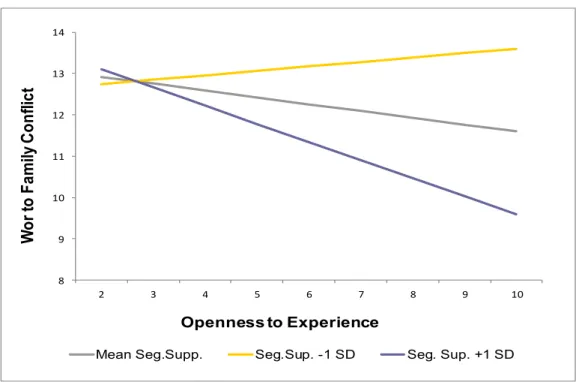
Figure 5.1 Moderation effect of segmentation supplies on the relationship between agreeableness and work to family conflict 62 Figure 5.2 Moderation effect of segmentation supplies on the relationship
between openness to experience and work to family
conflict 62
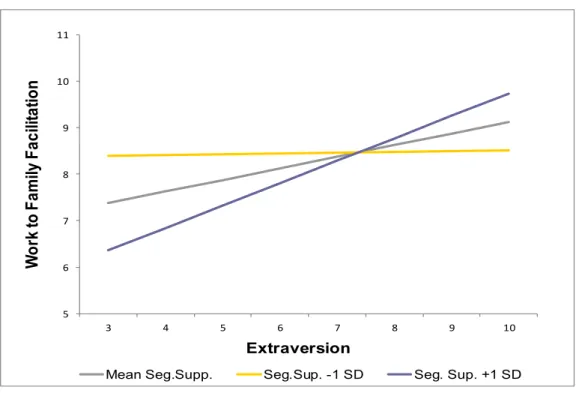
Figure 5.3 Moderation effect of segmentation supplies on the relationship between extraversion and work to family facilitation 63
ABBREVIATIONS
WFC Work to Family Conflict FWC Family to Work Conflict WFF Work to Family Facilitation FWF Family to Work Facilitation COR Conservation of Resources BIF Big Five Inventory
RWA Relative Weight Analysis TÜİK Turkish Statistical Institution SD Standard Deviation
Introduction
All of us witnessed in our lives individuals from similar backgrounds, similar lives and similar work characteristics, telling us similar stories in a different way. While one individual interprets having a busy life, a good thing to have, keeping him/her energetic in life, happy to contribute to the society in different ways (maybe both as a parent and a business person), the other one may tell how he/she gets exhausted from a busy life and because of this underperforms in his/her duties both in personal life and work. These are all personal perceptions, which are shaped by individual differences. Individual differences not only shape our perceptions and interpretation of the work family relationship but also how we manage the difficulties encountered (Michel & Clark, 2011).
Work and family are the two main domains covering most part of our lives and this makes these two topics a point of interest for psychologists. Organizational psychologists mainly focusing on the interaction between these two domains has provided a great coverage on analyzing the friction between these two domains (Parasuraman & Greenhaus, 2002; Greenhaus & Beutell, 1985; Michel, Mitchelson, Kotrba, LeBreton, & Baltes, 2009; Allen , Johnson, Saboe, Cho, Dumani, & Evans, 2012) and substantial amount of coverage on situational factors both from an individual perspective such as nature of family roles, work hours and from an organizational perspective such as organizational procedures and practices on overtimes, approach to parenting and role of supervisors (Parasuraman & Greenhaus, 2002; Eby, Casper, Lockwood, Bordeaux, & Brinley, 2005).
The focus of the current research is relatively less covered angles of the work family literature, effects of personality traits on the work-family interaction rather than situational factors were studied, and work-family interaction were analyzed based on the type of
interaction (facilitation/conflict) and direction of interaction (work to family/ family to work). First of all, this research acknowledges that the work family interaction can trigger not only conflict but also facilitation between two domains. While many researchers focused on the conflict, this is understandable since the impact of bad is more remarkable than the impact of good (Baumeister, Bratslavsky, Finkenauer, & Vohs, 2001), there are also a number of studies working on the facilitation between these two domains (Greenhaus & Powell, 2006; Grzywacz & Marks, 2000). There are inevitably some intersections in terms of allocated time, expected behavior models and required skills between two domains, and simultaneous demand on the time, behavior and skills creates stress on the individuals who are by nature motivated to protect their personal resources according to Conservation of Resources (COR) theory of Hobfoll (1989, 2002) and work family conflict comes into the picture in both directions, family to work and work to family. While work family conflict occurs through the existence of work stressors (e.g., working overtime, demanding supervisors) and family stressors (e.g., number of children, taking care of elders), it is worthwhile to consider that there are also social support mechanisms both at work (e.g., support from colleagues and/or managers) and at family (e.g., caring husband, help from grandparents). The social support mechanisms not only help individuals to diminish the conflict between two domains (Michel et al., 2009) but also act as a buffer in conserving personal resources (Hobfoll, 1989; Hobfoll, 2002), which in turn would let individuals to convert the positive gains to positive actions and turning into a continuous positive cycle for the individuals (Fredrickson, 1998). Individuals may gain positive emotions and also transferable skills in one domain which would help them to perform better in the other
domain and a good social support system enables individuals to create this facilitative environment (Werbel & Walter, 2002).
Secondly, the intention of the current study is to provide greater focus on the role of personality traits in the work-life balance processes. This gap in literature has been addressed by Parasuraman & Greenhaus (2002), and Eby et al. (2005). A monograph published by Eby et al. (2005) on the work family research detected that out of 966 predictors estimating work family relationship in the literature between the years 1980 and 2002, only 4.7% of the researches used individual differences as predictors and this ratio falls to 1.2 % for specifically personality variables. Personality is a key element in dealing with the possible work stressors since work stressors dominate individuals’ life as long as they let them to do so physically or mentally and personality traits supporting a strong attitude against work stressors would obviously have a lessening effect on the conflict between two domains (Connor-Smith & Flachsbart, 2007). For example, the relationship of social support and work family conflict was found to be more effective for individuals high in agreeableness and conscientiousness (Selvarajan, Singh, & Cloninger, 2016). On the other hand, facilitation between two domains would only occur when the indiviuals can manage to form a good support system for themselves in both domains and personality traits play an active role in how people established their social support network (Wayne, Grzywacz, Carlson, & Kacmar, 2007).
Work family literature has started to cover the role of personality in the work family interface and although rare, there are studies analyzing the work-family connection through five factor inventory. Personality, across different empirical studies, is found to explain approximately 15% to 25% of the variance in work -family conflict and 7% to 15% of the
variance in work-family facilitation (Wayne, Musisca, & Fleeson, 2004; Michel & Clark, 2013; Michel, Clark, & Jaramillo, 2011).
Thirdly, this research targets to add a situational edge through the analysis of the moderating effect of physical and mental flexibility provided by the workplace, which will be referred to as segmentation supplies in this study (Kreiner, 2006). Every individual have a different preference for how much to integrate work life into family life. This preference moves along the continuum of full integration to full segmentation and how much your workplace lets you to locate yourself in your preferred position moderates the relationship of personality and work family interaction. The present article analyses the effect of both the preference for segmentation and provided flexibility for segmentation on the work family interface and mainly focuses on the role of perceived workplace flexibility on the relationship of personality and work family interface. COR theory of Hobfoll (1989, 2002) argues that the individuals are motivated to defend their personal resources and their situational resources. Individuals put a lot of effort not to lose these resources or if they feel lose some of these resources, an additional effort was consumed to gain these resources. Therefore, situational resources are as important as personal resources and they influence human behavior depending on the extent of perception of these situational resources. Brummelhuis & Bakker (2012) described situational resources as resources that can be found in the social environment of the individuals and social support is one of the main items in this category. Individuals gather an opinion regarding their situational resources and this opinion shapes their job attitudes (Cropanzano, Howes, Grandey, & Toth, 1997). Work family conflict, which was found to be resulting in declining job performance, was shown to
be less impactful under good level of perceived support from the organization (Witt & Carlson, 2006).
As a result, the current study aims to form a comprehensive model covering both positive spillover (facilitation) and negative spillover (conflict) with both directions of influence, work-to-family (WFC and WFF) and family-to-work, (FWC and FWF) with its roots going down to the personality of individuals and perceived flexibility of the work environment.
1. Literature Review 1.1 Work-Family Relationship
Work and family domains may lead to role accumulation or role conflict depending on how individuals manage and perceive these two different but at the same time complementary roles. While role accumulation indicates a positive spillover, transfer of the positive aspects of one domain to the other through affective states, such as moods and emotions, and/or through instrumental dimensions, such as skills and perspective, (Greenhaus & Powell, 2006), role conflict occurs as a result of negative spillover, which is the spillover of time, strain and behavior of one domain to another causing depletion of resources in individuals (Greenhaus & Beutell, 1985).
The current study would concentrate on family life and work life, which together supports or destroys a good personal life. Individuals who are content in both of these domains are also happy with their personal lives or vice versa and individuals who are exhausted in both of these domains are also unsatisfied with their personal lives. Since the conflict and facilitation between these two facets of life would spillover to the other domains of life leading to joy or frustration, the current study would work on family life, as
in the case of most of the literature, as a representative of personal life (Friedman & Greenhaus, 2000).
Before starting discussing the conflict and facilitation between work and family domains, it need to be clarified that facilitation and conflicts were proven to be distinct constructs (Greenhaus & Powell, 2006) Therefore, it is possible that an individual experience high level in both of them or being low in one of them and high in one of them. Greenhaus & Powell (2006) run an analysis over the 14 studies in the literature measuring correlation between conflict and facilitation, and correlation levels were found to be very low with a mean value of -.02, showing that these two constructs are not related.
Work-family conflict. Every individual has different and multiple roles in life as an employee, as a mother, as a son, as a wife and so many other different roles. All of these roles have requirements that need to be fulfilled at the right time and at the right quality. Kahn, Wolfe, Quinn, & Snoek (1964) delineated work related stress as a product of role conflict, which arises from the incongruent types of pressure coming from diverse spheres of life. Khan et al. (1964) discussed that the source of conflict can either be internal or external. In case of internal conflict, individuals perceive the expectations from them at a very high level, where they wouldn’t be able to meet and put a psychological pressure on themselves. On the other hand, external conflict occurs when the source of the conflict is the environment (e.g., unsupportive family members, rigid company policies). In any case, conflict is a consequence of the emotional strain triggered by difficult to accomplish demands from different roles.
Individuals working on to deal with these contrasting pressures from different domains experience role conflict due to internal or external reasons, playing on scarce
resources and as a result, spillovers between the multiple roles occur. Greenhaus & Beutell (1985) contemplated that the spillover from one role to another occurs based on time, demand and behavior based requirements of the different roles.
Work and family as two main domains that takes time and effort of individuals are the most common reasons of the role conflict occurrence. Greenhaus & Beutell (1985) analyzed the simultaneous pressures in the work family interface in three dimensions. First of all, work family interface requires the active participation of the individuals in order to attain a healthy environment in both sides, putting a time pressure on the individuals. While requirements of long working hours and strict deadlines puts pressure on the employee identity of the individual, family, including spouse, kids and elders, asking the individual in same time period to participate in the family activities, squeezes the individual even more in terms of time allocation.
Secondly, tension prevailed in one domain would cause a negative spillover to the other domain. While extensive working hours, travelling for work and ambiguities and/or conflicts experienced in the workplace act as stressors from the work side, friction between spouses and other family members, problems with the kids triggers the conflict from the family side.
Thirdly, family and workplace may require totally different patterns of behavior and the transition between the accepted norms of each domain puts additional pressure on individuals. While the norms at the workplace may be to build detached relationships forming a rigid and aggressive atmosphere, the family may require extensive warmth and joy (Greenhaus & Beutell, 1985).
Scarcity hypothesis was also used commonly in literature in the deliberation of work family conflict. Goode (1960) acknowledges that individuals have scarce resources in terms of both energy and time and these limitations result in a continuous negotiation processes between their roles. Since every individual tries to act for their own benefit, clashes between roles are inevitable in this role arena. Hobfoll (1989, 2002) discussed that the source of stress is the actual or perceived attack to individuals’ resources, where resources are described to be in different types such as objects (tangibles such as car, house), personal traits (e.g., self-efficacy), conditions (e.g., work, home) or energies (e.g., time, physical energy). Hobfoll (1989, 2002) also described the concept of “loss spiral” where actual or perceived attack to these resources creates an even further reduction in the resources triggered through the generated stress.
While the three main stressors of time, demand and behaviour requirements described by Greenhaus & Beutell (1985) clarifies how the conflict starts in the work family sphere, COR theory helps us to understand the deteroriation, caused by these stressors, in the resources of individuals. Brummelhuis & Bakker (2012) built a model on the work family relationship over the basis of COR theory and grouped the stressors under the heading of “contextual demands”. Contextual demands referring to stress occured through the pressures from overburden, physical, psychological and cognitive demands. Although the grouping may show some discrepancy between Greenhaus & Beutell (1985) and Brummelhuis & Bakker (2012), the underlying headings under these defined pressures overlap and both discusses the stress taking place when these stressors impedes the individuals to fulfill their responsibilities. Brummelhuis & Bakker (2012) brought a further angle through a resource approach of COR theory and discussed that demands from one
domain causes a decline in the performance capacity of the individiual in the other domain through the erosion in personal resources.
The stress explained through different perspectives show that the effect might be bidirectional. While the work to family conflict dominated the literature, it is clearly seen that all these three forms of conflict may also be sourced from family. Family to work and work to family conflict has unique antecedents (Michel et al., 2009 ; Byron, 2005), as work to family conflict is triggered by work related parties and issues such as work involvement, inflexible schedules, inadequate support from coworkers or supervisors, job demands, family to work conflict is triggered by family demands, marital or parental conflict, housework and child care. Family involvement is not found be causing family to work conflict, contrary to the finding that work involvement is one of the important reasons for work to family conflict. (Byron, 2005)
Kossek & Ozeki (1998) showed through a meta analysis that scales clearly considering the direction of the conflict (i.e., work to family, family to work) provide a better performance than the scales used to evaluate both directions of conflict in a vague way. Work to family and family to work conflict dimensions were reported as distinct constructs (Frone, Russell, & Cooper, 1992; Hammer & Thompson, 2003; Greenhaus, Allen, & Spector, 2006; Lee, 2018) and in most of the studies work to family conflict were discucessed to be experienced more often (Frone et al., 1992) but health consequences, such as depressive symptoms and poor physical health, were indicated to be more severe for family to work conflict (Frone, 2000; Frone, Russell, & Lynne, 1997). Regarding the heavier personal consequences of family to work conflict compared to work family conflict, Frone (2000) commented that this may be due to the effect of putting the blame on other
parties or yourself. In the case of work to family conflict, individuals may find the comfort of blaming the workplace conditions or supervisor, however in the case of family to work conflict, individuals may question their ability in managing the work family relationship.
Frone et al. (1992) argued that when one role interferes with the other, the interfered role would suffer and a lower quality involvement would occur. Therefore, WFC and FWC not only have different antecedents but also different outcomes. While WFC would result in family related problems, FWC would result in work related issues. Byron (2005) also supported this view and commented that different remedies are required to reduce WFC and FWC. Lee (2018) also confirmed that the two concepts have different outcomes and found out that individuals may experience different levels of WFC and FWC, they may even act in the opposite directions. Lee (2018) also pointed out that although they are distinct constructs, they are not totally mutually exclusive meaning they are correlated to some extent so it is not possible to have an individiual being very high on WFC and experiencing no FWC and vice versa.
Work-family facilitation. While the literature focused on the negative spillover between life and work domains, (Parasuraman & Greenhaus, 2002) there is also certain amount research on the positive spillover between two domains (Ford, Heinen, & Langkamer, 2007; Chen, Powell, & Greenhaus, 2009; Greenhaus & Powell, 2006; Masuda, McNall, Allen, & Nicklin, 2012). While the literature used different terms for facilitation with some nuances in themselves such as positive spillover, enhancement and enrichment, throughout this study, these words are used interchangeably referring to facilitation, which implies individuals performing better in one domain by the help of the knowledge and skills accumulated in the other domain.
Werbel & Walter (2002) criticised work and family being studied and presented as clashing roles and pointed out how the two roles can go with harmony and support the individuals performance in both domains by providing reciprocal benefits. For example, workplaces support individuals not just in terms of technical knowledge but also contributes to the development of many soft skills such as communication, teamwork and creative thinking, which they could also benefit in family life. On the other hand, social support from the family equip the individuals well in dealing with challenges at the workplace.
The concept of role conflict in the work-family conflict literature leaves its place to the concept of role accumulation when discussing the positive approach in the work-family relationship. Sieber (1974) introduced the concept of role accumuluation against role conflict and claimed that role accumulation brings enrichment both in the role performance and personality rather than strain. Marks (1977) confronted the scarcity hypothesis claiming that the individuals’ not just consume but also produce energy and resources that can be expanded depending on the circumstances. COR theory of Hobfoll (1989, 2002) also supported this view by discussing resources generating new resources, resulting in “gain spirals”. Both the social resources such as social support, employment conditions and personal resources such as time, physical energy or personality traits such as optimism are the resources assisting the individuals in overcoming the challenges in the work family interface and more importantly they act as retainers in gaining new resources.
Wayne et al. (2007) added a positive psychology perspective to the COR theory in explaning the facilitation between two domains. Wayne et al. (2007) focused on the individuals’ motivation to obtain positive gains and personal and enviromental characteristics together supporting positive experiences was proposed to enable faciliation.
Brummelhuis & Bakker (2012) also adapting COR theory to work home interface proposed that social resources from both of the domains contribute to the expansion of personal resources which brings better performance to the individuals in both of the domains leading a further expansion of the resources. For example, a supportive partner acting as a social resource would boost the self confidence of the individual, forming a personal resource which would lead to a better performance at work. This would definitely result in a gain spiral when the individual comes home from work in a positive mood and in turn with the positive mood contributing to a happier family environment.
Greenhaus & Powell (2006) elaborated positive spillover through two main paths, which are affective and instrumental. The affective spillover dimension of positive spillover can be explained by the positive emotional states in one domain leading to positive emotional states in the other domain. The instrumental dimension stands for the transferable skills formed in work or family domain. While the instrumental channel effects the facilitation scheme in a direct way such as knowledge and skills acquired in one domain also used in the other domain, affective route is a more indirect route promoting facilitation in one domain through the resources generated with the positive emotions occurred in the other domain (Greenhaus & Powell, 2006).
Work – family facilitation can exist bidirectionally (Wayne et al., 2007; Greenhaus & Powell, 2006; Frone, 2003) where both directions are distinct constructs with different antecedents and outcomes (Frone, 2003). While work related topics such as work support, number of hours worked, control over decision making processes, pressure at work may affect the level of work to family facilitation, nonwork related topics such as family support, marital support or conflict, parental satisfaction or conflict, quality time spent with the
family shape up the extent of family to work facilitation. An understanding and flexible work setting is expected to result in positive outcomes in the family domain, a caring family atmosphere would produce positive results at the workplace. (Greenhaus & Powell, 2006; Grzywacz & Marks , 2000) Therefore, as in the case of work family conflict, it is possible an individual experiencing WFF but not FWF or vice versa.
1.2 Personality
Each individual have his/her own and exclusive way in the adjustment to different situations. Personality has been discussed to impact behavior patterns and perception and understanding of situations in different domains of life (Matthews, Deary, & Whiteman, 2003). Personality was found to explain 20 to 50 percent of the variance in happiness (Demir & Weitekamp, 2007). Many personality psychologists utilize global trait domains, namely “Big Five” domains, which are neuroticism, agreeableness, conscientiousness, extraversion and openness to experience (McCrae & Costa, 1991; McCrae & John, 1990; Goldberg, 1992; Saucier, 1994).
Personality has also started to take an important place in the work family literature (Wayne et al., 2004; Michel & Clark, 2013). Research has shown that work personality relationship starts even at the hiring process, personality effects the hiring process either intutively or through the usage of some personality tests. While conscientiousness seemed to be a required qualifications for almost all kind of jobs, salespeople are chosen from extraverts, positions requiring artistic approaches are selected from individuals higher in openness to experience (Dunn, Mount, Barrick, & Ones, 1995). Personality was also found to be an important indicator in job performance (Barrick & Mount, 2005). Therefore, it is inevitable that personality, as being a significant factor in every step of work life, would also
play an important role in the work-family spillover process. Michel et al. (2011) carried out a meta analytic review over 66 studies and presented that five factor model is an important variable in predicting of work-nonwork spillover. Their analysis indicated that while extraversion, conscientiousness, agreeableness and neuroticism is effective in predicting negative spillover, conflict aspect, extraversion, opennness to experience, conscientiousness and agreeableness found to be associated with positive spillover , facilitation angle, and five factor model was also observed to be an explanatory variable on the relationship of both work to family and family to work dimensions.
Personality, shaping our behavior and perception pattterns, is expected to influence work-family conflict by determining how we respond to demands from different domains and how we manage stress created through conflicting demands. On the other hand, personality is also expected to be an important predictive in work - family facilitation since it may trigger facilitation through the transfer of knowledge and skills, instrumental path, and positive emotions, affective path, from one domain to another (Michel et al., 2011; Michel & Clark, 2011).
Personality does not only effect how individuals cope with the demands from different domains but also effects the way of coping (E.g., while someone high conscientousness may deal with the situtation through good planning, an extravert may prefer to use some social support) (Connor-Smith & Flachsbart, 2007).
Extraversion. McCrae & Costa (1991) elaborated extraversion under the characteristics of warmth, positive emotions and energetic. Extraverts found to be spending more time on enjoyable activities with other people versus alone during the day (Oerlemans & Bakker, 2014). Ozer & Benet-Martinez (2006) deliberated the interpersonal and social
outcomes of extraversion as satisfaction in personal relationships and professional choices. Cheng & Furnham (2001) showed in an empirical study that the extravert people inclined to have optimistic attribution style, which is a strong predictor of happiness. Extraversion was also found to have a significant effect on friendship quality, friendship conflict, number of friends, positive affect, negative affect and life satisfaction (Demir & Weitekamp, 2007).
Argyle and Lu (1990) underpinned the motivation of extraverts for joining social activities through an empirical study and they also proposed the higher level of social interaction leading to higher level of happiness. Fishman, Ng, & Bellugi (2011) run an experimental design by displaying a social stimuli (human faces) and non social stimuli (flowers) to individuals and observed that individuals high in extraversion allocate more attentional resources to social stimuli. There are also studies demonstrating that individuals high in extraversion exhibiting greater resilience, which enables them to recover from negative events and act solution oriented (Lu, Wang, Liu, & Zhang, 2014; Campbell-Sills, Cohan, & Stein, 2006).
Extraversion, representing the social facet of personality, creates an opportunity for individuals to succeed in expansion of resources through the positive perspective and social stance. Helson & Srivastava (2001) found out that extraversion is strongly correlated with personal growth, which is defined as one’s ability to develop the potential and succeed to grow as a person (Ryff, 1989). The expansion of resources through the accumulated social and personal resources are described both in the COR model of Hobfoll (1989, 2002) and Broaden and Build model of Fredrickson (1998).
Every action starts in mind and then body follows the mind. Positive emotions fostering positive attitudes creates a positive thinking environment for individuals resulting
in expanding their collection of positive actions. (E.g., while anger may produce an impulse of quarrel, joy triggers creativity.) According to Broaden and Build model, accumulation in positive actions fostered through positive emotions would enable individuals build social and personal resources, physical, intellectual and psychological dimensions, and in turn these expanded resources empower individuals to gain more positive emotions (Fredrickson, 1998). This approach shows a resemblance to COR theory of Hobfoll (1989, 2002) acknowledging the power of social and personal resources in forming a circular of benefits and building a continuously growing resource environment for the self.
Individuals high in extraversion, with their positive emotions and strong social bonds would be able to have the necessary social and personal resources in dealing with the conflict between two domains. Social support, in forms of work and family support, is acknowledged to be an important determinant of both work to family and family to work conflict (Byron, 2005; Michel et al., 2009). Moreover, their inclination towards positive gains in life would enable them to experience facilitation between two domains. Personal features promoting positive thinking and feeling not only bring positive experiences but also enables new personal gains leading to a facilitative environment (Wayne et al., 2007).
Neuroticism. It is the domain reflecting the negative emotions mainly worry, anxiety and insecurity (McCrae & Costa, 1991). There are studies over the positive link between neuroticism and anxiety disorders (Kotov, Watson, Robles, & Schmidt, 2007; Kaplan, Levinson, Rodebaugh, Menatti, & Weeks, 2015). Kaplan et al. (2015) have further found out the negative correlation of social anxiety with trust and self-efficacy and opened up an avenue to question the trust issues for individuals high in neuroticism. Ozer & Benet-Martinez (2006) emphasized significant personal and social outcomes for neuroticism as
dissatisfaction both in friend and family relations and career path. It has been revealed in some studies that the individuals high in neuroticism display less resilience, leading to a slow pace of adaptability from negative experiences (Campbell-Sills et al., 2006; Lu et al., 2014). Wayne et al. (2004) reported that individuals high in neuroticism are inclined to negative emotions which results in perception of having less time and more conflicting demands and as a result neuroticism is more related to conflict rather than facilitation. Cheng & Furnham (2001) evidenced in their study that neurotic individuals have a negative way of interpreting events and negative approach to events is a primary indicator of low level of happiness. In line with this finding, neuroticism is found to be highly negatively correlated with environmental mastery (Ryff, 1989), belief or ability that the individual may have control on the complicated situtations (Helson & Srivastava, 2001). Boyar & Mosley Jr. (2007) showed that neuroticism is an important part of core self-evalution of the individuals, which was found to be negatively related to work to family and family to work conflicts.
Individuals high in neuroticism with their negative attitudes in dealing with stress prefers the coping strategy of circumvention or withdrawal, which are temporary solutions, and even when they ask for social support, since they were not able to create a good social network due to their trust and anxiety issues, they fail to get this support adequately (Connor-Smith & Flachsbart, 2007; Michel et al., 2011). Zellars & Perrewe (2001) showed that individuals high in neuroticism engage in negative conversations and thus experience depersonalization and fails to create a social support network. In accordance with Broaden and Build model of Fredrickson (1998), as opposed to the extraversion, negative emotions would be an obstacle in creating positive actions and thus preventing neurotic individuals to
build a good amount social and personal resources. The interpretation of COR theory of Hobfoll (1989, 2002) for individuals with neuroticism tendency would also be that it is highly likely these individuals will subject to loss spirals through the perceived high degree of stress triggering a loss in social and personal resources.
Work family enrichment requires having a good level of interpersonal relationships, positive evaluations of the self and most importantly a clear mind to act both on behalf of the self and the other parties. Neuroticism prevents individuals to build satisfactory relationships in both spheres and therefore people high in neuroticism would lack the most important tool, trust, which would be needed to manage the conflicts through delegations and support. In addition, their low resilience level would cause them to spend so much time on the recovery while in that period the conflict between two domains would even go more out of their hands.
Agreeableness. The dimension of agreeableness in the Big-Five model refers to the characteristics of being appreciative, sympathetic, cooperative and trusting (McCrae & John, 1990). Highly agreeable individuals may be able to develop and maintain good and intimate relationship with others and consequently to attain a good level of well being. Agreeableness is found to be directly related to positive and negative affect pointing out the importance of social relationships in emotional stability (Zhang & Tsingan, 2014). Individuals who are high in agreeableness would be a great value for the teams with their attitude of more sharing, less conflict (Barrick & Mount, 2005). Ozer & Benet Martinez (2006) posited that highly agreeable individuals would experience acceptance and satisfaction in personal relationships and would exhibit volunteerism and leadership behaviors. Individuals high in agreeableness was found to be experiencing less time based
conflict, which is one of the important sources of work-family conflict. This may be due to the fact that agreeable individuals, who are cooperative and trusting, may be able to see the reciprocal good behaviors from their environment, letting them asking for help in their time-management processes (Bruck & Allen, 2003). Connor-Smith & Flachsbart (2007) reported through a meta-analysis that individuals high in agreeableness are prone to seeking support in dealing with work family issues helping them in reducing conflict between two domains.
Individuals high in agreeableness would be inclined to avoid conflict and promote sharing, consequently acting in a cooperative and solution oriented way. The characteristics of being trusting and cooperative associated with agreeableness would be great assets in building a supportive interpersonal network and individuals high in agreeableness were found to benefit from social support in managing work family relationship (Selvarajan et al., 2016). Agreeable individuals were found to be keen on non-work related conversations and caring and sharing with other people let them feel good about themselves (Zellars & Perrewe, 2001). Agreeableness outstands the other personality traits in terms of building good quality and less conflicting friendships, which are two important indicators of happiness (Jensen-Campbell, Adams, Perry, Workman, Furdella, & Egan, 2002; Demir & Weitekamp, 2007). Personalizing with people, agreeable individuals are more open to listen different ideas and gaining new perspectives, these properties also equip them in creating a facilitative relationship between two domains (Michel et al., 2011).
Conscientiousness. McCrae & John (1990) defined the conscientiousness factor with the main facets of efficient, responsible and organized. Tett & Burnett (2003) also supported that the individuals high in conscientiousness would act responsible and detailed oriented in both social and organizational level and they also proposed that these people
would promote clear-cut communication. Ozer & Bennet (2006) commenting on the outcomes of conscientiousness stated that conscientiousness would facilitate satisfaction at family and friend relationships and success at the social level. Conscientiousness was found to be significantly related to job performance and individuals high in conscientiousness described as being persistent and achievement oriented (Barrick & Mount, 1993). Neuman & Wright (1999) further identified conscientiousness as an important value for team performance. Individuals high in conscientiousness reported to have less family interference with work, indicating planning skills of conscientious individuals let them prevent conflict between two domains. (Bruck & Allen, 2003; Wayne et al., 2004)
Campbell-Sills et al. (2006) analysed the relationship of resilience to personality dimensions and found out that conscientiousness was positively related to resilience, which was reported to be positively related to task oriented coping rather than emotionally driven coping strategies. Focusing on the problem rather than wasting time on the emotions would save time and effort for conscientious individuals letting them to reduce the conflict between two domains in a smooth way in line with their plans. Conscientious individuals have the ability to develop or select the circumstances that would be best fit for their psychological situation (Helson & Srivastava, 2001), which is defined as to be a very important characteristic for mental health (Ryff, 1989).
Conscientious individuals would have more spare time since they manage the problems in an organized manner, thus this would let them accumulate time and energy. Besides, conscientious individuals tend to an efficient social network (McCrae & Costa, Jr., 1999), which would assist them in getting social support (Selvarajan et al., 2016). Therefore,
conscientious individuals have the necessary tools for achieving an enrichment between two domains.
Individuals most of the time fail in time management due to their inefficient approach in handling responsibilities in both domains, letting the interruptions of the domains to be out of their control. There is one self with responsibilities on both of the domains and thus interruptions are totally acceptable as long as they are manageable. Multi-tasking and time management abilities of the individuals high in conscientiousness would allow them to do the right delegations at the right time and update the priority list when needed.
Openness to experience. McCrae & Costa (1997) described openness as an essential dimension of personality signifying a variety of different characteristics in treating experience. Individuals who are high in openness to experience rather than being passive players of the incidents, they would be motivated to vigorously look for new and diverse experiences. McCrae & Costa (1997) have further commented on the cognitive side of the openness with an interpretation of openness for inner experience. Openness in inner experience stands for the complexity and intensity of the individuals’ awareness and consciousness. (McCrae & Costa, 1997) The motive of pursuing experiences of the individuals high in openness to experience was also found to be related with open-mindedness and being tolerable to uncertainty (McCrae, 1996).
Connor-Smith & Flachsbart (2007) found out that individuals high in openness to experience can develop different ways of thinking and problem solving strategies in coping with stress. Openness to experience may lead individuals to view tough cases as an opportunity for development and thus perceiving less pressure between two domains.
Openness to experience is a trait of continuous development rather than aiming a secure state of no problems (Ryff, 1989) and it is highly correlated with personal growth (Helson & Srivastava, 2001). They would be able to cope with the stress in a better way with creative solutions, they would also perceive the stress less than the individuals low in openness to experience resulting in lower conflict in the work family interface. Besides, individuals high in openness would be more willing to transfer different skill sets obtain in one domain to the other domain which would let them to create a facilitative environment between two domains (Michel et al., 2011).
Life is full of unexpected incidents on both domains and how we handle the unexpected usually makes the difference in turning work family relationship to a conflict or facilitation. Work family relationship is not something stable, it is not creating the most efficient system and living happily ever after. The individuals high in openness to experience would embrace and benefit from the varied experiences by virtue of their perspective for the uncertainties and would manage to act in a flexible manner in managing this relationship. How we manage work and family domains, how we cope with difficulties is a live process that needs to be defined and updated in accordance with the circumstances and openness to experience would be an important trait in this process.
1.3 Segmentation - Preferences & Supplies
One of the basic concepts of work family literature is about how individuals manage the shift between the two territories and in the modern world, where working hours getting unclear through technology, the issue of separation of two domains gained even more importance. Individuals are reachable through phones and e-mails all the time, making the segmentation of these two domains in terms of both physical and psychological detachment
harder. Derks & Bakker (2014) demonstrated that individuals using their smartphones extensively for the purposes of doing their job, experienced the difficulty of separating two domains, and being not able to detach themselves from work, led to exhaustion. Barber & Santuzzi (2015) defined this technological presssure on the employees as a construct and named it as “workplace telepressure” and found out that workplace telepressure caused both physical and psychological burnout.
The two domains obviously experience crossings in terms of allocated time, expected behavioral types and required demands between each other, which brings role conflict into the picture as a barrier in the way of both full segmentation and full integration. Every individual has their own way of dealing with the boundary management of these two zones and there are many different variations in this continuum, which span from full segmentation to full integration. (Nippert-Eng, 1996) While complete integration causes the individual to experience blurring of roles, it also makes it easier to move between the roles. On the full segmentation side, roles are clearly defined, no confusion, but on the other hand transition between the roles requires more effort. This is a continuous negotiation process, which is driven by both individual differences and situational factors. While the individual differences shape the individuals’ preference of segmentation, situational factors show us the flexibility offered to individuals both in terms of physical and perceived conditions so that segmentation of two domains can be experienced in the preferred limits of individuals (Ashforth, Kreiner, & Fugate 2000; Kreiner, 2006).
Two important theories that needs to be considered in the boundary management processes discussing the segmentation as more than being a preference but a need is effort - recovery model of Meijman & Mulder (1998) and COR theory of Hobfoll (1989, 2002).
Both theories focuses on the potential depletion of resources occuring when the individuals keep using the same psychological and physical resources. Both theories focus on the individuals’ need to replace the consumed resources in one domain in order to perform in the other domain and this is possible through having enough time and energy for the recovery process. If the individuals are not able to replace their depleted personal resources, stress and negative emotions will occur depleting personal resources even further. Individuals who are high on segmentation preference are the ones declaring their preference to segment two domains and gain psychological and physical time for recovery. In addition to that, individuals who perceive their workplace provides them the flexibility for segmentation would also be able to allocate more resources for a good recovery. While a good recovery would let individuals to experience less conflict between two domains, the effect of recovery in positive emotions turning into positive actions and in turn individuals gaining internal resources (Fredrickson, 1998) would lead to a facilitative environment between two domains.
There are two main boundary theories in literature concentrating on the significance of boundaries between the roles, boundary theory of Ashforth et al. (2000) and border theory of Clark (2000). Both of these theories acknowledge the negotiation process between these two spheres at the determination phase of the borders and describe the main properties of the borders as their flexibility and permeability. While permeability of the border stands for how much an individual lets the two spheres spillover to each other physically or cognitively (e.g., talking to your children’s teacher over the phone during office hours or thinking about work while at home), flexibility refers to the flexibility offered by these two domains, higher demands from one territory may make it hard to create impermeable
boundaries even if the individual is willing to do so (e.g., a boss who doesn’t let the employee to take time off for the teacher’s meeting or the kids at home preventing to do any office work at home even when there are tight deadlines). These two concepts define the strength of the boundaries and the position of the individual on the scale of integration to segmentation.
Boundary theory of Ashforth et al. (2000) discussed that when the content of the roles requires very different characteristics, passaging between roles are more difficult leading to formation of impermeable and inflexible boundaries and high level of segmentation and when the roles are similar in nature, individuals build flexible and permeable boundaries resulting in high level of integration. Border theory of Clark (2000) adds two new features to the boundary literature, blending and strength. Blending exists when boundaries are highly flexible and permeable and these three features establish the strength of the border. The more stronger the border, the less permeable and flexible and thus less blended they are.
While degree of permeability is mostly in the individuals’ willpower, flexibility can be explained within organizational policies interpreted through the eyes of the individuals. Although organizations may also choose to intervene the degree of permeability through some policies, such as keeping personal phone calls or internet usage under control, individuals still has the freedom to most extent in the determination of their degree of permeability (Olson-Buchanan & Boswell, 2006). Therefore, this approach can be summarized as the negotiation between wants, permeability, and gets, flexibility.
Kreiner (2006) also expanded his study over the wants and gets approach and examined the segmentation over a person-environment fit approach so that segmentation
preferences of individuals standing for what they want and pro-segmentation approaches of the workplaces standing for what they get. Not just individuals but also workplaces have characteristics that vary and what workplaces offer their employees on segmentation front were named as “segmentation supplies”. Kreiner (2006) found out that the match of preferences and supplies had a positive impact on decreasing conflict between two domains of work and family and interestingly, after the match was achieved, every increase in supplies for segmentation corresponded a further decrease in the work family conflict. This finding demonstrated that supplies offered by workplace is already very effective in reducing the conflict between two spheres and even an individual, who is pro-integration, would find the comfort of choosing integration as a preference rather than an obligation, which would help the diminishing of the work family conflict. This view also finds support in the study of Olson-Buchanan & Boswell (2006), where they observed that even in the case of individuals, defining their job as part of their identity, creating permeable boundaries resulted in higher work-home conflict.
It should be considered that both the supplies and preferences for segmentation are self-rated, meaning the results are reflection of perceptions rather than the illustration of reality. Situational factors shape up the perceptions therefore any flexibility offered by the workplace serve more than itself to the employees’ benefit by creating a feeling of self-control over their job. This idea also finds support in the job strain model of Karasek (1979), which explains the stress as a result of the both the job demands and perceived control over these demands. Job demands-resources model of Demerouti, Bakker, Nachreiner, & Schaufeli (2001) also discussed job control and participation in decision making process as important job resources in dealing with job demands. Kossek, Lautsch, & Eaton (2006)
demonstrated in their study that employees with perception of higher degree of control over their job experienced less stress and conflict between work and family spheres. Kossek, Ruderman, Brady, & Hannum (2012) also discussed the perceived control over the job demands as a key element on the management of boundaries.
Therefore, flexibility concept discussed by Clark (2000), Ashforth et al. (2000) Kreiner (2006) lead us to the important role of perception of employee regarding the offered flexibility of the workplace, which results in perceived control over the job and less conflict between the domains of work and family.
While the literature on the boundary management mainly covers its impact on the conflict, WFC and FWC, there are also some studies, although limited, over its facilitation impact on the relationship between work and family. Boundary management come into play as a response to the conflict caused by role blurring however there are some individuals who benefit from different roles and create a more satisfied life (Higgins, Duxbury, & Johnson, 2000). Voydanoff (2005a) linked the conflict to the demands from the family and community both in physical and pyschological form and facilitation to resources that would help individuals to manage the relationship between two domains. These resources could be in physical terms such as support from family members in raising kids and in psyhological terms such as social support from spouse. Voydanoff (2005b) defined work family balance as the optimum point of demands from work and family meet with the resources from work and family and discussed organizational support policies that may assist in reducing demands and increasing resources (e.g., reducing office hours, flexibility on taking time off for family responsilities). Boundary management strategies may help individuals both in reducing the demand side and increasing the resources. As long as boundary management
style of the individuals match the organizational approach on boundaries, a facilitation between the two domains of work and family is expected. Commenting further on the finding of Kreiner (2006) that supplies surpassing the preferences for segmentation have a further positive effect on reducing conflict, it is interpreted that workplaces in favor of segmenting, would provide a supportive environment acting as a resource for the individuals. When individuals view their situational factors of a domain beneficial to the other domain, they attain a facilitative environment (Baltes, Clark, & Chakrabarti, 2009).
2. Hypotheses Development
The major purpose of this study is to establish a composite model including both the personality and situational perspective to the interpretation of the relationship between work and family. Personality is measured through Big Five Inventory (BIF) and situational factors has been added through the measurement of perceived supplies for segmentation, as a moderator to the model. Demographic variables to be controlled were age, gender, hours of work, marital status and education.
2.1 Personality and work-family domain
Although the effect of personality on work-family relationship is a relatively less studied topic in literature (Parasuraman & Greenhaus, 2002; Eby et al., 2005), there are many studies that have been gone through during the preparation of the current study (e.g., (Wayne et al., 2004; Michel & Clark, 2013; Michel & Clark, 2011; Connor-Smith & Flachsbart, 2007; Selvarajan et al., 2016; Michel et al., 2010; Michel et al., 2011). Wayne et al. (2004) measured the explanatory power of personality, through BFI, on work-family domain by using a national, random sample of 2.130 individuals. The research found out that personality is effective in explaining work to family and family to work dimensions of
work family domain both for facilitation and conflict aspects. Michel & Clark (2013) also examined the agreeableness, conscientiousness and neuroticism from the BFI, not the full five factor of personality, and found similar results for the conflict, for both directions, and family to work facilitation, but not for work to family facilitation. The main reason for this may be the absence of openness to experience and extraversion in Michel & Clark (2013) study, which were found to be important predictors of work to family facilitation in Wayne et al. (2004). Michel et al. (2011) run a meta analysis over 66 studies and concluded that personality is predictive of work-nonwork negative and positive spillovers, in both directions. The current study replicated the research of Wayne et al. (2004) and Michel & Clark (2013) in the evaluation of the impact of personality in the work-family domain, including both types of facilitation and conflict, in both directions. The current study let us to observe the findings of previous studies in Turkish sample through the below mentioned hypotheses, when age, gender, hours of work, marital status and education are controlled.
H1: Extraversion negatively predicts WFC and FWC. H2: Extraversion positively predicts WFF and FWF. H3: Neuroticism positively predicts WFC and FWC. H4: Neuroticism negatively predicts WFF and FWF. H5: Agreeableness negatively predicts WFC and FWC. H6: Agreeableness positively predicts WFF and FWF. H7: Conscientiousness negatively predicts WFC and FWC. H8: Conscientiousness positively predicts WFF and FWF. H9: Openness to experience negatively predicts WFC and FWC. H10: Openness to experience positively predicts WFF and FWF.
2.2 Preference and supplies for segmentation and work-family domain
Individuals differ in their preference on to what extent to separate work and family, while some individuals prefer to integrate their work into their life, some of them prefer to separate the two domains from each other. It is important how these boundaries are managed in the way of achieving a good balance between two domains and this management is shaped by two variables, how much individuals would like to segment, permeability of the boundaries, and how much flexibility offered by the workplace to realize the preferences, flexibility of the boundaries. (Kreiner, 2006)
Kreiner (2006) worked on the fit between the wants and gets of the individuals and concluded that segmentation supplies matching preferences helps the individuals to diminish the conflict between two domains, however Kreiner (2006) added that segmentation supplies exceeding the preferences further diminishes the conflict. There are also some other studies in the literature, examining the effect of segmentation supplies and preferences on work-family domain (Bulger, Matthews, & Hoffman, 2007; Daniel & Sonnentag, 2016; McNall, Scott, & Nicklin, 2015), however, these researches do not cover all types (conflict / facilitation) and dimensions (work to family and family to work) as in the current study.
Bulger et al. (2007) showed that lower flexilibility of the workplace together with permeable boundaries causes work interfering with family. Daniel & Sonnentag (2016) displayed a strong relation between both for supplies and preferences for segmentation and work to family facilitation. Mellner, Aronsson, & Kecklund (2014) showed that the respondents had a strong preference for segmentation and a fit between preference and the supplies resulted in perceived control of boundaries, which in turn resulted in good balance
between work and family. Olson-Buchanan & Boswell (2006) reported that individuals who are pro-integration experienced higher work-family conflict.
The current research inspired by Kreiner’s (2006) study and examining the previously mentioned studies formed the following hypothesis to scrutinize the impact of supplies and preferences for segmentation on the dynamics of work-family interface.
H11: Segmentation preference and segmentation supplies of individuals positively predicts WFF and FWF and negatively related to WFC and FWC, when age, gender, hours of work, marital status and education are controlled.
2.3 Supplies for segmentation as a moderator
The current research focusing on the effect of personality traits on the management of work-family dynamics, added the moderation effect of supplies for segmentation to the analysis to elevate this study to a holistic perspective in work-family literature. Individuals, even in the case of possessing favorable personality traits that helps them manage work-family balances in a good way, need a flexible environment to perform (Barrick & Mount, 1993). Michel & Clark (2013) examined the moderator effect of segmentation preference on the personality and work-family relationship and found out that preference for segmentation strengthened the relationship between many of the individual differences and work-family conflict and facilitation. Michel & Clark (2013) mentioned including all five personality traits into this analysis as future research avenue. However, since many individuals have a tendency to segment (Mellner et al., 2014), especially in the case of individuals, who do not define their jobs as part of their identity (Matthews & Barnes-Farrell, 2010), this research turned the focus on supplies for segmentation as a strengthener of the relationship between personality and work-family interface.