KADIR HAS UNIVERSITY SCHOOL OF GRADUATE STUDIES PROGRAM OF INTERNATIONAL RELATIONS
THE EVOLUTION OF DETERRENCE THEORY FOR A
NEW DIMENSION:
THE CHALLENGES OF CYBER DETERRENCE
STRATEGIES IN INTERNATIONAL SYSTEM
ATAKAN YILMAZ
MASTER’S THESIS
THE EVOLUTION OF DETERRENCE THEORY FOR A
NEW DIMENSION:
THE CHALLENGES OF CYBER DETERRENCE
STRATEGIES IN INTERNATIONAL SYSTEM
ATAKAN YILMAZ
MASTER’S THESIS
Submitted to the School of Graduate Studies of Kadir Has University in partial fulfilment of the requirements for the degree of Master’s in the Program of International
Relations
iii TABLE OF CONTENTS ABSTRACT ... v ÖZET ... vi ACKNOWLEDGMENT ... vii LIST OF TABLES... ix LIST OF FIGURES... x 1. INTRODUCTION ... 1
1.1 THE BASIC CONCEPTS OF CYBERSPACE ... 2
1.2 THE EMERGING RELATION BETWEEN CYBERSPACE AND INTERNATIONAL RELATIONS ... 4
1.3 THE PLACE OF STATE ACTOR IN THE CYBERSPACE ... 10
1.4 THE STRUCTURE OF THE THESIS... 13
1.5 THE METHODOLOGY OF THE THESIS ... 15
2. FROM CLASSICAL DETERRENCE TO CYBER DETERRENCE ... 24
2.1. CLASSICAL DETERRENCE THEORY ... 24
2.1.1. The Types of Classical Deterrence ... 28
2.1.2. The Core Elements of Classical Deterrence ... 31
2.2. CYBER DETERRENCE ... 41
2.2.1 Main Components and Types of Cyber Deterrence Theory ... 43
2.2.2 Cyber Deterrence by Denial ... 44
2.2.3 Cyber Deterrence by Punishments ... 46
2.3 ALTERNATIVE CYBER DETERRENCE STRATEGIES ... 47
2.3.1 Cyber Deterrence by Resilience ... 48
2.3.2 Cyber Deterrence by Active Defense ... 51
2.3.3 Cyber Deterrence by Defend Forward ... 53
2.3.4 Cyber Deterrence by Norms ... 54
3. TYPES OF CYBER THREATS AND CYBER ATTACKS ... 57
3.1. CYBER THREATS WITH REGARD TO SOURCES ... 57
3.2. CYBER THREATS WITH RESPECT TO AGENTS ... 58
3.2.1. Economic Threat Agents ... 61
3.2.2. Political Cyber Threat Agents ... 62
3.3. CYBER ATTACKS ... 72
3.3.1. The Concepts of Cyber Attack ... 73
4. THE DIFFICULTIES IN IMPLEMENTING CLASSICAL DETERRENCE TO CYBERSPACE ... 78
iv
4.2. THE DIFFICULTY OF DEMONSTRATING CYBER CAPACITY ... 83
4.3. THE DIFFICULTY OF CALCULATING THE IMPACT OF THE CYBER ATTACKS AND REPEATABILITY ... 85
4.4. THE DIFFICULTY OF PROPORTIONATE RESPONSE AND RISK OF ESCALATION... 87
4.5. THE PROBLEM OF ASYMMETRY AND ENGAGEMENT OF THIRD PARTIES INTO POLITICAL CONFLICT ... 89
4.6. THE DIFFICULTY OF DRAWING RED LINES ... 93
4.7. THE DIFFICULTY OF DISSUADING STATES FROM EXPLOITING GREY ZONES AND CREATE INTERNATIONAL NORMS IN AN ENVIRONMENT WHERE NOBODY TRUSTS EACH OTHER ... 96
4.8. THE DIFFICULTY OF PROVIDING ABSOLUTE SECURITY ... 99
5. WHAT CYBER ATTACKS TELL ABOUT CYBER DETERRENCE AND STATES’ STRATEGIES ABOUT NEW DIMENSION? ... 101
5.1. FINDINGS OF ANALYSIS AND HYPOTHESES ... 102
6. CONCLUSION ... 117
BIBLIOGRAPHY ... 126
CURRICULUM VITAE ... 145
APPENDIX A ... 146
v THE EVOLUTION OF DETERRENCE THEORY FOR A NEW DIMENSION: THE CHALLENGES OF CYBER DETERRENCE STRATEGIES IN INTERNATIONAL
SYSTEM
ABSTRACT
States that have become the main actors of the international system after the Treaty of Westphalia; have seen cyberspace as a new field to carry out their traditional policies in addition to land, sea, air, and space. However, unlike other dimensions, since cyberspace is human-made and its design philosophy attaches importance to rapid and anonymous information sharing at low cost among parties rather than security; states face several traditional problems such as attribution problem, abundance of non-state actors that can challenge the non-state, and the asymmetric relations between non-states. Therefore, the states in which Information and Communication Technologies (ICT) are widely used, critical infrastructures are more integrated with ICT and has more intellectual properties; have started to seek security strategies to prevent cyber-attacks by adversaries. As a result of this seeking, since it is a prominent strategy in international politics during the Cold War period, the applicability of deterrence strategy has begun to be discussed. In this direction, while this thesis examining the applicability of classical deterrence theory in cyberspace, also addressing the obstacles to the implementation of cyber deterrence and possible ways to acquire successful cyber deterrence. Thus, firstly the main assumptions, necessary prerequisites, major and alternative strategies of cyber deterrence are discussed by looking at classical deterrence theory. Then, by classifying cyber threats and the materialization of threats, cyber-attacks, the major obstacles to the successful cyber deterrence strategies will be illustrated. Besides, by analyzing 260 cyber-attacks through six categories as time, victim, offender, attack type, target, and response; practices are going to be tested the theory. In this framework, since a cyber deterrence strategy that uses only cyber tools fails to prevent all cyber-attacks; by discussing the possibility of a restricted and hybrid cyber deterrence strategy that includes political, economic, military and diplomatic instruments, this study will be concluded.
Keywords: Cyber Deterrence, Cyberspace, Cyber Attacks, Deterrence, International Relations, International Security, Foreign Policy, International System,
vi CAYDIRICILIK TEORİSİNİN YENİ BİR BOYUT İÇİN EVRİMİ: ULUSLARARASI SISTEMDE SİBER CAYDIRICILIK STRATEJİLERİNİN KARŞILAŞTIĞI GÜÇLÜKLER
ÖZET
Vestfalya Antlaşması sonrasında uluslararası sistemin başat aktörleri haline gelen devletler siber uzayı kara, deniz, hava ve uzaya ek olarak geleneksel politikalarını gerçekleştirecekleri yeni bir alan görmektedirler. Fakat diğer boyutların aksine siber uzay insan yapımı olduğu ve tasarım felsefesi güvenlikten daha ziyade taraflar arasında düşük maliyetle hızlı ve anonim bilgi paylaşımına önem verdiği için devletler; tespit/isnat, çok fazla devlet dışı aktörlerin devlete meydan okuyabilmesi ve devletler arasındaki asimetrik ilişkinin olması gibi geleneksel olmayan bir dizi sorunla karşılaşmaktadırlar. Bu nedenle, özellikle kritik alt yapıların bilgi ve iletişim teknolojileriyle (ICT) daha entegre olduğu, ICT’lerin daha yaygın olarak kullanıldığı ve fikri mülkiyete daha fazla sahip olan ülkelerde; diğer devletlerden ve devlet dışı aktörlerden gelebilecek siber saldırıları engellemek için güvenlik stratejileri arayışına girilmiştir. Bu arayışın bir sonucu olarak ise özellikle Soğuk Savaş döneminde uluslararası politikada oldukça ön planda yer alan caydırıcılık teorisinin siber uzaydaki uygulanabilirliği tartışılmaya başlanmıştır. Bu doğrultuda bu tez çalışması geleneksel caydırıcılık teorisinin siber uzayda uygulanabilirliğini sorgularken aynı zamanda bu teorinin siber uzayda uygulanmasının önündeki engelleri araştırmakta ve siber uzay için nasıl bir caydırıcılık stratejisinin kurgulanabileceğini tartışmaktadır. Bunun için ilk olarak klasik caydırıcılık teorisinden yola çıkarak siber caydırıcılığın temel varsayımları, gerekli ön koşulları, temel ve alternatif stratejileri ele alınırken, ikinci olarak siber uzaydaki tehditler ve tehditlerin gerçekleşmesiyle ortaya çıkan siber saldırılar sınıflandırılarak siber caydırıcılığın başarılı olmasının önündeki engellerin neler oldukları belirtilecektir. Ayrıca önemli 260 siber saldırı zaman, saldırgan ve saldırılan devlet, saldırı türü, hedef ve yanıt olmak üzere altı başlık altında incelenerek teoriğin dışında pratikte de hangi sorunlarla karşılaşıldığı analiz edilecektir. Bu çerçevede yalnızca siber araçlara başvuran bir siber caydırıcılık stratejisinin tüm siber saldırıları engellemede başarısız olduğu gerçeğinden yola çıkarak politik, ekonomik, askeri ve diplomatik araçları da içinde barındıran hibrit ve sınırlı bir siber caydırıcılık stratejisinin siber uzayda başarılı olma olasılıkları tartışılarak çalışmaya son verilecektir.
Anahtar Sözcükler: Siber Caydırıcılık, Siber Uzay, Siber Saldırı, Caydırıcılık, Uluslararası İlişkiler, Uluslararası Güvenlik, Dış Politika, Uluslararası Sistem
vii
ACKNOWLEDGMENT
I would like to thank my thesis adviser, Dear Assoc. Professor Ahmet Salih BIÇAKÇI who has given me every kind of continuous support and encouragement in every stage of this thesis with patience, and has helped me to look at life from a broader perspective by sharing his knowledge and experiences; to thank dear faculty members of the Department of International Relations of Kadir Has University who sincerely assist me whenever I needed and gave a chance to study on a scholarship all my during the graduate study; to thank the faculty members of the Department of Political Science and International Relations of the Istanbul University for their contribution to during the my bachelor degree; to thank my dear family members Aygün, Kerim, Sibel and Pelin YILMAZ who have always with me and give all kinds of material and moral supports; to thank Gizem SOLMAZ who has always been there to unconditionally help, support and encourage me ; to thank my friends and colleagues Ali Emre ELDEM and Cem İsmail SAVAŞ, who have made things easier for me during the writing process of my thesis.
viii To My Family
ix
LIST OF TABLES
Table 1.1 Six Classification of the Analyses ………..……...………17
Table 1.2 Most Attack Countries Through Cyber Tools …………..………….….…………...20
Table 1.3 Number of Cyber Attacks by Suspected States………….………... 21
Table 1.4 Targets that Attacked by Suspected State via Cyber Tools …...……… 21
Table 1.5 Target Sectors by Cyber-Attacks……….………. 22
Table 1.6 Types of Cyber-Attacks………... 22
Table 1.7 Response by Victim State Against Suspended State………...……… 23
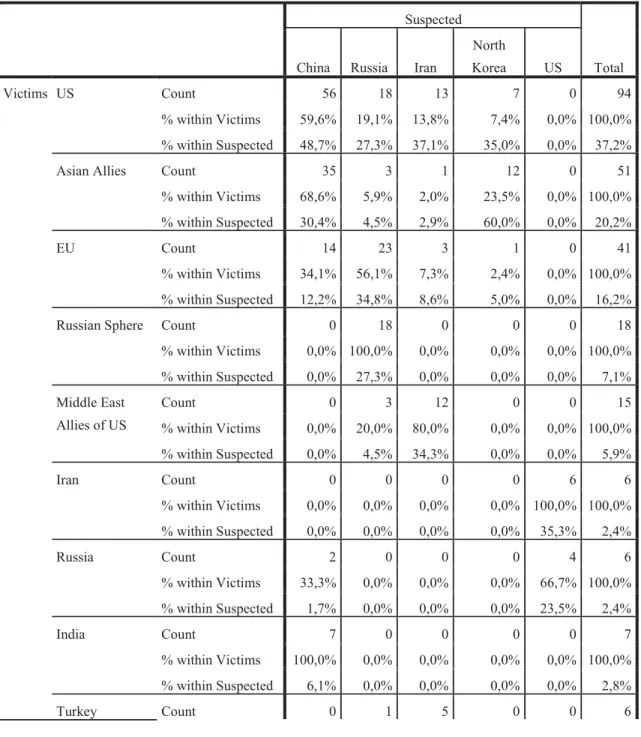
Table 5.1 Suspected State-Victim State Cross Tubulation.………..…….………..102
Table 5.2 Types of Cyber-Attacks by Number……….………...106
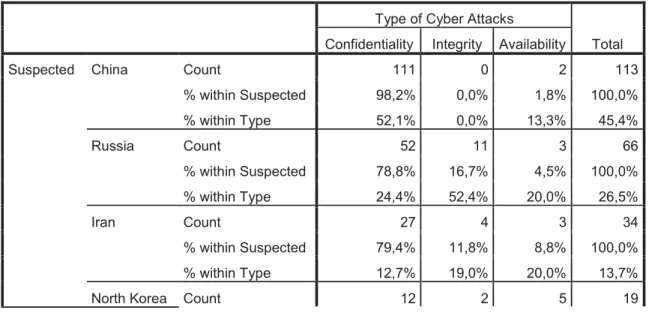
Table 5.3 Suspected Actor, Type of Cyber Attacks Cross Tabulation…..…….……… 106
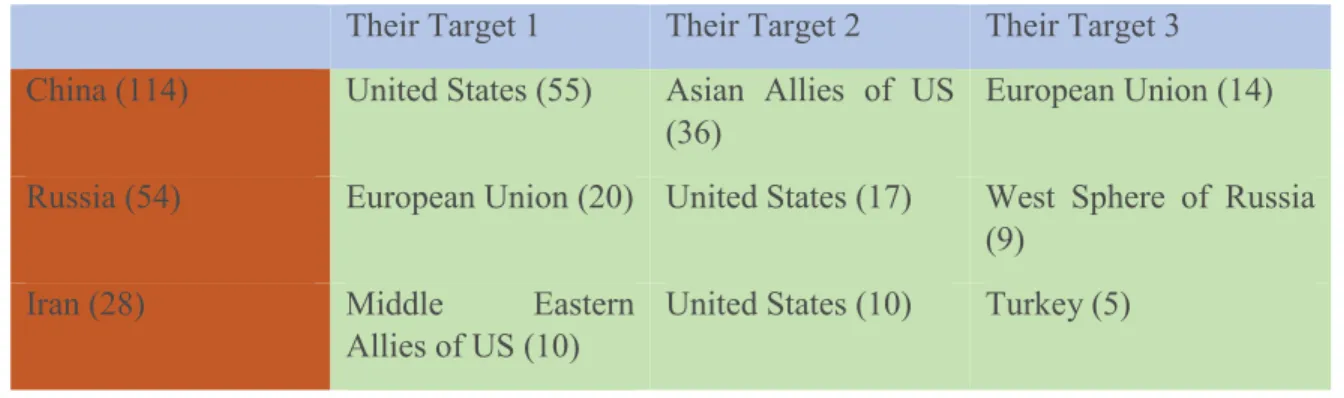
Table 5.4 Most Suspected States and Their First Three Targets………..…….………. 108
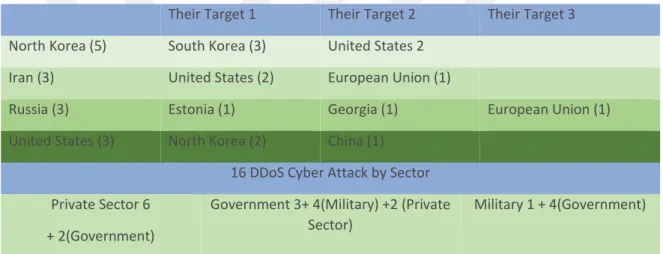
Table 5.5 Suspected States - Sector Cross Tabulation………..……..……….108
Table 5.6 Top Four Countries That Carry Out DDoS Cyber Attacks…..………...………..111
Table 5.7 Response for Total 21 Integrity Cyber-Attacks that Targets Integrity…...……… 114
Table 5.8 Response for Total 14 sabotage Cyber-Attacks……..………...………..….……. 114
Table 5.9 Response for 219 Cyber-Attacks That Targets Confidentiality……...…….……. 114
Table 5.10 Response for Total 260 Cyber-Attacks……….………115
x
LIST OF FIGURES
1
1. INTRODUCTION
With the Westphalia Peace Treaty, the International System that was composed of feudal lords, princes, religious authorities and emperors had started to slowly turn into a new system which centralized states were the main actors. By many domestic, international, political and economic developments in Europe, centralized states evolved into the national states. Particularly after World War I, with the idea of national self-determination, International System was mainly made up of nation-states. In this system, states have a very central position since nation-states are regarded as an only legitimate authority in the International System (Baylis, 2008, p. 71). As Max Weber who is a sociologist and philosopher underlined that “state was the only institution that had a monopoly of the legitimate use of force within a given territory” (2008, pp. 161-162). Also, the famous book “Leviathan” written by Thomas Hobbes underlined that people renounced their power and gave all their rights to absolute power which is “sovereign state” (Hobbes, 1968, p. 114). All these classical works point that a sovereign state is the only absolute authority in the international system where the right of using legal force and carrying out diplomatic relations pertain to a state actor.
However, with the advent of the cyberspace, widely usage of Information and Communication Technologies (ICT) by people and, especially with cyber-attack against Estonia in 2007 and renowned Stuxnet cyber-attack against Iran in 2010, Westphalian Nation System which is used to refer sovereign state that possesses the monopoly of power inside the borders, has faced a significant challenge and even its future has been started to be questioned. The structural features of cyberspace mainly cause this situation since in cyberspace in contrast to the main structure of the nation-state system, there are no borders and limited numbers of actors but many different types of actors and complexities. In addition, according to one of the primary understanding about security, initially enemy must be recognized and its capacity should be measured. However, in case of an anonymous cyber-attack, states cannot precisely define attackers and cannot calculate the impact of cyber-attack. Also, carrying out cyber-attacks at peacetime thanks to anonymity advantage led to the loss of the meaning of war and peace concepts. Thereby, international law mechanism has started to stagger against the cyber-attacks. Therefore, the uncertainty of borders, governance, actors of cyberspace, and unbinding international law have led to change in states’ basic understanding of security, governance and
2 war. Moreover, many theorists who put the state at the center of their analyses, have difficulties in explaining cyberspace related cases.
While all these changes have been taken place and increased usage of cyberspace and dependency to it have started to threaten this system, the new concern appeared in the eyes of states: How can a state deter new types of threats (cyber threats)? The structure of this thesis is also built around a similar concern: How the advent of cyberspace has affected/changed the deterrence and foreign policies of states? Before searching for answers to this question, it is more appropriate to explain the following questions: 1) what is the concept of cyberspace? 2) How technologic developments and advent of the cyberspace have a significant impact on the field of International Relations (IR)?
1.1 THE BASIC CONCEPTS OF CYBERSPACE
Science fiction writer William Gibson first used the concept of cyberspace in his book “Burning Chrome” in 1982. However, he explained the term of cyberspace in detail in his other book, “Neuromancer” in 1984 as follow:
“Cyberspace. A consensual hallucination experienced daily by billions of legitimate operators, in every nation, by children being taught mathematical concepts... A graphic representation of data abstracted from the banks of every computer in the human system. Unthinkable complexity. Lines of light ranged in the non-space of the mind, clusters and constellations of data. Like city lights, receding” (Gibson, 1984, p. 69).
While the definition of the concept of cyberspace was firstly described as above, however, it could not escape from the changing. Many institutions and states have defined the concept of the state in line with their criteria. In these definitions, cyberspace is basically defined as the online world of computer networks (Merriam-Webster Online Dictionary, 2019) or virtual environment in which communication occurs through networks of the computer (Oxford Online Dictionary, 2019). However, these kinds of definitions of cyberspace have a notable absence: “Social Dimension”. People are the users of cyberspace who both most benefited and exposed to the problems from cyberspace. Therefore, to exclude social dimension from definitions causes to have difficulty in understanding and explaining the effects and the reason for problems caused by human beings and technical dimension. Hence, as Salih Bıçakcı underlines that
3 cyberspace could be defined as a non-physical space where information systems that interconnected each other interact and communicate with each other and people (2014, p. 106). Cyberspace has been considered as a fifth dimension after four dimensions which are ground, sea, air and space. However, cyberspace has inherently different features from the other dimensions: Firstly, in contrast to other dimensions, cyberspace is not a given space but is a human made. This distinction makes cyberspace a place where is in a constant state of flux. Therefore, parties of the cyberspace affect not only the content of the cyberspace but also the fundamental structure cyberspace. Secondly, entering into cyberspace does not require high cost by comparison with having a presence such as in oceans and space (Fred, 2015, pp. 12-15). Hence, in cyberspace, not only states play an important role, but also non-state actors and individuals play relatively important role in comparison to other dimensions due to the low cost to enter cyberspace and easy access to cyberspace. Nevertheless, as cases will show that, although many dogs placed in cyberspace and their bites can hurt states are the real dogs in the cyberspace (Nye, 2010, p. 13). Thirdly, in contrast to Hans Morgenthau (1960, p. 62) who said that “national security relied on the integrity of a nation’s border”, cyberspace has no borders and limits. In the first place, this distinction challenges the concept of the state itself. Besides, there is no authority in the cyberspace, even to identify actors is problematic due to the attribution problem as will be explained in detail. Therefore, in cyberspace, it can be claimed that the anarchy is more visible than other dimensions. Fourthly, to calculate the impact of cyber-attacks on the target is very challenging. For instance, the impact of a bomb can approximately be calculated but if the attack is launched in the forms of manipulation as Russia did in 2016 the US Presidential Election which allegedly heavily impacted the results in favor of Donald Trump, could it be counted as casus belli?
Also, cyberspace should not only be considered as a virtual dimension since on the contrary to the general public discourse that is cyberspace only consists of the virtual layer; actually, it contains four layers which are “physical, codes, content and regulatory”. Hence, considering cyberspace only as virtual dimension will create severe obstacles to our understanding of the concepts and the problems and solutions to be explained by these concepts.
In this context, the physical layer can be mentioned as the first layer of cyberspace. The main elements of this layer are physical elements or in other words hardware. While these equipments can be the part of the computer such as motherboards, hard disks, however, they are not restricted to only computer parts but also as SCADA (Supervisory Control and Data
4 Acquisition), game console, telephone, smart watches and so forth so on. The second layer is the software. This layer has established a relation between the physical layer and the virtual world. In other words, without the layer of codes, the physical elements are not used. Therefore, these two layers compromise the frame layer of the cyberspace. While both physical and code layer are essential for cyberspace, without the layer of content, they have no meaning. It is not only the layer that conveys messages but also layer that stores the data such as the strategic information of states and secret codes of nuclear missiles. Last but not least, the regulatory layer limits the use of the internet and content through national legal regulations. While the first three layers are same all over the world, however, the regulatory layer changed by country according to concerns of the state (Bıçakcı, 2014, pp. 107-111). After these brief conceptual and technical parts of cyberspace, we can go into detail about the relation of cyberspace and the field of International Relations. For this, it is necessary to understand how such a technical concept as cyberspace has established a relationship with the social sciences. In this context, to understand this relation can shed light upon the significant points about both cyberspace and field of International Relations.
1.2 THE EMERGING RELATION BETWEEN CYBERSPACE AND INTERNATIONAL RELATIONS
Artur Suzik pointed out that Information and Communication Technologies (ICTs) have become an integral part of the continuity of our daily life in the modern age (Klimburg, 2012, p. X). Their popularity in society is mainly stemmed from their key features which are easy accessibility, affordability, the ability of effective control of complicated systems and rapid communication. Notably, Internet of Things (IoT) which is a concept to depict all devices that has an internet connection; automation devices which mainly used in complex systems where many independent and integrated parts are included in the structure; and artificial intelligence, have placed themselves within all parts of modern society. The advantages of cyberspace offer abilities to governments, individuals and organisations to obtain and exploit information at an unprecedented level. Therefore, as these devices have been appealed to govern societies, to do business and even to express freedom of speech (Geers, 2011, p. X); the dependency on these technologies has increased as well. This so-called dependency to these devices can be seen from data of Statista which that in 2017, the number of IoTs was 20.35 billion; however, it is estimated to reach 75 billion by 2025 with the rise of more than four times. (Statista, 2018) Also, while the number of these devices has been increasing, there is also a remarkable increase
5 in the number of people who use them actively or indirectly as well. According to Internet World Stat, the number of internet users all over world is 4,383,810,342 on the date of 31 March 2019. (Internet World Stats, 2019)
While cyberspace has enabled numerous facilitating and positive impact on modern society and become essential for states, individuals, companies to continue their daily life, on the other hand, the complexity of cyberspace and wide range of users of cyberspace bring highly negative impacts for all parts of the society as well. These problems are mainly derived from devices used in cyberspace either as software or hardware because they are prone to have vulnerabilities. In addition, studies show that the simple mistakes of people cause most of the cyber attacks. When considering the increasing of number of devices and users, the severity of the problem appears explicitly.
Moreover, advancement in technology exceeds the capacity of states, organisations and individuals to adopt new developments about technology. As the existing rate of innovations and advancements in technology continue, predictability of their impacts on all actors has significantly been decreased (Winner, 1977, p. 13). Thus, concerns such as “the fears in which are brought by the high dependency on the ICT's" and "the technology is out of the control" have emerged. On the other hand, the "concerns about the threats of technological development to society" are not unique to modern academic literature. These discussions can be traced back to 1970s and even back to 1960s (Cavelty, 2008, p. 13). Although the negative impacts of technology on society is a long-discussed topic, to evaluate the technology of old times and new millennium's technology as the same could be misleading. The main differences between the two ages are: firstly, numbers of IoTs and their users have reached significant volumes. Secondly, in the old times, the dependency on IoTs of states, peoples, organizations and private companies has never reached such level.
Furthermore, approximately all parts of the society are begun to be affected by these difficulties regardless of either use IoTs or not. As an example of this connectivity; critical infrastructure which is a vital asset for the functioning of modern daily life, are formed from numerous complex structures. Since, with the increasing usage of IoTs and automation devices within the complex structures such as critical infrastructures, they allow having easier and more comprehensive control over infrastructures. However, this situation has a significant disadvantageous point: In the case of the problem within these complex structures, the impact would be widespread all over society. In the context of this thesis, in case of a destructive
cyber-6 attacks to the one of the critical infrastructures such as power grid, that cyber-attack has the capacity to affect remarkable part of the society and to create chaos among society if cyber-attacks continue enough. Therefore, as Kenneth Geers asserted that with the increasing sphere of influence of cyberspace through rising of number of IoT and ICTs, and the user of them, such issue in cyberspace are now not the only problems of computer engineers or IT employees, but it is a problem of every individual in the modern society (2011, p. 9). Thus, in addition to the technical dimension, cyberspace has got a new dimension: Social dimension.
With the widespread effects of cyberspace, International Relations as a social science is the forefront field that affected these developments. This impact has started to be seen at the concept of the frontline since, in cyberspace, the members of the society are directly subjected to external attacks in which passing over the state. The existence of the state is almost disappearing, and anyone in society has directly become one of the parties in the attacks. At the conventional conflicts and wars, there is always frontlines where the forces of states confront each other. In other words, in order to target the ordinary people behind the frontlines in conventional conflicts and wars, it was necessary to overcome the armed forces of the state in the frontlines at first. In this way, the people who remained behind the frontlines were relatively less directly affected by war and conflicts. However, all advancement in technology not only enlarged the scope of the war but also increased the direct impact on civilians behind the frontlines. The position of the frontlines goes back further with every technological development. With the World War 1 (WW1) and especially World War 2 (WW2), the civilians become a target of the armies through the transformation of war to total war. Therefore, the differences between the rear and front have been increasingly blurring. However, with the advent of the cyberspace, the difference between rear and frontline has been wholly disappeared because even it is very challenging to distinguish frontline and rear in cyberspace.
Moreover, it is also problematic to designate the borders of cyberspace. So, not only military personnel but civilians have also been started to be affected by the adversaries. Also, in the modern age, no weapon but cyber-weapons have the capacity to affect 4,3 billion people at the same time. For instance, the nuclear weapon -which is known as a most destructive weapon- even has a limited sphere of influence. However, with the sophisticated cyber-attacks, all nuclear plants of a state can be concurrently damaged and unprecedented nuclear disasters may take place. Although cyber-attacks that are targeting the nuclear plants uncommon phenomenon, consequences of possible successful cyber-attack on nuclear facilities will be
7 quite calamitous and challenging to be tolerated (Han & Çelikpala, 2016, p. 89). Consequently,
as Eric Hobsbawm well-defined the 20th century as the “Age of Extremes” because the war had
become a total war (1995, pp. 21-53), civilians itself became a foremost front in the cyber
conflicts with the advent and quick ramification of cyber tools in the 21st century. Thus, it is
not wrong to assert that there are no fronts in cyberspace; instead whole society turns into a front in the modern age.
During the Cold War, this can be peculiar, however, especially after the allegedly joint operation of the US and Israel to nuclear plants of Iran (it will be mentioned below as s Stuxnet attack) proved that there is a possibility to come true. Thus, with the increasing concern of within the society, the state has been urged from different parts of the society to take the necessary steps for cyber threats. For instance, a group which include leading fifty American computer engineers wrote a letter to the US president of in that period George W. Bush. In their letter, they appealed to the president to establish “Cyber-Warfare Defense Project” which is equivalent to cyberspace version of Manhattan Project as they underlined: “Our nation is at grave risk of a cyber-attack that could devastate the national psyche and economy more broadly than did the September 11th attack” (Weimann, 2005, p. 130).
In the eyes of the states, especially during the 1990s and 2000s, the worrying threat is the cyber-attacks that could create devastating results in which similar attack to Japan's Pearl Harbor attack on the United States in 1941 and the sudden attack on the World Trade Organization and the Pentagon by Al-Qaeda in 2001. Nevertheless, even though technological developments and gradually increasing cyber capacities of both state and non-state actors, it has not been observed a cyber-attack which has been feared to happen. Therefore, the comparison of cyberspace and physical world is in the line of fire by many since they believe that there is no severe direct influence of cyber-attacks on the physical world as a consequence of this development. One of the forefront scholars, Myriam Dunn, put forward that fearsome cyber-attacks which cause a significant problem to national security, did not materialize as imagined. On the contrary, the developments in the last decades demonstrated that cyber threats become the primary concern of the business sector rather than the real problem of states.
On the contrary, the developments in the last decades demonstrated that cyber threats became the primary concern of the business corporations rather than the actual problem of states. For (Cavelty, 2008, p. 3) , this situation is the result of the increasing threat perception of the policymakers. Thus, many scholars and decision makers do not give enough significance to
8 cyberspace since the effects of cyber-attack seem to cause secondary effects as a virtual and economic rather than direct national threats. In addition, there was a widespread belief in which if the critical infrastructures and other devices were disconnected from the internet, they were immune from the cyber-attacks and their impacts. In another saying, it was perceived that "air-gap" which refers to computers or networks that are not connected directly to the internet (Zettter, 2014)was adequate for the cybersecurity measures. However, cyber incidents like Stuxnet demonstrated that even an air-gapped critical infrastructure can be the target of the cyber-attacks that even caused a damage in physical world along with virtual world. Therefore, the Stuxnet attack can be guide us to illustrate how a computer worm can cause physical destruction and the impacts on both suspected and victim states.
In 2010, the Sergey Ulasen who came across with worm that had never been seen that kind of sophisticated, target focused and highest profile worm (Kaspersky, 2017). He revealed all details and shared with their customers and other security companies about the details of malicious code -which targeted the Industrial Control systems (ICSs) that are mainly used in the pipelines or centrifuges in the nuclear plants- with their customers and other security companies (Falliere, 2010). In respect to many features of Stuxnet, it was an unprecedented code designed to launch an attack to a specific target. Also, when it was looking for a target, it did not sabotage the computers and networks that were contaminated. So, this underlined the fact that if there is no severe anomaly, the worm can spread without being noticed by experts and security software.
After security firms informed their customers about a Stuxnet worm, Siemens, revealed that their “supervisory control and data acquisition systems” (SCADA) which serves as controller role in the pipelines and nuclear plants and so forth on, were massively targeted by Stuxnet (Anon., 2010). This development was crucial for states because SCADA system has often been unconnected to networks so as to enhance the security of that infrastructure. As a result of this development, the opinion of protecting infrastructures by disconnecting them from networks
has become reversed to “infrastructures are considerably vulnerable to cyber-attacks.” 1
1 The continuation of Stuxnet is given in the footnote in order not to break the coherence: Who was the real target of Stuxnet? According to Symantec, %67, 60 percentages of affected Siemens SCADA system were located in Iran (Falliere, Murchu, & Chien, 2011, p. 6). After this statement, all attention immediately turned to Iran. At the similar time, the report of International Atomic Energy Agency published a report which indicated the process of uranium enrichment at Natanz plant had been temporarily ceased by unknown reason (IAEA, 2010, pp. 3-4). All of these news and reports push Iran to explain the situation. Initially, Iran denied the allegation of Stuxnet targeted
9 With cyber-attacks such as Stuxnet attack and DDoS attacks to Estonia in 2007, the perception of the threats of the first wave which are cyber-attacks could create devastating damage, became a current issue again. However, at this time, due to solid evidence about the dangers of cyberspace, security in cyberspace has turned into from low-level politics to high-level politics. Moreover, even Chris C. Demchak and Peter Dombrowski claimed that if a malicious worm can take down a whole energy system at once, for states there is no choice but to respond against new weapons to protect its citizens through own governmental and military operations (2011, p. 33). In this context, the establishment of United States Cyber Command and the 24th Air Force was a milestone because it was the first step by a state actor to materialize cyberspace as a military domain along with four dimensions (Libicki, 2009, p. xiii). As a result of these developments, cyberspace has rapidly evolved from mere technical and virtual field to military, political and strategic field (Geers, 2011, p. 10). In other saying, “cyberspace has become a fifth dimension in which international affairs take place after the four physical dimensions land, sea, air and space” (Kasapoğlu, 2017, p. 1).
These developments attracted IR scholars’ attention to cyberspace. Joseph Nye who was the pioneer prominent IR scholar claimed that with these developments, cyberspace became an area of competition for both state and non-state actors who aims to extend their interest and power (Nye, 2011, p. 4). In addition to Nye, Reveron (2012) and Choucri, (2012, p. 6) put forward a similar idea with Nye by underlining that “Cyberspace offers new opportunities for competition, contention, and conflict — all fundamental elements of politics and the pursuit of power and influence”. As can be seen from the three scholars, in the international relations
Iran. Although scholars like (Brown, 2011, p. 71) claimed that Iran would never accept the Stuxnet attack due to embarrassment, with the increasing evidences by security experts and increasing suspicion about the unknown reason of halting the enrichment process of uranium pushed Iran to admit to Stuxnet cyber-attack by expressing that “enemies sabotaged the uranium enrichment process by sabotaging limited numbers of centrifuges in Natanz nuclear plant” (BBC News, 2010). Moreover, Iran even accused of Siemens for cooperating with the US and Israel to launch Stuxnet cyber-attacks (Dehghan, 2011). In this way, the success of Stuxnet cyber-attack were proven. Who was the offender of the Stuxnet? Although many scholars believe that non-state actors can also create malicious computer worms as Stuxnet, many security experts support the idea of that kind of sophisticated worm necessities enormous resources and genius experts that state can provide. In addition, when the 2005-2010 regional politics is taken into consideration, the main contested states of Iran were Israel and the US. Especially harsh criticism by two sides against the Iranian uranium enrichment progress and the possibility of kinetic attacks against the nuclear plants are considered, the allegation about the attacker is the US and Israel can be convincing. Thus, according to allegations, joint cyber operation by US and Israel targeted centrifuges of Iran’s Natanz Nuclear plant by sabotaging them to turn out of control without being noticed, which was less costly and to find offender was challenging due to attribution problem. As a result of Stuxnet, according to (Broad et al., 2011), almost one-fifth of the centrifuges within the Natanz Nuclear Plant was destroyed.
10 literature, cyberspace has been perceived as a new area of interest competition of states. Moreover, James Adams expresses that by beyond the area of conflict of interest defined cyberspace as a new battlefield for states (Adams, 2001, p. 98). As a result of portraying cyberspace as an area of future conflicts, states have begun to alter the conventional concepts of deterrence, power, defence, offence, war, security and so forth so on compatible with the cyberspace. So, when the state is trying to make these concepts compatible with cyberspace, how is the state trying to make itself compatible with cyberspace? While cyberspace has gradually become a part of International Relations, how the major actors of IR places itself in cyberspace?
1.3 THE PLACE OF STATE ACTOR IN THE CYBERSPACE
Due to the attribution problem, low cost of entry and to stand in cyberspace, Nye claimed that “power is diffused between state and non-state actors in cyberspace” (2010, pp. 5-6). Also, unlike the other four dimensions, states have ironically turned into the most vulnerable actors when they have developed their ICTs because of asymmetrical structures of cyberspace. The metaphor of Singer and Friedman in which “most powerful and heaviest biggest rock-throwing actors in cyberspace live in the most precise and largest glass houses “quietly describes this
environment (2014, p. 144).
Despite all these developments and the fact that the non-state actors are relatively more powerful in cyberspace unlike the other four dimensions, the state actor will be considered as the main actor in this thesis. Since firstly it should be remembered that cyberspace does not consist of only one layer but is composed of four distinct layers. That is to say that although non-state actors take role actively in the physical, codes and content layers, state actor stands
alone as a regulator layer of cyberspace.Even if there are important initiatives, which consist
of very different groups of actors such as Tallinn Manual 1.0 and 2.0,2 that have covered much
ground in terms of writing, determination and adoption of international cyber law rules; however, international laws and norms do not become binding without the acceptance and consent of the state. Therefore, only the regulatory layer alone is sufficient to claim that the state is the major actor of cyberspace. There is a need to open parenthesis at this point since the position of states as a regulator signals another point: Regulatory layer allows states to draw
2 Tallinn Manual series are the “most comprehensive guide for policy advisors and legal experts on how existing International Law applies to cyber operations.” (CCDCOE, 2017)
11 virtual boundaries according to its internal regulations. Secondly, the state actor has also an essential place in the first three layers. As NATO (2017) pointed out that when the economic, technical and military capacities and capabilities of the state are taken into consideration, the state is the preeminent actor of cyberspace. It is highly challenging for non-state actors to provide as many opportunities as the state presents. For instance, as demonstrated in the case of Stuxnet above, only state actors were suspected from sophisticated cyber-attacks since only they can provide an opportunity to create that kind of sophisticated cyber weapon.
Moreover, even though in the short era the diffusing of power may strengthen the power of non-state actors, in the long run, this situation may turn the non-state into more robust than it was. Since states will be more aggressive and exhibit more authoritarian attitude in domestic politics to regain its absolute power within its own securitized area as the state actor had in Westphalian System. In this way, in the long run, state actor will not only regain its absolute power but also may have unprecedented power which help states to control and rule their people more efficiently and easily. The case of Edward Snowden and the high surveillance capacity of China
are two appropriate cases to support this claim3.
In addition, UN’s Report on Protection of the Right to Freedom of Opinion and Expression stated that while innovations in technology have facilitated and increased the communication and freedom of expression between people, fast information sharing and enabling anonymity have provided new possibilities to the government for surveillance and intervention into individuals’ private life” (Rue, 2013, p. 4). For instance, China with its 176 million surveillance cameras, (it is expected to reach 626 million until 2020) keeps watching 1.3 billion citizens
across China (Grenoble, 2017). 4Also, a UN report stated that “states have enlarged their powers
to monitor individual’s communication and tried to justify these surveillances by saying that monitoring of individuals’ only serves law enforcement and national security interests of states” (Rue, 2013, p. 4). For instance, to prevent the spread of "fake news", France introduced a new plan of increasing to control over the social media platforms (Serhan, 2018). That is to say, in
3 Edward Snowden who was a former expert of the CIA shared classified information with media about how American National Security Agency (NSA) surveilled extensively not only adversaries but also phones and internets of Americans and collecting of their all records to analyze (BBC News, 2014)
4 Also, artificial intelligence used by surveillance cameras can identify people from even walking style (Grenoble, 2017).To test its capacity, BBC reporter who tried to hide from cameras was apprehended by China’s authorities within just seven minutes (para 2).
12 order to understand who is telling the truth and lie; French authorities have to check every account. So, "in the name of security, states are increasing their control over the people." Besides, the French case draws attention to another point as well: Not only authoritarian but also many liberal democratic countries have shown increasing authoritarian characteristic in domestic politics and as a result increasing their power within their borders thanks to cyberspace. Thus, all these developments prove that mass surveillance, social media filtering and so forth on are no longer the realm of authoritarian regimes, however, it is the dangerous worldwide trend (Khazan, 2013).As Freedom House explained that freedom of people over cyberspace has been decreasing since 2012 and there is no reason to halt soon. (Freedom House, 2017).
Considering all the facts mentioned above, it can be alleged easily that the state actor is at the forefront of cyberspace. The distinct superiority of the state actor over non-state actors reveals another point: How does cyberspace used by states against another state? If the states dominate cyberspace and use all idiosyncratic features as do in the international system, how this situation affects the relations of the states? As stated in other words, how the states will take positions in the face of severe cyber-attacks from the other state actors rather than from the non-state actors in an environment where there are no boundaries, to attribute cyber-attack is very challenging, and there is an asymmetrical relation between wired and not wired one. All these developments as mentioned above-compelled states to reconsider the logic of conflict and war, and to take new measures against the possible undesired results of a new environment where the concepts of peace and war are losing their conventional meaning. Besides, when taken into consideration the low cost of entry and standing, easy access to cyber weapons and the expensiveness of providing exact and effective protection mechanism due to technical challenges and the human
factor (Editorial Board of Chip, 2018, p. 86),the offensive methods in cyberspace have become
more popular among states rather than providing security. In parallel to the one of the main hypotheses of neorealist school which international system has anarchic structure, has become more distinguishable in cyberspace through all these developments mentioned above. Therefore, the policymakers, security analysts and scholars have tried to give proper answer the question in which how will state provide security in an environment in which they even do not realize the cyber-attack carried out; even if it is realized they do not understand and calculate the real impacts of cyber-attacks; even if calculated, cannot attribute the offender accurately; even if attributed, it is not known how to give response.
13 This situation causes to appear as a new problematic within the IR field as it is the primary and general problematic of this thesis as well: Deterrence Theory can be applicable to cyberspace? Especially, with the success of nuclear deterrence theory during the Cold War which is believed that it prevents the nuclear conflict between states, the desire to achieve cyber deterrence has become popular among the scholars of IR. However, due to idiosyncratic features of cyberspace, it is perceived that in contrast to the other four dimensions, to achieve successful deterrence in cyberspace is very challenging.
1.4 THE STRUCTURE OF THE THESIS
In these respects, in this thesis, before examining the applicability of deterrence theory in cyberspace, cyber deterrence is whether necessary or not is going to be discussed. Then, assumptions, right and deficient points of both claims in which cyber deterrence is applicable and non-applicable, will be discussed with a critical view. In this way, firstly, it will try to answer the main questions of this thesis: “Why deterrence is necessary for cyberspace? Is deterrence applicable to cyberspace?”.
While seeking answers to these questions, the following hypotheses are tried to be developed:5
Apart from the attribution problem, the severe difficulties to the achieve cyber deterrence are : 1) The inability of defining, writing and implementing International Law Norms that binding United Nations and the imposition of a sanction against the aggressive state; 2) Usage of cyberspace by spaces as new interest maximization and power projection area in addition to other dimensions. Furthermore, cyber deterrence cannot be achieved only with cyber tools. Also, even though in the short run to exploit of cyberspace provide an advantage for states, however, in the long run, the increase of exploiting cyberspace by every state make exploiting highly disadvantageous act for states through rising damage of exploiting. In other words, the two-edged sharp sword will not only cut the hands of the victim but also the owner of the sword. Therefore, it is asserted that in the long run, the increase abusing of cyberspace may compel states to make concessions so as to ease the undesirable impact. As a result, this process can open road to international diplomacy table.
5 Although these hypotheses generally are discussed through sections, there will be other sub-hypotheses in the sections as well.
14
At this point, in the direction of Grotian perspective6, it will be asserted that while it is not
possible to provide a deterrent that completely halted all cyber-attacks; cyber deterrence is possible through international rules and norms that will reduce the excesses of cyber-attacks. That is to say that, only a hybrid model which not only consists of cyber tools, but also economic, politic, military and diplomatic channels could be applicable to achieve deterrence in cyberspace.
In this context, in the first chapter, firstly the types of classical deterrence, their assumptions and necessary elements of it will be addressed. In this way, the general outline of the classical deterrence will try to be drawn. Then, assumptions, necessary elements of the main theory of this thesis, cyber deterrence, will be explained in comparison with the classical deterrence. By doing this, whether the cyber deterrence is necessary and whether it can be applicable will be addressed theoretically. Lastly, by going beyond the traditional cyber strategies, the new alternative cyber strategies that emerged with the advent of cyberspace will be addressed. In this way, it will be tried to provide a broader perspective.
In the second chapter, by eluding the theoretical perspective, the main elements of cyberspace will be discussed. In this way, firstly the cyber threats which have a major role on the securitization of cyberspace will be discussed, and cyber threats will be classified in respect of sources and agents. While sources are considered as external and internal, agents are taken as economically and politically motivated threat agents. The main emphasis about agents will be on the state and state-supported actors, and the reasons for this will be discussed in detail in this chapter. Secondly, cyber-attacks which is the materialization of cyber-threats by threat agents will be addressed according to types and effects in detail.
In the third chapter, in line with those mentioned above in the first and second chapters, the main difficulties in achieving successful deterrence in cyberspace will be discussed. In this way, it is tried to be understood what pre-condition for successful deterrence strategies are.
Also, cyber deterrence studies generally concern with how deterrence can be acquired in a theoretically. In these studies, mostly the necessary elements, the reason for failures, possible
6 In the international relations literature, a third perspective known as Gratian does not share the same views with Hobbesian and Kantian hypotheses. Hobbesian believes that it is not possible to go beyond the world in which we live in violence. On the other hand, the Kantians argue that it is possible to transcend violent conflicts and to move towards a more peaceful way of life. On the other hand, while Grotian thinkers acknowledge that it is challenging to halt violence and war entirety; advocates that it is possible through develop rules and norms that will reduce the extremes of violence and war. (Baylis, 2008, p. 70) In this context, the Grotian were more optimistic than the Hobbesian and more pessimistic than the Kantians. (Wight, 1979)
15 scenarios of cyber-attacks and so forth on are analyzed with theoretical assumption rather than the with case studies of cyber-attacks. The first three chapters of this thesis are no exception. Therefore, in the fourth chapter, the difficulties in achieving successful cyber deterrence will be tried to be addressed practically rather than theoretically. In this way, firstly, 260 attacks which are classified in six categories by date, suspect state, victim state, types of cyber-attacks, target sector and response, will be reviewed. Secondly, whether a relational link can be established between 260 cyber-attacks will be tested with statistical models. Then, in the light of the obtained results from the statistical analyses, the practicability of deterrence strategies in cyberspace will be analyzed. With categorizing, statistical analyzing and case studies; hypotheses about the main problem of cyber deterrence and the necessity of cyber deterrence will be produced to guide us to acquire “applicable cyber deterrence”.
In the chapter of conclusion, in the light of the four chapters, the ideal cyber deterrence strategy will be addressed by arguing that “ why not only cyber tools but also economic, politic, military and diplomatic tools should be employed to achieve successful deterrence in cyberspace”. By doing all these, this thesis will hopefully reach its main goal which contributes to IR literature.
1.5 THE METHODOLOGY OF THE THESIS
In this thesis, the concept of cyberspace itself and its developments throughout history were examined by a literature review of books, articles, the reports of think tanks and international organizations. Also, to show security policies of the states; the state's official security strategies (especially the United States) were used. Moreover, the number of the Internet of Things (IoT) and Information and Communication Technologies (ICT) were analyzed by using online statistical sources. Lastly, 260 Cyber Attacks were statistically analyzed to test the theory with practice. The analysis deserves more details to be mentioned.
The number of cyber-attacks included in analysis in the fifth chapter take place in the cyberspace, perhaps in even less than a split second. However, analyzing all cyber-attacks is both technically very challenging and beyond the scope of this thesis. For this reason, the time and the actors have been limited according to focus of the thesis. In this respect, firstly, cyber-attacks were chosen between the years 2005 and 2018. There are two reasons for choosing this period: The reason why it starts with 2005 is due to the fact that cyber-attacks in the sources are generally started in 2005. The reason for ending with 2018 is that the writing of this thesis is 2019. Also, only the cyber-attacks in which state or state-sponsored are publicly suspected,
16 have been included in this analysis. There are four reasons for this: 1) it can be very difficult to analyze the data containing all the threat actors mentioned in chapter two. Secondly, it exceeds the scope of the thesis. Thirdly, as Kenneth Waltz pointed out, there are three levels of analysis which are human, state and system. (Waltz, 2001) Therefore, when taken into consideration of the scope of this thesis which is international relations and theory of deterrence, to take second image- state- as main level of this analyses will be more proper and useful. Last but not the least, the data of state or state-backed cyber-attacks are kept more comprehensive in the report’s security companies and news.
The data to be used in this analysis were taken from many open sources. These open sources are mainly from Significant Cyber Incidents report prepared by Program Technology Policy
Program within Center for Strategic Studies7; Security Company Kaspersky's "Targeted
Cyberattack Logbook"8; and “Digital and Cyberspace Policy program of Council of Foreign
Relations (CFR)” 9. There should be attached particular importance to CFR because of a
significant portion of the 260 cyber-attacks were taken from CFR's dataset. The main reason for this is the classification of the CFR data is more appropriate for the analysis in this thesis. Although these three open sources constitute the vast majority of the 260 attacks discussed in the analysis, the data surpasses these sources. Especially different cybersecurity companies and the media outlets have been benefited for the categorizing responds of victim state, type of the cyber-attack and the targeted sector. Also, cyber-attacks that states have responded legally were not only satisfied with the information received from the national and international press, but also tried to be verified by official statements. In addition, many articles in the literature have
been used for classification.10
However, it should be accepted that most of the used data were taken from the Western sources due to easy access to them and difficulty of accessing data of Russian, Chinese and other dominant actors’ sources about cyber-attacks. Therefore, the analyses have a risk of falling into bias by prejudging usual suspects. Therefore, to decrease these bias data, the many sources were tried to be applied.
7See: Significant Cyber Incidents, available at https://www.csis.org/programs/cybersecurity-and-governance/technology-policy-program/other-projects-cybersecurity
8 See: Targeted Cyberattack Logbook, available at https://apt.securelist.com/#!/threats/
9 See: Digital and Cyberspace Policy Program of CFR, available at https://www.cfr.org/programs/digital-and-cyberspace-policy-program
17 Finally, all cyber-attacks discussed here have been converted into statistical data so as to
establish a meaningful relationship between 260 cyber-attacks.The data which were adapted
for statistical analysis were tested by chi-square test because the Chi-Square Independence Test is based on whether the difference between observed frequencies (G) and expected frequencies (B) is statistically significant (Çilan, 2013, pp. 33-34). In addition, continuous variables specified by the measurement can be applied to Chi-Square Independence Test, which is
considered to be less than or equal to a significance degree.The chi-square distribution is often
used to test two independent qualitative criteria. The zero hypothesis (H0) indicates that the two criteria are independent; the research hypothesis (HA) indicates the relationship between the
two criteria.The data collected in this thesis are categorical data (qualitative, relatively small).
Since hypotheses will be evaluated according to whether there is a relationship between the variables, it is decided that the most suitable method is Chi-square Independence Test. By selecting variables as binary, the relationship (interdependencies) between each other was
tested.The hypotheses in the study were established as follows:
H0 = Two variables are independent of each other. H1 = Two variables are interconnected.
While mostly Chi-Square test was applied for analysis, however, since the frequency of some cases were less than 5; for those cases, "Fisher Exact Test" was applied. Because the Chi-Square statistics show the distributions approaching the Chi-Square distribution because the frequencies in the contingency tables increase as the sample size increases When the sample size is small, tests based on exact distributions can be applied as "Fisher Exact Test". However, there is no difference between the Chi-Square test and Fisher Exact Test in terms of application and results (Çilan, 2013, p. 74).
260 cyber-attacks to be analyzed in accordance with the data obtained from these sources are classified according to the following categories:
Table 1.1: Six Classification of the Analyses
Date Victim Suspected State Type of Cyber Attack Target Sector Response
Date indicates when the cyber-attack first started. Reason for choosing the beginning time as a date rather than last day of the cyber-attacks is because cyber-attacks can continue for days as
18 in the case of Russia's cyber-attacks on Estonia in 2017. Thus, in order to find a relation between beginning time and the reasons behind the cyber-attacks, this method is adopted. Also, to increase the accuracy of the date, many different sources such as press releases, official documents and articles in the media are reviews for that cyber-attacks.
Secondly, victim state who are subject to cyber-attacks is indicated. Although it is a problematic process to find offenders due to the attribution problem, it is less problematic to detect the
victim actor than to detect the suspected actor.There is a possibility of the attacked country
may not realize it has been under attack; however, the states are included in the analysis as a victim in accordance with either they have acknowledged that they have been attacked or it has been stated as victim in media or articles. Moreover, in case of the target of the cyber-attack is a private company, instead of taking the company as the victim, the country where the center
of that company is indicated as a victim.For example, although JP Morgan Chase is a private
company, an attack on JPMorgan Chase was included in the analysis as an attack on the United States. However, in order to prevent confusion about real target cyber-attacks, such attacks are mentioned as attacks on the private sector by creating another category, the target sector. Another reason to indicate the state rather than the company is because in case cyber-attacks on private companies, the tension between the two countries has been transformed into a situation in which it concerns the whole country. For example, American comedy movie “The Interview” that depicts a fictional assassination plot against Kim Jong Un who is the leader of North Korea got a heavy reaction by North Korea. Also, hacker group "Guardians of Peace" who believed in relationship with North Korean government, urged and threaten the Sony Pictures Entertainment not to release the movie. A few days ago before the official release date, Sony Pictures Entertainment were hacked by the Guardians of Peace.(Miller, 2015) However, an attack on Sony Pictures Entertainment Inc. by North Korea-supported actors was treated as an attack on the US rather than an attack on the company as it can be seen from the official statement by White House:
“We take seriously North Korea’s attack that aimed to create destructive financial effects on a US company and to threaten artists and other individuals with the goal of restricting their right to free expression” (Roberts, 2015).
The sanction imposed by the US government for this cyber-attack confirms this claim (Roberts, 2015). Therefore, this classification method is adopted in this thesis.
19 While the cyberattacks in the sources were included in data, it was stipulated that the country to be included in the victim category should be attacked at least four times in accordance with
the analysis in the sources.A country which has undergone less than four attacks is left out of
the data.The reason for setting limits to include to the data is the aim of establishing a more
accurate relationship between the variables. Moreover, in some cases, countries are not
classified as single but are classified within the groups if they have common characteristics. For instance, Saudi Arabia and Israel are included in the analysis as two separate countries. However, there are usually joint attacks by Iran on these two countries. Since these two countries are allies of the United States and unite against Iran in the Middle East, Middle Eastern Allies of the US group was created apart from the two countries. Another classification was applied for Asian countries. In particular, the Asian Allies of the United States group was created in the East Asian region because of the military and political support of these states in the East Asian region by the US. Another group is the “European Union”. Not all countries current European Union countries are included but England, Germany, France, Italy, Netherlands, Belgium, Spain, Portugal and Austria. The post-Soviet states in Central Asia and the Caucasus which are Armenia, Azerbaijan, Georgia, Kazakhstan, Kyrgyzstan and Uzbekistan are classified as East Sphere of Russia.
Besides, if a country has less than four cyber-attacks in accordance with the analysis but can be included in any of the above groups, the country has not been taken separately within the data, but the number of cyber-attacks of that group has been increased. For instance, one cyber-attack to Estonia was carried out appropriately for the analysis, but because there are less than four cyber-attacks for Estonia, it was excluded from the first classification outside the analysis. However, since it was in line with the West Sphere of Russia group, one cyber-attack was increased for this group. By creating these groups, it is firstly aimed to test the relation between politics and cyber-attack and secondly to deepen and increase the accuracy of the analysis. In this context, the state and state groups are classified from most attacked to least attacked as the following table shows:
20 Table 1.2: Most Attack Countries Through Cyber Tools
N O
Victim State/ Group Number of
The Cyber
Attacks
NO Victim State/ Group Number of
The Cyber Attacks
1 United States 94 9 Japan 10
2 Asian Allies of United States 55 10 Russia 9
3 European Union 41 11 Israel 9
4 South Korea 20 12 Iran 8
5 West Sphere of Russia 15 13 China 7
6 Middle Eastern Allies of United States 15 14 India 7
7 Saudi Arabia 12 15 Turkey 6
8 Ukraine 11 16 East Sphere of Russia 4
All classification methods for victim state also adopted for category of the suspected state. However, when applying similar methods, it is encountered additional problems. The foremost reason for additional problem is mainly stemmed from the attribution problem. Since why attribution is a problematic task is mentioned in the third chapter in detail, attribution problem will not be repeated. In order to overcome the attribution problem, the following method is adopted: when the cyber-attacks are including analyses, only if the suspected actor is same actor in the press, articles, and states' official institutions; that actor is indicated as a suspected actor in the analyses by using a similar method to Rid & Buchanan, article that is titled as "Attributing Cyber Attacks ". To set an example, even though there is no solid evidence that Israel and the US carried out Stuxnet, almost all the media and academic studies accepted that the United States and Israel were behind the Stuxnet. For this reason, Israel and United States were considered as a suspected state in the analyses for Stuxnet attack.
At this point, it should be emphasized that the suspected actor can use false flag operation to
put blame another actor. 11 Especially false flag operations can be applied when the attacked
state has a crisis with third parties, in order to put blame third party for attacks.For instance,
ISIS was first the suspected actor of the cyber-attack on the French TV5 Monde channel
11 False flag is a deliberate misrepresentation, especially a covert military or political operation carried out to appear as if it was carried out by another party. (Online Oxford Dictionary, 2019)
21 (Campbell, 2015), however, with the increasing obtained evidence, it was revealed by studies and findings that the attack was carried out by Russian state sponsored actors (Menn & Thomas, 2015). Although there are difficulties about correctly identifying the attacker due to the attribution problem as in this example; by considering the explanations in the media, reports and official documents, it is tried to minimize the risk of attributing the wrong actor.
Table 1.3: Number of Cyber Attacks by Suspected States
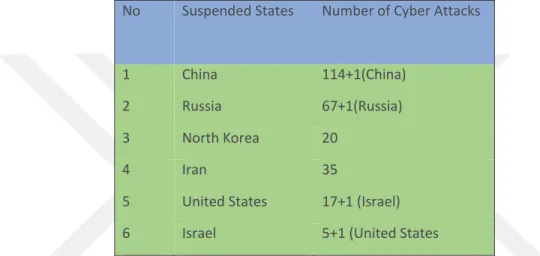
The number and country after + indicate the number of attacks carried out together with that country. Another category included in the analysis is the target sector. Target indicates in which sector of victim country is targeted by suspected state rather than which victim country/ country group is targeted. The primary purpose of including target sector to analysis is to test whether there is a relationship between target sector, suspected state, the victim state and if deterrence can be established. According to the data that is obtained from open sources, four main targets appears as follow:
Table 1.4: Targets that Attacked by Suspected State via Cyber Tools
Private Sector Government Military Civil Society
In cases where attacks hit multiple sectors at the same time, only the most affected place was written, However, in case of uncertainty about the comparison which sector is mostly affected, all targets were written. Nevertheless, in order to prevent the excessive number of cyber-attacks in case of multiple sectors are targeted, other sectors are written in parenthesis. For instance, if the attack targets the private sector and military, it is written as 1 Private sector + (military 1)
No Suspended States Number of Cyber Attacks
1 China 114+1(China)
2 Russia 67+1(Russia)
3 North Korea 20
4 Iran 35
5 United States 17+1 (Israel)