T.C.
SELÇUK ÜNİVERSİTESİ SOSYAL BİLİMLER ENSTİTÜSÜ İNGİLİZ DİLİ EDEBİYATI ANABİLİM DALI
A COMPARATIVE STUDY OF TEACHING VOCABULARY
IN AND OUT OF CONTEXT AT SCHOOL OF FOREIGN
LANGUAGES AT SELCUK UNIVERSITY
Yüksek Lisans Tezi
Danışman
Yrd. Doç. Dr. Ece SARIGÜL
Hazırlayan Bünyamin AKSOY
ABSTRACT
A COMPARATIVE STUDY OF TEACHING VOCABULARY
IN AND OUT OF CONTEXT AT SCHOOL OF FOREIGN
LANGUAGES AT SELCUK UNIVERSITY
AKSOY, Bünyamin
M.A., Department of Foreign Language Education Supervisor: Assist. Prof. Dr.Ece Sarıgül
August 2006, 65 Pages
This study was conducted to determine which method for vocabulary instruction was most beneficial: learning words through the context or through isolated word lists. Two groups, each including 18 students, were taught the same selected 35 vocabulary items through different methods. The first group consisted of 18 students and they used isolated words. The second group of 18 students learned their words while reading texts. Both groups were given a pre-test and a post-test. The results showed significant difference in the mean gains of the samples. Teaching vocabulary in context proved to be much more effective than teaching vocabulary in isolated lists.
Keywords: Contextual Teaching and Learning, Incidental Learning, Contextual Guesswork, Vocabulary Teaching in L2
ÖZ
SELÇUK ÜNİVERSİTESİ YABANCI DİLLER YÜKSEK
OKULU’NDA BAĞLAM İÇERİSİNDE VE BAĞLAM DIŞINDA
KIYASLAMALI KELİME ÖĞRETİMİ ÇALIŞMASI
AKSOY, Bünyamin
Yüksek Lisans Tezi, İngiliz Dili ve Edebiyatı Danışman: Yrd. Doç. Dr. Ece Sarıgül
August 2006, 65 Pages
Bu çalışma yabancı dilde hangi kelime öğretim tekniğinin daha verimli olduğunu belirlemek amacıyla Selçuk Üniversitesi Yabancı Diller Yüksek Okulu hazırlık sınıflarından her biri 18 öğrenci içeren iki sınıfta yapıldı. Sınıflardan birisine belirlenen 35 hedef kelime bir bağlam içerisinde öğretilirken, diğer sınıfta aynı kelimeler bağlamdan izole edilmiş bir şekilde, listeleme metoduyla öğretildi. Her iki gruba da aynı ön test ve son-test uygulandı. Sonuçlar, üzerinde çalışılan öğrenci grupları arasında bağlam içerisinde kelime öğretilmesinin, bağlam haricinde öğretilmesinden büyük ölçüde daha verimli olduğunu göstermiştir.
Anahtar Kelimeler: Bağlamsal Öğrenme ve Öğretme, Rastlantısal Öğrenim, Bağlamsal Tahmin, İkinci Dilde Kelime Öğretimi
To my beloved mother
ACKNOWLEDGEMENTS
First and foremost, I would like to thank my supervisor Assist. Prof. Dr. Ece SARIGÜL for her guidance, suggestions and patience during the writing of the thesis.
I am greatly indebted to Assist. Prof. Dr. Gülbün ONUR, Assist. Prof. Dr. Abdülkadir ÇAKIR.
I am deeply grateful to Assist. Prof. Dr. Ali Murat SÜNBÜL for his valuable help with the statistical analysis.
Finally, I owe my closest friends Cemile DOĞAN and Hüseyin SERÇE who offered me support a debt of gratitude.
TABLE OF CONTENTS ABSTRACT………i ÖZ………...ii ACKNOWLEDGEMENTS……….iii TABLE OF CONTENTS……….……….v LIST OF TABLES……….………viii CHAPTER I INTRODUCTION 1.0 Presentation ... 1
1.1 Background of the Study ... 1
1.2 Education at Selcuk University, School of Foreign Languages ... 2
1.3 The Problem ... 2
1.4 Purpose ... 2
1.5 Hypotheses ... 3
1.6 Significance ... 3
1.7 Limitations of the Study ... 4
CHAPTER 2 REVIEW OF LITERATURE 2.0. Presentation ... 4
2.1. Definition of Vocabulary ... 4
2.2 What is to Know a Word? ... 4
2.3. The Importance of Teaching Vocabulary in ELT ... 9
2.3.1. The Importance Of Vocabulary To Reading Comprehension .. 10
2.4. Vocabulary Teaching Techniques ... 15
2.5. Teaching Vocabulary in Context ... 19 v
2.5.1. Incidental Learning ... 21
2.5.2 Guessing from the Context ... 22
2.5.2.1. Context Clues ... 25
2.5.2.1.1. Types of Context Clues ... 26
2.6. Teaching Vocabulary Out of Context ... 28
2.6.1. Techniques of Teaching Vocabulary Out of Context ... 30
CHAPTER III METHOD 3.0 Presentation ... 35
3.1 Design of the Study ... 35
3.2 Subjects ... 35
3.3 Data Collection Procedures ... 36
3.3.1 Before the Study ... 36
3.3.2 During the Study ... 36
3.3.3 After the Study ... 36
CHAPTER IV RESULTS 4.0 Presentation ... 37
4.1 Analysis of Pre-test Scores of Experimental Group and the Control Group.. ... 37
4.2. Analysis of Pre-Test and Post-Test Scores of Control Group...38
4.3. Analysis of Pre-Test and Post-Test Scores of The Experimental Group...38
4.4. Analysis of Pre-Test Scores of Experimental Group and the Control Group...39
CHAPTER V CONCLUSIONS AND IMPLICATIONS
5.0 Presentation ... 40
5.1 Summary of the Study ... 40
5.2 Implications for Practice in the Field of ELT and Wider Context ... 40
5.3 Implications for Further Research ... 41
REFERENCES ... 42
APPENDICES ... 46
viii LIST OF TABLES
TABLE 1. Frequency of Word Use in Major Sources of Oral and Written Language ... 14
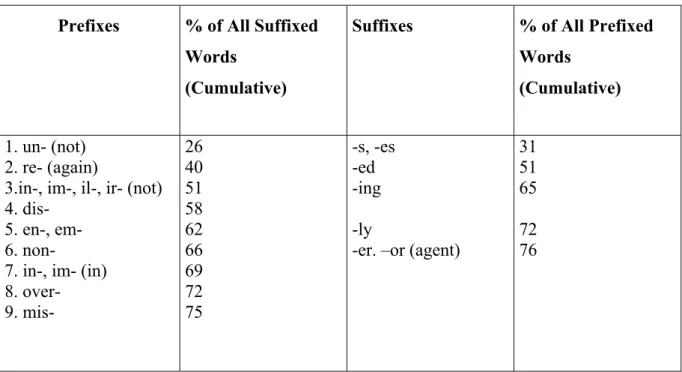
TABLE 2. Prefixes and Suffixes That Account for Approximately 75% of Affixed Words ... 33
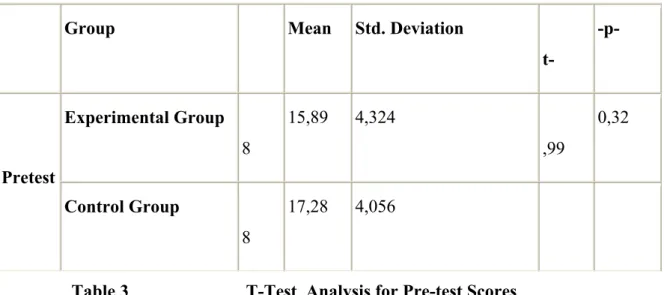
TABLE 3. T-Test Analysis for Pre-test Scores of both experimental group and the control group ... 37
TABLE 4. Comparison of the Pre-test with Post-test Results within the Control Group ... 38
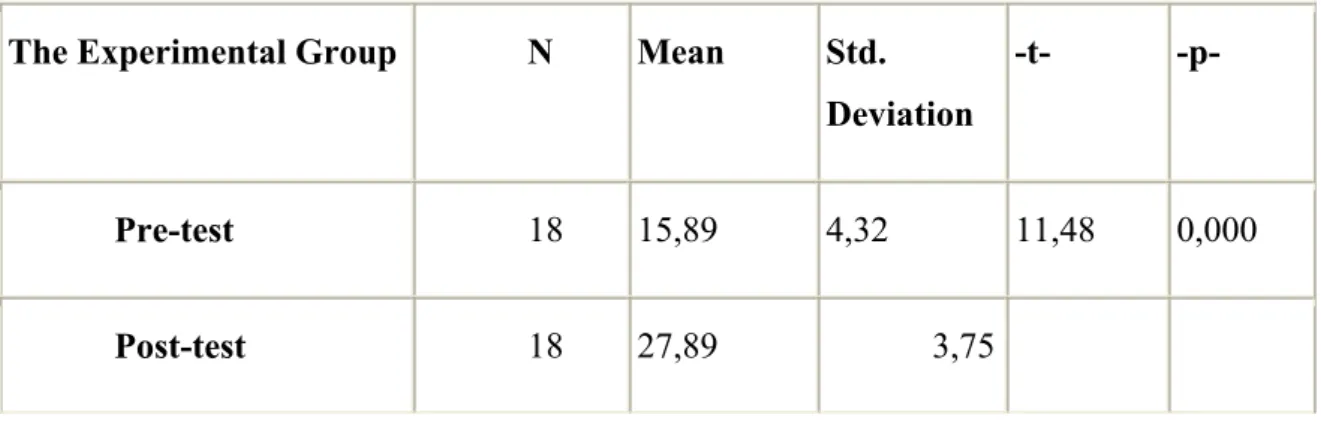
TABLE 5. Comparison of the Pre-test with Post-test Results within the Experimental ... 38
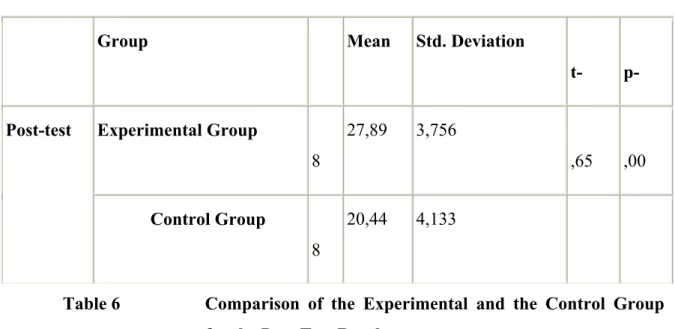
TABLE 6. Comparison of the Experimental and the Control Group for the Post-Test ... 39
CHAPTER I INTRODUCTION 1.0 Presentation
This chapter begins with the background of the study. Then, it goes on with some information on education at Selcuk University, School of Foreign Languages (SOFL). The purpose and hypotheses of the study follow the problem statement. The next part is the definition of terms. The final part is devoted to the limitations of the study.
1.1 Background Of The Study
“While without grammar very little can be conveyed, without vocabulary nothing can be conveyed.” Wilkins (1972: 111).
It is possible to say that words of a language are like bricks of a building. Despite quite small pieces, they are crucial to the construction of the structure. Those who have experience in learning a foreign language know that at the beginning or in the end, vocabulary is always one of the biggest problems in language learning.
It is a common fact that foreign language learners always face new words, which slow down their comprehension. A poor vocabulary can also prevent learners from developing ideas or arguments effectively. So the importance of vocabulary learning is never too far to be emphasized.
Acquired vocabulary is one of the vital components of foreign language acquisition as it is possible to communicate to some extent without proper sentence structure if relevant words are connected in the correct order. Neglected in traditional language books and seen rather as secondary to the teaching of grammar, vocabulary is often studied less intensely and somewhat unsystematically until recent times. Nevertheless, a good vocabulary is essential both for more precision in thought and in one's daily affairs.
According to Stanovich and Cunningham (1992), recent studies have shown that reading comprehension and vocabulary knowledge are strongly correlated and limited vocabularies prevent students from comprehending a text. People who read more know
more vocabulary. This relationship between print exposure and vocabulary appears to be certain. There is thus no doubt that reading affords vocabulary acquisition. It is an ideal medium for it.
1.2.Education at Selcuk University, School of Foreign Languages (SOFL) Selcuk University, located in Konya, is one of the biggest universities in Turkey by virtue of numbers. The medium of instruction is Turkish. The Preparatory School (SOFL) is obligatory for some of the departments mainly for Faculty of Economics and Administrative Sciences, Faculty of Engineering, Faculty of Medicine and Vocational School of Social Sciences and optional for some of the departments such as Faculty of Communication and Faculty of Technical Education. Therefore, the students of the so-called departments have to take the Proficiency Exam, prepared by SOFL, at the beginning of the instruction. On the condition that they can not pass the exam, they have to take another Proficiency Exam in the following semester. Those students who get 60 and higher pass the test and carry on education in their departments. Those who fail the class because of unattendance can not study in their departments but have to take the preparatory program for one more year and obtain the right to take the Proficiency Exam at the end of the program.
The instruction at SOFL is four skill based: reading, speaking, listening and writing. There are 25 hours of teaching a week. There are three course books which are accompanied by reading and writing books.
1.3.The Problem
The problem which necessitated this study is that traditional vocabulary teaching methods lack the advantages which contextual vocabulary teaching offers to second language learners. The study aimed to investigate whether teaching vocabulary in context proves to be more effective than the traditional vocabulary teaching methods such as listing. Hence, this study seeks the answer to the following research question:
Is there a significant influence of teaching vocabulary in context on students’ vocabulary learning?
1. 4 Purpose
The purpose of this study is to find out whether students’ vocabulary could be enriched through an instruction which emphasizes the role of context in teaching
vocabulary. Namely, this study seeks to find out the difference between two distinct vocabulary teaching methods.
1.5 Hypotheses
The following hypotheses are tested:
1. Teaching unkown vocabulary words to prep class students at Selcuk University through the use of contextual teaching rather than the listing approach will have a remarkable effect on their performance on teacher made content area vocabulary tests.
2. There is no effect of teaching unkown vocabulary words to prep class students at Selcuk University through the use of contextual teaching.
1.6 Significance
The above given aim of the study appears to prove the thesis, the study may have a contribution toward vocabulary teaching offered at SOFL and it may lead to research on other skills. The instructional goals may be achieved more easily by making use of teaching vocabulary in context.
1.7 Limitations Of The Study
The first limitation of the study was the number of the students in both experimental and the control groups. Because the number of the students in each class was restricted to eighteen, the number of subjects involved in the study was 36. The data obtained from a larger group of students would have more reliable results.
The second limitation was the educational backgrounds of the groups. Although the students were from the same faculties , that is to say, they were the students of the Faculty of Economics and Administrative Sciences, Faculty of Engineering and Faculty of Technical Education, and their proficiency averages more or less the same, there were some inequalities in their educational backgrounds concerning the courses they had in high school.
CHAPTER 2 LITERATURE REVIEW 2.0 Presentation
This chapter starts with a variety of definitions of vocabulary. Under the following title of ‘What is to know a word?’ different aspects of knowing a word is explainde and exemplified in details. Afterwards, the importance of teaching vocabulary in ELT is given. The importance of vocabulary to Reading Comprehension is followed by Vocabulary Teaching Techniques. Teaching Vocabulary in Context and out of Context comprise the next part. The final component of this chapter is Lesson Planning according to Teaching Vocabulary in Context and Lesson Planning according to Teaching Vocabulary out of Context.
2.1. Definition Of Vocabulary
E. H. Hiebert and M. L. Kamil (2004) define vocabulary as “the knowledge of words and word meanings”. In fact, vocabulary is more complex than what this definition suggests. First, words come in two forms: oral and print. Oral vocabulary includes those words that are recognized and used in listening and speaking. Print vocabulary includes those words that are recognized and used in reading and writing. Second, word knowledge also comes in two forms, receptive and productive. Receptive vocabulary includes words that are recognized when they are heard or seen. Productive vocabulary includes words that are used when people speak or write. Receptive vocabulary is typically larger than productive vocabulary, and may include many words to which people assign some meaning, even if they don’t know their full definitions and connotations – or ever use them themselves as they speak and write.
2.2.What Is To Know A Word?
Establishing exactly what it means to know a word is not an easy task. Is “knowing” a word being able to recognize what it looks and sounds like or is it being able to give the word’s dictionary definition? Research suggests that, in general, the answer to these questions is no. (Fran Lehr, M.A., Lehr, 2001) “Knowing a word by sight and sound and knowing its dictionary definition are not the same as knowing how to use the word correctly and understanding it when it is heard or seen in various contexts” (Miller & Gildea, 1987).
Vocabulary is often thought of as lists of words. However, besides single words, vocabularies include numerous multi-word items. The review of the literature reveals that there is no universal definition of the term vocabulary. For instance, Folse (2004: 2-9) discusses set phrases, variable phrases, phrasal verbs and idioms. Thornbury (2002: 6) mentions the term “lexeme” which he defines as “a word or group of words that function as a single meaning unit.” Additionally, he talks about lexical chunks, which vary in the degree in which they can be fixed or idiomatic, sentence frames, and phrasal verbs. Despite the differences in terminology, it is obvious that the above-mentioned classifications highlight the fact that words require their neighboring words to express meaning. It should be kept in mind that these multi-word units are necessary if natural communication is to happen. For example, in order to acquire phrasal verbs, students need to understand their form, their meaning and their use. Larsen-Freeman (2001: 254) mentions that knowing the form of a phrasal verb includes knowing whether it is followed by a particle or by a preposition, whether it is transitive or intransitive, whether it is separable or not, and what stress and juncture patterns are used. Knowing the meaning encompasses literal, figurative and multiple meanings. Finally, knowing the use covers understanding the fact that phrasal verbs are part of informal discourse and that they operate by the principle of dominance. For example, if learners encounter the verb “look” in a reading passage and have trouble understanding what it means, their chances of guessing the meaning from context are minimized if they ignore the particle or preposition that follows it. If then they decide to look it up in a dictionary, they will not necessarily find the definition that fits the context since “look” is a good example of what is called a de-lexicalized verb. Its meaning changes depending on the particle or preposition that follows it. The following table illustrates the complexity of the problem. It presents only the most frequent of the possible phrasal verbs starting with the verb “look” that Cowie & Mackin (1993) include in their dictionary.
Phrasal verbs with the verb “look” Look
Look about/around: Examine
Look after: Be responsible for
Look ahead: Think about events in the future Look back: Return in one’s thoughts
Look for : Try to find
Look on To be a spectator
Look out: Take care, beware
Look up : Try to find, especially in a work of reference Look up to: Regard with respect
Knowing a word also implies knowing its collocations, that is, the words with which it is most likely to occur in speech or in writing. In other words, the term collocation refers to the combinations of words that are natural and normal to native speakers. Knowledge of typical collocations gives learners power. Not only will they avoid making mistakes, but they will also sound more native-like.
Vocabulary experts (Anderson, 1999; Nation, 2001) claim that learners need multiple encounters with a new word in order to truly understand it and learn it. Furthermore, it is important to consider what information is required to have native-like mastery of a word.
Knowing a word involves a wide range of understandings and skills related not only to the form but also to the meaning and use of that particular word. Therefore, all possible aspects cannot be acquired at once. Learners tend to acquire prototypical meanings and uses first and, as they advance, they begin understanding others that are more marked, provided they get enough exposure or comprehensible input.
Knowing a word involves knowing such aspects as form, pronunciation, frequency, register, grammatical patterns, collocations, associations, meanings, and so on (Nation, 1990; Richards, 1976). According to Nation (1990), in order to 'know' a word for the purposes of engaging in the tasks of listening, reading, speaking, and writing, one needs to acquire not only the receptive knowledge of these aspects of a word but also the productive knowledge of them (1990: 30-33). The task of vocabulary acquisition in a second language (L2) is thus a complex and challenging undertaking for both teachers and students. The challenge could be further compounded by a multitude of cultural influences on learning of a word, particularly in the meaning aspect of word knowledge.
A full and flexible knowledge of a word involves an understanding of the core meaning of a word and how it changes in different contexts. To know a word, we not
only need to have definitional knowledge, or knowledge of the logical relationship into which a word enters, such as the category or class to which the word belongs (e.g., synonyms, antonyms, etc.). This is information similar to that included in a dictionary definition. In addition, we also need to understand how the word’s meaning adapts to different contexts. I have called this contextual knowledge, since it comes from exposure to a word in context. This involves exposure to the word in multiple contexts from different perspectives. Children exposed to words in multiple contexts, even without instruction, can be presumed to learn more about those words than students who see a word in a single context (Nitsch, 1978; Stahl, 1991).
As a person encounters the word again and again, word meaning grows at a relatively constant rate, dependent on the features of the context. That is, people show as much absolute gain in word knowledge from an unknown word as they show from a word of which they have some partial knowledge, all other things being equal (Schwanenflugel, Stahl, & McFalls, 1997).
Thus vocabulary knowledge seems to grow gradually, moving from the first meaningful exposure to a word to a full and flexible knowledge.
It is rather safe to assume that broadly there are stages, levels or degrees of word knowledge. These could range from knowing only that one has seen or heard the word-form without being able to recall the meaning, to a full understanding of the word and its various nuances and use in a variety of contexts both receptively and productively. In most learning from context research and in most vocabulary research in general, only one test is given which means one can only look at one type of word knowledge gains.
The knowledge of vocabulary, thus, can be classified into three different categories:
1. Words with which one is thoroughly familiar and use confidently in his everyday speech and writing.
2. Words that one vaguely understand in other people's speech and writing, but which one wouldn't feel comfortable using himself.
3. Those words that one doesn't understand at all.
To sum up, several aspects of lexis need to be taken into account when learning vocabulary. The list below is based on the work of Gairns and Redman (1986):
Boundaries between conceptual meaning: knowing not only what lexis refers to, but also where the boundaries are that separate it from words of related meaning (e.g. cup, mug, bowl).
Polysemy: distinguishing between the various meaning of a single word form with several but closely related meanings (head: of a person, of a pin, of an organisation).
Homonymy: distinguishing between the various meaning of a single word form which has several meanings which are NOT closely related ( e.g. a file: used to put papers in or a tool).
Homophyny:understanding words that have the same pronunciation but different spellings and meanings (e.g. flour, flower).
Synonymy: distinguishing between the different shades of meaning that synonymous words have (e.g. extend, increase, expand).
Affective meaning: distinguishing between the attitudinal and emotional factors (denotation and connotation), which depend on the speakers attitude or the situation. Socio-cultural associations of lexical items is another important factor.
Style, register, dialect: Being able to distinguish between different levels of formality, the effect of different contexts and topics, as well as differences in geographical variation.
Translation: awareness of certain differences and similarities between the native and the foreign language (e.g. false cognates).
Chunks of language: multi-word verbs, idioms, strong and weak collocations, lexical phrases.
Grammar of vocabulary: learning the rules that enable students to build up different forms of the word or even different words from that word (e.g. sleep, slept, sleeping; able, unable; disability).
Pronunciation: ability to recognise and reproduce items in speech.
2.3. The Importance Of Teaching Vocabulary In Elt
"Without words to express a wider range of meanings, communication in an L2 just cannot happen in any meaningful way" (McCarthy 1990).
In the early 1980s, there was severe criticism of the neglect of vocabulary research (Meara 1980; 1984). In spite of little attention to research, the importance of vocabulary was not completely ignored in language pedagogy, even during the heydays of the development of the Communicative Language Teaching (CLT). For example, Wilkins (1972; 1974), as an early representative advocate of the Communicative Approach, clearly indicated that learning vocabulary is as important as learning grammar. He believes that near native speaking levels can be distinguished by whether learners can use, say, collocations well. Without such ability, even if there are no grammatical mistakes, users cannot be categorised as native speakers.
Allen (1983:5) emphasised that "lexical problems frequently interfere with communication; communication breaks down when people do not use the right words". This highlights the of vocabulary in classroom teaching, for without vocabulary it is hardly possible to communicate.
From the late 1980s, vocabulary was an area that had drawn researchers' interest within the mainstream of L2 acquisition (Nation 1997). Researchers realised that many of learners' difficulties, both receptively and productively, result from an inadequate vocabulary, and even when they are at higher levels of language competence and performance, they still feel in need of learning vocabulary (Laufer 1986; Nation 1990).
One of the research implications about the importance of vocabulary is that "lexical competence is at the heart of communicative competence" (Meara 1996:35), and can be a "prediction of school success" (Verhallen and Schoonen 1998: 452).
Vocabulary has got its central and essential status in discussions about learning a language. Particular approaches were developed, like discourse-based language teaching (Carter and McCarthy 1988), the lexical phrase approach (Nattinger and DeCarrico 1992), the lexical approach (Lewis 1993, 1997), and the lexical syllabus (Sinclair and Renouf 1988; Willis 1990). Selection of core vocabulary or corpus by modern technology, was also systematically developed (Carter 1987, 1988; Descamps 1992; Flowerdew 1993; Sinclair and Renouf 1988; Worthington and Nation 1996). Moreover, approaches to assessing vocabulary have become particularly specialised
(Nation 1993a, b; Read 2000). Therefore, the weak or discriminated status of vocabulary as criticised (Levenston 1979) in both L2 acquisition research and teaching methodologies has changed and is no longer the case.
It is well accepted that the single most accurate predictor of how well a reader understands text is that reader's general vocabulary knowledge. Thus learning new words should be an important part of the language learning classroom.
An extensive vocabulary helps people share their thoughts and feelings with others more effectively and is also central to reading comprehension:
The larger a reader’s vocabulary, the easier it is for him or her to understand the meaning of a text. Decades of research has consistently found a deep connection between vocabulary knowledge, reading comprehension, and academic success (Baumann & Kameenui, 2002).
Vocabulary is crucial for getting meaning from a written or oral text. Without knowledge of key vocabulary in a text, a learner may have serious trouble understanding the message. Teaching the meaning of individual words, however, will not ensure that learners can read a text with understanding. 'Words enter into meaningful relations with other words around them…' (Sinclair 1996:76).
2.3.1. The Importance Of Vocabulary To Reading Comprehension
One of the many compelling reasons for providing students with instruction to build vocabulary is the contribution of vocabulary knowledge to reading comprehension. Indeed, one of the most enduring findings in reading research is the extent to which students’ vocabulary knowledge relates to their reading comprehension. Most recently, the National Reading Panel (2000) concluded that comprehension development cannot be understood without a critical examination of the role played by vocabulary knowledge. Given that students’ success in school and beyond depends in great measure upon their ability to read with comprehension, there is an urgency to providing instruction that equips students with the skills and strategies necessary for lifelong vocabulary development.
According to Graves (2000), wide reading is the largest single source of vocabulary growth, and encouraging wide reading is one important component of a comprehensive approach for vocabulary.
Vocabulary, or the repertoire of words that an individual knows and uses to communicate, is key component of effective reading from the earliest stages and is central to comprehension. Students cannot understand what they are reading if they do not know what the words mean. For comprehension of a text, words that are central to passage meaning should be directly introduced before students read a selection. Additionally, words most useful to teach are those that are high frequency in a mature language user's vocabulary and are found in varying contexts and content areas
Reading is claimed to be the major source of vocabulary growth in L1. This claim is based on research showing that the largest vocabulary growth occurs when children reach literacy, during the primary and particularly secondary school years, when they are estimated to read approximately a million words of text a year (Anderson, Wilson, & Fielding, 1988). For comprehension of a text, words that are central to passage meaning should be directly introduced before students read a selection. Additionally, words most useful to teach are those that are high frequency in a mature language user's vocabulary and are found in varying contexts and content areas.
Beyond providing exposure to a range of new and unfamiliar words, reading widely contributes to vocabulary growth by offering students opportunities to make connections among familiar words and unfamiliar but semantically related words – word families. As part of the study, Nagy and Anderson (1984) found that of the 10,000 or so “new” words that grade 5 students encounter in their reading, some 4,000 are derivatives of familiar words; that is, compound words and words with suffixes or prefixes, and another 1,300 are inflections of familiar words.
It was estimated that 20 minutes of reading a day could lead to a gain of 1,000 words per year or more (Nagy, Anderson, & Herman, 1987). Reading has also been demonstrated to lead to a variety of cognitive benefits in addition to vocabulary growth (Cunningham & Stanovich, 1998). Students who do not have large vocabularies or effective word-learning strategies often struggle to achieve comprehension. Their bad experiences with reading set in motion a cycle of frustration and failure that continues throughout their schooling (Hart & Risley, 2003; Snow, Barnes, Chandler, Goodman, & Hemphill, 2000; White, Graves, & Slater, 1990). Because these students don’t have sufficient word knowledge to understand what they read, they typically avoid reading. Because they don’t read very much, they don’t have the opportunity to see and learn very many new words. This sets in motion the well known “Matthew Effects,”
Stanovich’s (1986) application of Matthew, 25:29– “the rich get richer and the poor get poorer.” In terms of vocabulary development, good readers read more, become better readers, and learn more words; poor readers read less, become poorer readers, and learn fewer words. This particular relationship between vocabulary knowledge and reading comprehension seems clear.
Some researchers suggest that almost any reading will produce vocabulary growth (Krashen, 1993). Others contend that, if students consistently select texts below their current reading levels, even wide reading will not result in measurable vocabulary growth (Carver, 1994). Nor is reading text that is full of unfamiliar words likely to produce large gains in word knowledge (Shefelbine, 1990). For students to get the most out of wide reading, the conclusion of most researchers is that they should read for various purposes and read texts at various levels of difficulty. Students should read some text simply for enjoyment and some text that challenges them (National Reading Panel, 2000).
Researchers who have observed students reading independently in classrooms also suggest that teacher guidance to students in selecting books can make independent reading periods productive. Teachers can direct students to books at appropriate reading levels and point out books that might be of interest to individual students (Anderson, 1996). In addition, setting aside time for students to talk with each other about what they read can contribute to the effectiveness of independent reading time (Anderson, 1996).
If reading is indeed the main source of instructed second language vocabulary acquisition, then instead of word-focused practice, learners should be required to read as much as possible in and outside the classroom.
The amount of independent reading that diverse learners need to engage in to reduce the vocabulary gap that separates them from normal achieving peers is extensive. Researchers generally agree that students do learn word meanings in the course of reading connected text. (Baumann & Kameenui, 1991 Beck & McKeown, 1991). That is, students have to engage in considerable amounts of reading to be exposed to unknown words a sufficient number of times for them to be learned.
What the National Reading Panel (2000) Says About the Role of Vocabulary in Reading Instruction:
There is a need for direct instruction of vocabulary items required for a specific text.
Repetition and multiple exposure to vocabulary items are important. Students should be given items that will be likely to appear in many contexts.
Learning in rich contexts is valuable for vocabulary learning. Vocabulary words should be those that the learner will find useful in many contexts. When vocabulary items are derived from content learning materials, the learner will be better equipped to deal with specific reading matter in content areas.
Vocabulary tasks should be restructured as necessary. It is important to be certain that students fully understand what is asked of them in the context of reading, rather than focusing only on the words to be learned. Restructuring seems to be most effective for lowachieving or at-risk students
Vocabulary learning is effective when it entails active engagement in learning tasks.
Computer technology can be used effectively to help teach vocabulary.
Vocabulary can be acquired through incidental learning. Much of a student’s vocabulary will have to be learned in the course of doing things other than explicit vocabulary learning. Repetition, richness of context, and motivation may also add to the efficacy of incidental learning of vocabulary.
Dependence on a single vocabulary instruction method will not result in optimal learning. A variety of methods was used effectively with emphasis on multimedia aspects of learning, richness of context in which words are to be learned, and the number of exposures to words that learners receive.
As important as oral language experiences are, they are not sufficient by themselves to ensure the kind of vocabulary growth that will lead to improved reading comprehension. One reason is that most oral language – the kind of language we use in daily conversations with people we know – lacks the varied word use found in written language. Hayes and Ahrens’ (1988) analysis demonstrated the difference in word use in oral and written language. These researchers found that children’s books contained almost twice as many infrequently used or rare words than even adult conversation among college graduates. And it is the exposure to infrequently used or rare words that
students need if they are to acquire the vocabulary that will enable them to comprehend their increasingly complex school texts. For example, whereas it might be said we are putting salt on our food, a character in a children’s book might be described as sprinkling salt on his.
To sum up, lack of vocabulary knowledge is a serious obstacle for many of the students, impacting not only their reading, but also their writing and communicating. One of the teachers’ primary responsibilities is to provide opportunities for students to enlarge their reading vocabularies. Anderson and Freebody (in Nagy, 1988) tell that a reader’s general vocabulary knowledge is the single best predictor of how well a reader can understand text. Many students struggle as they progress in grade levels due to the increasingly complex vocabulary. In order to be successful in comprehending, students must learn the meanings of words.
Frequency of Word Use in Major Sources of Oral and Written Language (Hayes & Ahrens, 1988)
Rare Words per 1,000 I. Printed texts
Abstracts of scientific articles Newspapers
Popular magazines Adult books Children’s books Preschool books
II. Television texts Prime-time adult shows Prime-time children’s shows
III. Adult speech Expert witness testimony
College graduates talk to friends/spouses
128.0 68.3 65.7 52.7 30.9 16.3 22.7 20.2 28.4 17.3 14
Table 1: Adapted from “Vocabulary Simplification for Children: A Special Case of ‘Motherese,’” by D. P. Hayes and M. Ahrens, 1988, Journal of Child Language, 15, p. 401. Copyright 1988 by Cambridge University Press.
It is assumed that if a word is not remembered after the learner's first exposure to it, additional encounters will increase the probability of retaining it. Even if very few words are retained after reading one text, the cumulative gains over time may be quite remarkable if the learner reads regularly. But what is the optimal number of encounters needed for retaining a word? There is no definite answer to this question. Horst, Cobb, and Meara (1998) suggest eight exposures may be enough while Saragi, Nation, and Meister (1978) suggest 12. And how much should the learner read in order to gain, for example, 1000 words? Nagy (1997) suggests that after one exposure, there is a one-in-twenty chance of retaining a word. He also claims that an average first language reader is exposed to a million word tokens of text a year and that 2%, i.e., 20,000 of the tokens are unknown. It follows that learning one word in 20 and exposure to a million words would result in an annual gain of 1000 words.
2.4. Vocabulary Teaching Techniques
According to Anthony (1986:15), technique is the level at which classroom procedures are described:
A technique is implementational – that which actually takes place in a classroom. It is a particular trick, stratagem, or contrivance used to accomplish an immediate objective. Techniques must be consistent with a method, and therefore in harmony with an approach as well.
Everyone has their own way of learning vocabulary. For some people random word lists will seem to be the most appropriate, usually with a translation into the mother tongue. Others will favour some kind of organisation, perhaps organising their vocabulary through topic, word category or word frequency. Some learners will find it effective to use vocabulary exercises in order to acquire new vocabulary, while others will use vocabulary cards and regularly test themselves to check whether new items have been learnt. All of these methods are effective in their own right and will suit different individuals in different ways.
Gairns and Redman (1986) suggest the following types of vocabulary presentation techniques:
Visual techniques. These pertain to visual memory, which is considered
especially helpful with vocabulary retention. Learners remember better the material that has been presented by means of visual aids (Zebrowska 1975:452). Visual techniques lend themselves well to presenting concrete items of vocabulary-nouns; many are also helpful in conveying meanings of verbs and adjectives. They help students associate presented material in a meaningful way and incorporate it into their system of language values.
Verbal explanation. This pertains to the use of illustrative situations, synonymy,
opposites, scales (Gairns and Redman 1986:74), definition (Nation 1990:58) and categories (Allen and Valette 1972:116).
Use of dictionaries. Using a dictionary is another technique of finding out
meanings of unfamiliar words and expressions. Students can make use of a variety of dictionaries: bilingual, monolingual, pictorial, thesauri, and the like. As French Allen perceives them, dictionaries are "passports to independence," and using them is one of the student-centered learning activities (1983:83).
There are numerous techniques concerned with vocabulary presentation. However, there are a few things that have to be remembered irrespective of the way new lexical items are presented. If teachers want students to remember new vocabulary, it needs to be learnt in context, practised, and then revised to prevent students from forgetting. Teachers must make sure students have understood the new words, which will be remembered better if introduced in a "memorable way" (Hubbard et. al. 1983:50). Bearing all this in mind, teachers have to remember to employ a variety of techniques for new vocabulary presentation and revision. Some of them are the followings:
a) Illustrations with Real Objects, Pictures, Drawings or Photographs They are interesting but only useful for visual learners and for concrete words that refer to cheap and small objects. On the other hand, it may be difficult to find pictures and photographs. In addition, drawings take time and not all teachers can draw well. However, the internet can be also used as a source of pictures.
b) Definitions
It may be difficult for the students to understand them, because they may contain words which students do not know. Therefore target words should be defined in
the simplest form. Furthermore, it is essential to ask questions to check whether students have understood the definition properly.
c) Synonyms
Connecting important selection words to familiar synonyms before students read can be an efficient and minimally disruptive way to help them get the most from reading.
Teachers can provide this instruction economically by writing on the board sentences that contain the target words and providing quick definitions that use synonyms students are likely to know. For example, for the word benevolent, the teacher might write, “The benevolent king was loved by his people.” Then she can either give a simple definition for benevolent (“kind”) or ask students to determine the meaning from the context of the sentence. Such activities can give students the background they need to understand the word when they see it in the text (Graves et al., 2004).
d) Antonyms
Antonyms, or words having opposite meanings, are useful for concept and vocabulary understanding, but they do not improve usage. For instance, if you say that superb is the opposite of poor, most students would comprehend the word meaning. But would it be preferable to say that superb is another word for outstanding? Focusing on synonyms is the superior strategy.
e) Collocations
Words are almost never found in isolation, they nearly always have partners that together form meanings in certain restricted ways. For example, we say 'beautiful woman' or 'handsome man' but we do not usually say a 'beautiful man'. The same goes for 'black and white' (not 'white and black'), or 'here and there' (not 'there and here' - but achi kochi in Japanese). These word relationships, often called collocations, are very important for learners. If learners do not know these word relationships then they will sound strange and say things like 'weak cheese' (mild cheese) or 'yesterday night' (last night). Thus, in order to speak and write well, teachers need to introduce lots of word
relationships not only single words, and learners need to be taught how to notice word relationships on their own.
f) Translation
There are arguments for and against this technique. Its advantage is that it requires no preparation, and it can be done quickly. In contrast, it is sometimes too fast, and students forget the new word quickly. In addition, it encourages students to think that there is one to one equivalence between English and Hungarian expressions. Consequently, translation should only be used for time saving when students do not need to remember the word anyway.
g) Gap Fills
Gap-fills can be used to test a variety of areas such as vocabulary, grammar and are very effective at testing listening for specific words. It is probably the most commonly used technique to present vocabulary sinceit does not require any production but recognition. While filling the gaps students mostly have to check their vocabulary storage searching for the correct word, which reinforce their vocabulary. One of the benefits of this techniques is that students check to see whether their word choices made sense semantically, even if they did not pick the exact word used. One of the possibilities is to give students the text with blanks where they have to put in the missing words, collocations, idioms etc. If this is expected to be difficult for the students, the teacher can give two or three possibilities for each gap at the side of the line with a gap and ask students to choose the correct vocabulary items. Alternatively, close exercises can also be turned into game/competition in order to make the task more challenging. For example, the teacher can split the class into groups and instruct that the group who make the highest correct guesses wins.
h) Grouping
It is well known in psychology that if the material to be memorized is organized in some fashion, learners can use this organization to their benefit. The words one needs to remember can be grouped by color, size, function, likes/dislikes, good/bad, or any other feature that makes sense to the person.
i) The Keyword Technique
It calls for the establishment of an an acoustic and image link between an L2 word to be learned and a word in L2 that sounds similar. For instance, the German word Ei "egg" can be learned by first establishing an acoustic link with the English word eye and then conjuring up an interactive image of an egg with an eye in the middle of it. Similarly, the Spanish word pan "bread" can be learned by imagining a loaf of bread in a pan.
2.5. Teaching Vocabulary In Context
Many authors have discussed the importance of context (Johns, 1997; Nagy, 1997; Read, 2000; Nation, 2001; Meara, 2002). They claim that speakers cannot assign any meaning to words in isolation. Meaning emerges from the connection between words in a context. Meara (2002: 400) points out that “context can radically change the meaning of words, making familiar words opaque, and unfamiliar words completely transparent.”
"Teaching one word at a time out of context is the worst way of teaching vocabulary, with rapid forgetting almost guaranteed," asserts Frank Smith, author of "The Book of Learning and Forgetting”. According to Smith, people assimilate new vocabulary words from context the first time they read them, "provided that the gist of the material being read is both interesting and comprehensible. Within five more encounters, the word and its conventional meaning are usually firmly established in the mind of the reader."
Convictions are strong among many language professionals that contextualized vocabulary learning is more effective than learning words in lists. Oxford and Scarcella (1994), for example, observe that while decontexutalized learning (word lists) may help students memorize vocabulary for tests, students are likely to rapidly forget words memorized from lists. McCarthy (1990) argues that a word learned in a meaningful context is best assimilated and remembered.
One principle of effective vocabulary learning is to provide multiple exposures to a word's meaning. There is great improvement in vocabulary when students encounter vocabulary words often (National Reading Panel, 2000). According to Stahl (2005), students probably have to see a word more than once to place it firmly in their long-term memories. "This does not mean mere repetition or drill of the word," but
seeing the word in different and multiple contexts. In other words, it is important that vocabulary instruction provide students with opportunities to encounter words repeatedly and in more than one context. Teaching vocabulary in context is probably the most useful technique, because it gets students to work out the meaning of words for themselves. Teachers should think of a clear context when the word is used, and either describe it to the students or give them example sentences to clarify the meaning further. It is crucial that all the words apart from the target are already known. Even if students understand all the words it is still possible that they are not able to guess the meaning if the context does not define the word.
“People know the meanings of more words than they are explicitly taught, so they must have learned most of them as a by-product of reading or listening” (Nagy & Anderson 1984, Nagy & Herman 1987). “The average number of word families (e.g., ‘help’, ‘helps’, ‘helped’, ‘helping’, ‘helper’, ‘helpless’, ‘helpful’ are one word family) known by high school graduates is estimated at between 45,000 (Nagy & Anderson 1984) and 60,000 (Miller 1991). Excellent students who read a great deal may know 120,000 word families (Miller 1991). Learning even 45,000 words by age 18 means learning an average of some 2500 words each year; yet no more than 400 words per year are directly taught by teachers (Nagy & Anderson 1984)—4800 words in 12 years of school. Therefore, around 90% of the words we know and understand are learned from oral or written context. Learning words from context is not a once-in-a-while thing; it averages almost 8 words learned per day (Nagy & Anderson 1984).
Teachers of English should teach new terms in context of a meaningful subject-matter lesson, and facilitate student discussion that centers on use of the new term. At some point, students should use the new term themselves in a sentence within the context of discussing broader topics.
The traditional practice of having students look up definitions and then write sentences using the new terms likely stems from the idea that students must think of the term and create a context for which it might be appropriately used. While composing written sentences clearly is an important elaboration technique for the learner, essential to also include in the learning process is learning about the term within an overall context so that relational understanding can develop.
Sternberg et al. 1983: 139–140 offers the following “general strategy for context use” :
step 1: “Attempt to infer the meaning of the unknown word from the general context preceding the word....”;
step 2: “Attempt to infer the meaning of the unfamiliar word from the general context that follows the word....”;
step 3: “Attempt to infer the meaning of the unknown word by looking at the word parts....” (i.e., by “looking at” its morphology);
step 4: “If it is necessary [“to understand the word’s meaning in order to understand the passage . . . in which it is used”], estimate how definite a definition is required; if it is not necessary, further attempts to define the word are optional....”;
step 5: “Attempt to infer the meaning of the unknown word by looking for specific cues in the surrounding context ....”;
step 6: “Attempt to construct a coherent definition, using internal and external cues, as well as the general ideas expressed by the passage and general world knowledge....”
step 7: “Check definition to see if meaning is appropriate for each appearance of the word in the context....”
According to Lehr (2001), teachers should not try to teach all the unknown words in a text. He suggests that the text may have a great many words that are unknown to students – too many for direct instruction. So, direct vocabulary instruction can take a lot of class time – time that teachers might better spend having students read. Moreover students may be able to understand a text without knowing the meaning of every word in the text. Another reason that he gives to support his opinon is that students need opportunities to use word-learning strategies to independently learn the meanings of unknown words.
2.5.1. Incidental Learning
In considering vocabulary growth, intentional and incidental learning need to be distinguesihed. The majority of word meanings are learned through incidental word learning opportunities (Baumann & Kameenui, 1991). That is, through normal everyday
experiences with oral and written language, students learn most of the approximately seven words they acquire each day.
The scientific research on vocabulary instruction reveals that most vocabulary is acquired incidentally through indirect exposure to words. Students can acquire vocabulary incidentally by engaging in rich oral-language experiences at home and at school, listening to books read aloud to them, and reading widely on their own. Reading volume is very important in terms of long-term vocabulary development (Cunningham and Stanovich, 1998). Kamil and Hiebert (2005) reason that extensive reading gives students repeated or multiple exposures to words and is also one of the means by which students see vocabulary in rich contexts. Cunningham (2005) recommends providing structured read-aloud and discussion sessions and extending independent reading experiences outside school hours to encourage vocabulary growth in students.
Most of the words acquired through incidental reading are learned through context. Students learn from context by making connections between the new word and the text in which it appears. They also learn words through repeated exposures, gaining more comprehension of a word’s meanings and functions by seeing it several times in different contexts.
On the first encounter with a new word, a student stores in memory some information about how the word fits into what he is reading. This information is reinforced each time he sees or hears the word. With each new encounter, the student picks up more information about the word from its use in various contexts. As a result, the student gradually acquires “ownership” of the word.
2.5.2. Guessing From The Context
“Contextual vocabulary acquisition” (CVA) is the acquisition of a meaning for a word in a text by reasoning from textual clues and prior knowledge, including language knowledge and hypotheses developed from prior encounters with the word, but without external sources of help such as dictionaries or people. It is the task faced by anyone coming upon an unfamiliar word while reading, who has no outside source of help, but who needs to figure out a meaning for the word in order to understand the text being read.
By far the most important vocabulary strategy to teach is to 'guess unknown words from context'. When someone learns his first language, most of the words not
taught to him, he picks them up from books, the TV and from conversations. There is not enough time to teach thousands of words one by one in class, so language learners must also know how to guess unknown words successfully. Sadly, many teachers just expect learners to know how to guess well, but there are thousands of learners who could be helped to be more successful at guessing.
The first thing to do when a learner meets a new word is to ignore it. If it is important it will come again. If they meet the word a second time and communication breaks down, then they should try to guess its meaning. Initially, it is important to make them notice its part of speech, and then they should look for clues around the word to help with the meaning. If they have an idea, they should try to substitute their guess into the sentence to see if the meaning of the sentence is clear. They will soon realize if they have the wrong part of speech, or wrong meaning. Finally, they can use word affix knowledge to confirm the guess.
However, it is vital to understand when teaching learners to guess words from context that they will not be able to guess successfully until they know about 95-98% of the other words in the text. If the text is too difficult, then the large number of unknown words will make successful guessing much less likely. Therefore, it is wise not to start teaching this strategy too early in the learning process, because the learners will not know enough other words to guess successfully. Starting too early leads to too much failure and can reinforce the idea that word learning is difficult.
Anderson and Nagy (1991) argue that words are polysemous, containing groups of related meanings, rather than a single fixed meaning. These meanings have a family resemblance to each other. Consider the word give in these different contexts (Anderson & Nagy, 1991):
John gave Frank five dollars. John gave Mary a kiss.
The doctor gave the child an injection. The orchestra gave a stunning performance.
All of these involve some sort of transmitting, with a giver, a recipient, and something, tangible or intangible, that is given. But the act of giving is radically different in each case. Each dinstich meaning of the verb “give” can be grasped through guessing strategy.
Contextual guesswork may be defined as making use of the context in which the word appears to derive an idea of its meaning, or in some cases, guess from the word itself, as in words of Latin origin. Knowledge of word formation, e.g. prefixes and suffixes, can also help guide students to discover meaning. Teachers can help students with specific techniques and practice in contextual guesswork, for example, the understanding of discourse markers and identifying the function of the word in the sentence (e.g. verb, adjective, noun).
Of all the reading strategies commonly recognized today in both L1 and L2 reading, arguably the most widely studied and encouraged is the guessing of the meaning of unknown words from context.
The fact that the guessing strategy is often encouraged is not surprising considering the enormous number of words in the English language, the size of the average adult's working vocabulary, and the number of words one needs to know to recognize a reasonably high percentage of words on the average written page. Webster's Third New International Dictionary, for example, contains 460,000 words, and this number does not include plural forms of nouns, different present and past tenses of verbs, neologisms, and some technical terms (Denning and Leben, 1995: 3). The average person's actual vocabulary (both passive and active) is much smaller, but still considerable. Although estimates of the size of the working vocabulary of the average English-speaker vary widely, commonly accepted figures hover around 20,000 words (Nation, 1990: 11). Word frequency counts indicate that this number is more than sufficient for understanding the vocabulary of most non-technical texts, although estimates again vary. According to one, for example, the 25 most common words account for one-third of the words on a page; 135 words takes one up to 50%. After that, the number of words needed increases in lognormal distribution. So, while it takes 2500 words to cover 78% of the page, vocabulary size has to be doubled to 5000 to reach 86%, and doubled again to 10,000 to cover 92% of the text. One would need to know another 200,000 to cover the low frequency words that make up the remaining 8% (Diller 1978). However, Nation's (1990: 16) claim that the 2000 most frequently occurring words account for 87% of the average text, and that 2800 will account for 95%, is widely accepted today.
Regardless of the exact size of a native speaker's vocabulary, it is clear that the average second or foreign language learner faces a major challenge in trying to match it.
Therefore, it is not surprising that the main reason given for encouraging use of the guessing strategy is the perception that it is the only reasonable way for L2 learners to learn enough words to form suitably large active and passive vocabularies.
Support also comes from experimental word recognition studies with L1 subjects, which have consistently shown that context plays a role in the identification of words in text (Gough, 1984; Underhill and Batt, 1996). Studies of context effects have established, among other things, that words are recognized better in context than out of context, and that simple word association enhances word recognition. For example, experiments show that lexical decision latency for a word is significantly reduced if it is preceded by a semantically related word (such as the word "wife" being displayed, then followed by "husband"). Appropriate sentential context has also been shown to improve the speed of lexical decision. Such results and their implications have been used to support the use of the guessing strategy for L2 readers.
2.5.2.1 Context Clues
Context clues are hints about the meaning of an unknown word that are provided in the words, phrases, and sentences that surround the word. Context clues include definitions, restatements, examples, descriptions etc. Because students learn most word meanings indirectly, or from context, it is important that they learn to use context clues effectively.
Contextual analysis refers to an analysis of the surrounding text (context) of an unknown word in an effort to help the reader determine the meaning of the unknown word. When the surrounding text contains a hint or suggestion to help determine the meaning of the unknown word, this hint or suggestion is referred to as a context clue.
One of the more challenging aspects of vocabulary acquisition is using context in order to clarify the meaning of a word or phrase. Quite often when confronted with an unfamiliar word within its context, students will skip over it and continue to read, or they will cease reading altogether. However, teachers can assist students' independent learning styles by showing them how to obtain the meanings of unknown words through recognizing and applying context clues.
The use of contextual clues can be one of the best ways to improve students' reading skills. Unfortunately, students often insist on understanding each word when reading. Realizing that a text can be understood in a general sense by using contextual
clues can go a long way towards helping students cope with increasingly difficult texts. At the same time, the use of contextual clues can also provide a means by which students can rapidly increase their existing vocabulary base.
2.5.2.1.1 Types Of Context Clues
Context clues are made up of synonyms, definitions, descriptions, and several other kinds of specific information helpful to understanding the meaning of a passage or a particular word. In addition, clues can help strengthen and deepen the meaning of words one already knows. Context clues can help explain how something works, where or when an event takes place, what the purpose or significance of an action is, and on and on.
Some context clues are not so direct as those listed above. They might be examples, results, or general statements rather than direct definitions or descriptions. Still, indirect clues can be very helpful. Finally, one should realize that context clues do not always appear immediately before or after the word he is studying. In a lengthy piece of writing, the clues might not appear until several paragraphs later (or earlier). As an alert reader, one will want to be aware of this so that he can find these clues wherever they appear. The more clues one finds, the closer one can get to the specific meaning of a word and--more importantly-- to the overall meaning of the passage itself.
Context clues may be classified into six groups as “Definition Clues”, “Synonym or Comparison Clues”, “Contrast Clues”, “Experience or Inference Clues”, “Example Clues” and “Explanation Clues or Clues from Another Sentence”.
a) Definition Clues:
A definition context clue provides the reader with the definition of the word. The definition may be given as a formal definition of the word or a restatement of the word in simpler terms. In some case, the definition will be set off inside punctuation. Words such as means, refers to, and is are often used to introduce the definition.
Examples:
Aspiration, the act of breathing, was introduced in the CPR class. Hyperventilation refers to an increase n the number of breaths taken per minute.
A dialect is a form of speech from a specific region. Scratching will exacerbate, or worsen, a wound.
b) Synonym or Comparison Clues:
The writer uses a familiar word with a similar meaning or a synonym to help build meaning for the unknown word.
Examples:
Ballet students appear so lithe; they are so limber and flexible.
Many atolls can be found in the Pacific Ocean; similarly, other coral islands are found in the Caribbean Sea.
She was aggrieved, or wronged, by the unfair review. c) Contrast Clues:
The writer uses an antonym or opposite expression to build the meaning of the unknown word. Usually includes words such as but, however, in ontrast, instead, even though, although, etc.
Examples:
Random selection is a good method for making choices, but systematic selection is easier to process.
She tried to synthesize everything she had read on the subject of twentieth-century art in contrast to separating each element she knew about nineteenth century art.
In general, I concur with your opinion about the movie even though I disagree on one or two points.
d) Experience or Inference Clues:
The reader relies on his or her prior knowledge (existing schema) and experiences to infer, or guess, the meaning of the unknown word. The mood and tone of the writing will often aid the reader in inferring the meaning of a word.
Examples:
A fitness routine should include an aerobic exercise; running or fast walking are good choices.
Rachel’s amazement was clear to all when she opened the door and everyone yelled "Happy Birthday."
It is more healthful to lose weight gradually than to try to lose too much too fast.
e) Example Clues:
An example or illustration of the word is used to illustrate the unknown word’s meaning. Example clues require more advanced reasoning skills. The reader should rely on back ground knowledge (existing schema) to help arrive at a meaning for the unknown word.
Examples:
The movie was packed with morbid scenes such as the mother’s death, the father’s suicide, and the crippling of the young girl.
Luis must be very affluent. He wears expensive clothes and jewelry, drives a Rolls-Royce convertible, and owns a $1,750,000 house in Beverly Hills. I like a variety of condiments, such as mustard, onions, and relish, on hot dogs. f) Explanation Clues or Clues from Another Sentence:
In this type of clue, information in another sentence provides hints to help the reader understand the unknown word. The unknown word is usually explained through the use of simpler words. The explanation may be presented before the word is given. Explanations are commonly used to help build definitions for concepts and abstract terms that cannot be easily defined in a short sentence.
Examples:
The chrome is beginning to corrode. It shows signs of pitting and being eaten away gradually.
It was a martial parade, signs of the military were everywhere.
Everyone was in uniform; guns, cannons, and tanks were on display; and jet fighters flew overhead.
2.6. Teaching Vocabulary Out Of Context
Intentional vocabulary learning, by definition, is intended learning of vocabulary. All other activities that deal with vocabulary are categorized as incidental learning. When students want to increase their vocabulary or have to learn new words for a test, they invest the necessary mental effort and memorize the words until they
know their meanings. Incidental learning, on the other hand, does not involve a conscious effort to learn words.
Explicit instruction is particularly essential for beginning students who need to learn enough words to be able to read much content. Students can supplement their reading with studying the 3,000 most frequent words until the words' forms and meanings become automatically recognized, thus creating a sight vocabulary.
Students learn vocabulary directly when they are explicitly taught both individual words and word-learning strategies. Explicit vocabulary instruction aids reading comprehension.
Explicit instruction helps students learn difficult words, such as words that represent complex concepts that are not part of the students' everyday experiences. Explicit instruction of vocabulary relevant to a given text leads to a better reading comprehension.
Explicit instruction includes providing students with specific word instruction and
teaching students word-learning strategies.
Specific word instruction, or teaching individual words, can deepen students' knowledge of word meanings. In-depth knowledge of word meanings can help students understand what they are hearing or reading. It also can help them use words accurately in speaking and writing. In particular, teaching specific words before reading helps both vocabulary learning and reading comprehension. Before students read a text, it is helpful to teach them specific words they will see in the text. Teaching important vocabulary before reading can help students both learn new words and comprehend the text.
Research indicates that the intentional, explicit teaching of specific words and word-learning strategies can both add words to students’ vocabularies (Tomeson & Aarnoutse, 1998; White et al., 1990) and improve reading comprehension of texts containing those words (see McKeown, Beck, Omanson, & Pople, 1985; Stahl & Fairbanks, 1986). Whereas intentional instruction can benefit all students, it is especially important for students who have not developed the decoding and comprehension skills necessary for wide reading. For these students in particular,
intentional, explicit teaching of specific word meanings and of word-learning strategies is especially important (National Reading Panel, 2000).
Although providing opportunities for students to elaborate about new terms requires a significant portion of class time, it is clearly a worthwhile instructional practice. The problem is, students are often expected to memorize the definitions of far more terms than there is time in class to elaborate upon. To provide meaningful opportunities for elaboration, we need to teach considerably fewer terms, and invest considerable more time in developing deep knowledge structures of those that are really essential for students to know. This means that students are typically expected to memorize far too many terms each week. The adage 'less is more -- depth' is more' is very true in this context.
Specific word instruction refers to vocabulary instruction that enables students to develop in-depth knowledge of important words – that is, to know words well enough to access information about them from memory as they read. The question often posed by teachers is which specific words should be taught?
To assist teachers in making word-choice decisions, researchers have proposed several criteria (Beck, McKeown, & Kucan, 2002; Biemiller & Slonim, Nation, 2001). In general terms, these criteria focus on two major considerations:
a) Words that are important to understanding a specific reading selection or concept.
b) Words that are generally useful for students to know and are likely to encounter with some frequency in their reading.
2.6.1 Techniques Of Teaching Vocabulary Out Of Context a) Word cards:
'Word cards' are pieces of paper with the English on one side and a translation or picture on the other. Learners are given a list of words which they need to learn (highly frequent, useful and common words) and they make word cards for the words they do not know. It is useful to test the learners on these words first so they will find out which words they do not know. The learning needs to be systematic because learning is better that way. First, the learner breaks the whole pack of word cards into manageable groups of about 8-12 words per set (words starting with the same letter, or that are similar in