The Role of Pharmacists in Kırklareli (Turkey)
as Primary Health Care Providers
Acta Pharm. Sci. Vol 55 No: 2. 2017 DOI: 10.23893/1307-2080.APS.05514
M. Eşref Tatlıpınar1, Yılmaz Göksu2, Gülden Z. Omurtag1*
1 İstanbul Medipol University, School of Pharmacy, Department of Pharmaceutical Toxicology 34810, İstanbul, Turkey. 2 Kuleli St. No: 27/11 Gaziosmanpaşa, Çankaya, Ankara, Turkey.
*Corresponding author: Gülden Z. Omurtag E-mail address: [email protected] INTRODUCTION
The concept of Primary Health Care Service first came to light in 1978 at a con-ference organized by the World Health Organization (WHO) and the United Nations International Children’s Emergency Fund (UNICEF) in Kazakhistan’s capital city Alma Ata.1 According to the declaration made there, Primary Health
ABSTRACT
This study was carried out in Kırklareli in 2005. The aim was to investigate the role of pharmacists as primary health care providers. In 63.5% of the total number of 55 pharmacies taking part in the research, there was no health care service within a 150 meter range. The remaining pharmacies, constituting 36.4%, did have health care services within a 150 meter range. These were in the proximity of either village clin-ics (55%), state hospitals (35%), or private hospitals (10%). 51.9% of the pharmacists are female and 48.1% male, and usually, they employ 1 or 2 assistants; only 1.9% do not employ an assistant. The assistants are between the ages of 20-29, and most of them are high school graduates. 27.4% of them work 10 hours a day, and 43.5% of them work 11 hours a day. 23.3% of the medicine sold in pharmacies in the most re-cent week of the study was unprescribed. 84% of the pharmacists told the patient to inform them of any adverse reactions and/or side effects. In the case of adverse reac-tions and/or side effects, 57.7% of patients informed the pharmacist before consult-ing a doctor. 100% of the pharmacists guided the patient to TÜFAM (The National Pharmacovigilance Centre-in Turkey). Pharmacists encounter drug poisoning very infrequently (5.7%) and respond to it 100% of the time. In the most recent week of the study, no one applied for an HIV test. 94.1% of the pharmacists do not approve of the selling of over-the-counter drugs. As a result of this study, we learned that provi-sions for the primary health care services given at pharmacies were not present in ex-isting legislation, although there is a demand for them in the affected communities.
Key words: pharmacist, primary health care, prescribed medicines,
Care Systems (PHCS) form the first link in a National Health Care System. The declaration stressed the importance of having access to a health care service chain as close as possible to people’s homes and workplaces.1 Pharmacies are by their very nature the first links in the health care chain. Health care services are divided into three groups: preventive medicine services, therapeutic health care services, and rehabilitation services. Preventive medicine services are also divided into two groups: outreach services and personalized services. Personal-ized services are carried out by healthcare professionals such as doctors, nurses and obstetricians.2
Because pharmacy services are included in personalized health care services, pharmacists should guide patients to consult doctor, and instruct them on how to use their drugs properly. Three sectors need to be considered with regard to health care services:
Folk sector. This sector is rejected by scientific medicine and official health care services. It is made up of people who are not officially educated or trained about health, but are the nonetheless considered an expert by society. Examples of people in this group are those who treat fracture-dislocation conditions, and ob-stetricians without diplomas.
Popular sector. This sector is made up of people who are not educated about health but considered as knowledgeable by people that they know. This group includes people like mothers, fathers, friends and elders.
Professional sector. This sector is made up of people who are formally educated and considered to be professionals by the scientific community. This group in-cludes doctors, dentists, pharmacists, veterinarians, and nurses. Only a fraction of the health care services produced and consumed in societies are served by this sector.3,4
People often buy medicine from pharmacies after telling their complaints to the pharmacist on duty. and the purchase of medicine without prescription is quite common. This condition shows that pharmacies also serve as a part of the ‘popu-lar sector’. In Turkey, pharmacies are the most common health care unit used by the public as a primary health care service provider. Therefore, pharmacies play a key role in the use of prescribed medicine and in increasing consciousness about the proper use of prescribed medicine. The role of pharmacists in Primary Health Care Services has become a common topic in recent years in discussions between the WHO and the International Pharmaceutical Federation (FIP).5 The role of pharmacies is better understood after a comparative analysis of health institutions, the number of pharmacies and applications to these places in both developed or developing countries; when evaluating data related to purchasing
unprescribed medicine, the role of pharmacies in these services is also better understood.6,7 In 1980, the total number of pharmacies was 6.488, but by 1990, this number had reached 12.397, a 99% increase.8 Today (2017) the number is 24.935 according to the provincial health directorate pharmacy license module. At the same time, the population per health clinic exceeded the population per pharmacy. Local research suggests that our people are prone to use medication without prescription, and, upon getting sick as a result, consult their doctor on their own initiative, or at a pharmacist’s recommendation.9,10 Patients either have these medications in their home already, or they purchase them from pharma-cies.11 Sometimes it is observed that expired prescriptions are repeated.12,13 These medications can cause serious diseases. For example, a cold preparation that can be purchased without prescription can cause organic affective psychosis.14 Additionally, it has been observed that commonly used antibiotics lose their ef-fectiveness on bacteria over time.15 It is reported that the acetylsalicylic acid in Non-Steroidal Anti-Inflammatory Drugs (NSAID), can cause esophagitis.16 It is also a known fact that the unconscious use of various medications often produce more harm than expected therapeutic effect in patients.7,17,18,19,20
The duty of pharmacists in the face of these problems is to encourage and pro-mote conscientous drug use by sharing general information about diseases and symptoms with doctors and other healthcare professionals.5,6
As an indispensable link in the healthcare institution chain, pharmacies should not only sell drugs to patients, but also raise people’s awareness about them and, more importantly, prevent the use of inappropriate and unnecessary medica-tions.
The aim of this study is to determine the purposes of the position of pharmacies in primary health care services chain, and to determine the services received from pharmacies, since these change according to the relative distances between pharmacies and health clinics.
METHODOLOGY
Time and Location of Research
This research was conducted between August 23rd, 2005 and September 12th, 2005 in Kırklareli (Turkey) a city with a population of 53,221.21
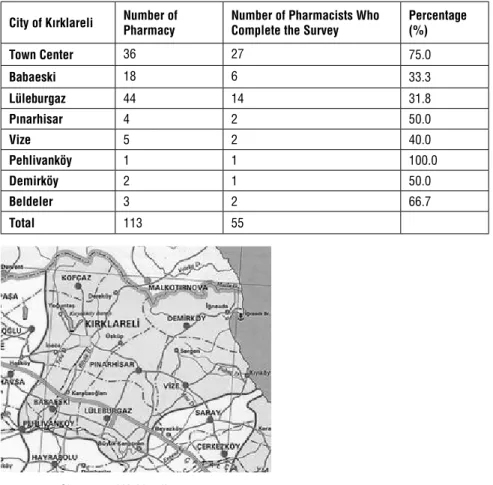
The number of pharmacies and pharmacists who completed the survey in Kırklareli province is given in Table 1. Kırklareli lies in the Marmara region of Turkey (Figure 1).
Table 1: The number of pharmacies and pharmacists who completed the survey in Kırklareli
provinces.
City of Kırklareli Number of Pharmacy Number of Pharmacists Who Complete the Survey Percentage (%)
Town Center 36 27 75.0 Babaeski 18 6 33.3 Lüleburgaz 44 14 31.8 Pınarhisar 4 2 50.0 Vize 5 2 40.0 Pehlivanköy 1 1 100.0 Demirköy 2 1 50.0 Beldeler 3 2 66.7 Total 113 55
Figure 1: City map of Kırklareli
Data Collection and Evaluation
Surveys were distributed and collected by the Kırklareli Chamber of Pharmacists, and then given to the researcher. As a preliminary experiment, surveys were dis-tributed to 44 pharmacies in İstanbul/Kadıköy and 23 pharmacists completed it (%52.27). According to a study of primary health care services by Gül et al., surveys were distributed to a total of 73 pharmacies located on both the Anatolian and Eu-ropean sides of Istanbul. 40 of the 73 pharmacies completed the survey (%54.8).22 According to another study by Gül et al., surveys were distributed to 90 pharma-cies in the İstanbul districts of Kadıköy and Fatih. This survey was completed by 73 pharmacists (%81).23 The survey consists of 29 questions, 4 of which are open-ended. As indicated in the data encoding information given in the appendix, the data was closed, re-coded and entered to the SPSS 8.0 for Windows programme. A Chi-squared test was used in the statistical evaluation of the research data.
Ethical Problems
We told pharmacists that neither their names nor the names of their pharmacies would be used in any kind of verbal or written explanation, and we have honored this commitment.
FINDINGS
Findings Related To Survey Data
Table 2: Distribution of Pharmacists by Number of Technicians Employed (Kırklareli, 2005)
Number of Technicians n % 0 1 1.9 1 28 52.8 2 20 37.7 3 4 7.6 Total* 53 100.0
*2 pharmacists did not answer this question.
Table 3: Distribution of Technicians by Working Hours (Kırklareli, 2005) Working Time of Pharmacy
Technicians (hour/day) n % 7 1 1.6 8 8 12.9 9 6 9.7 10 17 27.4 11 27 43.6 12 3 4.8 Total* 62 100.0
*14 pharmacists did not answer this question.
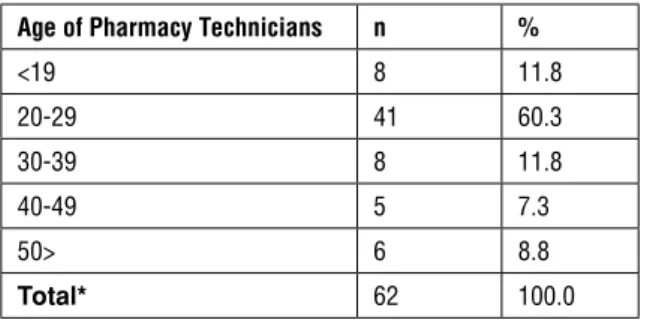
Table 4: Distribution of Technicians by Age (Kırklareli, 2005) Age of Pharmacy Technicians n %
<19 8 11.8 20-29 41 60.3 30-39 8 11.8 40-49 5 7.3 50> 6 8.8 Total* 62 100.0
Table 5: Distribution of Technicians by Educational Status (Kırklareli, 2005) Educational Status of Pharmacy Technicians n % Primary School 16 20 Middle School 11 13.7 High School 38 47.5 University 15 18.8 Total* 80 100.0
*3 pharmacists did not answer this question.
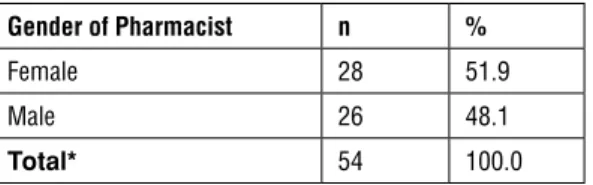
Table 6: Distribution of Pharmacists by Gender (Kırklareli, 2005)
Gender of Pharmacist n %
Female 28 51.9
Male 26 48.1
Total* 54 100.0
*1 pharmacist did not answer this question.
Table 7: Distribution of Pharmacies Within 150 Meters of A Health Facility. (Kırklareli, 2005) Is There A Health Clinic Near
the 150 Meters of Pharmacy? n %
Yes 20 36.4
No 35 63.6
Total 55 100.0
Table 8: Distribution of Health Facilities Within 150 Meters of a Pharmacy (Kırklareli, 2005) Health Facility Type That Near
To 150 Meters of Pharmacies n % Health Clinic 11 55.0 Public Hospital 7 35.0 Private Hospital 2 10.0 Private Policlinic 0 0.0 Public Policlinic 0 0.0 Total* 20 100.0
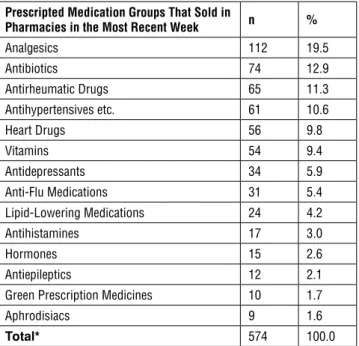
Table 9: Distribution of Prescribed Medications Sold in Pharmacies in the Most Recent Week
(Kırklareli, 2005)
Prescripted Medication Groups That Sold in
Pharmacies in the Most Recent Week n %
Analgesics 112 19.5 Antibiotics 74 12.9 Antirheumatic Drugs 65 11.3 Antihypertensives etc. 61 10.6 Heart Drugs 56 9.8 Vitamins 54 9.4 Antidepressants 34 5.9 Anti-Flu Medications 31 5.4 Lipid-Lowering Medications 24 4.2 Antihistamines 17 3.0 Hormones 15 2.6 Antiepileptics 12 2.1
Green Prescription Medicines 10 1.7
Aphrodisiacs 9 1.6
Total* 574 100.0
*11 pharmacists did not answer this question.
Table 10: Distribution of Non-Prescribed Medications Sold in Pharmacies in the Most
Recent Week (Kırklareli, 2005)
Prescripted Medication Groups That Sold in
Pharmacies in Last Week n %
Analgesics 42 24.1 Antibiotics 17 9.8 Antirheumatic Drugs 20 11.5 Antihypertensives etc. 9 5.2 Heart Drugs 8 4.6 Vitamins 22 12.6 Antidepressants 7 4.1 Anti-Flu Medications 15 8.6 Lipid-Lowering Medications 2 1.1 Antihistamines 16 9.2 Hormones 7 4.1 Antiepileptics 3 1.7 Aphrodisiacs 6 3.4 Total* 174 100.0
Table 11: Distribution of Herbal Products Sold in Pharmacies in the Most Recent Week
(Kırklareli, 2005)
Packaged Herbal Product Groups That
Sold in Pharmacies in Last Week n %
Weight Loss Preparations 7 63.6
Energizing Products 3 27.3
Dead Nettle Leaf 1 9.1
Sage Tea 0 0.0 Rosehip 0 0.0 Linden 0 0.0 Mint 0 0.0 Senna 0 0.0 Garlic 0 0.0 Total* 11 100.0
*37 pharmacists did not answer this question.
Table 12: Distribution of Patients Willing to Purchase Non-Prescribed Medications From
Pharmacies (Gender and Age) (Kırklareli, 2005)
Age Gender Female Male n % n % <19 33 6.9 29 5.2 20-29 89 18.7 108 19.5 30-39 112 23.6 130 23.5 40-49 129 27.2 145 26.2 50> 112 23.6 142 25.6 Total* 475 100.0 554 100.0
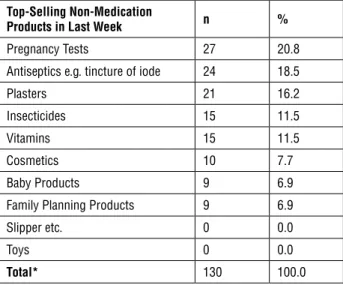
Table 13: Distribution of Non-Medicinal Products Sold in Pharmacies in the Most Recent
Week (Kırklareli, 2005)
Top-Selling Non-Medication
Products in Last Week n %
Pregnancy Tests 27 20.8
Antiseptics e.g. tincture of iode 24 18.5
Plasters 21 16.2
Insecticides 15 11.5
Vitamins 15 11.5
Cosmetics 10 7.7
Baby Products 9 6.9
Family Planning Products 9 6.9
Slipper etc. 0 0.0
Toys 0 0.0
Total* 130 100.0
*15 pharmacists did not answer this question.
Table 14: Distribution of Healthcare Professionals Consulted First by Patients About Their
Health Complaints (Kırklareli, 2005)
How Do Patients Report Health
Complaints First? n %
To Pharmacist 26 48.1
To Doctor 28 51.9
Total* 54 100.0
*1 pharmacist did not answer this question.
Table 15: Reasons Why Patients First Consult Pharmacists (Kırklareli, 2005) Reasons of Consulting
Pharmacist First n %
Because it is free or because patients do not want to pay for both
a doctor and medicine 15 45.45
Because access to a pharmacist is
easier than access to a doctor 15 45.45 Because patients do not think that
their sickness is serious 3 9.10
Total* 33 100.0
Table 16: Distribution of Warnings by Pharmacists That Patients Should Report Adverse
Reactions and/or Side Effects (Kırklareli, 2005)
Are Warnings that the Drug Needs to be Reported to the Pharmacy If It Has Adverse
Reactions and / or Side Effects Issued? n %
Yes 42 84.0
No 8 16.0
Total* 50 100.0
*5 pharmacists did not answer this question.
Table 17: Distribution of Healthcare Professionals Informed by Patients of Adverse
Reactions and/or Side Effects (Kırklareli, 2005)
Which Healthcare Professionals are Informed when a Drug Has Adverse Reactions and/or
Side Effects? n %
Pharmacist 30 57.7
Doctor 22 42.3
Total* 52 100.0
*3 pharmacists did not answer this question.
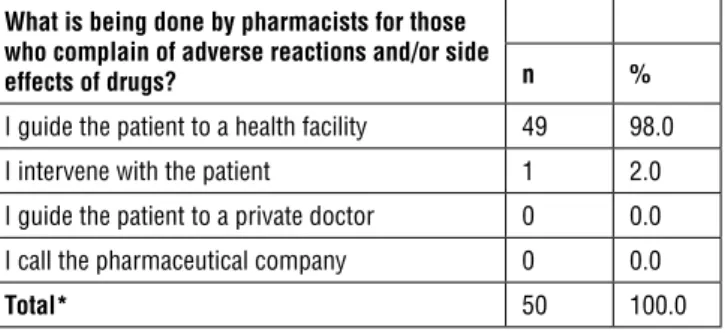
Table 18: Distribution of Pharmacist Response to Adverse Reactions and/or Side Effects
(Kırklareli, 2005)
What is being done by pharmacists for those who complain of adverse reactions and/or side
effects of drugs? n %
I guide the patient to a health facility 49 98.0
I intervene with the patient 1 2.0
I guide the patient to a private doctor 0 0.0 I call the pharmaceutical company 0 0.0
Total* 50 100.0
*5 pharmacists did not answer this question.
Table 19: Distribution of Applications to Pharmacists About Drug Poisoning (Kırklareli, 2005) Are there any Applications About Drug
Poisoning? n %
Yes 3 5.7
No 50 94.3
Total* 53 100.0
Table 20: Distribution of Pharmacist Response to Drug Poisoning (Kırklareli, 2005) What is being done by pharmacists for
those who encounter drug poisoning? n % I guide the patient to a health facility 3 100.0 I intervene with the patient 0 0.0 I guide the patient to a private doctor 0 0.0
Other 0 0.0
Total* 3 100.0
*52 pharmacists did not answer this question.
Table 21: Distribution of Non-Drug-Requests by Patients in the Most Recent Week
(Kırklareli, 2005) Services n % Drug counseling 23 82.1 Preparation of Solution/Drug 4 14.3 Bandages 1 3.6 Total* 28 100.0
*26 pharmacists did not answer this question.
Table 22: Distribution of Consultation with Pharmacy for HIV Tests in the Most Recent Week
(Kırklareli, 2005)
Has any kind of help been requested
regarding HIV tests in the past week? n %
Yes 0 0.0
No 51 100.0
Total* 51 100.0
*4 pharmacists did not answer this question.
Table 23: Distribution of Terminating Drug Supplies in the Most Recent Week
(Kırklareli, 2005)
Drug Supplies for Terminating
Pregnancy n %
Yes 7 13.7
No 44 86.3
Total* 51 100.0
Table 24: Distribution of Pharmacists Responses to Patients Wishing to Terminate
Pregnancy (Kırklareli, 2005)
How are Patients guided by Pharmacists About
Terminating Pregnancy? n %
I guide the patient to a doctor 3 42.9
In the first 12 hours I suggest estrogen at 100 mg a day,
after 72 hours, I suggest another 100 mg of estrogen 2 28.5 I guide the patient to a health facility 1 14.3
I do not give any service 1 14.3
Total* 7 100.0
*49 pharmacists did not answer this question.
Table 25: Distribution of Family Planning Methods Purchased in the Most Recent Week
(Kırklareli, 2005)
Family Planning Methods n %
Oral contraceptives 17 43.5
Male condoms 15 38.5
Suppository, foam, gel 5 12.8
Female condoms 1 2.6
Intrauterine devices 1 2.6
Diaphragma 0 0.0
Total* 39 100.0
*12 pharmacists did not answer this question.
Table 26: Distribution of Approvals by Pharmacists About the Selling of Over-The-Counter
Drugs Outside of Pharmacies (Kırklareli, 2005)
Do pharmacists approve the selling of
over-the-counter drugs outside of pharmacies? n %
Yes 2 5.9
No 32 94.1
Total* 34 100.0
*21 pharmacists did not answer this question.
Table 27: First Application Place to a Pharmacy Within 150 Meters of a Health Facility
(Kırklareli, 2005)
Is there a health facility within 150 meters of the pharmacy?
First Professional Sought in Complaints Total Firstly Doctor Firstly Pharmacist
n % n % n %
Yes 7 36.8 12 63.2 19 100
No 19 54.3 16 45.7 35 100
Total 26 48.1 28 51.9 54 100
Table 28: Distribution of Consultatitons for Terminating Pregnancy According to the Gender
of the Pharmacist (Kırklareli, 2005)
Gender of Pharmacist
Requesting Help for Terminating Pregnancy
Total Yes
n % n %
Male 26 52 2 28.6
Female 24 48 5 71.4
Total 50 100 7 100
fisher exact test=0.239
DISCUSSION AND CONCLUSION
This research was conducted between August 23rd, 2005 and September 12th, 2005 in Kırklareli. 55 of the 113 pharmacists who registered with the Chamber of Pharmacists (Table 1). According to a study of primary health care services by Gül et al., surveys were distributed to 73 pharmacies located on both Anato-lian and European sides of İstanbul. And 40 pharmacies completed the survey (%54.8).22 According to another study of primary health care services by Gül and his associates, surveys were distributed to 90 pharmacies in the Kadıköy and Fatih districts of İstanbul. That survey was completed by 73 pharmacists (%81).23 The survey consists of 29 questions, 4 of which are open-ended. As in-dicated in the data encoding information in the appendix, the data was closed, re-coded and entered to the SPSS 8.0 for Windows programme.
In this study, we learn that 52.8% of pharmacists have only one technician as indi-cated in Table 2. Additionally, the ratio of pharmacists working with 2 technicians was 37.7%. Gürses and Aran et al. also shows that pharmacists work with one or two technicians.24 The pharmacists in our research region state that one or two technicians are sufficient for general pharmacy works, considering the population. In Table 3, percentage of pharmacists whose technicians work 7, 8, 10, 11 and 12 hours a day were determined as 1.6%, 12.9%, 27.4%, 43.6%, and 4.8%, respectively. Table 4 indicates that the age range of technicians is mostly between 20-29. Gürses and Aran et al. stated that the age range of technicians is primarily 25-34.24 Since the technicians are relatively young, 43.5% of them work 11 hours a day. In Table 5, percentage of technicians at with a high school diploma or higher is 66.3%. All of technicians who are university graduates are close rela-tives of pharmacists. According to a study conducted by Boztok et al. in İzmir, 46.7% of technicians held a high school diploma or higher.25 The gender of the pharmacists who participated in this study are shown in Table 6; the percentage of female pharmacists is 51.9% while ratio of male pharmacists was 48.1%. Thus there is an equal gender distribution with regard to gender. Table 7 shows the
distribution of pharmacies that are within 150 meters of a health facility. The percentage of pharmacies with no health facility within 150 meters is 63.6%. Table 8 indicates that 55% of health facilities within 150 meters of pharmacies are health clinics. According to Boztok, 48.7% of health facilities in closest prox-imity to a pharmacy are health clinics.25 Thus it can be seen that health clinics are the most common health facilities and patients can easily reach a pharmacy after leaving a health clinic. Table 9 illustrates that the highest rate of patients visited pharmacies to purchase prescribed-analgesics (19.55%) in the most recent week of the study. The products with the lowest rate of purchase were aphrodisiacs (1.6%).
Table 10 shows that the top-selling products without a prescription were analge-sics, vitamins and antirheumatic drugs. Generally, antibiotics are used for upper respiratory tract infections like tonsillitis, pharyngitis and laryngitis. There is a decrease in the sale of heart medicines and antihypertensives because elderly pa-tients generally go to areas with warmer climates in the Summer season. Accord-ing to Boztok, 35.6% of all medicines sold in pharmacies are analgesics and an-tirheumatic drugs.25 According to another study by Hannay, the most commonly used non-prescription drugs are antipyretics, analgesics, antitussive drugs and laxatives, respectively.26 According to Vicencio et al., the drugs that are sold most are analgesics, NSAID’s and vitamins.27 In Table 9 sales of aphrodisiacs occur at a rate of 1.6%, whereas in Table 10, sales of aphrodisiacs occur at a rate of 3.4%, an indication that more aphrodisiacs are being sold.
The excessive sale of weight-loss and energy products is attributed to excessive advertising for these products (Table 11). The majority of male patients who want to buy medicines without prescriptions are over the age 40. There is not a significant difference between males and females by gender in the frequency of medicine purchase (Table 12). It is reported that pregnancy test products are the most popular non-medicinal products with a rate of %20.6 in the most recent week of the study. The least-sold products are toys, slippers etc. (Table 13). Patients apply first to doctors and then to pharmacists with rates of %51.9 and %48.1 respectively with their complaints (Table 14). In a study conducted in An-kara by Onaran, patients applied first to pharmacists for their complaints at a rate of %43.8.28 We think that pharmacies play a key role in this situation be-cause they are well-educated and easily accessible. When evaluating the reasons for applications to pharmacists by patients, the fact that pharmacies are free and easily reachable, and those patients’ complaints are not significant are the rea-sons not to visit a doctor (Table 15).
adverse reactions and/or side effects of medications when they occur, and 57.7% of patients report adverse reactions and/or side effects to pharmacists first (Ta-ble 17). According to a study conducted by Uğraşbul and Sütaş in İzmit, 62.1% of patients report the adverse reactions and/or side effects to pharmacists first. 92.2% of pharmacists guided such patients to a health facility. Table 18 shows that 98% of pharmacists guided patients who report adverse reactions and/or side effects to a health facility. Pharmacists also report the adverse reactions and/or side effects of these medications to TÜFAM (The National Pharmacovigi-lance Centre in Turkey).
According to our study, 94.3% of pharmacists report that there are no applica-tions for drug poisoning (Table 19). All of the pharmacists guided patients with drug poisoning to a health facility (Table 20). We think that patients apply to pharmacies first because they are more common than health facilities.
According to Table 21, the percentage of patients who come to a pharmacy for drug counseling 82.1%. According to another study, this percentage is 28.8%.24 It can be seen that patients mostly get help from pharmacies for purchasing and counseling about medicine.
Our study shows that the number of patients who come to the pharmacy for counseling about HIV tests is very low. It can be thought that reason for this situation is patients’ concerns over privacy or embarrassment (Table 22). The reason for our HIV test research is that Kırklareli is a borderline province and HIV tests are sold in pharmacies.
Oral contraceptives are given to 13.7% of patients who want to terminate preg-nancy by 45.5% of pharmacists, acccording to Tables 23 and 25. When evaluat-ing the question in Table 24 (to which only 7 pharmacists responded) it is seen that 42.9% of pharmacists guided patients to a doctor willing to help in termi-nating pregnancy. In another study conducted by Uğraşbul and Sütaş in İzmit, 32.6% of pharmacists sold patients the necessary medicine, whereas 27.2% of pharmacists guided patients to a health facility.29 Our study shows that the most preferred methods for family planning are oral contraceptives and male con-doms at rates of 43.5% and 38.5%, respectively. Oral contraceptives can also be used for treating acne vulgaris and as a hormone replacement treatment (Ta-ble 25). According to a study conducted by Boztok in İzmir, male condoms and oral contraceptives are the most preferred method for family planning at rates of 40.7% and 38.9%, respectively.25 It can be seen that the most preferred methods are the safest methods.
94.1% of pharmacists oppose selling over-the-counter medicines outside of pharmacies (Table 26). In a study conducted by Boztok, 97.6% of pharmacists
oppose the selling of over-the-counter medicines outside of pharmacies, and state that these kinds of medicines need to be sold in pharmacies.25 McFadyen
et al. reported that the incorrect use of over-the-counter medicines like
insom-nia pills, codeine, drugs that contain caffeine or pseudoephedrine, antitussive mixtures, laxatives and especially some analgesics is common.30 Deshpande and Tiwari show that 31% of patients use over-the-counter medicines. 26.9% of such patients are between the ages of 31-40, and 30.8% are in the 41-50 age range. The use of these medications is more common in men than in women.50
Table 27 shows that pharmacists were applied to first by patients when drug side effects occurred 51.9% of the time. 63.2% of these pharmacists state that a health facility exists within 150 meters of their pharmacy. The location of the first ap-plication differs depending on whether there is a health facility within 50 meters of the pharmacy.
There is no significant statistical difference between genders of pharmacists about requesting help for terminating pregnancy (Table 28). A small number of patients prefer female pharmacists to male pharmacists when seeking help in terminating pregnancy.
When evaluating the open-ended question that asks how cold-chain vaccine ap-plication is performed, it can be seen that pharmacists pay attention to storage conditions and sale style. It is understood that pharmacists bring cold environ-ment vaccines from a pharmaceutical warehouse, store them in a fridge, and sell them patients with ice or an ice gauge. Most of applications by patients to phar-macists are about conditions like diarrhea, pain, cold and the use of medicines. It is thought that the most effective way to counter non-prescription drug use is state policy and community education. When investigating how patients be-have when they get sick, it is seen that first, they try to cure themselves, and if this doesn’t work, they apply to the nearest health facility, which is generally a pharmacy. Finally, if patients think that their condition is serious, they apply to a doctor. It is thought that the best way to solve this problem is to make people adopt the correct treatment methods by raising public awareness.
Suggestions That Can Be Offered As A Result of This Study
- All doctors and pharmacists should be encouraged to attend at least one sym-posium about medication and its developments, regardless of whether they are private or public sector workers.
- Authority sharing of all health care professionals should be determined by comprehensive research, and all health care professionals should be encouraged to comply with these results.
- Use of non-prescription medication should definitely be prevented. A list of medications that can be sold without prescription should be compiled and re-sults should be announced to doctors and pharmacists by the health authorities. - The public should be provided with information about the incorrect use of medication through publishing campaign programmes in newspapers, maga-zines, television and radio.
- Scientific research should be made about the reasons for the use of medication without a prescription.
- The public should be encouraged to use prescription medication by making health insurance more common.
REFERENCES
1. Hayran O., Sur H.: Health Services Handbook, Marmara University, Istanbul, 1998, p. 27 (in Turkish).
2. Fişek H.N.: Introduction to Public Health. Volume 2, Hacettepe University, Ankara, 1985, p. 4-6 (in Turkish).
3. Helman C.G.: Culture Health and Illness, Buttenvorth-Heineman, London, 1990, p. 55-59. 4. Hayran O., Sur H.: Hospital Management, Marmara University, Istanbul, 1997, p. 15-17. 5. Pharmacists Working for the Benefit of Society. Hacettepe Bulletin of Community Medicine (Special Supplement), 1986, 3, (4) (in Turkish).
6. Hammarstrom B., Westerholm, B.: Pharmacists To The Fore. World Health Forum, 1988,
9(4): 514-518.
7. Thomson G., Sterlcy G.: Self Prescribing By Way of Pharmacies in Three Asian Developing Countries. Lancet, 1986, 2 (8507): 620 - 622.
8. Semin S.: Changes in the Field of Day-To-Day Health Care, 1980. T.T.B. Izmir Medical Cham-ber Bulletin. Special Issue 1993, 12 (in Turkish).
9. Akalın İ.: Unnecessary Drug Use and Waste Meeting. Conference Hall of T.E.B., 1986 (in Turkish).
10. Kıran B: İzmir- Investigation of Knowledge, Attitudes and Behaviors of Women About Drug Use in Narlıdere Health Care Center Area. D.E.U. Institute of Health Sciences, Master Thesis, Izmir, 1991 (in Turkish).
11. Queneau P., Decousus H., Jourlin M., Laurent H., Perpoint B.: Rheumatic Diseases, Self Medication. Rev. Rhum. Mal. Osteoartic., 1935, 52 (2): 79-84.
12. Martin S.: Pharmaceutical Care Made Easy. Am Pharm., 1994, 34 (3): 61-64.
13. Rucker T.D.: Problem Solving, The Professional Responsibility of Pharmacists. Drug Intern.
Clin. Pharm., 1986, 20 (7). 556 - 560.
14. Brown T.M., Golden R.N., Evans D.L.: Organic Affective Psychcosis Associated with the Routine Use of Non- Prescription Cold Preparations. J. Psychiatry., 1990, 156: 572 - 575. 15. Gürler N., Töreci K.: Development of Resistance to Antibiotics in Staphylococci and Their
Problems. Infection Journal, 1990, 4 (4): 699-716.
16. Kim S.L., Hunter J.G., Wo J.M, Davis L.P., Waring J.P.: NSAIDs, Aspirin And Esophage-al Strictures: Are Over Tunter Medications Harmful The Esophagus. J. Clin. Gastroenterol., 1999, 29 (1): 32-34.
17. Feldman E.G.: Solving the Orphan Drug Problem. J. Pharm. Sci., 1982, 71 (11): 1191,. 18. Strom B.L., Taragin M.I., Garson J.L.: Gastrointestinail Bleeding From NSATDs. Agents
Actions., (Suppl.) 1990, 29: 27-38.
19. Meyers F.H., Jawetz F., Göldfıen A.: Review of Medical Pharmacology. University of Califor-nia, 1980, p. 40 - 41, California.
20. Kayaalp O.: Medical Pharmacology, Hacettepe University, Ankara, Volume 1, 1989, p. l - 11 (in Turkish).
21. Kırklareli Population Directorate Records, 2000.
22. Gül H., Omurtag G.Z., Tozan A., Özden Y.: The Role of Turkish Pharmacists in Health Care: A Research in Province of Istanbul, 10th International Congress of Toxicology (ICTX), Tam-pere, Finland, Toxicology and Applied Pharmacology , (P-311, 205-206, Poster Presentation), (11-15 July, 2004).
23. Gül H., Omurtag G., Önal A.E., Tozan A., Özel S., Özden Y.I.: Prescription-Non-Prescription Drug Consumption And Factors Affecting in Istanbul, 9. National Public Health Days-GATA (Environmental Health), Poster Presentation, P-214, 145, Kızılcahamam-Ankara, 28 Septem-ber-1 October (2005) (in Turkish).
24. Gürses B., Aran S.: The Role of Pharmacists in Primary Care. M.U. Faculty of Medicine, Department of Public Health, Internship Study, Bekirdere, 1991 (in Turkish).
25. Boztok N.: Primary Health Care and Pharmacies. D.E.U. Institute for Health Sciences, Mas-ter Thesis, İzmir, 1992 (Supervisor: Assoc. Prof. Dr. Z. Amato) (in Turkish).
26. Hannay D.R.: The Symptom Iceberg: A Study of Community Health. London: Routledge and Kegan Paul, 1979.
27. Vicencio A.D., Alfaro, V.A., Martinez, T.J.L.: Characteristics of Drug Acquisition in Morelia (Michoacan), Mexico Boletin De La Oficina Sanitaria Panamericana, 1995, 3: 236 242. 28. Onaran Y.S.: A Research on Knowledge and Expectations of Pharmacy Services in Society. H.U. Institute of Health Sciences, Master Thesis, Ankara, 1994 (Supervisor: Prof. Dr. İ. Üstel) (in Turkish).
29. Uğraşbul F., Sütaş Y.: Primary Health Care and Pharmacies. M.U. Department of Public Health, Internship Study, Izmit, 1991 (in Turkish).
30. MacFadyen L, Eadie D, McGowan T.: Community Pharmacists’ Experience of Over-The-Counter Medicine Misuse in Scotland. J. R. Soc. Health., 2001, 121: 185-192.
31. Deshpande SG, Tiwari R. Self Medication-A Growing Concern. Indian J. Med. Sci., 1997,
51: 93-96.