Detection of adulterations in fermented and heat-treated Turkish type
sausages by histological examination
*Eser İNCE, Nesrin ÖZFİLİZ
Uludağ University, Faculty of Veterinary Medicine, Department of Histology and Embryology, Bursa, Turkey.
Summary: In this study, Turkish type sausages were prepared by fermentation and heat treatment after adding prohibited tissues and organs, listed in the Communique of Meat and Meat Products of the Turkish Food Codex. The aim was to determine if these tissues and organs, when added by 10% as adulterants to different types of Turkish type sausages produced with different methods, could be detected by histological examination and also to examine the effects of food processing executed during production on these adulterants. Although no statistically significant differences were found between fermentation and heat treatment methods, our results showed a strong correlation between identification of adulteration and the histological examination. The chemical, physical and microbiological examinations are executed for the purpose of controlling whether the fermented and heat-treated Turkish type sausages were conformed with the standards and regulations and also determining quality levels of Turkish type sausages. In addition, the histological examination in order to detect the tissues and organs which are used as additives for the purpose of adulteration has been concluded as an useful method which will help consumers for much better quality products.
Keywords: Adulteration, fermented, heat-treated, histological examination, Turkish type sausage.
Fermente ve ısıl işlem görmüş sucuklarda tağşişin histolojik muayene ile tespiti
Özet: Bu çalışmada, Türk Gıda Kodeksi Et ve Et Ürünleri Tebliğinde sucuklarda bulunmasına izin verilmeyen doku ve organlar ilave edilerek fermente ve ısıl işlem görmüş sucuklar hazırlanmıştır. Farklı metotlarla üretilen sucuklara %10 oranında katılan doku ve organları histolojik muayene ile tespit etmek ve ayrıca üretim sırasında uygulanan işlemlerin dokular üzerinde ne tür etkiler oluşturabileceğini incelemek amaçlanmıştır. Fermente ve ısıl işlem metotları arasında istatistiki bir fark bulunmamış olmasına rağmen, sonuçlarımız tağşişin tespiti ve histolojik muayene arasında güçlü bir korelasyon olduğunu göstermiştir. Fermente ve ısıl işlem görmüş sucukların tüzük ve standartlara uygun olarak imal edilip edilmediklerinin kontrolü ve kalitelerinin belirlenmesi amacıyla kimyasal, fiziksel ve mikrobiyolojik analizler yapılmaktadır. Bunlara ilaveten, tağşiş amacı ile kullanılan doku ve organların tespitinde histolojik muayenenin, tüketicilerin daha kaliteli ürünler tüketmesine yardımcı olan faydalı bir yöntem olduğu kanaatine varılmıştır.
Anahtar sözcükler: Fermente, histolojik incelemeler, ısıl işlem, sucuk, tağşiş.
Introduction
For healthy and balanced nutrition, experts report that 40-45% of an individual’s daily protein requirements should be met from animal proteins (17, 39). Animal proteins are rich in essential amino acids. Compared to vegetable proteins, they have a higher biological value (9, 15, 27). However, because of their high water content and conducive pH, meat is a suitable environment for the growth of many different groups of microorganisms (29, 37). In order to increase the durability of meat and to add different flavors to it, various products are manufactured. The most common methods used for this purpose are cooling, freezing, salting, drying, smoking, cooking, fermentation, heat-treatment applications, irradiation and adding chemical substances to the meat (2, 11, 31). In
* This study is a part of the Doctoral Thesis of the first author.
Turkey, Turkish type sausage is the most important of these processed foods (3). Turkish type sausages are sausages of roughly comminuted meat, mixed with fat and other ingredients, stuffed into sheep or cattle casings and exposed to smoking and/or drying, also include sun-drying sometimes (35). Northern and Southern European style fermented sausages has typical properties just as the Turkish type sausage (18). In South America and some European countries, fermented sausages are produced without a starter culture and fermentation is carried out without any ingredients (14). Additionally, this sausage which is called as Turkish type sausage, is similar to fermented sausages such as saucisson, chorizo, salami, summer sausage, pepperoni, teewurst and mettwurst widely consumed in many other countries (32). According
to the 2012/28488 numbered Turkish food codex, “Meat and Meat Products Communique of the Ministry of Food Agriculture and Livestock,” Turkish type sausages are divided into two groups: fermented and heat-treated (4).
Today, due to factors such as advancing technology, urbanization, entrance of women into the workforce, busy working schedules, travel and living alone, people’s eating habits have changed (36). The traditional fermented Turkish type sausage has almost disappeared and has been replaced by the heat-processed Turkish type sausage, which has a short production time and, hence, generates a higher level of profit (22, 33).
Adulteration is the name given to the procedure of deliberately decreasing the quality of a product expose to substituting an expensive raw material required in large amount by a low quality raw material of no or little use. To prevent adulteration, legal regulations were made and put into effect in England in the 1860s. Such legal regulations were put into effect in Turkey in 1936 (38).
Because of its preparation procedures, Turkish type sausage is very open to adulteration (21). In Turkey, there are many studies on the quality of commercially available Turkish type sausages. Their results indicate that, generally, Turkish type sausages do not conform to the standards and regulations from chemical, physical and microbiological aspects (10, 16, 20, 30, 36). Moreover, although using offals, bone and cartilage was banned in the production of meat products according to the Turkish Food Codex Meat and Meat Products Communique (4), there are many studies reported that the legal regulations were violated (7, 26, 34, 42, 43). There are also studies reporting the use of types of meat belonging to animal species that are prohibited by the same communique for the adulteration of meat products (1, 23, 24, 28, 41).
Histological examination method was firstly used by a researcher named Jaeger in meat and meat products in 1910 (26). Kaymaz et al. (26) and Inal (25) reported that such researchers as Braunert, Escher, Frickinger, Lundt, Schröder, Glamser, Breusch, Zumpe and Schönberg made important contributions to the development of this method. Several studies suggested the possibility of using histological examination to identify prohibited tissues and organs that have been added as adulterants to the Turkish type sausage dough (5, 19, 40).
In this study, the aims were: 1) to determine if tissues and organs that were added to the types of Turkish type sausages produced by different methods could be identified through the histological examination method; 2) to determine the effects of the Turkish type sausage production processes on the added tissues; and 3) to measure the detection rates of tissue and organ additives in histological sections. In light of the results obtained from this study, it was concluded that it will be possible to prevent the consumption of low quality meat products and
unfair competition between producers through the determination of adulteration by histological examination.
Materials and Methods
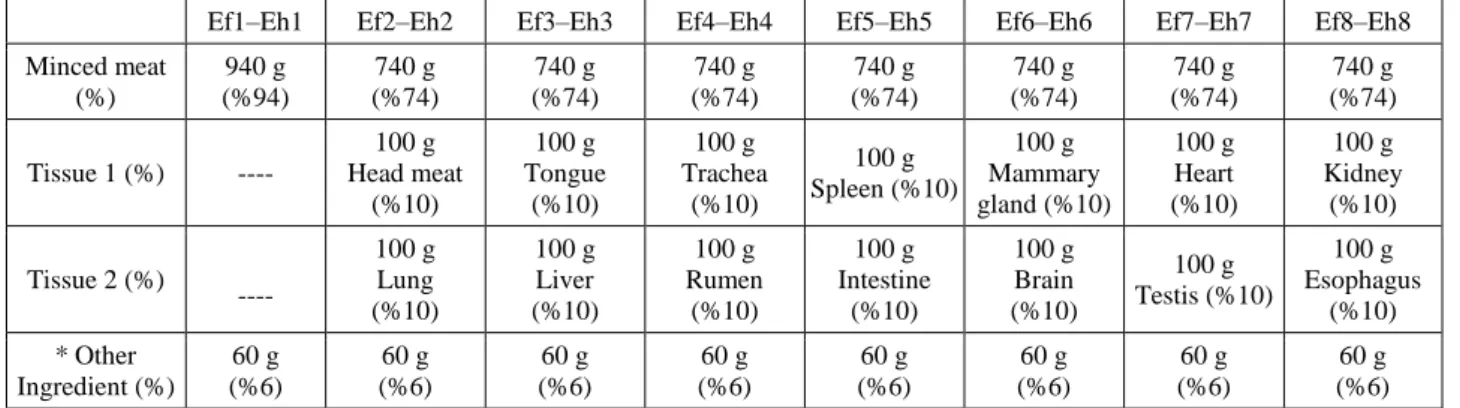
The study was carried out in the laboratory of the Histology and Embryology Division of the Veterinary Faculty of Uludag University. The experimentally prepared Turkish type sausage samples, were used as material the methods of fermentation and heat treatment were applied in the Meat Products Unit of the Veterinary Faculty of Uludag University. The meat used in the experimentally prepared Turkish type sausage samples was taken from the stocks of bovine meat, put up for sale at the Meat Products Sales Unit of the Veterinary Faculty of Uludag University, and the organs to be used for adulteration purposes were obtained from a private slaughterhouse. Head meat, lung, tongue, liver, trachea, rumen, spleen, intestine, mammary gland, brain, heart, testis, kidney and esophagus were added to the experimental Turkish type sausages dough. First, meat and adipose tissue having completed maturation were hashed (cut in small pieces). The organs taken were processed separately using a chopper (King K715P - 300 Watt) and put into containers of 100 grams. While preparing Turkish type sausage dough samples, the mixing ratios given in Table 1 were applied. None of these tissues or organs was added to the control groups. Following the stuffing procedure, Turkish type sausage samples were separated into two groups: those to be heat processed and those to be fermented.
The Turkish type sausages to be fermented were kept in fermentation for a period of 8 days under the conditions of an air flow of 0.5-1 m/second, a relative humidity of 75-90% and a temperature of 18-22°C. The Turkish type sausages to be heat processed were subjected to heating in a baking oven with a central temperature of 68°C (approximately 30 minutes). At the end of these procedures, the Turkish type sausages were vacuum-packed and stored at 4°C. For histological evaluations, samples of 1.00-1.50 grams were taken from five different places on each of the experimentally prepared, fermented or heat-processed Turkish type sausages and processed into paraffin blocks through standard methods. Sections of 5-6 µm thickness were taken from the blocks using a microtome (Leica RM 2135). The sections were stained using Crossmon’s triple stain technique (12). The samples were photographed by using a Nikon Eclipse 80i light microscope.
Evaluation: The whole area of each of the stained
sections, which were taken from five different places on the same sample, was examined for the detection of any added organs. The sections positive for added organs were labeled “+” and, in the undetected ones, additional sections were taken from the deep portion of the paraffin
block, stained, and the whole area of the section was examined. The positive sections were designated with a “+”, and in cases when no tissues or organs were detected in these sections, new paraffin blocks were prepared from five different places of the same sample, and the same examination and scoring procedure was repeated. If no tissues and organs were detected again following this procedure, they were assigned “–” scores and accepted as negative results (no detection) and statistically evaluated as 0s.
Statistical analysis: The statistical analysis of the
study were made by using the SPSS 23.0 program package (SPSS Inc., Chicago, IL, USA). The descriptive statistics of the data obtained in the study were given in terms of frequencies and percentages of adulteration occurrence. To determine if there were any differences between the heat-processing and fermentation methods in terms of detection of each of the organs, Fisher’s exact chi-square test and Yates’s chi-square test were used; moreover, if there were any differences between all the organs in terms of being detected in the heat-process and fermentation methods, these differences were evaluated by using Pearson’s chi-square test. The graphs included in the study were drawn using Microsoft Excel 2013. In all the statistical analyses made in the study, p values under 0.05 were considered to be statistically significant.
Results
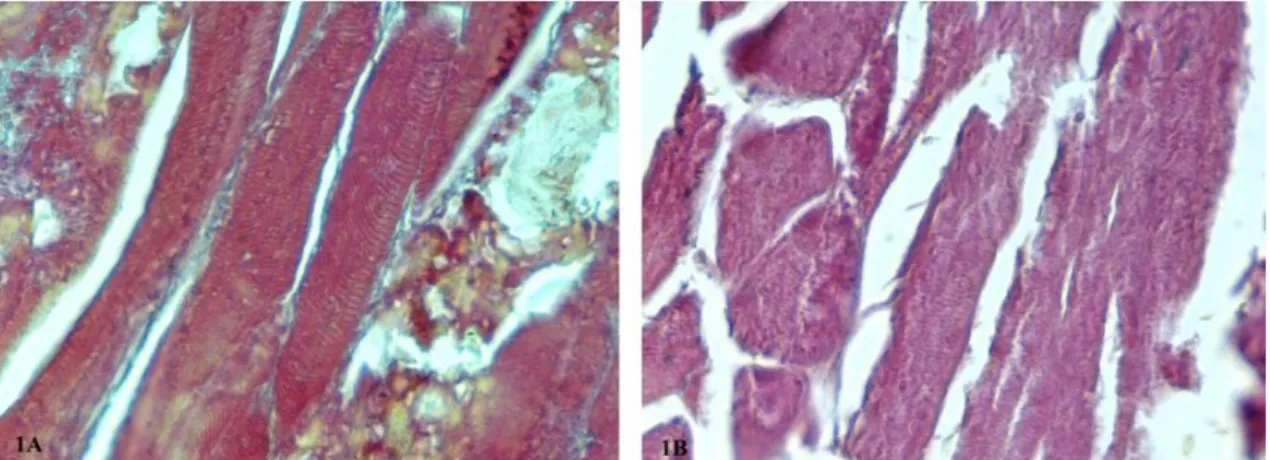
The samples prepared from the Turkish type sausages to which tissues or organs had been added in accordance with the previously described methods were examined histologically. While skeletal muscle, with its typical striated appearance, was easily detected in the sections prepared from the fermented Turkish type sausage samples, skeletal muscle could not be detected in
the sections prepared from the heat-processed Turkish type sausage samples, as evidenced by the absence of any striated tissue (Figures 1A and B). It was determined that the fat cells composing the adipose tissue preserved their structural properties in the fermented Turkish type sausage samples, but adipose cells were shrunken and lost their structural properties in the heat-processed Turkish type sausage samples (Figures 2A and B). It was found that ligament fibers, which function as connective tissue, lost their structural properties in both methods, yet they could still be detected and in this regard, there was not a significant difference between the two methods of preparation. In the Turkish type sausages prepared via both methods, the added tissues and organs could be detected. Head meat pieces were observed, with typical images belonging to head glands located between the skeletal muscles. Although the lung tissue had been disrupted, alveolar structures were detected. It was observed that, although the hepatocytes belonging to the parenchyma of the liver were very scattered, the capsules and bile ducts were easily detected in the images. Tongue was found through the detection of skeletal muscles characteristic of the tongue and extending in different directions in groups. Although tracheal epithelia and connective tissue layers were not observed as intact structures but hyaline cartilage pieces were observed clearly. It was determined that the ruminal papillae were preserved as a whole and could be detected (Figures 3A and B). The spleen parenchyma could be detected histologically only around the spleen capsule and trabeculae. It was observed that, although the epithelium of the intestine had disappeared significantly, the tunica muscularis was preserved completely. In all the sections put into analysis, no image belonging to brain tissue was detected. It was observed that although mammary tissue
Table 1. The formulations of fermented and heat-treatment Turkish type sausage. Tablo 1. Fermente ve ısıl işlem görmüş sucuk formülasyonları.
Ef1–Eh1 Ef2–Eh2 Ef3–Eh3 Ef4–Eh4 Ef5–Eh5 Ef6–Eh6 Ef7–Eh7 Ef8–Eh8 Minced meat (%) 940 g (%94) 740 g (%74) 740 g (%74) 740 g (%74) 740 g (%74) 740 g (%74) 740 g (%74) 740 g (%74) Tissue 1 (%) ---- 100 g Head meat (%10) 100 g Tongue (%10) 100 g Trachea (%10) 100 g Spleen (%10) 100 g Mammary gland (%10) 100 g Heart (%10) 100 g Kidney (%10) Tissue 2 (%) ---- 100 g Lung (%10) 100 g Liver (%10) 100 g Rumen (%10) 100 g Intestine (%10) 100 g Brain (%10) 100 g Testis (%10) 100 g Esophagus (%10) * Other Ingredient (%) 60 g (%6) 60 g (%6) 60 g (%6) 60 g (%6) 60 g (%6) 60 g (%6) 60 g (%6) 60 g (%6) Ef: Experimental fermented Turkish type sausage, Eh: Experimental heat-treatment Turkish type sausage.
* Salt (%1.7), Garlic powder (%1), Granulated sugar (%0.5), Cumin (%1), Black pepper (%0.5), Chili pepper (%0.3), Red pepper (%0.5) and Pimento (%0.5).
Ef: Deneysel fermente sucuk, Eh: Deneysel ısıl işlem görmüş sucuk.
* Tuz (%1.7), Sarımsak tozu (%1), Toz şeker (%0.5), Kimyon (%1), Karabiber (%0.5), Acı kırmızı biber (%0.3), Tatlı kırmızı biber (%0.5) ve Yeni bahar (%0.5).
alveoli were clearly detected in the Turkish type sausage samples prepared via both methods, the structure was preserved better in the heat-processed samples (Figures 4A and B). The heart muscle tissue was typically detected due to its striations and its collateral connections and intercalated disks. The parenchyma of testis tissue was especially undetectable and in only one of the samples prepared by fermentation, the tunica albuginea, epididymal ducts, and spermatozoas inside these
epididymal ducts were managed to detect. Although the structures of the cortex of the kidney, of the corpuscula renis and of the proximal and distal tubules were not detected intact, it was determined that the structures were preserved better in the heat-treated Turkish type sausage samples (Figures 5A and B). The stratified squamous epithelium forming the lamina epithelia of the esophagus was observed clearly with its other layers.
Figure 1. Skeletal muscle in experimental fermented (A) and heat-treated Turkish type sausage (B). Triple staining x40. Şekil 1. Fermente (A) ve ısıl işlem görmüş (B) sucukta çizgili kas. Üçlü boyama x40.
Figure 2. Adipose tissue in experimental fermented (A) and heat-treated Turkish type sausage (B). Triple staining x10. Şekil 2. Fermente (A) ve ısıl işlem görmüş (B) sucukta yağ dokusu. Üçlü boyama x10.
Figure 3. Papilla ruminis in experimental fermented (A) and heat-treated Turkish type sausage (B). Triple staining x10. Şekil 3. Fermente (A) ve ısıl işlem görmüş (B) sucukta papilla ruminis. Üçlü boyama x10.
Figure 4. Mammary tissue in experimental fermented (A) and heat-treated Turkish type sausage (B). Triple staining x4. Şekil 4. Fermente (A) ve ısıl işlem görmüş (B) sucukta meme dokusu. Üçlü boyama x4.
Figure 5. Kidney tissue in experimental fermented (A) and heat-treated Turkish type sausage (B). Triple staining x10. Şekil 5. Fermente (A) ve ısıl işlem görmüş (B) sucukta böbrek dokusu. Üçlü boyama x10.
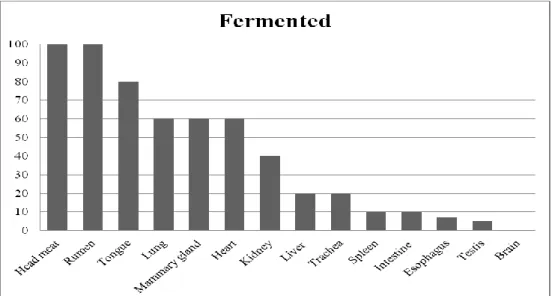
Head meat (Baş bölgesi etleri), Rumen (Rumen), Tongue (Dil), Lung (Akciğer), Mammary gland (Meme), Heart (Kalp), Kidney (Böbrek), Liver (Karaciğer), Trachea (Soluk borusu), Spleen (Dalak), Intestine (Bağırsak), Esophagus (Yemek borusu), Testis (Testis), Brain (Beyin).
Figure 6. Ratio of organs detection for fermentation method. Şekil 6. Fermente yönteminde, organların tespit edilme oranları.
Head meat (Baş bölgesi etleri), Rumen (Rumen), Mammary gland (Meme), Heart (Kalp), Kidney (Böbrek), Lung (Akciğer), Tongue (Dil), Trachea (Soluk borusu), Spleen (Dalak), Esophagus (Yemek borusu), Liver (Karaciğer), Intestine (Bağırsak), Testis (Testis), Brain (Beyin).
Figure 7. Ratio of organs detection for heat-treatment method. Şekil 7. Isıl işlem yönteminde, organların tespit edilme oranları.
Table 2. Comparison of fermentation and heat-treatment methods in terms of tissue detection.
Tablo 2. Fermente ve ısıl işlem yöntemleri arasında organların tespit edilme bakımından karşılaştırılması.
Tissue Method + - p
Head meat Heat-treated 1,00 0,00 1,000
Fermented 1,00 0,00 Lung Heat-treated 0,60 0,40 1,000 Fermented 0,60 0,40 Tongue Heat-treated 0,60 0,40 1,000 Fermented 0,80 0,20 Liver Heat-treated 0,20 0,80 1,000 Fermented 0,20 0,80 Trachea Heat-treated 0,40 0,60 0,560 Fermented 0,20 0,80 Rumen Heat-treated 1,00 0,00 1,000 Fermented 1,00 0,00 Spleen Heat-treated 0,40 0,60 0,242 Fermented 0,10 0,90 Intestine Heat-treated 0,20 0,80 0,631 Fermented 0,10 0,90
Mammary gland Heat-treated 0,80 0,20 1,000
Fermented 0,60 0,40 Brain Heat-treated 0,00 1,00 1,000 Fermented 0,00 1,00 Heart Heat-treated 0,80 0,20 1,000 Fermented 0,60 0,40 Testis Heat-treated 0,00 1,00 1,000 Fermented 0,05 0,95 Kidney Heat-treated 0,80 0,20 0,524 Fermented 0,40 0,60 Esophagus Heat-treated 0,40 0,60 0,140 Fermented 0,07 0,93
+: The ration of detection, -: The ration of undetection, p: Significance level. +: Tespit edilme oranı, -: Tespit edilmeme oranı, p: Anlamlılık düzeyi.
According to the statistical results obtained from the analyzed samples, there was not a statistically significant difference between the heat-processing and fermentation methods used in the preparation of the Turkish type sausages in terms of detection of each organ (p>0.05) (Table 2).
In the fermentation method, a statistically significant difference was observed in terms of the detection of all the organs (p<0.001) and the graph is shown in Figure 6.
In the heat-processing method, a statistically significant difference was observed in terms of the detection of all the organs (p<0.001) and the graph is depicted in Figure 7.
Head meat and rumen were the tissues or organs that were most frequently detected in both the fermented and heat-processed Turkish type sausages, and testis and brain were the least frequently detected.
Discussion and Conclusion
In the current literature, there are many physical, chemical and microbiological studies of the quality of meat products in Turkey, but studies including histological examinations were very limited. Atasever et al. (5) examined sections prepared with gelatine and parafin embedding methods in fermented Turkish type sausage samples which they had prepared by adding different tissues and organs at the ratios of 2%, 4% and 6%, and reported that the structural and staining characteristics of the tissues and organs were preserved better in samples prepared with paraffin embedding method. In our study, it was observed that the structural differences of the tissues and organs could be detected in the heat-treated and fermented Turkish type sausage samples through embedding in paraffin. Atasever et al. (5) found that, in fermented Turkish type sausages prepared by adding organs in accordance with the described methods, cutaneous mucosa epithelium, collagen and elastic fibers, skletal and heart muscle, blood vessels, cartilage tissue and peripheral nerves were well-preserved, but liver, lung, intestine and testis tissue were extremely damaged. The findings of the study revealed that skeletal muscles, adipose tissue, connective tissue, secretory units of major salivary glands in the head area, pieces of tracheal cartilage, papilla ruminis, secretory units of the mammary gland, structures located in the cortical region in kidney and the stratified squamous epithelium of the esophagus were all well preserved but intestine, liver, lung, spleen, testis and brain tissue were disrupted and could be detected only in limited areas in the fermented Turkish type sausage samples. Dalmis and Soyer (13) examined the changes occurring in the sarcoplasmic and myofibril proteins in Turkish type sausages during maturation and storage. For this purpose, they used the Western blot method and found that the proteins were
denatured and their solubility decreased in all of the heat-treated groups. In our study, in the Turkish type sausages prepared with the method of fermentation, striation was preserved in the skeletal muscles, but in the Turkish type sausages prepared with the method of heat treatment, striation was disappeared. Although our methods were different from those of Dalmis and Soyer (13), our results similarly indicated that the structures of the proteins were distorted. Ayaz et al. (6) reported that, in the experimentally added minced organ mixtures, the skeletal muscles, transitional squamous epithelium of renal pelvis and chicken skin preserved their structures. Also similar to our findings, although the structural integrity of the liver and spleen was distorted, they observed bile ducts of the liver and the capsule and trabecular structures of the spleen. In contrast with our findings, Ayaz et al. (6) found that the alveolar structures in the lung could not be detected but that structures belonging to the bronchia could be detected. We are of the opinion that this difference resulted from the fact that sections were taken randomly from the organ used in the mixture; that is why, this difference reflects variation due to random sampling. Inal (25) reported that, in the samples prepared from salami and sausages, papillae ruminis, smooth muscle cells of the intestinal mucosa; startified squamouse epithelium of esophagus and heart muscle tissue were clearly detected. In our study, in the Turkish type sausages prepared with both methods, similar structures were detected. Erdogrul (19) reported detecting especially epithelium, cartilage, bone and nerve tissue and hair and hair roots, in Soudjouk (Turkish type sausages) and sausages sold in Kahramanmaras. Ayaz et al. (7) reported cartilage, bones and the digestive system in 66% of the 842 salami, sausages, fermented and heat-treated Turkish type sausage samples analyzed at the Etlik Veterinary Control and Central Research Institute. Baskaya et al. (8) found cartilage tissue and offals in 22.2% of the prepared mince samples sold in İstanbul; Yildiz et al. (42) found offals in approximately 8% of the meatball samples consumed in Istanbul. That bone and cartilage tissues were observed at these frequencies in these samples put on the market lead us to the conclusion that stripped meat or mechanically stripped meat was used in its production. In our study, with the exception of the Turkish type sausage samples prepared by adding trachea, cartilage tissue and bone tissue were not detected. Atasever et al. (5) observed that the amounts of some tissues and organ types in the fermented Turkish type sausage content were not proportional to the number of tissue types encountered in the microscopic examination. They reported that it might have resulted from the partial distortion of cell structures occurring during the fermentation or a lack of homogeneous mixing during the production. In our analysis, in the Turkish type sausages prepared with
different methods, no statistically significant difference was found in terms of the detection of each organ, but a statistically significant difference was found in terms of detection of different tissues and organs added at equal ratios. This finding is similar to that obtained by Atasever et al. (5).
In conclusion, all the tissues and organs were detected in the Turkish type sausages except for brain in the fermented ones and testis, brain tissues in the heat-treated ones. The fact that no statistically significant differences were observed in the Turkish type sausages prepared from the same Turkish type sausage dough with two different methods, in terms of detection of each organ, indicates that the methods do not directly affect the detection of tissues and organs. We are of the opinion that the tissues and organs added at equal abundances were observed at significantly different frequencies because they showed differing degrees of resistance and homogenization to the fragmentation and mixing procedures applied due to the differences in the structural characteristics of the tissues. Furthermore, a strong correlation was observed between the identification of adulteration and the method that we used. The chemical, physical and microbiological examinations are executed for the purposes of controlling whether the fermented and heat-treated Turkish type sausages, which are quite desirable and expensive in the markets, were conformed with the standards and regulations and also determining quality levels of Turkish type sausages. In addition to these, the histological examination in order to detect the tissues and organs which are used as additives for the purpose of adulteration, has been concluded as an useful method which will help consumers to consume much better quality products.
References
1. Amaral JS, Santos CG, Melo VS, et al. (2014): Authentication of a traditional game meat sausage (Alheira) by species-specific PCR assays to detect hare, rabbit, red deer, pork and cow meats. Food Res Int, 60, 140-145. 2. Anar S (2015): Et ve Et Ürünleri Teknolojisi. Dora
Publishers, Bursa.
3. Anonymous (2013): Meat and Milk Authority Sector Report.
4. Anonymous (2012): Turkish Food Codex Meat and Meat Products Communique of the Ministry of Food Agriculture and Livestock, 2012/74, Issue number: 28488, Official Gazette.
5. Atasever M, Çelik İ, Keleş A, et al. (1999): Histological determination of different tissues in Turkish fermented sausages. Eurasian J Vet Sci, 15,147-154.
6. Ayaz Y, Oruç E, Ulusoy Y, et al. (2007): Experimental study on tissue detection by microscopical examination in minced meat. J Etlik Vet Microbiol, 18, 17-20.
7. Ayaz Y, Kaplan YZ, Ayaz ND, et al. (2012): Histological analysis of meat products. J Etlik Vet Microbiol, 23, 49-56.
8. Başkaya R, Karaca T, Sevinç I, et al. (2004): The histological, microbiological and serological quality of ground beef marketed in Istanbul. Van Vet J, 15, 41-46. 9. Baysal A (2004): Beslenme. Hatipoglu Publishers, Ankara. 10. Büyükünal SK, Şakar FŞ, Turhan I, et al. (2016): Presence of Salmonella spp, Listeria monocytogenes, Escherichia coli O157 and nitrate-nitrite residue levels in Turkish traditional fermented meat products (sucuk and pastırma). Kafkas Univ Vet Fak Derg, 22, 233-236. 11. Çon AH, Doğu M, Gökalp HY (2002): Periodical
determination of some microbiological characteristics of sucuk samples produced at some big meat plants in the city of Afyon. Turk J Vet Anim Sci, 26, 11-16.
12. Crossman G (1937): A modification of Mallory’s connective tissue stain with a discussion of the principles involved. Anat Rec, 69, 33-38.
13. Dalmış Ü, Soyer A (2008): Effect of processing methods and starter culture (Staphylococcus xylosus and Pediococcus pentosaceus) on proteolytic changes in Turkish sausages (sucuk) during ripening and storage. Meat Sci, 80, 345-354.
14. De Carvalho AAT, De Paula RA, Mantovan HC, et al. (2006): Inhibition of Listeria monocytogenes by a lactic acid bacterium isolated from Italian salami. Food Microbiol, 23, 213-219.
15. Demirci M (2005): Beslenme. Dizgi Publishers, Istanbul. 16. Doğu M, Çon AH, Gökalp HY (2002): Determination of
some physical and chemical characteristics of sucuk produced at some major meat plants in the province of Afyon Turkish. Turk J Vet Anim Sci, 26, 1-9.
17. Ekici L, Ercoşkun H (2007): Et ürünlerinde diyet lif kullanımı. Gida Tek Elek Derg, 1, 83-90.
18. Ercoşkun H, Özkal SG (2011): Kinetics of traditional Turkish sausage quality aspects during fermentation. Food Control, 22, 165-172.
19. Erdoğrul ÖT (2002): Histological evaluation of soudjouk and sausage sold in Kahramanmaras. KSÜ Fen Müh Derg, 5, 9-13.
20. Erdoğrul Ö, Ergün Ö (2005): Studies on some physical, chemical, organolcptic and microbiological properties of sausagcs consumed in Kahramanmaras. J Fac Vet Med Istanbul Univ, 31, 55-65.
21. Güçer L, Gövercin İ (2010): Taklit veya tağşiş edilmiş et ve et ürünlerinin histolojik muayenesi. Analiz 35 Derg, 5, 24-28.
22. Güner A, Kav K, Tekinşen KK, et al. (2011): Survival of helicobacter pylori in Turkish fermented sucuk and heat-treated sucuk during production. J Food Prot, 74, 2055-2061.
23. Günşen U, Aydın A, Ovalı BB, et al. (2006): Detection of different meat species in raw meat and cooked meat products using ELISA technique. J Fac Vet Med Istanbul Univ, 32, 45-52.
24. İlhak Oİ, Güran HŞ (2015): Authentication of meat species in sucuk by multiplex PCR. J Fac Vet Med Istanbul Univ, 41, 6-11.
25. İnal T (1992): Besin Hijyeni Hayvansal Gıdaların Sağlık Kontrolü. Final Ofset Publishers, Istanbul.
26. Kaymaz S, Yurtyeri A, Çelik TH, et al. (1989): The investigation of skeletal muscle, connective tissue, offal and inedible animal tissue in the ready-made raw ground beef marketed in Ankara, Turkey. Vet J Ankara Univ, 36, 40-52.
27. Muguerza E, Ansorena D, Gimeno O, et al. (2004): New formulations for healthier dry fermented sausages: A review. Trends Food Sci Technol, 15, 452-457.
28. Nejad FP, Tafvizi F, Ebrahimi MT, et al. (2014): Optimization of multiplex PCR for the identification of animal species using mitochondrial genes in sausages. Eur Food Res Technol, 239, 533-541.
29. Nychas GJE, Arkoudelos JS (1990): Staphylococci: Their role in fermented sausages. J Appl Bacteriol, 69, 167-188. 30. Öksüztepe G, Güran HŞ, İncili GK, et al. (2011):
Microbiological and chemical quality of sausages marketed in Elazıg. Fırat Univ Vet J Health Sci, 25, 107-114. 31. Öztan A (2013): Et Bilim ve Teknolojisi. Filiz Publishers,
Ankara.
32. Özturk F, Halkman A (2015): Determination of the survival levels of acid-adapted Escherichia coli O157:H7 in sucuk (Turkish-type fermented sausage). Turk J Vet Anim Sci, 39, 485-492.
33. Pehlivanoğlu H, Nazlı B, İmamoğlu H, et al. (2015): Determination of the quality characteristics of products as sold under fermented sausage products in the market and the comparison with a traditional Turkish fermented sausage (sucuk). J Fac Vet Med Istanbul Univ, 41, 191-198. 34. Prayson B, McMahon JT, Prayson RA (2008): Fast food
hamburgers: What are we really eating? Ann Diagn Pathol, 12, 406-409.
35. Savic IV (1985): Small-Scale Sausage Productıon. Food and Agriculture Organization of the United Nations, Rome. 36. Sayılı M, Gözener B (2013): Evaluation of the fast-food consumption habits of students at Gaziosmanpasa University. Cankiri Karatekin Uni SBE Derg, 4, 11-28. 37. Serdaroğlu M, Sapancı Özsümer M (2000): The
importance of bacteriocins in meat and meat products. Pamukkale Univ Muh Bilim Derg, 6, 211-217.
38. Sincer E, Şenyuva H (2010): Et ve et ürünlerinde tağşiş ve orjinallik. Analiz 35 Derg, 7, 12-13.
39. Tutar U, Sumer Z, Yıldırım G, et al. (2012): Periodical control of the sausages in term of mold and yeast produced in Sivas. Selcuk J Agr Food Sci, 26, 51-54.
40. Uğurlu S (1989): The determination of animal originated additives (tissue and small organ pieces) in Turkish sausages (sucuk) by histological methods and effectiveness of the histological evaluations. J Fac Vet Med Istanbul Univ, 15, 71-90.
41. Yalçın H, Alkan G (2012): Investigation of the presence of horse and pig meat in meat and meat products using uhlenhuth precipitation ring, agar gel immunodiffusion and enzyme-linked immuno sorbent assay techniques. Kafkas Univ Vet Fak Derg, 18, 923-927.
42. Yıldız A, Karaca T, Çakmak Ö, et al. (2004): The histological, microbiological and serological quality of meatball marketed in Istanbul. Van Vet J, 15, 53-57. 43. Yücel A, Karaca Z (1989): Bursa'da süpermarketlerde
tüketime sunulan hazır kıymaların içerdiği yağ oranı, kokuşma ve yabancı doku içeriği üzerinde rutin çalışma. Gıda, 14, 71-76.
Geliş tarihi: 09.11.2016 / Kabul tarihi: 01.03.2017 Address for correspondence:
Prof. Dr. Nesrin ÖZFİLİZ
Department of Histology and Embryology, Faculty of Veterinary Medicine,
University of Uludag, 16059-Görükle, Bursa,Turkey. Tel: +90 2242941263