HOW MOTHERS AND CHILDREN TALK ABOUT MINDS: THE RELATIONSHIP BETWEEN MENTALIZATION, ATTACHMENT
SECURITY AND AFFECT REGULATION
GÖRKEM DORLACH 113637002
İSTANBUL BİLGİ ÜNİVERSİTESİ SOSYAL BİLİMLER ENSTİTÜSÜ
KLİNİK PSİKOLOJİ YÜKSEK LİSANS PROGRAMI
YRD. DOÇ. DR. ELİF AKDAĞ GÖÇEK EYLÜL 2016
ABSTRACT
Mentalization, or the capacity to reflect on one’s own and others’ mental states, is important for children’s psycho-social development. The development of mentalization is closely related to the quality of the early attachment bond between the mother and the child. This study explored the link between mothers’ and their children’s mentalization in relation to the maternal
attachment pattern and children’s affect regulation capacity. The study is based on a clinical sample of 53 mother-child dyads, who were referred for play therapy to the Psychological Counseling Center of İstanbul Bilgi University, Turkey. The hypotheses were tested by partial correlation analysis. Regarding the interaction between mother and child mentalization, this study found significant positive relationships between the mother’s use of other-related mental state words and the child’s use of self-related mental state words, and between the mother’s use of self-related mental state words and the child’s use of other-related mental state words. Qualitative analysis of transcripts suggests that mothers’ and children’s use of mentalization terms may have to be
regarded as an earlier form of mentalization, one mainly based on pre-symbolic action-based language and the joint attention need. Regarding the interactions between both mother and child mentalization with child affect regulation, this study found that both the mother’s and the child’s use of self-related mental state words predict the child’s affect regulation. Qualitative analysis suggests that mother’s self-mentalization might be more important to the child’s
mentalization development and affect regulation than the mentalization of her child’s mind. For the clinical work, these findings imply, inter alia, that mothers’ self-understanding may be an important step toward understanding their children.
ÖZET
Zihinselleştirme, yani kişinin kendi ve diğer kişilerin zihinsel durumları üzerine düşünebilme kapasitesi, çocukların psiko-sosyal gelişimi açısından önemli bir beceridir. Zihinselleştirme becerisinin gelişimi anne ve çocuk arasında erken dönemdeki bağlanma ilişkisinin niteliği ile yakından ilişkili olduğu
görülmektedir. Bu çalışmada, annelerin bağlanma şekli ve çocukların duygularını düzenleme kapasiteleriyle ilişkili olarak, anneler ve
çocuklarının zihinselleştirme becerisi arasındaki bağlantı araştırılmıştır. Bu çalışmada oyun terapisi için İstanbul Bilgi Üniversitesi'nin psikolojik
danışmanlık merkezine yönlendirilmiş 53 anne-çocuğu içeren klinik örneklem kullanılmıştır. Hipotezler kısmi korelasyon ile test edilmiştir. Anne ve çocuk zihinselleştirme becerisi arasındaki ilişkiyle ilgili olarak bu çalışmada annenin ötekine yöneltilmiş zihin durumu kelime kullanımı ile çocuğun kendine
yöneltilmiş zihin durumu kelime kullanımı arasında ve annenin kendine
yöneltilmiş zihin durumu kelime kullanımı ile çocuğun ötekine yöneltilmiş zihin durumu kelime kullanımı arasında pozitif bir ilişki bulunmuştur. Nitelik
analizinin göstergeleri sonucunda anneler ve çocuklarının zihinselleştirme kelime kullanımının zihinselleştirmenin sembolizasyon öncesi, hareket bazlı dile dayanan ve ortak dikkat ihtiyacını içeren erken dönem formuna işaret ettiği görülmüştür. Anne ve çocuk zihinselleştirme becerisiyle çocuğun duygu
regülasyonu arasındaki etkileşime ilişkinse bu çalışmada hem anne hem de çocuğun kendine yöneltilmiş zihin durumu kelime kullanımının çocuğun duygu
düzenlemesini yordadığı görülmüştür. Nitelik analizinin göstergelerine göre annenin kendine yönelttiği zihinselleştirme, çocuğa yönelttiği zihinselleştirmeye kıyasla çocuğun zihinselleştirme ve duygu düzenleme becerilerinin gelişimi açısından daha önemli olabileceği görülmüştür. Klinik çalışma açısından bu sonuçlar annenin kendini anlamasının çocuğu anlaması konusunda önemli bir adım olabileceğini gösterebilir.
ACKNOWLEDGEMENTS
First and foremost, I thank my advisor Elif Göçek. Without her constant support and her enthusiasm for the cause of child well-being, this work would not have been possible. I am also very grateful to Sibel Halfon, my second committee member, who has closely supported my work on this thesis from the very beginning, teaching me so much in the process. I also thank my third committee member, İrem Erdem Atak, for her important feedback during my defense.
I was fortunate to complete this Master’s program together with my close friends Büşra, Deniz, Merve, Pelin, Pelinsu and Serra. It was their friendship that made the good times great and the bad times tolerable.
I thank my partner for supporting me day and night during my studies and during the final months of this thesis in particular.
I am deeply grateful to my parents and my sister, who have always loved for the person who I am, and who have supported me so much on my path to becoming a clinical psychologist.
I dedicate this thesis to my late grandmother Meliha. She taught me that, to enjoy life, it should be treated as simple as possible.
TABLE OF CONTENTS
LIST OF TABLES ... ix
CHAPTER 1: INTRODUCTION ... 1
CHAPTER 2: LITERATURE REVIEW ... 4
Attachment Theory ... 4
Development of Mentalization in Children ... 13
Aims and Hypotheses ... 33
CHAPTER 3: METHOD ... 35 Participants ... 35 Setting ... 36 Procedure ... 36 Measures ... 37 CHAPTER 4: RESULTS ... 48 Data Analysis ... 48 Descriptive Analysis ... 50 Correlational Analysis ... 56 CHAPTER 5: DISCUSSION ... 60 Hypotheses ... 64
Limitations and Future Research ... 77
Conclusion and Implications ... 80
LIST OF TABLES
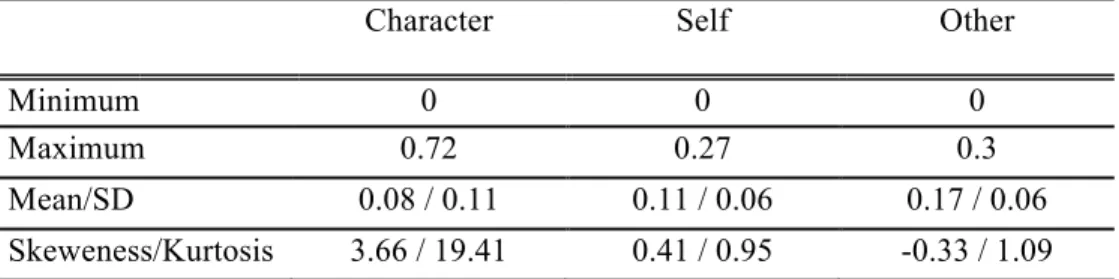
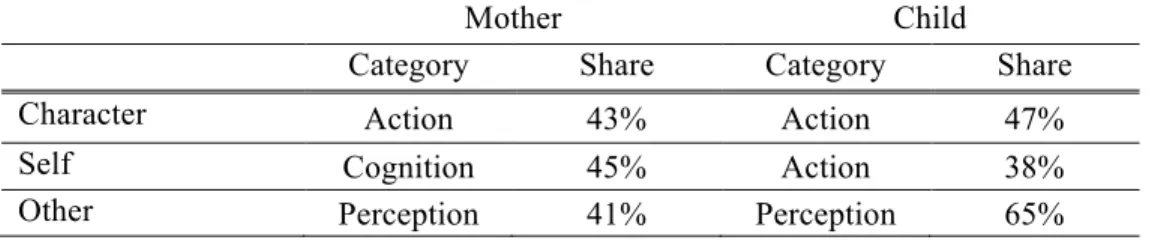
Table 1: Parameters of the Children’s Play Therapy Instrument (CPTI) Coding ... 42 Table 2: Descriptive Statistics for Children’s Mental State Talk Frequency .... 50 Table 3: Descriptive Statistics for Mothers’ Mental State Talk Frequency ... 50 Table 4: Distribution of Mental State Talk Clusters for Mothers and Children 51 Table 5: Most Frequently Used Subcategory of Mental State Talk Clusters for
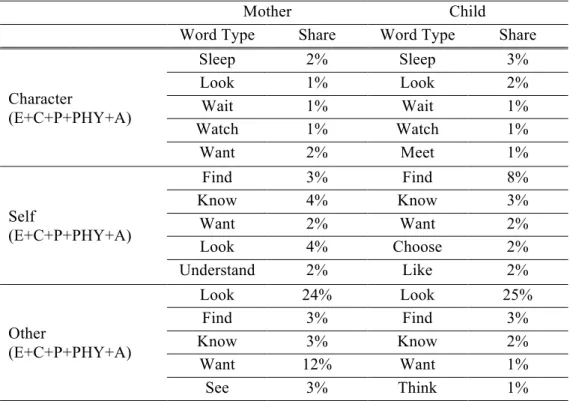
Mothers and Children ... 52 Table 6: The Five Most Frequent Mental State Words in Clusters for Mothers
and Children ... 53 Table 7: Correlational analysis for the relationship between Child Mentalization and age ... 54 Table 8: Frequency and Percentage of Type of Dominant Play Activity in
Mother-Child Play ... 55 Table 9: Partial correlation between self-reported attachment security (the
ECR-R) and maternal mental state talk (MMS) ... 56 Table 10: Partial correlation between maternal mental state talk (MMS) and
children's affect regulation scores from the CPTI ... 57 Table 11: Partial correlation between children’s mental state talk (CMS) and
children's affect regulation scores from the CPTI ... 57 Table 12: Partial correlation between children’s (CMS) and mothers' mental
CHAPTER 1:
INTRODUCTION
The capacity to reflect on one’s own and others’ mental states and to regulate one’s own mental state according to the insights of this reflection is crucial in the context of interpersonal interaction (Fonagy, Gergely, Jurist, & Target, 2002). This capacity, also known as mentalization, allows one to find other people’s behavior meaningful and predictive. Mentalization is an important coping skill for children’s psychosocial development, as it is linked to affect regulation, impulse control, self-monitoring, and self-agency (Fonagy & Target, 1998). The development of mentalization is closely related to the quality of the early attachment bond, which refers to the close affectional and social relationship between the mother and the infant (Bowlby, 1960). The mother’s ability to reflect on the child’s internal world and to communicate the meaning she finds back to the child gives rise to the development of the child’s sense of self and mentalization (Fonagy, Gergely, Jurist & Target, 2002; Slade, 2005; Gergely & Watson, 1998). The mother’s mentalization of her child, also called “Maternal Reflective Function”, gives the child an initial mentalistic model of self and other (Slade, 2005). This initial model of the self and other, which is presented to the child by the mother, is influenced by the mother’s own attachment history. A mother with a history of secure attachment is more
likely to accurately and sensitively reflect on the child’s mental states, which leads to the development of attachment security and mentalization in the child (Main, Kaplan & Cassidy, 1985; Fonagy, Steele, Steele, Moran & Higgitt, 1991; Meins, et al., 2002).
The purpose of this study is to explore the link between the mother’s and their children’s mentalization in relation to both the mother’s attachment pattern and the child’s affect regulation capacity. There is a rich literature on the dyadic links between any two of these four variables: between the mother’s attachment style and mother’s mentalization (Bouchard, et al., 2008; Fonagy et al., 1991; Slade et al., 2005; Arnott & Meins, 2007), between the mother’s mentalization and the child’s mentalization (Ruffman, Slade & Crowe, 2002; Taumoepeau & Ruffman, 2008; Dunn, et al., 1991; Meins et al., 1998), and between the child’s affect regulation and both the child’s and the mother’s mentalization (Kelly, et al., 2005; Taumoepeau & Ruffman, 2008; Gottman, Katz & Hooven, 1996; Garner, Dunsmore & Southam-Gerrow, 2008). However, missing in the
literature are analyses that simultaneously study the links between the mother’s attachment pattern, the mother’s mentalization level, the child’s mentalization level, and the child’s affect regulation capacity.
To contribute to this under-researched area, this study provides a direct measurement of how the mother’s and the child’s mentalization interact to influence the affect regulation capacity of the child. More specifically, the study has three goals. The first goal is to explore the interaction of mother and child
mentalization. The second goal is to find out if the mother’s attachment security is related to her mentalization level. The third and final goal is to understand how the mentalization uses of the mother and the child are related to the child’s affect regulation. Play is chosen as a context for mother-child interaction. Play has been suggested to provide an intermediate area for the acquisition of symbolic thinking which is crucial for mentalization (Fonagy & Target, 1996a; Fonagy & Target, 1996b; Tessier et al., 2016; Lillard, 1993; Leslie, 1987). Although play provides a rich context for symbolization, only few studies chose mother-child play as context to explore mentalization (Symons, Fossum & Collins, 2006; Gocek, Cohen & Greenbaum, 2008). The findings of this study may enhance our understanding of how mothers’ mentalization skills, in relation to their attachment history, relate to the child’s mentalization development and affect regulation skills.
This thesis is organized as follows. Chapter two presents a review of the theoretical and empirical literature on attachment theory and mentalization. Chapter three outlines the methodological approach of the current study.
Chapter four presents the results of the empirical tests of the hypotheses. Lastly, chapter five discusses how the results of the empirical study can be interpreted and how they relate to existing literature.
CHAPTER 2:
LITERATURE REVIEW
Attachment Theory
Bowlby (e.g. 1969, 1973, 1980; Ainsworth, & Bowlby, 1991) defined attachment as a strong affectional bond formed with a significant other with the objective of “security”. Security in attachment relationships, at any
developmental level, refers to the trust that one will be taken care of both emotionally and physically by someone who is capable of protection in times of need (Bretherton, & Munholland, 2008). While the significance of the
attachment bond continues its influence throughout the entire life, in Bowlby’s words (1982) “from cradle to grave”, in various relationships (e.g. parent-child relationship, romantic relationships, and friendships), Bowlby emphasized that the early relationship between infant and caregiver lays the foundation of the child’s attachment security. In infancy, the main function of attachment is survival and the maintenance of affect regulation by keeping sufficient
proximity to an attachment figure. Successful repetition of proximity and affect regulation gives the infant a sense of security, which allows it to explore and confidently engage with the outside world (Bowlby, 1988; Bretherton, 1992). The need for physical proximity declines when the infant can use the caregiver as a secure base for exploration. However, the attachment system is most active in times of high affective arousal, especially due to fear and danger
(Sroufe & Waters, 1997). The absence of the attachment figure especially in situations of novelty puts the infant in stress and thus reduces its exploratory behavior and increases its need for physical contact (Bowlby, 1969; Bretherton, 1992). Bowlby claimed that the quality of attachment is determined by the caregiver’s sensitive approach to the infant’s signals of emotional distress caused by separation from the caregiver.
Following Bowlby, Mary Ainsworth focused on the attachment
behavior of infants during separation from their mothers and their ability to use the mother as a secure base for reducing distress, caused by separation, during reunion (Ainsworth, 1979). By observing the mother-infant couple in the home setting, Ainsworth concluded that maternal sensitivity in the first months predicts later harmony between the mother and the baby. She described maternal sensitivity as treating the child as a separate agency, being able to interpret signals coming from the child, responding to them accurately and not intervening with the child’s ongoing activity (Ainsworth, 1971). She developed a laboratory procedure known as the Strange Situation to categorize individual differences in attachment-related behavior. The Strange Situation is a laboratory procedure that is designed to examine the attachment-related separation and reunion behavior of the baby in an unfamiliar environment. Her observations led her to conceptualize three types of attachment organization in infants: secure, insecure/anxious and insecure/avoidant. Infants with secure attachment were found to be able to use their mother as a secure base for exploration
during the pre-separation phase, showed an increase in attachment behavior and an decrease in exploratory behavior during separation, and sought physical contact or proximity with the mother during reunion. Infants with
insecure/anxious attachment showed signs of anxiety in pre-separation, were highly distressed during separation, and showed an ambivalent reaction to the reunion with the mother, in that they both sought proximity but also resisted contact. Lastly, infants with insecure/avoidant attachment, unlike the infants in the other two groups, rarely cried during separation and showed avoidance of close contact in the reunion period (Ainsworth, 1979). Ainsworth’s
classification of infant attachment was later expanded by Main and Solomon to include a fourth category: infants with a disorganized/disoriented attachment style (Main & Solomon, 1990). The descriptor “disorganized” derives from the definition of this attachment pattern, as resulting from “inexplicable, odd, or conflicted behavior patterns [which manifest themselves in the] lack of a readily observable goal, purpose, or explanation” (Main & Solomon, 1990, p. 132).
While Ainsworth’s “strange situation” and infant attachment
classification contributed significantly to the understanding of precursors and behavioral outcomes of attachment security, her method did not answer how the attachment relationship is formulated as secure and how the attachment figure becomes a secure base. Secure attachment develops as a relationship
these mental representations internal working models of attachment and explained that their function was to predict the behavior of others and organize the environment in a meaningful way. Working models include the
representations of “self”, “other” and “relationship” in relation to attachment (Van IJzendoorn, 1995; George & Solomon, 1996). As a result of early
interpersonal interaction, the evaluation of “self”, “other” and “relationship” is formed and this sets up a prototype for future relationships. If the “other” is perceived as accepting the needs of the child and providing care while at the same time allowing space for independence and exploration, then the child perceives the self as valued and the relationship as secure. In contrast, if the needs of the child are frequently rejected, the child may develop the model of self as unworthy and the relationship as insecure (George & Solomon, 1996).
The empirical shift of measuring attachment at the level of
representation started with Main, Kaplan and Cassidy (1985)’s seminal work for the development of the Adult Attachment Interview (AAI; George, Kaplan, & Main, 1985). The AAI is a semi-structured interview that includes questions about adults’ attachment experiences with their own parents. Influenced by Bowlby’s concept of internal working models, Main suggested that individuals’ narrative organization of attachment experiences is a reflection of their internal working models of relationships, since these models influence the organization of attention and memory. Based on these individual differences in narrative organization, Main (1985) developed four different adult attachment patterns:
secure/autonomous, dismissing, preoccupied and unresolved patterns. Adults with a secure/autonomous state of mind are expected to provide a consistent, clear, relevant and reasonable narrative about early attachment experience. Adults with a dismissing state of mind are seen when the adult violates the narrative’s quality and quantity by using unsupported or contradictory positive terms and sometimes insisting on not remembering certain parts of the memory of parents. Adults are considered to have a preoccupied state of mind when the narrative is violated in terms of manner (usage of non-sense words or childlike speech), relevance or quantity. Lastly, adults with an unresolved state of mind are seen when there is interference in reasoning or discourse, especially when talking about traumatic events (Main, 1985). The initial study done with the AAI had two important implications for attachment research (George, Kaplan, & Main, 1984). First, as Bowlby (1969) proposed earlier, there is a certain degree of stability of internal working models from infancy to adulthood. This means that there is continuity of attachment patterns from behavior to the representational level (Bretherton, & Munholland, 2008). Second, a substantial level of concordance was shown between the AAI and “the strange situation” classifications. This result again supports Bowlby’s view of internal working models as being transmitted intergenerationally. Intergenerational transmission of internal working models was later confirmed by several empirical studies (Fonagy, Steele, & Steele, 1991; Van IJzendoorn 1995; Main, Kaplan, & Cassidy, 1985; Steele, Steele, & Fonagy, 1996).
Maternal Mentalization as a Mechanism for Transmission of Internal Working Models
It has been demonstrated empirically that internal working models of attachment are transmitted intergenerationally. But the mechanisms of transmission remain open to discussion. The first mechanism that was
suggested by Bowlby (1973) is maternal sensitivity, bridging the parent’s and the child’s attachment. Supporting this premise, different studies found positive relationships between adult attachment security and maternal sensitivity (Mills‐ Koonce, et al., 2011; Coppola, et al., 2006; Pederson, et al., 1998; Beckwith, Cohen, & Hamilton, 1990) and also between maternal sensitivity and infant attachment (Koren-Karie, et al; Pederson, et al., 1990; Pederson, et al., 1998; Meins, et al., 2001). Based on these findings, Van Ijzendoorn (1995) conducted a meta-analysis to examine to what extent maternal sensitivity can explain the transmission of attachment between mother and infant as a mediating factor. The analysis concluded that maternal sensitivity explains only 23% of the relationship. The rest of the variance remained unexplained and Van Ijzendoorn (1995) called this the transmission gap.
Beyond maternal sensitivity, the parent’s capacity to treat the child as a distinct psychological agent with its own intentions, goals and beliefs has been proposed to mediate the relationship between mother and infant attachment security (Sharp & Fonagy, 2008), and thus to close the transmission gap. This
capacity is assumed to support the person’s mentalization ability, which is the ability to attribute mentalistic terms (e.g. thoughts, feelings, desires and intentions) to self and others in order to make behavior meaningful and predictable (Fonagy, et al., 1991). Mentalization is suggested to be related to both adult and infant attachment security, in that mothers with a secure state of mind are able to reflect on their children’s psychological states and form secure bonds with their children. In turn, the attachment security of children predicts their mentalization development (Sharp & Fonagy, 2008). The link between attachment and mentalization derives from the interconnection between internal working models of attachment and the reflective quality of
mentalization. Attachment security is the prerequisite of developing internal working models with reflective components, which allow understanding of self and other minds (Fonagy & Target, 1997).
Several constructs have been proposed to operationalize the
mentalization capacity of mothers. Reflective Functioning (RF) is one of the early proposed constructs of parents’ capacity of treating the child as a
psychological agent (Fonagy, et al., 1991). RF is described by Slade (2005, p. 269) as the “capacity to understand one’s own and others’ behavior in terms of underlying mental states and intentions, and more broadly as a crucial human capacity that is intrinsic to affect regulation and productive social
relationships”. To measure the RF capacity of adults, Fonagy and his colleagues (1998) developed the Reflective Functioning scale based on the Adult
Attachment Interview. The RF scale evaluates adults’ narratives of their early childhood experience in terms of awareness of mental states, acknowledgement of mental states’ developmental aspects and understanding the underlying mental state of the behavior. The relationship between attachment and reflective functioning has been demonstrated in several studies. Bouchard and colleagues (2008) found that higher scores of mentalization based on the RF scale are negatively related to attachment insecurity based on the Adult Attachment Interview (AAI). In their London Parent-Child Project, Fonagy and his
colleagues (1991) interviewed mothers’ with the AAI and later evaluated their reflective functioning levels with the RF scale. They found that mothers who had high scores on the RF scale were more likely to fall into the secure
attachment category in AAI. The reflective functioning capacity of the mothers based on the RF scale was found to be highly predictive of infant attachment security within the first year (Katznelson, 2014; Fonagy, et al. 1991).
A second construct of mentalization, parental reflective functioning, has been proposed by Slade (2005). Parental reflective functioning has a similar theoretical background as adult reflective functioning, However, Slade
proposed that a better predictor of the parent’s capacity to mentalize the child’s internal states and the transmission of attachment security could be found by looking at the parental narratives of the relationship between themselves and their children (rather than parents’ narratives about their own childhood
was developed for this purpose, is a semi-structured interview in which parents are asked to describe their relationship with their children. The parent’s
capacity to understand the child’s mental states is measured by looking at the narrative they provided (Slade, 2005). Since intergenerational transmission does not only happen between adult state of mind and child state of mind, parental representations are an important factor for the interaction between the mother and the child. The parent’s representation of parenthood is seen as a mature form of their early attachment style (George & Solomon, 1996). Thus, a secure mother is more likely to have a coherent representation of her
relationship with her child, whereas an insecure mother is more likely to have a distorted representation of the relationship with her child (George & Solomon, 1996; Slade et al., 2005). Moreover, higher parental reflective functioning skills have been found to be related to infant attachment security (Slade et al., 2005). Similarly, Parental RF was reported to be positively related to the quality of mother-infant affective communication (Kelly, et al., 2005). Together these findings support the claim that parental reflective function plays a role in the transmission of attachment security.
Another construct, developed by Elisabeth Meins, is maternal mind-mindedness (MMM) (Meins, 1997). MMM is the mother’s capacity to treat the child as a separate mental being, attributing meaning to the behavior and responding accurately to the child’s ongoing needs. The difference between Ainsworth’s maternal sensitivity and Meins’s MMM is that MMM focuses
specifically on the mental states of the child (Meins, et al., 2001). MMM has both off-line and on-line versions of measurement. In the off-line version of MMM, mothers are asked to describe their children (Sharp & Fonagy, 2008) and the responses were coded into the categories “mental”, “behavioral”, “physical” and “general”. On-line measurement of MMM is based on coding the mother’s responses to changes in the infant’s direction of gaze and the infant’s object-directed action, imitation, encouragement of autonomy, and appropriate mind-related comments in 20-minute mother-child free play (Meins et al., 2001). Studies on the relationship between attachment and MMM showed that the autonomous attachment pattern of the mothers, based on AAI scores, is positively related to greater MMM performance (Arnott & Meins, 2007). Mother’s appropriate and positive use of mental state comments based on MMM were found to be positively related to infant security (Demers, et al., 2010; Meins, et al., 2001). Both the on-line and off-line measures of MMM were found to be predictive of the later development of the child’s
mentalization (Meins, et al., 2001; Meins, Fernyhough, & Fradley, 2001; Arnott and Meins, 2007).
Development of Mentalization in Children
Mentalization was initially suggested as a concept by Fonagy and colleagues (1991) to explain how children acquire the mind reading ability in the course of their development. This mind reading ability was initially called Theory of Mind by cognitive psychologists. Initially, Theory of Mind (ToM), as
developed by Premack and Woodruff (1978), was used by cognitive psychologists and developmental psychologists to describe the ability to understand that others have separate minds with thoughts, ideas, and feelings and to apply this knowledge to social situations in which the anticipation of or the influencing of others’ behavior is needed (Baron-Cohen, et. Al., 1985; Sharp, 2006). Children develop ToM ability around the age of 3 or 4.
Development of ToM in children is usuallly measured by false belief tasks, in which children are given scenarios where they need to predict an adult’s searching behavior of a missing and re-placed object during the absence of the adult. However, it was criticized that ToM and false belief tasks underestimate affective, regulatory processes and instead put all the emphasis on the cognitive dimension (Carpendale & Chandler, 1996). The term mentalising or
mentalization is more appropriate for understanding inter- and intrapersonal mental states, because unlike ToM mentalization is specific to neither certain age levels nor cognitive tasks (O’Connor & Hirsch, 1999). Mentalization theory provides a more comprehensive framework for understanding the development of children’s mind reading abilities, because it focuses on indicators of this capacity over the course of development rather than on examining if cross-section has ToM ability or not.
The present study adopts the framework of mentalization theory. To review the relevant literature, first the development of mentalization in children will be discussed. Then, the role of mother’s mentalization of the child on the
development of children’s self agency and mentalization is elaborated. In what follows, the role of play in mentalization development is discussed with a focus on the role of the mother’s engagement in play. Lastly deficiency of
mentalization skills in children with clinical level problems will be discussed.
Mentalizing Self in Children
The capacity to mentalize is acquired over the course of development (Fonagy, et al., 2002; Slade, 2005). The quality of the affective relationship, namely the attachment bond, is crucial for the development of this capacity. Within the affective relationship that is formed with the mother, the child not only gains the ability of mind reading but also organizes the self. Fonagy and his collegues (2002) argued that before becoming fully mentalizing, the self as an agent (which refers to having thoughts, feelings and intentions of its own) goes through different stances with increasing complexity, namely physical, social, teleological, intentional and representational. In the physical stance, the child’s source of knowledge is his body. As the child experiences the sensory world through the interactions between its body and its environment, it can differentiate what is self and not-self. This initial physical experience forms the basis of the self (Scheemets, 2008). From the very early months, babies use their bodily self to adapt to changing environments and evoke action in the environment (Fonagy et al., 2002). These interactions with the external environment through actions include the very first interpersonal exchange
which is the infant-caregiver relationship. The actions of the infant induce behavioral or emotional reactions on the part of the parent. The causal
relationship between the infant’s act and the caregiver’s reaction to it forms the early version of representation in the infant’s psyche and thus brings the baby to the social stance in development of the self (Fonagy et al., 2002). In the second half of the first year, infants begin to have expectations from the physical objects around them based on simple causality. These expectations help the infant to predict other’s behavior. The infant acts in a way that its expectations of other’s behavior are met. For example, the infant may throw a toy away while it expects the mother to give it back, so that the infant can throw it again (Scheemets, 2008). This brings the infant to the teleological position, in which the infant understands intentions through physical consequences. The infant treats both living and non-living objects equally as having intentions, because here having intentions refers to the physical world, not the internal state (Scheemets, 2008). Around the second year of life, children acknowledge the self as intentional agency and become aware of the connections between desires, emotions and perceptions in both themselves and others (Wellman et al., 2000). By being aware of these connections, they realize that they can manipulate other people’s states. For example, children learn to point at objects around this time and use this pointing to make adults attend to what they are attending to (Fonagy et al., 2002). Assuming that others have intentions behind their physical acts shows that children can attribute mental states to others.
Therefore, the ability to mentalize starts at this point (Scheemets, 2008). Between ages 3 and 4, children gain representational qualities to their prior causal mentalistic experiences. Children acquire a representational view of themselves as a result of the ability to think about themselves in terms of mental states. In order to develop a representational self, the child requires concepts that correspond to actual experience. In this context, the actual internal experience of the child is primary representation. Secondary representation is formed as primary representations are turned into concepts with mentalistic qualities (Fonagy, et al., 2002). The representational model of the self and others enables children to communicate intentions, feelings, and thoughts behind the actions using language skills (Tessier, et al., 2016).
Maternal Mentalization and Children’s Mentalization Development
As discussed above, mentalization capacity is thought to be transmitted within the attachment relationship between the mother and the child (Slade, 2005; Fonagy et al, 1991). The mother’s capacity to treat the child as a distinct psychological agent (i.e. the mother’s mentalization capacity) contributes to the child’s mentalization development (Sharp & Fonagy, 2008). The mother’s mentalization skills are decisive in how successful the child will go through the stages of self agency and eventually to develop full mentalization capacity (Fonagy, et al,. 2002).
infant gains intentionality, the mother already treats the infant as if having intentions starting at birth. By talking and observing, the mother tries to bring an intentional quality to the infant’s behavior, to have a better understanding of this behavior. These interactions create a pattern for the infant, which shows what to expect from the mother based on its actions. In the early months, based on the affective exchange between the mother and the infant, the infant
develops a pre-symbolic representation of the relationship (Beebe, Lachmann & Jaffe, 1997). Starting from the second half of the first year, the infant starts to differentiate its mental states from the mothers and as a result starts to gain sense of self (Scheemets, 2008). For the differentiation of the self and other in infant’s psyche, the mother plays a crucial role. It is the mother’s capacity to attend to the affective states and mirror them back to the infant which
successively results in the development of the infant’s sense of self (Fonagy et al., 2002). Winnicott’s (1971) term mirroring refers to the mother’s non-conscious reflecting of the mental state of the infant and mirroring back to the infant what she sees or feels in the affective interaction (Scheemets, 2008). The mother’s affective mirroring enables the infant to link the initially unknown affective experiences to meaningful self states, and this consequently promotes the organization of the self around these self states (Gergely & Watson, 1996). In this mirroring process, the mother perceives the primary experience of the infant (e.g. hunger or pain) and gives this experience back to the infant. The infant uses the mother as a mirror to recognize his self state. The affective
communication between the mother and the child forms a representational loop, in which the infant gives the primary affective state to the mother and the mother returns the infant the secondary representation of its primary affective experience (Scheemets, 2008).
The shift from teleological position to mentalizing position happens gradually as the mother metabolizes the primary experience of the child and gives it back as secondary representation. In order to achieve a successful integration and organization of affective experience around cognitive structures, and consequently reaching to a mentalizing model of mind, the child should be able to coordinate self and other representations. This coordination is called representational mapping and it is crucial for sharing affect, attention, and higher order cognitive components like belief (Fonagy, et al., 2002). For representational mapping, it is crucial for the child to be able to differentiate what belongs to him and what does not. The quality of mirroring matters for differentiation of affective experiences. The mirroring of the affect by the parent is not like a simple look in the mirror. The infant must be able to differentiate the owner of the secondary representation (here the primary representation is the actual experience of the infant and the secondary
representation is the representation of the infant’s experience in the mind of the mother) before linking this to its self-state. So how does a baby know that it is not an angry mother looking at her but an attentive mother who is mirroring the infant’s negative self-state? Gergely (1996) answered this question by referring
to the maternal mirroring as marked mirroring. Marked mirroring by the
mother makes it possible for the infant to understand the difference between the self and other mental states by exaggeration of the real emotional experience of the infant. In adaptive affective communication, the use of marked mirroring by the mother makes it easier for the infant to separate the affective display from the mother’s own and link it to the self. The marked emotional experience will not only be represented in the infant’s mental world but will also provide information for its possible future behavior when a similar affective state will experienced (Gergely & Watson, 1996). Mirroring and affective
communication between the mother and the infant can be disrupted because of either mirroring too accurately or misrepresenting the affect. In the first case, in which the mother is representing the actual emotion rather than first
metabolizing and re-presenting it, the child cannot distinguish the self and other’s psychological borders, therefore the primary representation cannot be linked to the secondary representation. In the second case, which happens if the mother misrepresents the affect coming from the infant, the primary emotional state will be mislabeled due to non-contingence, although the secondary representation is formed (Slade, 2005).
Given the importance of the mother’s mentalization of the child’s mind for the development of child’s mentalization capacity, studies have examined this relationship by comparing mother’s mental state talk referring to child’s mind and child’s mentalization level. Studies differ in terms of their design
(longitudinal or cross-sectional design) and the components of mentalization they are tapping in children (cognitive, affective or both). The cognitive aspect of mentalization, as mentioned earlier, has been widely studied by using ToM and false belief tasks. On the other hand, affective component of mentalization in children has been studied via affective labeling and affective perspective taking tasks. The affective labeling task requires children to identify facial expressions of “happy”, “sad”, “angry” and “afraid” drawn faces. The affective perspective taking task uses puppets to enact different emotion-evoking
scenarios, in which children are asked to describe how the puppet would feel in certain situations (Denham, 1986). Lastly, mental state talk is often used to measure a child’s mentalization skills, as it includes both the cognitive and affective components therefore providing a more comprehensive measurement of mentalization. Longitudinal studies mainly focused on how early exposure to the mother’s early mental state talk is related to the child’s later ToM
performance, affective understanding and mental state talk. In a longitudinal study by Ruffman, Slade and Crowe (2002), mother’s early use of mental state utterances were found to be positively related to both children’s later mental state talk and theory of mind performance. They claimed that the mother’s early use of mental state talk is the cause of the child’s later mental state talk and ToM performance, because the earlier, and not the later, use of mothers’ mental state talk predicted children’s later performance. Similarly, Taumoepeau and Ruffman (2008) found that even the mother’s talk about the child’s mental
states before the child becomes verbal predicted the child’s later level of mental state talk and emotion understanding. Taumoepeau and Ruffman were also interested in how the direction (to self or other) and type (desires and thoughts) of mental state words were developmentally more appropriate for children. They found that initially talking about child’s desires (at 15th month) and later talking about other’s feelings and thoughts (at 24th month) were predicting children’s use of mental state talk. Jenskins et al., (2003) found that children’s early exposure to cognitive and feeling state talk in families improve their later mental state talk in cognitive and feeling categories as well. Few studies have investigated the relationship of mental state word use in familial conversations and children’s later social understanding. Both the sibling and child-mother interactions in daily life regarding mental states predicted the child’s later emotion understanding (Dunn, Brown, & Beardsall, 1991; Dunn, Brown, Slomkowski, Tesla, & Youngblade, 1991). Regarding the attachment and mentalization relationship, Meins et al., (1998) found that the mothers of securely attached children, compared to mothers with insecurely attached children, were using more mentalistic terms when asked to describe their children. Moreover, securely attached children showed superior skills of mentalization at the age of 5, which indicates the potential role of the mother’s use of mental state talk. In another study, the mother’s appropriate use of mental state talk regarding the child’s mental states predicted the child’s ToM performance at 45 and 48 months, accounting for 11% of the variance (Meins,
Fernyhough, Wainwright, Das Gupta, Fradley, & Tuckey, 2002). Gottman, Katz and Hooven (1996) developed a similar concept of parental reflective functioning, called parental meta-emotion. The concept refers to a positive parenting style in which the parent helps the child to name emotions and show strategies for regulation. In their longitudinal study it was found that meta emotion coaching of parents helps the child to physiologically regulate the affective arousal (measured at the age of 5) and children who gained this down-regulation capacity were found to be better at emotion down-regulation skills,
academic achievement and social relationships with their peers (measured at the age of 8). Other studies used cross-sectional designs to study the mother-child mentalization relationship. For instance, Garner, Dunsmore and Southam-Gerrow (2008) compared mothers’ use of emotion words during a picture story telling task with children’s understanding of emotions and their social
competence level and found a positive relationship. Ruffman, Perner and Parkin (1999) reported advanced ToM performance results of children whose mothers reported that they reflect on victim’s feelings to explain disciplinary acts to their children. Lastly, De Rosnay, Pons, Harris, and Morrell (2004) used emotion attribution and false belief tasks to measure mentalization levels of children between the age of 4 and 6. They used Maternal MM for coding the mother’s use of mental state words. They found that maternal mental state talk contributed even more than general language ability to belief-based emotion attribution and false belief understanding of children.
Play and Mentalization
Play serves as an important context for mentalization development in children (Fonagy & Target, 1996a; Fonagy & Target, 1996b). A child can form representations of real-life experiences during play. The “as if” attitude in play allows the child to safely explore the symbolic quality of thoughts. Play not only makes it possible for the child to form new representations of the actual experience by integrating emotional experience and thinking but also to
partially disconnect representations from the real experience and to modify it to gain a more flexible mode of thought (Fonagy & Target, 1996b). As mentioned before, a child initially needs the other’s mind to recognize its own mind. Mentalization in that sense requires a dyadic relationship between the child and the caregiver. Similarly, the child needs the caregiver to “play along” in order to make meaningful connections between the internal and the external world. Around the age of 2 or 3 the child can engage in pretend play and start using symbols and representations in an “as if” attitude to understand self and other’s psychological states (Tessier et al., 2016). However, understanding the self and the other in terms of feelings, desires and thoughts differs for very young children around the ages of 2 or 3 and children around 4 or 5 year, the age group which is known to pass theory of mind tasks and to show established mentalization skills. Fonagy and Target (1996a) explained this difference developmentally in terms of psychic reality. Psychic reality is the subjective experience of the internal and the external world which is influenced by
unconscious processes (Fonagy & Target, 1996a). Before experiencing fully developed psychic reality, which is about being aware of the fact that thoughts and desires are just representations and that they can be changed from the perspective of others, psychic reality operates differently for children younger than 4 (Slade, 2005). The psychic reality of the child around this time has a dual characteristic, consisting of psychic equivalence and pretend modes (Fonagy & Target, 1996a; Verheugt-Pleiter & Zevalkink, 2008).
In the psychic equivalence mode, the child perceives the thoughts and intentions not as representations but as the objective reality itself. Thus, younger children behave in a way as if the inner experience is equal to the outside reality. The psychic equivalence mode is developmentally necessary for the young child because the child is not ready to regulate the tension that is created by the difference between appearance and reality (Fonagy & Target, 1996a; Verheugt-Pleiter & Zevalkink, 2008).
The second mode of experiencing psychic reality is the pretend mode. In this mode children are able to use play for forming representations. They use play to be in the pretend mode and to experience things that are not objectively real in the external world, but that are still real enough to play with them. For example, in the pretend mode the child can hold a stick and call it a sword and play with it as a sword. In this stage the child can build up a play based on representations. However, one important point is not to bring together the two worlds of pretend and objective reality. There should be no correspondence
between the pretend world and the real world. At this age, the explicit
correspondence of internal and external world may be threatening for the child because it is still not capable of understanding the realistic consequences of many events. At times, children even play in an exaggerated way to establish a clear line between real and pretend states. For some children it takes long time to set up the play and distribute roles before playing. This may be an indication of setting a clear limit between play and reality (Fonagy & Target, 1996a; Verheugt-Pleiter & Zevalkink, 2008).
The integration of these modes brings the child to the level of mentalization. The integration of pretend and psychic equivalence modes happens through the experience of secure play with an adult or older sibling (Fonagy & Target, 1996b; Verheugt-Pleiter & Zevalkink, 2008). Playfulness enables the child to see its own mental states in the other’s mind and to also realize that because the ideas or feelings are just representations which depend on the perspective of the object, they can be changed or distorted in the play. An adult or an older sibling brings a frame to the child’s play by allowing a play space to which the child can project its fantasy or idea and re-introject this to self. In this play area, the good-enough mother meets the spontaneous gestures of the child in repeated manner, and the needs of the infant are
symbolized within this relationship and become a meaningful experience to the infant self. The development of a mentalizing stance and a true self become possible if the parent’s capacity to bridge play and reality is sufficient. The
space between play and reality was called “transitional space” by Winnicott (1965). Transitional space keeps the inner and outside reality interrelated. In this intermediate area the child’s reality testing develops through combining the fantasies and objective reality. In this special area the child can safely discover what belongs to self and to the other (Winnicott, 1953). The sensitive or good-enough mother scaffolds the child to develop the self and other representations as well as the symbolization capacity by entering the transitional area of the child by playing or talking, by marking the self-state of the child by having an “as if” attitude (Slade, 2005).
Given the importance of play for affect regulation and mentalization development, studies have examined the psycho-social benefits of play for children. As suggested by Bretherton and Beeghly (1989), play offers an infinite number of scenarios in which children can enact different characters with different emotional experiences in a safe environment and through these experiences children can develop emotional mastery (Galyer & Evans, 2001). To test the premise that pretend play contributes to emotion regulation ability, Galyer and Evans (2001) conducted a study in which they looked at the individual differences among children’s play behavior during a high arousal event. They found that children who could spend more time in pretend play after arousal of negative emotions had better emotion regulation skills compared to children who could not continue to engage in pretend play. Moreover, better emotion regulation skills were also seen in children whose
parents reported that they engage in pretend play at home with their children. Kaugars and Russ (2009) explored the link between the quality of preschoolers’ pretend play and teachers’ reports of their emotion regulation skills, daily play behavior and social competence. The results showed that children who showed more affect (both the frequency and the variety) were also rated by their teacher as participating in more pretend play.
Harris (1989) proposed that imagination in play contributes to the child’s understanding of mental states and affective experiences in self and others. Play and more specifically pretend play are precursors of understanding mental states because pretending requires the same skills as understanding the mind (Lillard, 1993; Leslie, 1987). Taylor and Carlson (1997) looked at this proposed link by examining the relationship between early pretense in children and theory of mind development. The pretense qualities of children were measured with an interview including questions about imaginary companions and impersonation of imagined characters. Theory of mind tasks included tests of appearance-reality, false belief, representational change and perspective taking. The authors found a positive relationship between all aspects of the pretense world of children and theory of mind tasks. Similarly, Schwebel, Rosen and Singer (1997) found that children who spent more time in joint constructive pretend play showed superior performance in false belief tasks. Studies have examined the relationship between play and mentalization development not only in terms of cognitive aspects (theory of mind tasks) but
also in terms of affective understanding. Seja and Russ (1999) examined the relationship between fantasy play and emotion understanding among first- and second-year school children by using the Affect in Play Scale. Composite scores for fantasy play factors (quality of fantasy, frequency of affect, affect intensity, variety of affect categories, and comfort) and emotion understanding variables (recalling emotional experience, understanding own and other’s emotions) were calculated. The results showed that fantasy play was positively related to emotion understanding, and fantasy play even accounted for a significant variance in emotion understanding (5%).
As mentioned previously, mental state talk is often used to measure child mentalization because it provides a more comprehensive understanding of mentalization by combining the cognitive and affective representations through an examination of narratives. The premise that mental state talk is enhanced during pretend play derives from the natural structure of pretend play. Pretense requires joint construction of scenarios and this joint collaboration requires understanding the pretending other’s mind and therefore exchanging mental states via language (Brown, Donelan‐McCall, & Dunn, 1996). Nielsen and Dissanayake (2000) empirically examined the relationship between preschool children’s use of pretense and mental state talk. They found a significant positive relationship between the use of mental state words and pretend play categories, which indicates the representational quality of play (object
by Dunn and Hughes (1997), who found that the frequency of mental state words was higher in pretend play than in non-pretend play,
It is suggested that play with an advanced partner increases the complexity and representation level of play (O'Connell & Bretherton, 1984). With the help of adult, children can learn to shift between the self and other’s minds to interpret the representational nature of communication (Leslie, 1993). The mother’s role for the child’s symbol development through playing is crucial. Feldman and Greenbaum (1997) looked at the effect of mother-infant face-to-face play at 3 and 9 months on symbolization development at the age of 2. They found that the face-to-face mother infant play interaction at 3 months predicts all three elements of symbolic competence, namely symbolic play, verbal capacity and internal state talk of children at the age of 2. In a
longitudinal study, Slade (1987) found that the level and duration of symbolic play among toddlers is positively affected by the maternal availability in the play (which was operationalized as the active interaction and usage of verbal comments). Similarly, toddlers were found to be involved in more complex symbolic play when they played with their mother compared to when they were playing alone. As expected, maternal intrusion was negatively correlated with symbolic play (Fiese, 1990). Another study, conducted by Youngblade and Dunn (1995), showed that early social pretend play with the mother, to which the mother brings the qualities of responsiveness, attention and affection, was
positively related to the child’s later understanding of other people’s mental states.
Mentalization and Clinical Problems
Development of mentalization in children proceeds well as long as the child successfully passes through the aforementioned stages aided by a secure attachment relationship to its mother. However, disruptions to a normal development of mentalization may occur for biological or psycho-social reasons. Since mentalization enables children to understand self and other minds, any deficiency of mentalization affects the level of children’s adaptive functionality in daily life. The case of autism represents a clear example of this. It is suggested that children on the autism spectrum have biologically impaired attribution mechanisms for understanding the intentions of others (Fonagy et al., 2002). The lack of a mentalizing stance in children on the autism spectrum has been studied empirically mainly through the Theory of Mind tasks. Studies show that, when compared to normally developing children, children on the autism spectrum fail to interpret others’ behavior in terms of intentions (Baron-Cohen, Leslie, & Frith, 1985; Frith & Happe, 1995).
Although not as fundamental as the case of autism, children with internalizing and externalizing problems were found to show deviant mentalization skills, compared to a normal population. Since mentalization is related to impulse control, attention regulation and self-monitoring in children (Fonagy & Target
1998), it is not surprising to find a relationship between behavioral problems and mentalization skills. Externalizing problems in children exist on a broad spectrum, from mild aggressive behavior to conduct disorder. Overall, children with externalizing problems tend to have poor relationships with both their parents and peers (Vitaro, et al., 2001, as cited in Sharp & Venta, 2012). It is suggested that this poor relationship quality is because of the mentalization style these children acquired. Sharp and Venta (2012) suggested that children with an externalizing problem use distorted mentalizing which leads to the attribution of hostile intentions to others when there is an ambiguity. This in turn leads to aggressive behavior of the children, as they expect an aggressive act from the other, even when there is no evidence for it. However, when children with conduct disorder interpret others’ thoughts that are related to them, they acquire another distorted mentalization style, namely overly positive mentalization (Ha, Sharp & Goodyer, 2011). Regarding the link between externalizing problems and the ToM abilities of children, studies have found that children with behavior problems (measured by parent and teacher reports) showed poorer ToM performance compared to non-clinical groups (Hughes, Dunn & White, 1998; Fahie & Symons, 2003). Internalization problems in children and their link to mentalization have been studied for the case of anxiety problems (Sharp & Venta, 2011). Banerjee (2008, as cited in Sharp & Venta, 2011) explained the problem of anxious children’s mentalization deficiency with reference to the problem of social cognition. Children with
anxiety tend to be hypervigilant in social situations and have negative evaluations. It is suggested that this experience of threat in social situations might be related to mentalization deficiency. Children with social anxiety were found to be experiencing hypervigilance when they do not have knowledge about the other’s mind (Banarjee & Watling, 2010).
Aims and Hypotheses
The aim of the current study is to explore the interplay between mothers’ and children’s mentalization use in relation to mothers’ attachment security and children’s affect regulation capacity. The literature provides many insights on dyadic relationships between these variables, usually generated by using combinations of measures that focus on individual’s representations of their attachment background (i.e. “off-line” measures) and of measures that focus on interactions between the mother and the child (i.e. “on-line”
measures). However, there is a need for studies that investigate the interaction between the mother’s mentalization, the child’s mentalization and the child’s affect regulation, based exclusively on on-line measures. To address this issue, this study explores the mentalization use of mother-child dyads and affect regulation level of children in play sessions.
The findings of this study may enhance our understanding of the inter-relatedness of mentalization, the attachment relationship and the psychosocial development of children. While formulating the hypotheses, the
this phase, it was not differentiated between the category of mental state words (emotion, cognition, perception, physiological and action-based), the referent of the mental state words (self, other and character related) and the context
(pretend play and non-pretend play). This allowed this study to leave room to explore the unique links between mothers' and children’s mentalization, mothers' attachment security, and children's affect regulation. Since
mentalization and affect regulation are measured within the same session, the category, referent and context of mental state talk can provide a better
understanding of what aspects of mentalization promote affect regulation in children. As a result, this study may provide clinicians who work with mothers and children with a more elaborate understanding of how to enhance
interventions that aim at promoting mentalization skills.
Building on theoretical and empirical findings of the existing
mentalization literature, the current study aims to find (1) a positive correlation between mothers’ attachment security and their mentalization level during mother-child play; (2) a positive correlation between mothers’ mentalization levels in mother-child play and children’s affect regulation in mother-child play; (3) a positive correlation between children’s mentalization level and their affect regulation in mother-child play; and (4) a positive correlation between mothers’ and children’s mentalization levels during mother-child play.
CHAPTER 3:
METHOD
Participants
Participants were 53 children (54.7% male) and 53 mothers. All participants initially applied to the psychological counseling unit of İstanbul Bilgi University. The majority of the families belong to low-middle
socioeconomic status (SES) (n=20). The rest was reported to be in the range of low SES (n=9), middle SES (n=17) and middle-high SES (n=7). 91% (n=48) of the mothers were married and only 9% (n=5) were divorced. Ages of the children were between 2 and 10 (Mean= 7). All of the children were going to either kindergarten (n=12) or elementary school (n=41). 53% of the children had one sibling (n=28), 19% had two siblings (n=10), 2% had three siblings (n=1) and 26% had no siblings (n=10).
The majority of the children were referred to the psychological counseling unit due to behavioral problems (n=24). Other reported problems were cognitive problems (n=10), anxiety related problems (n=4), relational problems (n=3), and other problems (n=12). More than half of the children (n=28, %53) were reported to have a history of psychological or psychiatric help and 4 children (%8) had been diagnosed with ADHD.
Setting
The therapy and research center was located in the campus of Istanbul Bilgi University. Therapists were second- and third-year students in the clinical psychology masters program who were in their clinical practicum year. All of the therapists were receiving individual and group supervisions from
experienced clinicians. In some of the play therapy room, there were cameras and microphones for research and supervision. The therapy rooms were fully equipped with appropriate toys for play therapy.
Procedure
Each therapy session lasted 45 minutes. The first four sessions were designed as assessment sessions. In the first intake session parents were asked questions about the developmental history of their children. In this session, consents were taken from parents who are willing to participate in the research. Parents were also asked to sign two different consent forms: one for the video and audio recording of their sessions, and the other for the anonymous use of information provided by the family. At the end of the first session, parents were given various scales, including the Experiences in Close Relationships
Inventory (ECR-R) and the Child Behavior Checklist (CBCL) to be completed until the next session. The second and third sessions were designed as mother-child and father-mother-child play. In the first part of these sessions, the parent was given the instruction to play in the therapy room as if they played at home. In
the second part of these sessions, the parent left the room and the therapist continued with only the child. In the fourth session, parents were given
feedback for the results of the assessment. The therapy course began if parent(s) agreed to continue with the therapy of children.
Measures
The Child Behavior Checklist (CBCL)/4-18.
The Child Behavior Checklist was developed by Achenbach (1991) to assess emotional and behavioral problems of children in eight different behavioral domains: Withdrawn, Somatic Complaints, Anxious/depressed, Social Problems, Thought Problems, Attention Problems, Delinquent Behavior and Aggressive Behavior. The CBCL is a checklist that is usually completed by parents or other care-givers who know the child well. The respondents rate 120 problem behavior items in terms of their frequency of occurrence in the last 6 months on a 3-point scale, on which “0” means “not true”, “1” means
“somewhat or sometimes true”, and “2” means “very true or often true”. The severity of the problem is evaluated as “non-clinical”, “borderline clinical” or “clinical” level. The CBCL measures three broad-band scores of problem behavior: internalizing, externalizing and total. The “internalizing problems” score consists of the syndromes anxious/depressed, withdrawn/depressed and somatic complaints. The “externalizing problems” scores consists of the syndromes delinquent behavior and aggressive behavior. Besides these two
broad categories (internalizing and externalizing) of the CBCL, the scale has also “total problems” score, which comprises all items. Moreover, the CBCL has three competency scales, which assess activity-, social- and school-related issues.
The CBCL is highly reliable. The test-retest reliability of main scorings are as follows: a= .94 for the externalizing score, a=.90 for the internalizing score and a=.97 for the total problem score (Achenbach & Rescorla, 2001). Erol, Arslan, and Akçakın (1995) adapted the checklist to the Turkish context and found a good level of test-retest reliability (a=.84) and a good level of internal consistency (a= .88) for the total problem scale.
The Experiences in Close Relationships Inventory (ECR-R).
The Experiences in Close Relationships Inventory is a self-report adult attachment measure developed by Brennen and colleagues (1998). The ECR was revised by Fraley and colleagues (2000) as the Experiences in Close Relationships Revised (ECR-R) questionnaire. A reliability study for the scale was conducted by Sibley and colleagues (2005). Both the anxiety scale and the avoidance scale provided excellent reliability scores (a= .93, a= .94,
respectively). The ECR-R includes 36 items and two dimensions. The first dimension of the scale is “anxiety” (18 items), which is operationalized as fear of abandonment, excessive need of approval and excessive distress in the absence/unresponsiveness of the partner, and the second dimension is the
self-reliance (18 items). Each item is rated on a 6-point Likert scale (1=strongly disagree, 6=strongly agree). People who score high on one or both of the scales are considered to have insecure attachment. In contrast, people who score low on anxiety and avoidance scales are considered to have secure attachment. Adaptation and reliability studies for the Turkish context were conducted by Selçuk et al. (2005). The test-retest reliability of the anxiety and avoidance scales of YIYE II (Turkish version of The Experiences in Close Relationships) was a= .82 and a= .81 respectively. The internal reliability of the scales was a= .86 for anxiety and a= .90 for avoidance.
The Children’s Play Therapy Instrument (CPTI).
The Children’s Play Therapy Instrument is a coding system developed by Chazan et al. (1997) to measure the play activity of the child in individual therapy. The sessions are transcribed verbatim after being videotaped or audiotaped. The first step of the coding procedure is to divide the session into segments according to their “play”, “pre-play”, “interruption” and “non-play” qualities. “Non-play” indicates that the child is not engaged in play-related activity. “Interruption” is coded if the play ceased abruptly, for example, when the child leaves the therapy room. If the child does activities in order to get ready to play, then the segment is coded as “pre-play”. Lastly, “play” is coded when the child is engaged in a playful activity by showing obvious verbal reactions like “let’s play” or non-verbal intentions and develops a narrative
involving by positive or negative affect. Coding is only conducted for the play segments of the session. Each play segment is rated according to three different parameters, namely “descriptive”, “structural” and “functional”. Table 1 shows the details of these parameters: Descriptive analysis includes the subscales (1) “Category of the Play Activity”, which consists of subscales indicating the type of activity that the child is engaged in (art, gross motor, manipulative,
exploratory, fantasy, traumatic, game play). (2) “Script Description” measures the contribution of the child to the play in terms of initiation, facilitation, inhibition, ending, the reason for ending the play, and overall participation (passive observer, parallel play, passive and active participant. (3) “Sphere of the Play Activity” gives information about the spatial qualities of the play in terms of autosphere (using the body), macrosphere (using the actual
surrounding), and microsphere (using miniature toys). Structural analysis consists of the following subscales: (1) “Affective Components” include affective tone (overall hedonic tone, spectrum of the affective tone, regulation and transition between the affective states, appropriateness of the affective tone) and type of affect experienced by the child during play. (2) “Cognitive Components” consists of the level of child’s mental representations created during the play (complex, dyadic, solitary, precursor to role-play), stability of these representations (i.e. is there any transformation of representations and if there is are these transformations voluntarily or involuntarily done by the child?), and style of the representations (realistic, fantasy and bizarre). (3)