• Sonuç bulunamadı

Beykent 1st International Symposium of Design for Living with Water 09-10 July 2019 Istanbul/Turkey

N/A
N/A
Protected

Academic year: 2021

Share "Beykent 1st International Symposium of Design for Living with Water 09-10 July 2019 Istanbul/Turkey"

Copied!
228
0
0

Yükleniyor.... (view fulltext now)

Tam metin

(1)

BEYKENT 1ST INTERNATIONAL SYMPOSIUM OF

DESIGN FOR LIVING WITH WATER

09-10 JULY 2019 ISTANBUL/TURKEY

PROCEEDING BOOK

Editors

Assoc. Prof. Dr. İnanç Işıl YILDIRIM

Assist. Prof. Dr. Begüm BAYRAKTAROĞLU

ISBN: 978-975-6319-38-3

Beykent Üniversitesi Yayınları, No: 134

2019

ISTANBUL

(2)
(3)

i

Beykent 1st International Symposium Of Design For Living With Water

09-10 July 2019 Istanbul/Turkey

This book is subject to copyright. All rights are reserved, whether the whole or part of

the material is concerned. Nothing from this publication may be translated, reproduced, stored

in a computerized system or published in any form or in any manner, including, but not

limited to electronic, mechanical, reprographic or photographic, without prior written

permission from the publisher.

The individual contributions in this publication and any liabilities arising from them

remain the responsibility of the authors. The publisher is not responsible for possible

damages, which could be a result of content derived from this publication.

Published, August 2019

www.beykent.edu.tr

www.isdlw.org

(4)

ii

MONDAY 09 JULY 2019

BEYKENT 1ST INTERNATIONAL SYMPOSIUM OF DESIGN FOR LIVING WITH WATER

SCIENTIFIC PROGRAMME

Time

Theme

09:00 - 10:00

Registration and Welcome

10:00 - 10:15

Chair’s Opening Speech

Assoc. Prof. Dr. İnanç Işıl YILDIRIM

10:15 - 10:30

Vice Rector’s Opening Speech

Prof. Dr. Şeyma Özkara AYDINOĞLU

10:30 - 11:00

Cem MELİKOĞLU (Chairman of Türk Loyd) – Invited Speaker

“Basic Requirements of Floating Houses”

11:00 - 11:45

Prof. Dr. Ardeshir MAHDAVI (TU, Wien) – Invited Speaker

“Is There a Future for Bioclimatic and Vernacular Architecture

Traditions?”

11:45 - 12:30

Assist. Prof. Dr. Nasiha POZDER (University of Sarajevo) – Invited

Speaker

“Water (un)sensitive City - Cause of (de)urbanization”

12:30 - 13:30 Lunch Break

13:30 - 13:45

Rector’s Speech

Prof. Dr. A. Murat FERMAN

13:45 - 14:30

Koen OLTHUIS ( Waterstudio, Netherlands) – Invited Speaker

“Rise of Blue City”

14:30 - 15:00

Assist. Prof. Dr. Ricardo BALBO (IED, Torino) – Invited Speaker

“Drenched creativity: Reflecting on the Influence of Water on Design”

15:15 - 15:45

Assoc. Prof. Dr. Alexandrina NENKOVA (UACEG, Sofia) – Invited

Speaker

“The Parallel Reality of Living in Water. New Environmental

Approach – the “Aquatecture” Concept”

15:45 - 16:15

Dr. Tomas OOMS (KU Leuven, Brussels) – Invited Speaker

“Mereological Negotiations In Practice (Research): Waterworks and the

Drawing: Inducing Relations”

16:15 - 16:30 Coff

ee Break

(5)

iii

TUESDAY 10 JULY 2019

Time

Theme

08:30 - 09:00

Registration and Welcome

09:00 - 10:00

A. Tuğrul YAZAR- Fulya AKİPEK - Kutay KARABAĞ - Zeynep

ŞAHBAZ

“Hydrophilic Structures”

Abubakar Sadiq SHAABAN - İnanc Işıl YILDIRIM

“A Comparative Evaluation Of Floating And Terrestrial Architecture;

a Case Study of Google’s Floating Data Center and Googleplex

Terrestrial Building”

Ahu GÜRLER AKDENİZ

“Floating Architecture: Hybrid-Scapes Through Hydrophilic Design

Concepts”

Alexandrina NENKOVA - Christo TRITAKOV

“The Parallel Reality of Living in Water. A New Environmental

Approach – the “Aquatecture” Concept”

Ammar İBRAHİMGİL

“The Sebilhanes on Crete Island in Ottoman Period”

10:00 - 11:00

Andrée Sonad KARAVELI KARTAL - Bilgen DÜNDAR

“Interactive Forms of Water In The Urban Context”

Aslı Pınar BİKET

“Kentsel Kimlik ve Kentsel Hafizada Suyun Yeri”

Ayda RASTIEMADABADI - Sadaf TABATABAEE

“Flow of water through traditional Iranian cities (Analysis of the forms

and roles of water in the hierarchy of Iranian cities)”

Aysun GÜNER - Pelin KARAÇAR-Elmira GÜR

“Proposal of Using Nano -Materials in Yacht Design”

Berna GÖL

“Water as Fetish in Architecture: Tracing a Continuity in Changing

Modes of Architectural Practices”

11:00 - 12:00

Buse Ceren ŞENGÜL

“Mythical to Futuristic: Place of Water in Conceptual and

Experimental Architecture and Image of the Future City”

Cansu MEYMAR - Diğdem ÇAĞIRAL

“Design Reflected on the Water”

Lana KUDUMOVIC – Leila Krivosic DIZDAREVIC

“Image of the Places Developed During Ottoman Period in Bosnia:

Relation of Water and Urban Tissues”

Cem DOĞAN

“Yaşanabilir Kent Kavramı Kapsamında Suyun Kentsel Mimari

Üzerindeki Önemi”

Ugochukwu K. Elinwa - Silas LIMAI - Silvia COVARINO

“Water Resource and Urbanization in Africa. The Risk of the [in]

Formal Habitat in Lagos”

(6)

iv

12:00 - 12:30 Lunch Break

12:30 - 13:30

Damla ALTUNCU

“Sea Bath Structures on the Asian Side of İstanbul: Construction of

Turkish Modernism with Lightweight Materials”

Doğa ÜZÜMCÜOĞLU - Mukaddes POLAY

“Evaluating the Impact of Waterfront Regeneration on City Identity”

Ebru GÜRLER

“Resilient Heritage-Scapes: “Climate-Proof Urban and Regional

Planning” Approach for (Historic) Coastal Cities”

Gamze KARAYILANOĞLU

“Adaptive Reuse of Waterfront Industrial Areas: Example of

Refshaleøen in Copenhagen”

İrem ÇATAY

“Lighting Concepts and Living Experience in Yacht Design”

13:30 - 14:30

İstem Seçkin PARLAKYILDIZ KÖSE- Selin YILDIZ-İnanç Işıl

YILDIRIM

“Architectural Responses to Cruise Ship Tourism and its Potential

Effects in Istanbul”

M. Danial İSMAİL - Türkan Sultan YAŞAR İSMAİL

“Responsive City: An Exploration of Possibilities of City Design That

React to Water Related Disasters”

M. Erdal EREN

“Yat tasarımında mekân çözümü ve su ilişkisi”

Mehmet Zeki İBRAHİMGİL

“Fountains of Rethymno, Crete”

Semih İĞCİ - Fatih US

“The Relations Between City and Sea Evaluation of Threshold Concept:

The Example of Samsun”

14:30 - 15:30

Begüm BAYRAKTAROĞLU

“Re-Interpretation of the Concept “Water Reuse” Minneapolis Historic

Mill District Area”

Beste Nur İSKENDER AYDIN

“Creating a Cultural Route As a Method for Maintaining the Coastal

Identity and Culture in İstanbul”

Esen KUNT

“Boğazın Suları Çekildiği Zaman; Kara Kitap Üzerine Performatif Bir

Okuma”

Esra TOKAT

“Courtyard Tradition In Interior In Anatolian Turkish Architecture

and the Use of Water in Design”

Işıl BAYSAN SERİM

“How Cinematic Imaginations Of Water Architecture Construct The

City Of The Future”

Soner ŞAHİN

“Osmanlı Dönemi Su Temin Yapılarında Suyun Bir Tasarım Öğesi

Olarak Kullanımı”

(7)

v

15:30 - 16:30

Burkay PASİN

“Transformation of Public Bathing Culture in Turkey”

Zihni TURKAN

“Water Architecture in The Traditional Turkish Houses of Cultural

Heritage: Three Examples From Nicosia Turkish Houses”

(8)

vi

Beykent 1st International Symposium Of Design For Living With Water

09-10 July 2019 İstanbul/Turkey

ORGANIZATION COMMITTEE

HONORARY PRESIDENT(S)

Prof. Dr. A. Murat Ferman, Beykent University Rector

Prof. Dr. Şeyma Özkara Aydınoğlu, Beykent University

GENERAL COORDINATOR

Assoc. Prof. Dr. İnanç Işıl Yıldırım, Beykent University

MEMBERS OF THE ORGANISATION COMMITTEE

Assoc. Prof. Dr. İnanç Işıl Yıldırım, Beykent University

Assist. Prof. Dr. Begüm Bayraktaroğlu, Beykent University

(9)

vii

SCIENTIFIC COMMITTEE

Prof. Dr. Alpay Er, Özyeğin University, İstanbul / Turkey

Prof. Dr. Ardeshir Mahdavi, Vienna Technical University, Vienna / Austria

Prof. Dr. Ayşe Uğur Tütengil, Beykent University, İstanbul / Turkey

Prof. Dr. Aytekin İşman, Sakarya University, Sakarya / Turkey

Prof. Dr. B. Burak Kaptan, Anadolu University, Eskişehir / Turkey

Prof. Dr. Burçin Cem Arabacıoğlu, Mimar Sinan Fine Arts University, İstanbul / Turkey

Prof. Dr. Claudio Gambardella, Università degli Studi della Campania Luigi Vanvitelli,

Campania / Italy

Prof. Dr. Çiğdem Polatoğlu, Yıldız Technical University, İstanbul / Turkey

Prof. Dr. Deniz Hasırcı, İzmir University of Economics, İzmir / Turkey

Prof. Dr. Ebru Çubukçu, Dokuz Eylül University, İzmir / Turkey

Prof. Dr. Fatih A. Rıfkı, Montana State University, Montana / USA

Prof. Dr. Hülya Turgut, Özyeğin University, İstanbul / Turkey

Prof. Dr. İbrahim Numan, Fatih Sultan Mehmet Vakıf University, İstanbul / Turkey

Prof. Dr. İlkay Masat Özdemir, Karadeniz Technical University, Trabzon / Turkey

Prof. Dr. Gökdeniz Neşer, Dokuz Eylül University, İzmir / Turkey

Prof. Dr. Kutsal Öztürk, Girne American University, İstanbul / Turkey

Prof. Dr. Lerzan Aras, European University of Lefke, Lefke / North Cyprus

Prof. Dr. Pelin Yıldız, Hacettepe University, Ankara / Turkey

Prof. Dr. Rengin Zengel, Dokuz Eylül University, İzmir / Turkey

Prof. Dr. Şengül Öymen Gür, Beykent University, İstanbul / Turkey

Prof. Dr. A. Tanju Gültekin, Rising University of Cyprus, North Cyprus

Assoc. Prof. Dr. Alidost Ertuğrul, Fatih Sultan Mehmet Vakıf University, İstanbul / Turkey

Assoc. Prof. Dr. Alexandrina Nenkova, University of Architecture, Civil Eng. and

Geodesy, Sofia / Bulgaria

Assoc. Prof. Dr. Burkay Pasin, İzmir University of Economics, İzmir / Turkey

Assoc. Prof. Dr. Cemil Atakara, Cyprus International University, Nicosia / North Cyprus

Assoc. Prof. Dr. Emine Görgül, İstanbul Technical University, İstanbul / Turkey

Assoc. Prof. Dr. Hikmet Sivri Gökmen, Dokuz Eylül University, İzmir / Turkey

Assoc. Prof. Dr. İnanç Işıl Yıldırım, Beykent University, İstanbul / Turkey

Assoc. Prof. Dr. Osman Demirbaş, İzmir University of Economics, İzmir / Turkey

Assoc. Prof. Dr. Rabia Köse Doğan, Selçuk University, Konya / Turkey

(10)

viii

Assoc. Prof. Dr. Tonguç Tokol, Marmara University, İstanbul / Turkey

Assoc. Prof. Dr. Zeynep Tuna Ultav, Yaşar University, İzmir / Turkey

Assoc. Prof. Dr. Zihni Turkan, Near East University, Nicosia / North Cyprus

Assist. Prof. Dr. Armağan Korkmaz, Michigan State University, Michigan / USA

Assist. Prof. Dr. Begüm Bayraktaroğlu, Beykent University, İstanbul / Turkey

Assist. Prof. Dr. A. Can Özcan, İzmir University of Economics, İzmir / Turkey

Assist. Prof. Dr. Florina Jerliu, University of Prishtina, Prishtina/ Bosnia and Herzegovina

Assist. Prof. Dr. Lana Kudumovic, Fatih Sultan Mehmet Vakıf University, İstanbul / Turkey

Assist. Prof. Dr. Leila Krivosic, International University of Sarajevo, Sarajevo/ Bosnia and

Herzegovina

Assist. Prof. Dr. Mehmet Aziz Goksel, Maltepe University, İstanbul / Turkey

Assist. Prof. Dr. Nasiha Pozder, University of Sarajevo, Sarajevo/ Bosnia and Herzegovina

Assist. Prof. Dr. Pelin Karacar, İstanbul Medipol University, İstanbul / Turkey

Ricardo Balbo, IED Istituto Europeo di Design Spa, Torino/ Italy

KEYNOTE SPEAKERS

Cem MELİKOĞLU (Chairman of Türk Loyd)

Prof. Dr. Ardeshir MAHDAVI (TU, Wien)

Assist. Prof. Dr. Nasiha POZDER (University of Sarajevo, Bosnia and Herzegovina)

Koen OLTHUIS (Waterstudio, Netherlands)

Assist. Prof. Dr. Ricardo BALBO (IED, Torino) - IED Academic Director

Assoc. Prof. Dr. Alexandrina NENKOVA (UACEG, Sofia)

(11)

ix

WELCOME TO ISDLW I 2019

Dear Researchers;

We are pleased to announce that the 1st International Symposium of Design for Living with

Water will be held in İstanbul, Turkey between July 9-10, 2019 and is hosted by Beykent

University, Faculty of Engineering and Architecture, Interior Architecture (EN) Department. In

the scope of this symposium, different types of integration water to spaces from the vernacular

models to floating homes will be discussed. As a response to the world’s sustainability problems

from economic, socio-cultural and also the ecological aspects, we need to understand the

importance of living with water. As the designers and engineers of the “climate change

generation,” we have the responsibility to look at the past, present and the future and ask the

opportunities of water that we could apply, inform and transform to our designs.

We invite designers, architects, engineers, sociologists, students and everyone who feel the need

for creating solutions sensitive to climate change and for sustainable future of the world

focusing in particular on the design with water.

Kind Regards…

Assoc. Prof. Dr. İnanç Işıl Yıldırım,

Symposium Chair

Beykent University Faculty of Engineering and Architecture,

Head of Interior Architecture (EN) Department

For more information please visit: www.isdlw.org

(12)

x

SEMPOZYUM ÇAĞRI METNİ

Sayın Araştırmacılar;

9-10 Temmuz 2019 tarihleri arasında, Beykent Üniversitesi Mühendislik-Mimarlık Fakültesi İç

Mimarlık İngilizce Bölümü’nün ev sahipliğini yaptığı, İstanbul'da düzenlenen 1. Uluslararası

Su ile Yaşama Dair Tasarım Sempozyumu’nun gerçekleşeceğini duyurmaktan mutluluk

duyuyoruz. Bu sempozyum kapsamında, su ile entegre edilmiş mekânlardan, yüzer yapı

modellerine kadar su ile birlikte düşünülmüş tasarım biçimleri tartışılacaktır. Dünyanın

sürdürülebilirlik sorunlarına bir cevap olarak, ekonomik, sosyo-kültürel ve ekolojik yönlerden,

su ile yaşamanın öneminin anlaşılması gerekmektedir. “İklim değişikliği kuşağının”

tasarımcıları ve mühendisleri olarak, geçmişe, şimdiye ve geleceğe bakarak, tasarımlarımıza

uygulayabildiğimiz, tasarımlarımız üzerinden bilgi verebileceğimiz üretimleri, su ile

bağdaştırmak sorumluluklarımız arasındadır.

Tasarımcılar, mimarlar, mühendisler, sosyologlar, öğrenciler ve iklim değişikliğine duyarlı

çözüm üretme ihtiyacı duyan herkesi suya odaklanan tasarımlarıyla birlikte, sürdürülebilir bir

dünya için sempozyumumuza davet ediyoruz.

Doç.Dr. İnanç Işıl Yıldırım,

Sempozyum Başkanı

Beykent Üniversitesi Mühendislik Mimarlık Fakültesi,

İç Mimarlık (EN) Bölüm Başkanı

Daha fazla bilgi için: www.isdlw.org

(13)

xi

“A drop of water,

if it could write out its own history,

would explain the universe to us.”

(14)

xii

It gives me great pleasure to be making this speech to you this morning. Before begining to

formal speech as an Organization Chair, I would like to share with you a memory of a dreamer

and a story of how we came to this symposium.

When I was working on my second year architecture studio class with a residential project, the

question came to my mind: Do the architects design buildings only for based on ground? What

about overhead the trees, flying spaces in the air and on water? Floating architecture?? Who

would be the architects of those spaces? After years I found that notes written in 1999, while I

was submitting my doctorate thesis which named “Effects of physical elements on spatial

cognition of floating spaces: Relation with environment and human behaviour” in 2012. And I

remind that everything we live today were something we noted and forgot somewhere. After I

finished my PhD, I continued to study on human perception on water. There were lots of

researches about living on water or psychology of human on board but none of them was

questioned them together human and floating space as an architectural way. So I published my

book which based the post occupancy evaluation of yacht interior spaces as sample of the

floating interiors. After all these works with the feeling of a necessity of sharing knowledges

and experiences with different disciplines and cultures about living with water, the idea of this

symposium came out, as water is a global issue and natural source for all of us.

Now! On behalf of the ISDLW-I organizing committee, I am honored and delighted to welcome

you to the 1st International Symposium of Design for Living with Water at Beykent University,

İstanbul. İstanbul is the world’s only metropolis that lies on two continents. Europe and Asia

are united by the Bosphorus strait which connects the Black Sea to the Marmara Sea as well.

The City of İstanbul also carries the traces of many civilizations within its geography. Despite

the changings of various cultures something that stayed unchanged was the water always with

its leading role which is flowing through the scene of life. Such that the City is also called as

“Leb-i Derya” which describes İstanbul the “Lips of Sea”. Water was the trade, water was the

transportation, water meant the leisure, water meant the naval power, water was living space,

briefly water was the life.

Today the changings at the requirements of life adds new meanings to water and we are

witnessing the shifting boundaries between sea and land. Although living with water is not a

new concept but the way we evaluate water needs some considerations and precisions due to

the extreme climate changes. These extreme climate events are becoming more numerous as

the planet’s climate transforms as a result of human activity. Not only extreme climate changes

but also rising density, economical trends and sustainability problems caused a growing focus

on living with water. Scientist and futurists from all over the world are indicating the solutions

for living with water and predict that the relationship between human and water will increase.

Except from the countries which have the risk of flood, or rising sea levels, the other countries

which has the probability of effecting by the climate changes are also taking into consideration

water based solutions. Also the flow of the capital and changing human life style requirements

show us the water as an alternative living space.

In the scope of this symposium, different integration types of water to spaces from the

vernacular models to floating homes wil be discussed. As a respond to the world’s sustainability

problems, from both economical, socio - cultural and also the ecological, we need to understand

the importance of living with water. As the designers and engineers of the “climate change

generation” we have the responsility to look at the past, present and the future and ask the

opportunities of water that we could apply, inform and transform to our designs.

(15)

xiii

I would like to close this welcome with a round of thanks for everyone who has made

ISDLW-I 2019 possible. ISDLW-I would like to start by thanking my fellow members of the Organizing

Committee, in particular Begüm Bayraktaroğlu who took many of the responsibilities

associated with the symposium. We are grateful to our Dean Prof. Dr. Şeyma Özkara Aydınoğlu

for her helpful manner through the process. And special thanks to Beykent University Rector

Prof. Dr. Murat Ferman for supporting many events associated with the symposium. I want to

express my deep regards to our invited speakers for agreeing to take time out of their busy

schedules to give us their perspectives on a broad-ranging set of topics. And also thanks to our

colleagues Çiğdem Tolgay and Deniz Ersoy for introducing us with Prof. Dr. Mahdavi and

Assoc. Prof. Dr. Nenkova respectively. I would also like to take this opportunity to thank to

Prof. Dr. Şengül Öymen Gür who caused me to be here. And many thanks to Prof. Dr. Ayşe

Tütengil and Assoc. Prof. Dr. Şen Yüksel for their supports. And of course I send my best

regards to our scientific committe for their time and expertises.

As Lucy Larcom says; “A drop of water,

if it could write out its own history,

would explain the universe to us.”

Now let it water to write out its own history!

I sincerely hope that you will enjoy the programme and with my best wishes for a succesful

symposium.

Once again, welcome to İstanbul!

Assoc. Prof. Dr. İnanç Işıl Yıldırım,

ISDLW General Coordinator

(16)

xiv

CONTENTS

KEYNOTE SPEAKERS PRESENTATIONS

Cem MELİKOĞLU (Chairman of Türk Loyd) – “Basic Requirements of Floating Houses”
……….……….…… 1

Prof. Dr. Ardeshir MAHDAVI (TU, Wien) – “Is There a Future for Bioclimatic and Vernacular

Architecture Traditions?”………..………... 5

Assist. Prof. Dr. Nasiha POZDER (University of Sarajevo) – “Water (un)sensitive City - Cause of

(de)urbanization”………...……….. 6

Koen OLTHUIS (Waterstudio, Netherlands) – “Rise of Blue City”………8

Assist. Prof. Dr. Ricardo BALBO (IED,Torino) – “Drenched creativity: Reflecting on the Influence of

Water on Design”………12

Assoc. Prof. Dr. Alexandrina NENKOVA (UACEG, Sofia) – “The Parallel Reality of Living in Water

New Environmental Approach – the “Aquatecture” Concept”………13

Dr. Tomas OOMS (KU Leuven,Brussels) – “Mereological Negotiations In Practice (Research):

Waterworks and the Drawing: Inducing Relations”………14

ORAL PRESENTATIONS

Abubakar Sadiq SHAABAN - İnanc Işıl YILDIRIM “A Comparative Evaluation Of Floating And

Terrestrial Architecture; a Case Study of Google’s Floating Data Center and Googleplex Terrestrial

Building”……….15

Alexandrina NENKOVA - Christo TRITAKOV “The Parallel Reality of Living in Water. A New

Environmental Approach – the “Aquatecture” Concept”………25

Ammar İBRAHİMGİL “The Sebilhanes on Crete Island in Ottoman Period”………37

Andrée Sonad KARAVELI KARTAL - Bilgen DÜNDAR “Interactive Forms of Water In The Urban

Context”………..49

Aslı Pınar BİKET “Kentsel Kimlik ve Kentsel Hafizada Suyun Yeri”………55

Ayda RASTIEMADABADI - Sadaf TABATABAEE “Flow of Water Through Traditional Iranian

Cities (Analysis of the forms and roles of water in the hierarchy of Iranian

cities)”……….61

Aysun GÜNER - Pelin KARAÇAR – Elmira GÜR “Proposal of Using Nano -Materials in Yacht

Design”…………70

Berna GÖL “Water as Fetish in Architecture: Tracing a Continuity in Changing Modes of Architectural

Practices”………80

Buse Ceren ŞENGÜL “Mythical to Futuristic: Place of Water in Conceptual and Experimental

Architecture and Image of the Future City”………84

(17)

xv

Cansu MEYMAR - Diğdem ÇAĞIRAL “Design Reflected on the Water”………91

Lana KUDUMOVIC – Leila Krivosic DIZDAREVIC “Image of the Places Developed During Ottoman

Period in Bosnia: Relation of Water and Urban Tissues”………99

Damla ALTUNCU “Sea Bath Structures on the Asian Side of İstanbul: Construction of Turkish

Modernism with Lightweight Materials”………..112

Gamze KARAYILANOĞLU “Adaptive Reuse of Waterfront Industrial Areas: Example of Refshaleøen

in Copenhagen”……….118

İrem ÇATAY “Lighting Concepts and Living Experience in Yacht Design”………123

İstem Seçkin PARLAKYILDIZ KÖSE- Selin YILDIZ- İnanç Işıl YILDIRIM “Architectural Responses

to

Cruise

Ship

Tourism

and

Its

Potential

Effects

in

Istanbul”………133

Begüm BAYRAKTAROĞLU “Re-Interpretation of the Concept “Water Reuse” Minneapolis Historic

Mill District Area”……….145

Beste Nur İSKENDER AYDIN “Creating a Cultural Route As a Method for Maintaining the Coastal

Identity and Culture in Istanbul”………...152

Esra TOKAT “Courtyard Tradition In Interior In Anatolian Turkish Architecture and the Use of Water

in Design”……….166

Burkay PASİN “Transformation of Public Bathing Culture in Turkey”………174

Zihni TURKAN “Water Archıtecture in The Traditional Turkish Houses of Cultural Heritage: Three

Examples From Nicosia Turkish Houses”……….184

Christo TRITAKOV “Aquatecture – Potential of Architecture in Water Surroundings………..192

Sadaf TABATABAEE - Ayda RASTIEMADABADI “The Role of Natural Water Infrastructure In

Isfahan (Maddı) On The Self-Actualization Of The Children”………..201

(18)

1

KEYNOTE SPEAKERS

CEM MELİKOĞLU

Türk Loydu Foundation

Chairman

Mr. Cem Melikoğlu was born in İstanbul in 1964. He graduated from İstanbul Technical University as

Shipbuilding and Marine Engineer in 1988.

He has held several management roles in international energy sector such as; ExxonMobil Europe,

Africa and Middle East HSSE Coordinator more than 21 years, Head of HSSE and Sustainability for

OMV Petrol Ofisi, HSSE Director for TANAP (Trans Anatolian Natural Gas Pipeline) Project. Mr. Cem

Melikoğlu is working as Chairman of Türk Loydu Foundation since April 2015.

YÜZEN SU YAPILARININ BAŞLICA GEREKSİNİMLERİ

Cem MELİKOĞLU, TÜRK LOYDU VAKFI

Türk Loydu Nedir?

Türk Loydu bağımsız ve tarafsız olarak çalışan bir klaslama ve uygunluk

değerlendirme hizmeti şirketidir. Genel olarak denizcilik ve çeşitli temel endüstriyel

alanlarda klaslama hizmetleri, bayrak devleti adına statü belgeleri, denetleme, kontrol

hizmetleri, proje bazında 3. Parti gözetim hizmetleri vermektedir.

Birçok sivil toplum kuruluşu ve çeşitli mühendislik meslek odalarından oluşan

bağımsız bir genel kurul yapısı vardır.

(19)

2

Türk Loydu 19 adet farklı devletin denizcilik idareleri tarafından yetkilendirilmiştir.

Son 13 yıldır Paris MoU tarafından “Yüksek Performanslı Kuruluş” olarak

değerlendirilen Türk Loydu 2018 yılı sonu yayınlanan son raporunda dünya çapında ilk 8’e

giren bir uygunluk değerlendirme kuruluşu olarak dikkat çekmektedir.

Yüzen Su Yapısı ne demektir?

• Yüzen bir yapı bir tür gemi olup çeşitli yaşam alanlarına sahiptir. Aynı zamanda

sürdürülebilir bir yapıya sahiptir.

• Genelde nehir, göl tekneleri şeklinde tasarlanmış ve yapılmış olup aynı zamanda

ikamet alanı, otel, okul gibi çeşitli amaçlara da hizmet edebilmektedirler.

• Yüzen su yapıları aslında birer mimarı dönüşümdürler.

Su Üstü Yapılarına İhtiyacımız Var mıdır?

• İklim Değişikliği tartışmasız bu konuda önemli bir etkendir. Her geçen gün eriyen

kutup buzulları ile yükselen sular, ısınan atmosfer yaşanabilecek karasal alanları bir

şekilde kısıtlamaktadır.

• Nüfus artışı ayrıca önemli bir etkendir.

• Kısıtlanan karasal alanlar yerine artan insan nüfusunun kendine denizlerde çıkış

yolu aramasından daha doğal bir gelişme olamaz.

Ancak yüzen su yapıları herkese çok çekici gelse de hayallerle gerçekler her zaman

örtüşemeyebilir. Hele tasarım aşamasında çok önemli olabilecek temel mühendislik

kurallarına dikkat edilmez ise. Bazen hatalı denge hesapları yüzünden hafif bir kar yağışı ile

alabora olabilen evler, mevsim normalleri dikkate alınmadan yapıldığından ilk fırtınada

dağılan dayanıksız yapılar ve hatta daha denize indirme aşamasında başarısızlıkla sonuçlanan

yüzen, daha doğrusu yüzemeyen yapılar.

Yüzen Adalar (Ticari Yapılar)

Yüzen su yapılarını yalnızca evlerle sınırlamamak gerekir. Elbette evler önemli bir

yer tutmaktadır ancak yüzen adalar olarak da ifade edebileceğimiz çok çeşitli ticari

kullanımlara hizmet edebilecek yapılar da vardır. Örneğin yüzen otoparklar, yüzen eğlence

merkezleri, yüzen restoran adaları vs.

Ticari yapıların temel önceliğinin finansal getiri yani kar etmek olduğu düşünülürse

özellikle çevresel hassasiyetleri içeren yasal altyapının gerekliliği inkâr edilemez.

3 tarafı denizlerle çevrili, muhteşem sahiller ve kumsallarla dolu olan Türkiye’nin

kıyı şeridinin iyi korunması gerekmektedir.

İnşaat Gereksinimleri

Yüzen su yapıları yürürlükteki yasalar, mevzuat ve standartlarla uyumlu olmak

zorundadırlar.

4.1. Gövde Yapısı ve Stabilite

4.2. Enerji Sistemleri, Elektrik Alt Yapısı

4.3 Pencereler

4.4 Yüzme Güverteleri

4.5 Atık Sistemleri, Atık Su Yönetimi

4.6 Emniyet ve Güvenlik Sistemleri ( Can yelekleri, Yangınla Mücadele, Acil

Durum Yönetimi)

(20)

3

Bahsi geçen tüm bu temel gereksinimlerin karşılandığından emin olmanın en güvenli

yolu bağımsız ve tarafsız, yetkililerce onaylanmış 3. Parti gözetim kuruluşlarının inşaatın ve

zorunlu ekipmanların inşa süreçlerini kontrol ve gözetimlerini sağlamalarıdır.

4.1. Gövde Yapısı ve Stabilite

Bir yüzen su yapısının, özellikle de bir yüzen evin kötü hava şartlarına dayanıklı

olması, kullanılacağı iklimin zorlayıcı şartlarına uyumlu olması gerekmektedir. Çok çeşitli

kötü hava şartları düşünülebilir. Şiddetli fırtınalar, güçlü yağmurlar, aşırı kar yağışları gibi.

Tasarımlar hava şartları ile uyumlu olmazsa çatıda fazladan birikecek kar yığını yapının

ağrılık merkezini yukarı çekecek, dolayısıyla da yapının stabilitesini bozacaktır.

Dengesizleşen yüzen evin bu durumda devrilmesi sürpriz olmaz.

4.2. Enerji Sistemleri, Elektrik Alt Yapısı

Yüzen su yapılarında maksimum düzeyde çevreci enerji sistemleri kullanmakta,

yenilenebilir enerjileri tercih etmekte fayda vardır. Sürekli aynı bölgede kalacak olan yüzen

su yapısının çevreye minimum etkide kalabilmesi için olabildiğince çok sayıda güneş paneli

kullanılmalıdır. Elbette karaya yakınlığın avantajı kullanılarak mümkünse kablo ile

iletilebilecek olan elektrik enerjisi kullanılabilir. Ancak atık su sistemleri ayrı tanklarda

toplanmalı ve yasal mevzuata uygun şekilde, tercihen onaylı atık toplama gemilerince

toplanarak bertaraf edilmelidir.

Deniz üzerindeki yapılarda kullanılan elektrik projeleri, iletim, kablolama sistemleri

karasal yapılardan oldukça farklıdırlar. Bu nedenle elektrik projelerinin tüm diğer gemilerde

olduğu gibi tecrübeli ve lisanslı elektrikçiler tarafından yapılması, projenin yetkili bir

klaslama kurumu tarafından onaylanması ve mutlaka bir elektrik planının yüzen evde

bulundurulması gerekmektedir.

4.3 Pencereler

Pencereler ve camları gerek sızdırmazlık gerek güvenlik açısından ayrı önem arz

etmektedirler. Yerine göre tasarım sırasında lamine veya sertleştirilmiş camlar tercih edilir.

4.4 Yüzme Güverteleri

Yüzme güverteleri çok konfor sağlayan unsurlardır. Yüzen yapıya ayrıca

kullanılabilecek ek bir platform sağlaması ayrıca denize giriş çıkışlarda kolaylık sağlaması

açısından tercih edilirler. Ancak genel kural olarak güvenlik nedeniyle bir yüzen evde yüzme

güvertesinin boyu 180 cm.’i geçmemeli, üzerine kesinlikle jeneratör vb. gibi elektrikli

cihazlar yerleştirilmemelidir.

4.5 Atık Sistemleri, Atık Su Yönetimi

Bir yüzen su yapısından çok çeşitli atıklar çıkabilmektedir. Özellikle yapının

kanalizasyon sistemi iyi düzenlenmeli, hiç bir sızıntıya izin vermemeli ve pis su tankı yeterli

büyüklükte olmalıdır. Yerel otoritenin ve yürürlükteki mevzuatın öngördüğü şekilde atıklar

yönetilmelidir. Yüzen yapının pek hareket etmeyeceği ve uzun süre aynı bölgede kalacağı

düşünülürse çevresel hassasiyetin üst düzeyde olmasının gerekliliği tartışılamaz.

Yüzen su yapıları çok keyifli ve doğayla iç içe yapılardır, ancak dikkatli

yönetilmezlerse çevreye çok ciddi hasarlar verebilirler.

4.6 Emniyet ve Güvenlik Sistemleri ( Can yelekleri, Yangınla Mücadele, Acil

Durum Yönetimi)

(21)

4

Yapıdaki can yelekleri ve gerekiyorsa cankurtaran botları ikamet edecek kişi sayısıyla

uyumlu olmalıdır.

Yangın önlemlerinin önemi tartışılamaz. Ancak elbette normal bir evden çok daha üst

düzeyde alınacak yangın önlemlerinin yapının yapılacağı konstrüksiyon malzemeleri ile de

doğrudan ilişkisi vardır.

5. Plan Onay

Yüzen su yapılarının planlarının detaylı olarak incelenmesi ve;

• İlgili klaslama kuruluşunun kuralları ile uyumlu olması,

• Yürürlükteki yasal yönetmelikler ve ilgili mevzuata uygun olması,

• Uluslar arası kurallara uygun olması (IMO, SOLAS, MARPOL,vs),

• 4. Bölümde bahsedilmiş olan temel konulardaki tüm beklentileri karşılaması

gerekmektedir.

6. Denetim

Plan onayından sonraki kısım olan inşaat sürecinde tüm aşamalar yakından takip

edilmelidir. Onaylanmış olan plana uygun şekilde

Seçilen yapı malzemeleri ve bunların montajları izlenerek hatasız bir inşa süreci

sağlanmalıdır.

Denize indirme öncesi gerekli izin ve sertifikasyonlar tamamlanmış olmalıdır.

Denize indirme tamamlandıktan sonra yapı çeşitli periyodik kontroller ile izlenir.

Bunlar yıllık denetimler, 3 veya 5 yıllık klas sertifikası yenilemesi gibi kontrolleri içerir.

7. Olası Paydaşlar ve İlgili Otoriteler

Bir yüzen yapı karasal bir inşaattan veya bir gemiden daha farklı paydaşları

ilgilendirebilir. Aşağıda bazı örnekler verilmiştir.

• Ulaştırma ve Altyapı Bakanlığı (denizcilik ile ilgili tüm temel işlemler Ulaştırma ve

Altyapı Bakanlığı tarafından yürütülmektedir.)

• Çevre ve Şehircilik Bakanlığı

( ÇED Onay süreci ve bazı çevresel lisans süreçleri)

• Milli Emlak (Bazı hallerde deniz üzerindeki uzun süre kullanılacak alanın devletten

kiralanması gerekebilir)

• Belediyeler (Özellikle ticari amacı olan işletmelerde ruhsat süreçleri gerekebilir)

Sonuç;

8300 km’den fazla kıyı şeridine sahip bir ülke olan Türkiye’de yüzen su yapıları

çeşitleri zenginleştirilip uygun ve gerek duyulan yerlerde çok daha efektif olarak

kullanılabilirler.

Bu nedenle Türkiye’de yüzen su yapılarına yönelik özel yasal altyapının

olgunlaştırılması ve bu fırsatı kullanarak gerekli mimarlık / mühendislik çalışmalarının

geliştirilmesi düşünülmelidir.

(22)

5

Prof. Dr. Ardeshir MAHDAVI

University Professor Dr. Ardeshir Mahdavi, Director of Department of Building Physics and

Building Ecology, Head of Institute of Architectural Sciences TU Wien (Vienna, Austria).

Professor Ardeshir Mahdavi is the Director of the

Department of Building Physics and Building Ecology as

well as the Head of the Institute of Architectural Sciences

at TU Wien, Austria. Professor Mahdavi has conducted

internationally acclaimed research in the fields of

Building Physics, Building Performance Simulation,

Building Controls, Building Ecology, and Human

Ecology.

Professor Mahdavi has authored over 700 scientific

publications and supervised 70 doctoral students. He is a

fellow of IBPSA (International Building Performance

Simulation Association) and the recipient of the IBPSA

Distinguished Achievements Awards.

https://en.wikipedia.org/wiki/Ardeshir_Mahdavi

IS THERE A FUTURE FOR BIOCLIMATIC AND VERNACULAR ARCHITECTURE

TRADITIONS?

Bioclimatic and vernacular architecture traditions are believed to embody intelligent responses to local

context in climatic, technological, and cultural terms. Their functionality may be understood in

evolutionary terms, involving adaptive measures with regard to prevailing constraints such as

microclimatic conditions, availability of construction materials and other resources, as well as

occupancy patterns and social codes. The present contribution first exemplifies such traditions and their

encoded design knowledge via a number of instances selected mostly from the arid and semiarid climatic

regions. Subsequently, the future potential of these traditions is critically assessed in the context of

ongoing global trends pertaining to population growth, urban expansion, and climate change.

(23)

6

Assist. Prof. Dr. Nasiha POZDER

University of Sarajevo, Faculty of Architecture, Sarajevo / Bosnia and Herzegovina

Assist Prof Dr Nasiha Pozder Faculty of Architecture

in Sarajevo Dr.sci. Nasiha Pozder is an assistant

professor at the Faculty of Architecture in Sarajevo

with fifteen years of international academic

experience, as well as extensive experience in urban

planning and architecture, with a special emphasis on

sustainability and smart solutions. She led the

commission on the project “Smart Sarajevo” for the

Government of Sarajevo Canton and actively

participated in projects from this domain such as a

Bicycle network for Sarajevo Canton. Nasiha is a

part of the Smart City Education Initiative crew from

the start of this project and CityOS platform in

Sarajevo. Nasiha is Member of Sarajevo Green

Design Festival since 2010 as Sub-coordinator and

Coordinator of international workshops, consultant

at Green Council. Active on international projects,

international cooperation and workshops, on international conferences all in field of urban and spatial

planning, sustainable development and smart cities.

WATER (UN)SENSITIVE CITY CAUSE OF (DE)URBANIZATION

As a city constituent, water is often recognized as a fundamental and vital generator of an emerging city

primarily, but at the same time it is a condition for its survival, sustainability and attractiveness.

If we assume that the city in its essence is a place where people, energy, economy and environment are

in balance then we may agree that if and when one of these elements is unbalanced, we eyewitness to a

city crisis and, not rarely, deurbanization.

As an energy source and also as a building component, the water has a role in environment in the sense

of both the built and unbuilt, and it is the water that is a frequent and merciless factor of degrading

processes when a disbalance is in place, mostly caused by human negligence and irresponsible treatment

towards the city and its building elements.

How to avoid the situation where the water is the cause of a city crisis and deurbanization, i.e. how to

overcome the compliance of the city that the water made vulnerable are the important issues of the

contemporary age, but we often think about it when it is too late. According to the last floods in Bosnia

and Herzegovina, that took place in 2014. still searching for right methods of resilient.

To define the causes of de-urbanization and to confirm one of them being water, means to previously

establish the matrix of urbanization causes. In terms of Bosnia and Herzegovina, some of the most

important natural resources are ores, woods, agricultural lands, water and rivers on which the BiH cities

were often formed.

With 262 river watercourses and state borders which are defined by those rivers, Bosnia and

Herzegovina with the full right can take the label of “river country”.

(24)

7

River as a factor of urbanization has various functions and usable values, even if some of them are “just”

aesthetical and shaping. From the production of energy to the production of food, sailing and port docks,

up until the tourism and recreation, cities have always, on their basis, relied on the presence of rivers.

River Bosna has been taken as a case study for this discussion, which is second to its size but with its

273km length is still quite imposing. This is the river that both connects and separates. Today it flows

through the two entities administratively and unnaturally, because of the war divided country, with

which it shares the name. The river springs in Sarajevo, the capital of Bosnia and Herzegovina, under

the Olympic mountain Igman, but does not flow through it. It is drinkable in its spring only, and is

breathtakingly beautiful and clean among the rest of its untouched nature.

It flows through, for this discussion very important, four cities. The first city where it changes its

character is Zenica, the city in the Federation of Bosnia and Herzegovina, with the population of 110.000

inhabitants, whose economy is mostly based on the heavy industry, which has greatly affected the green

print of Bosna. Another city is Doboj, with the size similar to Zenica, which survives from the small

industry with the river passing only to its right edges.

Particularity of the river Bosna is that, in this part of the country, it flows through the “nobody’s land”

which is yet another inheritance from the post-Dayton Bosnia and Herzegovina, which leaves a huge

trademark on everything as well as on river Bosna. In another entity, Republic of Srpska, it flows through

the two smaller cities: Modriča which is also urbanized only on one shore and in Šamac it flows into the

river Sava, which makes Šamac bordering city surrounded with the two biggest BiH rivers.

Why are these cities important for the discussion on the topic of water as an element of de-urbanization

of cities?

In 2014. Bosnia and Herzegovina was affected by the biggest flood in the last one hundred twenty years,

and precisely cities next to the river Bosna have experienced the biggest destruction.

Through the project of UNDP in Bosnia and Herzegovina “Support to Flood Recovery and Risk

Mitigation in BiH” and some of the observations which were made from the first day on the fieldwork,

it could be concluded that the water, or to be more precise river Bosna, has brought these four cities to

the destruction, even permanent emigration, which is a clear sign of the de-urbanization factor.

In Sarajevo, the reasons for floods can be found in the strong urbanization, construction in the

water-protected zones, together with the old water-sewer system. Zenica was, as an industrial city, due to the

great contamination with the wild depots, attacked with the illegal construction and forest logging which

has caused the biggest threat – landslides.

The biggest difficulties in Doboj are rooted in the “nobody’s land”, due to which the shores of Bosna

have become depots, but also due to the illegal construction and deforestation of huge water flows.

Modriča has had, aside with the human factor, a natural problem with the unstable river bottoms, which

was also seen as one of the causes in Šamac.

As there is good in every evil, when the huge water flow has started and has deleted, at least temporary,

entity borders, inhabitants have organized themselves before the state and have helped each other

immensely.

A quarter of territory of Bosnia and Herzegovina has been affected by this flood. The damage has been

estimated for around a billion euros and every third inhabitant has been affected by it. The biggest

amount of its damage has been recovered in the last five years, but unfortunately the causes have not

been removed, borders have not been solved and even with the list of suggestions nothing has been

implemented. In the meantime, some of the flood affected areas have been permanently abandoned,

whilst it is dependent on the climate changes when will the river flow again.

(25)

8

Koen OLTHUIS

Co founder of Waterstudio

When Koen co-founded Waterstudio in

2003 it was the first office 100% focused on

floating architecture and urban planning

beyond the waterfront. "Blue is Better" is

the back bone of his vision and concepts and

stands for the strong belief that cities can

improve their performance by using water

for space, flexibility and safety.

He is the co-author of the book FLOAT!

(Flexible Land On Aquatic Territory) and

shares his ideas through lectures around the

globe. He advices municipalities and

governments who want to take their first

step into the water to combat the effects of

climate change and growing urbanization.

In 2007 he was chosen as nr. 122 on the Time Magazine list of most influential people in the world due

to the worldwide interest in water developments. The French magazine Terra Eco chooses him as one

of the 100 green persons that will change the world in 2011. In 2015 he is selected by an internationals

jury as one of fifty young innovators of the 21st century in the book 50Under50. In his vision today’s

designers are an essential part of the climate change generation and should start to enhance their

perspective on urban components to become dynamic instead of static. His solution called City Apps,

are floating urban components that add a certain function to the existing static grid of a city. He

co-established the Urban Water Laboratory to research existing urban water as building ground to offer

space for new density, offering worldwide opportunities for cities to respond flexibly to climate change

and urbanization.

RISE OF BLUE CITY

As an architect, you have designed floating structures and urban plans in relation to water. The Dutch

have always fought against the water, but you are saying that we should rather live with the water. Your

vision is that water will play a bigger role in the future of cities. So my first question is:

What is a city for you?

There are different ways of looking at a city. A sociologist will probably say a city is characterised by

the way its citizens interact, and an ecologist would probably see the city as an environment with

different habitats and species. As an architect, I see cities as a mix of three elements. Firstly, the specifics

of the natural location, the DNA of the city. Secondly, the built-up environment, made up of buildings

and infrastructure, i. e. the city’s hardware. And thirdly, the protocols, which are a combination of the

rules, regulations, traditions and culture of the community, which determine how the hardware in a city

can be used.

All cities are not equal, and these three elements create a kind of balance or structure that determines

the profile of a city. I think that the role of an architect should be to analyse city profiles, see their

shortcomings and come up with new solutions of how to upgrade the performance of the city. This

performance should be measured in terms of how liveable the city is.

(26)

9

Can we not just grow further with the same system?

Today it is hard to imagine a city without revolutionary innovations that have become part of our normal

lives, such as cars, electricity and the internet, which have all changed the profile of cities and the way

we live. The introduction of electricity, mobility, lifts etc. has been a game changer, altering the

functionality and liveability of cities. Steve Jobs said in 1997: “A lot of times, people don’t know what

they want until you show it to them.” I think this also applies to urban innovation. We think that the

concept of a city has reached its final stage, but we are just in a process of evolution. Urbanisation and

climate change are having a great effect on the available space and put pressure on the capacity of urban

functions in cities. Growing urban congestion, the rising cost of city housing and maintenance are only

a few indicators of the difficulties static cities face in adapting to change. What I mean is that the

demands of society change so fast that it is not possible for a city to respond immediately because of the

nature of its static hardware. Its response time is too long.

How should we get ready for change?

Investments for the future must be made to keep cities running smoothly, but what if you do not know

what tomorrow’s needs will be? Big investments in infrastructure can be useless tomorrow as technology

changes the way we live or use space and facilities. The only way to resolve this dilemma is to start

building for change. Charles Darwin said: “It is not the strongest or the most intelligent who will survive

but those who can best manage change.” Cities are living organisms, so they should change and create

the potential to react to change. For this, they need to find space to grow, shorten response times and

make rules and regulations more flexible so that new ideas can be adopted and implemented. Once an

innovation has been adopted by a city and proven successful, it will eventually spread to other cities.

The flexibility of its hardware and protocols will determine how long it takes for a city to adapt. The

specific profile of a certain city could make implementation of new technology difficult. For example,

it took Amsterdam 12 years to build one extra metro line in the mud. Compare that to building metro

lines in solid ground in London, where the metro system was invented. To keep cities financially viable

and maintain or improve their liveability, we should improve adaptability or start building for change,

so to speak. Building for change can only work if you have a better idea of the needs of the city. The

next revolution in cities will bring real-time interaction between the city and its users. This is the essence

of a smart city. The smart city will change our cities from a stupid non-communicating structure to an

interactive system that reacts to needs and data communicated by its inhabitants and users. A

tailor-made system that will enhance efficiency and liveability. This leap in city evolution will make us look

back in twenty years’ time and smile at the static, inefficient cities we used to live in.

What more can be done to keep our cities viable?

As viability depends on flexibility, and flexibility is in turn related to the availability of space, we need

to look at cities through different eyes. We see built structures, but we should look at capacity and the

extent to which functions are utilised. What I mean is that, if we could use buildings and functions more

intensively, we would not necessarily need more buildings to respond to growing demand. There is an

awful lot of dead space in the built environment of our cities. If you only look at how we use our homes.

Many people have a spare room, kitchens are used for maybe 5 % of the day, bedrooms for 30 % and

bathrooms for 10 %. Cars are used for 2 – 5 % of their lifespan and occupy parking spots for the other

95 %. Roads and power systems are designed to meet peak demand. We should use space more

efficiently instead of having many functions that are only used for a small proportion of their capacity.

The same applies to utilities, which produce more than we actually need for most of the time. To achieve

this, we need to change the way we use these functions. By sharing space, making space more dynamic

(27)

10

and using temporary spaces and functions, we could reduce the need for additional buildings. Instead of

building more structures and raise density, I think we need to raise the efficiency of density.

Who will take the initiative in changing cities and raising the efficiency of density?

Upgrades of a city system will be initiated by existing players who control and provide services in a

city. Revolutions and leaps mostly come the private sector. A new invention

can change the game and companies will build new business models around this. Examples we see

everywhere include companies such as Uber and Airbnb, which have shaken up the existing static

system of taxis and hotels, and both have already had an effect on the efficiency of density. There are

more beds and cars available without building more hotels or cars. For the smart city revolution, we

have to closely follow tech companies such as IBM, Samsung, Microsoft, Panasonic, Erikson and

Google, all of which are looking for testbeds of smart technologies in existing cities.

So, what new leaps can we expect?

Almost all major cities have water in some shape or form. This water has not yet been “optimised” for

adaptable city development. This is not because of lack of technology, but because it is held back by

protocol restrictions. Every innovation starts with a small experiment before it is implemented on a

larger scale. I think that water is the secret ingredient of a next leap in the evolution of cities. You can

see small initiatives in cities like Amsterdam, Miami, Dubai, where water – or what we call blue space

– is used for floating housing, restaurants, resorts and offices. These initial concepts show a glimpse of

how blue space could be used. Once we can break through the regulatory obstacles, we can unlock new

territory, improve efficiency and create new flexible developments. With the use of blue space, the tools

available to architects to adapt cities will change. Functions can easily be added or relocated, whenever

necessary, within a very short response time. No city profile is perfect, and every change in demand

necessitates constant adjustments to the built environment and its protocols. The city can be tuned if a

certain number of functionalities are flexible in terms of location, quantity and cost. A blue city can be

tuned to become high-performing and efficient at any time. We believe that water will be the secret

ingredient in meeting the challenge of balancing constantly changing needs with the static capacity of

city functions. Blue cities will be less constricted by the lifespans of urban components.

What will be the effect of more development space being available on water?

Today we see that prices of real estate in Amsterdam are booming and the affordability of housing is

going down. This will eventually determine who can still afford to live in the city centre. Any initiative

to turn this negative trend around would be welcomed by politicians, who want to make housing more

affordable. Space owned by the municipality can deliver new revenues for the community. A blue profile

can loosen the grip developers have on land prices. For cities, the new credo will be “the wetter the

better”. The unique opportunities and facilities, such as flexibility, space and safety, that water can add

to the urban landscape will turn blue space into the new gold. Based on this assumption, we can

determine which cities hold large bodies of water near the centre and predict their willingness and ability

to adapt their protocols (rules and regulations) in order to make floating developments possible and thus

create opportunities for these cities to improve their performance. I think we may soon see the first signs

of the rise of the blue city.

What kinds of new concepts will a blue city have in store for us in the future?

The evolution of new blue city models, in which cities take advantage of water to upgrade, will happen

in small steps. With water as an additional tool in urban planning, the rules of the game will change.

Projects will not necessarily remain static, as some of the products can be placed on water. They can

then be relocated and reused in other locations. Functions are no longer limited to the functional lifespan

of a particular place in town, but will be determined by their technical lifespan, located on water inside

or outside the city. For example, a floating school or floating sports facilities can move with the

(28)

11

neighbourhood’s needs for those functions. Buildings will interact better with the climate of a city. It is

strange that many architects still build houses that are the same for severe winter conditions and for hot

summers. I think we will have seasonal houses and neighbourhoods in the future, which will change

their configuration and identity along with the changing seasons. Another new concept is “meantime”

cities where neighbourhoods or functions can be placed in a location. They then have to make space for

new uses when their economic value no longer matches the needs of the location. This means you will

be able to make space for new developments in the centre of the city without having to demolish

buildings that are still functional. You just replace, re-use and re-organise to suit your needs. A common

feature will be city apps – small temporary floating functions that can meet a specific need or solve a

specific problem in a location: temporary parking places, floating sports facilities for a big event or

temporary floating affordable housing for students. As green space is under pressure in expanding cities,

we will see green spaces appear in blue cities. Floating habitats, floating forests, floating parks can all

have a positive effect on the environment of a city. There will also be greater interaction between cities.

The rise of the blue city is not only about changing the type of hardware the city deploys but also about

greater efficiency of two or more cities working together. The next step towards greater flexibility is the

cooperation between cities that share protocols (rules and regulations) and mobile assets. It will be

possible to build a floating museum and share it between cities. You will no longer have to go to a

specific city to see a museum, but the museum will come to you. The sharing industry transcends

products and services and enters the world of urban components. Blue city profiles will allow for joint

ownership and an economy in which major city functions, facilities and components can be shared. Just

a few decades ago, you would have been born in a specific city and worked, lived and died there. Today

the young generation of millennials can choose the city that provides them with the best opportunities.

As cities will be judged and compared on the basis of liveability, competition between them will

increase. Cities need to upgrade their performance and branding in order to attract the best inhabitants.

We could even see battles between cities in their attempts to lure potential millennials. Adaptable cities

that take advantage of water will not only survive but also thrive!

(29)

12

Dr Ricardo BALBO

IED Academic Director

Architect, PhD in Theory and Construction of

Architecture, President at Francesco Morelli

Foundation, the beneficial owner of Istituto

Europeo di Design network: at IED he is the

Academic Director for all the schools belonging to

the group; he is ANVUR expert for AFAM System

Assessment and “1000 people” National Foreign

Expert for PRC, consulting companies and

Institutions. Director of IED Turin until 2017, from

2008 to 2013 has been Director of the MSc Urban

Design and Regeneration as well as MSc Digital

Architectural Design at the School of the Built

Environment, University of Salford (Manchester -

UK) until 2013, where he was co-founder of MIND

(Mediated Intelligence in Design) Research group.

He has been member of the scientific committee of

the CRD-PVS (Documentation and Research centre

in Technology, Architecture and City in Developing

Countries); member of Urban Quality Research

Centre and ICT in Construction Research Centre

(SOBE); consultant for the Chamber of Architects

Turin (Italy) and member in several scientific

boards such as Transmitting Sustainable City and Turin City of Design.

He has been appointed at the Polytechnic of Turin (Italy) as Temporary Professor at the School of

Architecture where he has taught Urban morphology, Architectural IT, Architectural Design and Urban

Design studios at Undergraduate and Postgraduate level. He has also been managing his own

architectural firm in Turin between 1996 and 2006, where he has been consultant for private and public

sector. He has published scientific contributions in the area of research of Digital Architectural Design,

Urban Regeneration, Slum Upgrading, Transdisciplinary Design and Smart City.

DRENCHED CREATIVITY: REFLECTING ON THE INFLUENCE OF WATER ON

DESIGN

Since humans started to dwell the planet, water has been a central ingredient in defining strategies,

shaping the built environment and affecting technologies.

Designers approach (architects, engineers, inventors, product designers) has been framed and set starting

from a plurality of perspectives: designing to use water, to protect from it, to exploite it, to enjoy it, to

preserve it.

The variety of possible approaches brings sets of different solutions, attitudes and finally typologies.

What is clear is that -yet unconsciously - water is characterizing any single design that we did and we

do. Furthermore any design concept that do not consider water as a component (either to be included or

excluded) easily will be weak and probably a failure.

The awareness of these factors become fundamental today, as sustainability is primarily a mattate of

balance between resources constraints advantages and impacts.

(30)

13

Assoc. Prof. Dr. Alexandrina NENKOVA

University of Architecture, Civil Eng. and Geodesy, Faculty of Architecture/ Interior Design

department, Sofia/Bulgaria

Alexandrina Nenkova Nenkova, Associate professor at the

University of Architecture, Civil Engineering and

Geodesy (UACEG), Sofia, Bulgaria. Graduate program

leader for Ph.D. programs and diploma projects. Leader of

lectures and seminars in “History of Design,” “Product

Design,” “Technology of Design” and “Interior” programs

as a member of the Interior Design Department of the

Architecture faculty at UACEG.

Member of the professional Chamber of Architects in

Bulgaria (CAB). Co-founder of the studio “AN

Architecture & Design” and “TS Project.” Completed a

significant number of projects both commercial and

residential. Developed the architecture and interior

simultaneously as inseparable parts of a single idea.

Awarded with the symbols “Architect of the year 2006”

conferred by CAB and Union of Architects in Bulgaria

(BULARCH), “Building of the year 2014” in the Hotel

Building category, by “City Media Group” conferred CAB

and BULARCH, and a four-time awardee for the best

interior project “House of the year” by “National Media

Group 24 Hours”. Author of the following books:

Contemporary Residential Interior. Detail and Perception

Parts 1 and 2.

THE PARALLEL REALITY OF LIVING IN WATER. NEW ENVIRONMENTAL

APPROACH – THE “AQUTECTURE” CONCEPT

The impact of water environment as it is considered initial of life could be transformational. The ancient

underwater cultural heritage of the Black Sea coast continues to be rich and well preserved, but it is still

undeveloped. Due to different causes, including increasing sea level, parts of the shore have collapsed,

thus leading to the disappearance of ancient harbours and cities.

The Aquatecture as a system meant for living, marine observation, cultural heritage exploration,

studying and developing science, and could became a powerful concept and life-changing reality for the

North-East Bulgarian region, considering its low economic growth indicators.

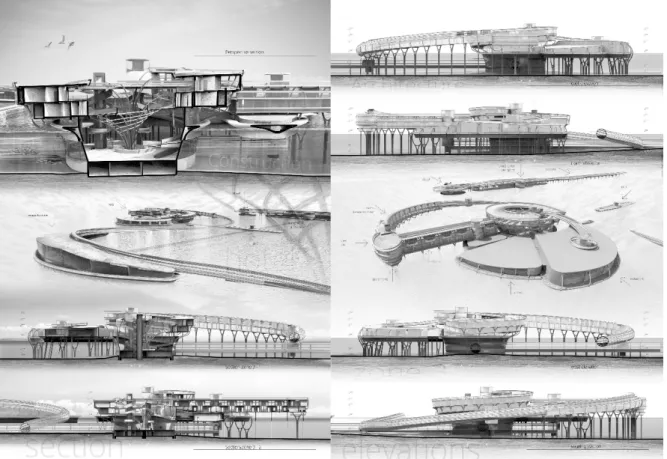
This concept of developing an (under) water colony has become a powerful motivation for the

employment of architectural research methods in the education process, from analysis through synthesis

to evaluation, and is an apt subject for a Master degree program project. Following the gathering of

specifics from all aspects of urban design, bionics, maritime archaeology, and the technology of new

materials, leading to methods of product design, it was continued in the Ph.D. four year research

program.

Şekil

Figure 1. Illustration of erratic change of the changing climate problem. (www.hakijamii.com, 2017)
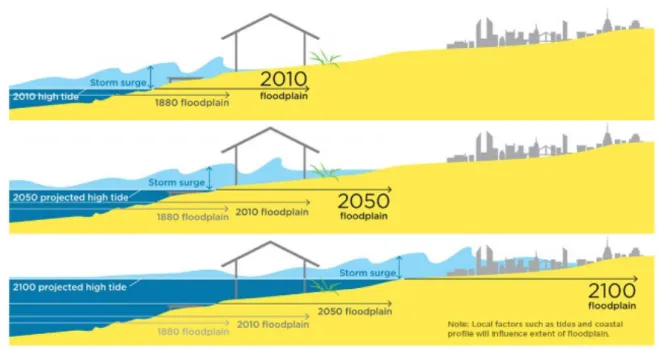
Figure 2. Global warming and increasing water levels info-graphics; storms and high tides increases the risks of rising sea  levels
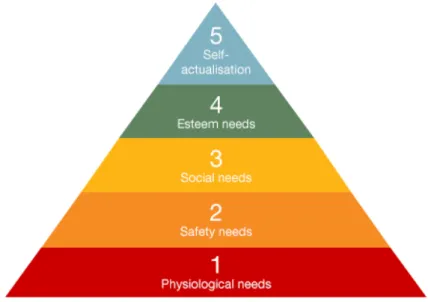
Figure 3. Maslow’s pyramid of needs. (Maslow, 1943)  FLOATING ARCHITECTURE VS TERRESTRIAL ARCHITECTURE
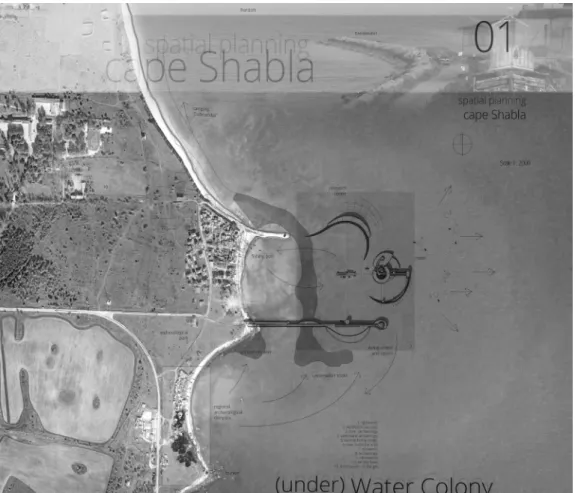
Figure 1 Situation plan (Source: author)  There are two approaches to the colony connected with the existing infrastructure
+7

Referanslar

Benzer Belgeler

Sarkis, “ Eğer Fransa'da doğmuş olsaydım, herhalde sanatçı olmaz, başka bir iş yapardım.. Temelimin taş­ ları arasında İstanbul olayı

Razi bu eseri kısaıtarak «1\iuhtanı's-Sihah» adını vermiştir. 1875 de Bulak matbaasında iki cilt halinde basılmış. Bu ınetod, ne kendisinden önce ne de

1) Beside formal education especially in architectural education the informal studies are supportive activities in terms of improving students’ individual and collective

It is concluded that it is vital to adopt a more diversified water supply and demand management portfolio with extensive Integrated Water Resources Management

Farmers believe that water buffaloes are especially good for muddy water poolside swamp and riverside area and no other farm animals could be competitive with water

The texts of the tombstones in Khakassia and Tuva, known as the Yenisei inscrip- tions , contain unique information about the social life of the ancient Turkic society.. The

Sodyum adsorpsiyon oranı (SAO), sodyumun toprak üzerindeki etkilerinin belirlenmesinde kullanıldığı için sulama sularının önemli kalite kriterlerinden

Yayın Yeri: 3rd International Conference on New Trends in Architecture and Interior Design. TASARIMDA SÜRDÜRÜLEBİLİRLİK KAVRAMINA SOSYO KÜLTÜREL