T.C.
TURKISH-GERMAN UNIVERSITY
INSTITUTE OF SOCIAL SCIENCES
INTERNATIONAL FINANCE DEPARTMENT
GENDER GAP IN LABOR FORCE PARTICIPATION
RATE
MASTER’S DEGREE THESIS
Oya ALDAG CETINKAYA
ADVISORS
Asst.Prof
LEVENT YILMAZ
T.C.
TURKISH-GERMAN UNIVERSITY
INSTITUTE OF SOCIAL SCIENCES
INTERNATIONAL FINANCE DEPARTMENT
GENDER GAP IN LABOR FORCE PARTICIPATION
RATE
MASTER’S DEGREE THESIS
Oya ALDAG CETINKAYA
TABLE OF CONTENTS
PAGE NO TABLE OF CONTENTS ... i PAGE NO... i ABSTRACT ... iii LIST OF FIGURES ... v PAGE NO... v LIST OF TABLES ... vi PAGE NO... vi 1.INTRODUCTION ... 12.LABOR MARKET, LABOR FORCE PARTICIPATION AND UNEMPLOYMENT ... 3
2.1. LABOR MARKET CONCEPT ... 3
2.1.1. Labor Market Definition and Types ...5
2.1.2. Labor Market in Terms Of Institutions...7
2.1.3. Labor Market in Functional Aspects ...9
2.2. PARTICIPATION IN THE WORKFORCE ... 9
2.3. UNEMPLOYMENT ... 12
2.3.1. Definition of Unemployment ... 13
2.3.2. Types of Unemployment ... 15
2.4. MALE AND FEMALE EMPLOYMENT ... 19
2.4.1. Differences Between Female and Male Employment in the World... 19
2.4.2. Differences Between Men and Women's Employment in Turke y ... 22
3.1. THE ROLE OF GENDER IN LABOR FORCE
PARTICIPATION IN THE WORLD ... 25
3.2. THE ROLE OF GENDER IN LABOR FORCE PARTICIPATION IN TURKEY... 28
3.3. FACTORS AFFECTING THE FEMALE AND MALE WORKFORCE... 31
3.3.1. Education ... 31
3.3.2. Marital status ... 33
3.3.3. Spouse's Education Level... 35
3.3.4. Unregistered Employment ... 35
3.3.5. Social structure ... 36
3.3.6. Discrimination Against Gender ... 41
3.3.7. Migration and Urbanization ... 44
3.4. LEGISLATION REGULATING EQUALITY OF WOMEN AND MEN IN WORKING LIFE ... 47
3.4.1. Legislation Regulating Equality of Women and Men in the World ... 48
3.4.2. Legislation Regulating Equality of Women and Men in Turkey ... 51
4.METHODOLOGY ... 56
4.1. THE IMPORTANCE OF THE STUDY ... 56
4.2. METHOD ... 56
4.3. DATA ... 57
4.4. FINDINGS... 59
4.4.1. Granger Causality Analysis ... 71
4.4.2. VAR Analysis ... 73
4.4.3. Robustness... 78
4.4.4. Impulse Response Analysis ... 79
4.4.5. Variance Decomposition ... 81
CONCLUSION ... 84
ABSTRACT
GENDER GAP IN LABOR FORCE PARTICIPATION RATE
In today's societies where gender inequality is observed, women's employment is important in terms of increasing the welfare level and sustaining development. However, women's participation in employment is very limited in Turkey. Crises in many countries since the mid-1980s have deeply affected women's participation in the labor force. Women have become low-wage workers of the labor market to compensate for declining household incomes. In the capitalist system order, formal economic activities are gradually narrowing and informalization is spreading over a wide area regardless of the level of development. Women workers make up the majority of the informal economy. Thus, it is important for a country to increase the participation of females to workforce. In this study, gender gap occurring in the workforce was examined. In this context, the relationship between female labor force participation rate and male labor force participation rate, female divorce rate, GDP and inflation rate were analyzed. Granger causality analysis and VAR analysis were applied for the research. As a result of the research, a reciprocal relationship between female labor force participation and GDP has been determined. In addition, it has been determined that the male labor force participation rate has an effect on the female labor force participation rate.
Key Words, Labor Force Participation, Female Labor Force Participation, Female Unemployent, Gender Gap, Turkey.
ÖZET
İŞGÜCÜNE KATILIM ORANINDA CİNSİYET FARKI
Cinsiyet eşitsizliğinin görüldüğü günümüz toplumlarında kadın istihdamı, refah düzeyinin yükseltilmesi ve kalkınmanın sürdürülmesi açısından önemlidir. Ancak Türkiye'de kadınların istihdama katılımı çok sınırlıdır. 1980'lerin ortasından bu yana birçok ülkede yaşanan krizler, kadınların işgücüne katılımını derinden etkiledi. Hanehalkı gelirlerindeki düşüşü telafi etmek için kadınlar işgücü piyasasının düşük ücretli çalışanları haline geldi. Kapitalist sistem düzeninde, formel ekonomik faaliyetler giderek daralmakta ve enformelleşme, gelişmişlik düzeyine bakılmaksızın geniş bir alana yayılmaktadır. Kayıt dışı ekonominin çoğunluğunu kadın işçiler oluşturmaktadır. Dolayısıyla kadınların işgücüne katılımını artırmak bir ülke için önemlidir. Bu çalışmada, işgücünde meydana gelen cinsiyet farkı incelenmiştir. Bu bağlamda, kadın işgücüne katılma oranı ile erkek işgücüne katılma oranı, kadın boşanma oranı, GSYİH ve enflasyon oranı arasındaki ilişki incelenmiştir. Araştırma için Granger nedensellik analizi ve VAR analizi uygulanmıştır. Araştırma sonucunda kadınların işgücüne katılımı ile GSYİH arasında karşılıklı bir ilişki tespit edilmiştir. Ayrıca erkeklerin işgücüne katılma oranının kadınların işgücüne katılma oranı üzerinde etkisi olduğu belirlenmiştir.
Anahtar Kelimeler: İş gücüne katılım, Kadın İş gücüne katılım, Kadın İşsizliği, Cinsiyet Farkı, Türkiye.
LIST OF FIGURES
PAGE NO
Figure 1.1. Labor Force Participation Rate of Females ... 20
Figure 1.2. Labor Force Participation Rate of Males ... 21
Figure 1.3. Ratio of Female To Male Labor Force Participation Rate ... 22
Figure 1.4: Labor Force Participation Rate of Males and Females in Turkey ... 24
Figure 4.1: Time Series Graph of Female Labor Force Participation Rate in Turkey ... 64
Figure 4.2: Time Series Graph of Male Labor Force Participation Rate in Turkey ... 65
Figure 4.3: Time Series Graph of Female Divorce Rate in Turkey ... 66
Figure 4.4: Time Series Graph of GDP in Turkey... 66
Figure 4.5: Time Series Graph of Inflation in Turkey ... 67
Figure 4.6: Response of Female Divorce Rate to Female Labor Force Participation Rate ... 79
Figure 4.7: Response of Inflation to Female Labor Force Participation Rate ... 80
Figure 4.8: Response of Male Labor Force Participation Rate to Female Labor Force Participation Rate... 80
LIST OF TABLES
PAGE NO
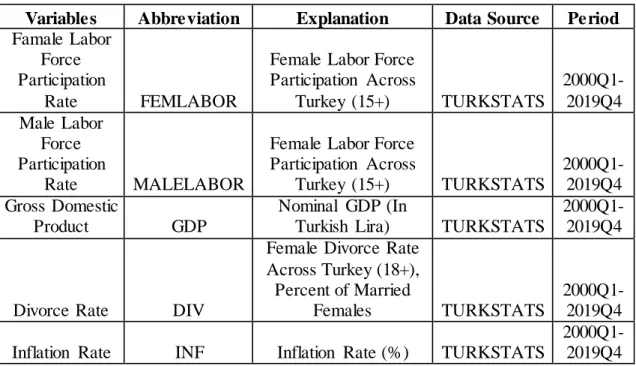
Table 4.1: Variables Used in Analysis ... 57
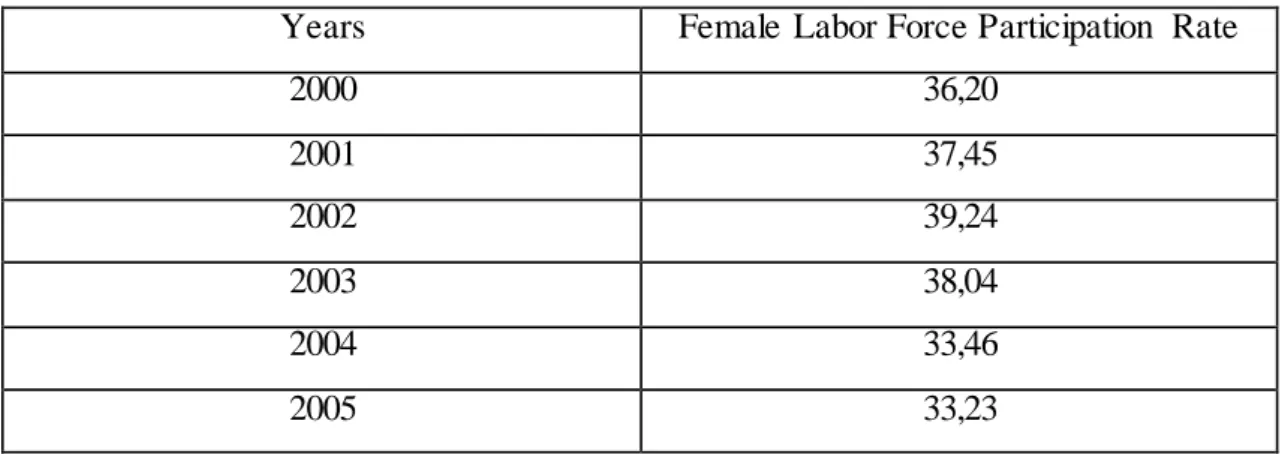
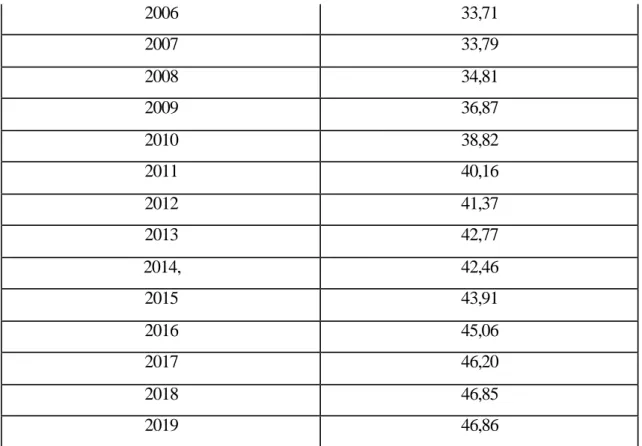
Table 4.2: Female Labor Force Participation Rate in Turkey (%) ... 59
Table 4.3: Male Labor Force Participation Rate in Turkey (%) ... 60
Table 4.4: Female Divorce Rate (% of Married Females) ... 61
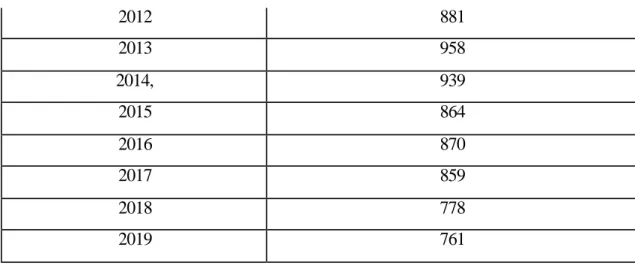
Table 4.5: GDP in Turkey (Million USD) ... 62
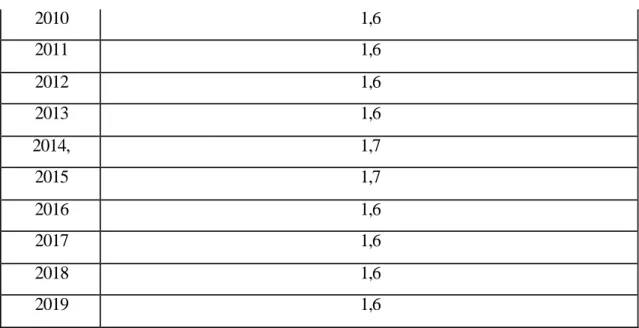
Table 4.6: Inflation in Turkey (%)... 63
Table 4.7: Descriptive Statistics ... 67
Table 4.8: ADF Test Results ... 69
Table 4.9: First Order Difference of ADF Test Results ... 69
Table 4.10: Determining Lag Lenght for VAR Model... 70
Table 4.11: Granger Causality Test ... 72
Table 4.12: VAR Model Results for Female Labor Force Participation Rate... 75
Table 4.13: VAR Model Results for Female Labor Force Participation Rate (Excluding Female Divırce Rate) ... 76
Table 4.14: LM Test for Autocorrelation ... 77
Table 4.15: Normality Test Results ... 77
Table 4.16: Determining Lag Lenght for VAR Model (Excluding Male Labor Force Participation Rate) ... 78
Table 4.17: VAR Model Results for Female Labor Force Participation Rate (Excluding Male Labor Force Particiapation Rate) ... 78
Table 4.18: Variance Decomposition for Female Labor Force Participation Rate ... 82
Table 4.19: Variance Decomposition for Female Labor Force Participation Rate (Excluding Male Labor Force Participation Rate) ... 83
1. INTRODUCTION
In primitive societies, mostly women who participated in agricultural activities as unpaid family workers in rural areas have been involved in economic activities in various positions until today. As a result of the rapidly developing technological progress with the Industrial Revolution, women started to participate in wage labor, with the replacement of agriculture-based activities by mass production-oriented industries.
The event that affected female labor force participation more than industrializat ion was the Second World War, and it was observed that female labor force participation rose drastically during the war. This increase has reasons related to both labor supply and labor demand. In terms of labor supply, the main motive for some female labor force to enter the market was patriotism, for others, the decrease in the income of families and the decrease in women's work at home. In terms of labor demand, males participation in wars rose the demand for labor and wages in the economy, which boosted women's entry into the labor market (Özer & Biçerli 2003, p. 58).
In the last century, societies have changed profoundly. Not only has the economic role of women completely differentiated, but a new family model has also been developed. Individuals' expectations and preferences for marriage and gender roles have improved significantly. Technological factors were primarily the focus for the determinant of the economic role of women over time. Durable consumer goods decrease the time required to fulfill traditional duties within the household, measures necessary for women to control fertility emerge, and the transition to an economy where services and skills are intense, which increases the rate of suitable jobs for women (Fernandez et al. 2004, p.1294) )
The participation of women in the workforce also supports the economic and social development of that country. It will contribute to the development potential of the country by contributing to the increase of economic efficiency as a part of production in
the economic field. On the other hand, with women taking active roles in various fields, behavior patterns towards women will gradually become moderate in society.
While women's participation in the workforce has increased over time, women's employment opportunities were still limited. There are many components that limit women's participation in the workforce and employment.
The starting point of this study reveals the effects on gender gap caused by the low participation of women in the labor force. In this context, the labor force participation rates of females and the labor force participation rates of males were analyzed with VAR analysis. In addition, GDP and inflation rates, which are thought to affect the workforce, are also included in the analysis. Although there are many factors affecting the workforce of females, only the data on divorce rates of females are included in the analysis due to the lack of data suitable for the VAR analysis. As a result of the research, it was seen that the participation of men and GDP have an effect on the female labor force participation rates. In addition, it is concluded that female labor force participation rates also have an effect on GDP.
In the first part of the study, theoretical information about the labor market and unemployment is provided, types of unemployment are explained, and unemployment data in Turkey and in the world are analyzed. In the second part of the study, a research has been made on the role of gender in labor force participation, the factors that prevent women's participation in the labor force and the laws that facilitate women's participation in the labor force are examined. In the third part of the study, the factors affecting the participation of women in the workforce were analyzed by VAR.
2. LABOR MARKET, LABOR FORCE
PARTICIPATION AND UNEMPLOYMENT
2.1. LABOR MARKET CONCEPT
The structure of the labor markets of the countries is an indicator of their economic development. Economic development and growth in countries depend on the effective use of production factors. At this point, the effective use of labor, which is considered to be the most important factor of production, brings about economic development (Lobao 2019, 11).
Labor force participation rates are the leading variables that show the size of a country's economy and labor market. The important variables in taking the decision to participate in the labor force are the wage of labor in the market and the labor market conditions. Any change that may occur in an economy where market prices and wages for labor differ will have an impact on the labor force participation decisions of both individuals and households. These changes in wages occur in the form of income and substitution effects at the point of the labor force participation decision. Under the assumption that leisure time is a normal good, if the individual tends to increase working hours by reducing leisure time consumption as a result of the increase in wage, then the substitution effect is dominant. On the contrary, individua ls increase their leisure time consumption and decrease their working hours. While there is a negative relationship between the income effect and labor force participation, there is a positive relationship between the substitution effect and labor force participation. Participation decisions of individuals and households are affected not only by the wages in the market, but also by the income and future wage expectations (Bălan 2014,, 66).
The act of work and the labor force that it brings with it is a concept that emerged as a result of meeting the needs of individuals and cultural interactions of people as
individuals living in societies. In the early days, before the Industrial Revolution, the underlying reason that pushed individuals to work was the motive to meet their own needs. People have had to produce their own food in order to meet their needs and continue their lives, and this has been an indication of their settled life. With the transition to settled life, the importance of the concept of labor spread rapidly and it is known that the cause of this radical change was the agricultural revolution in essence (David and Dorn 2013 1553).
With the onset of settled life, although the population of the world in arable land has increased rapidly, villages have started to be established in settlements that have increased in number. The existence of a political organization such as the establishment of villages has also led to the development and efficiency of production methods. Social and economic developments have made it necessary to create larger and more qualified settlements. With the development of agriculture in the transition to settled life, there is also a meaningful relationship between organizational structure and division of labor. Considering this relationship, it should be stated that as the next step in the creation of villages, city and / or urbanization are not yet valid. Livestock, hunting and shooting were the main occupations in non-industrialized societies before the Industrial Revolution. These societies in which the importance of arable land increased with the agricultural revolution; It is possible to group them as hunter and gatherer, rural and urban societies, having a garden culture and agricultural communities (Morozov and Morozova 2018 100).
Before the industrialization process, the last stage of the capitalist system was manufacturing. Although the word "manufacture", which is of Latin origin, means "made by hand", it lost its meaning and / or changed its meaning over time. The reason why it started to be used in a production system opposite to its meaning is that it experiences the transition to factory production during the use of machines in craft production. The most prominent feature of this change has been observed as a result of a large number of workers coming under the control of an employer (David, Dorn, & Hanson 2013 2121).
Workers who started to work dependent on the employer, division of labor was made among the employed workers in line with the principle that is the basis of the manufacturing economy. According to Smith, there are three main reasons for the
increase in production that will occur as a result of the division of labor (Marx 2000, 20-21):
Increases in the skills of each worker will occur with the division of labor.
The fact that workers with different tasks will now be gathered in one task will help to save the time lost.
It is the possibility of the invention of machines that facilitate the process as a result of the division of labor and enable the replacement of many workers to a single worker.
As a result, manufacturing has fragmented labor with the division of work and made people dependent on the employer by specializing in certain areas. It has made the craftsman and small producers part of the capitalist system by causing specialization in the field. This labor process, which started with manufacture, was integrated with the drying of factories and transformed the worker into a part that should only be for machines to work (David et al. 2013 2122).
2.1.1. Labor Market Definition and Types
There are scarce resources and endless needs of humans on the inhabited planet. The process of obtaining goods and services in order to meet endless needs with scarce resources is called production (Lialina 2019 1105). The main factors of this production in the literature are, labor, nature, entrepreneur and capital. The labor factor in these elements is the sum of the physical or mental (intellectual) movements and efforts of those who work in any job or sector by being subject to a determined wage. In other words, the workforce constitutes the basis of the labor factor, in other words, the labor force (Naidu, Posner, & Weyl 2018, 549).
The total population of a country is divided into two in terms of participation in the production process. This distinction is formed as active and inactive population. Active population phenomenon is the population between the ages of 15-64. In addition, the active population does not only consist of the employed. It includes those who are not employed and willing to work. Inactive population includes the population who is not employed but is not unemployed (Krebs and Scheffel 2013, 664). In fact, the population in this group constitutes the working age population. The population in this group
includes:
Those in educational institutions,
Those performing household services (housewives), Pensioners,
Those who do not have a job due to reasons such as illness and disability (Alan 2011, 973).
Therefore the labor market is a concept related to the human factor operating in the field of the production of goods and services of any economic structuring. The labor force, which is subject to purchase and sale in a productive sense, constitutes the justification for this definition. Labor, which is a fundamental factor of the economy, constitutes the essence of the labor force representing the human element of economic activity and the labor market concept (Cobb-Clark 2015, 3).
In summary, capital owners who want to engage in an economic activity have to demand a small amount of labor despite the technological development used in production. This situation, which reveals the demand of labor, has also moved the labor supply. The labor supply side is expressed with the concept of labor. A laborer who wants to participate in economic activity in order to earn a certain income has to offer his labor to the labor market. Therefore buyers and sellers are also determined in the labor markets. As a result, the point where the labor force, which refers to the total labor supply in an economy, meets the demand for labor is called the labor market. So labor market is a combination of markets and methods where labor supply and demand meet, working conditions and wages are determined (Gericke, Burmeister, Löwe, Deller, & Pundt 2018, 46).
The geographical dimension occupies an important place in labor markets. While there is a general dimension covering the entire workforce of a country, there are also micro-dimension labor markets that show the structure of the labor force in the regional sense. Regional differences and the value of the labor force that changes accordingly change the value of the labor force in these markets. Since this market is a market where employers and wage earners exchange labor, in order for the labor supply, that is, the labor force, there must first be a demand for labor (Leuven and Oosterbeek 2011 283).
The workforce is divided into two parts among the civilian population between the ages of 15-64, those who supply their labor and those who do not and / or cannot supply their labor. In another definition, labor force is defined as the productive population consisting of the labor supply in a country. (Kaplan 2012, 446). The labor market is divided into those in the labor force and those who are not in the labor force. While creating those in the labor force, the employed and the unemployed, those who are not included in the labor force are voluntary unemployed workers (Häusermann and Schwander 2012 27).
Based on all these explanations, workforce is a concept that generally defines the working mass and job seekers in a country (Ülgener 1970, 79).
2.1.2. Labor Market in Terms Of Institutions
In order to achieve balance in the labor market, the characteristics of the markets are examined at institutional level. Theoretical labor markets are examined under six subtitles (Campolmi and Faia 2011, 793-795).
- Ideal labor market, It is not possible to encounter this market, which is called perfect competition market in the economic literature, in real life. The goods and services produced in this market are homogeneous, free to enter and exit the market, those who supply and demand labor have full knowledge of the market, there is sufficient demand for every good produced and every labor supplied, the intervention of the state is at the lowest level.
- Natural labor market, It is the labor market seen in the capitalist order, where social policy regulations are not developed, liberal economic practice is dominant, the duty of the state is only security and justice. In this market, the supply and demand of labor are determined according to the existing and developing conditions in the market, there is no balance between the supply and demand of labor, and there are reasons that hinder labor mobility, therefore the application of the principle of equal pay for equal work is prevented and union movements are either absent or in a position to affect the market.
- Institutional labor market, It is the type of market where legal institutio na l arrangements are made by the state, organized to defend the rights of labor supply and demanders, and organizations act in accordance with legal regulations. Social state understanding prevails in these markets. There is no balance between the supply and demand of labor, and the state makes legal and institutio na l arrangements to achieve this balance. The labor supply and demanders do not have complete information about the market, but there is no stored information. Goods and labor are not standard. The main purpose of the state's intervention in the market is to ensure full employment and there are no restrictions preventing the mobility of the labor force.
- Guided labor market, It is a type of market in which all kinds of regulations regarding the labor market are realized with the intervention of the state and the only authority of the market is the state. This market is the opposite of the ideal labor market. Labor is the only employer in the market, and the supply of labor has a single price set by the state.
- Protectionist labor market, It is the type of market in which the state regulates the market directly or indirectly to protect the working population in countries that have not completed their economic development or have problems due to economic reasons. The parties of the market do not have full information about the market. The distribution and characteristics of the workforce are uneven. Although it has the freedom to contract, it requires the state to intervene in the market with legal regulations due to the power imbalance between the parties. It is faced with this kind of market in Turkey.
- Flexible labor market, It is a type of labor market that has the characteristics of a protective and interventionist labor market.
2.1.3. Labor Market in Functional Aspects
It is the distinction that emerges by considering the mission undertaken by the labor market and the qualities of other factors in the market. In this respect, the labor market can be divided into three market types (Bauer, Schriber, Degischer, & King 2018 290):
- Labor market in terms of geography, It is the labor market distinction in which labor markets can be analyzed from different perspectives, internationally , nationally and regionally. Thanks to this distinction, the regional distribution of the labor factor and the problems it causes can be examined and solution-orien ted policies can be determined.
- Occupational labor market, It is the type of market in which the supply of labor and the demand of labor force in any business and profession are not affected much by the demand created by different professions and business lines.
- Sectoral labor market, It is the type of market where the workforce is segregated according to their fields of activity. In this context, three labor markets emerge; agricultural, industrial and service labor markets.
2.2. PARTICIPATION IN THE WORKFORCE
The structure of the labor market is very important for an economy. The labor market gives important clues about the structure of the economy as it is a market where individuals contribute to production and earn income in return for this contribution. The participation in the workforce reflects the decision of individuals who are out of employment for reasons such as returning to the market or joining employment for the first time. ILO has focused on three important points in the definition of employment, The employment must be within a certain reference period, the individual must be a paid or self-employed person in this reference period, and the individual should have an official job application within the reference period (Hogan, Kyaw-Myint, Harris and Denronden 2012 1).
The labor force participation rate, which includes those who are employed in the labor market and the unemployed, refers to the proportional weight of those who are in the labor force and not in the labor force. In another definition the rate of the labor force in the non-institutional working age population is called the "Labor Force Participation Rate" (Güner 2010 11). Labor force participation rate is the comparison of the actual workforce with the potential workforce. Potential workforce concept is the sum of the population over the age of 16 and those considered as non-institutionalized population (Tekelli 2010, 4). While the labor force participation rate decreases during the recession periods of the economy, it increases during the expansion periods.
Active population concept according to ILO's definition includes all individ ua ls between the ages of 15-64 who supply their labor to ensure the production of goods and services in the economy during a specified reference period. The ILO has included discouraged workers in the group of those who are not in the workforce. In cases where unemployment is prolonged and the possibility of finding a job in the labor market is low, some unemployed people may prefer to stay out of the labor force, thinking that there is no suitable job for them in the region. While these people are considered in the workforce as long as they are looking for a job, if they stop looking for a job, they are included in the "non-labor force" group. In the group of those who are not in the labor force, there are not only offended workers, but also those who do not work voluntarily, have relatives in need of care at home, and the reserve workforce dealing only with household chores due to the high income of their spouse (Joyce et al. 2010, 50).
Increases in the labor force participation rate cause an increase in the labor supply and thus an increase in economic growth. This rise in labor force participation will cause an increase in GNP (Gross National Product). Here, it is seen that there is a positive relationship between GNP and labor force participation. Likewise, an increase in GNP will create an increase in labor force participation. The importance of education, which is an effective factor in labor force participation, has been frequently mentioned in the literature and many studies have been conducted on this subject. There is a positive relationship between the labor force participation of an individual whose education level has increased and income. In all developed and developing countries, that as the education level rises, the rate of labor force participation increases. Considering the labor force participation rate by genders, it is known that the level of education is more effective and
higher in women's participation in working life than men (Gibb, Fergusson, Horwood, & Boden 2014, 14).
Economists use the concept of "Reservation Fee" along with the "Income-Leisure Model" in analyzing the labor force participation decision. According to Pearce et al. (2015, 30) the reservation fee is the wage that creates the difference in the decision whether individuals are in the workforce or not. In other words, the wage that a non -working individual determines in the optimal strategy that he will be included in the workforce at this wage level is called the reservation fee. Factors such as savings, rental income, wealth earned by inheritance affect the reservation fee of individuals. In addition to these, the social aids provided by the state, unemployment insurance, child benefits will increase the reservation fee of the individual and thus will affect the participation in the labor force. Individuals will respond to the decrease in the labor supply by seeking more social assistance from the state.
The concept of part-time work has emerged, which will camouflage the contraction in employment during recession periods of the economy. Part-time work causes a decrease in the market equilibrium wage level and working hours, but also plays an active role in rising labor force participation and decreases gender discrimination. It is observed that with the flexibility of production and / or the increase of part-time employees, enterprises decrease the number of full-time employees and tend to temporary employment. This system provides an opportunity to increase the employment of those who cannot take part in the labor markets due to their family responsibilities (Mehtap, Jayyousi, Gammoh, & Al Haj 2016, 790).
The concept of employment in the classical and neoclassical approach is explained by starting from the concepts of Say’s law, interest theory, wage theory, and quantity theory.
Say’s Law, Generally, production surplus or lack of demand is unacceptable. The reason for this is that each supply creates its own demand. Say argued that there may be some partial imbalances in the current market economy, and some sectors may face excess production due to some incorrect predictions by some entrepreneurs. However, he argued that an excessive production that includes the whole economy, that is, a lack of demand, will not occur because the production situation itself will create the market
necessary for the product to be sold in the market (Chen 2015, 174).
Interest Theory, According to the classical understanding of economics, while the worker earns wages, the landowner earns rent and the capital owner receives interest with the capital used by the entrepreneur. According to the classical approach, the reason why the lender demands interest is the profit that the borrower can obtain by using the existing capital at the end of this situation. Interest can be earned on the condition that the capital is owned. As a result of this situation, the total demand will be equal to the total supply as all the revenues obtained are spent (Hogan et al. 2012, 3).
Wage Theory, The wage is the price of the lobor. While the payment made for the service is the nominal fee, the real wage is the amount of goods and services that can be purchased with the income of the individuals. The condition determined by the supply and demand of labor is wages. Equilibrium occurs where labor demand and supply intersect. In the case of balance, the economy is at full employment level. Worker's welfare depends on the state of the real wage in the wage theory. If prices increase, real wages will fall. In order for real wages to increase, the increase in nominal wage levels must be much higher than the rate of increase of the general level of prices, that is, inflation (Gericke et al. 2018, 46).
Quantity Theory, The quantity theory includes a cause-effect relationship in that the price level is determined by the amount of money and when the amount of money in the market increases at a certain rate, the price level increases at the same rate. Therefore, the amount of money determines the price level. When there is an increase in the money supply, there will be more expenditure. However, the economy will not be able to produce more than it is in full employment and this surplus will lead to an increase in the general level of prices (Gibb et al. 2014, 15).
2.3. UNEMPLOYMENT
Unemployment is one of the most fundamental problems in all countries of the world. Regardless of the socioeconomic level, countries have not been able to cope with the phenomenon of unemployment, and studies on this issue have been inadequate. Unemployment in general is the situation of people seeking and not finding a job in market conditions despite their desire to work (Lloyd and Leibbrandt 2014,, 85). This
section provides information on various definitions and types of unemployment.
2.3.1. Definition of Unemployment
Unemployment consists of three basic criteria by the International Labor Organization. In order to be able to mention about unemployment, it is necessary that there is no employment within a defined time frame within the reference period, an application must be made to job search channels at least once in the last three months, when the person is offered a job, the person must accept the job and start work within fifteen days (Brandolini, Cipollone and Viviano. 2006, 153).
Today, one of the biggest problems of developed or developing countries is the problem of unemployment. The problems caused by the unemployment problem are the loss of national income and the deterioration of the social order. Although unemployment has manifested itself in different dimensions socially and economically in every country throughout history, it has maintained its place among the most serious problems of countries. The unemployment problem emerged at different levels in many countries with the industrial revolution, and it emerged especially in developing countries until the 1980s. Since this date, with the adoption of the neo-liberal approach in many countries, the problem of unemployment has also started to be encountered in developed countries (Card 2011, 552). The unemployed may create social unrest, as well as pose a political threat to democratic administrations. Therefore, the political authority should evaluate this problem from multiple perspectives and produce permanent solutions (Mryyan 2014,, 39).
Unemployment is generally a common problem of industrialized and industrializing societies. Although the causes of unemployment differ from country to country, the main reason for unemployment is the insufficient demand for labor in developed countries, ie the imbalance between labor supply and demand. In developing countries, this situation is attributed to the structure of the economy. In these countries, the vast majority of the population is involved in the production process, yet the revenue created remains much lower than the production potential (Shimer 2012, 127).
By definition, unemployment is the situation when the population who wants to work but reaches the working maturity cannot find a job. This situation is not due to their
own reasons. Another definition related to unemployment is the decrease in the need for labor as a result of the insufficient demand. The existing labor force cannot be used and remains idle. This idle labor is called unemployment because the workforce has a characteristic such as not being accumulated (Uysal and Pohlmeier 2011, 980).
According to another opinion, unemployment means the segment within the labor force that cannot find a place in working life. Individuals who could not be employed in a certain period of time have used at least one of the ways of finding a job in the last three months and will be able to start working immediately within fourteen days. Those who will start their business within a ninety-day period and those who will complete the deficiencies of the business they have established within this period are also considered as unemployed (Elsby, Hobijn & Şahin 2013, 530).
Individuals who meet all these conditions are in the unemployed category. As can be understood from these definitions, people who meet all the conditions for working but are not employed are called unemployed, and those who meet the above definitions, that is, those who do not want to participate in the labor force voluntarily, although there is no disability to work, are not included in the unemployed class (Smith 2011, 402).
In the member states of the European Union, unemployment is defined as those who are registered in labor employment agencies such as workers' assistance offices, who do not have a job and can switch to another job at any time (https://ec.europa.eu/eurostat/statistics-explained/index.php/Unemployment_statistics, Accessed on 02.01.2021).
The unemployment is one of the most significant problems of all countries whose economies are developing or continuing to develop. Creating new job opportunities for the growing population has become a challenge for countries. Unemployment is one of the most important economic issues for all countries. Since it is one of the factors that directly affect the country's politics, it has a political significance. Because unemployment is at the center of social life. The whole household is affected by this situation (Norström and Grönqvist 2015 110).
Whether the economies of the countries are good or not can be understood by whether everyone who wants to work for wages is employed. If the individual who wants
to work cannot find a job although the individual wants to, it is one of the wrong economic policies implemented by the country. The high and settled unemployment causes many social, economic and political problems in the society. It is one of the first causes of social explosions (Sumner and Gallagher 2017, 289).
Unemployment is one of the common problems of developed, developing or underdeveloped countries. Although it differs from country to country, the general causes of unemployment are similar. Although there are many and various reasons, some of them are as follows (the Shimane 2012, 127):
- The most important reason is that the population growth rate in the country is higher than the rate of increase in employment. Unemployment will increase as the population that reaches the working age causes an increase in the labor supply.
- Unemployment will occur as a result of the lack of employment opportunities. Adding new people to the workforce on top of existing job seekers will increase unemployment.
- Due to the imbalance in income distribution, those who want to work cannot get the necessary training. These people, who are described as unskilled labor, are included in the unemployed population.
- Due to urbanization, migration increases and the desire of migrants to seek a job increases due to high costs. This situation leads to a further increase in unemployment, considering that people from rural areas are unskilled.
2.3.2. Types of Unemployment
Unemployment is evaluated under different headings according to its characteristics. All these different reasons such as the age, gender, education level, ethnic origin, geographical location, occupation, fluctuations between countries cause different unemployment types. It is difficult to find the reason for being unemployed on an individual basis. However, it is easier to comment on the general unemployment reasons (Fujita and Moscarini 2017, 3875).
2.3.2.1. Open Unemployment
It is defined as unemployment in the sense of not being able to find a job despite the desire to work. Five different types are structural unemployment, technological unemployment, cyclical unemployment, seasonal unemployment and temporary unemployment (Brecher and Chen 2010, 990).
a. Structural Unemployment, As a result of changes in the structure of production, there may be shrinkage in some areas in the economy and progress in some areas. Although there is a shift in labor force from areas of contraction to areas of expansion, this takes a certain amount of time. At the same time, it does not fully meet the needs. In this case, structural unemployment occurs (Valletta 2013, 87). Among the structural causes of unemployment are economic expansion, poorly managed economy, industrial and technological progress (Estevão and Tsounta 2011, 2).
The striking situation in this type of unemployment is that economic growth causes structural unemployment. In the growing economy, there is a demand difference between the amount of input and the product produced. Production factors may not be able to catch this change in a certain period of time. Having to wait a while to keep up with this change will disrupt the balance between production factors and demand. During this period, structural unemployment can be seen in some sectors and occupational groups. There may be a difference in terms of labor demand in sectors with economic growth. The orientation of employment to expanding sectors, while people in some occupational groups will be educated and recruited to the sectors, some individuals will be untrained and unemployed (Restrepo 2015, 5).
b. Technological Unemployment, Technological unemployment is the type of unemployment that occurs with the use of machines as a substitute for labor. It is the substitution of capital for labor. Technological developments in industrial production caused radical changes. Increasing product demand with the capitalist mode of production made a big difference in labor demand (Feldmann 2013 1099). Due to the increase in technological opportunities in the world, factories have had to go to mechanization instead of labor-intensive production. The days of unemployment of laborers who lose their jobs to machines begin. It can be seen in developing and developed countries yet. However, less developed countries are more affected by this situation. Developed
countries will have no difficulty in creating new sectors for workers under changing conditions. However, it takes a long time for less developed countries to do this (Peters, Jandrić, & Hayes 2019, 242).
c. Cyclical Unemployment, There is no continuous growth or pause in the economy. There are fluctuations in growth rates. Due to these fluctuations, there are recessions, stagnations and depressions in the economy and as a result of these, cyclical unemployment occurs. In times of waves in the form of declines, many job losses can occur. Long time periods are needed for this situation to improve (Diamond 2013, 410). Conjuncture refers to the fluctuations in the economy. When everything in the economy reaches balance, savings increase, consumption and supply expand, investments increase, employment is provided, the value of money is regular, the 'high conjuncture', the economy begins to shrink, the value of money decreases, capital begins to decrease, investments decrease, consumption and money value decrease (Mueller 2017, 2081).
Demand is insufficient as a result of the contraction in the economy in times of low conjuncture. When there is not enough production, the need for labor decreases. Demand will decrease as unemployment increases, which will cause unemployment to increase further. In the periods when the conjuncture begins to expand, the need for labor will increase and the recruitment process will begin. This type of unemployment is seen mostly in industrializing countries, it does not spread over a long period of time like structural and technological unemployment, because the period is shortened with the measures taken (Kaplan, Collins and Tylavsky 2017, 281).
d. Seasonal Unemployment, There may be a decrease in the work done in certain seasons due to the climate or various social movements. The type of unemployment that occurs as a result of this decrease is called seasonal unemployment. The sectors most affected by this emerging unemployment type are tourism, agriculture and construction. Employees may be unemployed during the seasons they work due to any negativity in these sectors. They have to wait for the next season until the sector is organized (Ahamad, Khondker, Ahmed and Tanin 2011, 174).
e. Temporary Unemployment, Temporary unemployment is a type of unemployment that occurs when people start their first business life or when they leave their current job and transfer to another job. It is the type of unemployment that causes the least damage to the
national economy. It is also called accidental unemployment. This unemployment can be encountered even with full employment. If the labor industry had worked like other industries, there would only be frictional unemployment in the market (Albertini, Kamber and Kirker 2012, 326).
This type of unemployment is seen in all countries regardless of the economic level. It stems from the inability of labor markets to function properly. Job seekers find it difficult to find where the workforce is needed. Even if they do, transitivity is difficult because the change is costly and tiring. In addition, insufficient market knowledge of those who need a labor force and job seekers causes an increase in this type of unemployment (Axtell, Guerrero and López 2019, 184).
Structural unemployment and temporary unemployment are sometimes confused. If the labor force makes this change in a short time while changing the sector, it is called temporary but if this situation takes a long time, it is called structural unemployment (Ortego-Marti 2016, 5).
2.3.2.2. Disguised Unemployment
Disguised unemployment can be analyzed in four categories, hidden unemployment, voluntary unemployment, natural unemployment and continous unemployment.
a. Hidden Unemployment, Hidden unemployment refers to the separation of the labor force from production, but no reduction in total production, although there is no change in production patterns. In another definition, although the individual does not seem unemployed, the individual does not add any surplus value to production. This type of unemployment arises as a result of insufficient capital for the economy or not being able to use the existing capital actively and correctly, in addition to the low consumption demand. Hidden unemployment is less common in the private sector than in the public sector. It is mostly seen in the agricultural sector (Baum and Mitchell 2010, 233).
b. Voluntary Unemployment, Volntary unemployment is a more common situation in countries where the division of labor and specialization is highly developed. A person who is not unemployed by his own free will is regarded as voluntary unemployed. Classical economists argue that this type of unemployment does not exist. They think that
this unemployment is caused by people's dislike of the wages. Keynes thinks that this type of unemployment is caused by a lack of demand (Van Rie, Marx, & Horemans, 2011 125).
c. Natural Unemployment, Unemployment that cannot be eliminated despite all policies implemented is called natural unemployment. It is necessary to fight inflation while eliminating this type of unemployment. In short, it is the type of unemployment that is tried to be kept at the lowest rates without increasing inflation. A specific method cannot be used to measure the natural type of unemployment. Factors such as unemployment insurances, minimum wage amount, and growth rates in different sectors determine natural unemployment (Güriş, Tiftikçigil, & Thüroğlu 2017, 35).
d. Continuous Unemployment, Developed countries where growth has reached a certain point is likely to face this type of unemployment. Continuous stagnation of unemployment occurs with the continuation of the economy stagnant for a while. After the Great Depression of 1929, all of the world economies started to experience major crises. One of the most important crisis periods was the oil in 1973. In some periods, bottlenecks have occurred in the sectors, countries whose economies are not strong enough and not resistant to competition have lost their production markets with cheap labor and developing technology and have entered into constant stagnation (Kelly et al. 2014,, 636).
2.4. MALE AND FEMALE EMPLOYMENT
In this section, information and theories on male and female workforce are presented.
2.4.1. Differences Between Female and Male Employment in the World
The role of women in both economic and social life shows that they have an important influence in the rapidly developing world. Women have been in economic life at every stage and all over the world from the times when primitive conditions prevailed. Women, who previously had limited work area with the agricultural sector, gained the opportunity to work in a wide range of jobs with the industrial revolution. The globalization process experienced during and after World War II, like the industrial
revolution, is one of the important developments that strengthen the place women have gained in the labor market and increase their number (Robb and Watson 2012, 544).
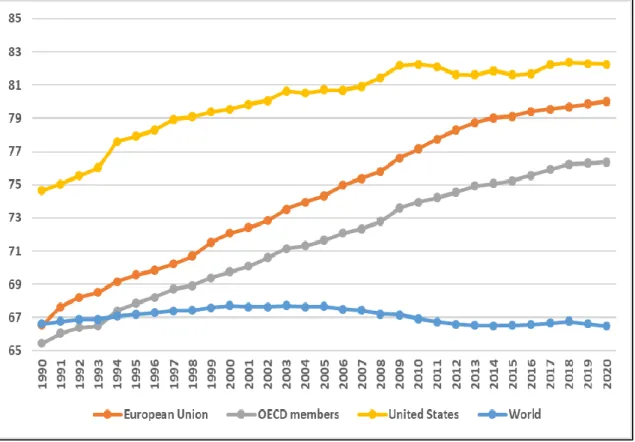
Figure 2.1. Labor Force Participation Rate of Females
Source: WorldBank 2020, https://data.worldbank.org/indicator/SL.TLF.CACT.FM.ZS.
The figure above shows the labor force participation rates of women worldwide and in some developed economies. In the world average, the participation of women in the labor force is decreasing every year compared to the female population. The female labor force rate decreased from 51 percent in 1990 to 47 percent in 2020. Similarly, the female labor force rate in the USA decreased from 56.2 percent in 1990 to 55.8 percent in 2020. On the other hand, female labor force participation rates raised in OECD countries and the EU. In OECD countries, the labor force participation rate of women, which was 48 percent in 1990, reached 52 percent in 2020. In the EU, the female labor participation force rate, which was 45.5 percent in 1990, rose to 50.2 percent in 2020.
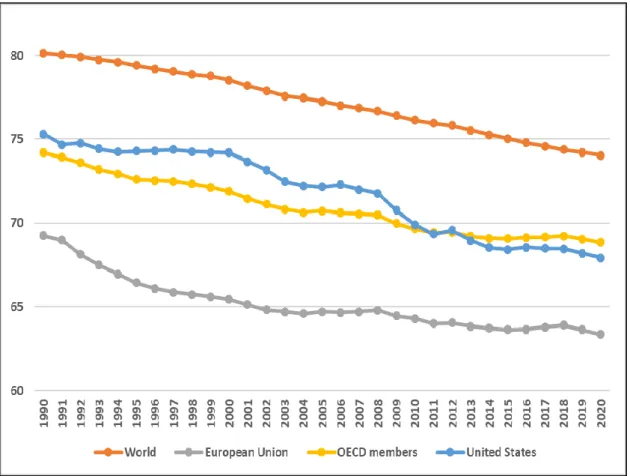
Figure 2.2. Labor Force Participation Rate of Males
Source: WorldBank 2020, https://data.worldbank.org/indicator/SL.TLF.CACT.FM.ZS.
The figure above shows the male labor force participation rates worldwide and in some developed economies. In the world average, the participation of male in the labor force is decreasing every year compared to the male population. The male labor force rate, which was 80 percent in 1990, declined to 74 percent in 2020. Similarly, the rate of male workforce in the USA, which was 75 percent in 1990, decreased to 68 percent in 2020. A similar situation is observed in OECD countries in the EU. However, despite this, the female labor force participation rate falls behind the male labor force participation rate.
Figure 2.3. Ratio of Female To Male Labor Force Participation Rate
Source: WorldBank 2020, https://data.worldbank.org/indicator/SL.TLF.CACT.FM.ZS.
The figure above presents a comparison of the male labor force participation rate and female labor force participation rate in the world. Accordingly, it is seen that this ratio increases in favor of women in developped countries. In other words, the gap between the labor force rate of women and the labor force rate of men decreases with each passing year. However, the situation is differet in the world.
2.4.2. Differences Between Men and Women's Employment in Turkey
In general, in order for a country to be called a developed one, women living in that country should be in an effective and productive working life. The participation of women in working life is parallel to modernity in society. However, the perspective for women in Turkey complicates the realization of this state until the 1980s. The society considers the man as an income-generating individual, and the woman as an individ ua l who should take care of housework. Globalization, which started in the 1980s, brought along economic crises. In order to overcome these crises economically, it has started to be viewed positively that women also work in an income-generating job. Included in the
working life with some kind of obligation, women started to play an important role in the fight against poverty. The woman, who started to help her household in terms of income, found the opportunity to showcase her talents and skills in the working environment (Karabıyık 2012, 240).
It is a fact that paid work is still not common for women in the country. The inclusion of women in business life outside of agriculture started after the 1950s with the rapid and unplanned settlements caused by migration from rural to urban. The adaptation to the characteristics of urban life and the change in mentality that occurred as a result of migration from rural to urban brought some changes and differences in understanding in family structure and family relations and affected the social position of women and their place in business life. As a result of these changes and developments, women started to work in non-agricultural sectors as they received basic and specialist training, realized and revealed their potential (Berber and Eser 2008, 3).
The cultural and social factors that determine the female labor force need, the division of labor based on gender, and the gender roles established on this division of labor hold women responsible for the elderly, sick, child care and housework. As a result, women have difficulties in looking for a job and entering the labor market. Particularly in cities, low-educated, skilled and talented women engaging in jobs outside of the home where they can earn income depends on the consent of the men in the family rather than the personal decision of the women. Again, the low demand for female workforce in Turkey and gender-based occupational discrimination in working life, the limitation of jobs and conditions deemed suitable for women, as well as low wages make working not an attractive alternative for women. Married women with children cannot benefit from both service institutions due to the scarcity of public service institutions for their children and the high cost of private service institutions. This situation causes women to be unable to work because of taking care of their children. When women work outside the home, they are asked to fulfill their domestic responsibilities to the same extent, and there is no job sharing in their home work (Taş, Küçükoğlu, & Demirdöğmez 2018 279).
Figure 2.4: Labor Force Participation Rate of Males and Females in Turkey
Source: WorldBank 2020, https://data.worldbank.org/indicator/SL.TLF.CACT.FM.ZS.
The labor force participation rate of females in Turkey is far behind that of males. However, it is seen that the labor force participation rate of women rose after 2007 and the labor gap between men and women decreased. In this process, it is observed that the male labor force participation rate is progressing at a constant ratio.
3. THE ROLE OF GENDER IN LABOR FORCE
PARTICIPATION
3.1.THE ROLE OF GENDER IN LABOR FORCE PARTICIPATION IN THE WORLD
Looking at the sectoral distribution of male employment across the world, it is striking that there are no extreme differences in the female and male employment rates between sectors in various countries. One observation is that the rates of women and men employed in agriculture and industry sectors worldwide are close to each other, except for the services sector. While there is a more balanced distribution among sectors for men, it is observed that there is a density in some sectors in women's employment. With practices such as improving working conditions, increasing the level of qualified education, and including flexible working conditions in business life, female labor force, which is kept idle, can be included in the labor market and the imbalance between the sectors can be eliminated. Thus, both the development level of the countries may increase and personal welfare may increase thanks to new individuals who start to earn income (Klasen 2019, 162).
Generally speaking, it can be seen that female labor force participation is lower than men in almost every region. Women in both middle-income and high-income countries are concentrated in wholesale and retail businesses, education and health services. Such assistant office jobs, in other words, pink collar jobs are considered more suitable for women, and most women in the service sector work in this type of jobs. In addition, the available data show that wage earners make up almost half of the total employees. Women are faced with the treatment of the reserve labor and recruited during times of economic growth and removed in times of crisis. It is a fact that as the positions in the employed jobs rise, the wage gap increases. Although women and men do the same job, it is observed that the pay of women is less than that of men in all countries and all
occupational groups. So much so that the difference is between 15% and 30%. Along with wage injustice, another problem that women struggle against is the invisib le obstacles called “glass ceilings”. While it is easy for young and single women to rise at work, it is not easy for those who are married and have children (Xiao and Asadullah 2020, 3).
Undoubtedly, all this discrimination mentioned is not just about employment. The unequal position of women in income and wealth sharing carries many areas such as low representation in decision-making bodies in every field, especially in politics, and problems caused by social-cultural values. However, the importance of women's position in employment for economic and social empowerment is an undeniable fact. For this reason, it is necessary to the position of women in education, quality and employment, and to eliminate discrimination and unequal conditions in working life. All these forces the understanding of the social state and its responsibilities to change (Begam and Mujahid 2019, 19).
Today, a very large field of study and discussion, which is called gender studies, entered social sciences first as feminist studies and then began to be called women's studies. US psychiatrist and psychoanalyst Robert Stoller has done the most extensive research on gender and this concept was first used by him in a 1968 study (Sex and Gender). Gender is a term used to depict the cultural and social definition of men and women as different from biological sex, the way the people separate men and women from each other, and the social duties imposed on them. The importance of gender for those who work on women has increased even more after it has been considered as a concept that will help to understand the difficult relationships between women and men and to question inequalities' (Karatepe and Arıbaş 2017, 8).
It is observed that gender research has gone through three stages in the last 50 years. The first stage is the level that emphasizes the male and female gender differences arising from the biological characteristics of the individuals. The second stage is the stage of looking at gender duties and roles learned later and socialization shaped according to this perspective. In the third stage, the central role of women; social gender, paid work, family, politics, everyday life, economic development, law and education (Eren 2020, 598).
Discrimination in terms of gender results in women's equal access from basic universal human rights to opportunities and possibilities. For these reasons, it is a mistake to classify business lines as women's and men's jobs. Women's spaces are restricted to the home and neighborhood unit, and they are generally defined on the basis of being mothers and wives. Women and their work are either not seen or seen as worthless. Gender-based discrimination has a spectrum starting from orientation to the profession, finding a job, increasing status and career, and dual attitudes and behaviors in the workplace in this process (Aşkın and Aşkın 2017, 23).
The high probability of women being absent from work, taking a break and leaving their jobs is put forward to justify the problems experienced in finding a job and status advancement. In terms of working women, their willingness to not participate in sustainable trainings for some reasons, especially family responsibilities, creates problems especially in activities outside of residence. These can be added to justified concerns. Due to these reasons, women candidates who apply for a job are asked questions about their private lives and pressures are put on the timing of having children. The high probability of working women to take a break from their business life due to having children and the thought that the character of women is weak in terms of senior management levels prevents women from being brought to the upper ranks of management and being promoted during their career. These practices are transparent ceiling injustices (Ilyas and Khan 2019, 525). When women are promoted to senior positions, the tolerance range shown is reduced, and they are put under pressure and control. Gender-based discrimination is also a common injustice in performance evaluations at workplaces.
Biologically, society's point of view on male and female gender is shaped by its value judgments and beliefs. These value judgments and beliefs define the perceptions, attitudes and behaviors of male and female individuals with the norms they have established for gender. Through these attitudes and behaviors, prejudices are formed regarding the behaviors of women and men in society. While individuals behave in accordance with this expectation, which is shaped according to feminine gender norms, is seen as positive as it ensures social harmony, non-compliance is expressed as deviation (Wolff et al. 2018, 322). Therefore, gender is accepted as a natural phenomenon that creates many positive and negative results for women. In some cases, the protection of
women and the granting of various special rights can be described as a positive inequality for women, while in some cases (mostly) women are actually banned from working in certain jobs or the actual regulations for women to work only in certain jobs for various reasons (Omay 2011, 144). This event plays a serious role in deepening and sharpening gender inequalities.
Therefore, there are differences in the labor market between men and women in terms of sectors and professions. As a result of the qualification of jobs or professions according to gender, the concentration of women in certain jobs and jobs suitable for their men led to the gendering of jobs and professions, and the emergence of major problems in recruiting female employees.
3.2.THE ROLE OF GENDER IN LABOR FORCE PARTICIPATION IN TURKEY
In Turkey, especially since the second half of the 2000s, it is possible to see a willingness to ensure gender equality in the labor market, with the effect of the harmonization process with the European Union acquis and the increased interest of civil society in the issue. Despite this enthusiasm, it is observed that especially women's labor force participation and employment rates are still quite low and indirect and direct discrimination based on gender continues in the labor market.
The studies conducted point to a growth phenomenon that does not create employment in Turkey in terms of ensuring gender equality in the labor market (İlkkaracan 2010, 21-57; Dedeoğlu and Elveren, 2012 29-46; Toksöz, 2012 103-126; Dedeoğlu 2012, 211 -230). It can be said that the economic policies implemented in Turkey are mainly aimed at ensuring competition in national and international markets, and the issue of creating employment remains secondary. The low labor force participation and employment rates among women indicate the low potential of the economic policies implemented to create new employment opportunities, especially for women. As a matter of fact, the restructuring process experienced since the 1980s, unlike the experiences of other countries, did not lead to feminization of labor force in Turkey (İlkkaracan 1998, 290), even in the service sector where feminization is expected, the employment rate of women is behind men. It is observed that women do not sufficiently benefit from the limited employment opportunities created.