ii
A COMPARATIVE FIELD STUDY IN FOUR EMERGING MARKETS; TURKEY, KINGDOM OF SAUDI ARABIA, UNITED ARAB EMIRATES AND EGYPT ON
E-HEALTH DEVELOPMENT CHALLENGES AND UTILIZATION CAPABILITIES
Abstract
The implementation and utilization of e-health in the healthcare sector has great potential to improve healthcare practices in general. The use of e-health becomes increasingly crucial for developing countries, that are confronted with many problems in healthcare and medical services such as; access, financial needs, limitations in resources and competent healthcare professionals.
Even with these types of efficiencies that e-health would bring to the healthcare system, which are likely to be accepted by many healthcare stakeholders, there is still no consensus among healthcare professionals, government decision-makers and the users such as doctors, hospital staff, and patients for implementation and utilization. Furthermore, even if e-health can improve healthcare decision-making both for healthcare providers and patients, as well as providing speed and accuracy of information upon which healthcare decisions are made, there are still challenges surrounding investment and implementation decisions. These challenges become more significant in emerging countries where governments have initiatives for e-health implementation and utilization.
This field study presents an original contribution to knowledge, by evaluating e-health challenges and needs for development and utilization of e-e-health and its possible adaption capabilities in four selected emerging countries; Turkey, Kingdom of Saudi Arabia, United Arab Emirates and Egypt, based on user insights.
This research constitutes a distinctive approach by comparing the similarities and differences across those selected countries regarding their e-health implementation practices. The study also puts forward a new framework of a solution model to existing challenges for an impactful development of e-health facilities in those
iii
markets. This unique model is based on the outcomes of the field survey and face to face interviews conducted with authorities of health ministries and healthcare professionals in selected countries.
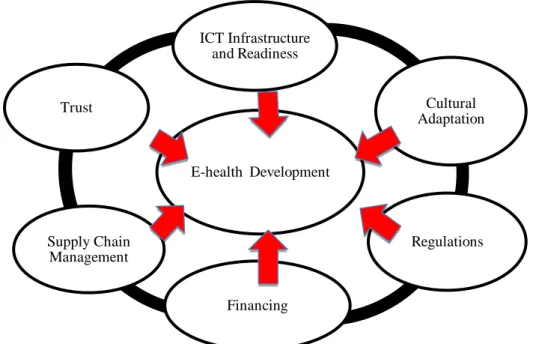
The results of this research, emphasize significant contribution of information communication technology infrastructure readiness, and governmental regulations in a country for e-health development and implementation. The study also shows that as the level of trust to electronic applications for healthcare increases, e-health development and implementation will increase.
Another result is the requirement of cultural adaptation of related e-health stakeholders such as clinicians, healthcare professionals and patients for an impactful e-health development. This research also guides in understanding the positive effects of financing and supply chain management, on e-health development and implementation in that selected country, based on user insights.
This study is an inventive comparative evaluation of user perspectives by analyzing clinicians’ views versus information technology healthcare professionals’ views, on expected positive outcomes of e-health for the country.
This research study also presents a genuine user foresight for healthcare e-commerce approach and buying criteria of users, providing guidance for the healthcare industry.
Key Words: E-health, User Insights, Emerging Markets, E-health Development Model
iv
YÜKSELEN DÖRT ÜLKEDE; TÜRKİYE, SUUDİ ARABİSTAN KRALLIĞI, BİRLEŞİK ARAP EMİRLİKLERİ VE MISIR, E-SAĞLIK GELİŞİM ZORLUKLARI VE BEKLENEN KULLANIM YETKİNLİKLERİNİN
MUKAYESELİ SAHA ÇALIŞMASI
Özet
Sağlık sektöründe, e-sağlık kurulum ve kullanımı, genel olarak sağlık uygulamalarının gelişmesinde büyük bir potansiyele sahiptir.
E-sağlık kullanımı, erişim, finansman ihtiyacı, kaynak kısıtlılığı ve yetkin sağlık profesyonellerinin eksikliği nedeniyle, sağlık ve medikal hizmetlerde pekçok zorluk yaşanan, gelişmekte olan ülkelerde daha çok önem kazanmaktadır.
Her ne kadar e-sağlığın sağlık sistemine getireceği bu etkinlikler pekçok sağlık paydaşı tarafından kabul görse de, halen sağlık profesyonelleri, hükümet yetkilileri, doktorlar, sağlık çalışanları ve hastalar gibi kullanıcılar arasında e-sağlık kurulum ve kullanımı için bir fikir birliği bulunmamaktadır.
Ayrıca e-sağlık, sağlık tedarikçileri ve hastalar için, sağlıkta alınan kararlarda iyileştirme, hız ve enformasyon doğruluğu sağlasa da, e-sağlık yatırım ve kurulum kararlarında halen zorluklar bulunmaktadır.
Bu zorluklar e-sağlık kurulum ve kullanımı için devlet girişimleri olan yükselen ülkelerde daha çok öne çıkmaktadır. Bu saha çalışması, seçilen dört yükselen ülkede; Türkiye, Suudi Arabistan Krallığı, Birleşik Arap Emirliği ve Mısır’da, e-sağlık kullanım ve gelişim zorlukları ile olası adaptasyon yetkinliklerini, kullanıcı görüşleriyle değerlendirerek bilgiye özgün katkı sunmaktadır.
Bu araştırma, seçilmiş ülkeler arasında, e-sağlık uygulamalarının benzerlik ve farklılıklarını karşılaştırarak orijinal bir yaklaşım göstermektedir. Çalışma aynı zamanda, bu pazarlarda e-sağlık donanımlarının etkin gelişimi için mevcut zorluklara yeni bir çözüm modeli ortaya koymaktadır.
v
Bu özgün model, seçilmiş olan ülkelerde Sağlık Bakanlığı yetkilileri ve sağlık profesyonelleriyle yapılan saha araştırması ve yüz yüze görüşmelerin neticelerine dayandırılmıştır.
Araştımanın sonuçları o ülkedeki e-sağlık gelişimi ve kurulumunda bilişim teknolojileri altyapısının hazırlığı ve regülasyonların önemini vurgulamaktadır. Bu çalışma, aynı zamanda sağlıkta elektronik uygulamalara güven seviyesi arttıkça e-sağlık gelişimi ve kurulumunun artacağını göstermektedir. Bir diğer sonuç, klinisyenler, sağlık profesyonelleri ve hastalar gibi sağlık paydaşlarının, etkin e-sağlık gelişiminde, kültürel adaptasyonunun gerekliliğidir.
Bu araştırma, seçilmiş olan ülkelerde, hasta görüşleri doğrultusunda, finansman ve tedarik zinciri yönetiminin, e-sağlık gelişim ve kurulumunda pozitif etkilerini anlamak bakımından önemli veriler sunmaktadır.
Bu çalışma, klinisyenler ve bilişim teknolojileri sağlık profesyonellerinin e-sağlığın ülke için beklenen pozitif katkılarına dair mukayeseli görüşlerinin orijinal bir değerlendirmesidir.
Bu araştırma, sağlıkta e-ticarete yaklaşım ve müşteri satın alma kriterlerlerini, özgün müşteri öngörüleriyle irdelemektedir.
Anahtar Kelimeler: E-Sağlık, Kullanıcı Öngörüleri, Yükselen Pazarlar, E-Sağlık Gelişim Modeli
vi
Acknowledgements
Ph.D. is a long way with lots of learnings, dedication, time and efforts. There are many people who guided and supported me on this journey. First of all, I would like to thank to Prof. Murat Ferman, my major professor and dissertation supervisor. It is a great honor to know and work with Prof. Ferman.
I also thank to Prof. Mehmet Emin Karaaslan, to Prof. Saygın Eyüpgiller and to Associated Prof. Mısra Çağla Gül who contributed much to the development of this research starting from the early stages of my dissertation work. Special thanks to Prof. Esra Nemli Çalışkan and to Prof. Emrah Cengiz for guiding me with their valuable feedbacks.
Many thanks to Dr. Mahir Ülgü, General Manager, Department of Health Informatics, Ministry of Health Turkey; to Dr. Zaki Al Zaher and to Dr. Hamza Al Katranji from King Faisal Specialist Hospital, Dammam, Kingdom of Saudi Arabia; to Prof. Dr. Abdulkadir Msaddi from Neuro Spine Hospital, UAE; and to Prof. Dr. Atef Hanna from University Hospital of Cairo for their entire guidance and close support during this field study.
I also would like to thank to all participant clinicians and healthcare professionals who have contributed to this research study with their valuable insights.
Finally, I would like to thank to my decent family, who have always been very supportive and encouraging. I thank to my husband Vedat, to my mother Neslihan and to my daughter Zeynep, for their entire patience and understanding. Lastly I thank to my colleagues from General Electric Healthcare for their entire cooperation in the selected countries of this field research.
vii
Table of Contents
Abstract ii
Özet iv
Acknowledgements vi
Table of Contents vii
List of Tables ix
List of Figures xiii
List of Abbreviations xiv
Dedication xvi
1 CORE CONCEPTS OF E-HEALTH 1
1.1 Digital Technologies in Healthcare; Future Trends and Challenges
1
1.2 Definition of E-health 4
1.3 History of Digital Technologies in Healthcare 14
1.4 E-health Pros and Cons 16
1.5 Global E-health Initiatives 26
2 OBJECTIVES AND SCOPE OF THE STUDY 32
2.1 Research Question and Objective 32
2.2 Proposed Conceptual Framework 32
2.3 Scope of the Study 37
2.4 E-Health Market Dynamics; Egypt, Kingdom of Saudi Arabia, Turkey and United Arab Emirates
38 2.4.1 E-Health Initiatives in Kingdom of Saudi Arabia 38 2.4.2 E-Health Initiatives in United Arab Emirates 41
2.4.3 E-Health Initiatives in Egypt 42
viii
3 RESEARCH DESIGN AND METHODOLOGY 46
3.1. Research Design 46
3.1.1 Selection of Research Countries 47
3.1.2 Selection of Users 49 3.1.3 User Questionnaires 50 3.2. Research Methodology 51 3.2.1 Research Model 51 3.2.2 Research Hypotheses 51 3.2.3 Hypotheses Testing 52
3.2.4 Analysis of Differences Between Countries 56
4 RESULTS OF THE STUDY 65
4.1 Testing the Model 65
4.2 Differences Between Selected Countries Based on User Insights
66
4.3 Comparative Country Analysis 71
4.3.1 Rank of E-health Challenges 71
4.3.2 Outcomes of E-health 72
4.3.3 Use of an Alternative Ranking for Comparative Analysis: Borda Count Method
74
4.4 User Approach to Healthcare E-commerce and User Buying Criteria
79
4.5 Healthcare Professionals’ Foresights for Big Data in Healthcare
97
4.6 Limitations of the Study and Recommendations for Future Research
99
References 103
Appendix A Questionnaire I 112
Appendix B Questionnaire II 117
Appendix C UAE Evaluations, Borda Count Method 123
Appendix D Egypt Evaluations, Borda Count Method 128
Appendix E Turkey Evaluations, Borda Count Method 133
Appendix F Saudi Arabia Evaluations, Borda Count Method
Curriculum Vitae
138 143
ix
List of Tables
Table 2.1 E-health Strategic Objective, Kingdom of Saudi Arabia 40 Table 2.2 E-health Strategy Target State; Ministry of Health,
Kingdom of Saudi Arabia
41
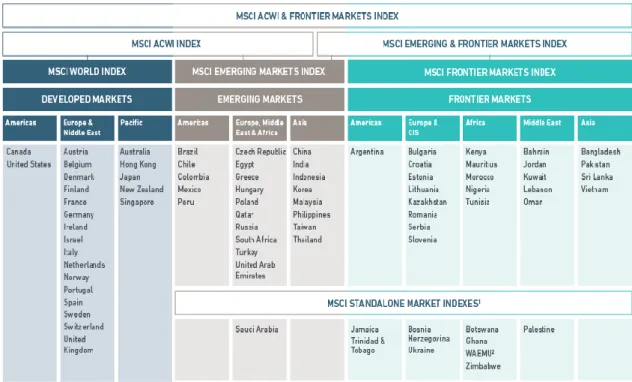
Table 3.1.1 Morgan Stanley Capital International , Emerging and Frontier Markets Index
49
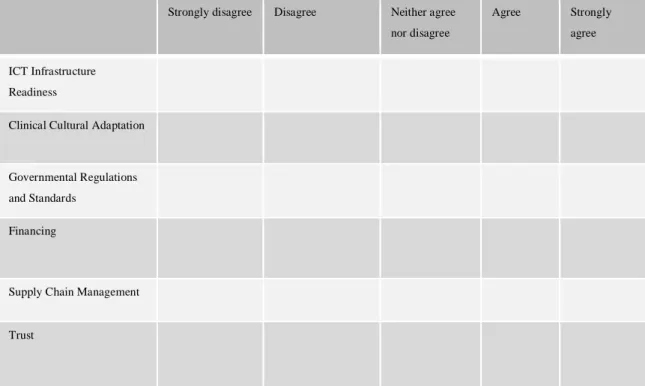
Table 3.2.1 Question 3 of the Questionnaires: State of Use of E-health Practices
52
Table 3.2.2 Question 4 of Questionnaires: Major Drivers of E-health 53
Table 3.2.3 ANOVAa 53
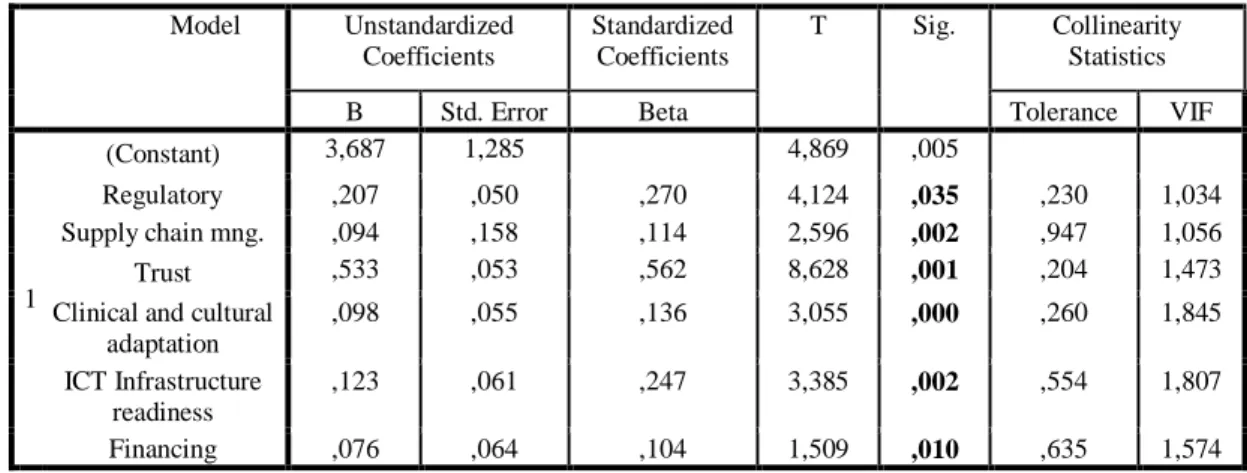
Table 3.2.4 Analysis of Collinearity 54
Table 3.2.5 Hypotheses Test; Final Results 55
Table 3.2.6 Model Summaryb 55
Table 3.2.7 Test of Homogeneity of Variances, Regulatory 56
Table 3.2.8 ANOVA, Regulatory 57
Table 3.2.9 Multiple Comparison, Dependent Variable; Regulatory, Scheffe
57
Table 3.2.10 Test of Homogeneity of Variances, Supply Chain Management
58
Table 3.2.11 Robust Tests of Equality of Means, Supply Chain Management
58
Table 3.2.12 Test of Homogeneity of Variances, Trust on Online Business in Healthcare
59
Table 3.2.13 ANOVA, Trust on Online Business in Healthcare 59 Table 3.2.14 Multiple Comparisons, Dependent Variable, Trust on
Online Business in Healthcare, Scheffe
x
Table 3.2.15 Test of Homogeneity of Variances, Financing 60
Table 3.2.16 ANOVA, Financing 60
Table 3.2.17 Test of Homogeneity of Variances, Clinical and Cultural Adaptation
61
Table 3.2.18 ANOVA, Clinical and Cultural Adaptation 61
Table 3.2.19 Multiple Comparisons, Dependent Variable: Clinical and Cultural Adaptation, Scheffe
62
Table 3.2.20 Test of Homogeneity of Variances, ICT Infrastructure Readiness
62
Table 3.2.21 ANOVA, ICT Infrastructure Readiness 63
Table 3.2.22 Multiple Comparison, Dependent Variable: ICT Infrastructure Readiness, Scheffe
63
Table 4.2.1 Descriptives, Regulatory 67
Table 4.2.2 Descriptives, Trust on Online Business in Healthcare 68 Table 4.2.3 Descriptives, Clinical and Cultural Adaptation 69
Table 4.2.4 Descriptives, ICT Infrastructure Readiness 70
Table 4.3.1 Major Challenges of E-health Development; Insights of Healthcare IT Professionals and Ministry of Health Executives
71
Table 4.3.2.1 Analysis of Outcomes of E-health; Insights of Healthcare IT Professionals and Ministry of Health Executives
72
Table 4.3.2.2 Analysis of Outcomes of Ehealth; Insights of Clinicians 73 Table 4.3.3.1 Outcomes of E-health: Borda Analysis, UAE Clinicians 75 Table 4.3.3.2 Outcomes of E-health: Borda Analysis, UAE, Healthcare
IT Professionals
75
Table 4.3.3.3 Outcomes of E-health: Borda Analysis, Egyptian Clinicians
76
Table 4.3.3.4 Outcomes of E-health: Borda Analysis, Egyptian Healthcare IT Professionals
76
Table 4.3.3.5 Outcomes of E-health: Borda Analysis, Turkish Clinicians
77
Table 4.3.3.6 Outcomes of E-health: Borda Analysis Turkish Healthcare IT Professionals
xi
Table 4.3.3.7 Outcomes of E-health: Borda Analysis, Saudi Clinicians 78 Table 4.3.3.8 Outcomes of E- health: Borda Analysis, Saudi Healthcare
IT Professionals
78
Table 4.4.1 Healthcare E-commerce: User Online Buying Behaviour/ Pharmaceuticals
79
Table 4.4.2 Healthcare E-commerce: User Online Buying Behaviour/ Diagnostic Devices
80
Table 4.4.3 Perceptions of Clinicians for Online Supply of Healthcare Consumables
80
Table 4.4.4 Perceptions of Healthcare IT Professionals for Online Supply of Healthcare Consumables
81
Table 4.4.5 Country Comparison: User Approach in Healthcare E-commerce
82
Table 4.4.6 Healthcare E-commerce; Buying Criteria of Users for Diagnostic Devices, UAE
82
Table 4.4.7 Healthcare E-commerce; Buying Criteria of Users for Diagnostic Devices, Egypt
83
Table 4.4.8 Healthcare E-commerce; Buying Criteria of Users for Diagnostic Devices, Turkey
84
Table 4.4.9 Healthcare E-commerce; Buying Criteria of Users for Diagnostic Devices, Kingdom of Saudi Arabia
85
Table 4.4.10 Healthcare E-commerce, Borda Analysis; Buying Criteria of Users for Diagnostic Devices, UAE
86
Table 4.4.11 Healthcare E-commerce, Borda Analysis; Buying Criteria of Users for Diagnostic Devices, Egypt
87
Table 4.4.12 Healthcare E-commerce, Borda Analysis; Buying Criteria of Users for Diagnostic Devices, Turkey
88
Table 4.4.13 Healthcare E-commerce, Borda Analysis; Buying Criteria of Users for Diagnostic Devices, Saudi Arabia
89
Table 4.4.14 Top Five Requirements for Healthcare E-commerce in the Future; Clinicians’ Insights
90
Table 4.4.15 Top Five Requirements for Healthcare E-commerce in the Future; Healthcare IT Professionals’ Insights
xii
Table 4.4.16 Healthcare E-commerce, Borda Analysis; Top Five Requirements for Healthcare E-commerce in the Future, UAE Results
92
Table 4.4.17 Healthcare E-commerce, Borda Analysis; Top Five Requirements for Healthcare E-commerce in the Future, Egypt Results
93
Table 4.4.18 Healthcare E-commerce, Borda Analysis; Top Five Requirements for Healthcare E-commerce in the Future, Turkey Results
93
Table 4.4.19 Healthcare E-commerce, Borda Analysis ; Top Five Requirements for Healthcare E-commerce in the Future, Kingdom of Saudi Arabia Results
94
Table 4.4.20 Evaluation of a Need for Healthcare E-Commerce; Clinicians’ View
94
Table 4.4.21 Evaluation of a Need for Healthcare E-commerce Use; Healthcare IT Professionals’ View
96
Table 4.5.1 Trends in Big Data in Healthcare; Insights of Healthcare IT Professionals
97
Table 4.5.2 Reasons of Increasing Trend in Use of Big Data in Healthcare ; Insights of Healthcare IT Professionals
98
xiii
List of Figures
Figure 1.1 Telemedicine, E-health, Tele-health,Telecare and M-health
8
Figure 2.1 Proposed Conceptual Model of Framework, Assessing a Country’s E-health Development
37
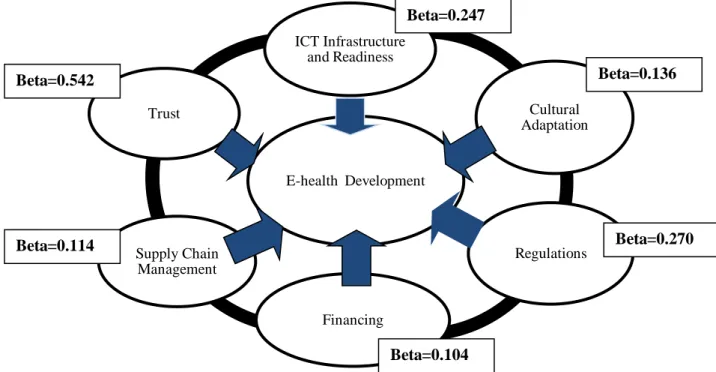
Figure 4.1 A Framework Model for Assessing E-health Development and Utilization Capabilities in a Country, Based on User Insights
xiv
List of Abbreviations
AMIA American Medical Informatics Association
B2B Business to Business
B2C Business to Consumer
CHI Consumer Health Informatics
CDS Clinical Decision Support
CPOE Clinical Computerized Physician Order Entry
CT Clinical Terminology
DICOM Digital Imaging and Communications in Medicine
D2D Doctor to Doctor
DHA Dubai Health Authority
E-commerce Electronic Commerce
EIPAHA European Innovation Partnership on Active and Healthy Ageing
EHR Electronical Health Record
EMR
E-procurement FMIS
Electronic Medical Record Electronic Procurement
Family Medicine Information System
FTSE Financial Times Stock Exchange
HAAD Abu Dhabi Health Authority
HCIT Healthcare Information Technology
HCP Healthcare Professional
HIE HIMMS
Health Information Exchange
Healthcare Information and Management Systems Society HIT
IDC
Health Information Technology International Data Cooperation
ICT Information and Communicatıon Technologies
KSA Kingdom of Saudi Arabia
xv
MDDS M-Health
Medical Decision Support System Mobile Health
MSCI Morgen Stanley Capital International
NHS National Health System
NHR National Health Record
NHII National Health Information Infrastructure
PDA Personal Digital Assistant
PHR Personal Health Record
P2D Patient to Doctor
SAHI Saudi Association for Health Information
SWD TM UAE
Staff Working Document Tele Medicine
United Arab Emirates
xvi
1
CHAPTER 1
CORE CONCEPTS OF E-HEALTH
1.1 Digital Technologies in Healthcare; Future Trends and Challenges
Innovation and new technology adoption are crucial for better and faster outcomes in healthcare. In that respect technology has great potential to improve the quality and safety of healthcare. This makes the utilization of the information technology for healthcare and healthcare related services meaningful.
Looking at developments of technology for healthcare, it can be understood that many technologies evolve for healthcare over time. Some of them have either little or no impact today whereas some technologies may progress more rapidly from development to discovery impacting on patient healthcare. The Deloitte Healthcare and Life Sciences Predictions Report analyzes healthcare trends for the future, which predicts that, informed and demanding patients will be partners in their own healthcare as well as the era to be more of digitalized medicine with new business models by 2020 (Deloitte, 2015a, p.4).
The rising demand and costs of healthcare, the need for more of qualified healthcare professionals, global technology requirements for faster and more accurate diagnostic and treatment outcomes, challenges of accessability to rural areas encourage more use of digital technologies to improve and provide a more efficient healthcare service management (Deloitte,2015a). In that respect, e-health related practices are expected to affect those healthcare services and outcomes positively by contributing to the effectiveness and the efficiency of the overall healthcare ecosystem.
The study of Elbert et al. (2014, para 5) states that, the assessments on e-health interventions in patients with physical illnesses has expanded considerably in latter years and most of this related research indicates that e-health is cost-effective.
2
E-health with its broadest definition, refers to the use of information technologies in healthcare services. E-health as a concept is a very broad one and acts as an umbrella to cover many related sub-concepts within its content such as m-health (mobile health), tele-health, telemedicine, and healthcare e-commerce. Today, healthcare systems note the value of existing and new data sources such as electronic health records, patient provided data creating governance to allow data access and sharing, form data partnerships and change on how care is delivered on the basis of data insights (Deloitte, 2015c, p.5).
The wearables and m-health applications are expected to have a crucial role for healthcare in the future as measuring quality of life will have more significance than only measuring clinical indicators. Consumers and providers integrate information from multiple devices smoothly to create a comprehensive view of the individual. The new clinician/patient partnership is based on improved awareness, self management and prevention strategies, replacing the conventional approach (ibid).
According to the Deloitte Government 2020 report (Deloitte, 2015b), two words best describe the future health care trend: healthcare, everywhere. Mobile health applications, telemedicine, m-health, remote monitoring, and ingestible sensors produce rich streams of data, allowing clinicians and patients themselves to track every heartbeat, sneeze or symptom in real time (ibid).
The trend in healthcare is aimed towards more use of information technology handling healthcare data, decision support softwares for the clinicians, virtual hospital environments and availabilities for remote care. The expected growth is use for smartphone healthcare applications, point of care, lab on a chip technologies and tendency towards more of personalized medicine. It encourages tailor made technology rather than a one size fits all approach by lab on a chip turning smart phones into mobile disease clinics (Weiler, 2015, para.1). In many servicing and industrial fields, ICT (Information Communication Technologies) has been applied due to complications in the fields of health and treatment. On the other hand, effectiveness of electronic services has always been under question. ICTs are potentially powerful instruments to strengthen health systems with innovations ranging from electronic health records to transmission of clinical data (Hossein, 2012, p.49).
3
These technologies show great promise in low and middle income countries (LMICs) whose health systems face severe financial, infrastructural, technical and human resource constraints. This is evident in the growing number of health service providers beginning to focus on mobile technologies to improve access and quality of health services (Schweitzer and Synowiec, 2012, p.74). Even if the trend in healthcare is becoming more aimed towards digital health, building a digital infrastructure is not easy. There are some major pillars such as technology infrastructure, know-how and regulations. Today it is also recognized that patient privacy is one of the major concerns for e-health.
In that respect handling healthcare data becomes particularly crucial. One of the key challenges is with the proper and integrated implementation of information technology towards 2020 for the healthcare sector. The internationally recognized interoperability standards emerge, which consecutively enable the adaptation of electronic health records integrated. This is still one of the key area that requires improvement (Deloitte, 2015c).
There are great innovations and trends surrounding digital health that are making a significant impact on e-health. Traceability systems support document activities along the patient pathway. Decision Support Softwares will help doctors conforming them to best practices as the volume of information escalates actively; medical decision- support systems (MDDS) are computer systems designed to guide physicians or other healthcare professionals in making clinical decisions (Conejar and Kim, 2014, p.237).
‘Virtual Hospital Environments’ with patients and professional advocates are used to improve clinical skills through the use of teamwork. New advances on Web technologies provide powerful tools for online information retrieval. This provides a possibility to extend the services of e-health by enabling patients, patients’ famililies and the community at large to participate more actively in the process of health education (Anshari, 2012, p.1). Those new beneficial technologies mentioned above, materialized in different parts of the world mostly in advanced countries and in highly developed hospitals. On the other hand the challenges of full integration and smooth operation still remain. Today it is known that even if some developed countries have better implementation and utilization of e-health, there are many developing countries that are confronted with challenges, mainly due to lack
4
of regulations and technological infrastructure. ‘Developing Countries’ are experiencing many problems in the healthcare and medical services such as financial needs, resources, proficiency and lack of physicians and other healthcare professionals (Khalifehsoltani and Gerami, 2010, p.264).
Governmental initiatives to finance, prioritize and encourage digital technologies in healthcare are other challenges impacting the growth and the implementation of the whole process of e-health in a country.
Clinical cultural adaptation of related e-health stakeholders such as doctors, nurses and other healthcare professionals is also critical in the roadmap of e-health implementation impacting the outcomes and success. According to Doktor (2005), when introducing a new technology that changes the core processes of an organization, such as an e-health initiative, it is important that the structural design and culture of the organization is aligned with the predominant national culture in which the organization is entrenched. The literature survey reflects that there is still limited research study in the arena of e-health especially in the developing countries to describe the major challenges for implementation and probable outcomes of utilization.
This original field study evaluates the major challenges and expected outcomes of e-health utilization in selected emerging markets based on user insights. This study also presents e-health practices and its possible adaption capabilities in four selected emerging countries; Turkey, Kingdom of Saudi Arabia, United Arab Emirates and Egypt with a new framework of a solution model.
The next sections explore core concepts of e-health, evaluate pros and cons and bring insights for global initiatives. Further, in chapter 3 the governmental e-health efforts in Turkey, Kingdom of Saudi Arabia, United Arab Emirates and Egypt are presented. Turkey and Kingdom of Saudi Arabia are more advanced with the implementation whereas UAE and Egypt are more at the initial stages.
1.2 Definition of E-health
E-health is a broad concept where various definitions are found in literature. In general terms, e-health is the use of information and communications technologies in healthcare.
5
A still valid and referred definition is from Eysenbach. In his article, Eysenbach (2001, para.3) defines e-health as an emerging field in the intersection of medical informatics, public health and business, referring to health services and information delivered or improved through the internet and related technologies. Eysenbach (2001) mentions that e-health in a broader sense, indicates not only a technical development, but also a state-of-mind, a way of thinking, an attitude, and a commitment for networked, global thinking, to improve health care locally, regionally, and worldwide by using information and communication technology. Eysenbach (2001) in his article also states that even e-health as a term was rarely in use before 1999. E-health then started being used to define not only "internet medicine", but also practically everything related to computers and medicine (ibid). The term was first used by industry leaders and marketers rather than academics. The industry leaders and marketers created and used this term in line with other "e-words" such as e-commerce, e-business, e-solutions, and so on, in an attempt to explain the promises, principles, excitement (and hype) around e-commerce (electronic commerce) to the health arena, and to describe the new possibilities the internet is opening up to the area of health care (Raman and Tewari, 2012). According to Raman and Tewari (2012, p.33), Intel for example defines e-health as ‘a coordinated effort undertaken by leaders in health care and hi-tech industries to fully utilize the benefits available through the merge of the internet and health care’.
As the internet created new opportunities and challenges to the traditional health care information technology industry, the use of a new term to address these issues seemed appropriate. These ‘new’ challenges for the health care information technology industry were mainly:
(1) the capability of consumers to interact with their systems online (B2C = ‘business to consumer’);
(2) improved possibilities for institution-to institution transmissions of data (B2B = ‘business to business’);
(3) new possibilities for peer-to-peer communication of consumers (C2C = ‘consumer to consumer’) (ibid).
6
Liezl van Dyk, (2014, p.1279) in his article, published in journal of Enviromental Research Public Health, adopted the WHO (2005) e-health definition in his article as ‘the cost‐effective and secure use of ICT in support of health and health related fields, including health‐care services, health surveillance, health literature, and health education, knowledge and research’.
Today even if there is a defined and agreed content by many researchers and industry experts, there are still overlaps and outliers of the concepts to define the full framework of the definition and scope of e-health. There are many studies in literature where terminologies like telemedicine, tele-health, e-health and even health e-commerce being referred in an interchangeable fashion.
In that respect, Liezl van Dyk (2014, p.1280) claims that the terms e-health and tele-e-health are most often used in an identical manner. On the other hand, the difference between these two concepts is that e-health applications are not limited to healthcare over a distance, as is the case with tele-health.
There are other studies in literature referring to tele-health. Bashshur et al. (2011, p.487), explain that tele-health relates to telemedicine the same way that health relates to medicine. Sood et al. (2007), after revising 104 peer-reviewed definitions for telemedicine, concluded that telemedicine is a subset of tele-health. According to Bashshur et al. (2011), Bennet et al.(1978) used the term tele-health to extend the scope of telemedicine by incorporating a wider set of activities, including patient and provider education.
Telemedicine, a term originated in the 1970s, which literally means “healing at a distance” (Strehle and Shabde, 2006, p.956), signifies the use of information communication technologies (ICT) to improve patient outcomes by increasing access to care and medical information.
Recognizing that there is no one definitive definition of telemedicine, the World Health Organization (WHO) has adopted the following broad description for telemedicine; ‘The delivery of health care services, where distance is a critical factor, by all health care professionals using information and communication technologies for the exchange of valid information for diagnosis, treatment and prevention of disease and injuries, research and evaluation, and for the continuing
7
education of health care providers, all in the interests of advancing the health of individuals and their communities’ (WHO, 1998, p.10).
According to the WHO (1998) report, many definitions highlight that telemedicine is an open and constantly evolving science, as it incorporates new advancements in technology, as well as responds and adapts to the changing health needs and contexts of societies. Some distinguish telemedicine from tele-health with the former restricted to service delivery by physicians only, and the latter signifying services provided by health professionals in general, including nurses, pharmacists, and others. The WHO (2010a, p.8-9) report mentions that telemedicine and tele-health are synonymous and are used interchangeably. There are four elements that are critical to telemedicine:
1. Its purpose is to provide clinical support.
2. It is intended to overcome geographical barriers, connecting users who are not in the same physical location.
3. It involves the use of various types of ICT.
4. Its goal is to improve health outcomes (ibid).
Telemedicine is a subset of tele-health. Tele-health is an expansion of telemedicine, but unlike telemedicine, which has a narrower focus on the curative aspect, it encircles the preventative, promotive, as well as the curative aspects of the field (Bashshur et al.2011; Sood et al. 2007).
Within the scope of e-health, it can be noticed that mobile health (m-health) is referred as a subsegment. M-health is another concept, appeared relatively recently in the literature on e-health. M-health refers to e-health applications that are accomplished with the help of mobile technology (Dyk, 2014, p.1281).
The figure below, presented by Liezl Van Dyk (2014) in his article ‘a Review of Telehealth Service Implementation Frameworks’, guides for a better understanding of concepts around e-health;
8
Figure 1.1 Telemedicine, E-health, Tele-health, Telecare and M-health (Dyk, L.V., 2014 p. 1282)
In the scope of this study mainly the WHO definitions are taken as reference. One of the latest and recent definitions from WHO in the glossary report for trade, foreign policy, diplomacy and health defines e-health as the transfer of health resources and health care by electronic means (WHO, 2016, p.2). The report mentions that e-health includes the following three main areas:
The delivery of health information, for health professionals and health consumers, through the internet and telecommunications.
Using the power of IT and e-commerce to improve public health services, as an example through the education and training of health workers.
The use of e-commerce and e-business practices in health systems management.
E-health provides a new method for using health resources such as information, money, and medicines and in time should help to improve efficient use of these resources. The Internet also contributes to a new medium for information circulation, and for interaction and collaboration among institutions, health professionals, health providers and the public (WHO, 2016).
According to the WHO Report (WHO, 2016), e-commerce is referred as the production, distribution, marketing, sale or delivery of goods and services by
9
electronic means. An example of this is conducting business over the internet. The reduced costs, the amount of information available and the speed of doing business on-line are creating a revolution in the way that business is conducted. The same report mentions that tele-health includes surveillance, health promotion and public health functions. Tele-health is broader in definition than tele-medicine as it includes computer-assisted telecommunications to support management, surveillance, literature and access to medical knowledge. Tele-medicine is the use of telecommunications to diagnose and treat disease and ill-health. Telematics for health is a WHO composite term for both tele-medicine and tele-health, or any health related activities carried out over distance by means of information communication technologies (WHO, 2016, p.2). The European Commission ‘E-health Policy Report’ (European Commission, 2016, p.9), defines e-health as the use of modern information and communication technologies to meet needs of citizens, patients, healthcare professionals, healthcare providers, as well as policy makers. This report refers to tools and services using information and communication technologies (ICTs) that can improve prevention, diagnosis, treatment, monitoring and management. E-health can benefit the entire community by improving access to care and quality of care by making the health sector more efficient. Further it includes information and data sharing between patients and health service providers, hospitals, health professionals and health information networks; electronic health records; telemedicine services; portable patient-monitoring devices, operating room scheduling software, robotized surgery and research on the virtual physiological human (ibid).
E-health emerged early in the 21st century and is an all-encircling term for the combined use of electronic information and communication technology in the health sector (Harrison et al.,2006, p.283). This term refers to certain technologies used for clinical, educational, research, and administrative purposes, both at the local site and across wide geographic regions. The use of e-health has increased networking, encouraged global thinking, and improved health care on local, regional, and national levels (Cashen et al., 2004).
The studies of Cashen et al.,(2004); Deluca and Enmark (2000); Kind et al., (2004); and Kwankam (2004), mention that, the term e-health broadly refers to any
10
electronic exchange of health-related data collected or analyzed through an electronic connectivity for improving efficiency and effectiveness of health care delivery. Therefore, it is often used to describe basically everything related to computers and medicine.
Hence, within the scope of this study e-health is the blanket term to cover mainly the topics below acting as the main concept of digital and connected health for healthcare business:
Electronic Medical Records (EMR) /Electronic Health Records (EHR)
Tele-health and its subsegment telemedicine
Health Information Technology (HIT) systems
Consumer health IT data
Mobile Health (m-health)
Big data systems used in digital health
Healthcare e-commerce
The electronic health record (EHR) is an emerging concept defined as a continuous collection of electronic health information about individual patients and populations (Gunter and Terry, 2005, para.2). Primarily, it will be a mechanism for integrating health care information currently collected in both paper and electronic medical records (EMR) for the purpose of improving quality of care. Although EHR is a wide-area, cross-institutional, even national construct, the electronic records landscape also includes some distributed, personal, non-institutional models (ibid). The electronic health records (EHR) and electronic medical records (EMR) essentially cover patient records, prescribing, clinical administration systems, e-registration or e-bookings, digital imaging and archiving systems. Reid et al. (2005, chapter 2), state that EHRs are the infrastructure for a well structured, regulated, interoperable electronic national health records (ENHR). According to Reid et al., electronic national health records are crucial for entire e-health structure and to build that, firstly a national health information infrastructure must be developed (ibid).
The national health information infrastructure (NHII) is defined as ‘a set of technologies, standards, applications, systems, values, and regulations that support all aspects of individual health, health care, and public health’ (Reid et al., 2005). It
11
covers an information network based on internet protocols, common standards, timely knowledge transfer, and transparent government processes with the capability for information flows across three dimensions:
(1) personal health, to support individuals in their own wellness and health care decision making;
(2) health care providers, to ensure access to complete and accurate patient data around the clock and to clinical decision support systems; and
(3) public health, to address and track public health concerns and health education campaigns (Reid et al., 2005).
Another term that is referred within the vast e-health scope is the health information technology (HIT). As referred in the US governmental health and resource public website, health information technology (HIT) is defined as ‘the application of information processing involving both computer hardware and software that deals with the storage, retrieval, sharing, and use of health care information, data, and knowledge for communication and decision making’ (USA Department of Human Resources, 2016). Applications of health IT include the electronic health record (EHR), the personal health record (PHR), computerized physician order entry (CPOE), and clinical decision support (CDS). In addition, health information exchanges (HIEs) are being developed to support sharing of information electronically among health care providers ( ibid).
Another significant contributor to e-health is consumer health informatics (CHI), which is an emerging field that utilizes technology to provide health information in order to enhance health-care decision making by the public. Consumer informatics applications include thousands of health-oriented websites and hundreds of thousands of mobile health applications that are becoming increasingly popular (USA Department of Human Resources, 2016). Within the big scope of e-health, it is important to note the essence of clinical health informatics. According to ‘The American Medical Informatics Association’ (AMIA), clinical health informatics is the field where clinical informaticians transform health care by analyzing, designing, implementing, and evaluating information and communication systems that enhance individual and population health outcomes, improve patient care, and strengthen the clinician-patient relationship (Gardner, 2009, P.153). Clinical health
12
IT systems refer to such as radiology, nursing health IT systems, computer-assisted diagnostics, medical imaging, and surgery training and planning systems that help physicians to provide more accurate diagnoses and treatments (ibid).
Big data is another crucial terminology that is linked with e-health. In healthcare, the complexity of big data analysis also arises from combining different types of information. Beginning with the collection of individual data elements and moving to the fusion of multiple data sets, the results can reveal entirely new approaches to treating diseases (May, 2014, p.1298).
As referred by the European Commission ‘E-health and Health Technology Assessment’ report, ‘Big Data’ surrounds information from electronic health care records, social media, patient summaries, genomic and pharmaceutical data, test results, claims, telemedicine, mobile applications, home monitoring, clinical trials, sensors and information on well-being, behaviour and socioeconomic indicators (European Commission, 2014). The last two decades have seen an explosion in big data throughout the health-care value chain, as well as the beginning of new platforms, tools, and methodologies in storing, structuring, and analysing big data. Important developments include the use of genomic data in drug discovery, the sharing of clinical-trial data, the use of electronic healthcare records (EHRs), and the increased availability of data from m-health applications, patient registries, and social media (Szlezak, 2014, p.492). Bernstein (2014) explains that the concept of data fusion is gaining further implication by the collection of individual data elements that arise the fusing together of multiple data sets.
Another concept that is under the big scope of e-health and also within the context of this research study is the healthcare e-commerce. In general terms e-commerce is the process of buying and selling, exchanging products, services and information via computer networks (Rainer Jr. and Casey, 2011, chapter 7). Currently the use of e-commerce in healthcare is very limited. The most common uses are keeping electronic medical records, the transmission of information and telemedicine. Making medicine accessible online not only benefits clinicians and their patients, it could also improve relationships between hospitals, clinics, suppliers and customers. Due to the rapid progress in technology, the expectations of consumers for quality healthcare are high. Hospitals, clinics and other healthcare providers have to deal with consumer expectation while doing it in the most cost-efficient way (Chee and Yazdanifard, 2011, p.15). Kearns et al., (2002) highlighted the
13
significant impact e-commerce could have on the cost, efficiency, and quality of the overall management and delivery of healthcare services.
According to Chee and Yazdanifard (2011, p.16), as e-commerce has not been fully taken advantage of and utilized to it’s full potential, due to people not being able to completely leave tradition and accept new technology, the key to the success lies primarily in the full participation of consumers and healthcare providers; Healthcare: B2B (business to business). B2B healthcare e-commerce involves transactions and the exchange of information among vendors, hospitals, insurance agencies, state and federal regulators, and doctors’ offices where patients, one of the end consumers are not directly involved. A beneficial way to begin using e-commerce is for hospitals, clinics, pharmacies and other healthcare institutions to merge e-commerce and supply chain management (ibid).
Douglas Goldstein (2000, chapter 3) in his book ‘The New Health Care e-Consumer and e-Patient’ provides a different perspective with taking the patient into the picture, by referring to them as e-consumers, taking a much more active role in their healthcare than others have. According to Goldstein (2000), healthcare executives and providers should be aware that the balance of power is shifting, and access to communication and information on the web will forever change passive patients into informed e-consumers who manage their care as they see fit.
Hence, to conclude the core concepts and terminologies around e-health, it is important to understand the large ecosystem where e-health has many stakeholders such as patients, healthcare professionals and healthcare providers, as well as vendors of technology, pharmaceuticals, healthcare equipment and consumables, insurance companies and healthcare policy makers. The entire scope covers from electronic health records building up national health records to healthcare tele-health based on tele-health information technologies, big data management, consumer health informatics and finally healthcare e-commerce to fasten the transactions and exchange of information among vendors.
Today, e-health still has numerous challenges in many countries regarding implementation and use. There are pros and cons in respect to e-health. The economic benefits versus costs are still questionable. More data on the costs and benefits of e-health interventions is required. In the absence of clear proof of its effects, the decision makers may doubt the effectiveness, which in turn, limits
14
investment in, and the long-term integration of e-health services (Bergmo, 2015, para. 1). The following section evaluates the history of e-health development. Furthermore the pros and cons of e-health are investigated.
1.3 History of Digital Technologies in Healthcare
Over the past decade medical imaging has transitioned slowly from the use of analog technologies to the digital technologies. In that respect there are several milestones achieved by technology and related terminologies that should be explained, which are still widely common in today’s health informatics language and communication.
Telemedicine for example is one of the technologies. As the World Health Organization report demonstrates, information and communication technologies (ICTs) have great potential to address some of the challenges faced by both developed and developing countries in providing accessible, cost effective, high-quality health care services and telemedicine uses information and communication technologies to overcome geographical barriers and increase access to health care services (WHO, 1998). This is particularly beneficial for rural and underserved communities in developing countries; groups that traditionally suffer from lack of access to health care.
The WHO report defines telemedicine as "the delivery of health care services, where distance is a critical factor, by all health care professionals using information and communication technologies for the exchange of valid information for diagnosis, treatment and prevention of disease and injuries, research and evaluation, and for the continuing education of health care providers, all in the interests of advancing the health of individuals and their communities” (WHO, 1998, p.10). Historically, telemedicine can be traced back to the mid to late 19th century (Craig and Patterson, 2005, p.3) with one of the first published accounts occurring in the early 20th century when electrocardiograph data were transmitted over telephone wires (Currell, 2000).
Telemedicine, in its modern form, started in the 1960s in large part driven by the military and space technology sectors, as well as a few individuals using readily available commercial equipment (Craig and Patterson, 2005; Currell, 2000).
15
Examples of early technological milestones in telemedicine include the use of television to facilitate consultations between specialists at a psychiatric institute and general practitioners at a state mental hospital (Benschoter, Eaton, and Smith, 1965, p.1159), and the provision of expert medical advice from a major teaching hospital to an airport medical centre (Dwyer, 1973, p.866). Recent advancements in, and increasing availability and utilization of ICTs, by the general population have been the biggest drivers of telemedicine over the past decade, rapidly creating new possibilities for health care service and delivery (ibid).
This has been true for developing countries and underserved areas of industrialized nations (Wootton, Jebamani, and Dow, 2005). The replacement of analogue forms of communication with digital methods, combined with a rapid drop in the cost of information and communication technologies (ICTs), have flared wide interest in the application of telemedicine among health-care providers, and have enabled health care organizations to envision and implement new and more efficient ways of providing care (Craig and Patterson, 2005; Currell 2000).
The introduction and popularization of the internet has further accelerated the pace of ICT improvements, thereby expanding the scope of telemedicine to encircle web-based applications (for example; e-mail, teleconsultations and conferences via the internet) and multimedia approaches (for example; digital imagery and video). These advancements have led to the creation of a rich tapestry of telemedicine applications that the world is coming to use (WHO, 2010a, p.9). A national government study conducted in Australia, showed that "cost-effectiveness of telemedicine and tele-health improves considerably when they are part of an integrated use of telecommunications and information technology in the health sector" (Mitchell, 2000, p.16). This led to the identification of "e-health" as a blanket term, with definitions such as "a new term needed to describe the combined use of electronic communication and information technology in the health sector, the use in the health sector of digital data - transmitted, stored and retrieved electronically for clinical, educational and administrative purposes, both at the local site and at a distance" (Mea, 2001, para 1).
In the study of Mitchell J.(2000, p.16) ‘Increasing the cost-effectiveness of telemedicine by embracing e-health’, e-health was presented as ‘the death of
16
telemedicine’, because in the context of a broad availability of medical information systems, that can interconnect and communicate, telemedicine will no longer exist as a specific field. The same could also be said for any other traditional field in medical informatics, including information systems and electronic patient records. E-health presents itself as a common name for all such technological fields (ibid). Mitchell (1999) also indicated that e-health can be considered to be the health industry's equivalent of e-commerce, and this could be one key for understanding the sense of e-health: just medical informatics and telematics on the shop shelves, a stylish name for something already existing but otherwise difficult to sell.
Allen (2000, p.43), in an editorial remarked a new difference: telemedicine remains connected to medical professionals, while e-health is driven by non-professionals, namely patients (or, in the e-health jargon, consumers) that with their interests drive new services even in the healthcare field-mostly for their empowerment through access to information and knowledge.
Therefore it can be concluded that e-health has evolved over many years starting from very basic telecardiogramme, going through telemedicine to tele-health, and further the improving health information systems opening new arenas for digital fields of connected health. E-health even engages the healthcare e-commerce and m-health globally. The following section aims to look at pros and cons for e-health as it is documented in literature.
1.4 E-health Pros and Cons
Today there is not a complete consensus for the absolute benefits of e-health. Despite a number of efforts to deliver efficient, effective and sustainable e-health systems, e-health systems were not able to display sustainability beyond the pilot phase (Strehle and Shabde, 2006). In resource constrained settings, where both ICT and enabling environments are at the early stage, e-health projects are rarely sustainable, because of inadequate ICT infrastructure, skills and ownership (WHO, 2010b). As mentioned in ‘WHO 2010 report; section a’, in both developing and developed countries, only a few e-health projects managed to sustain themselves once the initial funding ended (WHO, 2010a). The reported challenges in resource constrained environments are associated with patients’ and healthcare workers’ resistance to change, lack of ownership, lack of ICT skills or inadequate human
17
capacity, cultural differences and language barriers, lack of enabling policy environments, weak leadership and coordination, weak ICT infrastructure and services, insufficient financial resources, weak monitoring and evaluation systems and legal issues (WHO, Building Foundations for eHealth, 2006; WHO, report on the second global survey on e-health, 2010a).
However, the full potential and power of e-health will only be realized through greater investments in telecommunications equipment and supporting information technology (Richards, et al., 2005, p.2). For example the use of clinical biometric technology through a personal wearable device allows patients to be monitored at home via a tele-healthcare system (Chun et al., 2005, p.180). According to Kwankam (2004, p.801), e-health systems are essential to keeping pace with the exponential growth of health information and applying this knowledge to resolving world health problems. E-health technology has already demonstrated the ability to provide access to information that will result in improved quality of care for patients. It will also allow for more efficient use of medical resources, a reduction in administrative costs, and facilitate collaboration across the continuum of care. E-health has the ability to reduce E-health care errors by providing the most appropriate disease-specific clinical care protocols. Additionally, as Harrison et. al., (2006) mention in their study, e-health supports evidence-based medicine as a mechanism to increase the quality and efficiency of the health care system by providing the information technology necessary for communication within provider networks. By linking researchers, clinicians, health care providers and patients, e-health can decrease malpractice liability while improving quality of care (ibid).
Future initiatives in e-health will empower consumers to use health information technology to enhance their knowledge of disease processes and improve their health status. However, it is important to remember that e-health is designed to support the relationship between patients and their health care providers and can never substitute for the personal interaction between patient and provider (Kind and Silver, 2004, p.593).
As the WHO report (2006) states, the developments in ICT provide e-health with various tools and facilities. This offers many new opportunities everyday to improve public health worldwide. For example as given in the case of patients in
18
Africa being treated from a distance, often by a physician in another country or continent through the use of tele-health (Molefi, 2010, p.11). Another example would be the health professionals in Russia upgrading their skills through e-learning without leaving their countries or national networks of electronic health records making available a patient’s entire medical history at any point of healthcare and supporting appropriate treatment (ibid).
The WHO (2006) report clearly emphasizes the essence of strengthening the baseline policies of provision of information and communication technologies for health; supporting citizen protection, equity of access, multilingualism and promoting the growth of e-health capacity, tools and services, encouraging governments, policy makers and international organizations to understand and identify the e-health trends, opportunities and emerging challenges. In 2005, a World Health Assembly resolution acknowledged e-health’s potential for improving health systems and safety, quality and efficiency in healthcare (WHO, 2005). With the progresses in implementation of e-health, the WHO (2010a) report mentioned that rising health-care expenditures, the demographic transition, the threat of infectious diseases and increasing multimorbidity make innovation in global health care delivery necessary, and e-health technologies are a promising innovative tool for meeting these challenges.
Geissbuhler and Al-Shorbaji’s (2011) study for papers on e-health is another milestone in the development of the field of e-health. Geissbuhler and Al-Shorbaji (2011) emphasize the importance of evidence for e-health services in improving health equity. Similarly Black et al.(2011), mention that evidence is needed to promote equity of access to information and health services, and to strengthen activities and programmes that support local, regional, national and global health communities. Studies have shown health care innovation is very complex and there is still little evidence that e-health technologies can improve health care. Nevertheless, e-health can also improve health equity by facilitating access to health information and services. However, the success of e-health is lagging behind expectations ( Black et al., 2011).
Hence today, due to various reasons, there are still doubts about the core value of e-health. The major reason is the limited data to reflect the economic, clinic and social
19
benefits. Clinical and cultural adaptation of e-health users and resistance to change conventional methods are other limitations. On the other hand, as previously mentioned, health systems around the world are combating to find effective ways to make clinical practices safer, more effective, and evidence based (Enrico Coiera (2011, p.27). As argued by Coiera in his study ‘Why system inertia makes health reform so difficult?’, the reason may be system inertia. In that case the system inertia is a conundrum, and a source of deep frustration, that health systems seem so resistant to change (Braithwaite and Coiera, 2010, p.219). Also safety and quality initiatives struggle to make care safer for patients (Braithwaite, Westbrook, and Iedema, 2005). Restructuring health services seems to achieve limited evidence based recommendations; standards are ignored or poorly executed (Braithwaite, Westbrook and Iedema, 2005; Grimshaw and Eccles, 2004).
Pijnen et al. (2011, para.1) states that many e-health technologies could not provide long-term inventions in health care applications. According to Pijnen et al. (2011), the actual progress of e-health technology often disrespects the inter-connections between technology, human nature, and the socioeconomic environment. Therefore, the results of this new technology has a weak effect in health care practices. To succeed in dealing with the challenges of e-health design and implementation, a creative approach to the development of e-health technologies is needed; one that considers the complex dynamics of health care and the conventional characteristics of patients and other stakeholders (ibid).
According to Coiera (2011), the classic approach to e-health development has caused disbelief because it is technology oriented, thereby promoting the impression that e-health is mainly about technological intervention. This has caused the design of stand-alone devices and device-based applications that ignore the complexity of real life. The classic model has also slowed the penetration of innovations into care; Innovation calls for education and training rather than for specific applications. It also calls for better models of reimbursement and governance tailored to patient engagement and home care (ibid). The misconception that implementing e-health is a one-step process, leads organizations to budget for implementation and to neglect maintenance (Paterson et al., 2010). E-health incorporates a different set of informatics tools that have been designed to improve public health and health care. As referred in paragraphs above, limited data is
20
available on the effects of e-health programmes, especially in low- and middle-income countries. One of the studies covered a review of the published and non-published literature to identify data on the effects of e-health on health outcomes and costs (Piette et al., 2012). The results of this study encourage the identification of unanswered questions for future research, notably on topics relevant to low- and middle-income countries. Even if e-health tools supporting clinical practice have increasing penetration globally, there is more proof of benefits for tools that support clinical decisions and laboratory information systems than for those that support picture archiving and communication systems. Public information systems for disease control have been implemented successfully in several low- and middle-income countries (Piette et al., 2012, p.365).
Even though information on outcomes is generally lacking, a large project in Brazil has documented notable impacts on health-system efficiency. Meta-analyses and rigorous trials have documented the benefits of text messaging for improving outcomes such as patients' self-care. Automated telephone monitoring and self-care support calls have been shown to improve some outcomes of chronic disease management, such as glycaemia and blood pressure control, in low- and middle-income countries. Although large programmes for e-health implementation and research are being conducted in many low- and middle-income countries, more information on the impacts of e-health on outcomes and costs in these settings is still needed (Piette et al., 2012).
Another study conducted by the National Health Service (NHS) group of researchers from UK is a methodical search and critical of the factual literature on e-health applications and their effects on the quality and safety of healthcare delivery; this research is synthesized with theoretical, technical, developmental and policy relevant literature with a view to producing an authoritative and accessible overview of the field (Black et al., 2011). The consequential conclusion that arises from this work relates to the significant potential that e-health applications provide in transforming, personalising and improving the accessibility of care but that, perhaps unsurprisingly, given the relative immaturity of this field of enquiry, it remains highly unclear to what extent this potential will be successful (ibid). According to Black et al., (2011), factors contributing to this doubt include the fact