A COMPARATIVE STUDY ON SOUNDSCAPES IN REAL AND VIRTUAL OPEN OFFICE ENVIRONMENTS
A Master’s Thesis
by
ZEKİYE ŞAHİN
Department of
Interior Architecture and Environmental Design İhsan Doğramacı Bilkent University
Ankara July 2020 ZE K İY E Ş A H İN A C O M P A R A TIVE S TU D Y O N S O U N D S C A P E S IN R E A L AN D V IR TU A L B ilken t U ni ver si ty 20 20 O P E N O FF IC E E N V IR O N M E N TS
To my parents, Gülperi and Necip ŞAHİN
A COMPARATIVE STUDY ON SOUNSCAPES IN REAL AND
VIRTUAL OPEN OFFICE ENVIRONMENTS
The Graduate School of Economics and Social Sciences of
İhsan Doğramacı Bilkent University
by
ZEKİYE ŞAHİN
In Partial Fulfillment of the Requirements for the Degree of MASTER OF FINE ARTS
THE DEPARTMENT OF
INTERIOR ARCHITECTURE AND ENVIRONMENTAL DESIGN İHSAN DOĞRAMACI BILKENT UNIVERSITY
ANKARA
iii
ABSTRACT
A COMPARATIVE STUDY ON SOUNSCAPES IN REAL AND
VIRTUAL OPEN OFFICE ENVIRONMENTS
Zekiye Şahin
MFA., Interior Architecture and Environmental Design Supervisor: Assist. Prof. Dr. Semiha Yılmazer
July, 2020
This study presents the findings of indoor soundscape research that was conducted in real (RE), recorded virtual (VE_Rec), and virtual (VE) open office environment settings. The study took place in the architectural office firm, Demay Architecture in Ankara. This study aims to analyze whether the
soundscape quality can be measured in virtual open-plan office environments by collecting individual responses with ISO 12913-2:2018. 90 participants were divided into three groups with 30 people in any group. The first group (RE) of participants walked in silence over the course of a predefined route which includes 10 locations, observing the soundscape and the office environment. The second group experienced VE_Rec by watching a recorded video from RE as a virtual soundwalk. Finally, the third group experienced VE by watching a virtually modeled animation video. The same questionnaire procedure was implemented for all groups via Method A (ISO/TS 12913-2):2018. The results
iv
showed that occupants mostly perceive the real office environment (RE) more positively than the virtual (VE) and recorded virtual (VE_Rec) office environment in terms of eight perceptual attributes. RE was perceived as more “pleasant” and “calm” while VE_Rec and VE were perceived as more “annoying” and “chaotic”.
Keywords: Open Plan Office, Soundscape, Soundwalk, Virtual Acoustic Environment, Virtual Soundscape Evaluation
v
ÖZET
GERÇEK VE SANAL AÇIK OFİSLERDE İŞİTSEL PEYZAJ
ÜZERİNE KARŞILAŞTIRMALI BİR ÇALIŞMA
Zekiye Şahin
Yüksek Lisans, İç Mimarlık ve Çevre Tasarımı Bölümü Tez Yöneticisi: Dr. Öğr. Üyesi Semiha Yılmazer
Temmuz, 2020
Bu çalışma “Gerçek”, “Kayıt edilmiş sanal” ve “Sanal” açık ofis ortamlarında gerçekleştirilmiş bir iç mekân işitsel peyzaj araştırmasının sonuçlarını göstermektedir. Tez kapsamındaki bu çalışma, Ankara’da bulunan Demay Mimarlık firmasının açık ofisinde gerçekleştirilmiştir. Tez, ISO 12913-2:2018 standart kaynağı doğrultusunda elde edilen bireysel cevapları kullanarak işitsel peyzaj kalitesinin sanal açık ofis ortamlarında ölçülebilir olup olmadığını
araştırmayı amaçlamıştır. Bu amaca ulaşmak için, 90 adet katılımcı otuzar kişiden oluşan üç gruba ayrılmıştır. İlk grubun katılımcıları on adet lokasyon içeren, önceden planlanmış bir rota boyunca sessizce dinleme yürüyüşünü gerçekleştirdiler. İkinci grup gerçek ofis ortamından kaydedilmiş bir video üzerinden sanal bir dinleme yürüyüşü deneyimlediler. Son olarak üçüncü grup katılımcıları ise 3D ortamda modellenip animasyon haline getirilen sanal ofis videosu izleyerek dinleme yürüyüşlerini tamamladılar. Her üç grup için de
vi
dinleme yürüyüşleri sonrasında Method A (ISO/TS 12913-2):2018 anket
prosedürü uygulanmıştır. Yapılan istatistiksel testlerin sonucuna göre katılımcılar sekiz algısal sıfat bağlamında “Gerçek” ofis ortamını, “Kaydedilmiş” sanal ve “Sanal” ofis ortamlarına göre daha pozitif yönde değerlendirmişlerdir. Gerçek ofis ortamı daha “hoşnutluk verici” ve “sakin” olarak değerlendirilirken,
kaydedilmiş sanal ve sanal ofis ortamları daha “rahatsız edici”” ve “kaotik” olarak yorumlanmıştır.
Anahtar Kelimeler: Açık Ofis,Dinleme Yürüyüşü, İşitsel Peyzaj, Sanal
vii
ACKNOWLEDGEMENTS
I would like to thank Assist. Prof. Dr. Semiha Yılmazer for her support and patience during the study. She always supports and motivates me with her endless positive energy throughout my academic life in Bilkent University.
I would like to thank the examining committee members, Assist. Prof. Dr. Mohamad Nadim Adi and Assist. Professor of Practice Zühre Sü Gül for their valuable comments and contributions.
I wish to express my gratitude to the staff of the Department of Interior Architecture and Environmental Design.
I am also highly thankful to all Demay Architecture employees and
administrators in Ankara for allowing to use their open-plan office during the experiment.
I am greatly thankful to all of my friends for their understanding and patience during the experimental procedure. My considerate friend Ezgi Doğan, she still encourages and motivates me in any difficult case.
I really appreciate everything my mother Gülperi Şahin, and my father Necip Şahin did it for me. My dear older sister Semra and my brother in law Yahya who have always supported me with their love and patience. I am grateful to all my family members including my other siblings Nedim, Yasin, Merve and my nieces and nephews Berrin, Serra, Fatih and Emir for making me happy in my most difficult times.
viii
TABLE OF CONTENTS
ABSTRACT ... iii
ÖZET ... v
ACKNOWLEDGEMENTS ... vii
TABLE OF CONTENTS ... viii
LIST OF TABLES ... xi
LIST OF FIGURES ... xii
CHAPTER I INTRODUCTION ... 1
1.1 Aim and Scope ... 3
1.2 Structure of the Thesis ... 4
CHAPTER II LITERATURE REVIEW ... 6
2.1 Soundscapes ... 6
2.1.1 Previous Studies on Indoor Soundscapes ... 9
2.1.2 ISO/TS 12913-2:2018 Data collection and Minimum Reporting Requirements ... 17
2.1.2.1 Assessment of Perceptual Data ... 18
2.1.3 ISO/TS 12913-3:2019 Data Analysis of Soundscapes ... 20
2.2 Acoustics of Open-plan Office Environments ... 22
2.3 Virtual Environment Soundscapes ... 25
2.3.1 Virtual Environment Soundscape Assessment ... 27
2.3.2 Previous Studies on Virtual Soundscapes ... 30
CHAPTER III EXPERIMENTAL STUDY ... 36
3.1 Design of the Study ... 36
ix 3.2 Method ... 39 3.2.1 Participants ... 39 3.2.2 Materials ... 40 3.2.3 Questionnaire ... 41 3.2.4 Soundwalk ... 42 3.2.5 Site ... 43 3.2.6 Experimental design ... 46 3.2.7 Sound Stimuli ... 46
3.2.7.1 RE: Audio-video Recording ... 46
3.2.7.2 VE_Rec: Reproduction ... 47
3.2.7.3 VE: Modeling&Reproduction ... 49
3.2.8 Procedure ... 51
3.2.9 Data Analysis ... 56
CHAPTER IV RESULTS ... 58
4.1 Dominance of Sound Source Identification ... 59
4.2 Perceived Affective Quality of Soundscapes ... 62
4.3 Assessment of Surrounding Sound Environment and Appropriateness .. 72
CHAPTER V DISCUSSION ... 76
5.1 Differences in Perceived Sound Source Identification ... 76
5.2 Differences in Perceived Affective Quality of Soundscape ... 77
5.3 Differences in Assessment of Surrounding Sound Environment and Appropriateness ... 78
5.4 Discussion of Results with Previous Studies ... 80
CHAPTER VI CONCLUSION... 82 REFERENCES ... 84 APPENDICES ... 90 APPENDIX A ... 91 APPENDIX B ... 94 APPENDIX C ... 97
xi
LIST OF TABLES
Table 1. Demographic charecteristics of all participants ... 40 Table 2. Summary of the ANOVA for the four sound sources with the mean scores of three environments ... 60 Table 3. Summary of the ANOVA for the eight perceptual attributes of three acoustic environments ... 64 Table 4. Summary of the ANOVA for the eight perceptual attributes’ mean
scores of three acoustic environments ... 65 Table 5. Summary of the ANOVA for the assessment of surrounding sound environment and appropriateness mean scores of three acoustic environments ... 73
xii
LIST OF FIGURES
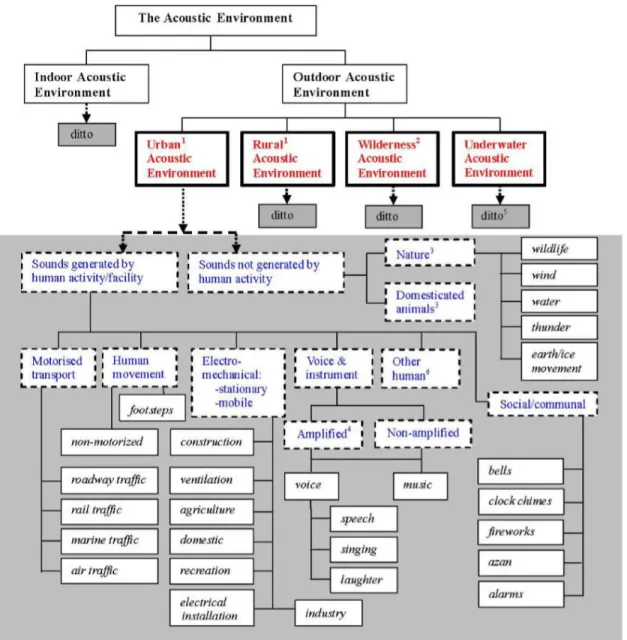
Figure 1. Taxonomy of sound sources according to different places ... 8
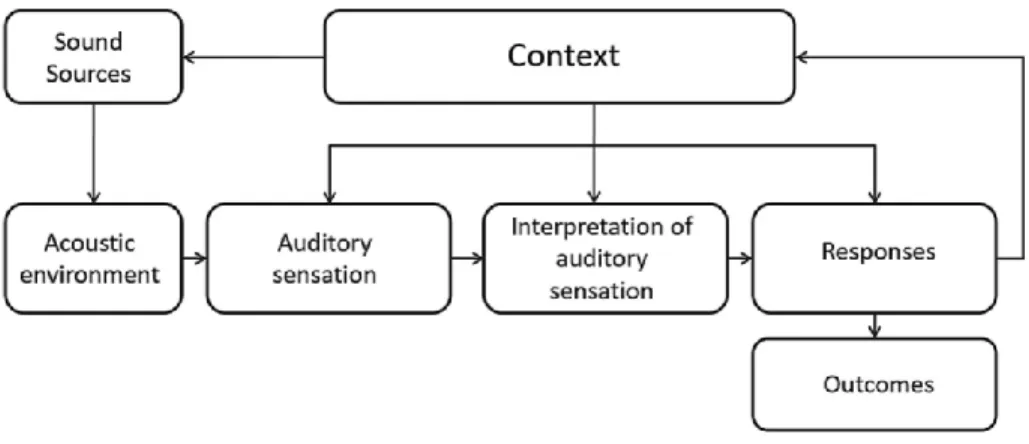
Figure 2. Soundscapes Framework created by ISO12913-1 ... 9
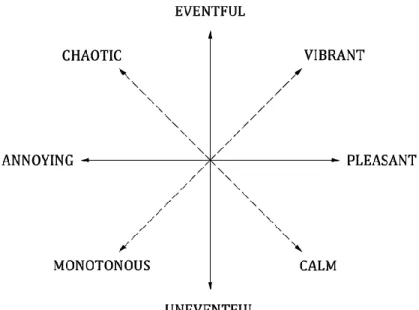
Figure 3. The generatity of the two-dimensional model ... 21
Figure 4. Sample photograph of artificial head types ... 27
Figure 5. Sample photograph of a Binaural microphone ... 28
Figure 6. Sample photograph of Ambisonics microphones ... 29
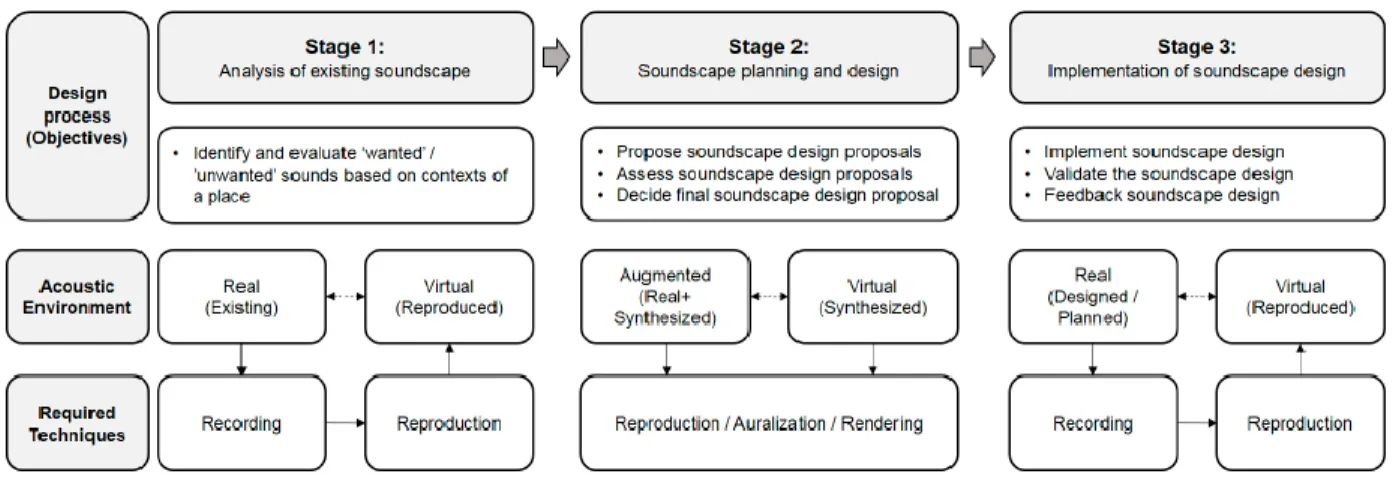
Figure 7. Soundcape design process scheme ... 30
Figure 8. Floor plan of the Demay Architects’ Office ... 44
Figure 9. Section of the Demay Architects’ Office ... 45
Figure 10. Interior views of the entrance and the working area of the open-plan office ... 45
Figure 11. A view from the video for VE_Rec ... 48
Figure 12. A view from the video for VE_Rec ... 49
Figure 13. A view from the 3D modelled, animated and audio reproduced video for VE ... 50
Figure 14. A view from the 3D modelled, animated and audio reproduced video for VE ... 50
Figure 15. The test room plan ... 52
Figure 16. The test room section ... 53
Figure 17. A general interior view from RE ... 54
Figure 18. A general interior view from VE_Rec and VE experiments ... 55
xiii
Figure 20. Mean scores of technological sound source identification of three
environments ... 61
Figure 21. Mean scores of human sound source identification of three environments ... 62
Figure 22. Mean scores of the perceived affective quality items at the 10 locations of the soundwalk, plotted in accordance with the circumplex model .. 66
Figure 23. Mean scores of the perceived affective quality of five perceptual attributes ... 68
Figure 24. Mean scores of the perceived affective quality of eight perceptual attributes of all environments ... 69
Figure 25. Scatter plots and linear trend of the mean scores of the item “eventful” and “uneventful” for RE and VE ... 70
Figure 26. Scatter plots and linear trend of the mean scores of the item “monotonous” and “annoying” for RE and VE ... 71
Figure 27. Mean scores of the asessment of surrounding sound environment . 74 Figure 28. Mean scores of the asessment of appropriateness ... 75
Figure 29. Method A questionnaire in Turkish ... 91
Figure 30. Method A questionnaire in English ... 94
Figure 31. Floor plan of the open-plan office ... 97
1
CHAPTER I
INTRODUCTION
Nowadays, most offices prefer to work on open-plan offices where many users can work, interact, and communicate with each other through the higher worker density and increased working area (Acun & Yilmazer, 2018). Indoor
environments provide users with a variety of functions and each function requires different acoustical features. Among these indoor environments, open-plan offices are the most preferred office styles in the past decade. However, there is no significant evidence demonstrating that open-plan office
arrangements raise work productivity. On the opposite, the lack of visual and acoustic privacy and unregulated sound rates mean that job efficiency and workplace satisfaction are dramatically reduced (Acun and Yılmazer, 2018). The determination of acoustical problems in open-plan offices is the widely
mentioned topic in the related literature. Most studies argue that open-plan office layout causes a variety of social and physical environmental problems (Yadav et al., 2017). Hongisto et al. (2016) mentioned the lack of privacy and its’ negative influence on concentration in open-plan offices. He claims that most of the cognitive office tasks are strongly affected by irrelevant speech and its’ impacts
2
on workers’ memories and their increased cognitive workload (Hongisto et al., 2016). These negative influences can cause dissatisfaction from the working sound environment and it can be the reason for negative consequences on health and wellbeing such as noise-related stress and loss of concentration (Acun & Yılmazer, 2018). Besides, distraction and speech privacy can be objectively measured by assessing the intelligibility of speech between work areas. Intelligible speech-based communication affects both the speaker and the listener, since it may confuse a listener who might need to focus on a task and make a speaker nervous about loss of speech privacy (Yadav et al., 2017). Haapakangas et al., (2014) claims that speech intelligibility estimates the
subjective responses like acoustic satisfaction, perceived disturbance, personal habitude and subjective (Haapakangas et al., 2014). The harmful effect of background speech can be caused by room acoustic interior design that
decreases speech intelligibility, as calculated by the Speech Transmission Index (STI) and STI of speech relies on absorption, displays, background noise
frequency and the range between a speaker and a listener (Haapakangas et al., 2014).
There are several studies have mentioned the types of office sounds which specify the term auditory perception. Auditory perception has been shown to affect how we function and navigate around places and how public spaces are used (Calleri, 2018). The soundscape is an approach, is focused on the human auditory perception and interpretation of the sound environment. ISO 12913-1:2014 defines soundscape as the perception and interpretation of an acoustic
3
environment, in context, by an person, or by a community. Soundscapes of built environment approach aimed to design new research findings to show the relationship between soundscape, architecture, and urban design. This connection mediates indoor and outdoor acoustic environments (Aletta and Astolfi, 2018).
1.1 Aim and Scope
Open plan offices aim to provide users with flexible working environments for different office requirements. In this regard, studies on the sound systems of the open-plan offices focus mostly on measuring the physical parameters of the acoustic conditions. However, most of the real open office environments are transferred into the virtual office environments due to the global health and economical continuity issues. Long-standing pandemic period (Covid 19) is the main reason of this transformation. Most of the open office workers and owners are worried about the social distance and hygiene problems in open offices in the consequence of crowded working areas. In this sense, the requirement of virtual open offices and their acoustical assessments have gained importance all around the world. Several studies have also been conducted to analyze how soundscape evaluation is used in real and virtual environments (Acun & Yilmazer, 2018; Acun & Yilmazer, 2019) However, there is not any previous study about soundscape quality assessment in the virtual open-plan office. This thesis aims to represent an approach for assessing the virtual open plan offices regarding their soundscape properties by analyzing the effect of sound source
4
identification, perceived affective quality, assessment of surrounding sound environment, and appropriateness on participants' observation. The equivalent continuous A-weighted sound level (LAeq) was analyzed in-situ via sound level meter Bruel & Kjaer 2230. The scope of the perceptual data, the interview was evaluated with ISO/TS 12913-2:2018 Method A, soundwalk procedure, and the questionnaires were analyzed by using SPSS.
1.2 Structure of the Thesis
The thesis is composed of six chapters. The first chapter is "Introduction," which provides general information regarding the approach to soundscapes and the study's importance. After this, the aim of the study and the thesis structure are given.
The second chapter is "Literature Review". This offers background information on soundscapes, prior indoor soundscape experiments, open-plan workplace acoustics research and soundscape evaluation approaches that include spatial parameter evaluation specifics, ISO/TS 12913-2:2018 Method A and soundwalk procedure; and perceptual data assessment. This also includes context
information about the open-plan offices and general information virtual
environments; previous studies about virtual soundscape and their assessment techniques.
Third chapter is "Method" which begins with providing details about the study layout and addresses the research questions and hypotheses of the thesis. Afterwards, it provides detailed information in real and virtual office
5
environments by providing information about the site, participants, materials and acoustic environments. The real and virtual open-plan office environments, physical parameter measurement process, and selection of perceptual data are provided.
The fourth chapter is “Results”. It consists of three main sections as sound source identification, perceived affective quality of soundscapes, and
assessment of surrounding sound environment and appropriateness. Objective results display the calculation of in-situ acoustic parameters as equal continuous a-weighted sound level (LAeq), subjective results indicate the questionnaire assessment.
Chapter five is "Discussion”. Within this chapter, it contrasts the effects of three acoustic environments with each other and with the previous studies. The findings are addressed in three open office settings, taking into account the variations in physical parameters and perceptual details.
Chapter six is "Conclusion". By this chapter, the thesis ends. It illatively sums up the whole research. This research also provides suggestions for future studies.
6
CHAPTER II
LITERATURE REVIEW
2.1 Soundscapes
The Soundscape is a term that was originally introduced in the late 1960’s by Canadian composer Murray Schafer and soundscape research is growing in quantity and influence (Schafer, 1977). Schaffer categorized the typology of speech as keynote sounds, signals and sound marks into three separate areas. (Schaffer, 1977). Keynote sounds are accepted as background sounds that are defined as widespread and omnipresent sounds. Signals are known as
foreground sounds which involve the acoustic alerts to encrypt such messages or information (Westerkamp et al. 2006). Finally, sound markings are the criteria for a particular location to make the acoustic environment unique (Schafer, 1977; Westerkamp et al. 2006; Ozcevik & Can, 2008). Schafer founded the World Soundscapes Project (WSP) in 1969, which is essential to maintain a harmony between the human culture and its sonic environment (Westerkamp et al. 2006; Kang et al.,2016). This project increased the understanding of sound, evaluation and documentation of the ambient sound and is known as the basis for soundscape studies (Westerkamp, 2006). To extend the term soundscape, ISO/TC 43/SC1/WG 54 working group for the “Perceptual Assessment of Soundscape Quality of the International Organization for Standardization” Identify soundscape as the "perception and interpretation of an acoustic
7
Identifying and describing sound sources is gaining importance as it provides valuable information about that place's soundscape as the sound sources can be perceived differently from place to place (Acun,2015). To do so, the authors recommended that the acoustic system be taxonomized (Figure 1). Brown et al, (2011), contend that this acoustic taxonomy offers categories of sound sources in different acoustic environments (Figure 1). The acoustic taxonomy system consists of two large divisions known as indoor and outdoor. The outdoor acoustic environmental setting has four sub-categories such as urban, rural, wilderness and underwater (Yilmazer & Bora ,2017). For this framework, outdoor and indoor acoustic principles are similar. In this sense the recent consensus on the soundscape approach indicates that soundscape occurs by human experience (Acun & Yilmazer, 2018). Furthermore, the elements in the sensory system of a soundscape are often described by emphasizing
interconnected features, such context, sound sources, acoustic environment, auditory sensation, interpretation, reactions and findings (ISO, 2014; Aburawis & Yorukoglu, 2018).
8
Figure 1. Taxonomy of sound sources (Brown et al., 2011)
The context is accepted as a key element for the soundscape framework. The acoustic environment has an initial role to modify soundscape which is
composed of sound sources (absorption, reflection, etc.). In addition, the context influences the soundscape, the auditory sensation and interpretation and the reaction to the acoustic environment (Figure 2) (Acun& Yilmazer, 2018). It may be stated that the soundscape approach is related to the experience of sound
9
and acoustic conditions by individuals and community, rather than the sound energy (Acun& Yilmazer, 2018; Brown et al., 2011; Kang, 2013).
Figure 2. Soundscapes Framework created by ISO,2014 (Brown et al., 2011)
2.1.1 Previous Studies on Indoor Soundscapes
Indoor spaces consist of different materials, architectural geometries, and functions and each of these require different acoustical requirements and activities. In the context of analysing indoor soundscapes, several soundscape experiments have been set in various kinds of interior spaces and these studies took place in different research fields, such as psychology, health, physics, artificial intelligence, urban planning, and sociology (Chandrasekera et al., 2015). Our interest concentrates especially research on soundscape, in both simulated and actual spatial structures. Although most of the soundscape research has generally analyzed urban environment, some researchers have still directed attention to the indoor environments and indoor soundscape analysis covered a wide variety of indoor soundscapes, including hospitals
10
(Okcu et al., 2011, Mackrill et al., 2013), libraries (Dökmeci & Kang,2012 , Xiao & Aletta, 2016), transportation hubs (Yılmazer& Bora, 2017), open-offices (Acun and Yilmazer, 2018), education facilities (Acun&Yılmazer, 2018), care facilities, worship places (Yılmazer and Acun, 2018), museums (Acun, Yilmazer, and Orhan, 2018)
Okcu et al. (2011) conducted a soundscape study to analyze nurses’ wellbeing and work performance related to physical parameters and perceptual data in two clinical healthcare settings. Two Intensive Care Units (ICU) of 20 beds with equivalent diagnosis and treatment model were chosen and named as neurological ICU (new model) and medical-surgical ICU (old model). Nurses were expected to fill out a questionnaire that examined noise annoyance, perceived loudness and performance at work. Although the measured sound levels in two different ICUs were very comparable, the perceived sound environment in the medical-surgical ICU was found more frustrating.
Consequently, the medical-surgical ICU had a detrimental effect on the work efficiency of nurses, health outcomes and level of anxiety. As a
recommendation, the advice of experts to create a more comfortable living atmosphere for patients, such as eliminating impulsive noise sources, was realized using sound absorbent finishes and acoustic management techniques for mechanical sound sources such as HVAC systems (Okcu et al., 2011).
Another indoor soundscape research has been conducted in a hospital by Mackrill et al., (2013) to attain participants’ subjective responses about hospital
11
soundscape. Semi-structured interviews were performed by 27 people including nurses and patients. Grounded Theory was preferred to categorize subjective responses. Participants had both positive and negative emotions with respect to the soundscapes of the hospital environment. Amongst these emotions coping approaches such as approval and habitude were accepted as the negative soundscapes, the significance of both the physical and cognitive influences was related to the positive soundscapes’ perception of people. The result was found that when the individuals accept and habituate the aspect of soundscape coping methods can be adapted to the hospital environment (Mackrill et al., 2013). Dökmeci and Kang (2012), conducted an experiment that examine three libraries' indoor soundscapes in Sheffield by using objective and subjective analysis. They used acoustic measurements, recordings and social surveys for each library. They aimed to understand the effect of the acoustic and
psychoacoustic parameters on soundscape perception by using objective
responses (Dökmeci & Kang,2012). Relationships have been revealed between architectural/functional differences and the variances of objective measurements within the indoor sound environment (Dökmeci & Kang,2012).
Xiao and Aletta (2016) aimed to explore acoustic comfort that is based on the quality of the perceived sound environment in modern libraries. The study was performed by four groups of participants, and soundwalk methods took place in four different floors. The sound source identification, sounds pressure level and overall quality of the perceived sound environment was evaluated. The general consistency of each floor for the soundscapes was different irrespective of the
12
amount of sound pressure level. The results showed that the open-plan layout is the determinant factor for the acoustic comfort of libraries (Xiao & Aletta, 2016)
In 2017, Yilmazer and Bora gathered an experiment about indoor soundscape to analyze the effects of the built environment on the pedestrians/passengers and the perception of the auditory environment in the metro station. Sound
recordings were made at various places in adjacency of a metro station and a listening test was conducted to determine how spaces could only be identified by the associated sound (Yilmazer&Bora,2017). Consequently, half of the
participants were able to specify the space function. Bird, wind and water sound marks were recognized in the urban park close to the metro station. For
outdoors, participants were inclined to select adjectives such as pleasant, calming or natural, whereas for indoor spaces they select terms such as
unpleasant, stressing, and artificial. On average females can recognize sounds 30 percent more correctly, and the correct identification rate of younger age groups is greater than that of older groups by an average of 10 percent (Yilmazer&Bora,2017).
To analyze the working environment, Acun and Yilmazer (2018) formed a conceptual framework to obtain data from individuals about soundscape
perception in open offices. The researchers aimed to examine how participants could overcome unsatisfactory soundscapes by conducting a Grounded Theory survey to capture individuals’ subjective responses (Acun & Yilmazer, 2018). For this aim, the study identified acoustical environment and sound sources. 45 employees from two types of offices were attended to the experiment and
semi-13
structured interviews were conducted. Physical measurements were taken both in-situ and in accordance with Odeon Room Acoustics Program 13.10. The researchers underlined that observations of physical parameters alone would not be sufficient to describe the perception of soundscapes by the participants.
The findings revealed how the job was influenced by the sound atmosphere and the personalities of the workers. It was found during the interviews that workers were concerned with silence as well as with the noise (Acun &Yilmazer, 2018). In fact, there was a lack of consistency between sound sources, and this created a poor perception of soundscapes. The authors clarified that participants
generated coping methods while they are facing possible office environment problems. They preferred to use headphones to be isolated from the noisy environment. In addition, researchers suggested designing sound masking systems as a solution for open-office environment acoustic problems (Acun &Yilmazer, 2018).
In addition, Gül, Sinal and Odabaş (2019) published a study aimed at delivering acoustic comfort standards by suggesting methodologies and acoustic solutions. The research was undertaken at the BASF Turkish office and researchers
planned the office setting on the basis of international standards and LEED Green Building Criteria (Gül, Sinal & Odabaş, 2019).
They analyzed the open plan offices, meeting rooms, private booths and
cafeteria for reverberation and HVAC originated background noise levels. In this sense, they developed the sound isolated building elements (Gül,Sinal
14
&Odabaş, 2019). As a result, they designed sound scatters and sound
absorptive baffles. They also tested the effectiveness of these products during the design process (Gül,Sinal &Odabaş, 2019). With the advent of these
products, they controlled the possible noise problems in the office environment.
In addition, Ma and Shu (2018) conducted another experiment to investigate the potential restorative effects of soundscape components in a virtual open-plan workplace. There were 75 participants in the assessment of three separate studies under different circumstances. Such conditions are various types of sound, sequences of sound and audio-visual conditions.
While experiment 1 examined the five types of sounds such as flowing water sound, birdsong, footsteps, traffic noise and air conditioner noise, experiment 2 examined the congruity and possibility of additional sound elements that were integrated into the open-plan offices (Ma& Shu, 2018). Finally, experiment 3 used both air-conditioner noise and flowing water sound to analyze them as negative and positive acoustic stimuli (Ma& Shu, 2018). As a result, good soundscape elements (bird songs and flowing water sound) were perceived as pleasant and they had positive restorative effects on people’s psychological evaluation. In addition, continuous sound did not have more positive restorative effect than intermittent sound. The combined audio-video conditions had
15
Another indoor soundscape research conducted by Yilmazer and Acun (2018) analyzed the soundscape of a historical place which is the Haci Bayram Mosque of Ankara to demonstrate if there is a relationship between the soundscape elements, place identity and spatial function of the space. This study utilizes a user-focused grounded theory to record the auditory sensations of participants and interpretations of the indoor soundscape (Acun & Yilmazer, 2018).
The next previous soundscape study was carried out to investigate the sound sources, users’ reactions, coping methods in an educational space (Acun & Yilmazer, 2018). This work focuses on the sound atmosphere of four open-plan study areas within the Bilkent University Campus. Generally, because of their potential to merge learning with social events, these spaces are known to be utilized by many students (Acun & Yilmazer, 2018). These four open study areas are located at the dormitories, the Fine Arts Building, the library, and the Faculty of Science Building. With 120 students, a questionnaire survey and in-situ analysis of sound rates (LAeq) were performed to evaluate the subjective responses of the participants to the sound environment. The findings revealed no distinction between the participants' satisfaction with the soundscape, regardless of the sound level (Acun & Yilmazer, 2018).
Acun, Yilmazer, and Orhan (2018) conducted an experiment to explore the subjective perception of the museum visitors’ soundscapes describe the relations between the soundscapes and the role of historical features of the Rahmi Koç Museum in Ankara. ODEON Room Acoustics Software was the tool for analysing physical parameters of the museum environment. Perceptual data
16
was gathered from 15 participants using semi-structured interviews based on the perceptual answers. With the Grounded Theory the conceptual structure was developed. The findings revealed that only the noisiest areas can be
interpreted as natural due to the context of the soundscapes; so, people need to plan the sound atmosphere much as the physical environment (Acun&Yilmazer and Orhan, 2018).
17
2.1.2 ISO/TS 12913-2:2018 Data collection and minimum reporting requirements
Sound is regarded an essential element of any area, and perception of soundscape effects the overall experience of users. The International Organization for Standardization (ISO) with the ISO/FDIS 12913-1:2014, provides measurements of physical parameters and evaluation of perceptual data. ISO has released the second phase of the soundscape specification, ISO 12913-2:2018, which focuses on soundscape data collection and minimum reporting requirements. In soundscape studies, the minimum reporting requirements comprise of selecting and classifying participants. Participants should be identified whether they are residents of the site or they are only
visitors and age distribution and having expertness are the other significant point to underline (ISO 12913-2:2018). Characterization of the acoustic environment and selecting the data collection method are other important points for designing a soundscape study (ISO 12913-2:2018). The selection of an acoustic
environment is the first session for designing a soundscape study. According to ISO/TS 12913-2:2018, an acoustic environment can be real, recorded, or virtual. Additionally, sound sources, weather conditions, and acoustic measurement points have the determinative effect on the soundscape experiments (ISO 12913-2:2018).
18 2.1.2.1 Assessment of Perceptual Data
To explore and evaluate soundscape, researchers have suggested different methods such as soundwalk, binaural recordings, and psychoacoustic
measurements. For more subjective evaluations of soundscapes questionnaires, interviews, and semantic differential scales on perceived sounds are conducted (Yilmazer and Bora, 2017).
In ISO 12913-2:2018, Annex C explains the soundwalk procedure
requirements. Soundwalk procedure aims to evaluate the soundscape in a given area. There should be a moderator to conduct a narrative interview and lead the soundwalk session (ISO 12913-2:2018). During the soundwalk participants should listen to the acoustic environment regarding sound sources, the direction of their perceptions, and types of the materials in recent acoustic environment. All the instructions of the soundwalk procedure were mentioned in ISO 12913-2:2018, Annex C. The second part of the soundscape standard provides three alternative data collection methods (ISO 12913-2:2018). The first method (Method A) which is a quantitative method involves a questionnaire test, while the second method (Method B) still employs quantitative approaches with a emphasis on soundwalks. The third method (Method C) uses narrative
interviews which are consisted of a complete list of standardized questions to obtain qualitative data from the experiments (Acun and Yilmazer, 2019).
Method A provides data by using a questionnaire that includes four parts (Figure 3). In the first part of the questionnaire (five points ordinary-category scale) ISO
19
classifies the sound sources within the four categorizations such as traffic noises, other sounds, sounds from human beings, and natural sounds. The second part of the method examines the perceived affective quality of soundscapes with eight perceptual attributes (pleasant, chaotic, vibrant,
uneventful, calm, annoying, eventful, monotonous). The third part analyses the assessment of the surrounding sound environment. Finally, the fourth part examines the assessment of the appropriateness of the surrounding sound environment (ISO 12913-2:2018).
Method B has consisted of the data collection methods which focuses on how people perceive an acoustic environment in situ (Figure 4). Instructions of soundwalk procedure are divided into three parts, the first one is for the moderator of the study, the second one is for binaural measurement process and the final one is for the participants’ of the experiment (ISO 12913-2:2018). Method B has three parts to examine the soundscape of the environment. The first part is the assessment of the sound environment and includes four
questions to analyze loudness, pleasantness, appropriateness, and personal impressions of participants. While the second part includes sound source recognition and ranking, the third part consists of subsequent comments of the soundwalk participants’ (ISO 12913-2:2018).
Method C is comprised of the interview guideline which refers to satisfaction with the living space, experiences, and spatial identification of sound effect (ISO 12913-2:2018). Annex D specifies how to perform binaural acoustical
20
the binaural measurements, selection of the measurement time interval,
equalization of measurement and recording requirements (ISO 12913-2:2018).
This thesis will focus on the soundwalk method which is the most used methods for indoor and outdoor soundscape studies and this thesis considers in-situ measurements of Equivalent Continuous A-weighted Sound Level (LAeq); questionnaire (Method A) in the scope of the perceptual data.
2.1.3 ISO/TS 12913-3 2019: Data analysis of soundscapes
With this recent document, ISO aims to provide guidance on requirements and to provide information on the study of in-situ data obtained by methods as defined in ISO / TS 12913-2:2018. The analysis of qualitative and quantitative data through methods specified in ISO/TS 12913-2, and to get information about which tools are appropriate for which methods, this document should be applied. According to ISO/TS 12913-3:2019, the quantitative data obtained by means of questionnaires in soundscape investigations shall be analyzed depending on the respective level of measurement (nominal, ordinal, interval, and ratio). In
addition, any correlation analysis is the suggested tool to analyze the
questionnaire data. Inferential statistical tests regarding the level of significance of differences in evaluation between sites and/or correlations shall be carried out and probability values reported (ISO/TS 12913-3:2019). Moreover, the statistical hypothesis testing method shall be reported for Method A that this thesis
preferred to conduct. The rating data collected via Method A questionnaires should be linked to the results of the acoustic data analyses in order to identify
21
potential relationships. These relationships may be investigated by means of statistical analyses, linear regression, or ANOVA (ISO/TS 12913-3:2019).
In addition, ISO (2019) suggested to use a two-dimensional model to analyze these eight affective responses (Figure 3). The main dimension is related to how pleasant or unpleasant the environment to evaluate pleasantness. The second dimension is related to the amount of human and other activities. For
soundscape, this second dimension is represented by how eventful or uneventful the acoustic environment is perceived to evaluate eventfulness. According to the two-dimensional model, vibrant soundscapes are accepted both pleasant and eventful, chaotic soundscapes are both eventful and unpleasant, monotonous soundscape is accepted both unpleasant and uneventful, and finally, calm soundscapes are accepted both uneventful and pleasant (ISO/TS 12913-3:2019).
22
In this sense, this thesis analyses the obtained data with suggested statistical tools from the recent data analysis standardization document (ISO/TS 12913-3:2019).
2.2 Acoustics of Open-plan Office Environment
Open-plan offices are among the most common and popular layouts of office in the past decade. Most of the offices prefer to work on open-plan offices where number of staff can work, interact and communicate with each other through the higher worker density and increased working area (Kaarlela et al. 2009; Kim and de Dear, 2013). However, most of the researches claim that open-plan office layout cause a variety of social and physical environmental problems, such as noise distraction and privacy (Yadav et al. 2017). These problems are not only related with increased noise complaints but also various negative consequences occur such as noise-related discomfort, reduced environmental performance and work motivation, decreased attention and work efficiency (Haapakangas et al., 2008; Pejtersen et al., 2006; Banbury & Berry, 2005; Kaarlela et al. 2009). Open-plan workplaces were also linked to increased concerns about absence of psychological stress and decreased job satisfaction (Pejtersen et al., 2011; Kim and de Dear, 2013).
As mentioned before noise is the most detrimental acoustical problem of the indoor environment in open-plan offices (Virjonen et al., 2009). Among various types of noise unattended speech is the most distracting source (Haapakangas et al., 2014). Distraction and speech privacy can be objectively identified by
23
calculating the understandability of speech between workspaces. Intelligible oral communication affects both the speaker and the listener (active or passive), as it has the potential to disturb a hearer who may want to focus on a task and cause anxiety regarding the lack of speech privacy (Yadav et al., 2017). Speech
privacy and speech transmission index (STI) are the significant issues and parameters in the open-plan office and its acoustic parameters (Kang S, & Ou, D, 2019). Additionally, the STI is an objective descriptor for subjective speech intelligibility (STI 0.00 = not intelligible, STI 1.00 = perfectly intelligible)
(Haapakangas et al., 2014; Hongisto, 2005).
Hongisto et al. (2005) conducted a laboratory experiments that predict the loss of work performance as a function of the STI to suggest the relationship
between STI and office performance in Western countries. According to Hongisto’s model, occupants’ work performance decreases when the value of STI increases in the range of 0.20 and 0.50, while beyond this range the STI value has little effect (Kang & Ou, 2019). The key acoustic parameters used in the open-plan office standards (ISO 3382-3) are also developed based on this relationship (Kang & Ou, 2019). The STI of speech also relies in reality on the current sound level, the height of the panels, acoustic material absorption, furniture, width between a speaker and a listener (Haapakangas et al., 2014). Secondly, the quality of open office background intelligibility of background speech is an initial factor (Hongisto, 2005; Kitapcı, 2008; Haapakangas et al., 201). Unattended background speech has significant effects on well-known cognitive functions, such as short-term memory arithmetics, reading ability,
24
proofreading and efficiency in writing (Haapakangas et al., 2014). The
background noise levels in the open-plan offices should be sufficiently high to ensure good speech privacy by disrupting social interaction (Egan, 1988). High ambient noise levels will therefore improve speech privacy; too much noise does not contribute to maximum acoustic comfort (Kitapcı, 2008; Kitapçı, Yilmazer, and Erkip, 2007). Background noise should be regulated and made
homogeneous and should not exceed a average of 55 dB in order to eliminate harmful effects on the occupants (Kitapcı, 2008; Kitapçı, Yilmazer and Erkip, 2007). If there is a requirement of additional background noise electronic sound masking system can be designed in an open office environment. Many scholars have documented the impact of complex masking methods on speech
intelligibility. Even though many researchers study the psychoacoustic effects of speech masking, only a few static masking methods are implemented in office work environments (Krasnov et al., 2018). Among these masking techniques, white noise (WN) is the most widely utilized. Although most of the researches claim that WN is an effective masker it causes substantially frustration at the loudness rate enough to effectively mask speech (Krasnov et al., 2018). Another way of masking is using the sounds of nature, including rushing water, ocean waves, and rain though these sounds are inefficient to cover the conversations in the office environment (Krasnov et al., 2018).
A strong emphasis is put on the determination of human auditory experience in the soundscape design process (Hong et al., 2019). Auditory perception has been described as affecting how we act and navigate around places and how
25
public spaces are used (Calleri, 2018). According to ISO/TS 12913-2:2018, soundscapes can be assessed in situ, recorded or virtually reproduced, or synthesized. This thesis focuses on the comparison of real and virtual open offices in terms of soundscape assessment. In this sense, this study analyzed the types of open-plan offices regarding the previously mentioned open-plan office acoustical problems.
2.3 Virtual environment soundscapes
Nowadays, with the advent of virtual reality (VR) technology virtual soundscape studies have been increased through VR technology having the potential of creating a more accurate audio-visual scene. VR technology allows designers to reconstruct virtual objects and spaces through their digital representation
(Biocca, 1992). These recent approaches help designers and researchers to make educated decisions by investigating the positive and negative effects of sound on users’ perception (Ruotolo et al.,2013).
Virtual Reality (VR) is a systematic approach that provides the user’s immersion and presence in computer-generated virtual environments (Vorländer, 2008). Since the 1990s, VR has been widely used for environmental preference studies. Jiang et al., (2018) defines virtual reality (VR) is a 3D user-computer interface that creates an actual or modelled world and simulates the user's existence in this world using multiple sensor channels in real time. OoI et al., (2017) claims that virtual reality (VR) has been extensively examined and authenticated as a method of reproducing visual and auditory environments for
26
subjective testing under laboratory conditions. The main benefit of VR
technology is that it is capable of simulating different situations within a limited laboratory setting (Jeon & Jo, 2019).
Furthermore, virtual scenes are visually oriented experiences that are presented on a desktop or via a special head-mounted display (HMD) comprised of two display screens (Shahrbanian et al., 2012). Immersive VR provides users with a sense of presence which is the feeling of being in a VR environment as it was a real environment (Adi & Roberts, 2014). The head tracking system makes possible this sense of presence by tracking the user’s head movements (head-related transfer functions, HRTF). The non-immersive VR environment makes 2D interface devices such as keyboards and mice that are less interactive with less interaction (Shahrbanian et al., 2012).
VR simulations used during soundscape assessment, to ensure high ecological validity of the findings obtained. The combination of VR technology and audio rendering techniques enables researchers to conduct virtual soundscape studies and to evaluate several acoustical environments. To obtain high ecological validity of soundscape study conducted in the virtual acoustic environment, recording and reproducing techniques have a significant role (Hong et al., 2019). For this reason soundscape is described as human perception of the recreated acoustic environment and this interpretation is linked to the perceptual
27
2.3.1 Virtual environment soundscapes assessment
Binaural and ambisonics are basically two recording technologies used in
soundscape studies. An extended form of stereo recording is binaural recording. Presumably, binaural recording encapsulates only the sound received at left and right ear positions in the same way as human hearing (Figure 4-5).
Consequently, binaural audio is the medium that is similar to human ears as it is played by tuned headphones (Hong et al., 2017). Binaural recording consists of a calibrated artificial head and they are recorded with head-related transfer functions (HRTF) which requires a static position to record the environmental sound (Hong et al., 2019). That kind of audio technology can be further categorized into simulated sound field technology to increase the sense of presence and sound image externalization technology in headset reproduction conditions to transfer the sound picture beyond the ear. (Jeon & Jo, 2019).
Figure 4. Artificial head (from left to right): KEMAR, Brüel & Kjaer 4128HATS, Head Acoustics HMS III,and Neumann KU-100, (Hong et al., 2017)
28
Figure 5. Binaural microphones from 3Dio (Hong et al., 2017)
Most of the soundscape studies prefer to use binaural recording devices to obtain perfect timbre quality, realism, and immersiveness. ISO, 2018 suggests using headphone for the playback of the binaural sound recordings
The suggested recording technique for interactive and spatial studies based on audio reproduction is in other respects ambisonics, that require a sound field in full-sphere surrounding (Figure 6). The ambisonic format can be replicated via headphones or multichannel speaker systems with the versatility of translating to specific audio formats (Hong et al., 2019).
29
Figure 6. Ambisonics microphones (from left to right) Sennheiser AMBEO, Core Sound TetraMic, and SoundField SPS200 (Hong et al., 2017)
The significant issue is selecting the most appropriate method among the mentioned recording methods for soundscape applications (Hong et al., 2017). The researcher should consider firstly the existing soundscape environment and secondly designing better soundscape recordings. Finally, all audio recordings should verify the design soundscape after its implementation (Hong et al., 2017). The most important requirement for soundscape recording in all of these stages is that it must adequately represent the characteristics of the acoustic
environment and all perceptual accuracy, it depends on the aim of the study (Hong et al., 2017).
Hong et al., (2017) explained the soundscape design process into three stages (Figure 7). Stage 1 aims to define and analyze existing soundscapes. Stage 2 proposes soundscape planning and design scenarios depend on an analysis of
30
the current soundscapes. In stage 3, the final soundscape design will be implemented in situ.
Figure 7: Schematic illustration of soundscape design process, types of acoustic environment and required techniques (Hong et al., 2017).
For this thesis, we select statically recorded binaural audio recording and non-immersive VR technique that requires 2D interaction devices to compare real ,recorded and virtual open office environments.
2.3.2 Previous studies on virtual environment soundscapes
According to ISO/TS 12913-2:2018, an acoustic environment can be real, recorded, or virtual. In light of this information, there are various soundscape studies conducted in real, recorded virtual and virtual acoustic environments. Many experiments have been carried out on how sound is used in real and virtual settings for determining soundscape. From an architectural and urban
31
design context, Chandrasekera et al., (2015) explores the role of architectural soundscapes in virtual environments. In this way, they examined the idea of soundscapes as landmarks to guide the wayfinding method in virtual
environments and to investigate the connection between sense of immersion in virtual environments and spatial visualization. In the experiment, the participants were divided into three groups: first group with soundscape and visual
landmarks, the second group with only visual landmarks, and the third group with only soundscape landmarks. After exploring through the environment, the subjects filled out a questionnaire that analyzed the level of immersion they observed. As a result, the present study claims that auditory immersion may be more important than visual immersion. The findings illustrate the significance of spatial abilities regarding immersiveness (Chandrasekera et al., 2015).
In another study, Chung and his colleagues claimed that sound quality is a subjective issue and depends on human perceptions in different contexts
(Chung et al., 2016). In this experiment, a virtual soundwalk application software was developed to auralize different sounds and link them to a 3D virtual,
photorealistic environment. This app provided users the ability to immerse themselves in this virtual space to experience different changes (Chung et al., 2016).
Moreover, Maffei et al., (2016) built a test to investigate if the acoustic and visual effects of a virtual environment in immersive virtual reality (IVR) is reasonably compatible with their associated elements in a real sense.
32
After experimenting in real and laboratory settings, two groups of participants were requested to fill out questionnaires on international qualitative
assessments, coherence and familiarity with acoustic and visual impulses. (Maffei et al., 2016). The results showed that IVR systems are smart and
innovative methods for developing interactive planning and forecasting the effect on the society (Maffei et al., 2016).
Chung and his coworkers have experimented with 'soundcape design
application software that allows the user to try out different sound environments prior to the design is being finalized' (Chung et al., 2017). This paper analyzed some of the noise issues caused by concerts at the Hong Kong Stadium and Cantonese operas at other public spaces. The research suggested that VR technology would be used to determine how the possible soundscape and noisescape at various times of a music occurrence would be used by audiences during the public participation process. (Chung et al., 2017).
In 2017, Puyana et al. conducted an experiment that aimed to explain the improvement and testing of an online participatory tool that uses interactive maps and Immersive Virtual Reality (IVR) for the multisensory evaluation or urban soundscapes. The method will measure and track the spatial
improvements in the ambient noise measurements of many city sites for future planning processes (Puyana et al., 2017). This tool also provides a higher number of participants the opportunity to compare the noise with laboratory experiments (Puyana et al., 2017). In this sense, researchers created a web platform that allows having a VR experience with three hardware reproduction
33
systems of virtual scenarios: Oculus Rift DK2 (IVR), mobile-based head-mounted display (IVR), and a laptop or desktop (DVR). For the playback of spatial audio recordings, the Ambisonic technique is used on-site. The statistical analysis showed that there is no statistically significant differences between the outcomes of the three modalities of multisensorial experience (Puyana et al., 2017).
Additionally, Hong and his colleagues have conducted an experiment about the assessment of three spatial audio reproduction methods in VR (Hong et al., 2019). The aim of this analysis was to examine whether there is a discrepancy in perceived soundcape quality between the three FOA replication methods. (Hong et al., 2019). To compare these soundscape reproduction methods, soundscape evaluations were conducted both in situ and in a virtual
environment under laboratory conditions (Hong et al., 2019). As shown by statistical analysis there was no substantial gap between in situ and all VR approaches in determining the sound-source superiority and overall soundscape quality (Hong et al., 2019). However, significant differences were found in the perceived spatial qualities between three reproduction methods and in-situ (Hong et al., 2019).
Ahrens, Marschall, and Dau (2019) developed a simulated sound system experiment focused on the loudspeaker that offers a powerful resource for testing speech perception. This research aimed to correlate speech intelligibility to virtual models of the room as calculated in a reverberant reference area.
34
For room acoustic simulations, two reproduction methods have been selected, they are presented either using mixed-order ambisonics or the nearest playback mapping of loudspeakers. The third test used impulse reactions measured with a spherical microphone system and ambisonic mixed-order (Ahrens, Marschall & Dau, 2019). Three factors influencing speech intelligibility were reverberation, spatial structure and the form of disturbance. The findings revealed that the variations between the reference room and the simulation-based and the microphone array were more close to reference room in terms of calculated speech intelligibility (Ahrens, Marschall & Dau, 2019).
One more previous research focuses on the measurement of the impact of soundscape and lightscape changes on perceived safety and perceived social interaction in a pedestrian area by laboratory studies. Thirty-one participants engaged in the experiment with nine separate virtual scenarios, in which the same underpass was repeated under various sound and light-scape conditions. (Calleri et al., 2019). Participants were required to evaluate each situation by evaluating 10 items associated with perceived safety and social presence. The findings found that the soundscape had a large effect on perceived safety and perceived social presence (Calleri et al., 2019).
Rychtáriková et al. (2014) conducted an experiment that aimed to predict statistical noise levels on an urban public square. Additionally they conducted a second experiment in virtual laboratory settings that was based on binaural sound recordings from in situ environment to assess the disturbance perceived by people of the traffic noise. Scientists have developed auralization approaches
35
using two algorithms based on two conditions (Rychtáriková et al., 2014). Site recordings were compared with auralized soundscapes and the results showed that there are significant differences in perceived traffic noise depending on the location of the participants (in-situ or virtual environment) (Rychtáriková et al., 2014).
The required office conditions are changing rapidly because of the global health problems and their economical concequences. As mentioned before, various studies have examined the soundscape assessments in different acoustic environments. While some of the studies are evaluating indoor soundscapes, some of them analyzing outdoor soundscapes. However, there is not any previous study about soundscape quality assessment in virtual open-plan office.To provide similar work satisfaction, well being and productivity in virtual open office environments, virtual acoustic environments should be analyzed by considering the soundscape. In this regard, to contribute a new approach for the real and virtual soundscape evaluation, this study aims to examine virtual open-plan offices regarding the soundscape quality assessment by analyzing the effect of sound source identification, perceived affective quality, assessment of surrounding sound environment and appropriateness on participants'
36
CHAPTER III
EXPERIMENTAL STUDY
3.1 Design of the Study
This research suggests a soundwalk experiment to test the soundscapes indoors and it investigates the occupants’ auditory perception in terms of acoustical conditions of the office environment in an architectural office firm which is Demay Architecture in Ankara. The research aims to equate auditory perception in an open office environment that is real and virtual. Recently, the International Organization for Standardization (ISO) published technical
guidelines on the minimum reporting standards in soundscape studies and data collection methods (ISO / TS 12913-2:2018). The paper includes an insightful appendix with three alternate approaches: two are based on soundwalks and questionnaires, while the third applies to the narrative interview (ISO/TS 12913-2:2018).
The research is conducted in a medium-scale plan office as a real open-plan office environment. Demay Architects’ open-open-plan office was selected because it has sufficient number of workers to obtain required office sounds for the experiments and audio recording. In addition, Demay Architects has
37
slab ceiling. There are various types of sound sources (elevator, air-conditioning etc.) to examine their perceived effect on participants’ perception. Besides architectural features, the location (city centered and both residential and commercial) of the open-plan office is very suitable for this experiment.
Moreover, for recorded and virtual office environments design, video recordings with binaural audio technique, and for simulated virtual office environment 3D modelled animation video are used. Thereby, there are three groups of
38 3.1.1 Research Questions
This research is conducted in compliance with these standardizations to compare real and virtual environments by carrying out Method A which is based on soundwalk and questionnaires. This study examines the role of soundscapes assessment in virtual and real environments from an architectural design perspective and seeks to answer the following questions:
1) Does the soundscape quality can be measured in virtual open-plan office environments?
2) Does the sound source identification differ within the RE, VE_Rec, and VE soundscape assessment?
3) What is the direction of perceived affective quality assessment (positive or negative) in terms of eight perceptual attributes in RE, VE_Rec, and VE? 4) Is there any difference between RE, VE_Rec, and VE regarding the
assessment of the surrounding sound environment and appropriateness?
Hypothesis
HP: Overall soundscape quality shall be described more appropriately in real an office environment than virtual recorded and virtual office environments.
39 3.2 Method
3.2.1 Participants
All the participants were selected from the Bilkent University Campus and our immediate surroundings who want to attend the experiment and all the
participants are voluntary visitors of the office. In total, 90 participants (25 males and 65 females) were selected for the scientific research. Among 90 participants 12 of them had architectural acoustical expertise (Table 1). The 90 participants were divided into three groups with 30 people in any group to experience RE, VE_Rec, and VE. The age distribution of the participants ranged from 20 to 40 yrs (μage = 28,4, σage = 5.7). The first group (23 females and 7 males) evaluate the real (in situ) environment about indoor soundscape (μage = 28.5, σage = 5.98). Group 2 (21 females and 9 males) evaluate VE_Rec by watching the video and listening to the office sounds recorded from RE (μage = 28.6, σage = 5.0). Group 3 (21 females and 9 males) evaluate the modeled/reproduced virtual environment (μage = 28.1, σage = 6.2). ISO/TS 12913-2:2018
recommends to minimize the number of participant groups during in-situ
soundscape evaluations to avoid the large groups’ potential detrimental effects on soundscape evaluation and acoustic recording (Hong et al., 2019).
Therefore, the 30 participants were divided into 6 groups with, at most 5 people in any group during the in-situ experiment. Before the experiment, an Online Hearing Test (Widex Online Test) was conducted for all the participants and all of them had the normal hearing ability.
40
Table 1: Demographic charecteristics of all participants
Demographics Frequency(n) Percentage(%)
Gender Male Female 25 65 27,8 72,2 Age Range 20- 24 25- 29 30- 34 35- 40 Total 28 31 14 17 90 31,1 34,4 15,6 18,9 100 Expertness Expert Non-expert 12 78 13,3 86,7 3.2.2 Materials
The ISO / TS 12913-2:2018 Method A questionnaire used in soundscape
analysis aligns with the study objectives. ISO/TS 12913-2:2018 offers Method B for soundwalk experiment however, Aletta states that these 'two technical
41
with a statistically relevant correlation point' (Aletta et al.,2019). The first part of the questionnaire (sound source identification) provided data for the first
research questions which examine the difference of sound source identification between three different acoustical environments. The second part of the
questionnaire focused on the perceived affective quality of the soundscape. With the second research question, this study aimed to examine the eight perceptual attributes of the participants to compare directions (positive and negative) of the soundscapes in three environments. Finally, the third and fourth parts of the questionnaire based on the overall assessment and appropriateness of the surrounding sound environment. This part provides an examination for this study to compare the overall assessment and appropriateness within three
environments.
3.2.3 Questionnaire
At the first part of the questionnaire, the identification of perceived overall
dominant sound sources was assessed by “Method A” of ISO/TS 12913-2:2018 As sound sources play a significant role in soundscape evaluation, planning and application, the superiority of a pre-determined set of sound sources at each location was measured on a 5-point scale (1: do not hear at all; 2: hear a little; 3: hear moderately; 4: hear a lot; 5: dominates completely) (Hong et al., 2019). The types of sound sources were classified into four categories such as technological sounds, other sounds, sounds from human beings, and natural sounds (ISO/TS 12913-2:2018).
42
The perceived affective quality model in Method A was seen to have the most detailed soundscape knowledge for assessing soundscape based on the rating of eight (Pleasant-annoying, chaotic-calm, eventful-uneventful,
vibrant-monotonous) personal attributes at the second part of the questionnaire. The perceived affective quality model uses two orthogonal descriptors in the shape of the following four grouped adjectives (Hong et al., 2019). The second part consists of a question (to what extent do you agree or disagree that the present surround sound environment) and additional instructions in a five-point ordinary scale (5: strongly agree; 4: agree; 3: neither agree/disagree 2: disagree; 1: strongly disagree (ISO/TS 12913-2:2018).
To explore the overall surrounding soundscape environment, the third and fourth parts of the questionnaire were used. While third part explains the assessment of surrounding sound environment and represents a five-point ordinary scale (5: very good; 4: good; 3: neither good/nor bad 2: bad; 1: very bad) the fourth part examines the assessment of appropriateness represented by five-point ordinary scale (1: not at all; 2: slightly; 3: moderately 4: very; 5: perfectly)’ (ISO/TS 12913-2:2018).
3.2.4 Soundwalk
As a qualitative approach, soundwalk, and questionnaire (Method A) survey were conducted in RE. According to ISO/TS 12913-2:2018, soundwalk is a participatory sound team which navigates around the area. During the soundwalk procedure, there should be characterizations of some acoustical
43
requirements such as weather conditions, time of the year and time of the day, sound source combinations of the environment, and acoustical measurement points (ISO/TS 12913-2:2018). In this study, a specific walking route was designed by considering the sound sources of the office. In light of these considerations, there were 10 locations to walk and listen to real office sounds. These locations were determined in parallel with the location of office sound sources (Figure 9-10). They were located from the entrance of the office to the last working area. Five participants for each group walked and listened to the office sounds for two minutes for each location and answer the questionnaires prepared for each location (Figure ). All the soundwalk experiments and response time took almost 40 minutes. For the in-situ experiment,
questionnaires have been collected in the same location across multiple days to obtain 30 questionnaires for each location from 30 participants to fix the
changing of environmental conditions. The influence of temperature, wind, and brightness actively affect the soundscape (ISO/TS 12913-2:2018).
3.2.5 Site
The study will be carried out in an architectural office firm which is Demay Architects in Ankara. It is located in NEP Office building in Söğütözü. This locality is known as both residential and commercial part of the Ankara. The company has more than thirty employees, but some workers work out of the office. The office has 180m² area and ceiling height is 2.80 m (Figure 8-9).
44
Figure 8: Floor plan of the Demay Architects’ Office and 10 Locations are displayed with red signs on the plan (not to scale)
45
Figure 9: Section of the Demay Architects’ Office 10 Locations are displayed with red signs on the plan and (not to scale)
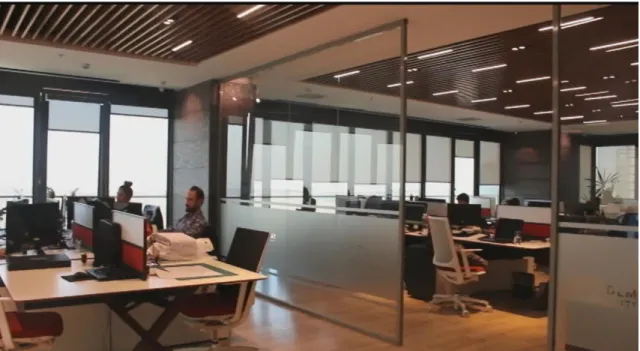
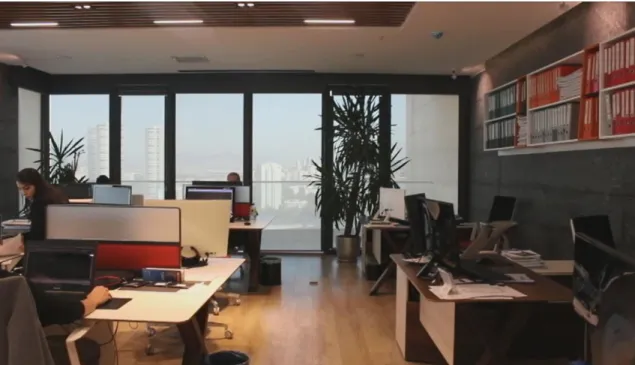
For wall covering material, natural stone is preferred for most of the office walls. Only meeting rooms have glass walls. Open-office parts’ ceiling is covered with wooden like linear ceiling panels with acoustical properties and for other parts of the ceiling, plaster panels are preferred. Floor materials are marble and
laminated parquets (Figure 10).
(a) (b)