T.C.
ISTANBUL AYDIN UNIVERSITY INSTITUTE OF GRADUATE STUDIES
AN INVESTIGATION INTO THE EFFICIENCY OF WRITING PORTFOLIOS AND STUDENTS’ PERCEPTIONS IN ACADEMIC
CONTEXT MASTER’S THESIS
Orkun UZUN
Department of English Language and Literature English Language and Literature Program
T.C.
ISTANBUL AYDIN UNIVERSITY INSTITUTE OF GRADUATE STUDIES
AN INVESTIGATION INTO THE EFFICIENCY OF WRITING PORTFOLIOS AND STUDENTS’ PERCEPTIONS IN ACADEMIC
CONTEXT
MASTER’S THESIS
Orkun Uzun (Y1712.020004)
Department of English Language and Literature English Language and Literature Program
Thesis Advisor: Dr. Osman SABUNCUOĞLU
DECLARATION
I hereby declare that all information in this thesis document has been obtained and presented in accordance with academic rules and ethical conduct. I also declare that, as required by these rules and conduct, I have fully cited and referenced all material and results, which are not original to this thesis.
FOREWORD
Araştırmanın her aşamasında yardımlarını esirgemeyen tez danışmanım Sayın Dr. Öğretim Üyesi Sn. Osman SABUNCUOĞLU’na, her zaman desteğini esirgemeyen aileme ve sevgili eşim Öykü Savan Uzun’a, araştırmama katkı sağlayan başta yöneticilerim olmak üzere tüm çalışma arkadaşlarıma teşekkürlerimi sunarım.
December, 2020 Orkun UZUN
TABLE OF CONTENT
Page
FOREWORD ... iv
TABLE OF CONTENT ... v
ABBREVIATIONS ... vii
LIST OF FIGURES ... viii
LIST OF TABLES ... ix ABSTRACT ... x ÖZET…….. .. ... xi 1. INTRODUCTION ... 1 1.1 Introduction ... 1 1.2 Background Knowledge ... 2
1.3 Statement of the Problem ... 6
1.4 Research Questions ... 7
1.5 Significance of the Study ... 7
1.6 Limitations of the Study ... 8
1.7 Definitions of Key Terms ... 8
2. LITERATURE REVIEW ... 9
2.1 Reasons for Teaching Writing ... 9
2.1.1 Decoding and encoding ... 10
2.1.2 Receptive or productive ... 10
2.1.3 Written mode and spoken mode ... 11
2.1.4 Approaches to teaching writing ... 12
2.1.5 Writing for learning and writing for writing ... 13
2.1.6 Building a habit of writing ... 14
2.2 Assessment and Writing ... 15
2.2.1 Components of portfolio assessment ... 15
2.2.2 Formative and summative assessment ... 17
2.2.3 Portfolio assessment and student-centred instruction ... 17
2.2.4 Advantages of portfolio assessment ... 18
2.2.5 Downsides of portfolio assessment ... 20
2.2.6 Teacher perspective ... 22
2.2.7 Students’ perspectives ... 23
2.2.8 Relationship between student-centered learning and formative assessment ... 25
3. METHODOLOGY ... 27
3.1 Introduction ... 27
3.2 The Design of the Study ... 27
3.3 Participants ... 28
3.4 Sampling ... 29
3.5 Data Collection Tools ... 29
3.5.1 The Learner portfolios ... 31
4.1 Introduction ... 32
4.2 Students’ Perceptions of Writing Portfolio ... 33
4.2.1 Question 1 ... 33 4.2.2 Question 2 ... 33 4.2.3 Question 3 ... 33 4.2.4 Question 4 ... 34 4.2.5 Question 5 ... 34 4.2.6 Question 6 ... 34 4.2.7 Question 7 ... 34 4.2.8 Question 8 ... 35 4.2.9 Question 9 ... 35 4.2.10 Question 10 ... 35
4.3 The Impact of Writing Portfolios on Students’ Improvement ... 36
4.3.1 Contrastive representation of the draft-based performance ... 37
4.4 The Comparison of Writing Portfolio Impact on Students’ Performances and Improvement ... 39
4.4.1 Contrastive Analysis of Group 1 ... 39
4.4.2 Contrastive analysis of group 2 ... 41
4.4.3 Contrastive analysis of group 3 ... 42
5. CONCLUSION ... 45
5.1 Summary of the Study ... 45
5.2 Discussion of the Findings ... 46
5.2.1 The Students’ Views on the effectiveness of writing portfolio assessment ... 46
5.2.2 The Impact of writing portfolio assessment on the correct implementation of SV agreement rule ... 47
5.2.3 The Comparison between student perceptions and their SV agreement rule application performances ... 48
5.3 Implications of portfolio assessment and using writing portfolio in university context ... 49
5.4 Suggestions for further studies ... 49
REFERENCES ... 51
ABBREVIATIONS
SV : Subject Verb AGR : Aggreement
LIST OF FIGURES
Page
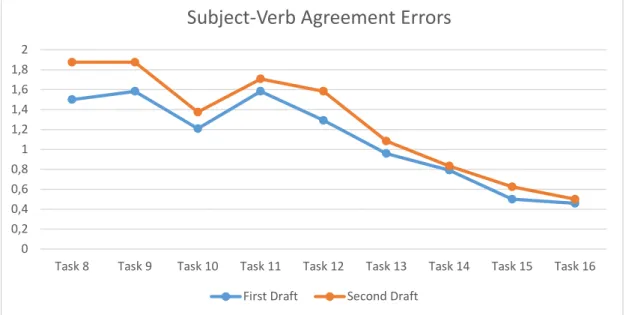
Figure 4.1: SV Agreement Error Comparison ... 38
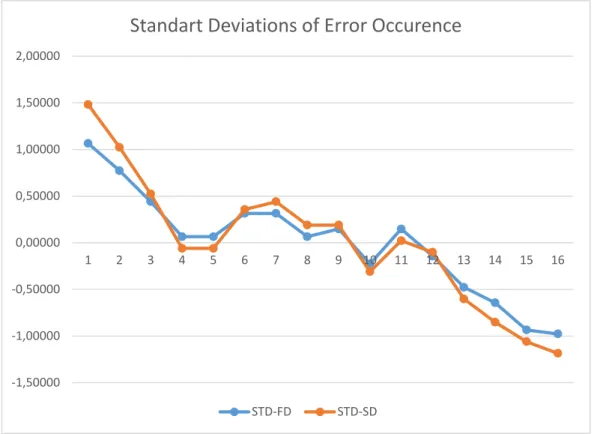
Figure 4.2: Standart Deviations of Error Occurrence on both First and Second Drafts ... 39
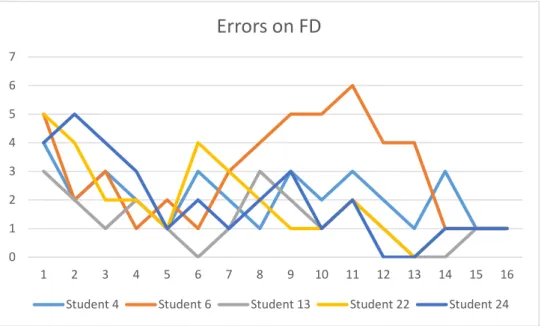
Figure 4.3: Errors on First Drafts of Group 1 ... 40
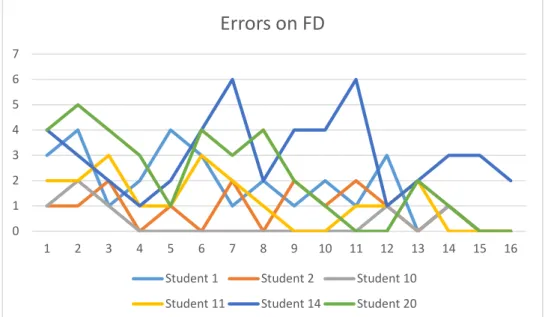
Figure 4.4: Errors on Second Drafts of Group 1 ... 40
Figure 4.5: Errors on First Drafts of Group 2 ... 41
Figure 4.6: Errors on Second Drafts of Group 2 ... 42
Figure 4.7: Errors on First Drafts of Group 3 ... 43
LIST OF TABLES
Page Table 4.1: Contrastive Representation of the Draft-Based Performance ... 37
AN INVESTIGATION INTO THE EFFICIENCY OF WRITING PORTFOLIOS AND STUDENTS’ PERCEPTIONS IN ACADEMIC
CONTEXT ABSTRACT
Evaluating students’ achievement in regard to their writing skills in-progress has been a challenging issue for L2 English teachers. As one of the leading formative assessment techniques, portfolio writing has been used by language teachers for a long time. However, the efficiency of this technique still remains controversial for both language teachers and L2 researchers in terms of students’ improvement in writing in addition to their reflections upon this formative assessment tool. Thus, this research aimed to measure the effectiveness of writing portfolio for the L2 learners of English in relation to their reviews on its usefulness. Accordingly, as an outcome of purposive sampling, I examined 24 students of English Preparatory School in a foundation university in Turkey, studying a variety of subjects, in relevance to their level of English proficiency and in-progress competence in terms of subject-verb agreement rule throughout one semester. Since writing portfolios are constructed as a means of assessing the process instead of evaluating the final performance, the data from students was collected every week. I also conduct an interview with the students, regarding their reflections and attitudes towards the efficiency of portfolio assessment. Therefore, this research used a mixture of Qualitative and Quantitative Methods. In order to analyze the data, I will utilize Microsoft Excel. The results indicated that the overall performances of students who performed better than others coincide with their perceptions based on their answers to survey interview. Students made substantial progress in regard to their implementation of SV Agreement rule. Hence, writing portfolios are perceived as useful tools by learners and their perceptions are parallel with their improvement.
YAZMA PORTFOLYOSU UYGULAMASININ ETKİLİLİĞİNİN VE ÖĞRENCİLER TARAFINDAN ALGILANMA BİÇİMLERİNİN AKADEMİK
BAĞLAMDA İNCELENMESİ ÖZET
Öğrenci gelişimlerinin yazma becerilerinin sürece dayalı gelişimini değerlendirmek İngilizce’yi yabancı dil olarak öğretenler için zorlayıcı bir mesele olmuştur. Önde gelen biçimlendirici değerlendirme tekniklerinden biri olarak, yazma portfolyosu hatırı sayılır bir süreden beri kullanılagelmiştir. Ancak bu tekniğin verimliliği günümüzde bile hem yabancı dil öğretmenleri hem de ikinci dil araştırmacıları için, öğrencilerin yazma becerilerine olan katkısı ve öğrencilerin bu araca karşı tutumları bakımından tartışmaya yol açan bir konu olarak kalmıştır. Bu nedenle bu çalışma, öğrencilerin portfolyo değerlendirmesi konusundaki algıları ile ilişkendirilerek, yazma portfolyosunun etkililiğini ölçmeyi hedeflemiştir. Buna göre maksatlı örneklemenin bir sonucu olarak, Türkiye’deki bir vakıf üniversitesinde, İngilizce yeterlilik seviyeleri ve sürece dayalı Özne-Yüklem Eşleşmesi kuralındaki öğrenme gelişimlerine dayalı olarak 24 İngilizce Hazırlık Okulu öğrencisini bir sömestr süresince inceledim. Yazma portfolyosu, sonuçtan ziyade sürece dayalı gelişmeyi ölçen bir değerlendirme aracı olarak yapılandırıldığı için veriler öğrencilerden hafta bazlı olarak toplandı. Ayrıca dönem sonunda öğrencilerin yazma portfolyosuna ve onun verimliliğine yönelik algılarına istinaden bir röportaj gerçekleştirdim. Yine bu nedenle de nitel ve nicel araştırma yöntemlerinin bir birleşiminden yararlandım ve verileri analiz etmek için Microsof Excel Programını kullandım. Sonuçlar ropörtaj sorularına verdikleri yanıtları baz alarak, daha çok gelişim gösteren öğrencilerin yazma portfolyosu konusundaki algıları ile paralel olduğunu ve öğrencilerin Özne-Yüklem Eşleşmesi kuralı bakımından kayda değer bir gelişme gösterdiğini işaret etti. Sonuç olarak yazma portfolyosunun öğrenci gelişimine olan katkısının algılanma şekliyle paralel olduğu sonucuna varıldı.
Anahtar Kelimeler: Performans Biçimlendirici Değerlendirme, Yazma Portfolyosu, Sürece Dayalı Öğrenme
1. INTRODUCTION
1.1 Introduction
This research aims to investigate the genuine fruitfulness of portfolio writing as a formative assessment strategy at university level for English learners. In order to understand the concept of this method, a broader definition and implication of writing portfolio method is necessary.
From a historical perspective, writing assessment in an EFL context has been an evolving series of methods, starting with objective tests in the 1960s and advancing through the 1980s and onwards with essay testing and portfolio assessment (Lam, 2016). The development of cognitivist theories in the 1960s resulted in a more product or output-based learning approach. Afterwards, as the general mainframe switched to more socio-constructivist learning methods, a similar shift was necessary for assessment types as well. Accordingly, when this paradigm shift started to take place, portfolio writing was seen as an outcome of process-based writing approach.
The distinction between process-based writing and product-based writing has been a matter of discussion among both language researchers and language teachers. Process-based writing promotes the development of skilled language use for learners, whereas product-based writing is a product-oriented approach that focuses on the end result (Nunan, 1991). Owing to the incapacity of process-based writing in terms of classroom sizes and impracticality on a large scale population, product-based writing has been the favoured approach in an EFL context even today. Considering the difficulties of developing writing skills for a language learner, the process naturally emerges as the reflection of learner needs e.g. critical thinking skills.
The criticism for process-based writing, however, has largely drawn from the implementation procedures. The writing class should take into account the learners’ purposes for writing which transcend that of producing texts for
teacher evaluation (Zamel, 1987). From this perspective, one can argue that the learning outcomes are subjected to teacher evaluation rather than the improvement itself.
Despite its controversial outcomes, writing portfolios, thus, has been the main method for assessing learner improvement since the 1980s. In order to comprehend and expand various types of writing portfolios in EFL classes, a number of language researchers have investigated the method in different contexts. One relative research was conducted by Qinghua to determine the impact of portfolio-based writing assessment for Chinese university students. In his study, Qinghua examined the efficiency of portfolio-based writing assessment (PBWA) in terms of accuracy, complexity, fluency and coherence throughout a quasi-experimental semester. Subsequently, accuracy and coherence as a focus point during the assessment period were found to be more vital when the performances were compared to the non-experimental group’s. In addition, the rating scales for all the measurement criteria showed significance for both groups (Qinghua, 2010).
Another study was conducted regarding the efficiency of portfolio keeping on pre-service teachers at Balikesir University, examining the contributions in regard of existing potential problems encountered. The creative skills were viewed as a hinder for the majority of pre-service teacher (Aydin, 2010).
An additional experimental study was undertaken to identify Iranian EFL learners’ attitudes and achievement throughout one semester. In his study, Farahian tested the recurrent attainments of the learners by comparing the performances of experimental and non- experimental group. As a result, meta-cognitive awareness among learners was viewed as a paramount factor in order to feel engaged in the reflective writing process for learners.
1.2 Background Knowledge
From a historical perspective, writing assessment in an EFL context has been an evolving series of methods, starting with objective tests in the 1960s and advancing through the 1980s onwards with essay testing and portfolio assessment (Lam, 2016). The development of cognitivist theories in the 1960s
resulted in a more product or output-based learning approach. Afterwards, as the general mainframe switched to more socio-constructivist learning methods, a similar shift was necessary for assessment types as well. Accordingly, when this paradigm shift started to take place, writing portfolio was seen as an outcome of process-based writing approach.
Since the cognitive approaches to language learning took the upper-hand in ELT, scholars and teachers have tried to involve learners more into active learning process. As a result of these attempts, mostly in university level writing courses, teachers began to implement a more conscious and awareness-raising method in their classes. Writing portfolios emerged as an answer to such needs (Romova & Andrew, 2011). PBWA (Portfolio-based Writing Assessment) has been a reaction to the traditional language assessment systems which only regarded student success as an end-result of the school year. In contrast to cognitivist view, behavioural approaches strictly disregarded making mistakes and focused on a more product-oriented perspective (Krasnegor, Rumbaugh, Schiefelbusch, & Studdert-Kennedy, 2009).
The distinction between process-based writing and product-based writing has been a matter of discussion among both language researchers and language teachers. Process-based writing promotes the development of skilled language use for learners, whereas product-based writing is a product-oriented approach which focuses on the end result (Nunan, 1991). Owing to the incapacity of process-based writing in terms of classroom sizes and impracticality on a large scale population, product-based writing has been the favoured approach in an EFL context even today. Considering the difficulties of developing writing skills for a language learner, the process, naturally, emerges as the reflection of learner needs e.g. critical thinking skills.
The criticism for process-based writing, however, has largely drawn from the implementation procedures. The writing class should take into account the learners’ purposes for writing which transcend that of producing texts for teacher evaluation (Zamel, 1987). From this perspective, one can argue that the learning outcomes are subjected to teacher evaluation rather than the improvement itself.
Considering the 4 different main language skills, namely listening, reading, speaking and writing, the last skill comes forward as the one that allows learners more opportunity for processing the language (Harmer, 2007). Learning how to write involves the distinction of the reason for the effort that is given by the learner. The issue is whether a learner desires to gain writing skills in a second or foreign language, or writing is necessary for language learning in general. It is significant to make this distinction in order to understand the mechanics and strategies that are used for teaching writing as well.
The purpose of writing in a specific context makes it essential to determine the accurate tool for teaching it. As a result, the examination of these tools emerges as both an ethical and academic issue. Therefore, different approaches have been devised to answer different needs since the beginning of teaching writing in ESL. Genre, the writing process itself and building a writing habit are the three main components of learning how to write (Harmer, 2007).
The organization of any writing task follows a linear order as in planning-drafting-reviewing-editing. This linear process, however, does not manifest itself as it is every time. Learners might have to repeat a stage or simply skip one depending on the learner needs or teaching context. Nevertheless, this 4-step standard process proves useful in almost every process-based writing environment.
Building an efficient writing habit is also important for language learners. Reluctance to write is a well-known conundrum, which is faced by many language teachers all around the world. However, increasing learner motivation through various real-life tasks is also possible in many cases (Harmer, 2007). In order to investigate an issue regarding writing processes, the examination of different approaches throughout the history of teaching writing in ELT is necessary. Product-based approaches usually structure around four components: familiarization, controlled writing, guided writing and free writing (Badger & White, 2000). This approach is based on the authenticity of the writing task itself and how leaners perceive it as a part of their own life. Language structure and imitation of input are two main ingredients.
Process-based approaches, on the other hand, focus on linguistic skills such as planning and drafting (Badger & White, 2000). The end-product is not the main emphasis because the generation process is seen as the pre-dominant component of learning.
Finally, genre-based approaches revolve around somewhat similar factors to product-based approaches. Yet, communicative purposes are much more prevalent. The adoption of authentic texts is combined with social interaction patterns along with different degrees of assistance from teachers.
First emerging as “writing folder” in literature in the 1950s, writing portfolios have been in use since the 1980s as a main component of language assessment systems in various contexts globally. Even in academic fields such as medicine, social sciences etc., educators have been utilizing writing portfolios for different purposes (Elango, Jutti, & Lee, 2005). Functioning as an indicator of learner progress or a reflection of a particular language teaching system, this assessment tool has radiated in traditional school curricula at different levels including academic language teaching environments. Although the implications vary at different levels such as K-12, constituencies-assessment and college level writing programs, the core ideals which constitute this tool remain mostly the same (Hamp-Lyons & Condon, 2000). As for the university level assessment systems, it has been beneficial both as a grading mechanism and an exit assessment tool. Furthermore, thanks to its learner-centred nature, it is a practical tool for increasing learner autonomy and self-regulation appetite in students (Mak & Wong, 2018).
As one of the formative assessment tools which are practiced in language learning environments, writing portfolios is based on students’ personal experience as well. In an increasingly communicative and self-centred language learning world, examining how students reflect upon this assessment tool has become necessary too. As a result, student approaches to writing portfolio assessment have been investigated in different contexts. Students’ intention is also an important factor before determining how they view. They tend to perceive it as mostly a part of their summative assessment requirements, hence predominantly in a negative manner (Gijbels & Dochy, 2007).
One of the greatest challenges of examining the students’ views is that students usually feel reluctant to reflect what they think correctly due to the fear of simply failing the evaluation or upsetting their teacher (Dochy, 2005). Regardless of these obstacles, there have been many studies on different areas of learning, though. These studies have usually perceived writing portfolio assessment as a non-traditional method (Chen, 1999).
Rather than only evaluating this assessment system as effective or ineffective, it is also important to consider different types of intelligence of students. Students who do not possess the tendency to improve their linguistic skills find writing tedious (Eng, 2010). Thus, their perception might also be the consequence of this disinclination. It is surely correct for the learners who are inclined to motivate themselves more easily and faster in a language environment.
The motives that lay behind students’ approaches are mainly categorized into two groups. The first group of learners approach language learning process through intrinsic factors, more specifically motives what arise from actual learner needs as an extension of learner awareness. Intrinsic motivation has proven to be a lot more effective in language learning than extrinsic motivation, which relies upon exterior factors such as passing a course at university or a reward-based assessment system (Ryan & Deci, 2000). Therefore, distinguishing the driving forces for keeping a writing portfolio is also important in regard to student perceptions. Formative assessment tools usually depends on intrinsically-motivated learners by nature, owing to the fact that the learning process and learner improvement is paramount and surpasses the end-result. (Barrows, 1994). Accordingly, students who perceive writing portfolios as a real opportunity to enhance their language skills are expected to approach it in a much more discriminatory manner.
1.3 Statement of the Problem
As an English Language instructor at one of the foundation universities in Turkey and a language teaching researcher, I am deeply interested in developing and improving existing formative assessment methods that are used for academic purposes. This interest mostly derived from my intentions to become a self-reflective teacher in my professional life. Hence, it is significant for me to
comprehend and analyse the underlying factors regarding the efficiency and fruitfulness of one of the common assessment tools I take advantage of, which is writing portfolio.
Conjointly, the attitudes of learners towards their performance and improvement are my primary concern. As a reflective process, acquiring academic writing skills compels student motivation at a certain level and in order to cultivate the intrinsic motivation of learners, I consider any necessary elements for a more productive learning environment to be vital.
1.4 Research Questions
• What are the students’ views about the benefits and disadvantages of keeping portfolios in writing classes?
• What are the impacts of performance-based writing portfolios on university students’ subject-verb agreement rule acquirement?
1.5 Significance of the Study
The findings of this study will help both language researchers and language teachers, specifically teachers of academic English, to develop a critical understanding through a realistic point of view. The implementation of writing portfolios requires a great deal of time and energy for a consistent achievement at the end of a school year. Therefore, examining this process-based method regarding its usefulness and practicality is a prior concern. Furthermore, no studies regarding the measurement of portfolio-based assessment in an EFL environment at a university level have taken place. Hence, viewing the quantitative data from this study will guide us in revising and considering this method’s validity in English-medium universities curricula. The findings will be bound to the socio-cultural differences among numerous language learners in the world. Moreover, there have been few studies that lean upon the learners’ review in regard to their reflections on portfolio assessment system.
1.6 Limitations of the Study
One of the significant limitations of the study was the number of participants. Due to the difficulties of gathering data via survey interview with big numbers of students, the number of participants was limited to 24. Having more participants might have provided with a broader understanding of student perceptions and more generalised results. Moreover, a larger group of students would also have provided with a larger error sample group that would have increased the validity of statistical analysis.
Another limitation of this study was analytic criteria. The answers from the survey interview were analysed according to a non-standard criteria with vague categorizations. Furthermore, in order to create an opportunity to compare two sets of data, the student answers from the interview were analysed for only Question 10 which was on the issue of Subject-Verb Agreement rule. Finally, the error analysis could have been more comprehensive with different co-dependent variables.
1.7 Definitions of Key Terms
• Formative assessment refers to a wide variety of methods that teachers use to conduct in-process evaluations of student comprehension, learning needs, and academic progress during a lesson, unit, or course. (www.edglossary.org, 2014)
• Portfolio refers to a selection of a student's work (such as papers and tests) compiled over a period of time and used for assessing performance or progress (Webster)
• Process-based learning is a holistic approach, learning is taken as a whole rather than teaching to specific targeted objectives (southportspecs.eq.edu.au, 2014)
2. LITERATURE REVIEW
Using letters and characters in order to convey a sort of message to another party has been one of the paramount exercises since the dawn of our species. From a historical perspective, writing can be seen as the main tool for maintaining knowledge. As a relatively late phase of language acquisition skills in comparison to speaking, the acquisition of writing manifests itself as a more formal way of thinking (Krashen & Terrell, 1983). Accordingly, the purpose of this literature review is to create an understanding of how portfolio assessment is related to core principle that underlies the rationale behind writing, teaching writing skills as well as its development in regard to the differences between summative and formative assessment, benefits and downsides of portfolio assessment.
2.1 Reasons for Teaching Writing
Before examining the methodology or the rationale behind assessing writing, comprehending the reasons for teaching writing is also a significant issue. Although different factors such as the level of learner, the curricular objectives have an impact on the motivation for learning writing, teachers and students need to be aware of their learning. The same is valid for the motives for teaching writing as well. Following the rules, giving writing topics and presenting forms to learners may not be the sole objective of writing classes; it also functions as a tool to encourage the learner to improve themselves in every area possible (Elliot, 1969).
This view brings about the question of whether the causes of teaching writing are only related to academic improvement or not. Starting in 1950s in the North American high school curricula, free writing practice, for instance, has been a tool for expressing one’s political, social and philosophical views. Although it is later criticized for being too pedagogically-articulate for language learners, this phenomenon stayed popular until the 1990s (Bean & Elbow, 2009).
2.1.1 Decoding and encoding
According to Merriam-Webster Dictionary, decoding is defined as converting a coded message into eligible form, whereas encoding is converting a body of information from one system into another. The acquisition of reading skills in both first and second language learning is associated with the cognitive decoding processes. In contrast, writing is the act of forming meaningful linguistic structures by using formerly-acquired code, namely characters or letters: encoding. Therefore, the learning and respectively teaching writing is different from reading in many aspects.
As part of language, processing decoding necessitates the process of written symbols or characters into speech, whereas encoding is based on transposing speech into writing (Beverly Weiser, 2011). Several experimental studies have been conducted on the learning differences between encoding and decoding processes while acquiring reading and writing skills or the integration of both systems. One study on reading disabilities of children instructed by experimental intervention has been conducted with 77 children (Shaywitz, 2004) and after one year of phonological intervention the participants are observed to have positive impacts on their reading intervention facilities.
Another study on the integration of decoding and encoding processes has been conducted to determine the differences in literacy performances of 11 students (Weiser & Mathes, 2011) and it has been found that synthesizing encoding instructions into reading environments has proved successful and improved students’ literacy skills.
2.1.2 Receptive or productive
In order to understand the contrast between learning and teaching receptive and productive skills, it is significant to comprehend what underlies these skills from a cognitive and linguistic perspective. As the term suggests, receptive skills require the reception of information in either written form or spoken form (Sreena & Ilankumaran, 2018), whereas productive skills namely writing and speaking are utilized while using the code systems to produce a meaningful outcome. Although the level of formality changes depending on the
sociolinguistic context, productive skills require the action of writer or speaker. Therefore, they are also called active skills.
Several studies have been carried out to examine the similarities and differences between the acquisition of receptive and productive skills by language learners. One study on pre-school children has been conducted in order to determine different teaching strategies such as including exposure, match-to-sample as receptive and productive methods (Cromer & Ault, 1979), and researchers have concluded that in receptive conditions the responses from students are limited due to the nature of methods.
An additional study on the reversion of receptive and productive skills has conducted on American Indians. 18 participants in the studies are first given reading materials to enhance their writing and speaking proficiency (Cortese, 1985). Finally, at the production stage the participants deliver a speech to show the impact of receptive input that they have previously received on their productive performance. As a result, it is concluded that it is appropriate to make changes on the pre-determined order of skills while teaching a language. 2.1.3 Written mode and spoken mode
Similar to the contrast between receptive and productive skills, writing and speaking also come forward as different modes of communication. Thus, the factors that affect the acquisition of both skills are significant, too. The cognitive processes that underlie both skills naturally create a gap between them. The production of written work heavily depends on corrective feedback, whereas spoken product relies on immediate responses from another responder (Masantiah, Student and feedback: Which type of feedback is preferable?, 2018). Therefore, a number of studies have been carried out on the similarities and differences between factors that determine the learner success in language learning environments regarding their performances of writing and speaking. In his study, Kellogg (2007) has provided students of L2 English with either written or spoken form of a literary work and examined their recollection rated in order to illustrate the contrast. It has been found that the group with the spoken input performs better than the participant with written input.
Accordingly, spoken mode provides learners with a more permanent learning environment.
The structural relationship between the spoken and written modes can also show differences. A computerized corpus analysis has been executed in order to show the divergence between the spoken and written forms of a Polynesian language in attitudinal and authoritative discourses. Although the spoken language is originally perceived as a more significant part of the communication process, the written language proves to be more demanding in terms of language production and comprehension (Besnier, 1988).
2.1.4 Approaches to teaching writing
Starting with the early developments in language teaching, various approaches and methods have been developed throughout the language learning history. The writing classes are typically robotic and teacher-centred until the rejection of Grammar Translation Method in the mid-19th century (Richards & Rodgers, 2014). Even though the writing instructions remain dominated by teachers due to gradual shifts in teaching paradigms, communicative impacts on writing classes have penetrated the learning environments for many years.
Content-based approaches have been one of these paradigm shifters. Handling the writing objectives in a more meaningful environment and presenting an opportunity to create more authentic output to the language learners have increased learner autonomy and creativity (Richards & Rodgers, 2014). Gradually the increasing amount of student autonomy will eventually give birth to theme-based writing instruction. Whole language method, on the other hand, has emphasized a more collaborative writing setting for learners. As a result, writing portfolios has been discovered in order to answer the need for a more constructive and process-oriented understanding.
Other approaches and methods such as competency-based language teaching (CBLT) and the Common European Framework followed these improvements. Though they do not prove as revolutionizing as the previous shifts, these innovative developments have accelerated the introduction of task-based language teaching, which has changed the writing lessons into an even more collaborative yet target-oriented climate then. The language teachers are
introduced with writing activities such as jigsaw puzzling or problem-solving tasks.
Howard Gardner (1983), an American developmental psychologist, has introduced a brand new concept to education, including language learning. His idea of separating human intelligence into seven sections has led to an assumption in different fields (Tobias, 1992). According to Gardner (1983), all the learners have the strength in all different field; yet, the proportion of these potencies differs. This means that not all the learners possess the linguistic intelligence, however, through a wide range of writing activities, those who lack the strength in linguistic success may achieve the learning objective. Consequently, language teachers begin to give importance to multisensory activities in addition to the use of realia (Richards & Rodgers, 2014). One study on the implementation of linguistic intelligence theory (Rahimi & Qannadzadeh, 2010) demonstrates that 100 undergraduate language learners of English have achieved more in their essay writing in relation to their strength of logical/mathematical intelligence. This study can be an indicator of how different approaches to teaching writing affects the success rate of writing learners who lack the primary position in language learning.
2.1.5 Writing for learning and writing for writing
On the course of teaching how to write, it might also be important to make a distinction between the aims. Writing as the paramount productive skill in almost every learning environment has been the main tool for both assessing student performance as well as an instrument which is used for teaching the writing skills. Essay writing, for instance, is a constituent of a majority academic programs around the globe. Although it is perceived as a predominantly pragmatic tool, it is a potential tool for expressing the writer’s intellectual world (Park, 2013). Therefore, considering writing to be a mere tool instead of a complex and sophisticated mode of conveying a message to other parties is likely to be incorrect. In that respect, teaching writing can also be needed to be looked at from a genre-based perspective.
It is well known that genre-based approaches handle the writing classrooms in authentic and useful ways. According to the findings of a study which has been
conducted on 60 apology emails in an academic context, students use their L2 English as a medium for conveying apology requests and it has been revealed that L2 proficiency is not a key factor in how Chinese learners perceive socio pragmatic variables in the situation of offence. However, the intermediate learners (low group) have employed more illocutionary force indicating device (IFID) and ‘taking on responsibility’ strategies, whereas the low-advanced learners (high group) are able to ‘write more intensified apologies in a shorter email’, indicating the pragmatic development of these aspects (Y. Chen, 2016). This study serves as evidence about how L2 writing can be an instrument for implicit learning.
2.1.6 Building a habit of writing
Habits are automatic behavioural responses to environmental cues, thought to develop through repetition of behaviour in consistent contexts (Lally & Gardner, 2013). Writing as a routine activity in learners’ lives might not always occur. Rahmatunisa (2014) argues that in terms of psychological problems, EFL learners seem to view writing as difficult since they have to go through plan, draft, re-draft, edit, re-edit, re-plan, etc. She also believes that it has indicated students’ laziness caused by several steps they have to take to build their writing. Later on, she has mentioned that students do not have sufficient writing practice and they only write to accomplish the assignment given by the teachers. Considering all the effort-requiring steps, learners may lose their inner-motivation, thus resulting in a failure to form a habit. That may also have impacts on achieving academic goals such as failing to complete a writing portfolio.
One empirical study that depends on motivational factors which influence learner’s ability to create a writing habit reveals that understanding the capacity of learners before introducing the writing tool is one of the key factors. Furthermore, external factors such as self-awareness of learners and constructing an identity during the engagement process affects how L2 learners of English drive themselves into a more habitual writing habitat (Mubarok, 2017).
Another study that has investigated the issue of writing habit formation in terms of utilizing a different genre focuses on using blog-writing as a tool for changing students’ perceptions and writing skills. After giving the participants either a task of blogging daily or writing traditionally by using a pen and paper, it has been found that the experimental group who blogs on a daily basis shows less anxiety towards writing and a greater indication of building a writing habit.
2.2 Assessment and Writing
As part of assessment systems in different contexts, portfolios are writing samples that are collated in different forms and they are specifically chosen from various genres according to the aims of the assessor in regard to learners’ progress and their most accomplished texts. From a critical perspective, portfolios are argued to be a contrastive tool to the evaluation methods that include a single piece of writing task that allows students no little time to revise with no preference of topics. On the other hand, portfolio assessment provides an opportunity to reflect on students’ own writing along with using other reading sources and receiving feedback from their teachers and possibly peers on their work after revising their assignments (Hyland, 2003).
2.2.1 Components of portfolio assessment
The structure of portfolio assessment and its implementation in L2 writing classes have been investigated through several empirical studies. One example study (Johns, 1997) on last-year students in Singapore, in the preparation for a public-examination process has been conducted in order to observe the challenges and positive impacts of portfolio assessment. The curriculum is highly inhibiting and the traditional assessment models still dominate the testing system. However, through the following model, students are able to select their texts with the help of their guidance and create a first- draft based on the task that has been assigned, followed by a final draft after revising their work. The following chart summarizes the process of evaluation throughout one semester:
A timed essay (argumentative or expository).
Reflection questions include: Why did you organize the essay in this way? What
phrases or parts of the essay do you particularly like? Are you satisfied with this? Why or why not?
A research-based library project (all notes, drafts, and materials leading to the
final paper).
What difficulties did you encounter writing this? What did you learn from writing it?
A summary (one summary of a reading).
Why did you select this particular summary? How is it organized? Why is it organized like this? What are the basic elements of all the summaries you have written?
A writer’s choice (any text in the L1 or L2 that has been important to the student).
What is this? When did you write it? Why did you choose it? What does it say about you?
An overall reflection of the portfolio (a letter to the teacher integrating the entries).
What were the goals of this class? Describe each entry and why it was important for achieving these goals.
2.2.2 Formative and summative assessment
The basic distinction between formative and summative assessment relies on how they approach the process and product components. Summative assessments are given periodically to determine at a particular point in time what students know and do not know, whereas formative assessment is part of the instructional process (Garrison & Ehringhaus, 2013). This distinction is also related to how process-based and product-based evaluation tools are used at schools.
In order to understand how these two types of assessment have an impact on the L2 learning settings, the amount of academic improvement they have on the learners can be examined. Research in an ESP program in Japan has revealed that formative assessment may produce its largest impact on learners’ volitional stance likely to affect attention and participation in language learning activities leading at least to greater listening comprehension improvement, while it appears that there is less of a salient advantage for formative assessment (Ross, 2005). The influence of formative assessment may accordingly depend on how different tools of assessment are applied for different language learning skills. The same phenomenon may demonstrate itself in summative assessment environments as well.
Summative assessment tools include state assessments such as district benchmark or interim assessments, end-of-unit or chapter tests, end-of-term or semester exams, scores that are used for accountability of schools and students’ report card grades (Garrison, Catherine; Ehringhaus, Michael, 2013). These measurement instruments usually determine how learners perform at different phases of language learning programs, mostly at the end of it. However, whether these tools have an influence on learner improvement or autonomy is another issue. The increasing popularity of learner autonomy trends constitutes a contrast with output-based evaluation curricula.
2.2.3 Portfolio assessment and student-centred instruction
Starting in the 1980s, portfolio assessment has been a major part of school assessment systems all around the world. In regard to its nature of encouraging learner autonomy, it will be convenient to argue that it supports student-centred
instruction. Student-centred instruction is a form of active learning where students are engaged and involved in what they are studying (Brown J. K., 2008). How portfolio assessment enhances student-centeredness can also be examined through a pragmatic perspective. One study that focuses on disruptive students has revealed that learners from different socio-economic groups take advantage of portfolios as a reflection of their personal experiences rather than a part of school assessment system. Portfolio is a document that enables and forces all significant parties to contribute to the process. When all concerned parties work together, the portfolio enables them to hold students accountable and compel students to take responsibility for their behaviour and face the consequences of their personal choices (Carpenter-Aeby & Kurtz, 2000).
Students have participated in another study that has compared the impact of portfolio-based and standard process approach on student-centred instruction on college first-year essay writing. According to the findings, the students in the portfolio-based classrooms have praised the use of portfolios and often mention their changed attitude toward writing. One student has stated that the portfolio ". . . gives students a feeling of accomplishment." Another student has commented that he "feels more confident in what [he] written." The improved classroom environment created by the portfolios has been mentioned by one student who writes that the portfolio method ". . . has provided a more relaxed atmosphere for me to write in” (Baker, 1993).
A similar study has been carried out to investigate the effect of portfolio assessment on Iranian EFL learners’ L2 writing proficiency. The findings illustrate that portfolio assessment can promote the students' sense of personal involvement and serious responsibility, provide opportunities for students to use language within day-by-day work, set clear targets for language learning for the EFL students and value the student’s global learning experience (Vangah, Jafarpour, & Mohammadi, 2016).
2.2.4 Advantages of portfolio assessment
The newest assessment models are designed by examining what skills and views students possess as well as cognitive theories of learning. Teachers all around the world usually find it challenging and bothersome following these trends of
assessment. Portfolio assessment, which is one of these innovative methods, presents itself as one of the most widespread formative assessment tools. Surely, the reason for being so popular in different areas of learning stems from the factors that constitute its dynamics.
Thanks to their diverse nature, portfolios might serve as valid testing tools in regard to their inclusiveness of different task samples provided by different teachers. They provide students with opportunities to make a connection between what they are learning and how they are evaluated. This assists teachers in providing more data on individual writing progress and providing their support to students (Liz Hamp-Lyons, 2000).
The supposed benefits of portfolio assessment can be given in five different elements: Firstly, it enables learners to reflect on their own learning in terms of strengths and weaknesses (Ballard, 1993). It also eases students' comprehension of the link that exists among reading, writing, and thinking. Moreover, it encourages teamwork among learners. Besides this, it helps students to take responsibility for their own learning process and acting independently. Finally, portfolios grant students with a higher self-esteem (Cindy S. Gillespie, 1996). Another research study that was made on mental retardation and the impact of portfolio assessment has concluded after the data collection from 8 different schools of learner disability. As measurement tools, survey interviews and observations have been used and the findings reveal that portfolio assessment may reinforce self-determination of learners with disabilities (Dan Ezell, 1999). A three-year- case study that takes place in order to investigate the particular place of portfolio in helping teachers as well as the challenges that teachers face regarding innovative teaching practices. The findings of this study reveal that portfolios are an important mechanism through which teachers come to a deeper understanding of their professional practices. Teachers have begun to recognize changes in classroom practice and school wide responsibilities and to identify organizational structures and professional development opportunities necessary for the inquiry and reform process (Ellsworth, 2002).
To investigate learners’ motivation for reading a research study on Iranian learners of English has been conducted. The majority of participants have stated
that compiling portfolios help them immensely in self-assessment and awareness of their strengths and weaknesses in reading (Ataei M.R., 2006). According to the results of this empirical study, some drawbacks also exist; however, the benefits appear to outweigh the negative aspects.
Due to several advancements in technology, some teachers have also started to implement electronic portfolios. These provide learners with the opportunity of submitting their work digitally and having access to several external sources; in addition, they facilitate teachers’ evaluation of portfolios in the long term. The contextual differences of e-portfolios from the traditional version serve as a guide for teachers to assist students in learning what constitutes quality reflection, thereby encouraging them to become reflective thinkers; as a summative instrument for evaluating student work (Bhattacharya, 2007).
2.2.5 Downsides of portfolio assessment
Due to its nature, portfolio assessment has usually been perceived as a positive impact on learners’ autonomy, academic success etc. Despite these benefits, considering and determining its weaknesses may also prove useful both for researchers and teachers. Student perspectives could also play an important role in detecting the negative impacts.
Whether portfolio assessment increases deep learning or actually works at deep-learning environments might be one point to be discussed under this topic. In a number of pre-test-post-test studies, portfolio assessment has been observed as a relatively fruitless tool. On the other hand, the same result does not show consistency when it comes to surface learning (Baeten, Dochy, & Struyven, 2008). The same studies have also revealed that the success rate of portfolio assessment might also decrease due to different learning style that can possibly occur in a homogenous learning habitat.
Persuading teachers and institution into using portfolios as part of their assessment system might prove a challenging task as portfolios are a collection of materials and not as a test themselves. Evaluation of portfolios might be difficult due to their heterogeneous nature, including several tasks rather than only one. This might cause issues of reliability. In addition, the issue of validity might possibly be another concern for assessors. Some tasks can be easier. They
are assigned and evaluated by different teachers, which consequently creates a problem with validity (Grabe & Kaplan, 1996).
Chang, ChaoyunLiang, & Chena, (2013) have raised similar concerns about web-based portfolios. Although the results of self-assessment and end-of-course examination are highly consistent, implying that web-based portfolio self-assessment can faithfully reflect learning achievements. That is, it is a reliable and valid assessment method. Learners have indicated that portfolio assessment has occasionally failed to consider learner-specific affective factors.
Other potential difficulties regarding the reliability and validity of portfolio assessment are listed as follows:
• the challenges of how to determine the grading criteria, • determining the content of portfolios,
• arbitrating the authentic classroom activities that are related to the portfolio tasks throughout a school year (Brown & Hudson, 2012).
These issues have largely arisen from the concerns about reliability. However, different implementers have suggested that various remedies such as increasing the time and resources that are spent on the evaluation process or ensuring enough reliability among raters and situations while rating occurs.
Reliability and validity issue have always been at the centre of assessment and evaluation. Different assessment tools have been praised or criticized for lacking different criteria in a numberless and various assessment environments. Another comprehensive study that focuses on the reliability and validity of portfolio assessment conceded several issues regarding:
• Assessors do not always agree on what contributes to the value of the portfolio;
• Interrater reliability is not always evident. Consensus among assessors is difficult to achieve;
• Program may not have clearly defined goals and objectives;
• Level of difficulty for self-selected artefacts and other documents may vary from student to student, from semester to semester;
• Assigned artefacts and other documents may not be representative of standards or program objectives;
• Contents may be loosely connected without a unifying statement or defence (Brown C. A., 2002).
2.2.6 Teacher perspective
Considering all the factors regarding the convenience of portfolio assessment, mostly the portfolio itself is presented as the main indicator of practicality. Nevertheless, assessment is performed by and on teachers and learners. Teachers are also a significant factor that determines what makes portfolio a good tool in a language learning environment. Teachers have different roles and these roles might influence how portfolio is implemented in a classroom setting. Evidence suggests that the perception of portfolio by teachers can be varied. Although initial responses are generally affirmative and supportive, there are also signs of frustration and concerns over the implementation process. The gap between the actual scores on tests and student performance on a portfolio task occasionally leads some teachers into thinking that portfolios do not necessarily reflect the real performance of students and might as well be deceptive when determining the summative success rate, specifically for external assessment purposes (Stecher & Hamilton, 1994).
Another study that follows the same conclusion states that theories that underlie portfolio assessment and real practice do not coincide. Nevertheless most teachers feel that portfolio provides them with the opportunity of reflecting on their instruction and trying to apply and link their teaching (Yoo, 2009).
Parallel with the conventional use of portfolios, e-portfolios are also matters of discussion in terms of how teachers perceive them and perform. A number of studies that lean on the use of portfolios and teachers’ views suggest that e-portfolios increase teacher confidence and teachers feel more focused. In addition, participants show somewhat reluctant to seek support when they have encountered an issue regarding the process development and they feel more independent (Roberts & Kirk, 2019).
Surely such generalizations might prove wrong in different circumstances in terms of issue and belief systems. Portfolio can act as a bridge between a
teacher’s personal development and discovering self-identity. Hamilton argues that the development and evaluation of a teaching portfolio is valuable as a self-study tool and useful as a source of evidenced data for reflection and action among teacher educators (Hamilton, 2017). Portfolio development can help a teacher have a self-reflective experience and overcome biased assumptions from an external view.
2.2.7 Students’ perspectives
As the main participants of the assessment process, the way that students see an assessment tool or evaluate it plays an important role in different teaching settings. Portfolio has been used for different learner groups in various different teaching contexts for the past two decades. Accordingly, examining the learning perspectives on different issues regarding the positive and negative aspects of portfolio assessment has been an area of research as well.
Several studies have been conducted to determine students’ level of appreciation towards portfolio assessment. One study that focused on the reflections of students on the enhancement of language and vocabulary use through learning portfolio shows that students view portfolio as a beneficial tool as an integrator of reading and writing skills. Besides this, the process itself has given them the opportunity to improve their self-assessment skills. The findings indicate a general consensus among learners regarding the formative functions of portfolio (Ok, 2014).
Another empirical study on student perceptions involved participants that performed in a survey and the results indicated that students feel more confident and achieving when the learning outcomes are reached, not only on the theoretical level. The responses were negative at first; however, over the course of 4 years, learners have changed their attitudes from negative to positive (Margery H Davis, 2008). The impact of the longevity has proven to be positive. When students are briefed clearly on what the expectation and procedures are, they show a more positive mind-set.
Preferring portfolio assessment to testing could also be a natural outcome from a student perspective. Research suggests that when evaluated by the students themselves, portfolios are seen as a better alternative to testing, namely
summative assessment tools such as multiple-choice exams, open-ended question format etc. A majority of students have indicated that "real" language use that students cannot demonstrate through traditional testing (Apple & Shimo, 2004). On the other hand, a small number of students have expressed their discontent. The reasons are time-consuming, overloaded work, complicated and far too challenging for their capacity.
In order to examine the drawbacks of portfolio assessment, making use of interviews with students can also be a practical and useful method since the collected data comes from the participant directly. One recent study on Iranian EFL learners constitutes an example of this along with several others. The study suggests that despite being the preferred tool of assessment rather than traditional pencil-paper examination, portfolios are found to be time consuming by 58% of the participants and 60% state that compiling a portfolio throughout one semester is a challenging task. Additionally, when the participants are asked if they would prefer traditional assessment tools, 20% put their preferences in traditional pencil-paper format examination methods. Nevertheless, the results indicate that most learners of English as a foreign language favour the portfolio assessment over conventional tools and claim that the usage of multiple assessment tools will be more beneficial than being dominated by either (Fahim & Jalili, 2013).
Replacing traditional assessment tools has been a major and controversial issue in EFL contexts. The concerns about the negative outcomes of new assessment techniques have been raised based on a number studies. One such study based on survey results reveals that time-management and the organization of tasks are the two main concerns from teachers’ perspectives. The storage space which is necessary for maintaining the student portfolios has also become a problem for them. Furthermore, parents are also opponents of portfolio assessment. They state that they prefer report card system with a grade on their children’s examination paper rather than keeping the works in a portfolio file so that they can be noted on their children’s success or failure more clearly. The same study has also revealed that not all the teachers apply the same procedures during the evaluation process. Hence, the inconsistency emerges out of the non-standardization factor (Shaw, 1998).
A similar study over the same concerns has been conducted in a different context. The downsides of portfolio assessment are found present as being subjective over the evaluation process. Since the assessor capabilities and skills are hard to determine and balance in a systematic assessment environment, the lack of accountability may lead to negative outcomes in terms of student motivation. Another possible problem related to portfolio assessment is that it is difficult and requires a lot of effort to standardize the evaluation process and criteria which are necessary to judge a learner’s performance objectively (Goolsby, 1995).
2.2.8 Relationship between student-centered learning and formative assessment Following the recent and innovative trends, more and more schools are now switching to an understanding that places learners in the centre. As a result, student-centred learning has become one of the components of school teaching philosophy across the world. However, this paradigm shift has not been equally effective for the assessment procedure.
Self-regulated learning as another interpretation of student-centred learning requires learners to create their own aims and strategies by means of internal and external feedback, making use of different resources and putting more effort into reaching their learning objectives to produce output which teachers utilize in the learning and assessment process (Nicol & Macfarlane‐Dick, 2006). Therefore, reconstructing the already-existing assessment methods to create a better learning environment for learners has become necessary.
Formative assessment, a more process- oriented alternative to conventional assessment type appeals more to student needs that occur throughout the learning process. These factors stem from the nature of reinforcing self-regulated learning by generating feedback and reflecting on the issues that are related to the factors that influence their learning (Sadler, 1998).
One example study that investigates the relationship between active-learning and practising formative assessment was carried out by using five different activities which were designed in accordance with student-centred instruction. The results of the survey, which was given at the end of semester, revealed that students thought the activities were both beneficial to learning and enjoyable. A
clear result was the key to class activity scored and ranked the highest. The students viewed this as a valued activity even though they did it outside of class time (Adkins, 2018). It can be inferred from these results that teachers can enhance their methods and strategies by attempting to meet student needs and adjusting the assessment tools accordingly.
3. METHODOLOGY
3.1 Introduction
This chapter will present the methodology of this study. First, it will give a description of the research design. Afterwards, the participants and the instruments will be presented. Finally, the procedures of the research will be introduced respectively.
3.2 The Design of the Study
The purpose of this study is to measure the effectiveness of portfolio assessment in writing in a certain manner and the students’ perceptions of how portfolio assessment influences their learning. Therefore, this research will probably contribute to teacher knowledge of how this particular formative assessment tool actually works. If students find portfolio assessment ineffective, this research will explore the possible factors influencing student learning.
In the act of recent formative assessment trends, process-based assessment has recently gained in popularity and has become very effective in assessing students in recent years. Due to such a comprehensive utility of portfolio assessment, it is necessary to determine the genuine benefits and how learners perceive portfolio assessment, respectively their correlation with a mixture of quantitative and qualitative methods (Jack C. Richards, 2011).
Considering the data that is required to have an understanding of the usefulness of a formative assessment tool, examining the process of learning which is affected by that tool will be of great use. Therefore, in order to determine the correlation between student learning and the assessment tool, quantitative research methods will be more useful for this study. In natural and social sciences, and sometimes in other fields, quantitative research is the systematic and empirical investigation of observable phenomena via statistical, mathematical, or computational techniques (Given, 2008). Collecting the data
that includes the errors students make in the portfolios that occur over time will be more suitable for the purpose of this research. According to Goertzen (2017), the advantages of quantitative research can be listed as follows:
• Findings can be generalised to a specific population.
• Data sets are large, and findings are representative of a population. • Documentation regarding the research framework and methods can be
shared and replicated.
• Standardized approaches permit the study to be replicated over time. Another purpose of this study is to identify how students perceive the portfolio assessment system. To achieve this goal, an interview will be conducted and the data which are related to the perceptions of participants will probably be gathered by the respondents themselves. Cropley (2015) discusses “Qualitative research examines the way people make sense out of their own concrete real-life experiences in their own minds and in their own words. Qualitative methods are no longer regarded as mainly useful because they make it possible to deal with data that (regrettably) is unsuitable for statistical analysis, but is regarded by many researchers nowadays as offering a legitimate method for gaining information about and understanding how human beings function.” (p. 36)
As a result of this necessity for understanding the intangible elements, an interview that focuses on how students feel and perceive the whole process of portfolio assessment was conducted. The interview is designed to serve the elicitation of personal beliefs and opinions of the students themselves. Aiming to identify learners' perceptions of portfolio assessment, the interview was developed by Fahim and Jalili (2013) and it was modified according to student level. An analysis of subject-verb-agreement in students' papers in their use of portfolios will be the priority of this study and the interview will also lean in to their performances and serve to provide their contrastive analysis.
3.3 Participants
The research was carried out at School of Foreign Languages, Kadir Has University, and a foundation university located in Istanbul. Students have to
take a proficiency test to exempt from preparatory school upon their entrance. If unsuccessful, they have to do a compulsory English course as it is an English-medium university. As part of its policy, they are placement tested and grouped according to their level of English. However, such factors as gender, socio-cultural background and language learning history are not considered at all.
3.4 Sampling
Students who participate in this study are selected from the population in a non-random way. Convenience sampling, which is defined as choosing samples who are readily available to participate in a study (Henry, 1990), offers researchers some advantages:
• Convenience sampling is more time-saving than other sampling techniques since there is no time allocated for preparation.
• Accuracy of representation is not the paramount factor in data collection.
• The samples are readily available and this eases meeting the quota, resulting in practicality for the researcher.
• Funding the research becomes a much less issue because a quick selection of population leads the funds to be distributed to other areas (Teddlie & Yu, 2007).
3.5 Data Collection Tools
To carry out this research on portfolio assessment, two different types of research methods were used. A semi-structured interview, a qualitative research method, was employed as a method of research as well as numerical research on students’ portfolio assessments as a quantitative research method. An interview developed by (Fahim & Jalili, 2013) to conduct in a study on Iranian EFL university students was adopted at tertiary level. To collect data, students were asked for an interview and their portfolios were analysed. The interview questions developed by Fahim and Jalili (2013) were adopted in a way that students can also be compared in terms of their performance in their use of
Subject-Verb Agreement rule. The questions on the interview were structured in a more facilitative manner to so that the students don’t feel confused or biased. 3.5.1 The Student Interview on Their Perception of Portfolio Assessment The adopted interview from the study on Iranian EFL learners included 10 questions with an added question on students' performances on Subject-Verb Agreement Rule. The first 9 questions were structured to observe a number of different elements. Question 1 examines whether or not portfolio topics are related to their personal interests. Question 2 is aimed at evaluating students' strengths and weaknesses. Question 3 is related to the reflection of learning on the portfolio assessment results. Question 4 examines how students perceive portfolio in terms of time-consumption. Question 5 is a general question for opinions of students in regard to their self-assessment or whether they find it manageable. Question 6 is a deep-structured question that serves as a pedagogical purpose of multi-learning achievement. Question 7 tries to obtain information on students’ views on self-assessment, whereas the next question tries to create a contrast, if any, between their perception of self- assessment and traditional pencil-paper assessment. Question 9 is a generalized question for the usefulness of portfolio regarding its place in the assessment system. Question 10 is designed to determine the reflection of students on their performances in terms of correct application of Subject-Verb Agreement rule. a. Interview questions
1. Did portfolio allow you to choose what you liked to write according to your personal interest?
2. Did portfolio help you understand your strengths and weaknesses? 3. Do you feel portfolio can present your learning results?
4. Did it take you a lot time to compile the portfolio? 5. Is compiling a portfolio a simple task?
6. Does portfolio provide a multi-dimensional perspective about learning? 7. Do you like to assess your own progress?