Research Article
Introduction
The genus Aphanius Nardo, 1827 is native to North Africa, South-Western Asia and Europe. It for-merly belonged to the family Cyprinodontidae but recently Freyhof et al. (2017) suggested its reten-tion in the distinct monotypic family of Aphaniidae as previously proposed by Parentı (1981). The taxonomy of the genus has been widely discussed with the description of new species and the debate on their validity (Akşıray 1948, Wıldekamp 1993, Wıldekamp et al. 1999, Hrbek et al. 2002, Geıger et al. 2014, Pfleıderer et al. 2014, Freyhof et al. 2017). Geıger et al. (2014) reported 14 species of Aphanius from Turkey, most of them endemic only to a single or a few basins. Due to this richness, Anatolia has been recognised as one of the diversity hotspots for the genus Aphanius (Wıldekamp et al. 1999).
Aphanius iconii Akşiray, 1948, A. saldae (Aksiray, 1955), A. sureyanus (Neu, 1937) and A. transgrediens (Ermin, 1946) are endemic to the Lake District, a wide area in South-Western Turkey characterised by several saline and freshwater lakes (Atalay 1987, Kazancı et al. 2004). Aphanius ico-nii (also reported as Konya killifish by Çıçek et al. 2015) is endemic to the Lake Eğirdir Basin where it is widely distributed (Freyhof et al. 2017). Although A. iconii is now the name definitively accepted for the species known from Lake Eğirdir (Freyhof et al. 2017), the taxon is still reported as A. anatoli-ae in FishBase and not yet evaluated by the IUCN. Aphanius saldae (also reported as Salda killifish by Çıçek et al. 2015) is endemic to Lake Salda, one of the largest and deepest enclosed saline lakes charac-terised by a high alkalinity and magnesium content
Age Structure and Length-Weight Relationship for Four
Species of Aphanius Nardo, 1827 (Actinopterygii: Aphaniidae)
Endemic to the Lake District, Central Anatolia, Turkey
Deniz Innal
1*, Salim Serkan Güçlü
2, Mehmet Can Ünal
1, Buğrahan Doğangil
1&
Daniela Giannetto
31Department of Biology, Mehmet Akif Ersoy University, Burdur, Turkey 2Eğirdir Fisheries Faculty, Isparta University of Applied Sciences, Isparta, Turkey
3Department of Biology, Faculty of Science, Muğla Sıtkı Koçman University, Muğla, Turkey
Abstract: Age structure and length-weight relationship are examined for four species of the genus Aphanius Nardo,
1827 endemic to the Lake District, Central Anatolia, Turkey: A. iconii Akşiray, 1948, A. saldae (Aksiray, 1955), A. sureyanus (Neu, 1937) and A. transgrediens (Ermin, 1946). Specimens were sampled by a shore seine net from Lake Eğirdir (A. iconii), Lake Salda (A. saldae), Lake Burdur (A. sureyanus) and Lake Acıgöl (A. transgrediens) during 2014-2015. A total of 1246 specimens are examined (A. iconii: n=206; A. saldae: n=525; A. sureyanus: n= 350; A. transgrediens: n=165). The maximum age for A. iconii, A. saldae and A.
sureyanus was 4 years and for A. transgrediens was 5 years. The values of the b parameter of the
length-weight equations for A.transgrediens, A. saldae, A. sureyanus and A. iconii populations are 3.027, 2.587, 3.221 and 2.713, respectively. A new maximum total length of 6.1 cm for A. transgrediens is reported.
Key words: Anatolia; endemic species; killifish; Aphaniidae; Cyprinodontidae; length-weight relationship; age.
(Kazancı et al. 2004). Aphanius saldae is not yet evaluated by the IUCN and only scarce information is reported about this species (Yoğurtçuoğlu & Ekmekçı 2015). The Burdur toothcarp A. sureyanus is endemic to the saline Lake Burdur. It can be found in schools near the lake shore and springs, in water that varies from relatively fresh to strongly brack-ish and sometimes even sulphurous (Güçlü et al. 2007). The slow drought of the lake, due to massive water abstraction and presence of dams, was iden-tified as the major threat to this species (Freyhof 2014a). Aphanius sureyanus is currently assessed as Endangered according to the IUCN Red List of Threatened species (Freyhof 2014a). The Acıgöl toothcarp A. transgrediens is known only from a spring field in Lake Acıgöl (Freyhof 2014b). The lake is important for its sodium sulphate reserves that are massively used in the industry (Güçlü & Küçük 2012). During heavy rainfalls, when the sa-linity concentration is low, the species can also be found in the lake near the shores (Wıldekamp 1993,
Güçlü & Küçük 2012). Reduction in rainfall, water abstraction and the abundant presence of the alien Gambusia holbrooki has impacted the species across its former range (Yoğurtçuoğlu & Ekmekçı 2014). It has been observed in our field studies that the alien species Carassius gibelio has formed dense popu-lations. Currently, A. transgrediens is assessed as Critically Endangered according to the IUCN crite-ria (Freyhof 2014b).
The aim of this study was to provide informa-tion on the populainforma-tion and age structures and length-weight relationships for A. iconii (Lake Eğirdir), A. saldae (Lake Salda), A. sureyanus (Lake Burdur) and A. transgrediens (Lake Acıgöl).
Materials and Methods
Samples of the four species (A. iconii: n= 206; A. saldae: n= 525; A. sureyanus: n= 350 and A. trans-grediens: n= 165, for a total of 1246 specimens) were collected from four lakes in the Lake District
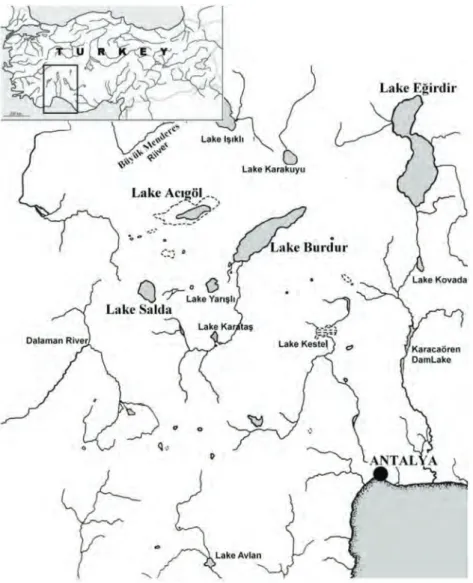
Fig. 1. Map of the Lake District showing localities of the four endemic species of the genus Aphanius.
Lake c1gol.--.
,,-"_.h,..'
-:.:~--~ '
(SW Turkey): the saline lakes Acıgöl, Burdur and Salda and the freshwater Eğirdir (Fig. 1). Sampling was carried out seasonally, between March 2014 and February 2015, by shore seine net (10 m long and 2 m high; 1.2 x 2 mm mesh size). After cap-ture, the fish were preserved in 4% formaldehyde and transported to the Fish Biology Laboratory of the Biology Department of the Mehmet Akif Ersoy University, Burdur, Turkey. The total length of each fish was measured with 0.01 mm sensitive callipers and weight was recorded by an electronic balance at the nearest 0.01 g. The sex was determined by exter-nal observation since the species of Aphanius exhib-it sexual dimorphism. The age was determined from scales taken from the left side of the body, between the end of the pectoral fin and the beginning of the dorsal fin. Age was estimated by two different oper-ators (Bagenal 1978). For each species the overall ratio of males to females was evaluated using χ2 test
(P> 0.05). A preliminary step in the computation of the length- weight relationship was the validation of the data and potential outliers were excluded as they were likely derived by wrong measurements or aberrant data. The length-weight relationships were estimated for the total sample and separated by sex by means of the exponential regression equation, W = a TLb, where W is the weight in g, TL – the
to-tal length in cm, a – the intercept of the regression, and b – the slope or regression coefficient (Rıcker 1975).
Results
During the study, totally 1246 specimens were exam-ined: A. iconii – n=206 (Fig. 2), A. saldae – n=525 (Fig. 3), A. sureyanus – n=350 (Fig. 4) and A. trans-grediens – n=165 (Fig. 5). The age of the fish ranged from 0-IV years for A. sureyanus, I-V years for A. transgrediens, I-IV years for both A. saldae and A. iconii (Table 1). The overall ratios of females : males were 0.76 for A.iconii, 0.17 for A. saldae, 2.39 for A. sureyanus and 1.84 for A. transgrediens. The sex ratio was statistically different for all species except for A. iconii (Table 1). The sex composition differed between the age classes with a higher percentage of females in the older age classes for all the spe-cies (Table 1). The total length class (5 mm interval) composition for age (estimated years) was analysed (Table 2). The estimated b values of the total length-weight relationships varied from 2.58 for the total sample of A. saldae to 3.41 for the male sample of A. sureyanus (Table 3).
Discussion
Currently, freshwater fish may be considered the most threatened group of vertebrates based on the IUCN assessments (McGregor Reıd et al. 2013). Endemic freshwater fish species are the most sensitive because they are often distributed over a small area and they are the most exposed to human impacts (Crıvellı Fig. 2. Aphanius iconii from Lake Eğirdir.
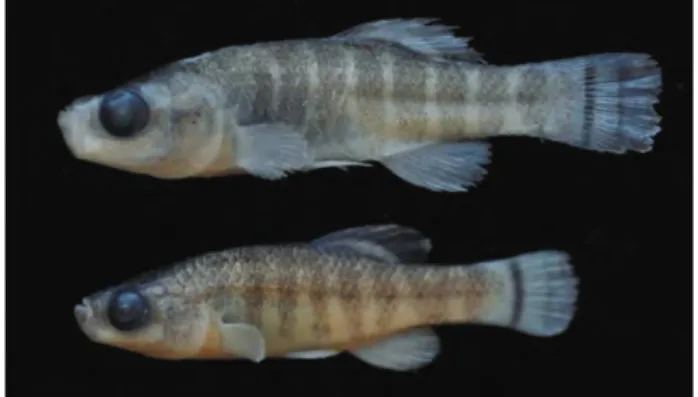
Fig. 3. Aphanius saldae from Lake Salda.
Fig. 4. Aphanius sureyanus from Lake Burdur.
1995). Furthermore, little attention is usually given to the local populations of the endemic species and this lack of interest can represent a higher risk for their conservation and survival. Although the genus Aphanius has received considerable attention, the most of the studies focus on the taxonomy of the spe-cies (Akşıray 1948, Wıldekamp 1993, Wıldekamp et al. 1999, Hrbek et al. 2002, Geıger et al. 2014, Pfleıderer et al. 2014, Freyhof et al. 2017) and, to date, the available knowledge on the biology and ecology of some species of the genus is scarce and limited to a few studies (Güçlü et al. 2007, Güçlü 2012, Freyhof 2014a,b, Yoğurtçuoğlu & Ekmekçı 2015, Sarı et al. 2017).
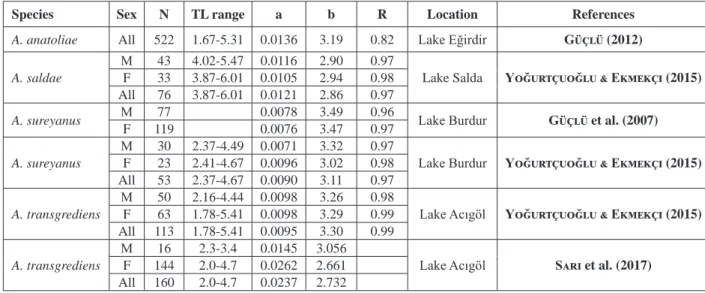
In the present study, the maximum total length for A. iconii is 4.2 cm. For A. iconii, the maximum total length has been reported as 5.03 cm (reported as A. anatoliae, see Güçlü 2012) (Table 4). For A. saldae and A. sureyanus, the maximum total lengths observed (5.2 and 4.5 cm, respectively) are in line with those reported by Yoğurtçuoğlu & Ekmekçı (2015) (6.01 and 4.67 cm, respectively; Table 4). For A. transgrediens, a new maximum total length of 6.1 cm is recorded in this study. The value is slightly bigger than 5.41 cm reported by Yoğurtçuoğlu & Ekmekçı (2015) (Table 4). Examining the estimated length-weight equations, the R2 of the equation are
>0.90 for all the species as suggested by Froese
(2006) and the b values are all within the expect-ed range of 2.5-3.5 recommendexpect-ed by Carlander (1969). The estimated b values for A. sureyanus are higher than 3, in line with the results reported by Güçlü et al. (2007) and Yoğurtçuoğlu & Ekmekçı (2015) (Table 4). For A. saldae, the estimated b val-ues are lower than 3 as reported by Yoğurtçuoğlu & Ekmekçı (2015) (Table 4). In contrast, the esti-mated b value for A. transgrediens is close to 3 and smaller than those reported by Yoğurtçuoğlu & Ekmekçı (2015). These dissimilarities can be due to the different length-range and sample size (Froese et al. 2011). Usually a reduced length range and the abundance of smaller fish can result in a higher b value because small and juvenile fish usually have a more “pumpkin’’-shaped body and become more fusiform with age (Froese 2006). Moreover, Froese (2006) has reported that only when length-weight estimates cover reasonable geographic and inter-annual variation, it is possible to discuss isometric versus allometric growth of the species as a whole by using the value of b. Froese et al. (2011) have reported that the ideal sampling period for studies on length-weight of fish species should extend over a full year cycle and cover all seasons. Thus, it is avoided the inclusion of data that could derive from an “abrupt change of shape’’ (Le Cren 1951). These aberrant data can be due to the huge mass of gonads Table 1. Age and sex distribution of females (F), males (M) and all Aphanius iconii, A. transgrediens, A. sureyanus and
A. saldae (N: Number of samples; N%: Percentage of samples). Species Age
(years)
Females Males All F:M
N N% N N% N N% A. iconii I 5 2.43 21 10.19 26 12.62 0.23:1.00 (P<0.05) II 33 16.02 61 29.61 94 45.63 0.54:1.00 (P<0.05) III 45 21.84 33 16.02 78 37.86 1.36:1.00 (P>0.05) IV 6 2.91 2 0.97 8 3.88 3.00:1.00 (P<0.05) Total 89 43.20 117 56.80 206 100 0.76:1.00 (P>0.05) A. saldae I 0 0 4 0.76 4 0.76 0.00:4.00 (P<0.05) II 12 2.29 190 36.19 202 38.48 0.06:1.00 (P<0.05) III 58 11.05 248 47.24 306 58.29 0.23:1.00 (P<0.05) IV 10 1.90 3 0.57 13 2.48 3.33:1.00 (P<0.05) Total 80 15.24 445 84.76 525 100 0.17:1.00 (P<0.05) A. sur eyanus 0 20 5.71 2 0.57 22 6.29 10.0:1.00 (P<0.05) I 51 14.57 21 6 72 20.57 2.42:1.00 (P<0.05) II 131 37.43 76 21.71 207 59.14 1.72:1.00 (P>0.05) III 37 10.57 4 1.14 41 11.71 9.25:1.00 (P<0.05) IV 8 2.29 0 0 8 2.29 8.00:1.00 (P<0.05) Total 247 70.57 103 29.43 350 100 2.39:1.00 (P<0.05) A. transgr ediens I 27 16.36 23 13.94 50 30.30 1.17:1.00 (P>0.05) II 61 36.97 30 18.18 91 55.15 2.03:1.00 (P>0.05) III 13 7.88 5 3.03 18 10.91 2.06:1.00 (P>0.05) IV 5 3.03 0 0 5 3.03 5.00:1.00 (P<0.05) V 1 0.61 0 0 1 0.61 1.00:0.00 (P>0.05) Total 107 64.85 58 35.15 165 100 1.84:1.00 (P>0.05)
(especially in the species of bigger size) but they can also derive from wrong measurements during the sampling activity (Froese 2006). The sampling in the present study has been carried out seasonally for one year in order to cover the entire annual cycle and to provide accurate and comprehensive parameters of the length-weight equations for the four species. Overall, the age composition is characterised by a higher number of females in the older age classes for all the species. The same unequal sex ratio for mature fish has been observed by Leonardos & Sınıs (1999)
for A. fasciatus from the Mesolongi and Etolikon Lagoons (Greece) and the authors have speculated that this imbalance could reflect different survival rates for males and females. As possible reasons are identified the higher exposition of males to preda-tion due to their courtship colorapreda-tion (Leonardos & Sınıs 1999) and the generally higher survival rate of females, especially in extreme environmental con-ditions (Leonardos 1996). Further detailed studies are encouraged in order to understand if the imbal-anced sex ratio of mature fish observed for the four Table 2. Size and age composition for the total sample of Aphanius iconii from Lake Eğirdir, A. saldae from Lake
Salda, A. sureyanus from Lake Burdur and A. transgrediens from Lake Acıgöl.
Species TL class (cm) 0 I II III IV V Total
A. iconii 2.0-2.49 12 12 2.5-2.99 14 37 2 53 3.0-3.49 57 51 108 3.5-3.99 25 6 31 4.0-4.49 2 2 Σ 26 94 78 8 206 Range TL 2.1-2.7 2.5-3.4 2.9-3.7 3.6-4.2 2.1-4.2 Mean TL±SD 2.45±0.16 2.96±0.15 3.37±0.18 3.89±0.17 3.09 ±0.37 A. saldae
TL class (cm) I II III IV Total
2.5-2.99 3 3 3.0-3.49 1 1 2 3.5-3.99 99 3 102 4.0-4.49 102 212 2 316 4.5-4.99 91 4 95 5.0-5.49 7 7 Σ 4 202 306 13 525 Range TL 2.80-3.30 3.20-4.20 3.80-4.90 4.30-5.20 2.80-5.20 Mean TL±SD 2.95±0.24 3.92±0.13 4.34±0.21 4.89±0.26 4.18 ±0.31 A. sur eyanus
TL class (cm) 0 I II III IV Total
1.0-1.49 3 3 1.5-1.99 19 24 43 2.0-2.49 48 43 91 2.5-2.99 113 113 3.0-3.49 51 17 68 3.5-3.99 21 21 4.0-4.49 3 7 10 4.5-4.99 1 1 Σ 22 72 207 41 8 350 Range TL 1.2-1.8 1.7-2.28 2.2-3.4 3.1-4.1 4.0-4.5 1.2-4.5 Mean TL±SD 1.62±0.16 2.02±0.14 2.74±0.31 3.50±0.24 4.25±0.19 2.64 ±0.60 A. transgr ediens
TL class (cm) I II III IV V Total
2.0-2.49 33 33 2.5-2.99 17 46 63 3.0-3.49 44 8 52 3.5-3.99 1 9 10 4.0-4.49 1 2 3 4.5-4.99 2 2 5.0-5.49 1 1 5.5-5.99 0 6.0-6.49 1 1 Σ 50 91 18 5 1 165 Range TL 2.0-2.6 2.5-3.6 3.0-4.0 4.0-5.1 6.1-6.1 2.0-6.1 Mean TL±SD 2.36±0.17 2.96±0.23 3.48±0.266 4.54±0.48 6.1±0 2.90 ±0.57
examined species of Aphanius could be related to the peculiar environmental conditions and high distur-bances (such as water abstraction, presence of trans-located or non-indigenous species) characterising the four Turkish lakes studied.
Currently, Lake Acıgöl is impacted by habi-tat loss and modification and by the introduction of non-indigenous species (i.e. Gambusia holbrooki and Carassius gibelio). Lake Eğirdir has been im-pacted by water abstraction for agricultural use, wa-ter pollution, especially due to domestic waste, over-fishing and introduction of alien species (Atherina boyeri, Knipowitschia caucasica, Carassius gibelio, Gambusia holbrooki and Sander lucioperca). Lake Burdur and Lake Salda are currently impacted by spring water reduction for use in agriculture and drying-up.
The Anatolian populations of Aphanius are cur-rently in decline due to degradation of habitats, pollu-tion of inland and coastal waters and the presence of introduced exotic fish (Freyhof 2014 a,b, Freyhof et al. 2017). Often these factors work in synergy and this represents the real “threat’’ brought about by hu-man activities (McGregor Reıd et al. 2013). For these reasons, further studies on life history traits of these endemic species are needed to increase the ba-sic knowledge on their population biology and ecol-ogy, assess the population-level responses to ecosys-tem disturbance and monitor the population trend and the status of these endemic species.
Acknowledgement: This research was financially supported by the Mehmet Akif Ersoy University under the Project numbered 0205-NAP-13.
Table 3. Estimated parameters of the total length (TL)-weight (W) regressions for the total sample (All) and separately
for females (F) and males (M) for Aphanius sureyanus, A. transgrediens, A. iconii and A. saldae (N: number of indi-viduals).
Species Sex N TL range W range a b 95% conf b R2
A. iconii All 206 2.1-4.2 0.102-0.800 0.0152 2.7132 2.6993-2.7324 0.92 F 89 2.2-4.2 0.110-0.800 0.0122 2.8836 2.8630-2.9100 0.93 M 117 2.1-3.8 0.102-0.632 0.0162 2.6708 2.6494-2.6950 0.92 A. saldae All 525 2.8-5.2 0.180-1.030 0.0133 2.5869 2.5791-2.5897 0.91 F 80 3.7-5.2 0.410-1.030 0.0089 2.8512 2.8403-2.8694 0.91 M 445 2.8-5.0 0.180-0.960 0.0143 2.5324 2.5274-2.5388 0.90 A. sureyanus All 350 1.2-4.5 0.029-1.025 0.0077 3.2207 3.1870-2.3807 0.96 F 247 1.2-4.5 0.032-1.025 0.0081 3.1834 3.1399-3.2623 0.97 M 103 1.4-3.6 0.029-0.557 0.0062 3.4097 3.3724-3.4709 0.92 A. transgrediens All 165 2.0-6.1 0.088-2.330 0.0118 3.0274 3.0060-3.0453 0.97 F 107 2.0-6.1 0.088-2.330 0.0118 3.0236 3.0007-3.0492 0.97 M 58 2.0-4.0 0.091-0.670 0.0116 3.0459 3.0103-3.0789 0.96
Table 4. Estimated parameters of total length-weight regressions for other Turkish populations of Aphanius spp.
reported in other studies.
Species Sex N TL range a b R Location References
A. anatoliae All 522 1.67-5.31 0.0136 3.19 0.82 Lake Eğirdir Güçlü (2012) A. saldae
M 43 4.02-5.47 0.0116 2.90 0.97
Lake Salda Yoğurtçuoğlu & Ekmekçi (2015) F 33 3.87-6.01 0.0105 2.94 0.98
All 76 3.87-6.01 0.0121 2.86 0.97
A. sureyanus M 77 0.0078 3.49 0.96 Lake Burdur Güçlü et al. (2007)
F 119 0.0076 3.47 0.97
A. sureyanus
M 30 2.37-4.49 0.0071 3.32 0.97
Lake Burdur Yoğurtçuoğlu & Ekmekçi (2015) F 23 2.41-4.67 0.0096 3.02 0.98
All 53 2.37-4.67 0.0090 3.11 0.97
A. transgrediens
M 50 2.16-4.44 0.0098 3.26 0.98
Lake Acıgöl Yoğurtçuoğlu & Ekmekçi (2015) F 63 1.78-5.41 0.0098 3.29 0.99
All 113 1.78-5.41 0.0095 3.30 0.99
A. transgrediens
M 16 2.3-3.4 0.0145 3.056
Lake Acıgöl Sari et al. (2017) F 144 2.0-4.7 0.0262 2.661
References
Akşıray F. 1948. Türkiye Cyprinodontid lerihakkında I. Türkische Cyprinodontiden I. Revue de la Faculté des Sciences de I’Université d’Istanbul 13: 97-142.
Atalay I. 1987. Geomorphology of Turkey. Ege University Press: Izmir.
Bagenal T. B. 1978. Methods for assessment of fish production in fresh waters. Third edition. Oxford: Blackwell Scientific Publications, pp. 101-136.
Carlander K. D. 1969. Handbook of freshwater fishery biol-ogy. Volume 1. Ames, Iowa: The Iowa State University Press. 752 p.
Çıçek E., Bırecıklıgıl S. S. & Frıcke R. 2015. Freshwater fishes of Turkey: a revised and updated annotated checklist. Bi-harean Biologist 9 (2): 141-157.
Crıvellı A. J. 1995.Are fish introductions a threat to endemic freshwater fishes in the northern Mediterranean region? Biological Conservation 72: 311-319.
Freyhof J. 2014a. Aphanius sureyanus. The IUCN Red List of Threatened Species 2014: e.T1849A19006107. http://dx.doi.org/10.2305/IUCN.UK.20141.RLTS. T1849A19006107.en. Downloaded on 18 October 2017. Freyhof J. 2014b. Aphanius transgrediens. The IUCN Red List of
Threatened Species 2014:e.T1850A19006201.http://dx.doi. org/10.2305/IUCN.UK.20141.RLTS.T1850A19006201.en. Downloaded on 18 October 2017.
Freyhof J., Özuluğ M. & Saç G. 2017. Neotype designation of Aphanius iconii, first reviser action to stabilise the usage of A. fontinalis and A. meridionalis and comments on the family group names of fishes placed in Cyprinodontidae (Teleostei: Cyprinodontiformes). Zootaxa 4294 (5): 573-585.
Froese R. 2006. Cube law, condition factor and weight–length relationships: history, meta-analysis and recommendations. Journal Applied Ichthyology 22: 241-253.
Froese R., Tsıklıras A. C & Stergıou K. I. 2011. Editorial Note on Weight-Length Relations of Fishes. ActaIchthyologica et Piscatoria 41(4): 261-263.
Geıger M. F., Herder F., Monaghan M. T., Almada V., Barbıerı R., Barıche M., Berrebı P., Bohlen J.,Casal-Lopez M., Delmastro G. B., Denys G. P. J., Dettaı A., Doadrıo I., kalogıannı E., Karst H., Kottelat M., Kovacıc M., La Porte M., Lorenzonı M., Marcıc Z., Özulug M., Perdıces A., Perea S., Persat H., Porcelottı S., Puzzı C., Robalo J., Sanda R., Schneıder M., Slechtova V., Stoumboudı M., Walter S. & Freyhof J. 2014. Spatial heterogeneity in the Mediterranean Biodiversity Hotspot af-fects barcoding accuracy of its freshwater fishes. Molecular Ecology Resources 14: 1210-1221.
Güçlü S. S. 2012. Population structure of Killifish, Aphanius anatoliae (Cyprinodontidae) endemic to Anatolia in Lake Eğirdir-Isparta (Turkey). Iranian Journal of Fisheries Sci-ences 11(4): 786-795.
Güçlü S. S. & Küçük F. 2012. Two threatened endemic species of the World: Aphanius splendens, Aphanius transgrediens
Cyprinodontidae, from Turkey. Biological Diversity and Conservation 5(3): 44-47.
Güçlü S. S., Turna I. I., Güçlü Z. & Gülle I. 2007. Population structure and growth of Aphanius anatoliae sureyanus Neu, 1937 (Osteichthyes: Cyprinodontidae), endemic to Burdur Lake, Turkey. Zoology in the Middle East 41: 63-69. Hrbek T., Küçük F., Frıckey T., Stöltıng K. N., Wıldekamp
R. H. & Meyer A. 2002. Molecular phylogeny and histori-cal biogeography of the Aphanius (Pisces, Cyprinodonti-formes) species complex of central Anatolia, Turkey. Mo-lecular Phylogenetics and Evolution 25: 125-137. Kazancı N., Gırgın S. &Dügel M. 2004. On the limnology of
Salda Lake, a large and deep soda lake in south-western Turkey: future management. Aquatic Conservation: Marine Freshwater Ecosystem 14: 151-162.
Leonardos I. D. 1996. Population dynamics of toothcarp (Aphanius fasciatus Nardo, 1827) in the Mesolongi and Etolikon lagoons. Dissertation thesis (in Greek), Univ. Thessaloniki, 198 pp.
Leonardos I. D. & Sınıs A. 1999. Population age and sex structure of Aphanius fasciatus Nardo, 1827 (Pisces: Cyprinodonti-dae) in the Mesolongi and Etolikon lagoons (W. Greece). Fisheries Research 40: 227-235.
McGregor Reıd G., Contreras MacBeath T. & Csatádı K. 2013. Global challenges in freshwater fish conservation related to public aquariums and the aquarium industry. International Zoo Yearbook 47(1): 6-45.
Parentı L. R. 1981. A phylogenetic and biogeographic analysis of the cyprinodontiform fishes (Teleostei, Atherinomorpha). Bulletin of the American Museum of Natural History 168: 335-557.
Pfleıderer S. J., Geıger M. F. & Herder F. 2014 Aphanius marassantensis, a new toothcarp from the Kızılırmak drainage in northern Anatolia (Cyprinidontiformes: Cy-prinodontidae). Zootaxa 3887 (5): 569-582.
Rıcker W. E. 1975. Computation and interpretation of biologi-cal statistics of fish populations. Bulletin of the Fisheries Research Board of Canada 191: 1-382.
Sarı H. M., Kurtul I., Aydın E. & İlhan A. 2017. Length-Weight Relationships for an Endemic Species Aphanius transgre-diens from Lake Acıgöl (Afyonkarahisar – Turkey). Lim-noFish 3(2): 113-116. doi: 10.17216/LimLim-noFish.288824. Wıldekamp R. H. 1993. A world of killies. Atlas of the oviparous
cyprinodontiform fishes of the world. Vol. I. The genera Adamas, Adinia, Aphanius, Aphyoplatys and Aphyosemion. American Killifish Association, 311 p.
Wıldekamp R. H, Küçük H. H, Ünlüsayın M. & Van Neer W. 1999 Species and subspecies of the genus Aphanius Nardo, 1897 (Pisces: Cyprinodontidae) in Turkey. Turkish Journal of Zoology 23: 23-44.
Yoğurtçuoğlu B. & Ekmekçı F. G. 2014. Threatened Fishes of the world: Aphanius transgrediens Ermin, 1946 (Cy-prinodontidae). Croatian Journal of Fisheries 72: 186-187. Yoğurtçuoğlu B. & Ekmekçı F. G. 2015. Length-weight and
length-length relationships of eight endemic Aphanius species from Turkey. Journal of Applied Ichthyology 31 (4): 811-813.
Received: 22.02.2018 Accepted: 24.05.2018