SECURITIZATON OF MIGRATION: THE CASE OF THE AFGHAN REFUGEES IN THE ISLAMIC REPUBLIC OF IRAN
A Master’s Thesis
by
BAŞARAN AYAR
Department of
Political Science and Public Administration İhsan Doğramacı Bilkent University
Ankara September 2018 BA ŞA RA N A Y A R SE C U R IT IZ AT ION OF MI GR A T ION: B ilke nt U ni ve rsi ty 2018 CA SE O F A FG H A N RE FU G E E S I N T H E IS L A M IC RE PU B L IC O F I RA N
SECURITIZATION OF MIGRATION:
THE CASE OF THE AFGHAN REFUGEES IN THE ISLAMIC REPUBLIC OF IRAN
The Graduate School of Economics and Social Sciences of
İhsan Doğramacı Bilkent University
by
BAŞARAN AYAR
In Partial Fulfillment of the Requirements for the Degree of MASTER OF ARTS IN POLITICAL SCIENCE
DEPARTMENT OF
POLITICAL SCIENCE AND PUBLIC ADMINISTRATION İHSAN DOĞRAMACI BİLKENT UNIVERSITY
ANKARA September 2018
iii
ABSTRACT
SECURITIZATION OF MIGRATION: THE CASE OF THE AFGHAN
REFUGEES IN THE ISLAMIC REPUBLIC OF IRAN
Ayar, Başaran
M.A., Department of Political Science and Public Administration Supervisor: Assoc. Prof. Dr. İlker Aytürk
September 2018
Based on security studies literature, this dissertation examines securitization of migration and Afghan refugees in the Islamic Republic of Iran between 1979 and the present day. The main argument of the dissertation is that a pattern is discernible between Iran’s direct involvement in armed conflicts and presenting migration as a security issue. Dividing the time framework into three periods, 1979-1989, 1989-2012 and 1989-2012 to present day, the dissertation shows that when Iran gets involved in an armed conflict, -as in the first and third periods- it welcomes the Afghan refugees and pursues integrationist policies, and when Iran enters a period of peace, it resorts to restrictive policies against the refugees. Both international and domestic factors, which lead to this special relationship between the independent variable
-iv
involvement in armed conflict- and the dependent variable -securitization of migration- are discussed in historical and sociological detail.
Keywords: Afghan Refugees, International Political Sociology, Iranian Politics, Migration
v
ÖZET
GÖÇÜN GÜVENLİKLEŞTİRİLMESİ: İRAN İSLAM
CUMHURİYETİ’NDEKİ AFGAN MÜLTECİLER ÖRNEĞİ
Ayar, Başaran
Yüksek Lisans, Siyaset Bilimi ve Kamu Yönetimi Bölümü Tez Danışmanı: Doç. Dr. İlker Aytürk
Eylül 2018
Güvenlik çalışmaları ve uluslararası siyaset sosyolojisi literatürlerine dayanan bu tez, 1979’dan günümüze İran’daki Afgan mültecilerin güvenlikleştirilmesini
incelemektedir. Tez temel olarak, İran’ın doğrudan silahlı mücadeleye dahil olması ile göçün bir güvenlik meselesi olarak sunulması arasında bir örüntünün var
olduğunu tartışmaktadır. Zaman sürecini 1979-1989, 1989-2012 ve 2012’den günümüze olmak üzere üç döneme ayıran tez, İran’ın silahlı çatışmalara dahil olduğunda -birinci ve üçüncü dönemde olduğu üzere- Afgan mültecilere yönelik bütünleştirici politikalar izlediğini, barış dönemine girdiğinde ise mültecilere karşı kısıtlayıcı politikalara yöneldiğini göstermektedir. Bağımsız değişken -silahlı çatışmaya dahil olmak- ve bağımlı değişken -göçün güvenlikleştirilmesi- arasındaki
vi
bu özel ilişkiye yol açan hem uluslararası hem de yerel etkenler, tarihsel ve sosyolojik ayrıntılar üzerinden tartışılmıştır.
Anahtar Kelimeler: Afgan Mülteciler, Göç, İran Siyaseti, Uluslararası Siyaset Sosyolojisi
vii
ACKNOWLEDGEMENTS
First of all, I would like to thank my advisor İlker Aytürk, who thought me how to engage in scientific conduct, for his sincerest support. I would also like to thank Pınar Bilgin and Özlem Tür for their contribution for shaping this study.
I am grateful also to Zafer Sağıroğlu, İbrahim Halil Yılmaz and Hidayet Sıddıkoğlu from Migration Policy Center of AYBÜ for providing me a great environment to conduct this study.
I am grateful to Ali Açıkgöz, Oğuz Can Ok and Özlem Sağlam who helped me to adapt to a completely new academic environment. I would also like to extend my thanks to my dearest friends Utku Çoban and Kurtuluş Ayran. I also thank Göktuğ Ak for his sincerest fellowship.
Last but not least, I want to extend my gratitude to Kübra Çavdar who has offered me her unwavering love, patience, and support.
viii
TABLE OF CONTENTS
ABSTRACT ... iii
ÖZET ... v
ACKNOWLEDGEMENTS ... vii
TABLE OF CONTENTS ... viii
LIST OF TABLES ... x
LIST OF FIGURES ... xi
LIST OF ABBREVIATIONS ... xii
CHAPTER I ... 1
1.1 Concepts and Terminology ... 2
1.2 Theoretical Framework ... 4
1.3 Methodology and Case Selection... 7
1.4 The Islamic Republic of Iran and the Afghan Refugees ... 9
1.5 Chapter breakdown ... 11
CHAPTER II ... 13
2.1 History of Afghan Migration to Iran ... 14
ix
2.3 Afghan Migration to Iran After 1979 ... 19
2.4 Iran-Iraq War ... 21
2.5 Afghans in Iran 1979-1989: The Welcome Period ... 25
2.6 Conclusion ... 29
CHAPTER III ... 31
THE UNWELCOME PERIOD: 1989-2012 ... 31
3.1 Iran between 1989-2012 ... 31
3.1.1International and Regional Context... 31
3.1.2 Domestic Context ... 35
3.2 Securitization of migration and the Afghan refugees in Iran ... 40
3.3 Conclusion ... 51
CHAPTER IV... 53
4.1 Iran Since 2012 ... 53
4.1.1 International and Regional Politics ... 54
4.1.2 Domestic Politics ... 58
4.2 Afghan Refugees in Iran Since 2012: A Partial Relaxation ... 60
4.3 Conclusion ... 64
CHAPTER V ... 65
x
LIST OF TABLES
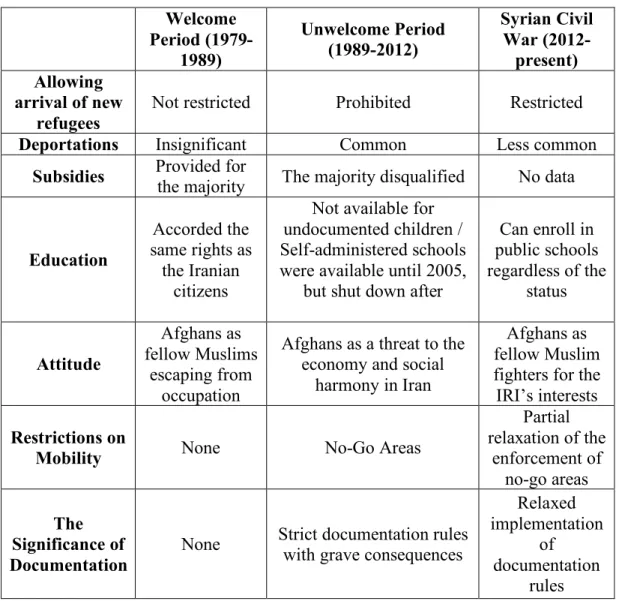
Table 1: Iranian political landscape since 1979 ... 11 Table 2: Policy and Attitude Changes Toward Afghan Refugees in Iran... 68
xi
LIST OF FIGURES
Figure 1: Number of Afghan refugees in the world, Total Migrant Stock of Iran, and Afghan refugees in Iran ... 9
xii
LIST OF ABBREVIATIONS
BAFIA Bureau of Aliens’ and Foreign Immigrants ‘Affairs
CSS Critical Security Studies
HRW Human Rights Watch
IRGC Iran Revolutionary Guards Corps
IRI Islamic Republic of Iran
JCPOA Joint Comprehensive Plan of Action
PDPA People’s Democratic Party of Afghanistan
UNHCR United Nations High Commissioner for Refugees
USA United States of America
1
CHAPTER I
INTRODUCTION
When do states securitize migration? Under which conditions do states attach a positive value and significance to incoming migrants and when would that positive outlook turn sour, leading the host country to securitize the presence of alien immigrants on its territory? Taking my cue from security studies and international political sociology literatures, in this dissertation I depart from these general questions, but focus on a specific one. The research question of this dissertation is how involvement in an armed conflict of a state affects the securitization of migration in that country. I explore this question by examining the case of the Afghan refugees in the Islamic Republic of Iran (IRI). To put it very briefly, I see a pattern and hypothesize that the IRI does not securitize migration when Iran is involved in an armed conflict and the reason for this choice is the change of its security priorities. Instead of securitizing the refugee population, the IRI chooses to benefit from them both in domestic politics and in the armed conflict. To analyze the case of Afghan refugees in Iran, I am going to restrict the timeframe of my research to the period between 1979 and 2018, which covers the whole history of the IRI until the present day. My theoretical framework is built around the critical security studies since it provides a wide range of research tools to track down the securitization practices. In this dissertation, I am aiming to make a contribution to the growing
2
literature on securitization of migration by bringing under the spotlights a case from the non-western world, specifically from the Middle East.
1.1 Concepts and Terminology
The use of terminology when studying migration is crucial. As Bigo (2002, p. 71) mentions for migration and security, “the wording is never innocent.” This applies to the term “refugee” as well. As Betts & Loescher (2011) explains, the term refugee has both legal and general meanings, and these meanings have evolved. According to the 1951 Geneva Convention, which currently provides the legal definition the refugee status and which the IRI is also a signatory of, a refugee is a person who left his country due to a well-founded fear of persecution and unwilling to return to it (Convention and Protocol Relating to the Status of Refugees, 1951). When applied, this legally defined refugee status brings with it certain rights and privileges, as well as obligations and responsibilities, both for the refugee and the host country. Many host states, however, refrain from granting refugee status to avoid obligations and claim exceptions. The IRI is one such case, where only a fraction of Afghans in Iran are recognized as refugees, whereas the vast majority goes by different and
periodically differing statuses given them by the IRI authorities (Chapters 2 and 3). In this dissertation, I am using the term “refugee” in its general meaning and apply it to all Afghans in Iran regardless of the various official or unofficial labels they have. What leads me to employ a more inclusive definition of the term is: 1) securitizing practices have an impact on all Afghans in Iran regardless of their status, although the harshness of the measures may vary, 2) while all Afghans in the IRI should actually have been covered by the terms of the Geneva Convention, Iranian decision-makers deprive the majority from this status in order to have a free a hand in dealing
3
with them. Therefore, when the term “Afghan refugee” is used in this dissertation, it does not reflect the limited number of Afghans, who were actually registered by the Iranian authorities as international refugees, but it corresponds to the sum total of 960.000 documented and almost two million undocumented Afghans currently living in the Islamic Republic of Iran (Human Rights Watch, 2013).
Various terms have been used to define the Afghans in Iran. The Afghans who came to Iran before 1992 were granted the mohajeer status, which provided them with many rights and benefits. Originating from an Arabic root, mohajeer means ‘migrant,’ but it has a religious connotation. However, by the early 1990s, the IRI started giving the newly-invented panahandeh status instead. Panahandeh (singular form of the word) means “refugee” in the Persian language. Safri (2011) argues that the transformation of discourse from mohajeer to panahandeh is a signal of a newly-growing negative attitude vis-à-vis the Afghan population in Iran. There is in Iran also a limited number of Afghans, who were registered as refugees by the UNHCR, and asylum-seeking Afghans, who are waiting for a decision from the authorities. On top of all those, there are approximately two million undocumented Afghans in Iran, who do not have any documentation. Apart from these more legalistic terms to denote an Afghan in Iran, the most common and popular term, often used by
ordinary Iranians to refer to Afghans is the “Afghan worker.” The “Afghan worker” (Kargar-e Afghanistan) is a daily term used for the Afghans employed in low value-added jobs in Iran (Moughari, 2007).
When it comes to distinguishing between the Afghans in Iran, the most significant difference among the Afghan refugees in Iran is their documentation, or the lack of
4
it. Being documented or undocumented/illegal creates a significant difference for refugees due to the different treatment accorded to their status. This distinction is not independent of the securitization of migration and appeared as a part of the
securitizing policies. Documentation was not considered crucial for a whole lot of procedures and acquisition of rights and services during the period that the IRI was involved in the Iran-Iraq War, but became mandatory afterward (Hoodfar, 2014). This put many Afghans in illegal status and caused loss of their access to many rights and services. The illegal status of the refugees makes them more “flexible and exploitable” in the job market (Huysmans, 2000). To sum up, among the myriad of terms and adjectives regarding the refugees, documentation creates the most significant distinction.
1.2 Theoretical Framework
Traditional security studies have a state-centrist approach, which takes the military sector as the central milieu of the security studies. The Critical Security Studies (hereafter CSS) emerged as a response to this by suggesting a widening in the scope of what the term “security” covers and, thereby, what security studies must also cover (Waever, Buzan & de Wilde, 1998). Critical approaches expanded and widened the horizon of the security studies by acknowledging various actors other than states and various topics such as migration, environment, and economy as new areas of interest for security studies (Krause & Williams, 1996). Two aspects of the CSS are: 1) expanding the scope of the discipline by examining different threats such as environmental or societal, 2) widening the scope by including the security of subjects other than the state actor (Huysmans, 2006). Therefore, the CSS expanded
5
the horizon of the security studies, which was focused mainly on the military relations between states until then.
In this dissertation, I use the term securitization as a “kaleidoscope of practices,” which are mundanely applied by the officials (Balzacq, Basaran, Bigo, Guittet, & Olsson, 2010). Although this kaleidoscope contains the discourse as well, it is not restricted to it, and the discourse and practices regarding securitization are examined together. The importance of the combined effect of the discursive and practical elements comes from their potential to manipulate the public (Huysmans, 2000). In his study on securitization of migration in Greece, Karyotis (2012) shows the discursive or non-discursive aspects of the securitization, and mentions “visual images, performative violent acts, policy tools, institutional configurations, and forms of governmentality” as some of the “individual and collective framing strategies.” States often securitize migration by castigating or demonizing migrants and accusing them of being responsible for unemployment for the citizens of the host country by exploiting the welfare state and damaging the local culture (Ceyhan & Tsoukala, 2002). Securitization of migration is a continuum from the management of migration to the criminal issues, hence provides a basis for linking the criminal activities with migration (Huysmans, 2000).
Conceptualization of the securitization practices is crucial for this study. Balzacq (2008) suggests that a securitization practice can be examined under the rubric of “the policy instrument,” which is a “package” containing “1) a type of good or activity, 2) a delivery vehicle for this good or activity, 3) a delivery system, and 4) a set of rules.” He then defines the securitization instrument as “an identifiable social
6
and technical ‘dispositif’ or device embodying a specific threat image through which public action is configured to address a security issue” (Balzacq, 2008). In this sense, border controls, security checks, surveillance technologies and many other material practices can be treated as the securitization instruments. By exposing how those security instruments are employed, it becomes possible to uncover how policy-makers translate intentions into practice and it also shows how social processes affect the policy instruments (Balzacq, 2008). This dissertation examines the impact of the armed conflict of the state in addition to the domestic social processes. In parallel with this approach, I track down the securitization of migration toward the Afghan refugees in Iran through the bureaucratic and legal regulations, the attitude of the officials, the evolution of the terminology used for defining the Afghans, refugees’ access to services, restrictions on civil rights, restrictions on mobility and economic activities.
In general, presenting migration as a danger to the local, national economy, character or prosperity is the securitization of migration (Waughan-Williams, 2015).
According to Ceyhan and Tsoukala, the arguments of security agents and media for securitizing migration have four principal axes:
1) a socioeconomic axis where migration is associated with
unemployment, the rise of informal economy, the crisis of the welfare state, and urban environment deterioration 2) a securitarian axis, where migration is linked to the loss of a control narrative that associates the issues of sovereignty, borders, and both internal and external security 3) an identarian axis where migrants are considered as being a threat to the host societies’ national identity and demographic equilibrium 4) a
7
political axis where anti-immigrant, racist, and xenophobic discourses are often excepted to facilitate the obtaining of political benefits (Ceyhan & Tsoukala, 2002).
In this study, I searched for those axes and identified them in the case of the Afghan refugees in Iran. Just to give two examples to make this point, accusations toward Afghans for increasing unemployment and inflation (Mina, 2015) or claims of Afghans having too many children and not complying with the family planning program and breaking the societal harmony of Iran (Tober, 2007) reflect two of these axes.
1.3 Methodology and Case Selection
This dissertation conducts a single case study with a historical inquiry on the Afghan refugees in Iran, within the theoretical framework of the Critical Security Studies. The historical inquiry unmasks the evolution of policies and practices targeting the Afghan refugees in Iran, which simultaneously underlines Iranian securitizing policies. Critical Security Studies are intricately linked to the discipline of history as a terrain of social scientific research (Froese, 2013). The historical context of policy shifts and evolution is significant, because in this way I will attempt to show how Iranian decision-making on the Afghan refugees responded to an independent variable, that is, the IRI’s involvement in military conflicts.
Since this dissertation examines the effect of the state’s involvement in an armed conflict on the securitization practices it applies to the refugees, the independent variable of the research is the IRI’s involvement in an armed conflict . The
8
timeframe selected for this study reflects both the entire history of the IRI and the history of the Afghan exodus: 1979-2018. This study provides a clear-cut picture of the relationship between my dependent and independent variables: Iranian decision-makers relaxed and continue to relax the securitization of migration in the context of an armed conflict, while they do implement harsh securitizing policies during
cessation of such conflicts. Regarding the fact that securitization of migration is the “transformation of the logic of control and the surveillance of people entering and living inside the territory” (Ceyhan & Tsoukala, 2002), the Afghan refugees in Iran pose an appropriate case for the continuous inflow of migrants, repatriation efforts, deportations and migration to third countries of millions of people for almost four decades.
Securitization of migration in Iran shows similar features to those few other cases. For example, like the case of Iran, undocumented migrants in Greece have been excluded from access to education, health services, and many other services and they are working in the sectors that locals usually do not prefer to do (Karyotis, 2012). Another similarity is the fact that Afghan refugees initially were welcomed in Iran due to their contribution to the economy just like the European countries that “used a permissive or even promotional migration policy motivated by the need for extra labour” (Huysmans, 2000). At the initial welcoming period, documentation was not so important for employment or social benefits, but this policy changed in the 1990s and documentation status became important. What makes the case of Iran quite unique, in comparison with other cases, is the fact that the securitization policies of the IRI evolved in parallel to its involvement in an armed conflict: First, the war with
9
Iraq between 1980-1989, and, second, the Syrian Civil War, in which Iran intervened in 2012 and continues to be a major actor.
1.4 The Islamic Republic of Iran and the Afghan Refugees
The Islamic Republic of Iran was established in 1979 after a period of discontent against the rule of Shah Mohammad Reza Pahlavi. The new regime established as a theocratic democracy. In the meantime, civil war broke out in Afghanistan, which resulted in the Soviet occupation and led millions of Afghans to migrate to
neighboring countries, especially Iran and Pakistan. Since this boom of migration from out of Afghanistan, Afghans emerged as the most significant foreign
population in Iran as shown in Figure 1.
Figure 1: Number of Afghan refugees in the world, Total Migrant Stock of Iran, and Afghan refugees in Iran1
1 The figure is created based on the data derived from
http://www.un.org/en/development/desa/population/migration/data/estimates2/estimates17.shtml 0 1000000 2000000 3000000 4000000 5000000 6000000 7000000 8000000 1990 1995 2000 2005 2010 2015 2017
Total Number of Afghan Refugees Total Migrant Stock in Iran
10
In the meantime, the Islamic regime in Iran experienced a lengthy and costly war with Iraq from 1980 to 1988. The war not only devastated the economy but also caused a considerable death toll for Iran. Since the concern of this dissertation is the effect of armed conflicts of the IRI on the securitization of the Afghan refugees, from an analytical point of view, the timeframe of the dissertation is broken down to three distinct periods: 1) the welcome period (1979-1989), 2) the unwelcome period (1989-2012), and 3) the Syrian Civil War (2012-2018). The first period corresponds to the IRI under the rule of Khomeini and the war with Iraq. The second period corresponds to the end of war with Iraq and change of rulers in 1989. And the last period initiates with the Iran’s involvement in the Syrian Civil War and still
continues. While the first and third periods correspond to the IRI’s direct involvemnt in armed conflicts, the second period reflects a period in which the Iranian decision-makers mainly concerned with the consolidation of the regime at home. The periods, the rulers of the IRI during those periods, and the IRI’s direct armed conflicts can be seen in the Table 1.
11 Table 1: Iranian political landscape since 1979
Period Supreme Leader President Armed
Conflict Welcome Period (1979-1989) Ayatollah Ruhollah Khomeini (1979-1989)
Sayyid Ali Khamenei (1981-1989) Iran-Iraq War (1980-1988) Unwelcome Period (1989-2012) Sayyid Ali Khamenei (1989-Present)
Akbar Hashemi Rafsanjani (1989-1997) Mohammad Khatami (1997-2005) Mahmoud Ahmadinejad (2005-2013) No conflict Syrian Civil War (2012-Continuing) Sayyid Ali Khamenei (1989-Present) Mahmoud Ahmadinejad (2005-2013) Hassan Rouhani (2013-Present) Iranian involvement in the Syrian Civil War (2012-Present) 1.5 Chapter breakdown
Chapter two of this dissertation examines the IRI’s attitude towards the Afghan refugees who left their country due to the USSR occupation and the following political events. This chapter starts with the year 1979 in which the Afghan exodus began in great numbers, and an Islamic regime was established in Iran. The events in this period show that the Iranian regime welcomed the Afghans since they were crucial for the devastated Iranian economy, which was hit hard by the war with Iraq and the international isolation. Afghan refugees were not only beneficial for the economy, but many fought at the battlefront against the Iraqi forces during the war.
12
The third chapter examines the changing attitude of the IRI towards the Afghan refugees after 1989. Securitization practices emerged in accordance with this change of attitude. Documentation processes, bureaucratic obstacles, restrictions on the right of movement, deportations, restrictions on the social welfare benefits and subsidies, externalization from the formal economy and obstacles before education are
examined to show securitization of Afghan refugees in Iran. I argue that since the priorities of the IRI transformed from the survival of regime to the consolidation of the regime, the Afghan refugees were no longer an asset which can be used in an armed conflict but an obstacle before the consolidation of the regime.
The fourth chapter describes the relative improvement in the lives of the Afghan refugees in Iran after the IRI’s involvement in the Syrian Civil War since 2012. Although some of the securitizing practices continue, there has been a significant upturn for Afghan refugees. Many Afghan refugees have been fighting in Syria on the side of the Assad’s regime, and their contribution to the Assad’s defense is significant. Due to the domestic discontent among Iranian citizens, it is easier for the IRI to send the Afghan refugees to the war instead of the Iranian citizens. This contribution of Afghans and the changing security priorities of the IRI caused a relative easing on the IRI’s policies toward Afghan refugees since they are, once again, becoming an asset for foreign policy. Finally, the last chapter will discuss the findings from the dissertation and their contribution to the field.
13
CHAPTER II
THE WELCOME PERIOD: 1979-1989
The period between 1978-1989 starts with the political developments in Afghanistan which led to the USSR intervention and ends with the year 1989, which marks the end of the Soviet intervention in Afghanistan. Due to the instability in Afghanistan millions of Afghans sought refuge in different countries, especially neighboring Iran and Pakistan. Although for the Afghans Iran was not an alien place to migrate
historically, the numbers were unprecedented. This was a tumultuous period for Iran, as well. During the first period of the refugee inflow to Iran in 1979, the Islamic Republic was founded after the Islamic Revolution. The newly established Islamic Republic of Iran’s policy towards the Afghan refugees was positive in general. Main reasons for this positive attitude were the demand for cheap labor due to its
beleaguered economy, the costly war with Iraq which caused a significant death toll among Iranians and its Islamist ideology shaped around the concept of the Muslim world and umma. Incoming Afghans were mostly absorbed into cities and worked in low value-added sectors, received help from social services and some even fought on Iran’s side against Iraq. They were not only contributing to the economy, but also acting as living proof of the regime’s slogan of ‘Islam has no borders.’ Due to Iran’s involvement in an armed conflict, the Afghan refugees in Iran were useful policy
14
assets that could be helpful in both domestic and foreign policy. Therefore, securitization of migration did not take place during this first period.
2.1 History of Afghan Migration to Iran
Afghans had been visiting Iran as migrant workers, pilgrims, or merchants long before the period of conflict that began in 1978. One can trace this history to the reign of Nader Shah Afshar during the 18th century (Monsutti, 2008, p. 170). The records of settlement of the Afghans go as early as the 1850s (Hugo, Abbasi-Shavazi, and Sadeghi, 2012, p. 264). In some places in Iran, Afghans were making up 90 percent of the local population (Abbasi-Shavazi, Glazebrook, Jamshidiha, Mahmoudian, & Sadeghi, 2005, p. 13). Afghan migrants of the 19th century
integrated in the Iranian society in a way that in the following century they were regarded as citizens of Iran that called upon by different names such as the khavari or the barbari (Adelkhah & Olszewska, 2007, p. 140). Their integration to
mainstream Iranian society was such that, “during the Reza Shah rule, khawaris were represented at the national ceremonies as one of the nations of the country” (Abbasi-Shavazi, Glazebrook, Jamshidiha, Mahmoudian, & Sadeghi, 2005, p. 13). Literally meaning the “people of the east”, and also referred to as barbari, Afghan migrants of this early era were gradually accepted as Iranian citizens (Abbasi-Shavazi, Glazebrook, Jamshidiha, Mahmoudian, & Sadeghi, 2005, p. 13). This proves that Afghans were already in the Iranian social and cultural life long before the mass migration of the late 20th century took place.
The migration from Afghanistan to Iran increased in the modern era. In the 20th
15
intervention in Afghanistan, migration from Afghanistan to Iran was already frequent. The main reason of this wave of migration was economic. During the 1960s and the 1970s, Afghanistan’s economy was in a bad shape. Already declining agricultural output, hit hard by a catastrophic drought of the 1970s, caused great damage to the working class and agricultural workers (Emadi, 1991, p. 235). Afghanistan’s economy was largely dependent on the Soviet economy, so much so that it was seen as “the periphery that provided raw materials and minerals in exchange for Soviet manufactured goods” (Weinbaum, 1989, p. 302). In contrast to Afghanistan’s underdeveloped economy, Iran was industrializing, and there was a growing service sector. In Iran before the revolution, percentage of the people in the agricultural sector was remarkably decreasing due to urbanization (Moghadam, 1989, p. 41). When this economic contrast came together with the good relations between Iran and Afghanistan, Pahlavi rule allowed Afghan immigrant laborers to seek employment in Iran. While some of the Afghans lived and worked legally, others worked without documentation, and the officials tolerated this since they regarded the Afghans as cheap labor (Ashrafi & Moghissi, 2002, p. 90).
Bilateral relations were not always very warm, however, and there were occasional moments of trouble too. The first deportation of migrants took place during the 1970s, for example. Disputes between Iran and Afghanistan during the rule of President Daoud in Afghanistan led to Mohammad Reza Shah’s sanctions, which included some use of force, but, more importantly, deportation of more than one million Afghans from Iran, and this mass deportation of Afghan immigrants in Iran negatively affected the Afghan economy (Emadi, 1995, p. 4). This incident of deportation shows that securitization of migration appeared long before the
16
establishment of the Islamist Regime in Iran in 1979 and it is not an unprecedented policy, initiated for the first time by the Islamic Republic of Iran. Despite mass deportations, however, several hundred thousand Afghans remained in Iran as migrant workers at the time of the 1978 coup and stayed in the country (Adelkhah & Olszewska, 2007, p. 141).
The reasons of Afghans to migrate to Iran vary. Better economic performance of and higher living standards in Iran are the most crucial factors. Afghanistan and Iran share a history under the rules of earlier empires and historical trade routes, which enhance economic relations (Carter, 2010, p. 980). In addition to economic
closeness, Ashrafi and Moghissi (2002, p. 89) mention “geographical proximity and religious, cultural and linguistic affinities” as the factors that made Afghans to choose Pakistan and Iran. Religion especially acted as a significant motive especially for the Shi’ite Afghans, because the Khorasan region of Iran is home to the holy city of Mashad, the place of the tomb of the 8th Imam of the Twelver Shi’ite belief, and is
quite close to Afghanistan. Oppressed Shi’ite Afghans chose to migrate to Iran since it was a religious center for their sect (Emadi, 1995, p. 3). However, apart from these, according to Monsutti (2008, p. 60), Iran is not only a destination for migration to many Afghans but also a part of the social and cultural life since the young Afghan workers go to Iran to save enough money to re-establish their lives in Afghanistan. This seasonal migration has been an integral part of the Afghan culture and it was significant for the mass migration after 1978, because already set up networks were going to act as a guide for migrants (Stigter, 2006, p. 117). These economic, cultural, religious, historical, and social connections between two
17
countries make it easier to understand why more than millions of Afghans chose to migrate to Iran.
2.2 1978-1979: Crucial Years of Change
The years 1978-1979 showed fundamental political changes for both Afghanistan and Iran. Afghanistan experienced continuous domestic struggles causing one of the biggest mass emigrations of the history. The instability in Afghanistan started with the coup against President Daoud. Army officers loyal to the People’s Democratic Party of Afghanistan (PDPA) staged the Coup and they carried it out successfully on April 27, 1978. As a result, President Daoud was overthrown and a ‘democratic’ republic declared in Afghanistan (Emadi, 1991, p. 235). Having the support of the USSR, the PDPA started applying fundamentally different policies and the harsh manner in which these policies were carried out caused a public opposition which led to an armed conflict by the end of 1979 (Rajaee, 2000, p. 49). The PDPA soon branched into two rival factions, Parcham and Khalq and these two factions fought a violent war, adding to the misery of the Afghan people (Adelkhah & Olszewska, 2007). Having close ties with the USSR, the PDPA invited the Soviet intervention to end the power struggle in Afghanistan. Receiving this invitation, the USSR sent its armed forces to intervene in December 1979. However, this intervention was far from showing stability in the country. A resistance, internationally known as the militia of the mujahedeen,2 against the intervention soon appeared. The exacerbation
of the political and socio-economic crisis in Afghanistan and the resulting violence caused a mass migration from the country and led to some seven million displaced
2 Mujahedeen is the plural term to define Afghan resistance fighters against the Soviet intervention.
Dictionary meaning of the term is “the ones who do jihad.” It had a highly religious connotation which meant to signify the resistance as an Islamic fight against the Soviet forces.
18
persons. A total of four million out of seven initially were seeking refuge abroad (Adelkhah & Olszewska, 2007, p. 138). This migration continued as the instability did, so in a brief time, the number of Afghans who left their country reached up to 6.2 million (Rajaee, 2000, p. 49). 97 percent of the Afghan refugees went to Pakistan and Iran (Human Rights Watch, 2013, p. 18). Decades after the start of the Afghan exodus, 95 percent of all Afghan refugees still continue to live in Iran and Pakistan, while the remaining 5 percent dispersed to some 70 countries (UNHCR, 2015). Iran, on the other hand, experienced a major political turmoil, which led to a regime change in the years 1978 and 1979. In 1978, riots against the Pahlavi regime began all over Iran. The Shah tried to stop the riots by repressing the incidents, but he had to leave the country at the end. In 1979, Ayatollah Khomeini returned to Iran after his long exile of 16 years and founded the new regime step by step. Although the revolution was achieved through a broad coalition of Islamists, nationalists,
socialists, different minority groups and many more political factions, it eventually took an Islamist form (Keddie, 2006). The new regime was basically a theocratic rule under a Supreme Leader. The regime’s focus was on the ummah, the Muslim people, instead of the Iranian nation. Revolutionary leaders found the Islamic Republic of Iran on Shiite Islamic principles. Ayatollah Khomeini, founder of the new regime, argued that “Islam needs to be applied as a form of state since it is above all, a divine law” (Hiro, 1985, p. 116). According to Khomeini, the Revolution had to be a “a revolution without borders” (Takeyh, 2009, p. 3). What he meant was that the notion of nation-state was very restrictive and therefore it should not prevent reaching out to the Muslim world. Takeyh (2009, p. 18) explains this by stating that in the eyes of the new regime “nationalism and territorial demarcation were relics of a discredited past” and the IRI, as the heart of the Muslim world, had to search for
19
allies wherever it could find, regardless of the ethnic or other differences between the new Iran and them (2009, p. 18). For Khomeini, the Iranian Revolution was only the initial stage of a greater fight against the “forces of inequality and oppression” and in accordance with this idea, the religion did not recognize borders (Takeyh, 2009, p. 26). Hence, discriminating or restricting the lives of the Afghans would be incompatible with the Islamic Republic of Iran’s founding principles. For a regime that does not recognize borders, it was not a surprise to accept and integrate millions of their fellow Muslims. Khomeini urged traditional business class of Iran, the
bazaris, to contribute to the government’s burden of the taking care of the Afghan
refugees (Hiro, 1985, p. 225). The Islamic brotherhood rhetoric of the Islamist regime was one of the factors that helped Iran to justify the welcoming attitude toward the Afghan refugees to integrate them into the Iranian economy.
2.3 Afghan Migration to Iran After 1979
Iran’s policy towards instability in Afghanistan changed over time due to Iran’s own domestic and external struggles. During the last few years of the rule of Mohammad Reza Shah, Iran opposed the PDPA and the Soviet intervention. The Shah’s policy of being an unusually close ally of the USA was the main reason of Iran’s opposition. When the PDPA rule consolidated its hold over Afghanistan, Mohammad Reza Shah viewed this development as a threat and he supported opposition groups battling the Kabul regime. The new Islamist regime in Iran continued the Shah’s policies
immediately after the revolution and even deported some Afghans migrants and closed the border and tried to justify this by associating them with crime (Hiro, 1985, p. 353). This was also related to the Islamist regime’s struggle with the Iranian
20
However, the initial reluctance to accept the Afghan refugees ended as a result of the changing internal and external factors. When Iraq invaded Iranian territory in
September 1980, Iranian authorities at once began to welcome the inflow of mostly Shi’ite Afghans. For the Iranian domestic and foreign policy-makers, the Afghan refugees presented many opportunities. For the first time, the Afghan refugees posed an important asset to further Iranian interests rather than being a liability. When the PDPA government in Afghanistan enacted a new conscription law in January 1981, which lowered the age of service for new recruits and extended the duty for the ones already conscripted, the number of Afghans leaving the country skyrocketed
immediately (Urban, 1990, p. 75). Iran willingly accepted them and the number of Afghans in Iran, already close to 900.000 by 1981, increased even further (Hiro, 1985, p. 354). The rulers of the new Islamist regime in Iran saw the benefits of the Afghan refugees within a short span of time.
For one thing, one of the major advantages of Iran’s involvement in Afghanistan and its acceptance of Afghan refugees was that it helped Iran’s foreign policy stature in Moscow. After Khomeini and his supporters won the domestic power struggle against nationalists in 1981, Iran’s Afghanistan policy focused on Afghan Shiites (Ahady, 1994, p. 83). Iran did not get involved in Afghanistan directly. Nevertheless, Iranian diplomats played their Afghan card to put pressure on the Soviets and also, very importantly to convince the Soviets to reduce their supply of arms to Iraq during the war (Milani, 2006, p. 237). For example, in 1983, Iran allowed Afghans to protest the Soviet intervention shortly after the Iraqi forces hit Iranian citizens by Soviet-made missiles (Hiro, 1985, p. 291). Possible gains from Afghanistan were marginal when compared to the importance of surviving in the potentially deadly
21
war with Iraq. Therefore, using its involvement in Afghanistan as leverage for getting any kind of support from the USSR and preventing its supply of arms to Iraq were more crucial. On the other hand, the IRI’s involvement in Afghanistan was not only contributing to Iranian foreign policy vis a vis the USSR, but also and more importantly it strengthened Iran’s hand against other intervening Muslim actors such as Saudi Arabia and Pakistan by the claim of providing shelter to fellow Muslims. It is also important that the revolutionary regime in Iran was still trying to export its ideology, and Afghanistan was a proper target country for this. After the revolution, Iranians were publicizing the Islamic Revolution in the Afghanistan, for exporting the regime (Emadi, 1995, p. 8). If the Iranian regime had mistreated the refugees or refused to accept them, Tehran would have been deprived of a significant foreign policy tool, which helped it to overcome many obstacles including the war with Iraq.
2.4 Iran-Iraq War
Although the outbreak of armed hostility between Iran and Iraq cannot be blamed on one actor only, the IRI’s aggressive foreign policy stance was definitely a major factor which led to a disastrous war with Iraq. Ayatollah Khomeini wanted Iran’s Islamist regime to spread around the Muslim world, usually described policy-makers and scholars as regime export. After the revolution, Khomeini’s idea of regime export created discontent among neighboring countries, especially the Gulf states. Khomeini’s discourse on exporting the revolution especially focused on countries with a Shi’ite majority such as Iraq and Lebanon. Iraq was also considered to be the biggest obstacle before Iran’s regional hegemony (Karsh, 2002, p. 29). After a period of discursive feud, Iraq under the Baathist rule declared war against Iran by claiming sovereignty over some Iranian territory. The newly established IRI found
22
itself in a disastrous war with Saddam Hussein’s Iraq. The Iran-Iraq war is still considered by military historians as one of the longest armed conflicts in the history of the modern Middle East (Takeyh, 2009, p. 81). The war fundamentally changed the conditions in Iran and affected its policies on the Afghan refugees.
At the beginning of the war, Iran was already in a fragile condition due to the
revolution and the ripple effects of profound socio-political change. The government was anxious about the fighting capability of the regular army because of the
possibility of a counter-revolutionary movement, insurgency or a coup attempt. This caused a harsh repression on the military. Almost one hundred officers were
executed in addition to some 12.000 officers purged (Karsh, 2002, p. 29). In addition to this, many political and ethnic opposition groups appeared against the regime. Iraq started the war with a sudden attack to exploit this situation at the end of 1980 and occupied some land on the Iranian side of the border. In response, Iran mobilized large numbers of militia under the banners of Islamic Revolutionary
Guards Corps (IRGC),3 and volunteer forces called Basij e Mustazafin to fill in the
gaps in its army, which was hardly a match for the Iraqis at that point (Karsh, 2002, p. 33). With the shared effort of the regular army and the militias, by the end of 1982 Iran stopped the Iraqi advance. Falling into the defending position, Iraq proposed a ceasefire in 1983 but Iran rejected the offer by demanding impossibly high
conditions such as war compensation and an end to Ba’athist rule in Iraq. From this point onward, Iran’s strategy was pursuing a war of attrition to exploit Iraq’s
manpower limitations (Pelletiere & Johnson, 1991, p. 32). The main idea behind this approach was that it was necessary to punish a ruler – Saddam Hussein- who defied the Islamist regime in Iran with the support of the Shi’ite population of Iraq. An
3 Pasdaran in Persian.
23
uprising of Iraqi Shi’ites did not happen, and the war continued with no tangible result for both sides. Revolutionary regime in Iran saw the continuation of the war beneficial for striking roots of the revolution deep down in Iran. Militia groups’ commitment to the regime dominated the domestic politics in a way that internal disputes were now silenced and the public seemed to stuck together more than it really was (Karsh, 2002, p. 73). Because of the war with Iraq, criticisms for the regime for being authoritarian and decimating freedoms left their place to a discourse of defending the IRI against Saddam’s Iraq (Karsh, 2002, p. 29). A war which could have ended quickly dragged on for eight years despite its human, economic and social costs. Although the Iranian regime saw in this conflict an opportunity to keep a tight hold on power and displace its rivals, the burden of war reached unacceptable proportions. It was exactly in this context that the Afghan refugees were extremely helpful, that is, to alleviate the burden of the conflict. The burden of the war on the Iran was high. Unconventional methods used by the IRGC and the Basij militias significantly helped Iran to resist against Iraq and even start a counteroffensive but caused the death of hundreds of thousands of Iranians. These methods included using a mass of untrained militias for clearing the way before the army. These, so-called, human-wave attacks cost Iran heavy casualties in spite of its success against Iraq. By enforcing the strategies that can be achieved through IRGC, such as human-wave attacks and the attrition war, the impact of the IRGC on Iranian politics was strengthened. Insistence on using strategies, such as human-wave attacks, and the attrition war, that consumed more manpower, put a demographic strain on the Iranian society. Saddam’s response to Iran’s attrition war had devastating consequences in Iran. On the one hand, Iraq used chemical weapons, the so-called “poor man’s nuclear bomb” to deal with the waves of Iranian attacks,
24
causing massive casualties (McNaugher, 1990, p. 5). Iran’s total death toll during the war is not exactly known, although estimates range from 300.000 to one million (BBC, 2015). On the other hand, Iraq also resorted to crippling Iran’s financial situation by destroying economically significant industrial zones, especially oil extraction and processing facilities. The impact of chemical warfare on the Iranian is often described as devastating. The war of attrition which started with the stalemate after Iran’s offensive in 1983 and continued until the end of the war amplified the burden on the shoulders of Iranians. After all, the war of attrition also included crippling each other’s financial situation through destroying economically significant industrial zones, especially oil extraction and processing facilities. With Iranians dying at the Iraqi front by the thousands, the demand for labor in Iranian domestic economy and foot-soldiers for war increased rapidly during the early 1980s. It was this overlap of external and internal factors that created a demand for Afghan refugees both for economic and military ends.
To sum up, Iran needed manpower both for surviving the war and keeping its devastated economy afloat. In addition to this costly war, the IRI was facing US-led sanctions due to the Hostage Crisis.4 Having committed all the resources and
manpower available to the battlefront, the Iranian government regarded Afghans as a cure for the shattered economy and seriously impaired military. Therefore, incoming Afghans were more than welcome for Iran’s survival. Thus, the government did not put obstacles against the Afghans in Iran through laws or regulations that restrict their economic activities. Instead, the IRI, made it easier for Afghans to integrate
4Hostage Crisis are the events that deteriorated the IRI’s relations with USA following the
occupation of the American embassy in Tehran by leftist Islamist students on 4 November 1979. The events lasted for 444 days (Milani & EIR, Hostage Crisis, 2012).
25
into Iranian economy. During this period, the presence of Afghan refugees in Iran was not securitized.
2.5 Afghans in Iran 1979-1989: The Welcome Period
During the period 1979-1989, the IRI welcomed Afghans by giving many rights and benefits to them. The influx of Afghans into Iran in 1979 coincided with the Islamic Revolution in Iran which inspired and implemented an “open-door” policy toward Shi’a Muslim refugees leaving Afghanistan (Glazebrook & Abbasi-Shavazi, 2007, p. 191). The Afghans refugees were both expected and encouraged to integrate into Iranian economy and society. The regime’s ideology constructed around religion, instead of nation or ethnicity, and Iran’s demand for manpower, for both its military and economy, acted as two catalysts for the welcoming attitude. Most Afghans had the muhajeer status which included all the services and rights of a refugee and which simply gave every service except political rights such as voting. The use of the term
muhajeer has been taken in the literature as a symptom of a religious attitude by
several scholars (Glazebrook & Abbasi-Shavazi, 2007; Monsutti, 2007; Rostami-Povey, 2007). This is obviously due to the meaning of the term, an involuntary religious migrant, which resonates with the prophet and his companions during the early years of Islam. Having a religious reference, the muhajeer status and its implementation clearly showed the regime’s positive and welcoming attitude towards the Afghans.
The regime’s discourse on the Islamic brotherhood encouraged the Afghan migration and integration into Iran. Driven by its revolutionary ideals, the Islamic Republic embraced those Muslims in need of protection and support. Shared religion seems to
26
have been another reason for accepting Afghans in Iran. The regime did not take into consideration the long-term consequences of Afghan migration such as
unemployment and social discontent (Zahedi, 2007, p. 231). Instead, the regime considered the short-term benefits of the refugee population and acted with great receptiveness toward them. Afghans were free to go everywhere in Iran in their search for work and livelihood during the war with Iraq which created a demand for their labor (Hoodfar, 2014, p. 133). This positive atmosphere created by the founders of the Islamic Republic was strong and pervasive, so much so that Afghans were going to remember it fondly in the upcoming decades and reminded Iranians their declaration of “Islam has no borders.” Adelkhah and Olszewska (2007, p. 151) suggest that this helped Afghans to integrate in Iranian society as they “married local girls, tilled the soil, gone to war, and volunteered for martyrdom in the cause of Iran.” The Afghan immigrants’ fondness for the early years of the revolutionary regime in Iran also shows the religious aspect of their integration into Iran. Afghan refugees felt at home in Iran not only because Iran was Shiite (like them) but also because Iran now declared itself home to all Muslims and not just a country of ethnic Iranians.
Despite its international isolation after the 1979 revolution, cost of war with Iraq, instability in the domestic politics and the lack of access to international assistance, Iran shouldered the cost of accepting Afghan refugees (Rajaee, 2000, p. 46). In the aftermath of the Islamic Revolution which led to a break with the US and other Western countries, most of the international aid went to support the refugees in Pakistan (Barakat & Wardell, 2002, p. 920). This lack of international support made the management of migration even harder to carry on for Iran. With the proximity of
27
Afghan and Iranian cultures and the lack of resources of Iranian government, migrant population engaged in urban life instead of camps. Only a small portion of the refugees were kept in camps while most of them were integrated in the urban life. At the peak of the Afghan migration in 1992, only 10 percent of the refugees were in camps (Adelkhah & Olszewska, 2007, p. 141). The small portion of the Afghans that stayed in the camps were mostly Sunni Pashtuns that mostly could not speak Persian, and their integration with the Iranian society was harder than the rest (Koepke, 2011, p. 3). Encouraging refugees to urban life saved Iran from the
maintenance cost of the camps and it was also beneficial for economic needs of the Iranian economy.
The mohajeer status (also called blue cards due to their color), granted to Afghan refugees by the Iranian government, included work permits, which allowed the Afghans to get legally employed. The Afghans were concentrated in the labor-intensive economic sectors such as “construction, brick-burning and mining” (Safri, 2011, p. 590) and they felt the need to “accept employment for lower wages” (Rajaee, 2000, p. 50). Afghans who were guest workers at the time of the Soviet intervention also continued to be employed in Iran’s cities (International Crisis Group, 2009, p. 3). Considering the manpower needed for continuing the unconventional methods of the IRGC and the Basij, demand for labor force on these kinds of sectors was quite high. However, there were also some economic restriction for the Afghans with the mohajeer status. Mohajeers could not own their own businesses and their permits covered only low-wage manual day labor. Squire (2000, p. 7) states that the sectors which allowed the Afghans with the mohajeer status tended to be “mainly low-paid, hazardous or laboring jobs”. The IRI determined and
28
fixed the Afghans’ role in the Iranian economy for filling the gap of labor force in some sectors and did not allow them to go outside of this boundary.
Afghans’ contribution during the war years was not only through economic activities but also by spilling their blood for Iranian national interests. During the post-1983 stage of the Iran-Iraq war, many Afghans fought on the Iranian side. In an interview, Hakem Javadi, the former Iranian commander of the Afghan brigade in the Iranian army, named the Abuzar Brigade, in the Iran-Iraq war, states that Afghans trained in both Afghanistan and in the city of Qom in Iran and more than two thousand
Afghans died in the war. The Afghans initially fought within the IRGC divisions but then the Afghan Abuzar Brigade was set up (Defa Press, 2015). Their involvement in the war shows the level of integration in Iran in a brief period of time. The activities of the Afghan brigade against the Iraqi forces became a symbol of Afghan fighters in the future when the IRI engaged in yet another armed conflict in the Syrian Civil War.
The IRI provided the Afghans with many social benefits including free education (Rostami-Povey, 2007, p. 301). From the beginning of the refugee inflow in 1978 to the year 1992, the Iranian government allowed most of the Afghans to register as
mohajeerin, to gain automatic residency in Iran. Although the IRI did not officially
recognize them as refugees, Iranian officials treated the Afghans as refugees as defined by the UNHCR (Human Rights Watch, 2013, p. 19). During this period, Afghans did not face significant problems about education, work permits, or health services. These services were the same as any accorded to an Iranian citizen. The
29
renewal (Glazebrook & Abbasi-Shavazi, 2007, p. 191). The Afghan refugees could access to the Iranian educational system freely. The free education included primary and secondary education, paid for from the Iranian budget (Rajaee, 2000, p. 57). Social services included adult literacy training by which some 300.000 adults obtained basic literacy skills in 15 years from 1985 onwards (Adelkhah &
Olszewska, 2007, p. 145). The Afghan refugees were also receiving the same fuel, energy and food subsidies, provided to Iranian citizens (Koepke, 2011, p. 2). To sum up, during the period between 1979 and 1989 Iran welcomed the Afghan refugees due to several reasons. By giving work permits, health services, education and financial subsidies, the Iranian government was trying to create a conducive environment in which the Afghan refugees could adapt and blend into Iranian society. Most Afghans found jobs and earned their living while their children could find free primary and secondary education in Iranian public schools. They were, for example, not collected in and confined to camps as Afghan refugees were in
Pakistan. Instead they were encouraged to integrate into the economy in order to survive in the war economy. Iran welcomed the Afghans not only by giving rights and benefits to them but also through religious discourse of the revolutionary regime, which greeted them as fellow Muslims.
2.6 Conclusion
The period of 1978-1989 shows a welcoming attitude of the Iranian government toward the Afghan refugees. The security regime of the IRI was not at odds with the Afghan refugees since they were much needed due to Iran’s costly external struggles which caused an immense gap in both manpower and the Iranian economy. The Islamic Republic of Iran faced internal and external struggles after its establishment,
30
including the internal power struggle with nationalists and socialists, a regional war with Iraq, international isolation, and a wrecked economy, too. In this myriad of problems, the new regime was also trying to consolidate and legitimize its Islamist ideology and win hearts and minds of the Iranian society. The arrival of the Afghans turned out to be a crucial factor for the Islamic Republic, since its economy was severely ruined due to the disastrous eight-year-long war with Iraq. Many Afghans also fought against the Iraqi forces. Securitization of migration, during this period, would have worked against the interests of the Islamist regime in Iran. The
welcoming attitude, on the other hand, was greatly beneficial for a number of reasons. The IRI welcomed the Afghan refugees because they were beneficial for a) contributing to the economy of Iran as low-wage labor force, b) supporting Iranian forces in its war with Iraq, c) they could pose a foreign policy asset especially toward the USSR, d) they were symbolizing the idea of “Islam has no borders.” The security regime of the IRI during this period was inclusive toward Afghans and this policy continued until the early 1990s. In the following chapter, I will show the grounds for the end of this welcoming attitude and the initiation of the new security regime which stigmatized the Afghans.
31
CHAPTER III
THE UNWELCOME PERIOD: 1989-2012
This chapter analyzes the transformation of Iran’s attitude toward Afghan refugees after 1989. The welcoming attitude that Iran had adopted since the revolution gave way to a negative approach and the focus of this chapter is to explain the reasons behind this transformation.
3.1 Iran between 1989-2012
This section examines the changes in the international, regional, and domestic politics of Iran. The impact of these changes on the IRI’s policy toward the Afghan population in Iran will be discussed.
3.1.1International and Regional Context
Iran’s war with Iraq was massively exhausting and the IRI had to accept a ceasefire in 1988 because it was becoming harder and harder to endure the costs of war. The war reached a stalemate in the second half of the 1980s and it was not likely for Iran to be able to continue due to: 1) the financial burden of the war, 2) the need for military spare parts, which was hard to procure since the Iranian army was mainly equipped with US-made arms, causing grave problems due to the US embargo, 3)
32
the lack of enough military vehicles,5 4) problems with the regular army caused by
continuous executions, purges and surveillance,6 5) inhospitable logistics caused by
the collapse of Iranian infrastructure after the Iraqi airstrikes (Segal, 1988). The emergence of the possibility of a war with the US after the incident of shooting down of an Iran Air Airbus in 3rd July 1988 by the USA Navy, was probably the last straw
that broke the camel’s back and led the IRI elites to the conclusion that the war should end (Razoux, 2015, 500). On July 15, 1988, the IRI government declared that it accepted a ceasefire as well as the UN Resolution 598, which urged Iran and Iraq to accept a ceasefire, withdraw forces to internationally recognized borders and release of prisoners (UN Security Council Resolution 598). Although minor clashes continued until mid-August of the same year, the Iran-Iraq war ended in the summer of 1988.
Iran followed a more pragmatic foreign policy after 1989 (Takeyh, 2009, p. 111). Since the revolution, the IRI was facing international isolation, especially in
response to the Hostage Crisis in the immediate aftermath of the revolution, but also because of the aggressive foreign policy of the Islamic regime and the war with Iraq. New rulers of the post-Khomeini era, particularly the new president Rafsanjani had come to the conclusion that the IRI had to save itself from the isolation if the Iranian economy was expected to recover (Razoux, 2015). The national reconstruction program that the rulers of the IRI were seeking to implement forced them to rekindle peaceful relations with the international society, since the reconstruction of the
5 Iran had 1100 operational tanks while Iraq had some 3400 tanks, 1400 armored vehicles while Iraq
had 4500 (Razoux, 2015, p. 453) and 70 operational aircrafts while Iraq had 632 (Segal, 1988) by 1988.
6 The estimated number of the executed officials of the regular army reached 5000 in 1988 in addition
to thousands who were purged and exiled, and those who stayed in army had to operate with the guidance of the spiritual guidance officers causing a pressure on the regular army and obstacle for effective management (Segal, 1988).
33
country was not compatible with the existing animosities (Maloney, 2015).
Therefore, after the war, IRI sought to unchain itself from this problem by seeking cooperation in its foreign relations to end international isolation (Behrooz, 2012). At the beginning of September 1988, less than a month after the last clashes of the war, the IRI reestablished its diplomatic relations with Saudi Arabia, Kuwait, Bahrain, and the United Kingdom (Razoux, 2015). The invasion of Kuwait by Iraq also helped Iran to pursue this policy gradual normalization even further. Even the relations with the United States, named as ‘the greater Satan’ by Ayatollah
Khomeini, showed some signs of moderation exemplified by the American decision to unfreeze some Iranian assets. When the reformist president Khatami got elected in 1997, he took another daring step in the path of normalization by starting the
‘Dialogue of Civilizations’ initiative (Abrahamian, 2008). Later, at the end of the 1990s and in the very first years of the 2000s, the relations with the USA again showed some improvement, when Iran and the USA cooperated against the Taliban regime in Afghanistan. Iran’s re-integration into international politics continued until President George W. Bush’s statement on the “axis of evil” in 2002 (Milani, 2008, p. 248). Hence, revolutionary Iran’s aggressive foreign policy transformed into a more cooperative and soft approach between 1989 and 2002.
The more inward-looking Post-Khomeini rulers of the IRI focused increasingly on domestic politics and economy. They may not have necessarily given up on the idea of spreading the Islamist regime to other countries, but that policy was no longer a top item on their agenda. The new foreign policy approach of Iran could simply not have gone together with the policy of disrupting other countries by making attempts at creating similar regimes abroad. The IRI elites also knew that this idea was
34
beyond the IRI’s political and economic capabilities (Amuzegar, 2014, p. 39). Instead, the rulers of the IRI silenced the hardliners at home, who insisted on exporting the Islamist revolution and tried to expand Iran’s influence, on the one hand, through cultural activities and, on the other hand, sought to maximize national interest in foreign policy (Freij, 1996). Therefore, the new foreign policy approach made the idea of regime export unfashionable for the IRI.
Another important regional development was the instability in the political situation in Afghanistan after the withdrawal of the Soviet forces in 1989. Initially
Afghanistan experienced a transition in power in 1989. With the establishment of a new government in Kabul, hope for stability in the country appeared for the first time in more than a decade and up to 1.4 million Afghans from around the world, but especially from neighboring countries, moved back to their country (Abbasi-Shavazi, Glazebrook, Jamshidiha, Mahmoudian, & Sadeghi, 2005). But this optimism
disappeared once the civil war started again and the Taliban came to power. Internal struggles between rival factions in Afghanistan escalated in the 1990s and uprooted the Afghan population again (Rajaee, 2000, p. 49). The civil war in Afghanistan between 1989 and 1993 and the repressive Taliban regime following this caused new waves of migration to Iran (Abbasi-Shavazi, Glazebrook, Jamshidiha, Mahmoudian, & Sadeghi, 2005). This new influx is notable for the economic migration of the Afghanistan’s urban, educated middle class (Abbasi-Shavazi & Sadeghi, 2014, p. 91). Because of the new waves of migration, Iran was not only forced to deal with the management of the existing migration population, but it also sought ways to prevent the inflow of new waves of Afghan refugees. This situation continued until the early 2000s. After the establishment of a government in Afghanistan backed by
35
the USA-led coalition another hope for stability in Afghanistan emerged and more than five million Afghans repatriated to their country, mostly from Iran and Pakistan. But this trend, too, discontinued due to the worsening security conditions (Monsutti, 2008, p. 60). Despite all the international and domestic policies, Afghans continued to migrate from out of their country as a result of lack of accommodation,
employment, security and declining living conditions in Afghanistan (Koepke, 2011, p. 7). To sum up, unending instability in Afghanistan urged policy-makers in the IRI to resort to securitizing practices to push Afghans back.
In general, Iran’s international and regional politics after 1989 was characterized by a rather inward-looking approach, which was geared towards avoiding major conflicts and sought cooperation instead of disagreements. Iranian policy-makers attempted to create a new environment conducive for recovering the Iranian
economy and consolidating the Islamic Republic. Naturally, this new foreign policy approach was going to have important consequences for Iran’s attitude toward the Afghan refugees, as well.
3.1.2 Domestic Context
The passing of the hardliner leader Khomeini in 1989 provided an opportunity for a moderate domestic and foreign policy for the IRI. Khomeini’s negative attitude toward the west and, in particular, the USA was preventing the IRI from opening to the world. Shortly before his death, a number of Khomeini’s hardline decisions such as his fatwa, making it obligatory for Muslims to kill Salman Rushdie, his objection to the peace talks between Israel and its Arab enemies, and the assassination of opposition figures abroad put enormous strain on the IRI’s efforts to end
36
international isolation (Zahedi, 2000, p.80). In June 1989, Ayatollah Imam Khomeini passed away and he was replaced by Ali Khamenei. Khomeini’s political power was now shared by his two protégés, Supreme Leader Ali Khamenei and President Akbar Hashemi Rafsanjani. Khamenei lacked the charismatic appeal and the religious authority of his predecessor, but he was nevertheless elected as the only candidate for the position of Religious Leadership (Maloney, 2015). Khamenei also lacked the religious credentials for the job, but this obstacle was solved through a change of the laws of regulating the preconditions of a religious leader (Abrahamian, 2008, p. 182). The new government set up around the two power-holders in the system, Khamenei and President Rafsanjani, was concerned about the recovery of the economy and the consolidation of the regime. President Rafsanjani was urging that this could only be achieved through liberal policies and this caused a tension
between him and the Supreme Leader (Takeyh, 2009). In 1997, a reformist president and a parliamentary were elected and advanced this soft policy even further, both domestically and internationally (Abrahamian, 2008). The rulers of the post-Khomeini Iran were trying to strengthen the regime post-Khomeini founded, instead of expanding and exporting it.
By 1989, that is, after the conclusion of the Iran-Iraq war, the IRI could no longer control and dissipate domestic discontent in Iran through the exceptional measures of the war milieu. Up to that point, the atmosphere of war at home helped the Islamist regime significantly in dealing with possible discontent, because either many opponents of the regime employed self-censorship at war time, or in cases where they did not become quiet, the suppression of vocal opposition was tolerated by the Iranian society due to war conditions. However, after the war, the IRI had to make