Volume 27, Number 1, Pages 45-60 (2018) DOI: 10.1501/commuc_0000000191 ISSN 1303-6025
http://communications.science.ankara.edu.tr/index.php?series=C
Received by the editors: July 09, 2018; Accepted: July 26, 2018.
Key word and phrases: Urban ecology, Vulpes vulpes, Asio otus, Ophisops elegans
© 2018 Ankara University Communications Faculty of Sciences University of Ankara Series C: Biology URBAN FAUNAL DYNAMICS OF BEYTEPE CAMPUS, ANKARA:
Three Case Studies for Vertebrate Animals
MEHMET KÜRŞAT ŞAHİN, BURAK AKBABA and ŞAFAK BULUT
Abstract. In this study we documented and discussed the effects of human settlement on the terrestrial fauna dynamics of an urbanized area: Hacettepe University, Beytepe Campus. We investigated three case studies by using red fox, long-eared owl and snake-eyed lizard as model organisms to evaluate the effects of urbanization on vertebrate fauna. Depending on human activities in the study area, red foxes narrowed their foraging and reproduction range due to their generalist behavior, long-eared owls left the habitats where they had lived before and snake-eyed lizards have transformed the conditions of rubble deposits into short-term advantages and their numbers, especially in new construction areas were increased. It is very important to monitor areas such as Beytepe Campus, where the temporal development of urbanization and human pressures can be traced, to put forward ecological changes in urbanized areas.
1. Introduction
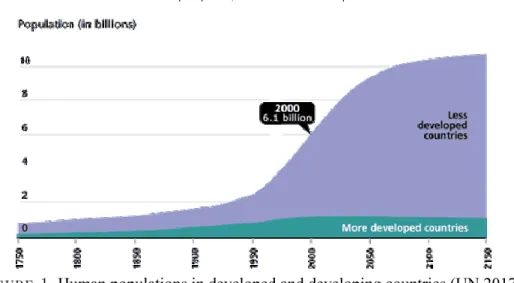
Human populations intend to grow and dominate ecosystems around the world [1, 2]. Wild and valuable lands of Earth are urbanizing and humans are increasingly on the move in several parts of the world, by shifting from rural regions to newly flourishing urban centers. As a result of this, the world’s urban population multiplied tenfold in the last century. United Nations prediction for 2050 shows that the global urban population will be almost equal to today's total population (~7.5 billion; UN 2017) [3]. Actually, the most urban growth is occurring in developing countries, where human populations are increasing at exponential rates (Figure 1; UN 2017) [3]. The urban population in developing countries will reach 4 billion in the next decade. In those countries, where urban growth will occur so rapidly, it will be getting tense for the ability of local governments to provide satisfactory housing, infrastructure, health care, public safety and other essential services. For this reason, the increasing human impact on ecosystems under these conditions will not result in surprisingly.
Figure 1. Human populations in developed and developing countries (UN 2017) However, an important rate of the land is urbanized and populations, especially emigrants are tending to spread in suburban and/or exurban zones, cause the cities to grow faster than their regular limits. So, this will result an overflow in cities population carrying capacity. The urbanization gradient becomes increasingly complex, especially in urban characteristics. Moreover, this process - urbanization- has had remarkable effects on native flora and fauna [4-9]. According to many ecologists, one of the dominant drivers for the species extinction in the 21st century is the urbanization. This fact has been well-documented in developed countries [10-12]. However, there is a little information for the effects of urbanization in the developing or less developed countries [13].
Here our aim is to document and discuss the effects of human settlement on the terrestrial fauna dynamics of an urbanized area: Hacettepe University-Beytepe Campus. To put this current discussion into perspective, we describe three case studies to evaluate the effects of urbanization on vertebrate fauna. Diet alterations and home ranges of red foxes, leaving habitats of long-eared owls and distribution of snake-eyed lizards along the campus have been discussed respectively in this study.
2. Study Area
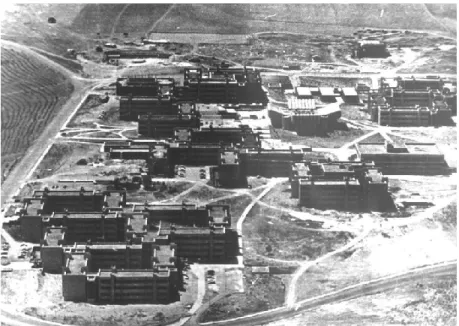
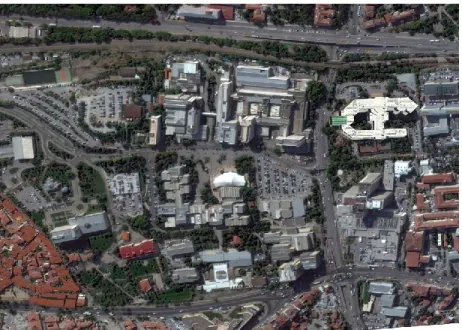
Hacettepe University Beytepe Campus was considered as a rural area when it was founded in the 1970s. However, from that time to present, the area was evaluated as a suburban and urban area, respectively. In order to make this situation clearer, the change in the campus in about 50 years has been presented in the following images (Figure 2, 3, 4).
Figure 3. Beytepe Campus – general view (in 1990s)
3. Case
Studies
Case – 1: Red fox
Red fox (Vulpes vulpes) was the first mammal species among the large mammal group as a concern for scientific investigation in urban areas. The first awareness was recorded in British cities during 1930s; as a local phenomenon, restricted to Great Britain [14]. Additionally, there have been some other studies in both many Central-European cities (Zurich, Switzerland – [15-17], Grünwald, Germany – [18, 19] and Bristol, Great Britain – [20-22]).
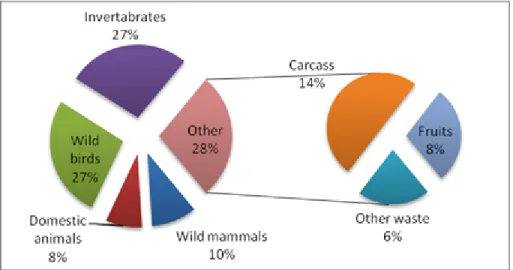
These studies have revealed a number of behavioral differences between urban and rural foxes. For instance, Baker et al. (2007) found that urban foxes changed their activity patterns to reduce the risk of mortality presented by traffic collisions [23]. Although foxes living in urban areas tend to be fed with anthropogenic sources [16], they are also known to exhibit variations in food preferences by sex, season and habitat [24-26]. Ayaş et al. (2014) have put the diet composition of the fox in a three-year period from May 2010 to May 2013 (Figure - 5) [27].
Figure 5. Overall diet composition of red fox in Beytepe Campus between 2010 – 2013
Moreover they placed 8 camera traps in the campus with 1x1 kilometer patches to determine the area of foxes in the same period. Both diet composition and camera traps assisted activity pattern studies have shown that foxes are sustaining their lives in more and more constricted areas. Increasingly urbanized dynamics of Beytepe Campus, as well as the urbanization network (new or revised roads and buildings) that surround the campus, and in addition to these, student-based population increase in the university, may have caused serious pressure on foxes. In this case, the ecosystem capacity for this species is seriously challenging. Foxes can survive in suburban habitats where they are resistant to anthropogenic repression up to a level as well as in rural areas where human pressures are low. However, as in every ecosystem, semi-urban ecosystems, where carrying capacities are challenging, responses of these species are noteworthy. Indeed these findings are consistent with the result reported in the literature. For instances foxes in urban areas also tend to rely on anthropogenic food items [16] and consume fewer rodents compared to animals in natural environments [17]. As a consequence of resource patterns, home-range sizes of foxes also tend to be smaller in urban than in rural areas [18].
It is well known that foxes can survive in suburban habitats where they are resistant to anthropogenic pressure to a level where human effect is relatively not strong. However, the response of the animals is noteworthy when carrying capacity of semi-urban ecosystems is coerced. It has been revealed by various studies that red fox can change its spatial and temporal distribution according to season and sex status [24, 26, 28-30]. This situation is coherent with the strategy of foxes in Beytepe Campus. Case – 2: Long-eared owl
Long-eared owls (Asio otus) inhabit dense vegetation close to grasslands, as well as open forests shrub lands from sea level up to 2000 m elevation. They are common in tree belts along streams of plains and even desert oases. They can also be found in shelterbelts, small tree groves, thickets surrounded by wetlands, grasslands, marshes and farmlands. The species is considered a restricted feeder, that is, it is more specialized in diet than other sympatric owls [31]. Diet is typically concentrated on a few species of small mammals; particularly voles (Microtus spp.) and mice (Peromyscus spp. in North America and Apodemus spp. in Europe) are preeminent only in some areas [31-33].
Black pine (Pinus nigra) plantation forest in Beytepe Campus was monitored from March until June in 2008–2012, and the monitoring was repeated between June 2013-June 2017. In the first monitoring survey, the diet composition of the owls
revealed by assessing pellets. These pellets were separated into bones, hair, and feathers following the procedures reported in Marti (1987). Prey remains were identified to the lowest taxon possible, especially for mammals using guides [34] and reference collections [35-37].
The richness of the mammal species content in the diet composition of the owls is given in the table below as the result of the studies conducted between 2008-2012 (Table 1) [38]. However, it is worrying that neither enough pellets were found nor the individuals were observed in that area when the study was repeated between 2013 and 2017.
Table 1. Diet of Long-eared Owl and the biomass calculating Species N Abundance (%) wt. of prey (g) Approximate biomass Total
(g) Total biomass (%) Microtus guentheri 93 43.7 38 3534 42.4 Microtus sp. 37 17.4 32.5 1202.5 14.4 Apodemus flavicollis 24 11.3 21 504 6.1 Mus macedonicus 23 10.8 15 345 4.2 Microtus levis 16 7.5 27 432 5.3 Rattus norvegicus 9 4.2 190 1710 20.5 Crocidura suaveolens 6 2.8 8 48 0.7 Nannospalax xanthodon 3 1.4 155 465 5.7 Cricetulus migratorius 2 0.9 26 52 0.7 Total 213 100 8383.5 100
Home range size of owls appears to vary considerably between pairs, seasons and localities. Studies have estimated mean home range sizes are approximately 5.25 km2 [39-41]. Although the observation distance was increased for field studies in the light of this information, no record of the species was found. However, there has also been an increase in the number of construction activities in the same period. According to our data, owls, which are quite sensitive to noise, could not be collected in the following years due to these intense anthropogenic activities.
Case – 3: Snake-eyed Lizard
Construction is the most common activity when the discussion is about urbanization. Therefore, it is inevitable that stone or concrete blocks will form as a wasteland for the increasing construction activities. Increasing population of Beytepe Campus year by year, and depending on this, construction ruins, which were formed together with the construction of new dormitories, education and social centers, surprisingly provided new living spaces for some species. Ophisops elegans is one of those species.
Snake-eyed lizard, Ophisops elegans Ménétriés, 1832, is widely distributed throughout Bulgaria and northern Greece, Turkey and Southwestern Asia, and has also been recorded from North Africa. Its range extends as Far East as Pakistan and northwest India [42, 43]. Ophisops elegans is a ground-dwelling lizard, typically found in open and arid plains, cultivated fields and stony hillsides, in areas with sparse vegetation or low shrubs [42]. Snake-eyed lizards prefer rocks and bare ground for basking [44] and tend to be well-adapted to withstand hot environments [45]. It is the most common lizard in Beytepe Campus, because they are observed especially in the dry grass of hillsides. Moreover, in the deep rocky gorges they would be found wherever grass-covered flats occurred along vegetation.
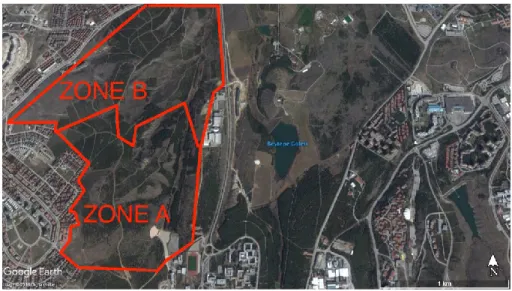
In this context, the rubble belonging to the new buildings built on the way from the main entrance to the main settlement in Beytepe Campus has formed new and wide habitats for these individuals. The area was divided into two zones (Zone A and B) as a result of routine herpetological surveys (Figure – 6, 7). Population size estimation studies were done between May and September in each year according to a modified technique of Heckel and Roughgarden (1979) [46]. Zone B and its neighborhoods have been identified as the zone with the highest population density including juvenile and sub-adult individuals in the last two years (Table 2).
Figure 6. Studied area view in 2015 (before constructions)
Table 2. Population densities of snake-eyed lizard (Ophisops elegans) in both zones between 2014 and 2018
Year Zone A Zone B
Adult Sub-adult Juvenile Adult Sub-adult Juvenile
2014 21 7 4 6 2 2
2015 23 6 6 7 3 1
2016 25 5 8 14 4 3
2017 17 4 6 19 5 6
2018 13 5 8 20 7 8
Thus the increase in population density may be due to two reasons: i) The zone formed by the debris presents appropriate habitat characteristics and thus it allows opportunities for foraging and reproduction activity and/or ii) Lizards which are close to this zone, moved to this debris habitat.
4. Conclusion
Urban areas, and particularly urban green spaces have been playing an important role for recreational ecosystem services [47]. Contrary to this, there has been relatively less study on the dynamics of wildlife in urban areas, especially in developing countries. Therefore, due to the increasing pressure of urbanization and human activity in Beytepe Campus, the responses of natural populations are extremely important. According to current conditions, i) Foxes narrowed their foraging and reproduction range, ii) The owls left the habitats where they had lived before, iii) The lizards have transformed the conditions of rubble deposits into short-term advantages. However, their strategies to follow after the debris is removed are not yet known. Therefore, areas such as Beytepe Campus, where the temporal development of urbanization and human pressures can be traced, should be followed up with long-term monitoring programs. In this way, species and/or habitat specific action programs can be carried out and possible scenarios of human effect on nature, such as construction to be carried out need to be evaluated.
References
[1] S. Horiuchi, Stagnation in the Decline of the World Population Growth Rate During the 1980s, Science, New Series, 257 (1992), 761-765
[2] P.M Vitousek, H.A Mooney, J. Lubchenco, J.M Melillo, Human Domination of Earth’s Ecosystems, Science, 277 (1999), 494-499
[3] https://www.unfpa.org/data/world-population-dashboard Accession date: 04.07.2018
[4] R. Van der Ree, and M.A McCarthy, Inferring persistence of indigenous mammals in response to urbanization, Animal Conservation 8 (2005), 309-319
[5] J.G White, M.J Antos, J.A Fitzsimons, and G.C Palmer, Non-uniform bird assemblages in urban environments: the influence of streetscape vegetation, Landscape and Urban Planning, 71 (2005), 123-135
[6] H.F Wang, J. López-Pujol, L.A Meyerson, J.X Qiu, X.K Wang and Z.Y Ouyang, Biological invasions in rapidly urbanizing areas: a case study of Beijing, China, Biodiversity and Conservation, 20 (2011), 2483-2509. [7] P.J Meffert, and F. Dziock, The influence of urbanisation on diversity and
trait composition of birds, Landscape Ecology, 28 (2013) 28, 943-957. [8] M.L McKinney, Effects of urbanization on species richness: a review of
plants and animals, Urban Ecosystems, 11 (2008), 161-176.
[9] M. Aronson-F. Sorte-C. Nilon-M. Katti-M. Goddard-C. Lepczyk-P.
Warren-N. Williams-S. Cilliers-B. Clarkson-C. Dobbs-R. Dolan-M. Hedblom-S. Klotz-J. Kooijmans-I. Kuhn-I. Macgregor-Fors-M. Mcdonnell-U. Mortberg-P. Pysek-S. Siebert-J. Sushinsky-P. Werner-M.
Winter, A global analysis of the impacts of urbanization on bird and plant
diversity reveals key anthropogenic drivers, Proceedings of the Royal Society B: Biological Sciences 281 (2014), 1780:20133330.
[10] B. Czech and P.R. Krausman, Distribution and causation of species endangerment in the United States, Science 277 (1997), 1116-1117. [11] S. Caula, G.T Hvenegaard and P. Marty, The influence of bird
information, attitudes, and demographics on public preferences toward urban green spaces: The case of Montpellier, France, Urban Forestry and Urban Greening 8 (2009), 117-128.
[12] S. Fattorini, Insect extinction by urbanization: a long-term study in Rome, Biological Conservation 144 (2011), 370-375.
[13] G.Y Abay, H. Bauer, K. Gebrehiwot, and J. Deckers, Peri-urban spotted hyena (Crocuta crocuta) in northern Ethiopia: diet, abundance and economic impact, European Journal of Wildlife Research 57 (2011), 759– 765.
[14] S. Harris, J.M.V Rayner, Urban fox (Vulpes vulpes) population estimates and habitat requirements in several British cities, Journal of Animal Ecology 55 (1986), 575–591.
[15] S. Gloor, F. Bontadina, D. Hegglin, P. Deplazes, U. Breitenmoser, The rise of urban fox populations in Switzerland, Mammalian Biology 66 (2001), 155–164.
[16] P. Contesse, D. Hegglin, S. Gloor, F. Bontadina, P. Deplazes, The diet of urban foxes (Vulpes vulpes) and the availability of anthropogenic food in the city of Zurich, Switzerland, Mammalian Biology 69 (2004), 81–95 [17] D. Hegglin, F. Bontadina, P. Contesse, S. Gloor, P. Deplazes, Plasticity of
predation behaviour as a putative driving force for parasite life-cycle dynamics: the case of urban foxes and Echinococcus multilocularis tapeworm, Functional Ecology 21 (2007), 55–56.
[18] C. Janko, W. Schröder, S. Linke, A. König, Space use and resting site selection of red foxes (Vulpes vulpes) living near villages and small towns in Southern Germany, Acta Theriologica 57 (2012), 245–250.
[19] A. König, C. Janco, B. Barla-Szabo, D. Fahrenhold, C. Heibl, E. Perret, S. Wermuth,, Habitat model for baiting foxes in suburban areas to counteract Echinococcus multilocularis, Wildlife Research 39 (2012), 488–495. [20] P.J Baker, S.M Funk, S. Harris, P.C.L White, Flexible spatial organization
of urban foxes, Vulpes vulpes, before and during an outbreak of sarcoptic mange, Animal Behaviour 59 (2000), 127–146.
[21] C.D Soulsbury, G. Iossa, P.J Baker, N.C Cole, S.M Funk, S. Harris, The impact of sarcoptic mange Sarcoptes scabiei on the British fox Vulpes vulpes population, Mammal Review 37 (2007), 278–296.
[22] H.M Whiteside, D.A Dawson, C.D Soulsbury, S. Harris, Mother knows best: dominant females determine offspring dispersal in red foxes (Vulpes vulpes), Plos One 6(7) (2011) 6(7), e22145
[23] P.J Baker, C.V Dowding, S.E Molony, P.C.L White, S. Harris, Activity patterns of urban red foxes (Vulpes vulpes) reduce the risk of traffic-induced mortality, Behavioral Ecology (2007) 18, 716–724.
[24] M. Basuony, M. Saleh, A. Riad, W. Fathy, Food composition and feeding ecology of the Red Fox Vulpes vulpes (Linnaeus, 1758) in Egypt, Egyptian Journal of Biology 7 (2005), 96-102
[25] S. Pagh, R.S Tjørnløv, C.R Olesen, M. Chriel, The diet of Danish red foxes (Vulpes vulpes) in relation to a changing agricultural ecosystem. A historical perspective, Mammalian Research 60 (2015), 319-329
[26] J.L Forbes, Harper, H.M Crawford, S.J Dundas, N.M Warburton, P.J Adams, P.W Bateman, M.C Calver, and P.A Fleming, Diet and bite force in red foxes: ontogenetic and sex differences in an invasive carnivore, Journal of Zoology 303 (2017), 54-63.
[27] Z. Ayaş, B. Akbaba, Ş. Bulut, Hacettepe Üniversitesi Beytepe Yerleşkesi (Ankara) Omurgalı Hayvan Türlerinin Belirlenmesi ve Belgelenmesi, Hacettepe Üniversitesi Bilimsel Araştırmalar Birimi (2014), Proje Kodu: 012 D10 601 001-46
[28] S. Harris, The food of suburban foxes (Vulpes vulpes), with special reference to on, Mammal Review 11(1981), 151-168.
[29] P. Contesse, D. Hegglin, S. Gloor, F. Bontadina, and P. Deplazes, The diet of urban foxes (Vulpes vulpes) and the availability of anthropogenic food in the city of Zurich, Switzerland, Mammalian Biology 69 (2014), 81-95. [30] A. Cassidy and B. Mills, “Fox Tots Attack Shock”: Urban Foxes, Mass Media and Boundary-Breaching, Environmental Communication 6 (2012), 494-511.
[31] C.D Marti, A Review of Prey Selection by the Long-Eared Owl, The Condor 78(3) (1976), 331-336
[32] D.W Holt, The Long-cared Owl (Asio otus) and forest management: a review of the literature, Journal of Raptor Research 31(2) (1997), 175-186.
[33] A.V Sharikov, N.S Kholopova, S.V Volkov, and T.V Makarova, A review of owl feeding in the City of Moscow and Moscow Region, ekologiya, prostranstvennoe i biotopicheskoe raspredelenie (Owls in Northern Eurasia: Ecology and Spatial and Biotopic Distribution), Moscow, Sovy Severnoi Evrazii (2009) 188–203.
[34] N. Yiğit, E. Çolak, M. Sözen &. A. Karataş, Rodents of Türkiye, Meteksan, Ankara, (2006)
[35] B. Kryštufek & V. Vohralík, Mammals of Turkey and Cyprus. Introduction, checklist, Insectivora, Znanstveno-raziskovalno središče Republike Slovenije, Koper. (2001).
[36] B. Kryštufek & V. Vohralík, Mammals of Turkey and Cyprus. Rodentia I: Sciuridae, Dipodidae, Gliridae, Arvicolinae, Annales Majora, Koper. (2005).
[37] B. Kryštufek & V. Vohralík, Mammals of Turkey and Cyprus. Rodentia II: Cricetinae, Muridae, Spalacidae, Calomyscidae, Hystricidae, Castoridae, Univerzita za Primorskem, Koper.(2009).
[38] Ş. Bulut, B. Akbaba, Z. Ayaş, Analysis of Mammal Remains from Owl Pellets (Asio otus), in A Suburban Area in Beytepe, Ankara, Hacettepe Journal of Biology & Chemistry 40 (3) (2012), 233–237
[39] E.H Craig, T.H Craig and L.R Powers, Activity patterns and home-range use of nesting Long-eared Owls, The Wilson Bulletin 100 (1988), 204-213 [40] P. Galeotti, G. Tavecchia, & A. Bonetti. Home-range and habitat use of Long-eared Owls in open farmland (Po Plain, northern Italy), in relation to prey availability, Journal of Wildlife Research 2 (1997), 137–145 [41] F. Henrioux, Home range and habitat use by Long-eared Owl in
northwestern Switzerland. Journal of Raptor Research 34 (2000), 93–101. [42] N. Arnold and D. Ovenden, Collins field guide to the reptiles and amphibians of Britain and Europe, London: Harper Collins Publishers. (2002)
[43] N.B Ananjeva, N.L Orlov, R.G Khalikov, I.S Darevsky, S.A Ryabov, & A.V Barabanov, The Reptiles of Northern Eurasia, Sofia: Pensoft. (2006) [44] V. Pérez-Mellado, E.D. Valakos, F. Guerrero & M.J. Gil-Costa, Ecological similarity of lacertid lizards in the Mediterranean region. The case of Ophisops elegans and Psammodromus hispanicus, In: Valakos, E. D., Böhme, W., Perez-Mellado, V., & Maragou, P. (Eds.), Lacertids of the Mediterranean Region. Athens: Hellenic Zoological Society, (1993). [45] J. Foufopoulos, The reptile fauna of the Northern Dodecanese (Aegean
Islands, Greece). Herpetozoa 10 (1997), 3–12.
[46] D.G Heckel & J. Roughgarden, A Technique for estimating the Size of Lizard Populations, Ecology 60/5 (1979), 966-975.
[47] P. Bolund, and S. Hunhammar, Ecosystem services in urban areas. Ecological Economics 29 (1999), 293-301.
Current Address: Mehmet Kürşat ŞAHİN, Hacettepe University, Biology Department, Beytepe Campus, Ankara, Turkey
E-mail : [email protected], https://orcid.org/0000-0003-0834-5081
Current Address: Burak AKBABA, Hacettepe University, Biology Department, Beytepe Campus,
Ankara, Turkey
E-mail:[email protected] https://orcid.org/0000-0002-5064-1418
Current Address: Şafak BULUT, Hitit University, Department of Molecular Biology and Genetics,
Çorum, Turkey
E-mail:[email protected]