Impact of physical activity on inflammation: effects on
cardiovascular disease risk and other inflammatory
conditions
Sibel Ertek
1, Arrigo Cicero
2A b s t r a c t
Since the 19thcentury, many studies have enlightened the role of inflammation
in atherosclerosis, changing our perception of “vessel plaque due to oxidized lipoproteins”, similar to a “rusted pipe”, towards a disease with involvement of many cell types and cytokines with more complex mechanisms. Although “physical activity” and “physical exercise” are two terms with some differences in meaning, compared to sedentary lifestyle, active people have lower cardio-vascular risk and lower inflammatory markers. Activities of skeletal muscle reveal “myokines” which have roles in both the immune system and adipose tissue metabolism. In vitro and ex-vivo studies have shown beneficial effects of exer-cise on inflammation markers. Meanwhile in clinical studies, some conflicting results suggested that type of activity, exercise duration, body composition, gen-der, race and age may modulate anti-inflammatory effects of physical exercise. Medical data on patients with inflammatory diseases have shown beneficial effects of exercise on disease activity scores, patient well-being and inflam-matory markers. Although the most beneficial type of activity and the most rel-evant patient group for anti-inflammatory benefits are still not clear, studies in elderly and adult people generally support anti-inflammatory effects of physi-cal activity and moderate exercise could be advised to patients with cardiovas-cular risk such as patients with metabolic syndrome.
Key words: inflammation, physical activity, atherosclerosis, obesity, myokines, adipokines, insulin resistance, metabolic syndrome.
Introduction
The inflammatory hypothesis of atherosclerosis emerged in the 19
thcentury as inflammation-based arterial changes for atherogenesis [1]. As
it became clear within the century, the process starts with injury to
the endothelium, orchestrated by endothelial cells, smooth muscle cells,
platelets, lymphocytes, monocytes and macrophages, and all of these cells
generate many molecules such as cytokines, growth factors, eicosanoids,
proteases and reactive oxygen species, and provoke acute and
eventual-ly chronic inflammation within the vessel wall, not oneventual-ly as just “plaque
within the lumen”, within a complex process involving many humoral and
hormonal factors [2-5]. The role of chronic inflammation in propagation
Corresponding author: Dr Sibel Ertek
Department of Endocrinology and Metabolism
Dr. Ridvan Ege Hospital Ufuk University Medical Faculty 86-88 Mevlana Bulvari 06520 Ankara, Turkey Phone: +905337156519 E-mail: [email protected]
1Department of Endocrinology and Metabolism, Ufuk University Medical Faculty,
Ankara, Turkey
2Internal Medicine, Aging and Kidney Disease Department, Sant'Orsola-Malpighi
University Hospital, Bologna, Italy Submitted: 6 May 2012
Accepted: 20 August 2012 Arch Med Sci 2012; 8, 5: 794-804 DOI: 10.5114/aoms.2012.31614 Copyright © 2012 Termedia & Banach
from atherogenesis to thrombotic events described
in the medical literature led clinicians to use
inflam-matory markers to evaluate disease activity, in
par-ticular leukocyte count, high sensitivity C-reactive
protein (hsCRP), interleukins (IL-6, IL-18), and
solu-ble CD40 ligand [6].
Inflammation is also revealed in conditions
increasing cardiovascular disease risk such as
insulin resistance, visceral obesity, metabolic
syn-drome and type 2 diabetes, with higher
proin-flammatory cytokines secreted by macrophages
infiltrating visceral fat [7-12]. A similar increase in
cardiovascular risk has been associated with
phys-ical inactivity [13-15], even independently from
body mass index [16]. In this era of increasing
inactivity with age even among children [17],
med-ical data show that besides the potential to raise
mood and the effect on endorphin and coupled
nitric oxide pathways [18], physical activity
caus-es more complex interactions between organ
sys-tems, including anti-inflammatory pathways. Both
“physical exercise” and “physical activity” (PA)
refer to voluntary movements expending more
calories than a resting position, but physical
exer-cise is a form of PA that is specifically planned,
structured, repetitive and regular, to improve
car-diovascular-respiratory fitness, muscle power and
endurance, flexibility, agility, balance and/or body
composition [19]. Compared with a sedentary
lifestyle, insufficiently active lifestyle and
“week-end warrior”-style high activity pursuits, regular
physical exercise (spending
≥ 1000 kcal/week)
pro-vides the best decreases in mortality risk [20].
Meanwhile, meta-analytic results revealed that PA
formulated on the basis of fitness activities
pro-vides significant cardiovascular benefit [21]. Since
in the medical literature these two terms are used
interchangeably, our review involves effects
of both PA and exercise.
Hence the aim of our review is to evaluate
the relationship between PA and inflammation, in
relationship to cardiovascular disease risk and
oth-er inflammatory diseases. Thoth-erefore a PubMed/
Embase search was performed up to June 2012
using combinations of “Physical activity, exercise,
physical exercise” and “inflammation,
inflamma-tory disease, cytokines, CRP” with each of the
fol-lowing key words: cardiovascular disease,
coro-nary disease, atherosclerosis, obesity, metabolic
syndrome, diabetes, prediabetes, impaired
glu-cose tolerance (IGT), hypertension, cancer,
asth-ma, chronic obstructive pulmonary disease
(COPD), renal disease, renal failure, and
rheuma-tologic diseases. Preclinical studies, randomised
controlled trials, original papers, review articles
and case reports are included in the present
review. References of these articles were
scruti-nised for relevant articles.
Physical activity, myokines and inflammation
As adipose tissue, muscle tissue was also
sug-gested to be an “endocrine organ” with myokines
providing cross-talk between adipose tissue,
the immune system, hypothalamus and muscle cells
[16]. Fischer et al. reported a 100-fold increase in
IL-6 after acute exercise [22] which was not
pre-ceded by an increase in tumour necrosis factor
α
(TNF-
α) as in sepsis [23]. Meanwhile the exercise
duration and involved muscle mass was directly
related to the degree of this post-exercise IL-6
amplitude [22-24].
Interleukin-6 increases hepatic glucose
produc-tion during exercise and lipolysis in adipose tissue
[23]. Increase in IL-6 also enhances insulin action
and sensitivity [25] unlike TNF-
α-induced insulin
resistance [26]. Absence of classical
proinflamma-tory cytokines (TNF-
α and IL-1β) in the
exercise-induced cytokine cascade causes an increase of
IL-6, IL-1ra, IL-19 and sTNF-R [27], creating an
anti-inflammatory environment. It appears that exercise
inhibits TNF-
α directly by IL-6 [28] and indirectly via
epinephrine [29]. The down-regulation of TNF-
α
induced by skeletal-muscle-derived IL-6 may also
participate in mediating the atheroprotective effect
of PA [30].
Other myokines that increase after exercise are
IL-8 and IL-15 [31]. IL-15 was suggested to have an
anabolic role and decrease adipose tissue mass [32],
and IL-8 may play a role in angiogenesis [33].
Besides actions of myokines, physical exercise
causes laminar shear stress activation and
down-regulates endothelial angiotensin II type 1 receptor
(AT1R) expression, causing decreased reactive
oxy-gen species (ROS) oxy-generation, preserving NO
avail-ability and, consequently, having anti-atherogenic
effects [30].
Habitual PA and exercise training decreases
TNF-
α and resistin levels and increase adiponectin
levels [34]. In fact, high adiponectin and low hsCRP
levels may have a relationship with resolution
of metabolic syndrome [35].
On the other hand, impaired PA causes insulin
resistance via genes involved in inflammation and
endoplasmic reticulum stress, and impaired
expres-sion of peroxisome proliferator-activated receptor-
γ
coactivator-1
α (PGC-1α) [36]. PPAR-β/δ activation
blocks inflammation in myocytes [37]. As one
of the key regulatory factors in active skeletal
mus-cle, PGC-1
α may also be a link between
metabo-lism, inflammation and skeletal muscle activity [38].
Another link between PA and insulin resistance
may be its association with satiety hormones. In
a small study carried out on children, increased PA
caused increased obestatin, a decreased ghrelin to
obestatin ratio, and increased leptin and soluble
leptin receptor [39]. Meanwhile, in premenopausal
women, exercise with a diet programme decreased
ghrelin and ICAM-1 levels, and increased plasma
adiponectin [40].
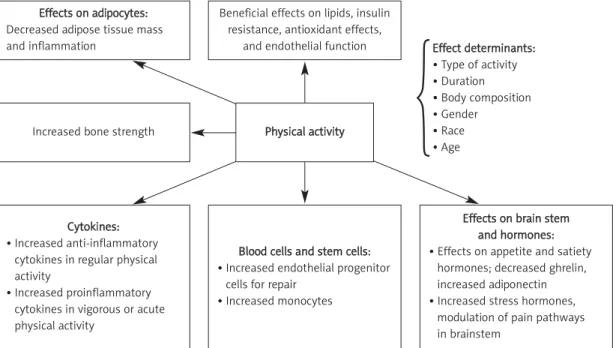
Thus, there are many different pathways in
the mechanism of anti-inflammatory action of PA,
and although some systemic effects are known,
mediators of these effects are not clearly
demon-strated yet (Figure 1).
Effects of physical activity on inflammation in
cardiovascular and non-cardiovascular diseases
In vitro and ex-vivo studies
In diet-induced obese rats, both acute and
chronic exercise blunt Toll-like receptor-4 (TLR-4)
signalling and cause improved post-receptor
insulin action [41]. Exercise reduces protein
tyro-sine kinase phosphatase 1B activity and insulin
receptor substrate 1 serine phosphorylation,
with concomitant reduction in c-jun N-terminal
kinase activities in the muscle of diet-induced
obese rats [42].
Studies in Zucker diabetic fatty rats, a rodent
model of type 2 diabetes, show that 10 weeks
of exercise as 5 km/day running significantly de
-creased IL-6, haptoglobin, malondialdehyde levels
and JNK phosphorylation, and also decreased
hepatic phosphoenolpyruvate carboxykinase levels
and Ser(307)-phosphorylated insulin receptor
sub-strate-1. All these changes indicate decreased JNK
activity and decreased hyperglycemia [43]. This
model of rats also showed increased adiponectin
and decreased CRP levels after regular exercise [44].
Treadmill exercise may also decrease CRP in renal
proximal tubules and increase IL-10. It also restores
renal dopamine D1 receptor functions in rats [45],
suggesting interaction of exercise with
inflamma-tory cytokines and kidneys.
Exhaustive exercise and endurance exercise
training differently modify the physiological status
of the body, and therefore may have different
anti-inflammatory results. Studies on rats revealed that
endurance training increased the rate of
tricar-boxylic acid cycle and antioxidant activity whereas
exhaustive exercise increased urea markers and
inflammation in rat liver tissue [46].
In diet-induced obese mice, physical exercise
decreases expression of TNF-
α, MCP-1, PAI-1 and
IKK-
β in adipose tissue but not in liver [47];
there-fore there may be cross-talk between muscle and
adipose tissue just after muscle activity, causing
changes directly in adipose tissue.
In contrast, overtraining may activate
pro-inflam-matory cytokines. In fact, overtrained groups of rats
showed elevated levels of IL-10 and IL-6 in adipose
tissue, accompanied by increased TLR-4 and
NFkBp65 compared to control and trained groups
[48]. Training may provide necessary changes to
adapt to exercise and to trigger mechanisms
against inflammation that will occur after muscle
activity. Acute exercise causes endoplasmic
reticu-lum stress (detected as increased mRNA levels and
x-box binding proteins), and increases
inflamma-tory markers (e.g. IL-6, TNF-
α) and oxidative stress
(detected as increased metallothionein 1F, me
tal-lothionein 1H, and NADPH oxidase) [49]. That means
the effects of acute exercise are extremely
differ-ent from those of chronic training [50].
In mice with a high fat diet exercise ameliorates
the progression of endothelial dysfunction and
decreases atherosclerotic areas. Meanwhile it has
Effects on adipocytes: Decreased adipose tissue mass and inflammation
Beneficial effects on lipids, insulin resistance, antioxidant effects,
and endothelial function
Increased bone strength
Cytokines: • Increased anti-inflammatory
cytokines in regular physical activity
• Increased proinflammatory cytokines in vigorous or acute physical activity
Blood cells and stem cells: • Increased endothelial progenitor
cells for repair • Increased monocytes
Effects on brain stem and hormones: • Effects on appetite and satiety
hormones; decreased ghrelin, increased adiponectin • Increased stress hormones,
modulation of pain pathways in brainstem Effect determinants: • Type of activity • Duration • Body composition • Gender • Race • Age
Figure 1. Systemic effects of physical activity and main determinants Physical activity
anti-inflammatory effects such as decreased IL-6
and macrophage chemoattractant protein-1 and
higher adiponectin levels [51]. Thus, exercise may be
beneficial by mechanisms other than
anti-inflam-matory effects against atherosclerosis and obesity.
Besides adipocytes, satiety hormones, markers
of atherosclerosis, endothelial cells, bone tissue and
kidneys, PA even may affect blood cells. Endurance
exercise may also affect behaviour of blood cells,
increasing tissue factor activity of
lipopolysaccha-ride-stimulated monocytes, IL-8 increase and
increased lipopolysaccharide-induced thromboxane
B2, these increases being more prominent after
a second bout of exercise [52]. Vigorous exercises
such as marathon running increase neutrophilia,
and also anti-inflammatory and antioxidant
defences were activated to prevent
exercise-induced oxidative stress [53], together with
hor-monal responses, e.g. acute growth hormone
release accompanying IL-6 increase and later
cat-echolamines possibly suppressing neutrophil
responses [54, 55].
Clinical evidence
Studies on general population
Physical activity and cardiorespiratory fitness are
consistently associated with 6-35% lower CRP
lev-els, and longitudinal training studies have
demon-strated reductions in CRP concentrations of 16% to
41%, an effect that may be independent of
base-line levels of CRP, body composition or weight loss,
indicating that the PA and CRP relationship is
dose-dependent [56]. In a review evaluating 19 articles
on the acute inflammatory response to exercise,
18 on cross-sectional comparisons of subjects by
PA levels, and 5 examining prospectively the effects
of exercise training on the inflammatory process,
it was concluded that short-term exercise produces
an inflammatory response but long-term training
has anti-inflammatory effects [57].
In a study involving 13,748 participants, leisure
time PA was associated with lower fibrinogen and
white blood cell counts and higher albumin
con-centrations [58]. Besides beneficial effects on
inflam-matory markers, PA causes better haemostasis [59].
In a Finnish study, 3803 adults were evaluated
for effects of physical exercise on CRP levels [60].
After adjustment for age, PA and CRP levels were
inversely associated for both men and women, and
after adjustment for all other factors, this
rela-tionship was present only for women. In the
EPIC-Norfolk Prospective study, people with an active
lifestyle had significantly lower CRP levels than
inactive ones [61]. In a further study carried out on
796 healthy subjects, fibrinogen and IL-6 were
related to PA, and CRP levels were inversely
relat-ed to activity after adjustments for body mass
index, waist-to-hip ratio, smoking, hypertension,
diabetes and lipids [62].
In elderly subjects, high-volume regular PA was
found to be associated with lower levels of IL-6 and
higher levels of IL-10 [63]. Similar results were also
seen in the study of Reuben et al., with 870
elder-ly people [64]. In a further cohort of 5888 elderelder-ly
people lower concentrations of CRP, white blood
cells, fibrinogen, and factor VIII activity were
asso-ciated with higher PA quartiles [65]. Therefore
prob-ably elderly people may particularly benefit from PA.
Race and gender may also be important in
anti-inflammatory effects of PA; in the study of Majka et
al., there was a tendency to have lower hsCRP levels
by PA tertiles only in black and white men, but not in
any female groups [66]. In the PLAY study conducted
in South Africa, 193 black children were evaluated for
their CRP levels in different activity categories. “Fit”
children had lower CRP, and especially in girls
high-er PA groups showed lowhigh-er CRP levels [67]. In a
cross-sectional study of more than 3000 Chinese urban
men, CRP was tested and obesity, smoking and
alco-hol intake were associated with high CRP levels
whereas high PA was inversely associated [68].
Studies on populations with high
cardiovascular risk
In the ATTICA study conducted in the Attica
region of Greece, 1514 men and 1528 women with
metabolic syndrome were evaluated for their
self-reported PA status and inflammatory and
coagula-tion markers [69]. Serum CRP, white blood cells,
serum amyloid A protein, and fibrinogen were
sig-nificantly lower in physically active patients than in
inactive ones.
Four weeks of physical exercise training in
impaired glucose tolerance and type 2 diabetic
patients improved plasma adipokine concentrations
and CRP concentrations but the effect on IL-6 was
not significant [70].
Moreover, 152 sedentary, obese or overweight
postmenopausal women who were free of chronic
inflammatory diseases were tested for PA energy
expenditure (PAEE), total energy expenditure (TEE)
and resting energy expenditure (REE), and the
rela-tionships between these PA markers and serum
hsCRP, haptoglobin, soluble tumor necrosis factor-
α
receptor 1 (sTNFR1), interleukin-6, orosomucoid and
white blood cells were evaluated [71]. While TNF-1
was positively correlated with TEE and REE, PAEE
was found to be an independent predictor of hsCRP
and haptoglobin.
In a study carried out on hypertensive patients,
sequential physical training decreased body mass
index, waist circumference and blood pressure, and
improved glycemia and lipemia, but a significant
reduction in hsCRP levels was only significant in
metabolic syndrome patients [72], suggesting a link
between hsCRP and metabolic parameters, rather
than PA itself. But probably the type of exercise and
patient group may cause differences in antiin
-flammatory results of physical exercise; in a small
group of type 2 diabetics, leptin, resistin and IL-6
decreased after 12 months of aerobic and aerobic
+ resistance exercise, and IL-1
β, TNF-α and IFN-γ
decreased whereas IL-4 and IL-10 increased in
aer-obic and resistance exercise groups, independent
of weight loss [73]. Also angiographically
docu-mented coronary disease patients benefit from
leisure time PA regarding its beneficial effects on
inflammatory markers [74].
Similar to patients with coronary artery disease,
patients with peripheral arterial disease also
ben-efit from anti-inflammatory effects of PA. A higher
level of activity was found to be associated with
lower sVCAM, D-dimer, homocysteine, CRP and
sICAM levels in these patients [75].
In a further small sample size study in obese
people practising exercise together with diet,
anti-inflammatory effects were only observed in adipose
tissue, and not in skeletal muscle [76]. Therefore
body fat distribution may also affect
anti-inflam-matory effects of exercise.
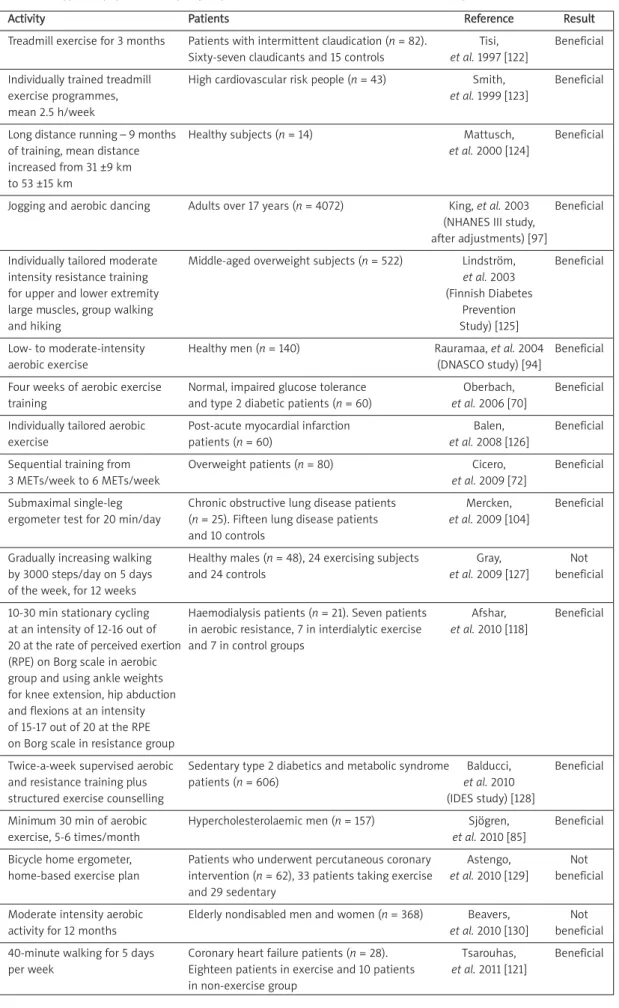
In most clinical studies PA was evaluated by
self-reported questionnaire or pedometers. There are
few interventional studies performed in healthy
people or different groups of patients with
select-ed types of regular exercise showing beneficial
effects on inflammatory markers (Table I).
Effects of excessive physical activity
Although it was known that vigorous PA may
trigger an inflammatory response in muscle tissue,
in a study carried out on 520 adolescents, vigorous
PA was associated with decreased CRP levels in
boys [77]. High endurance physical exercise in
non-athlete adults increases CRP and TNF-
α and IL-6
changes may not be significant [78]. Different
lev-els of bench press exercise intensity were not
asso-ciated with changes in IL-6, IL-1
β and TNF-α levels,
although maximal creatinine kinase levels were
reached [79].
Prolonged vigorous exercise such as the
spar-tathlon (246 km continuous running) causes an
acute inflammatory response in muscle tissue,
marked increases in plasma levels of CRP, IL-6, SAA,
MCP-1, IL-8, sVCAM-1, sICAM-1, thrombomodulin
(sTM) and NT-pro-BNP, and increased endothelial
progenitor cells as a repair mechanism [80].
Simi-lar results of increased inflammatory markers
were also observed in marathon and ultra-marathon
(200 km) runners and triathlon racers [81-83].
Conflicting results of clinical studies
Apart from this large body of evidence
support-ing the positive effect of PA on inflammation,
oth-er studies have reported neutral, partial or opposite
effects. For instance, the PREPARE (Pre-diabetes Risk
Education and Physical Activity Recommendation
and Encouragement) programme randomized trial
did not reveal anti-inflammatory effects of
ambu-lation [84]. In another recent study, physical
exer-cise per se did not have any benefit regarding
sVCAM, sICAM or IL-6, but when combined with
diet, exercise caused significant reductions in sICAM
and sE-selectin [85]. In elderly patients, 12-month
moderate intensity PA significantly lowered IF-8
lev-els, but no effect was observed on other
inflam-matory markers such as TNF-
α or soluble receptors
of IL-1 or 6 [86].
The “Physical Activity as a preventive agent
of the Development of Overweight, Obesity,
Aller-gies, Infections, and Cardiovascular Risk Factors in
adolescents” study (La Actividad Fisica como Agente
Preventivo del Desarrollo de Sobrepeso, Obesidad,
Alergias, Infecciones y Factores de Riesgo
Cardio-vasular en Adolescentes, AFINOS) evaluated 192
adolescents [87] and controlled effects of 7 days’
PA measured by accelerometer on CRP, IL-6 and
complement factors C3 and C4. Independent from
HOMA-IR, only body fat was related to CRP, and PA
measures were not independently associated with
inflammatory markers. Similarly, in the European
Young Heart Study, CRP and C3 were negatively
cor-related with cardiovascular fitness but inversely
related to body fat mass [88].
The Inflammation and Exercise (INFLAME) study
was conducted to test whether diet or PA can
reduce CRP in individuals with increased CRP
lev-els. A 4-month period of physical training was
started for sedentary people and there was no
significant difference between exercising and se
-dentary groups regarding CRP when adjusted for
gender and body weight [89]. Also data from
950 people evaluated in the National Health and
Nutrition Survey (1999-2002) showed no beneficial
association between reported PA rates and CRP [90].
In another study carried out on 892 male
sub-jects, a questionnaire was used to detect levels
of PA and after adjustments for personal
charac-teristics there was no relationship between PA
status and CRP or serum amyloid A or fibrinogen
levels [91]. In a study with elderly subjects,
inter-estingly, PA was correlated with lower levels
of inflammatory markers (e.g. CRP, IL-6 and TNF-
α)
but this association was also observed in people
who do not exercise but take antioxidants [92].
In a study involving 109 healthy men and
women, body mass index was related to hsCRP
lev-els, but PA was not [93].
Meanwhile, in the “DNA Polymorphism and
Carotid Atherosclerosis” (DNASCO) study
investi-gating whether PA slows progression of
athero-sclerosis and effects of genetic factors, hsCRP
lev-Activity Patients Reference Result Treadmill exercise for 3 months Patients with intermittent claudication (n = 82). Tisi, Beneficial
Sixty-seven claudicants and 15 controls et al. 1997 [122]
Individually trained treadmill High cardiovascular risk people (n = 43) Smith, Beneficial
exercise programmes, et al. 1999 [123]
mean 2.5 h/week
Long distance running – 9 months Healthy subjects (n = 14) Mattusch, Beneficial
of training, mean distance et al. 2000 [124]
increased from 31 ±9 km to 53 ±15 km
Jogging and aerobic dancing Adults over 17 years (n = 4072) King, et al. 2003 Beneficial (NHANES III study,
after adjustments) [97]
Individually tailored moderate Middle-aged overweight subjects (n = 522) Lindström, Beneficial
intensity resistance training et al. 2003
for upper and lower extremity (Finnish Diabetes
large muscles, group walking Prevention
and hiking Study) [125]
Low- to moderate-intensity Healthy men (n = 140) Rauramaa, et al. 2004 Beneficial
aerobic exercise (DNASCO study) [94]
Four weeks of aerobic exercise Normal, impaired glucose tolerance Oberbach, Beneficial training and type 2 diabetic patients (n = 60) et al. 2006 [70]
Individually tailored aerobic Post-acute myocardial infarction Balen, Beneficial
exercise patients (n = 60) et al. 2008 [126]
Sequential training from Overweight patients (n = 80) Cicero, Beneficial
3 METs/week to 6 METs/week et al. 2009 [72]
Submaximal single-leg Chronic obstructive lung disease patients Mercken, Beneficial ergometer test for 20 min/day (n = 25). Fifteen lung disease patients et al. 2009 [104]
and 10 controls
Gradually increasing walking Healthy males (n = 48), 24 exercising subjects Gray, Not by 3000 steps/day on 5 days and 24 controls et al. 2009 [127] beneficial of the week, for 12 weeks
10-30 min stationary cycling Haemodialysis patients (n = 21). Seven patients Afshar, Beneficial at an intensity of 12-16 out of in aerobic resistance, 7 in interdialytic exercise et al. 2010 [118]
20 at the rate of perceived exertion and 7 in control groups (RPE) on Borg scale in aerobic
group and using ankle weights for knee extension, hip abduction and flexions at an intensity of 15-17 out of 20 at the RPE on Borg scale in resistance group
Twice-a-week supervised aerobic Sedentary type 2 diabetics and metabolic syndrome Balducci, Beneficial and resistance training plus patients (n = 606) et al. 2010
structured exercise counselling (IDES study) [128]
Minimum 30 min of aerobic Hypercholesterolaemic men (n = 157) Sjögren, Beneficial
exercise, 5-6 times/month et al. 2010 [85]
Bicycle home ergometer, Patients who underwent percutaneous coronary Astengo, Not home-based exercise plan intervention (n = 62), 33 patients taking exercise et al. 2010 [129] beneficial
and 29 sedentary
Moderate intensity aerobic Elderly nondisabled men and women (n = 368) Beavers, Not
activity for 12 months et al. 2010 [130] beneficial
40-minute walking for 5 days Coronary heart failure patients (n = 28). Tsarouhas, Beneficial per week Eighteen patients in exercise and 10 patients et al. 2011 [121]
in non-exercise group
els were not significantly lower in the exercising
group [94]. In another study carried out on obese
people, PA was only inversely related to C-peptide
and insulin levels, whereas other inflammatory
markers such as CRP, IL-6, and soluble TNF
recep-tors 1 and 2 were not affected [95].
Therefore although large, population-based
cohort studies support anti-inflammatory effects
of PA, data from large, randomized, controlled
tri-als have conflicting results [96]. Besides age,
gen-der and duration, type of PA (for example aerobic
dancing vs weight lifting or gardening) is probably
important [97].
Studies on non-cardiovascular inflammatory
diseases
In a systematic review, 19 studies in children and
adults with chronic inflammatory diseases were
col-lected and acute and chronic effects of physical
exercise on inflammatory markers were tested [98].
Acute exercise increases inflammatory markers but
training decreases them, but the results depend on
the nature of the PA.
Rheumatological diseases – Anti-inflammatory
effects of physical exercise were first noticed in
chronic inflammatory diseases such as autoimmune
arthritis or chronic obstructive lung disease [99]. It
was found that physical exercise decreases IL-6 and
CRP levels in these patients [99].
In studies carried out on rheumatoid arthritis
patients, the number of CD4(+) cells in synovial
flu-id decreases after moderate physical exercise [100].
The role of exercise in synovial inflammation was
also similar in vascular inflammation in these
patients [101].
Respiratory diseases – together with
pharma-cological treatment, exercise reduces oxidative
stress and airway inflammation and increases
antioxidant enzyme activities in asthmatic children
[102, 103], whereas tests in COPD patients showed
increased oxidative stress without an increase in
inflammatory markers after acute exercise (e.g.
continuous single leg exercise) [104]. The degree
of PA is also associated with lower hs-CRP and
IL-6 levels in COPD patients [105]. Similarly, physical
training in asthmatic patients leads to decreased
serum hs-CRP levels and better pulmonary
func-tion [106]. In the recent prospective cohort study
of Waschki et al., PA was shown to be the strong
est predictor of allcause mortality in COPD pa
-tients [107].
Exercise training may be protective in lung
ischaemia, protecting against
ischaemia-reperfu-sion injury by improving pulmonary vascular
per-meability, as shown in rats [108].
Cancers – Metabolic syndrome and related
parameters are clearly associated with colon
can-cer [109] and breast cancan-cer incidence [110].
Since PA decreases insulin resistance, obesity,
CRP and estrone levels, its effects in breast cancer
were hypothesized and studied at the beginning
of this century [111]. Physical exercise was found to
have slight to moderate effects on improving some
biomarkers in breast and colon cancer patients
including insulin, leptin, estrogens, inflammation,
immune function and apoptosis regulation [112]. In
fact, both acute and chronic exercise alter the
num-ber of circulating cells of the innate immune
sys-tem; for example, it is agreed that lymphocytosis
occurs during and after acute exercise, and
mobi-lization of T and B cells is largely influenced by
cat-echolamines [113]. Among nearly 73 studies
exam-ining the effects of exercise on breast cancer risk,
there is a 25% average risk reduction among
phys-ically active women compared to the least active
ones [114]. Besides breast cancer, lung cancer also
has a strong correlation with decreased PA;
PA reduces lung cancer by 20-30% in women and
20-50% in men, possibly via improved pulmonary
function, reduced concentrations of carcinogenic
agents in the lungs, enhanced immune function,
reduced inflammation, enhanced DNA repair
capac-ity, changes in growth factor levels and possible
gene-PA interactions [115]. Similar mechanisms may
also be involved in the preventive effect of
physi-cal exercise against colon cancer [116].
Chronic renal failure – In chronic renal failure
patients, especially those under haemodialysis
treatment, who usually have a low PA, the available
studies are low in number, and the effects of
mal-nutrition generally prevent evaluation of the effects
of PA [117, 118]. However, in a recent study,
self-reported PA levels were inversely related to
the hsCRP serum level [119].
Chronic heart failure – In New York Heart
Asso-ciation grade II-II heart failure patients evaluated
by peak before and after a 12-week physical
train-ing programme in a cross-over design, a significant
correlation between training-induced oxygen
con-sumption and reduction in soluble intercellular
adhesion molecule-1 (sICAM) and soluble vascular
cell adhesion molecule-1 (VCAM-1) levels was found,
reflecting beneficial monocyte-endothelial
cell-macrophage interaction in these patients [120].
Better asymmetric dimethyl arginine (ADMA) and
homocysteine levels were also observed in
the same group of patients after a standardized
exercise programme [121].
Conclusions
Despite increasing evidence of an inflammation
modulatory effect of PA, much research is needed
to better understand which kind of activity or
exer-cise is associated with the largest
anti-inflamma-tory effect, which kind of patients could benefit
most from this approach, and whether the
PA-relat-ed decrease of systemic inflammation is
associat-ed with an improvement in cardiovascular
progno-sis. The current data suggest that moderate PA
could have some anti-inflammatory effects in both
adult and elderly healthy subjects as well as in
patients with cardiovascular risk factors such as
metabolic syndrome. The mechanisms involved in
its anti-inflammatory action and knowledge about
determinants of physical exercise are not clearly
elucidated yet. Meanwhile, prospective clinical
stud-ies with PA interventions to study
anti-inflamma-tory effects are still too low in number to decide
about the type of activity for specific groups
of patients.
R e f e r e n c e s
1. Mayerl C, Lukasser M, Sedivy R, et al. Atherosclerosis research from past to present on the tract of two pathologists with opposing views, Carl von Rokitanski and Rudolf Wirchow. Virch Arch 2006; 449: 96-103.
2. Lamon BD, Hajjar DP. Inflammation at the molecular interface of atherogenesis. An anthropological journey. Am J Pathology 2008; 173: 1253-64.
3. Libby P. Inflammation and the cardiovascular disease mechanisms. Am J Nutr 2006; 83 (Suppl.): 456S-60S. 4. Ertek S, Akgül E, Cicero AF, et al. 25-Hydroxy vitamin D
levels and endothelial vasodilator function in normo -tensive women. Arch Med Sci 2012; 8: 47-52.
5. Ertek S, Francesco Cicero A, Erdog˘an G. The relationship between calcium metabolism, insulin-like growth factor-1 and pulse pressure in normotensive, normolipidaemic and non-diabetic patients. Arch Med Sci 2011; 7: 776-80. 6. Pickard RR, Libby P. Inflammation in atherosclerosis:
from vascular biology to biomarker discovery and risk prediction. Clin Chem 2008; 54: 2438.
7. Schuster DP. Obesity and the development of type 2 diabetes: the effects of fatty tissue inflammation. Diabetes, Metabolic Syndrome and Obesity: Targets and Therapy 2010; 3: 253-62.
8. Paoletti R, Bolego C, Poli A, Cignarella A. Metabolic syndrome, inflammation and atherosclerosis. Vasc Health Risk Manag 2006; 2: 145-52.
9. Derosa G, Cicero AF, Scalise F, et al. Metalloproteinase-2 and -9 in diabetic and nondiabetic subjects during acute coronary syndromes. Endothelium 2007; 14: 45-51. 10. Derosa G, D'Angelo A, Scalise F, et al. Comparison between
metalloproteinases-2 and -9 in healthy subjects, diabetics, and subjects with acute coronary syndrome. Heart Vessels 2007; 22: 361-70.
11. Haffner SM. Abdominal adiposity and cardiometabolic risk: do we have all the answers? Am J Med 2007; 120: S10-6.
12. Bays HE. “Sick fat”, metabolic disease and atherosclerosis. Am J Med 2009; 122: S26-37.
13. Nocon N, Hiermann T, MullerRiemenschineider F, Tha -lau F, Roll S, Willich SN. Association of physical activity with all-cause and ardiovascular mortality: a systemic review and meta-analysis. Eur J Cardiovasc Prev Rehab 2008; 15: 239-46.
14. Tuomiletho J, Lindstrom J, Eriksson JL, et al. Prevention of type 2 diabetes mellitus by changes in lifestyle among subjects with mpaired glucose tolerance. N Eng J Med 2001; 344: 1343-50.
15. Wolin KY, Yan Y, Colditz GA, Lee IM. Physical activity and colon cancer prevention: a meta-analysis. Br J Cancer 2009; 100: 611-6.
16. Pedersen BK. The diseasome of physical inactivity and the role of myokines in muscle-fat cross-talk. J Physiol 2009; 587: 5559-68.
17. Simeunovic S, Milincic Z, Nikolic D, et al. Physical activity evaluation in Yugoslav Study of the Precursors of Athero -sclerosis in School Children – YUSAD study. Arch Med Sci 2010; 6: 874-8.
18. Esch T, Stefano GB. Endogenous reward mechanisms and their importance in stress reduction, exercise and the brain. Arch Med Sci 2010; 6: 447-55.
19. Fletcher GF, Balady G, Blair SN, et al. Statement on exercise: benefits and recommendations for physical activity programs for all Americans. Circulation 1996; 94: 857-62.
20. Lee IM, Sesso HD, Oquma Y, Paffenbarger RS Jr. The “weekend-warrior” and risk of mortality. Am J Epidemiol 2004; 160: 636-41.
21. Williams PT. Physical fitness and activity as separate heart disease risk factors. Med Sci Sports Exerc 2001; 33: 754-61. 22. Fischer CP. Interleukin-6 in acute exercise and training: what is the biological relevance? Exercise Immunol Rev 2006; 12 :6-33.
23. Pedersen BK, Febbraio MA. Muscle as an endocrine organ: focus on muscle derived interleukin-6. Physiol Rev 2008; 88: 1379-406.
24. Kamiński KA, Jasiewicz M, Knapp M, et al. Short period of exercise causes rapid increase of serum interleukin 6 with no effect on its soluble receptor. Arch Med Sci 2009; 5: 364-70.
25. Wojtaszewski JF, Hansen BF, Gade Kiens B, et al. Insulin signalling and insulin sensitivity after exercise in human skeletal muscle. Diabetes 2000; 49: 325-31.
26. Hotlamisligil GS, Murray DL, Choy LN, Spiegelman BM. Tumor necrosis factor alpha inhibits signalling from the insulin receptor. Proc Natl Acad Sci USA 1994; 91: 4854-8.
27. Ostrowski K, Schjerling P, Pedersen BK. Physical activity and plasma IL-6 levels in humans: effect of intensity of exercise. Eur J Appl Physiol 2000; 83: 512-5.
28. Mizuhara H, O’Neill E, Seki N, et al. T-cell activation associated hepatic injury, mediation tumor necrosis factors and protection by interleukin-6. J Exp Med 1994; 179: 1529-37.
29. van der Poll T, Coyle SM, Barbosa K, Braxton CC, Lowry SF. Epinephrine inhibits tumor necrosis factor-alpha and potentiates interleukin-10 production during human endotoxemia. J Clin Invest 1996; 97: 713-9.
30. Szostak J, Laurant P. The forgotton face of regular physical exercise: a natural antiatherogenic activity. Clin Sci (Lond) 2011; 121: 91-106.
31. Pinto A, Di Raimondo D, Tuttolomondo A, Butta` C, Milio G, Licata G. Effects of physical exercise on inflammatory markers of atherosclerosis. Curr Pharm Des 2012 Feb 29 [Epub ahead of print].
32. Quinn LS, Strait-Bodey L, Anderson BG, Argiles JM, Havel PJ. Intereukin-15 stimulates adiponectin secretion by 3T3-L1 adipoctyes: evidence for a skeletal muscle to fat signalling pathway. Cell Biol Int 2005; 29: 449-57.
33. Frydelund-Larsen, Penkowa M, Akerstrom T, Zankari A, Nielsen S, Pedersen BK. Exercise induces interleukin-8 receptor (CXCR2) expression in human skeletal muscle. Exp Physiol 2007; 92: 233-40.
34. Rubin DA, Hackney AC. Inflammatory cytokines and metabolic risk factors during growth and maturation:
influence of physical activity. Med Sport Sci 2010; 55: 43-55.
35. Ahonen TM, Saltevo JT, Kautiainen HJ, Kumpusalo EA, Vanhala MJ. The association of adiponectin and low-grade inflammation with the course of metabolic syndrome. Nutr Metab Cardiovasc Dis 2012; 22: 285-91.
36. Alibegovic AC, Sonne MP, Ho/jbjerre L, et al. Insulin resistance induced by physical inactivity is associated with multiple transcriptional changes in skeletal muscle in young men. Am J Physiol Endocrinol Metab 2010; 299: E752-63.
37. Alvarez-Guardia D, Palomer X, Coll T, et al. PPARbeta/delta activation blocks lipid-induced inflammatory pathways in mouse heart and human cardiac cells. Biochim Biophys Acta 2011; 1811: 59-67.
38. Handschin C. PGC-1alpha in muscle links metabolism to inflammation. Clin Exp Pharmacol Physiol 2009; 36: 1139-43.
39. Balagopal PB, Gidding SS, Buckloh LM, et al. Changes in circulating satiety hormones in obese children: randomized controlled physical activity – based intervention study. Obesity 2010; 18: 1747-53.
40. Ata SM, Vaishnav U, Puglisi M, et al. Macronutrient composition and increased physical activity modulate plasma adipokines and appetite hormones during a weight loss intervention. J Womens Health 2010; 19: 139-45.
41. Oliviera AG, Carvalho BM, Tobar N, et al. Physical exercise reduces circulating lipopolysaccharide and TLR4 activation and improves insulin signalling in tissues of DIO rats. Diabetes 2011; 60: 784-96.
42. Da Silva AS, Pauli JR, Ropelle ER, et al. Exercise intensity, inflammatory signalling, and insulin resistance in obese rats. Med Sci Sports Exerc 2010; 42: 2180-8.
43. Király MA, Campbell J, Park E, et al. Exercise maintains euglycemia in association with decreased activation of c-Jun NH2-terminal kinase and serine phosphorylation of IRS-1 in the liver of ZDF rats. Am J Physiol Endocrinol Metab 2010; 298: E671-81.
44. de Lemos ET, Reis F, Baptista S, et al. Exercise training is associated with improved levels of C-reactive protein and adiponectin in ZDF (type 2 ) diabetic rats. Med Sci Monit 2007; 13: BR 168-74.
45. Asghar M, George L, Lokhandwala MF. Exercise decreases oxidative stress and inflammation and restores renal dopamine D1 receptor function in old rats. Am J Physiol Renal Physiol 2007; 293: F914-9.
46. Huang CC, Lin WT, Hsu FL, Tsai PW, Hou CC. Metabolomics investigation of exercise modulated changes in metabolism in rat liver after exhaustive and endurance exercises. Eur J Applied Phys 2010; 108: 557-66. 47. Bradley RL, Jeon JY, Liu FF, Maratos-Flier E. Voluntary
exercise improves insulin sensitivity and adipose tissue inflammation in diet-induced obese mice. Am J Physiol Endocrinol Metab 2008; 295: E586-94.
48. Lira FS, Rosa JC, Pimenel GD, et al. Inflammation and adipose tissue :effects of progressive load training in rats. Lipids Health Dis 2010; 9: 109.
49. Kim HJ, Jamart C, Deldicque L, et al. Endoplasmic reticulum stress markers and ubiquitin-proteasome pathway activity in response to a 200 km run. Med Sci Sport Exerc 2011; 43: 18-25.
50. Wilund KR. Is the anti-inflammatory effect of regular exercise responsible for reduced cardiovascular disease? Clin Sci (Lond) 2007; 112: 543-55.
51. Fukao K, Shimada K, Naito H, et al. Voluntary exercise ameliorates the progression of atherosclerotic lesion
formation via anti-inflammatory effects in apoprotein E-deficient mice. J Atheroscler Thromb 2010; 17: 1226-36. 52. Degerstro/m J, O/ sterud B. Increased inflammatory response of blood cells to repeated bout of exercise. Med Sci Sports Exerc 2006; 38: 1297-303.
53. Suzuki K, Nakaji S, Yamada M, et al. Impact of competitive marathon race on systemic cytokine and neutrophil responses. Med Sci Sports Exerc 2003; 35: 348-55. 54. Suzuki K, Totsuka M, Nakaji S, et al. Endurance exercise
causes interaction among stress hormones, cytokines, neutrophil dynamics and muscle damage. J Appl Physiol 1999; 87: 1360-7.
55. Pizza FX, Davis BH, Henrickson SD, et al. Adaptation to eccentric exercise: effect on CD64 and CD11b/CD18 expression. J Appl Physiol 1996; 80: 47-55.
56. Plaisance EP, Grandjean PW. Physical activity and high sensitive C-reactive protein. Sports Med 2006; 36: 443-58.
57. Kasapis C, Thompson PD. The effects of physical activity on serum CRP and inflammatory markers: a systematic review. J Am Coll Cardiol 2005; 45: 1563-9.
58. Ford ES. Does exercise reduce inflammation? Physical activity and C-reactive protein among US adults. Epidemiology 2002; 13: 561-8.
59. Wannamethee SG, Lowe GD, Whincup PH, Rumley A, Walker M, Lennon L. Physical activity and hemostatic and inflammatory variables in elderly men. Circulation 2002; 105: 1785-90.
60. Borodulin K, Laatikainen T, Salomaa V, Jousilahti P. Associations of leisure time physical activity, self-rated physical fitness and estimated aerobic fitness with serum C-reactive protein among 3,803 adults. Atherosclerosis 2006; 185: 381-7.
61. Boekholdt SM, Sandhu MS, Day NE, et al. Physical activity, C-reactive protein levels and the risk of future coronary artery disease in apparently healthy men and women : the EPIC-Norfolk prospective population study. Eur J Cardiovasc Prev Rehab 2006; 13: 970-6.
62. Autenrieth C, Schneider A, Döring A, et al. Association between different domains of physical activity and markers of inflammation. Med Sci Sports Exerc 2009; 41: 1706-13.
63. Jankord R, Jemiolo B. Influence of physical activity on serum IL-10 and IL-6 levels in healthy older men. Med Sci Sports Exerc 2004; 36: 960-4.
64. Reuben DB, Judd-Hamilton L, Harris TB, Seeman TE; MacArthur Studies of Successful Aging. The associations between physical activity and inflammatory markers in high-functioning older persons: MacArthur Studies of Successful Aging. J Am Geriatr Soc 2003; 51: 1125-30. 65. Geffken DF, Cushman M, Burke GL, Polak JF, Sakkinen PA, Tracy RP. Association between physical activity and markers of inflammation in healthy elderly population. Am J Epidemiol 2001; 153: 242-50.
66. Majka DS, Chang RW, Vu TH, et al. Physical activity and high sensitivity C-reactive protein: the multi-ethnic study of atherosclerosis. Am J Prev Med 2009; 36: 56-62. 67. Harmse B, Kruger HS. Significant differences between
serum CRP levels in children in different categories of physical activity. Cardiovasc J Afr 2010; 21: 316-22. 68. Villegas R, Xiang YB, Cai H, et al. Lifestyle determinants
of C-reactive protein in middle aged urban Chinese men. Nurt Metab Cardiovasc Dis 2012; 22: 223-30.
69. Pitsavos C, Panagiotakos DB, Chrysohoou C, Kavouras S, Stefanadis C. The associations between physical activity, inflammation and coagulation markers, in people with
metabolic syndrome. Eur J Cardiovasc Prev Rehab 2005; 12: 151-8.
70. Oberbach A, Tönjes A, Klöting N, et al. Effect of a 4-week physical training program on plasma concentrations of inflammatory markers in patients with abnormal glucose tolerance. Eur J Endocrinol 2006; 154: 577-85. 71. Lavoie ME, Rabasa-Lhoret R, Doucet E, et al. Association
between physical activity, energy expenditure and inflammatory markers in sedentary overweight and obese women. Int J Obes 2010; 34: 1387-95.
72. Cicero AF, Derosa G, Bove M, Di Gregori V, Gaddi AV, Borghi C. Effect of sequential training programme on inflammatory, prothrombic and vascular remodelling biomarkers in hypertensive overweight patients with or without metabolic syndrome . Eur J Cardiovasc Prev Rehab 2009; 16: 698-704.
73. Balducci S, Zanuso S, Nicolucci A, et al. Anti-inflammatory effect of exercise training in subjects with type 2 diabetes and the metabolic syndrome is dependent on exercise modalities and independent of weight loss. Nurt Metab Cardiovasc Dis 2010; 20: 608-17.
74. Rothenbacher D, Hoffmeister A, Brenner H, Koenig W. Physical activity, coronary heart disease, and inflam -matory response. Arch Intern Med 2003; 163: 1200-5. 75. Craft LL, Guralnik JM, Ferrucci L, et al. Physical activity
during daily life and circulating biomarker levels in patients with peripheral arterial disease. Am J Cardiol 2008; 102: 1263-8.
76. Bruun JM, Helge JW, Richelsen B, Stallknecht B. Diet and exercise reduce low grade inflammation and macrophage infiltration in adipose tissue but not in skeletal muscle in severely obese subjects Am J Physiol Endocrinol Metab 2006; 290: E961-7.
77. Sabiston CM, Castonguay A, Low NC, et al. Vigorous physical activity and low grade systemic inflammation in adolescent boys and girls. Int J Pediatr Obes 2010; 5: 509-15.
78. Andersson J, Jansson JH, Hellsten G, Nilsson TK, Hal -lmans G, Boman K. Effects of heavy endurance physical exercise on inflammatory markers in non-athletes. Atherosclerosis 2010; 209; 601-5.
79. Uchida MC, Nosaka K, Ugrinowitsch C, et al. Effect of bench press exercise intensity on muscle soreness and inflammatory mediators. J Sports Sci 2009; 27: 499-507. 80. Goussetis E, Spiropoulos A, Tsironi M, et al. Spartathlon, a 246 km foot race: effects of acute inflammation induced by prolonged exercise on circulating progenitor reparative cells. Blood Cells Mol Dis 2009; 42: 294-9.
81. Kim HJ, Lee YH, Kim CK. Changes in serum cartilage oligomeric matrix protein (COMP), plasma CPK and plasma hs-CRP in relation to running distance in a marathon (42.195 km) and an ultra-marathon race. Eur J Applied Physiol 2009; 105: 765-70.
82. Suzuki K, Peake J, Nosaka K, et al. Changes in markers of muscle damage, nflammation and HSP 70 after an Ironman Triathlon race. Eur J Applied Physiol 2006; 98: 525-34.
83. Gomez-Merino D, Drogou C, Guezennec CY, et al. Comparison of systemic cytokine responses after a long distance triathlon and a 100 km-run: relationship to metabolic and inflammatory processes. Eur Cytokine Netw 2006; 17: 117-24.
84. Yates T, Davies MJ, Gorely T, et al. The effect of increased ambulatory activity on markers of chronic low-grade inflammation, evidence from PREPARE programme randomized controlled trial. Diabet Med 2010; 27: 1256-63.
85. Sjögren P, Cederholm T, Heimburger M, et al. Simple advice on lifestyle habits and longterm changes in biomarkers of inflammation and vascular adhesion in healthy middle-aged men. Eur J Clin Nutr 2010; 64: 1450-6.
86. Baevers KM, Hsu FC, Isom S, et al. Long term physical activity and inflammatory biomarkers in odler adults. Med Sci Sports Exerc 2010; 42: 2189-96.
87. Martinez-Gomez D, Eisenmann JC, Wärnberg J, et al. Associations of physical activity, cardiorespiratory fitness, and fatness with low-grade inflammation in adolescents: the AFINOS study. Int J Obes (Lond) 2010; 34: 1501-7. 88. Ruiz JR, Ortega FB, Warnberg J, Sjöström M. Associations
of low grade inflammation with physical activity, fitness, and fatness in prepubertal children, European Young Heart Study. Int J Obes 2007; 31: 1545-51.
89. Church TS, Earnest CP, Thompson AM, et al. Exercise without weight loss does not reduce C-reactive protein: the INFLAME study. Med Sci Sports 2010; 42: 708-16. 90. Lin CY, Chen PC, Kuo HK, Lin LY, Lin JW, Hwang JJ. Effects
of obesity, physical activity, and cardiorespiratory fitness on blood pressure, inflammation, and insulin resistance in National Health and Nutrition Survey 1999-2002. Nurt Metab Cardiovasc Dis 2010; 20: 713-9.
91. Verdaet D, Dendale P, De Bacquer D, Delanghe J, Block P, De Backer G. Association between leisure time physical activity and markers of chronic inflammation related to coronary heart disease. Atherosclerosis 2004; 176: 303-10.
92. Colbert LH, Visser M, Simonsick EM, et al. Physical activity, exercise and inflammatory markers in older adults, findings from the Health, Ageing and Body Composition Study. J Am Geriatr Soc 2004; 52: 1098-104.
93. Rawson ES, Freedson PS, Osganian SK, Matthews CE, Reed G, Ockene IS. Body mass index, but not physical activity, is associated with C-reactive protein. Med Sci Sports Exerc 2003; 35: 1160-6.
94. Rauramaa R, Halonen P, Väisänen SB, et al. Effects of aerobic physical exercise on inflammationand athero sclerosis in men, the DNASCO study: a six year rando -mized, controlled trial. Ann Int Med 2004; 140: 1007-14. 95. Pischon T, Hankinson SE, Hotamisligil GS, Rifai N, Rimm
EB. Leisure time physical activity and reduced plasma levels of obesity-related inflammatory markers. Obes Res 2003; 11: 1055-64.
96. Beavers KM, Brinkley TE, Nicklas BJ. Effect of exercise training on chronic inflammation. Clin Chim Acta 2010; 411: 785-93.
97. King DE, Carek P, Mainous AG 3rd, Pearson WS. Inflammatory markers and exercise: differences related to exercise type. Med Sci Sports Exerc 2003; 35: 575-81. 98. Ploeger HE, Takken T, de Greef MH, Timmons BW. The effects of acute and chronic exercise on inflammatory markers in children and adults with a chronic systemic diseases: a systematic review. Exerc Immunol Rev 2009; 15: 6-41.
99. Nader GA, Lundberg E. Exercise as an anti-inflammatory intervention to combat inflammatory diseases of muscle. Curr Opin Rheumatol 2009; 21: 599-603.
100. Shephard RJ, Shek PN. Autoimmune disorders, physical activity, and training with particular reference to rheumatoid arthritis. Exerc Immunol Rev 1997; 3: 53-67. 101. Metsios GS, Stavropoulos-Kalinoglou A, Sandoo A, et al. Vascular function and inflammation in rheumatoid arthritis: the role of physical activity. Open Cardiovasc Med J 2010; 4: 89-96.
102. Onur E, Kabaroglu C, Gunay O, et al. The beneficial effect of physical exercise on anti-oxidant status in asthmatic children. Allergol Immunopathol (Madr) 2011; 39: 90-5. 103. Mendes FA, Almeida FM, Cukier A, et al. Effects of aerobic training on airway inflammation in asthmatic patients. Med Sci Sports 2011; 43: 197-203.
104. Mercken EM, Gosker HR, Rutten EP, et al. Systemic and pulmonary oxidative stress after single leg exercise in COPD. Chest 2009; 136: 1291-300.
105. Watz H, Waschki B, Kirsten A, et al. The metabolic syndrome in patients with chronic bronchitis and COPD: frequency and associated consequences for systemic inflammation and physical inactivity. Chest 2009; 136: 1039-46.
106. Juvonen R, Bloigu A, Peitso A, et al. Training improves physical fitness and decreases CRP also in asthmatic conscripts. J Asthma 2008; 45: 237-42.
107. Waschki B, Kirsten A, Holz O, et al. hysical activity ist he strongest predictor of all cause mortality in patients with COPD; a prospective cohort study. Chest 2011; 140; 331-42.
108. Mussi RK, Camargo EA, Ferreira T, et al. Exercise training reduces pulmonary ischemia – reperfusion induced inflammatory responses. Eur Resp J 2008; 31: 645-9. 109. Giovannucci E. Metabolic syndrome, hyperinsulinemia,
and colon cancer: a review. Am J Clin Nutr 2007; 86: S836-42.
110. Xue F, Michels KB. Diabetes, metabolic syndrome, and breast cancer: a review of the current evidence. Am J Clin Nutr 2007; S823-35.
111. Neilson HK, Friedenreich CM, Brockton NT, Millikan RC. Physical activity and postmenopausal breast cancer: proposed biologic mechanisms and areas for future research. Cancer Epidemiol Biomarkers Prev 2009; 18: 11-27.
112. Winzer BM, Whiteman DC, Reeves MM, Paratz JD. Physical activity and cancer prevention: a systematic review of the clinical trials. Cancer Causes Control 2011; 22: 811-26.
113. Walsh NP, Gleeson M, Shephard RJ, et al. Position statement. Part 1: Immune function and exercise. Exerc Immunol Rev 2011; 17: 6-63.
114. Friedenreich CM. Physical activity and breast cancer: review of the epidemiologic evidence and biologic mechanisms. Recent Results Cancer Res 2011; 188: 125-39.
115. Emaus A, Thune I. Physical acxtivity and lung cancer prevention. Recent Results Cancer Res 2011; 186: 101-33. 116. Hauret KG, Bostick RM, Matthews CE, et al. Physical activity and reduced risk of incident sporadic colorectal adenomas: observational support for mechanisms involving energy balance and inflammation modulation. Am J Epidemiol 2004; 159: 983-92.
117. Hung AM, Chertow GM, Young BS, Carey S, Johansen KL. Inflammatory markers are unrelated to physical activity, performance and functioning in hemodialysis. Adv Ren Replace 2003; 10: 232-40.
118. Afshar R, Shegarfy L, Shavandi N, Sanavi S. Effects of aerobic exercise and resistance training on lipid profiles and inflammation status in patients on maintainance hemodialysis. Indian J Nephrol 2010; 20: 185-9.
119. Anand S, Chertow GM, Johansen KL, et al. Association of self-reported physical activity with laboratory markers of nutrition and inflammation: the comprehensive dialysis study. J Ren Nutr 2011; Epub ahead of print. 120. Adamopoulos S, Parissis J, Kroupis C, et al. Physical
training reduces peripheral markers of inflammation in
patients with chronic heart failure. Eur Heart J 2001; 22: 791-7.
121. Tsarouhas K, Karatzaferi C, Tsitsimpikou C, et al. Effects of walking in heart rate recovery, endothelium modu -lators and quality of life in patients with heart failure. Eur J Cardiovasc Prev Rehab 2011; Epub ahead of print. 122. Tisi PV, Hulse M, Chulakadabba A, Gosling P, Shearman
CP. Exercise training for intermittent claudication: does it adversely affect biochemical markers of the exercise-induced inflammatory response? Eur J Vasc Endovasc Surg 1997; 14: 344-50.
123. Smith JK, Dykes R, Douglas JE, Krishnaswamy G, Berk S. Long-term exercise and atherogenic activity of blood mononuclear cells in persons at risk of developing ischemic heart disease. JAMA 1999; 281: 1722-7. 124. Mattusch F, Dufaux B, Heine O, Mertens I, Rost R.
Reduction of the plasma concentration of C-reactive protein following nine months of endurance training. Int J Sports Med 2000; 21: 21-4.
125. Lindström J, Louheranta A, Mannelin M, et al.; The Finnish Diabetes Prevention Study (DPS). Lifestyle intervention and 3-year results on diet and physical activity. Diab Care 2003; 26: 3230-6.
126. Balen S, Vukelić-Damijani N, Persić V, et al. Anti-inflammatory effects of exercise training in the early period after myocardial infarction. Coll Antropol 2008; 32: 285-91.
127. Gray SR, Baker G, Wright A, et al. The effect of a 12 week walking intervention on markers of insulin resistance and systemic inflammation. Prev Med 2009; 48: 39-44. 128. Balducci S, Zanuso S, Nicolucci A, et al. Effect of an intensive exercise intervention strategy on modifiable cardiovascular risk factors in subjects with type 2 diabetes mellitus: a randomized, controlled trial: the Italian Diabetes and Exercise Study (IDES). Arch Intern Med 2010; 170: 1794-803.
129. Astengo M, Dahl A, Karlsson T, Mattsson- Hulten L, Wiklund O, Wennerblom B. Physical training after percutaneous coronary intervention in patients with stable angina: effects on working capacity, metabolism and markers of inflammation. Eur J Cardiovasc Prev Rehabil 2010; 17: 349-54.
130. Beavers KM, Hsu FC, Isom S, et al. Longterm physical activity and inflammatory biomarkers in older adults. Med Sci Sports Exerc 2010; 42: 2189-96.