• Sonuç bulunamadı

Pomegranate

N/A
N/A
Protected

Academic year: 2021

Share "Pomegranate"

Copied!
20
0
0

Yükleniyor.... (view fulltext now)

Tam metin

(1)

27

Pomegranate

Muharrem Ergun

INTRODUCTION

The pomegranate (Punica granatum L.) is one of the an-cient yet more sought after fruit. The pomegranate, contrary to previous records citing that the pomegranate was con-sidered native to the region of Iran and/or northern India (Morton, 1987), probably originated in northern Turkey, based on the fact that in the vicinity of the late-14th-century BCE Uluburun shipwreck near Kas, Turkey, pomegranate remains were found (Ward, 2003). The pomegranate spread from Anatolia to Persia, Israel, India, China, Greece, Egypt, Tunisia, Spain, Indonesia, Mexico, South America, and, more recently, the United States.

The pomegranate plant is a fruit-bearing, small tree that is highly branched but can grow up to 10 m tall and survive in extreme conditions (Stover and Mercure, 2007). The leaves have short stems and leathery surfaces; the flowers are flashy, from white to red in color (Stover and Mercure, 2007).

Pomegranate fruit, more or less round in shape, 6.25–12.5 cm in diameter, has a course, leathery rind with a pink to deep red or indigo to fully red color (Morton, 1987; Holland et al., 2009). Pomegranate has some unusual vari-eties, for example, the black pomegranate (Holland et al., 2009). Seed plus exterior tissues make up the arils that are transparent sacs full of flavorful, fleshy, juicy, pink, red or whitish pulp and separated by membranous walls and white tissue (Morton, 1987). Each aril usually contains only one seed that is white or red, soft or hard, represent-ing approximately 52% of the weight of the whole fruit, as shown in Figure 27.1 (Morton, 1987). Skin color of the rind does not necessarily match the color of the aril,

indi-cating no correlation between the color of fruit skin and aril (Holland et al., 2009). Arils, the edible part of the fruit, con-tain around 80–85% juice and 15–20% seed and are mostly consumed fresh. The number of arils per fruit varies but may be as high as 1,300 per fruit (Al-Maiman and Ahmad, 2002; Levin, 2006).

Consumption trends

The demand for pomegranate fruit and its by-products is rising exponentially, especially in the Western world, owing to the growing awareness of the health-promoting benefits of pomegranate. Because of this trend, Iran and India are becoming leaders of the pomegranate market, followed by China and Turkey (Borgese and Massini, 2007). The trend for either cultivation or consumption is increasing in many pomegranate-cultivating countries. These countries opt to process fruit to juice and juice concentrate, exporting the concentrate to the entire world since numerous different juices, products, and functional beverages are formulated using juice concentrate (Borgese and Massini, 2007).

Significance in human health

Pomegranate fruit is highly appreciated for beneficial health effects in the form of decreasing cardiovascular and other chronic diseases due to its high contents of or-ganic acids, vitamins, polysaccharides, essential minerals, and most importantly, antioxidants (Al-Maiman and Ah-mad, 2002; Longtin, 2003). The high antioxidant nature of pomegranate fruit has played a major role in its increased consumption across developed countries, especially in the form of juice and other processed products.

Tropical and Subtropical Fruits: Postharvest Physiology, Processing and Packaging, First Edition. Edited by Muhammad Siddiq. C

2012 John Wiley & Sons, Inc. Published 2012 by John Wiley & Sons, Inc. 529

(2)

Figure 27.1. Pomegranate fruit and arils of different types. For color detail, please see color plate section.

Recent clinical studies have postulated that pomegranate has several beneficial health effects, including antioxidant (Gil et al., 2000; Singh et al., 2002), antiviral (Zhang et al., 1995), antibacterial (Prashanth et al., 2001), and wound-healing effects (Murthy et al., 2002). Moreover, pomegranate has been used to treat infectious (Holetz et al., 2002), cardiovascular (Aviram et al., 2002) and oral diseases (Vasconcelos et al., 2003), breast cancer (Mehta and Lansky, 2004), prostate cancer (Lansky et al., 2005), skin tumorigenesis (Hora et al., 2003; Afaq et al., 2005), and colon carcinogenesis (Kohno et al., 2004; Sharma et al., 2010).

PRODUCTION, VARIETIES, AND HARVEST Major producing countries

Pomegranates are grown on all continents with the excep-tion of Antarctica. However, this plant is commercially cultivated in the Mediterranean basin (North Africa, Egypt, Israel, Palestine, Syria, Lebanon, Turkey, Greece, Cyprus, Italy, France, Spain, and Portugal), Asia (Iran, Iraq, In-dia, China, Afghanistan, Bangladesh, Myanmar, Vietnam, Thailand, Malaysia, Kazakhstan, Turkmenistan, Tajikistan, Kirgizstan, Armenia, and Georgia), the Americas (United States, Chile, Argentina, and Brazil), South Africa, and Australia (Holland et al., 2009).

Few statistics related to pomegranate production, area, or sales are available. India (more than 100,000 ha) is the largest producer, followed by Iran (more than 65,000 ha), Turkey (almost 10,000 ha), Tunisia, and Spain (3,000 ha) (Stover and Mercure, 2007). India reported annual produc-tion of 1,200,000 tons, followed by Iran (700,000 tons), Turkey (300,000 tons), the United States (100,000 tons), Spain (60,000 tons), Tunisia (30,000 tons), and Israel (20,000 tons). According to the University of California Cooperative Extension, California produced approximately 17,000 tons of pomegranate fruit on about 6,639 ha in 2009.

Varieties

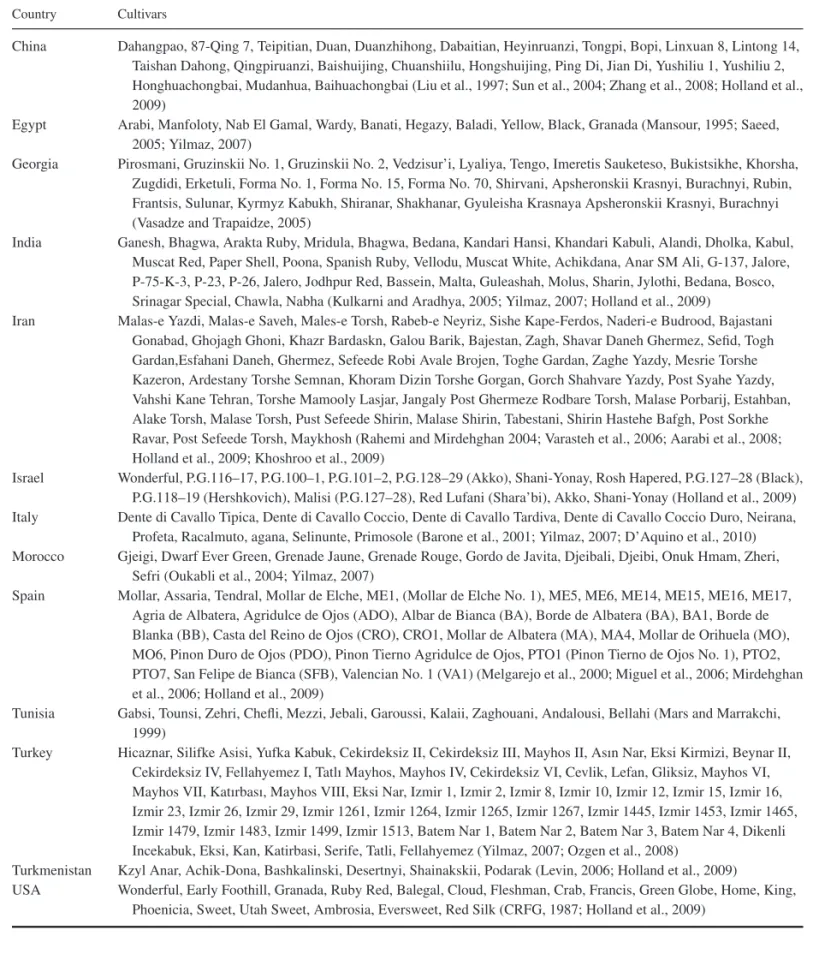
The Punica genus contains only two species, first of which is better known as the pomegranate (Punica granatum L.), and second of which is the Socotra or Yemen pomegranate (Punica protopunica Balf. f. 1882), native to island of Socotra, not edible, and not commercially available, though it is cultivated (Levin, 2006). Many variety names are distinctive to the region where they are grown, and genetic origins of these varieties are mostly undecided. Therefore numerous varieties and hundreds of types exist across many countries. Cultivars are often categorized as sweet, sweet/sour, and sour; early-, mid-, or late-season; juice and table fruit; and soft- or hard-seeded. Hard-seeded fruit possesses poor eating quality; soft-seeded fruit has good eating quality; therefore soft-seeded cultivars are preferred for table fruit and hard-seeded fruit is better for processing. Furthermore, the desired pomegranate taste varies and is country or region specific; for example, in North Africa, nearly all the commercialized cultivars are sweet types, while in many other countries, the sour cultivars have been commercialized (Al-Kahtani, 1992). The cultivars documented in the literature, by country, are listed in Table 27.1; a brief description follows.

(3)

Table 27.1. Pomegranate cultivars of the selected countries. Country Cultivars

China Dahangpao, 87-Qing 7, Teipitian, Duan, Duanzhihong, Dabaitian, Heyinruanzi, Tongpi, Bopi, Linxuan 8, Lintong 14, Taishan Dahong, Qingpiruanzi, Baishuijing, Chuanshiilu, Hongshuijing, Ping Di, Jian Di, Yushiliu 1, Yushiliu 2, Honghuachongbai, Mudanhua, Baihuachongbai (Liu et al., 1997; Sun et al., 2004; Zhang et al., 2008; Holland et al., 2009)

Egypt Arabi, Manfoloty, Nab El Gamal, Wardy, Banati, Hegazy, Baladi, Yellow, Black, Granada (Mansour, 1995; Saeed, 2005; Yilmaz, 2007)

Georgia Pirosmani, Gruzinskii No. 1, Gruzinskii No. 2, Vedzisur’i, Lyaliya, Tengo, Imeretis Sauketeso, Bukistsikhe, Khorsha, Zugdidi, Erketuli, Forma No. 1, Forma No. 15, Forma No. 70, Shirvani, Apsheronskii Krasnyi, Burachnyi, Rubin, Frantsis, Sulunar, Kyrmyz Kabukh, Shiranar, Shakhanar, Gyuleisha Krasnaya Apsheronskii Krasnyi, Burachnyi (Vasadze and Trapaidze, 2005)

India Ganesh, Bhagwa, Arakta Ruby, Mridula, Bhagwa, Bedana, Kandari Hansi, Khandari Kabuli, Alandi, Dholka, Kabul, Muscat Red, Paper Shell, Poona, Spanish Ruby, Vellodu, Muscat White, Achikdana, Anar SM Ali, G-137, Jalore, P-75-K-3, P-23, P-26, Jalero, Jodhpur Red, Bassein, Malta, Guleashah, Molus, Sharin, Jylothi, Bedana, Bosco, Srinagar Special, Chawla, Nabha (Kulkarni and Aradhya, 2005; Yilmaz, 2007; Holland et al., 2009)

Iran Malas-e Yazdi, Malas-e Saveh, Males-e Torsh, Rabeb-e Neyriz, Sishe Kape-Ferdos, Naderi-e Budrood, Bajastani Gonabad, Ghojagh Ghoni, Khazr Bardaskn, Galou Barik, Bajestan, Zagh, Shavar Daneh Ghermez, Sefid, Togh Gardan,Esfahani Daneh, Ghermez, Sefeede Robi Avale Brojen, Toghe Gardan, Zaghe Yazdy, Mesrie Torshe Kazeron, Ardestany Torshe Semnan, Khoram Dizin Torshe Gorgan, Gorch Shahvare Yazdy, Post Syahe Yazdy, Vahshi Kane Tehran, Torshe Mamooly Lasjar, Jangaly Post Ghermeze Rodbare Torsh, Malase Porbarij, Estahban, Alake Torsh, Malase Torsh, Pust Sefeede Shirin, Malase Shirin, Tabestani, Shirin Hastehe Bafgh, Post Sorkhe Ravar, Post Sefeede Torsh, Maykhosh (Rahemi and Mirdehghan 2004; Varasteh et al., 2006; Aarabi et al., 2008; Holland et al., 2009; Khoshroo et al., 2009)

Israel Wonderful, P.G.116–17, P.G.100–1, P.G.101–2, P.G.128–29 (Akko), Shani-Yonay, Rosh Hapered, P.G.127–28 (Black), P.G.118–19 (Hershkovich), Malisi (P.G.127–28), Red Lufani (Shara’bi), Akko, Shani-Yonay (Holland et al., 2009) Italy Dente di Cavallo Tipica, Dente di Cavallo Coccio, Dente di Cavallo Tardiva, Dente di Cavallo Coccio Duro, Neirana,

Profeta, Racalmuto, agana, Selinunte, Primosole (Barone et al., 2001; Yilmaz, 2007; D’Aquino et al., 2010) Morocco Gjeigi, Dwarf Ever Green, Grenade Jaune, Grenade Rouge, Gordo de Javita, Djeibali, Djeibi, Onuk Hmam, Zheri,

Sefri (Oukabli et al., 2004; Yilmaz, 2007)

Spain Mollar, Assaria, Tendral, Mollar de Elche, ME1, (Mollar de Elche No. 1), ME5, ME6, ME14, ME15, ME16, ME17, Agria de Albatera, Agridulce de Ojos (ADO), Albar de Bianca (BA), Borde de Albatera (BA), BA1, Borde de Blanka (BB), Casta del Reino de Ojos (CRO), CRO1, Mollar de Albatera (MA), MA4, Mollar de Orihuela (MO), MO6, Pinon Duro de Ojos (PDO), Pinon Tierno Agridulce de Ojos, PTO1 (Pinon Tierno de Ojos No. 1), PTO2, PTO7, San Felipe de Bianca (SFB), Valencian No. 1 (VA1) (Melgarejo et al., 2000; Miguel et al., 2006; Mirdehghan et al., 2006; Holland et al., 2009)

Tunisia Gabsi, Tounsi, Zehri, Chefli, Mezzi, Jebali, Garoussi, Kalaii, Zaghouani, Andalousi, Bellahi (Mars and Marrakchi, 1999)

Turkey Hicaznar, Silifke Asisi, Yufka Kabuk, Cekirdeksiz II, Cekirdeksiz III, Mayhos II, Asın Nar, Eksi Kirmizi, Beynar II, Cekirdeksiz IV, Fellahyemez I, Tatlı Mayhos, Mayhos IV, Cekirdeksiz VI, Cevlik, Lefan, Gliksiz, Mayhos VI, Mayhos VII, Katırbası, Mayhos VIII, Eksi Nar, Izmir 1, Izmir 2, Izmir 8, Izmir 10, Izmir 12, Izmir 15, Izmir 16, Izmir 23, Izmir 26, Izmir 29, Izmir 1261, Izmir 1264, Izmir 1265, Izmir 1267, Izmir 1445, Izmir 1453, Izmir 1465, Izmir 1479, Izmir 1483, Izmir 1499, Izmir 1513, Batem Nar 1, Batem Nar 2, Batem Nar 3, Batem Nar 4, Dikenli Incekabuk, Eksi, Kan, Katirbasi, Serife, Tatli, Fellahyemez (Yilmaz, 2007; Ozgen et al., 2008)

Turkmenistan Kzyl Anar, Achik-Dona, Bashkalinski, Desertnyi, Shainakskii, Podarak (Levin, 2006; Holland et al., 2009)

USA Wonderful, Early Foothill, Granada, Ruby Red, Balegal, Cloud, Fleshman, Crab, Francis, Green Globe, Home, King, Phoenicia, Sweet, Utah Sweet, Ambrosia, Eversweet, Red Silk (CRFG, 1987; Holland et al., 2009)

(4)

Afghanistan

Pomegranate has the second place in the country’s total fruit production and occupies 7% of the total fruit cultivation area. The varieties are usually small and produced for the local markets. A few cultivars have been cited so far as follows: ‘Black Kandahar,’ ‘Kabul,’ ‘Red Kandahar,’ and ‘White Kandahar’ (Yilmaz, 2007).

China

Chinese cultivars vary from small to very large, from sour to sweet, and from early to late ripening (Holland et al., 2009). ‘Teipitian’ and ‘87-Qing 7’ cultivars are probably the most popular cultivars in China, followed by Qingpiruanzi (Liu et al., 1997; Sun et al., 2004). Commercial cultivars have been chosen based on size, juice content, seed softness, and time of ripening, while some of the ornamental types have a unique number of petals and petal color (Holland et al., 2009).

Egypt

Pomegranates are grown in upper Egypt, especially in As-suit Governorate, for fresh consumption and juice (Man-sour, 1995). About ten Egyptian cultivars, as well as ‘Granada’ have been documented in the literature (Man-sour, 1995; Saeed, 2005)

Georgia

Several cultivars were reported in Georgia, such as ‘Kyrmyz Kabukh’ and ‘Lyaliya,’ noted for resistance splitting, and ‘Sulunar’ and ‘Vedzisuri,’ cultivars noted for higher juice content (Vasadze and Trapaidze, 2005).

India

Although there are more than 30 cultivars cited, ‘Ganesh’ is the most well-known cultivar in India. The ‘Ganesh’ cul-tivar, evergreen, has soft seeds, red arils, and low acid and sweet taste. ‘Mridula’ and ‘Bhagwa’ cultivars are usually produced for export. India is the leader in pomegranate breeding studies (Holland et al., 2009), where some undoc-umented cutivars may also exist.

Iran

Iran is probably the richest country in terms of geno-types, specimens, and cultivars of pomegranate. ‘Malase-Yazdi,’ ‘Malas-e-Saveh,’ ‘Males-e Torsh,’ ‘Rabeb-e-Neyriz,’ ‘Sishe Kape-Ferdos,’ and ‘Naderi-e-Budrood’ are the main commercial cultivars in Iran (Varasteh et al., 2009). Cultivars in Iran are classified as sweet, rootstock, and ornamental type (Mirdehghan and Rahemi, 2005).

‘Alack,’ an early-ripening cultivar, and ‘Maykhosh,’ a late-ripening cultivar, are used for export (Holland et al., 2009).

Israel

More than 50 accessions, with varied internal appearance, growth habit, ripening stage, taste, and seed softness, are found in Israel. Of the eight cultivars that are commercially grown, the leading one is ‘Wonderful.’ ‘Wonderful’ is the best export cultivar, followed by ‘Akko’ and ‘Shani-Yonay’ (Holland et al., 2009).

Italy

More than ten cultivars were reported, especially from Sicily, by Barone et al. (2001) and (Yilmaz, 2007). The cultivars present are mostly of local origin.

Morocco

About 17 pomegranate accessions have been reported in Morocco (Oukabli et al., 2004).

Spain

Nearly 40 Spanish cultivars have been documented. The cultivars are divided into three groups: sweet, sweet-sour, and sour. There is high variability among cultivars; ‘Mollar de Elche’ is the leading commercial cultivar, followed by ‘Roja,’ ‘Valenciana’ and ‘Tendral’ (Melgarejo et al., 2000). To improve commercial products, new cultivars are con-stantly being introduced via breeding studies.

Tunisia

Many types and forms or cultivars of pomegranate exist in Tunisia; however, their names are strictly local, originating from the area of cultivation or from the color of the fruit rind (Mars and Marrakchi, 1999). Interchange of plant material between regions was very frequent (Mars, 1995). Nearly all pomegranates, many of which are of low quality, are consumed locally. Only a few local cultivars, ‘Zehri’ and ‘Gabsi,’ are propagated in commercial nurseries and used in the new plantations (Mars and Marrakchi, 1999).

Turkey

Many types and forms grow over diverse areas. The culti-vars are usually categorized based on sweetness and seed type: sour, sour-sweet, and sweet; soft-seeded, interme-diate, and hard-seeded. ‘Fellahyemez,’ ‘Eksilik,’ ‘Ernar,’ Hicaznar,’ ‘Katirbasi,’ ‘Beynar,’ and ‘Asinar’ are the lead-ing commercial cultivars in Turkey. ‘Hicaznar,’ a red culti-var having a sweet-sour taste and hard seeds, is considered a high producer and somewhat similar to ‘Wonderful’ cul-tivar (Yilmaz, 2007).

(5)

Turkmenistan

Turkmenistan has a very large collection of pomegranate in Garygala in terms of size, variability, and geographical lo-cation (Levin, 2006). The Turkmen varieties are classified by size, flavor, skin color, aril color, seed softness, produc-tivity, tendency to split and to diseases, postharvest perfor-mance, sugar content, juice content, and time of ripening (Levin, 2006; Holland et al., 2009). Recently, some of the Turkmen cultivars have been exported to Israel and the United States.

United States

A small number of cultivars are grown in the United States. ‘Wonderful’ is the major cultivar, which is widely culti-vated in California, and possesses a large fruit with red arils, sweet-sour taste, and semi-hard seed (Holland et al., 2009). Other cultivars of much less commercial significance in-clude ‘Ambrosia,’ ‘Eversweet,’ ‘Granada,’ ‘Red Silk,’ and ‘Sweet Pomegranate’ (CRFG, 1997).

Saudi Arabia, Iraq, Palestine, Syria, Cyprus, Portugal, Vietnam, and Australia

Very little information is available from these countries. ‘Ahmar,’ ‘Aswad,’ and ‘Halwa’ cultivars are produced in Iraq (Morton, 1987); ‘Malissi’ and ‘Ras el Baghl’ in Pales-tine (Morton, 1987); ‘Mangulati’ (Morton, 1987) and ‘Taifi’ (Al-Maiaman and Ahmad, 2002) in Saudi Arabia; ‘Red Loufani,’ ‘Malisi,’ and ‘Ras el Baghl’ in Syria (Yilmaz, 2007); Hicaznar,’ ‘Chocolate,’ ‘Sotirkatice,’ and ‘Ftanofli’ in Cyprus (Yilmaz, 2007); ‘De Javita,’ ‘Mollar de Alca-nar,’ ‘Asseria,’ and ‘Mollar de Elche’ in Portugal (Yilmaz, 2007); ‘ Vietnamase’ in Vietnam (Holland et al., 2009); and Wonderful’ in Australia (Weerakkody et al., 2010).

Harvest

Some pomegranate plants grown from seedlings may bear flowers in their first year, and the plants bear fruit in their second year (Holland et al., 2009). Fruits, however, are har-vested in the third year, when a tree bears approximately 50–60 fruits, depending on the cultivar. In the fourth and fifth year, the fruit number increases to about 80 to 100, finally reaching up to 120–150 during the sixth year on-ward (Anon, 2010). Since pomegranates are nonclimacteric fruits, they should be harvested when fully ripe. The calyx at the distal end of the fruit closes and the skin indents slightly when the fruit is ripe (Anon, 2010). While fruit can mature at different stages due to the extended bloom, most

fruits are harvested between 135 and 150 days after fruit set, depending on the varieties (Yilmaz, 2007).

Harvest season lasts almost a month, with an interval of 6–7 days, equaling four times per harvest season. In Israel, ‘Wonderful’ is harvested when soluble solids reach 15% (Morton 1987), while in California, titratable acidity is less than 1.85% at harvest, and the color is darker than established reference (Kader, 2006).

Care must be taken when harvesting and handling the fruit since most new varieties have finer and delicate skin that is susceptible to bruising if handled inappropriately. Pomegranates should be harvested by clippers and placed gently into picking bags, then transferred to harvest bins destined for the packinghouse, where pomegranates are separated according to the severity of physical or any other type of defects (Kader, 2006). The mildly defected fruit may be used for processing into juice, and those with very slight or no defects are marketed fresh. For the fresh mar-ket, pomegranates are washed, size-graded, and packed in shipping containers after treatment with fungicide or wax (Kader, 2006). A packing application that reduces or pre-vents bruising and scuffing and allows rapid precooling should be applied (Kader, 2006).

Standards of quality

Fruit quality depends mainly on sugar and acid ratio of the juice along with size and skin color (Kader, 2006). Additionally, a high-quality pomegranate fruit should carry an attractive rind, small or soft seeds in the aril, and be free from sunburn, cracks and splitting, cuts, bruises, and decay. Rind color and smoothness are other external quality criteria; sweet pomegranates have yellowish-green skin, while sour or sour-sweet ones have reddish skin (Pekmezci and Erkan, 2010). Aril color intensity and uniformity are also important internal quality indices (Kader, 2006). Fruit firmness for ‘Mollar de Elche’ should be around 14–16 N at the time of harvest (Mirdehghan et al., 2007a, 2007b).

No US grades exist for pomegranate; fruit are mostly graded according to weight and packed in a single layer with the tops not usually covered by lids.

According to Turkish standards, pomegranates can be categorized into four groups based on size: small (150–200 g, 65–74 mm diameter, 25–34 fruit/5-kg carton), medium (201–300 g, 75–84 mm diameter, 17–25 fruit/5-kg carton), large (301–400 g, 85–94 mm diameter, 13–17 fruit/5-kg carton), and extra large (401–500 g, 94–104 mm diameter, 10–13 fruit/5-kg carton) (Pekmezci and Erkan, 2010).

The Codex Alimentarius Commission (CAC, 2009) describes standards entailing quality aspects related to pomegranate fruit size, safety, and labeling. These

(6)

standards insist on “supplying high quality and safe prod-ucts to protect consumer’s health and there must be a large framework for standardization of this product which should include all the necessary parameters such as weight, size and proper labeling” (CAC, 2009, p. 3). In addition to typical packaging and labeling, the objectives of the stan-dards are (1) to establish the minimum requirements for pomegranate, which shall comply with, independently from the quality class; (2) to define the categories to classify pomegranates in accordance with the characteristics of the fruit; and (3) to establish tolerance as regards quality and size that may be permitted of pomegranates contained in a package (CAC, 2009).

POSTHARVEST PHYSIOLOGY AND STORAGE TECHNOLOGIES

Postharvest physiology

Pomegranate is a nonclimacteric fruit; therefore, it does not ripen after harvest and must be picked fully ripe. The fruit reaches the fully ripe stage within 4–6 months after flowering, depending on the climatic conditions and variety (Ben-Arie et al., 1984). Maturity indices depend on the cultivars and include fruit skin color, aril color, titratable acidity (TA), and soluble solid content (SSC) (Lee et al., 1974; LaRue, 1980; Ben-Arie et al., 1984). The maximum TA may be 1% for sweet cultivars and 1.5–2% for sweet-sour cultivars. SSC should not be lower than 15% (Kader, 2006).

Pomegranate fruit has a very low respiration rate that usu-ally decreases after harvest storage. The ranges of respira-tion rates for Indian-grown ‘Ganesh’ were 445 nmol/kg·sec at 25◦C following harvest and about 130 nmol/kg·sec af-ter 11 days at 25◦C (Nanda et al., 2001), for Italian-grown ‘Primosole’ 241 nmol/kg·sec at 20◦C following harvest and 20 nmol/kg·sec after 12 weeks at 8◦C (D’Aquino et al., 2010), for Spanish-grown ‘Mollar de Elche’ 462 nmol/g·hr at 2◦C following harvest and 595 nmol/g·hr after 60 days at 2◦C (Mirdehghan et al., 2007a), and for Californian-grown ‘Wonderful’ 2–4, 4–8, and 8–18 mL/kg·hr at 5◦, 10◦, and 15◦C, respectively, following harvest (Kader, 2006).

Ethylene production is very low in pomegranate fruit and frequently ignored in the postharvest studies. Ethy-lene production remained below 0.2μL/liter at 20◦C for the Californian-grown ‘Wonderful’ and 2.52 pmol/kg·sec at 20◦C for the ‘Primosole’ at following harvest, and af-ter 12 weeks plus 1 day at 20◦C about 0.90 pmol/kg.sec (D’Aquino et al., 2010). Ethylene at ≥1μL/liter stimu-lated respiration and autocatalytic ethylene in ‘Wonderful’ cultivar (Ben-Arie et al., 1984). The stimulation, however,

caused no changes in fruit quality such as SCC and TA or fruit and juice color.

Postharvest losses: causes and remedies

In the course of postharvest life, pomegranate is suscep-tible to severe quality losses owing to physiological dis-orders and enzymatic activity. The disdis-orders increase with duration of storage at 5◦C and over (Elyatem and Kader, 1984). The main storage problem is water loss, which may lead to browning in both rind and arils (Mirdehghan et al., 2006). Firmness loss, changes in aril and rind color, and loss of vitamin C and acidity are some additional physio-logical disorders, which may occur simultaneously, thereby decreasing of acceptability with respect to freshness, juici-ness, and taste (Art´es et al., 1998; Nanda et al., 2001). Decay is also another major cause of the postharvest losses at the recommended storage conditions of 5◦–8◦C (Roy and Waskar, 1997).

Sunburn

Exposure of the pomegranate fruit to intense sunlight can result in sunburn, which is visible in the shape of large black spots on the rind, subsequently, resulting in unmar-ketable fruit. The fact that pomegranates are harvested in late summer or early autumn also contributes to sunburn (Melgarejo et al., 2004). Melgarejo and Mart´ınez (1992) reported that the postharvest losses could run as high as 30% of harvested fruit due to sunburn damage.

For reducing sunburn occurrences, use of special culti-vars having more leaf surface or fruits more resistant to sunburn is helpful (Melgarejo et al., 2004). The cultivation practices, such as fertilization and irrigation regimes that increase vegetative development, can also be used for pro-tection of the fruits from direct sunlight (Melgarejo et al., 2004). Shades or screens can reduce sunburn as well. Sun-burn damage may be prevented by the use of Kaolin. Mel-garejo et al. (2004) observed a decrease in sunburn dam-age from 21.9% to 9.4% when a concentration of 25–50 kg/1000 l per ha was applied to ‘Mollar de Elche’ cultivar in Alicante, Spain.

Splitting and cracking

Fruit splitting and cracking, although regarded as the last phase of the pomegranate development process, where seed dispersing occurs, are two main physiological disorders developed on the tree. Both splitting and cracking enable decay microorganisms to enter the fruit, causing further pathological problems. Genetic factors, late harvest, irreg-ular irrigation and precipitation during the ripening stage, sunburn and physical damage on the fruit skin, nutrient

(7)

deficiencies, large variation in day and night temperatures, dry breeze, and some diseases and pests are the likely causes of the splitting and cracking (Yilmaz, 2007; Holland et al., 2009). The extent of the splitting and cracking may be reduced or prevented by using split/crack-resistant types such as ‘Izmir-16’ and ‘Beynar’ in Turkey (Yilmaz, 2007; Holland et al., 2009).

Harvest blemish

For fresh consumption or processing, fruit should be hand-picked and handled very delicately. Even a small bruise or scratch may cause a dark blemish on the rind, resulting in a sharp decline in commercial value.

Weight loss

Weight loss or water loss is the main problem for pomegranate fruit during postharvest life. Among the postharvest treatments tested, chilling temperature regime (<5◦C) at high relative humidity (RH) (90–95%), modified atmosphere packing, film wrapping, waxing and controlled atmosphere (CA) storage have been found effective in lim-iting weight loss.

Chilling injury

Storage at 5◦C or below 5◦C for even 1 month may ini-tiate chilling injuries in pomegranates, and the degree of the chilling injury symptoms increases with time and tem-perature decrease under 5◦C (Elyatem and Kader, 1984). ‘Wonderful’ cultivar can be safely stored at 5◦C for up to 2 months; however, the minimum safe temperature for longer storage is 7.2◦C (Crisosto et al., 2010). Chilling injuries are easily perceivable after transferring fruit to 20◦C, causing browning of the rind, surface pitting, husk scald, pale color of the arils, brown discoloration on the white segment, in-crease in electrolyte leakage, and inin-crease susceptibility to decay organisms (Elyatem and Kader, 1984; Art´es et al., 2000; Mirdehghan et al., 2007b).

To alleviate chilling injury symptoms, some postharvest treatments have been examined, and the following appli-cations have been found successful to a variable degree: controlled and modified atmosphere storage (Nerya et al., 2006), thermal application by air or hot water dip (Art´es et al., 1998, 2000; Mirdehghan et al., 2007a, 2007b), in-termittent film wrapping and coatings (Nanda et al., 2001; D’Aquino et al., 2010), and polyamine application (Mird-ehghan et al., 2007a) and salicylic acid treatment (Sayyari et al., 2009). Of these postharvest treatments, the polyamine application seems to be best tool to retard chilling injury symptoms when the fruit is stored at chilling temperatures (Mirdehghan et al., 2007a).

Scald

Scald, a physiological disorder limiting long-term of stor-age, develops with time, appears first on the stem end, and expands up to 60% of the skin but does not affect the internal tissue. Scald incidence and severity may be related to senes-cence since pomegranates harvested late showed higher scald degree than those harvested early. Among postharvest applications or treatments tested (such as diphenylamine, 1-MCP or CA), only the controlled atmosphere (5% O2+

15% CO2) seems to be successful to control this disorder

(Defilippi et al., 2006).

Internal breakdown

Internal breakdown is another physiological disorder in pomegranates, although the cause has not been explained yet. The symptoms of the disorder include underdeveloped light red-colored arils (Ryall and Pentzer, 1982).

Postharvest pathology

Gray mold (Botrytis cinerea) rot, green mold (Penicillium digitatum) rot, Cladosporium spp., Aspergillus spp., and Alternaria spp. are the most common postharvest diseases of pomegranate fruit (Roy and Waskar, 1997; Pekmezci and Erkan, 2010). Other fungi or bacteria causing pomegranate fruit decay or damage include Cercospora spp., Penicillium spp., Colletotrichum gloeosporioides, Sphaceloma puni-cae, Coniella granati Sacc. Petr. & Syd., Phytophthora spp., Glomerella cingulata, Rhizopus spp., Nematospora spp., and Pestalotiopsis versicolor (Holland et al., 2009; Palou and del Rio, 2009). Penicillium digitatum and Botrytis cinerea are likely the most frequent pathogens of pomegranate fruit and the most damaging (Palou and del Rio, 2009). In most cases, calyx is the entry point of gray mold, resulting in light brown, tough, and leathery skin as it progresses (Salunkhe and Desai, 1984). Heart rot is another disease caused by Aspergillus spp. and Alternaria spp. (Salunkhe and Desai, 1984). The disease progresses while on the tree; symptoms of the diseases are slightly abnormal skin color and blackened arils (Salunkhe and Desai, 1984). A noninvasive crown mold could develop on the stamen remains, leading to loss of aril color and off-flavor development and to ethanol buildup (Nerya et al., 2006).

FludioxonilR, a synthetic analogue of pyrrolnitrin

(Rosslenbroich and Stuebler, 2000) and a member of the class of phenylpyrroles, has been recently registered for controlling postharvest decay of pomegranates and other horticultural crops in the United States (Tedford et al., 2005). Fludioxonil alone or in combination with film wrap-ping has been shown to quite effectively control mold

(8)

development, leading in 50–67% of cases to less decay than control fruit after 12 weeks at 8◦C plus 1 week at 20◦C (D’Aquino et al., 2010). FenhaxamigR was also very

effective in reducing natural incidence of Botrytis cinerea (Holland et al., 2009).

Current storage and shipping practices

Pomegranate fruit can be easily stored for a period of 2–3 months at 5◦C; longer storage should be at approximately 7◦C to avoid chilling injury (Crisosto et al., 2010). Wa-ter loss and decay are, however, accelerated by storage at temperatures over 5◦C; hence the use of chilling tempera-ture is necessary to extend storability despite chilling injury occurrences (Mirdehghan et al., 2007a). Some postharvest treatment regimes mentioned above, along with the use of chilling temperature, may be applied to the produce to delay or decrease chilling injury symptoms such as CA storage. In traditional storage, pomegranates are stored until the rind completely dries and turns brown as long as the arils stay fresh.

Cold storage

Although the optimum storage temperature varies by cul-tivar, production area, and postharvest application (Hard-enburg et al., 1990; SeaLand, 1991; Onur et al., 1995), pomegranates are generally kept at 5◦–8◦C and 90% rel-ative humidity (RH). The optimum storage conditions for ‘Hicaznar,’ the leading commercial cultivar in Turkey, are 6◦C with 90% RH (Onur et al., 1992; Pekmezci et al., 1998) and for ‘Wonderful,’ around 7◦C and 90–95% RH (Kader, 2006). RH of 90–98% is recommended for all pomegranates since fruit peel desiccates easily at low RH, causing a hard and darkened rind that reduces marketability (Salunkhe and Desai, 1984).

Controlled atmosphere

Among the postharvest conditions for an extended storage, the most successful one seems to be the CA storage at or below 7◦C. CA, compared with the cold storage, has some superior advantages such as arresting/delaying the spread of certain diseases and decreasing the incidence of physiological disorders (Ben-Arie and Or, 1986; Kupper et al., 1995; Art´es et al., 1996; Holcroft et al., 1998, Nerya et al., 2006). Optimal CA storage conditions for ‘Hicaznar’ pomegranate are 3% O2+ 6% CO2(Kupper et al., 1995),

and 2% O2 + 6–15% CO2for ‘Wonderful’ (Hess-Pierce

and Kader, 2003; Nerya et al., 2006). The ‘Hicaznar’ and ‘Wonderful’ cultivars can be stored up to 6 months at 6◦C and up to 4–5 months at 6◦–7◦C, respectively, under CA

storage (Hess-Pierce and Kader, 2003; Kupper et al., 1995; Nerya et al., 2006).

Shipping

Pomegranate fruit should be packed with cushioning within the shipping containers to reduce incidence and severity of scuffing during shipping and transportation. Pomegranate fruit within the shipping containers may be forced-air cooled to 7◦C and kept at this temperature with 90–95% RH before shipment and transportation to the retail stores at 7◦C and 90–95% RH (Kader, 2006). Pomegranates should not be mixed with other fruits or vegetables during storage or shipping since the sensory quality may be impaired by aromatic or other volatiles emitted from those commodities.

Innovative postharvest technologies

Few innovative postharvest technologies have been doc-umented in the literature; the most promising ones are polyamine application (Mirdehghan et al., 2007a) and magnetic resonance imaging technology (Khoshroo et al., 2009).

Polyamine application

Prestorage application of polyamines (putrescine and sper-midine) by pressure of 0.05 bar for 4 min, or immersion at 25◦C for 4 min, might prolong the shelf life of pomegranate stored at chilling temperatures (Mirdehghan et al., 2007a). These researchers reported that the loss of firmness, color, SSC, TA, and the increase in respiration rate were signif-icantly delayed in ‘Mollar de Elche’ pomegranate by the polyamine application during 60-day storage at 2◦C plus 3 days at 20◦C.

Magnetic resonance imaging

Magnetic resonance imaging may be used for visualizing the internal structure of a pomegranate fruit with respect to ripening stage and internal quality. A study conducted on ‘Malas-e Torsh,’ an Iranian cultivar, to determine the ripening stage and internal defects this technique resulted in detection rate accuracy of over 95% (Khoshroo et al., 2009).

Shelf life extension and quality

To extend storability and marketing of pomegranates, sig-nificantly better results are obtained when waxing (Waskar et al., 1999), film wrapping (Nanda et al., 2001; D’Aquino et al., 2010), packaging under modified atmosphere (MAP) (Porat et al., 2008), using thermal treatments (Art´es et al., 1998, 2000; Mirdehghan et al., 2007a, 2007b), or applying

(9)

1-methylcyclopropene (1-MCP) gas treatment (Zhang et al., 2008).

Thermal treatment (air)

Intermittent heating has been proved useful for pomegranate fruit stored at chilling temperatures. Fruit treated retained better anthocyanins and TA, presented a re-duction of decay, and an alleviation of chilling injury (Art´es et al., 2000). ‘Mollar de Elche’ pomegranate fruit under cy-cles of intermittent warming of 1 day at 20◦C every 6 days at 2◦ or 5◦C showed longer shelf life than pomegranates continuously stored at 2◦or 5◦C (Art´es et al., 2000). Con-ditioning ‘Ganesh’ pomegranate fruit at 55◦C for 60 or 120 min significantly reduced chilling injury symptoms and electrolyte leakage (Rahemi and Mirdehghan, 2004).

Thermal treatment (water)

Pomegranates stored at chilling temperatures may benefit from hot water treatment. ‘Mollar de Elche’ pomegranates dipped in hot water (25◦C for 4 min) and stored 60 days at 2◦C followed by 5 days at 20◦C showed less extensive chill-ing injury than fruit without treatment (Mirdehghan et al., 2007b). The heat-treated fruit showed higher total antioxi-dant activity, which correlated to the high levels of total phe-nolics and to lesser extent to ascorbic acid and anthocyanin contents; in addition, the level of sugars (glucose and fruc-tose) and organic acids (malic, citric, and oxalic acids) were higher, too (Mirdehghan et al., 2006a). The optimum tem-perature of hot water dips for pomegranate may vary from 25◦to 45◦C, while temperatures of>50◦C might damage the fruit skin (Mirdehghan and Rahemi, 2005; Mirdehghan et al., 2006).

Modified atmosphere packaging (MAP)

As stated in several postharvest studies, MAP with appro-priate films can be used to generate a favorable atmosphere during storage and shipping of pomegranate fruit. Passive MAP (XtendR and Easy-TearR bags, StePac Ltd., Israel)

generated beneficial effects in the form of alleviating weight loss and shrinkage, decay development, appearance of skin blemishes (especially scald), and impaired taste for ‘Won-derful’ cultivar for a period up to 16 weeks at 6◦C plus 1 week at 20◦C (Porat et al., 2008). ‘Ganesh’ pomegranates shrink-wrapped with BDF-2001R (25μm thick,

multilay-ered coextruded polyolefin) could be stored for a period of 12 weeks at 8◦C without significant loss of quality with respect to weight loss and firmness loss or changes in acid-ity, sugars, and vitamin C (Nanda et al., 2001). In another study, passive film wrapping (polyolephenic 25μm thick, heat-shrinkable) of ‘Primosole’ pomegranate was shown to

completely control water loss and husk scald and maintain freshness for 12 weeks at 8◦C and 90% RH for 2 weeks and an additional 1 week at 20◦C (D’Aquino et al., 2010).

Waxing

Similar to the effect of MAP, pomegranate fruit may benefit from waxing. ‘Wonderful’ pomegranate fruit waxed with ZivdarR wax (18% dry matter) showed a delay in quality

losses by preventing fruit shrivel and drying of the stamens as well as preventing the development crown mold after months at 6◦C (Nerya et al., 2006). After 4 months cold storage, the waxing increased husk scald incidence (Nerya et al., 2006), suggesting that long-term storage (more than 3 months) may not be appropriate for the ‘Wonderful’ cultivar.

1-Methylcyclopropene (1-MCP)

As an ethylene inhibitor, 1-MCP may be applied to pomegranate fruit before storage. Senescence and devel-opment of fruit skin browning of ‘Dahongpao Chinese’ pomegranate stored at 20◦C for 7 weeks were delayed by 0.25–1.0μL/liter 1-MCP treatment for 12-hour duration at 20◦C prior storage (Zhang et al., 2008).

Salicylic acid

Salicylic acid (2 mM) was very effective in reducing chill-ing injury, electrolyte leakage from the rind, and loss of ascorbic acid in ‘Malas-e-Saveh’ Iranian pomegranate stored at 2◦C for a period of 1, 2, or 3 months plus 2 days at 20◦C (Sayyari et al., 2009). Therefore salicylic acid could be used for extending storage and shelf life of pomegranates stored at chilling temperatures.

MINIMALLY PROCESSED POMEGRANATE ARILS

Consumers’ preference for fresh fruits and vegetables is on the rise due to their health-promoting properties. Mini-mally processed or fresh-cut produce has been getting a lot of attention firstly owing to its freshness, original flavor, and nutrients, and secondly, to its easy-to-eat nature, lead-ing a rapid and excessive augmentation in terms of variety and quantity. Beyond having a unique flavor, considered as a functional food and thus constantly publicized by scien-tists, minimally processed pomegranate is on the rise, in the same line with juice. Owing to fruit botany, only one type of minimally processed product is possible from the pomegranate fruit, which is minimally processed aril.

Pomegranate, due to its exceptional and unique sen-sory and nutritional properties, is highly valued. The con-sumption, however, is not very easy due to the difficulty

(10)

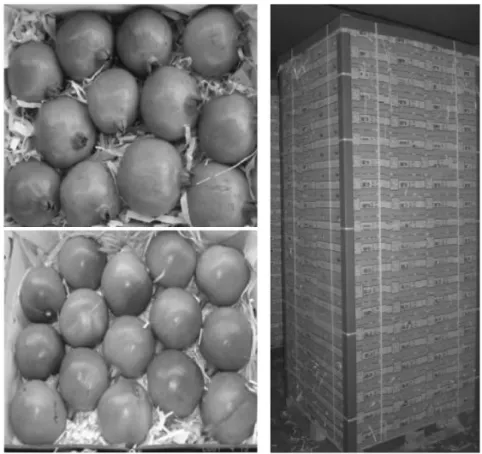
Figure 27.2. Minimally processed pomegranate arils. presented in removing arils from the fruit. For that rea-son, minimally or fresh processed pomegranates, in ready-to-eat form, have been developed (Fig. 27.2). Having in-tact sensory and nutritional properties, the minimally pro-cessed pomegranates are attracting more consumers. On the other hand, pomegranate fruit is very susceptible to sunburn, cracking, splitting, cuts or bruises, and chilling injuries if stored at temperatures lower than 5◦C. These defects make the pomegranate fruit unmarketable even though their interior quality may still be acceptable. For export markets, shippers package pomegranates in cartons with cushioning material to minimize damage during

long-distance shipments (Fig. 27.3). The defected fruit is even-tually destined to industrial use or animal consumption. Therefore, minimally fresh processing of the externally damaged pomegranates may be an excellent way to gain commercial benefit from unmarketable whole fruit (L´opez-Rubira et al., 2005).

Manual extraction of the arils is laborious and difficult; consequently, several machines extracting the arils are al-ready on the market and in use. However, after the peeling and extracting process, unwanted materials, such as white segment and defective arils (broken, abnormally shaped or colored, or other physiological disorders), are extracted

Figure 27.3. Pomegranates packaged for export markets (top left, 12-count box; bottom left, 15-count box; right, a pallet of 200 cartons packed together in 20 layers of 10 cartons each) (source: UNCTAD, 2010).

(11)

together. These unwanted media must be removed on the packing line since they decrease the shelf life and value of the minimally produced products. To overcome this prob-lem, a computer-based machine capable of detecting and removing unwanted materials and sorting the arils by color has been developed (Blasco et al., 2009). This machine may be used commercially to sort minimally processed ar-ils. On the other hand, a novel method that enables opening the fruit without cutting, extracting the arils with mini-mum damage, separating arils from the extraneous materi-als, and providing clean arils to the package line has been invented, patented, and implemented commercially in Is-rael (Schmilovitch et al., 2009).

Pretreatments and sanitizer use

To avoid or delay microbial development, washing mini-mally processed produce with chlorine solutions is widely accepted and used, with the concentration of chlorine mostly limited to <300 ppm (Schilimme, 1995). Wash-ing arils with chlorine (100 mg/kg) followed by ascorbic acid (5 g/liter) and citric acid (5 g/liter) dip may be used to extend the shelf life of arils (Gil et al., 1996b). The UV-C radiation, however, may not be used as a pretreatment for prolonging the shelf life since L´opez-Rubira et al. (2005) reported that UV-C at 0.56, 1.13, 2.27, 4.54, and 13.62 kJ/m2had no significant effect on the shelf life of ‘Mollar

de Elche’ fruit stored under MAP at 5◦C.

Arils, similar to whole fruit, have a relatively low rate of respiration and ethylene production. Minimally processed fruit may be stored up to 14 days at 7◦C without com-promising too much quality loss (Kader, 2006). During the aril extracting process, some arils are damaged, thus making them susceptible to decay. Therefore minimizing physical damage to arils is a critical factor in this process. To extend shelf life of minimally processed arils, several postharvest applications, such as MAP (Gil et al., 1996a; Sep´ulveda et al., 2000), CA storage (Holcroft et al., 1998), antioxidants (Gil et al., 1996a; Sep´ulveda et al., 2000), or honey coating (Ergun and Ergun, 2009), have been put into practice. Gil et al. (1996b) reported that pomegranate arils packaged in polypropylene films should be stored at 0◦–1◦C to get optimum shelf life.

Packaging of minimally processed products

MAP is one of the successful methods of prolonging the shelf life of arils (Gil et al., 1996a, 1996b). Under the MAP, where the initial atmosphere was actively modified to 20 mL/liter O2and 0 ml/liter CO2, minimally processed

pomegranate arils (cv. Mollar, Spain) may be stored up to 7 days at 1◦C without fungal growth or off-flavor

de-velopment (Gil et al., 1996b). Furthermore, semiperme-able packages may be used for pomegranate aril (Chilean ‘Wonderful’) storage at 4◦C for 14 days, with good physic-ochemical and microbiological quality (Sep´ulveda et al., 2000).

Microbiological issues and food safety aspects

Many countries demand that minimally or fresh-cut pro-duce not carry more than 7 log CFU/g aerobic bacteria. Consequently, minimally processed arils should be kept at 0◦–5◦C to maintain their microbial safety below the 7 log CFU/g aerobic level.

Quality attributes: physical, chemical, sensory

Since pomegranates are rich in both organic acids and phe-nolic compounds, their contribution to sensory attributes is closely followed during and after processing. In pigmented products like pomegranate, the discoloration generated by oxidation of phenolic compounds catalyzed by pheonolases and peroxidases causes an additional problem (Babic et al., 2006). As the color of pomegranate arils is one the most im-portant quality attributes, their stability must be conserved (Gil et al., 1995). Dip/washing in antibrowning or antiox-idant solutions might be therefore useful to preserve arils’ characteristic attractive color.

PROCESSING AND PROCESSED PRODUCTS

Pomegranate is physically divided into different tissues, each of which can be processed into value-added products. The rind represents 28–30% of the fruit and is rich in tannins and other beneficial polyphenols; white segments, connec-tive tissues with a porous structure, represent about 10% of the fruit, while internal membranes represent about 1–2%; and arils about 60% of the fruit (Borgese and Massini, 2007). These portions, however, can vary depending on cultivar, soil, plant nutrition, and climate.

Pomegranates, mostly unpeeled, may be crushed for juice, concentrated juice, and syrup or may be used for making jelly or other products (Art´es and Tom´as-Barber´an, 2000). Arils may be employed for making cake and dessert. Pomegranates, especially sour types, may be processed into vinegar, as well as citric acid. Dried and ground fruit is also used as spice in some parts of Asia. In northern India, arils are dried in the sun for 10 to 15 days and then sold as a spice (Morton, 1987).

No specific grading, washing, and cutting procedures ex-ist for pomegranate fruit, but extracting arils with the mini-mum physical damage and sorting arils by color and defects on the packaging or processing line is very important for the quality of processed products.

(12)

Juice, concentrate, and juice blends

Juice content of pomegranate varies from 45% to 65% of the intact fruit or from 76% to 85% of the arils (Pekmezci and Erkan, 2010). Organic acids, red color, tannin content, and SSC, higher in the fruit picked up late in the season, seem to be the major contributors to the quality of pomegranate juice (Crisosto et al., 1996; Dafny-Yalin et al., 2010). Juice quality and properties are also highly affected by aril mash quality from aril separators from which high juice yield and preventing oxidation are expected. The juice extraction is carried out using a screw-type press, belt press, or bladder press; each system has some advantages or disadvantages in terms of yield, pulp content, mash enzymation, filtration, antioxidant extraction, and color degradation. To produce a clear preferable pomegranate juice, enzymatic process is necessary for pectin breakdown pectins, and clarification is needed to eliminate cloudiness resulting from unstable pro-teins or protein-phenolic compounds. Thermal treatments may also be used for reducing bacterial contamination, in-activating enzymes responsible for color loss, and dena-turizing flocculating proteins involved in hazing (Borgese and Massini, 2007). If the juice is extracted from whole fruit, excessive tannin may be precipitated out by a gelatin process (Morton, 1987). After filtration, the juice may be pasteurized or may be preserved by adding sodium ben-zoate, allowed to settle for two days, then strained and bottled (Morton, 1987).

Sediments in fruit juice may result from microbial growth (Borgese and Massini, 2007); therefore the source of the gaze must be clarified to get a safe pomegranate juice. Ther-mal treatments are necessary for controlling pathogenic mi-croorganisms for especially juice and other product types.

Drying and dehydration

Very little has been reported in the literature on drying or dehydration of pomegranate arils; however, in Turkey, arils may be locally and traditionally sun-dried to make snacks, and in India to make spice (Morton, 1987).

Canning

Arils may be canned using filling liquids of sucrose syrup, a mixture of sucrose syrup and pomegranate juice (1:1, w/w), stored at 5◦C for a period of 8 months (Benli and Fenercioglu, 2005).

Freezing

Pomegranate arils may be frozen at -40◦C and stored at

−18◦C for 9 months (Bilisli and Cevik, 1999). Bilisli and Cevik (1999) reported that ‘Izmir 16’ is the most suitable

variety for freezing among eight most common varieties in Turkey, followed by ‘Izmir 1513,’ ‘Hicaznar,’ and ‘Izmir 1499.’

Jam

Pomegranate jams may be prepared using low or high methoxy pectins. For 1 kg high methoxy pectin jam, 350 g arils, 1.65 g pectin, 3 g citric acid, 0.5 g ascorbic acid and 1 g sorbic acid are mixed with a final sucrose concentra-tion of 65 ◦Brix, and for 1 kg low methoxy pectin jam, 7 g pectin is used; the rest of the ingredients are in the same concentration of 65◦Brix (Melgarejo et al., 2009). High methoxy pectin yields better jam, and low temper-ature (5◦C) in darkness may provide the optimal storage over time.

Indigenous processed products, new products Indigenous products

A homemade grenadine syrup may be prepared by boiling 2 cups of arils and 2 cups of sugar until it reduced in volume and seeds are removed from the final product (Crisosto et al., 1996).

In the Middle East, pomegranate molasses may be made by boiling down the juice of a particular type of tart pomegranate along with some cane sugar and lemon juice, while sumac is added in Turkey.

New products

Honey-coated arils may be seen soon on the market. A study for extending the shelf life pomegranate arils in-dicated that honey solution dips extended the fresh-like quality of minimally processed arils by delaying quality loss, microbial development, and pigment changes (Ergun and Ergun, 2009). The positive results postulate that honey coating may be an innovative and natural replacement for costly chemical preservatives for some processed products of fruits and vegetables.

Health-promoting dietary products from the rind, juice, and seed have been marketed in the United States, such as pomegranate extracts (containing a minimum of 40% ellagitannin) from Source NaturalsR , PomeGratR pomegranate juice (fourfold concentrated juice) from Jar-row FormulasR, and Pomegranate PlusR (containing 70% ellagic acid) from Pure EncapsulationR. Homemade pomegranate seed oil, for nourishing and improving skin elasticity, is marketed on a limited scale.

In southeastern Turkey, for the preparation of a pizza-type dish called lahmacun, red pomegranate juice is used for savoring and coloring.

(13)

Besides the use of juice, pomegranate contributes a unique flavor to many Mediterranean and Middle Eastern cuisines such as the Iranian fessenjan (Stover and Mercure, 2007).

By-product utilization

A chemical extraction of phytochemical compounds used for nutritional and pharmacological fields is possible from pomegranate. The rind contains about 30% tannin, usable in medicinal and dye industries (Pekmezci and Erkan, 2010). Ellagitanins may be used in dietetic formulation as antiox-idants; enzymes and pectins derived from pomegranates may be utilized for different applications in the food indus-try (Borgese and Massini, 2007). Pomegranate seeds as a by-product of juice processing can be used for oil extraction and for animal food.

NUTRITIONAL PROFILE AND HEALTH BENEFITS

Nutrient composition

Nutritional composition of pomegranates somewhat varies depending on the cultivars, soil, climate, and region. The juice from the arils (75% juice plus 22% seed) com-prises approximately 85% water (Table 27.2), a consid-erable amount of SSC, total sugars, reducing sugars, antho-cyanins, phenolics, ascorbic acid and proteins, and antiox-idants (Kulkarni and Aradhya, 2005).

The SSC of ripe pomegranate fruit juice is in the range of 8.3 to 20.50◦Brix, and TA is between 0.13 and 4.98% at harvest (Kupper, 1995) (Table 27.2). TA is less than 1% in sweet cultivars, 1–2% in sweet-sour cultivars, and over 2% in sour cultivars (Onur and Kaska, 1985). Protein content of

juice is about 1.03–1.13%, showing a diminutive range (Al-Maiman and Ahmad, 2002; Kulkarni and Aradhya, 2005), indicating that pomegranate fruit contains a very low level of protein compared to other fruits. The amount of total sugars is 11.43–20.50 mg/100 mg (Melgarejo et al., 2000; Dafny-Yalin et al., 2010), with fructose and glucose be-ing the most prevalent sugars, followed by trace amounts of maltose, sucrose, mannitol (Table 27.2), and arabinose (Hulme, 1970).

Organic acids

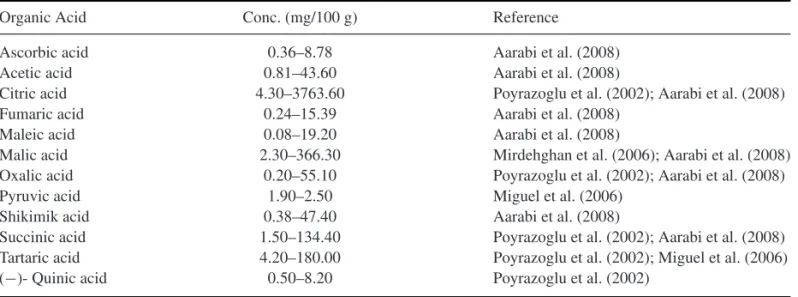
The total organic acid content in pomegranate juice shows a very large variation with a range of 212 to 3959 mg/100 g (Aarabi et al., 2008). The individual organic acids found in pomegranate are as follows (Table 27.3): ascorbic acid, acetic acid, citric acid, fumaric acid, maleic acid, malic acid, oxalic acid, pyruvic acid, shikimik, succinic acid, tar-taric acid, and (−)- Quinic acid (Poyrazoglu et al., 2002; Miguel et al., 2006; Aarabi et al., 2008). Citric acid is the predominant organic acid, followed by malic, tartaric, suc-cinic acid, and the others. Individual organic acid composi-tion is strongly variety dependent; moreover, some organic acids are undetectable in some varieties.

Antioxidant activity, vitamin C, and anthocyanins

Antioxidant activity of pomegranate juice measured as trolox-equivalent antioxidant capacity (TEAC), ferric re-ducing ability of plasma (FRAP), vitamin C equivalent, or percentage inhibition shows significant differences among varieties, and so do the total and individual anthocyanin levels (Art´es et al., 1998, 2000; Drogoudi et al., 2005; Kulkarni and Aradhya, 2005; Ozgen et al., 2008; D’Aquino et al., 2010; Weerakkody et al., 2010) (Table 27.4). The Table 27.2. Physicochemical composition of pomegranate juice.

Parameters (unit) Value Reference

Moisture (%) 83.65 Al-Maiman and Ahmad (2002)

pH 2.98–4.50 Poyrazoglu et al. (2002); Ozgen et al. (2008)

SSC (%) 8.30–20.50 Kupper (1995)

TA (%) 0.13–4.98 Kupper (1995)

Protein (g/100 g) 1.03–1.13 Al-Maiman and Ahmad (2002); Kulkarni and Aradhya (2005) Total sugars (g/100 g) 11.43–20.50 Melgarejo et al. (2000); Dafny-Yalin et al. (2010)

Glucose (g/100 g) 4.80–7.72 Al-Maiman and Ahmad (2002); Dafny-Yalin et al. (2010) Fructose (g/100 g) 4.80–8.60 Mirdehghan et al. (2006); Dafny-Yalin et al. (2010) Maltose (g/100 g) 0.02–0.17 Melgarajo et al. (2000); Dafny-Yalin et al. (2010) Sucrose (g/100 g) 0.01–0.04 Melgarejo et al. (2000); Ozgen et al. (2008) Mannitol (g/100 g) 0.05–0.32 Dafny-Yalin et al. (2010)

(14)

Table 27.3. Organic acids concentration of pomegranate juice.

Organic Acid Conc. (mg/100 g) Reference

Ascorbic acid 0.36–8.78 Aarabi et al. (2008)

Acetic acid 0.81–43.60 Aarabi et al. (2008)

Citric acid 4.30–3763.60 Poyrazoglu et al. (2002); Aarabi et al. (2008)

Fumaric acid 0.24–15.39 Aarabi et al. (2008)

Maleic acid 0.08–19.20 Aarabi et al. (2008)

Malic acid 2.30–366.30 Mirdehghan et al. (2006); Aarabi et al. (2008) Oxalic acid 0.20–55.10 Poyrazoglu et al. (2002); Aarabi et al. (2008)

Pyruvic acid 1.90–2.50 Miguel et al. (2006)

Shikimik acid 0.38–47.40 Aarabi et al. (2008)

Succinic acid 1.50–134.40 Poyrazoglu et al. (2002); Aarabi et al. (2008) Tartaric acid 4.20–180.00 Poyrazoglu et al. (2002); Miguel et al. (2006)

(−)- Quinic acid 0.50–8.20 Poyrazoglu et al. (2002)

common anthocyanins in pomegranate juice are delphini-din 3-glucosides, delphinidelphini-din 3–5-glucosides, cyanidelphini-din glucosides, cyanidin 3–5-glucosides, pelargonidin 3-glucosides, pelargonidin 3–5-3-glucosides, and cyanidin 3-arabinose, with varying values. Anthocyanins concentra-tion has been reported to increase during cold storage (Gil et al., 1995) but not in CA storage (Holcroft et al., 1998). Vitamin C content of pomegranate juice is about 885.80 μmol/liter (Nanda et al., 2001).

Phenolic compounds

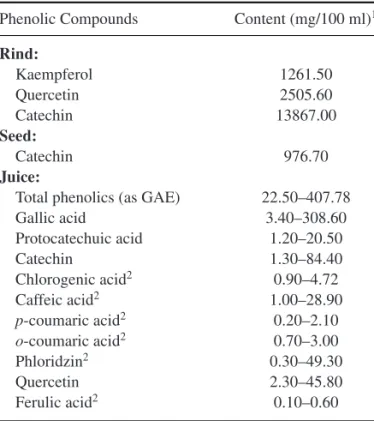
Pomegranate rind possesses high amounts of phenolic compounds in the form of catechin, quercentin, and kaempferol, as shown in Table 27.5. Catechin is also found in pomegranate seed (Park et al., 2010). Total phenolic com-pounds of pomegranate juice range from 22.50 to 407.78 mg/100 ml (Drogoudi et al., 2005; Ozgen et al., 2008). The phenolic compounds quantified in pomegranate juice are gallic acid, protocatechuic acid, catechin, cholorgenic Table 27.4. Antioxidant capacity and anthocyanin levels of pomegranate juice.

Parameters Value Reference

Antioxidant capacity as:

TEAC (mmol/TE1/liter) 4.38–7.70 Ozgen et al. (2008)

FRAP (mmol/TE1/liter) 4.63–11.60 Ozgen et al. (2008); Weerakkody et al. (2010)

Vitamin C eqv. (mg/100 ml) 1.3–31.60 Drogoudi et al. (2005); Borochov-Neori et al. (2009) % Inhibition 55.05–69 Kulkarni and Aradhya (2005); D’Aquino et al. (2010) Vitamin C (μmol/liter) 885.80 Nanda et al. (2001)

Total monomeric anthocyanins, as cyanidin-3 glucosides (mg/100 g)

0.60–21.90 Ozgen et al. (2008) Total anthocyanins, as cyanidin

3–5-glucosides (mg/100 g)

33.80–125.50 D’Aquino et al. (2010); Kulkarni and Aradhya (2005) Delphinidin 3-glucosides 0.05–5.70 Art´es et al. (2000); D’Aquino et al. (2010)

Delphinidin 3–5-glucosides 0.13–5.01 Art´es et al. (2000); D’Aquino et al. (2010) Cyanidin 3-glucosides 0.31–13.83 Art´es et al. (2000); D’Aquino et al. (2010) Cyanidin 3–5-glucosides 0.41–7.53 Art´es et al. (2000); D’Aquino et al. (2010) Pelargonidin 3-glucosides 0.04–2.11 Art´es et al. (2000); D’Aquino et al. (2010) Pelargonidin 3–5-glucosides 0.02–0.65 Art´es et al. (1998, 2000)

Cyanidin 3-arabinose 0.33 D’Aquino et al. (2010)

(15)

Table 27.5. Phenolic compounds of pomegranate rind, seed, and juice.

Phenolic Compounds Content (mg/100 ml)1

Rind: Kaempferol 1261.50 Quercetin 2505.60 Catechin 13867.00 Seed: Catechin 976.70 Juice:

Total phenolics (as GAE) 22.50–407.78

Gallic acid 3.40–308.60 Protocatechuic acid 1.20–20.50 Catechin 1.30–84.40 Chlorogenic acid2 0.90–4.72 Caffeic acid2 1.00–28.90 p-coumaric acid2 0.20–2.10 o-coumaric acid2 0.70–3.00 Phloridzin2 0.30–49.30 Quercetin 2.30–45.80 Ferulic acid2 0.10–0.60

1μl/liter for rind and seed 2Not detected in some varieties

Source: Rind and seed (Park et al., 2010), juice (Poyrazoglu et al., 2002)

acid, caffeic acid, p-coumaric, o-coumaric acid, phloridzin, quercetin and ferulic acid (Poyrazoglu et al., 2002). Gal-lic acid is determined to be the most abundant phenoGal-lic, followed by catechin, quercetin, and so on (Table 27.5). Punicalagin A and B, and punicalin (Zhang et al., 2009), castalagin, granatin, and gallacatechin (Seeram et al., 2006) have been reported on the rind of pomegranate as well.

Ash and minerals

Ash and mineral contents of the pomegranate fruit are shown in Table 27.6. Ash contents of seed and juice are 0.45% and 1.05%, respectively. The amounts of potassium, calcium, and sodium are the highest in both seed and juice (Al-Maiman and Ahmad, 2002).

Physiochemical composition of seed

A detailed study on ‘Taifi’ pomegranate seed done by Al-Maiman and Ahmad (2002) reported seed composition as 77.72% moisture, 4.45% protein, 0.25% fat, 0.18 mg/100 g ascorbic acid, and 1.90 mg/100 g phenolic compounds. This profile indicates that pomegranate seed is also rich in

Table 27.6. Ash and mineral content (mg/100 g) of pomegranate seeds and juice.

Mineral Seed Juice

Ash 0.47 0.32 Calcium 59.30 24.50 Iron 1.88 21.21 Magnesium 11.90 5.13 Phosphorus 7.49 6.25 Potassium 243.00 333.00 Sodium 95.70 72.10 Zinc 1.26 0.30 Copper 0.04 0.07

Source: Al-Maiman and Ahmad (2002).

phenolic compounds, some of which have a very strong antioxidant activity.

Vitamins and other nutritional compounds

Fibers and vitamins, especially vitamin A and C, are very abundant in pomegranate fruit. A medium-size fresh pomegranate fruit contains daily recommended intake of ß-carotene, a potent antioxidant. Others nutrition values not mentioned above include selenium, thiamin, riboflavin, niacin, pantothenic acid, vitamin B6, folate, vitamin B12,

vitamin E and vitamin K, andα-carotene (TNI, 2010).

Effect of processing on nutrition

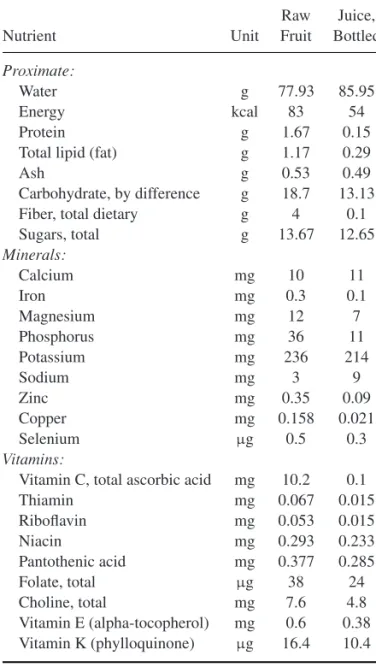
Fruit rind is a good source of antioxidant polyphenols. Therefore crushing the fruit with peel enriches the polyphe-nols of pomegranate juice. On the other hand, many antiox-idants are degraded during and after processing by heat or light. Table 27.7 shows the nutritional profile of Califor-nia ‘Wonderful’ pomegranate and juice. Some variations in composition are expected based on varietal differences or due to climatic conditions under which fruit is grown.

Medicinal properties and health benefits

The consumption of pomegranate bestows health-promoting effects based on the content of several com-pounds with antioxidant activity, including ascorbic acid, flavonoids, and phenolic compounds such as anthocyanins (Tom´as-Barber´an and Esp´ın, 2001).

In various clinical studies, pomegranate juice has been found beneficial in reducing health disease risk factors, atherosclerosis, and cardiovascular diseases (Aviram et al., 2000, 2004; Kaplan et al., 2001). Tannins, found abundantly in pomegranate, have been recognized as one of the major antioxidant compounds. Pomegranate has been reported to

(16)

Table 27.7. Nutritional profile of California-grown ‘Wonderful’ pomegranate fruit and juice (per 100 g). Nutrient Unit Raw Fruit Juice, Bottled Proximate: Water g 77.93 85.95 Energy kcal 83 54 Protein g 1.67 0.15

Total lipid (fat) g 1.17 0.29

Ash g 0.53 0.49

Carbohydrate, by difference g 18.7 13.13

Fiber, total dietary g 4 0.1

Sugars, total g 13.67 12.65 Minerals: Calcium mg 10 11 Iron mg 0.3 0.1 Magnesium mg 12 7 Phosphorus mg 36 11 Potassium mg 236 214 Sodium mg 3 9 Zinc mg 0.35 0.09 Copper mg 0.158 0.021 Selenium μg 0.5 0.3 Vitamins:

Vitamin C, total ascorbic acid mg 10.2 0.1

Thiamin mg 0.067 0.015 Riboflavin mg 0.053 0.015 Niacin mg 0.293 0.233 Pantothenic acid mg 0.377 0.285 Folate, total μg 38 24 Choline, total mg 7.6 4.8 Vitamin E (alpha-tocopherol) mg 0.6 0.38 Vitamin K (phylloquinone) μg 16.4 10.4 Source: USDA (2010).

reduce systolic blood pressure and may be effective against prostate cancer and osteoarthritis (Aviram and Dornfeld, 2001).

Antiviral and antibacterial effects of pomegranate juice against dental plaque have been also documented (Prashanth et al., 2001; Vasconcelos et al., 2003). Pomegranates are rich in ß-carotene, which prevents the buildup of plaque deposits in the arteries, protects the eyes from sun damage, and deactivates free radicals responsi-ble for accelerating aging and increasing the risk of cancer (Aviram et al., 2002; Hora et al., 2003; Afaq et al., 2005).

The human body converts ß-carotene to vitamin A, which is a very important compound for vision and helps to main-tain eye lubrication. Therefore those with dry eyes should consume plenty of pomegranates in their diet. Recently, the extract of pomegranate, especially from the rind catechin, quercetin, kaempferol, and equol, has been shown to inhibit skin photoaging induced by UVB irradiation (Park et al., 2010). Thus pomegranate juice, which includes the rind extract, could be used for protecting human skin against the harmful effects of sunlight. A recent study has sug-gested that ellagitannins extracted from pomegranate may have beneficial effects against colon cancer (Sharma et al., 2010). In the stomach and gut, elligatannins hydrolyze to release ellagic acid and are converted by gut microbiota to urolithin A, a metabolite type that inhibits the prolifer-ation of colon cancer cells, induces cell cycle arrest, and modulates key cellular processes linked to colon cancer development (Sharma et al., 2010).

Punicaligan, a common tannin in pomegranate, has strong antibacterial and antifungal activities (Burapadaja and Bunchoo, 1995). Besides punicaligan, castalagin, gra-natin, catechin, gallocatechin, kaempferol, quercetin, and other phytochemical compounds with small percentages found in pomegranate (Seeram et al., 2006) possess an-timicrobial attributes such as gurading, e.g., protection against methicillin-resistant Staphylococcus aureus and Salmonella typhi (Prashanth et al., 2001), Candida albi-cans (the most common etiological agent for many clini-cal mycoses which may lead to human and animal death) (Tayel and El-Tras, 2009), as well as against both food-borne pathogens and spoilage bacteria (Alan´ıs et al., 2005). Pomegranate peel extract as an anticandidal compound in the form of aerosol could be used for sterilizing semiclosed places that are suspected of Candida albicans contamina-tion such as hospitals, farms, and jails (Tayel and El-Tras, 2009).

Folk medicine

Pomegranate extracts were used to cure a wide variety of ailments in ancient cultures, such as the riddance of tape-worms in Egypt (Wren, 1998), as plaster to reduce eye inflammation, and as an aid to digestion in Greece (Adams, 1849). Pomegranate bark, leaves, and immature fruits have been used against diarrhea and hemorrhage, while dried and crushed flower buds are made into a tea to treat bronchitis (Stover and Mercure, 2007). In Mexico, flower extracts are used as a gargle to alleviate mouth and throat inflammation (Morton, 1987). Many of these uses have been documented by clinical studies (Seeram et al., 2006; Stover and Mercure, 2007).

(17)

SUMMARY

The pomegranate has a deep connection with Mediter-ranean, Middle East, and Near East culture, where the fruit has been long consumed as an important dietary con-stituent, venerated in symbolism, and greatly appreciated for its medicinal remedies. Recent trends demonstrate that the health-promoting effects and flavor-rich attributes of pomegranates are being appreciated and cherished by not only by the Western world but also by the rest of the world. Increased interest in pomegranate, in the view of posthar-vest physiology and technology, comes with the quests as to how to extend storage life, to maintain quality in terms of not only physical (firmness, color, etc.) but also chemical (phytonutrients) attributes, and to expand use of the fruit extract into the food industry.

REFERENCES

Aarabi A, Barzegar M, Azizi MH. 2008. Effect of cultivar and cold storage of pomegranate (Punica granatum L.) juices on organic acid composition. ASEAN Food J 15: 45–55. Adams F. 1849. Genuine Works of Hippocrates. New York:

William Wood. 466 p.

Afaq F, Saleem M, Krueger CG, Reed JD, Mukhtar H. 2005. Anthocyanin- and hydrolyzable tannin-rich pomegranate fruit extract modulates MAPK and NF-kappaB pathways and inhibits skin tumorigenesis in CD-1 mice. Intl J Cancer 113: 423–33.

Alan´ıs AD, Calzada F, Cervantes JA, Torres J, Ceballos GM. 2005. Antibacterial properties of some plants used in Mexi-can traditional medicine for the treatment of gastrointestinal disorders. J Ethnopharmacol 100: 153–57.

Al-Kahtani HA. 1992. Intercultivar differences in quality and postharvest life of pomegranates influenced by partial dry-ing. J Am Soc Hort Sci 117: 100–4.

Al-Maiman SA, Ahmad D. 2002. Changes in physical and chemical properties during pomegranate (Punica granatum L.) fruit maturation. Food Chem 76: 437–41.

Anon. 2010. Producing pomegranates in South Africa.

http://www.citrogold.co.za/Pomtechwebsite.pdf.

Art´es F, Tom´as-Barber´an FA. 2000. Post harvested technolog-ical treatments of pomegranate and preparation of derived products. Options M´editerran´eennes Ser A 42: 199–204. Art´es F, Marin JG, Martinez JA. 1996. Controlled

atmo-sphere storage of pomegranate. Z Lebens Unters Forsch 203: 33–37.

Art´es F, Tudela JA, Gil MI. 1998. Improving the keeping qual-ity of pomegranate fruit by intermittent warming. Z Lebens Unters Forsch 207: 316–21.

Art´es F, Tudela JA, Villaescusa, R. 2000. Thermal postharvest treatments for improving pomegranate quality and shelf life. Postharv Biol Technol 18: 245–51.

Aviram M, Dornfeld L. 2001. Pomegranate juice consump-tion inhibits serum angiotensin converting enzyme activity and reduces systolic blood pressure. Atherosclerosis 158: 195–98.

Aviram M, Dornfeld L, Rosenblat M, Volkova N, Coleman R, Hayek T, Presser D, Fuhrman B. 2000. Pomegranate juice consumption reduces oxidative stress, atherogenic modifi-cations to LDL, and platelet aggregation: Studies in humans and in atherosclerotic apolipoprotein E-deficient mice. Am J Clin Nutr 71: 1062–76.

Aviram M, Dornfeld L, Kaplan M, Coleman R, Gaitini D, Nitecki S, Hofman A, Rosenblat M, Volkova N, Presser D, Attias J, Hayek T, Fuhrman B. 2002. Pomegranate juice flavonoids inhibit low-density lipoprotein oxidation and car-diovascular diseases: Studies in atherosclerotic mice and in humans. Drugs Exp Clin Res 28: 49–62.

Aviram M, Rosenblat M, Gaitini D, Nitecki S, Hoffman A, Dornfeld L, Volkova N, Presser D, Attias J, Liker H, Hayek T. 2004. Pomegranate juice consumption for 3 years by patients with carotid artery stenosis reduces common carotid intima-media thickness, blood pressure and LDL oxidation. Clin Nutr 23: 423–43.

Babic L, Amiot MJ, Nguyen-The C, Aubert S. 2006. Changes in phenolic content in fresh ready-to-use shredded carrots during storage. J Food Sci 58: 351–56.

Barone E, Caruso T, Marra FP, Sottile F. 2001. Preliminary ob-servations on some Sicilian pomegranate (Punica granatum L.) varieties. J Amer Pomolog Soc 55: 4–7.

Ben-Arie R, Or E. 1986. The development and controlled of husk scald on ‘Wonderful’ pomegranate fruit during storage. J Am Soc Hort Sci 111: 395–99.

Ben-Arie R, Sega N, Guelfat-Reich S. 1984. The maturation and ripening of the ‘Wonderful’ pomegranate. J Amer Soc Hort Sci 109: 898–902.

Benli H, Fenercioglu H. 2005. Effects of filling liquids and stor-age conditions on canned pomegranates. Gida 30: 49–54. Bilisli A, Cevik I. 1999. Studies on suitability of some

pomegranate varieties for freezing preservation. Anadolu 9: 20–30.

Blasco J, Cubero S, G´omez-Sanch´ıs J, Mira P, Molto E. 2009. Development of a machine for the automatic sorting of pomegranate (Punica granatum) arils based on computer vision. J Food Eng 90: 27–34.

Borgese R, Massini R. 2007. Pomegranate market, production trend and technology innovation. Fruit Process 17: 326–30. Borochov-Neori H, Judeinstein S, Tripler E, Harari M, Green-berg A, Shomer I, Holland D. 2009. Seasonal and cultivar variations in antioxidant and sensory quality of pomegranate (Punica granatum L.) fruit. J Food Comp Anal 22: 189–95. Burapadaja S, Bunchoo A. 1995. Antimicrobial activity of

tannins from Terminalia citrin. Planta Med 61: 365–66. CAC [Codex Alimentarius Commission]. 2009. Project

document for a regional standard for pomegranate.

Şekil

Figure 27.1. Pomegranate fruit and arils of different types. For color detail, please see color plate section.
Table 27.1. Pomegranate cultivars of the selected countries.
Figure 27.3. Pomegranates packaged for export markets (top left, 12-count box; bottom left, 15-count box;
Table 27.3. Organic acids concentration of pomegranate juice.
+3

Referanslar

Benzer Belgeler

Adana 27 (Hususî) Bu gön Adana münevverleri mesut bir gön yaşamışlardır. Adana Hal­ kevi ve Parti binasının törenle temeli atılmış ve inşaata

We aimed to determine the difference between non-obese, non-diabetic nonalcoholic fatty liver disease patients and healthy controls in terms of insulin resistance and

En 1983, Edrei, Saff et Varga [5] ont etudié la distribution asymptotiques des zéros des sections de la fonction de Mittag–Leffler (1.4) d’ordre ρ &gt; 1.. Plus précisement, on a

We study the convergence in the Skorokhod J-topology of switching re- ward processes constructed by sums of conditionally independent random variables or by processes with

Then, we assess how the conditional variance of growth rates affects growth itself as well as each of the TFP, investment, exchange rate, and employment variables.. 1, 3, and 4 could

Turkey’s role in the global development assistance community: the case of TIKA (Turkish International Cooperation and Development Agency).. HAKAN FIDAN and RAHMAN

Görüldüğü üzere Marx’ın Doğu toplumlarına dair kaynakları çok çeşitli değildir. Marx, temel eserlerini kaleme aldığı dönemde henüz gelişme aşamasında olan