Original Article
Nonsurgical Strategies to Reduce Mortality in
Patients Undergoing Cardiac Surgery: An Updated
Consensus Process
Giovanni Landoni, MD
n,†,1, Vladimir Lomivorotov, MD
‡,
Simona Silvetti, MD
n, Caetano Nigro Neto, MD, PhD
§,
Antonio Pisano, MD
‖, Gabriele Alvaro, MD
¶,
Ludmilla Abrahao Hajjar, MD
#, Gianluca Paternoster, MD
nn,
Hynek Riha, MD
††, Fabrizio Monaco, MD
n, Andrea Szekely, MD
‡‡,
Rosalba Lembo, MSc
n, Nesrin A. Aslan, MD
§§,
Giovanni Affronti, MSc
n, Valery Likhvantsev, MD
‖‖,
Cristiano Amarelli, MD
¶¶, Evgeny Fominskiy, MD
‡,
Martina Baiardo Redaelli, MD
n, Alessandro Putzu, MD
##,
Massimo Baiocchi, MD
nnn, Jun Ma, MD
†††,
Giuseppe Bono, MD
‡‡‡, Valentina Camarda, MD
n,
Remo Daniel Covello, MD
§§§, Nora Di Tomasso, MD
n,
Miriam Labonia, MD
¶, Carlo Leggieri, MD
n,
Rosetta Lobreglio, MD
‖‖‖, Giacomo Monti, MD
n,
Paolo Mura, MD
¶¶¶, Anna Mara Scandroglio, MD
n,
Daniela Pasero, MD
‖‖‖, Stefano Turi, MD
n, Agostino Roasio, MD
###,
Carmine D. Votta, MD
n, Emanuela Saporito, MD
‡‡‡,
Claudio Riefolo, MSc
n, Chiara Sartini, MD
n, Luca Brazzi, MD
‖‖‖,††††,
Rinaldo Bellomo, MD
nnnn, Alberto Zangrillo, MD
n,†nDepartment of Anesthesia and Intensive Care, IRCCS San Raffaele Scientific Institute, Milan, Italy †Vita-Salute San Raffaele University, Milan, Italy
‡Department of Anaesthesiology and Intensive Care, Siberian Biomedical Research Center of the Ministry of
Health, Novosibirsk, Russia
§Dante Pazzanese Institute of Cardiology, São Paulo, Brazil
‖Division of Cardiac Anesthesia and Intensive Care, Azienda Ospedaliera Dei Colli, Monaldi Hospital,
Naples, Italy
¶Department of Anesthesia and Intensive Care, Policlinico Universitario Mater Domini, Catanzaro, Italy #Surgical Intensive Care, Department of Cardiopneumology, InCor, University of São Paulo. São Paulo, Brazil
nnDepartment of Cardiovascular Anaesthesia and Intensive Care, Ospedale San Carlo, Potenza, Italy
Contents lists available atScienceDirect
journal homepage: www.jcvaonline.com
http://dx.doi.org/10.1053/j.jvca.2017.06.017
1053-0770/& 2018 Elsevier Inc. All rights reserved.
M. Baiocchi, V. Lomivorotov, G. Monti, G. Paternoster, and H. Riha have received speaker fees from Orion Pharma, and G. Landoni has received speaker fees from AbbVie, Orion Pharma, Pall, and Tenax.
1Address reprint requests to Giovanni Landoni, MD, Department of Anesthesia and Intensive Care, IRCCS San Raffaele Scientific Institute, Via Olgettina 60,
Milano 20132, Italy.
††Cardiothoracic Anaesthesiology and Intensive Care, Department of Anaesthesiology and Intensive Care
Medicine, Institute for Clinical and Experimental Medicine, Prague, Czech Republic
‡‡Department of Anesthesia and Intensive Care, Semmelweis Egyetem, Budapest, Hungary §§Medipol Mega University Hospital, Department of Anesthesiology and Intensive Care, Istanbul, Turkey
‖‖Department of Anesthesia and Intensive Care, Moscow Regional Clinical and Research Institute,
Moscow, Russia
¶¶Department of Cardiovascular Surgery and Transplants, Monaldi Hospital, Azienda dei Colli, Naples, Italy ##Department of Cardiovascular Anesthesia and Intensive Care, Cardiocentro Ticino, Lugano, Switzerland
nnnDepartment of Anesthesia and Intensive Care, S. Orsola-Malpighi University Hospital, Bologna, Italy †††Center for Anesthesiology, Beijing Anzhen Hospital, Capital Medical University, Beijing, People’s Republic of China
‡‡‡Department of Anesthesia and Intensive Care, Policlinico Universitario Mater Domini, Catanzaro, Italy §§§Anesthesia and Intensive Care Unit, Busto Arsizio Hospital, ASST Valle Olona, Varese, Italy ‖‖‖Department of Anesthesia and Intensive Care, A.O.U. Città della Salute e della Scienza, Turin, Italy ¶¶¶Department of Anesthesia and Intensive Care Unit, Policlinico Duilio Casula AOU Cagliari, Department of
Medical Sciences“M. Aresu,” Cagliari, Italy
###Department of Anaesthesia and Intensive Care, Ospedale Cardinal Massaia di Asti, Asti, Italy nnnnSchool of Medicine, The University of Melbourne, Parkville, Melbourne, Australia
††††Department of Surgical Sciences, University of Turin, Italy
Objective: A careful choice of perioperative care strategies is pivotal to improve survival in cardiac surgery. However, there is no general agreement or particular attention to which nonsurgical interventions can reduce mortality in this setting. The authors sought to address this issue with a consensus-based approach.
Design: A systematic review of the literature followed by a consensus-based voting process. Setting: A web-based international consensus conference.
Participants: More than 400 physicians from 52 countries participated in this web-based consensus conference.
Interventions: The authors identified all studies published in peer-reviewed journals that reported on interventions with a statistically significant effect on mortality in the setting of cardiac surgery through a systematic Medline/PubMed search and contacts with experts. These studies were discussed during a consensus meeting and those considered eligible for inclusion in this study were voted on by clinicians worldwide. Measurements and Main Results: Eleven interventionsfinally were selected: 10 were shown to reduce mortality (aspirin, glycemic control, high-volume surgeons, prophylactic intra-aortic balloon pump, levosimendan, leuko-depleted red blood cells transfusion, noninvasive ventilation, tranexamic acid, vacuum-assisted closure, and volatile agents), whereas 1 (aprotinin) increased mortality. A significant difference in the percentages of agreement among different countries and a variable gap between agreement and clinical practice were found for most of the interventions.
Conclusions: This updated consensus process identified 11 nonsurgical interventions with possible survival implications for patients undergoing cardiac surgery. This list of interventions may help cardiac anesthesiologists and intensivists worldwide in their daily clinical practice and can contribute to direct future research in thefield.
& 2018 Elsevier Inc. All rights reserved.
Key Words: cardiac surgery; perioperative; consensus; mortality; mortality reduction; review
OVER SEVERAL DECADES, improvements in surgical and anesthetic techniques have led to a reduction in mortality
among patients undergoing cardiac surgery.1,2Isolated cardiac
interventions now generally are perceived as relatively low-risk procedures. However, perioperative mortality is about 2%, 3%, and 4.3% for coronary artery bypass graft, aortic valve
replacement, and mitral valve replacement, respectively.3–5
Furthermore, the number of elderly patients with comorbidities and poor preoperative functional status scheduled for multiple cardiac procedures is increasing, thus increasing mortality
risk.6–9
Using a novel approach to consensus building, all non-surgical interventions (drugs, techniques, and strategies) with
literature evidence of a significant effect on mortality were
identified systematically, briefly assessed, and described by the
first international consensus conference on mortality reduction
in cardiac anesthesia and intensive care.10 After the initial
work, this innovative consensus process, which later was
called “democracy-based medicine,”11 has been refined and
applied to different clinical settings, such as the perioperative
period for any surgery,12,13 acute kidney injury,14 and critical
care.15,16 Here, the results of the updated democracy-based,
web-enabled consensus conference on mortality reduction in patients undergoing cardiac surgery are presented.
Methods
Cardiac anesthesiologists, cardiac surgeons, intensivists, and cardiologists participated in this updated consensus conference in cardiac surgery mortality. They participated in person,
Medline/PubMed, Scopus, and Embase were searched by 4 investigators (GL, SS, EF, MBR, CS) with no publication time limits, and the results were updated on November 27, 2015, to identify all randomized controlled trials (RCTs) and non-RCTs of any nonsurgical intervention reported to increase or decrease mortality in cardiac surgery patients (see
Supplemental materialfor the full search strategy). The authors found additional articles through a cross-check of references
and suggestions by experts in the field of perioperative
medicine. Only the studies that fulfilled all of the following
criteria were accepted as valid for inclusion into this consensus
conference: (1) published in a peer-reviewed journal,
(2) included patients undergoing cardiac surgery who also underwent ancillary (ie, nonsurgical) treatments (drug/techni-que/strategy), and (3) nonsurgical interventions with a
statis-tically significant reduction/increase in mortality. Difference in
mortality was considered statistically significant when present
at a specific time point (landmark mortality), with simple
statistical tests and without adjustment for baseline character-istics. Length of follow-up varied among the studies.
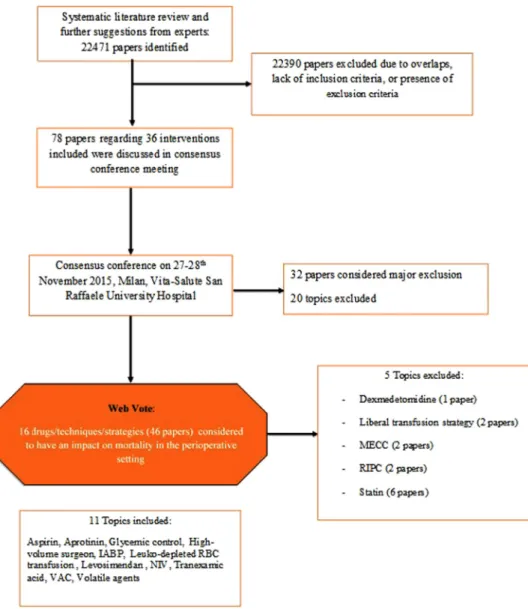
The consensus meeting was held November 27, 2015, at the Vita-Salute University of Milan, Italy, during which time all interventions were discussed by a core group of expert physicians (all of them among the authors of this article). The aims of the consensus conference were to establish whether: (1) the most recent evidence had been collected; (2) the reduction or increase in mortality was supported by either RCTs or meta-analyses of RCTs, case-matched studies, meta-analyses of case-matched studies, or other studies; (3) the evidence had been derived from a subgroup or a primary analysis; (4) the evidence had been derived entirely or partially from a cardiac surgical population and, when among a cardiac surgical population, whether it was applicable to every cardiac intervention or to certain subgroups only; (5) the drug/technique/strategy was used in the operating room or in an intensive care unit; and Fig 1. Flowchart of the consensus process. Thefirst step was a systematic literature review followed by a consensus conference meeting and a web vote, with a threshold of required agreement Z67%. At the end of the process, 11 topics were selected. IABP, intra-aortic balloon pump; MECC, minimal extracorporeal circuit; NIV, noninvasive ventilation; RBC, red blood cell; RIPC, remote ischemic preconditioning; VAC, vacuum-assisted closure.
(6) mortality was the endpoint or mortality was included in a composite endpoint.
Two experts, a rapporteur, and a co-rapporteur, previously selected among the attendees, presented each intervention, describing the reasons for it being considered as included or excluded. After the brief presentation, a discussion among the participants was started and, in case of disagreement, the decision whether to include an intervention was voted on by those present.
Afterwards, for each intervention included, afinal statement was
created, discussed, and corrected during the meeting.
Several studies were excluded on methodologic grounds because of lack of reproducibility or generalizability, low methodologic quality, major baseline imbalances between
intervention and control groups, major design flaws,
contra-diction by subsequent larger trials, modified
intention-to-treat analysis, effect found only after adjustments, and lack of biologic plausibility. The studies or interventions that did not meet the aforementioned criteria became major exclusions.
Through an interactive web questionnaire (http://www.
democracybasedmedicine.org), participants had the
opportu-nity to vote in support of or against the suggested interventions
(Table 1) up to October 2016. Clinicians were asked whether
they agreed or disagreed with the validity of each intervention and whether they used or avoided each intervention in clinical practice. The articles supporting each intervention were all freely downloadable through a link situated near the statements describing them. The following 3 questions were asked: (1) Do you agree with this sentence? (2) Do you routinely use this intervention in your clinical practice? (3) Would you include this intervention in future international guidelines to reduce perioperative mortality? For the interventions that increased mortality, the following questions were asked in an opposite fashion: (1) Do you routinely avoid this intervention in your clinical practice? (2) Would you suggest that future interna-tional guidelines contraindicate this intervention to reduce perioperative mortality? For each question, the authors
included the option“don’t know” and “does not apply” in the
Table 1
Drugs, Techniques, and Strategies That Might Affect Mortality in Cardiac Surgery Grading Interventions Reducing
Mortality
Statement
2B Aspirin We suggest that early postoperative aspirin and low dose preoperative aspirin might reduce mortality in patients undergoing CABG. This evidence comes from 2 non-RCTs.
2B Glycemic control We suggest that postoperative strict glycemic control might reduce mortality in patients undergoing cardiac surgery. However, we recommend caution when using this strategy because hypoglycemic episodes might result in increased mortality. This evidence comes from 3 RCTs and 1 meta-analysis of RCTs.
1C High-volume surgeon High-volume surgeon is associated with reduced mortality in patients undergoing cardiac surgery, especially valve procedures. This evidence comes from 3 non-RCTs.
2B Prophylactic IABP We suggest that the prophylactic use of IABP in high-risk patients undergoing CABG might reduce mortality. This evidence comes from 1 RCT, 4 meta-analyses of RCTs, and 1 meta-analysis of both RTCs and non-RCTs.
1B Levosimendan We recommend the use of levosimendan in low ejection fraction patients undergoing CABG to reduce mortality. This evidence comes from 1 RCT, 3 meta-analyses of RCTs, 1 meta-analysis of RCTs with subanalysis performed in cardiac surgery, and 2 meta-analyses of RCTs involving mostly cardiac surgery studies.
2B Leuko-depleted RBC transfusion
We suggest that transfusion of leuko-depleted RBC might reduce mortality in cardiac surgery patients requiring a high number of RBC units. This evidence comes from 2 RCTs.
2B NIV We suggest that postoperative NIV might reduce mortality after cardiac surgery, especially in patients with acute respiratory failure. This evidence comes from 1 RCT and 1 meta-analysis of RCTs.
2C Tranexamic acid We suggest that tranexamic acid might reduce mortality in patients undergoing cardiac surgery. This evidence comes from a network meta-analysis including RTCs and non-RTCs.
1C VAC We recommend VAC therapy to reduce mortality in patients with deep sternal wound infection after cardiac surgery. This evidence comes from 1 meta-analysis including non-RCTs.
2B Volatile agents We suggest that volatile anesthetics (desflurane, isoflurane, and sevoflurane) might reduce mortality in patients undergoing CABG procedures. This evidence comes from 2 meta-analysis of RCTs and a metaregression.
Grading Interventions Reducing Survival
Statement
1B Aprotinin We recommend against the use of aprotinin in low and intermediate risk patients undergoing cardiac surgery. This evidence comes from one RCT and one meta-analyses including RTCs and non RTCs.
NOTE. All these Interventions were in at least one published manuscript documenting statistically significant differences in mortality.
Abbreviations: IABP, intra-aortic balloon pump; NIV, noninvasive ventilation; RBC, red blood cell; RCT, randomized controlled trial; mRCT, multicenter randomized controlled trial; VAC, vacuum-assisted closure.
Definition of grading
1: Benefits clearly outweigh risks and burdens (or vice versa). 2: Benefits closely outweigh risks and burdens (or vice versa).
A: RCTs without important limitations or overwhelming evidence from observational studies.
B: RCTs with important limitations (inconsistent results, methodologicflaws, indirect, or imprecise) or exceptionally strong evidence from observational studies. C: Observational studies or case series.
questionnaire to allow respondents to state that they had no opinion on a particular issue or do not have the possibility to use a particular drug.
Because methodologic research suggested that there was no difference in response rate depending on the inclusion
or exclusion of the“don't know” option (if o40%),17only the
“yes” and “no” frequencies were reported in the results, if not otherwise indicated.
After the web vote, the interventions that reached o67%
of agreement were considered as major exclusions along
with those excluded during the meeting. Similar to
previous “democracy-based” consensus conferences the authors
have conducted in other clinical settings,13,16this lower limit of
agreement was chosen because two-thirds of voters represented a “qualified majority” in many political or administrative
proceed-ings. Details about major exclusions are reported inTables S1 and
S2. Gaps between literature evidence and clinical practice were
assessed by calculating the difference between the answer to the following 2 questions: (1) Do you agree with this sentence? (2) Do you routinely use this intervention in your clinical practice?
Table 2
Studies Documenting a Mortality Reduction or an Increase in Mortality in the Perioperative Period Intervention Improving
Survival
Type of Study Journal Year Author Follow-Up Agreement*
Reduce mortality
Aspirin Non-RCT N Eng J Med 2002 Mangano18 In hospital 90%
Non-RCT Ann Surg 2012 Cao et al19 30 days
High-volume surgeon Non-RCT N Eng J Med 2003 Birkmeyer et al20 In hospital 90%
Non-RCT J Cardiothorac Vasc
Anesth
2014 Papachristofi et al21 In hospital
Non-RCT Heart Lung Circ 2015 Ch’ng et al22 30 days
Glycemic control Meta-analysis of RCTs J Cardiothorac Surg 2011 Haga et al23 N/A 85%
RCT Heart Lung 2013 Giakoumidakis et al24 In hospital
RCT N Eng J Med 2001 Van den Berghe et al25 In hospital
RCT Eur Heart J 2006 Ingels et al26 In hospital
Prophylactic IABP Meta-analysis of RCTs Cochrane Database Syst Rev
2011 Theologou et al27 N/A 67%
Meta-analysis of RCTs and non RCT J Card Surg 2008 Dyub et al28 N/A
Meta-analysis of RCTs Crit Care 2015 Zangrillo et al29 N/A
RCT J Cardiothorac Surg 2009 Qiu et al30 In hospital
Meta-analysis of RCTs Cochrane Database Syst Rev
2007 Field et al31 N/A
Meta-analysis of RCTs Coron Artery Dis 2012 Sá et al32 N/A
Leuko- depleted RBC transfusion
RCT Circulation 1998 van de Watering et al33 60 days 87%
RCT Circulation 2004 Bilgin et al34 In hospital
Levosimendan Network Meta-analysis of RCTs Br J Anaesth 2015 Greco et al35 N/A 74%
RCT Rev Esp Cardiol (Engl Ed) 2008 Levin et al36 In hospital
Meta-analysis of RCTs J Cardiothorac Vasc Anesth
2013 Harrison et al37 N/A
Meta-analysis of RCTs Crit Care Med 2012 Landoni et al38 N/A
Meta-analysis of RCTs Crit Care 2011 Maharaj and Metaxa39 N/A
Meta-analysis of RCTs J Cardiothorac Vasc Anesth
2010 Landoni et al40 N/A
Meta-analysis of RCTs Am J Kidney Dis 2016 Zhou et al41 N/A
NIV Meta-analysis of RCTs Crit Care Resusc 2013 Olper et al42 N/A 84%
RCT Chin Med J (Engl) 2013 Zhu et al43 In hospital
Tranexamic acid Systematic review and network meta-analysis
BMJ 2012 Hutton et al44 N/A 83%
VAC Meta-analysis of non-RCTs PloS One 2013 Falagas et al45 N/A 90%
Volatile agents Meta-analysis of RCTs J Cardiothorac Vasc
Anesth
2007 Landoni et al46 N/A 84%
Meta-analysis of RCTs J Cardiothorac Vasc Anesth
2013 Bignami et al47 N/A
Meta-analysis of RCTs Br J Anaesth 2013 Landoni et al48 N/A
Increase mortality
Aprotinin RCT N Eng J Med 2008 Ferguson et al49 30 days 81%
Meta-analysis of RCTs and non-RCT PloS One 2013 Meybom et al50 N/A
Abbreviations: IABP, intra-aortic balloon pump; N/A, not applicable; NIV, noninvasive ventilation; RBC, red blood cell; mRCT, multicenter randomized controlled trial; VAC, vacuum-assisted closure.
The interventions with an effect on mortality that were approved after the web vote, with the references to the articles
supporting the evidence, are reported in Table 2 if
over-whelming evidence was not published thereafter. Statistical Analysis
From the data provided in the articles, the relative risk reduction or increase, absolute risk reduction or increase, and number needed to treat or harm were calculated. The results of the web vote are expressed as percentage of positive votes. The percentage of agreement of the following data are reported: (1) selected literature, (2) use/avoidance in clinical practice, and (3) inclusion in future guidelines. Statistical analysis was performed using Stata13 software (Stata Corp, College Station, TX). The chi-square or Fisher exact test was used to evaluate differences in percentages among countries and specialists.
Statistical significance was set at p o 0.05.
Results
The consensus process flowchart is shown in Figure 1.
The web survey identified the following 10 interventions
that decreased unadjusted landmark mortality: aspirin,18,19
high-volume surgeon,20–22 glycemic control,23–26 prophylactic
intra-aortic balloon pump (IABP),27–32 leuko-depleted red blood cell
transfusion (RBC),33,34 levosimendan,35–41 noninvasive
ventila-tion (NIV),42,43 tranexamic acid,44 vacuum-assisted closure
(VAC),45 volatile agents,46,48 and aprotinin49,50 was identified
as the only intervention that increased mortality. The associated sentences written by the experts during the consensus conference meeting held in Milan on the 11 interventions that reduced or increased mortality in cardiac surgery patients, according to the
articles, are presented inTable 1.
The 11 interventions selected using the web survey were
supported by 3318–50 articles published between 1998 and
2015, with length of follow-up ranging from in the hospital up
to 60 days after surgery (see Table 2). Additional details
(journal, year, type of article) and percentages of agreement of the web voters for the 33 articles reporting on differences in
mortality are reported inTable 2. The journals that published
the 33 articles with differences in mortality are reported in
Table 3. Overall, 458 clinicians from 52 countries participated in the web survey and more than 80% were anesthesiology or
intensive care specialists (Table 4).
The percentages of agreement were as high as 90%. The concordance between routine use of each drug/technique/strategy and agreement for the same type of intervention (ie, the percentage of colleagues who agree with the effectiveness of the intervention and also routinely use it in their clinical practice) is
reported inTable 5. The lowest concordance was for VAC (40%)
and the highest was for glycemic control (83%).
The percentage of agreement among different countries (Table 6) was statistically different for 8 of the 11 interventions, with the lowest concordance seen for the intervention called “high-volume surgeon.” The concordance between routine use of each drug/technique/strategy and agreement for the same
type of intervention for country is reported inTable S3.
Table 3
Number of Articles Published by Each Journal
Journal Number of articles
J Cardiothorac Vasc Anesth 5
N Eng J Med 4
J Cardiothorac Surg 2
Br J Anaesth 2
Cochrane Database Syst Rev 2
Circulation 2
PLoS One 2
Crit Care 2
Ann Surg 1
Eur Heart J 1
Coron Artery Dis 1
Heart Lung Circ 1
Rev Esp Cardiol (Engl Ed) 1
Crit Care Med 1
Am J Kidney Dis 1
Chin Med J (Engl) 1
Crit Care Resusc 1
J Card Surg 1
Heart Lung 1
BMJ 1
Table 4
Number of Voters From Each Country and Number of Anesthesiologists or ICU Physicians Among Voters
Number of Voters %
Country
Australia-New Zealand 85 19
Europe 166 36
Other western countries 27 6
Others 180 39
Profession
Anesthesiologist or ICU specialist 370 81
Others 88 19
Abbreviation: ICU, intensive care unit.
Table 5
Percentage of Concordance Between Agreement and Practice for Each Intervention Topic % Levosimendan 55 High-volume surgeon 50 VAC 40 Volatile agents 67 IABP 62 Glycemic control 83 NIV 66 Leuko depleted 53 Aspirin 72 Tranexamic acid 72 Aprotinin 65
Abbreviations: IABP, intra-aortic balloon pump; NIV, noninvasive ventilation; VAC, vacuum-assisted closure.
When comparing the opinions of anesthesiologists and inten-sive care specialists with other physicians, no statistically
significant differences were observed (Table 7). The concordance
between routine use of each drug/technique/strategy and agreement for the same type of intervention for job is reported
in Table S4. Major study exclusions were identified and are
reported inTable S1, with the reason for exclusion (seeTable S2).
Notably, 4 interventions that reached thefinal stage of the
web vote were excluded because they did not reach the minimum general agreement of 67%. One more intervention (preoperative statin therapy in statin-naïve patients) was excluded after completion of the web vote because large,
high-quality RCTs showing no benefit and possible harm were
published thereafter.51,52
Discussion Key Findings
All nonsurgical interventions, including drugs, techniques, and strategies, which have been shown in at least 1 study
published in a peer-reviewed journal to significantly affect
mortality in patients undergoing cardiac surgery, were
identified. In particular, the authors found that aspirin,
glycemic control, high-volume surgery, prophylactic IABP, levosimendan, leuko-depleted RBC transfusion, NIV, tranexa-mic acid, VAC, and volatile agents might reduce mortality, whereas aprotinin likely increases mortality.
The authors also found the existence of a gap between the
medical literature and clinical practice, confirming their
pre-vious findings in other perioperative and intensive care
settings.13,16 Furthermore, as an update of the consensus
process conducted in 2010,10 the present study demonstrated
the evolution of evidence-based medicine (EBM) in the field
of cardiac anesthesia and intensive care, pointing to the continuous need for high-quality studies focused on major outcomes, such as mortality, in order to promptly update beliefs and modify clinical practice accordingly. In fact, this analysis of concordance between agreement and use/avoidance
confirms that clinical practice often adapts slowly to evidence:
emblematically, only 40% of voters declared using VAC despite this being 1 of the 3 interventions with the highest Table 6
Percentages of Agreement and Use of the Interventions Identified Divided by Countries
A-NZ EU Others Western p Value
Levosimendan Agree, n (%) 27 (41) 111 (78) 125 (86) 17 (77) o0.001
Use, n (%) 10 (13) 78 (51) 70 (45) 10 (45) o0.001
Guidelines, n (%) 19 (32) 95 (74) 113 (81) 12 (63) o0.001
High-volume surgeon Agree, n (%) 70 (92) 134 (89) 134 (89) 24 (92) 0.81
Use, n (%) 22 (43) 86 (65) 75 (56) 14 (64) 0.050
Guidelines, n (%) 48 (81) 108 (81) 103 (82) 18 (75) 0.86
VAC Agree, n (%) 48 (89) 140 (97) 130 (85) 19 (90) 0.009
Use, n (%) 50 (78) 126 (85) 97 (63) 18 (90) o0.001
Guidelines, n (%) 43 (83) 125 (91) 114 (82) 16 (89) 0.19
Volatile agents Agree, n (%) 38 (73) 117 (83) 135 (89) 18 (82) 0.06
Use, n (%) 45 (76) 126 (82) 137 (83) 23 (100) 0.087
Guidelines, n (%) 34 (68) 100 (78) 130 (89) 17 (81) 0.006
Prophylactic IABP Agree, n (%) 28 (44) 103 (71) 120 (74) 15 (65) o0.001
Use, n (%) 22 (30) 76 (49) 78 (48) 8 (32) 0.018
Guidelines, n (%) 21 (40) 88 (64) 102 (73) 10 (53) o0.001
Glycemic control Agree, n (%) 50 (63) 145 (88) 157 (91) 23 (85) o0.001
Use, n (%) 43 (56) 130 (81) 131 (78) 19 (76) o0.001
Guidelines, n (%) 39 (53) 127 (85) 142 (86) 20 (80) o0.001
NIV Agree, n (%) 45 (66) 127 (89) 144 (88) 15 (71) o0.001
Use, n (%) 38 (54) 144 (74) 120 (74) 13 (57) 0.004
Guidelines, n (%) 36 (56) 115 (87) 125 (86) 13 (65) o0.001
Leuko-depleted RBC transfusion Agree, n (%) 53 (78) 124 (93) 123 (86) 19 (83) 0.019
Use, n (%) 51 (67) 89 (60) 69 (46) 17 (71) 0.006
Guidelines, n (%) 50 (75) 109 (85) 105 (79) 16 (76) 0.30
Aspirin Agree, n (%) 61 (86) 132 (88) 149 (93) 21 (91) 0.30
Use, n (%) 60 (82) 123 (80) 121 (78) 23 (96) 0.20
Guidelines, n (%) 59 (84) 119 (84) 131 (92) 21 (91) 0.22
Tranexamic acid Agree, n (%) 58 (76) 127 (88) 126 (84) 14 (64) 0.016
Use, n (%) 57 (71) 138 (88) 119 (73) 19 (76) 0.003
Guidelines, n (%) 53 (76) 120 (83) 109 (81) 17 (74) 0.50
Aprotinin Agree, n (%) 61 (82) 104 (75) 105 (75) 20 (83) 0.48
Use, n (%) 71 (95) 116 (80) 104 (75) 20 (87) 0.004
Guidelines, n (%) 58 (88) 91 (71) 95 (77) 19 (86) 0.044
NOTE. Data are presented as number (%).
percentage of agreement. Similarly, although the evidence about the perioperative use of aspirin existed for several years and, accordingly, 90% of respondents agreed with its useful-ness, only 72% of respondents implemented this strategy in
their clinical practice. This study’s findings also suggest that,
quite surprisingly, research itself also moves rather slowly in a field that is characterized by high complexity and morbidity
and by an increasing level of risk compared with the authors’
previous consensus conference in the cardiac surgical setting,
published 6 years ago10; the total number of possible
“recommendations” to reduce mortality is practically the same, and the overall amount and quality of evidence have not changed substantially for most of the interventions.
Relationship to Previous Literature
The first international consensus conference on mortality
reduction in cardiac anesthesia and intensive care was held in
2010, and results were published in 2011.10 Since then,
although the total number was similar (11 v 10), 3 of the 10 interventions that previously were included have been excluded in the present update (statins, beta-blockers, and old RBC transfusion), whereas 4 new interventions have been included (leuko-depleted RBC transfusion, tranexamic acid, NIV, and VAC). Most remarkably, the literature evidence of a
significant effect on mortality has strengthened for all 7
inter-ventions included in both consensus conferences. For example,
the survival benefit of aspirin, high-volume surgeon, volatile
agents, IABP, and levosimendan was supported by only
1 study for each intervention at the time of thefirst consensus
conference, whereas now the number of investigations
report-ing a significant reduction in mortality was 2 for aspirin, 3 for
high-volume surgeon and volatile agents, 6 for IABP, and 7 for levosimendan. Moreover, the number of interventions supported by randomized evidence (RCTs or meta-analyses including RCTs) has increased proportionally, leading to an overall increase in the level of evidence.
It also is interesting to note that, compared with the similar
consensus conferences on perioperative treatments12,13 and
critical care medicine,15,16 the number of RCTs showing
significant differences in mortality was much lower. In the
perioperative setting, the authors identified 13 interventions
supported by 39 articles among RCTs and meta-analyses of
RCTs,13and in critical care, even if the search was limited to
multicenter RCTs (mRCTs), the authors were able to include
15 interventions supported by 24 multicenter RCTs.15,16
Conversely, although in cardiac surgery the authors extended their analysis to any kind of investigation, they found only 33 articles, only 9 of which were RCTs.
Remarkably, the comparison among the different consensus conferences also showed how the same therapeutic
interven-tion can be beneficial in a clinical setting and harmful in
another. For example, strict glycemic control has been found
to be beneficial in cardiac surgery and harmful in critically ill
patients. Moreover, although beta-blockers were included in
the first consensus conference as improving survival, this
intervention has been excluded in the present update, mainly because randomized evidence suggested that only arrhythmias (but not mortality) are reduced by beta-blocker administration in cardiac surgery. Consistently, the initiation of beta-blockers immediately before noncardiac surgery has been included among the interventions that might increase mortality in the
perioperative period of any surgery.12,13
Implications for Clinical Practice and Future Research Although expert opinion remains pivotal in directing clinical
practice, especially in fields in which high-quality literature
evidence is lacking, an “alternative” approach, such as the
democracy-based consensus process, may usefully integrate
the other “tools” (eg, guidelines, expert opinions, systematic
reviews, surveys) that help clinicians in their decision-making. In fact, the opinions of hundreds of experts from all over the world can contribute to give the right weight to the poor literature available, providing a concise but comprehensive guide to the strategies that may really (or, at least, Table 7
Percentages of Agreement With and Use of the Interventions According to Specialty Other Anesthesiologist or Intensive Care Specialist p Value Levosimendan Agree, n (%) 32 (73) 229 (74) 0.87 Use, n (%) 21 (45) 133 (40) 0.56 Guidelines, n (%) 27 (64) 198 (69) 0.50 High-volume surgeon Agree, n (%) 50 (96) 289 (89) 0.099 Use, n (%) 40 (83) 145 (55) o0.001 Guidelines, n (%) 37 (79) 225 (82) 0.58 VAC Agree, n (%) 49 (92) 266 (90) 0.65 Use, n (%) 44 (88) 231 (74) 0.032 Guidelines, n (%) 42 (88) 237 (86) 0.72 Volatile agents Agree, n (%) 36 (92) 255 (84) 0.17
Use, n (%) 32 (73) 277 (84) 0.058 Guidelines, n (%) 31 (84) 234 (82) 0.77 Prophylactic IABP Agree, n (%) 41 (79) 206 (65) 0.055 Use, n (%) 35 (70) 136 (40) o0.001 Guidelines, n (%) 35 (73) 172 (61) 0.13 Glycemic control Agree, n (%) 47 (85) 304 (85) 0.88
Use, n (%) 42 (81) 261 (74) 0.32 Guidelines, n (%) 44 (83) 264 (79) 0.48 NIV Agree, n (%) 37 (86) 272 (84) 0.69 Use, n (%) 34 (72) 232 (69) 0.69 Guidelines, n (%) 33 (80) 240 (80) 0.94 Leuko-depleted RBC transfusion Agree, n (%) 37 (84) 262 (87) 0.55 Use, n (%) 25 (57) 187 (57) 0.98 Guidelines, n (%) 28 (70) 234 (82) 0.078 Aspirin Agree, n (%) 50 (93) 287 (89) 0.44 Use, n (%) 46 (87) 260 (80) 0.24 Guidelines, n (%) 46 (88) 265 (87) 0.75 Tranexamic acid Agree, n (%) 38 (81) 266 (83) 0.77
Use, n (%) 37 (76) 277 (80) 0.51
Guidelines, n (%) 32 (74) 250 (82) 0.24
Aprotinin Agree, n (%) 33 (73) 243 (78) 0.45
Use, n (%) 31 (72) 265 (84) 0.064
Guidelines, n (%) 24 (63) 224 (79) 0.024 Abbreviations: IABP, intra-aortic balloon pump; NIV, noninvasive ventilation; RBC, red blood cell; VAC, vacuum-assisted closure.
conceivably) and practicably have an impact on survival in cardiac surgery patients.
The authors’ findings confirmed the existence of a wide gap
between literature evidence and clinical practice and important differences in both beliefs and clinical practice among different
countries, as already found in other settings.13,16In fact, even
though the percentage of agreement was 480% for 9 of 11
interventions affecting survival, the consistency between agreement and use in clinical practice most often was o70%. In most cases, the differences among countries concerned not only the use in clinical practice, but also the agreement itself with the usefulness of the interventions in terms of patient survival; these interventions probably are those that need further research.
Strengths and Limitations
The strengths of the reported approach to consensus
building have been discussed before.12–16In the present study,
in particular, the authors focused on cardiac anesthesia and cardiac intensive care to summarize EBM regarding mortality.
Through a well-proven “democratic” consensus process that
previously has been described widely previously,11–16,53 the
systematic review of literature was filtered through the views
and the experience of 458 clinicians from all around the world, allowing for a pragmatic guide with strict adherence to EBM intended to improve patient survival and to direct future research.
A limitation of the present study was the rather overall low level of evidence of the included interventions which, together with the continuous evolution of evidence, did not allow for, in
most cases, definitive conclusions. For example, even though
tranexamic acid was included among the interventions that might improve survival in patients undergoing cardiac surgery, a recent large multicenter RCT, published after the conclusion
of the consensus conference, failed to show a survival benefit
in 4,631 patients randomly assigned to receive tranexamic acid or placebo during coronary artery bypass graft procedures, although it did show a favorable effect on blood losses and the
need for blood products transfusion.54 Moreover, although a
moderate bulk of evidence has accumulated in the last 5 years about the role of levosimendan in mortality among cardiac
surgery patients, 2 large RCTs (CHEETAH55,56 and
LEVO-CTS57,58) recently published in the New England Journal of
Medicine failed to show any survival benefit with
levosimen-dan administration in cardiac surgery patients.
As in the previous consensus conferences, the authors did not investigate the reasons for the differences among countries or the gap between agreement and clinical practice. However, this was not the scope of the present study and would have affected the simplicity and agility of the web-based voting
process, which, in the authors’ opinion, also was a strength.
Other limitations demonstrating commonality with the pre-vious consensus conferences conducted by the authors
included, as discussed earlier,13 the lack of details about the
included interventions, which were only listed and very briefly
contextualized. Conclusions
This updated, international, web-based consensus
confer-ence process identified 11 interventions supported by widely
agreed-on evidence suggesting an effect on mortality among patients undergoing cardiac surgery. The analysis of web
voting confirmed that there was a gap between evidence and
clinical practice and that both the perception of literature evidence and the clinical attitude of cardiac anesthesiologists
and intensivists were significantly different among different
countries for many of the included interventions. Future research should investigate the possible means to reduce both the gap existing between evidence and clinical practice and the differences among different countries. Hopefully, at least the interventions supported by the strongest evidence should be included in international guidelines on the perioperative care of patients undergoing cardiac surgery.
Appendix A. Supporting Material
Supplementary data associated with this article can be found
in the online version at http://dx.doi.org/10.1053/j.jvca.2017.
06.017.
References
1 Ball L, Costantino F, Pelosi P. Postoperative complications of patients undergoing cardiac surgery. Curr Opin Crit Care 2016;22:386–92. 2 Rhodes A, Moreno RP, Metnitz B, et al. Epidemiology and outcome
following post-surgical admission to critical care. Intensive Care Med 2011;37:1466–72.
3 Moazzami K, Dolmatova E, Maher J, et al. In-hospital outcomes and complications of coronary artery bypass grafting in the United States between 2008 and 2012. J Cardiothorac Vasc Anesth 2017;31:19–25. 4 Ramakrishna H, Patel PA, Gutsche JT, et al. Surgical aortic valve
replacement - clinical update on recent advances in the contemporary era. J Cardiothorac Vasc Anesth 2016;30:1733–41.
5 Lazam S, Vanoverschelde J-L, Tribouilloy C, et al. Twenty-year outcome after mitral repair versus replacement for severe degenerative mitral regurgitation. Analysis of a large, prospective, multicenter international registry. Circulation 2017;135:410–22.
6 Scandroglio AM, Finco G, Pieri M, et al. Cardiac surgery in 260 octogenarians: A case series. BMC Anesthesiol 2015;15:15.
7 Graham A, Brown CH. Frailty, aging, and cardiovascular surgery. Anesth Analg 2017;124:1053–60.
8 Wang W, Bagshaw SM, Norris CM, et al. Association between older age and outcome after cardiac surgery: A population-based cohort study. J Cardiothorac Surg 2014;9:177.
9 Pieri M, Belletti A, Monaco F, et al. Outcome of cardiac surgery in patients with low preoperative ejection fraction. BMC Anesthesiol 2016;16:97. 10 Landoni G, Augoustides JG, Guarracino F, et al. Mortality reduction in
cardiac anesthesia and intensive care: Results of the first International Consensus Conference. Acta Anaesthesiol Scand 2011;55:259–66. 11 Greco M, Zangrillo A, Mucchetti M, et al. Democracy-based consensus in
12 Landoni G, Rodseth RN, Santini F, et al. Randomized evidence for reduction of perioperative mortality. J Cardiothorac Vasc Anesth 2012;26: 764–72.
13 Landoni G, Pisano A, Lomivorotov V, et al. Randomized evidence for reduction of perioperative mortality: An updated consensus process. J Cardiothorac Vasc Anesth 2017;31:719–30.
14 Landoni G, Bove T, Székely A, et al. Reducing mortality in acute kidney injury patients: Systematic review and international web-based survey. J Cardiothorac Vasc Anesth 2013;27:1384–98.
15 Landoni G, Comis M, Conte M, et al. Mortality in multicenter critical care trials: An analysis of interventions with a significant effect. Crit Care Med 2015;43:1559–68.
16 Pisano A, Landoni G, Lomivorotov V, et al. Worldwide opinion on multicenter randomized interventions showing mortality reduction in critically ill patients: A democracy-based medicine approach. J Cardi-othorac Vasc Anesth 2016;30:1386–95.
17 Van Es JC, Lorence DPMG. Don’t know responses in environmental surveys. J Env Educ 1996;24:13–8.
18 Mangano DT, Multicenter study of perioperative ischemia research group. Aspirin and mortality from coronary bypass surgery. N Engl J Med 2002;347:1309–17.
19 Cao L, Young N, Liu H, et al. Preoperative aspirin use and outcomes in cardiac surgery patients. Ann Surg 2012;255:399–404.
20 Birkmeyer JD, Stukel TA, Siewers AE, et al. Surgeon volume and operative mortality in the United States. N Engl J Med 2003;349: 2117–2127.
21 Papachristofi O, Mackay JH, Powell SJ, et al. Impact of the anesthesiol-ogist and surgeon on cardiac surgical outcomes. J Cardiothorac Vasc Anesth 2014;28:103–9.
22 Ch’ng SL, Cochrane AD, Wolfe R, et al. Procedure-specific cardiac surgeon volume associated with patient outcome following valve surgery, but not isolated CABG surgery. Heart Lung Circ 2015;24:583–9. 23 Haga KK, McClymont KL, Clarke S, et al. The effect of tight glycaemic
control, during and after cardiac surgery, on patient mortality and morbidity: A systematic review and meta-analysis. J Cardiothorac Surg 2011;6:3.
24 Giakoumidakis K, Eltheni R, Patelarou E, et al. Effects of intensive glycemic control on outcomes of cardiac surgery. Heart Lung 2013;42: 146–51.
25 Van den Berghe G, Wouters P, Weekers F, et al. Intensive insulin therapy in critically ill patients. N Engl J Med 2001;345:1359–67.
26 Ingels C, Debaveye Y, Milants I, et al. Strict blood glucose control with insulin during intensive care after cardiac surgery: Impact on 4-years survival, dependency on medical care, and quality-of-life. Eur Heart J 2006;27:2716–24.
27 Theologou T, Bashir M, Rengarajan A, et al. Preoperative intra aortic balloon pumps in patients undergoing coronary artery bypass grafting. Cochrane Database Syst Rev 2011;(1):CD004472.
28 Dyub AM, Whitlock RP, Abouzahr LL, et al. Preoperative intra-aortic balloon pump in patients undergoing coronary bypass surgery: A systema-tic review and meta-analysis. J Card Surg 2008;23:79–86.
29 Zangrillo A, Pappalardo F, Dossi R, et al. Preoperative intra-aortic balloon pump to reduce mortality in coronary artery bypass graft: A meta-analysis of randomized controlled trials. Crit Care 2015;19:10.
30 Qiu Z, Chen X, Xu M, et al. Evaluation of preoperative intra-aortic balloon pump in coronary patients with severe left ventricular dysfunction under-going OPCAB surgery: Early and mid-term outcomes. J Cardiothorac Surg 2009;4:39.
31 Field ML, Rengarajan A, Khan O, et al. Preoperative intra aortic balloon pumps in patients undergoing coronary artery bypass grafting. Cochrane Database Syst Rev 2007(1): CD004472.
32 Sá MP, Ferraz PE, Escobar RR, et al. Prophylactic intra-aortic balloon pump in high-risk patients undergoing coronary artery bypass surgery: A meta-analysis of randomized controlled trials. Coron Artery Dis 2012;23: 480–6.
33 Van de Watering LM, Hermans J, Houbiers JG, et al. Beneficial effects of leukocyte depletion of transfused blood on postoperative complications in
patients undergoing cardiac surgery: A randomized clinical trial. Circula-tion. 1998;97:562–8.
34Bilgin YM, Van de Watering LM, Eijsman L, et al. Double-blind, randomized controlled trial on the effect of leukocyte-depleted erythrocyte transfusions in cardiac valve surgery. Circulation 2004;109:2755–60. 35Greco T, Calabrò MG, Covello RD, et al. A Bayesian network
meta-analysis on the effect of inodilatory agents on mortality. Br J Anaesth 2015;114:746–56.
36Levin RL, Degrange MA, Porcile R, et al. The calcium sensitizer levosimendan gives superior results to dobutamine in postoperative low cardiac output syndrome. Rev Esp Cardiol (Engl Ed) 2008;61:471–9. 37 Harrison RW, Hasselblad V, Mehta RH, et al. Effect of levosimendan on
survival and adverse events after cardiac surgery: A meta-analysis. J Cardiothorac Vasc Anesth 2013;27:1224–32.
38 Landoni G, Biondi-Zoccai G, Greco M, et al. Effects of levosimendan on mortality and hospitalization. A meta-analysis of randomized controlled studies. Crit Care Med 2012;40:634–46.
39 Maharaj R, Metaxa V. Levosimendan and mortality after coronary revascularisation: A meta-analysis of randomised controlled trials. Crit Care 2011;15:R140.
40 Landoni G, Mizzi A, Biondi-Zoccai G, et al. Reducing mortality in cardiac surgery with levosimendan: A meta-analysis of randomized controlled trials. J Cardiothorac Vasc Anesth 2010;24:51–7.
41 Zhou C, Gong J, Chen D, et al. Levosimendan for prevention of acute kidney injury after cardiac surgery: A meta-analysis of randomized controlled trials. Am J Kidney Dis 2016;67:408–16.
42 Olper L, Corbetta D, Cabrini L, et al. Effects of non-invasive ventilation on reintubation rate: A systematic review and meta-analysis of randomised studies of patients undergoing cardiothoracic surgery. Crit Care Resusc 2013;15:220–7.
43 Zhu GF, Wang DJ, Liu S, et al. Efficacy and safety of noninvasive positive pressure ventilation in the treatment of acute respiratory failure after cardiac surgery. Chin Med J (Engl) 2013;126:4463–9.
44Hutton B, Joseph L, Fergusson D, et al. Risks of harms using anti-fibrinolytics in cardiac surgery: Systematic review and network meta-analysis of randomised and observational studies. BMJ 2012;345:e5798. 45Falagas ME, Tansarli GS, Kapaskelis A, et al. Impact of vacuum-assisted
closure (VAC) therapy on clinical outcomes of patients with sternal wound infections: A meta-analysis of non-randomized studies. PLoS One 2013;8: e64741.
46Landoni G, Biondi-Zoccai GGL, Zangrillo A, et al. Desflurane and sevoflurane in cardiac surgery: A meta-analysis of randomized clinical trials. J Cardiothorac Vasc Anesth 2007;21:502–11.
47 Bignami E, Greco T, Barile L, et al. The effect of isoflurane on survival and myocardial infarction: A meta-analysis of randomized controlled studies. J Cardiothorac Vasc Anesth 2013;27:50–8.
48Landoni G, Greco T, Biondi-Zoccai G, et al. Anaesthetic drugs and survival: A Bayesian network meta-analysis of randomized trials in cardiac surgery. Br J Anaesth 2013;111:886–96.
49Fergusson DA, Hébert PC, Mazer CD, et al. BART Investigators. A comparison of aprotinin and lysine analogues in high-risk cardiac surgery. N Engl J Med 2008;358:2319–31.
50Meybohm P, Herrmann E, Nierhoff J, et al. Aprotinin may increase mortality in low and intermediate risk but not in high risk cardiac surgical patients compared to tranexamic acid andε-aminocaproic acid—a meta-analysis of randomised and observational trials of over 30,000 patients. PLoS One 2013;8:e58009.
51Zheng Z, Jayaram R, Jiang L, et al. Perioperative rosuvastatin in cardiac surgery. N Engl J Med 2016;374:1744–53.
52Billings FT 4th, Hendricks PA, Schildcrout JS, et al. High-dose perio-perative atorvastatin and acute kidney injury following cardiac surgery. JAMA 2016;315:877–88.
53Landoni G, Zangrillo A, Pisano A, et al. Perioperative Care to Reduce Major Adverse Cardiac Events and Mortality in Noncardiac Surgical Procedures. In: Kaplan JA, Augoustides JGT, Manecke GR Jr, Maus T, Reich DL, editors. Kaplan’s Cardiac Anesthesia: For Cardiac and Noncardiac Surgery, 7th Edition. Elsevier; 2017. p. 1615–35.
54 Myles PS, Smith JA, Forbes A, et al. ATACAS investigators of the ANZCA clinical trials network. Tranexamic acid in patients undergoing coronary-artery surgery. N Engl J Med 2017;376:136–48.
55 Zangrillo A, Alvaro G, Pisano A, et al. A randomized controlled trial of levosimendan to reduce mortality in high-risk cardiac surgery patients (CHEETAH): Rationale and design. Am Heart J 2016;177:66–73. 56Landoni G, Lomivorotov VV, Alvaro G, et al. Levosimendan for
hemodynamic support after cardiac surgery. N Engl J Med 2017;376: 2021–31.
57 Mehta RH, Van Diepen S, Meza J, et al. Levosimendan in patients with left ventricular systolic dysfunction undergoing cardiac surgery on cardiopul-monary bypass: Rationale and study design of the levosimendan in patients with left ventricular systolic dysfunction undergoing cardiac surgery requiring cardiopulmonary bypass (LEVO-CTS) trial. Am Heart J 2016;182: 62–71.
58 Mehta RH, Leimberger JD, van Diepen S, et al. Levosimendan in patients with left ventricular dysfunction undergoing cardiac surgery. N Engl J Med 2017;376:2032–42.