ISTANBUL BILGI UNIVERSITY INSTITUTE OF SOCIAL SCIENCES
ORGANIZATIONAL PSYCHOLOGY MASTER‟S DEGREE PROGRAM
The Effect of Workplace Ostracism on Syrian Men Asylum Seekers‟ Perceived Stress and Subjective Well-being
Fatma Nur Bayır 115632012
Assoc. Prof. Başak Uçanok Tan
ISTANBUL 2019
iii
PROV To my beloved family…
ACKNOWLEDGEMENTS
I would like to thank to my dear supervisor Assoc. Prof. Başak Uçanok Tan who shared her knowledge and experience with me with great patience and care and supported me emotionally beyond her thesis consultancy.
I would like to thank Assoc. Prof. Idil Işık who set me an example with their field studies about Syrians, and my friend Clinical Psy. Emine Şan who helped me choose this topic.
I am extremely grateful to my cousin Ahmet Serdar Yağmur, who provided me with access to the Syrians and supported me with all my strength in my thesis process.
I would like to thank Assoc. Prof. Necati Avcı, Radwan Alibrahim and Ahmet Alees for their valuable time to support me. And of course, I would like to thank Syrians, who have played a major role in this thesis, for answering my questions sincerely.
I would like to thank Zehra Ergen, Rujin Şan‟a, Mevlide Karaman and all my relatives who have given me patience.
iv
Sevgili aileme…
TEŞEKKÜRLER
Büyük bir sabır ve itina ile benimle ilgilenen, bilgi ve tecrübelerini benimle paylaşan, tez danışmanlığının ötesinde beni duygusal anlamda da destekleyen sevgili hocam Doç. Dr. Başak Uçanok Tan‟a sonsuz teşekkürlerimi iletiyorum.
Suriyeliler ile çalışma konusunda ve saha çalışmalarıyla bana örnek olan hocam Doç. Dr. İdil Işık‟a ve bu konuyu seçmeme yardımcı olan arkadaşım Uzm. Klinik Psk. Emine Şan‟a çok teşekkür ediyorum.
Suriyelilere ulaşmamı sağlayan ve bana tez sürecimde bütün gücüyle destek olan kuzenim Ahmet Serdar Yağmur‟a sonsuz minnettarım.
Başta Doç. Dr. Necati Avcı, Radwan Alibrahim ve Ahmet Alees olmak üzere tüm çevirmenlere değerli zamanlarını bana destek olmaya ayırdıkları için çok teşekkür ediyorum. Bu tezde büyük rolü olan Suriyelilere, içtenlikle sorularımı yanıtladıkları için çok teşekkür ediyorum.
Her zaman yanımda olan Zehra Ergen‟e, Rujin Şan‟a, Mevlide Karaman‟a ve bana sabır gösteren tüm yakınlarıma binlerce kez teşekkür ediyorum.
v
ABSTRACT
Due to the civil war in Syria, many Syrians have immigrated to Turkey. They had difficulties in meeting their basic needs and adapting to the country. At the same time, their participation in work and social life is faced some problems such as language barrier. The one of the biggest problems is still not being able to do their own profession. This situation is thought to cause life dissatisfaction and stress.
The aim of this study was to research the effect of workplace ostracism Syrian men‟ on perceived stress and subjective well-being. The reason why the participants are only males is the low participation of women in work life.
Three different scales were used in the study: Workplace Ostracism Scale, Perceived Stress Scale and Satisfied with Life Satisfaction Scale. The study was conducted on 169 Syrian men. Their age differences are between 18 and 60. The scales were translated into Arabic by four different translators, and they were applied in Istanbul, Ankara and Antalya.
The result of the study revealed two different dimensions of perceived stress: the level of coping skills and the level of psychological distress. It was found that workplace ostracism had a significant negative relationship with coping skills. But there was no relationship between subjective well-being and workplace ostracism. At the same time, a negative relationship was found between the level of distress and subjective well-being. The results are discussed based on the literature.
Key words: Subjective well-being, Perceived stress, Workplace ostracism, Syrian men, Asylum seekers
vi ÖZET
Suriye'deki iç savaş sebebiyle, çok sayıda Suriyeli Türkiye'ye göç etmiştir. Temel ihtiyaçlarını karşılamak ve ülkeye adaptasyon sağlamakta zorluklar yaşamışlardır. Aynı zamanda iş hayatına katılımları, sosyal hayattaki dil problemleri ile karşılaşmaktadırlar. Hala en büyük problemlerinden biri, asıl mesleklerini yapamamaktır. Bu durumun, onlarda hayat memnuniyetsizliği ve strese sebep olduğunu düşündürmektedir.
Bu çalışmanın amacı, Suriyeli erkeklerin işyerinde dışlanmasının algılanan stres ve öznel iyi oluş düzeylerine etkisini araştırmaktır. Katılımcıların sadece erkeklerden oluşma sebebi, kadınların iş hayatına katılımının az olmasıdır.
Araştırmada, üç farklı ölçek kullanılmıştır: İşyerinde Dışlanma Ölçeği, Algılanan Stres Ölçeği ve Yaşam Doyumu Ölçeği. Testler, 169 Suriyeli erkek üzerinde uygulanmıştır. Katılımcılar 18 ile 60 yaş arasında değişmektedir. Ölçekler dört farklı çevirmen tarafından Arapça‟ya çevrilmiştir ve İstanbul, Ankara, Antalya‟da uygulanmıştır.
Araştırmanın sonucunda, algılanan stresin iki farklı boyutu ortaya çıkmıştır: baş etme düzeyi ve sıkıntı (distress) seviyesi. İşyerinde dışlanmanın, baş etme ile negatif yönde anlamlı ilişkisi olduğu bulundu. Fakat yaşam doyumu ile anlamlı ilişki bulunamadı. Aynı zamanda sıkıntı düzeyinin de hayat doyumunu arasında da negatif ilişki bulunmuştur. Sonuçlar, literatüre dayandırılarak tartışılmıştır.
Anahtar kelimeler: Öznel iyi oluş, Algılanan stres, İş yerinde dışlanma, Suriyeli erkekler, Sığınmacılar
vii TABLE OF CONTENTS APPROVAL FORM ... ii ACKNOWLEDGEMENTS ... iii TEŞEKKÜRLER ... iv ABSTRACT ... v ÖZET... vi LIST OF FIGURES ... ix LIST OF TABLES ... x Chapter 1 – Introduction ... 1 1. 1. Well-Being ... 7 1. 1. 1. Psychological Well-Being ... 9 1. 1. 2. Subjective Well-Being ... 10 1. 2. Perceived Stress ... 19
1. 2. 1. The Models of Stress ... 23
1. 2. 2. The Literature Review of Perceived Stress... 29
1. 2. 3. The Coping Strategies with Perceived Stress ... 35
1. 3. Social Exclusion ... 37
1. 3. 1. The Reasons and Consequences of Social Exclusion ... 39
1. 3. 2. The Differences of Ostracism, Exclusion and Rejection ... 41
1. 4. Workplace Ostracism ... 43
1. 4. 1. Organizational and Individual Aspects of Workplace Ostracism ... 53
1. 4. 2. The Relationship between the Basic Needs and Workplace Ostracism ... 55
1. 5. Job Satisfaction ... 57
1. 5. 1. Individual Factors of Job Satisfaction ... 59
1. 5. 2. Organizational Factors of Job Satisfaction ... 60
1. 6. The Acculturation Process ... 62
1. 6. 1. Behavioral Dimension ... 62
1. 6. 2. Cognitive Dimension ... 63
1. 6. 3. Emotional Dimension and Acculturative Stress ... 64
1. 6. 4. The Consequences of Acculturation ... 66
1. 7. The Relationships of Variables ... 68
viii
Perceived Stress ... 68
1. 7. 2. The Relationship between Workplace Ostracism and ... Subjective Well-being 69 1. 7. 3. The Relationship between Workplace Ostracism and Perceived Stress ... 70
1. 8. Research Model and Hypotheses ... 71
Chapter 2 – Method ... 73
2. 1. Instruments ... 73
2. 1. 1. Satisfaction with Life Scale (SWLS) ... 73
2. 1. 2. Perceived Stress Scale (PSS) ... 74
2. 1. 3. Workplace Ostracism Scale (WOS) ... 75
2. 2. Sampling ... 75 2. 3. Statistical Analysis ... 76 Chapter 3 - Results ... 77 3. 1. Factor Analysis ... 77 3. 2. Correlations ... 77 3. 3. Independent t-Test ... 80 3. 4. Regression Analysis ... 80 Chapter 4 – Discussion ... 87
4. 1. Suggestions for Future Research ... 94
4. 2. Limitations of Study ... 94
References ... 95
APPENDICES ... 110
Appendix A: Independent t-Test Tables of Education level and Variables .... 111
Appendix B: Factor Analysis of SWLS ... 113
Appendix 1: Informed Consent (Turkish) ... 114
Appendix 2: Informed Consent (English) ... 115
Appendix 3: Informed Consent (Arabic) ... 116
Appendix 4: Questions (Turkish) ... 117
Appendix 5: Questions (Arabic) ... 119
Appendix 6: Scales (Turkish) ... 121
Appendix 7: Scales (English and Arabic) ... 123
ix
LIST OF FIGURES
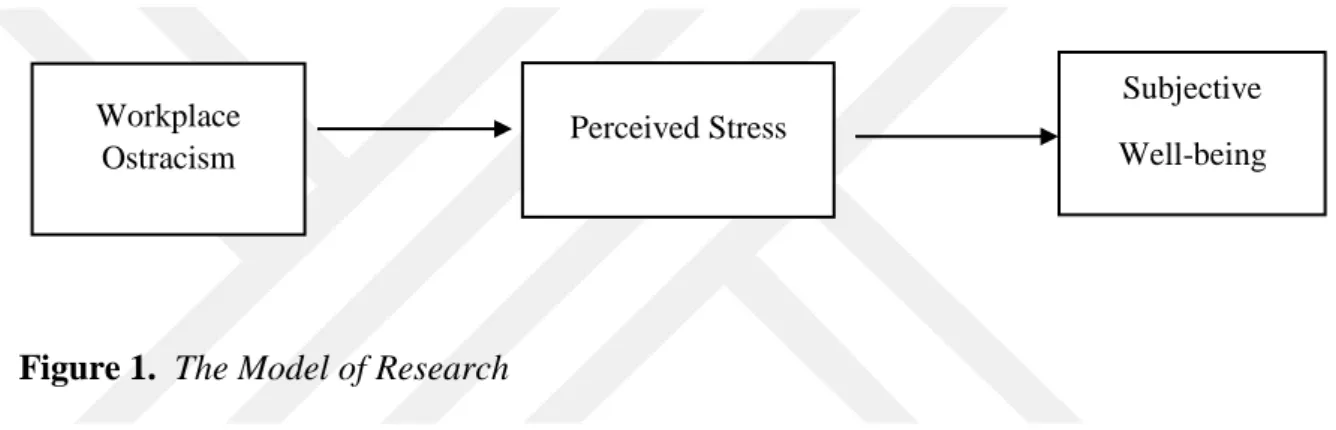
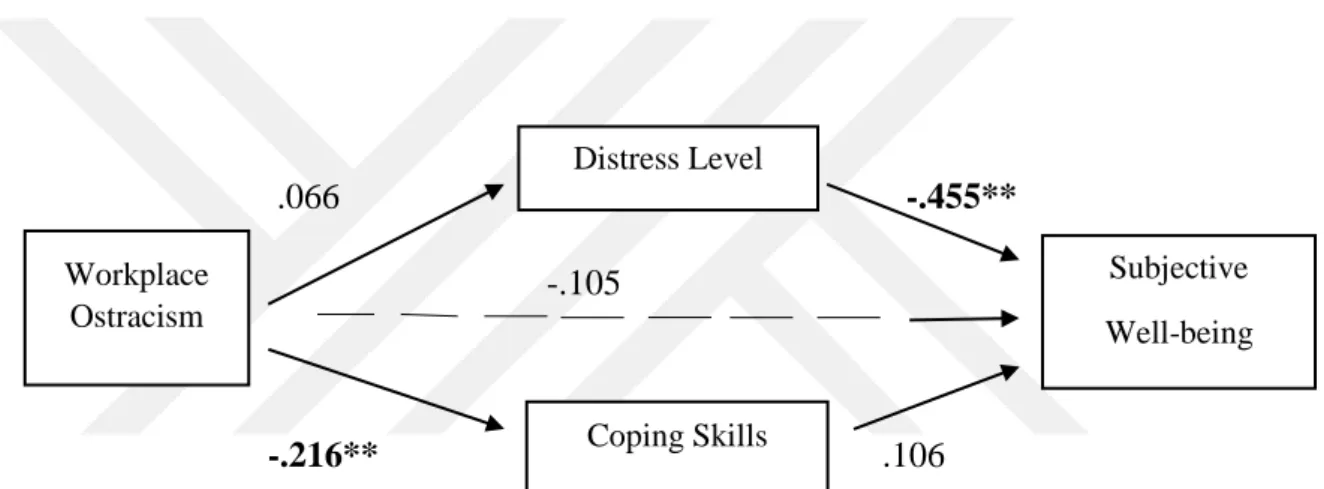
Figure 1. The Model of Research………..………..72 Figure 2. The Model of Research with Significant Correlations…………..…...79
x
LIST OF TABLES
Table 1. Factor Analysis of Perceived Stress………..81
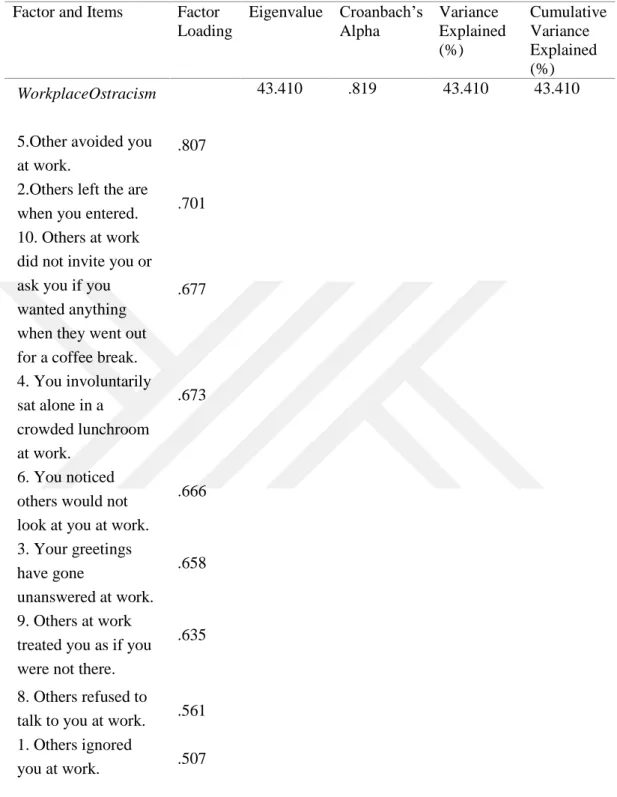
Table 2. Factor Analysis of Workplace Ostracism………..83
Table 3. Correlation Table………...84
Table 4. Independent t-Test……….85
1
Chapter 1 – Introduction
With the Syrian Civil War that started in March 2011, problems such as immigration incidents, refugees and asylums in the world have come to the fore again (Korkmaz, 2017; Sandıklı & Çakmak, 2014; Uzun, 2015), because the data of 2014 showed that the number of migrants on the world has reached the highest level since World War II (Balta, 2016; Hassan, Ventevogel, Jefee-Bahloul, Barkil-Oteo & Kirmayer, 2016). After most of the Syrians leave their country, they took refuge in Turkey settled. This intensive migration has brought many problems for both sides (Balta, 2016).
Data indicating that the world's population is 7.5 billion (Gürel & Irmak, 2017) states that 59.5 million people had to leave their homes due to hunger, war and worsening of vital conditions. These people are trying to escape to other countries with the hope of life security and a good future (Balta, 2016).
Fifty-three percent of refugees are forced to emigrate due to the civil war in their country. Syria is also one of the most migratory countries. “One of every four refugees on the world is a Syrian”. While countries such as Europe with high welfare levels are not interested in the refugee issue, underdeveloped or developing countries are trying to deal with this problem. The countries such as Ethiopia, Pakistan, Lebanon, Iran, especially Turkey, are hosting most of the refugees. Since 2014, Turkey is a country hosting maximum level of refugees with 11 percent (Balta, 2016). Because of the armed clashes in Syria, 2 million Syrians immigrated to Turkey from April 2011 until October 2015 (Danış, 2016). With the “open door policy”, Syrians started to come from border gates to our border provinces such as Hatay and Gaziantep (Güreş, 2016). According to the report of United Nations, the number of migrants in Turkey as of March 2017 reached 3,5 million (Korkmaz, 2017).
The civil wars and conflicts in Syria both cause serious demoralization and gradually remove the existing ground for a common Syrian perception and
2
identity. In the new Syria, which is divided into four parts because of the civil war, the people are trying to protect their identity, ethnic and religious connections (Sandıklı & Çakmak, 2014). Nearly all countries, especially European countries, often think that refugees corrupt their country and cannot adapt to their own culture in any way. The society also argues that the refugees should never have been taken to European countries and should be returned to their own country (Balta, 2016).
Turkey has adopted a positive admissions policy against Syria. “Open door policy” is seen as the most humane and friendly policy that has never been applied in the Middle East. On the other hand, Syrians continue to be seen as burdens in our society. They face problems such as not giving jobs, raising rent or renting house to Syrians, having problems with the bosses in getting their salaries. They continue to be ethnically and culturally excluded by society (Danış, 2016). “Tension and street conflicts, hate speech, marginalization, ignorance, extreme nationalism, feeling of ownership of the city, intolerance and racism” have come to the fore (Güreş, 2016). But despite everything, Turkey has paved the way the permanent settlement for the Syrians seen as long-term guests with an agreement that signed with the European Union in Brussels in October 2014 (Danış, 2016).
According to international agreements, Syrians are not considered refugees. They are considered being under “temporary protection”, namely they have no clear status. That is why they are called as “asylum seeker”. Although Syrians appear as guests, it is necessary to accept that they are no longer in category of guest, they settled in Turkey (Güreş, 2016).
Article 61 of the Law on Foreigners and International Protection issued by the European Union in 2013, the definitions of refugees and asylum seekers are legally defined. Refugee can be defined that due to events in European countries; the foreigner who is outside his country of citizenship and who does not want to benefit from the protection of this country or does not want to benefit from the fear because he feared for reasons justified by the race, religion, nationality, membership of a particular social group or political thoughts, or a stateless person
3
who is outside of the country of his former residence as a result of such events, who cannot return there or who does not wish to return due to such fear. Asylum seeker can be defined that a person outside his/her country of residence as he/she has rightly feared that he will be prosecuted for race, religion, nationality, membership of a particular social group or political considerations; and the foreigner who does not want to benefit from the fear of the person or fear of the protection of the country of his or her nationality, or if he / she is located outside the country of his/her residence, or who does not want to return because of his/her fear (Uzun, 2015).
„Asylum-seekers‟ issue was very challenging for society both Turkish and Syrian people. A journalist has listed his observations on hardship: “shelter, health, education, public order and security, language and dialogue, working life, intolerance to live together, the situation of Syrian women, the issue of prostitution and co-wife, children lying on the streets and begging, cheap labor exploitation, uninsured employment and comparison of Syrians with extremist organizations, the local population dislikes Syrians who live in well-off neighborhoods and have high economic level” (Güreş, 2016; Hassan et al., 2016).
Syrians are mostly preferred by employers. Unfortunately, there are 2 Syrian working places instead of 1 domestic employee. Unfortunately, some workplaces put 2 Syrians instead of 1 domestic employee to work. They cannot make any claims because they are in a difficult situation (Lordoğlu, 2016; Korkmaz, 2017). In addition, white-collar workers, such as doctors, lawyers, engineers from Syria, are dismissed and are generally forced to do heavy labor (Güreş, 2016). Like other Syrians, they are generally employed in construction, heavy industry, agriculture, textile and food sectors. The sector in which the Syrians are recruited the most is the construction sector. Apart from their real profession, they must work in the jobs they do not want, and there is almost no job security (Korkmaz, 2017; Lordoğlu, 2016).
4
Syrians are scattered all over the country enter from Turkey's border provinces to escape the conflict in March 2011. But the cities with the highest number of Syrians are Hatay, Şanlıurfa, Gaziantep, Kilis and Mardin. Most of the Syrians live in these cities make it easier for them in terms of language and these cities are the border cities where the refugees are most settled because they are close to Syria. They live collectively in every city they settled. Their houses and shops are usually collected in certain places. They try to establish a small world themselves. They choose to stay in Turkey which is the nearest country of Syria. Also, most of Syrian people live in Turkey and they have some facilities such as connecting with relations and transporting to their country, having more comfortable social environment due to keeping together people with same culture. One of the most important reasons is the religion factor. Living in a country dominated by Islam seems to be more appropriate in terms of their thoughts. They want their children to grow with Islamic culture (Lordoğlu, 2016). It is almost impossible for those who already have financial difficulties and have low levels of education to go to Europe. But rich or educated Syrians are looking for ways to go to Europe and do not want to stay in Turkey. Their aim is to reach European countries (Hassan et al., 2016; Lordoğlu, 2016).
Those with high qualifications find work more easily than others. To settle in Turkey and adapt here can be more comfortable for them. So, there is a very low probability of returning to their country. Even a few of those with low qualifications may return. Therefore, the adaptation of Syrians is highly essential for both themselves and Turkish society. Thus, the likelihood of acceptance will increase, and the sense of exclusion will decrease (Lordoğlu, 2016).
Psychological, mental, and even physical health of people who migrate to other countries and try to deal with dozens of problems after war trauma should be examined carefully. Psychological traumas may cause problems such as divorce, suicide (Blasco-Fontecilla et al, 2012) violence tendency and stress disorders. Therefore, the effects of past traumas should be reduced. Thus, the person can
5
regulate the present and guide the future. Otherwise, traumatic individuals become a mass that creates chaos in society (Şar, 2017).
In wars, conflicts and terrorist incidents, people who are physically injured or tortured to witness that people around them are also exposed to it cause them to be psychologically deeply affected and thus trauma occurs. At the same time, leaving their homes, their countries and struggling for a new life are the other factors that lead to the formation of war trauma (Şar, 2017). Even though people who escaped from the war saved their lives, they still had problems with life satisfaction or well-being, stress and ostracism at work or in their private/social lives (Shiloh, Güvenç & Önkal, 2007; Şar, 2017).
There are some researches that war and terror attacks affect the well-being of people. For example, in a research that was conducted on 9/11 terror attack in New York showed that the well-being of people has declined gradually. Even after 1 year from the event, their psychological well-being levels were observed to be very low (Shiloh, Güvenç & Önkal, 2007).
The main issue in armed conflicts, terrorist incidents and wars are losses. People lose their relatives, friends, families, homes and jobs. After these events, it becomes very difficult for them to continue their lives, both financially and morally. To be happy or satisfied with life can become almost impossible. For Syrians, leaving the own country, trying to adapt to the new country and the problems such as work, shelter, language, education has led to a decrease of life satisfaction or well-being, each of them has turned into stressors that put pressure on them (Hassan et al., 2016).
There is no research on the short-term psychological effects of the terrorist incidents. Such traumas can last for years, or even lifelong. For example, after the September 11 attacks in the United States, there has been an increase on people about some problems such as sleep disorders, using alcohol-smoking and getting
6
help stress disorders. Besides, stress disorders are most common problem (Shiloh, Güvenç & Önkal, 2007).
The subject of war trauma and stress is based on a long time ago and was started to be investigated in the beginning of 1900s. After World War I, the examinations on British soldiers show that war stress caused some people to have a disease called “shell shock” which is a disorder that causes disability muscles such as tremor, pain and spasm. Throughout World War II, the researchers‟ interest in emotional damage is caused by conflicts, difficulties and stress factors. “Battle fatigue or war neurosis” cases have been examined neurological effects instead of psychological effects. This is also scientifically noteworthy, because these diseases show us that not only wars generate psychological consequences but also cause neurological disorders irrevocably. After World War II, researchers seriously focused on cause of stress and how to reduce stress‟ effects. Because it was understood that the problems of daily life such as divorce or marriage, school, exams, works and other responsibilities also affected to people at least as much as war. As a result, the interest of scientists is intensified on stress because it leads to dysfunctions on people (Lazarus, 1993).
It is inevitable that people who take refuge in another country because of the war will be discriminated in the country where they live. Unfortunately, in Turkey, social exclusion against Syrians is very clear. However, there is not much emphasis on ostracism at work. Perhaps the most obvious form of ostracism is that they have difficulty in obtaining work permit. Those who cannot get a work permit are forced to work informally. This issue causes bosses to turn it into labor exploitation by employing uninsured workers. Because they have already taken to Turkey, there is a negative reaction by the public against the Syrians. Besides, since competition increases, they are not welcomed in working life. Turkish workers often do not like the choice of Syrians by employers for working with low wages. But some bosses want to employ them to benefit from them economically. They cannot defend themselves because they have difficulties in
7
communication and in explaining themselves. Thus, they are pushed out of society. For these reasons, Syrians mostly prefer to work with Syrian bosses and workers (ORSAM, 2016).
In line with the previous findings regarding stress of war survivors, this dissertation aims to understand how Syrian asylum seekers adapt to life in Turkey by framing how workplace ostracism affect their perceived stress and subjective well-being.
1. 1. Well-Being
While studies in the field of psychology focused on psychological problems and disturbances in the previous years, the positive issues, „positivity‟, started to be investigated after the 1950s as well as negativity, and the term of well-being became one of the subjects of psychology (Samman, 2007).
Firstly, the historical background of well-being should explain to understand what wellbeing is. The researchers explained well-being with hedonic and eudaimonic approach. The hedonic approach focuses on “happiness, positive affect, the low negative affect”. The eudaimonic approach focuses on “positive psychological functioning and human development” (Dodge, Daly, Huyton & Sanders, 2012). The eudomonic approach comes from Aristotle's philosophy. According to Aristotle, it is necessary to lead a virtuous life to obtain eudomania. Reaching a happy life is not just a fun situation. In this case, eudomania is not a kind of happiness. It is important to adapt to one's value judgment rather than one's own value judgments or to achieve a standardized quality of life that most people desire. Likewise, Tatarkiewicz is one of the researchers who argue that achieving certain standards will bring happiness (Diener, 1984).
From past to present, many researchers, such as social scientists, philosophers, have made similar and well-defined definitions. For example, firstly Coan explored the perspectives of happiness or well-being in different cultures
8
and regions. According to the normative (based on a certain rule) perspective, happiness can be defined as the desired standard of living or achieving what is desired (Diener, 1984).
Researches on well-being have been carrying out in the last decades. In 1995 in Ryff and Keyes‟s research determined that the theories related with well-being is non-existent in literature. Also, according to Dodge and colleagues‟ research in 2012, the definition of well-being has an uncertainty and is not clarified even in recent years by researchers. Because, some researchers believed that well-being has an abstract meaning that is hard to define. As researches which are related to well-being carries out, the assessment and evaluation of well-being are needed to arise validly. The reason of this is to make the new definitions and explanations about well-being better (Dodge, Daly, Huyton, & Sanders, 2012).
In recent researches of positive psychology, the hedonic approach is named as subjective well-being and the eudaimonic approach is named as psychological well-being. The hedonic approach defines well-being as achieving pleasure and avoiding pain. The eudaimonic approach is related to meaning and self-fulfillment, and its well-being is defined as the degree of fulfillment of one's functions. The research area of subjective well-being is related to the emotional state of individuals, the balance of negative-positive affect, and satisfaction with life. Psychological well-being is related to personal development, the meaning of life or existential challenge to life (Samman, 2007).
“Well-being is the extent to which one experiences optimal psychological functioning, broadly defined as subjective feelings of happiness and lack of stress in one‟s life” (Ferris, Brown, Berry & Lian, 2008). Recently, according to some researchers, “well-being is a multi-dimensional construct”(Dodge, Daly, Huyton & Sanders, 2012). The well-being splits into two parts which are widely accepted: Subjective well-being and psychological well-being (Samman, 2007).
In this dissertation subjective well-being will be conceptualized rather than psychological well-being. However, before defining SWB a brief definition of psychological well-being will be provided for clarity.
9 1. 1. 1. Psychological Well-Being
Psychological well-being refers to eudomania which can be defined as “the idea of striving towards excellence based on one‟s own unique potential” (Samman, 2007). Psychological well-being, when faced with difficulties, involves self-realization and activating one's potentials for meaningful life. Also, it includes to be able to perceive oneself as positive and to be aware of their strengths and limitations and being self-satisfied, autonomous and independent, and making life meaningful (Sarı & Çakır, 2016).
Psychological well-being is defined as happiness by Bradburn (1970). Happiness contains positive and negative affect. The scales that measure positive and negative affect do not correlate with each other, but they provide correlation with global well-being. According to Bradburn, happiness includes a global judgment that is formed by comparing negative and positive emotions (Diener, 1984). It is defined by Luthans as “the study and application of positively oriented human resource strengths and psychological capacities that can be measured, developed, and effectively managed for performance improvement in today‟s workplace”. At the same time, for psychological well-being, Wright used the term of “trait-like”, which tends to be developed (a) over time, across one‟s lifespan, (b) through the presence of the appropriate enabling factors and the absence of various inhibiting factors, or (c) through long-term professional interventions and intensive treatments. The “state-like”, which means that the positive organizational behavior capacity is readily open and malleable to change and development”, is used by Luthans and co-workers (Youssef & Luthans, 2007).
Humanist psychologists have expressed opinions supporting Bradburn‟s „the idea of the independence of positive and negative effects‟, and the negative effect is more focused. For example, Rogers and Maslow stated that psychopathology focuses on the negative. Bradburn's opinion is that: “absence of
10
negative affect is not the same as the presence of positive affect”. In shortly, in order to improve life satisfaction, “reduce negative affect and increase positive affect”. These views of Bradburn are supported by many researches (Diener, 1984). Individual with positive affect has high level of psychological well-being. On the contrary, negative affect causes low level of psychological well-being (Bradburn, 1970). “An individual will be high in psychological well-being in the degree to which he has an excess of positive over negative affect and will be low in well-being in the degree to which negative affect predominates over positive” (Dodge et al., 2012).
1. 1. 2. Subjective Well-Being
Subjective well-being (SWB) is a scientific term that defines how people evaluate their lives more comprehensively than happiness. In the research of Diener et al., subjective well-being is “people‟s cognitive and affective evaluations of their lives” (Diener, Diener & Diener, 2009; Diener, 2009) or, SWB is “how people evaluate their lives”- their present moments or past times and, “one measure of the quality of life of and individual and of societies”. These evaluations involve emotionally people‟s reactions to facts, “their moods, and judgments they form about their life satisfaction, fulfillment, and satisfaction with domains such as marriage and work” (Diener, Oishi & Lucas, 2003).
Generally, three features can be explained about SWB. The first one is that SWB is subjective as it is called. It depends on each person, namely, it is shaped related to everyone's own life. Although there are some objective conditions affecting the level of SWB (income level, fulfilling basic needs comfortably or easily and health etc.), subjective conditions are the primary components of SWB. Secondly, SWB is determined by measurement of positive emotions or affects. Just like mental health measurement, it does not mean the absence of negative emotions. This may be explained by the high level of positive emotions. Third, SWB covers one‟s whole life. Individual‟s life is evaluated in every aspect and a
11
general satisfaction judgment is reached. However, when the SWB is measured, the test is usually applied by the researchers to cover the last few weeks of the person or the last 3-4 weeks. It is discussed which time is more accurate. But it can be said that the most accurate method is to measure the satisfaction level of the person in different time periods (Diener, 1984).
Most of SWB researches explain how and why people experience their lives positively including affective response and decision-making mechanisms. Overall SWB studies include these terms “happiness, life satisfaction, morale and positive affect” (Diener, 1984).
In a research of Diener and colleagues are mentioned that subjective well-being has three dimensions. These dimensions are “positive affect (pleasant affect), negative affect (unpleasant affect) and life satisfaction (life satisfaction judgments)”. Positive and negative affect attributes to the affective (pleasant and unpleasant moods) or emotional state. Life satisfaction refers to the cognitive-judgmental state, or process (Chow, 2005; Diener, Emmons, Larsen & Griffin, 1985; Diener, 1984; Dodge, Daly, Huyton, & Sanders, 2012; Zhang & Shi, 2017). Positive affect describes emotions that create pleasant feeling such as joy, pleasure and love. It is a reflection which is the reactions of people to positive events. These reactions have the property of improving the person. Positive affect can be divided into three levels: low level (e.g. satisfaction), moderate level (e.g. enjoyment) and high level (e.g. enthusiasm) (Diener, 2009; Zhang & Shi, 2017).
Negative affect includes negative moods of individuals and their reactions against conditions that cause negative consequences such as health problems, critical events or traumatic events. People can experience many emotions such as sadness, anger, concern, stress, guiltiness, hate, restriction, inadequacy and anxiety. So, people have an unhappier life. Therefore, the sense of accomplishment and optimism should also be considered as part of subjective well-being (Diener, 2009).
12
Life satisfaction is the one of the most important factors to spend a happy life. Satisfaction with life contains a cognitive component of subjective well-being and cognitive judgments about individual‟s life (Dağlı & Baysal, 2016). It has been defined as “a cognitive process that involves the mental comparison of current life quality with personal standards” (Flett, Hewitt, Blankstein & Gray, 1998). According to another researcher, life satisfaction is “a global assessment of a person‟s quality of life according to his chosen criteria”. It can be also defined as values and qualities that are considered important by the individual generally and make the quality of the person's life quality. Besides, life satisfaction indicates how much person gets pleasure out of person's life (Diener, Emmons, Larsen & Griffin, 1985).
Life satisfaction is that the expectations of people correspond to what they have, and to evaluate positively people‟s own lives based on criteria that are determined by them and total of one‟s beliefs and evaluations about lives or the general attitudes of people. Shin and Johnson in their research in 1978 defined life satisfaction as an evaluation related to standards which are determined by them. According to another research, satisfied with life is positive development quality of life. It is not only related to the one area. For example, job satisfaction may increase the level of life satisfaction but only it is insufficient to be satisfied with one‟s overall life. Therefore, life satisfaction involves all areas of life (Dağlı & Baysal, 2016).
Studies on job satisfaction or subjective well-being show that people can be happy for different reasons. Life satisfaction certainly requires a stable and decent income, but a research shows that money alone is not enough. People also attach importance to their health, their ties to family and society, and their ability to evaluate their abilities. People are happy when they have a good job and are cared for by others (Zhang & Shi, 2017).
Individuals describe how satisfied with their own current lives according to standard criteria which is determined by themselves without any intervention. The important point of subjective well-being, it focuses on one‟s own criterions or
13
judgments rather than researcher‟s criterions. Because, every term (such as energy, health etc.) consists of different meanings for every person. Therefore, it should be asked that people evaluate generally their life rather than asking their satisfactions about a specific concept (Diener, Emmons, Larsen & Griffin, 1985).
A research that is conducted on university students in Canada shows that the most important components of life satisfaction are “age, physical health, style of studying, parenting style, life style, and personality constructs” (Chow, 2005).
The researches related with SWB and its factors that contained, happiness, positive affect and life satisfaction, are mostly conducted in western societies. Therefore, limited information is obtained about other cultures. Although there are some universal values about SWB, individual and cultural differences are also very effective. For example, the factors such as warming, sheltering and food accessibility have universally affected on the level of well-being. In terms of individual and culture, genetic factors, upbringing and cultural norms are effective on well-being (Diener, Oishi & Lucas, 2003).
Demographic information constitutes only a small part of the measurement of SWB. SWB has remained stable generally in humans who have a strong and balanced personality (Diener, Oishi & Lucas, 2003). For example, perfectionism, the one of the personality traits, is a cognitive factor that causes depression and reduces life satisfaction. It has opposite feelings such as the desire to reach the ideals and the fear of failure. When the ideals of people in their lives do not occur and feel failure, they become depressed, and their life satisfaction level decreases (Flett et al., 1998). Variables such as temperament, adaptation to conditions and goal striving have a significant effect on the increase and decrease of SWB (Diener, Oishi & Lucas, 2003).
“Whereas satisfaction with the self was strongly correlated with life satisfaction in highly industrialized, individualistic western nations (e.g., Finland, Canada), satisfaction with the self was less correlated with global life satisfaction in less industrialized, collectivist nations such as Cameroon and India, especially
14
for women” (Diener, Oishi & Lucas, 2003). According to the research of Suh and colleagues, people in individualistic cultures act upon mostly own inner emotional feeling when compared with collectivist cultures that is attached highly importance to society‟s opinions and judgments (Samman, 2007).
SWB, life satisfaction and happiness are concentric concepts. In researches, it is not possible to separate these terms completely from each other. SWB is briefly the scientific definition of happiness, and life satisfaction is an essential part of SWB. That is, SWB is a general term that covers all of them.
1. 1. 2. 1. Subjective Well-being and Happiness
Happiness is defined by philosophers in different ways. But the common point is that the secret of a good life goes through being happy (Diener, Oishi & Lucas, 2003). From the past to the present, philosophers have accepted happiness as one of the most important points in human behavior and the concept of subjective well-being (SWB) has not been studied much (Diener, 1984).
Happiness is defined as the positive situation dominates our lives more than the negative situation (Diener, 1984; Diener, 2009). Therefore, SWB reminds to individuals their own beautiful feelings and memories that they have experienced. At the same time, it can be concluded that the person is usually more likely to feel positive emotions (Diener, 1984). For example, Wilson explains happy person that “emerges as a young, healthy, well-educated, well-paid, extroverted, optimistic, worry-free, religious, married person with high self-esteem, high job morale, modest aspirations, of either sex and of a wide range of intelligence” (Diener, 1984).
Many researchers from different disciplines like psychologists and sociologists had sought the source of happiness throughout history and have been trying to find out the definition of happiness and its construct. Social scientists
15
think that happiness can be examined empirically as an object. But empirical method is not working with quantitative and statistical method (Bradburn, 1970).
In the other perspective, social scientists have studied the factors that positively affect the lives of individuals. They defined SWB through the determined standards about what a good life requires based on life satisfaction. This time more popular viewpoints have been gained. Subjectively how a person feels and how he can have a good life is determined by his point of view. Shin and Johnson's happiness criterion is as follows: “a global assessment of a person‟s quality of life according to his/her own chosen criteria” (Diener, 1984).
Another aspect of this concept was created in the field of mental health. While researchers are indicating the absence of mood and anxiety disorders, they have also expanded their perspectives by referring to the presence of happiness and life satisfaction. Clinical psychologists had a different effect by analyzing the personalities of happy and unhappy individuals. Social and cognitive psychologists have also examined the extent to which adaptation and changing situations affect the life satisfaction of individuals. Moreover, the interest in positive SWB has increased due to humanistic psychology (Diener, Oishi & Lucas, 2003).
Many researchers conduct various studies on life satisfaction, happiness and positive effect. Some differences and similarities are formed in the definition of happiness. Among these, the concepts which can be supported with the theoretical framework and measured their relationships with various variables have scientific nature (Diener, 1984).
Finally, subjective well-being is more scientific and general term including happiness. There may be only one answer to the question of happiness. However, the question about subjective well-being calls for a broader and more comprehensive answer. All issues about health, happiness and peace such as health, spiritual, psychological and physiological can be mentioned under the term of SWB (Bailey, 2009).
16
There are several factors affecting SWB. It is observed that culture, weight, income and physical activity are related to SWB in different societies. Increasing interest in positive psychology has led to research on how different behaviors and situations affect SWB.
1. 1. 2. 2. SWB, Life Satisfaction and Age
Most of the studies on age and life satisfaction or SWB focused on objective living conditions such as economic level, status and environment. In fact, most of them were controversial results about life satisfaction and SWB. Other researches showed that life satisfaction and SWB, which is affected positively by personality traits and developmental processes, is more important than objective conditions on age. According to the results of Ardelt‟s study, life satisfaction and SWB has a relationship with both older age and objective conditions. The reason of this, as people get older, the healthier they live the better quality life they have. Thus, their socioeconomic and SWB levels are also rising. Moreover, the problems and traumas experienced as getting older increase the coping power of people. Focusing on more important events and looking at life from different perspectives teaches to satisfy with life (Ardelt, 1997).
Similarly, a research of Montepare and Lachman showed that life satisfaction increases in men and women as age progresses. Older adults have “more positive self-concepts, greater self-esteem, and greater body satisfaction” than younger adults (Montepare & Lachman, 1989).
As many studies have noted generally that SWB, i.e. life satisfaction and happiness, increases as getting older. The most important reason for this is viewed as a change of viewpoint. As the maturity of age increases, people manage to cope with many problems and learn life and self-acceptance. So, the SWB level is rising and it brings a peaceful life (Montepare & Lachman, 1989).
17
1. 1. 2. 3. Subjective Well-Being and Income
In the history of SWB, several studies stand out. Firstly, sociologists and researchers who are interested in quality of life have investigated how demographic information (e.g. marriage, salary) effect on SWB (Diener, Oishi & Lucas, 2003).
Subjective well-being (SWB) has positive relationship with income (Diener, 1984; Diener, Diener, & Diener, 2009). The level of income provides opportunities to fulfill person‟s needs, to reach goals, to improve abilities. Therefore, it is likely to increase person‟s subjective well-being level. In theory, it can be said that SWB is increased psychologically by wealth. But, according to relativistic model the level of income should not enhance SWB (Diener, Diener, & Diener, 2009).
The level of income is one of the issues that concern the SWB. According to a study of Diener, a significant difference was found between income and life satisfaction. In another study of Diener et al. was reported that the relationship between the level of income and SWB is stronger in underdeveloped societies or people who had difficulty in fulfilling their basic needs. In societies that can fulfill their basic needs economically, there are weaker relationships between the level of income and life satisfaction (Diener, Oishi & Lucas, 2003). Given that the other variables (eating, drinking, housing, health, etc.) are directly affected by this relationship, it is not exactly a low rate although this relationship seems insignificant (Diener, 1984). Therefore, the reports show that the SWB levels of the high-income societies are high (Diener, Oishi & Lucas, 2003). For example, in the study of Easterlin that carried out in various countries, rich people were always happier than poor people in every country without exception (Diener, 1984). Only high-level income does not mean that SWB has also high rate. Except material things, in developed countries, individual societies, suicides and divorces are more common than others. Because when people experience social troubles
18
and feel unhappy, they see this as a failure and may turn to suicide (Diener, Oishi & Lucas, 2003).
According to McBride‟s research, increasing in income has positive impact on subjective well-being, but while increasing the relative-income norms with income, the level of SWB decreases. Easterlin claims that “raising the incomes of all, does not increase the happiness of all, because the positive effect of higher income on SWB is offset by the negative effect of higher living level norms brought about by the growth in incomes generally” (McBride, 2001).
The importance of money may vary from culture to culture. As the western societies are mostly developed, they have no any financial difficulties. Therefore, the factor that affects their happiness or SWB levels will be different from income. In eastern societies, collectivist cultures, the importance of money is increasing as the level of development decreases, and money is almost the first factor in determining the quality of life (Samman, 2007). However, around the world, college students highly thought that happiness, well-being and life satisfaction are important more than other all many things like money. Even so, few people in studies think that “happiness is more important than money” (Diener, Suh, Lucas & Smith, 1999).
1. 1. 2. 4. Measuring Subjective Well-being
In past researches, many life satisfaction scales have been developed, but most of them contain single item. These scales with single item have some problems to measure general life satisfaction. Some of developing scales are used only in Geriatrics. Some of these are used only to evaluate the judgmental aspect of life satisfaction. Scales with multi-items are needed to measure the cognitive-judgment aspect of life satisfaction (Diener, Emmons, Larsen & Griffin, 1985).
In order to measure the SWB, broad survey is used for emotional components such as joy and tolerance. Life satisfaction survey is used for
19
cognitive components. With the measurement of satisfaction, marriage, business life and leisure time are also measured (Diener, Oishi & Lucas, 2003).
One of the most important issues in the measurement of SWB is whether the measurements used in western societies are reliable and valid in other societies. According to Vitterso et al., the reliability level of life satisfaction results is low in the poor countries. In this case, the reliability of the scale structure should be examined. It should be checked how people respond to items, i.e., whether their responses are similar with other cultures (Diener, Oishi & Lucas, 2003).
Numerous scales have been developed to measure well-being emotionally and cognitively. None of these measures affect mood disorders or other dysfunctions, such as depression. In the field of SWB, multi-item scales are used. A multi-faceted result can be achieved by adding the person's satisfaction with marriage, family and work life, and even the choice of clothing. Society structure, culture and life style constitute the structure of satisfaction. One of the noteworthy findings is that the closest areas and people to them affected the level of SWB. Changes depending on age are also observed. There is no universal conclusion, but in some societies similar structures are observed (Diener, 1984).
As a result, SWB is a necessary element for the life‟s quality of society and person. But it is exclusively not enough. An ideal society can be mentioned if there are basic factors such as good justice system, human rights, and high economic and social level in society. Nevertheless, SWB is accepted as one of the most fundamental factors determining the welfare level of society and the individual (Diener, Oishi & Lucas, 2003).
1. 2. Perceived Stress
The concept of stress that we face in our daily lives is based on ancient times. We can actually say that we are faced with stress since the beginning of
20
human history. It is seen in every human, so it can be examined from different directions. Stress has emerged in different forms on different persons. The source and symptoms of stress differ on each individual. Many factors such as age, gender, environment, culture, personality, education and profession of the person determine the cause of stress (Lazarus, 1993).
The term of “stress” was used firstly to describe situation of difficulty and pressure in 14th century. Afterwards, in 17th century, it was used by Robert Hooke, physicist and biologist, to explain flexibility of objects in technical field. Hooke‟s the field of study was on how bridges show a resistance “to carry heavy loads” and resist natural disasters. Stress and strains occur because of all the loads that are placed on the bridges and the jolts that occur on bridges. As a result, all this combined causes the structure to deform (Lazarus, 1993). Another example from physics, when applying a force to an object, there is available a few options: the shape of object can change; the object can move or stop if it is moving, or it can remain stable. All these options depend on structure, position and state of object. Also, Hooke's examples mentioned on personal differences. For example, according to the type of iron, some are more brittle and more robust and their resistance to conditions is also different. Such a metaphor was used to describe individual differences and their resistance to stress in psychology. Just like the iron, people also had different characteristics (Aydın, 2004; Lazarus, 1993).
In 1878, Claude Bernard, who scientifically researches stress showed that “all living processes exist in a state of dynamic internal physiologic equilibrium, formed by organic liquid that surrounds all of the tissue elements”. Also, he noted that “all the vital mechanisms, varied as they are, have only one object, that of preserving constant conditions of life in the internal environment” (Rosmond, 2005).
Starting from this, in 20th century, other fields of science are also affected by stress, especially psychology. Social and medical scientists used „stress‟ as a pressure (force) on humans and just like objects, every human also reacts differently depending on their personalities, genetic structures, circumstances etc.
21
In other words, humans and objects adapt to environmental factors after they encounter a difficulty (Aydın, 2004; Lazarus, 1993). Walter Cannon suggested “the mechanisms of maintaining physiological factors within certain limits and coined the term „homeostasis‟ and defined it as the coordinated physiological process which maintains most of the steady states in the organisms”. Hans Selye expanded „homeostasis‟ idea of Cannon and added people‟s responses to stress. After, he developed „General Adaptation Syndrome‟ (Rosmond, 2005). In 1950s, it became clear that there is no simple way to explain stress. The cause of stress does not depend on a single situation, also its consequences differs from person to person. While it is easier to produce solutions to problems for some people, it may more difficult for others (Lazarus, 1993).
Nowadays, stress which is used to express mental state such as tension, suspicion, nervousness, anxiety or concern takes part in central of social life. Generally, stress can be confused with panic, excitement or other similar words, especially anxiety and concern but they do not exactly define stress. It is that trying to cope with new situations or issues, and humans give some reactions to these situations. Thus, stress is a response or reaction that adapts to changes (Civan et al., 2018). “Some of the personality traits that appear to be associated with resilience include constructive thinking, hardiness, hope, learned resourcefulness, optimism-shades of Horatio Alger and Norman Vincent Peale, self-efficacy, and sense of coherence” (Lazarus, 1993).
The definition of stress is different between fields. For example, according to medical doctors, “stress is treated as a set of psychological and physiological reactions to noxious agents”. Selye explained the concepts of stress and stressor. He said that environmental stimulants (stressors) put pressure on the person, and the person reacted to pressures. Sociologists are defined “stress as the disturbing agent (e.g. social disequilibrium) and of strain as the collective reaction (e.g. a panic or riot)”. The definitions made by experts may look different; in fact there are essentially similarities (Lazarus, 1993).
22
Perceived stress is a term that is used everywhere and has no universal definition (Rosmond, 2005). But many scientists are depicted stress along similar lines. Cannon defined stress briefly as adaptation of organisms to environmental circumstances (Civan et al., 2018). Stress is described by Selye as the reactions of human body to environmental pressures (Akdağ & Yüksel, 2010). It is shortly defined by Siegel in 1971 as the reaction in an emergency (Civan, Özdemir, Gencer & Durmaz, 2018). Andreou and friends are defined stress as “the perceived or actual threat on physical and/or psychological homeostasis (inner homeostasis) of the human body” (Andreou, Alexopoulos, Lionis, Varvogli, Gnardellis, Chrousos, & Darviri, 2011). Lazarus and Folkman explained that stress is the result of interaction between person and environment (Aslan, 2007). According to Jones and Hardy (1990), stress is the situation that requires the individual to react in various ways to load and overcome some expectations. Franken (1994) determined that stress is a structure of neurological and physiological responses that has generally an adaptation function (Civan et al., 2018).
“Perceived stress is defined as the degree to which situations in one‟s life are appraised as unpredictable, uncontrollable, and overwhelming”. It has been influencing negatively people‟s life, their physiological and psychological statements such as mental health and depression level. A research showed that high level of perceived stress causes depression, negative life experiences or changes and to decrease quality of life. Also, people with high perceived stress have anxiety for future. This anxiety may affect and risk their important decisions about future or other events. People who have low level of perceived stress are seen little depressive symptom and they can cope with problems more easily than people with high level of perceived stress (Mitchell, Crane & Kim, 2008).
Another research has shown that college students remain under stress in problems which are related with relationship, economic and academic. Pharmacist students‟ healthy life quality is decreasing while stress level is increasing (Beall, DeHart, Riggs & Hensley, 2015). A similar study in Pakistan mentioned that
23
medical school students‟ perceived stress is related with mental distress and causes health problems influences their own life such as academic, family, social, emotional thoughts, learning skills (Shah et al., 2010).
Stress is an extensive term which is studied on for many years. The different researchers made various definitions and developed models on stress. Some of these models are explained in this part of the current dissertation.
1. 2. 1. The Models of Stress
1. 2. 1. 1. The Stimulus- Based Model of Stress
The result of the response to the stress is called adaptation. Adaptation is, to some extent, the process of maintaining an individual's internal and external balance and serves as a unifying concept for understanding human behavior. Adaptation to stressors begins to develop in infancy and ego uses the basic defense of denial. Adaptation includes both psychological and physiological well-being and may be considered as long-term coping. When the individual confronts stress, the adaptation process begins. If the adaptation is successful, the balance is maintained, if not successful, the human gets sick and then the adaptation begins (Bayık et al., 2006).
According to Holmes and Rahe, the adaptation is to get accustomed to the life event that causes change. Holmes and Rahe, psychiatrists, found that their patients became ill after experiencing any positive or negative change in their lives. They have advocated the changes in patients‟ lives, which is directly linked to stress and disease. They have explored why and how people experience changes in their lives. As a result of these studies, they developed an inventory which is named the “Holmes-Rahe Stress Scale” (Holmes & Rahe, 1967).
24
In the Holmes-Rahe Stress Scale, there are 63 life events. Each of them has a score and is ordered from the highest to the lowest. The participants choose the most appropriate options for them and in the past years they have created changes and select the events that have caused them to become stressed. A result is obtained from the sum of the scores of these events and the stress assessment of the people is done (Bayık et al., 2006; Holmes & Rahe, 1967).
According to Holmes and Rahe's adaptation theory; changes in lifestyle affect the physiological adaptation of the individual. Individuals experiencing long-term stress are more at risk of illness. As a result of exposure to stress, head, back, shoulder pains, hypertension, tachycardia, digestive system problems such as physical, easy irritability, weakness, difficulty in decision-making, lack of concentration and psychological behavior such as depression, continuous movement, behavioral symptoms such as stagnation in sexual activities occur (Bayık et al., 2006; Holmes & Rahe, 1967).
1. 2. 1. 2. The Response- Based Model of Stress
a. The Perspective of Walter Cannon in Stress
The word of „stress‟ is a term that was borrowed from physical science. Just as materials or objects, external effects (forces, pressures) reduce intensely durability or resistance of humans. In 1930s, Walter Cannon had the characteristic of the first modern scientist and physiologist who explained „stress‟ term on the bases of physical sciences (Hobfoll, 1989; Goldstein & Kopin, 2007). He argued that the person should maintain the physiological integrity and generated „homeostasis‟ term. Also, he used „stress-strain‟ terms which are originated in physics (Rosmond, 2005).
Cannon defined stress briefly as adaptation of organisms to environmental circumstances (Civan et al, 2018). He suggested “fight and flight model” which is
25
an acute stress response and a reaction of organisms or humans when they feel threatened or are in danger. He determined in his researches that human body can resist short-term stressors, but long-term stressors cause dysfunctions on the biological structure of humans (Civan et al., 2018; Goldstein & Kopin, 2007; Hobfoll, 1989; Rosmond, 2005). In a word, stress was accepted as a stimulus that causes physiological changes on human body (Hobfoll, 1989; Goldstein & Kopin, 2007).
b. The Perspective of Hans Selye in Stress
"Every stress leaves an indelible scar, and the organism pays for its survival after a stressful situation by becoming a little older" - Hans Selye (Berczi, 2017).
In 1950s, Hans Selye, Canadian physiologist, continued doing researches about stress based on Cannon. He is defined stress as “the nonspecific response of the body to any demand” (Goldstein & Kopin, 2007; Hobfoll, 1989; Selye, 1950). People can face with variety stressful facts such as lack of dignity, discontent, distress, anxiety, fatigue and depressions. They must adapt to the new situation in order to restore the disturbed balance. Selye (1950) described destruction as adaptation disease. Finally, bodily exhaustion and death occur. If body defenses can withstand stresses, the general fit is working well. According to Selye, aging is the erosion of constant adaptation energy over time. In this respect, there are three important factors in the emergence of psycho-somatic results. These are the severity of stress, its chronicity, and the stage of general compliance (Bayık et al., 2006).
Selye (1950) had focused on the relationship between „stress and stressor‟ in his researches. Stressors are stimuli which cause stress. There are types of three stressors: physical, socioeconomic and psychological stressors. Physical stressors are noise, environmental pollution, and food shortage, traumatic events such as
26
surgeries, wars, wounds, and injuries. Socioeconomic stressors include individuals, their relations and conflicts. Psychological stressors include disappointments, isolation, coping with social and physical problems and putting off solving problems (Civan et al., 2018).
The body of human reacts to all kind of stressors that they encounter, and this reaction means “General Adaptation Syndrome”. And a physiologic defense mechanism protecting human‟s body against environmental stimuli or forces. It is named as “General Adaptation Syndrome”, which is a nonspecific response against any demand on body (Goldstein & Kopin, 2007; Hobfoll, 1989; Rosmond, 2005).
General Adaptation Syndrome has a loop with three levels. The first one is „alarm stage‟ which is the initial response against to stress. External stimulus is perceived as stress. „Fight or flight response system‟ comes into play and the hypothalamus is stimulated when the threat is noticed. Subsequently, brain releases stress hormones (“adrenaline, noradrenaline, and cortisol”) in initial stage (Civan et al., 2018; Goldstein & Kopin, 2007). It is seen an increase in cognitive activity, breathing and pulse rate. The balance of the individual is disrupted by stimuli from the environment. In order to maintain human balance, he/she tries to adapt to the conditions and goes into „resistance stage‟ (Aslan, 2007).
The second one is „resistance stage‟. Stress hormones are highly released and at the same time the secretion of body fluids increases such as sweating and lacrimation. Because the person tries to cope with stressors, while the person is dealing with stimuli, also resists keeping himself/herself in balance. When the person adapts to environmental stimuli, it means he/she can cope with this stress. Physiological symptoms such as heart beat, respiration, blood sugar and blood pressure are regulated. The strength of resistance begins to slowly fall slowly due to the fatigue of the body. When adaptation becomes difficult and energy is exhausted, the „exhaustion stage‟ is reached (Aslan, 2007).
27
The third one is „exhaustion stage‟. Even if a person can cope with stress, he/she will go into a period of fatigue and will certainly get uncomfortable slightly or heavily. So, the stress will have negative consequences on the person in any case. If the person has an adaptation problem, the stress continues, and physiological problems may arise. The person slowly gets tired of dealing with stress. Not only temporary like pain or headache, but permanent or long-term illnesses can also be caught such as allergies, insomnia, stomach problems, heart diseases and even death (Civan et al., 2018). In addition to that, Selye likens these stages to human life. The alarm phase is childhood; the resistance phase is adulthood; the exhaustion phase means aging or the end of life (Aslan, 2007).
The nonspecific effect of stress sets general adaptation syndrome in motion. Every stressor has nonspecific effect and emerges from person to person in different ways. Stressors can create different results on the same person at different times. The reason for this, it depends on internal and external factors. Internal factors are genetic tendency, age, sex, personality etc. External factors are climate or weather conditions, diet, exhaustion, sleeplessness etc. Psychic (mental, psychological) factors are low motivation, past experiences, disturbance etc. In conclusion, every stressor generates general adaptation syndrome, but the level, intensity and incidence of syndrome differs greatly in every person (Aslan, 2007).
Initially, stress was divided by Selye into two as „eustress‟ which has likeable factors due to related with positive emotions and „distress‟ which has unlikeable factors due to related with negative emotions. Afterwards, it was divided into several sections such as physiologic, pharmacologic, and clinical. The current situation of stress is composed of “acute stress, episodic stress and chronic stress” (Lazarus, 1993).
According to Selye, the hemostasis of body is deteriorated in case of any stress‟ resources. Humans try to protect the balance of their bodies. Thus, external environment is adjusted if inner balance (homeostasis) remains stable. Otherwise,
28
if the body does not adjust stress, pressure or environmental forces, it encounters with various physiologic disorders (Hobfoll, 1989).
In addition, in 1982, “Selye‟s International Institute of Stress has indexed more than 200,000 publications about different aspects of the stress concept” (Rosmond, 2005). He criticized the view that the stress reactions of individuals were quite similar. On the contrary, according to Selye, the response of people to stress varies in terms of their personalities, cultures, genetic structures and perceptions (Hobfoll, 1989).
1. 2. 1. 3. The Transactional Model of Stress
a. The Perspective of Lazarus and Folkman in Stress
Previous theories of stress were biology and physiology-based. But, the theory of Lazarus and Folkman (1984), Transactional Model, is psychology-based. According to Lazarus, stress creates a different effect on each individual. The perspective differs related to how the person perceives events. Transactional model is a concept that includes the complication of stress by compounding the interaction between the environment and the person (Dwyer & Cumming, 2001).
Transactional model is defined stress as a conflict of “perceived demands and perceived sources” (Lazarus & Folkman, 1984). It is generally consist of two terms: „appraisal‟, self-evaluation about one‟s own well-being, and „coping‟, expending energy as mental and physical to manage demands. In case of personal sources‟ inadequacy, people have difficulty in meeting demands and similarly coping stress is getting difficult for them (Lazarus& Folkman, 1984; Matheny, Curlette, Aysan, Herrington, Gfroerer, Thompson & Hamarat, 2002). Lazarus et al. (1985) revealed that stress is not due to the demands of the person and that the person has to evaluate the existence of resources to meet those demands. The stress occurs as a result of interaction between the person and the environment.