Ethnomedicinal, Phytochemical and Nutritional Analysis
of Nelumbium nucifera Gaertn Rhizome
Abbreviations:
AOAC: Association of Official Analytical Chemists; TPC: Total Phenolic Contents; TFC: Total Flavonoid Contents; CE: Chloroform ExtractIntroduction
Nelumbium Adans is a genus belongs to the monogeneric family
Nelumbonaceae. Genus Nelumbium has two species around the world, Nelumbium nucifera Gaertn and Nelumbium lutea Willd.
Nelumbium nucifera is a perennial aquatic edible plant commonly
known as Sacred Lotus, which has been used as a medicinal herb in China and India [1]. In traditional herbal system of cure, the different parts of Nelumbium nucifera is reported for beneficial effects for the treatment of smallpox, pectoralgia, cough, dysentery, epistaxis, haematemesis, heamoptysis, haematuria, metrorrhagia, fever, cholera [1].
N. nucifera has pink, red or white flowers, widely spread in Asia
and Oceania, and N. lutea has yellow flowers, spread in North and South America [1]. N. nucifera is an aquatic perennial herb known by a number of other names including simply lotus, Indian lotus, bean of India, Chinese water lily and sacred lotus [2]. N. nucifera is described to have used in traditional medicine by people for its enormous health benefit in different parts of the World. It has been used to treat sunstroke, diarrhea, dysentery, hemorrhoids, dizziness, vomiting of blood, uterine bleeding ailments, promoting conception, improving the skin condition, regulatory burning
sensation, against infections, cough, hypertension, fever, urinary problems, hematemesis, epistaxis, hemoptysis, hematuria and metrorrhagia [3]. In Asian culture, whole parts of N. nucifera are eaten as food or used for medicinal purposes, containing seeds, rhizomes, nodes, leaf, roots, young shoots, stamens, petals, stalks, and pericarps [1]. Many pharmacological studies on lotus have proven its antidiarrheal, anti-inflammatory, antipyretic, hypoglycemic, immunomodulatory, antioxidant, lipolytic, antiviral, anticancer and hepatoprotective activities [4]. Medicinal and aromatic plants contain some phytochemicals which are responsible for certain physiological act on the human body and these bioactive phytochemicals consist of terpenoids, steroids, tannins, alkaloids and carbohydrates [4]. These phytochemicals are present universally in all the medicinal plants and are generally divided into two main groups’ primary metabolites and secondary metabolites. Phytochemical screening has been reported that
N. nucifera yields a number of important medicinal secondary
metabolites [5]. Nutrition plays an important role in health, by not only providing vital nutrients, however also promoting health and inhibiting ailments [6]. Different researchers have been reported the significance of these biochemicals [7]. Moreover the nutritional value such as fiber, moisture, ash contents and the energy values of individual vegetable and plant species have also been reported that they have importance to the human health. The pharmacological investigations carried on N. nucifera have important activities and N. nucifera is a well known plant in
Volume 6 Issue 3 - 2018
1Department of Botany, Hazara University, Pakistan 2Department of Plant Sciences, Quaid-i-Azam University,
Pakistan
3Vocational School of Technical Sciences, University of Bingol,
Turkey
*Corresponding author:Ömer Kilic, Vocational School of Technical Sciences, University of Bingol, Turkey, Email:
Received: September 08, 2017 | Published: February 09, 2018
Research Article
Abstract
The present study aims to evaluate the phytochemical and nutritional analysis of Nelumbium nucifera rhizome from district Charsadda KPK (Pakistan). Descriptive research design was adopted in this study. Study and analyzes were done in Quaid-i-Azam University in Pakistan, in a 3 month time frame. The proximate parameters like ash, crude fat, crude fiber, crude protein, carbohydrates, moisture contents and energy values were analyzed and obtained using Association of Official Analytical Chemists methods. Total phenolic contents was found to be (25.49±1.15) mg GAE/g and (17.6±3.80) mg GAE/g dry extract whereas the total flavonoid contents were found to be (10.84±0.16) mg RUE/g and (6.86±0.76) mg RUE/g in methanol and ethanolic extract respectively. Eventually concentration of moisture (55.3 ±0.80) and carbohydrates (23±0.26%) were detected higher than concentration of fat (3.1±1.67%) and fiber (2.5±0.86%) contents. Results showed that the N. nucifera rhizome has various phytochemicals such as cardiac glycosides, flavonoids, saponin, tannin, phlobatanins, phenolic compounds and alkaloids. Methanolic extract of N. nucifera rhizome showed the high contents of flavonoids and phenols. Also indicates that rhizome is a good source of carbohydrates and proteins. It possesses significant nutrient properties which give it an advantage of being used in bakery, food production and good experimental system for further researches on renewable resources.
Keywords: Ethnomedicine; Nelumbium nucifer; Nutritional analysis; Phytochemical
ancient medical sciences, some research have been done on the whole, different parts and rhizomes of the plant [8].
The purpose of the study is to evaluate the phytochemical and nutritional analysis of N. nucifera rhizome. Also this research aim is to evaluate various ethnomedicinal, phytochemical, nutritional, potential usefulness, renewable resources and allied approaches rhizome of N. nucifera.
Methodology
The present study was carried out to evaluate the phytochemical, ethnomedicinal and nutritional analysis of N.
nucifera rhizome. Phytochemicals were extracted from N. nucifera
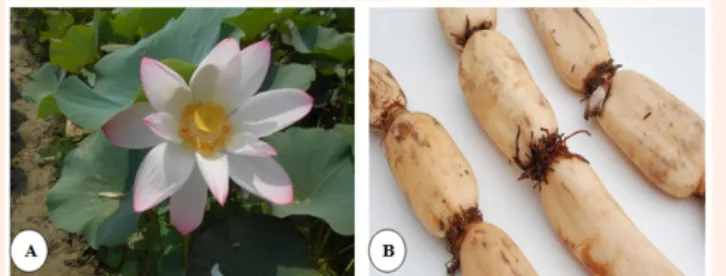
rhizome using different solvents like methanol, acetone, and chloroform. The proximate parameters like ash, crude fat, crude fiber, crude protein, carbohydrates, moisture contents and energy values were obtained using the Association of Official Analytical Chemists (AOAC) methods. Descriptive research design was adopted in this study. Different parts of the N. nucifera (A) whole plant and (B) rhizome is shown in Figure 1.
Collection and identification of N. nucifera
The rhizomes of N. nucifera were collected from the fields of irrigated areas of the village Majokey, district Charsadda, KPK, Pakistan by taxonomist Raess Khan. Identification of species was carried out in Herbarium of Quaid-i-Azam University with Flora of Pakistan by taxonomist Raess Khan. The voucher specimens have been deposited in Quaid-i-Azam University (Islamabad-Pakistan) herbarium.
Extraction of N. nucifera rhizome
Fresh rhizomes were washed with distilled water to eliminate mud. The rhizomes divided into very small pieces with a sharp knife. Then the rhizome was dried under shadow, separated, crushed by a mechanical grinder and passed through a mesh sieve. A total of 20 g of the crushed plant material was extracted for 4 days in 2% chloroform ethanol, acetone and methanol solvents. The detached extracts were then filtered by Whatman filter paper product number Z274852. Dried solvent extract was kept at 4°C for further analysis. Fresh rhizome was used for the determination of the moisture contents.
Qualitative phytochemical analysis
The qualitative phytochemical analysis of N. nucifera rhizome was carried out using the Association of Official Analytical
Chemists (AOAC) method to detect the presence of different classes of phytochemical such as alkaloids, flavonoids, terpenoids, tannin, saponins, glycoside, phenol, phlobatanins, coumarin and cardiac glycoside [9].
Test for alkaloids: To 1mL of extract, 2.5mL of concentrated HCL
was mixed in a test tube. Then few drops of Mayer’s reagents were added dropwise. The formation of a white precipitate indicated the occurrence of alkaloids.
Test for tannins
2 mL of extract and 2.5mL of 5% ferric chloride were taken in a test tube. Formations of dark blue or greenish black was indicated the presence of tannins.
Test for saponins
1mL of extract and 1.5mL of distilled water were mixed in a test tube and shaken in graduated cylinder for 10 minutes lengthwise. The presence of foam shows the presence of saponins.
Test for flavonoids
To 2mL of plant extract and 2mL of 2N sodium hydroxide were added in a test tube. A yellow color formation shows the presence of flavonoids.
Test for quinones
1mL of plant extract and 1mL of concentrated sulphuric acid were taken in a test tube. The presence of red color shows the presence of quinones.
Test for cardiac glycosides
To 1mL of extract and 2.5mL of glacial acetic acid and few drops of 5% ferric chloride were added in a test tube. This was under layered with 1mL of concentrated sulphuric acid. The appearance of a brown ring at the interface shows the presence of glycosides.
Test for terpenoids
To 2mL of extract and 1.5mL of chloroma were mixed in a test tube and followed by carefully adding 3 mL concentrated sulphuric acid. The appearance of red brown color at the interface indicates the presence of terpenoids.
Test for coumarone
To 1mL of extract and 2mL of 10% NaoH were added in a test tube. The appearance of yellow color shows the presence of coumarone.
Test for phenols
To 2mL of the plant extract and 2mL of distilled water followed by few drops of 10% ferric chloride were added in a test tube. A blue or green coloration indicates the presence of phenols.
Test for phlobatanins
To 1.5mL of plant extract and a few drops of 2% HCL were mixed in a test tube. The presence of a red color precipitate shows the presence of phlobatanins.
Quantitative phytochemical screening
Determination of total phenol content: Total phenolic
content was determined according to the method of [10] with certain modifications 200 mg/ml methanolic solutions for both methanolic and ethanolic extracts were prepared for the analysis. The reaction mixture was made by mixing 100 µl of the plant extract solution, 900 µl of Folin-Ciocalteu’s reagent dissolved in water and 860 µl of 6% of NaCO3 aqueous solution. The samples were incubated in the dark condition for 40 min. The absorbance was estimated by spectrophotometer at wave length=630 nm. The samples were prepared in replicate for all analysis and the mean value of absorbance was attained.
Determination of total flavonoid content: Total flavonoid
content was estimated according to the method of [11] with some modification using rutin as a standard. Rutin (100 to 300 mg) was dissolved in methanol. Then, the stock solution was diluted to provide a series of concentrations. To this 150 µl of 10 % aluminum chloride and distilled water was added. Then 100 µl 1 M potassium acetate, 200 µl extract was added. They were incubated for 40 minutes in dark at room temperature. The absorbance was measured at 430 nm.
Nutritional analysis
Proximate parameters such as moisture content, carbohydrates, fats, ash, crude protein, fiber and energy value in
N. nucifera rhizome were evaluated using standard procedures
and below formulas [12]. When we place the related data in the places of the values in the formulas, we get the results which were showed in the main text.
Determination of moisture content: The moisture content
of the sample was determined as loss in weight of the original sample and the moisture percentage content was determined by formula as [12]:
( )
Wt. of fresh sample W1 - Wt. of dried sample W2( )
( )
( )
% = ×100
Wt. of fresh sample W1 Moisture
Crude protein determination: Crude protein was determined by
the Kjeldahl method. The Crude protein percentage was obtained by formula [12].
Determination of crude fats: Fat was determined by the soxhlet
extraction method using 200 ml n-hexane as the extracting solvent in soxhlet apparatus. Crude fats were expressed in percentage as [12]:
( )
Wt. of extracted fats + Flask W3 - Wt. of empty flask W4( )
( )
( )
Crude Fats % = ×100
Wt. of sample used W5
Estimation of crude fiber: The crude fiber determination was
performed through the process of AOAC method [10]. Crude fibre % =
( )
Weight of loss in ignition×100Weight of fat free sample
Carbohydrates determination: The percentage of carbohydrate
was calculated by using below formula [13]:
(
)
Total carbohydrates content = 100 - %moisture + %crude protein + %crude fat + %crude fiber + %ash
Energy value: Energy value was calculated for each sample as
follows [14]:
Energy value = 4x%protein + 9x%fats +4x%carbohydrates
Results and Discussion
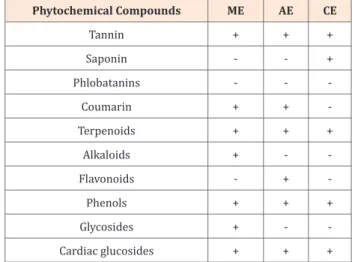
The material collected has been analyzed and the total phenolic contents were found to be (25.49±1.15) mg GAE/g and (17.6±3.80) mg GAE/g dry extract whereas the total flavonoid contents were found to be (10.84±0.16) mg RUE/g and (6.86±0.76) RUE/g in methanol and ethanolic extract respectively. Further results revealed high moisture content (55.3 ±0.80%) and carbohydrates (23±0.26%) content and low concentration of fat (3.1±1.67%) and fibre (2.5±0.86%). Moreover the present study results also have shown that the N. nucifera rhizome has rich in terms of glycosides, flavonoids, saponin, tannin, phlobatanins, phenolic compounds and alkaloids (Table 1); also it is understood through this study, that the N. nucifera rhizome is a good source of carbohydrates, proteins and it possesses significant functional properties which give it an advantage of being used in bakery and food production. In addition N. nucifera has important ethnomedicinal uses in the district of Charsadda KPK of Pakistan. Preliminary phytochemical screening of N. nucifera rhizome show positive results for the presence of phytochemical constituents such as; flavonoids, tannins, alkaloids, phenols, coumarin, cardiac glycosides, phlobatanins and saponins. The total phenolic content of ethanolic and methanolic extracts were determined by the Folin-Ciocalteu’s reagent whereas the total flavonoid content were determined using the aluminium chloride method.
Table 1: Phytochemical constituents of the rhizome extracts of N. nucifera.
Phytochemical Compounds ME AE CE Tannin + + + Saponin - - + Phlobatanins - - -Coumarin + + -Terpenoids + + + Alkaloids + - -Flavonoids - + -Phenols + + + Glycosides + - -Cardiac glucosides + + +
Present (+), Absent (-) (ME methanol extract AE acetone extract CE (chloroform extract)
Ethnomedicinal uses of N. nucifera
Medicinal and aromatic plants have been used as a medicinal source by mankind since ancient times. The indigenous knowledge of many tradition communities has been formulated, been documented and eventually become organized systems of medicine used as a diuretic and anthelmintic and in the treatment of strangury, vomiting, leprosy, skin diseases and nervous
exhaustion [15]. In popular medicine rhizomes of this plant were prescribed as demulcents for haemorrhoids and are beneficial in dysentery, chronic dyspepsia, and have nutritive, diuretic and cholagogue activities [16]. The stem of this plant is used in medicine as diuretic, anthelmintic, to treat strangury, vomiting, leprosy, skin disease and nervous exhaustion. The leaves are used for the treatment of haematemesis, epistaxis, haemoptysis, haematuria, metrorrhagia and hyperlipidaemia [17]. The flowers of this plant are useful in the treatment of diarrhea, cholera, fever and gastric ulcers; the seeds and fruits of N. nucifera are used as a health food in Asia and to treat many ailments and the seed powder mixed with honey is useful in treating cough [18].
The present study documented the ethnomedicinal uses of
N. nucifera in district of Charsadda KPK, Pakistan. The rhizomes
(locally known as barsanday) are often consumed as a vegetable sold in the market. The market rate was Rs 60-80 per kilogram. These are commonly sliced and cooked with or without meat. The powdered seed is used against cough. The rhizome is also used as an antidiabetic and antiobesity. The flower was used to cure liver ailments and a range of other ailments like fever, hypertension, diarrhea, weakness etc. The rhizomes of N. nucifera were locally used as an antifertility and inflammation. The flower is used for vomiting, cholera, diarrhea and intermittent fevers and the plant was also utilized for intra-uterine growth hindrance, dysentery, diarrhea, and skin darkening. Roots aid in the elimination of toxic waste from the body, and are also useful in decreasing body heat. The roots and rhizomes are beneficial in caring for throat complications, small pox, pigmentation problems in skin and diarrhea. The cooked root was good for the stomach and the reproductive organs. Rhizome paste is useful in ringworm and coetaneous affections. Stem aids in the healthy growth of the fetus. Leaves were used against diarrhea and high fever. The flowers and pedicels were used as a cardiac and hepatic tonic. The seeds were used for cutaneous ailments and also consumed as a raw.
Qualitative phytochemical screening
The current study carried out on the N. nucifera showed the presence of medicinal active components. The phytochemical active components of N. nucifera rhizome were qualitatively analysed and the results are presented in Table 1.
Total phenolic content (TPC):
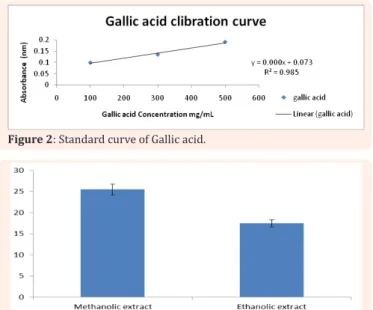
The absorbance of standardcompound (GAE) was shown in this Table 2 and total phenolic content of N. nucifera for different extracts are presented in Table 3 Standard curve of gallic acid equivalent indicated the equation Y = 0.0002X+0.0731, R2= 0.9857 clarified in Figure 2.
Table 2: Absorbance of standard compound (GAE) at 630 nm. Gallic Acid Concentration mg/ml Absorbance at 630 nm
100 0.099
300 0.135
500 0.19
The results of total phenols contents that were measured by Folin Ciocalteu’s reagent in term of gallic acid equivalent presented in Table 3 and Figure 3.
Table 3: Total phenolic contents in different N. nucifera rhizome extracts. N. nucifera extracts Total phenolic contents GAE mg/g dry extract±SD
Methanol 25.49±1.15
Ethanol 17.4±3.80
Total flavonoid contents
Absorbance of standard compound (Rutin) at 430 nm in N.
nucifera was shown in Table 4 and Figure 4.
Table 4: Absorbance of standard compound (RUE mg/mL) at 430 nm. Rutin Concentration mg/ml Absorbance at 430 nm
100 0.033
200 0.068
300 0.099
The present study showed the results of total flavonoid contents was calculated from the calibration curve of Rutin and expressed as milligram of Rutin Equivalent per gram of dry extract (mg RUE/g dry extract) and shown in Table 5 and Figure 5.
Figure 2: Standard curve of Gallic acid.
Figure 3: Total phenolic contents of methanolic and ethanolic extract
of N. nucifera rhizome.
Table 5: Total flavonoid contents in different N. nucifera extracts. N. nucifera Extracts Total Flavonoid Contents RUE mg/g Dry Extract ±SD
Methanol 10.84±0.16
Ethanol 6.86±0.76
Nutritional analysis
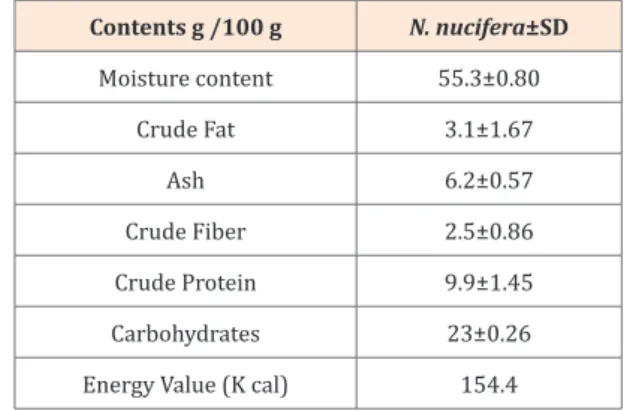
Proximate composition: The proximate composition of rhizome
powder of N. nucifera is presented in Table 6. The table shows the Mean±SD (g/100g) of moisture, crude protein, crude fat, crude fiber carbohydrates and ash content.
Table 6: Proximate composition of N. nucifera rhizome. Contents g /100 g N. nucifera±SD Moisture content 55.3±0.80 Crude Fat 3.1±1.67 Ash 6.2±0.57 Crude Fiber 2.5±0.86 Crude Protein 9.9±1.45 Carbohydrates 23±0.26
Energy Value (K cal) 154.4
Phytochemical screening
The present study was carried out on N. nucifera which showed the presence of medicinally active constituents. The phytochemical of N. nucifera rhizome were qualitatively analysed and the results are presented in Table 1. In these screening process alkaloids, glycosides, saponins, phenol, tannins, phlobatanins, coumarin, flavonoids, cardiac glycoside and terpenoids showed different types of results in various solvent extracts. The current study reports that tannins were present in acetone extract whereas phlobatanins and alkaloids were absent. According to a research, tannins and alkaloids were absent in acetone extracts while phlobatanins were present in acetone extract [19]. The study also reported that glycoside and flavonoids were absent while saponin was present in chloroform extracts. Glycosides, flavonoids and saponins all were presents in chloroform extract. Saponins have been reported to have an inhibitory effect on inflammation [20]. In current study coumarin, phenol and terpenoids were presents in methanol extracts. In another study phenols were present while coumarin and terpenoids were absents in methanolic extract [21].
Total phenolic contents (TPC)
The total phenolic contents in extracts were measured by Folin-Ciocalteu’s reagent with reference to Gallic acid. Figure 2 show total phenols expressed as mg/g gallic acid. The total phenolic contents of N. nucifera rhizome methanolic and ethanolic extracts were estimated from gallic acid standard curve and expressed as GAE mg /g dry extract (Figure 3). The attained values of the total phenol for methanolic and ethanolic rhizome extract of N. nucifera were found to be 25.49 and 17.45 mg GAE per gm correspondingly. Similar study has been reported that total phenolic content for methanol extract of N. nucifera was found to be 85.01 mg GAE per g [22].
Total flavonoid contents (TFC)
The estimation of total flavonoid content was determined from the calibration curve of Rutin and expressed as (mg) of Rutin Equivalent per gram of extract. In the current study the total flavonoid contents were found to be higher 10.84 ±0.16 RUE mg/g in methanolic extract, whereas in ethanolic extract the flavonoid content was low 6.86±0.76 mg RUE/g respectively (Figure 5). According to another study total amount of flavonoids in methanolic extract was found to be 41.86 mg QE g of dry extract. In similar studies the total flavonoid content of N. nucifera stem extract was found to be 77.8 mg Rutin equivalent/100 ml for ethanolic extract [19].
Proximate composition
The proximate analysis of N. nucifera rhizome was presented in Table 6. The present study shows that the moisture content was higher (55.3±0.80) than those reported by Shukla et al. [23], which was low i.e. 6.86±0.17g/100g [23]. The current study result of ash content (g/100g) was 6.2±0.57 which was higher when compared to the study curried out the ash content was 3.88 g/100g [19]. The crude protein content of N. nucifera rhizome was (9.9±1.45) which were close to the results of Shad et al. [24] reporting that the protein content of lotus rhizome was (8.48±0.25) [24]. The high content of protein in lotus rhizome highlights their value as an important source of nutrients. In our result the fat content of N. nucifera rhizome was (3.1±1.67) likewise the fat content of N. nucifera seed was found to be (2.5±0.28) [25]. The fiber content (g/100g) of lotus rhizome recorded was (2.5±0.86) while comparing to the study of Mohammed et al. [25]. That the fiber content of Nymphaea lotus seeds powder was (1.60±0.20). According to the present study the carbohydrates content of N.
nucifera rhizome was (23±1.68) which was higher than those
reported by Gana et al. [19].
Conclusion
The ethnomedicinal, phytochemical and nutritional investigations carried on N. nucifera showed that it has important properties in traditional medicine, phytochemical composition and pharmacological activities. N. nucifera is also reported to contain a wide range of chemical constituents. These important chemical compounds could serve as leads in the search for novel medicinal agents. With the availability of primary investigations, further studies on N. nucifera should be designed to investigate the molecular mechanism(s) of action of isolated important chemicals
Figure 5: Total flavonoid contents of differents N. nucifera rhizome
using specific biological screening models and clinical trials, and also to discover novel leads from them. Also studies should be extended to standardize the various extracts of N. nucifera for the purpose of their use in specific herbal formulations and herbal medicine. The present study results showed that the N. nucifera rhizome has various phytochemicals such as cardiac glycosides, flavonoids, saponin, tannin, phlobatanins, phenolic compounds and alkaloids. The quantitative screening indicated that the methanolic extract of N. nucifera rhizome showed the highest contents of flavonoids and phenols. The results of this study also indicated that the lotus rhizome is a good source of carbohydrates and proteins. It possesses significant functional properties which give it an advantage of being used in bakery and food production. In addition N. nucifera has important ethnomedicinal uses in the district of Charsadda KPK of Pakistan.
Acknowledgement
None.Conflict of Interest
None.References
1. Wang Q, Zhang X (2004) Lotus flower cultivars in china. China Forestry Publishing House Beijing. China, pp. 296.
2. Yamaguchi M (1990) Asian Vegetables. In: Janick J & Simon JE (Eds.), Advances in new crops. Timber Press, Portland, Oregon, pp. 387-390.
3. Sridhar KR, Bhat R (2007) Lotus: a potential nutraceutical source. Journal of Agriculture Technology 3(1): 143-155.
4. Mehra KL (1975) Folk uses of plants for adornment in India. Economic Botany 29(1): 39-46.
5. Mukherjee PK, Mukherjee D, Maji AK, Rai S, Heinrich M (2009) The sacred lotus (Nelumbo nucifera) phytochemical and therapeutic profile. Journal of Pharmacology 61(1): 407-422.
6. Willet WC (1994) Diet and health: what should we eat? Science 264(5158): 532-535.
7. Mathews CK, Van-Holde KE, Ahem KG (1990) Biochemistry. (3rd edn), UK 18(3): 154.
8. Kalita P, Mukhopadhyay PK, Mukherjee AK (2007) Evaluation of the nutritional quality of four unexplored aquatic weeds from northeast India for the formation of cost effective fish feeds. Food Chemistry 10: 204-209.
9. AOAC (2000) Association of official Analytical chemist. (17th edn), Gaithersburg, MD, USA.
10. Waterhouse A (2002) Determination of total phenolics. Current Protocol in Food Analytic Chemistry 2: 1-8.
11. Quettier-Deleu C, Gressier B, Vaseur J, Dine T, Brunet E, et al. (2000) Phenolic compounds and antioxidant activities of buckwheat (Fagopyrum esculentum Moench) hulls and flour. Ethnopharmacology 72(1-2): 35-42.
12. Kjeldahl J (1883) A Rapid Method for Measuring Seed Protein Content in Cowpea (Vigna unguiculata (L.) Walp). Zeitschrift für Analytic Chemie 22: 366-383.
13. Otitoju GTO (2009) Effect of dry and wet milling processing technique on the nutrient composition and organoleptic attributes of formented yellow maize (Zea mays). African J of Food Science 3(4): 113-116.
14. Indrayan AK, Sharma S, Durgapal D, Kumar N, Kumar M (2005) Determination of nutritive value and analysis of mineral elements for some medicinally valued plants from Uttaranchal. Current Science 89: 1252-1255.
15. Sridhar KR, Bhat R (2007) Lotus: a potential nutraceutical source. Journal Agriculture Technology 3(1): 143-155.
16. Kirtikar KR, Basu BD (1975) Indian Medicinal Plants. (2nd edn). New Delhi International Book Distributors, India pp. 116-120. 17. Onishi E, Yamada K, Yamada T, Kaji K, Inoue H, et al. (1984)
Comparative effects of crude drugs on serum lipids. Chem Pharm Bull 32(2): 646-650.
18. Chopra RN, Nayar SL, Chopra IC, Asolkar LV, Kakkar KK (1956) Glossary of Indian Medicinal Plants. New Delhi: Council of Science and Indian Research 174.
19. Gnana JA, Estherlydia D (2014) Phytochemical screening and Antioxidant activity of lotus (Nelumbo nucifera) Stem. International Journal Pharmachy Biology Science 5(4): 385-393.
20. Just MJ, Recio MC, Giner RM, Cueller MU, Manez S, et al. (1998) Antiinflammatory activity of unusual lupine saponins from Bupleurum fruticescens. Planta Medica 64(5): 404-407.
21. Naz R, Bano A (2013) Phytochemical screening, antioxidants and antimicrobial potential of Lantana camara in different solvents. Asian Pacific Journal Trop Disease 3(6): 480-486.
22. Lee JS, Shukla S, Kim JA, Kim M (2015) Anti-Angiogenic Effect of Nelumbo nucifera Leaf Extract in Human Umbilical Vein Endothelial Cells with Antioxidant Potential, Plos Oone 10(2): 1-17.
23. Shukla K, Chaturvedi N (2015) Investigation on Preliminary Phytochemical and Proximate Analysis of Nelumbo nucifera Gaertn Seeds. Ijppr Human 4: 35-43.
24. Shad MA, Nawaz H, Hussain M, Yousaf B (2011) Proximate composition and functional properties of rhizomes of lotus (Nelumbo nucifera) from Punjab. Pakistan J of Botany 43(2): 895-904.
25. Mohammed HA, Uka UN, Yauri Y (2014) Evaluation of nutritional composition of water lily (Nymphaea lotus Linn.) from tatabu flood plain, North- central, Nigeria. Journal of Fish Aquatic Science 8: 261-264.