19
Kabul Tarihi: 26 Mart 2019 Sayfa Aralığı: 19 - 40
THE IMPACT OF LEADERSHİP STYLE ON ORGANİZATİONAL CİTİZENSHİP
BEHAVİOR: DETERMİNİNG THE LEVEL OF MOTİVATİON İN HEALTH
WORKERS
1İlknur SAYAN2
& Salih GÜNEY3
Öz
Today's organizations must adapt to environmental changes so that they can survive within the rapidly changing conditions of competition. In order to achieve organizational performance and effectiveness in institutional arrangements of organizations, it is necessary to have employees who are educated, qualified, efficient, harmonious, who act in line with organizational goals, feel responsible for solving problems, act collaboratively for the institution to reach its targets and goals, and who are always willing to contribute to increase the organizational productivity and quality. For this reason, it is necessary to use effective leadership styles in order to guide individuals, motivate them towards the targets and goals, and encourage them to show strong organizational citizenship behaviors. Motivation is the power that prompts the individual to act. The highly motivated individual will inevitably develop organizational citizenship behaviors. Individuals who exhibit organizational citizenship behaviors that are defined as extra-role behaviors beyond their jobs are highly motivated individuals. Leadership styles are therefore an important element in the development of organizational citizenship behaviors and the determination of individual motivation levels. The impact of leadership styles in the organizational citizenship behaviors and the level of motivation of health workers in Istanbul, Turkey will be evaluated.
Anahtar Kelimeler: health workers, leadership,leadership styles,motivation factors.
Liderlik Tarzının Örgütsel Vatandaşlık Davranışlarına Etkisi: Sağlık Çalışanlarında
Motivasyon Düzeylerinin Belirlenmesi
Abstract
Sağlık kuruluşlarının etkililiğinde ve verimliliğinde sağlık çalışanlarının bilgisi, becerisi, yetkinliği ve etkin iletişimi kurumun başarısında en önemli kaynaktır. Bu kaynağın etkin bir şekilde yönetimi, etkili liderlik ile mümkündür. Liderlik, örgütün etkinliğini ve başarısı etkileyen önemli bir faktördür. Çalışanların örgütsel vatandaşlık davranışı ve motivasyon seviyelerinin örgütsel verimliliği etkileyen faktörler içinde olduğu düşünülmektedir .Motivasyon hedefe odaklı davranışın oluşması için enerji verme ve harekete geçirme eylemini yönlendiren bir süreçtir. Bu araştırma, çalışanların liderlik tarzları algısının örgütsel vatandaşlık davranışı göstermelerinde motivasyon seviyelerinin ara değişken rolü olabileceği varsayımına dayanmaktadır. Bu
bağlamda araştırmanın amacı, algılanan liderlik tarzlarının örgütsel vatandaşlığa etkisinde motivasyon seviyelerinin moderatör rolünü araştırmak amacıyla yapılmıştır. Bu araştırma verileri anket yöntemi ile toplanmıştır. İstanbul’da bulunan özel hastanelerde 420 sağlık çalışanına uygulanan araştırmanın sonucunda,
1 Makale, tez veya proje çalışmasının bir kısmı ya da tamamı yayınlanmamış olmak kaydıyla bildiri olarak sunulmuş bir
çalışmaysa, buraya o açıklama konulmalıdır. (Dipnotlar Times New Roman 9 punto, 1.0 satır aralığı ile yazılmalıdır.)
2 Dr, İstanbul Kent Unıversity/Faculty of Health Sciences, Health Management, E-posta:[email protected]
20
çalışanların algıladıkları liderlik tarzının örgütsel vatandaşlık üzerinde anlamlı etkisinin olduğu görülmüştür. Algılanan liderlik tarzının örgütsel vatandaşlık üzerindeki etkisinde motivasyon seviyelerinin ara değişken rolü olmadığı saptanmıştır. Ayrıca çalışanların dönüşümcü, etkileşimci ve babacan liderlik tarzları algısının motivasyon düzeyleri üzerinde anlamlı bir etkiye sahip olduğu, serbest liderlik tarzının ise çalışanların motivasyon düzeylerini olumsuz yönde etkilediği sonucuna varılmıştır.
Keywords: sağlık çalışanları, liderlik, liderlik tarzları, motivasyon faktörleri.
Introduction
Today's healthcare organizations need active leaders to survive due to increased competition. Leaders have a guiding role in realizing the goals and objectives of the organization and determining its future. Leaders using the appropriate leadership style in health care organizations can have a significant impact on their followers and motivate them, in addition to their official duties, to direct them to non-role behaviors (Şirin ve Bilir, 2016, s.62). For this reason, it is important to determine the relationship between. the leadership styles adopted by the leaders of health organizations and the organizational citizenship behavior displayed by the employees. Leaders need to know the importance of employee motivation to be successful (McShane & Von Glinow, 2016, p. 87). Motivation, which is thought to be highly effective in increasing the efficiency and performance of organizations, is a very important issue for the success of organizations and societies and for the welfare of individuals. Employees with high motivation are an important advantage for organizations (Wagner and Hollenbeck, 2010, p. 81).
Health leaders need to analyze the motivation tools that enable employees to make the best use of their potential. Leaders' motivating approaches can help them to work more voluntarily, help colleagues, and contribute to the development of the organization. In this study, it is aimed to determine whether the motivation levels have a regulatory role as an inter-variable in the way that the perceived leadership style of health workers demonstrate organizational citizenship behavior. The results of the research will guide health leaders by investigating which leadership styles should be adopted in order to increase the tendency of health workers to display organizational citizenship behavior, and in this context, by investigating the regulatory role of the motivation levels of employees.
Leadership and Leadership Styles
Along with the changing world order, leadership understanding has also changed. Leadership is a force that makes important contributions to providing necessary interactions in realizing the goals of individuals and organizations, and to improving individual and organizational performance. At the same time, it is considered to be an important factor that increases the motivation of the individuals, and ensures group mobility and organizational productivity (Alabduljader, 2012; Güney, 2012a; Duygulu, 2014; Yusuf et al., 2014).
Leadership style is the attitudes and behaviors the leader exhibits while achieving organizational goals (Çelik ve Sünbül, 2008). Leadership styles are the study of the leader's behavior in the realization of individuals' job motivation and organizational goals of the group (Avcı ve Yaşar, 2016). Effective leadership styles are a quick step to keeping pace with globalization and smoothing organizational hierarchies (Jogulu, 2010). Leadership styles that are the result of the leader's personality traits, attitudes, and behaviors and that are included in this study are explained below.
Transformational Leadership
Transformational leadership style, which was defined by the research of James McGroger Burns and Bernard Bass from 1978 onwards, is a suitable leadership style for change and
21
transformation (Çelik and Sünbül, 2008). According to Burns, the transformational leader is described as "the person who raises the level of consciousness of followers about the importance, value, and ways of achieving sought results" (Bums, 1978). Transformational leader is the one who increases the level of consciousness of followers, keeps organizational interests in the foreground, and cares about the needs of followers (Hassan, Asad, and Hoshino, 2016). Transformational leaders provide significant contributions to enhancing followers' performance and organizational success (Walter and Bruch, 2010).
Transformational leaders exhibit four behaviors: (a) Understanding and evaluating different needs and perspectives within the group for the importance and value of specified goals, and the ways of reaching these goals (Bass, 1985), (b) Intellectual encouragement; questioning assumptions, re-planning problems and thinking of concepts using new paradigms, helping overcome individual interests for the sake of a larger management, (c) Inspirational motivation; giving energy to the members of the group who want to work together to contribute to the collective mission, (d) Ideal effect; thinking more comprehensively about the perspectives, moral issues, and effects of the people's actions (Kahai, Sosik, and Avolio, 1997).
Transformational leaders have an extraordinary vision that they create in the creative (Zhang, Wang, and Pearce, 2014), modern, changing, and uncertain working environment (Bono, Hooper, and Yoon, 2012). Individuals have high level of interactions within the group and approach problems in a solution-oriented way (Kaya and Onğun, 2015). Transformational leaders may interact using different methods depending on the personality traits of the audience (Bono et al., 2012:134). This style of leadership improves productivity and organizational effectiveness, increases morale and job satisfaction of employees, and reduces absenteeism and job turnover rates (Robbins and Judge, 2015; Polatcı ve Sobacı, 2017).
Transactional leadership.
In recent years, changes have occurred in organizations such as horizontal and flexible structures, shrinkage and rapid information flow. In addition, applications such as rapid technological developments, global competition and changing perception and expectations of the workforce, organizational transformations and innovations, and total quality management necessitated the change of leadership understanding.
Transactional leadership, developed by James McGregor Burns, was put forward by taking leaders who make political commitments in elections as reference (McShane and Von Glinow, 2016). Transactional leadership, based on power of legitimate authority in the bureaucratic structure of the organization, focuses on establishing goals and objectives, tasks and outputs, organizational rewards and penalties (Mullins, 2006). It is a leadership style in which employees work under formal contractual terms, with a low level of environmental uncertainty and change (Aslan, 2013). Transactional leadership is a leadership style in which the level of activity of the leader and their interaction with their followers differ. Relations between leaders and followers are based on a process of exchange and negotiations (Howell and Avolio, 1993). The leader rewards followers when they meet expectations. According to this point of view, leaders have significant influence and power over subordinates (Vito, Higgins, and Denney, 2014).
Transactional leadership focuses on what needs to be done to achieve the goals and objectives of the organization. The leader takes their power from their position, rewards or punishes the employees. The leader works with the followers on a mutual exchange base. This leadership style is widely used in organizations (Yavuz ve Tokmak, 2009; Deluga, 1990). In the non-profit organization
22
that Podsakoff and colleagues (1990) have studied, they observed that conditional reprimand, approval, or punishment do not have an effect on performance or overall employee satisfaction (Bass, 1985:29). Transformational leadership is based on transactional leadership.
For this reason, it is not expected that a leader who does not have transactional leadership qualities can have transformational leadership qualities (Demir, Uğurluoğlu, ve Ürek, 2017; Robbins and Judge, 2015).
With the approaches of the leaders, the creation and improvement of the positive working environment will lead the employees to these behaviors and improve the organizational citizenship behavior. (Haghighi & Maleki, 2016). Therefore, supportive leadership behaviors positively affect the development of organizational citizenship behaviors in employees (Euwema et al., 2007). The transformative leader also has interactive leadership characteristics. Interactionist leadership defines the features that should be found in an ideal manager.
Paternalistic leadership.
Interactionist leadership is part of modern leadership theories together with transformational leadership. Interactionist leadership is a task-oriented leadership approach. There is a relationship between the leader and his/her subordinates based on interdependence. It is a leadership approach developed in search of effective leadership for organizations.
Paternalism and paternalistic leadership behavior, which emerged in Eastern cultures, stem from the collective structure of this culture and high power distance. Paternal leadership is a type of leadership that is clearly separated from western cultures and that brings together both relational and task-oriented leadership types (Köse ve Tetik, 2015). Paternalistic leaders take their subordinates' opinions, but they make the final decisions themselves. Paternalistic leader is closely involved with the development of employees. Employees do their best in their jobs to avoid being embarrassed to the manager they are affiliated with. This is the most appropriate response to the interest, protection, and support of the paternalistic leader (Türker, 2013). Paternalistic leadership can be thought of as a type of leadership practiced by a manager who protects and looks out for the employees and who is involved in their professional and private lives. Employees are provided with the necessary resources, protected against criticism that may come from outside the group, and in return, they work hard and show a respectful, dutiful, and loyal attitude to the leader (Keklik, 2012). Paternalistic leadership is suitable to what Hofstede and colleagues (1980) call collectivistic cultures (Jackson, 2016).
It ensures the harmony of the employees with the work and the psychological adaptation to the organization. In order to ensure individual and work harmony, the contributions of the employee must be largely matched to the incentives offered by the organization to the employee. Effective leadership and working in a highly qualified workplace were found to be more related to psychological contract perception than other variables (Guest and Conway, 2004). One of the results of effective leadership styles is that employees show organizational citizenship behavior. Leaders motivate their subordinates to go beyond their expectations. Organizational citizenship behavior is appropriate for every organization. Organizational citizenship behavior has a close relationship with important variables such as job satisfaction, system protection and organizational efficiency (Haghighi and Maleki, 2016).
Laissez-faire leadership.
Laissez-faire is a French phrase that means "let (people) do (as they choose)." Laissez-faire leadership defines leaders who allow people to work on their own (Amanchukwu, Stanley, and Ololube, 2015). By some researchers, laissez-faire leadership is defined as being without a leader, or "let them do" type of management (Aslan, 2013). The leader has scarcely any influence on
23
organization effectiveness and employee efficiency. This leadership style, which gives full freedom, is a type of management that allows employees to do their job using their own methods (Kelgökmen and Yalçın, 2017). Directing subordinates in this leadership style is at the lowest level. Managers do not attend to tasks and people, and they do not do their jobs. They act like ambassadors to transmit information from superiors to subordinates. They participate to the job they were assigned to at a minimum level. This situation is suitable for individuals who want to maintain their organizational membership with small amount of effort (Kondalkar, 2007). The most important advantage of laissez-faire leadership for employees is the autonomy they are afforded and the opportunity to manage themselves by improving their creativity. This can result in high job satisfaction and increased productivity in employees. However, if group members cannot manage their time well or do not have the knowledge and skills to effectively manage their own work, this indicates that managers do not have sufficient control over employees (Amanchukwu et al., 2015).
Ethical leadership.
Ethical leadership has increased the sensitivity of governments, societies and academics to ethical principles as a result of ethical scandals in major companies such as Enron and Worldcom and has put forward the concept of ethics in leadership (Tuna, Bircan and Yeşiltaş, 2012). Ethical leadership has gained importance due to ethical problems that occurred in business life. By the scientific research carried out by Brown, Treviño, and Harrison (2005), ethical leadership is defined as "demonstrating appropriate normative behaviors in personal activities and interpersonal relationships, and encouraging followers to strengthen two-way communication through empowerment and decision-making" (Sheer, Liu, and Huang, 2018:21; Brown, Treviño, and Harrison, 2005).
Ethical leadership does not only mean having good character, but also being a manager with moral values. The ethical leader must direct their followers to behave in line with ethical principles and be a model with their own behavior in accordance with ethical principles (Kugun, Aktaş, and Güripek, 2013). The leader must demonstrate behavior appropriate to ethical rules to their followers through communication, and be honest and trustworthy (Sheer et al., 2018).
In order to promote ethical behavior in organizations, the general policies of the organization should be determined according to ethical standards. In organizations applying the ethical standards, employees' trust in the organization and its leaders will develop, and the motivation and citizenship behaviors of employees will increase (Öztürk, 2014; Sheer et al., 2018).
Organizational Citizenship Behavior and Its Dimensions
Organizational citizenship behavior is a positive result of a determined workforce, which is not defined by the official organizational reward system, characterized by the voluntary extra role contribution of employees. (Gautam, Van Dick, Wagner, Upadhyay and Davis, 2005). Organizational citizenship behavior is employee behavior that is willing to contribute for an absolute need in a collaborations system and organization (Maharani, Troena, and Noermijati, 2013). The concept of organizational citizenship, which is described by Organ and colleagues as "Good Soldier Syndrome" (Organ, 1988:4; Oğuz, 2011:381), became an important concept for organizational continuity and for recruiting employees that are helping, hardworking, and collaborating, generally outside of job expectations. (Nielsen et al., 2009).
Organizational citizenship behavior is not a formal job description that supports task performance. It includes work beyond the specified job descriptions and self-applied studies (Ariani, 2014: 78). Moreover, it is not a formal sanction, it is not included in the organization's award, registry, promotion system. Organizational citizenship behaviors need to benefit from the organization and
24
other individuals. In this behavior process, the organization needs to maximize its efficiency and efficiency and minimize losses. In contrast to the relations of economic change, this social exchange is based on trust between the parties and does not require payment of a price (Chompookum and Derr, 2004). For this reason, success is inevitable in organizations with employees who adopt organizational citizenship behavior.
The attitudes and behaviors of employees that go beyond organizational duties are defined as organizational citizenship behavior, which is the focal point of many researches (Esmi, Piran, ve Hayat, 2017). Among the dimensions of organizational citizenship behavior, especially the five dimensions (altruism, courtesy, conscientiousness, civic virtue, and sportsmanship) that were developed by Organ are widely accepted (Çekmecelioğlu ve Keleş, 2009; Dash and Pradhan, 2014; Basım ve Şeşen, 2009).
Organ explained that organizational citizenship consists of two dimensions, which are altruism and general compliance. However, in later studies these dimensions were examined under five main headings. These are altruism, conscientiousness, courtesy, civic virtue, and sportsmanship. (Gürbüz, 2006; Oğuz, 2011; Salihoğlu, 2013; Maharani et al., 2013; Irshad and Hashmi, 2014; Dash and Pradhan, 2014).
Organizational citizenship behavior, job satisfaction, systems protection and organizational productivity are also closely related to important variables. With the approaches of the leaders, the creation and improvement of the positive working environment will lead the employees to these behaviors and improve the behavior of organizational citizenship (Haghighi and Maleki, 2016: 81-83). Therefore, supportive leadership behaviors positively affect the development of organizational citizenship behaviors in employees (Euwema et al., 2007:1036).
Conscientiousness
Conscientiousness is defined as the voluntary behavior that go beyond minimum roles regarding the internal order of the organization, such as high level of work consciousness, protection of organizational resources, and high level of performance (Özsahin ve Sudak, 2015:444). It consists of behaviors that go well beyond the minimum role requirements in organizations (Yıldırım, 2014:1096). In this dimension, individuals and groups strive beyond formal requirements, using the time effectively to improve productivity (Tokgöz ve Seymen, 2013:64).
Courtesy
Courtesy in the organizational domain is defined as discretionary behaviors aimed at preventing work-related conflicts (Yıldırım, 2014:1096), preventing problems originating from any reason in the organization (Akturan ve Çekmecelioğlu, 2016; Tokgöz ve Seymen, 2013). Courtesy refers to informing other individuals before they start activities that affect their work, and to positive communication between mutually connected individuals. They are mostly future-oriented behaviors (Salihoğlu, 2013).
Sportsmanship
Sportsmanship is when employees exhibit constructive behavior and positive attitude when the work environment is stressful and tense (Özsahin ve Sudak, 2015; Güney, 2017). This dimension is avoiding negative attitudes and behaviors that may cause conflict between individuals and being willing to work with a positive attitude protecting the synergistic atmosphere within the organization (Naqshbandi, Singh, and Ma, 2016; Salihoğlu, 2013; Tokgöz ve Seymen, 2013). Sportsmanship is also expressed as gentlemanism.
25
Civic Virtue
Civic virtue is the behaviors that include the consciousness of being a responsible organization member of constructive employees and that show active interest in the organization life (Maharani et al., 2013; Akturan & Çekmecelioğlu, 2016; Yıldırım, 2014). In other words, it is an auxiliary activity that shows active, voluntary participation in organization life (Salihoğlu, 2013).
Altruism
It is defined as when experienced employees in the organization voluntarily help their colleagues in the face of problems and provide benefits to their colleagues (Maharani et al., 2013:3; Irshad and Hashmi, 2014:416; Bolat & Bolat, 2008:79). Altruism can also be expressed as participative behaviors that aim to help other employees in the workplace, that are exhibited without expecting any reward, and that provide benefits to the whole organization (Salihoğlu, 2013; Naqshbandi et al., 2016).
Motivation
Motivation is a process that channels energization and direction of action to create goal-oriented behavior (Buble, Juras, and Matic, 2014;166). Motivation has three basic features: initiating movement, ensuring movement continues, and directing movement in a positive direction (Güney, 2012).
Self-determination theory, which is used in this study to evaluate motivation levels, was developed by Deci and Ryan (2000). Ryan & Deci's self-determination theory (SDT) is a theory that explains the value of the activity and how individuals are motivated to do this activity through their own will to initiate an action (Türker, 2013:9-10; Kazak, 2004:193; İrge, 2016:86). According to self-determination theory, extrinsic motivation is controlled from the outside depending on the degree of internalization of new goals and values acquired. The levels of motivation are shown in Figure 1 by being placed on the self-determination continuum by the degree of internalization (Ryan and Deci, 2000).
As shown in Figure 1, intrinsic motivation and intrinsic regulation is motivation that comes entirely from within the individual without any external factor. On the other side of the continuum, there is amotivation, namely having no intention to act. Different levels of motivation emerge starting with amotivation, externally regulated motivation, and then moving on to motivation coming from increasingly intrinsic regulations. The type of extrinsic motivation in which there is the most amount of internalization is integrated regulation. Integrated regulation includes full internalization of extrinsic motivation and high autonomy (Türker, 2013). Introjected regulation includes behaviors such as external factors and using willpower, involvement of the self, internal rewards and punishments, feelings of pride, anxiety, and shame, etc., self-control, ego-involvement, arousal, pleasure and enjoyment, satisfaction, and caring about one's own thoughts more than others' (Ryan and Deci, 2000).
Organizational Citizenship and Leadership
Leadership has an important role in determining the future of an organization. Effective leadership includes approaches that guide and motivate employees. Organizational citizenship behaviors have a strong connection to leadership (Euwema, Wendtand Van Emmerik, 2007:1036). This connection is that the leader ensures stability between followers and the situation and has a significant impact on followers (Şirin ve Bilir, 2016). Related research has focused on determining the relationships between organizational citizenship behavior and leadership, organizational performance,
26
organizational effectiveness, organizational success, customer loyalty, and motivation (Haghighi and Maleki, 2016).
It is possible to create a positive work environment with the approach of the leaders (Haghighi & Maleki, 2016). Therefore, it is believed that leadership approaches positively affect the development of organizational citizenship behaviors in employees and that motivation has a decisive role in this sense. (Euwema et al., 2007, p. 1036).
Research pattern
In this study, the aim is to determine the role of motivation levels in the influence of employees' perception of leadership styles on organizational citizenship behaviors. With this research conducted on the employees (doctors-nurses) in private hospitals in Istanbul, the influence of leadership styles perceived by employees on organizational citizenship and the degree to which it affects motivation, whether employees' perception of leadership style creates a difference in motivation levels will be evaluated. The hypotheses formed within the scope of the research are given below.
Hypothesis 1: Employees' perception of organizational leadership style has a significant effect on organizational citizenship behavior.
Hypothesis 2: Motivation levels of employees has a moderator effect on perceptions of leadership style and organizational citizenship behaviors.
Universe and sample
The population of this research is the health workers (doctors-nurses) working in private hospitals in Istanbul affiliated to the Ministry of Health. According to the report published in 2017 on the official website of Istanbul Health Department, the Branch of Treatment Institutions with Private Beds, there are a total of 9401 nurses and 5098 doctors in 164 private hospitals in Istanbul. Convenience sampling method was used for sampling. In order to determine the number of participants, the following formula was used.
𝑛 = N t
2 𝑝𝑥𝑞
d2 (𝑁 − 1) + 𝑡2 𝑝𝑥𝑞
N = population n= sample size
p = frequency of the event to be examined (probability) (0.5) q = the frequency of the event not occurring (0.5)
d = margin of error
The sample size that represents the populations was determined by the formula above with a 5% margin of error at a 95% level of confidence. According to the calculation, 22 physicians and 376 nurses are sufficient to represent the population. In light of this information, scale was applied to 500 health workers (physician-nurse). Incomplete and incorrectly filled scales were not included in the study and 420 scales were evaluated. 336 of these participants were nurses, and 84 of them physicians.
Data collection
The research data was collected by questionnaire method. Before the questionnaire was distributed, employees were given preliminary information about filling the questionnaire. The questionnaire consists of two sections. In the first section, there are demographic information
27
questions, and in the second section, there are perceived leadership style, organizational citizenship, and motivation levels scales.
The original scale of laissez-faire leadership, a sub-dimension of perceived leadership styles, was taken from the multi-factorial leadership scale developed by Bass (1985), the paternalistic leadership items from the scale developed by Çağlar (2011), and the ethical leadership items from the ethical leadership scale developed by Brown and colleagues (2005). Among the dimensions of perceived leadership style scale, there are 5 items for transactional leadership style, 13 items for paternalistic leadership style, 6 items for ethical leadership style, and 10 items for transformational leadership style, with a total of 39 items. It was asked each participant to evaluate how often their immediate manager exhibits the stated leadership behavior on a five-point Likert scale from "almost never" (1) to "almost always" (5).
For the organizational citizenship scale, the scale developed by Podsakoff and colleagues (1990) was utilized. The scale consists of five dimensions, including 6 items for "altruism," 5 items for "conscientiousness," 5 items for "sportsmanship," 5 items for "informing out of courtesy," and 4 items for "civic virtue." The scale consisting of a total of 25 items scores the participants' organizational citizenship behavior on a five-point Likert scale ranging from "I strongly disagree" (1) to "I strongly agree" (5).
The motivation levels scale was taken from the study of Tremblay, Blanchard, Taylor, Pelletier, and Villeneuve (2009), Weims scale (Work Extrinsic and Intrinsic Motivation Scale), Motivation Scale in Sports that was translated to Turkish by Kazak (2004), and from the study by Türker (2013). There are 3 items for "amotivation," 5 items for "extrinsic motivation," 4 items for "introjected regulation," 4 items for "identified regulation," 4 items for "integrated regulation," and 4 items for "intrinsic motivation," which are the sub-dimensions of the scale. The scale consisting of a total of 24 items is scored on a 5-point Likert scale ranging from "I strongly disagree" (1) to "I strongly agree" (5).
Data analysis
For the statistical analysis of the data, NCSS (Number Cruncher Statistical System) 2007 (Kaysville, Utah, USA) program was used. For the statistical analysis of the data, NCSS (Number Cruncher Statistical System) 2007 (Kaysville, Utah, USA) program was used. Descriptive statistical methods (mean, standard deviation, median, frequency, ratio, minimum, maximum), Student t-test, Mann-Whitney U test were used to evaluate the data. In the comparison of groups of three and more with normal distribution Oneway ANOVA test, in cases where the difference between the groups was significant and the variances were homogeneously distributed Bonferroni test, in cases where the variances were not homogeneously distributed Tamhane test was applied. A Pearson correlation analysis was used to evaluate the relationships of scale scores and a structural equation model was used to assess the effects of variables on each other.
Findings
While examining the moderator role of motivation levels on the influence of employees' perceptions of organizational leadership styles on organizational citizenship behaviors, demographic characteristics of (1) gender, (2) age, (3) marital status, (4) title, (5) educational status, (6) work experience in the institution, (7) total work experience, (8) work period with the same manager were analyzed. When the demographic characteristics of the health workers were evaluated, it was found that 31.7% (n = 133) of the total participants are female, 38.8% (n = 163) are in the age range of 26-35, and 52.4% (n = 220) are married. It is seen that 47.6% (n = 200) of the employees are single. 80%
28
(n = 336) of the participants work as nurses and 20% (n = 84) as doctors. 46.0% of them are high school graduates. When the work experience in the institution is examined, it is seen that 54.7% (n = 230) have a total of 1-5 years of work experience at the same institution and total work experience, and work period with the same manager of 45% (n = 189) of participants is less than 2 years.
Comprehensive data were generated by analyzing the scale of leadership styles. Explanatory factor analysis was used in the statistical analysis of perceived leadership style scale. The scale consists of 38 items. As a result of the factor analysis, items that do not conform to certain criteria were subtracted from the scale, scale questions were again subjected to factor analysis, and the scale was organized in four factors. These factors are transformational leadership, transactional leadership, paternalistic leadership, and laissez-faire leadership. Factors account for 58.39% of the variance. The internal consistency of the perceived leadership style scale is at α = 0.923 credibility. The anti-image correlation coefficients of the scale are above 50%. Based on this value, there is no other item that needs to be removed from the scale. In Table 1, KMO and Bartlett Test results of the perceived leadership style scale are shown.
Table 1: KMO and Bartlett test results of perceived leadership style scale
Kaiser-Meyer-Olkin Measure of Sampling Adequecy 0.944
Bartlett Sphericity Test Chi-square 5825.581
Df 300
Sig. 0.001
According to Table 1, the KMO value is found to be 0.944. This value shows that factor analysis can be performed. This value accounts for 60.83% of the variance of subscales. Table 2 shows perceived leadership style and their subscale averages and Cronbach's Alpha values.
Table 2: Descriptive statistics of perceived leadership style and internal consistency levels Number of Items Min-Max (Median) Mean±STDEV Cronbach’s Alpha Transformational Leadership 13 1.08-5 (3.9) 3.80±0.78 0.941 Transactional Leadership 3 1-5 (3.7) 3.51±1.02 0.798 Paternalistic Leadership 5 1-5 (3.8) 3.79±0.71 0.745 Laissez-Faire Leadership 4 1-5 (3) 3.09±1.07 0.799 Total 25 1.64-5 (3.7) 3.65±0.63 0.923
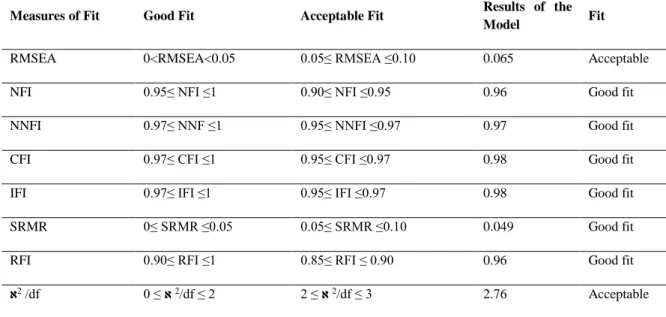
According to Table 2, perceived leadership scale and sub-dimensions are in a reliable range. It is seen that participants' perceptions of the variable of leadership style is high and the highest average score of perceptions of leadership style of their managers is transformational and paternalistic leadership, respectively. The average score of the laissez-faire leadership style perception is 3.09. Laissez-faire leadership style has the lowest average score compared to others. Standardized loadings in the factor analysis of the items constituting 4 subscales of perceived leadership style are shown in Figure 3.In order to test the model, fit values (goodness of fit index and corrected chi-square (א2/df)
29
Table 3: Fit values of confirmatory factor analysis of perceived leadership style scale
Measures of Fit Good Fit Acceptable Fit Results of the
Model Fit
RMSEA 0<RMSEA<0.05 0.05≤ RMSEA ≤0.10 0.065 Acceptable
NFI 0.95≤ NFI ≤1 0.90≤ NFI ≤0.95 0.96 Good fit
NNFI 0.97≤ NNF ≤1 0.95≤ NNFI ≤0.97 0.97 Good fit
CFI 0.97≤ CFI ≤1 0.95≤ CFI ≤0.97 0.98 Good fit
IFI 0.97≤ IFI ≤1 0.95≤ IFI ≤0.97 0.98 Good fit
SRMR 0≤ SRMR ≤0.05 0.05≤ SRMR ≤0.10 0.049 Good fit
RFI 0.90≤ RFI ≤1 0.85≤ RFI ≤ 0.90 0.96 Good fit
א2 /df 0 ≤ א 2/df ≤ 2 2 ≤ א 2/df ≤ 3 2.76 Acceptable In Table 3, the RMSEA fit value is 0.065 and within the acceptable fit value range, while other fit values, NFI, NNFI, CFI, IFI, RFI, and SRMR values show good fitness. Accordingly, good and acceptable fit values and acceptable fit of the corrected chi-square value indicate that our model is statistically significant and valid (p = 0.001; p<0.01).
Organizational Citizenship Characteristics
Explanatory factor analysis was used in statistical analysis of organizational citizenship scale. The scale consists of 24 items. Subscales of original scale, altruism, conscientiousness, sportsmanship, courtesy information, and high duty awareness. As a result of factor analysis, nine (9) items with low factor values were removed from the scale, and the remaining items of the scale were subjected to factor analysis again. The scale was fifteen (15) items and was collected under four (4) factors. These factors are; individual initiative, sportsmanship, altruism, and high duty awareness. As a result of the factor analysis, items forming the dimensions of conscientiousness and courtesy information on the original scale were collected under the same dimension. This dimension was named individual initiative dimension. Factors account for 58.39% of the variance. The high ratio of variance obtained as a result of the analysis indicates that the factor structure is strong at that rate. In addition, the anti-image correlation coefficients of the questions are above 50%, so this value indicates that there is no other item that needs to be removed from the scale.
Kaiser-Meyer-Olkin (KMO) proficiency measure and Bartlett's sphericity test were used to measure the applicability of the explanatory factor analysis. Table 4 shows KMO and Bartlett test results of the organizational citizenship behavior scale.
Table 4: KMO and Bartlett sphericity test results of the organizational citizenship behavior scale
Kaiser-Meyer-Olkin Measure of Sampling Adequecy 0.841
Bartlett Sphericity Test Chi-square 1698.643
Df 105
30
In Table 4, KMO sampling adequecy value is 0.841, which is a very good value for KMO. Bartlet sphericity test was used to test the hypothesis that the correlation matrix is an identity matrix, and this hypothesis was rejected at the level of p<0.001. This value indicates the suitability of the data for factor analysis by revealing the existence of a relationship between the items (Akgül & Çevik, 2003, p. 428).
Table 5: Descriptive statistics and internal consistency levels of organizational citizenship scale and subscales
Number of items in the scale Min-Max (Median) Mean±STDEV Cronbach’s Alpha
Individual Initiative Dimension 5 2-5 (4.2) 4.25±0.59 0.758
Sportsmanship Dimension 4 1-5 (3.7) 3.49±0.97 0.750
Altruism Dimension 4 1.25-5 (4) 4.15±0.59 0.689
High Duty Awareness Dimension 2 1-5 (4) 3.91±0.85 0.713
Organizational Citizenship 15 2.47-5 (3.9) 3.98±0.49 0.806
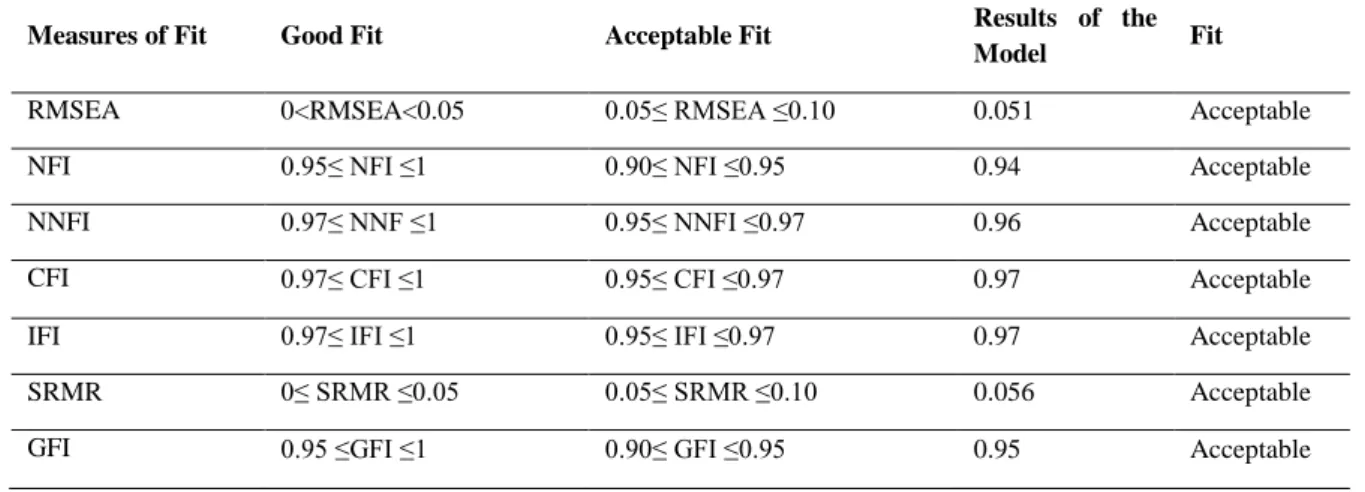
In Table 5, when the internal consistency of the organizational citizenship scale was examined after factor analysis, a reliability value of α = 0.806 was obtained. The scale is highly reliable. The average score of participants' organizational citizenship behavior was 3.98 ± 0.49. The organizational citizenship level of participants is above the average score. It can be said that health workers voluntarily assume extra roles beyond their job descriptions. It is seen that health workers are trying to solve problems before they occur, they support each other in hard tasks by showing helpful behaviors, they exhibit sacrificial behaviors, and they have a high sense of responsibility for their duties. In addition, individual initiative, altruism, and high duty awareness dimensions from the sub-dimensions of organizational citizenship are higher than the average score, and the sportsmanship dimension is at the level of the average score. The organizational citizenship scale was divided into four factors as a result of the factor analysis. As seen in Figure 4, these factors are subdivided into individual initiative, sportsmanship, altruism, and high duty awareness sub-dimensions.
In order to test the model, fit measures (goodness of fit index and corrected chi-square (א2/df)
value) for dimensions included in the model are shown in Table 6.
Table 6: Fit values of confirmatory factor analysis of organizational citizenship behavior scale
Measures of Fit Good Fit Acceptable Fit Results of the
Model Fit
RMSEA 0<RMSEA<0.05 0.05≤ RMSEA ≤0.10 0.051 Acceptable
NFI 0.95≤ NFI ≤1 0.90≤ NFI ≤0.95 0.94 Acceptable
NNFI 0.97≤ NNF ≤1 0.95≤ NNFI ≤0.97 0.96 Acceptable
CFI 0.97≤ CFI ≤1 0.95≤ CFI ≤0.97 0.97 Acceptable
IFI 0.97≤ IFI ≤1 0.95≤ IFI ≤0.97 0.97 Acceptable
SRMR 0≤ SRMR ≤0.05 0.05≤ SRMR ≤0.10 0.056 Acceptable
31
AGFI 0.90≤ AGFI ≤1 0.85≤ AGF I≤0.90 0.92 Good fit
RFI 0.90≤ RFI ≤1 0.85≤ RFI ≤ 0.90 0.93 Good fit
א2 /df 0 ≤ א 2/df ≤ 2 2 ≤ א 2/df ≤ 3 2.10 Acceptable In Table 6, the RMSEA fit value is 0.051, indicating acceptable fit. While GFI, AGFI measurements among other fit measures showed good fit, NFI, NNFI, CFI, IFI, RFI, and SRMR measurements show acceptable fit. Accordingly, good fit and acceptable fit and also an acceptable corrected chi-square value indicate that the data have acceptable fit and that the model is statistically significant and valid (p = 0.001; p <0.01)
Motivation Characteristics
Explanatory factor analysis was used in the statistical analysis of the motivation levels scale. Motivation levels scale consists of 23 items. As a result of the factor analysis, items that did not conform to the criteria were removed and the scale was subjected to factor analysis again with the remaining 20 items. When exploratory factor analysis was repeated with varimax rotation, the 20-item scale was collected under 3 factors. These factors are intrinsic motivation, amotivation, extrinsic motivation, respectively. This 3-factor result (intrinsic motivation, amotivation, extrinsic motivation) accounts for 45.48% of the variance of the scale.
According to the result of the KMO and Bartlett sphericity test that are shown in Table 7, the KMO value is found to be 0.829. This value is an appropriate value for factor analysis.
Table 8: Descriptive statistics and internal consistency levels of dimensions of motivation levels scale
Number of items Min-Max (Median) Mean±STDEV Cronbach’s alpha Intrinsic motivation 8 1-5 (3.87) 3.80±0.69 0.809 Amotivation 3 1-5 (2) 2.39±1.13 0.800 Extrinsic motivation 9 1.44-5 (3.67) 3.63±0.62 0.730 Total 20 1.4-5 (3.55) 3.51±0.50 0.798
According to Table 8, motivation scale and its subscales are reliable. The motivation level scale was divided into three factors as a result of the factor analysis. As seen in Figure 5, these factors are intrinsic motivation, amotivation, and extrinsic motivation.
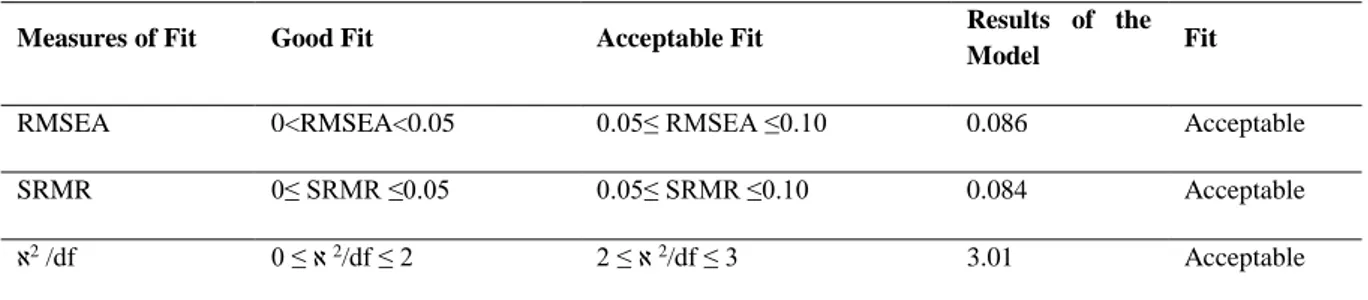
Table 9 shows fit values (goodness of fit index and corrected chi-square (א2/df) value) for
dimensions included in the model established after factor analysis. Table 7: KMO and Bartlett sphericity test results of motivation levels scale
Kaiser-Meyer-Olkin Measure of Sampling Adequecy 0.829
Bartlett Sphericity Test Chi-square 2340.408
Df 190
32
Table 9: Fit values of confirmatory factor analysis of motivation levels scale
Measures of Fit Good Fit Acceptable Fit Results of the
Model Fit
RMSEA 0<RMSEA<0.05 0.05≤ RMSEA ≤0.10 0.086 Acceptable
SRMR 0≤ SRMR ≤0.05 0.05≤ SRMR ≤0.10 0.084 Acceptable
א2 /df 0 ≤ א 2/df ≤ 2 2 ≤ א 2/df ≤ 3 3.01 Acceptable
In Table 9, RMSEA fit value is 0.086, SRMR fit value is 0.084. These values indicate that they are acceptable fit and that the model is statistically significant and valid (p = 0.001; p<0.01). Correlation Analyses
Correlation analysis was made between the variables in the model and all the dimensions that constitute the variables. Table 7 shows the results of correlation analysis between the variables. Table 10: Relationship of organizational citizenship and perceived leadership style to motivation levels (moderator variable)
Variables
Motivation Levels (Moderator Variable) Inrinsic Motivation Amotivation Extrinsic Motivation Motivation Levels Individual Initiative r 0.250 -0.239 0.201 0.168 p 0.001** 0.001** 0.001** 0.001** Sportsmanship r -0.015 -0.669 -0.179 -0.332 p 0.764 0.001** 0.001** 0.001** Altruism r 0.235 -0.185 0.224 0.191 p 0.001** 0.001** 0.001** 0.001**
High Duty Awareness
r 0.239 0.031 0.207 0.257 p 0.001** 0.533 0.001** 0.001** Organizational Citizenship r 0.223 -0.501 0.069 0.013 p 0.001** 0.001** 0.158 0.798 Transformational Leadership r 0.356 0.050 0.293 0.375 p 0.001** 0.306 0.001** 0.001** Transactional Leadership r 0.284 0.148 0.287 0.365 p 0.001** 0.002** 0.001** 0.001** Paternalistic Leadership r 0.321 0.114 0.263 0.360 p 0.001** 0.020* 0.001** 0.001**
33
Laissez-Faire Leadership
r -0.085 -0.467 -0.230 -0.331
p 0.083 0.001** 0.001** 0.001**
Perceived Leadership Style
r 0.335 -0.040 0.243 0.305
p 0.001** 0.410 0.001** 0.001**
In Table 10, it is seen that there is a moderate positive relationship between motivation levels and perceived leadership style (r: 0.305). It is also seen that there is a strong negative relationship between organizational citizenship behavior and amotivation (r: -0.501). There is a strong negative relationship between sportsmanship, one of the dimension of organizational citizenship behavior, and amotivation (r: -0.669), while there is a moderate negative relationship between laissez-faire leadership style and amotivation (r: -0.467)
In Table 11, there is a strong positive relationship between laissez-faire leadership and sportsmanship (r: 0.504). There is also a moderate positive relationship between organizational citizenship and laissez-faire leadership (r: 0.321).
Structural Equation Modeling
In this section, the structural equation model (SEM) that was constructed to test the hypotheses of the research is given in Figure 6. This model was used to test the research model as well as the results of the research hypotheses.
• Hypothesis 1: Employees' perception of leadership style (PLS) has a significant effect on motivation levels (M).
Table 11: Relationship between perceived leadership style and organizational citizenship
Variables Transformational Leadership Transactional Leadership Paternalistic Leadership Laissez-Faire Leadership Perceived Leadership Style Individual Initiative r 0.195 0.136 0.253 0.123 0.244 p 0.001** 0.005** 0.001** 0.001* 0.001** Sportsmanship r -0.056 -0.209 -0.054 0.504 0.048 p 0.249 0.001** 0.267 0.001** 0.327 Altruism r 0.295 0.267 0.352 0.076 0.344 p 0.001** 0.001** 0.001** 0.118 0.001** High Duty Awareness r 0.212 0.210 0.220 -0.080 0.206 p 0.001** 0.001** 0.001** 0.100 0.001** Organizational Citizenship r 0.192 0.079 0.237 0.321 0.281 p 0.001** 0.106 0.001** 0.001** 0.001**
34 Table 12: Effect of perceived leadership style (PLS) on motivation (M)
Relationship Estimate p
M ←PLS 0.305 0.000
As it is seen in Table 12, employees' perception of leadership style was found to have a significant effect on employees' motivation (r = 0.305; p <0.000). The complex organizational structure of healthcare industry requires exact job descriptions of employees within the organizational structure, clarification of areas of authority and responsibility, and leader managers to ensure process management. It can be said that the main reason that healthcare workers' perception of leadership styles is related to motivation levels is that they mainly perceive the leadership style of their managers as transformational leadership. It is argued that leadership approaches that are mentoring, innovative, acting in accordance with ethical principles, inspiring and motivating the employees positively affect motivation levels of employees. It can also be said that the sense of trust and justice created by the active leader is another factor that increases the motivation of employees. In this context, as employees' perceptions of leadership style increase, their motivation will also increase (Hypothesis 1 - ACCEPTED).
• Hypothesis 2: Motivation (M) has a moderator variable role between employees' perception of leadership style (PLS) and organizational citizenship behavior (OCB).
Table 13: Moderator role of motivation (M) in the effect of perceived leadership style (PLS) on organizational citizenship behavior (OCB)
Relationships Direkt Effect Indirect Effect Result
PLS-M-OCB 0.304 (0.001) -0.023 (0.287) No Mediation
In Table 13, it is seen that perceived leadership style has a direct and significant effect on organizational citizenship (r = 0.304; p <.01). When the moderator role of the motivation levels on the effect of perceived leadership style on organizational citizenship is observed (r = -0.023; p>.01), it was not found to have a significant effect. It has therefore been determined that motivation does not play a moderator role (Hypothesis 2 - REJECTED).
Employees' interaction and communication with their leaders is effective in exhibiting organizational citizenship behaviors. Motivating approaches of leaders can make employees exhibit behaviors such as voluntarily working more, helping colleagues, and contributing to development of the organization. Therefore, organizational citizenship behaviors will increase as health workers' perceptions of leadership style increase.
Conclusion
This research data was collected by questionnaire method. As a result of the research applied to 420 health workers in private hospitals in Istanbul, it has been seen that the leadership style perceived by employees has a significant effect on organizational citizenship. It has been found that the motivational levels do not have a moderator variable role in the influence of perceived leadership styles on organizational citizenship. Moreover, it was found that employees' perceptions of transformational, transactional, and paternalistic leadership styles have a meaningful effect on their motivation levels, whereas laissez-faire leadership style has a negative effect on their motivation levels.
35
In this study, it was observed that leadership style perception of health professionals has a significant effect on their organizational citizenship behavior. It was seen that motivation levels of employees do not have a moderator role in the impact of perceived leadership style on organizational citizenship. In addition, it was found that the perception of transformational, transactional, and paternalistic leadership styles has a significant and positive effect on the motivation levels of employees, whereas the perception of laissez-faire leadership style has a direct negative effect on motivation levels.
It was seen that intrinsic motivation of employees who exhibit organizational citizenship behaviors is higher and, in this context, motivation levels do not have a moderator role in the effect of perceived leadership style on organizational citizenship.
It was found that there is a strong negative relationship between organizational citizenship behavior and amotivation, a strong negative relationship between sportsmanship, which is a dimension of organizational citizenship behavior, and amotivation, and a moderate negative relationship between laissez-faire leadership style and amotivation.
According to these results, it can be said that the leadership styles of managers in the private hospital are mostly perceived as transformational leadership by their employees. Since employees show organizational citizenship behavior, and the frequency level of altruism, one of its sub-dimensions, is higher than general organizational citizenship behavior, it can be said that healthcare workers willingly help their colleagues and other employees.
This study contributes to the current literature as it helps explain the mechanism by which perceived leadership styles can influence OCB. It also answers questions about how leadership styles in health sector affect healthcare workers and how healthcare workers respond to leadership behavior (organizational citizenship behavior and motivation levels).
Future research dırectıons
This work focuses on motivation levels as a mediator variable. However, other studies may be suggested to test other variables that are related to perceived leadership style and OCB. For example, future research may take organizational communication, organizational culture, or organizational commitment as a moderator variable. In addition, as organizational citizenship behavior increases, amotivation level of health workers decreases. For this reason, it will be useful to examine how motivation influences organizational citizenship behavior and the relationship between them. In addition, it can be seen in the study that the relationship between perceived leadership styles and internalized commitment can be explained by self-determination theory. In this study, since the variables involved in the motivation process were evaluated in three sub-dimensions as a result of factor analysis, the dimensions of motivation covered in the framework of self-determination theory were not directly measured. For this reason, it is recommended to investigate the relationship between perceived leadership style and self-determination theory in different regions and study fields.
Solutıons and recommendatıons
The results show that the transformational leadership approach strengthens organizational citizenship behaviors. There are some specific implications regarding management that can be inferred from the current work. From a practical point of view, research findings suggest that, in the case a superior chooses between leadership styles, more emphasis should be placed on transformational leadership to achieve a higher OCB level. When healthcare workers perceive their leaders as a transformational leader, they will exhibit more organizational citizenship behavior, and the flexible,
36
participatory, visionary, and effective communication approaches of transformational leaders will make employees exert more effort beyond their job descriptions for organizational goals. For this reason, it is recommended that managers exhibit a transformational leadership style in health organizations, which have a complex organizational structure and must adapt quickly to scientific and technological changes. The transformational leader values employees, and shows sensitivity to requests and needs. They manage their employees with fair and ethical principles. Furthermore, in the factor analysis, the items of the ethical leadership dimension were moved to the transformational leadership sub-dimension, the two being gathered under a single factor. Thus, it is suggested that the transformational leadership approach be expressed as 'Ethical Transformational Leadership,' since the 'ethical leadership' approach must be found in the transformative leadership approaches.
References
Akgül, A. & Çevik O. (2003). İstatistiksel analiz teknikleri. Ankara: Emek Ofset.
Akturan, A. & Çekmecelioğlu, H. G. (2016). The effects of knowledge sharing and organizational citizenship behaviors on creative behaviors in educational institutions. Procedia - Social and Behavioral Sciences, 235, 342-350.
Alabduljader, S. A. (2012). The transactional and transformational leadership in the Kuwaiti commercial banks sector: Which one is more applied? International Journal of Business and Social Science, 3(19), 211-219.
Amanchukwu, N. R., Stanley, J. G. & Ololube, N. P. (2015). A review of leadership theories, principles and styles and their relevance to educational management. Management, 5(1), 6-14. Ariani, D. W. (2014), “Relationship Leadership, Employee Engagement and Organizational Citizenship Behavior”, International Journal of Business and Social Research (IJBSR), 4(8), pp. 74-90.
Aslan, Ş. (2013). Geçmişten günümüze liderlik kuramları (Sağlık yönetimi bakış açısıyla). Konya: Eğitim Yayınevi.
Avcı, Ö. & Yaşar, Y. (2016). Bir kamu kuruluşunda çalışanların liderlik algıları: Olgubilimsel bir yaklaşım. Akademik İncelemeler Dergisi, 11(1), 187-205.
Basım, H. N. & Şeşen, H. (2009). Örgütsel adalet algısı-örgütsel vatandaşlık davranışı ilişkisinde iş tatmininin aracılık rolü. 17. Ulusal Yönetim ve Organizasyon Kongresi Bildiri Kitabı. Eskişehir: Osmangazi Üniversitesi Yayınları.
Bass, B. M. (1985). Leadership: Good, better, best. Organizational Dynamics, 13(3), 26-40.
Bolat, O. İ. & Bolat, T. (2008). Otel işletmelerinde örgütsel bağlılık ve örgütsel vatandaşlık davranışı ilişkisi. Balıkesir Üniversitesi Sosyal Bilimler Enstitüsü Dergisi, 11(19), 75-94.
Brown, M. E., Treviño, L. K. & Harrison, D. A. (2005). Ethical leadership: A social learning perspective for construct development and testing. Organizational Behavior and Human Decision Processes, 97(2), 117-134.
Bono, J. E., Hooper, A. C. & Yoon, D. C. (2012). Impact of rater personality on transformational and transactional leadership ratings. The Leadership Quarterly, 23, 132-145.
Buble, M., Juras, A. & Matic, I. (2014). The relationship between managers’ leadership styles and motivation. Management, 19, 161-193.
37
Chompookum, D. & Derr, C. B. (2004). The effects of ınternal career orientations on organizational citizenship behavior in Thailand. Career Development International, 9(4), pp. 406-423. Çağlar, E. S. (2011). Çalışanları güçlendirmenin, güçlenme aracılığıyla işe tutkunluğa etkisinde
liderlik tarzları ve çalışma amaçarının rolü (Yayınlanmamış doktora tezi), Marmara Üniversitesi, Sosyal Bilimler Enstitüsü, İstanbul.
Çekmecelioğlu, H. G. & Keleş, Ö. (2009). Örgüt ilkimi, örgütsel vatandaşlık davranışı ve iş performansı arasındaki ilişkilerin incelenmesi: Bir Araştırma. 17. Ulusal Yönetim ve Organizasyon Kongresi Bildiri Kitabı, Eskişehir: Osmangazi Üniversitesi Yayınları.
Çelik, C. & Sünbül, Ö. (2008). Liderlik algılamalarında eğitim ve cinsiyet faktörü: Mersin ilinde bir alan araştırması. Süleyman Demirel Üniversitesi İktisadi ve İdari Bilimler Fakültesi Dergisi, 13(3), 49-66.
Dash, S. & Chaudhuri, M. (2015). Leadership and organizational citizenship behaviour: A mantra to success. The International Journal of Business & Management, 3(8), 2321-8916.
Dash, S. & Pradhan, R. K. (2014). Determinants & consequences of organizational citizenship behavior: A theoretical framework for Indian manufacturing organisations. International Journal of Business and Management Invention, 3(1), 17-27.
Deluga, R. J. (1990). The effects of transformational, transactional, and laissez faire leadership characteristics on subordinate influencing behavior. Basic & Applied Social Psychology, 11(2), 191-203.
Demir, İ. B., Uğurluoğlu, Ö. & Ürek, D. (2017). The relationship between leadership and organization culture: A literature review. Journal of Strategic Research in Social Science, 3(2), 175-196. Duygulu, S. (2014). Örgütsel güven örgütsel bağlılık örgütsel vatandaşlık davranışı. Editörler: Ü. T.
Baykal & E. E. Türkmen, Hemşirelik Hizmetleri Yönetimi. İstanbul: Akademi Basım ve Yayıncılık.
Esmi, K., Piran, M. & Hayat, A. A. (2017). The mediating effect of organizational culture on the relationship between transformational leadership and organizational citizenship behavior. Journal of Health Management & Informatics, 4(4), 114-119.
Euwema, M. C., Wendt, H. & Van Emmerik, H. (2007). Leadership styles and group organizational citizenship behavior across cultures. Journal of Organizational Behavior, 28, 1035-1057. Gautam, T., Van Dick, R., Wagner, U., Upadhyay, N. & Davis, A. J. (2005). Organizational
citizenship behavior and organizational commitment in Nepal. Asian Journal of Social Psychology, 8(3), pp. 305-314.
Guest, D. E. & Conway, N. (2004). Employee well-being and the psychological contract : A report for the CIPD. London: Chartered Institute of Personnel and Development.
Güney, S. (2012). Örgütsel Davranış. Ankara: Nobel Yayınevi.
Güney, S. (2017). Yönetim ve organizasyon el kitabı. Ankara: Nobel Yayınevi.
Gürbüz, S. (2006). Örgütsel vatandaşlık davranışı ile duygusal bağlılık arasındaki ilişkilerin belirlenmesine yönelik bir araştırma. Ekonomik ve Sosyal Araştırmalar Dergisi, 3(1), 48-75.
38
Haghighi, F. B. & Maleki, Z. V. (2016). The relationship between transformational leadership style and behavior of organizational citizen (Case Study: Ghavamin Bank). International Journal of Learning and Development, 6(3), 80-91.
Hassan, H., Asad, S. & Hoshino, Y. (2016). Determinants of leadership style in big five personality dimensions. Universal Journal of Management, 4(4), 161-179.
Howell, J. M. & Avolio, B. J. (1993). Transformational leadership, transactional leadership, locus of control, and support for innovation: Key predictors of consolidated-business-unit performance. Journal of Applied Psychology, 78(6), 891.
Irshad, R. & Hashmi, M. S. (2014). How transformational leadership is related to organizational citizenship behavior? The mediating role of emotional intelligence. Pakistan Journal of Commerce and Social Sciences, 8(2), 413-425.
İrge, N. T. (2016). Yöneticiye güvenin çalışanın motivasyonuna katkısında lider-üye etkileşiminin rolü (Yayınlanmamış Doktora Tezi), Okan Üniversitesi Sosyal Bilimler Enstitüsü, İstanbul.
Jackson, T. (2016) Paternalistic leadership: The missing link incross-cultural leadership studies?, International Journal of Cross Cultural Management, 16(1), 3-7.
Jogulu, U. D. (2010). Culturally-linked leadership styles. Leadership & Organization Development Journal, 31(8), 705-719.
Kahai, S. S., Sosik, J. J. & Avolio, B. J. (1997). Effects of leadership style and problem structure on work group process and outcomes in an electronic meeting system environment. Personnel Psychology, 50(1), 121-144.
Kaya, N. & Onğun, G. (2015). Dönüşümcü liderliğin kullandığı güç kaynakları ve organizasyonel politikalar aracılığı ile tükenmişlik üzerine etkileri. Ekev Akademi Dergisi, 63, 314-344. Kazak, Z. (2004). “Sporda güdülenme ölçeği -SGÖ-”nin Türk sporcuları için güvenilirlik ve geçerlik
çalışması. Spor Bilimleri Dergisi, 15(4), 191-206.
Kelgökmen, İ. D. & Yalçın, B. Y. (2017). Y jenerasyonunun farklılaşan iş değerleri ve liderlik algılamaları. Journal of Yasar University, 12(46), 136-160.
Keklik, B. (2012). Sağlık hizmetlerinde benimsenen liderlik tiplerinin özel bir hastane örneği. Afyon Kocatepe Üniversitesi İİBF Dergisi, 14(1), 73-93
Kondalkar, V. G. (2007). Organizational behavior. New Delhi: New Age International Pvt Ltd. Publishers.
Köse, S. & Tetik, H. T. (2015). Örgüt çalışanlarının paternalistik liderlik algıları ve öğrenilmiş güçlülük düzeyleri arasındaki ilişkilerin incelenmesi. Uluslararası Yönetim İktisat ve İşletme Dergisi, 11(26), 29-56
Kugun, O. A., Aktaş, E. & Güripek, E. (2013). Çalışanların örgütsel adalet algılarında yöneticilerinin etik liderlik davranışlarının rolü. Balikesir University Journal Of Social Sciences Institute, 16(30), 151-166.
Maharani, V., Troena, E. A. & Noermijati, (2013). Organizational citizenship behavior role in mediating the effect of transformational leadership, job satisfaction on employee performance: Studies in PT Bank Syariah Mandiri Malang East Java. International Journal of Business and Management, 8(17), 1-12.
39
McCleskey, A. J. (2014). Situational, transformational, and transactional leadership and leadership development. Journal of Business Studies Quarterly, 5(4), 117-130.
McShane, S. L. & Von Glinow, M. A. (2016). Örgütsel davranış. Boston: McGraw-Hill Irwin. Mullins, L. J. (2006). Essentials of organisational behaviour. London: Financial Times Prentice Hall. Naqshbandi, M. M., Singh, S. K. G. & Ma, P. (2016). The link between organisational citizenship
behaviours and open innovation: A case of Malaysian high-tech sector.” IIMB Management Review, 28, 200-211.
Nielsen, T. M., Hrivnak Jr., G. A., & Shaw, M. (2009). Organizational citizenship behaviour and performance: A meta-analysis of group-level research. Small Group Research: An International Journal of Theory, Investigation and Application, 40(5), 555-577.
Oğuz, E. (2011). Öğretmenlerin örgütsel vatandaşlık davranışları ile yöneticilerin liderlik stilleri arasındaki ilişki. Kuram ve Uygulamada Eğitim Yönetimi, 17(3), 377-403.
Organ, D. W. (1988). Organizational Citizenship Behaviour: The Good Soldier Syndrome, Lexington: Lexington Books/D. C. Heath and Com.
Öztürk, H. (2014). Yönetsel etik. Editörler: Ü. T. Baykal & E. E. Türkmen. Hemşirelik Hizmetleri Yönetimi, İstanbul, Akademi Basın ve Yayıncılık, ss. 733-765
Özsahin, M. & Sudak, M. K. (2015). The mediating role of leadership styles on the organizational citizenship behavior and innovativeness relationship. Journal of Business, Economics & Finance, 4(3), 443-455.
Podsakoff, P. M., MacKenzie, S. B., Moorman, R. H. & Fetter, R. (1990). Transformational leader behaviors and their effects on followers’ trust in leader, satisfaction, and organizational leader behaviors. Leadership Quarterly, 1(2), 107-142.
Polatcı, S. & Sobacı, F. (2017). Dönüşümcü ve etkileşimci liderlerin çatışma yönetim strateji tercihlerinin incelemesi: Türkiye genelinde bir araştırma. Ömer Halisdemir Üniversitesi İktisadi ve İdari Bilimler Fakültesi Dergisi, 10(3), 27-40.
Robbins, S. & Judge, T. A. (2015). Örgütsel davranış. Çeviri Editörü: İ. Erdem, (14. basımdan çeviri), Ankara: Nobel Yayıncılık.
Ryan, R. M. & Deci, E. L. (2000). Self-determination theory and the facilitation of intrinsic motivation, social development, and well-being. American Psychologist, 55(1), 68-78.
Salihoğlu, G. H. (2013). Örgütsel bağlılık ve örgütsel vatandaşlık davranışı arasındaki ilişki (Çorum ilinde hastane çalışanlarına anket uygulaması). Sosyal ve Beşeri Bilimler Dergisi, 5(1), 300-310.
Sheer, V. C., Liu, S. & Huang, L. (2018). Ethical leadership: From Western foundation to Chinese context. Journal of Asian Pacific Communication (John Benjamins Publishing Co.) 28(1), 20-40.
Şirin, Y. & Bilir, P. (2016). The effects of leadership styles on organizational citizenship behavior: Study on employees of youth and sports ministry. Proceedings of the Multidisciplinary Academic Conference.