İSTANBUL BİLGİ UNIVERSITY
INSTITUTE OF SOCIAL SCIENCES
SOCIOLOGY MA PROGRAM
URBAN AGEING AND THE RIGHT TO THE CITY: EXPERIENCES OF ELDERLY IN KADIKÖY
MERVE TUNÇER
115697015
DISSERTATION SUPERVISOR
PROF.DR. KENAN ÇAYIR
İSTANBUL
ACKNOWLEDGEMENTS
First of all, I would like to thank to my supervisor, Prof. Dr. Kenan Çayır for his endless support, patience and guidance throughout my writing process. I am heartily thankful to him for his constructive criticism and invaluable insights which enabled me to develop an understanding on the subject. Also I would like to thank to the members of my thesis jury; Doç. Dr. Sibel Yardımcı and Prof.Dr. Alan Duben, their valuable recommendations helped me to strengthen this study. I am deeply grateful to İbrahim Kahraman for encouraging me to complete my thesis and for his endless patience. I appreciate everything he has done for me. I am also thankful to Efe İmamoğlu for always supporting me and for his contributions; his companionship gave me the strength to finish this study. Also I would like to thank to Günseli Aksoy and Gülüstü Salur for their guidance and academic contributions to my thesis, and to all participants from Kadıköy for sharing their experiences with me. This study would not have been possible without them.
Lastly, I am grateful to my family for their precious support and love throughout this thesis and my academic life.
TABLE OF CONTENTS Acknowledgments………..iii Table of Contents………...iv List of Figures………...vi List of Tables……….…vii Abstract……….viii Özet……….…ix Introduction………1
Chapter I: A Theoretical Approach to Urban Ageing: Status and Challenges for Elderly……… 8
1.1.Understanding Ageing and Active Ageing in Later Life: The Social Implications of Old Age……….8
1.2.Ageism and Age Discrimination towards Elderly……….…..14
1.3.“Cities for All”: Age Friendly Environments………..21
1.3.1. Environmental Gerontology: The Impact of Environment on Elderly….25 1.4.Urban Citizenship and the Right to the City……… 26
Chapter II: Ageing in Turkey: Status and Social Policy for Elderly……….32
2.1. Statistics and Data on Ageing in Turkey……….32
2.2. Current Status of Elderly and Perception on Ageing in Turkey……….34
2.3. Background of Social Policy for Elderly in Turkey………42
2.4. Policy Implementations: İstanbul Metropolitan Municipality and Kadıköy Municipality………...……48
Chapter III: Participating to the City, Participating to the Community…..53 3.1. “I am not old, because I am not dependant”: Older People’s Perception on Ageing …...55
3.2. The Challenges of Urban Ageing in Kadıköy………59
3.2.1. Urban vs. Rural: The Advantages and Disadvantages of Ageing in Cities………..………59
3.2.2. Urban Transformation, Ageing in Place and Experiences of Elderly at Their Neighborhoods ……….……….62
3.3. The Dynamics of Social Life: Social Inclusion and Engagement Opportunities in Kadıköy……….….74
Conclusion……….…………89 References……….…95
LIST OF FIGURES
Figure 1: Map of Kadıköy: Location and Number of Participants by Neighborhood
LIST OF TABLES
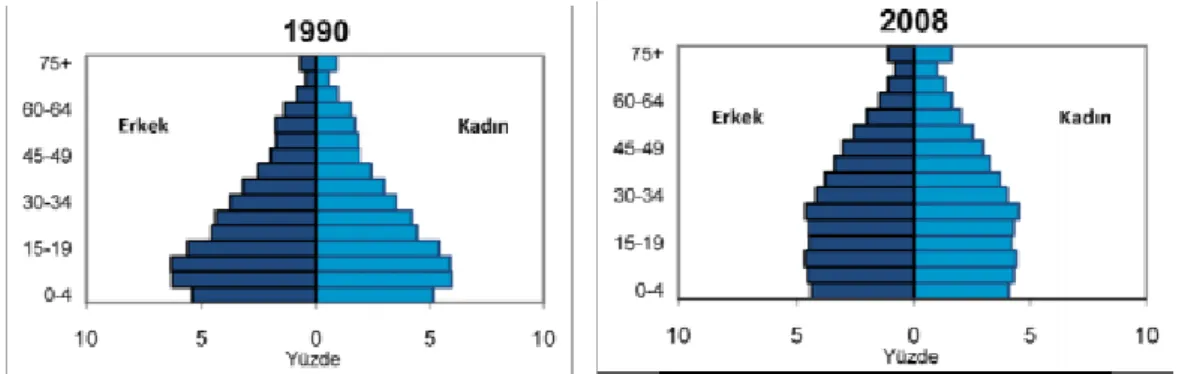
TABLE 1: Population Pyramids of Turkey Between 1935-2008
TABLE 2: Population Pyramid of Turkey 2016
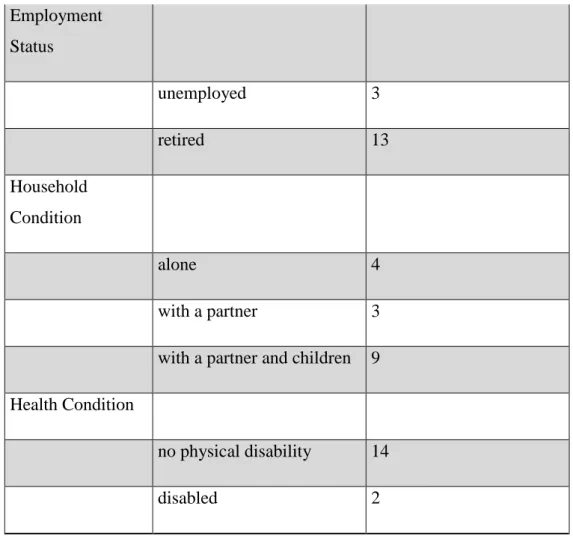
TABLE 3: Table of Demographic Data of the Participants
ABSTRACT
This thesis aims to focus on older people’s experiences at urban areas, and presents older people’s relation to social and urban life in terms of participation and social inclusion in the framework of right to the city. In addition, it tackles the social policy and services for elderly provided by the local municipality in Kadıköy, and examine the relationship between elderly and the opportunities offered by the local government with regard to physical space and social life. The data of the study is based on in-depth interviews with participants from Kadıköy who are age 70 and older. The relation between elderly and urban is structured around three issues in the thesis. First, it discusses older people’s perception on ageing and elderly and its relation to social participation and age discrimination; secondly, it focuses on physical environment’s impact on older people’s quality of life, accessibility and mobility. Lastly, it argues how the local government services shape and structure older people’s relation to their neighborhood and community. Therefore older people’s relationship with the local governments is discussed with regard to right to the city which coincides with one’s right to transform the city according to their needs and demands. The study suggests that socio-economic class, gender and physical conditions of the space became prominent issues for older people to instrumentalize their right to the city and benefit from the social participation opportunities offered by the city.
Keywords: urban ageing, civic participation, right to the city, age friendly city, elderliness
ÖZET
Bu tez, yaşlıların kentsel alanlardaki deneyimlerine odaklanarak, kent hakkı bağlamında yaşlıların sosyal ve kentsel yaşamla olan ilişkilerini katılımcılık ve sosyal içerme açısından ele almaktadır. Bununla beraber, ilçe belediyesi olan Kadıköy Belediyesi’nin yaşlılara yönelik hizmetleri ve kentsel alanın mevcut koşulları ele alınarak, fiziksel mekân ve sosyal yaşam açısından yerel yönetimin sunduğu imkânlarla yaşlıların deneyimleri irdelenmiştir. Tez kapsamında yürütülen araştırmanın verileri İstanbul’un Kadıköy ilçesinde ikamet eden 70 yaş ve üzeri katılımcılarla yapılan görüşmelere dayanmaktadır. Tez kapsamında yaşlıların kentle olan ilişkisi üç temel sorunsal etrafında ele alınmaktadır. İlk olarak yaşlıların yaşlılık ve yaşlılara dair algılarının sosyal yaşama katılım ve yaşçılık ile olan ilişkisi tartışılmış, daha sonra kent mekânının fiziksel koşullarının yaşam kalitesi, erişilebilirlik ve hareketlilik açısından yaşlılar üzerindeki etkisi ele alınmıştır. Üçüncü olarak yerel yönetim hizmetlerinin yaşlıların içinde yaşadıkları mahalle ve toplulukla olan ilişkilerini nasıl şekillendirdiği irdelenmiştir. Buna bağlı olarak, yaşlıların kent hakkı bağlamında yaşadıkları semti kendi ihtiyaç ve talepleri doğrultusunda değiştirme imkânları, yerel yönetimle olan ilişkilerine odaklanılarak tartışılmıştır. Yaşlıların kent hakkını araçsallaştırma ve kentin sosyal katılım imkânlarından yararlanma durumunun, sosyo-ekonomik sınıf, cinsiyet ve mekânın fiziksel koşulları gibi temel sorunsallar etrafında şekillendiği gözlemlenmiştir.
Anahtar kelimeler: kentsel yaşlanma, sivil katılım, kent hakkı, yaşlı dostu kent, yaşlılık
1
INTRODUCTION
“A city isn’t just a place to live, to shop, to go out and have kids play. It’s a place that implicates how one derives one’s ethics, how one develops a sense of justice, and most of all how one learns to talk with and learn from people who are unlike oneself, which is how a human being becomes human”(Richard Sennett, The Civitas of Seeing,1989).
This study is about the experiences of older people at urban areas within the frameworks of civic engagement, right to the city and social inclusion. I intend to explore older people’s relation to the city, how they are positioning themselves in terms of social participation and the challenges of urban ageing today.
Urbanization and population ageing are the two global trends that we are facing in the 21st century; while the cities are rapidly expanding and developing, the residents of the cities are growing old (WHO, 2007). International organizations and establishments consider age 60 or 65 and over as elderly (mostly referring to the retirement age). While United Nations’ standard is age 60 and older, World Health Organization (WHO) considers 65+ as elderly. Since developing countries are ageing at a much faster rate than developed countries (Plouffe and Kalache,2010), older persons share in Turkey’s population is increasing. The percentage of people who are age 65 and over increased 17.1% in the last five years, and older population formed 8.3% of Turkey’s population in 2016 (TÜİK, 2017a). The demographic data shows that in the last decades, Turkey’s population is becoming an ageing population; the average life expectancy is increasing while the child mortality is in decline. Older people’s share in the population is expected to increase up to 20.8% in 2050, and 27.7% in 2075 in Turkey (TÜİK, 2013).
Although an ageing population is a new phenomenon for Turkey, it is not new to the developed countries. Older people’s share among the population is 31.3% in Monaco, 27.3% in Japan and 21.8% in Germany; while these three
2
countries are the oldest countries, older people’s percentage worldwide is 8.7% (TÜİK, 2016a). As Fitzgerald and Caro (2014) argue “interest in older people in urban areas is increasingly becoming important in countries where there was previously a large rural to urban migration” (Fitzgerald and Caro,2014: 4). Since 92.3% of the citizens in Turkey are now living in cities (TÜİK, 2017c), urban ageing becomes more prominent. However, there is little research or programs on the challenges and benefits of urban ageing in Turkey considering the social policies and strategies incorporated by the governments.
Age friendly cities and communities play a key role on older persons’ quality of life and life satisfaction in terms of engagement and participation. Alley et al. (2007) defines an age friendly city as “a place where older people are actively involved, valued, and supported with infrastructure and services that effectively accommodate their needs” (Alley et al., 2007:4). That is to say, an age friendly environment combines both social and environmental dimensions to offer various opportunities to its senior citizens. Ageing in place stands here is a key component since it is based on the understanding to enable older people to age in their own houses and environments for as long as possible. The issue of age friendly cities incorporates various disciplines such as gerontology, sociology, architecture, urban planning, psychology and biology. Lui et al.’s (2009) study shows that, there is a significant influence of the neighborhood design and physical environment on the quality of life. Moreover, the socio-economic surroundings and systems such as housing, health and social care services effects older people life directly (Fitzgerald and Caro, 2014). The concept of age friendly cities is based on an integrated environment for elderly to both benefit from the opportunities and contribute to the community. All of these characteristics are in a strong relation with urban citizenship and a right to the city.
The right to the city is being used as an umbrella-phrase in recent years (De Souza, 2010). Although it derives from Lefebvre’s conceptualization which refers to the “complete and full usage” of the space by its inhabitants by participating to the decision making processes and appropriating the city
3
according to the citizens demands (Lefebvre, 1996), today the understanding of the term refers to “a right to a better, more human life in the context of the capitalist city and on the basis of a reformed and improved representative democracy (De Souza, 2010). This understanding is adopted by several NGO’s and organizations today to enhance the citizen participation to political processes about the urban and now it encompasses the rights to better housing, rights to the public participation in urban design, rights against established property laws or rights to a communal good (Attoh, 2011). Harvey (2008) argues that, due to its collective nature, the right to the city depends on the exercise of collective power to reshape the process of urbanization. Since urbanization is an unfinished process, the right to the city enables the citizens to form and structure the city they live in according to their demands.
In the case of elderly, the right to the city is the key component for an age friendly environment. Put differently, senior citizens who earned the right to the city simply by living in the city (Lefebvre, 1996) has the right to transform the it according to their own needs and demands. Thus, participation and civic engagement opportunities offered by the government comes to light as prominent aspects for reclaiming and appropriating the city. The status and position of elderly in Turkey has an important role to understand these opportunities. Since an ageing society is relatively a new issue for Turkey, social policy for elderly is quite underdeveloped. Although national action plans on ageing prepared by various ministerial institutions, such as the plans by Ministry of Development, Ministry of Family and Social Policies, and Ministry of Health, the implementations of social policies for elderly are inconclusive. In this regard, the current status of plans and programs for elderly shows that the infrastructure and facilities of such institutions are not ready for an ageing population yet. Even though the action plans incorporate important issues like active ageing and ageing in place for elderly, the implementations of these policies are not going further from indicate the issues discursively. While most of the policies are health-oriented, the participation of elderly to social and urban life is rather a neglected
4
issue in the plans. Therefore opportunities and channels for older people to raise their voice over socio-political decisions and social engagement opportunities are far from being adequate. In order to achieve the goal of an integrated and age friendly environment for elderly, social plans and programs must be developed to empower and encourage older persons’ participation.
The starting point of this study is based on the assumption that an accessible and healthy physical environment will enable older people to participate and interact within their community which contributes to their overall well being and enables channels for their contribution to the society. Because of this, older people’s experiences at urban areas imply various meanings. On one hand, physical environment’s conditions have a major impact on elderly in terms of accessibility, mobility and spatial participation. On the other, these physical conditions stand as the first steps for a livable community and a well-balanced social life for elderly. Thus, both environmental and social levels require a more holistic approach. While an age friendly city offers both of these features for elderly, older people’s contribution to this age friendly city is in close relation with their right to the city. In order to provide a truly age friendly environment for elderly, their active participation to urban life and decision making processes as agents must be enabled by certain means. Since older people’s agency is closely related with the perception of old age in society, older person stereotypes and age discrimination on the basis of old age becomes significant determinants of their experiences. Hughes defines ageism as “a complex of beliefs which condones the use of age as a means of recognizing a particular social group depicting the members of that group in negative, stereotypical terms, which consequently generates and reinforces a fear of the ageing process and a denigration of older persons” (Hughes, 1995 cited in Formosa, 2001: 16). These negative stereotypes of old age directly effects older persons’ participation to social and urban life since they lead to self stereotyping and social exclusion from both the community and city.
5
In this study, I particularly focus on Kadıköy since Kadıköy has two distinctive aspects from other provinces in Turkey. Firstly, Kadıköy’s older population is significantly higher considering the average percentage of older people in İstanbul; while the share of older people in İstanbul is 6.3%, this percentage is 17.7% in Kadıköy (TÜİK,2017). Thus, urban ageing comes to light as an emerging issue in Kadıköy due to its high proportion of elderly among the population. Secondly, Kadıköy Municipality became the second municipality from Turkey after Muratpaşa Municipality in Antalya, joining the Global Network for Age Friendly Cities and Communities by the World Health Organization in 2016. The aim of this network is to create a database for age friendly practices from “diverse cultural and socio-economic contexts” and collect good examples of social participation, civic engagement and a supportive physical environment for elderly (WHO,2007). The Social Center (Sosyal Yaşam Evi) of Kadıköy Municipality joined this database as an example of a program fostering social participation among elderly.
The research has been conducted in qualitative methods. A semi-structured questionnaire was used to collect data from in-depth interviews with participants from Kadıköy who are age 70 and older. I limited the participants with 16 people from different neighborhoods and socio-economic backgrounds in Kadıköy; half of the participants were women and the other half was men in order to adopt a more comprehensive look based on gender. The interviews conducted between March and May 2017. The data collected through interviews have been analyzed with MAXQDA 12. Also I conducted interviews with policy makers and social service officers from Kadıköy Municipality to collect data about the services and policies for elderly in Kadıköy. The study’s data is based on the interpretation and discursive analysis of the participant’s statements and the opportunities offered by the local municipality. I presented the discursive patterns of the participants and discussed the experiences of elderly at urban areas in Kadıköy with regard to right to the city and age friendliness.
6
In the first chapter of the thesis, I present the theoretical framework of urban ageing by focusing on the issues of ageing, age discrimination and the environment’s impact on elderly with regard to age friendliness and right to the city. First, I present the implications of ageing and the importance of active ageing in later life for quality of life. Then I focus on the theories of ageing and the outcomes of an aged society by incorporating the social aspects of ageing such as ageism and age discrimination by referring to certain theoreticians such as Robert Butler, Bill Bytheway and Erdman Palmore. Additionally I discuss the link between age discrimination and participation to social life on the basis of environmental gerontology and present the main features of an age friendly city introduced by the World Health Organization. Lastly, I present the concepts urban citizenship and right to the city to form a basis for older people’s participation to the urban and social life by referring to Henri Lefebvre, David Harvey and Peter Marcuse.
The second chapter addresses the background of social policy for elderly and older people’s current status in Turkey. In this chapter, I present the statistical data on ageing and the current situation of older people in Turkey to form a basis on the issue. Then, I will discuss the perception of elderly about themselves, how they are positioning themselves and the older person stereotypes in Turkey. I focus on the relation between these perceptions of elderly and social policy for elderly by discussing the services offered by the ministries and municipalities for elderly and analyzing the content of the action plans on ageing. And lastly, I demonstrate the social and care services offered by İstanbul Metropolitan Municipality and Kadıköy Municipality to its senior citizens.
In the third chapter, I analyzed the data obtained through in-depth interviews with older participants from Kadıköy and policy makers from Kadıköy Municipality. First, I discussed the participants’ perception on being old and focus on the correlation between the stereotypes and their self images. Secondly, I analyze the participants’ experiences at the urban areas in Kadıköy with regard to age friendly features of the physical environment and demonstrate the challenges
7
and benefits of ageing at cities. Finally, I examine the participant’s experiences in terms of participation, social inclusion and civic engagement at Kadıköy with regard to opportunities to use the right to the city.
8 CHAPTER I
A THEORATICAL APPROACH TO URBAN AGEING: STATUS AND CHALLENGES FOR ELDERLY
With the rapid urbanization, the elderly population at cities confronted with new challenges in their everyday lives. An integrated physical and social environment is important when arguing the position of the elderly at urban areas. Because of this, the encouragement of bottom up participation and involvement of seniors in voicing their own concerns at decision making processes becomes highly important to provide heterogeneity at urban life and enhance older people’s quality of life. Most of the challenges of urban ageing are in close relation with social participation, inclusion and civic engagement. In order to understand these relations, the current situation of elderly who are living in cities and the socio-political implications of these challenges must be taken into consideration. In this chapter, I will demonstrate the issues of an ageing society and the social ties which shape the older people’s participation to social and public life at urban areas.
1.1.Understanding Ageing and Active Ageing in Later Life: The Social Implications of Old Age
The Turkish Language Institution (TDK) defines ageing simply as getting old (yaşı ilerlemek, ihtiyarlamak), while the Oxford Dictionary defines ageing as “the process of growing old”. As we can see the concept ageing does not point out to a certain age or an era but it is simply as a process in the life course. But there is a common understanding today relating ageing only with the elderly. Because of this, discussions around ageing mostly focus on ageing in old age. But ageing and old age are both subjective concepts and have a variety of meanings depending on culture and geography. Gerontology, as the science of age and ageing incorporates three dimensions of ageing as biological, psychological and social. While biological gerontology mostly focuses on the biological processes during ageing such as differences and declines in the physical and cognitive
9
abilities, psychological gerontology focuses on the psychological aspects of becoming old. However social gerontology provides a more general outlook at the older people’s lives by incorporating both the psychical and social environment and by issuing the social life’s affects on the individual. As Cannon (2015) argues, three types of age are taken into consideration in ageing studies; Functional age is based on an individual’s ability to perform a certain role or a function. Chronological age is usually considered as an arbitrary marker, but commonly used in processes of decision making –especially by institutions- and subjective age, which is based on the view of the person about himself/herself. Subjective age is argued a lot in the field of ageism studies since it primarily emphasizes one’s idea and perception of himself/herself. The perception on ageing differs within private and public spheres. While most of the older individuals have a more subjective and variable understanding on ageing, governments and institutions have a more or less similar understanding on the issue.
The above theories of ageing combine the social and biological sciences and provide a more comprehensive look on the subject. For example, the life course perspective refers to a multidisciplinary field combining the social, cultural and biological aspects of ageing. As Giele and Elder (1998) define it, “life course refers to a sequence of socially defined events and roles that the individual enacts over time” and it differs from the concept of the life cycle in allowing for many diverse events and roles that do not necessarily proceed in a given sequence but that constitute the sum total of the person's actual experience over time” (Giele and Elder:1998:22). It recognizes the cultural and structural contexts of a person’s lifelong development. Hasworth and Cannon (2015) argue about three social theories on ageing which explores the adaptation to age related changes. Activity theory suggests that an individual’s life quality and general wellbeing depends upon social participation and daily hobbies. This theory relates social activity with the individual’s overall health and satisfaction. Hooyman and Kiyak (2011) highlights that the activity theory is criticized by many practitioners and
10
academics for issuing ageing as a problem needed to be overcome. Hasworth and Cannon (2015) argue that the disengagement theory proposed as a response to the activity theory. This theory claims that the gradual withdrawal from previously held roles can be beneficial for both older adults and society. Hooyman and Kiyak (2011) also emphasizes the critics on this theory at claimed that the disengagement theory is no longer accepted by gerontologist because it simplifies the withdrawal process and ignores the variety of individuals within society.
Continuity theory is another theory argued within the ageing studies. It claims that the age related changes are not as dramatic as it shown regarding the older adult’s behavioral preferences. Older adults obtain new roles as they age and continue to their social life more or less the same manner. Hasworth and Cannon (2015) argues that people who have always been outgoing and engaged in their communities are likely to continue to do so in old age. This theory challenged by other theorists and practitioners claiming that it ignores the fact that the physical environment and health issues can be troubling for older adults to continue their lives as it was before.
Despite its shortcomings, modernization theory is also used to describe the status of older adults and the process of ageing. Cowgill and Holmes (1972), emphasized the outcomes of the modernization process and its relations to ageing. The modernization theory is criticized by other theoreticians for oversimplifying the complex processes and interactions within society. However, theorists like Palmore (1974) and Cowgill (1974) focus on the impacts of industrialization and modernization by highlighting the changes in education, population, urbanization and family. First of all, Cowgill argues that retirement has a significant importance in an older adult’s life. With rapid industrialization, the market demanded an immense workforce which resulted in a more competitive environment. As he argues, the market always demands new skills and abilities to improve its profit which is usually provided by younger generations. Cowgill (1974) claims that, this demand for younger generations and involuntary retirement resulted in with the loss of status of the older adults within society.
11
While medical technology improves and provides a longer and healthier life for older adults, the need for them in the market declined. Before industrialization, the younger generations were economically dependent on older adults. But modernization has changed the balance between the old and young generations. Also the superiority of scientific knowledge over traditional forms of knowledge changed the status of older people in society. As the form of education and family changed over time, the value of their knowledge and status of the older people declined. Apart from the status loss in the micro-level, an ageing society started to be seen as a challenge for modern societies. This resulted in perceiving old age as an unwanted era of an individual’s life and perceiving an ageing society as an obstacle for a powerful state in the macro-level.
The profit-oriented approach of the modernization process significantly devaluated the knowledge and status of elderly. New forms of knowledge emerged and replaced the elderly’s traditional, experience-based knowledge. This resulted in ignoring the elderly’s economic and social contribution to the society. On the other hand, the rising numbers and proportions of older population within society and declines in fertility became the most dominant global demographic trends in the second half of the 20th century. This new demographic pattern perceived as both a human success and a challenge. Technological developments in medicine and improved living standards contributed to the welfare and longevity of human lives. Baby boomers generation –which refers to the generation born between 1946 and 1964- in Western societies started to get older and governments started to worry about their healthcare costs in old age. So in aged and ageing societies, elderly started to be seen as the inactive population which contributes nothing to the society but benefits from the contributions of the younger generations.
The life course approach, conceptualized after the World War II, provides a more holistic approach in ageing studies. The life course approach finds its basis in the early functionalist and structuralist theoreticians such as Durkheim, Levi Strauss and Parsons. It generally follows two patterns of thoughts; a structural
12
approach that takes social surroundings of the individual into account and argues about the structure’s impacts on the individual, and, a dynamic approach that follows the story of individuals over time. Giele and Elder (1998) set four key factors that determine the shape of the life course; a) location in time and place; which refers to the cultural background (for example experiencing the Great Depression), b) linked lives, which comprehends the mutual influence of individuals on each other, c) timing of lives (strategic adaptation) which can be understood as passive and active adaptations of people for reaching their goals, and d) human agency (individual goal orientation), which refers to individuals active decision making processes and goal oriented life organizations. They argued that, these four components of life course concomitantly reinforces and influences each other and forms different trajectories of the life course.
Also, the life course approach emphasizes generation as a concept that is linked to both history and age. Thus it incorporates the heterogeneity of individuals and context specific experiences. For instance, as Cannon (2015) emphasizes, people’s experiences of the same past incident can be different depending on their class or gender even if they were at the same age when they experienced the incident. Similarly, life course approach takes social roles into consideration when formulating an understanding on age. Being a parent, a son or a boss means having different social roles within society, and it means experiencing different, subjective ages.
As it is clear from the theories on ageing, the concepts of age and ageing have variable meanings depending on different disciplines and contexts. It is important to understand age as a socially and culturally constructed phenomenon. As Çayır (2012) highlights, age categories such as child, young and old don’t have an objective meaning, they don’t have a universal definition which is valid for all times and societies. As Giele and Elder argued, age, in contrast to generation, “has stood for the inevitable physical and mental changes in the individual that come with getting older” (Giele and Elder, 1998:23). This definition seems to be the consensus point of theorists from different fields such
13
as biology, sociology, psychology and gerontology. Still it is important to remember the subjective nature of age. Neugarten and Peterson (1957) observed in their studies of age, that working class people felt older than middle class people of the same age (Neugarten & Peterson cited in Setternsten & Mayer; 1997). As Otrar and Kurtkapan observes in İstanbul’da Yaşlanmak: İstanbul’da Yaşlıların Mevcut Durumu Araştırması (2015), 22,4 % of the participants responded that old age begins when a person becomes dependant on someone else, and 19.1 % responded that old age begins when a person’s number of illnesses increase. Also they observed that 48,8 % of the participants responded that old age begins between age 65-75, and %37,4 of the participants said it begins between age 50-60. As it is seen, theories tackling ageing and aged societies differ from each other and most of the theories are context-specific. But these theories are important to emphasize in order to understand the status of older adults and the outcomes of ageing in modern societies.
Developed countries started to take concrete actions earlier than developing countries like Turkey because of the larger proportion of elderly within their societies. Active ageing become a prominent issue of developed country’s social policy agenda at the end of 20th century. Active ageing first conceptualized in the late 1990’s. WHO defines active ageing as “the process of optimizing opportunities for health, participation and security in order to enhance quality of life as people age” (WHO, 2002). Active ageing basically refers to maintaining autonomy and independence as one grows older to have a healthy life expectancy. It is based on the recognition of the human rights of older people, therefore emphasizes the dignity, care and self fulfillment of individuals.
The adoption of the active ageing process by global organizations and institutions is important to understand because of its rights-based approach rather than a needs-based approach. Most of the programs within the active ageing policies are psychical activity based programs, but the main focus is to encourage and balance personal responsibility (self-care) and age friendly environments. In 2001 International Council of Active Ageing (ICAA) was founded with the
14
mission “to promote active aging as a solution to improving the quality of life for older adults” and organizing activities such as Active Ageing Week every year to celebrate ageing and promote the benefits of a healthy life in old age.
Although the emphasis on active and healthy ageing is becoming more and more central to social policies today, it is still an ignored aspect of ageing. The increased engagement of the elderly to the society can foster new understandings at both individual and societal scales. In addition, the encouragement and promotion of active ageing could be a key component to overcome different forms of discrimination towards elderly in our society.
1.2.Ageism and Age Discrimination Towards Elderly
The questions of ageism and age discrimination are at the very heart of understanding today’s social policies targeting the older population. Ageism first became an issue around mid 1900’s in the developed countries. The actual term “age-ism” firstly used by the American gerontologist Robert Butler in his article Ageism: Another Form Of Bigotry published in The Gerontologist in 1969. In his milestone article Butler put forth the argument that, ageism was an under-discussed issue considering the other social discrimination forms such as racism and sexism. According to him, class, color and age have always been parts of the structure of the American communities. His correlation between the issues of age and race emerged from a housing case in Chevy Chase. At that time, most of the poor elderly population was black and the National Capital Housing Authority was planning to place the elderly poor to a new apartment, later called the Regency House. But the Chevy Chase residents were irritated by this proposal because they were thinking that the receivers were undeserving and they considered it as an overdone regulation for older people “who were not accustomed to luxury”. The regency houses were customized according to the needs of elderly; they were close the public transport stations, drug stores, parks and supermarkets.
15
According to Butler, this incident of Chevy Chase was a victim blaming case. He was associating the general negative attitudes towards the elderly with fear and insecurity. “The classic of scapegoat explanation for prejudice turns upon the unconscious effort to justify one’s own weaknesses by finding them in others-in other races, religious, or nationalities. Personal others-insecurity, once generalized, becomes the basis of prejudice and hostility” (Butler,1969:243). Nonetheless, he was also aware that the issue of ageism was not only towards the older population. He carefully noted that the prejudice and negative attitudes based on age were against the wider population of the society. But he was arguing that “aging is the sleeper in American life”(Butler, 1969:245) so he mostly focused on the elderly.
Another important point of Butler’s 1969 article is that he was aware of the fact that these well equipped apartments with air-conditioning, swimming pools and off street parking were only the parts of the solutions. He noted that rather than a policy focusing on housing programs for older citizens, it is more important to provide a sustainable lifelong utility program for elderly, so they can live anywhere throughout the cities.
In 1980, Butler published another article named Ageism: A Foreword (1980) where he deepens his concept and its relation to other institutions. According to Butler, “there are three distinguishable yet interrelated aspects to the problem of ageism; 1) prejudicial attitudes toward the aged, toward old age and toward the ageing process, 2) discriminatory practices against the elderly, particularly in employment, but in other social roles as well, 3) institutional practices and policies which often without malice, perpetuate stereotypic beliefs about the elderly, reduce their opportunities for a satisfactory life and undermine their personal dignity” (Butler, 1980:8). He argued that these three dimensions of ageism was mutually reinforcing to one another. The first aspect is closely related to today’s well-known perception of ageing. On the one hand, individuals consider ageing as a natural process, a direct path to the expected life course. But on the other, it is considered as an unwanted process in life, most people link ageing with incapability, insufficiency and a decrease in life quality. The second
16
aspect of ageism is more relevant to the attitudes within the community. This may or may not be intentional, but it reveals itself in our everyday life, in our language, our practices and behavior. The last aspect is the institutionalized form of ageism.
Butler is giving an example of the institutionalized form of ageism and focusing on the relationship between older people and health services. He argues that the fear of ageing is mostly derives from people’s belief on diminished capacities. According to his argument, people believe this incapability and decrease in old age so much; they are unintentionally practicing ageist behavior. He claims that “10 to 30 percent of all treatable mental disorders in older people are misdiagnosed as untreatable” because health givers believe that mental disorders at old age are natural process (Butler, 1980). This embodied ageism is deriving from our society’s belief on ageing as a uncomfortable and dreadful process.
Bill Bytheway (2005) argues that there are two different definitions of ageism; the broad definition is based on the biological process of ageing which is closely related with fear and prejudice, and then there is the narrow definition of ageism which covers the discrimination against older people on the grounds of age. According to him “both definitions incorporate the perception of age as a category that is distinct from ordinary human beings” (Bytheway, 2005:361). The younger generations categorize “the old” based on presumptions and stereotypes. He argues that the main base when they are categorizing the old is the birth dates. According to him, age is always measured. In that sense, the older person’s appearance is less precise than the date of birth when we consider someone’s age. Because of this, most people ask someone’s age or make an assumption about his/her age when categorizing that person.
With the recent developments of plastic surgery technologies, the awareness of clean eating habit’s effects on ageing, cosmetics and dressings, people have more control over their physical appearances than before. But the evaluation of age is still under the control of institutions. Our birth certificates reveal our date of
17
birth and they are the main source of age measurement in both our everyday lives and our institutionalized selves. In our everyday encounters we categorize people according to their age just as an institution categorizes us under certain age categories. According to Bytheway, the age categorization itself is problematic. First of all, it may ignore our social age and second, it may be homogenizing. For example, he argues that “there is a well established tradition to lie about age, either to overcome age barriers or to avoid the stigma of age” (Bytheway, 2005:363). Age categorization may lead to social tensions between different social groups or can lead to overlook the different characteristics. As in the example of lying about age, most age categorizations construct age boundaries, which are posing a risk for ageist practices since they are limiting.
This misconception of ageing is closely linked with the idea that the ageing societies are inevitably societies in decline. Macnicol argues that “the goal of staying ‘forever youthful’ has become something of fetish in modern societies” (Macnicol, 2006:5). These impositions and negative attitudes constantly restructure our beliefs in ageing as an undesirable life time. Macnicol argues that age itself is meaningless, but the underlying implications of the ageing process are constructed through social processes and cultural attitudes. The institutionalized form of ageism is thereby fostered by these cultural and social processes.
Macnicol (2006) discusses the importance of age in our personal relationships. He claims that most of us are “intensely aware of the precise social demarcations based upon age, and feel uncomfortable if we stray into an age-inappropiate social setting” (Macnicol,2006:3). This is because age distinctions amongst us and judgmental behaviors towards each other are woven into our pattern of thinking. Individuals are disposed to categorize people according to their age, gender and race unintentionally as a way of making sense of the world. This pattern of thinking is closely related with an individual’s social identity. Social identity refers to the social settings where the individual categorize himself/herself according to his/her belongingness to a certain group and behaves according to this group identity. Individuals define themselves based on the social
18
group they belong and incorporates the social values of that specific group. Turner (1975) refers to social identity as the individual’s knowledge that he/she belongs to certain social groups together with some emotional and value significance to him/her of this group membership. In this interpretation, social identity is closely linked with social categorization. Tajfel (1974) argues that, social categorization refers to grouping people in terms of social categories in order to order to make it meaningful to the subject in his/her social environment. He argues that social categorization provides the means of systemizing and organizing the social environment. Madran (2012) argues that social categorization sets the basis of stereotypes. As we categorize individuals in certain groups, social categorization leads to belongingness to a certain social group and by doing this, spreads the seeds of stereotyping and discrimination.
Macnicol argues that this categorization is related with social age. Social age is derived from socially ascribed age norms and age appropriate behaviors. Social age determines individual’s levels of social interaction; it is closely related with biological age and regulates individual’s status in the hierarchical order. This is why along with class, gender and race, age is also a component of inequality in societies. But as Macnicol emphasizes, ageism is the least acknowledged issue among the others. As Levy and Banaji (2002) argues the reason ageism is less acknowledged and discussed less widely than racism or sexism, is because there is no certain hate group targeting the elderly. Although ageism or age discrimination is not new to social science researches, its acknowledgement among society is quite low.
Ageism and age discrimination are understood in different dimensions. According to Macnicol (2006), the debate on age discrimination in employment became an issue around 1920s and 1930’s in both USA and Britain. Butler (1969) describes ageism as “a process of systematic stereotyping and discrimination against people because they are old, just as racism and sexism accomplish this for skin color and gender” while Macnicol broadens the concept and defines it as “the application of assumed age-based group characteristics to an individual,
19
regardless of that individual’s actual personal characteristics”. On the other hand, Macnicol describes age discrimination as “the use of crude age proxies in personnel decisions relating to hiring, firing, promotion, re-training and mandatory retirement” (Macnicol,2006:6). According to these definitions of ageism and age discrimination, it can be understood that these concepts are inter-related and mutually fostering each other. As he argues, it is irrational to discriminate older people since we are all become older one day. But the perception of generation gap ignores this fact and categorizes older people under a different form of being. Generation gap refers to the distinction between younger and older generations based on the social and cultural norms and values. It consist the opinions, beliefs and actions of a certain generation and highlights the differences between different age groups. The understanding of a generation gap forms a lack of communication between different generations, and abolishes the possibility to form a healthy dialogue environment between the young and old.
Margaret Mead claims that “in most discussions of the generation gap, the alienation of the young emphasized, while the alienation of the elders may be wholly overlooked (Mead, 1970:62). The younger generations distinguish themselves from the older in all aspects. They build stereotypes to categorize the elderly and make a distinction between themselves. For instance, in younger generation’s point of view, older people are mostly considered as senile and rigid. Most people assume that older people are conservative and old fashioned in manner and thinking. In addition, some theoreticians argue that the generation gap and discrimination also derives from the sight of older people. As Bytheway (2005) argues, the psychical appearance of the elderly carries implications about being old. The body of an older person reminds the others of their own mortality.
While the understanding of the generation gap can be the root cause of ageism, the implicit form of ageism can also be the reason of ageist attitudes. For Levy and Banaji (2002), “one of the most insidious aspects of ageism is that it can operate without conscious awareness, control, or intention to harm” (Levy and Banaji,2002:50). Macnicol (2006) also highlights the implicit form of ageism and
20
argues that “ageism is embedded in our patterns of thinking (thus frequently manifesting itself in covert and subtle ways) and in unspoken assumptions, enduring myths, stereotypes, popular imagery and iconography, and societal acceptance of age-based decline as inevitable (Macnicol,2006:9).
As Macnicol, Levy and Banaji emphasized, implicit ageism is usually formed by unintended and unconscious behavior. This form of ageism partially originates from a lack of knowledge. Palmore (1990) argues about the pseudo-positive ageist attitudes; the unintentional ageist behavior towards elderly where the main intention is good but insincere. For example when a person mentions her/his age and says she/he considers himself/herself as “old”, telling that person that “she is not old at all” is a pseudo-positive behavior because there is an assumption underlying that statement that implies being old is an undesirable thing.
As we categorize older people under certain characteristics, we are causing them to form an idea about themselves and act accordingly. This usually reveals itself as self-stereotyping. Self stereotyping is in most cases related to social groups and categorizations because individuals are disposed to act according to their social group characteristics. If we consider elderly as a social group distinguished from other social groups, there are certain implications and behaviors expected from the elderly. While the stereotype of an old person can be a slow, sick and senile grandparent, the self image of an individual can be derived from this stereotype as well and can cause self stereotyping. Levy (1996) argues about positive and negative self stereotypes at old age. Positive self stereotyping derives from the positive aspects of being old such as becoming more mature and wise with age, while negative self stereotyping derives from the negative aspects of being old like becoming psychically slow or forgetful. Levy and Banaji (2002) argues that self perceptions and performances are activated by stereotypes. For example, Cuddy and Fiske (2002) argues that, older people in most societies are “pitied but not respected”. While this understanding derives from a stereotype of elderly who are seen as incapable and senile, this stereotype causes negative self
21
stereotyping and affects older people’s self respect and self esteem. So it is important to understand that stereotyping and self stereotyping are mutually reinforcing each other and forming ageism.
The environment’s impact on elderly’s social life and its relation to ageism also became an important aspect of issues related with ageing societies. Considering the growth of the portion of elderly population in cities in the last decades, designing the city in terms of age friendliness became an urgent issue. An elderly friendly environment is now seen as a key for integrating the older people to the society and empowering them. Institutions both at national and local level started to incorporate elderly friendly features to their social agendas; civic participation and social inclusion of the elderly are now considered as key components to overcome ageism and age discrimination.
1.3. “Cities for All”: Providing an Age Friendly Environment
The concept of age friendliness is usually understood as elderly-friendliness; but in fact it encompasses all ages. According to WHO’s Global Age-Friendly Cities: A Guide (2007), age friendly cities must provide the structures and services to support their residents’ wellbeing and productivity. World Health Organization set eight domains for an age friendly environment for elderly in cooperation with different institutions worldwide. In this section, I will discuss the features and importance of these domains.
The senior residents of the cities play a key role for promoting the age friendly features because of the global trends of urban ageing. By 2030, about three out of every five people in the world will live in cities. While the citizen’s are growing old, making the cities more age friendly becomes more important. Active ageing practices provides a framework for age friendly cities; in an age friendly city, the settings and structures of the urban areas support and enable people to age actively. According to WHO (2007), active ageing is “the process of optimizing opportunities for health, participation and security in order to enhance quality of life as people age”. It includes material conditions as well as social
22
features. An age friendly city should encompass all of the active ageing features in order to become sufficient and livable for all ages. Transportation, housing, social participation, civic participation, communication and information tools and health services are the main factors of an age friendly city. Affordable, accessible transportation and housing are seem to be the most important factors of daily life at urban areas. Public transportation is highlighted more than self driving at old ages because it is considered as a cheaper and safer option. In order to provide safe and affordable transportation, they must be frequent and comfortable. The travel destinations should be well-connected and easy to access; they should allow people to reach key destinations such as hospitals, parks, banks and shopping centers quickly. Also the transportation vehicles must be specialized for the needs of the elderly and for people with disabilities. Feeling of safety is another issue when it comes to transportation. It should be safe from crime and not overcrowded. As one İstanbulite expresses:“The main problem is getting on and off the buses. Which of your pockets are you going to control? While you are looking after your pocket, you see that your purse has gone” (Older person, İstanbul (WHO, 2007)).
Housing is also considered as a main issue in İstanbul. Ageing in place is one of the most important features of urban ageing. Older population cannot find an affordable and safe place for themselves. The housing must be close to the essential services, designed for all ages and must be modifiable if necessary. Ageing at place promotes these factors while giving the opportunity to integrate with community and the living environment. The environmental conditions play a key role at the older people’s life quality; air pollution, noise, the cleanliness of the streets and access to clean water are important.
Green spaces and walkways are also highly important in the case of an age friendly city. The older people spend most of their times at parks and green areas if they are doing outdoor activities. In order to provide a safe and well maintained environment the green areas must be easy to access and adequately sheltered. For example there must be enough outdoor seating, the pavements must be clear and
23
have a smooth surface. The roads and crosswalks have to be well designed to ensure the old pedestrians safety at traffic. The issue with traffic and transportation is mostly focused on public transportation. The urban regulations are encouraging the elderly to walk (if the distance is close) or to use the public transports. But in order to promote active ageing, self driving must be encouraged too. The disabilities of older people can force them to use public transportation in some cases, but in principle, the urban areas must be designed to overcome these disabilities. So in an age friendly city, self driving must be promoted too.
The architectural design of urban areas includes the arrangements of building and outdoor spaces. For this reason, elevators, ramps, well balanced stairs, non-slip flooring and enough public toilet capacity is a part of the age friendly urban setting. Besides from these spatial regulations and features, an age friendly city must promote social integrity; civic participation, social inclusion and intergenerational communications is key to understand the social integrity with place. The local municipality and NGO’s play an important role here. Social participation can be provided by organizing accessible events and activities for older people. In order to provide participation, the events must be affordable and times of the events must be convenient for older people. The nature of the events should be fostering intergenerational interaction. Communication and information is another issue troubling older people. There are too little opportunities for elderly to interact with other generations and this is affecting their right to get information. The way of distributing information is changed quickly over the years. Most of the information became accessible easily online. But similar to other countries in Turkey, the rates of internet and computer using among older people is low. To inform the older people properly, the information on transportation, housing, news or events about the neighborhood must be written/printed. Also oral communication with a plain language with elderly is preferred. The accessibility and information of health services must be clear for all ages. The rest of the community must be encouraged to volunteer for support to assist older people.
24
The municipalities are responsible of the civic participation of older populations. Events and activity organizations are important to foster participation, but employment, education and volunteering options are also has a critical role. Opportunities for voluntary or paid work must be created and older people must be informed well about them. According to WHO, retirement should be a choice, not an obligation. There must be flexible job options like part time or seasonal employment for older people. The amount of pensions in Turkey is a frequently highlighted issue. In most studies, elderly, especially if they are living in metropolitans, complain about how their salaries are too small and not enough for anything.
Training and voluntary work are also have to have wide options for older people. These civic participation options are important for older people’s self esteem and mental health. Depression and anxiety are common mental problems among older people. For example, the withdrawal from work life or the lost of a life partner can lead to feeling loneliness or social exclusion. The policies, programs and plans for older people must include contributions from older people. They must be respected and acknowledged for their contributions to feel included.
An integrated physical and social environment is the key factors of an age friendly city to provide proximity, security, affordability and inclusiveness for the elderly, but as Lui et al. (2009) argued when they are establishing the features of an age friendly community, the emerging ideal of an age friendly community should incorporate bottom up governance and social environment. As they compare the age friendly features published by different organizations and institutions such as WHO, American Association of Retired Persons, National Association of Area Agencies on Ageing and the AdventAge Initiative from the US, they observed that most of the literature is based on this incorporation of the social and physical environment. Also they emphasized that the literature supports community participation as well as stakeholder involvement in collaborating with local government leaders to build a community with age friendly features (Lui et
25
al.,2009:118). The literature on age friendliness and ageing in place mostly relies on the implications of environmental gerontology.
1.3.1. Environmental Gerontology: The Impact of Environment on Elderly The issue of ageing in place is crucial to understand older people’s well being and life quality. In the broader sense, ageing in place indicates an older adult’s residency at a place of his/her own choice as long as he/she can maintain. As people age, their physical and mental capacities may have change and this can be concluded with decreased mobility and increased risks of accidents. The International Plan of Action on Ageing published by the United Nations in 2002 has declared “ensuring and enabling supportive environments” as one of their priority areas. The recent national action plan on ageing published in 2014 by the Ministry of Family and Social Policies also highlights the issue of ageing in place by setting an implementation program for active ageing. One of the goals of the national action plan is to reduce the negative effects of the factors that increase dependency for the elderly. In order to reduce these effects, environmental gerontology’s issues must be taken into consideration.
Environmental gerontology is a relatively new subject in the field of gerontology. In the early 1960s, environmental gerontology developed with “the mission to improve the lives of the increased elderly populations, as well as the increasing demand for applied research” (Schwarz, 2012:5). More recently, research in environmental gerontology focuses on the “collection of empirical observations that are used inductively to produce overarching statements about the relationship among the elderly and the environment” (Schwarz, 2012:15). By its nature, it is a multi-disciplinary field combining gerontology, sociology, city planning, architecture and social-behavioral sciences. Its main intention is to understand and explain the interaction between the environment and older people. According to Kendig (2003); environmental gerontology has two dimensions; a) active use of space and micro-environments and b) changing populations and macro-environments (Kendig, 2003:611). It incorporates both scales to improve
26
and maintain older people’s lives. Although older people’s environment begins with their homes at the micro-level, it expands to their neighborhoods and cities at the macro-level.
It is important to encourage home environments for independence and well being in old age. For this reason, the re-modeling of houses according to the needs of older people, providing safe transportation lines to their houses and improving mobility conditions inside the house is crucial. Luckily, as Kendig argues, there has been a growing convergence of interests between the governments wishing to limit care costs and older people wishing to age in place in their own homes (Kendig, 2003:614). Older people’s experiences at their home environments directly affect their life continuity and even their identity in the community. This is why, providing accessible spaces for older people to change, manipulate or to perform certain tasks is important.
1.4. Urban Citizenship and The Right to the City
The concepts of environmental gerontology and age friendly city are interwoven with the concept of the right to the city because of its emphasis on accessibility and participation. The right to the city has a broader meaning today in comparison with its meaning and usage in Henri Lefebvre’s 1968 book Le Droit à la ville (The Right to the City). The meaning and understanding of the term extended and changed over the past decades. De Souza (2010) claimed that the concept of the right to the city has become a “fashionable term and now is being used as an umbrella phrase –just like sustainability” (De Souza,2010: 315). Today, the term is used as a collective and socio-economic right to housing and transportation by most of the academics and NGO’s. But despite its understanding as an element of a participatory democracy and its compromising position, Lefebvre conceptualized the right to the city as a revolutionary notion which will lead the society to go beyond the state.
Lefebvre’s idea of the right to the city was a part of his understanding about the urban. From a Marxist point of view, Lefebvre argued that the urbanization
27
was not the surplus of the capitalist accumulation but the force which creates certain conditions for capitalism. He adopts a more holistic perspective than other scholars who are seeing urbanization as the result of industrialization. He made a clear distinction between the city and the urban. As Purcell (2013) emphasized, in the Urban Revolution (2003) Lefebvre argues that the contemporary city is the capitalist city, which is not the urban at all, but merely an impoverished manifestation of it, an urban world reduced to its economic elements (Lefebvre,2003:35 cited in Purcell, 2013: 148). He emphasizes the issue of private property and alienation to the urban. For him, the private property rights were alienating the urban space from its inhabitants, but the city belongs to those who inhabit it. He uses the term habitat to highlight the functional separation of spaces in urban areas. These separations results in residential segregations and then creates sterilized spaces (i.e. gated communities). This segregation prevents the users from encountering and interacting with each other. As Purcell emphasizes, Lefebvre understands the urban as a space to “encounter, connection, play, learning, difference, surprise and novelty” and sees the right to the city as “a struggle to de-alienate the urban and re-integrate it into the web of social connections” (Purcell, 2013:149). So Lefebvre’s idea of the right to the city is in a needs and expectations. This appropriation is closely linked with his idea of autogestion. As a form of self-management, autogestion in Lefebvre’s understanding expands to his interpretation of a socialist system.
According to Lefebvre, autogestion is a necessary component of the proletariat dictatorship and is closely related to participation. He emphasizes that in urban areas, participation is impoverished; inhabitants don’t have a voice in decision making processes. For him, the ideology of participation will foster real and active participation of the citizens. So “participation among activated citizens is just one manifestation of the broader agenda of autogestion (…) It means inhabitants increasingly coming to manage the production of urban space themselves” (Purcell, 2013: 149). This is related to Lefebvre’s understanding of the oeuvre. For him, the city is an oeuvre “closer to a work of art than to a simple
28
material product (Lefebvre, 1996: 101). For him, this oeuvre is produced by the labor and daily actions of those who live in it, in other words by the inhabitants. As De Souza (2010) highlighted, Lefebvre’s ideas on the right to the city was not reducible to the right to better housing or transportation in the framework of the capitalist city. But more recently, discussions around the concept of right to the city have become part of the discussions on gentrification, housing and transportation policies and urban citizenship. This is mostly because of the wide variety of institutions adopting and appropriating the concept with a different and more concrete understanding. While Attoh (2011) argues that, the current usage of the right to the city by scholars offers a radical openness, de Souza (2010) sees it as “a danger of a vulgarization and domestication of Lefebvre’s phrase by status-quo conform institutions” (de Souze,2010: 316). These critics focus largely on the understanding of the concept by certain NGO’s and development agencies. In a nutshell, he argues that these institutions interpret the concepts as a protectionist economic policy which tries to combine and bring together the market with ecological goals. Today in most cases, the right to the city refers to a more decent life and civic participation in the framework of the liberal representative democracy. So we can say that, today in a broad sense the understanding of the concept shifted towards a more reformist sense than a radical one.
David Harvey, on the other hand, is one of the scholars who still hold on to the original sense of the concept. Similar to Lefebvre, Harvey sees the right to the city as “a right to change ourselves by changing the city” (Harvey,2008: 23). He sees the right to the city as a collective right rather than an individual one. According to him, to have a right to the city means having a command over both the use and the distribution of the urban surpluses. The use value and the exchange value of the urban are central to this understanding at this point. Harvey (2008) argues that, in a world where the poor is swept out by the new business elites and the wealthy (he sees this as a insidious and cancerous progression), the right to the city is an interest in democratizing and re-claiming the urban spaces. The right to the city “depends upon the exercise of collective power to reshape the