THE RELATIONSHIP BETWEEN EMOTIONAL INTELLIGENCE AND FOREIGN LANGUAGE ANXIETY IN TURKISH EFL STUDENTS
The Graduate School of Education of
Bilkent University
by
GÜLNĠHAL ġAKRAK
In Partial Fulfillment of the Requirements for the Degree of MASTER OF ARTS
in
THE DEPARTMENT OF
TEACHING ENGLISH AS A FOREIGN LANGUAGE BILKENT UNIVERSITY
ANKARA
BILKENT UNIVERSITY
GRADUATE SCHOOL OF EDUCATION MA THESIS EXAMINATION RESULT FORM
July 9, 2009
The examining committee appointed by the Graduate School of Education for the thesis examination of the MA TEFL student
Gülnihal ġakrak
has read the thesis of the student.
The committee has decided that the thesis of the student is satisfactory.
Thesis Title: The Relationship Between Emotional Intelligence and Foreign Language Anxiety in Turkish EFL Students Thesis Advisor: Asst. Prof. Dr. JoDee Walters
Bilkent University MA TEFL Program Committee Members: Visiting Asst. Prof. Dr. Philip Durrant
Bilkent University MA TEFL Program Dr. Sibel Arıoğul
Hacettepe University, Faculty of Education Department of Foreign Languages Teaching; Division of English Language Teaching
Language.
_________________________________ (Assist. Prof. Dr. JoDee Walters)
Supervisor
I certify that I have read this thesis and have found that it is fully adequate, in scope and in quality, as a thesis for the degree of Master of Teaching English as a Foreign Language.
________________________________ (Visiting Asst. Prof. Dr. Philip Durrant) Examining Committee Member
I certify that I have read this thesis and have found that it is fully adequate, in scope and in quality, as a thesis for the degree of Master of Teaching English as a Foreign Language.
________________________________ (Dr. Sibel Arıoğul)
Examining Committee Member
Approval of the Graduate School of Education
________________________________ (Vis. Prof. Dr. Margaret Sands)
ABSTRACT
THE RELATIONSHIP BETWEEN EMOTIONAL INTELLIGENCE AND FOREIGN LANGUAGE ANXIETY IN TURKISH EFL STUDENTS
Gülnihal ġakrak
M.A. Department of Teaching English as a Foreign Language Supervisor: Asst. Prof. Dr. JoDee Walters
July 2009
It is becoming increasingly difficult to ignore the rising trend of emotional intelligence in education. So far, however, there has been very little discussion about the relationship between emotional intelligence and foreign language anxiety. The main objectives of the this study were a) to give a general picture of the emotional intelligence and foreign language anxiety levels of Turkish EFL students at university level; b) to investigate the effects of gender and success level on both emotional intelligence and foreign language anxiety; c) explore the relationship between emotional intelligence and foreign language anxiety; and d) to examine the
relationships between the five sub-skills of emotional intelligence (adaptability, stress management, mood, interpersonal, and intrapersonal) and foreign language anxiety.
The study gathered data from 308 students from Akdeniz University
were collected through the Emotional Quotient Inventory (EQ-i). Students‟ foreign language anxiety was measured via the Foreign Language Classroom Anxiety Scale (FLCAS). The collected data were analyzed quantitatively.
Analysis of the quantitative data revealed that neither emotional intelligence nor foreign language anxiety varied according to gender. However, level of success was found to be significant in participants‟ foreign language anxiety. It was also found that there was a statistically significant negative correlation between the
participants‟ emotional intelligence and foreign language anxiety. Moreover, all of the sub-skills of emotional intelligence negatively correlated with foreign language anxiety.
Referring to the significant negative correlation between emotional
intelligence and foreign language anxiety, the results of the study may be utilized in emphasizing emotional literacy and emotional intelligence in the school curriculums. The findings revealed that students with higher emotional intelligence had lower foreign language anxiety. In the light of these findings, more importance should be given to emotional intelligence skills in language learning classrooms. It is suggested that an emotional intelligence integrated curriculum may diminish students‟ foreign language anxiety, and create a more stress-free classroom atmosphere.
Key words: Emotional intelligence, foreign language anxiety, stress-free classroom, effective teaching.
ÖZET
TURKĠYE‟DEKĠ HAZIRLIK SINIFI ÖĞRENCĠLERĠNĠN DUYGUSAL ZEKA VE YABANCI DĠL KAYGISI ARASINDAKĠ ĠLĠġKĠ
Gülnihal ġakrak
Yüksek Lisans, Yabancı Dil Olarak Ġngilizce Öğretimi Bölümü Tez Yöneticisi: Yrd. Doç. Dr. JoDee Walters
Temmuz 2009
Duygusal zekanın her alanda olduğu gibi eğitim alanında da önem kazandığını göz ardı etmek her geçen gün imkansızlaĢmaktadır. Ne var ki, Ģimdiye kadar,
duygusal zeka ve yabancı dil kaygısı arasındaki iliĢki pek tartıĢılmamıĢtır. Bu
çalıĢmanın temel amaçları a) Türkiye‟de, üniversite seviyesinde, yabancı dil öğrenen öğrencilerin yabancı dil kaygısı ve duygusal zeka seviyesiyle ilgili genel bir tablo sunmak b) cinsiyet ve baĢarı seviyesinin duygusal zeka ve dil kaygısı üzerindeki etkilerini araĢtırmak c) duygusal zeka ve yabancı dil kaygısı arasındaki iliĢkiyi incelemek ve d) duygusal zekayı oluĢturan alt öğelerle (kiĢisel farkındalık, kiĢiler arası iliĢkiler, Ģartlara ve çevreye uyum, stres yönetimi ve genel ruh hali), yabancı dil kaygısı arasındaki iliĢkiyi araĢtırmaktır.
ÇalıĢma verileri Akdeniz Üniversitesi Hazırlık Bölümü‟ndeki 308 öğrenciden elde edilmiĢtir. Duygusal zeka ölçümüyle ilgili veriler, Bar-On Duygusal Zeka ölçeği kullanılarak toplanmıĢtır. Yabancı dil kaygısına iliĢkin veriler ise Yabancı Dil Sınıfı Kaygı Ölçeği‟nin Türkçe çevirisi kullanılarak değerlendirilmiĢtir.
Elde edilen sayısal verilerin incelenmesi sonucunda, duygusal zeka ve yabancı dil kaygısının cinsiyete göre değiĢiklik göstermediği gözlemlenmiĢtir. Ancak, baĢarı düzeyinin öğrencilerin dil öğrenme kaygılarında önemli bir etken olduğu tespit edilmiĢtir. Bu çalıĢmaya katılan öğrencilerin duygusal zeka seviyeleri ve yabancı dil kaygıları arasında negatif bir korelasyon bulunmuĢtur. Ayrıca, duygusal zekanın bütün alt öğeleri de dil öğrenme kaygısıyla negatif korelasyon göstermiĢtir.
Bu araĢtırmadan elde edilen sonuçlar, duygusal zeka ve onun alt öğelerinin okul müfredatlarına eklenmesinin önemini vurgulamak açısından yaralıdır. Sayısal verilere göre, duygusal zekası yüksek olan öğrencilerin yabancı dil kaygısı
diğerlerinden daha düĢüktür. Bu da gösteriyor ki duygusal zeka becerilerine yabancı dil sınıflarında daha çok önem verilmelidir. AraĢtırmanın bulguları ıĢığında, duygusal zeka becerileri entegre edilmiĢ bir müfredatın daha stressiz bir sınıf ortamı yaratarak öğrencilerin yabancı dil kaygısın azaltacağı öne sürülebilir.
Anahtar kelimeler: duygusal zeka, yabancı dil kaygısı, stressiz sınıf ortamı, etkin öğretim.
ACKNOWLEDGEMENTS
I had never dreamt of such a radical change in my life before I became a part of this program. I must confess that writing this thesis has been the most difficult thing in my life and everything changed with the magical touch of the MA TEFL program. Completing this study would not have been possible without the guidance and encouragement of several individuals to whom I wish to express my heartfelt gratitude.
I would like to thank, first and foremost, my thesis advisor Dr. JoDee Walters for her continuous support, never-ending patience, and extraordinarily quick
feedback. Without her guidance and perfectionism, I would not have been able to complete my study in the right way. When things were getting really hard and complicated, or when I lost my hope, I always knew that going to her office would solve my problems. Her teaching style, well-organized tasks, and enthusiasm will be my inspiration all through my life.
For her encouragement, tender, and smiling face, I would like to thank Dr. Julie-Mathews Aydınlı. Without the positive atmosphere she created, it would be more painful to overcome the difficulties I had to. I also owe much to Dr. Philip Durrant for opening a new window in my life by teaching me the mysterious ways of using SPSS.
I owe thanks to all of colleagues and administrators in the Foreign Languages Department of Akdeniz University. In spite of all the complicated procedures and many other problems, they all supported me from the beginning till the end.
Furthermore, I am most grateful to all students in the Preparatory School for participating in my study enthusiastically.
I would like to express my profound gratitude to Meltem ÇoĢkuner who is a former graduate of MA TEFL program. She encouraged me to participate in this program and to overcome all my fears, and thus changed all my life.
My special thanks go to my friends Güher Ceylan Çavlı and Judahan Yağcıoğlu, who always supported me in this challenging process by providing me help and encouragement when I needed, to Serkan ġar, who always patiently listens to all my complaints and doubts without getting bored, and to my lifelong friend, Kevser DemirtaĢ, who has been and will be my first aid kit in my life. I will never forget the long phone calls with Kevser because they meant a kind of anti-depressants to me. Without them, it would have been really difficult for me to overcome all the storms I had encountered in this long journey.
I owe thanks to the MA TEFL Class of 2009, every member of this unique group added something to my life by showing their own ways to overcome
unexpected difficulties. I would like to thank Gülsen Çakar and Emine Kılıç for just sharing lots of things with me. I owe thanks to Mehtap Özkasap, my roommate, for taking care of me, sharing my hard times, and being my friend.
Finally, I am indebted to my parents, Birsen and Edip ġakrak, who, let me be whoever I would like to be. They have always been behind me without any hesitation whenever I needed them. Without them I could not have been able to be succeed that much. Thanks for just simply being there, and just being my mum and dad.
TABLE OF CONTENTS
ABSTRACT ... III ÖZET ... V ACKNOWLEDGEMENTS ... VII TABLE OF CONTENTS ... IX LIST OF TABLES ... XIII LIST OF FIGURES ... XIV
CHAPTER I: INTRODUCTION ... 1
INTRODUCTION ... 1
BACKGROUND OF THE STUDY ... 2
STATEMENT OF THE PROBLEM ... 8
SIGNIFICANCE OF THE STUDY ... 10
CONCLUSION ... 11
CHAPTER II: REVIEW OF THE LITERATURE ... 12
INTRODUCTION ... 12
INTELLIGENCE AS A GENERAL TERM ... 12
Definition of intelligent quotient (IQ) ... 13
Definition of multiple intelligences (MI)... 16
Definition and history of emotional intelligence (EI/EQ) ... 17
Models of emotional intelligence ... 19
ANXIETY ... 28
Facilitative anxiety and debilitative anxiety ... 29
Trait anxiety, state anxiety and situation specific anxiety ... 30
Foreign language anxiety ... 31
EMOTIONAL INTELLIGENCE AND FOREIGN LANGUAGE ANXIETY ... 35
CONCLUSION ... 37
CHAPTER III: METHODOLOGY ... 39
INTRODUCTION ... 39
THE SETTING AND PARTICIPANTS ... 40
INSTRUMENTS ... 42
Foreign Language Classroom Anxiety Scale (FLCAS) ... 43
Emotional Quotient Inventory (EQ-i) ... 44
The piloting procedure ... 46
DATA COLLECTION PROCEDURES ... 47
DATA ANALYSIS ... 48
CONCLUSION ... 49
CHAPTER IV: DATA ANALYSIS ... 50
OVERVIEW OF THE STUDY ... 50
What is the foreign language anxiety level of Turkish EFL students? ... 52
Does the level of foreign language anxiety vary according to gender? ... 55
Does the level of foreign language anxiety vary according to level of success in the EFL classroom? ... 55
Does the level of emotional intelligence vary according to gender? ... 58
Does the level of emotional intelligence vary according to level of success in the EFL classroom?... 59
What is the relationship between the foreign language anxiety and emotional intelligence levels of Turkish university EFL students? ... 60
What is the relationship between Turkish students‟ foreign language anxiety levels and the five sub-skills of emotional intelligence? ... 61
CONCLUSION ... 63
CHAPTER V: CONCLUSION ... 65
INTRODUCTION ... 65
GENERAL RESULTS AND DISCUSSIONS ... 66
The foreign language anxiety level of Turkish EFL students ... 66
Foreign language anxiety and gender ... 66
Foreign language anxiety and level of success ... 68
The emotional intelligence level of Turkish EFL students ... 68
Emotional intelligence and gender ... 70
Emotional intelligence and level of success ... 71
The relationship between the foreign language anxiety and emotional intelligence levels of Turkish university EFL students ... 72
The relationship between Turkish students‟ foreign language anxiety levels and the five sub-skills of emotional intelligence ... 73
PEDAGOGICAL IMPLICATIONS ... 75
LIMITATIONS ... 80
CONCLUSION ... 82
REFERENCES ... 84
APPENDIX A: INFORMED CONSENT FORM ... 93
APPENDIX B: BĠLGĠ VE KABUL FORMU ... 94
APPENDIX C: FOREIGN LANGUAGE ANXIETY SCALE ... 95
APPENDIX D: YABANCI DĠL SINIF KAYGISI ÖLÇEĞĠ ... 97
APPENDIX E: EMOTIONAL QUOTIENT INVENTORY ... 99
LIST OF TABLES
Table 1 - Number of subjects by gender and proficiency level ... 42
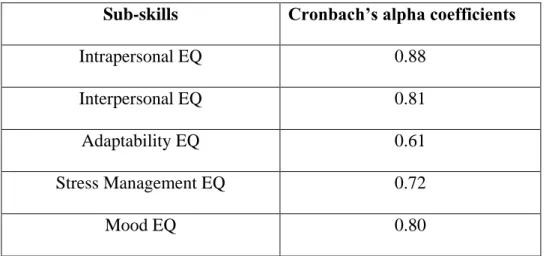
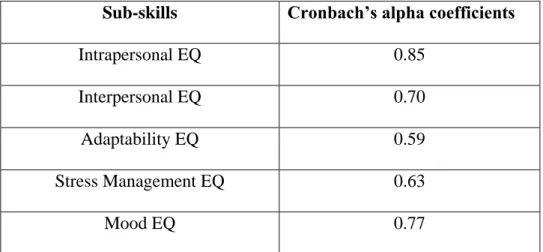
Table 2 - Cronbach's alpha coefficients for the sub-skills of EI ... 47
Table 3 - Scale used in the interpretation of cumulative averages ... 52
Table 4 - Total foreign language anxiety and average response ... 53
Table 5 - Ranges of FLCAS values and their descriptions ... 54
Table 6 - Descriptive statistics for anxiety groups ... 54
Table 7 - Means of foreign language anxiety for genders ... 55
Table 8 - Foreign language anxiety according to levels of success ... 56
Table 9 - Cronbach's alpha coefficients for the sub-skills of emotional intelligence .. 57
Table 10 - Descriptive statistics for emotional intelligence ... 58
Table 11 - Emotional intelligence according to gender ... 59
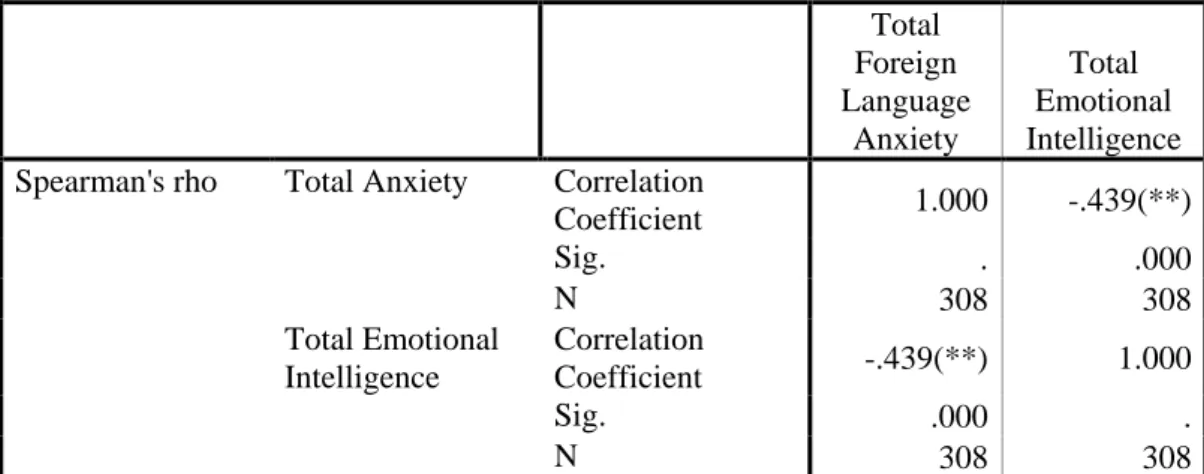
Table 12 - Correlation between EI and FLA ... 60
LIST OF FIGURES
Figure 1 - Skills and sub-skills of the Bar-On Model of emotional intelligence ... 23 Figure 2 - Example of an emotional intelligence integrated weekly lesson plan ... 77
CHAPTER I: INTRODUCTION
Introduction
Emotional intelligence, which, for many people, means another way of being smart, has been regarded as “people smart” by Stein and Book (2006). Since there are many models of emotional intelligence, there are many definitions, so a precise definition is difficult to find. In the broadest terms, emotional intelligence is the ability to understand one‟s own and other‟s feelings and to use this information to guide one‟s thinking and emotions (Salovey & Mayer, 1990, p. 189). The idea of emotional intelligence has become a very hotly debated issue after Goleman‟s book “Emotional Intelligence: Why it can matter more than IQ” was published in 1995. Many researchers (Bar-On, 1997; Goleman, 1995) claim that emotional intelligence (EQ/EI) has an important role in our life-long success. It has even been claimed that IQ is the intelligence which helps you find a job, but EQ is the intelligence that enables you to get promoted. Therefore, it is not surprising that such a fascinating trend has had an influence on the education field. Coetzee and Jansen (2007) suggest that unless the emotional needs of students are met, they cannot function effectively to derive the intellectual benefit of their education. Therefore, an emotional
intelligence integrated program may be the key to success for many students.
In language learning classrooms, one of the outstanding affective problems is foreign language anxiety. Most of the studies (Saito, Horwitz & Garza, 1999;
Spielberger & Vagg, 1995; Young, 1986) carried out about FLA have shown that foreign language anxiety has a negative effect on language learning, suggesting that students who are highly anxious may not be able to focus on the learning process and
cannot achieve the tasks in the classroom (Horwitz, 2001). According to the humanistic approach, creating a stress-free and positive classroom atmosphere should be concern of teachers. The effect of emotional intelligence on foreign language anxiety is an unexplored area. This study aims to seek the relationship between these two constructs, and it is hoped that the findings can be useful to create better language learning classrooms.
Background of the study
At the beginning of the 20th century, according to Alfred Binet, the definition of intelligence was:
It seems to us that in intelligence there is a fundamental faculty, the alteration or the lack of which, is of the utmost importance for practical life. This faculty is judgment, otherwise called good sense, practical sense, initiative, the faculty of adapting one's self to circumstances. A person may be a moron or an imbecile if he is lacking in judgment; but with good judgment he can never be either. Indeed the rest of the intellectual faculties seem of little importance in
comparison with judgment. (Binet & Simon, 1916, p. 42)
In 1905, a school asked Alfred Binet and Theodor Simon to create an
intelligence test in order to differentiate the students who were more intelligent than the others (Stein & Book, 2006) and that was how the term IQ (Intelligence
Quotient) first became known. These tests became very popular and they were often used to classify students or to choose potential employees. For nearly 60 years Binet's tests were accepted without any objection. However, in the 1970s ideas about intelligence started to change. The foremost researcher that created this change was Howard Gardner, with his idea of Multiple Intelligences. Multiple intelligences (MI) refers to “a learner based philosophy that characterizes human intelligence as having
multiple dimensions that must be acknowledged and developed in education” (Gardner, 1983, p. 68). According to Gardner, traditional IQ tests are based only on logic and language abilities, but the human brain has other equally vital intelligences (Gardner, 1983). In the theory of MI there are eight types of intelligences: linguistic, logical, spatial, musical, kinesthetic, interpersonal, intrapersonal and naturalist. It can be said that emotional intelligence incorporates the interpersonal and intrapersonal intelligences in Gardner's MI theory (Gardner, 1991).
Since Binet's definition, the general perception of intelligence has changed. Nowadays being intelligent does not simply mean having a high IQ score, which can be defined as traditional intelligence, but rather being able to cope with the
difficulties of social, academic and professional life. In the chaotic lifestyle of the 21st century, people who have high IQ scores may not be successful. Studies (Buzan, 2000; Goleman, 1995) have shown that cognitive abilities do not necessarily
coincide with success in life. For example, Goleman tried to discover the factors that have an important role in the lives of people whose IQ, which represents cognitive abilities, is high but who cannot cope with life very well, and those whose IQ is average but who are amazingly successful in life (Goleman, 2003 cited in Kenarlı, 2007). It has been suggest that, in order for individuals to reach their goals and to lead their lives effectively, emotional intelligence is as important as cognitive intelligence (Salovey & Sluyter 1997 cited in Yılmaz, 2007). Emotional intelligence (EI) has been defined as “the capacity to process emotional information accurately and efficiently, including that information relevant to the recognition, construction, and regulation of emotion in oneself and others” (Mayer & Salovey, 1990, p. 5).
Several models of emotional intelligence have emerged in recent years. Spielberger (2004) identified three major models of emotional intelligence: the Mayer and Salovey Model, the Bar-On Model, and the Goleman Model. The Mayer and Salovey Model consists of four sub-categories: perceiving emotions, using emotions to facilitate thought, understanding emotions, and managing emotions. The second one, the Bar-On Model, has five sub-skills: personal awareness, interpersonal relations, adaptation to environment, stress management, and general mood. The last model, the Goleman Model, consists of five sub-skills: awareness,
self-regulation, self-motivation, empathy, and managing relationships. Both the Goleman and Bar-On models are based on a mixture of mental abilities and personal traits. On the other hand, the Mayer and Salovey model is more restricted because personality traits were excluded.
Walker (2001) investigated the relationship between emotional intelligence and academic success in 1205 college students in America. The short version of Bar-On‟s Emotional Quotient Inventory and students‟ grade points averages were used as data collection tools. It was found that there is a positive correlation between EI and academic success. In the light of the results, Walker suggests that emotional
intelligence may be integrated to college curricula in order to promote students‟ success.
Some research has also been carried out in Turkey about emotional intelligence education. Duman (2003) tried to show that by integrating the components of emotional intelligence in foreign language teaching and learning, students' failures could be decreased and their success could be increased. It was
found that considering the emotional needs of the students enhances the effectiveness of English learning/teaching.
Also in Turkey, Göçet (2006) evaluated university students' emotional intelligence level and their attitudes to dealing with stress. The results reveal a significant relationship between EI and attitudes to overcoming stress, indicating that the subjects who have high EI scores are better at dealing with stress.
Researchers are still exploring the concept of emotional intelligence, as it is one of the possible affective factors that affect learning. However, teaching and learning are affected by many other factors, and one of the outstanding factors in language classrooms is language anxiety (Aydın, 2001; Horwitz, Horwitz & Cope, 1986). Scovel states that “psychologists define anxiety as a state of apprehension, a vague fear that is only associated with an object” (1991, p. 18). In the literature anxiety has been divided into two main classes. The first one is “trait anxiety”, and it can be regarded as a stable or enduring feature of personality. The second one is “state anxiety”, which is the feeling of anxiety only under specific conditions or situations. MacIntyre (1995) argues that foreign language anxiety is a kind of state anxiety which focuses on a specific thing or situation, and thus prefers to call it situation specific or situational anxiety.
Horwitz et al. (1986) have defined foreign language anxiety (FLA) as “the distinct complex of self-perceptions, beliefs, feelings and behaviors related to classroom language learning arising from the uniqueness of the language learning process” (p. 128). Horwitz later suggested that due to its different nature, foreign language anxiety is a unique type of anxiety (2001). In order to better understand this unique type of anxiety, some researchers have examined FLA as it relates to different
skills. Saito et al. (1999) explored whether there is a difference between the concept of foreign language reading anxiety and overall FLA, employing the Foreign
Language Classroom Anxiety Scale (FLCAS) and the Foreign Language Reading Anxiety Scale. The results of this study indicated that foreign language reading anxiety is different from general foreign language anxiety. Other studies have investigated the sources of speaking anxiety, as it is the most observable type of anxiety in the classroom. For instance, Kitano (2001) explored the reasons for speaking anxiety in Japanese language classes. The Fear of Negative Evaluation Scale, the Japanese Class Anxiety Scale, three kinds of Self-Rating Can-Do scales and the Self-Rating Expected Perception Scale by Japanese were used to gauge the anxiety levels of students. The findings revealed that the fear of negative evaluation was the main cause of FLA in Japanese classrooms.
Turkish researchers have also carried out studies in order to explore Turkish students‟ foreign language anxiety levels. For instance, Aydın (2001) attempted to find out the sources of FLA that Turkish students learning English as a foreign language experience in two productive skills: speaking and writing. The data were gathered using the FLCAS and the Beliefs About Language Learning Inventory. The results revealed that Turkish EFL students experience FLA for three main reasons: their personal concerns, the teachers‟ manner, and the teaching procedures in speaking and writing classes. Moreover, Dalkılıç (1998) explored the effects of gender on FLA among students at a Turkish university. The findings suggested that female students are more anxious than male students; there was also a negative correlation between FLA and the students‟ success.
In the literature, there is some evidence to suggest that affective factors are affected by culture. Ghorbani et al. (2002) investigated the processing of emotional information in different cultures. They compared the self- reported emotional
intelligence skills of 220 Iranian and 231 American university students. The findings revealed that the two groups differed in many aspect of emotional processing, such as self-consciousness and self-esteem, and they concluded that the underlying reason for these differences stems from cultural values. This suggests that emotional
intelligence is affected by culture. Similarly, Woodrow (2006), in her study on the relationship between speaking performance and FLA, reported that learners who were members of Confucian heritage cultures, such as Chinese and Korean, tended to be more anxious than other ethnic groups. These results suggest that foreign
language anxiety is also affected by cultural values.
A study that focused on both foreign language anxiety and emotional intelligence was carried out in 2003 by Chuan-Ta Chao. His aim was to explore the relationship between these two components in the EFL context in Taiwan. The subjects were 306 university students who were studying English. To gather the necessary data, the FLCAS and the Exploring and Developing Emotional
Intelligence Skills scale were used. The results showed a significant relationship between foreign language anxiety and emotional intelligence in the Taiwan context. However, as both emotional intelligence (Ghorbani et al., 2002) and foreign
language anxiety (Woodrow, 2006a) may be affected by culture, the results cannot be generalized to other cultures and thus there is a need to investigated these two constructs in different cultural settings.
Statement of the problem
Language anxiety is a complex concept that affects language learning
(Young, 1992) and Deffenbacher (1980) discovered that being highly emotional and excessive worrying are highly related to anxiety. According to Chao (2003),
emotional intelligence should be taken into consideration in order to overcome foreign language anxiety in the language classrooms. Although both foreign language anxiety and emotional intelligence have been researched separately in many studies (Caruso, Mayer & Salovey, 2002; Ergin, 2000; Yılmaz, 2007), there has been only one study which focused on the relationship between the two (Chao, 2003). However, these two constructs may be affected by the culture of the learner (Ghorbani et al., 2002; Woodrow, 2006). Hence, this study is designed to provide detailed information in a different cultural setting on the relationship between emotional intelligence and foreign language anxiety, as well as factors that might affect these two concepts, in a foreign language learning environment in the Turkish context.
In language classes in Turkish universities, many students face the problem of foreign language anxiety, which damages their language learning process. At
Akdeniz University, a large number of students suffering from foreign language anxiety are observed by instructors every year. Students who are highly anxious and have difficulty in controlling their emotions may not be successful during the year or in the proficiency exam. Thus, this study aims to cast additional light on the foreign language anxiety and emotional intelligence levels of students and investigate
a basis to the solution by raising both students‟ and teachers‟ awareness about these two concepts.
Research questions
1. What is the foreign language anxiety level of Turkish EFL students? a. Does the level of foreign language anxiety vary according to:
i. gender?
ii. level of success in the EFL classroom?
2. What is the emotional intelligence level of Turkish EFL students? a. Does the level of emotional intelligence vary according to:
i. gender?
ii. level of success in the EFL classroom?
3. What is the relationship between the foreign language anxiety and emotional intelligence levels of Turkish university EFL students?
a. Is there a correlation between students‟ total scores of FLA and EI? b. Is there a correlation between Turkish students‟ foreign language anxiety levels and the sub-skills of emotional intelligence?
i. Intrapersonal EQ and foreign language anxiety ii. Interpersonal EQ and foreign language anxiety iii. Stress management EQ and foreign language anxiety iv. Adaptability EQ and foreign language anxiety
Significance of the study
This study addresses the lack of research into the relationship between foreign language anxiety and emotional intelligence in the field of EFL. Regardless of a learner‟s age or proficiency level, it is natural to experience some amount of anxiety in the process of learning a foreign language. However, excessive anxiety has been shown to hinder effective learning (Horwtiz & Young, 1991). In addition, having good EI skills may help to deal with difficulties in the language classroom (Rouhani, 2007). This study may fill a gap by providing data regarding both of these issues and may contribute to the literature by answering the question of whether there is a relationship between them in the Turkish EFL context. In addition, this study seeks to give data about how the sub-skills of emotional intelligence are related to foreign language anxiety.
At the local level, this study attempts to identify the relationship between emotional intelligence and the foreign language anxiety levels of students at Akdeniz University. The information is valuable for the institution because like many Turkish foreign language learners, many Akdeniz University students in the preparatory school are not successful. Although they try very hard, this year 50 % of the students were not successful in the preparatory program. Based on my own teaching experience, and conversation with my colleagues, one of the reasons for the failure of the students might be their insufficiency in overcoming the negative emotions and stress that language learning may cause. This study may provide an opportunity for teachers to develop an awareness of the learners' perspective. Moreover, if a relationship between FLA and EI is found, this study may also lead to further studies addressing ways to involve the sub-skills of emotional intelligence in lessons in order to lower language
learning anxiety. Hence, Turkish curriculum designers can take the relation between these two concepts into consideration while they are planning the curriculum for English lessons in Turkey. Finally, the research might help English teachers assist students who have language learning problems by guiding students to increase their emotional intelligence skills and to lower their language learning anxiety.
Conclusion
In this chapter, the background of the study, statement of the problem,
research questions and the significance of the problem have been presented. The next chapter reviews the literature, providing the relevant theoretical background for the study. In the third chapter, details about the research methodology of the study, including the participants, instruments, data collection, and analysis procedure, will be provided. In the fourth chapter, the data collected will be analyzed, and the
findings will be reported. The fifth chapter will focus on the discussion of the results, pedagogical implications, limitations of the study and suggestions for further
CHAPTER II: REVIEW OF THE LITERATURE
Introduction
This study aims to explore the relationship between emotional intelligence and foreign language anxiety in the EFL classes in Turkey. This chapter provides background information about the definition of terms related to intelligence, the history of emotional intelligence, and models of emotional intelligence. In the subsequent section, the place of emotional intelligence in education and related studies in the literature will be discussed. In the second part, anxiety and its types are defined. The next part focuses on foreign language anxiety and the related studies in the literature. Finally, the last part provides some background information about the relationship between emotional intelligence and foreign language anxiety.
Intelligence as a general term
The concept of intelligence, which has a role in human life, has been a significant issue for researchers for many years. Hundreds of respected researchers, such as Piaget and Vygotsky, have dealt with the definition of intelligence (Neisser, et al., 1996). Although people have been interested in the idea of intelligence for hundreds of years, even before intelligence was formally measured, the number of studies related to intelligence increased enormously in the nineteenth century (Cianciolo & Sternberg, 2004).
In order to explain the origins of intellectual differences between people, much energy and time has been spent by scientists. Many factors such as “nature versus nurture” (Galton, 1869), race differences (Galton, 1869; Smedley, 2002), sex
differences (Jensen, 1969), and hormones (Geschwind & Galaburda, 1987) have been questioned as to their influence on intelligence.
In modern times, this intensive attention to intelligence is not surprising because according to Cianciolo and Sternberg (2004), starting from the 1950s intellectual capacity has been considered when selecting people in the fields of medicine, education, various other professions, and even in the military. Howe (1997) explained the reasons for this attention:
Being intelligent matters; it makes a big difference to human lives. Sharp men and women thrive. Problems are solved by astute thinkers. Questions get answered by those who are clever. Smart people succeed at challenges at which duller individuals fail. Astute planners move ahead. (p. 1)
As the importance of intelligence has risen, the desire to measure it
effectively has increased. There had been some unsuccessful attempts to create an intelligence test, by Francis Galton in the late nineteenth century, but it was not until 1905 that Alfred Binet and his student Theodore Simon created their own test (Buzan, 2000). As Binet and Simon did not create their test according to any definition of intelligence, it was different from the previous trials. The items in the test were based on practical considerations, and included a range of simpler and more difficult questions (Howe, 1997). In the next section, the measurement of intelligence will be described.
Definition of intelligent quotient (IQ)
IQ is the acronym for Intelligent Quotient, which refers to a score given on different intelligence tests attempting to measure intelligence. Unlike the way it is currently perceived, in 1905 Binet and Simon‟s test aimed to differentiate between children who were intellectually normal and those who were inferior. This allowed
the French government to place students into appropriate schools where they could receive special and more individualized attention (Howe, 1997). According to Buzan (2000), during that age, it was believed that one‟s intelligence was equal to one‟s linguistic and mathematical abilities. Hence, Binet‟s intelligence test administered to the French children focused on these two abilities to calculate their intelligence. In the results, IQ, which is a ratio of the child‟s mental age and his/her chronological age, is multiplied by 100. A normal score is 100, with scores falling below 100 considered below normal, and scores above 100 considered above average (Bee & Byod, 1976). Binet‟s test was revised by Lewis Terman in 1916 and called the Stanford-Binet IQ Test. Since then, it has been used all over the world (Konrad & Hendl, 1997).
Later, more sophisticated tests, such as David Wechsler‟s Adult Intelligence Scale (WAIS) appeared, and starting from the 1920s, these intelligence tests were used to select employees, to give scholarships in education and to choose servicemen during World War I. Also, at around that time, the acronym of IQ (for Intelligence Quotient) started to be used to define levels of intelligence and became more widely known (Howe, 1997).
For many years IQ scores were used in many contexts: as predictors of educational achievement or special needs, by social scientists who studied the distribution of IQ scores in populations and the relationships between IQ score and other variables, and as predictors of job performance and income (Neisser, et al., 1996). In 1989, the American Academy for the Advancement of Science listed the IQ test among the twenty most significant scientific discoveries of the twentieth century, along with nuclear fission, DNA, the transistor and flight (Bjorklund, 2000).
Although the IQ test has been accepted by many researchers and others for many years, there have always been harsh criticisms of its validity and reliability. One well-known researcher who argued against IQ tests was Gould. He claimed that the tests were misused to discriminate against minorities, and that the tests included racist elements (Howe, 1997). In his book “The Mismeasure of Man” (1981), Gould suggests that Binet‟s sole aim when creating his intelligence scale was to help children who need special education, not to create a general test to measure intellectual qualities (cited in Osgood, 2000).
The definition of intelligence includes a variety of skills, such as problem solving, critical thinking, and reasoning; however, it can be observed from the content of many IQ tests that the number of included skills is limited (Siegel, 1999). In addition, Siegel mentions that IQ tests measure what a person has learned, not what he or she is capable of doing in the future, in other words, his or her potential. That is to say, IQ tests may only be successful in predicting one‟s school
achievement rather than overall success in life (Siegel, 1989).
Goleman supports the idea that IQ scores give limited information, claiming that “IQ contributes about 20 percent to the factors that determine life success, which leaves 80 percent to other forces” (1995, p. 8). These other factors may be regarded as other ways of being intelligent, which have been described from the point of view of multiple intelligences. In the next section, the components of multiple
Definition of multiple intelligences (MI)
In his book “Frames of Mind”, Gardner (1983) rejects the idea of the dominance of IQ in one‟s life. He refutes the idea that intelligence is a single entity that can be easily measured by IQ tests and claims that human beings have more than one intelligence, which complement each other. Gardner pluralizes the traditional concept of intelligence by defining intelligence as “… the ability to solve the problems or fashion products that are of consequence in a particular cultural setting or community” (1991, p. 15). Gardner (1983) listed seven different kinds of
intelligence that symbolize different ways of being intelligent under the title of multiple intelligences (MI). The first one is linguistic intelligence, which is the ability to use words effectively both orally and in writing. The second is
logical/mathematical intelligence, which can be defined as the ability to use numbers effectively and reason well. The third intelligence is visual/spatial intelligence; it is the ability to notice form, space, color, line and shape. The next one is
bodily/kinesthetic intelligence, which is the ability to use the body to express ideas and feelings, and to solve problems. The fifth one is interpersonal intelligence, which means understanding other people‟s moods, feelings and motivations, and intentions. The sixth type is intrapersonal intelligence, and it can be defined as the ability to understand yourself, your strengths, weaknesses, moods, desires and intentions. The last one is musical intelligence, which can be defined as the ability to notice rhythm and pitch. Naturalist intelligence, which means finding patterns and recognizing and classifying plants, minerals, and animals, was added to the listed later (Christison, 2004). The number of intelligences in Gardner‟s list may continue increasing, as he believes every individual is intelligent in one way or another; the most recent
candidates for the list are spiritual intelligence and existential intelligence (Gardner, 1999).
Christison (2004) suggests that Gardner‟s MI theory is commonly accepted by educators since it provides a useful framework for talking about the differences they come across among their students. Moreover, Gardner (1991) believes that, under the light of MI theory, if there is more than one intelligence, there are many ways of teaching something. Not all students are mathematically gifted, but they may be good at other things, such as music, spatial relations and interpersonal knowledge.
In terms of language learning, Arnold and Fonseca (2004) explain that keeping multiple intelligence in mind can be beneficial and supportive for language learners, with language tasks being developed around MI. For example, listening to a song and writing the lyrics can have considerable effects for students with linguistic and musical intelligences; alternatively, for a role-play activity, students need interpersonal, intrapersonal and also linguistic intelligences, as they are expected to express their feelings and understand others. In the following section, the definition and historical roots of emotional intelligence will be presented.
Definition and history of emotional intelligence (EI/EQ)
In 1985, the term emotional intelligence first occurred in the doctoral dissertation of Wayne Pane in America (Pane, 1985 cited in Goleman, 1995). However, its historical roots are based on the previous work of several researchers, such as Thorndike‟s work on social intelligence and Wechsler‟s work on the influence of non-intellectual factors on intelligent behavior (Thorndike & Stein, 1937; Wechsler, 1940, both cited in Bar-On & Parker, 2000). The version of the concept as it is perceived today was created by Salovey and Mayer and discussed in
their articles (1990). They defined emotional intelligence (EI or EQ) as “the ability to monitor one‟s own and others‟ feelings and emotions, to discriminate among them and to use this information to guide one‟s thinking and actions” (Salovey & Mayer, 1990, p. 189).
Daniel Goleman popularized the idea of emotional intelligence through his book “Emotional Intelligence: Why It Can Matter More Than IQ”, which was published in 1995 and later translated into many languages. According to Azarmi (2004), the reason that this book became so popular is the fact that people did not feel comfortable about the dominance of IQ, as IQ alone was not enough to determine one‟s success in life. Goleman has defined emotional intelligence as including “abilities such as being able to motivate oneself and persist in the face of frustrations; to control impulses and delay gratification; to regulate one‟s mood and keep distress from swamping the ability to think; to empathize and to hope” (1995, p. 34). According to him, we have two different kinds of intelligence: rational and emotional. These two are not opposites, but two parts of a whole and when they interact well both of them increase (Goleman, 1995, p. 28). Goleman contends that even people with high IQs may have difficulty in controlling their lives and being happy. Valliant cites a study conducted in the 1940s, in which the lives of 95 former Harvard students were examined when they reached middle age. In this group, the people who had the highest IQ scores were not particularly more successful than those with lower scores in terms of salary, productivity, status in their field, life satisfaction, relationships with friends, relationships with family and romantic relationships (Valliant, 1977 cited in Goleman, 1995).
Another definition, by Bar-On (1997, p. 14), defines emotional intelligence as “an array of non-cognitive capabilities, competencies and skills that influences one‟s ability to succeed in coping with environmental demands and pressures”. Bar-On claims that individuals with higher EQs are more successful in life and he also highlights that a deficiency in EI may mean a lack of success and the existence of emotional problems (2000).
As emotional intelligence, which is a very broad term to define, has many definitions, several models can be seen in the literature, originating from different perspectives. In the next section, three basic models of emotional intelligence will be examined.
Models of emotional intelligence
The most controversial issue related to emotional intelligence has always been its definitions and its components. Several researchers have tried to set limitations on the definition of EI in order to differentiate emotional intelligence from personal traits. While restricting the definition of EI, they followed various paths, and thus many models of EI, with some similarities, emerged. The most accepted models are those of Goleman (1995), Mayer and Salovey (1997), and Bar-On (1997), which share some common qualities.
Goleman‟ s model of emotional intelligence is defined as an example of a mixed model, which comprises both mental abilities and personal traits (Bar-On & Parker, 2000). In Goleman‟s book there are five basic elements of emotional intelligence. The first one, self-awareness, is the ability to be aware of, understand and use one‟s own feelings when taking decisions. Moreover, self-awareness includes knowing one‟s strengths and weaknesses in a realistic way. The next
element is managing emotions, which involves controlling one‟s feelings, especially handling negative feelings, in order to have a balanced life. Another element is motivating oneself. This term can simply be defined as the ability to direct one‟s emotions for a purpose and not give up when difficulties are encountered. The fourth is empathy, which means to be able to understand people‟s feelings and way of thinking and also to be sensitive about showing respect to them. The last element is social skills. This term can be defined as having a deeper understanding of complex social relations and getting on well with other people (Goleman, 1995).
Goleman‟s model has been critiqued by other researchers, including Mayer and Salovey (1997), who criticized Goleman‟s model in several ways. They claim that in this model emotional intelligence is not well-defined. In other words, EI includes too many different things, such as motivation, emotions, and behavior. Therefore, it is not clear what EI refers to (Mayer, Salovey & Caruso, 2000). Mayer and Salovey also question the scientific basis of Goleman‟s model. According to Mayer and Salovey, there is no research to support Goleman‟s claims (1995) that EI is as twice as important as IQ (Mayer et al., 2000).
As Mayer and Salovey considered Goleman‟s model not well-defined or scientific, they created their own model, the Mayer and Salovey model. An
alternative name for their model is “An Ability Theory of Emotional Intelligence”. Mayer and Salovey‟s model of emotional intelligence is regarded as operating across both cognitive and emotional systems (Mayer et al., 2000, p. 107). They perceive emotional intelligence as part of social intelligence, and therefore, they give importance to not only understanding one‟s own and others‟ emotions, but also understanding one‟s behaviors in accordance with this awareness (Tekin Acar,
2001). In the Mayer and Salovey model, the definition of emotional intelligence is more restrictive than Goleman‟s model because personality traits have been excluded from EI (Mayer et. al., 2000).
The Mayer and Salovey model consists of four branches. As the first branch of emotional intelligence, emotional perception includes not escaping from negative feelings and being able to understand facial expressions, voice tone, objects of art, and other cultural artifacts. The second branch is emotional integration and it focuses on the way emotions enter and change the cognition system and thoughts. This quality helps people to see events from different perspectives, such as skepticism and optimism. Another branch is emotional understanding. According to this branch, the person who is able to understand the meaning of emotions, the way they come together, and how they progress has the capacity to comprehend truths of human nature. The last branch is emotional management, which can be defined as the
capacity to understand moods and, more crucially, overcome the fluctuations in one‟s own moods (Bar-On & Parker, 2000, p. 108-110).
In order to quantify a person‟s abilities in these branches Mayer and Salovey (1997) created a scale, the MEIS (Multifactor Emotional Intelligence Scale); this scale was later further developed, and its name was changed to MSCEIT (Mayer-Salovey-Caruso Emotional Intelligence Test) (Mayer, Salovey & Caruso, 1999). Although this model is accepted as a well-defined one, problems with it have been identified, such as the lack of clarity of the criteria in defining the four branches, and inconsistency in scoring the MSCEIT (Matthews et al., 2006).
Another well-known researcher who studied emotional intelligence is Reuven Bar-On. Bar-On thought of EQ as representing a set of social and emotional abilities
that help individuals cope with the demands of daily life (Cherniss, 2001). His model is known as “The Bar-On Model of Emotional-Social Intelligences (ESI)”. Similar to Goleman‟s model of emotional intelligence, this model is also defined as a mixed type model, which comprises both mental abilities and personal traits.
According to this model, emotional intelligence is a combination of skills which determine people‟s understanding of others and themselves, and how successful they are in dealing with the difficulties of daily life. Bar-On claims that his model of emotional intelligence is both learnable and teachable by using simple didactic methods over a relatively short period of time. The Emotional Quotient Inventory (EQ-i) was developed by Bar-On (1997) to measure the elements in his model and it is the first measure of its kind to be published by a psychological test publisher. The Bar-On model of emotional intelligence aims to explain why some people have the ability to be more successful than others. He proposes that there are five skills and many sub-skills included in emotional intelligence, and these skills are believed to have important roles in people‟s success (On & Parker, 2000, p. 365). The Bar-On Model, which includes five skills and fifteen sub-skills, is explained in Figure 1 in detail.
SKILLS SUB-SKILLS DEFINITION Intrapersonal EQ Self- regard Emotional self-awareness Assertiveness Independence Self-actualization
the ability to be aware of, understand, accept and respect oneself
the ability to recognize and understand ones‟ emotions
the ability to express feelings, beliefs and thoughts, and to defend one‟s rights in a nondestructive manner
the ability to be self-directed and self-controlled in one‟s thinking and actions, and also to be free of emotional dependency
the ability to realize one‟s potential and to do what one wants to do, enjoys doing, and can do
Interpersonal EQ Empathy Social responsibility Interpersonal relationship
the ability to be aware of, and appreciate the feelings of others
the ability to demonstrate oneself as a cooperative, contributing, and constructive member of one‟s social group
the ability to establish and maintain mutual satisfying relationships that are characterized by emotional closeness, giving and receiving affection, and intimacy Stress Management EQ Stress tolerance Impulse control
the ability to withstand adverse events, stressful situations, and strong emotions without “falling apart” by actively and positively coping with stress the ability to resist or delay an impulse, drive, or temptation to act, and to control one‟s emotions
Adaptability EQ
Reality-testing
Flexibility
Problem solving
the ability to asses the correspondence between what is internally and subjectively experienced and what externally and objectively exists
the ability to adjust one‟s feelings, thoughts and behaviors to changing situations and condition
the ability to identify, define and solve personal and social problems
General Mood EQ
Optimism
Happiness
the ability to maintain a positive attitude towards life, even in the face of adversity
the ability to feel satisfied with one‟s life, to enjoy oneself and others and to have fun, and also to express positive emotions
(Bar-On, 2000, p. 101-102)
According to Mayer and Salovey, although the Bar-On model of EI is a mixed type model that is broader than their own model, it has some scientific roots (Mayer et al., 2000). This model was developed under the light of the data gathered by the EQ-i, which was accepted as the first and most reliable scale for measuring EI. For the purposes of this study, the Bar-On model has been chosen because it includes some social skills which are necessary in the language classroom, such as empathy, flexibility, and interpersonal relations. Moreover, stress management, which is one of the main sub-skills of the Bar-On model, is highly related to the feeling of anxiety. In addition, the instrument, EQ-i, is regarded as one of the most reliable ways of
measuring emotional intelligence. Therefore, while exploring the relationship
between emotional intelligence and foreign language anxiety, the Bar-On model will provide a better basis for the study than other models.
The above mentioned models and their tests have been applied extensively in the business world, in an attempt to increase their success rate. For example, big companies try to employ executives with higher emotional intelligence to foster better team work. The case is similar for education. In order to increase students‟ success in school, research related to emotional intelligence in the educational field has been carried out. The following section will present the relationship between emotional intelligence and education.
Emotional intelligence and education
In the context of education, there is a place for emotional intelligence, whichever EI model one chooses. EI is relevant to the development of both the individual and the organization since it is about understanding and assessing
promoting academic success while reducing anxiety and negative feelings during the learning process (Goleman, 1995). By practicing emotional intelligence skills, such as regulating emotions, managing interpersonal relations, overcoming stress, and showing sensitivity to other people‟s emotions, the problems that occur in classrooms may diminish (Duman, 2003).
Shuford(2003) suggests that a school-wide emotional intelligence program should be adopted in principle, as the findings of his study support the fact that emotional intelligence is an effective factor in students‟ academic achievement. He explains that students who are not able to cope with their emotions will have difficulty in focusing on what they should really concentrate on. Moreover,
emotional literacy is one of the key elements of success not only in school, but also in the workplace.
Walker (2001)is alsoin favor of the idea of an emotional intelligence integrated school program. She investigated the relationship between the emotional intelligence and academic success of 1205 college students. Their scores on the EQ-i and their grade point averages (GPAs) were taken into consideration for her research. Correlations were examined between emotional intelligence, gender, and GPA. The findings suggested that there is indeed a significant relationship between emotional intelligence and academic success in college. This study found a positive correlation between the five emotional intelligence component scores (interpersonal,
intrapersonal, mood, adaptability, and stress management) and students‟ GPAs. Although some components of emotional intelligence revealed different patterns according to gender, there was not an overall difference between males and females.
Jaeger (2001) conducted an exploratory study on the relationships among emotional intelligence, learning style, and academic performance. Of the 158
graduate professional students in her study, half of them were educated in classroom where an emotional intelligence curriculum was followed, and the rest of the
participants continued with their lessons in the non-EI curriculum class for one semester. In order to determine the effectiveness of the EI curriculum, overall emotional intelligence measured, by using the Emotional Quotient Inventory (EQ-i) (Bar-On, 1997), at the beginning and at the end of the semester. The participants‟ GPAs were used to define their academic achievement. The findings indicated that by the end of the semester, the students in the EI curriculum class had higher emotional intelligence scores and academic achievement than those in the non-EI curriculum class. It was also found that there was a positive correlation between academic achievement and EI. Moreover, the results of this study suggest that EI can be improved through instruction in a classroom setting.
However, not all the studies in the field found a correlation between emotional intelligence and academic success. Yılmaz (2006) conducted a study in order to find out whether there was a relationship between EI and academic achievement of Turkish university students. The EQ-i scores and GPAs of 122 students from the Education Faculty were used to investigate a possible relationship. The results revealed that there was no statistically significant relationship between students‟ emotional intelligence and academic achievement. Furthermore, there was not an overall gender difference among students‟ the EQ-i results; however, some of the sub-skill scores varied according to gender. It was found that females scored better in self-awareness, mood, and stress management sub-skills.
Another researcher who focused on the relationship between emotional intelligence and academic achievement was Barchard (2003), who administered 31 emotional intelligence measures, taken from different sources. After comparing the EI results and GPAs of 150 university students, it was found that there was no significant relationship between emotional intelligence and academic success.
The conflicting findings of the studies about EI and academic success may stem from the inconsistency in the criterion to define academic success. It was found that in the previous research, ACT scores, final project grades, semester GPAs, and academic year GPAs were being used to identify academic achievement by Walker, Jaeger, Yılmaz, and Barchard, respectively. It can be seen that each researcher chose a different way to calculate the academic achievement of students. Thus, it is not very surprising to see inconsistent results, as the definition of academic success is too vague.
Similar to the relationship between emotional intelligence and academic achievement, the relationship between emotional intelligence and stress
management, which is a component of some of the EI models, has an important place in education. If the relationship between emotional intelligence and stress
management can be understood in depth, EI may be used to reduce stress. Göçet (2006) looked at the emotional intelligence of university students, focusing on the relationship between emotional intelligence and the students‟
attitudes to dealing with stress. Göçet used two scales, the Modified Shutte EI, which was developed by Shutte et al. (1998) to measure emotional intelligence levels, and the SBTE, (Stresle BaĢaçıkma Tutumları Envanteri) (Inventory of attitudes towards overcoming stress) (Özbay & ġahin, 1997 cited in Göçet, 2006). The scores from
these scales were used to explore the relationship between students‟ attitudes to overcoming stress and their level of emotional intelligence. According to the results, there was a significant relationship between EI and attitudes to dealing with stress. Students with higher emotional intelligence had more positive attitudes toward dealing with stress. This finding suggests that negative feelings, such as stress and anxiety, are related to one‟s emotional intelligence level.
It has been made clear by numerous researchers (Brown, 1994; MacIntyre & Gardner, 1991; Phillips, 1992)that learning in stressful situations is more difficult than learning in stress-free situations. Phillips (1992) emphasizes that language learning is one of the most stressful fields in education, and the anxiety that students suffer from during this process may create a mental block, which will hinder
language learning. In the following section, anxiety as a general term will be defined and discussed.
Anxiety
Gardner (1983) suggests that the affective side of the brain is as significant as the cognitive side, especially in the learning situation. The increased attention to emotional intelligence has shown that emotion, as a part of affective factors, may influence the effectiveness of teaching. There are also other affective factors which can be observed by teachers, such as empathy, self-esteem, extroversion, inhibition, imagination, attitudes, and especially anxiety (Brown, 1994). According to research, one of the affective factors that has enormous effects on students is anxiety (Brown, 1994; Horwitz et al., 1986; Young, 1992). In psychology, anxiety is too broad a term to define in a few sentences. In 1983, Spielberger defined anxiety as a psychological process and explained that it is a “subjunctive feeling of tension, apprehension,
nervousness, and worry associated with an arousal of the autonomic nervous system” (p. 12).
Not only students, but also professionals can feel anxiety. For example, at the beginning of a lecture where language acquisition is going to be discussed, Krashen, who is the lecturer, walks up close to the first row and asks if it is OK to do a little demonstration. He mentions that the response is always the same because the participants think they are going to be a part of the demonstration. Although all the participants are teachers, those who are sitting in the front row freeze. When Krashen asks how they feel, they clearly state that they feel anxious because they are afraid of making mistakes in front of other people. This example, given by Krashen in an interview with Young (1992), reveals that in the learning situation anxiety is a common problem. The research suggests that anxiety can be experienced by all people at different knowledge levels. In the literature, there are different types of anxiety: state anxiety, trait anxiety, and situation specific anxiety. Anxiety has also been described from the perspective of its effects: facilitative anxiety and debilitative anxiety. In the following sections, definitions of different anxiety types and some related research about the effects of anxiety will be presented.
Facilitative anxiety and debilitative anxiety
In the academic literature there is disagreement about the effects of anxiety on learning. Several researchers (Bailey, 1983; Tucker, Haymayan, & Genesee, 1976) claim that anxious learners are less successful; however, others (Bacham, 1976; Horwitz, 2001; Scovel, 1991) support the idea that some amount of anxiety has positive effects on learning. In order to understand the effects of anxiety, one should first understand the types of anxiety. In general terms, facilitative anxiety helps the
learner to be more alert, which is considered to be a positive factor in order to accomplish a task; in contrast, debilitative anxiety has negative effects on learners. They become too anxious to perform a task to the optimum level (Scovel, 1991).
Krashen (interviewed in Young, 1992) claims that facilitative anxiety may have a positive effect on tasks which require the conscious effort; however, for language acquisition there should be no anxiety at all. On the other hand, in the same interview, Rardin supports the existence of balanced anxiety in the classroom. She explains that when one is driving a car, the best thing to do is to be alert. The driver should be aware of many things, such as mirrors and road conditions. This alertness helps the driver reach his destination safely. Similar to the driver‟s situation, in the classroom the students should stay alert and keep their channels open to get
information. On the other hand, if the driver becomes too alert or stressed, this can cause a negative change in his or her performance, which may result in an accident (Young, 1992). Another researcher who supports the benefits of some anxiety is Horwitz (1986). She suggests that facilitating anxiety can be helpful to students in easy tasks, but it does not have fostering effects on more complicated language tasks. Scovel (1991) believes that learners need both kinds of anxieties in order to be cautious, and also motivated about new language items.
Trait anxiety, state anxiety and situation specific anxiety
Trait anxiety is a personal tendency of feeling anxious in any situation
(Gardner, 1999; Spielberger, 1983). However, according to Spielberger, state anxiety occurs when one perceives a stimulus or situation as harmful, dangerous or
threatening (1983). A person with state anxiety has the tendency to show anxiety only under particular circumstances, such as before an exam. According to
MacIntyre and Gardner (1991), situation specific anxiety is a specific type of anxiety that appears regularly. Moreover, it is most commonly accepted as a concept related to state anxiety. There are various kinds of situation specific anxiety. Library anxiety, which is defined as the occurring of negative feelings in a library setting, or
composition anxiety, which is a person‟s tendency to negative feelings about writing something, can be categorized as situation specific anxiety (Onwuegbuzie, 1997). MacIntyre and Gardner (1991) believe that situational anxiety is related to a
particular situation and that language anxiety can be one type of situational anxiety. In the next section, the theoretical framework of foreign language anxiety and the instrument used to measure it will be described.
Foreign language anxiety
Interviewer: What stops you from speaking up?
ESL student: ‟Cos… my classmates also not speak up… they affect me very much… Sometimes I really frighten… I am afraid my classmate will laugh… I think my English level is not good, so I am shy to talk English… I hate English very much because I think English it quite difficult to learn… Educational system is stressful… because many people if fail in
English…they effect their life.
Interviewer: Are you worried about failing in English? ESL student: Very…very much. (Tsui, 1996, p. 145)
As can be seen in this dialogue, language class can be one of the most anxiety-provoking courses a student takes (Horwitz, et al., 1986; Kitano, 2001). Therefore, foreign language anxiety is an important affective problem in language classes that needs to be defined and understood well. Research into foreign language anxiety has indicated that language learning is classed as a situational specific anxiety (Horwitz, 2001; MacIntyre & Gardner, 1991) rather than a personality trait. Although the student may perform very well and have very good grades in other
lessons, s/he can feel anxious in language classrooms. Students who are highly anxious report that they start sweating or freeze in role plays, forget previously-learned grammar points in tests and make avoidable mistakes because of their
nervousness (Horwitz, et al., 1986). This anxiety may result from the fact that, during the language learning process, the learners put themselves into a “vulnerable”
position in front of their friends and the teacher (Tsui, 1996).
According to Horwitz et al. (1986), the situation specific characteristic of foreign language anxiety arises from the uniqueness of foreign language learning in classroom or academic settings. In Horwitz et al.‟s theoretical framework of foreign language anxiety, there are three components. They associate FLA with the fear of negative evaluation, test anxiety and communication apprehension. Communication apprehension arises from inability to adequately express mature thoughts and ideas. It derives from the personal knowledge that one will almost certainly have difficulty understanding others and making oneself understood. It is suggested that this is why many talkative people are silent in the class. The second component of FLA is the fear of negative social evaluation, which stems from learners‟ need to create a positive social impression on others. According to Tsui (1996), in the classroom, learners must ignore their self-concept and be ready for the negative criticism of others and this situation may create anxiety for learners. The last component is test anxiety, which means the state of apprehension over academic evaluation. Generally, the students who suffer from test anxiety are perfectionists and feel unsuccessful when they get a score lower than they planned.
In the course of their research, Horwitz et al. (1986), created an instrument, the Foreign Language Classroom Anxiety Scale (FLCAS), to measure foreign