ENGLISH LANGUAGE TEACHING COURSEBOOKS
The Graduate School of Education of
Bilkent University
by
HÜSEM KORKMAZ
In Partial Fulfilment of the Requirements for the Degree of Master of Arts
In
The Department of
Teaching English as a Foreign Language Bilkent University
Ankara
MA THESIS EXAMINATION RESULT FORM
July 9, 2010
The examining committee appointed by The Graduate School of Education for the thesis examination of the MA TEFL student
Hüsem Korkmaz
has read the thesis of the student.
The committee has decided that the thesis of the student is satisfactory.
Thesis Title: The Effectiveness of Mobile Assisted Language Learning as a Supplementary Material for English Language Teaching Coursebooks
Thesis Advisor: Asst. Prof. Dr. Philip Durrant
Bilkent University, MA TEFL Program
Committee Members: Asst. Prof. Dr. JoDee Walters
Bilkent University, MA TEFL Program
Prof. Dr. Arif Altun
Hacettepe University, Department of Computer Education and Instructional Technology
_________________________ (Asst. Prof. Dr. Philip Durrant) Supervisor
I certify that I have read this thesis and have found that it is fully adequate, in scope and in quality, as a thesis for the degree of Master of Teaching English as a Second
Language.
__________________________ (Asst. Prof. Dr. JoDee Walters) Examining Committee Member
I certify that I have read this thesis and have found that it is fully adequate, in scope and in quality, as a thesis for the degree of Master of Teaching English as a Second
Language.
__________________________ (Prof. Dr. Arif Altun)
Examining Committee Member
Approval of the Graduate School of Education __________________________
(Vis. Prof. Dr. Margaret Sands) Director
ABSTRACT
THE EFFECTIVENESS OF MOBILE ASSISTED LANGUAGE LEARNING AS A SUPPLEMENTARY MATERIAL FOR ENGLISH LANGUAGE TEACHING
COURSEBOOKS Korkmaz, Hüsem
MA., Department of Teaching English as a Foreign Language Supervisor: Asst. Prof. Dr. Philip Durrant
July 2010
This study was conducted (a) to investigate the effectiveness of mobile assisted language learning (MALL) applications in supplementing ELT coursebooks, and (b) to explore the attitudes of the students towards MALL supplementation.
Four pre-intermediate level preparatory classes with a total of 100 students participated in this study. During the eight weeks of experimental process, 50 students in the experimental group were sent supplementary SMS and MMS messages in addition to regular in-class learning whereas those 50 in the control group used conventional
supplementary materials. In the fourth and the eighth weeks of the study, achievement test scores of the groups were analyzed and compared to measure the effects of MALL supplementation on students‟ achievement scores. Additionally, a post-questionnaire was employed to elicit the attitudes towards MALL supplementation for ELT
coursebooks and the findings were quantitatively analyzed.
The findings of the study revealed that MALL supplementation had positive effects on students‟ achievement scores especially if the students read the messages regularly. Questionnaire data also suggested that the students had positive attitudes towards this new language learning application as a supplementary material for ELT coursebooks.
Key words: Mobile assisted language learning, mobile phones, supplementary messages, attitude
ÖZET
MOBĠL TABANLI DĠL ÖĞRENĠMĠNĠN ĠNGĠLĠZ DĠLĠ ÖĞRETĠMĠ DERS KĠTAPLARINA DESTEK MATERYALĠ OLARAK ETKĠNLĠĞĠ
Korkmaz, Hüsem
Yüksek Lisans, Yabancı Dil Olarak Ġngilizce Öğretimi Bölümü Tez Yöneticisi: Yrd. Doç. Dr. Philip Durrant
Temmuz 2010
Bu çalıĢma (a) mobil tabanlı dil öğrenimi (MALL) uygulamalarının Ġngilizce ders kitaplarını desteklemedeki etkililiğini ve (b) öğrencilerin MALL desteğine yönelik tutumlarını incelemeyi amaçlamaktadır.
ÇalıĢmada dört alt orta seviye sınıftan toplam 100 hazırlık sınıfı öğrencisi yer almıĢtır. Sekiz haftalık deney çalıĢması süresince deney grubundaki 50 öğrenciye düzenli sınıf içi öğrenmelerinin yanı sıra SMS ve MMS destek mesajları gönderilirken, kontrol grubundaki 50 öğrenci klasik destek materyalleri kullanmıĢtır. ÇalıĢmanın dördüncü ve sekizinci haftalarında MALL desteğinin etkililiğini ölçmek amacıyla grupların baĢarı testleri analiz edilmiĢ ve karĢılaĢtırılmıĢtır. Bunun yanında, öğrencilerin Ġngilizce ders kitaplarına uygulanan MALL desteğine yönelik tutumlarını ölçmek
amacıyla bir deney sonu anketi kullanılmıĢ ve bulgular nitel yöntemlerle incelenmiĢtir. ÇalıĢma bulguları MALL desteğinin öğrencilerin baĢarı testi puanları üzerinde, özellikle de mesajlar düzenli olarak okunduğunda, olumlu etkilerini ortaya koymaktadır. Anket bulguları da öğrencilerin bu yeni dil öğrenimi uygulaması ile Ġngilizce ders kitaplarının desteklenmesine yönelik olumlu tutumlarını gösterir niteliktedir.
ACKNOWLEDGEMENTS
First of all, I would like to express my gratitude to my thesis advisor, Asst. Prof. Dr. Philip Durrant for his invaluable guidance, contributions and support throughout the study. I would also like to thank Asst. Prof. Dr. Julie Mathews-Aydınlı, the Director of MA TEFL program, and all other faculty for their helpful attitude and support all through the year.
I would also like to express my genuine thanks to the Director of Adnan Menderes University School of Foreign Languages, Asst. Prof. Dr. Mehmet Sayın for encouraging and supporting me in all the phases of my master‟s study. Besides, I am also thankful to the Rector of Adnan Menderes University, Prof. Dr. ġükrü Boylu for giving permission to attend the program, and the Assistant Director of the School of Foreign Languages, Günay GüreĢ for her invaluable help during the study.
I owe special thanks to the thesis defence committee members Asst. Prof. Dr. JoDee Walters and Prof. Dr. Arif Altun for their valuable contributions to my study. Additionally, I am also thankful for the kind guidance and encouragement of Assoc. Prof. Dr. Yasemin Bayyurt from Boğaziçi University, and Asst. Prof. Dr. DilĢen Ġnce Erdoğan from Adnan Menderes University.
I am also grateful to my colleagues Özgür Esen, Gülsün Poyraz, Pelin Okyay, Zeynep Aysan, Recai Çandır, Beyhan Sezer, BarıĢ ÇavuĢ, and Hasan Ulvi Evren for their cooperation and efforts during the study. It would not be possible to complete the study without their distance cooperation.
Finally, I would also like to thank my parents and sister who have always been supportive, encouraging, and above all inspiring all through my life. Without their support, I would never imagine to be where I am.
TABLE OF CONTENTS
ABSTRACT ... iv
ÖZET... v
ACKNOWLEDGEMENTS ... vi
TABLE OF CONTENTS ... vii
LIST OF TABLES ... xii
LIST OF FIGURES ... xiii
CHAPTER 1: INTRODUCTION ... 1
Introduction ... 1
Background of the study ... 2
Statement of the problem ... 5
Research questions ... 7
Significance of the study ... 7
Definitions of key concepts ... 8
Conclusion ... 9
CHAPTER 2: LITERATURE REVIEW ... 10
Technology in the classroom and Computer Assisted Language Learning (CALL) ... 11
The emergence of CALL ... 11
From CALL to MALL ... 13
Mobile Assisted Language Learning (MALL) ... 14
Definitions of concepts ... 14
Types of MALL devices and current uses ... 16
Mobile Phones ... 16
Personal Digital Assistants (PDAs) ... 18
Podcasts and Media Players ... 20
MALL: a substitute or a supplementary device? ... 21
MALL as a supplementary material in the language classroom ... 23
Advantages of MALL as a supplementary material ... 23
Disadvantages and challenges of using MALL as a supplementary material ... 26
Attitudes of students and teachers towards MALL ... 28
Conclusion ... 30
CHAPTER 3: METHODOLOGY ... 31
Setting and Participants ... 31
Study Setting ... 31
Profile of the participants ... 32
Instruments ... 33
Pre-test, Post-tests, and Post-questionnaire ... 34
CMFCELL Bulk Messaging Software ... 35
Supplementary SMS and MMS Messages ... 36
Study Website ... 37
Procedure... 38
Data Analysis ... 40
Conclusion ... 40
CHAPTER 4: DATA ANALYSIS... 41
Introduction ... 41
Data Analysis Procedure ... 42
Results ... 42
The comparison of post-test scores between groups ... 43
Profile of the participants ... 48
Tendencies towards and purposes of using mobile phones ... 48
Attitudes towards the contents of supplementary messages ... 52
Attitudes towards mobile assisted language learning supplementation ... 56
Comparison of attitudes towards SMS and MMS message types ... 59
Attitudes towards the instructiveness of different content types ... 61
Additional opinions and recommendations on the study ... 62
Conclusion ... 64
CHAPTER 5: CONCLUSION ... 65
Overview of the Study ... 65
Discussion of the Results ... 66
The effects of MALL supplementation on students‟ achievement scores ... 66
General tendencies in students‟ mobile phone use ... 68
Attitudes towards message contents ... 68
Attitudes towards mobile supplementation of coursebooks... 70
Pedagogical Implications of the Study ... 72
Suggestions for Further Research ... 74
Conclusion ... 75
REFERENCES ... 77
APPENDICES ... 83
Appendix A: Consent form ... 83
Appendix B: Student attitudes and behaviours questionnaire... 84
Appendix C: Öğrenci tutum ve görüĢ anketi ... 88
Appendix D: Samples of supplementary messages ... 92
Appendix E: MMS message preparation interface ... 96
Appendix F: SMS message preparation interface ... 97
Appendix G: SMS and MMS message screenshots ... 98
Appendix H: Informative feed e-mail from ADÜ YDYO instructor ... 99
LIST OF TABLES
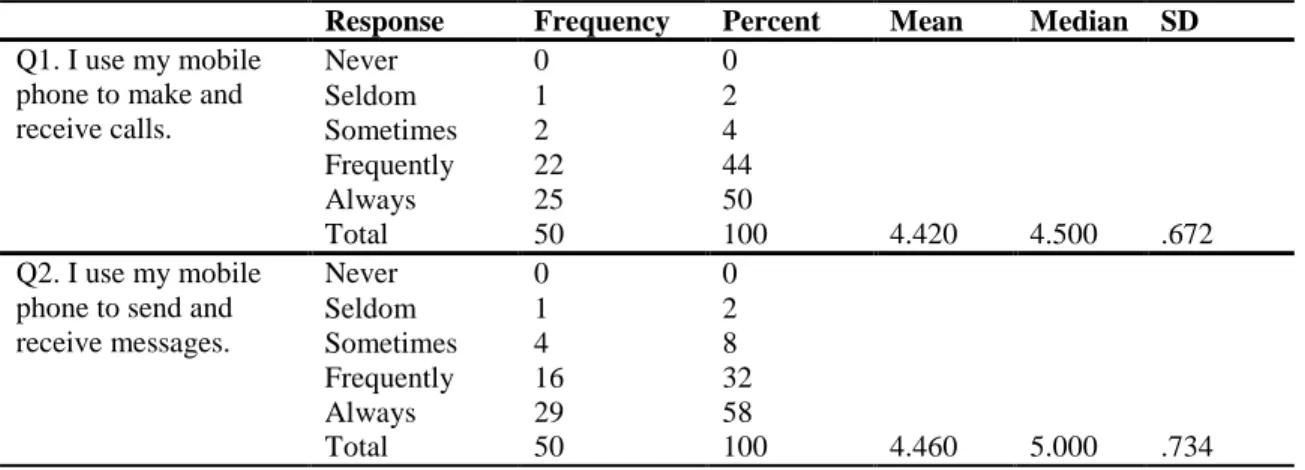
Table 1 - Tendencies towards using basic functions of mobile phones ... 49
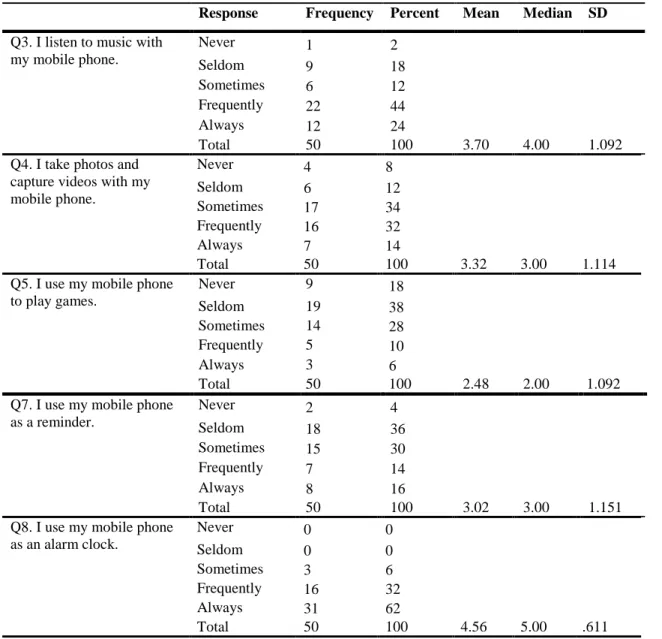
Table 2 - Tendencies towards using extra functions of mobile phones ... 50
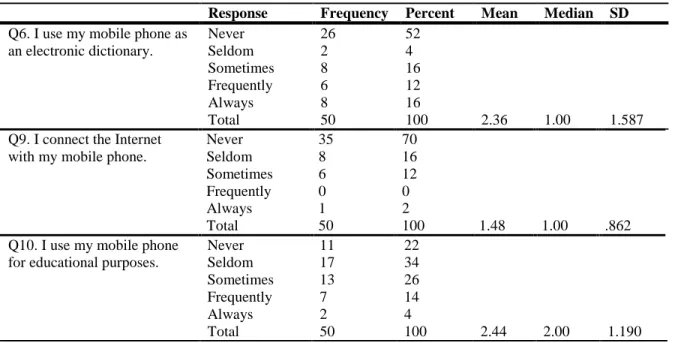
Table 3 - Tendencies towards using mobile phones for educational purposes ... 51
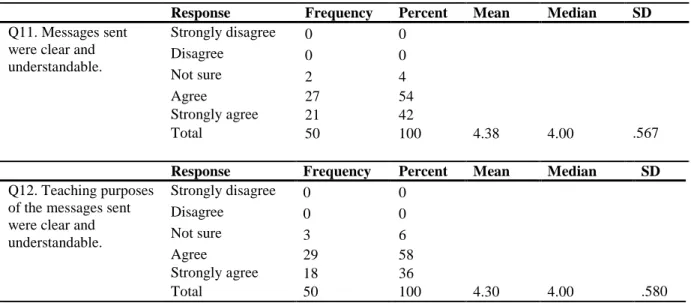
Table 4 - Attitudes towards clarity and comprehensibility of the supplementary messages ... 52
Table 5 - Attitudes towards the clarity of the content supplemented through messages 53
Table 6 - Technical problems in displaying the messages ... 54
Table 7 - Attitudes towards the similarity between the messages and the textbook contents ... 54
Table 8 - Attitudes towards the convenience of messages for reading again to study English ... 55
Table 9 - Attitudes towards the functions of messages as preparation and practice tools ... 56
Table 10 - Categories of attitudes towards MALL supplementation ... 57
Table 11 - Responses to the categories of attitudes towards MALL supplementation ... 57
Table 13 - Comparison of attitudes towards SMS and MMS messages ... 60
LIST OF FIGURES
Figure 1- CMFCELL phonebooks interface ... 36
Figure 2 - A sample MMS preparation screen ... 37
Figure 4 - Number of supplementary messages sent in each week... 39
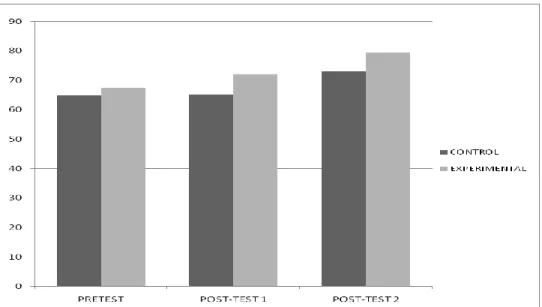
Figure 5 - Comparison of test scores between the experimental and control groups ... 43
Figure 6 - Comparison of the actual readers‟ test scores between the experimental and control groups ... 46
CHAPTER 1: INTRODUCTION
Introduction
The last several decades have seen a steady and rapid improvement in computer assisted language learning materials from very simple plain text gap-filling tasks and programming exercises to highly sophisticated interactive tools and multimedia
applications. Every new technology has tended to lead to new perspectives in teaching, and language teaching is among the fields which have undergone big changes as a result of rapid improvement in technology. With the emergence and rapid improvement of small, portable notebook computers, for instance, the concept of “mobile learning” has gained popularity. Changes in mobile technologies, developments in information technologies and telecommunication, and expansion of the mobile market, likewise, have inspired people to make use of this “anytime” and “anywhere” technology in language teaching. Use of mobile devices in teaching has also been the focus of
language learning studies since language learning necessitates interaction and autonomy which are the key concepts in mobile assisted language learning (MALL). Changing trends and ongoing developments in mobile devices have inspired educators, scholars, and investors to explore further uses of those devices in language teaching. This study, therefore, intends to explore possible uses and the effectiveness of MALL as a
Background of the study
Mobile assisted language learning (MALL) has recently become a focus of research as a sub-branch of the wider field of study, computer assisted language learning (CALL). Along with the rapid development of computers and information technologies, implementation of new technologies in foreign language teaching has gained
considerable importance both in the literature and in classroom practice (Kukulska-Hulme, 2006; Kukulska-Hulme & Bull, 2009; Lu, 2008; Thornton & Houser, 2002, 2005). Although there is a general consensus on the direct relationship between CALL and MALL, there is not yet an agreed separate definition of “mobile learning”.
According to Kukulska-Hulme (2009), mobility may both refer to “learner mobility” and “mobility of technologies” in general. Likewise, there have been several attempts to define certain concepts in mobile enhanced learning. For example, Trifanova et al. (2004 cited in Kukulska-Hulme & Shield, 2007:3) define mobile devices as “...any device that is small, autonomous and unobtrusive enough to accompany us in every moment”. Likewise, Traxler (2005 cited in Kukulska-Hulme & Shield, 2007:273) defines mobile learning as “any educational provision where the sole or dominant technologies are handheld or palmtop devices”. It can be realized in these and other related definitions that there is a clear focus on the concepts of mobility and easy access. These are the key features which make mobile learning a fashionable topic among scholars, educators, and also learners.
The first educational practices of mobile devices were suggested in the UK and the USA at the beginning of the 2000s (Brown, 2001). However, they were merely
artificial trials in laboratory settings and this made those attempts far from being mobile at all. In August 2004, not too long after these first trials, Duke University distributed free iPods to all of its freshmen class students (Belanger, 2005), and a Korean firm provided the students who bought iRiver personal multimedia players with free downloadable college entrance exam lectures (Kim, 2004 cited in Kukulska-Hulme & Shield, 2007). These were among the first attempts to actively make use of mobile devices in teaching and learning, and since then the world has seen the rapid expansion of the use of mobile technologies in learning and foreign language learning in particular.
Afterwards, the potential of using a mobile phone to access the Internet in order to improve EFL listening skills (Nah, White & Sussex, 2008), and the opportunities to develop English pronunciation by using MALL (Saran, Seferoglu & Cagiltay, 2009), and the effectiveness of MALL on vocabulary acquisition (Cavus & Ibrahim, 2009; Lu, 2008; Stockwell, 2007; Thornton & Houser, 2005) have been investigated by the scholars and educators all around the world.
Studies and surveys clearly state that mobile devices are widely used by students, even if not for educational purposes. A survey in Japan (Thornton & Houser, 2005) revealed that 100 per cent of 333 tertiary level participants used a mobile phone, and 20 per cent of them had used a personal digital assistant (PDA). In addition to this, another very recent study (Cavus & Ibrahim, 2009) has shown that, compared to other mobile devices, mobile phones are widely used by university students. The popularity of mobile phones may be ascribed to their relatively low prices, a wider range of models and brands, and a longer history of use than the other types of mobile learning devices.
Growing interest have led to the emergence of a huge mobile devices market, many mobile learning websites, educational messaging software, bulk text and multimedia messaging companies all around the world. Similarly, this popularity and interest have also inspired scholars, educators, and school administrators to make use of that widespread technology for educational purposes. Kukulska-Hulme (2006), supports the idea that such an expansion of mobile technologies has enabled ordinary people to take advantage of this “anywhere and anytime” learning innovation, and that it is no longer a privilege of experts or wealthy people to own and use mobile devices and mobile learning facilities. However, it would be a serious misconception to believe that one can learn only via these mobile learning tools. Chinnery (2006) states that mobile learning devices are just instructional tools, rather than the instructors themselves. He also suggests that the effectiveness of mobile learning depends on the existence of an effective instructor who is equipped with good pedagogical knowledge.
In the light of previous studies (Thornton & Houser, 2005; Chinnery, 2006; Kukulska-Hulme, 2006, 2009), the advantages of using mobile learning facilities and adopting MALL in educational contexts can be listed as enhancing mobility and
portability, enabling anytime and anywhere learning, providing the learner with fast and easy access to sources of information, and the excitement of learning with innovation. Along with its advantages in learning, there have been several contrary arguments about the disadvantages or misuse of mobile assisted learning. Research (Fallahkair et al., 2007 cited in Kukulska-Hulme & Shield, 2007) suggests that mobile devices do not justify their expense, and that the same learning outcomes can be attained by using
written documents, books, home computers, or even TV programs. A different criticism directed at mobile learning in a recent study (Kukulska-Hulme & Shield, 2007)
emphasizes the absence of a full exploitation of the mobility and portability of mobile language learning activities, and for this reason, it questions the sufficiency of evidence to prove the efficacy of MALL in language learning. Further studies on different and specific aspects of language would definitely contribute to the attempts at answering the questions about the efficacy of MALL. It should be kept in mind that not all the aspects, skills, or structures of language can be conveyed properly via mobile learning tools. Thus, rather than making general claims about the effectiveness of MALL on learning, studies should focus more on specific aspects of language learning for particular levels and learning contexts in order to ensure better understanding and use.
Statement of the problem
Mobile assisted language learning (MALL) has recently become a popular topic of interest as a sub-branch of computer assisted language learning (CALL) in teaching and learning second or foreign languages. Studies have, so far, investigated several aspects and issues related to MALL. The first attempts to use MALL in teaching were discussed by Brown (2001), and it was revealed that MALL was not perceived
differently from CALL at that time. Later, another study (Shih, 2007) discussed the differences between MALL and CALL. Apart from definitional aspects, studies have so far investigated the effectiveness of MALL in developing different skills. The potential of using a mobile phone to access the Internet in order to improve EFL listening skills (Nah, White & Sussex, 2008), and the opportunities to develop English pronunciation by
using MALL (Saran, Seferoglu & Cagiltay, 2009) have been looked into, and several other studies have been conducted to see the effectiveness of MALL on teaching vocabulary in general (Thornton & Houser, 2005; Stockwell, 2007; Lu, 2008; Cavus & Ibrahim, 2009). In addition to these, the correlation between MALL and motivation to improve EFL proficiency (Nah, White & Sussex, 2008) has been among the major studies conducted about MALL. Some of these studies have dealt with MALL as a substitute for conventional learning materials or coursebooks, and as a distance learning tool. Despite the existence of studies focusing on many aspects of MALL in language teaching, the literature still lacks sufficient research exploring the effectiveness of MALL and mobile learning tools as supplementary materials for ELT coursebooks. Similarly, the literature in Turkey also lacks research investigating new technology integrated approaches in the field of language teaching. Additionally, the attitudes of learners towards MALL in Turkey, where it has rarely been used by few institutions as a supplementary teaching method, remain unknown due to a lack of sufficient research on the topic.
This study, therefore, aims to contribute not only to the literature, but also to educational practices by eliciting evidence for the practical uses and the effectiveness of MALL in EFL classes as a supplementary material in foreign language classrooms. The potential of MALL in language learning will be compared with traditional
supplementary materials like worksheets, workbooks and glossaries. Any positive evidence for the effectiveness of MALL as a supplement to regular coursebooks might
enable the teachers to expand their students‟ learning into their daily lives by preparing and sending mobile support messages along with classroom instruction.
Research questions
1. What are the effects on Turkish EFL students‟ classroom achievement of using MALL as a supplementary learning material?
2. What are the attitudes of students towards using MALL as a supplementary learning material?
Significance of the study
This study addresses a newly flourishing approach in foreign language learning both in theory and in practice. Studies about different aspects of MALL do not have a long history, and they are limited in number. Thus, the literature lacks research exploring the possible uses, the importance, and the effectiveness of MALL in
supplementing language teaching. Furthermore, improvements in mobile technologies and innovations in EFL learning have been on the rise and further research will always be needed in such an evolving field.
In the light of the findings of this study, teachers, administrators, or curriculum designers might be able to decide whether MALL is an advantageous supplementary source for conventional classroom teaching. They will then be able to decide whether to use MALL actively in language teaching. Curriculum designers, for instance, may decide to prepare curricula which include regularly used MALL applications. Investors and stakeholders in EFL teaching, such as language schools, private colleges and
university administrators, may also be able to see whether MALL is really worth the expense, especially in a developing country like Turkey. As it is a matter of debate whether it is worth spending that much money on technology in education, this study might give valuable ideas to consider before adopting or rejecting MALL. Finally, opinions and attitudes of the students who are included in the MALL process may provide us with an insight into further uses of MALL applications in educational settings. Positive findings might also inspire EFL/ESL textbook publishers to create mobile learning software or supplementary packs to support classroom learning.
Definitions of key concepts
MALL (Mobile Assisted Language Learning): MALL in this study refers to an “anytime and anywhere” approach to language learning that enhances learning through the use of mobile devices such as mobile phones, PDAs, tablet PCs, Smartphones, laptop computers, and personal media players (Kukulska-Hulme, 2005; Samuels, 2003;
Traxler, 2007).
Supplementary messages: In this study, mobile SMS and MMS messages that were sent to support coursebook content and in-class learning in English preparatory classes were called “supplementary messages”. The messages intended to function as preparation for the following topics or practice of the previous topics.
Effectiveness: “Effectiveness” in this study corresponds to the positive or negative impact of supplementary messages on students‟ achievement test scores.
Achievement tests: In this study, “achievement tests” that were used as measurement instruments were mainly midterm examinations given at ADÜ YDYO. Other achievement tests like quizzes were not used in the analyses since they did not all include four basic language skills as well as grammar and vocabulary.
Basic skills: “Basic skills” term in this study corresponds to four main language skills such as reading, writing, listening, and speaking as well as grammar and
vocabulary.
Attitudes: Students‟ feelings, experiences, and thoughts about MALL
supplementation was explored through the post-treatment questionnaire at the end of this study. From this perspective, “attitudes” refers to the feelings, opinions, and experiences of the participants.
Conclusion
In this chapter, the background of the study, statement of the problem, research questions, and significance of the study have been discussed and explained in detail. In the next chapter, the literature will be reviewed under several headings. In the following chapters, the methodology of the study and the results will be presented. Finally, the findings of this study will be discussed in light of the findings of previous research in the literature in the last chapter.
CHAPTER 2: LITERATURE REVIEW
Introduction
Along with the rapid improvements in technology, mobile devices have become widespread in the last few decades. According to the official report of the International Telecommunication Union (2009), 67 per cent of the world population has mobile cellular subscriptions. The report also states that the developed countries in Asia, the Pacific and Europe have the greatest numbers of mobile broadband subscriptions. Contrary to what might be expected, there has also been a huge increase in the number of mobile technology users in the developing countries. In addition to their
extensiveness around the world, there are some local studies (Thornton & Houser, 2005) confirming the widespread use and ownership of mobile devices among high school and college students. Such interest in mobile technologies and rapid technological
developments have been inspiring people from different fields and sectors like
advertising, finance, transportation, and education to make use of mobile technologies.
Rapid improvements and expansion of mobile technologies have also been one of the primary focuses of many scholars, educators, and administrators in different fields of education. With the emergence of portable, mobile devices, these people started their attempts to make the most of this newly flourishing technology. Such attempts have led to the emergence of a new concept: mobile learning (ML). Likewise, the attempts and efforts to use mobile devices in language learning have resulted in another new concept: “mobile assisted language learning (MALL).”
Since the beginning of the 2000s, MALL has been an intensively researched field of study. Every new technology introduced inevitably influenced the language teaching and learning methods, approaches, and techniques. With the emergence of online accessible software and tools, for example, teachers started to support classroom
learning with additional online applications that can be easily accessed by the students in their homes. The rise and expansion of portable media players, similarly, brought about the idea of “anytime, anywhere learning” which has also been an inspiration for distance education. The production of portable, light, and accessible wireless devices like
notebook computers, personal digital assistants (PDAs), and GPS (Global Positioning System) navigators was another milestone in language teaching practices. Nowadays, many people around the world and in Turkey are able to access and use these
technologies, and there have been a number of studies exploring the effectiveness of those tools and applications in teaching and language teaching in particular.
Technology in the classroom and Computer Assisted Language Learning (CALL) The emergence of CALL
The origins of computer assisted learning (CAL) and computer assisted language learning (CALL) can be traced back to the 1950s when large, unmovable mainframe computers were used as technological instructional tools. Even in this era of low
technology, the developments in computers were quite rapid and, not long after the first uses of CALL, the University of Illinois introduced one of the most important language learning applications, called PLATO (Programmed Logic for Automated Teaching Operations), in 1959 (Marty, 1981). PLATO‟s significance among many other computer
applications was mostly due to its advanced computer and specially designed
programming language for language teaching purposes. These initial developments in CALL were followed by the arrival of the personal computer (PC) towards the end of the 1970s. PCs started a new age in CALL. Due to their accessibility, sophisticated programming features, and suitability for further upgrading, personal computers became one of the mostly used devices in language teaching. Although the first personal
computers were equipped with quite simple applications like simple tutorials or drill interfaces, there was a tendency to use these devices in language teaching. The tendency to make use of newly-introduced technologies in language teaching and learning
continued and increased with the emergence of microcomputers, videodiscs, CD/DVDs, hypertext, hypermedia, and interactive multimedia applications (Beatty, 2003).
Since the beginning of the 1990s, far more innovations in computer technology have been witnessed than ever. The evolution of internet technology and www (World Wide Web) sources changed the lives of both ordinary people and those interested in language teaching and learning. Computerized learning was no longer limited to computer programs accessible only on the computers at a university or in a computer laboratory. On the contrary, “www” has enabled people to access vast amounts of information from various sources wherever and whenever they have the opportunity to connect to the Internet (Levy, 1997). This easy access to sources of information on the Internet also inspired educators. Since then, there have been lots of language teaching websites, online sources and materials for language learning, online publications of
books, and many other multimedia applications that have proved to be useful language learning tools.
Nowadays, it can be observed that CALL applications are used on many
occasions, for various purposes. For instance, many teachers present information using the Internet and technological tools like LCD projectors or screens in the classroom. They frequently ask their students to email their assignments or submit them online. There are many interactive language learning games with colourful and motivating interfaces available to young learners. Almost all English language teaching textbooks are accompanied by audio cassettes or video CDs, interactive DVDs or software, and online subscriptions to specially designed language learning websites.
From CALL to MALL
Every innovation in the world of technology contributes to the existing
applications and makes them more efficient and more practical to use. The evolution of mobile learning is clear proof of this statement. Current developments in mobile
technologies have contributed greatly to present CALL and e-Learning devices.
In 50 years of rapid progress, CALL was greatly empowered by the expansion of e-Learning (electronic or web-based learning) in the 1990s. A decade after this
outstanding innovation, m-Learning (mobile learning) enabled CALL users to access the information whenever and wherever they needed. The use of mobile assisted language learning applications was first observed at the beginning of the 2000s. Several
students and customers (Belanger, 2005) and MALL became an actively used learning tool after a series of trials in laboratory settings. These attempts were all perceived as breakthroughs by educators and scholars. This process illustrates the swift evolution that the current technologies have undergone.
Mobile Assisted Language Learning (MALL) Definitions of concepts
Mobile assisted language learning is a relatively new field in language learning and settled definitions have not yet developed for terms frequently used in this field. Even the definition of the “mobility” itself is a highly controversial issue. Scholars have been exploring ways of creating comprehensive, universal, and satisfactory definitions of some concepts in mobile learning (Keegan, 2002; Kukulska-Hulme & Traxler, 2005; Traxler, 2007).
Most of the disagreement about the definition of mobile learning and mobile language learning arises from the connotations of “mobility”. Kukulska-Hulme (2009) argues that this ambiguous term may have two different connotations which will inevitably affect the definition of “mobile learning”. On one hand, it may refer to “mobile technologies” which are portable and accessible anytime and anywhere. On the other side, “mobility” may also refer to the “mobility of the learner”, in which case the focus is not on the technology used, but on the learner who accesses the information in different places, at different times. Kakihara and Sørensen (2001) emphasize that while defining mobility, spatial mobility should not be the only concern; “temporal” and “contextual mobility” are also of great importance. In this sense, Traxler‟s (2005)
definition of mobile learning as any educational provision where the dominant
technologies are handheld devices would not be that comprehensive in that it does not refer to learner mobility. Thus, the definition of mobile learning as a type of learning that takes place when the learner is not at a fixed location, or when the learner takes advantage of the learning opportunities offered by mobile technologies would be healthier to adopt (O‟Malley et al., 2003: 6). In light of the descriptions and definitions of mobile learning, therefore, mobile assisted language learning (MALL) can be defined as an approach to language learning that enhance “anytime and anywhere” learning through the use of “mobile devices” such as mobile phones (also cellular phones or hand phones), PDAs, tablet PCs, Smartphones, laptop computers, and personal media players (Kukulska-Hulme, 2005; Samuels, 2003; Traxler, 2007).
Kukulska-Hulme (2005) reports in her study that there is some computing-related terminology that is worth knowing even for someone who has no interest or ability in technology. The terms “ubiquitous”, “pervasive”, and “ambient” are the ones which have been frequently used to describe the characteristics of MALL. Ubiquity, in this context, refers to being available everywhere due to mobile devices‟ portability. Portability (small size, and lightness) of mobile devices turns them into familiar, ordinary objects in our daily lives, and this makes MALL a pervasive learning type. In time, these small, portable, light, ubiquitous mobile devices become such natural parts of our lives that they are called “ambient” (Kukulska-Hulme, 2005).
Types of MALL devices and current uses
Mobile learning is an extremely fast-moving field with numerous devices and applications which are in a process of rapid change and development. Trinder (2005) presents a broad list of mobile learning and mobile enhanced language learning devices ranging from simple single-purpose devices like audio-players, to multi-purpose high-technology devices such as mobile phones and personal digital assistants (PDAs).
Trinder‟s list of mobile tools (2005) includes mobile phones, PDAs, Smartphone, GPS tools, laptop computers, MP3 or MP4 players, video tapes, multimedia players, e-game tools, e-organisers, e-books, CDs and DVDs as mobile learning devices. Although attempts were made to use these devices in artificial learning settings for experimental purposes, nowadays, it can be observed that they are also used for educational purposes and many of them have already proved to be effective tools of language learning.
Mobile Phones
According to a recent report by International Telecommunication Union (ITU, 2009), mobile phones, among the many types of mobile learning devices, are the most widely owned and used devices, with approximately 4.6 billion subscriptions all over the world. Moreover, this number has been increasing at an enormous pace due to the
developments in the mobile phone technology and the expansion of the mobile market. This popularity of mobile phones is rooted in several reasons. First of all, even the simplest mobile phones provide an SMS (Short Message Service) function for sending text messages, alarm clocks and planners to wake us up or to remind us of important dates. Similarly, most of them also have MMS (Multimedia Message Service) functions
which enable the user to transmit messages which integrate coloured visuals, sounds and text (Collins, 2005). Additionally, mobile phones incorporate basic daily personal information management tools like address books and calendars which let people get rid of their phonebooks and agendas (Trinder, 2005). More sophisticated mobile phones of the modern age of technology include integrated software, cameras, Bluetooth
connections, media players, mobile operating systems, wireless connection tools, and even navigation tools (GPS) which make them no different than a fully equipped computer. However, despite all these sophisticated functions and widespread use of mobile phones, the users rarely perceive their potential as a learning tool (Pettit & Kukulska-Hulme, 2007) and only a minority of users use them for learning purposes.
The popularity of mobile phones has inspired not only the stakeholders in the mobile market, but also many innovative scholars and educators in the last decades. There have been a number of studies looking into the use of mobile phones and basic functions of mobile phones in language learning. Kiernan and Aizawa (2004) carried out one of the first studies investigating the use of mobile phones in learning. In their study, they combined a MALL approach with task-based learning and drew attention to a number of potential advantages of mobile phones in language learning. Later on, several studies (Thornton & Houser, 2005; Cavus & Ibrahim, 2007; Saran, Seferoglu &
Cagiltay, 2009; Stockwell, 2007; Kennedy & Levy, 2008; Lu, 2008) have particularly investigated vocabulary learning opportunities through mobile phones‟ SMS and MMS functions. In these studies, mobile phones have mostly proved to be effective vocabulary learning devices. For example, Thornton and Houser‟s study (2005) reveals that students
who received mobile vocabulary lessons learned more vocabulary than the students learning the same set of vocabulary in class. Similarly, Lu (2008) states that mobile phones are more effective vocabulary learning tools than traditional pen and paper based vocabulary learning. However, he also mentions the importance of participation in the learning activity. The results of the same study suggests that the students reading the vocabulary messages with a high frequency did better on the post-tests than those reading the messages with less frequency. Nah, White and Sussex (2008) recently conducted a similar study with mobile phones, but in that study, they used mobile
phones to access the Internet for learning purposes. At the end of this quasi-experimental study, they concluded that students were more motivated to learn on the WAP sites, and eventually, revealed positive attitudes towards using mobile phones as means of mobile online language learning.
The studies mentioned above show that mobile phones are more frequently put into practice for educational purposes than the other MALL devices. When it is
considered that mobile phone technology has been the most rapidly adopted one in history (ITU, 2009), and that mobile phones are more accessible, cheaper, lighter, and more practical than many other mobile devices, it is not difficult to understand the reasons behind their popularity in research and practice.
Personal Digital Assistants (PDAs)
Beatty (2003) explains Personal Digital Assistant (PDA) as small hand-held computers used for downloading and storing information such as documents, databases and calendar entries. This definition of PDAs was perhaps a valid and complete one for
the times Beatty carried out his research. Although it still includes basic functions of PDAs, several additional features of the modern PDAs should be added to this
definition. Modern PDAs, for example, enable users to compose music, to capture and create videos, and to program advanced computer software. Nowadays, these devices are also used as GPS navigators through direct connection to the Internet via GSM
operators. Due to their advanced technological features, such as multimedia interfaces, integrated operating systems, media players, and larger screens, PDAs are among the mobile devices that have been most used for educational purposes (Clough et al. 2007; Corlett et al., 2005; Song & Fox, 2008; Trinder, Magill & Roy, 2005). Nevertheless, when compared to mobile phones, they are owned and used by relatively few people (Cavus & Ibrahim, 2009; Chinnery, 2006). Studies have so far investigated different uses of PDAs in several fields of study in education. Corlett et al. (2005) for instance, designed a mobile learning organiser which was implemented on a wireless-enabled handheld PDA to support 17 MSc students‟ academic achievement. The organiser provided the students with all the content they covered in classes. In this study, PDA-enhanced learning was favoured by the students and many students reported that they wanted more resources to be made available in PDA format (Corlett et al., 2005). However, besides its advantages like portability, lightness, attractiveness, and
sophisticated operating system features, students also reported some problems like short battery life, no internet access outside the school, applications which slowed down the system, and general crashes from time to time.
Another study, by Song and Fox (2008), focused on using PDA devices for incidental vocabulary learning. This study suggests that undergraduate level students can make use of PDAs in various and novel ways to improve their vocabulary. They
sometimes use PDAs to connect to the internet for urgent needs, and sometimes use them as electronic dictionaries.
Podcasts and Media Players
The Oxford Advanced Learners‟ Dictionary (2003) provides a definition of the portmanteau word “podcasts” as a series of digital media files that are released and downloaded through an Internet connection. An important point to be considered about podcasts is that they work on the basis of subscription technology, that is the user subscribes to the source of the materials on the internet and then this source sends the podcasts, rather than signing in and downloading material (Campbell, 2005). In this respect, synchronization of podcasting devices with computers is an important issue to increase the effectiveness of these devices. The word podcast is usually explained as a combination of iPod, a famous media-player, and broadcast (Evans, 2008: 492). Podcasts were first introduced at the beginning of the 2000s and Duke University was the first institution to realize the educational potential of these magic boxes (Belanger, 2005). In 2005, Duke University distributed free 20GB Apple® iPod devices to all of its freshmen students and enabled them to download course content to support their
learning. Since then, there have been many studies (Bongey et al., 2006; Abdous et al., 2009) exploring the use and the effectiveness of podcasting in supporting academic achievement and language learning. In a recent study, Power and Shrestha (2009) have
suggested that podcasting is also a new tool being used in education and language learning in particular, and podcasts can be enhanced by adding images, movies, and hyperlinks to their contents. However, in a previous study, Stanley (2006) used podcasts as supplementary tools for textbook materials in his study and the results suggest that podcasting can serve as an efficient supplemental resource outside the class.
Additionally, several other studies (Evans, 2008; Lee & Chan, 2007) have focused on the effects of podcasting on the students‟ motivation and attitudes towards learning and they have elicited positive attitudes suggesting that podcasts are motivating tools for learning.
In addition to podcasting devices like iPods, iPhones or iTunes, simple media players can also be used for similar learning purposes particularly in distance education. In Turkey, Anadolu University provides its students in the Faculty of Open Education with MP3 files of the courses they take. Students listen to these sound files in any kind of media player enabled device like MP3 or MP4 players, portable CD/DVD players, mobile phones, and palm computers.
MALL: a substitute or a supplementary device?
Mobile assisted language learning (MALL) studies have raised numerous
controversial questions. Among the most important of these is whether MALL should be adopted as a substitute for regular classroom teaching practices or should be used as a supplementary learning tool to support the regular classroom teaching and learning process. At the initial stages of MALL, there were no such arguments proposed.
(Cherian & Williams, 2008; Zhang, 2004) began to focus on the use of MALL as a substitute for classroom teaching. Cherian and Williams (2008) have stated that they observe no significant difference between distant mobile learning outcomes and traditional classroom learning outcomes. They further note that with appropriate pedagogy, mobile learning can be as effective as face-to-face learning, and they even prefer to call m-Learning as “the beginning of the end of classroom learning” (Cherian & Williams, 2008:1).
On the other hand, Chinnery (2006) has argued that mobile technologies cannot function as the instructors in the classrooms. They are only instructional tools which are useful in the hands of qualified and successful instructors. In the same study, Chinnery supports his arguments by calling attention to certain disadvantages of using MALL either resulting from its own nature or from the instructors themselves. A number of disadvantages and challenges related to the use of MALL applications such as small screens, limited audiovisual quality, virtual keyboarding, and limited power supply clearly shows that MALL cannot possibly serve as a substitute for traditional classroom learning (Chinnery, 2006:13).
Similarly, Kukulska-Hulme (2009) has investigated the effects of mobile
learning practices on traditional language learning. Unlike the studies suggesting the use of MALL as a potential substitute for classroom learning, Kukulska-Hulme (2009) has dealt with MALL as a supplementary learning material and she has come up with some suggestions about the best pedagogy to implement in language learning.
MALL as a supplementary material in the language classroom Advantages of MALL as a supplementary material
Since its emergence as an extension of e-Learning at the beginning of the 2000s, MALL devices and applications have been intensively investigated in many studies. Most of these studies have either supported or disclaimed the use of MALL as a learning material in educational settings.
Studies have commonly emphasized the mobility of MALL devices, which lets the users take the advantages of these devices wherever and whenever they want
(Cherian & Williams, 2008; Chinnery, 2006; Kennedy & Levy, 2008; Kukulska-Hulme, 2009; Power & Shrestha, 2009; Wishart, 2008). Learning, similarly, is not restricted to four-wall classrooms in this type of learning. This unique feature of mobile devices results in many other advantages. For example, Kennedy and Levy (2008) have reported that learners find learning languages with MALL applications quite motivating due to their portability. Half of the participants in that study saved the SMS vocabulary lessons for rereading later, and one of the students said:
“The messages encouraged me to go over points or vocabulary seen in class outside my usual study time.” (Kennedy & Levy, 2008: 323) Another reason that makes MALL devices advantageous is that they are highly accessible and there is a very widespread ownership of certain mobile devices like mobile phones, wireless laptops, and media players (ITU, 2009; Thornton & Houser, 2005). Portability and widespread ownership concepts together correspond to the
“ubiquity” of MALL devices, which has been a useful concept to define mobile learning and MALL (Kukulska-Hulme, 2005).
In order to gain a deeper insight into the benefits of using MALL as a
supplementary material, it will be useful to focus on the advantages of using different MALL devices separately. Mobile phones, first of all, free learners from place and time limitations and this is a highly motivating situation for the students. As mentioned before, students feel more motivated to learn when they are free to decide when and where they learn. More sophisticated mobile phones or Smartphones enable learners to connect to the internet to access the information they need anytime and anywhere. In a study on the development of listening skills by accessing the Internet using mobile phones, Nah, White and Sussex (2008) found that the WAP sites accessed through mobile phones were effective for EFL listening skills development and served as useful supplementary learning means to be used regularly outside the classroom. The
reasonable price of the mobile phones and mobile communication, huge broadband capacities (ITU, 2009) of the GSM servers, and the integration of several advanced features in one mobile phone can be listed as some other advantages of using mobile phones as supplementary MALL devices.
Personal Digital Assistants (PDAs), likewise, have been among the most favoured MALL devices due to their larger screens, interactive functions, user-friendly keyboards, integrated office software, easy access to the Internet via wireless connection equipments, and advanced multimedia features. Contrary to what Chinnery (2006) suggests about the screen sizes of PDAs and Smartphones, research (Bradley et al.,
2005) reports that reading from PDA screens rather than carrying A4 papers in order to review previous topics before examinations or in-class assignments can be a lot more appealing to students. According to Beatty (2003), PDAs are useful learning devices in that they provide students with an intensive learning environment, and by using PDAs, students can receive and send their assignments through wireless modems and cards anytime in a day. This advantage is clearly due to the flexibility in when and where they are posted and completed with the access to the Internet. In a related study, for example, Wishart (2008) distributed PDAs to his participants and explored various uses of PDAs to supplement classroom learning. The participants were all foreign language teacher trainees and it was observed that they were able to download teaching materials on the internet, access online dictionaries or send and receive e-mail messages on their PDAs. They were also able to access the course documentation anytime and anywhere they wanted. Another benefit they reported was easily accessing the online course discussion groups in which they had the opportunity to discuss course content either with their instructors or other trainees. The participants also stated that despite the PDAs‟ relatively short battery lives, they used PDAs to audio or video record themselves or their students while speaking in the target language in order to monitor their process and give feedback later (Wishart, 2008). Finally, another recent study (Song & Fox, 2008) found that students mostly make use of PDAs as comprehensive web-enabled
dictionaries which help them improve their vocabulary learning and pronunciation skills.
Podcasts and podcast-enabled devices like iPods have been used by millions of people all around the world mostly for entertainment. However, studies ( Abdous et al.,
2009; Belanger, 2005; Copley, 2007; Ducate & Lomicka 2009; Sutton-Brady et al., 2009) have shown that podcasting can be beneficial to learning, and in particular to language learning. Duke University‟s iPod First Year Experience Final Evaluation Report (Belanger, 2005) indicated that iPods enabled flexible, location-independent access to multimedia course content and thus reduced dependence on physical classroom materials. In the same study, it was reported that using iPods served as a means of individual learning, which is one of the key concerns of mobile learning. Similarly, there has been research (Copley, 2007) revealing students‟ interest in and motivation towards learning through podcasts of regular lectures. Abdous et. al. (2009) have further
suggested that academic podcasting has great potential for learning in a foreign language classroom and with proper pedagogy it can also be integrated into the curriculum. They discuss iPods‟ and MP3 players‟ affordability, portability, and accessibility as the factors making these small devices a great potential for foreign language learning.
Various advantages and potential benefit of MALL and the use of mobile devices in foreign language learning have been discussed. Despite the abundance of benefits of using MALL as a supplementary learning material, there have also been claims about the drawbacks and difficulties of using MALL in foreign language learning or learning in general.
Disadvantages and challenges of using MALL as a supplementary material
Along with its numerous advantages, MALL can sometimes be disadvantageous for both teachers and learners. Studies that have been conducted so far revealed not only positive findings supporting the usefulness of MALL as a supplementary learning
material, but have also come up with some contrary findings suggesting that MALL does not serve as effectively as it has been thought to do. Likewise, the difficulties of using MALL in teaching and learning have been pointed out many times in the literature (Belanger, 2005; Chinnery, 2006; Kukulska-Hulme & Traxler, 2005; Kukulska-Hulme, 2009; Power & Shrestha, 2009; Todd & Tepsuriwong, 2008).
First of all, mobile phones, as one of the most widespread MALL devices, have been criticized for their tiny screen sizes and keyboarding problem due to one-finger data entry function (Chinnery, 2006). These features make mobile devices inappropriate tools for improving certain skills like writing. Thornton and Houser (2002 cited in Chinnery, 2006) also state that mobile phones are not suitable devices to learn new content but they may serve as effective tools for reviewing and practicing. Kiernan and Aizawa (2004) conducted a comprehensive study comparing the foreign language achievements of three groups of students: PC e-mail users, mobile phone e-mail users, and face-to-face speaking learners. At the end of their study, they found that the students in the “mobile phone e-mail user group” were not able to complete the narrative tasks in due time, whereas all other students were successful in completing the given tasks. This failure in completing the narrative tasks on time can be attributed to one-finger data entry, and it may be an indication of the fact that MALL cannot always be effective in improving all the skills in foreign language learning. Another serious drawback of using MALL applications frequently in language learning is that the output of the mobile devices is gradually becoming visual rather than verbal (Colpaert, 2004), and this cannot
be an acceptable situation for language learning, which necessitates a lot of communication and verbal interaction.
Secondly, as more advanced products of modern technology, PDAs also have certain drawbacks as well as their numerous benefits in language learning. When compared to other MALL devices like mobile phones, MP3/MP4 players, CD/DVD players, and even laptop computers, with prices over $1000, PDAs are not easily
accessible for many people. Another commonly stated problem with using the PDA as a MALL device is the wireless internet connection problem outside campuses and
educational settings (Wishart, 2008). Additionally, it has been reported several times that the battery life of PDAs is relatively short and poses a serious problem by
interrupting the learning process (Corlet et al., 2005). Corlet et al.‟s study also showed that PDAs‟ limited memory capacity turns out to be a problem as the learners keep downloading resources either for educational purposes or for entertainment.
Attitudes of students and teachers towards MALL
Studies exploring the attitudes towards using mobile learning devices in language learning and teaching have mostly been integrated into the studies about the effectiveness of MALL in language learning. So, there are not many studies directly delving into the attitudes of learners and teachers towards MALL in the literature. For this reason, the attitudes of the students and teachers can be best explained by their performances, comments, ideas, and perceptions in the effectiveness studies.
Kennedy and Levy (2008), for instance, elicited in their post-trial survey that a huge percentage of students find learning vocabulary through MALL very effective and motivating. In a similar study (Todd & Tepsuriwong, 2008), the students reported that they think “mobile mazes” that are used to teach different aspects of English are quite useful and motivating tools for language learning. Additionally, Stockwell (2008) also revealed that learners have high expectations of MALL, and thus, a strong motivation for learning languages via MALL applications despite the difficulties they experienced in MALL sessions in the study. Another study by Corlett et al. (2005) focused on the attitudes of the students towards mobile assisted learning via PDAs, and students‟ responses indicated that mobile learning organizers as MALL applications are not perceived as very effective means of learning. Nevertheless, the ratings on the Likert Scale surveys in this study demonstrated that the students still had positive attitudes towards learning via MALL devices like iPods.
Studies have so far investigated many aspects of technology enhanced learning applications and mobile assisted language learning. However, the literature still lacks research investigating MALL applications as supplementary learning materials for English language coursebooks. Another fact to be taken into consideration is that the literature also lacks research focusing directly on attitudes towards using MALL as a supplementary learning material can be explained by the rareness of the use of MALL applications in educational settings (Pettit & Kukulska-Hulme, 2007). MALL, due to its being a new technology in many respects, has been put into practice mostly in
to explore the potential of this new field. Thus, the students and teachers whose attitudes have been taken into consideration are generally the participants in these studies.
Therefore, further studies on the attitudes towards MALL as well as effectiveness studies may be conducted in real educational settings where MALL has been used in practice for a certain period of time.
Conclusion
The literature review in this chapter began with an introduction of the emergence of computer assisted language learning (CALL) and afterwards, the shift from CALL to mobile assisted language learning (MALL) was discussed. Additionally, some key concepts and terms in MALL were defined and different definitions of concepts were compared. Finally, after comparing two different views about the use of MALL in educational settings, it was explained that MALL was used as a supplementary material in this study. In addition to these, the findings of previous research about the attitudes towards MALL were discussed. The literature review revealed that there is still need for further research into the effectiveness of MALL applications in supplementing ELT coursebooks and into the attitudes towards such supplementation in educational settings.
In the next chapter, the setting, participants, instruments, procedure and data analysis methods of the study will be discussed.
CHAPTER 3: METHODOLOGY
Introduction
This study investigated the effectiveness of mobile assisted language learning (MALL) applications in supplementing ELT coursebooks at tertiary level. In this investigation, a special project called MobilinguAid (Mobile Language Aid) was designed to supplement students‟ classroom learning through MALL applications like SMS and MMS messages and to explore whether such supplementation contributes significantly to the classroom achievement of the students. This study attempted to answer two research questions:
1. What are the effects on Turkish EFL students‟ classroom achievement of using MALL as a supplementary learning material?
2. What are the attitudes of students towards using MALL as a supplementary learning material?
Setting and Participants Study Setting
The study was conducted at Aydın Adnan Menderes University (ADÜ), in the School of Foreign Languages (ADÜ YDYO) in the spring term of the 2009-2010 academic year. Founded in 2009, ADÜ YDYO is a newly established school.
Previously, preparatory class English language at ADÜ had been taught at KuĢadası and Didim Vocational Schools. For this reason, some administrative problems like delayed feedback for getting the necessary permissions could be anticipated in this research.
Currently, there are 17 preparatory classes with students from KuĢadası School of Tourism and Hotel Management and Didim Vocational School. In both schools the medium of instruction is at least 30 percent English. Students coming from these Schools are registered in the departments of Hotel Management, Travel Management and Tour Guiding, Food and Beverage Management or in some other tourism related programs. At ADÜ YDYO, students from these departments are required to take an English proficiency test at the beginning of the semester. Those scoring under 60 out of 100 pursue a one-year compulsory preparatory class English program. These students are placed into classes with different levels of proficiency on the basis of their scores from the proficiency test. During the year, they attend main course and grammar skills classes and they are taught four basic skills in the main course classes which are primarily guided by the coursebooks used in the institution. At the end of the year, all students at the School of Foreign Languages take another proficiency test and if they manage to pass the test, they register for their departments in different faculties, schools and vocational Schools. If they fail the proficiency test, they have to repeat the
preparatory class one more year.
Profile of the participants
Students from four different pre-intermediate preparatory English classes from KuĢadası School of Tourism and Hotel Management took part in the study. Students were to follow a 4 year program with 30 percent English-medium instruction after completing preparatory class English program. They were all regular day-time students and no evening classes were involved. The classes were chosen in cooperation with
ADÜ YDYO administrative staff on the basis of equality. Hence, they were all 4-year undergraduate, day-time, pre-intermediate level English preparatory students from the same School at ADÜ
Two of the four classes formed the „experimental group‟ and two the „control group‟. At the beginning of the experimental process, the achievement scores of all of the students in the four classes (N = 112) were obtained. In order to ensure equality between the achievement levels of the experimental and control group students at the start of the process, it was determined that the scores of outliers and drop outs would be intentionally left out of all subsequent analyses. However, these students were not informed about their exclusion from the analysis in order to avoid harming their feelings and decreasing their motivation in class.
After these exclusions were made, 50 students remained in each group. 64 were males and 36 were females. The median achievement score of students in the control group was 64.83 (SD = 13.64) and that of students in the experimental group was 65.33 (SD = 13.64). Mann-Whitney tests showed no significant difference in scores between the two groups (U = 1236.5, p = .926)
Instruments
Several instruments were used in this quasi-experimental study. Some of the instruments readily existed whereas some others were created by the researcher. For instance, a special software interface enabling the researcher to send SMS and MMS messages to the participants was purchased as a readily existing instrument. The
post-treatment questionnaire, on the other hand, was created by the researcher to explore participants‟ attitudes towards MALL supplementation. In order to depict a detail view of the study, the instruments will be explained and discussed under several sub-headings in this session.
Pre-test, Post-tests, and Post-questionnaire
In order to ensure the equality between the groups‟ levels of achievement at the beginning of the study, mid-term examination scores of the participants were obtained from ADÜ YDYO and used as “pre-test” scores in this study. Similarly, in order to measure the improvement of the students after the experimental process, official records of the achievement test scores from the midterms given in the second semester were obtained in the fourth week, and at the end of the study. All these tests were prepared and graded by ADÜ YDYO Testing Office instructors. The tests included basic
language skills except for speaking which was tested through a separate speaking quiz. As MALL supplementation does not have any direct effect on speaking skills, it was thought that the scores of these speaking tests should not be included in the
measurements. Instead of this, midterms which included grammar, vocabulary, reading, writing, and occasionally listening were chosen as pre- and post-tests in the study. Finally, a post-questionnaire developed by the researcher and controlled by two other cooperating instructors from ADÜ YDYO was used to explore the attitudes of the participants. This questionnaire consisted of seven sections including “demographic and background profile information”, “general tendencies towards using mobile phones”, “attitudes towards the content of supplementary messages”, “attitudes towards mobile
assisted language learning”, “comparison of attitudes towards SMS and MMS message types”, “attitudes towards the instructiveness of different content types” and “additional opinions and recommendations”. The post-questionnaire was also piloted with 30 students in order to check the reliability of the questionnaire and to make necessary revisions to the items. Since the students‟ level of proficiency in English was not sufficient, the questionnaire was given in Turkish (see Appendix C) and translated into English for the analyses (see Appendix B).
CMFCELL Bulk Messaging Software
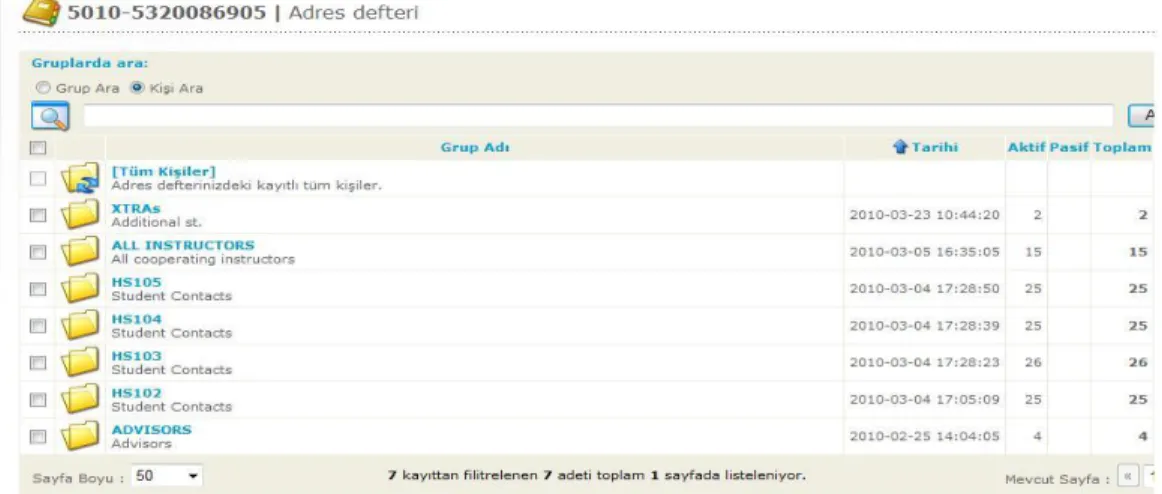
Upon forming the experimental and the control groups, special software called CMFCELL, which enabled the researcher to create and send bulk messages to many participants, was purchased before the start of the MobilinguAid study. Due to some governmental regulations on the sale of this software, it was purchased with the help of a private language teaching institution. The software enabled the researcher to create online phonebooks for each class and group in the experiment (see Figure 1), and post bulk SMS or MMS messages to all participants at once. Using the interface, the researcher was also able to create MMS messages including visuals and audio content easily. After sending the messages, it was also possible to check the reports and see whether messages were received by the participants or not.
Figure 1- CMFCELL phonebooks interface
Supplementary SMS and MMS Messages
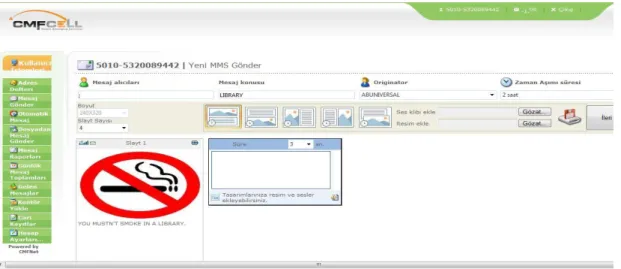
The software purchased for this experimental study had a user-friendly and practical interface which enabled the researcher to design and create messages quite easily. The researcher could decide on the content to include in the messages, and prepare it as a plain text or multimedia message (see Appendix G). It was possible to create the SMS (Short Message Service) messages simply by typing the content just like sending an SMS via a mobile phone (see Appendix F). However, for sending MMS (Multimedia Message Service), some more technical details had to be considered while preparing the messages (see Appendix E). For instance, pixel values of the visuals, size of the contents, width of the screens, and format of the pictures included were all taken into consideration in order to succeed in sending them to the participants. Figure 2 illustrates an MMS preparation screen. In SMS messages, target forms and contents were bolded, capitalized or underlined, whereas in MMS messages they were colored or accompanied by colorful visuals which made these messages more interesting and
motivating than the simple, plain text messages (see Appendix G). Finally, in this study, seven types of message content were sent to the participants. These were mainly the messages including “new words and their meanings”, “new phrasal verbs and their meanings”, “examples of new grammar structures”, “grammar rule explanations”, “form and vocabulary integrated, Did you know? titled messages”, “description famous people and figures”, and “Today in History titled messages” (see Appendix D).
Figure 2 - A sample MMS preparation screen
Study Website
In order to ensure a delayed access to mobile supplementary messages, a website called “www.mobilinguaid.com” was created by the researcher, and at the end of each week, the contents of the messages sent during the previous week were uploaded to the website. Instructions for the participating students and EFL instructors at ADÜ YDYO were also posted on this website (see Appendix I). There was an unrestricted access to the website and the participants from the control group could also see the website. However, since the messages were uploaded at least one week after they were sent to the