DOI: 10.5897/JMPR2013.4451
ISSN 1996-0875 ©2013 Academic Journals
http://www.academicjournals.org/JMPR
Journal of Medicinal Plants Research
Full Length Research Paper
An ethnobotanical survey of some medicinal plants in
Keban (Elazığ-Turkey)
Omer Kilic
1* and Eyup Bagci
21
Technical Science Vocational High School, Bingol University, Bingöl 12000, Turkey.
2Department of Biology, Firat University, Elazığ 23100, Turkey.
Accepted 20 March, 2013
In this study, 61 wild plant taxa belonging to 30 families that are used as medicine are documented in
Keban (Elazığ). The most encountered medicinal plant families were Lamiaceae (10 taxa), Asteraceae (8
taxa), Fabaceae (6 taxa) and Rosaceae (5 taxa), the most common preparations were infusion and
decoction. These folk medicinal plants are mostly used for treatment of kidney stones, colds and flu,
analgesic, cough, for skin and diabetes diseases. Mentha longifolia (L.) Huds. subsp. typhoides (Briq.)
Harley var. typhoides, Salvia syriaca L., Rosa canina L., Thymus kotschyanus Boiss. & Hohen. var.
kotschyanus, Portulaca oleracea L. and Rumex acetosella L. were the plants most used by the local
people in Keban, Turkey.
Key words: Ethnobotany, medicinal plants, traditional medicine, Keban, Turkey.
INTRODUCTION
A large portion of the world population, especially in
developing countries, depends on traditional medicine for
the treatment of diseases and injuries. Hundreds of plant
genera, to mention the most important natural resource of
indigenous medicine, are used for that purpose, mainly
as herbal preparations, including very potent and
powerful drugs which have stood the test of time and
could not be replaced by modern medical preparations
(Ahmad, 1998). The World Health Organisation reported
that 80% of the world population rely chiefly on
indigenous medicine and that the majority of traditional
therapies involve the use of plant extracts or of their
active constituents (WHO, 1993, 2002).
Turkey is one of the most floristically rich countries in
the world with astonishing plant diversity which has a
very extraordinary rich flora and a great knowledge of
folkloric medicines and consequently represents a
potential resource for such studies (Hudson et al., 2000).
Turkey’s flora is rich and diverse with 13,181 plant taxa
and 32% of endemism (Özhatay and Kültür, 2006;
Özhatay et al., 2009; Özhatay et al., 2011). Endemism is
one of the most important indicators to evaluate
environmental value of an area. In Turkey, the rate of
endemism in plant species is relatively high when
compared with other European countries (Ugulu et al.,
2008). Throughout history, humans have derived many
uses and benefits from the plants found in their own
region. Initially, wild plants were collected from their
natural habitat, followed by the cultivation of those that
were used most commonly (Akan et al., 2008). A large
portion of the world population, especially in developing
countries, depends on traditional medicine for the
treatment of diseases and injuries. Currently, nearly 80%
of the world population relies on traditional medicine,
mainly medicinal plants, to cure illnesses and ailments.
The various botanical sources, particularly metabolites
and their biological activities, alongside the different
practices of preparing and applying herbal remedies
devised by certain ethnic groups throughout the
millennia, have became the most useful basis for the
development of new pharmaceuticals (Jaric et al., 2007).
The demand for medicinal plants has been on a rapid
increase. According to the data released by the United
Nations Conference on Trade and Development
(UNCTAD), the annual market volume of the medicinal
plants market in the world has reached $40 billion. The
leading countries in medicinal plant trade are China, India
and Germany, respectively (Bayramoğlu et al., 2009).
The export rates of Turkey between 1993 and 2003 in
medicinal and aromatic plants vary between 33,000 and
55,000 tons (Özgüven et al., 2005). So in the present
world, traditional botanical knowledge and ethnobotanical
research are playing an important role in biological
investigation, economy and practical uses. However, the
potential use of plants as a source of new drugs is poorly
explored yet.
Out of the “as a conservative estimation” reported
265,000 species of seed plants, merely a small fraction
has been investigated phytochemically and only a
subsample of it has been properly studied in terms of
their pharmacological properties (Stevens, 2001).
Medical folklore researches about diseases in which
herbal drugs are used colloquially in Turkey, their effects
and names have been going on increasingly since
Republican period (1923) (Baytop, 1999). East Anatolia
(Turkey) has a rich flora due to its variable climate and
high number of ecological zones. This diversity in flora
provides a rich source of medicinal plants, which has long
been utilized by Anatolian cultures, and hence accounts
for the accumulation of remarkable medicinal folk
knowledge in the region (Ozgokce and Ozçelik, 2004).
Majority of the East Anatolian Turkish people live in rural
areas so they use plants for nourishment and medical
purposes. As the case in the other countries of the world,
in recent years, the plants – used traditionally for curative
purposes – have attracted attention of the researchers
(Cakılcıoglu et al., 2010; Polat et al., 2011 and 2012;
Kargıoglu et al., 2008; Tuzlacı et al., 2010; Bulut, 2011;
Gunes and Ozhatay, 2011; Öztürk and Olcucu, 2011).
In recent years interest in herbal medicines has
increased considerably both at home and abroad as they
are believed to be comparatively less toxic than the
synthetics (Yusuf et al., 2007). Documentation of the
indigenous knowledge through ethnobotanical studies is
important for the conservation and utilization of biological
resources (Muthu et al., 2006). Therefore, establishment
of the local names and indigenous uses of plants has
significant potential societal benefits (Bagci, 2000).
Ethnopharmacology has played a significant role in the
progress of conventional medicine and is likely to
become increasingly important in the years to come. A
cooperative approach by ethnobotanists,
ethnopharma-cologists, physicians and phytochemists is thereby
essential to spur the progress of medicinal plants
research (Gilani and Rahman, 2005).
Flora and wide diversity habitats of Turkey threatened
and have declined rapidly over the last 40 years. Rare
and sensitive habitats such as coastal dunes, peatlands,
wetlands, heath lands, grasslands and old growth forest
are under immense threat and declining fast, including
many areas that have yet to be surveyed (Özhatay,
2006). Furthermore, ethno-medicinal knowledge and also
the medicinal plants are depleting at an alarming rate due
to availability of modern medical facilities and other
socio-economic factors. Hence, in order to save knowledge on
pharmaceutical and medicinal usabilities of plants from
loss, some kind of affordable and effective survey
strategy is needed. The ethnobotanical approach is one
such method which meets this requirement and can be
applied to select plants for pharmacological studies
(Redzic, 2007; Kundalic et al., 2010).
Turkish people are quite interested in wild plants, due
to the high proportion of people living in rural areas, and
also for economic reasons. Turkey’s plant diversity is
very rich because of its localization meeting point of 3
phytogeographic region. While Irano-Turan elements are
found in the east, Mediterranean elements are common
in the South. Some formations of Euro-Siberian
geographical region can also be seen in the humid areas.
Much of the knowledge on medicinal plants is passed on
from one generation to the next only verbally, moreover
the increasing human population in the late decades has
led to overexploitation of land in many areas thus
reducing the biodiversity of medicinal plants. Thus, there
is an urgent need to record and utilize the wealth of
ethnobotanical knowledge.
The study was carried out with the aim of preserving
knowledge about local use and provides preliminary
information aimed at a more detailed investigation on the
bioactive studies. Also, this study identified not only the
wild plants collected for medical purposes by local people
of Keban County in the Eastern Anatolia Region, but also
the uses and local names of these plants.
MATERIALS AND METHODS
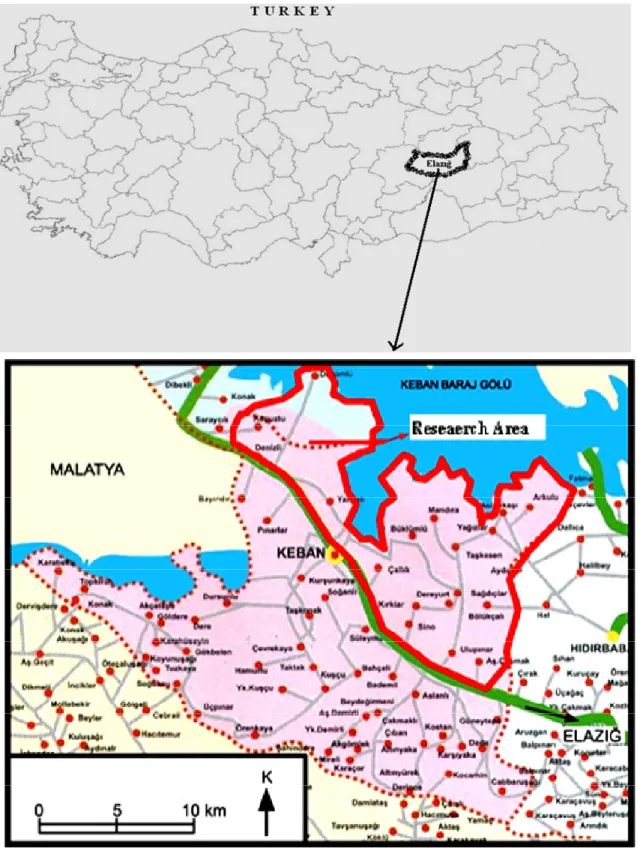
Study area was located on the east of Anatolian diagonal, in the skirts of South-Eastern Taurus Mountains, in the Upper Euphrates Region of the Eastern Anatolia Region (Sengun, 2007). Keban belongs to the Iran-Turan Plant Geography Region and falls within the B7 grid square according to the Grid classification system developed by Davis (1965 to 1985). Keban county is bounded to the east by Elazıg center, to the north by Keban Dam lake and Cemisgezek (Tunceli), to the south by Baskil and to the northwest by Malatya and Agın (Figure 1). It is situated between longitudes 39 to 40° east and latitudes 38 to 39° north. Keban area is of an average 780 m above sea level and 543 km2. Hacısor (1900 to
2000 m) and Emirosman mountain (1800 to 1900 m) are main highest mountains of the research area. Baskil and Kuzova basins are located within the boundaries of the county. Today, the county serves as the center for 30 villages and it is situated between Elazıg, Malatya and Tunceli, it has a rich culture, influenced by both cities. A floristic study was initially conducted to determine the flora of study area, in this study, 87 families, 379 genus and 820 taxons were identified. The number of endemic taxons were 93, with a ratio of 11.3% to the total flora (Kilic and Bagci, 2011). The field work was carried out over as period of 2 years (2010 to 2011). During
Figure 1. Geographical location of the study area.
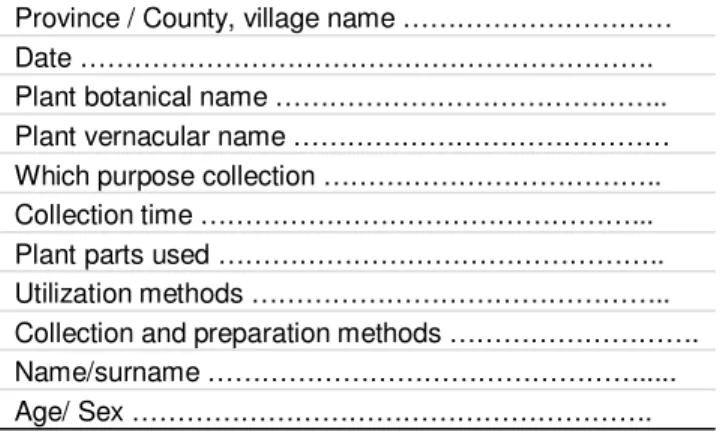
this research, 20 villages have been visited, about 150 plant taxa used for local people were collected and total of 120 local people were interviewed. ‘An Ethnobotany info questionnaire’ was admi-nistered to the local people through face-to-face interviews. The information for these plants, such as local names, used parts, their
usages, methods of preparation, administration dosage and duration treatments have been recorded by mean of “Ethnobotany info questionnaire” (Table 1).
Plants were identified using the standard text, “Flora of Turkey and the East Aegean Islands” Vol. 1 to 9 (Davis, 1965 to 1985),
Table 1. Info questionnaire of ethnobotany.
Province / County, village name ………
Date ……….
Plant botanical name ………..
Plant vernacular name ………
Which purpose collection ………..
Collection time ………...
Plant parts used ………..
Utilization methods ………..
Collection and preparation methods ……….
Name/surname ………...
Age/ Sex ……….
Flora of Turkey and Aegean Islands (supll. 1) Vol. 10 (Davis et al., 1988), Flora of Turkey and the Aegean Islands (supll. 2) Vol. 11 (Güner et al., 2000) and were compared with the specimens in Fırat University Herbarium (FUH). The names of plant families were listed in alphabetic order. Scientific names of plant species were identified according to the ‘Author of Plant Names’ (Brummit and Powell, 2001), ın addition, whether the names of the local plants are Turkish or was checked from the web page of Turkish Language Association (TLA) (http://tdkterim.gov.tr/bts/).
Demographic characteristics of the respondent were determined and recorded through face-to-face interviews using the question form. Total respondents people are 83; beetwen 30 to 40 years (5 woman, 10 man), 40 to 60 years (19 woman, 29 man), over 60 years (8 woman, 12 man). Interviews were made on the busy hours of the common areas (bazaars, tea houses, farms, gardens, house etc.) visited by the citizens of Keban County and its villages. The respondents of the questionnaire are Turkish citizens. As we think that young people are not suitable for an ethnobotanical study, the questionnaire was only administered to people over 30 who knew about medicinal plants. The people who had knowledge of plants were visited at least for two times; one of these visits is particularly paid to their houses. During the interviews, demographic characteristics of the study participants, and local names, utilized parts and preparation methods of the plants were recorded. The people who participated in the study were requested to indicate the wild plants they used. These plants were collected from the work book. The researcher were accompanied during the questionnaire study by retired teacher, Ali Zahit Kılıc.
The Kurdish are of the major ethnic group in the region, with small minorities of Turkish and Zazaki groups in the county. People of Turkish origin are approximately 50 million and people of Kurdish and Zazaish origin are about 12 million 600 thousand (Demirtas, 2008). Zazaish people are a community which honorably preserved their own identity and adopted being neither Turkish nor Kurdish. However, a significant part of Zazaish people adopt Kurdish upper identity today (Onder, 1999).
A floristic study was initially conducted to determine the flora of our study area (Kilic and Bagci, 2011). In this study, 87 families, 379 genera belonged to these families and totally 820 taxa were determined as species, subspecies and variety levels. The number of endemic taxons was 95, with a ratio of 11.6% to the total flora. Investigations were carried out in the following 14 places, with 83 informants: Keban center (10 informants), Asagıcakmak (8 informants), Ulupınar (4 informants), Sagdıclar (3 informants), Taskesen (5 informants), Bolukcalı (6 informants), Aydınlar (7 informants), Aslankası (5 informants), Buklumlu (8 informants), Calık (5 informants), Durumlu (9 informants), Denizli (4 informants), Yahyalı (4 informants) and Kopuzlu (5 informants) villages.
Study permit was obtained from the Keban County Administration and Gendarmerie for the questionnaire administered to the citizens of the towns and villages affiliated to Keban.
RESULTS
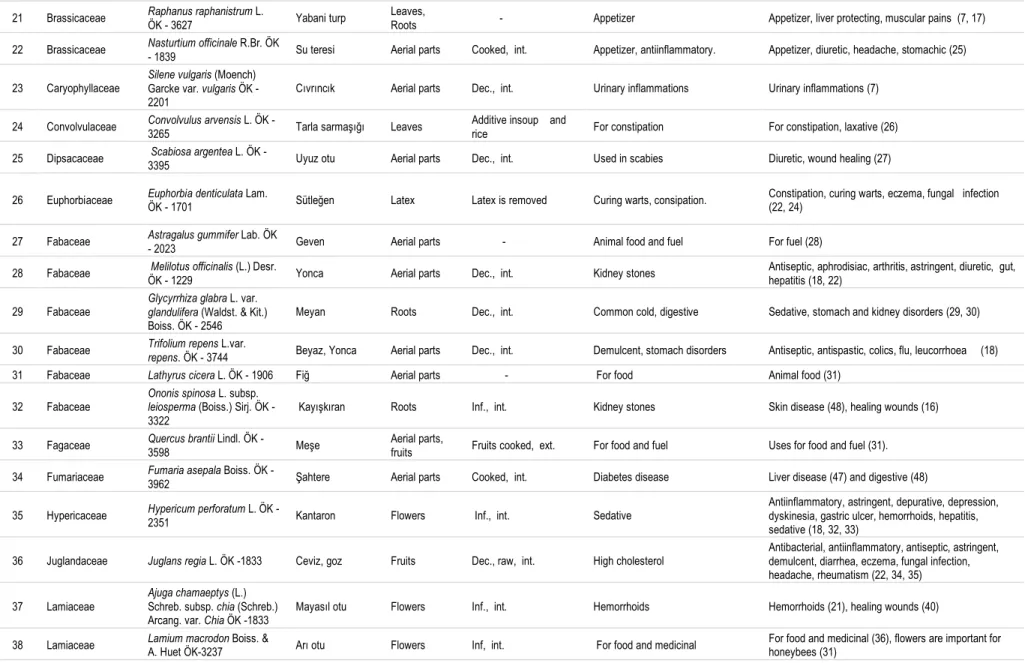
In this study, 61 plant taxa were recorded as used for
medicinal purpose, food and others in the study area. A
total of 61 wild plant species, belonging to 60 genera and
30 families were recorded as medicinal plant and they
are utilized in Table 2 formulations. The most
repre-sented families are Lamiaceae, Asteraceae, Fabaceae;
Rosaceae with 10, 8, 6, 5 taxa, respectively, followed
with 4 species were Brassicaceae and 3 species were
Apiaceae. In our survey, the most frequently used plant
parts were, aerial parts, accounting for 39%, followed by
leaves (24%), fruits (17%), flowers (16%) and others
(4%). Current state shows that people in the research
area were conscious about plants uses, and each part of
plant could be of different effect.
Infusion and decoction are generally the preparation
method of choice, the other preparation methods cooked,
as fresh, latex and raw. A total of 61 plant species have
been documented during this investigation, which are
used by the tribal peoples against about 40 diseases.
Local people used wild plants as medicinal purpose most
frequently for the threatment of kidney stones, colds and
flu, diarrhoea, analgesic, indigestion, stomachache, skin
diseases, constipation, cough and diabetes diseases.
Mentha longifolia (L.) Huds. subsp. typhoides (Briq.)
Harley var. typhoides, Salvia syriaca L., Rosa canina L.
and Thymus kotschyanus Boiss. & Hohen. var.
kotschyanus, Portulaca oleracea L., Rumex acetosella L.
were the plants most used by the local people in Keban,
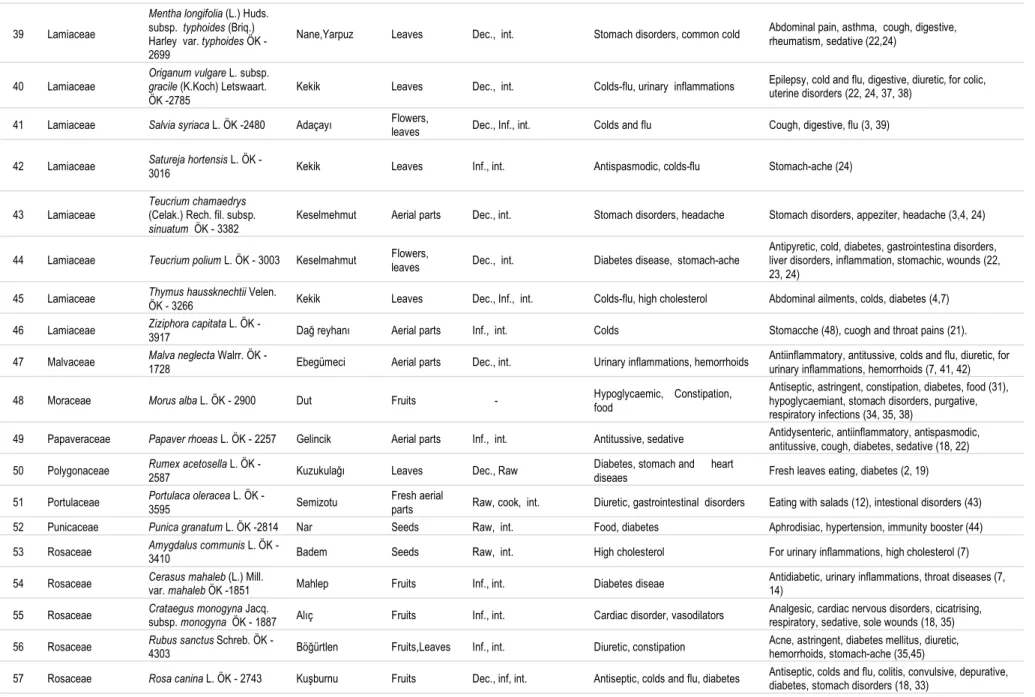
Turkey. The medicinal plants are presented in Table 2,
followed by plant family name, botanical name with
collected numbers, vernaculare name, the used plant
parts, preparations, uses and recorded literature uses are
given. M. longifolia (L.) Huds. subsp. typhoides (Briq.)
Harley var. typhoides, R. canina L., Urtica dioica L. and
Thymus haussknechtii Velen. were the plants most used
by the local people. Anthemis wiedemanniana Fisch. &
Mey. and T. haussknechtii Velen. were found to be
endemic plants used for medical purposes in Keban,
Turkey. The medicinal uses of Achillea wilhemsii
C.Koch., Euphorbia denticulata Lam., Fibigia clypeata
(L.) Medik., Nasturtium officinale R.Br., Pistacia
terebinthus L. subsp. palaestina (Boiss.) Engler and
Ziziphora capitata L. were recorded for the first time in
the research area. Representatives from the genus
Achillea, Rosa, Mentha, Portulaca, Origanum, Thymus,
Salvia, Urtica and Teucrium were thereby reported by
almost 80% of the informants that used these species in
preparations. Each of these species was indicated for
some ailments (Table 2).
Huseyin Aslan, interviewed in Keban Durumlu village,
previously suffered from difficulty in breathing; he stated
Table 2. Wild plant species used as medicinal purposes in Keban, Elazıg, Turkey.
No. Family Plant taxa (Collect number)
Turkish Vernacular name
Used plant
part Preparations Uses Recorded literature uses
1 Adiantaceae Adiantum capillus-veneris L.
ÖK- 2280 Đshalotu Aerial parts Inf., int. Appetitive, diuretic Cough disease (1), diuretic (2) 2 Acanthaceae Acanthus dioscoridis L. var.
dioscoridis ÖK- 2849 Ayı pençesi Leaves Dec., ext. For skin diseases Wound healing (4), expectorative (1)
3 Amaranthaceae Amaranthus retroflexus L.
ÖK- 1505 Selmik
Leaves,
branches Inf., int. For hemorrhoids For hemorrhoids (3), leaves uses for food (5) 4 Anacardiaceae
Pistacia terebinthus L. subsp. palaestina (Boiss.) Engler
ÖK-3309
Menengiç Roots Dec.,ext. Urinary inflammations Antiseptic, diuretic, heart disease, stomach ulcers, urinary inflammations (6, 7)
5 Anacardiaceae Rhus coriaria L.ÖK- 2924 Sumak Fruits Inf., dec.,ext. Antiseptic, diarrhea, stomach
disease Antiseptic, digestive, hemorrhoids, in salads (8, 9) 6 Apiaceae Eryngium billardieri Delarbre
ÖK- 3466 Hıyarok
Fresh,
branches - For inflammattions Branches eaten after strip (10).
7 Apiaceae Falcaria vulgaris Bernh. ÖK- 3414 Kazayağı Aerial parts Dec., ext. For nourishment Addetive in food and saladsm, stomach disease (11). 8 Apiaceae Ferula orientalis L. ÖK- 2001 Çakşır otu Aerial parts Dec., int. For hemorrhoids, stomach disease For hemorrhoids, animal food (12, 13)
9 Asteraceae Achillea wilhemsii C.Koch.
ÖK- 2634 Civanperçemi Leaves Inf., int. For hemorrhoids Digestive, for hemorrhoids, high cholesterol (7, 14) 10 Asteraceae Anthemis wiedemanniana
Fisch. & C.A.Mey. ÖK- 1987 Papatya Flowers Dec., int. Antispasmodic, diabetes Diabetes, hepatic diseases, indigestion (4, 15) 11 Asteraceae Bellis perennis L. ÖK- 3766 Çayır papatyası Flowers Inf., int. Antispasmodic, sedative Antispasmodic, diuretic (3)
12 Asteraceae Crepis sancta (L.) Babc. ÖK-
1355 Keklik otu Flowers Raw Eye diseaes, animal food Vasodilators (7)
13 Asteraceae Helichyrsum plicatum DC.
subsp. plicatum ÖK- 3333 Altın otu Aerial parts Dec. Kidney stones. Kidney stones, abdominal pains, diabetes (40,47) 14 Asteraceae
Tragopogon longirostis Bisch.
ex Sch. Bip. var. longirostris ÖK- 2072
Yemlik Aerial parts Inf., int. Gastrointestinal disorders Treat worms (16), heart diseases (2)
15 Asteraceae Tussilago farfara L. ÖK- 1605 Öksürük otu Flowers Dec., inf., int. Antitussive Antitussive, coughs, expectorant, pulmonary disorders (17, 18)
16 Asteraceae Scorzonera mollis M.Bieb. subsp. mollis ÖK - 3129 Yemlik Aerial parts Eating raw, Dec., int. Food, headache For food (19)
17 Berberidaceae Berberis vulgaris L. ÖK- 1087 Sarı çalı Fruits - Digestive Antiinflammatory, antiseptic, astringent, diarrhea, digestive, disorders, diuretic, hemorrhoids (20, 18) 18 Boraginaceae Anchusa azurea Mill. var.
azurea ÖK -1490 Goruz
Flowers,
leaves Inf., int. Stomach-ache Diuretic, stomach-ache, wound healing (21, 22) 19 Brassicaceae Capsella bursa-pastoris (L.) Medik. ÖK - 1756 Çobançantası Aerial parts Inf, int. Astringent Astringent, diabetes (23, 24)
20 Brassicaceae Fibigia clypeata (L.) Medik.
Table 2. Contd.
21 Brassicaceae Raphanus raphanistrum L.
ÖK - 3627 Yabani turp
Leaves,
Roots - Appetizer Appetizer, liver protecting, muscular pains (7, 17) 22 Brassicaceae Nasturtium officinale R.Br. ÖK
- 1839 Su teresi Aerial parts Cooked, int. Appetizer, antiinflammatory. Appetizer, diuretic, headache, stomachic (25) 23 Caryophyllaceae
Silene vulgaris (Moench)
Garcke var. vulgaris ÖK - 2201
Cıvrıncık Aerial parts Dec., int. Urinary inflammations Urinary inflammations (7)
24 Convolvulaceae Convolvulus arvensis L. ÖK -
3265 Tarla sarmaşığı Leaves
Additive insoup and
rice For constipation For constipation, laxative (26) 25 Dipsacaceae Scabiosa argentea L. ÖK -
3395 Uyuz otu Aerial parts Dec., int. Used in scabies Diuretic, wound healing (27)
26 Euphorbiaceae Euphorbia denticulata Lam.
ÖK - 1701 Sütleğen Latex Latex is removed Curing warts, consipation.
Constipation, curing warts, eczema, fungal infection (22, 24)
27 Fabaceae Astragalus gummifer Lab. ÖK
- 2023 Geven Aerial parts - Animal food and fuel For fuel (28)
28 Fabaceae Melilotus officinalis (L.) Desr.
ÖK - 1229 Yonca Aerial parts Dec., int. Kidney stones
Antiseptic, aphrodisiac, arthritis, astringent, diuretic, gut, hepatitis (18, 22)
29 Fabaceae
Glycyrrhiza glabra L. var. glandulifera (Waldst. & Kit.)
Boiss. ÖK - 2546
Meyan Roots Dec., int. Common cold, digestive Sedative, stomach and kidney disorders (29, 30)
30 Fabaceae Trifolium repens L.var.
repens. ÖK - 3744 Beyaz, Yonca Aerial parts Dec., int. Demulcent, stomach disorders Antiseptic, antispastic, colics, flu, leucorrhoea (18)
31 Fabaceae Lathyrus cicera L. ÖK - 1906 Fiğ Aerial parts - For food Animal food (31)
32 Fabaceae
Ononis spinosa L. subsp. leiosperma (Boiss.) Sirj. ÖK -
3322
Kayışkıran Roots Inf., int. Kidney stones Skin disease (48), healing wounds (16)
33 Fagaceae Quercus brantii Lindl. ÖK -
3598 Meşe
Aerial parts,
fruits Fruits cooked, ext. For food and fuel Uses for food and fuel (31). 34 Fumariaceae Fumaria asepala Boiss. ÖK -
3962 Şahtere Aerial parts Cooked, int. Diabetes disease Liver disease (47) and digestive (48)
35 Hypericaceae Hypericum perforatum L. ÖK -
2351 Kantaron Flowers Inf., int. Sedative
Antiinflammatory, astringent, depurative, depression, dyskinesia, gastric ulcer, hemorrhoids, hepatitis, sedative (18, 32, 33)
36 Juglandaceae Juglans regia L. ÖK -1833 Ceviz, goz Fruits Dec., raw, int. High cholesterol
Antibacterial, antiinflammatory, antiseptic, astringent, demulcent, diarrhea, eczema, fungal infection, headache, rheumatism (22, 34, 35) 37 Lamiaceae
Ajuga chamaeptys (L.)
Schreb. subsp. chia (Schreb.) Arcang. var. Chia ÖK -1833
Mayasıl otu Flowers Inf., int. Hemorrhoids Hemorrhoids (21), healing wounds (40)
38 Lamiaceae Lamium macrodon Boiss. &
A. Huet ÖK-3237 Arı otu Flowers Inf, int. For food and medicinal
For food and medicinal (36), flowers are important for honeybees (31)
Table 2. Contd.
39 Lamiaceae
Mentha longifolia (L.) Huds.
subsp. typhoides (Briq.) Harley var. typhoides ÖK -2699
Nane,Yarpuz Leaves Dec., int. Stomach disorders, common cold Abdominal pain, asthma, cough, digestive, rheumatism, sedative (22,24)
40 Lamiaceae
Origanum vulgare L. subsp. gracile (K.Koch) Letswaart.
ÖK -2785
Kekik Leaves Dec., int. Colds-flu, urinary inflammations Epilepsy, cold and flu, digestive, diuretic, for colic, uterine disorders (22, 24, 37, 38)
41 Lamiaceae Salvia syriaca L. ÖK -2480 Adaçayı Flowers,
leaves Dec., Inf., int. Colds and flu Cough, digestive, flu (3, 39) 42 Lamiaceae Satureja hortensis L. ÖK
-3016 Kekik Leaves Inf., int. Antispasmodic, colds-flu Stomach-ache (24)
43 Lamiaceae
Teucrium chamaedrys
(Celak.) Rech. fil. subsp.
sinuatum ÖK - 3382
Keselmehmut Aerial parts Dec., int. Stomach disorders, headache Stomach disorders, appeziter, headache (3,4, 24)
44 Lamiaceae Teucrium polium L. ÖK - 3003 Keselmahmut Flowers,
leaves Dec., int. Diabetes disease, stomach-ache
Antipyretic, cold, diabetes, gastrointestina disorders, liver disorders, inflammation, stomachic, wounds (22, 23, 24)
45 Lamiaceae Thymus haussknechtii Velen.
ÖK - 3266 Kekik Leaves Dec., Inf., int. Colds-flu, high cholesterol Abdominal ailments, colds, diabetes (4,7) 46 Lamiaceae Ziziphora capitata L. ÖK -
3917 Dağ reyhanı Aerial parts Inf., int. Colds Stomacche (48), cuogh and throat pains (21).
47 Malvaceae Malva neglecta Walrr. ÖK -
1728 Ebegümeci Aerial parts Dec., int. Urinary inflammations, hemorrhoids
Antiinflammatory, antitussive, colds and flu, diuretic, for urinary inflammations, hemorrhoids (7, 41, 42) 48 Moraceae Morus alba L. ÖK - 2900 Dut Fruits - Hypoglycaemic, Constipation,
food
Antiseptic, astringent, constipation, diabetes, food (31), hypoglycaemiant, stomach disorders, purgative, respiratory infections (34, 35, 38)
49 Papaveraceae Papaver rhoeas L. ÖK - 2257 Gelincik Aerial parts Inf., int. Antitussive, sedative Antidysenteric, antiinflammatory, antispasmodic, antitussive, cough, diabetes, sedative (18, 22) 50 Polygonaceae Rumex acetosella L. ÖK -
2587 Kuzukulağı Leaves Dec., Raw
Diabetes, stomach and heart
diseaes Fresh leaves eating, diabetes (2, 19) 51 Portulaceae Portulaca oleracea L. ÖK
-3595 Semizotu
Fresh aerial
parts Raw, cook, int. Diuretic, gastrointestinal disorders Eating with salads (12), intestional disorders (43) 52 Punicaceae Punica granatum L. ÖK -2814 Nar Seeds Raw, int. Food, diabetes Aphrodisiac, hypertension, immunity booster (44) 53 Rosaceae Amygdalus communis L. ÖK
-3410 Badem Seeds Raw, int. High cholesterol For urinary inflammations, high cholesterol (7)
54 Rosaceae Cerasus mahaleb (L.) Mill.
var. mahaleb ÖK -1851 Mahlep Fruits Inf., int. Diabetes diseae
Antidiabetic, urinary inflammations, throat diseases (7, 14)
55 Rosaceae Crataegus monogyna Jacq.
subsp. monogyna ÖK - 1887 Alıç Fruits Inf., int. Cardiac disorder, vasodilators
Analgesic, cardiac nervous disorders, cicatrising, respiratory, sedative, sole wounds (18, 35) 56 Rosaceae Rubus sanctus Schreb. ÖK -
4303 Böğürtlen Fruits,Leaves Inf., int. Diuretic, constipation
Acne, astringent, diabetes mellitus, diuretic, hemorrhoids, stomach-ache (35,45)
57 Rosaceae Rosa canina L. ÖK - 2743 Kuşburnu Fruits Dec., inf, int. Antiseptic, colds and flu, diabetes Antiseptic, colds and flu, colitis, convulsive, depurative, diabetes, stomach disorders (18, 33)
Table 2. Contd.
58 Urticaceae Urtica dioica L. ÖK - 3355 Isırgan Aerial parts Dec., inf, int. Colds and flu, diabetes disease, for losing weight, rheumatism,
Antidiabetic, antiinflammatory, antirheumatic, antiseptic, colds and flu, diuretic, digestive, hypertension, liver diseases (18, 22, 33, 24)
59 Verbenaceae Verbena officinalis L.. ÖK -
3519 Mine çiçeği Aerial parts Dec., int. Cardiac disease and kidney stones Abdominal pains and milk secretion increasing (16) 60 Vitaceae Vitis sylvestris L. ÖK - 3163 Asma, üzüm Fruits, leaves Raw, Dec., ext., int. Antibacterial, hemorrhoids stomach
disorders
Antibacterial (36), hemorrhoids, stomach disorders, hematoplastic (2)
61 Zygophyllaceae Tribulus terrestris L. ÖK -
3374 Pıtırak Fruits Dec., int. Diarrhea, kidney stones
Astringent, diarrhea, diuretic, gout, hemorrhoids, kidney stones, stomatitis (18, 46)
Preperations: Inf, infusion; Dec, decoction; int, internally; ext, externally. 1. (Baytop, 1999). 2. (Tuzlacı, 2006). 3. (Ozgokce and Ozcelik, 2004). 4. (Cakılcıoglu and Turkoglu, 2007). 5. (Ertug, 2000). 6. (Cansaran and Kaya., 2010). 7. (Cakılcıoglu and Turkoglu, 2008). 8. (Everest and Ozturk, 2005). 9. (Yaldız et al., 2010). 10. (Gençay, 2007). 11. (Yıldırım et al., 2008). 12. (Arık, 2003). 13. (Turkoglu et al., 2006). 14. (Ozturk and Dinc, 2005). 15. (Petkeviciute et al., 2010). 16. (Cakılcıoglu et al., 2010). 17. (Leporatti and Impieri, 2007). 18. (Tita et al., 2009). 19. (Dönmez, 2000). 20. (Hamayun et al., 2006). 21. (Mart and Turkmen, 2008). 22. (Ozturk and Olcucu, 2011). 23. (Al-Qura’n, 2009). 24. (Tuzlacı et al., 2010). 25. (Öztürk et al., 2000). 26. (Panhwar and Abro, 2007). 27. (Yapıcı et al., 2009). 28. (Yıldırımlı, 1991). 29. (Akan et al., 2008). 30. (Öztürk and Ölçücü, 2011). 31. (Ertug, 2000). 32. (Cornara et al., 2009). 33. (Pieroni and Giusti, 2009). 34. (Koca and Yıldırımlı, 2010). 35. (Koyuncu et al., 2009). 36. (Ertug, 2004). 37. (Pieroni and Quave, 2005). 38. (Shah and Khan, 2006). 39. (Akhondzadeh et al., 2003). 40. (Yesil and Akalın, 2009). 41. (Ezer and Avcı, 2004). 42. (Kahraman and Tatlı, 2004). 43. (Simsek et al., 2004). 44. (Akgul, 2008). 45. (Ezer and Arısan, 2006). 46. (Uysal et al., 2010). 47. (Çimen, 2007). 48. (Ozdemir, 2005).
that T. haussknechtii Velen tea cleared bronchi
and eased breathing; and that he constantly drunk
this tea and no longer suffered from difficulty in
breathing. The preparations including thyme
extract alleviated cough, following common cold
(Buechi et al., 2005). 65-year-old Omer Celik from
Keban Yahyalı village stated that Mentha spicata
L. subsp. spicata and R. canina L. tea was good
for colds. 58-year-old Mehmet Celik stated that he
used Cerasus mahaleb (L.) Mill. var. mahaleb L.
leaves infusion for diabetes disease. Cerasus
mahaleb var. mahaleb extract was shown to
induce diabetes disease (Cakılcıoglu and
Turkoglu, 2008). Portulaca oleracea L. was found
to be among the plants used as nutrients and
salads in Keban. In Keban and vicinity, locals
roast the matured fruit of P. terebinthus L. and
drank it as coffee. Essential oils of Pistacia
species were proved to have antimicrobial,
anti-inflammatory effects and trigger gastric and
duodenal anti-ulcer activity (Giner-Larza et al.,
2001; Alma et al., 2004).
In the research area, the experiences of the
local people were recorded during the interviews.
Some of the information obtained were compared
to the previous studies. Therefore, the comments
made were tried to be confirmed. During the
interviews, the most mentioned medicinal plants
were; T. haussknechtii, U. dioica, R. canina, M.
longifolia subsp. typhoides, Achillea wilhemsii and
Origanum vulgare subsp. gracile. In a previous
study, unflowered, flowered and seed essential oil
of Origanum vulgare subsp. gracile growing in
Elazıg were analyzed and the main constituents
were found as thymol,γ-terpinene, α-terpinolene,
carvacrol, p-cymene (Kilic and Bagci, 2008).
DISCUSSION
In the research area, local people were found to
use 61 plants from 30 families for curative
purposes. These plants are used in the treatment
of many diseases. By drying infusions or
decoctions of these plants, local people use them
during the whole seasons of the year. Elderly
population is in majority in our field of study and
they have more information about herbs
com-pared to the younger ones. Herbal treatment has
become a tradition for the residents of the study
region. People residing in the region through long
years are more knowledgeable about herbs than
the ones residing for few years. Women know
more about herbs than men and most commonly
used parts of the plants were the leaves, flowers
and aerial parts. Comparison of the data obtained
in this study from the plants growing in Keban with
the experimental data obtained in the previous
laboratory studies proved most of the
ethnobota-nical usages. Literature review showed that
curative plants of Keban are used in different
parts of the world in the treatment of the same or
similar diseases. If a plant is used to treat the
same disease in different places across the world
then its pharmacologic effect could be accepted. It
would be beneficial to conduct pharmacologic
studies on such plants. Therefore, it is suggested
that such studies may make significant
contri-butions to indigenous ethnobotanical knowledge
as well as the studies of the sourcing of raw materials for
the development of commercial pharmaceuticals.
The endemic plant flora of Keban is threatened by such
factors as grazing, expansion of new agricultural lands,
and unsustainable picking of plants to generate income.
Steps should be taken immediately to ensure the
inclusion of relevant flora within conservation
designa-tions. This study identified not only the wild plants
collected for medical purposes by local people of Keban
County in the Eastern Anatolia Region, but also the uses
and local names of these plants. It has been tried, to
generate a source for persons studying in ethnobotany,
pharmacology and chemistry sciences by comparing
knowledge gained from traditionally used herbs with
previous laboratory studies. In the research area, uses
for nutrituents are upper than other uses. After uses for
nutrituents, uses for treatment and food are dominant.
Most of the Keban people rely upon surrounding plant
wealth for their health-care, food and other life
accessories.
Present
ethnobotanical
investigation
generated important information that might be useful for
health-care programme, economic and agricultural policy
development, alternative food programme, development
of essential drugs, and biodiversity conservation action
plan for Eastern Anatolian Region.
REFERENCES
Ahmad I (1998). Screening of some Indian medicinal plants for their antimicrobial properties. J. Ethnopharmacol. 62:183-193.
Akan H, Korkut MM, Balos MM ( 2008). An ethnobotanical study around Arat Mountain and its surroundings (Birecik Sanlıurfa). Fırat Un. J. Sci. and Eng. 20: 67-81.
Akgul G (2008). Local names and ethnobotanical features of some wild plants of Cıldır (Ardahan) and its vicinity. Herb J. Syst. Bot. 14:75-88. Akhondzadeh S, Noroozian M, Mohammadi M, Ohadinia S, Jamshidi
AH, Khani M (2003). Salvia officinalis extract in the treatment of patients with mild to moderate Alzheimer’s disease: a double blind, randomized andplacebo-controlled trial. J. Clin. Pharm. Ther. 28:53-59.
Alma MH, Nitz S, Kollmannsberger H, Dıgrak M, Efe FT, Yılmaz N (2004). Chemical composition and antimicrobial activity of the essential oils from the gum of Turkish pistachio (Pistacia vera L.). J. Agric. Food Chem. 52: 3904-3911.
Al-Qura’n S (2009). Ethnopharmacological survey of wild medicinal plants in Showbak, Jordan. J. Ethnopharmacol. 123:45–50.
Arık M (2003). Korkut ilçesi ve Köylerinin Faydalı Bitkileri. YYÜ, Fen Bilimleri Enstitüsü, (YL Tezi).
Bagci Y (2000). Ethnobotanical features of Aladaglar and its vicinity. Herb J. Syst. Bot. 7:89-94.
Baytop T (1999). Therapy with Medicinal Plants in Turkey. Nobel Med. Pub. Istanbul. 2:118-119.
Bayramoğlu MM, Toksoy D, Şen G (2009). Türkiye’de tıbbi bitki ticareti. II. Ormancılıkta Sosyo Ekonomik Sorunları Kongresi, 19-21 Şubat, Süleyman Demirel Üniversitesi, Isparta.
Brummit RK, Powell CE (2001). Authors of Plants Names, Royal Botanic Gardens, Kew.
Buechi S, Vogelin R, Von Eiff, MM, Ramos M, Melzer J (2005). Open trial to assess aspects of safety and efficacy of a combined herbal cough syrup with ivy and thyme. Forsch Komp. Klass Nat. 12:328-332.
Bulut G (2011). Folk medicinal plants of Silivri (Istanbul Turkey). J. Marmara Pharm. 15:25-29.
Cakılcıoglu U, Sengun MT, Turkoglu I (2010). An ethnobotanical survey of medicinal plants of Yazıkonak and Yurtbası districts of Elazıg
province, Turkey. J. Med. Plants Res. 4:567–572.
Cakılcıoglu U, Turkoglu I (2007). Plants used for cholesterol treatment by the folk in Elazıg. Phyto. Balcan. 13:239-245.
Cakılcıoglu U, Turkoglu I (2008). Plants used for pass kidney stones by the folk in Elazıg. The Herb J. Syst. Bot. 14:133-144.
Cansaran A, Kaya OF (2010). Contributions of the ethnobotanical investigation carried out in Amasya district of Turkey (Amasya-Center, Baglarustu, Bogakoy and Vermis, villages; Yassıcal and Ziyaret towns). Biodivers. Conserv. 3:97-116.
Cornara L, La Rocca A, Marsili S, Mariotti MG (2009). Traditional uses of plants in the Eastern Riviera (Liguria, Italy). J. Ethnopharmacol. 125:16-30.
Çimen OD (2007). Konya ilinde kullamlan halk ilaçlan iizerinde etnobotanik araştırmalar, Yüksek Lisans Tezi, Gazi Üniversitesi Saglık Bilimleri Enstitüsü, Fitoterapi Programı, Ankara.
Davis PH (1965-1985) (Kindly provide one year and effect it in the body of the article). Flora of Turkey and the East Aegean Islands, Vols. 1-9, Edinburgh Univ. Press. Edinburgh.
Davis PH, Mill RR, Tan K (1988). Flora of Turkey and the East Aegean Islands, Vol.10, Edinburgh Univ. Press. Edinburgh.
Demirtas B (2008). The determination and comparison of the opinions and tendencies of Isparta and Brno publics regarding to the whole membership of Turkey to European Union. Institution of Social Sciences, Suleyman Demirel Univ. Press, Isparta, p 22.
Dönmez A (2000). An ethnobotanical study in the Karagüney Mountain: Uses nutraitoinal value and vernacular names, Haccettepe Bull. Nat. Sci. Eng. 28:22-32.
Ertuğ F (2000). An ethnobotanical study in Central Anatolia (Turkey). J. Eco. Bot. 54:155-182.
Ertuğ F (2004). Wild edible plants of the Bodrum Area (Muğla, Turkey), Turk. J. Bot. 28:161-174.
Everest A, Ozturk E (2005). Focusing on the ethnobotanical uses of plants in Mersin and Adana provinces (Turkey). J. Ethnobiol. Ethnomed. 1:6.
Ezer N, Arısan OM (2006). Folk medicines in Merzifon (Amasya Turkey). Turk. J. Bot. 30:223-230.
Ezer N, Avcı K (2004). Folk medicines Cerke, (Cankırı) in Turkey. Hacettepe Univ. J. Fac. Pharm. 24:67-80.
Gençay A (2007). Cizre’nin etnobotanik özellikleri. YYÜ, Fen Bilimleri Enstitüsü, (YL Tezi).
Gilani AH, Yaeesh S, Jamal Q, Ghayur M (2005). Hepatoprotective activity of aqueous-methanol extract of Artemisia vulgaris. Phytother. Res. 19:170–172
Giner-Larza, EM, Manez S, Recio MC, Giner RM, Prieto JM, Cerda-Nicolas M, Rios JL (2001). Oleanonic acid, a 3-oxotriterpene from
Pistacia, inhibits leukotriene synthesis and has anti-inflammatory
activity. Eur. J. Pharmacol. 428:137-143.
Güner A, Özhatay N, Ekim T, Başer HC (2000). Flora of Turkey and the East Aegean Islands, Vol. 11, Edinburgh Univ. Press. Edinburgh. Güneş F, Ozhatay N (2011). An ethnobotanical study from Kars,
Turkey. Biol. Div. Con. 4:30-41.
Hamayun M, Khan SA, Sohn EY, Lee IJ (2006). Folk medicinal knowledge and conservation status of some economically valued medicinal plants of district Swat, Pakistan. Lyon 11:101-113.
Hudson JB, Lee MK, Sener B, Erdemoglu N (2000). Antiviral activities in extracts of Turkish medicinal plants. Pharm. Biol. 38:171-175. Jaric S, Popovic Z, Macukanovic J (2007). An ethnobotanical study on
the usage of wild medicinal herbs from Kopaonik Mountain (Central Serbia). J. Ethnopharmacol. 111:160-175.
Kahraman A, Tatlı A (2004). Local names and ethnobotanical features of some plants in Umurbaba Mountain (Esme-Usak) and its vicinity. Herb J. Syst. Bot. 11:147-154.
Kargıoglu M, Cenkci S, Serteser A, Evliyaoglu N, Konuk M, Kok MS, Bagcı Y (2008). An ethnobotanical survey of inner-West Anatolia, Turkey. Hum. Ecol. 36:763-777.
Kilic O, Bagcı E (2008). A Study on the essential oil composition of the Origanum vulgare L. subsp. gracile and the investigation probability of using as herbal tea. Fırat Un. J. Sci. and Eng. 20: 83-89.
Kilic O, Bagcı E (2011). Aşağıçakmak Köyü ile Keban Baraj Gölü (Elazığ) Arasındaki Sahanın Florası. Ot Sistematik Botanik Dergisi. 18:79-130.
district in Duzce (Turkey). Hacettepe J. Biol. Chem. 38:63-69. Koyuncu O, Yaylacı OK, Tokur S (2009). A study on Geyve (Sakarya)
and its environs in terms of ethnobotanical aspects. Herb J. Syst. Bot. 16:123-142.
Kundalic BS, Christoph D, Valerie KA, Johannes S (2010). Ethnobotanical study on medicinal use of wild and cultivated plants in middle, south and west Bosnia and Herzegovina. J. Ethnopharmacol. 131:33-55.
Leporatti ML, Impieri M (2007). Ethnobotanical notes about some uses of medicinal plants in Alto Tirreno Cosentino area (Calabria, Southern Italy). J. Ethnobiol. Ethnomed. 3:34.
Mart S, Turkmen N (2008). The ethnobotanical culture of Bahce and Hasanbeyli districts of Osmaniye province. Herb J. Syst. Bot. 15:137-150.
Muthu C, Ayyanar M, Raja N., Ignacimuthu S (2006). Medicinal plants used by traditional healers in Kancheepuram district of Tamil Nadu, India. J. Ethnobiol. Ethnomed. 2:43.
Onder AT (1999). Turkiye’nin etnik yapısı. Onderler Publication, Ankara, p 3.
Ozgokce F, Ozcelik H (2004). Ethnobotanical aspects of some taxa in East Anatolia. Eco. Bot. 58:697-704.
Özhatay N (2006). Türkiye’nin BTC boru hattı boyunca önemli bitki alanlar (important plant areas along the BTC pipeline in Turkey). BTC Şirketi, İstanbul.
Özhatay N, Kultur Ş, (2006). Check-list of add. taxa to the supp. Flora of Turkey III. Turk. J. Bot. 30:281-316.
Ozhatay N, Kultur Ş, Aslan S (2009). Check-list of additional taxa to the supp. Flora of Turkey IV. Turk. J. Bot. 33:191-226.
Özhatay N, Kultur Ş, Gürdal MB (2011). Check-list of additional taxa to the Supplement Flora of Turkey V. Turk. J. Bot. 35:589-624.
Öztürk A, Öztürk S, Kartal S (2000). Van otlu peynirlerine katılan Bitkilerin özellikleri ve Kullanılışları, Ot Sistematik Botanik Dergisi 7:167-179.
Ozturk F, Olcucu C (2011). Ethnobotanical features of some plants in the district of Semdinli (Hakkari – Turkey). Int. J. Acad. Res. 3:120-125.
Ozturk M, Dinc M (2005). Ethnobotanical features of Nizip (Aksaray) district. Herb J. Syst. Bot. 12:93-102.
Özdemir E (2005). Niğde-Aladaglar’ın batısında etnobotanik bir araştırma, Yüksek Lisans Tezi, İstanbul Üniversitesi Saglık Bilimleri Enstitüsü, Farmasotik Botanik Anabilim Dalı, İstanbul.
Öztürk F, Ölçücü C (2011). Ethnobotanical features of some plants in the district of Şemdinli (Hakkari-Turkey). Int. J. Acad. Res. 3:120-125. Öztürk M, Dinç M (2005). Nizip etnobotanik özellikleri. Ot Sistematik
Botanik Dergisi 12:93-102.
Özgüven, M., Sekin, S., Gürbüz, B., Şekeroğlu, N., Ayanoğlu, F., Erken, S. 2005. Tütün, tıbbi ve aromatik bitkiler üretimi ve ticareti. Türkiye Ziraat Mühendisleri Odası Teknik Kongresi, Ankara, 481-501. Panhwar AQ, Abro H (2007). Ethnobotanical studies of Mahal Kohistan
(Khirthar National Park). Pak. J.Bot. 39:2301-2315.
Petkeviciute Z, Savickiene N, Savickas A, Bernatoniene J, Simaitiene Z, Kalveniene Z, Pranskunas A, Lazauskas R, Mekas TA (2010). Urban ethnobotany study in Samogitia region, Lithuania. J. Med. Plants Res. 4:64-71.
Pieroni A, Giusti ME (2009). Alpine ethnobotany in Italy: traditional knowledge of gastronomic and medicinal plants among the Occitans of the upper Varaita valley, Piedmont. J. Ethnobiol. Ethnomed. 5:32. Pieroni A, Quave LC (2005). Traditional pharmacopoeias and medicines
among Albanians and Italians in southern Italy: a comparison. J. Ethnopharmacol. 101:258-270.
Polat R, Çakılcıoğlu U, Ertug F, Satıl F (2012). An evaluation of ethnobotanical studies in Eastern Anatolia. Biodivers. Conserv. 5:23-40.
Polat R, Satıl F, Çakılcıoğlu U (2011). Medicinal plants and their use properties of sold in herbal market in Bingöl (Turkey) district. Biodivers. Conserv. 4:25-35.
Redzic SS (2007). The Ecological Aspect of Ethnobotany and Ethnopharmacology of Population in Bosnia and Herzegovina. Collegium Antropol. 31:869-890.
Sengun MT (2007). The effect of Keban Dam Lake to Elazıg climate under the last valuations light. J. Res. Eastern Anatolia Region 5:116-121.
Shah GM, Khan MA (2006). Check list of medicinal plants of Siran Valley Mansehra-Pakistan. Ethnobot. Leaf. 10: 63-71.
Simsek I, Aytekin F, Yesilada E, Yıldırımlı S (2004). An ethnobotanical survey of the Beypazarı, Ayas and Gudul district towns of Ankara province (Turkey). Eco. Bot. 58:705-720.
Stevens PF (2001). Angiosperm Phylogeny Website. Version 9, June 2008 [and continuously updated since].
Tita I, Mogosanu GD, Tita MG (2009). Ethnobotanical inventory of medicinal plants from the South-West of Romania. Farmacia 57:141-156.
Tuzlacı E (2006). Şifa Niyetine Türkiye’nin Bitkisel Halk İlaçları, 1. Basım, Haziran.
Tuzlacı E, Isbilen DFA, Bulut G (2010). Turkish folk medicinal plants, VIII: Lalapas, a (Edirne). Marmara Pharm. J. 14: 47-52.
Türkoğlu I, Kurşat M, Civelek Ş (2006). Karga Dağı (Elazığ) ve çevresindeki bazı bitkilerin yöresel adları ve etnobotanik özellikleri. PS-092, 18. Ulusal Biyoloji Kongresi, (26-30 Haziran), Kuşadası, Aydın.
Ugulu I, Aydin H, Yorek N, Dogan Y (2008). The impact of endemism concept on environmental attitudes of secondary school students. Nat. Montenegrina 7:165-173.
Uysal I, Onar S, Karabacak E, Celik S (2010). Ethnobotanical aspects of Kapıdag Peninsula (Turkey). Biodivers. Conserv. 3:15-22.
World Health Organisation (2002). Traditional Medicine Strategy. 2002-2005.
World Health Organisation (1993). Summary of WHO guidelines for the assessment of herbal medicines. Herbal Gram. 28: 13-14.
Yaldız G, Yüksek T, Şekeroğlu N (2010). Rize ili orman ve Kıyı köylerinin kalkındırılmasında Tıbbi ve aromatik bitkilerin önemi. III. Ulusal Karadeniz Ormancılık Kongresi (20-22 Mayıs 2010). pp. 1176-1786.
Yapıcı UI, Hosgoren H, Saya O (2009). Ethnobotanical features of Kurtalan (Siirt) District, Dicle University. J. Ziya Gokalp Edu. Fac. 12:191-196.
Yesil Y, Akalın E (2009). Folk medicinal plants in Kurecik area (Akcadag/Malatya-Turkey). Turk. J. Pharm. Sci. 6:207-220.
Yıldırım B, Terzioglu O, Ozgokce F, Turkozu D (2008). Ethnobotanical and pharmacological uses of some plants in the districts of Karpuzalan and Adıguzel (Van-Turkey). J. Anim. Vet. Adv. 7:873 - 878.
Yıldırımlı Ş (1991). Munzur Dağlarının tıbbi ve endüstriyel bitkileri. Fırat Havzası Tıbbi ve Endüstriyel Bitkileri Sempozyumu. Ankara pp. 83-102.
Yusuf MA, Wahab MD (2007). Some Tribal Medicinal Plants of Chittagong Hill Tracts, Bangladesh. Bangladesh J. Plant Taxon. 14:117-128.