ARAŞTIRMA
118
GERIATRIC FEMORAL FRACTURES USING A
MODIFIED FRAILTY INDEX AND PERIOPERATIVE
FEATURES: A PROSPECTIVE, MULTICENTRE AND
OBSERVATIONAL STUDY
PERİOPERATİF ÖZELLİKLER VE MODİFİYE
KIRILGANLIK İNDEKSİ İLE GERİATRİC
FEMORAL KIRIKLARINNIN MORBİDİTE VE
MORTALİTELERİNİN ÖNGÖRÜLMESİ: PROSPEKTİF,
ÇOKMERKEZLİ, GÖZLEMSEL ÇALIŞMA
Introduction: Femoral fracture is associated with high geriatric mortality. Frailty is the increased vulnerability to stressors resulting from aging-associated decreases in physiological reserve. We aimed to predict 30-365-day postoperative mortality and morbidity rates using modified frailty index and perioperative characteristics in geriatric femoral fractures.
Materials and Method: Using a prospective observational design, data were collected from patients >65 years undergoing femoral fracture surgery from 13 different hospitals in 2016 and 2017. Post-discharge follow-up periods were 30, 90, 180, and 365 days. Age, sex, modified frailty index and anaesthesia types used during surgery were recorded. Renal markers, troponin I and haemoglobin levels were examined preoperatively and postoperatively at 24 and 72 hours.
Results: We included 392 patients in this study. The age of the patients were between 65 and 101 (mean, 79±11.9). Median modified frailty index was 5 (interquartile range, 2–7). Increase in modified frailty index increased mortality rate. Mortality rate at postoperative 30 days was 9.8%, while overall study mortality rate was 23%. Spinal anaesthesia was administered in 205 patients (52.3%, most frequent), followed by general in 110 (28.1%), peripheral nerve blocks in 21 (5.4) and spinal-epidural in 43 (11%). Anaesthesia type affected both intensive care unit (p<0.001) and total hospitalization (p<0.012) duration. A logistic regression model revealed that frailty index, preoperative creatinine and centre type were independent mortality predictors.
Conclusion: Increased modified frailty index was associated with higher postoperative mortality risk, thus providing an additional way for improving risk stratification. Preoperative creatinine increase and centre types are determining factors in mortality.
Keywords: Frail elderly; Geriatrics; Femoral fractures; Anesthesia; Mortality; Morbidity
Giriş: Femur kırığı geriatrik popülasyonda yüksek mortalite ile ilişkili ciddi bir durumdur. Kırılganlık, yaşlanmayla ilişkili fizyolojik rezerv azalmalarından kaynaklanan savunmasızlığın klinik olarak artmasıdır. Bu çalışmada geriatrik femur kırığı ameliyatı sonrası 30-365 günlük postoperatif mortalite ve morbidite oranlarını, modifiye kırılganlık indeksi ve perioperatif özellikleri kullanarak öngörmeyi amaçladık.
Gereç ve Yöntem: Prospektif, gözlemsel, çok merkezli çalışmada, 2016 ve 2017 yıllarında 13 farklı hastaneden femur kırığı ameliyatı geçiren 65 yaş üstü hastalardan veri toplandı. Taburculuk sonrası belirlenen izlem aralıkları 30, 90, 180 ve 365 gündü. Yaş, cinsiyet, mFİ ve uygulanan anestezi yöntemi kaydedildi. Böbrek belirteçleri, troponin I ve hemoglobin düzeyleri preoperatif ve postoperatif 24 ve 72. saatlerde incelendi.
Bulgular: Araştırmaya 392 hasta dahil edildi. Hastaların yaşları 65-101 yıl idi (ortalama 79±11.9). Medyan modifiye kırılganlık indeksi 5 (interquartile range, 2-7) idi. 7); ve artışı ile mortalite oranını yükseldi. Postoperatif 30 günlük mortalite hızı %9.8 iken genel mortalite %23 bulundu. En sık uygulanan anestezi yöntemi 205 hastada (%52.3) spinal, 110 hastada (%28.1) genel anestezi, periferik sinir blokları 21 hastada (5.4), spinal-epidural 43 hastada (%11) olarak belirlendi. Anestezi tipi hem yoğun bakımda (p<0.001) hem de toplam hastane yatış süresini (p<0.012) etkiledi. Bir lojistik regresyon modeli, modifiye kırılganlık indeksi, preoperatif kreatinin ve uygulama merkezlerinin mortalitenin bağımsız belirleyicileri olduğunu ortaya koydu.
Sonuç: Medyan modifiye kırılganlık indeksi artışı, postoperatif morbidite ve mortalite riski ile ilişkili olup, risk belirlemede kliniğe destekleyici bilgi sunmaktadır. Preoperative kreatinin yüksekliği ve uygulama merkezleri mortalite için belirleyici faktörlerdir.
Anahtar sözcükler: Kırılgan yaşlılar; Geriatri; Femur kırıkları; Anestezi; Mortalite; Morbidite
A
BSTRACTÖ
Z Turkish Journal of GeriatricsDOI: 10.31086/tjgeri.2018240413 2018;21 (2):118-127
Fatma SARICAOĞLU1 Şemsi Mustafa AKSOY2 Aysun YILMAZLAR3 Derya ÖZKAN4 Elif ÇOPUROĞLU5 Eser Özlem ÜNLÜSOY6 Perihan EKMEKCİ7 Mehmet Anıl SÜZER8 Güldeniz ARGUN9 Hasibe SUNUL10 İsmail DEMİREL11 Ahmet EROĞLU12 Filiz Solmaz ALKAYA13 Deniz YÜCE14 Mutlu HAYRAN15
CORRESPONDANCE Fatma SARICAOĞLU
Hacettepe University, Faculty of Medicine, Department of Anesthesiology and Reanimation, Ankara, Turkey Phone: 0312 3051264
e-mail: [email protected] Received: 09/02/2018 Accepted: 18/04/2018
1 Hacettepe University, Faculty of Medicine, Department of
Anesthesiology and Reanimation, Ankara, Turkey 2 Ankara Yıldırım Beyazıt University, Faculty of Medicine,
Department of Anesthesiology and Reanimation, Turkey
3 Private Medicabil Hospital, Anesthesiology and Reanimation, Bursa, Turkey
4 University of Health Sciences, Dışkapı Yıldırım Beyazıt Training and Research Hospital, Department of Anesthesiology and Reanimation, Ankara, Turkey 5 Trakya University, Faculty of Medicine, Department of
Anesthesiology and Reanimation, Edirne, Turkey 6 İstanbul University, Cerrahpaşa Faculty of Medicine,
Department of Anesthesiology and Reanimation, İstanbul, Turkey
7 Ufuk University, Rıdvan Ege Hospital, Department of Anesthesiology and Reanimation, Ankara, Turkey 8 Cankaya Hospital, Anesthesiology and
Reanimation, Ankara, Turkey
9 Dr Abdurrahman Yurtaslan Ankara Onkology Training and Research Hospital, Department of Anesthesiology and Reanimation, Ankara, Turkey 10 University of Health Sciences, Haseki Training and
Research Hospital, Department of Anesthesiology and Reanimation, İstanbul, Turkey
11 Fırat University, Faculty of Medicine, Department of Anesthesiology and Reanimation, Elazığ, Turkey 12 Karadeniz Technical University, Faculty of Medicine,
Department of Anesthesiology and Reanimation, Trabzon, Turkey
13 Süleyman Demirel University, Faculty of Medicine, Department of Anesthesiology and Reanimation, Isparta, Turkey
INTRODUCTION
The incidence of geriatric femoral fractures is expected to exceed 6 million patients worldwide by 2050 because of an increase in the geriatric population (1,2). These procedures have significant 6- and 12-month morbidity and mortality rates. Presently, mortality rates associated with hip fractures are 37.1% in men and 26.4% in women (3-5). Despite numerous risk stratifications and preoperative indicators of postoperative mortality and morbidity, adequate preoperative risk assessments are crucial for enabling clinicians to accurately estimate the types of complications that patients may face.
The American Society of Anesthesiologists (ASA) physical status classification is among the most popular tools; however, it remains insufficient. A standard frailty index can therefore be used as an independent predictor for postoperative mortality and morbidity as an adjunct to ASA (1,6). The term frailty is widely used for denoting a multidimensional syndrome of the loss of reserves (energy, physical ability, cognition, health) that leads to vulnerability to adverse outcomes (7,8). Patel et al. reported that the modified frailty index (mFI) was associated with mortality in patients aged >60 years with femoral fractures at 1 and 2 years and that this predictive model may be quick and easy to use (7). However, these authors also cautioned that further explorations in larger prospective studies are required.
Thus, our primary objective was to assess the predictive value of the mFI on postoperative mortality and morbidity rates associated with geriatric femoral fracture surgery. Our secondary objective was to examine the perioperative factors associated with mortality and morbidity in the geriatric population including the anaesthesia type used during surgery and renal function measured at multiple centres.
MATERIALS AND METHOD
This prospective, observational, multicentre study included data collected from 13 centres between
February 2016 and March 2017. Patients > 65 years undergoing surgery for femoral fracture were enrolled. Patients who had pathological fractures and multiple traumas and whose medical records did not include at least 1-year follow-up were excluded from this study. Patient data included age, sex, anaesthesia type, intensive care unit (ICU) and hospitalization duration and blood transfusion requirement during surgery and the ICU stay. Renal markers (blood urea nitrogen [BUN] and creatinine), cardiac troponin I, and haemoglobin levels were measured preoperatively and 24 and 72 hours postoperatively.
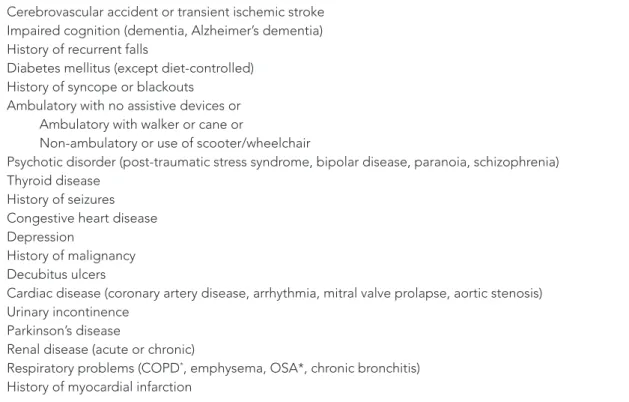
The mFI was based on 19 of the potential 70 Canadian Study of health and Aging clinical deficits (Table 1). Zero points were given for the absence of a deficit and 1 point for the presence. A total of 19 clinical deficits were identified with the potential for maximum and minimum modified frailty levels of 20 and 0, respectively.
Statistical analysis
The numerical variables of the study are presented as either mean and standard deviation (SD) or median and interquartile range (IQR). Mann– Whitney U and Kruskal–Wallis tests were used for comparing two independent groups and more than two independent groups, respectively. Comparisons between two and more than two dependent groups were analysed using Wilcoxon signed-rank and Friedman non-parametric analysis of variance tests, respectively. Bonferroni’s adjustment was applied in
post-hoc analyses of multiple group comparisons
to avoid type-I error inflation. Categorical variables were presented as frequency and percentage and were compared using the chi-squared test. Correlations were analysed using Spearman non-parametric correlation analysis. A logistic regression model was used for evaluating the independent predictors of mortality. A type-I error level of 5% was considered the statistically significant. All statistical analyses were performed using SPSS 21 software (IBM Inc., Armonk, NY, USA).
Table 1. Modified frailty index.
Cerebrovascular accident or transient ischemic stroke Impaired cognition (dementia, Alzheimer’s dementia) History of recurrent falls
Diabetes mellitus (except diet-controlled) History of syncope or blackouts
Ambulatory with no assistive devices or Ambulatory with walker or cane or
Non-ambulatory or use of scooter/wheelchair
Psychotic disorder (post-traumatic stress syndrome, bipolar disease, paranoia, schizophrenia) Thyroid disease
History of seizures Congestive heart disease Depression
History of malignancy Decubitus ulcers
Cardiac disease (coronary artery disease, arrhythmia, mitral valve prolapse, aortic stenosis) Urinary incontinence
Parkinson’s disease
Renal disease (acute or chronic)
Respiratory problems (COPD*, emphysema, OSA*, chronic bronchitis)
History of myocardial infarction
Abbreviations: Chronic obstructive pulmonary disease; OSA, obstructive sleep apnea
RESULTS
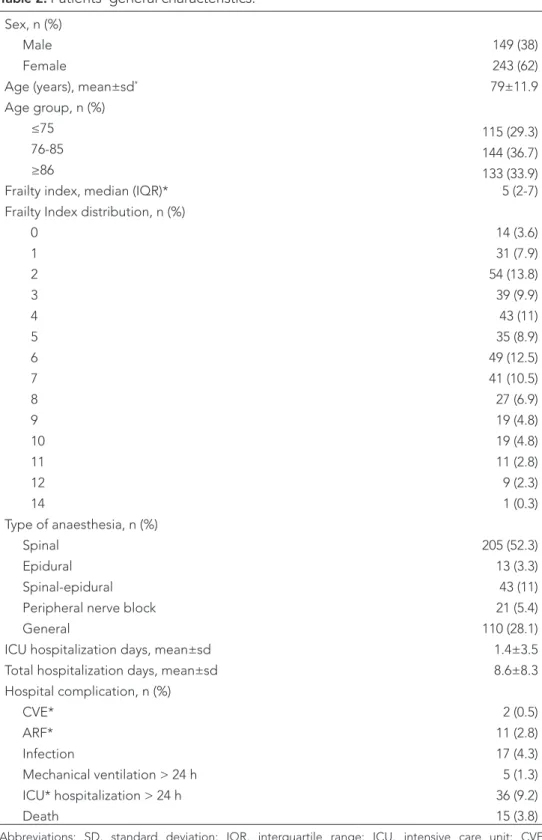
Among the 480-screened patients, 392 were included in this study. Patients’ general characteristics are presented in Table 2. Eight university hospitals, three training and research hospitals and two private hospitals followed up 60.7%, 24.2% and 15.1% of the patients, respectively.
Anaesthesia types used during surgery are shown in Table 2. Anaesthesia types significantly differed among study centres (p<0.001) and impacted both ICU stay (p<0.001) and total hospitalization (p<0.012) duration but did not affect complication or mortality rates. Patients who received general anaesthesia stayed longer at the centre than patients who received the other types (p<0.001). Complication rates were higher
as well, but were not noted to be statistically significant.
The mFI distribution is shown in Table 2. Median mFI was 5 (IQR, 2–7); 127 patients (27.6%) had mFI ≥7. mFI predicts mortality, particularly at 180 days’ follow-up. Increased mFI was associated with increased mortality rate. The correlation analysis between mFI and postoperative follow-up revealed weak correlations, which suggests that the patient’s clinical condition worsened as the mFI increased in each follow-up evaluation (r-value range, 0.15–0.23; all statistically significant, p<0.05). Thus, frailty plays a crucial role in the assessment of patients with femoral fracture; higher mFI had a higher odds ratio for mortality.
Mean ICU stay duration differed among centres: university hospitals, 7 days (min-max,
2–70 days); training and research hospitals, 5 days (2–35 days); and private hospitals, 4 days (1–19 days) (p<0.001). Patients who received
general anaesthesia stayed longer than
patients who received other anaesthesia types (p<0.001). Mean complication rates, although not statistically significant, were higher in patients who received general anaesthesia. ICU duration was significantly correlated with preoperative BUN (r=0.153, p<0.003), intraoperative bleeding (r=0.170, p <0.001), erythrocyte suspension usage (r=0.157, p<0.002), postoperative decrease in BUN (p=0.116, p<0.022), increased creatinine (r=0.113, p<0.032) and troponin I (r=0.389, p<0.001) levels. The most frequent hospital stay complications are presented in Table 2. The rate of hospital death was 3.8%. The overall mortality rate was 23% (Table 3). The patients’ outcomes at each follow-up are presented in Table 3.
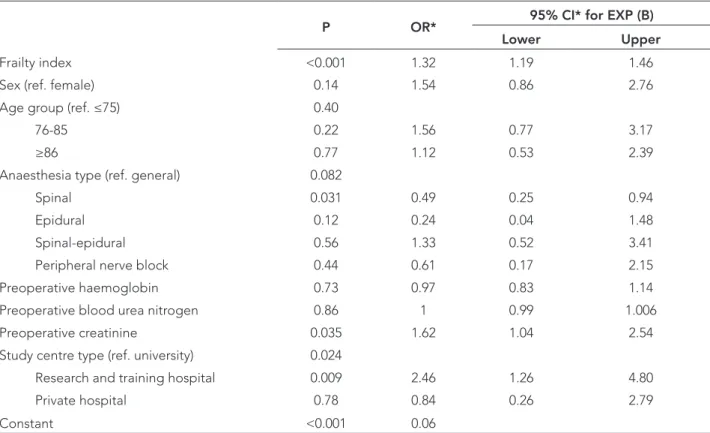
Independent predictors of mortality were evaluated using a logistic regression model (Table 4). Accordingly, the frailty index, preoperative creatinine and centre type were the independent predictors of mortality. Each increase in frailty index had an OR of 1.3 (95% CI, 1.2–1.5), each per-unit increase in preoperative creatinine had an OR of 1.6 (95% CI, 1.03–2.5), and health-care facility type (research vs. training hospital vs. university hospital) had an OR of 2.5 (95% CI, 1.3–4.8). DISCUSSION
The findings of this large multicentre prospective study indicate that mFI is a valid and useful predictor of mortality and hospital stay following a femoral fracture surgery. The type of anaesthesia affected both ICU stay and total hospitalization but not complication or mortality rates. Patients who received general anaesthesia stayed longer than other patients, and preoperative creatinine and centre type were the independent predictors of mortality. An adequate tool for objective perioperative risk stratification is required to afford
patient education regarding expected surgical complications and to aid in the reasonable and fair comparison different practitioners and health systems.
Frailty is the decrease in one’s physiological reserves as well as multisystem impairments that are separate from the normal process of aging (9). Frailty is a known independent factor associated with postoperative mortality and morbidity as well as the length of hospital stay and has been shown to increase the risk of mortality. Patients with femoral fracture represent an elderly group with varied levels of frailty (10-12). In our patient population, 127 (27.6%) had mFI≥7. Remarkably, mFI predicts mortality, especially at 180-day follow-up, which suggests that patient condition worsens as mFI increases at each follow-up evaluation.
Frailty represents a state of increased vulnerability to adverse outcomes, and mFI expresses the number of clinical deficits identified in an individual as a proportion of the total number of deficits. mFI>5 has been proposed as the demarcation between fitness and frailty in community-dwelling elderly people. mFI≥7 describes elderly people who are completely dependent for their activities of daily living and are at a higher risk of mortality (8). mFI can be used for different high-risk surgeries. For example, Ali et al. (13) showed that the use of mFI predicted 30-day mortality and morbidity in spine surgery. They demonstrated the successful application of mFI for predicting postoperative mortality and morbidity in 18,294 patients who underwent spine surgery. mFI can thus be considered as a useful tool for risk stratification and can serve as an objective measure for describing the potential risk of spine surgery to patients and their families. In the present study, mFI predicted mortality, particularly at 180 days’ follow-up. An increased mFI was correlated with an increased mortality rate, which suggests that patient condition worsens as the mFI increases in each follow-up evaluation.
Table 2. Patients’ general characteristics.
Sex, n (%)
Male 149 (38)
Female 243 (62)
Age (years), mean±sd* 79±11.9
Age group, n (%)
≤75 115 (29.3)
76-85 144 (36.7)
≥86 133 (33.9)
Frailty index, median (IQR)* 5 (2-7)
Frailty Index distribution, n (%)
0 14 (3.6) 1 31 (7.9) 2 54 (13.8) 3 39 (9.9) 4 43 (11) 5 35 (8.9) 6 49 (12.5) 7 41 (10.5) 8 27 (6.9) 9 19 (4.8) 10 19 (4.8) 11 11 (2.8) 12 9 (2.3) 14 1 (0.3) Type of anaesthesia, n (%) Spinal 205 (52.3) Epidural 13 (3.3) Spinal-epidural 43 (11)
Peripheral nerve block 21 (5.4)
General 110 (28.1)
ICU hospitalization days, mean±sd 1.4±3.5
Total hospitalization days, mean±sd 8.6±8.3
Hospital complication, n (%) CVE* 2 (0.5) ARF* 11 (2.8) Infection 17 (4.3) Mechanical ventilation > 24 h 5 (1.3) ICU* hospitalization > 24 h 36 (9.2) Death 15 (3.8)
Abbreviations: SD, standard deviation; IQR, interquartile range; ICU, intensive care unit; CVE, Cerebrovascular event; ARF, acute renal failure
Table 3. Patient outcomes during follow-up.
Postoperative follow-up
30-day 90-day 180-day 365-day
n (%) n (%) n (%) n (%)
Walking, doing own duties 123 (39) 129 (45.4) 131 (49.4) 132 (50.8)
Walking with crutches 50 (15.9) 40 (14.1) 41 (15.5) 35 (13.5)
Cannot get up without help 25 (7.9) 25 (8.8) 15 (5.7) 13 (5.4)
Bedbound 58 (18.4) 53 (18.7) 42 (15.8) 35 (14.6)
Unconsciousness, dementia, bedbound 28 (8.9) 18 (6.3) 20 (7.5) 21(9.2)
Death 31 (9.8) 19 (6.7) 16 (6) 17 (6.5)
Table 4. Logistic regression model.
P OR* 95% CI* for EXP (B)
Lower Upper
Frailty index <0.001 1.32 1.19 1.46
Sex (ref. female) 0.14 1.54 0.86 2.76
Age group (ref. ≤75) 0.40
76-85 0.22 1.56 0.77 3.17
≥86 0.77 1.12 0.53 2.39
Anaesthesia type (ref. general) 0.082
Spinal 0.031 0.49 0.25 0.94
Epidural 0.12 0.24 0.04 1.48
Spinal-epidural 0.56 1.33 0.52 3.41
Peripheral nerve block 0.44 0.61 0.17 2.15
Preoperative haemoglobin 0.73 0.97 0.83 1.14
Preoperative blood urea nitrogen 0.86 1 0.99 1.006
Preoperative creatinine 0.035 1.62 1.04 2.54
Study centre type (ref. university) 0.024
Research and training hospital 0.009 2.46 1.26 4.80
Private hospital 0.78 0.84 0.26 2.79
Constant <0.001 0.06
Abbreviations: OR, odds ratio; CI, confidence interval
Femoral fracture is associated with a substantial risk of mortality and morbidity with approximately 1%–6% of patients dying within 30 days of admission
(10,11). In this study, the hospital mortality rate was 3.8%, and the 30-day mortality rate was 9.8%. Several factors can affect this outcome, including
the anaesthesia type. Numerous reports have compared the anaesthesia type with mortality and morbidity in femoral fracture surgery in the geriatric population and found that some had no significant effectiveness at regional anaesthesia and mortality while other investigations report significant effectiveness at reducing mortality rates using regional anaesthesia.
Neuman et al. (12) found lower mortality and pulmonary complication rates among all regional anaesthesia patients when compared with general anaesthesia patients. They retrospectively investigated more than 18,000 patients who underwent femoral fracture surgery and found that regional anaesthesia was associated with a 25%– 29% reduction in major pulmonary complications and death. The mortality rates were 2.5% for general anaesthesia and 2.1% for regional anaesthesia. If sicker patients were more likely to receive general anaesthesia, this finding of a lower odds ratio of mortality and complications with regional anaesthesia might reflect selection bias because of the retrospective data of the study. Thus, the authors could not determine the exact anaesthesia type but instead had to assume the use of regional anaesthesia.
Patrono et al. (4) investigated 73,284 adults undergoing hip fracture surgery and found that mortality risk did not differ significantly between anaesthesia types. Hospital deaths occurred in 1,362 (2.2%) patients receiving general anaesthesia and in 144 (2.1%) patients receiving regional anaesthesia. Specific advantages associated with the different anaesthetic techniques may play a part in this effect. Regional anaesthesia negates the need for airway management, decreases blood loss, reduces the risk of deep venous thrombosis, and improves postoperative analgesia. Conversely, general anaesthesia may be associated with a more stable hemodynamic state than regional anaesthesia. However, when regional anaesthesia
is administered, clinicians must be aware of the hypotensive effects because intraoperative hypotension leads to critical organ hypoperfusion and postoperative ischemic complications including delirium, dysthymia, and acute kidney injury, which are independently associated with poor outcomes (14).
In the present study, we found that mortality risk did not significantly differ by anaesthesia type unlike the findings by Paterno et al. (4) but it affected both ICU stay and total hospitalization. Patients who received general anaesthesia had a longer hospital stay than other patients. We studied the statistical data again for determining whether frailer people were administered regional anaesthesia, which could have altered the results, and observed no correlation between frailty and anaesthesia type. In this regard, the administration of regional anaesthesia to frail patients will have a beneficial effect on hospital stay, complications and mortality.
We also found that preoperative creatinine was an independent predictor of mortality. Several studies have investigated the effect of routine blood tests for predicting mortality. In a recent meta-analysis of 15 studies, Laulund et al. (15) concluded that high plasma creatinine levels had a prognostic value for mortality in patients with femoral fractures. Sayedi et al. (16) reported an association between plasma BUN and creatinine levels and mortality rates following hip fractures in elderly patients. Purvis et al. (17) reported that patients with high creatinine levels have an increased rate of morbidity following lumbar fusion. They used creatinine levels as a complementary measure to the glomerular filtration rate to show the association between preoperative kidney function and postoperative complications. Collectively, we must improve renal function and carefully monitor patients during the perioperative period to decrease patient mortality and morbidity in high-risk surgeries, particularly in the geriatric population.
We found that patient outcome varies across care centres, which seems to play a crucial role in mortality rates which make location an independent risk factor. University hospitals had lower mortality rates than did training hospitals. There is compelling evidence from different studies suggesting that high-risk patients, particularly those who recently underwent cancer surgery, have superior outcomes when surgery is performed in hospitals with a large volume of cases (18). Schrag et al. (19) compared the surgeon volume to hospital volume, used the metric as a predictor of outcomes of colon cancer resection and reported that both impacted patient outcomes but that hospital volume may exert a stronger effect. Also, Bach et al. (20) reported that high-volume hospitals (67–100 procedures/ year) had higher survival rates (11%) following lung resection surgeries. Regarding hospital factors, hospital care quality is associated with skills of the surgeon, anaesthesiologist and other medical staff such as interventional radiologists, intensive care staff and infection control team. Frail patients can be sent to a high-volume university hospital to decrease their perioperative mortality.
This study had several limitations. We could not determine the precise reasons for selecting the anaesthesia types for the patients, and anaesthesia type differed significantly among the centres. Our findings also provide no information about specific anaesthetic agents, monitoring or administration. Lastly, the current data source does not include detailed information regarding the fracture type or surgical time after emergency room arrival. Operative delays may increase mortality and morbidity (21). One of the strengths of our study was its large representative sample of patients, surgeons and hospitals from all around the country. Because of the community-based setting of this large integrated health-care system, which was the framework, the large number of
patients in this study covered all hospital types (university, training, research and private hospitals). This makes our findings potentially representative of other patients in the country with different surgeons, anaesthetists and hospitals.
Another strength of this study was its prospective design. We followed up the patients individually at every step. The registry prospectively collected information about the patients and mFI scores used in this study, strengthening the internal validity of the presented data. Furthermore, we reported 30-, 90-, 180-, and 365-day mortality, which represent important time extensions. This is one of the largest prospective multicentre studies aimed at determining short- and long-term mortality rates associated with femoral fracture surgeries in Turkey. In this study, we compared the renal markers, haemoglobin levels and troponin levels preoperatively as well as at 24 and 72 hours’ postoperative. Thus, we can suggest that anaemia, renal insufficiency and an increased cTI are risk factors for an increased hospital stay.
In conclusion, the findings of our study showed that frailty is independently associated with poorer outcomes and that mFI may be useful for further preoperative risk stratifying geriatric patients undergoing femoral fracture surgery. In addition, the preoperative creatinine level plays a significant role in postoperative mortality, so clinicians must protect renal function during the perioperative period. Further consideration of the addition of these parameters may be an important avenue for further studies for developing a better understanding and deeper insight into patient prognosis after femoral fracture surgery to help develop screening tools for mortality outcomes.
Conflict of interest
The authors declare no conflicts of interest associated with this study.
REFERENCES
1. Maggi S, Siviero P, Wetle T, Bestine RW, Saugo M, Crepaldi G. A multicenter survey on profile of care for hip fracture: predictors of mortality and disability. Osteoporos Int 2010;21:223-31. (PMID:19415372).
2. Dayama A, Olorunfemi O, Greenbaoum S, Stone ME Jr, McNelis J. Impact of frailty on outcomes in geriatric femoral neck fracture management: An analysis of national surgical quality improvement program dataset. Int J Surg 2016;28:185-90. (PMID:26926088).
3. Smith T, Pelpola K, Ball M, Ong A, Myint PK. Preoperative indicators for mortality following hip fracture surgery: a systematic review and meta-analysis. Age Aging 2014;43:464-71. (PMID:24895018).
4. Patorno E, Neuman MD, Schneeweiss S, Mogun H, Bateman BT. Comparative safety of anesthetic type for hip fracture surgery in adults: retrospective cohort study. BMJ 2014;348:q4022. (PMID:24972901).
5. Karaman O, Ozkalkanlı G, Orak MM, et al. Factors affecting postoperative mortality in patients older than 65 years undergoing surgery for hip fracture. Ulus Travma Acil Cerrahi Derg 2015;21:44-50. (PMID:25779712).
6. Erçin E, Bilgili MG, Sari C, et al. Risk factors for mortality in geriatric hip fractures: a comparison study of different surgical procedures in 785 consecutive patients. Eur J Orthop Surg Travmatol 2017;27:101-06. (PMID:27577731).
7. Patel KV, Brennan KL, Brennan ML, Jupiter DC, Shar A, Davis ML. Association of modified frailty index with mortality after femoral neck fracture in patients aged 60 years and older. Clin Orthop Relat Res 2014;472:1010-17. (PMID:24166073). 8. Rockwood K, Song X, MacKnight C, et al. global
clinical measure of fitness and frailty. CMAJ 2005;173:489-95. (PMID:16129869).
9. Krishnan M, Beck S, Havelock W, Eeles E, Hubbard R, Johansen A. Predicting outcome after hip fracture: using a frailty index to integrate comprehensive geriatric assessment results. Age Aging 2014;43:122-26. (PMID:28659127).
10. Van Waesberghe J, Stevanovic A, Rossaint R, Coburn M. General versus neuraxial anesthesia in hip fracture patients: a systematic review and meta-analysis. BMC Anesthesiol 2017;17:87. (PMID:28659127).
11. Guay J, Parker MJ, Gajendragadkar PR, Kopp S. Anesthesia for hip fractures surgery in adults. Cochrane database of Systematic Reviews 2016 Feb 22;2:CD000521. doi: 10.1002/14651858. CD000521. (PMID:26899415).
12. Neuman DM, Silber JH, Elkassabany NM, Ludwig JM, Fleisher LA. Comparative effectiveness of regional versus general anesthesia for hip fracture surgery in adults. Anesthesiology 2012;117:72-92. (PMID:22713634).
13. Ali R, Schwalb JM, Nerenz DR, Antoine HJ, Rubinfeld I. Use of the modified frailty index to predict 30-day morbidity and mortality from spine surgery. J Neurosurg Spine 2016;25:537-41. (PMID:27153143).
14. White SM, Moppett IK, Griffiths R, et al. Secondary analysis of outcomes after 11,085 hip fracture operations from prospective UK Anesthesia Sprint Audit of Practice (ASAP-2). Anesthesia 2016;71:506-14. (PMID:26940645).
15. Laulund AS, Lauritzen JB, Duus BR, Mosfeldt M, Jorgensen HL. Routine blood tests as predictors of mortality in hip fracture patients. Injury 2012;43:1014-20. (PMID:22236368).
16. Seyedi HR, Mahdian M, Khosravi G, et al. Prediction of mortality in hip fracture patients: Role of routine blood tests. Arch Bone Jt Surg 2015;3:51-55. (PMID:25692170).
17. Purvis TE, Kessler RA, Boone C, Elder BD, Goodwin CR, Sciubba DM. The effect of renal dysfunction on short-term outcomes after lumber fusion. Clin Neurol Neurosurg 2017;153:8-13. (PMID:27992823).
18. Wang TY, Martin JR, Loriaux DB, et al. Risk assessment and characterization of 30-day perioperative myocardial infarction following spine surgery: a retrospective analysis of 1346 consecutive adult patients. Spine 2016;41:438-44. (PMID:26693673).
19. Schrag D, Panageas KS, Riedel E, Hsieh L, Bach PB, Guillem JG, Begg CB. Surgeon volume compared to hospital volume as a predictor of outcome following primary colon resection. J Surg Oncol 2003;83:68-79. (PMID:12772198).
20. Bach PB, Cramer LD, Schrag D, Downey RJ, Gelfand SE, Begg CB. The influence of hospital volume on survival after resection for lung cancer. N Engl J Med 2001:345:181-88. (PMID:11463014).
21. de Palma L. Torcianti M, Meco L, Catalani A, Marinelli M. Operative delay and mortality in elderly patients with hip fracture: an observational study. Eur J Orthop Surg Traumatol 2014;24:783-8. (PMID:23712671).