41 Ahmet Akin SIVASLIOGLU*
Burghard ABENDSTEIN** Darren GOLD***
Bernhard LIEDL****
*Mugla Sitki Kocman University, Training and Rsearch Hospital, Mugla, Turkey
** Abteilung fur Gynakolgie und Geburtshife, Feldkirk Austria
***University of NSW, Professorial Dept of Surgery, St Vincent’s Hospital, Australia ****Zentrum fur Urogenital Chirurgie BBZ, Fachkliniken Munchen AG, Germany Yazışma Adresi: Ahmet Akin SIVASLIOGLU Mugla Sitki Kocman University, Training and Rsearch Hospital, Mugla, Turkey
Abstract
The Integral Theory states that chronic pelvic pain (CPP), bladder & bowel dysfunctions occur in predic-table groupings; that these symptoms are associated with loose uterosacral (USL)/cardinal (CL) ligaments. It follows from this that prolapse and symptoms and are all potentially curable by shortening and reinfor-cing these ligaments.
Keywords: Chronic pelvic pain; urge; nocturia; fecal incontinence; Integral Theory System.
Öz
İntegral Teori kronik pelvik ağrı, mesane ve barsak disfonksiyonlarının tahmin edilebilen gruplandırma-larda oluştuğunu ve bu semptomların gevşek utero-sacral/cardinal ligamanlarla ilişkili olduğunu vurgular. Buradan hareketle prolapsus ve semptomların hepsi bu ligamanları kısaltarak ve güçlendirerek potansiyel olarak tedavi edilebilirler.
Anahtar Kelimeler: Kronik pelvik ağrı, ani işeme hissi, fekal inkontinans, İntegral Teori Sistemi
Introduction
Chronic pelvic pain (CPP) is seen in 19% of adult Eu-ropeans (1). Possibly, the incidence may be higher in older woman. In a group of women (mean age 70 years) treated for uterine/apical prolapse, 194/611 (32%) had chronic pelvic pain (CPP) (2). CPP is strongly associated with bladder & bowel symptoms (3). Besides, up to 45% of patients with CPP had re-duced work productivity (4). Hence, health costs to the community are significant.
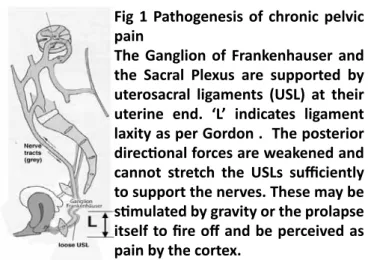
Fig 1 Pathogenesis of chronic pelvic pain
The Ganglion of Frankenhauser and the Sacral Plexus are supported by uterosacral ligaments (USL) at their uterine end. ‘L’ indicates ligament laxity as per Gordon . The posterior directional forces are weakened and cannot stretch the USLs sufficiently to support the nerves. These may be stimulated by gravity or the prolapse itself to fire off and be perceived as pain by the cortex.
DERLEME / REVIEW
Chronic Pelvic Pain in the Female – Diagnosis and Management According to the Integral Theory Kadınlarda Kronik Pelvik Ağrı-İntegral Teoriye Göre Tanı ve Yönetim
Ege Klin Tıp Derg 2018; 56 (1): 41-44
Geliş Tarihi: 16.03.2018 Kabul Tarihi: 26.03.2018
42
Excluding known causes such as endometriosis, in-fection, malignancy etc., the pathogenesis of chronic pelvic pain is said to be unknown (5). Furthermo-re, CPP is considered incurable by learned societies (5) which hypothesize that there is both peripheral and central hypersensitization to pain. Peripheral hypersensitization describes augmented sensory pain input from the peripheral nervous system. Cent-ral hypersensitization describes a predisposition to dysfunctional central regulation of the sensory input. The main treatments available at present include counseling, psychotherapy, physical therapy, medi-cations, psychosomatic therapy, laparoscopic uterine nerve ablation, presacral neurectomy and hysterec-tomy (with or without removal of the ovaries). (6). The aim of this Mini Review is to introduce the rea-ders of CEJU to the Integral Theory System for diag-nosis and management of chronic pelvic pain . Ac-cording to the Theory, this pain originates from the inability of lax uterosacral ligaments to support the Frankenhauser ganglia and Sacral Nerve plexuses (7,8). These fire off to cause CPP.
The 1st and most important characteristic of this type of CPP in the female is the association with other symptoms such as increased residual urine, obstruc-tive defecation syndrome, nocturia, stress urinary in-continence, frequency, abnormal bladder emptying, urge incontinence which all known as the “Pescatori Iceberg (9).
The 2nd important characteristic of this type of CPP is that the other symptoms, lie ‘below the surface”. However, the clinician must search for these with specific questions. All these symptoms are simulta-neously cured by CL/USL ligament repair.
In a recent study of 611 patients treated with tissue fixation system (TFS) repair of the cardinal and utero-sacral for uterine/apical prolapse (2), 77% reported cure of their CPP along with cure of OAB and bowel symptoms. Other surgeons have reported similar cure rates, following repair of cardinal and uterosac-ral ligaments: Haverfield (9) 90%, Inoue (10) 93%,Go-eschen (11) 81% Richardson (12) 86% Caliskan (13) 83%.
It is a fundamental canon of the Theory, that patients with major symptoms and minimal prolapse may also be cured by applying the same sling operations used for major prolapse (2).
The 3rd characteristic of this type of CPP is that when cure occurs, it is almost invariably the day after CL/ USL ligament repair (15).
Pathogenesis- anatomical pathway to chronic pelvic pain
Fundamental to the whole Integral Theory’s concept of pelvic pain pathogenesis is ligament elongation and weakening mainly from childbirth, age and me-nopause (16).
Collagen depolymerizes prior to labour to lose 95% of its strength. This allows the cervical ring, ligaments and vagina to stretch considerably during birthing. At full cervical dilatation (10cm), ligaments stretch, are pushed laterally and may remain stretched post-partum. Vaginal attachments may rupture. The end result may be prolapse and bladder/bowel dysfunc-tion.
The role of USLs in producing chronic pelvic pain was described in detail by Heinrich Martius in 1938 (7) and re-discovered independently by Petros in 1996 (8). Chronic pelvic pain is perceived by the patients in the various nerve distributions, T12-L1, S 2-4, lower abdomen, groin, lower sacrum (8), introitus (17), pa-raurethral, bladder (interstitial cystitis) (17), deep dyspareunia (8). Inability of the weakened muscles to tension the uterosacral ligaments may cause un-supported nerve plexuses within the USLs to fire off, fig 1. Objective proof of USLs as the pathway to chro-nic pelvic pain origin was obtained by two different ‘simulated operations’. These mechanically support either pubourethral ligaments anteriorly or uterosac-ral ligaments posteriorly digitally or by some other means (forceps, speculum, tampon etc.).
1. Relief of pelvic pain and suburethral tenderness by insertion of the lower part of a bivalve speculum to support the posterior fornix .
2. Local anesthetic injection into the cervical part of the ULSs (17) .
Diagnosis of ligament cause of CPP- the Pictorial Al-gorithm
The relationship between ligament damage and symptoms is summarized in the diagnostic pictorial algorithm (18). The Algorithm relates the damaged li-gaments to symptoms. Thus a symptom can indicate which ligaments are damaged. For example, urinary stress incontinence indicates it is PUL which is dama-ged, pain and nocturia USL damage and so on. The presumptive ligament damage based on symptoms, is confirmed by vaginal examination: each of the damaged ligaments has specific anatomical criteria (18).
NOTE 1 Major symptoms may occur with minimal ligament damage.
NOTE 2 An isolated symptom of CPP is unlikely to be caused by USL looseness.
Chronic pelvic pain in the female – diagnosis and management
43 Non-surgical management according to the
Integ-ral Theory. Squatting based Pelvic floor exercises are used to strengthen the 3 directional pelvic flo-or muscles and the ligaments against which they contract, pubourethral and uterosacral/cardinal liga-ments. In a recent review (19), Skilling detailed time efficient pelvic floor rehabilitation exercises. These ranged from adopting a ‘squatting culture’ such as squatting (instead of bending) to pick something up from the floor; doing as many household tasks as possible in the squatting position; sitting on a fitball instead of a chair; then, structured exercises such as situps, downward pushing while supporting the pu-bourethral ligament digitally, electrical stimulation with a probe inserted into the posterior fornix of va-gina.
Surgery “Repair the structure (ligament) and you will restore the function”(Integral Theory)
Surgery is indicative for curing of symptoms ( stress urinary incontinence, frequency, abnormal emp-tying, obstructive defecation, nocturia, frequency, pelvic pain) even when prolapse is minor . Chronic pelvic pain occurs in concert with other symptoms. Obvious causes such as endometriosis, infection, car-cinoma are excluded.
The surgical cure, whatever the method used is simp-le; the uterosacral ligaments are shortened and rein-forced. For long-term effect, thin polypropylene ta-pes precisely inserted along the line of the damaged ligament (8-14) are recommended.
Discussion
Psychological disturbances -Are these primary or secondary to the pain? This was discussed recently with reference to selected case studies (20), tho-ugh clearly, selected case studies cannot give a valid answer to this question. However, the major almost immediate improvement in the psychological state reported in these case studies is worthy of further in-vestigation in patients with this condition undergoing posterior sling surgery.
Peripheral and central hypersensitization. Our re-sults do not support these hypotheses. Cure, when it occurred, was almost invariably immediate, usually by the following day (15).
Cure of co-occurring bladder and bowel symptoms All surgical results which repair uterosacral ligaments, whatever the technique used, confirm that CPP co-occurs with bladder and bowel symptoms and these are usually, but not always, cured at the same time as cure of CPP (9-15).
Which operation? The 1996 operations consisted of plication of the uterosacral ligaments with poly-glactin (Vicryl®) and were performed mainly under local anaesthesia (8). This operation works best with younger women. Though initial results indicated an 85% cure/improvement rate, this deteriorated mar-kedly with time. (8). Hence the introduction of pos-terior tapes to better reinforce the ligaments. Conclusions and future directions Chronic pelvic pain co-occurs in predictable groupings with pelvic organ prolapse, bladder and bowel symptoms. These conditions can be cured/improved with minimally in-vasive ligament repair methods which use thin strips of propylene tape (2). Cure of CPP even in 70 year old women (2) indicates that this methodology could go a long way towards helping the problem of the aged.
References
1. Breivik H, Collett B, Ventafridda V, Cohen R, Gallacher D. Survey of chronic pain in Europe: prevalence, impact on daily life, and treatment. Eur J Pain 2006; 10 (4): 287-333. 2. Liedl B, Inoue H, Sekiguchi Y, et al. Is overactive bladder in the female surgically curable by ligament repair? Cent European J Urol. 2017; 70: 51-57.
3. Abrams P, Cardozo L, Fall M, Griffiths D, Rosier P, Ulm-sten U, et al. The standardisation of terminology of lower urinary tract function: report from the Standardisation Sub-committee of the International Continence Society. Neurourol Urodyn. 2002; 21 (2): 167-78.
4. Mathias SD, Kuppermann M, Liberman RF, Lipschutz RC, Steege JF. Chronic pelvic pain: prevalence, health-related quality of life, and economic correlates. Obstet Gynecol 1996; 87 (3): 321-7.
5. Messelink B. Perspective - Chronic Pelvic Pain needs an integral approach Pelviperineology 2017; 36: 67-70 6. Stones RW, Mountfield J. Interventions for treating chro-nic pelvic pain in women. Cochrane Database Syst Rev 2000 (4): CD000387.
7. Weintraub A, Petros P, Editorial Dedicated to Profes-sor Heinrich Martius, pioneer in the ligamentous origin of chronic pelvic pain in the female Pelviperineology 2017; 36: 66
8. P. E. Petros Severe chronic pelvic pain in women may be caused by ligamentous laxity in the posterior fornix of the vagina Pelviperineology 2017; 36: 71-73
9. Goeschen K, Gold DM. Surgical cure of chronic pelvic pain, associated bladder &bowel symptoms by posterior sling in 198 patients validates the Pescatori iceberg prin-ciple of pelvic symptom co-occurrence, Pelviperineology 2017; 36: 84-88
10. Haverfield M. Tissue fixation system (TFS) neoligament pelvic organ repair procedures—12 and 24 month results. Pelviperineology 2015;34:70–4.
11. Inoue H, Kohata Y, Sekiguchi Y, et al. The TFS minisling restores major pelvic organ prolapse and symptoms in aged Japanese women by repairing damaged suspensory ligaments—12–48 month data. Pelviperineology 2015; 34:79–83
44
12. Goeschen K. Posterior fornix syndrome: comparison of original (2004) and modified (2015) post-PIVS anatomic and symptomatic results—a personal journey. Pelviperine-ology 2015;34:85–91.
13. Richardson PA. Surgical cure of nocturia using 4 diffe-rent methods based
on strengthening the structural supports of the vaginal apex Pelviperineology 2015; 34: 92-93
14. Caliskan A, Goeschen K, Zumrutbas AE. Long term re-sults of modified posterior intravaginal slingplasty (P-IVS) in patients with pelvic organ prolapse Pelviperineology 2015; 34: 94-100
15. Sekiguchi Y, Inoue H, Liedl B, Haverfield M, Ric-hardson P, Yassouridis A, Pinango-Luna S, Wagenlehner F, Gold D Is Chronic Pelvic Pain in the female surgically curable by uterosacral/cardinal ligament repair? Pelviperi-neology 2017; 36: 74-78
16. Darren M Gold, David Ende A review of the Integral Theory of Pelvic Organ Prolapse and proposed concept of repair: part 2 – the TFS ligament repair Pelviperineology 2017; 36: 3-8
17. Zarfati, D, Petros PEP. The Bornstein Test- a local anaesthetic technique for testing uterosacral nerve plexus origins of chronic pelvic pain Pelviperineology 2017; 36: 89-91
18. Petros PEP, The Female Pelvic Floor, Function, Dysfunc-tion and Management According to the Integral Theory, 3rd Ed 2010, Springer Heidelberg.
19.Skilling PM. Pelvic floor exercises according to the In-tegral Theory -strengthening the 3 directional muscle for-ces improves chronic pelvic pain, bladder & bowel dysfunc-tions Pelviperineology 2017; 36: 79-83
20. McCredie J, Skilling PM. Are ‘psychiatric’ findings in pa-tients with Chronic Pelvic Pain primary or secondary? Pel-viperineology (in press 2018).
Chronic pelvic pain in the female – diagnosis and management