23
https://doi.org/10.33381/dcbybd.2019.2057ORIGINAL INVESTIGATION
ÖZGÜN ARAŞTIRMA
Yoğun Bakım Derg 2019;10(1):23−30
The use of Vasoactive-Inotropic
Score in Adult Patients with Septic
Shock in Intensive Care
Yoğun Bakımda Septik Şoklu Erişkin Hastalarda Vazoaktif İnotropik
Skor Kullanımı
İskender KARA1 , Mehmet SARGIN2 , Yeşim Şerife BAYRAKTAR1 , Hatice EYİOL2 ,
İpek DUMAN3 , Jale Bengi ÇELİK1
ABSTRACT
Objective: Sepsis and septic shock are significant causes of mortality and morbidity. In septic shock, vasopressors
and inotropic support are given for the treatment of hypotension. This study was designed to investigate the relationship between the vasoactive-inotropic score (VIS) and the results of sepsis patients in ICU.
Methods: The data of 392 patients who were followed up with the diagnosis of septic shock in adult ICU were
recorded retrospectively. Vasopressors and inotropic support of the patients during the first 48 hours after the diagnosis of septic shock were recorded. Mean and peak VIS values were calculated according to these values. The patients were divided into groups according to the mean VIS≥10, peak VIS≥10 and intensive care results and statistical analysis was performed.
Results: The median ages of the patients were 68 (54.25-79) years and 239 (61%) were male. Dopamine
188 (47.9%), noradrenaline 365 (93.1%), adrenaline 53 (13.5%) and dobutamine 15 (3.8%) were used in the patients. The mean VIS was 9 (4-15), while the number of mean VIS≥10 patients were 192 (49%). Peak VIS values were 11 (5-20), and the number of peak VIS ≥10 patients were 220 (56.1%). The mortality rate of the patients included in the study was 42.1%. The mean VIS score(13 vs 6, p=0.000), mean VIS≥10 patient ratio (71.5% vs 32.6%, p=0.000), peak VIS score (16 vs 8, p=0.000), and peak VIS ≥10 patient ratio (73.3% vs 43.6%, p=0.000) were higher in non-survivors. The parameters such as mean VIS [OR 1.123, 95% CI 1.027-1.229, p=0.011], mean VIS≥10 [OR 3.455, 95% CI 1.625-7.345, p=0.001] and peak VIS score [OR 0.917, 95% CI 0.851-0.989, p=0.024] were determined as independent risk factors for mortality.
Conclusion: We conclude that vasoactive-inotropic score may be useful in predicting the outcome of septic
shock patients in intensive care units.
Key words: Sepsis, septic shock, mortality, morbidity
ÖZ
Amaç: Sepsis ve septik şok önemli bir mortalite ve morbidite nedenidir. Septik şokta hipotansiyonun
düzeltilmesinde vazopressör ve inotrop destekleri verilir. Çalışmamızda yoğun bakımda takip edilen septik şoklu hastaların sonuçları ile vazoaktif inotropik skor (VİS) arasındaki ilişkinin incelenmesi amaçlandı.
Yöntemler: Erişkin yoğun bakım ünitesinde septik şok tanısı ile takip edilen 392 hastanın verileri retrospektif
olarak kaydedildi. Hastaların septik şok tanısı aldıktan sonraki ilk 48 saate aldığı vazopressör ve inotrop destekleri kaydedildi. Bu değerlere göre mean ve peak VIS değerleri hesaplandı. Hastalar mean VIS≥10, peak VIS≥10 ve mortalite sonucuna göre gruplara ayrılarak istatistiksel analiz yapıldı.
Bulgular: Hastaların median yaşları 68(54,25-79) yıl ve 239(%61) oranında erkek idi. Hastalarda dopamin
188(%47.9), noradrenalin 365(%93.1), adrenalin 53(%13.5) ve dobutamin 15(%3.8) kullanılmaktaydı. Ortalama VIS 9(4-15) olurken mean VIS≥10 hasta sayısı 192(%49) idi. Peak VIS değerleri 11(5-20) olurken peak VIS ≥10 hasta sayısı 220 (%56,1) olarak tespit edildi. Çalışmaya alınan hastaların mortalite oranı %42.1 idi. Ölen hasta grubunda ortalama VIS skoru (13 vs 6, p=0.000), ortalama VIS≥10 olan hasta oranı (%71.5 vs 32.6, p=0.000), peak VIS skoru (16 vs 8, p=0.000) ve peak VIS ≥10 olan hasta oranı (%73.3 vs 43.6, p=0.000) daha yüksek tespit edildi. Mean VIS [OR 1.123, 95% CI 1.027-1.229, p=0.011], mean VIS≥10 [OR 3.455, 95% CI 1.625-7.345, p=0.001] ve peak VIS skoru [OR 0.917, 95% CI 0.851-0.989, p=0.024] gibi parametreler mortalite için bağımsız risk faktörü olarak tespit edildi.
Sonuç: VIS skorunun yoğun bakımlardaki septik şok hastalarının sonuçlarının tahmininde faydalı olabileceği
kanaatindeyiz.
Anahtar kelimeler: Vazoaktif inotropik skor, sepsis, septik şok, mortalite 1Selcuk University, Faculty of Medicine,
Anesthesiology and Reanimation, Critical Care Medicine, Konya, Türkiye
2Selcuk University, Faculty of Medicine,
Anesthesiology and Reanimation, Konya, Türkiye
3Necmettin Erbakan University, Meram
Faculty of Medicine, Department of Medical Pharmacology, Konya, Türkiye
Cite this article as: Kara İ, Sargın M,
Bayraktar YŞ, Eyiol H, Duman İ, Çelik JB. The use of Vasoactive-Inotropic Score in Adult Patients with Septic Shock in Intensive Care. Yoğun Bakım Derg 2019; 10(1): 23-30.
Corresponding Author / Sorumlu Yazar: Iskender Kara E mail: [email protected]
©Copyright 2019 by Turkish Society of Medical and Surgical Intensive Care Medicine - Available online at www. dcyogunbakim.org
©Telif Hakkı 2019 Türk Dahili ve Cerrahi Bilimler Yoğun Bakım Derneği - Makale metnine www.dcyogunbakim.org web sayfasından ulaşılabilir
Received/Geliş: 15.03.2019 Accepted/Kabul: 25.03.2019 Available online/ Çevrimiçi yayın: 28.03.2019
Introduction
Sepsis is an important cause of mortality and morbidity affecting millions of people around the world every year. According to The Third International Consensus, sepsis is defined as life-threatening organ dysfunction resulting from an irregular response to the host's infection. Septic shock is a condition where vasopressor support is required to maintain a mean arterial pressure of 65 mmHg and above. This condition contains deep circulatory, cellular and metabolic disorders (1). According to the Surviving Sepsis Campaign guideline, when there is hypotension not responding to fluid therapy, various vasopressors and inotropic agents are used, first choice noradrenaline (2). Thus, tissue perfusion is continued and the process of organ dysfunction is prevented (1).
Measuring the amounts of supports used in these patients could help in estimating the outcome. The vasoactive inotropic score (VIS), developed to measure vasopressor support, is mostly used in pediatric patients and cardiac surgery patients (3-6). Also, two studies have used VIS in pediatric sepsis patient groups (7,8). To our best knowledge, there is no present study using VIS in adult septic shock. In our study, we aimed to determine the relationship between VIS which we use to determine the amount of vasopressor and inotropic support and some patient results, especially mortality, in patients with septic shock in our adult intensive care unit (ICU).
Material Method
Consent was obtained from the ethics committee of our hospital (Date: 04.07.2018, number: 2018/269). The data of 18 years old and older patients who were admitted to the Intensive Care Unit of Anesthesiology and Reanimation Department between January 2013 and July 2018 were analyzed retrospectively. Surviving Sepsis Campaign 2012 Guideline and Sepsis-3 Definition were regarded in diagnosis and treatment selection of sepsis and septic shock (1,2). The demographic characteristics of patients diagnosed with sepsis / septic shock, intensive care scores, some laboratory values, sepsis foci, some treatments and intensive care results were recorded. Vasopressor values in the first 48 hours after diagnosis of septic shock were recorded. Only the first septic shock attack was recorded in long-term hospitalized patients. Mean VIS and peak VIS scores were calculated according to these values. The patients were divided into two as survivors and non-survivors, and the relationship between mortality and VIS were examined. Then the data were grouped as mean VIS≥10 and peak VIS≥10 and statistical analysis was performed.
VIS calculation method
Vasopressor and inotropic support doses were recorded during the first 48 hours after the diagnosis of septic shock in intensive care. The initiation of vasopressor was 0 hours. Then, at 6th, 12th, 24th and 48th hours, doses of vasopressors were recorded. The averages and peak values of the five values recorded during the two-day period were taken. The calculated values for each drug were collected and the total mean VIS and peak VIS values were found. The following formula was used for VIS.
Vasoactive-Inotropic Score = dopamine dose (µg/kg/min) + dobutamine dose (µg/kg/min) + 100 x adrenaline dose (µg/ kg/ min) + 100 x noradrenaline dose (µg/kg/min) + 10 x milrinone dose (µg/kg/min) + 10.000 x vasopressin dose (U/kg/min)
Statistical analysis
Data were statistically analyzed using SPSS Version 22.0 (Statistical Package for the Social Sciences Inc., Chicago, IL, USA). Data were tested for normality with Kolmogorov– Smirnov (with Lilliefors correction) and Shapiro–Wilk tests. Descriptive statistics were performed in all the patient groups; numerical data were expressed as median (quarter intervals) while categorical data were given as percentages. Patients were classified according to mean VIS (VIS<10 or VIS≥10), peak VIS (VIS<10 or VIS≥10), and ICU outcomes (dead or survive). Patient features were compared using Chi-Square or Fisher’s Exact Test for categorical variables and Mann-Whitney U Test for numerical variables. p<0.05 value was accepted as statistically significant. To identify any independent risk factor associated with mortality, among the significant parameters of univariate analysis, the ones which were not associated with each other were entered into the multivariate linear regression analysis. ROC analysis was performed.
Results
General characteristics of patients with sepsis / septic shock
In the study period, 1734 patients were followed in the intensive care unit. The diagnosis of septic shock was 22.6% (392 patients) in these patients. The median ages of the patients were 68 (54.2-79) years, and 239 (61%) were male. Median Acute Physiology and Chronic Health Evaluation II (APACHE II), Sequential Organ Failure Assessment (SOFA) values were 24.5 (18-27) and 11 (9-12), respectively. While the duration of ICU stay was 10(4-22) days, the rates of patients with invasive mechanical ventilation, blood and blood products transfusion and acute kidney injury were 96.9% (380 patients), 58.9% (231 patients) and 26.3% (103 patients), respectively. Mortality was 42.1% (165 patients) (Table 1).Platelet, hemoglobin, white blood cell, procalcitonin and lactate levels were 107 (94-140) (x 103/µL), 9.8(9.1-10.0) (g/dL), 9.5(8.2-13) (x103 /L), 7.9 (4-11.1) (ng/ml) ve 4.2 (2.6-6.0) (mEq/L) respectively. The infection foci of septic shock patients were blood-catheter-borne infection 105(%26.8), urinary system infection 143(%36.5), respiratory system infection 182(%46.4) and soft tissue infection 41(%10.5) (Table 1).
Vasopressor and inotropic drugs used in patients with sepsis
/ septic shock
Dopamine 188 (47.9%), noradrenaline 365 (93.1%), adrenaline 53 (13.5%) and dobutamine 15 (3.8%) were administered to patients. The mean VIS was 9 (4-15), while the number of mean VIS≥10 patients were 192 (49%). Peak VIS values were 11 (5-20) and the number of peak VIS ≥10 patients were 220 (56.1%) (Table 1).
Table 1. General characteristics of patients with sepsis / septic shock
Characteristics
Age (years) 68(54.2-79) Gender (male) 239(61%) ICU admission time (days) 10(4-22) SOFA score 11(9-12) APACHE II score 24.5(18-27) Mechanical ventilation 380(96.9%) Acute renal failure 103(26.3%) Blood products transfusion 231(58.9%) Steroid support 91(23.2%) Fluid balance (ml) 1600(700-2150) Outcome (Exitus) 165(42.1%) Laboratory Platelets (x103 /µL) 107(94-140) Hemoglobin (g/dL) 9.8(9.1-10.0) White blood cell (x103 /L) 9.5(8.2-13)
Procalcitonin (ng/ml) 7.9(4-11.1) Lactate (mEq/L) 4.2(2.6-6.0)
Anatomic localizations of infectious foci
Blood-catheter borne infection 105(26.8%) Urinary system infection 143(36.5%) Respiratory system infection 182(46.4%) Soft tissue infection 41(10.5%)
Supportive Therapies and Vasoactive Inotropic Score
Mean dopamine (188 patients) 5(2.5-8) Mean noradrenaline (365 patients) 7(4-10) Mean adrenaline (53 patients) 5(3.5-7) Mean dobutamine (15 patients) 5(4-10) Mean Vasoactive Inotropic Score (µg/kg/min) 9(4-15) Mean Vasoactive Inotropic Score ≥10 192(49%) Peak dopamine (µg/kg/min) 7(5-10) Peak noradrenaline (µg/kg/min) 8(5-12) Peak adrenaline (µg/kg/min) 6(5-7) Peak dobutamine (µg/kg/min) 7(4-10) Peak Vasoactive Inotropic Score (µg/kg/min) 11(5-20) Peak Vasoactive Inotropic Score ≥10 220(56.1%)
Data are presented as median (IQR) or n (%). ICU: Intensive Care Unit,
SOFA: Sequential Organ Failure Assessment, APACHE II: Acute Physiology and
Chronic Health Evaluation 2
Patient characteristics according to mortality
The age (74 vs 66 years, p = 0.000), SOFA scores (12 vs 10, p = 0.000) and acute renal failure rates (33.3% vs 21.1%, p = 0.008) were higher in non-survivors. In survivors, the duration of hospitalization were longer (13 vs 8 days, p = 0.000) and the fluid balance were more positive (1600 vs 1100 ml, p = 0.018). Procalcitonin (8.6 vs. 7.7, p = 0.000) and lactate levels (4.6 vs 3.8, p = 0.007) were higher in non-survivors. Survivors had higher rates of urinary tract infection (41% vs 30.3%, p=0.034). The mean VIS score (13 vs 6, p = 0.000), mean VIS≥10 (71.5% vs 32.6%, p = 0.000), peak VIS score (16 vs 8, p = 0.000) and peak VIS ≥10 (73.3% vs 43.6%, p = 0.000) were higher in non-survivors (Table 2).
The data with significant results according to univariate analysis were evaluated with multivariate analysis. The parameters such as age [OR 1.034, 95% CI 1.020-1.049, p=0.000], procalcitonin [OR 1.015, 95% CI 1.003-1.028, p=0.014], lactate [OR 1.161, 95% CI 1.039-1.297, p=0.008], mean VIS [OR 1.123, 95% CI 1.027-1.229, p=0.011], mean VIS≥10 [OR 3.455, 95% CI 1.625-7.345, p=0.001] and peak VIS score [OR 0.917, 95% CI 0.851-0.989, p=0.024] were determined as independent risk factors for mortality (Table 2).
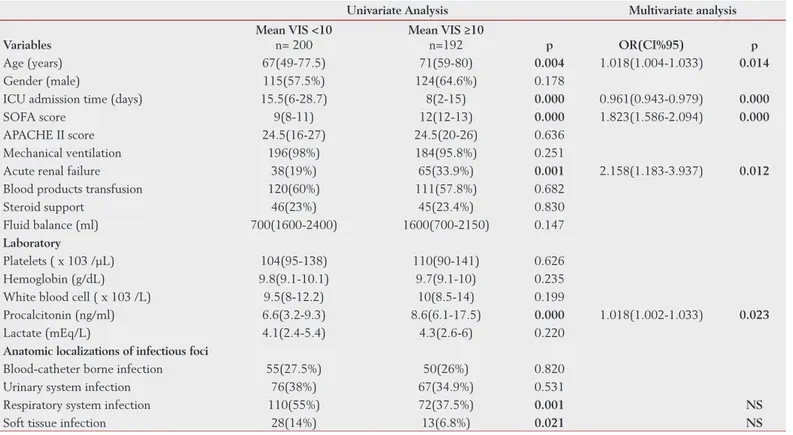
Patient characteristics according to mean VIS ≥10
Age (71 vs 67 years, p=0.004), SOFA score (12 vs 9, p=0.000), acute renal failure (33.9% vs 19%, p=0.001) and procalcitonin levels (8.6 vs 6.6, p=0.000) were higher in mean VIS ≥10 patients group, while ICU hospitalization time (8 vs 15.5 days, p=0.000) was shorter (Table 3).
Multivariable logistic regression was performed controlling for patient characteristics. Patients with high mean VIS had significantly greater odds of age [OR 1.018, 95% CI
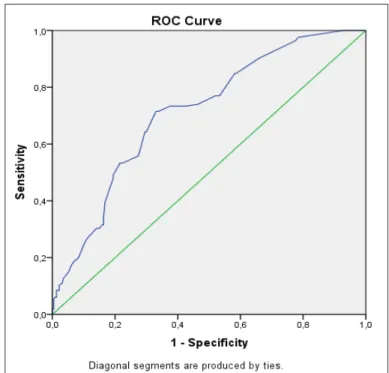
1.004-Figure 1. Receiver operating characteristic (ROC) curve for mean
1.033, p=0.014], duration of ICU stay [OR 0.961, 95% CI 0.943-0.979, p=0.000], SOFA score [OR 1.823, 95% CI 1.586-2.094, p=0.000], acute renal failure [OR 2.158, 95% CI 1.183-3.937, p=0.012] and procalcitonin [OR 1.018, 95% CI 1.002-1.033, p=0.023] compared to patients with low mean VIS (Table 3).
Patient characteristics according to peak VIS ≥10
Age (70 vs 66 years, p=0.014), SOFA score (12 vs 9, p=0.000), acute renal failure (32.3% vs 18.6%, p=0.003) and procalcitonin levels (8.3 vs 6.4, p=0.000) were higher in peak VIS ≥10 patients group, while ICU hospitalization time (8 vs 16 days, p=0.000) was shorter (Table 4).
Multivariable logistic regression was performed controlling for patient characteristics. Patients with high peak VIS had significantly greater odds of duration of ICU stay [OR 0.958, 95% CI 0.941-0.976, p=0.000], SOFA score [OR 1.785, 95% CI 1.559-2.044, p=0.000] and acute renal failure [OR 2.052, 95% CI 1.112-3.783, p=0.021] compared to patients with low peak VIS (Table 4).
The Correlation Between Mean Cutoff VIS value and Mortality
The cut-off value of mean VIS values according to the receiver operating characteristic (ROC) analysis performed to predict mortality rate was found as 9.75 (Figure 1). The area under the ROC for mean VIS was 0.713 [95% CI 0.662-0.764, p<0.0001], with sensitivity, specificity, and positive and negative predictive values and overall consistency values with 95 % CI of 71.5%, and 66.9 %,61.1%, 76.3% and 68.8%, respectively, at a cutoff ≥9.75 (Table 5).Discussion
As far as we know, this is the first study that evaluated VIS in septic shock patients followed in the adult intensive care unit. According to our study, high mean and peak VIS values calculated within the first 48 hours in patients with septic shock may predict the increase in mortality. Mean VIS ≥10 is an independent risk factor for mortality.
Sepsis, the most common cause of intensive care admission, is also the most common cause of death in the intensive care unit. Despite all advances in treatment, mortality is around
Table 2. Patient characteristics according to mortality
Univariate Analysis Multivariate analysis
Variables Survivors (n=227) Non-survivors (n=227) p value OR (CI 95% low-upper) p Age (years) 66(49-75) 74(63-83) 0.000 1.034(1.020-1.049) 0.000 Gender (male) 135(59.5%) 104(63%) 0.529
ICU admission time (days) 13(5-26) 8(2-17) 0.000 NS SOFA score 10(8-12) 12(10-13) 0.000 NS APACHE II score 24(16-27) 25(20-26.5) 0.147
Mechanical ventilation 222(97.8%) 158(95.8%) 0.374
Acute renal failure 48(21.1%) 55(33.3%) 0.008 NS Blood products transfusion 130(57.3%) 101(61.2%) 0.467
Steroid support 50(22.0%) 41(24.8%) 0.340
Fluid balance (ml) 1600(800-2400) 1100(700-2125) 0.018 NS
Laboratory
Platelets ( x 103 /µL) 106(94-138) 108(92-143) 0.416 Hemoglobin (g/dL) 9.8(9.1-10.1) 9.7(8.9-10) 0.151 White blood cell ( x 103 /L) 9.5(8-12) 10(8.5-14) 0.219
Procalcitonin (ng/ml) 7,7(3,2-10) 8.6(5.2-14.3) 0.000 1.015(1.003-1.028) 0.014
Lactate (mEq/L) 3.8(2.4-5.4) 4.6(2.6-6.5) 0.007 1.161(1.039-1.297) 0.008 Anatomic localizations of infectious foci
Blood-catheter borne infection 64(28.2%) 41(24.8%) 0.490
Urinary system infection 93(41%) 50(30.3%) 0.034 0.521(0.318-0.852) 0.009
Respiratory system infection 110(48.5%) 72(43.6%) 0.358 Soft tissue infection 25(11%) 16(9.7%) 0.740
Vasoactive Inotropic Score
Mean VIS (µg/kg/min) 6(3-12) 13(6-19.5) 0.000 1.123(1.027-1.229) 0.011
Mean VIS≥10 74(32.6%) 118(71.5%) 0.000 3.455(1.625-7.345) 0.001
Peak VIS (µg/kg/min) 8(4-15) 16(8.5-22) 0.000 0.917(0.851-0.989) 0.024
Peak VIS ≥10 99(43.6%) 121(73.3%) 0.000 NS
Data are presented as median (IQR) or n (%). ICU: Intensive Care Unit, SOFA: Sequential Organ Failure Assessment,
Table 3. Patient characteristics according to mean VIS ≥10
Univariate Analysis Multivariate analysis
Variables
Mean VIS <10
n= 200 Mean VIS ≥10n=192 p OR(CI%95) p
Age (years) 67(49-77.5) 71(59-80) 0.004 1.018(1.004-1.033) 0.014
Gender (male) 115(57.5%) 124(64.6%) 0.178
ICU admission time (days) 15.5(6-28.7) 8(2-15) 0.000 0.961(0.943-0.979) 0.000
SOFA score 9(8-11) 12(12-13) 0.000 1.823(1.586-2.094) 0.000
APACHE II score 24.5(16-27) 24.5(20-26) 0.636 Mechanical ventilation 196(98%) 184(95.8%) 0.251
Acute renal failure 38(19%) 65(33.9%) 0.001 2.158(1.183-3.937) 0.012
Blood products transfusion 120(60%) 111(57.8%) 0.682 Steroid support 46(23%) 45(23.4%) 0.830 Fluid balance (ml) 700(1600-2400) 1600(700-2150) 0.147
Laboratory
Platelets ( x 103 /µL) 104(95-138) 110(90-141) 0.626 Hemoglobin (g/dL) 9.8(9.1-10.1) 9.7(9.1-10) 0.235 White blood cell ( x 103 /L) 9.5(8-12.2) 10(8.5-14) 0.199
Procalcitonin (ng/ml) 6.6(3.2-9.3) 8.6(6.1-17.5) 0.000 1.018(1.002-1.033) 0.023
Lactate (mEq/L) 4.1(2.4-5.4) 4.3(2.6-6) 0.220
Anatomic localizations of infectious foci
Blood-catheter borne infection 55(27.5%) 50(26%) 0.820 Urinary system infection 76(38%) 67(34.9%) 0.531
Respiratory system infection 110(55%) 72(37.5%) 0.001 NS
Soft tissue infection 28(14%) 13(6.8%) 0.021 NS Data are presented as median (IQR) or n (%). ICU: Intensive Care Unit, SOFA: Sequential Organ Failure Assessment,
APACHE II: Acute Physiology and Chronic Health Evaluation 2, VIS: Vasoactive Inotropic Score
Table 4. Patient characteristics according to peak VIS ≥10
Univariate Analysis Multivariate analysis
Variables Peak VIS <10 n= 172 Peak VIS ≥10 n=220 p Age (years) 66(48.2-78) 70(58-79) 0.014 NS Gender (male) 104(60.5%) 135(61.4%) 0.917
ICU admission time (days) 16(7-30) 8(2-16) 0.000 0.958(0.941-0.976) 0.000
SOFA score 9(8-10) 12(11-13) 0.000 1.785(1.559-2.044) 0.000
APACHE II score 24.5(16-27) 24.5(20-27) 0.550 Mechanical ventilation 170(98.8%) 210(95.5%) 0.075
Acute renal failure 32(18.6%) 71(32.3%) 0.003 2.052(1.112-3.783) 0.021
Blood products transfusion 105(61%) 126(57.3%) 0.470 Steroid support 40(23.2%) 51(23.1%) 1.000 Fluid balance (ml) 1600(700-2400) 1600(700-2150) 0.388
Laboratory
Platelets (x103 /µL) 103(95-139) 109(90-140) 0.776 Hemoglobin (g/dL) 9.8(9.1-10.1) 9.7(9.1-10) 0.218 White blood cell (x103 /L) 9.5(8.5-12.8) 9.5(8-13.3) 0.774
Procalcitonin (ng/ml) 6.45(3.2-9.17) 8.3(5.5-14.3) 0.000 NS
Lactate (mEq/L) 4.1(2.6-5.4) 4.3(2.6-6) 0.216
Anatomic localizations of infectious foci
Blood-catheter borne infection 47(27.3%) 58(26.4%) 0.909 Urinary system infection 63(36.6%) 80(36.4%) 1.000
Respiratory system infection 98(57%) 84(38.2%) 0.000 NS
Soft tissue infection 25(14.5%) 16(7.3%) 0.030 NS Data are presented as median (IQR) or n (%). ICU: Intensive Care Unit, SOFA: Sequential Organ Failure Assessment,
20-30% (9). According to a meta-analysis, mortality rates in ICU in sepsis can reach 40-60% (10). Mortality was 42.1% in our study group. Hypotension occurs in sepsis as a result of venous and arterial vasoplegia, hypovolemia and myocardial depression. In studies, vasopressor agents such as norepinephrine, epinephrine, vasopressin, dopamine, terlipressin, phenylephrine and inotropic agents such as dobutamine, dopexamine, milrinone and levosimendan were used (11). According to the Surviving Sepsis Campaign guideline, norepinephrine is the first choice for vasopressor support when there is no response to fluid therapy in septic shock (1). Norepinephrine reduces mortality. Dopamine with similar effect has undesirable effects such as tachycardia and arrhythmia. Two other drugs, which are often preferred, are epinephrine and vasopressin, reducing the need for norepinephrine. Inotropes may be added to patients with cardiac dysfunction (12). In our study, 93.1% of patients received norepinephrine in the first 48 hours of septic shock. Other drugs have been dopamine, adrenaline and dobutamine.
It is relatively difficult to evaluate the adequacy of fluid therapy in sepsis and septic shock. Conditions such as acute renal failure, heart failure, pulmonary edema and prolonged mechanical ventilation may occur as the amount of fluid support increases. In our study, we found no significant difference in fluid support between the groups. At the same time, there was no difference between steroid support rates in the case of refractory shock. The aim of using vasopressors in septic shock is to maintain tissue perfusion and to prevent the process of organ dysfunction (1). At the same time, we try to save time for eliminating the potential causes (13). Microcirculatory disorders may continue while blood pressure is increased with the use of vasopressors. Besides, vasoconstriction may cause oxygen diffusion disorder at the cellular level (14). In our study, increased lactate levels were independent risk factors for mortality but not with VIS elevation. However, the levels of procalcitonin in our laboratory were independent risk factors for mortality and were also predictive for mean VIS ≥10.
VIS, which was developed based on the idea that there may be a relationship between the size of these supports given to patients in shock and patient outcomes, has been mostly studied after cardiac surgery and especially in the pediatric patient group. In one study, VIS scores were calculated in infants with cardiopulmonary bypass in congenital heart disease surgery. High maximum VIS values within the first 48 hours postoperatively were associated with
poor outcome in terms of cardiac arrest, circulatory support, renal replacement therapy, neurologic injury and death (3). In another study, VIS values calculated in 391 infants who underwent cardiac surgery. The relationship between high VIS values (especially max VIS≥20) and poor clinical outcome was found in the first 48 hours in patients who were followed-up in the ICU postoperatively (6). To our knowledge, only two studies in septic patients and in a group of pediatric patients underwent VIS (7,8). In a study, pediatric sepsis patients (2 months-18 years) in the intensive care unit were evaluated with VIS. VIS values were calculated at the first 6, 12, 24 and 48 hours after diagnosis. The relationship between VIS and ventilator days and ICU hospitalization periods was evaluated as primary and strong correlation was determined between them. In conclusion, it was reported that use of VIS in pediatric sepsis patients might be beneficial (7). In another study, 71 children with fluid refractory septic shock (1 month-16 year of age) evaluated the relationship between VIS and mortality. Mortality was 44% in patients with VIS <20 and 100% in those with VIS ≥20 (8). A study that reported that only limited data on the use of multiple vasoactive drugs in the ICU revealed that patients who received three or more vasoactive drugs rarely survived (13). In our study, adult septic shock patients were evaluated and both the mean and peak values of VIS were significantly higher in the deceased patient group. Also, mean VIS ≥10 and peak VIS ≥10 were associated with mortality, whereas VIS> 10 was an independent risk factor for mortality.
In a study, patients with low cardiac output syndrome (LCOS) at the early postoperative period were examined in pediatric cardiac surgery. Also calculated maximum VIS. LCOS was not associated with duration of mechanical ventilation, ICU stays, hospitalization time and hospital costs. Increased VIS was moderately related to prolonged mechanical ventilation, longer ICU hospitalization and higher total hospital costs, but was not associated with duration of hospitalization (15). In our study, there was no difference between the groups because almost all patients were in mechanical ventilator. However, the duration of ICU hospitalization was significantly lower in patients with higher VIS and also in deceased patients. In a study, the maximum vasoactive-inotropic score (VIS) and inotrope score (IS) were calculated at 24, 48 and 72 hours postoperatively in infants (in90 days) after cardiovascular surgery. Higher VIS values at 48 hours were strongly associated with increased intubation time and long-term ICU and hospital
Table 5. ROC analysis for the prediction of mortality. Cut-off mean VIS value for survivors versus non-survivors based on ROC analysis
AUC p value
Asymptotic 95 % confidence intervals
lower bound-upper bound Cut-off value
Mean VIS 0.713 0.000 0.662-0.764 ≥9.75
Exitus Sensitivity = 118/165= 71.5%
Yes No Total Specificity = 152/227= 66.9%
Mean
VIS=9,75
Yes 118 75 193 Positive predictive value = 118/193= 61.1% No 47 152 199 Negative predictive value = 152/199= 76.3% Total 165 227 Total consistency = 118+152/392= 68.8%
stay. Both scores were not associated with time to negative fluid balance, peak lactate, and changes in creatinine (4). However, in our study, increased renal insufficiency and increased VIS were statistically associated. Another study examined the relationship between VIS and morbidity and mortality in adult cardiac surgery. The combination of morbidity and mortality were called as ‘bad outcome’. A high VIS were associated with a bad outcome. Secondary results were the duration of ICU stay and time to extubation. Patients with high VIS were required longer ICU hospitalization and longer mechanical ventilation. In conclusion, the amount of cardiovascular support at the end of cardiac surgery has been reported to predict morbidity and mortality in adults (16). In our study, there was a significant relationship between advanced age, mean SOFA and mean and peak VIS ≥10 in both univariate and multivariate analyzes. In another study to determine the relationship between inotropic/vasoactive support and clinical outcomes in children after open heart surgery (208 patients), it was reported that this score could be an excellent tool to measure the severity of the disease, decide on interventions, and provide parental counselling in pediatric cardiac surgery ICUs (17). In a study, adolescents with congenital heart disease (10-18 years) were examined with VIS postoperatively. Maximum VIS values at 24 and 48 hours were significantly associated with increased hospitalization and prolonged weaning periods. According to cutoff> 4.75, the area under the ROC for the max VIS was 0.76, while the sensitivity, specificity, positive predictive value and negative predictive value were 67%, 74%, 36% and 91%, respectively. It has been proposed that this simple score can be used as a prognostic indicator (18). In our previous study in which
the relationship between VIS score and mortality in patients with severe head trauma followed in adult intensive care unit was 72.7%, 74.1%, 68.1% and 78.2% for the cutoff value of mean VIS ≥7.5, respectively (19). In this study, according to the ROC analysis, the cut-off value of VIS 9.75 was taken, and the AUC value was 0.713 when the mortality was estimated. Sensitivity-specificity positive predictive value and negative predictive value were 71.5%, 66.9%, 61.1% and 76.3%, respectively.
Limitations
Our study has some limitations. First, our study was performed in a single-center and single intensive care unit and the data were retrospective. Second, our sepsis patients were heterogeneous and were followed up and treated by different clinicians during the long study period. Thirdly, clinical findings, central venous pressure and passive leg raising have been used to assess fluid status. Very few patients had bedside echocardiography and PICCO. Fourthly, the dose increase of vasopressor drugs was made according to the clinician's decision, accompanied by local protocols for ICU. We also did not have any protocol with maximum drug doses. Finally, there was no vasopressin in our hospital and therefore it was not used for VIS calculation.
Conclusion
We believe that vasoactive-inotropic score which is easy to calculate, does not require any laboratory examination, may be useful in predicting outcome in adult septic shock patients followed in the intensive care unit.
Ethics Committee Approval: Ethics committee approval was received for this
study from the ethics committee of Selcuk University Faculty of Medicine (Approval Date: 04.07.2018 / No: 2018/269).
Peer-review: Externally peer-reviewed.
Conflict of Interest: Authors have no conflicts of interest to declare. Financial Disclosure: The authors declared that this study has received no
financial support.
AUTHOR CONTRIBUTIONS:
Concept: IK, MS, YSB, HE, ID, JBC; Design: IK, MS, YSB, HE, ID, JBC; Supervision: IK, MS, YSB, HE, ID, JBC; BB; Resources: IK; Materials: IK; Data Collection and/or Processing: IK, MS, YSB, HE, ID, JBC; Analysis and/or Interpretation: IK, MS, YSB, HE, ID, JBC; Literature Search: IK, MS, YSB, HE,
ID, JBC; Writing Manuscript: IK, MS, YSB: Critical Review: IK, JBC
YAZAR KATKILARI:
Fikir: IK, MS, YSB, HE, ID, JBC; Tasarım: IK, MS, YSB, HE, ID, JBC; Denetleme:
IK, MS, YSB, HE, ID, JBC; Kaynaklar: IK; Malzemeler: IK; Veri Toplanması ve/
veya İşlemesi: IK, MS, YSB, HE, ID, JBC; Analiz ve/veya Yorum: IK, MS, YSB,
HE, ID, JBC; Literatür Taraması: IK, MS, YSB, HE, ID, JBC; Yazıyı Yazan: IK, MS, YSB; Eleştirel İnceleme: IK, JBC.
Etik Komite Onayı: Bu çalışma için etik kurul onayı Selçuk Üniversitesi Tıp
Fakültesi etik kurulundan alınmıştır (Onay Tarihi: 10.10.2018 / Oturum No: 04.07.2018/ No: 2018/269).
Hakem Değerlendirmesi: Dış bağımsız.
Çıkar Çatışması: Yazarlar çıkar çatışması bildirmemişlerdir.
Finansal Destek: Yazarlar bu çalışma için finansal destek almadıklarını beyan
References
1. Singer M, Deutschman CS, Seymour CW, et al. The Third International Consensus Definitions for Sepsis and Septic Shock (Sepsis-3). JAMA. 2016 February 23; 315(8): 801–810. [CrossRef]
2. Dellinger RP, Levy MM, Rhodes A, et al. Surviving Sepsis Campaign: International Guidelines for Management of Severe Sepsis and Septic Shock: 2012. Crit Care Med. 2013 Feb; 41(2): 580-637. [CrossRef]
3. Gaies MG, Gurney JG, Yen AH, et al. Vasoactive-Inotropic Score as a predictor of morbidity and mortality in infants after cardiopulmonary bypass. Pediatr Crit Care Med 2010; 11: 234–238. [CrossRef]
4. Davidson J, Tong S, Hancock H, et al. Prospective validation of the Vasoactive-Inotropic Score and correlation to short-term outcomes in neonates and infants after cardiothoracic surgery. Intensive Care Med 2012; 38: 1184–1190. [CrossRef]
5. Butts RJ, Scheurer MA, Atz AM, et al. Comparison of maximum Vasoactive Inotropic Score and low cardiac output syndrome as markers of early postoperative outcomes after neonatal cardiac surgery. Pediatr Cardiol 2012; 33: 633–638. [CrossRef]
6. Gaies MG, Jeffries HE, Niebler RA, Pasquali SK, Donohue JE, Yu S, Gall C, Rice TB, Thiagarajan RR. Vasoactive-inotropic score is associated with outcome after infant cardiac surgery: An analysis from the pediatric cardiac critical care consortium and virtual PICU system registries. Pediatr Crit Care Med 2014; 15(6): 529–37.
[CrossRef]
7. McIntosh AM, Tong S, Deakyne SJ, Davidson JA, Scott HF. Validation of the vasoactive-inotropic score in pediatric sepsis. Pediatr Crit Care Med 2017; 18(8): 750–757. [CrossRef]
8. Haque A, Siddiqui NR, Munir O, Saleem S, Mian A. Association between vasoactive-inotropic score and mortality in pediatric septic shock. Indian Pediatr 2015; 52(4): 311-313. [CrossRef]
9. Genga KR, Russell JA. Review. Update of Sepsis in the Intensive Care Unit. J Innate Immun. 2017; 9(5): 441-455. [CrossRef]
10. Avni T, Lador A, Lev S, Leibovic L, Paul M, Grossman A. Vasopressors for the Treatment of Septic Shock: Systematic Review and Meta-Analysis. PLoS One. 2015 Aug 3;10(8):e0129305. [CrossRef]
11. Gelinas JP, Russell JA. Vasopressors During Sepsis: Selection and Targets. Clin Chest Med 2016; 37:251-62. [CrossRef]
12. Colling KP, Banton KL, and Beilman GJ. Vasopressors in Sepsis. Surgical Infections. 2018; 19(2): 202-7. [CrossRef]
13. Prys-Picard CO, Shah SK, Williams BD, Cardenas V, Sharma G. Outcomes of patients on multiple vasoactive drugs for shock. Journal of Intensive Care Medicine 2012; 28(4): 237-240. [CrossRef]
14. Stratton L, Berlin DA, Arbo JE. Vasopressors and Inotropes in Sepsis. Emerg Med Clin N Am 2017; 35: 75–91. [CrossRef]
15. Butts RJ, Scheurer MA, Atz AM, et al. Comparison of maximum Vasoactive Inotropic Score and low cardiac output syndrome as markers of early postoperative outcomes after neonatal cardiac surgery. Pediatr Cardiol 2012; 33: 633–638. [CrossRef]
16. Yamazaki Y, Oba K, Matsui Y, Morimoto Y. Vasoactive-inotropic score as a predictor of morbidity and mortality in adults after cardiac surgery with cardiopulmonary bypass. Journal of Anesthesia 2018; 32: 167–173. [CrossRef]
17. Kumar M, Sharma R, Sethi SK, Bazaz S, Sharma P, Bhan A, Kher V. Vasoactive Inotrope Score as a tool for clinical care in children post cardiac surgery. Indian Journal of Critical Care Medicine 2014; 18(10): 653-658. [CrossRef]
18. Garcia RU, Walters III HL, Delius RE, Aggarwal S. Vasoactive inotropic score (VIS) as biomarker of short-term outcomes in adolescents after cardiothoracic surgery. Pediatr Cardiol 2016; 37: 271–277. [CrossRef]
19. Kara I, Sargın M, Bayraktar YS, Sahinoglu M, Ildarov G, Duman I, Celik JB, Karabaglı H. The Relationship Between Vasoactive-Inotropic Score and Mortality in Adult Patients with Traumatic Brain Injury. [CrossRef]