ADMINISTRATORS‘, TEACHERS‘ AND STUDENTS‘ PERCEPTIONS ABOUT THE BENEFITS OF AND BARRIERS TO TELL AT KOYA UNIVERSITY
A Master‘s Thesis
by
Hawkar O. Ali
The Department of
Teaching English as a Foreign Language Bilkent University
Ankara
ADMINISTRATORS‘, TEACHERS‘ AND STUDENTS‘ PERCEPTIONS ABOUT THE BENEFITS OF AND BARRIERS TO TELL AT KOYA UNIVERSITY
The Graduate School of Education of
Bilkent University
by Hawkar O. Ali
In Partial Fulfillment of the Requirements for the Degree of Masters of Arts
in
The Department of
Teaching English as a Foreign Language Bilkent University
Ankara
BILKENT UNIVERSITY
GRADUATE SCHOOL OF EDUCATION MA THESIS EXAMINATION RESULT FROM
June 30, 2010
The examining committee appointed by The Graduate School of Education for the thesis examination of the MA TEFL student
Hawkar O. Ali
has read the thesis of the student.
The committee has decided that the thesis of the students is satisfactory.
Thesis Title: Administrators‘, Teachers‘ and Students‘ Perceptions about the Benefits of and Barriers to TELL at Koya University
Thesis supervisor: Asst. Prof. Dr. Philip Durrant
Bilkent University, MA TEFL Program
Committee members: Vis. Assoc. Prof. Dr. Kimberly Trimble Bilkent University, MA TEFL Program
Dr. Ġsmail Boztaş
I certify that I have read this thesis and have found that it is fully adequate, in scope and in quality, as a thesis for the degree of Master of Teaching English as a Foreign
Language.
___________________________ (Asst. Prof. Dr. Philip Durrant) Supervisor
I certify that I have read this thesis and have found that it is fully adequate, in scope and in quality, as a thesis for the degree of Master of Teaching English as a Foreign
Language.
___________________________
(Vis. Assoc. Prof. Dr. Kimberly Trimble) Examining Committee Member
I certify that I have read this thesis and have found that it is fully adequate, in scope and in quality, as a thesis for the degree of Master of Teaching English as a Foreign
Language.
___________________________ (Dr. Ġsmail Boztaş)
Examining Committee Member
Approval of the Graduate School of Education ____________________________
(Vis. Prof. Dr. Margaret Sands) Director
ABSTRACT
ADMINISTRATORS‘, TEACHERS‘ AND STUDENTS‘ PERCEPTIONS ABOUT THE BENEFITS OF AND BARRIERS TO TELL AT KOYA UNIVERSITY
Hawkar O. Ali
M.A, Department of Teaching English as a Foreign Language Supervisor: Asst. Prof. Dr. Philip Durrant
June 2010
This study examined the feelings and viewpoints of administrators, EFL teachers and EFL students on the benefits of and barriers to technology-enhanced language learning (TELL). This study has been conducted in an English Department at a state university in the north of Iraq. The purpose of this study was to understand the attitudes of teachers and students who infrequently use technology for educational purposes towards the use of technology for language teaching and learning. Moreover, this study aimed to find out the participants‘ level of technology use. Finally, barriers that
administrators, teachers and students encounter were examined.
Questionnaires and interviews were administered in order to collect data. The first questionnaire was distributed to 124 EFL students whose educational grades were freshmen, sophomores, juniors and seniors. The second questionnaire was administered to nine EFL teachers at the same university whose educational degrees were PhD, MA
and MA candidate. Moreover, three administrators, three teachers and four students were interviewed in order to get further information.
The findings showed that despite their positive attitudes towards technology integration in education, the teachers and students were infrequently incorporating technology into their education. The infrequent use of technology is due to several barriers. Deficiency of technological instruments, financial problem and lack of
electricity are challenges that prevent teachers and students from integrating technology into their language teaching and learning. In addition, the results indicated that lack of proficiency in using technology and lack of technology-training courses are also barriers that students suffer from.
Finally, this study presented several pedagogical suggestions such as providing sufficient funding for technological instruments, training courses and electricity in order to increase technology integration in education.
Key Words: Technology-Enhanced Language Learning (TELL). Attitudes towards TELL. Benefits of TELL. Barriers to TELL. Levels of technology use.
ÖZET
KOYA ÜNĠVERSĠTESĠNDEKĠ YÖNETĠCĠLERĠN, ÖĞRETMENLERĠN VE ÖĞRENCĠLERĠN TEKNOLOJĠ DESTEKLĠ DĠL ÖĞRENĠMĠNĠN FAYDALARI VE
ZORLUKLARINA YÖNELĠK ALGILARI Hawkar O. Ali
Yüksek Lisans, Yabancı Dil Olarak Ġngilizce Öğretimi Bölümü Tez Yöneticisi: Yrd. Doç. Dr. Philip Durrant
Haziran 2010
Bu çalışmada yöneticilerin, Ġngilizce öğretmenlerinin ve Ġngiliz dili öğrencilerinin, Teknoloji Destekli Dil Öğrenimi‘nin (TDDÖ) yararları ve zorluklarına yönelik duyguları ve bakış açılarını incelenmiştir. Çalışma, Irak‘ın kuzeyindeki bir devlet üniversitesinin Ġngilizce Bölümünde yapılmıştır. Bu çalışmanın amacı eğitim amaçlarıyla teknolojiyi nadiren kullanan öğretmen ve öğrencilerin dil öğretim ve öğreniminde teknoloji kullanımına dair tutumlarını anlamaktır. Ayrıca çalışma, katılımcıların teknoloji kullanımı seviyelerini bulmayı amaçlamıştır. Son olarak, yöneticilerin, öğretmenlerin ve öğrencilerin karşılaştıkları zorluklar incelenmiştir.
Veri toplamada anketler ve görüşmeler kullanılmıştır. Ġlk anket, birinci, ikinci, üçüncü ve dördüncü sınıflardaki 124 Ġngilizce bölümü öğrencisine uygulanmıştır. Ġkinci anket, aynı üniversitedeki doktora, yüksek lisans ve yüksek lisans adayı dokuz Ġngilizce bölümü öğrencisine dağıtılmıştır. Ayrıca, daha fazla bilgi edinmek amacıyla üç yönetici, üç öğretmen ve dört öğrenci ile görüşmeler yapılmıştır.
Araştırma sonuçları, eğitimde teknoloji kullanımına yönelik olumlu yaklaşımlara rağmen öğretmenlerin ve öğrencilerin teknolojiyi eğitimlerinde nadir kullandıklarını göstermiştir. Bu nadir teknoloji kullanımı pek çok engelden kaynaklanmaktadır. Teknolojik araçların yetersizliği, finansal problemler ve elektrik enerjisi eksikliği öğretmenlerin ve öğrencilerin dil öğretim ve öğrenimlerinde teknoloji ile bütünleşmesini engelleyen başlıca sorunlardır. Ek olarak, sonuçlar, teknoloji kullanımı yetersizliğinden ve teknoloji eğitimi eksikliğinden öğrencilerin zarar gördüğünü göstermiştir.
Sonuç olarak, bu çalışma eğitimin teknoloji ile bütünleşmesi için teknolojik araçlara yeterli finansman sağlanması, eğitim seansları ve elektrik enerjisi sağlanması gibi bir kaç pedagojik öneri sunmuştur.
Anahtar Kelimeler: Teknoloji Destekli Dil Öğrenimi (TDDÖ), TDDÖ‘ye yönelik tutumlar, TDDÖ‘nün yararları, TDDÖ‘nün zorlukları, Teknoloji kullanımı seviyesi
ACKNOWLEDGEMENTS
First and foremost, I would like to thank Bilkent University and its administrators for accepting me as a Bilkent University MA student. My deepest gratitude is due to my idol in the world of my education; Prof. Dr. Ġhasan Doğramacı (God rest his soul) who provided me a golden opportunity to study at Bilkent University.
I want to express my grateful thanks to my dear thesis advisor Assist. Prof. Philip Durrant. His inspiring mentor, guidance, support, and his wisdom and knowledge, especially in statistical packages for social science (SPSS) were reasons behind the completion of this thesis. I also thank the committee member Dr. Ġsmail Boztaş for reviewing my thesis. Moreover, I thank Asst. Prof. Dr. Julie Mathews-Aydınlı and Vis. Assoc. Prof. Dr. Kimberly Trimble whose helps and suggestions at the very beginning of my thesis positively encouraged me to keep writing this thesis.
A profound gratitude is owed to my instructors; Asst. Prof. Dr. JoDee Walters, Asst. Prof. Dr. Philip Durrant, Asst. Prof. Dr. Julie Mathews-Aydınlı, and Vis. Assoc. Prof. Dr. Kimberly Trimble. Their invaluable instructions and teachings helped me to complete my MA. I learned too much from them. Moreover, I thank my classmates and friends from MA TEFL program. Their sense of friendship and help was highly
complementary.
I would like to thank those who helped me in this thesis. I thank Dr. Xidir Hawrami, Dr. Goran Shukr, Dr. Hoshang Farooq, and English department teachers and students at Koya University. I also thank Rekurd Sarhang, Paiman Zorab and Elizabeth
Pullen who helped me to back-translate my questionnaires. Moreover, I thank Hemn Adil who helped me in my pilot study, Sarkawt Salam who helped me to enter all of the data into SPSS, and Burak Kole who translated the Abstract into Turkish.
My sincere gratitude goes to Assist. Prof. Dr. Rasim Özyürek. He has been always a motivator and helpful to me. He was not only a director to me he was also instead of my uncle here. When I was suffering from a kidney stone and finally facing an operation for it, he was always helping me and encouraging me to be strong. Due to him and my friends here, I could endure such pain. Therefore, I owe many thanks to him and his family.
I am grateful to Rebin Abdul-qadir for his great information. I want to thank other friends (Aram Nasser, Hawzhin Salih, Jamal Anwar, Rebaz Rafiq, Hevar Muhammad, Hawraz Qadir, Hüsem Korkmaz and Sami Türker) who helped me and encouraged me throughout my MA.
I owe my special thanks to my family, especially my parents. They have been behind every success that I have achieved throughout my life. I also thank my relatives and friends who encouraged me and kept in touch. Last but not least, I am grateful to my lovely fiancée. Her patience and sense of encouragement cannot be described.
TABLE OF CONTENTS ABSTRACT ... iv ÖZET... vi ACKNOWLEDGEMENTS ... viii TABLE OF CONTENTS ... x LIST OF TABLES ... xv CHAPTER I: INTRODUCTION ... 1 Introduction ... 1
Background of the study ... 2
Statement of the problem ... 4
Research Question ... 5
Significance of the study ... 6
Conclusion ... 7
CHAPTER II: LITERATURE REVIEW ... 8
Introduction ... 8
Technology and education ... 9
The use of technology for educational practices in general ... 9
Levels of technology use ... 11
Levels of use of TELL ... 11
Teachers‘ reactions to the use of TELL ... 12
Attitudes towards TELL ... 14
Administrators‘ attitudes towards TELL ... 14
Teachers‘ attitudes towards TELL ... 15
Students‘ attitudes towards TELL ... 17
Benefits of TELL ... 18
The advantages of TELL ... 19
The effectiveness of TELL... 21
Barriers to TELL ... 23
Conclusion ... 26
CHAPTER III: METHODOLOGY ... 28
Introduction ... 28
Setting and Participants ... 29
Instruments ... 30
Procedure... 32
Data Analysis ... 33
CHAPTER IV: DATA ANALYSIS ... 35
Introduction ... 35
Data analysis procedure ... 36
Results ... 37
Background information ... 37
Levels of use of technology ... 39
Teachers‘ levels of technology use: ... 39
Students‘ levels of technology use: ... 43
Attitudes towards TELL ... 47
Advantages and disadvantages of TELL... 51
Is technology integration necessary or unnecessary?... 54
Administrators, teachers‘ and students‘ perceptions of barriers to TELL ... 55
Financial support ... 60
Limited access to technology ... 61
Lack of knowledge ... 61
Lack of electricity ... 61
Time-consuming ... 62
Conditions that might foster expanded use of technology ... 62
Institution administrators' supposrt ... 64 Plan to computerize ... 64 Conclusion ... 65 CHAPTER V: CONCLUSION ... 67 Introduction ... 67 Discussion of Findings ... 68
Levels of Technology Use ... 68
Attitudes towards technology integration ... 70
Barriers to technology integration ... 72
Conditions that might promote the development of TELL ... 75
Pedagogical implications of the study... 76
Limitations of the study ... 79
Suggestions for further research... 80
Conclusion ... 81
REFERENCES ... 82
APPENDICES ... 87
APPENDIX A: TEACHERS‘ QUESTIONNAIRE ... 87
APPENDIX B: STUDENTS‘ QUESTIONNAIRE ... 91
APPENDIX D: INTERVIEW WITH ADMINISTRATORS ... 99 APPENDIX E: INTERVIEW WITH TEACHERS ... 100 APPENDIX F: INTERVIEW WITH STUDENTS ... 101
LIST OF TABLES
Table 1 - Students‘ profiles ... 37
Table 2 - Teachers' profiles ... 38
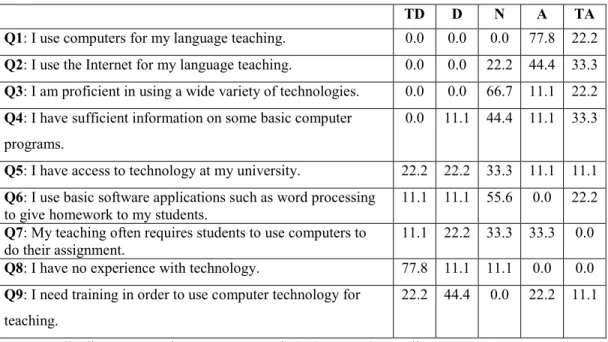
Table 3 - Teachers' levels of technology use (%) ... 39
Table 4 - Purposes and frequencies of technological tools/programs used by teachers (%). ... 40
Table 5 - Students' levels of technology use (%) ... 43
Table 6 - Purposes and percentages of technological tools/programs by students. ... 45
Table 7 - Teachers' attitudes towards TELL (%) ... 47
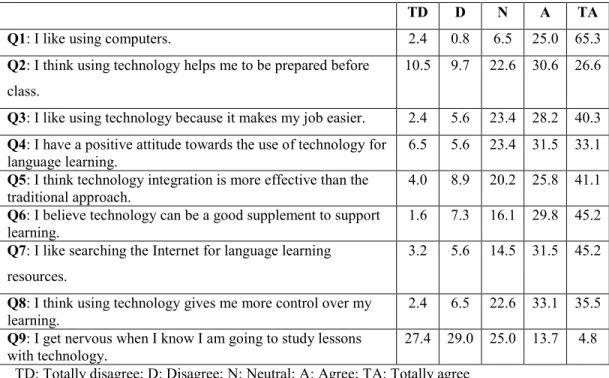
Table 8 - Students' attitudes towards TELL (%) ... 49
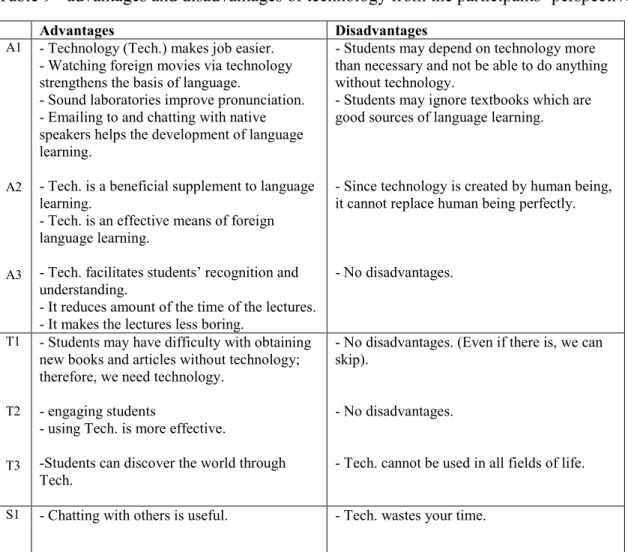
Table 9 - advantages and disadvantages of technology from the participants‘ perspective ... 51
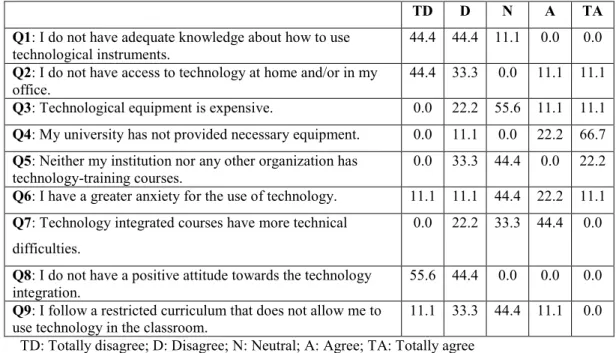
Table 10 – Barriers EFL teachers encounter whilst using technology (%)... 56
CHAPTER I: INTRODUCTION
Introduction
One of those things that people happen to use or come across in their everyday lives is technology. Technology has invaded everywhere: home, offices, working places, markets, resorts, sport centers, and education. Due to its rapid growth, technology has come into use by foreign/second language (F/SL) teachers and learners as a modern approach to enhance teachers‘ and students‘ competencies for teaching and learning F/SL. Nowadays, in many educational institutions over the world, technology has become a major component of the educational curriculum. However, in some
universities and schools, especially in the developing countries, traditional approaches remain the focus of FL teaching.
In recent years, many studies have shown that the use of technology in EFL has been very effective in enhancing the process of learning a foreign language. These studies concluded that almost all EFL teachers and students see technology-enhanced language learning (TELL) as an essential and successful way of teaching and learning a foreign language. However, these studies were mainly conducted with technologically well-informed language teachers and learners. The purpose of conducting this study is to investigate the advantages and disadvantages of TELL from the perspective of
administrators, teachers, and students who have had fewer opportunities to use technology for language teaching and learning.
Background of the study
In the last decades, technology has highly developed. Education is one of the fields that include technological advances. Most educational institutions, in many countries, have evolved their style of teaching through the use of various types of technology (Lu, 1996; Uzunboylu, 2005; Abu Bakar, 2007; Coryell & Chlup, 2007). Technology covers a huge variety of tools, artifacts, and practices such as multimedia computers, internet, videotapes, online chat-rooms, Web pages, e-mail, electronic journals, databases, audio and video conferencing (Zhao, 2003; Vi, 2005). In addition to these technologies, recently innovated technologies have been incorporated into
education such as mobile phone dictionaries, Moodle, Wiki, interactive whiteboard technology, and educational computer games. Previous studies (e.g. Roger, 1995; Watson, 1998; Woodrow, 1992) have reported that teachers‘ attitudes towards the use of technology affect the success of technology integration in education (cited in Albirini, 2006).
Teachers have different attitudes towards incorporating technology into their classes. Some of them see integrating technology into their curricula as a successful method of teaching while others reject it. ChanLin et al (2006) state that some teachers prefer technology use in their classrooms whereas others think that there is no need to integrate technology into their teaching. There are factors that seriously affect teachers‘ viewpoints on technology integration. Lam (2000) argues that the lack of understanding of the effectiveness of technology in education leads teachers to have negative attitudes towards the use of technology for their teaching (cited in Brantmeier, 2003). Lam and
Lawrence (2002) state that there are teachers who are afraid of losing their authority in the classroom and so have ambivalent feelings about using technology in their lessons. Some studies have shown that most teachers and students have positive attitudes towards technology use for the second language learning. Stepp-Greany (2002) states that
foreign language learners enjoy using computer lab and being in courses in which technology are used. Students think that computer technology provides them with necessary and useful information which is why they express their preference for technology use (Ayres, 2002).
Up to now, some studies have shown that incorporating technology into teaching and learning lessons has the potential to play a great role in teaching and learning a foreign language although there are some barriers. Technology helps teachers and learners to develop their teaching and learning process. Teachers can utilize technology to support their teaching. Students also can use technology to prepare themselves for lessons beforehand and review lectures wherever they want (Vi, 2005). Uzun (2009) concluded that using computer games, for teaching and learning vocabulary is more effective than other vocabulary games. Tanner and Landon (2009) show that computer-assisted technology affected ESL learners‘ use of pronunciation and overall
comprehensibility. The use of computer technology in ESL lessons has also been shown to increase learners‘ confidence and self-esteem, such that students feel less pressure and enjoy their freedom of decision-making (Iacob, 2009). Nevertheless, problems such as financial barriers, which are the foremost difficulty that faces EFL teachers when they tend to use technology, cannot be ignored (Vi, 2005; Han, 2008; Warschauer & Meskill,
2000). Another barrier is teachers‘ inadequate technical knowledge about technology; many teachers are not familiar enough with technology to use it effectively for their teaching (Han, 2008; Iacob, 2009).
The present work seeks to explore the benefits of and barriers to the integration of technology in education from the viewpoints of students and teachers who
infrequently use technology in the process of language teaching and learning since most studies in the literature have generally dealt with teachers and students who keep up to date with technology. There is little research that deals with teachers and students who infrequently use technology in language learning classes. Moreover, while useful, much research has focused on problems or barriers related to teachers and their limited access to technology, with little attention having been paid to students.
Statement of the problem
Much research has been conducted to investigate and understand students‘ and teachers‘ attitudes towards the effectiveness of the use of technology for language learning and teaching. Although there are teachers that do not react positively to TELL (Dusick, 1998; ChanLin et al, 2006), the majority of the previous studies acknowledge that almost all language teachers and students have positive perceptions about using technology in EFL teaching and learning classrooms (Ayres, 2002; Neo, Mai & Neo, Tse-Kian, 2005; AbuSeileek, 2007; Akbulut, 2008; Simsek, 2008). However, these studies have generally looked at technologically savvy teachers and students. There is little research that focuses on teachers and students among those who have had fewer
opportunities to use technology in language learning classes. Moreover, there are few studies on barriers of technology that EFL students encounter.
Like universities in many developing countries, Koya University personnel and students have had some exposure to technology outside the classroom; however, they have not had extensive familiarity with using technology for language teaching and learning. For students and teachers at Koya University the use of technology remains limited, and thus its potential benefits are not being exploited. However, it is unclear what exactly are the various factors leading to this lack of use, and whether indeed increased technology use is feasible and appropriate for the local context.
Research Question
This study addresses the following research questions:
1. What are the present levels of use of technology for personal and educational purposes by:
a. Faculty at Koya University? b. Students at Koya University?
2. What are Koya University administrators‘, EFL teachers‘ and students‘ attitudes towards TELL?
3. What barriers do Koya University EFL students and teachers encounter whilst using technology?
4. What barriers do Koya University administrators encounter when they want to support technology integration in education?
5. What conditions might foster expanded use of technology for instructional purposes at Koya University?
Significance of the study
Despite reported positive attitudes towards technology enhanced language learning, many teachers do not show a greater tendency to increase technology integration in their educational practices. Many studies show that teachers‘ and students‘ responses to TELL are very positive, but only few of these studies have been conducted with students and teachers who infrequently use technology. Therefore, the purpose of this study is to examine the viewpoints of teachers and students who
infrequently use technology in their language teaching classes. In addition, there is little research about the particular reasons behind students‘ failure to use technology. Thus, the present study may contribute to the literature by providing further details on possible barriers and disadvantages of technology to students and teachers.
At the local level, Koya University EFL teachers and students infrequently use technology for language teaching and learning. This study aims to explore the actual level of technology use at Koya University, and understand the attitudes of students, teachers, and administrators who infrequently use technology towards the advantages and disadvantages of TELL. The results of this study may help teachers to better use technology by revealing students‘ attitudes towards technology. Furthermore, the results may help administrators understand the advantages and disadvantages of incorporating technology into the classroom, and may indicate what steps need to be taken to ensure that the technology is put to the best possible use.
Conclusion
This chapter presented a brief summary of the issues related to attitudes towards technology integration in education. Background information, statement of the problem, research questions and significance of the study have been discussed.
The next chapter provides a review of the literature on TELL. Moreover, administrators‘, teachers‘ and students‘ levels of technology use as well as perceptions of the use of technology for language teaching and learning are focused on in
accordance to the literature. Finally, benefits of and barriers to TELL are discussed. The third chapter presents details about settings, participants, instruments, data collection and data analysis procedure. In chapter four, the procedures for the analysis of the data gathered from the instruments as well as the results of the study are presented. In the final chapter, the findings of the study, pedagogical implications of the study, limitations and suggestions for further research will be discussed.
CHAPTER II: LITERATURE REVIEW
Introduction
In the past few decades, due to its fast and continuous growth, technology has spread over all significant aspects of life. People use technology in their lives every day, everywhere and for various purposes such as for work, transportation, entertainment, physical activities, communications and education. From an educational perspective, technology offers an infinite number of opportunities in all features of the world of education, especially in teaching and learning a second language (Coryell and Chlup, 2007; Kessler and Plakans, 2008), and is held to be a convenient method that enhances language acquisition (Lian, 2oo2; Wang, 2007).
This study aims to understand the attitudes of administrators, teachers and students who have limited access to technology towards technology–enhanced language learning (TELL) and to explore the benefits and barriers that EFL teachers and students of Koya University experience through the process of language teaching and learning. This research also tries to investigate the levels of technology use at Koya University.
This chapter presents background information about the use of technology for language teaching and learning. First of all, an overview of research related to the use of technology in the realm of education is provided. After that, the level of technology use in general is discussed. Furthermore, research into teachers‘ and students‘ attitudes towards TELL is presented. Finally, the effectiveness and the advantages of technology
use in classrooms are focused attention on, and on the other hand, the disadvantages of and barriers to TELL are discussed with the support of the literature.
Technology and education
Since technology is increasingly and steadily growing, new features of technology are invented to be used in the classrooms (Erdogan, Bayram and Deniz, 2008; Ikeda, 1999). By degrees, newly invented types of technology replace earlier ones in the world of education. Wang (2007) reinforces a point about the continual growth of technology when he notes that ―technology has evolved so quickly that what was known as new technology a few years ago, is now already viewed as old and obsolete‖ (p. 197). This can be backed up by looking at technological tools previously used in education and at currently used tools. It is understood that there are technologies, especially in the advanced institutions, that are no longer considered useful for language acquisition.
The use of technology for educational practices in general
Day after day, educationalists, curriculum designers and policy–makers come up with new styles, techniques, methods and approaches to enhance educational
achievements, and to provide teachers and students with the easiest and most effective way of teaching and learning. Technology integration can be seen as a revolutionary approach of teaching and learning which is to some extent replacing the traditional approaches. From the outset of the use of technology for educational purpose, many different types of technology have been being used in all aspects of education.
Technology used in education has not been restricted to only one specific type; it includes a wide range of instruments that has been using since the past up to the present. Technology, used for educational purpose, covers various tools such as multimedia, videotapes, language labs, Internet, online libraries, chat – rooms, web pages, e-mail, electronic journals, databases, audio and video conferencing (Salaberry, 2001; Vi, 2005; Wang, 2007; Zhao, 2003). Furthermore, new types of technology that have recently been invented and adjusted to being used for educational purposes, with respect to language teaching and learning purpose, such as mobile phone dictionaries, moodle, wiki, interactive whiteboard technology and educational computer games, can be seen in many educational institutions.
The use of technology for language learning and teaching
Mastering a foreign language often involves learning through academic education, especially when you are far away from the target language speaker. In educational institutions, various techniques serve for the sake of enhancing language teachers‘ and learners‘ competencies for teaching and learning a second language. TELL which is not an age–old trend, is expected to offer a greater role in second language acquisition. Al–Seghayer (2001) suggests that the use of technology for language teaching and learning is a beneficial attempt that has been made to enrich the process of mastering a second language.
A plethora of research has been conducted on various types of technology used for language teaching and learning (e.g. Del Puerto and Gamboa, 2009; Kremenska, 2007; Kumar, Rose and D‘Silva, 2008; Lam and Lawrence, 2002; Narayan, 2006;
Popejoy, 2003; Uzun, 2009; Uzunboylu, 2005). These studies concluded that the process of language learning and teaching is enriched through the integration of technology into education. Technology seems to be almost equivalent to teachers during the process of teaching a foreign/second language. In other words, second language learners are becoming as reliant on technology as much as their teachers to familiarize themselves with the target language. However, the use of technology varies from country to country and from school to school.
Levels of technology use
The use of technology is not at the same level everywhere around the world. Educational institutions in developed countries use technology more than those in developing countries, and developing countries‘ schools and universities use technology more than underdeveloped countries‘ schools and universities. These different levels of technology use also can be seen within a single country.
Levels of use of TELL
Marcinkiewicz (1993) categorizes the levels of teachers‘ use of computer technology into five levels; familiarization, utilization, integration, reorientation and evolution. He argues that teachers, at the very first step, familiarize themselves with the use of computers; then, they start to utilize computers in their teaching. When their proficiency with computers rises to a higher level, teachers can critically integrate
computers into their lessons and leave some of their duties to the computer. At this level, teachers who are aware of the change in their role can reorient their instructional
Eventually, teachers keep practicing and learning about how to evolve their teaching style through the use of computer technology.
Likewise, Egorov et al (2007) lists three levels of the use of computer technology in language teaching and learning:
Basic level – teachers must develop competencies to use technology to support their professional activities and lesson preparation. This might include basic use of computers such as computer dictionaries, email and internet search.
Intermediate level – at this level, language teachers should develop
competencies to integrate technology in their classes. This includes the ability to evaluate computer – assisted learning, multimedia packages, and internet resources.
Advanced level – this level includes developing teachers‘ understanding and some competencies for the design of digital resources such as multimedia presentation, web pages, and digital videos.
Egerov et al (2007: 261) Technology users need to know how to benefit from technology and have
enough information about how technology can be used for educational purposes. Apart from the developed countries in which teachers possibly have knowledge about the utilization of TELL, there are many teachers around the world, who are not sufficiently familiar with how to effectively adopt technology to their main teaching.
Teachers‘ reactions to the use of TELL
Teachers have different responses to the use of technology for their language teaching. Most teachers intend to use TELL and many of them use TELL, and those who do not use may have rational reasons why they do not use. There are many factors that
affect teachers to determine whether they integrate technology into their lessons or avoid using technology.
Many previously conducted studies (e.g. Del Puerto and Gamboa, 2009; Hsu, Wu and Hwang, 2007; Narayan, 2006; Teo, 2008; Yunus, 2007; Wahab, 2003) report that teachers‘ beliefs and attitudes towards technology is the factor that most affects teachers to determine whether they have a tendency to use technology in their lessons or not.
Marcinkiewicz (1993) concludes that experience and competency of using computer technology leads to teachers‘ integration or avoidance of computer use in the classrooms. The idea that competency is needed for the use of TELL has been supported by Lee (2001), and Baylor & Ritchie (2002) when they state that teachers, who are going to integrate technology into their curricula, should be capable of dealing with some basic knowledge about computers. Kumar, Rose, and D‘Silva (2008) also state that teachers‘ ability to use technology brings about a greater use of technology in language teaching.
Having the proficiency to use technology is essential because someone who wants to use technology in the classroom should know how to use it; otherwise, technology is useless. In some educational institutions, some kinds of technology have been provided, but they are not used sufficiently because there are no trained teachers. Thus, a training program to teach teachers how to utilize technology into their classes is a must.
Attitudes towards TELL
As the present study mainly focuses attention on ‗attitude‘, it is necessary to discuss this term. It is not easy to describe the meaning of ‗attitude‘ since it links several related meanings. ‗Attitude‘ can be defined by mentioning several steps – first of all, you feel, hear, see, taste, smell or think of something and you understand it; then, it affects you, and finally, you react to it. The term ‗attitude‘ has been defined as ―the way that you think and feel about someone/something; the way that you behave towards someone/something that shows how you think and feel‖ (Hornby, 2004: 67). Attitude can be positive, negative or neutral. There may be different attitudes towards the integration of technology into classrooms.
A plethora of research has examined the role of technology in improving second language teaching and learning. Much of this research also deals with teachers‘ and students‘ viewpoints, beliefs, and applications of technology (Kessler and Plakans, 2008).
Attitudes towards the use of technology for language teaching and learning may be different for males or females, and teachers or students; but this research primarily deals with administrators‘, teachers‘ and students‘ perceptions of the integration of technology.
Administrators‘ attitudes towards TELL
Administrators, who have the authority to decide, manage, make educational policies, and invest money in technological devices and training courses, are arguably
the most important part of institutions with respect to technology integration into language teaching and learning.
Administrators play a leading part in supporting faculty members‘ use of technology for language teaching and learning since there may be resistance to technology by teachers. Hamza (1999) suggests that administrators should encourage teachers, especially those who oppose to this approach, to incorporate technology into their classes.
Teachers‘ attitudes towards TELL
Although there may be teachers who do not intend to incorporate technology into their classes, most teachers seem to have positive attitudes towards TELL. Many
previous studies have concluded that the majority of teachers are interested in
incorporating technology into their language teaching (e.g. Hsu, Wu and Hwang, 2007; Eswaran, 2008)
In this respect, Brantmeier (2003) conducted a study on 10 informed
(practitioners who possess knowledge about L2 reading research and CALL) instructors who were PhD students at the time of the research in order to investigate instructors‘ perceptions of technology integration in the L2 reading process. The participants were teaching undergraduate level courses in German, Spanish, French or Italian. The participants were surveyed through a questionnaire which consisted of both fixed– answer and open–ended questions. The findings showed that the participant teachers had positive attitudes towards the integration of technology in L2 reading process. However,
there is a limitation of this study as the participants did not include any instructors who were not well-informed about theories and research on L2 reading and CALL (p. 68).
Teo (2008) surveyed a sample of 139 pre–service teachers. A Likert scale type questionnaire, which had already been developed by Selwyn (1997), was used to explore the participants‘ attitudes towards computer technology use. The researcher concluded that the participants had overall positive viewpoints on the use of computers in
education. This study also deals with age and gender differences and the correlation between years of computer use and level of confidence, and attitudes towards computers. The results showed no age and gender differences, and significant
correlations between years of computer use, level of confidence, and attitudes towards computers. A limitation of this study that may limit the understanding of computer attitudes is the exclusion of significant variables such as enjoyment, anxiety and the importance of computer use.
Another study that has been conducted to investigate the attitudes of teachers towards technology is a case study by Albirini (2006). It was conducted with 326 Syrian EFL teachers. This study focuses on the relationship between attitudes towards
information and communication technology (ICT) and five independent variables: computer attributes, cultural perceptions, computer competence, computer access, and personal characteristics. The findings showed that teachers had positive attitudes towards ICT in education. The findings also indicate that the five variables, mentioned above play an affective role in shaping teachers‘ attitudes towards technology.
Teachers‘ attitudes, whether negative or positive, towards technology integration in education affect the use of technology for language teaching. Teo (2008) claims that the implementation of technology depends on teachers‘ attitudes; therefore, teachers‘ positive attitude towards incorporating technology into education is crucial to determine successful integration of technology in education but if teachers believe that technology does not meet their own and students‘ needs, they do not implement technology in their classrooms.
Students‘ attitudes towards TELL
Up to now, many studies have reported that the majority of students have
positive attitudes towards the use of technology for their language learning (see Akbulut, 2008; Bulut & AbuSeileek, 2007; Eswaran, 2008; Neo, Mai & Neo, Tse-Kian, 2005). Students have a tendency to use technology for their second language acquisition
because they see technology as a valuable and useful tool that help them to enhance their language learning competencies (AbuSeileek, 2007; Ayres, 2002).
Simsek (2007) carried out a case study with 30 first year students in the
department of foreign language education in a Turkish university. The research aimed to investigate the attitudes of students towards information and communication
technologies (ICTs) in a reading skills course. The results of this study suggested that the students had positive attitudes towards the use of ICTs for their language learning although they experienced some difficulties. However, this study could include a larger number of students at different levels.
Atamtürk (2007) designed a study to explore the perceptions of 320 randomly chosen students on the internet in doing their homework. The participants were prospective teachers who were studying in an English language teaching (ELT)
department. The outcomes of this research indicated that the participants are positively willing to incorporate technology into their classrooms in the future.
Other research has also found that students eagerly embrace the use of
technology for the process of language learning; in a way, they enjoy using technology whilst fulfilling their needs (Popejoy, 2003; Stepp – Greany, 2002). Students like TELL because they believe that it ensures them that they can obtain their needs via technology.
The TELL project enabled the students to experience new technologies, feel the pleasure of learning and increase their learning opportunities. The TELL project improved student knowledge of computers and other fields, developed their English abilities, expanded their interests, and broadened learning range and possibilities.
(Yang and Chen, 2006: 876)
Technology can be of a great benefit to students in the process of mastering their second language. Since technology offers them more opportunities and easier ways to learn, students feel comfortable with the use of technology.
Benefits of TELL
Previous research has reported that technology integration in education promotes academic achievement and student involvement in curricular activities. Nowadays, the use of a variety of technology leads to improvements in the process of language teaching
and learning; it helps teachers to develop their productivity and activity, and helps students to increase their basic skills and knowledge (Wang, 2007).
The advantages of TELL
Users, both students and teachers, have to know where, when and how to use technology so as to be able to receive benefit from it. Teachers should be familiar with various software programs, and know how usefully to use it to improve their teaching (Postholm, 2007). Students also should be trained to know how to beneficially use technology for their language learning.
The review of literature indicates reasons why technology should be integrated into curricula. Researchers have reported some advantages of the integration of
technology in education.
To begin with, technology maintains the attention and interest of students as well as helping to increase the motivation that the process of mastering a foreign language requires (Akbulut, 2008; Iacob, 2009). Secondly, technology offers a wide range of possibilities such as useful and authentic sources, speaking and listening environment, and exposure to a native speaker language to improve the process of second language acquisition (Iacob, 2009; Lu, 1996; Wang, 2007). Thirdly, technology develops foreign language learners‘ communicative skills; learners can chat or exchange e-mails with native speakers and their friends to improve their target language (AbuSeileek, 2007; Lai and Kritsonis, 2006; Vi, 2005). Moreover, Narciss and Koerndle (2008) state that
the classroom. Finally, technology is advantageous for learners who are shy and anxious to participate in class; it helps them to overcome their shyness and anxiety (AbuSeileek, 2007; Lai and Kritsonis, 2006).
In addition to the advantages mentioned above, Han (2008) describes five advantages of computer – assisted language learning (CALL):
CALL programs provide learners more independence from classrooms – unlike teachers, computers can repeat whatever has been prepared and saved on them over and over, without getting tired. Furthermore, computers can provide resources for a longer time.
Learners can study anytime and anywhere – Unlike traditional classroom which students must attend lectures at affixed time and in a fixed
classroom, learners can use technology for their language learning whenever and wherever they find a computer technology that combined with the Internet. Moreover, teachers and students have access to use not only their curriculum‘s resources but also other resources over the world. CALL programs develop the process of second language learning –
―Through various communicative and interactive activities, computer technology can help second language learners strengthen their linguistic skills, affect their learning attitude, and build their self-instruction strategies and self-confidence‖ (p. 42).
Computers encourage students and teachers to interact with each other – computers that connect to the Internet, help students to communicate with
their teachers, their classmates, and even with people who they have not met before. This interaction helps shy students to speak and ask without any anxiety.
Computers can provide rich resources for the classrooms –
―Language teaching in the past was teacher-centered with the aids of blackboard, recorders and videos. Students may find it easy to get bored and confused. With computers, teachers can present pictures, videos and written texts related to the class with or without sound. Students feel things are more real and more understandable‖ (p. 42).
It can be claimed that technology is advantageous for teachers and students by providing them with a diverse range of sources, approaches and activities, and helping them to improve their language teaching and learning with ease.
The effectiveness of TELL
Many studies have been carried out to explore the effectiveness of TELL; they concluded that TELL is an effective approach that plays a leading part in the process of language teaching and learning. Zhao (2003) notes that technology includes various tools; therefore, the effectiveness of each tool is different from another one.
In the light of understanding the effectiveness of technology integration,
Uzunboylu (2005) studied two groups who were in two different classes in a school: an experimental group and a control group, in order to explore the effectiveness of Web assisted language instruction on the achievement and attitudes of students. A Web assisted English grammar learning website, an English language grammar test, and an English language attitude test were prepared. The researcher concluded that the experimental group achieved both a higher score in the grammar test and had a more
positive attitude towards the Web assisted language learning. However, a limitation in this research is that little information is given about the participants, especially about their numbers.
Tanner and Landon (2009) conducted a 13-week quasi-experimental study on 75 intermediate ESL learners – divided into treatment and control groups. The researchers prepared a pre-test and a post-test to evaluate a self-directed, computer-assisted technique that used cued pronunciation reading (oral reading – passages that recorded by native – speakers) to improve students‘ perception and production of pausing, word stress, and sentence-final intonation. The findings indicated that the treatment is effective with regard to perception of pausing, perception of word stress, and controlled production of word stress. Furthermore, the treatment group made a significantly greater reduction in missing (the participant should have marked the feature but did not) pause marks than the control group but not in incorrect (the participant did mark the feature but should not have) pause marks. Although there is a noticeable limitation in this study - i.e. students were attending extra credit classes (outside of their normal classes) which may affect the result because the students may not intend to take extra lessons - this study is nevertheless an important contribution to the literature.
Uzun (2009) surveyed two consultants to explore the effectiveness of computer games – notably VocaWord (a game which is used for foreign language vocabulary learning and practice) – in comparison to non-computer vocabulary games like Scrabble and Tattoo. The researcher designed two checklists to perform the research. The results indicated that VocaWord is more effective compared to other games like Scrabble and
Taboo. The researcher also concluded that there are some plus points of VocaWord; VocaWord also helps learners to understand and learn vocabulary in a short time. Moreover, VocaWord is easy to play and easy to be prepared by the teacher.
In addition to the fact that the effectiveness of technology varies according to different types of integrated technology, it also varies according to different process of teaching and learning or from a teacher to another one and from a learner to another learner. Zhao (2003) claims that the effectiveness of technology is different according to ―many other variables—the learner, the task, the instructional setting, and of course the assessment tool. Thus, even the same use of a particular technology in different
instructional settings may result in different learning outcomes‖. (p. 8)
Thus, the role of technology varies from one type of technology to another, from one user to another, and from one task or activity to another.
Barriers to TELL
Nowadays, teachers and students are aware of the advantages and the
effectiveness of incorporating technology into curricula. However, there may be teachers and students who have no intention to use technology. According to previous studies, most teachers and students mean to use technology for their language teaching and learning but there are some barriers and constraints that may prevent them from using technology in this way.
There are internal and external barriers that discourage teachers from integrating technology into their lessons. In the review of literature on internal and external barriers
to the use of technology in education, Arkin (2003) groups internal barriers as:
Teachers‘ low self-efficacy (ability to use technology) and innovativeness (willingness to change), Teachers‘ attitude and anxiety (having no tendency or being anxious and uncomfortable to use technology), and Teachers‘ Beliefs about the relevance of computers in improving instruction and learning. He also lists several external barriers such as: ―lack of access to computers and software, insufficient time to plan, and inadequate technical and administrative support and training‖ (p. 24).
Each of these barriers has been discussed in the literature. Perhaps the greatest challenge that is in the way of technology integration is students‘ and teachers‘ limited access to technology tools. Most teachers could not have adequate opportunity to afford appropriate computer programs (Muir-Herzig, 2003; Yunus, 2007). According to Vi (2005), if students do not have access to computers and an Internet connection, they may encounter some learning difficulties.
Financial problem is another barrier that teachers and students face. Using up-to-date technologies needs high expenditure since technological programs are expensive (Lian, 2002; Vi, 2005; Warschauer, 2000). Teachers and students often cannot get access to technology because their schools and institutions do not provide the necessary equipment due to financial barriers (Han, 2008; Muir-Herzig, 2003).
Another barrier is lack of competency. Teachers and students need to have knowledge about how to utilize technology (Lai and Kritsonis, 2006; Vi, 2005). For this reason, both teachers and students should take training courses. Most teachers and
students do not have sufficient information to use technology due to lack of training courses (Han, 2008; Lai and Kritsonis, 2006; Muir-Herzig, 2003; Yunus, 2007).
A lack of diversity of approaches is also considered as a barrier by some
teachers. There are teachers who are not willing to use technology in their classes as the only approach for their teaching. They are seeking to use various strategies and activities in their classrooms (ChanLin et al, 2006).
Moreover, another disadvantages of technology is its potentially time-consuming nature. Using technology, especially online technology, takes time. Searching for
resources on the internet takes a long time (Vi, 2005). Teachers also spend a long time trying to integrate technology into their classrooms (Warschauer, 2000).
Pedagogical change can be another challenge that teachers and students face. Vi (2005) claims that one of the challenging barriers which face learners and teachers while using technology is pedagogical change. He also states that using technology creates ways of teaching and learning that are different from the traditional language teaching approaches; the traditional blackboard classrooms have changed to computer labs, and the role of teachers has changed from knowledge giver to facilitator. Teachers and learners experience difficulties because of this pedagogical change.
Another disadvantage of technology integration is its unclear outcomes. A long time and a huge amount of money are required to be spent on the use of technology without being sure of achieving predictable results (Warschauer, 2000).
Teachers‘ negative attitudes towards TELL can be another barrier to technology integration. Teachers‘ attitudes towards the use of technology in education influence teachers to use or avoid using TELL (Del Puerto and Gamboa, 2009; Hsu, Wu and Hwang, 2007; Narayan, 2006; Wahab, 2003). Thus, if the teachers have negative attitudes they will not integrate technology into their classes.
Finally, teachers‘ fear of replacement is another barrier to technology integration. Computers can replace some functions of teachers (Liam, 2002); therefore, many
teachers are afraid that technology may replace them in the process of language teaching (Lam and Lawrence, 2002; Lu, 1996).
Conclusion
Technology, which is commonplace and encompasses a wide range of tools, is increasingly controlling language learning and teaching approaches. By degrees, the use of technology for second language acquisition is increasing.
Students and teachers need to be encouraged by administrators and institutions so as to incorporate technology into their language learning and teaching. Teachers‘
attitudes are a crucial determinant of whether they integrate technology into their classes or avoid; therefore, administrators should motivate teachers to have positive attitudes towards the integration of technology. Students also should be motivated by their teachers in order to understand the advantages of technology and to know how to beneficially use technology for second language learning. For this reason, training programs may be helpful and useful for them to have at least some basic knowledge
about the use of technology. Technology cannot be beneficial and affective unless teachers and students know how to use it for their educational purpose.
Fortunately, most teachers and students are familiar with the effectiveness and advantages of technology integration in education. Teachers can have the opportunity to prepare their lectures with the assistance of technology. Students have lots of
possibilities to use technology for their second language learning. For example, they can read and listen to authentic resources, communicate with native speakers, and use given lectures over and over again. Thus, teachers and learners may intend to benefit from the use of technology.
Unfortunately, there are deficiencies of technology that may stop and discourage teachers and students from using technology. The foremost constraint on technology integration can be teachers‘ and students‘ limited access to technology due to financial problem. Moreover, having insufficient familiarity with the use of technology is another struggle to teachers and students that prevent them from incorporating technology.
The next chapter provides information on the settings and the participants of the study, describes the instruments that were used to collect data, and introduces the data collection and the data analysis procedure.
CHAPTER III: METHODOLOGY
Introduction
The purpose of conducting this study is to understand the feelings and views of Koya University EFL students, EFL teachers and administrators about the benefits of and barriers to the use of technology-enhanced language learning (TELL). This study attempts to address the following research questions:
1. What are the present levels of use of technology for personal and educational purposes by:
a. Faculty at Koya University? b. Students at Koya University?
2. What are Koya University administrators‘, EFL teachers‘ and students‘ attitudes towards TELL?
3. What barriers do Koya University EFL students and teachers encounter whilst using technology?
4. What barriers do Koya University administrators encounter when they want to support technology integration in education?
5. What conditions might foster expanded use of technology for instructional purposes at Koya University?
This chapter introduces the setting in which this study was administered, identifies the participants of the study, and describes the instruments that were used. In addition, this chapter provides information about the data collection procedure and the data analysis strategies.
Setting and Participants
This study was conducted at Koya University, College of Languages, in the Department of English Language. Koya University is a state university in the north of Iraq. The College of Languages includes English, Kurdish, and Arabic language, and translation departments which cover English, French, and Turkish.
In the Department of English Language at Koya University, students have to finish four academic years in order to get a bachelor‘s degree in English language. The courses cover language skills, linguistics and literature. Listening, speaking, reading, writing, grammar, vocabulary, phonetics, phonology, morphology, syntax,
sociolinguistics, poetry, short story, drama, novel and literary criticism as well as some minor subjects such as Basic knowledge about the use of some basic computer
programs, Kurdology, Arabic language, and French language are taught in this
department. Students must pass the exams of each specific subject in order to pass to the next year. The exams are based on the course-books and what has been taught during the semester.
The student participants in this study were 124 EFL undergraduates (freshman, sophomore, junior, and senior). These constituted almost all of the students in the department. Four students were also interviewed. Out of the 12 teachers in the
department, nine participated in the questionnaire, and three of these were interviewed. Finally, three administrators who were in charge of budget and decision–making were interviewed to explore their perceptions of the benefits of and constraints on TELL at
Koya University. Ten of the students and two teachers who took part in the study also participated in piloting.
Instruments
In this study, two types of data collection instruments were used: questionnaires and interviews. Questionnaires were chosen to collect a huge amount of data from a large number of participants in a very short time (Dörnyei, 2002a cited in Taşpınar, 2004). Two sets of questionnaires were prepared; one of them was administered to teachers and the other to students. The questionnaire items were five-point Likert scale items requiring respondents to indicate whether they ‗strongly disagree, disagree, neutral, agree, strongly agree‘ with certain statements. Some items were taken from existing questionnaires (such as Akbulut, 2008; Arkin, 2003; Juan, 2001; Lowerison, 2006; Narayan, 2006; Simsek, 2007) but the researcher adapted them according to his study. Furthermore, three sets of interviews were prepared: the first one was conducted with four students, the second with three teachers, and the third with three
administrators.
The questionnaires (see Appendices A and B) were used with the teachers and students. The teachers‘ questionnaire and the students‘ questionnaire were similar except for some changes in wording; e.g. items like ―Educational degree: MA PHD Other………‖, ―Did you have access to computer when you were getting your PhD/MA? Yes No ‖ and ―I like using computers for my language teaching‖ can be seen in the teachers‘ questionnaire and items like ―In which grade are you a student this year? ________‖, ―Did you have access to computer at your high school?
Yes No ‖ and ―I like using computers for my language learning‖ can be seen in the students‘ questionnaire. Each questionnaire consisted of two sections.
1. The first section aimed to provide information about the participants‘ age, gender, years of experience with computers, and (for teachers) the level of computer access when they were getting their MA/PHD degree or (for students‘) the level of computer access at their high schools. This section also asked
whether the participants have their own personal computer.
2. The second section consisted of three parts.
a. The first part included two sets of questions, investigating:
i. Participants‘ present level of general use of technology.
ii. Participants‘ levels of use of technological tools and programs for either educational or personal purposes or for both.
b. The second part aimed to understand the participants‘ attitudes towards technology integration in education.
c. The last part explored barriers to technology integration in education. Three semi-structured interviews were also designed for the three different groups of participants. The purpose of the interviews was to obtain detailed and further information on the research questions. There were parallel relationships between the interview questions and questionnaires (see Appendices A, B, D, E, and F).
The first interview was conducted with three administrators. This interview comprised a set of questions to investigate the advantages and disadvantages of TELL from the administrators‘ viewpoints, and to explore the constraints on TELL that may prevent them from providing the faculty with sufficient technological tools. This interview also solicited information as to what can be done to overcome barriers to TELL, and what can be done to better use technology.
The teachers‘ and students‘ interview questions were quite similar to each other, and they were to some extent similar to the administrators‘ interview questions. In the teachers‘ and students‘ interviews, questions about the participants‘ levels of use of technology for language teaching and learning, participants‘ knowledge about
technology use, and benefits of and barriers to TELL from the participants‘ perspective were asked. Moreover, in the teachers‘ interview, other questions were asked to explore what needs to be done to encourage teachers to integrate technology into their classes.
Procedure
The students‘ questionnaire was translated into Kurdish (see appendix C) by the researcher, and an MA student reviewed the translation. Then, another MA student translated the Kurdish version into English without seeing the original English version questions. Finally, an English native speaker compared the original English version questions and the back-translated questions.
In order to ensure that the questions were understandable and clear to the
completed by ten EFL students and two EFL teachers at Koya University (these participants also later took part in the main study). The pilot study confirmed that the questionnaires were comprehensible and clear to the participants; they could fill in the whole survey without experiencing any problems; therefore, the same questionnaires were used for the main study.
The interviews were recorded and then transcribed and those points and views from the Kurdish interviews that were important and needed for the study were translated into English.
Data Analysis
In this study, two types of data were collected: quantitative and qualitative. Social Science (SPSS) version 11.5 was used in order to compute frequencies and percentages of each item on the questionnaires.
The data that were obtained from the interviews were analyzed in a qualitative manner. After transcribing the interviews, the transcriptions were read carefully. Key concepts, common and differing points rose within each of the three groups of
participants and among them were identified and used to answer the research questions. Conclusion
This chapter presented information on the setting and the participants of the study, and identified the instruments that were used to gather data in this study. This chapter also reported on the data collection procedure and the data analysis procedure.
The next chapter will provide detailed information on the data analysis procedure and the results.
CHAPTER IV: DATA ANALYSIS
Introduction
This study was designed to explore the benefits of and barriers to technology-enhanced language learning (TELL) from Koya University students‘, teachers‘ and administrators‘ perspectives. This study addressed the following research questions:
1. What are the present levels of use of technology for personal and educational purposes by:
a. Faculty at Koya University? b. Students at Koya University?
2. What are Koya University administrators‘, EFL teachers‘ and students‘ attitudes towards TELL?
3. What barriers do Koya University EFL students and teachers encounter whilst using technology?
4. What barriers do Koya University administrators encounter when they want to support technology integration in education?
5. What conditions might foster expanded use of technology for instructional purposes at Koya University?
This study gathered data from two sets of questionnaire and three sets of interview. The first questionnaire was delivered to 124 Koya University EFL students. The second questionnaire was administered to nine EFL teachers at the same university. Furthermore, three administrators, three teachers, and four students were interviewed in order to explore advantages and disadvantages of TELL from their points of views.
Data analysis procedure
In this study, data were analyzed in both quantitative and qualitative manner. The results of the questionnaires were analyzed statistically with the aid of the Statistical Packages for Social Science (SPSS) version 11.5. Frequencies and percentages were used to calculate the teachers‘ and students‘ responses to the questionnaires. Each part of the questionnaires was analyzed separately. In addition to the data analysis of the
questionnaires, the data gathered from interviews were also analyzed qualitatively.
The results collected from the analysis of the questionnaires and the interviews are presented in five sections. The first section sheds light on the participants‘
background information. The second section, in which both quantitative and qualitative data are presented, identifies the teachers‘ and students‘ levels of technology use for educational and personal purpose. In the third section, data are quantitatively and qualitatively analyzed in order to understand the attitudes of administrators, teachers, and students towards technology integration in education. The fourth section, in which quantitative data and qualitative data are analyzed, provides information on barriers that administrators, teachers, and students encounter. In the last section, only qualitative data are analyzed to find out the participants‘ expectation of technology use as well as their suggestions about how to better use technology for the process of language teaching.
Results
Background information
This section presents some basic information on the characteristics of the participants who participated in the questionnaires. Table 1 identifies the profile of the students who responded to the students‘ questionnaire.
Table 1 - Students‘ profiles
Frequency Percent
Gender Male Female 60 64 48.4 51.6 Grade 1 st year student 2nd year student 3rd year student 4th year student 27 38 29 30 21.8 30.6 23.4 24.2 Years of experience with a
computer
none 6 4.8
2 years or fewer 41 33.1
3-6 years 59 47.6
7-10 years 15 12.1
more than 11 years 3 2.4
Access to computer at high
school Yes No 77 47 62.1 37.9 Personal computer Yes
No
37 87
29.8 70.2
Roughly equal number of male and female students took part in the study and there was a roughly even spread of students across the 4 grades, though there are slightly more second year students compared to the other grades. Table 1 also shows that almost two-thirds of the students (62.1%) had more than three years experience of using
computers, and less than 5% had no experience with computers. Also more than half of the participants (62.1%) stated that they have had access to a computer at their high
school. Moreover, table 1 reveals that most of the students (70.2%) did not have their own personal computer.
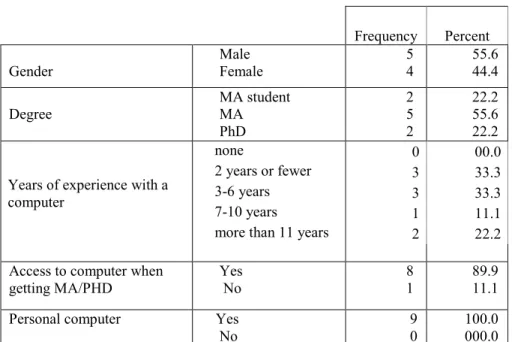
Table 2 provides some basic information on the teachers who participated in the questionnaires.
Table 2 - Teachers' profiles
Frequency Percent
Gender Male Female 5 4 55.6 44.4 Degree MA student MA PhD 2 5 2 22.2 55.6 22.2 Years of experience with a
computer
none 0 00.0
2 years or fewer 3 33.3
3-6 years 3 33.3
7-10 years 1 11.1
more than 11 years 2 22.2
Access to computer when getting MA/PHD Yes No 8 1 89.9 11.1 Personal computer Yes
No
9 0
100.0 000.0
As can be seen in Table 2, all teachers had at minimum MA degree or were MA candidates. 2 teachers had PhD degrees. Table 2 also indicates that the majority of the teachers (66.6%) had six or fewer years of experience with computers. Most of the teachers said that they had access to computers when they were getting their current educational degree. Additionally, all the teachers revealed that they have their own personal computer.