ORIGINAL ARTICLE
Controlled drug release behavior of metformin
hydrogen chloride from biodegradable films based
on chitosan/poly(ethylene glycol) methyl ether
blend
M. Sohail Sarwar
a, Abdul Ghaffar
a, Atif Islam
b,*, Farhat Yasmin
a, Zehra Oluz
c,
Eylu¨l Tuncel
c, Hatice Duran
c, Asif Ali Qaiser
da
Department of Chemistry, University of Engineering and Technology, Lahore, Pakistan
b
Department of Polymer Engineering and Technology, University of the Punjab, Quaid-e-Azam Campus, Lahore, Pakistan
cDepartment of Materials Science & Nanotechnology Engineering, TOBB University of Economics and Technology,
Sogutozu Cad.43, 06560 Ankara, Turkey
dDepartment of Polymer Engineering and Technology, University of Engineering and Technology, Lahore, Pakistan
Received 30 January 2017; accepted 6 May 2017 Available online 17 May 2017
KEYWORDS Chitosan;
Biodegradable films; PEGME;
Controlled drug release; PBS;
Biomedical applications
Abstract In this study, novel smart drug release films were prepared by blending chitosan with polyethylene glycol methyl ether (PEGME), also named as methoxy polyethylene glycol (mPEG), for controlled drug release applications. The polymeric films were characterized by Fourier trans-form infra-red for functional groups analysis, scanning electron microscopy for morphology and X-ray photoelectron spectroscopy for chemical and surface analysis followed by mechanical and thermal analysis. The mechanical properties showed that with the addition of PEGME (40%), the tensile strength and elongation break were increased up to 34.14 MPa and 26.40%, respectively as compared to the controlled sample (without PEGME). The developed biodegradable films were tested for Metformin hydrogen chloride release ability at a particular rate in phosphate buffer saline solution at pH 7.4. The results showed that chitosan/PEGME blends could be employed for con-trolled drug release and other biomedical applications.
Ó 2017 The Authors. Production and hosting by Elsevier B.V. on behalf of King Saud University. This is an open access article under the CC BY-NC-ND license (http://creativecommons.org/licenses/by-nc-nd/4.0/).
1. Introduction
Recently, polymeric blend films are used as drug carrier in the field of agriculture and biotechnology. The functionality of a polymer could be increased by blending with other suitable polymers. Many biodegrad-able blend hydrogels have been widely studied for drug delivery, tissue engineering due to their nontoxic nature and biocompatibility and * Corresponding author.
E-mail address:[email protected](A. Islam). Peer review under responsibility of King Saud University.
Production and hosting by Elsevier
Arabian Journal of Chemistry (2020) 13, 393–403
King Saud University
Arabian Journal of Chemistry
www.ksu.edu.sa
www.sciencedirect.com
http://dx.doi.org/10.1016/j.arabjc.2017.05.005
1878-5352Ó 2017 The Authors. Production and hosting by Elsevier B.V. on behalf of King Saud University. This is an open access article under the CC BY-NC-ND license (http://creativecommons.org/licenses/by-nc-nd/4.0/).
other superior characteristic properties (Kaewpirom and Boonsang, 2006; Teng et al., 2010; Tang et al., 2007; Islam et al., 2012; Saha et al., 2011; Das, 2013).
Chitosan, a natural polymer, is a biocompatible (Ma et al., 2010), biodegradable (Ghaffar et al., 2014), nontoxic and a cationic polymer obtained by the partial deacetylation of chitin (Gorochovceva et al., 2005; Yang et al., 2008; Ma et al., 2010). Chitin consists of N-acetyl glucosamine repeating units with 1,4-linkage and it is the second most abundant biopolymer in nature and can be easily obtained from the wastes in seafood processing. The properties of chitin can be enhanced in the form of chitosan by chemical modification. Chitosan can be modified into blend hydrogels, membranes and films as compared to chitin (Lee et al., 2000; Alsabagh et al., 2015). Being inexpensive, environment-friendly, hydrophilic, biodegradable, and of excellent adsorption capacity, chitosan has attracted much interest in the field of biomedicine. Due to its unique properties, chitosan and its deriva-tives are getting significantly used in biotechnology, pharmaceutics, textile, food, cosmetics, biomedical and other industries (Gorochovceva et al., 2004; Hu et al., 2005; Ito et al., 2013; Ma et al., 2008). It has been broadly investigated by numerous investiga-tors in gene delivery, drug delivery and biomedical fields (Seo et al., 2009). However, raw chitosan has serious drawbacks, such as low mechanical strength, dissolution in acidic solutions, and the leaching
of organics such as carbohydrates. Hence, various efforts have been made to stabilize chitosan, often by manipulating processing condi-tions (e.g., temperature), introducing a proper stabilizing cross-linking compound, developing chitosan blends with another polymer, or modifying the chitosan structure using chemical or ionic agents (Szyman´ska and Winnicka, 2015).
In recent times, polymer blends, rather than the single ones, are designed to achieve performances of their constituting ingredients syn-ergistically (Boateng et al., 2008). In order to develop new biomateri-als, blending of two or more polymeric materials shows a combination of properties that could not be achieved by applying each polymer (Chen et al., 2008). Blending of natural polymers with syn-thetic polymers can describe a wide range of physiochemical properties as well as biocompatibility and biological interactions of natural poly-mers with synthetic ones (Sarasam and Madihally, 2005). In the liter-ature, there are many reports of blending chitosan with natural polymers as well as with synthetic polymers to improve various prop-erties and biomedical applications such as konjac glucomannan (Ye et al., 2006), zein (Torres-Giner et al., 2009), and curdlan (Sun et al., 2011) as well as with synthetic ones such as poly (ethylene oxide) (Zivanovic et al., 2007), poly (vinyl pyrollidine) (Zeng et al., 2004), and poly (lactic acid) (Suyatma et al., 2004). Several blends have also been reported based on biomedical applications such as bone
(Malafaya and Reis, 2009), cartilage (Alves da Silva et al., 2010), skin (Azad et al., 2004) and nerve (Haipeng et al., 2000) tissue engineering as well as drug delivery (Wang et al., 2007).
The in vitro drug release behavior of glutathione sensitive long-circulation polymeric micelles was developed through assembling in aqueous phase of a polymeric pro-drug which was synthesized by link-age of mPEG and 6-mercptopurine using propiolic acid as a joining limb (Shi et al., 2016). A thermosensitive gel composed of mPEG-PLGA-PLL-cRGD was developed as a nano drug delivery system which could prolong drug release time and overcome the drug resis-tance of pancreatic tumor cells (Shen et al., 2015). mPEG-PLA micelles and mPEG-PLA/TPGS mixed micelles were used to develop a highly efficient formulation for nimodipineb loaded micelles and mixed
micelles for drug delivery application (Huang et al., 2014). A pH-responsive amphiphilic polymer (mPEG-hyd-TPE) with aggression induced emission nanoprobe micelles as a drug delivery system for bioimaging and cancer therapy was successfully designed (Wang et al., 2015). Nano particles based on mPEG-PLGA-PLL copolymer were prepared which are promising drug carriers and delivery perfor-mance (He et al., 2015). mPEG-PCL copolymers having great biocom-patibility, amphiphilicity and controlled biodegradability with great potential applications in nano technology, pharmaceutics, tissue engi-neering and medicinal chemistry (Danafar, 2016). Both Folic acid– and mPEG–conjugated chitosan nanoparticles have been designed for pro-long and targeted anticancer drug delivery system using Mitomycin C
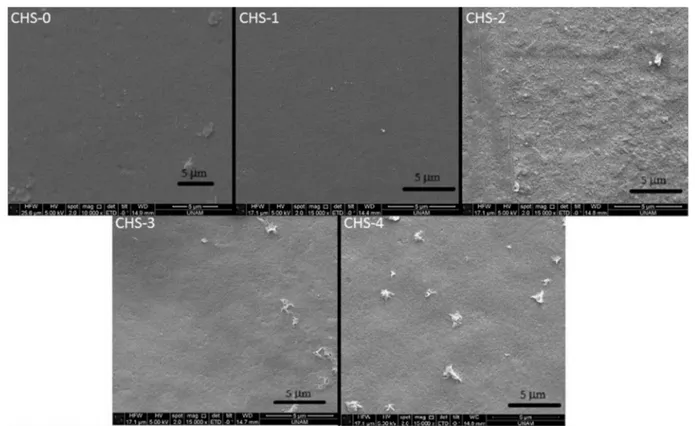
Figure 1 SEM micrographs of chitosan/PEGME blend films surface in different compositions consisting of 100/0 0), 90/10 (CHS-1), 80/20 (CHS-2), 70/30 (CHS-3), and 60/40 (CHS-4).
Figure 2 XPS survey-scan of pristine chitosan (CHS-0).
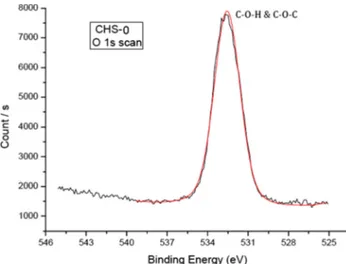
Figure 3 High resolution C 1s scan of pristine chitosan (CHS-0).
loaded to the mPEG–FA–NPs (Zhenqing et al. 2011). So far, no report on chitosan blends with mPEG loaded with Metformin hydrogen chlo-ride and its controlled release was reported to the best of our knowledge.
The objective of this work was to evaluate the blend characteristics of chitosan with mPEG as a controlled drug delivery material. In order to get rid of before mentioned problems with pristine chitosan films, it was blended with polyethylene glycol methyl ether (PEGME) which
Figure 4 High resolution O 1s scan of pristine chitosan (CHS-0). Figure 5 High resolution N 1s scan of CHS-0.
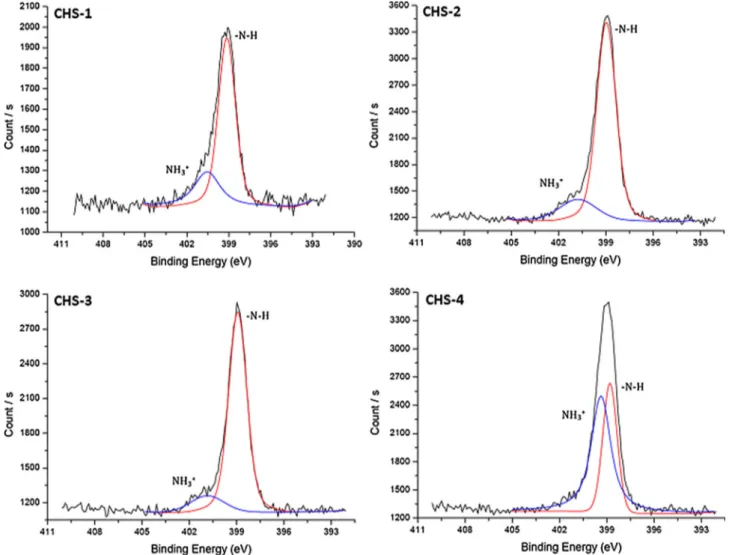
Figure 6 Survey scans of chitosan/PEGME blend films in different compositions consisting of 90/10 (CHS-1), 80/20 (CHS-2), 70/30 (CHS-3), and 60/40 (CHS-4).
showed improvement in film formation, mechanical strength and ther-mal properties. In this study, the drug delivery applications and other improving biological properties were also examined. Metformin hydrogen chloride was chosen as a model drug molecule, loaded on suitable selected film and drug release was analyzed. Metformin hydro-gen chloride is an oral antidiabetic drug and used to treat type II dia-betes (Zarghi et al., 2003). The conventional form of Metformin hydrogen chloride tablets can cause gastrointestinal upset, cramps, nausea, diarrhea and increased flatulence (Adikwu et al., 2004). In order to reduce these side effects and to enhance patient compliance, controlled drug release formulations of Metformin hydrogen chloride were developed. A number of studies have been reported in the litera-ture investigating the controlled drug release from different hydrogels (Bhavesh et al., 2007; Tiwari et al., 2003). To the best of our knowl-edge, there was no report in the literature to discuss about chitosan and PEGME blends with controlled release of Metformin hydrogen chloride and their properties as a potential biomaterial for drug deliv-ery applications.
2. Experimental 2.1. Materials
Low molecular weight chitosan (200 MPa; molecular weight 17103.41 g mol 1 DDA = 90%, was obtained from
Biotech-nologie und Logistik Gmbh, (BioLog, Germany). Acetic acid was obtained from Merck Chemicals (Dusseldorf, Germany), and Metformin hydrogen chloride was collected from Merck Pharmaceuticals (pvt) Limited, PEGME (750 Da Aldrich, USA). All of the other chemicals and reagents were of analyt-ical grade and used as received without further purification. 2.2. Methods
2.2.1. Film preparation
Chitosan/PEGME blends were prepared by solution casting of polymer solutions in different chitosan/PEGME ratios (100/0, 90/10, 80/20, 70/30, 60/40) and each film was coded as CHS-0, CHS-1, CHS-2, CHS-3, CHS-4, respectively. Firstly, chitosan was dissolved in 2% (v/v) acetic acid solution for 90 min. Sec-ondly, PEGME was dissolved in 20 mL ethanol. The solutions of chitosan were blended with each solution of PEGME under continuous stirring at 65°C for 60 min. The blended solutions were cast into polystyrene petri dishes and dried at room tem-perature. The prepared blend films were placed in air tight plastic bags and stored in refrigerator until further analysis. Film thickness (average 20–60mm) was determined using a micrometer (Mitutoyo 156-101, Japan) by performing at least three measurements per sample.
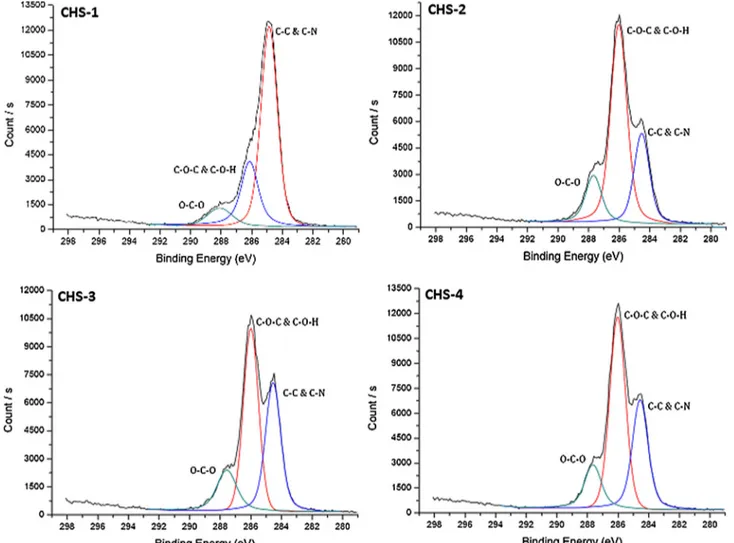
Figure 7 High resolution C 1s scans of chitosan/PEGME blend films in different compositions consisting of 90/10 1), 80/20 (CHS-2), 70/30 (CHS-3), and 60/40 (CHS-4).
2.2.2. Scanning electron microscopy
Blend films were examined using a FEI Quanta 200 FEG Scan-ning Electron Microscope with 4 nm resolution. The micro-graphs were taken at an accelerating voltage of 5 kV. 2.2.3. X-ray photoelectron spectroscopy
In order to investigate the chemical compositions of the sam-ples, X-ray photoelectron spectroscopy analysis was carried out. Thermo Scientific K-Alpha was used for X-ray photoelec-tron spectroscopy (XPS) measurements. The Mg Ka (1253.6 eV) X-ray source was operated at 300 W. Pass energy of 117.40 eV was used for the survey scans.
2.2.4. Fourier transform infrared spectroscopy
Fourier transform infrared (FT-IR) spectra of the films were measured with a spectrophotometer (Bruker Alpha-P) using attenuated total reflection (ATR) mode. The spectra were obtained at a resolution of 4 cm 1 in the range of 4000–
450 cm 1. The FTIR spectra were taken in a transmittance mode.
2.2.5. Mechanical properties
Mechanical properties were determined using TIRA Machi-nenbau GmbH. Tensile strength (TS) and % elongation at
break were determined according to ASTM D882-09 (ASTM, 2009) procedure (ASTM D882-09, 2009). A double clamp at a crosshead speed of 1 mm s 1with 20 mm as initial grip separation was used. TS was calculated by dividing the maximum load by the cross-sectional area and % elongation at break was determined by dividing the extension at break by the initial gauge length of the films and multiplying by 100. 2.2.6. Thermogravimetric analysis
Thermogravimetric analysis (TGA) was conducted using a TA Instruments (SDT Q600), over the heating range from 40 to 800°C in nitrogen atmosphere with a flow rate of 20 mL/ min. The heating rate was 10°C/min.
2.2.7. Drug release
In order to study the controlled drug release, 20 mg of Met-formin hydrogen chloride was dissolved in distilled water. The drug solution was mixed with blended solution containing 80% chitosan and 20% PEGME and stirred at 60°C for 60 min. The solution was poured into glass petri dish for film formation at room temperature. Finally, the film loaded drug was stored in a refrigerator for further analysis.
The drug release was checked by cutting film from three dif-ferent regions and put into 100 mL phosphate buffer saline solution (PBS) at temperature 37°C. The average length,
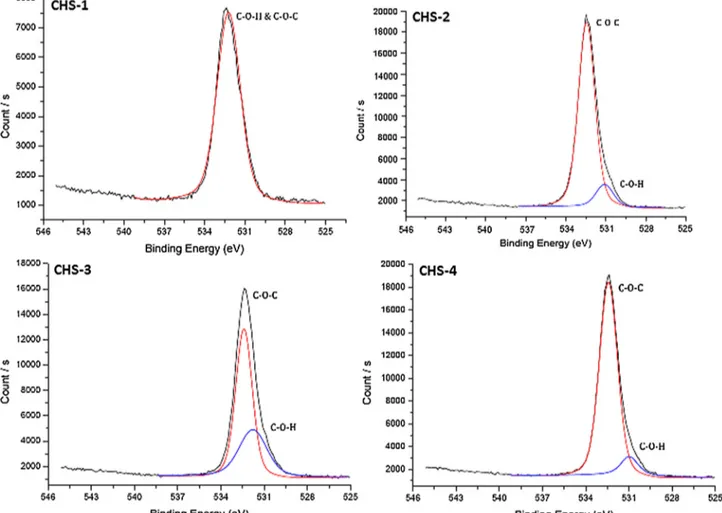
Figure 8 High resolution O 1s scans of chitosan/PEGME blend films in different compositions consisting of 90/10 1), 80/20 (CHS-2), 70/30 (CHS-3), and 60/40 (CHS-4).
width and weight of sample of drug loaded film was 2.3 cm, 2 cm and 0.038 g, respectively. The drug loaded film thickness (average 30–50mm) which was determined using a micrometer (Mitutoyo 156-101, Japan) by performing at least three to four measurements per sample. The pH of PBS solution was main-tained as 7.4 using 0.1 M NaOH and 0.1 M HCl solution. The U.V. scans of solutions had done after every one hour atkmax
(200 nm) using Labomed Inc. UVD-3200. The pH of all the solution was measured using InoLab pH 7110.
3. Results and discussion 3.1. Preliminary characterization
Chitosan/PEGME blends were prepared and according to the preliminary test results. Chitosan and its blend films were semi-clear and slightly yellowish in color. The proposed interactions between chitosan and PEGME are shown inScheme 1. 3.2. Scanning electron microscopy
Surface morphology of different chitosan/PEGME blend films was studied using SEM micrographs on top surface of the films
as illustrated inFig. 1. Microstructures by SEM showed that PEGME particles were well dispersed and the blends were homogeneous having 10 and 20% PEGME in the blends com-position implying the partial miscibility of the components. As the percentage of PEGME in blend was increased up to 40% (w/w); the surface homogeneity of the films was decreased to some extent. Surfaces of the blend films were rougher than the blank chitosan film.
3.3. X-ray photoelectron spectroscopy
For neat chitosan film and blend films, the spectra were recorded using a 60° take off angle relative to the surface normal.
Survey scan of CHS-0 (Fig. 2) identified chemical compo-nents of CHS-0 sample that contained chitosan only. These are C, O and N namely. In addition, Ca 2p peak was observed at 348.57 eV; however chitosan did not contain Ca in its chem-ical structure. The peak could be due to the chemchem-icals used during the production of the films. The signal of N 1s orbital at 399.44 eV proved the –NH2bond in chitosan structure.
High resolution C 1s survey scan showed three distinct peaks after applying peak fitting (Fig. 3). The peak at 285.30 eV was assigned to C–C and C–N bonding in the
chi-Figure 9 High resolution N 1s scans of chitosan/PEGME blend films in different compositions consisting of 90/10 (CHS-1), 80/20 (CHS-2), 70/30 (CHS-3), and 60/40 (CHS-4).
(Amaral et al. 2005).
Chitosan has two different oxygen charge states due to the C–O–H and C–O–C bonding. However, high resolution O 1s scan inFig. 4shows only one peak at 532.58 eV corresponding to both bindings. These were very close to each other and could not be resolved in this spectrum (Jiang et al., 1997).
In the high resolution N 1s spectrum as shown inFig. 5, two peaks were identified. The peak at 399.44 eV was assigned to –NH2chemical binding, while the other peak at 401.36 eV
was thought belonged to NH3+ ion. –NH2and NH3+ forms
were present in chitosan structure because the polymer was immersed in the distilled water before it was dried (Amaral et al. 2005).
The addition of PEGME in chitosan did not affect the sur-vey scans significantly, because PEGME consisted of C, H and O in its structure (seeFigs. 6–9).
Examining the high resolution C 1s scans of the samples, an increase in counts of C–O–C and C–O–H peak was observed while with a decrease in C–N signal. This also happened because of the chemical structure of PEGME, as the ratio of PEGME was increased in the blend, count of C–O–H/C increased having oxygen in the backbone of the polymer. On the other hand, C–N signal became lower since chitosan ratio was decreased in the blend.
High resolution O 1s scans were all similar, but as the PEGME ratio increased, resolution of C–O–H and C–O–C signals become clear. There were two distinct peaks at 532.4 eV and 531.1 eV, former belonging to C–O–C binding while the latter represented C–O–H chemical bonding. In CHS-2, this resolution could not be obtained due to lower PEGME ratio.
Nitrogen occurred only in chitosan structure, so decrease in chitosan ratio in the blend did not cause a significant change in high resolution N 1s scans. In CHS-5 sample, the widths of the fitted peaks were very close to each other. NH3+ peak at
399.39 eV was dissolved form of NH2 and the increase in
counts of this peak might be due to the lack of sample drying before analysis.
The experimental and theoretical atomic percentages of the samples did not match perfectly which was the general case for XPS analysis, but generally the existence of elements (Table 1). The variation of the percentages might be due to adsorbed air which also contains C, O and N extensively.
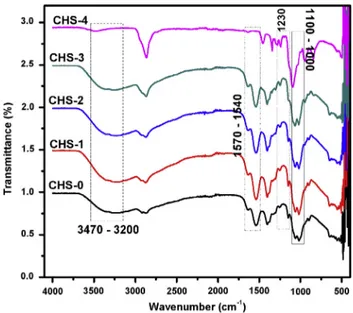
between chitosan and PEGME. The spectra of chitosan, PEGME and their blend are shown in Fig. 10. A band at 1652 cm 1 and band ranges from 1540 to 1570 cm 1
corre-spond to amide-I and amide-II groups, respectively. Cis-amide III band is also observed at 1340 cm 1. All of these bands correspond to chitosan without PEGME. The glycosidic linkages are showed by the bands 1150 and 890 cm 1 (Saha et al., 2011; Islam and Yasin, 2012; Kammoun et al., 2013; Sachdev et al., 2013). The stretching vibrations of –CH3and
Figure 10 FT-IR study of chitosan/PEGME blend films in different compositions.
Table 2 Tensile strength and elongation at break of various films:
Sr. No. Tensile strength (MPa) Elongation at break (%) CHS-0 20.23 ± 2 4.18 ± 1
CHS-1 28.28 ± 2 10.07 ± 6 CHS-2 32.83 ± 4 12.54 ± 1 CHS-3 33.55 ± 3 13.74 ± 1 CHS-4 34.14 ± 2 26.40 ± 1
–CH2 are assigned to the bands at 2880 cm 1 and at
2920 cm 1, respectively. A stretching band at 1110 cm 1
con-firms acyclic C–O–C (PEGME) and another band is observed at 1230 cm 1 which is due to cyclic C–O–C (chitosan) (Mahatmanti et al., 2014). A band ranges 3470–3200 cm 1is assigned to O–H stretching. As the concentration of PEGME increases, the intensity of band is also increased.
In the typical spectrum of chitosan-PEGME composite film, the amino peak of chitosan shifts from 1541 to 1535 cm 1with the addition of PEGME which indicated the interactions between the hydroxyl groups of PEGME and the amino groups of chitosan (Tuhin et al., 2012) which are consistent with our results (Fig. 10).
3.5. Mechanical properties
The mechanical properties of the blend films, elongation at break (%) and tensile strength (MPa), were analyzed and com-pared with the blank chitosan films.Table 2, shows mechanical properties such as Tensile strength (MPa) and elongation at break (%) of chitosan and blend films including mean ± SD. Neat chitosan film had tensile strength of 20.23 ± 2 MPa and % elongation of 4.18 ± 1%. In fact, blank chitosan film had low TS as well as low % elongation in comparison with the blend films. The plot of % age of PEGME in blend films and TS (MPa),Fig. 11, shows that blend films have increment of TS and % elongation with increase in PEGME content. It could be evidence on more elasticity of the samples as a func-tion of more PEGME content while other essential properties remained approximately same as a drug release material. Con-sidering the rigid structure of chitosan, originated from weak but high number of intramolecular bond forces, such as H-bonds, introducing PEGME might seriously affected the crys-tallinity of chitosan, thereby increased the amorphous phase. In the other words, adding PEGME to the film composition caused it to become ductile. The 60/40 chitosan to PEGME ratio was an optimum choice in the mechanical properties of the blends since the introduction of PEGME to the chitosan made the films to be more flexible and ductile. This sample possessed both the relatively high TS and the good flexibility.
3.6. Thermogravimetric analysis
Thermogravimetric analysis (TGA) was performed on pure chitosan and chitosan-PEGME films (Fig. 12). The mass loss before the onset degradation temperature was related to the volatilization of water (Ma et al., 2007). The introduction of PEGME increased the thermal stability attributed to the better thermal stability provided by PEGME, and the better interfa-cial interaction between PEGME and chitosan.
Fig. 12shows that in blend films and neat chitosan, take place mass from 40°C to 260 °C loss owing to the moisture removal, loss of solvent and dehydration. Thermal degrada-tion of neat chitosan starts approximately at 260°C which cor-responds to the onset of degradation and degradation was completed at temperature around 350°C which corresponds to the offset of degradation. However, in blend films, the onset of degradation is appeared at temperature around 270°C and
Figure 11 The plot of % age of PEGME in blend films and TS (MPa).
Figure 12 TGA of chitosan/PEGME blend films.
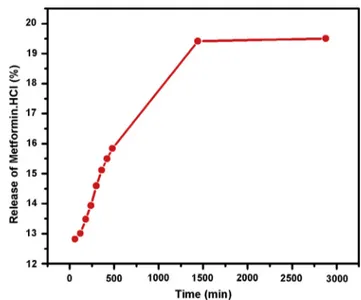
Figure 13 The absorbance of PBS solution containing film loaded with drug.
and most of the drug was released around 22 h. The remaining amount of drug could not be easily determined because blend film is broken into large fragments. It is evident from the Fig. 13 that Metformin hydrogen chloride can be used for intravenous (IV) medication.
4. Conclusions
In this study, blend films of chitosan/PEGME with different composi-tions were prepared. The relacomposi-tionship between physicochemical char-acteristics of the blend films and blend ratios was assessed. Blending of chitosan with PEGME not only enhanced mechanical properties but also affected the thermal stability. The mechanical properties showed that with the addition of PEGME up to 40%, the tensile strength, elongation break and thermal stability of blend films were considerably increased as compared to the controlled sample (without PEGME). Metformin hydrogen chloride was loaded in chitosan/ PEGME blend films and results indicated that there was good compat-ibility between drug and film matrix. The release analysis showed that the prepared blends are suitable candidates and can be employed for controlled drug release and other biomedical applications.
References
Adikwu, M.U., Yoshikawa, Y., Takada, K., 2004. Chemical compo-sition, antimicrobial activity, proximate analysis and mineral content of the seed of Detarium senegalense JF Gmelin. J. Biomater. 25, 3041–3048.
Alsabagh, A.M., Fathy, M., Morsi, R.E., 2015. Preparation and characterization of chitosan/silver nano particle/copper nanoparti-cle/carbon nanotube multi-functional nano-composite for water treatment: heavy metals removal; kinetics, isotherms and compet-itive studies. RSC Adv. 5, 55774–55783.
Alves da Silva, M.L., Crawford, A., Mundy, J.M., Correlo, V.M., Sol, P., Bhattacharya, M., 2010. Chitosan/polyester-based scaffolds for cartilage tissue engineering: assessment of extracellular matrix formation. J. Act. Biomater. 6, 1149–1157.
Amaral, I.F., Garanja, P.L., Barbosa, M.A., 2005. Chemical modifi-cation of chitosan by phosphorylation: an XPS, FT-IR and SEM study. J. Biomater. Polym. Sci. Ed. 16, 1575–1593.
ASTM Standards, D882-09, 2009. Standard test method for tensile properties of thin plastic sheeting. West Conshohocken, PA: ASTM International. http://dx.doi.org/10.1520/D0882-09, www. astm.org(ASTM Standards, E96/E96M-10, 2010).
Azad, A.K., Sermsintham, N., Chandrkrachang, S., Stevens, W.F., 2004. Chitosan membrane as a wound-healing dressing: character-ization and clinical application. J. Biomed. Mater. Research Part B: Appl. Biomater. 69, 216–222.
Chitosan-N-poly(ethylene glycol) brush copolymers: synthesis and adsorption on silica surface. J. Eur. Polym. 41, 2653–2662.
Gorochovceva, N., Makusˇka, R., 2004. Synthesis and study of water-soluble chitosan-O-poly(ethylene glycol) graft co-polymer. Eur. Polym. J. 40, 685–691.
Haipeng, G., Yinghui, Z., Jianchun, L., Yandao, G., Nanming, Z., Xiufang, Z., 2000. Studies on nerve cell affinity of chitosan-derived materials. J. Biomed. Mater. Res. Part A. 52, 285–295.
He, Z., Sun, Y., Wang, Q., Shen, M., Zhu, M., Li, F., Duan, Y., 2015. Degradation and bio-safety evaluation of mPEG-PLGA-PLL copolymer-prepared nanoparticles. J. Phys. Chem. C 119 (6), 3348–3362.
Hu, Y., Jiang, H., Xu, C., Wang, Y., Zhu, K., 2005. Preparation and characterization of poly(ethylene glycol)-g-chitosan with water and organosolubility. Carbohyd. Polym. 61, 472–479.
Huang, S., Yu, X., Yang, L., Song, F., Chen, G., Lv, Z., Chen, D., Zhu, W., Yu, A., Zhang, Y., Yang, F., Li, T., 2014. The efficacy of nimodipine drug delivery using PLA micelles and mPEG-PLA/TPGS mixed micelles. Eur. J. Pharm. Sci. 63, 187–198.
Islam, A., Yasin, T., 2012. Controlled delivery of drug from pH sensitive chitosan/poly(vinyl alcohol) blend. Carbohyd. Polym. 88, 1055–1060.
Islam, A., Yasin, T., Bano, I., Riaz, M., 2012. Controlled release of aspirin from pH sensitive chitosan/poly(vinyl alcohol) hydrogel. J. Appl. Polym. Sci. 124, 4184–4192.
Ito, T., Yoshida, C., Murakami, Y., 2013. Designing of novel sheet-shaped chitosan hydrogel for wound healing: a hybrid biomaterial consisting of both PEG-grafted chitosan and crosslinkable poly-meric micelles acting as drug containers. Mater. Sci. Eng., C 33, 3697–3703.
Jiang, H., Liang, J., Grant, J.T., Su, W., Bunning, T.J., Cooper, T.M., Adams, W.W., 1997. Characterization of chitosan and rare-earth-metal-ion doped chitosan films. Macromol. Chem. Phys. 198, 1561–1578.
Kaewpirom, S., Boonsang, S., 2006. Electrical response characteriza-tion of poly(ethylene glycol) macromer (PEGM)/chitosan hydro-gels in NaCl solution. J. Eur. Polym. 42, 1609–1616.
Kammoun, M., Haddar, M., Kallel, T.K., Dammak, M., Sayari, A., 2013. Int. J. Biol. Macromol. 62, 433–438.
Lee, S.J., Kim, S.S., Lee, Y.M., 2000. Interpenetrating polymer network hydrogels based on poly(ethylene glycol) macromer and chitosan. Carbohyd. Polym. 41, 197–205.
Mahatmanti, F.W., Nuryono, N., Narsito, N., 2014. Adsorption of Ca (II), Mg(II), Zn(II) and Cd(II) on chitosan membrane blended with rice hull ash silica and polyethylene glycol. Indo. J. Chem. 14, 131– 137.
Ma, G., Yang, D., Zhou, Y., Xiao, M., Kennedy, J.F., 2008. Preparation and characterization of water-soluble N-alkylated chitosan. J. Nie. Carbohydr. Polym. 74, 121–126.
Ma, G., Yang, D., Su, D., Mu, X., Kennedy, J.F., Nie, J., 2010. Preparation and properties of water-soluble chitosan and polyvinyl alcohol blend films as potential bone tissue engineering matrix. Polym. Adv. Technol. 21, 189–195.
Malafaya, P.B., Reis, R.L., 2009. Bilayered chitosan-based scaffolds for osteochondral tissue engineering: influence of hydroxyapatite on in vitro cytotoxicity and dynamic bioactivity studies in a specific double-chamber bioreactor. J. Act. Biomater. 5, 644–660.
Ma, X., Yu, J., Wang, N., 2007. Production of thermoplastic starch/ MMT sorbitol nano composites by dual-melt extrusion processing. J. Macromol. Mater. Eng. 292, 723–728.
Sachdev, A., Matai, I., Kumar, S.U., Bhushan, B., Dubey, P., Gopinath, P., 2013. A novel one step synthesis of PEG passivated multicolour fluorescent carbon dots for potential biolabeling application. RSC Adv. 3, 16958–16961.
Saha, N., Saarai, A., Roy, N., Kitano, T., Saha, P., 2011. Polymeric biomaterials based hydrogels for biomedical applications. J. Biomater. Nanobiotechnol. 2, 85–90.
Sarasam, A., Madihally, S.V., 2005. Characterization of chitosan-polycaprolactone blends for tissue engineering applications. Bio-materials 26, 5500–5508.
Seo, D.H., Jeong, Y.I., Kim, D.G., Jang, M.J., Jang, M.K., Nah, J.W., 2009. Methotrexate-incorporated nanoparticles of methoxy poly (ethylene glycol)-grafted chitosan. Colloids Surf. B 69, 157–163.
Shen, M., Yuan Xu, Y., Sun, Y., Shan Han, B., Rong Duan, Y., 2015. Preparation of a thermosensitive gel composed of a mPEG-PLGA-PLL-cRGD nano drug delivery system for pancreatic tumor therapy. ACS Appl. Mater. Interfaces 7 (37), 20530–20537.
Shi, L., Ding, K., Sun, X., Zhang, L., Zeng, T., Yin, Y., Zheng, H., 2016. Preparation, characterization, and in-vitro drug release behavior of glutathione sensitive long-circulation micelles based on polyethylene glycol prodrug. J. Biomater. Sci. Polym. Ed. 27, 472–489.
Sun, Y., Liu, Y., Li, Y., Lv, M., Li, P., Xu, H., 2011. Preparation and characterization of novel curdlan/chitosan blending membranes for antibacterial applications. Carbohyd. Polym. 84, 952–959.
Suyatma, N.E., Copinet, A., Tighzert, L., Coma, V., 2004. Mechanical and barrier properties of biodegradable films made from chitosan and poly (lactic acid) blends. J. Polym. Environ. 12, 1–6.
Szyman´ska, E., Winnicka, K., 2015. Stability of chitosan-A challenge for pharmaceutical and biomedical applications. Mar. Drug 13, 1819–1846.
Tang, Y.F., Du, Y.M., Hu, X.W., Shi, X.W., Kennedy, J.F., 2007. Rheological characterization of a novel thermosensitive chitosan/ poly(vinyl alcohol) blend hydrogel. Carbohyd. Polym. 67, 491–499.
Teng, D.Y., Wu, Z.M., Zhang, X.G., Wang, Y.X., Zheng, C., Wang, Z., Li, C.X., 2010. Synthesis and characterization of in situ cross-linked hydrogel based on self-assembly of thiol-modified chitosan with PEG diacrylate using Michael type addition. Polymer 51, 639– 646.
Tiwari, S.B., Murthy, T.K., Pai, M.R., Mehta, P.R., Chowdary, P.B., 2003. Controlled release formulation of tramadol hydrogen chlo-ride using hydrophilic and hydrophobic matrix system. AAPS Pharm. Sci. Technol. 4, E31.
Torres-Giner, S., Ocio, M.J., Lagaron, J.M., 2009. Novel antimicro-bial ultrathin structures of zein/chitosan blends obtained by electrospinning. Carbohyd. Polym. 77, 261–266.
Tuhin, M.O., Rahman, N., Haque, M.E., Khan, R.A., Dafader, N.C., Islam, R., 2012. Biodegradable polymer blends on corn starch and thermoplastic chitosan processed by extrusion. Radiat. Phys. Chem. 81, 1659–1668.
Wang, Q., Dong, Z., Du, Y., Kennedy, J.F., 2007. Controlled release of ciprofloxacin hydrochloride from chitosan/polyethylene glycol blend films. Carbohyd. Polym. 69, 336–343.
Wang, H., Liu, G., Dong, S., Xiong, J., Du, Z., Cheng, X., 2015. A pH-responsive AIE nano probe as a drug delivery system for bioimaging and cancer therapy. J. Mater. Chem. B 3 (37), 7401– 7407.
Yang, X., Zhang, Q., Wang, Y., Chen, H., Zhang, H., Gao, F., Liu, L., 2008. Self-aggregated nanoparticles from methoxy (polyethylene glycol)-modified chitosan: synthesis; characterization; aggregation and methotrexate release in vitro. Colloids Surf. B 61, 125–131.
Ye, X., Kennedy, J.F., Li, B., Xie, B.J., 2006. Condensed state structure and bio-compatibility of the konjacglucomannan/chi-tosan blend films. Carbohyd. Polym. 64, 532–538.
Zarghi, A., Foroutan, S.M., Shafaati, A., Khoddam, A., 2003. Rapid determination of metformin in human plasma using ion-pair HPLC. J. Pharm. Biomed. Anal. 31, 197–200.
Zeng, M., Fang, Z., Xu, C., 2004. Effect of compatibility on the structure of the microporous membrane prepared by selective dissolution of chitosan/synthetic polymer blend membrane. J. Membr. Sci. 230, 175–181.
Zhenqing, H., Chuanming, Z., Qiwei, J., Quan, H., Le, L., Chang, D., Xiangrui, Y., Yang Yang, L., Shefang, Y., Liya, X., Yunfeng, Y., Qiqing, Z., 2011. Both FA- and mPEG-conjugated chitosan nanoparticles for targeted cellular uptake and enhanced tumor tissue distribution. Nanoscale Res. Lett. 6, 563.
Zivanovic, S., Li, J., Davidson, P.M., Kit, K., 2007. Physical, mechanical, and antibacterial properties of chitosan/PEO blend films. Biomacromol 8, 1505–1510.