THE REPUBLIC OF TURKEY
BAHÇEŞEHİR UNIVERSITY
UNDERSTANDING CONSUMERS’ IMPULSE
BUYING BEHAVIOR
Master’s Thesis
İREM GÜRE
THE REPUBLIC OF TURKEY BAHÇEŞEHİR UNIVERSITY
GRADUATE SCHOOL OF SOCIAL SCIENCES
MARKETING GRADUATE PROGRAM
UNDERSTANDING CONSUMERS’ IMPULSE
BUYING BEHAVIOR
Master’s Thesis
IREM GÜRE
Thesis Supervisor: PROF. DR. SELIME SEZGIN
THE REPUBLIC OF TURKEY BAHÇEŞEHIR UNIVERSITY
GRADUATE SCHOOL OF SOCIAL SCIENCES MARKETING GRADUATE PROGRAM
Name of the thesis: Understanding Consumers’ Impulse Buying Behavior Name/Last Name of the Student: İrem Güre
Date of the Defense of Thesis: 22.06.2012
The thesis has been approved by the Graduate School of Social Sciences.
Assist. Prof. Burak KÜNTAY Graduate School Director
Signature
I certify that this thesis meets all the requirements as a thesis for the degree of Master of Arts.
Dr. Selçuk TUZCUOĞLU Program Coordinator
Signature
This is to certify that we have read this thesis and we find it fully adequate in scope, quality and content, as a thesis for the degree of Master of Arts.
Examining Committee Members Signature
Thesis Supervisor
Prof. Selime SEZGİN ___________________ Member
Assoc. Prof. Ayşe Banu ELMADAĞ BAŞ ___________________
Member
ACKNOWLEDGEMENT
The completion of this thesis has been a road of learning, patience and dedication; and I am deeply grateful to many individuals who provided support, encouragement and love. First, I want to express my deepest gratitude to my thesis advisor Prof. Selime Sezgin for her remarkable patience and invaluable support. I feel extremely fortunate to have her as my advisor and honored to consider her as my role model.
I also want to thank Assoc. Prof. Ayşe Banu Elmadağ Baş, Assoc. Prof. Elif Karaosmanoğlu and Assist. Prof. Gülberk Gültekin Salman for supporting me and answering all my questions with patience.
My special thanks go to Emirhan Yaltı for his patience, and for sharing my dreams. He has never let me give up and encouraged me to continue with my further studies with endless love and enthusiasm.
I am indebted to Elif Börekçi, who has been a dearest friend, a life saver, supported me for all my decisions and never let me give up in the writing process of this thesis.
My dear colleague Süheyl Ünver deserves a special mention for his motivation and endless friendship and support.
Many special thanks go to all those others who directly and indirectly helped me by distributing and completing the survey.
Above all, I would like to thank my mother and father for always being there for me. They raised me as an independent and strong person and showed great love, patience and support at all times.
This thesis would have never been possible without all of you, Thank you all so much.
iv ABSTRACT
UNDERSTANDING CONSUMERS’ IMPULSE BUYING BEHAVIOR İrem Güre
Marketing Graduate Program Thesis Supervisor: Prof. Selime SEZGİN
June 2012, 63 pages
Impulse buying is mostly seen as unplanned and decided on the spot purchases which results from a stimulus. Throughout the years, many researchers have tried to explain the importance and the antecedents of impulse buying behavior.
The objective of this thesis is to understand the impulse buying behavior of consumers in Turkey and examine the factors that affect impulse buying behavior. In this study, relationships between impulse buying behavior and impulse buying intention, new product knowledge and some personal characteristics have been analyzed in detail. In order to determine the relationship between factors, a questionnaire has been designed and spread online.
As a result of the study, main findings are summarized. It is seen that impulse buying intention and new product knowledge are the two factors that are the most important ones among others for the impulse buying behavior. The results showed that there is a relationship between word-of-mouth and new product knowledge and also impulse buying intention and excitement.
Keywords: Impulse Buying Behavior, Consumer Behavior, Consumer Decision
v ÖZET
TÜKETİCİLERİN DÜRTÜSEL SATIN ALMA ALIŞKANLIKLARINI ANLAMA
İrem Güre
Pazarlama Yüksek Lisans Programı Tez Danışmanı: Prof. Dr. Selime SEZGİN
Haziran 2012, 63 sayfa
Dürtüsel satın alma çoğunlukla plansız olarak ve belli bir uyarıcıya bağlı olarak satın alma noktasında karar verme sonucunda görülür. Yıllar boyunca birçok araştırmacı, dürtüsel satın almanın önemini ve bu davranışın öncüllerini açıklamaya çalışmıştır. Bu tezin amacı, Türkiye’deki tüketicilerin dürtüsel satın alma davranışlarını ve bu davranışları etkileyen faktörlerin incelenmesidir. Bu çalışmada dürtüsel satın alma davranışı ve niyeti, yeni ürün bilgisi ve bazı kişisel özellikler arasındaki ilişkiler aytrıntılı olarak analiz edilmiştir. Faktörleri arasındaki ilişkileri belirlemek amacıyla bir ankat hazırlanmış ve çevrimiçi olrak yayılmıştır.
Çalışmanın sonucunda elde edilen bulgular özetlenmiştir. Bu sonuçlara göre dürtüsel satın alma niyeti ve yeni ürün bilgisi, dürtüsel satın alma davranışı için en önemli iki faktördür. Ayrıca sonuçlar ağızdan ağıza iletişimin ve yeni ürün bilgisinin, dürtüsel satın alma niyetiyle heyecan arasında da bir ilişki olduğunu göstermektedir.
Anahtar Kelimeler: Dürtüsel Satın Alma Davranışı, Tüketici Davranışı, Tüketici Karar
vi TABLE OF CONTENTS TABLES ... viii FIGURES ... x ABBREVIATIONS ... x 1. INTRODUCTION ... 1 2. LITERATURE REVIEW ... 3
2.1CONSUMERDECISIONMAKING ... 3
2.2IMPULSEBUYING ... 6
2.2.1 Defining Impulse Buying………6
2.2.2 Types of Impulse Buying………7
2.2.3 Factors That Influence Impulse Buying Behavior………...8
2.2.3.1 Consumer related factors………9
2.2.3.2 Situational characteristics……….11
2.2.3.3 Product characteristics………..11
2.2.3.4 Store related factors………...12
2.3INNOVATIONANDKNOWLEDGE…..………..13
2.3.1 Defining Innovation and Types of Innovation………13
2.3.2 Diffusion of Innovation and the Adoption Process………14
2.3.3 Consumer Knowledge………...17
2.3.3.1 New product knowledge………18
2.3.4 Effect of WOM and Social Influence………...19
3. RESEARCH DESIGN AND METHODOLOGY ... 22
3.1AIMANDSCOPEOFTHESTUDY ... 22
3.2SURVEYSAMPLINGANDSURVEYDESIGN ... 22
3.3MODELANDTHETHEORETICALBACKGROUND ... 22
3.3.1 Impulse Buying Behavior……….23
3.3.2 Impulse Buying Intention……….24
3.3.3 Consumer Characteristics - Excitement……….25
vii
3.3.5 New Product Knowledge………..26
3.3.6 Opinion Leadership and Social Norms……….. 27
4. RESEARCH RESULTS AND ANALYSIS ... 29
4.1SAMPLECHARACTERISTICS ... 29
4.2RESULTS ... 34
5. CONCLUSION, LIMITATIONS & FUTURE RESEARCH... 45
5.1CONCLUSION ... 45
5.2LIMITATIONSANDRECOMMENDATIONFORFUTURE RESEARCH..……….46
5.3MANAGERIALIMPLICATIONS ... 47
REFERENCES ... 49
APPENDICES ... 55
Appendix 1: The questionnaire ... 56
viii
TABLES
Table 2.1: Knowledge types and definitions...18
Table 3.1: Impulse buying behavior questions...24
Table 3.2: Impulse buying intention questions...25
Table 3.3: Excitement questions...25
Table 3.4: Esteem questions...26
Table 3.5: New product knowledge questions...27
Table 3.6: Opinion leadership and WOM questions...28
Table 3.7: Compliance to social norms questions...28
Table 4.1: List of eliminated questions...35
Table 4.2: Factor loadings of the items...36
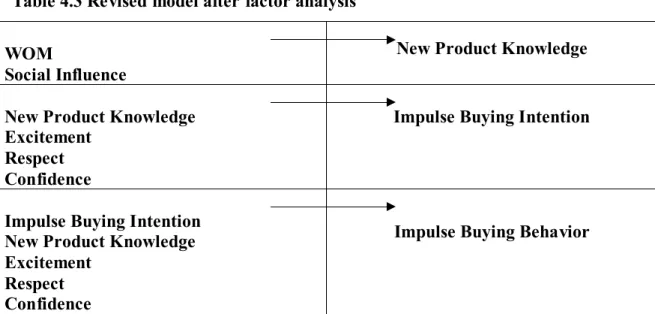
Table 4.3: Revised model after factor analysis...37
Table 4.4: Correlation results...38
Table 4.5: Regression analysis results of impulse buying behavior with all factors...39
Table 4.6: Regression analysis results of impulse buying behavior, impulse buying intention and new product knowledge...39
Table 4.7: Regression analysis of impulse buying intention...40
Table 4.8: Regression analysis results of impulse buying intention and excitement....40
Table 4.9: Regression analysis results of new product knowledge, word-of-mouth and social influence...41
Table 4.10: Regression analysis results of new product knowledge and word-of-mouth...41
Table 4.11: Results of product types that are purchased on impulse...42
ix FIGURES
Figure 2.1: Engel and Blackwell’s Five-stage model of the consumer buying
process...4
Figure 2.2: Stages in the Adoption Process...15
Figure 2.3: The diffusion of innovations and adopter categories...16
Figure 3.1: Original conceptual model...23
Figure 4.1: Gender distribution of respondents...29
Figure 4.2: Age distribution of respondents...30
Figure 4.3: Age distribution based on gender...30
Figure 4.4: Monthly income distribution of respondents...31
Figure 4.5: Monthly income distribution based on gender...31
Figure 4.6: Level of education...32
Figure 4.7: Education level based on gender...32
Figure 4.8: Impulse buying frequency of the respondents...33
Figure 4.9: Average spending on convenience products...33
x
ABBREVIATIONS
AMA : American Marketing Association CONF : Confidence
EXC : Excitement
IBB : Impulse Buying Behavior
IBI : Impulse Buying Intention
NPK : New Product Knowledge
OECD : Organization for Economic Co-operation and Development RESP : Respect
SOC_I : Social Influence WOM : Word-of-Mouth
1. INTRODUCTION
Throughout the marketing history, there have been several attempts to understand the different behaviors of consumers. Consumer behavior is one of the main subjects of marketing and according to AMA it is “the dynamic interaction of affect and cognition, behavior, and the environment by which human beings conduct the exchange aspects of their lives”. The important points of this definition are the dynamic, interactive nature and the involvement of exchange relations in consumer behavior. It also deals with the emotions, feelings and thoughts of consumers with their experiences and related actions in accordance to the environmental factors such as product information from formal or informal sources that affect all these variables.
The researchers, who try to understand and explain consumer behavior, are interested in the preferences and decision process of consumers. The reason behind this interest is the choices of consumers are the most significant indicator of the purchasing decisions. In addition, how these decisions are made and how rapidly they develop are some of the areas of interest. In this research, a specific type of purchase which is impulse buying is examined.
Impulse buying is omnipresent and unique aspect of consumer behavior. So, what do the researchers mean when they mention impulse buying? Several definitions have been made by scholars (e.g., Stern 1962, Kollat& Willet 1967, Cobb& Hoyer 1986 and Rook 1987) but a comprehensive definition of impulse buying is proposed by Piron (1991 p.512) as follows: “Impulse buying is a purchase that is unplanned, the result of an exposure to a stimulus, and decided on-the-spot. After the purchase, the customer experiences emotional and/or cognitive reactions”. The definition itself indicates the important characteristics of impulse purchases and clarifies the nature of impulse buying behavior as being unplanned, involving emotional part and immediate action. According to a collective study made by The Integer Group and M/A/R/C Research (2010), more than half of the unplanned purchases (defined as off-list shopping) indicate that there are additional items purchases with regard to the shopping lists.
2
Dholakia (2000) also mentioned that impulse buying behavior has attracted retailers and they started to change their strategies accordingly such as giving importance to store layouts, differentiating product packaging, and increasing in store promotions in order to trigger the impulse purchases.
The aim of this research is to understand the factors that affect impulse buying behaviors of the consumers mostly when they consider buying new products. In addition, the effects of several concepts on the impulse buying are explored such as impulse buying intention, new product knowledge and word-of-mouth.
In the second chapter, literature review of the related topics is presented. The chapter begins with the decision making process and impulse buying and then, it explains some notions such as adoption process, opinion leaders, word-of-mouth, and social influence. Then, a questionnaire has been designed and delivered to the respondents through online communication tools to get data for the analysis part. Fourth chapter is about the analysis of the data collected. In detail, the analysis results such as regressions are explained. In the last chapter, limitations about the study and future research recommendations for marketers and future researchers are given to conclude the research.
3
2. LITERATURE REVIEW 2.1 CONSUMER DECISION MAKING
Consumer behavior studies deal with the processes of the acquisition, use and disposal of the products and services that the consumers face in their daily lives; and it examines the effects of psychological and social factors on to behavior (Bagozzi et. al 2002). When the behavior is analyzed by the marketers, they mostly focus on the purchase of a brand but in general marketers mainly try to get the answers for who, what, when, where, how and why questions in order to understand consumer behavior in detail and explain them (Bagozzi et. al. 2002, Kotler&Keller 2012). Along with these answers, behavior is also related to some personal characteristics as well as the decision process of individuals.
Consumers’ decision making process is one of the major areas of consumer behavior that is researched in detail and theorized by marketing scholars (e.g., Engel&Blackwell 1982). The process is generally composed of five stages that are passed through by consumers. These steps are problem recognition, search for alternative solutions or information search, evaluation of alternatives, purchase and post purchase behavior. According to this model, there are several steps that take place before purchasing and an evaluation phase after it (Kotler&Keller 2012).
4
Figure 2.1: Engel and Blackwell’s Five-stage model of the consumer buying process
Source: Peter, J.P. and Olson, J.C., (2008) Consumer Behavior and Marketing Strategy 8th edition, McGraw Hill Education, Asia, p.165
Problem recognition is the initial point of the process. It is the place where the buyer faces a problem or a need which requires to be fulfilled. This step is caused by internal or external stimulus or both (Kotler&Keller 2012). According to Schiffman and Kanuk (2010 p.485), consumers encounter two types of needs in the problem recognition step. First one is the actual state type in which consumers recognize that their products’ performance is low. On the other hand, desired state type refers to the consumers who are inclined to try a new product which will prompt the decision making process.
According to the model, the second step is searching for alternative solutions for the recognized need. When a consumer thinks that the need can be fulfilled by a product, the information search process begins. Consumers might use their prior experiences as an information source but if they are not adequate, the need for looking into other information sources arises. Generally, the decisions of consumers are based on both past experiences and external sources that are from marketing activities and non-commercial ways (Schiffman&Kanuk 2010). Consumers mostly get information about a product from commercial sources such as advertisements, websites, packaging etc… However, it is stated that the most effective information sources are personal ones such as friends
5
and family, experiences and mass media as a public source (Kotler& Keller 2012). When the search for information is complete, consumers list their alternatives and begin to evaluate them. In order to simplify the decision making process, consumers tend to use a sample of possibilities. To evaluate the alternatives, consumers rely on two types of information. First one is the use of an evoked set that stands for a list of alternatives which will be the base for the selection and the second is the evaluation criteria that consumers consider (Schiffman&Kanuk 2010 p.488).
The last stages of decision making model are purchase and post-purchase activities which are related with the consumers’ satisfaction with the purchase. According to Schiffman and Kanuk (2010 p.497), there are three types of purchases that the consumers make and these are trial purchase, repeat purchase and long-term commitment purchase. Purchasing a new product is an example of trial purchase because consumers tend to buy less in quantity compared to familiar products. If they are satisfied with the trial purchase, they are most likely to repeat their purchases and even make long-term commitments to the product or the brand.
After the purchase of a product, consumers begin to use and assess the performance of it to see whether the product fulfill their expectations. The results can be neutral if there is a match between expectation and performance; satisfactory when the performance is better than the expectations, or the opposite (Schiffman&Kanuk 2010 p.498).
Five-stage model is a representation of the process in theory; individual experiences may be different from the proposed model. The model of consumer decision-making process assumes that the decision process consists of steps which the buyer passes through in purchasing a product or service. However, this might not be always the case. Consumers do not have to pass through all these stages when making a decision to purchase and in fact, some stages could be skipped or switched depending on the type of purchases (Kotler&Keller 2012).
6
There are several ways of explaining consumer decision making in different situations or under different circumstances. One of the ways is the impulse purchases and impulse buying behavior which has been tried to be explained by several marketing scholars throughout the time (e.g., Stern 1962, Kollat&Willet 1967, Cobb&Hoyer 1986, Rook 1987, Piron 1991). According to the explanations had been made by scholars, impulse buying behavior involves an emotional part and by nature it is unplanned. The decision making process shows minor differences in impulse buying situations. Most of the cases, impulsive behavior takes place after the first step which is the problem recognition and further steps could be skipped or taken at the same time in a short period of time. This means that searching for alternatives and evaluation steps are being passed together.
2.2 IMPULSE BUYING 2.2.1 Defining Impulse Buying
Considerable amount of studies have been made to have a better understanding of the impulse buying behavior which is seen to be a branch of consumer behavior (Kollat&Willet 1967, Cobb&Hoyer 1986). To define impulse buying, researchers benefit from the terms planned and unplanned purchasing.
Unplanned purchasing is defined as “a buying action undertaken without a problem having been previously recognized or a buying intention formed prior to entering the store” (Engel&Blackwell 1982, p.483). On the contrary, the definition of planned purchasing is just the opposite when there is a recognized problem and prior intention to buy. It is possible to say that impulse purchases are some type of unplanned buying situation or an advanced form of unplanned buying(Stern 1962, Kollat & Willet 1967). The place of decision making related to the item is quite significant for this kind of purchasing. The purchasing action is mostly considered as impulse buying when the decision is made in the store and because of this feature, it is also called unplanned buying (Cobb & Hoyer 1986). When the consumers are asked to make a comparison
7
between their purchase plans or intentions before shopping and the outcomes of their purchases; mostly the difference between them reveals the impulse purchases (Kollat and Willet 1967). Later, the definition is developed with the concept of consumers’ instantaneous urge to buy and redefined as “impulse buying occurs when a consumer experiences a sudden, often powerful and persistent urge to buy something immediately. The impulse to buy is hedonically complex and may stimulate emotional conflict” (Rook 1987). In other words, the keywords that are related with impulse buying could be listed as sudden experience, unexpected and deviant behavior together with the presence of emotional component rather than rational ones. A further research reviewed the existing definitions and after criticizing the lack of ability to explain the term, it has been cited that for an impulse buying to happen the purchase act should be effected by a stimulus, the decision should be made at the location and the time of the purchase should be unplanned (Piron 1991). Throughout the years, several studies and researches have been conducted and they came up with different definitions for impulse buying. Some of them maintained the same factors but some expanded and improved the meaning of the term. Rook (1987) and Piron’s (1991) conceptualizations have been guiding a further definition in which situational factors such as availability of money and differences in individual variables related to consumers’ tendency to impulsive buying has played an important role for in-store activity, sudden urge to buy and purchasing decision (Beatty and Ferrell 1998).
2.2.2 Types of Impulse Buying
In some of the studies the term impulse buying is described similarly as unplanned buying (Clover 1950, West 1951), however it is not enough to explain what the definition of impulse buying really is (Stern 1962). In order to have a better explanation for impulse buying, Stern (1962) has mentioned four different types of impulse purchasing which are namely as pure, reminder, suggestion, and planned impulse buying. Pure impulse buying is the basic type of impulse purchasing that can be easily understood by the deviation from the normal shopping pattern. It is specifically identified as “the novelty or escape purchase” (Stern 1962 p. 59). Reminder impulse buying happens when there is past experience or familiarity with the product. The shopper may be reminded of the need to buy a product when he or she sees it in the
8
store by remembering either an advertisement or low stock at home (Stern 1962). Suggestion impulse buying happens at the purchasing point without any previous knowledge about the product. The difference between reminder impulse and suggestion impulse is the exposure to the product and realizing a need for it (Stern 1962). In addition, the products could be purchased for only rational and functional reasons in suggestion impulse buying; but on the other hand pure impulse buying considers emotional aspects of the products (Stern 1962). Lastly, Planned impulse buying is the type of impulse purchasing that occurs at the store according to the different variables at the store such as discounts and special offers with the purchasing intention in the mind before coming to the store (Stern 1962). This last type sounds controversial because of the unplanned nature of impulse buying itself but in this type there is not a specific shopping list in the mind, only the intention is present.
The common point of these four types of impulse buying is that exposure to a stimulus is needed for the impulse purchase to be made (Piron 1991). The classification of Stern (1962) has been a significant source for the latter researchers and studies (Beatty & Ferrell 1998, Dittmar et al. 1996, Rook 1987).
2.2.3 Factors That Influence Impulse Buying Behavior
Since 1950’s, impulse buying has been studied and became an important subject of consumer research. With the advances in technology, retailing and marketing, impulse buying has showed its dominance and power (Gardner and Rook 1988). There are several factors and variables that affect impulse buying experience which are stated in the literature and impulse purchasing is described as “ease of buying”. To broaden the topic, Stern (1962) has pointed out several factors that influence impulse buying behavior along with the impulse buying definition. Some of these factors are listed as low price, marginal need for item, self-service, prominent store display, small size or light weight and lastly ease of storage. In this research, these factors and others as well will be explained under 4 major groups namely as consumer related factors, situational characteristics, product characteristics and store related factors.
9 2.2.3.1 Consumer related factors
The relationship between gender and impulse buying behavior is indicated in previous research findings. Although Kollat and Willet (1967) proposed that there is not any significant behavioral difference between males and females, further literature about this topic shows clear signs about the different impulse buying behavior of women and men. According to some researchers, it is clear that females are more inclined to buy on impulse than males and their product choices are also different (Dittmar et al. 1995, Verplanken and Herabadi 2001). Besides, another demographic element, age is a factor that affects the amount of impulse buying and it is mostly related with some age groups such as those less than 35 years of age (Bellenger et al. 1978).
Another factor that affects impulse buying is the impulse buying tendency (IBT). Previous studies suggested the fact that impulse buying tendency which indicates the tendency of consumers to buy on impulse (Rook 1987) has its roots in personality and the degree of it changes across individuals (Rook and Fisher 1995, Beatty and Ferrell 1998, Dholakia 2000, Youn and Faber 2000, Verplanken and Herabadi 2001). Rook and Fisher (1995) identified buying impulsiveness as a consumer trait and “tendency to buy spontaneously, unreflectively, immediately, and kinetically”; afterwards they created a buying impulsiveness scale to measure among different individuals. Later, this variable has been distinguished as “the tendencies to experience spontaneous and sudden urges to make on-the-spot purchases and to act on these felt urges with little deliberation or evaluation” (Beatty and Ferrell 1998). Lack of control, stress reaction and absorption are the personality traits that are found to be related with impulse buying tendency (Youn and Faber 2000) and these traits are also associated with impulse purchases of consumers which are derived from their reactions to positive /negative moods.
In the definition of impulse buying, it is indicated that impulse buying is strongly associated with sudden urge to buy and unplanned purchasing. In addition, there is a link between emotions that are experienced by individuals and impulse purchases as a response to those emotions (Beatty and Ferrell 1998, Rook 1987, Rook and Gardner 1993, Verplanken and Herabadi 2001). In literature, the most prominent and identifying emotional dimension is “sudden and imperative desire to purchase” in impulse buying
10
(Rook and Hoch 1985). Another person-related variable is positive or negative moods which influence impulse purchasing and cited as the moods of individuals that have a considerable effect on impulse buying (Rook 1987). For example, influence of a negative mood can be exemplified with the suggestion by Verplanken and Herabadi (2001) as considerable part of impulse buying is resulted from coping with depressive mood. It is also suggested by Rook and Hoch (1985) in a different way by citing “feeling of helplessness” as a characteristic and told that consumers tend to buy on impulse to “fight the blues”(Piron 1993) in other words to reduce the stress or lessen the negative effect of anxiety (Youn and Faber 2000) . On the other hand, positive moods are also associated with impulse buying such as joy, delight and enthusiasm (Beatty and Ferrell 1998).
Research findings showed the signs of excitement and pleasure are the two emotions which are encountered with impulse buying (Rook 1987, Verplanken and Herabadi 2001). Impulse buying action itself has been depicted as “exciting, thrilling or wild” and associated with high levels of excitement (Rook 1987). One of the causes of impulse buying is the desire for fun, excitement and novelty that is experienced by consumers (Piron 1991, Hausmann 2000) and these feelings are associated with hedonic motives of the consumers (Cobb and Hoyer 1986, Rook 1987, Hausmann 2000). Consumers’ shopping behaviors are shaped by their needs and in impulse buying hedonic desires are the ones that are satisfied.
In addition, self-esteem appears to play a considerable role in impulse buying and it helps to consumers who want to see themselves differently than they normally are (Elliot 1994). In some situations, low level of self-esteem causes the arousal of negative moods and to cope with them consumers engage in impulse buying (Verplanken et al 2005). In the literature, this component of impulse buying is somewhat contradictory. So that, individuals have the need to satisfy their self-esteem and this need triggers consumers’ impulse buying intention but on the contrary it might prevent impulse buying (Harmancioglu et al 2009).
11 2.2.3.2 Situational characteristics
Situational factors are the combination of both environmental and personal elements which play important role in specific consumption experiences (Dholakia 2000). Bellenger et al. (1978) suggested that in-store promotion is one of the major factors that leads to impulse purchasing because they found out most of the items purchased on impulse are the outcomes of effective in-store promotions which are held frequently. Later, in 1998, Beatty and Ferrell suggested two other major situational variables which are “time available” and “money available”. Availability of time is positively associated with impulse purchasing because time pressure negatively affects the browsing process and customer experience. Moreover, availability of money contributes to impulse buying positively because the more money consumers have the more probability to shop and buy on impulse (Beatty and Ferrell 1998). For example, it is cited that when the consumer gets his salary he will be eager to buy or willing to shop (Dholakia 2000).
2.2.3.3 Product characteristics
Impulse purchasing decisions varies by product categories, frequency of purchase, attraction and price. There are several product categories or merchandise lines that are more likely to be bought on impulse. According to Bellenger et al. (1978) in some categories impulse purchasing is prevalent such as costume jewelry, bakery products, meals and snacks, women’s footwear. In addition to the product categories, research showed that frequency of purchase is also affecting impulse buying. Although there are some items purchased by consumers frequently, significant amount of products purchased infrequently as well. For example, products that are purchased on impulse mostly have low purchasing frequencies such as personal care and hygiene items and pharmaceuticals (Kollat and Willet 1967). Sometimes, the products could gain a mysterious attraction and animated characteristics so that people are pulled to the products as if they are hypnotized and purchase on impulse without any previous intention (Rook 1987). There is also evidence about the direct control of price on impulse buying specifically for convenience goods because price of the item might change the purchasing amount or even add the item to the shopping cart (Stern 1962). Additionally, impulse buying increases when there are discounts and special offerings for a particular product.
12 2.2.3.4 Store related factors
Impulse buying behavior is promoted by some store characteristics. By differentiating and manipulating store atmospherics it is possible to support impulse buying. The way that products are exhibited in the stores and on the shelves in particular, physical appearance of the products and different variables associated with the displayed products such as colors used, presence of music, smell, lighting and informational signs are the major issues related with store atmospherics (Bellenger et al. 1978, Verplanken and Herabadi 2001, Peck and Childers 2006). In addition to the listed variables, Hausmann (2000) adds increased stocks and information to these stimulating techniques. This kind of environmental stimuli increases the awareness of people and leads to impulse buying. Another research (Peck and Childers 2006) has shown that touching and impulse purchasing are directly linked to each other. They suggested that several store characteristics such as use of product displays and design or the physical arrangement of the store increase the likelihood of touching and at the same time increase impulse buying. Presence of a sales person at the purchasing point is also influencing the way that consumers act. If consumers are able to shop by themselves in a self-service orientation, the likelihood of impulse buying is higher because in this situation consumers have the chance to look around shelves (Stern 1962).
As a matter of fact, all of these factors are connected to each other in some way. The presence of only one factor or combinations of more than one factor can lead to impulse buying. For example, gender differences are very significant in impulse buying but it also varies in product categories as well. A study has showed that women are more likely to buy objects like clothes, jewelry and cosmetics whereas men tend to buy electronic and sports equipment (Dittmar et al 1995).
13 2.3 INNOVATION AND KNOWLEDGE 2.3.1 Defining Innovation and Types of Innovation
Consumer behavior studies pay a lot of importance to new product decisions and acceptances by consumers. In order to examine these areas, diffusion of innovations and adoption process researches are used. These are mainly interested in how new product information spread and how consumers decide upon the new product (Schiffman&Kanuk 2010). To explain these in more detail, the definition of innovation is needed.
Several attempts have been made to define innovation by marketing scholars since 1930’s. According to Schumpeter (1934), innovation is a process in which economic systems evolve and entrepreneurs introduce new products and processes. He made a clear distinction between innovation and invention. After Schumpeter’s attempt, in 1962 in his first edition of the Diffusion of Innovations book, Rogers defined innovation as “an idea, practice or object perceived as new by the individual” and broadened the meaning of innovation (Rogers 2003 p12). Later, it is defined as “the development and implementation of new ideas by people who over time engage in transactions with others within an institutional context” (Van de Ven 1986 p.591). According to this definition, an innovation could be about any type of new idea such as product, process, administrative and technical; there is not any limitation about it. Moreover, it is suggested that in the process of an innovation there are four important factors: ideas, people, time and transactions. In addition to these definitions, a few years later, it is stated as “the successful creation, development and introduction of new products, processes or services” by Udwadia (1990 p.66) with this definition the scope and the major types of innovation become much more clear. Among the different types of innovations, the most known types of innovation are the process and product innovations. These two types of innovation contribute to the development of businesses. Process innovation focuses on providing new ways for the production or manufacturing of better products faster and less expensive than the current way. It is also used to solve the conflicts of quality, cost and timing in the manufacturing industries (Cumming
14
1998). It is also considered as a way of improving productivity and performance and important for maintaining standards of quality and cost saving (Johne 1999).
On the other hand, product innovation is the most commonly accepted form of innovation and defined by OECD as “the introduction of a good or service that is new or significantly improved with respect to its characteristics or intended uses” (http://stats.oecd.org/glossary/detail.asp?ID=6868, retrieved on May 11, 2011). Product innovations basically include the introduction, improvement or a change in a product or service. Major difference between product innovation and process innovation is that the product innovation may act as a revenue source for the business (Johne 1999).
Product innovations are also classified into three groups according to their effects on the established patterns. These are continuous innovations, dynamically continuous innovations and discontinuous innovations. Continuous innovation happens when there is less influence on the established patterns such as product improvements or changes. Dynamically continuous innovations may include the generation of a new product or adaptation of current products. The last one is discontinuous innovation in which new product and behavior patterns are formed (Robertson 1967 p.15-16).
2.3.2 Diffusion of Innovation and the Adoption Process
When innovation is studied under consumer behavior, after describing it in a basic sense, it is important to identify the spread of innovations or the way of diffusion. Basically, the theory of diffusion of innovations deals with the spread of ideas and practices between individuals and in the groups of people. Valente and Davis (1999 p.56) mention that exchange of information, thoughts and beliefs between individuals trigger the spread of new ideas and this serves as a basis for diffusion of innovation. In adoption of a new product, it is assumed that the product that is being adopted covers the need of the consumer or finds a solution to a problem encountered (Lai 1991). So, it is a type of decision making that happens through several steps.
15
Adoption process is defined by Kotler&Armstrong (2008 p.150) as “the mental process through which an individual passes from first hearing about an innovation to final adoption”. Here, the term adoption implies that an individual’s decision to become a user of the product. According to the new product adoption process, there are five stages that the consumers go through which are respectively awareness, interest, evaluation, trial and adoption (Kotler&Armstrong 2008).
Figure 2.2: Stages in the Adoption Process
Source: Kotler, P. and Armstrong, G. (2008), Principles of Marketing, 12th edition, New Jersey: Prentice Hall
The adoption process begins with awareness in which consumers find out about the product innovation from their environment. After being exposed to the product, if consumers show interest to the product; it is assumed that they look for extra information for a better understanding of it. Later, consumers begin to evaluate the product to see if the product is able to fulfill their needs and make a decision. In order to see the consequences of their decisions, consumers use the product as a trial. In the last stage of the process, if the consumers are satisfied with the product, they decide to use the product regularly but if they are not they most likely to reject it (Schiffman&Kanuk 2010 p.464).
16
As well as providing a definition for innovation, Rogers (2003) had also developed a categorization for adopters to have a better understanding of adopters in the diffusion process and these categories are innovators, early adopters, early majority, late majority and laggards.
Figure 2.3: The diffusion of innovations and adopter categories
Source: Rogers, E. M. (2003) The Diffusion of Innovations 5th edition, The Free Press, New York, p.281
According to the diffusion theory, time needed for the adoption of new products differs among the members of a social community (Mahajan et. al 1984). Because each consumer is different from the others, they also differ in their intentions and perceptions about the trial of new products. Figure 2.3 shows the five categories of adopters and their percentages of adoption based on time. First group is innovators who are in the first 2.5 percent range. They mostly take risk, enjoy technology and are willing to pay more to try. The next 13.5 percent represents the early adopters who come second in the order of adoption. Most of the time, they tend to be opinion leaders by sharing information with their social environment. Next two groups describe the majority of the consumers and the percentage of adoption is divided equally. Members of early majority group decide to buy the product when the associated risks start to decrease after a few others buy and use the product. Alongside, in late majority category, the adoption of an innovation happens after a very long time when the majority of people adopt. Last group is the laggards who are the last ones to adopt an innovation and traditionally bounded (Kotler & Armstrong 2008 p.152 and Schiffman & Kanuk 2010 pp.459-460).
17
In the adoption process of a new and innovative product, knowledge of the consumer is an important factor. Moreover, when consumers are making a decision about adoption; they usually refer to their prior knowledge if they have any and/or the new information that is obtained from the environment (Wilton&Pessemier 1981, Lai 1991). To carefully predict the process of adoption of new products, individual’s current state of knowledge about the product should be measured and after it should be taken into consideration with the probability of adoption and purchasing choices of individuals. Furthermore, according to Schiffman and Kanuk (2010 p.465) the stages of the adoption process is affected by different types of information. They suggest that in both trial and adoption stages, personal and interpersonal sources are the most effective ones but also with the developments in the technology consumers can reach credible and effective information from internet as well.
2.3.3 Consumer Knowledge
Knowledge has been studied and taken into consideration as an individual factor that can affect the decision making process by marketing scholars (e.g. Engel and Blackwell. 1982, Schiffman and Kanuk 2010). In addition, there are several types of knowledge that have diverse effect on information processing and decision making of the consumers (Bettman&Park 1980). In order to understand the decision making models and processes, a clear understanding of knowledge is needed. To begin with, knowledge is defined as the consumers’ meanings or beliefs about products on memory that is acquired by the subjective understanding of the information (Peter&Olson 2008).
Flynn and Goldsmith (1999) expressed and identified the three types of consumer knowledge which are subjective knowledge, objective knowledge and experience. Their definitions are given in the Table 2.1.
18 Table 2.1: Knowledge types and definitions
Term Definition
Subjective Knowledge Information about a firm or product that is
assumed to be known by consumers
Objective Knowledge Actual knowledge that consumers have
about a firm or product
Experience Knowledge that is gained by prior
interaction
Source: Flynn and Goldsmith (1999), A Short, Reliable Measure of Subjective Knowledge, Journal of Business Research, vol.46, pp.57-66
As it can be observed through the definitions, knowledge and experience are the two factors that alter the choices of consumers and they are crucial for deciding which type of information could be used under different circumstances and choices for various kinds of consumers (Bettman&Park 1980). In other words, availability of product information and prior experience with the products shape the choices of consumers. Moreover, the decision process is also affected by the individual constructs such as ability, expertise and different levels of knowledge held by consumers (Bettman et. al. 1991).
2.3.3.1 New product knowledge
A new product is defined as “a good, service, or idea that is perceived by some potential customers as new” (Kotler&Armstrong 2008, p.150). Consumer behavior studies are interested in how consumers heard about the new products and decide to buy them. Actually, it is mostly related with the adoption process that is explained in the previous part. Knowledge about the new products may act as a mediating factor for the consumers’ adoption process. The effect on behavior could be positive by increasing the willingness of adoption or negative by diminishing the intention with exposure to too much knowledge (Lai 1991).
Consumers are different in their interests to new products, trial rates and their adoption periods differ from each other because of the knowledge that is held. Besides, they have different levels of product knowledge that they can use in the purchasing decision of a
19
new product. These levels of product knowledge are structured by the different information and meanings (Peter&Olson 2008). The study of Flynn and Goldsmith (1999) indicates that in order to evaluate and make a decision about a new product, subjective knowledge could be used by consumers because it is much more related with the motivation of the purchasing behavior. Consumers may get information about a new product from their social environment or through the observation of others that use the product (Bettman et. al 1991). As it is stated by Kotler and Keller (2012), most of the time the information is gathered through commercial sources but the most effective ones are prior experiences, public sources and, friends and families or so called personal sources.
2.3.4 Effect of WOM and Social Influence
Consumers are open to be influenced by their both social and physical environment when they are making decisions about buying something new. Moreover, they can influence each other directly or indirectly via experiences, giving advices and sharing information by word-of-mouth communications. These processes are helpful for the diffusion of innovations and purchasing decisions of consumers (Flynn et. al. 1996). Among all individuals, some people have above average influence on the attitudes, behaviors and decisions of others. According to Flynn et. al. (1996 p.138), these individuals are called opinion leaders and they influence others personally about their specific interests by communicating with them. Opinion leaders can be seen in all kinds of social groups and in every level of social classes (Robertson 1967).
According to the nature of the diffusion of innovations, it can be said that consumers are only the passive recipients of information. Most of the time it is true but, sometimes consumers may also look for specific information from the opinion leaders as well (Mullen&Johnson 1990). This is a phenomenon of product information search because consumers try to find the useful and convenient option to fulfill their needs. So, seeking advice from opinion leaders about specific product purchase decisions is the major idea of opinion seeking (Flynn et. al 1996).
20
Scholars have noted that interpersonal relations and persuasion have an effect on behaviors of consumers (Valente&Davis 1999). Moreover, when a new product is introduced to the market as a first step it is adopted by someone and then early adopter begins to influence other people interactively by using interpersonal communication methods like word-of-mouth (Mahajan et. al 1984).
A general definition of WOM is given as the “oral transmission of information between consumers” (Mullen&Johnson 1990, p.131). WOM takes place when an individual shares information about a product or firm with others. Researches support that it is a powerful option among the other sources of information for consumers and assumed to have an effect on people’s knowledge, feelings and behaviors (Buttle 1998). Studies showed that this particular type of social influence can be influential. According to a study by Arndt (1967), positive and negative WOM have different impact on the purchasing behavior; specifically positive WOM leads to the purchase of a new product (Mullen&Johnson 1990, p.133).
Bagozzi et al. (2002) stated that many consumer researchers who also studied sociology and anthropology assume that culture and social relationships are the major components of consumption. In other words, the culture that the consumers experience and their social environment are related with their consumption activities and decision making behavior. Some of the studies suggest that generally, consumers are influenced mostly by social pressures; the effort of adjustment to the group dynamics, and opinion leaders. These types of influences are much more effective than the conventional marketing activities (Robertson 1967).
Consumers tend to ask to others’ opinions and depend on WOM communications when they think about purchasing a new product. Moreover, consumers seek for the opinions of others and adopt them in order to feel as a member of a specific group or even feel their presence in that group (Flynn et. al 1996). In addition, it is stated that there are many social factors that affects consumers’ decision making process such as, feeling dependent to others when making a decision and feel a need to be confirmed by others
21
upon the decisions (Bettman et. al. 1991). In other words, gaining social approval and conforming to others are important steps.
22
3. RESEARCH DESIGN AND METHODOLOGY 3.1 AIM AND SCOPE OF THE STUDY
In the last fifty years, the interest to understand impulse buying phenomena has increased. Several attempts have been made to define and characterize impulse buying and explain the factors behind it. The aim of the study is to understand the impulse buying behavior of consumers in a specific context. Particularly, the study tries to examine the cognitive processes and motivations such as effects of product knowledge, opinion leaders and social influence on the impulse purchases of new products. The target segment of this research was the people who made an impulse purchase at least once in their lives.
3.2 SURVEY SAMPLING AND SURVEY DESIGN
In this study, a convenience sampling method was used. The original questionnaire was adopted in English; some modifications were made and then translated into Turkish by the researcher and checked by the thesis supervisor. The questionnaire designed in an electronic environment with the help of an established survey site (surveymonkey.com). The questionnaire can be found in Appendix 1 and the list of scales in Appendix 2. The answers of respondents were saved in the database immediately when they fill out the questionnaire. The method of distribution for the questionnaire was through online social networks and mail groups. In addition, the survey had been online for six weeks from March to May 2012.
3.3 MODEL AND THE THEORETICAL BACKGROUND
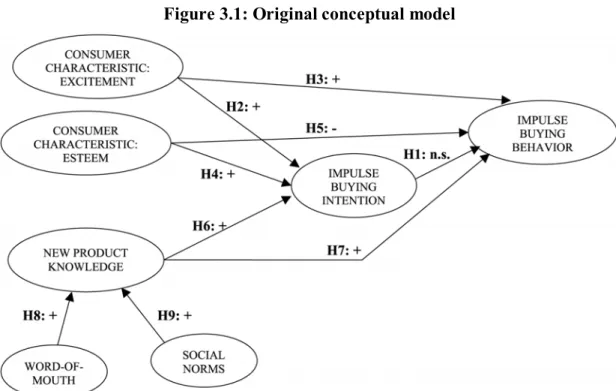
The hypotheses constructed for this study are shown below. The original hypotheses and the model are adopted from Harmancioglu et. al. (2009)’s study.
23
H1. Impulse buying intention does not significantly mediate the relationship between impulse buying behavior and its antecedents.
H2. Consumers’ excitement is positively related to impulse buying intention. H3. Consumers’ excitement is positively related to impulse buying behavior. H4. Consumers’ esteem is positively related to impulse buying intention. H5. Consumers’ esteem is negatively related to impulse buying behavior. H6. New product knowledge is positively related to impulse buying intention. H7. New product knowledge is positively related to impulse buying behavior. H8. Word-of-mouth is positively related to new product knowledge.
H9. Compliance with social norms is positively related to new product knowledge.
In the figure below, the proposed interrelationships of these hypotheses are shown.
Figure 3.1: Original conceptual model
Source: Harmancıoğlu, N., Finney, R., Z and Joseph, M. (2009), Impulse Purchases of New Products: An Empirical Analysis, Journal of Product and Brand Management, 18, 27-37
3.3.1 Impulse Buying Behavior
As it is mentioned before, impulse buying is defined as “a sudden powerful and persistent urge to buy something immediately” (Rook 1987). According to this definition, for an impulsive shopping behavior it is important to be spontaneous and without detailed previous plans. In addition, there should be stimulus affection in the purchasing activity and the decision about the purchase should be made at the
24
purchasing location without any planning (Piron 1991). In the first part, respondents are asked about their average monthly spending on convenience products and their impulse buying frequencies. Then, impulse buying behavior of the respondents is measured on a five-point Likert scale and the questions that are asked in the questionnaire are listed in Table 3.1.
Table 3.1 Impulse buying behavior questions
Generally speaking, I would consider myself to be an impulsive shopper. I often buy things spontaneously.
When I shop I tend to decide what I want to buy while I am looking around in a store. I carefully plan most of my purchases.
When I go shopping, I buy things I had not intended to purchase.
Even when I see something I really like, I do not buy it unless it is a planned purchase. In the third part, respondents are asked to choose the products that are purchased on impulse. There are fourteen choices and respondents are allowed to choose more than one answer to this part.
3.3.2 Impulse Buying Intention
According to Fishbein and Ajzen’s (1975) Theory of Reasoned Action, behaviors are caused by attitudes of consumers and some psychological processes. Moreover, an individual’s intention is related with their behaviors but this theory mainly focuses on the volitional behaviors which are done consciously. However, there are several aspects that influence the effect of intentions on behaviors such as unexpected events in the purchasing environment or difference between planned situations and situations at the time of purchase (Peter&Olson 2008, 153). In the literature, impulse buying behavior is characterized as spontaneous, unexpected, unplanned and sudden experience (Rook 1987, Piron 1991). Therefore, it can be said that intentions lead to behaviors but their effect is not so strong in the context of impulse buying behavior.
H1. Impulse buying intention does not significantly mediate the relationship between impulse buying behavior and its antecedents.
25
The questions asked about impulse buying intention in the questionnaire are listed in Table 3.2.
Table 3.2: Impulse buying intention questions
If I heard that a new convenience product was available through a local convenience store or advertisements, I would be interested enough to buy it.
I will consider buying a new convenience product, even if I have not heard of it yet. I buy things according to how I feel at the moment.
When I’m in a down mood, I go shopping to make me feel better. For the most part, I tend to shop on impulse when there are sales. I tend to spend money as soon as I earn it.
I often have an unexplainable urge, a sudden and spontaneous desire, to go and buy something.
I sometimes feel that something inside pushed me to go shopping.
3.3.3 Consumer Characteristics – Excitement
As it is mentioned before, impulse buying action itself has been depicted as “exciting, thrilling or wild” and associated with high levels of excitement (Rook 1987). One of the causes of impulse buying is the desire for fun, excitement and novelty that is experienced by consumers (Piron 1991, Hausmann 2000). Consumers’ behaviors are affected by their emotions and the relationship between excitement and impulse buying intention and behavior is supported by these concepts.
H2. Consumers’ excitement is positively related to impulse buying intention. H3. Consumers’ excitement is positively related to impulse buying behavior. The questions that are asked in the questionnaire are listed in Table 3.3.
Table 3.3 Excitement questions
Excitement is one of the important factors of my daily life. I can say that I am a thrifty person.
In general, I have a calm nature. To me, shopping is an adventure. I find shopping stimulating.
I feel excited when making a purchase.
26 3.3.4 Consumer Characteristics – Esteem
According to Rook (1987) impulse buying is hedonically complex and may stimulate emotional conflict for individuals. Sometimes, low level of self-esteem causes the arousal of negative moods and to increase the level of self-esteem and change the moods to positive, consumers intend to buy impulsively (Verplanken et al 2005). In addition, the efforts to satisfy esteem and self-actualization needs drive consumers to make impulse purchases that provided satisfaction for such needs (Hausmann 2000). So that, individuals have the need to satisfy their self-esteem and this need triggers consumers’ impulse buying intention but on the contrary self-esteem might prevent impulse purchases of products because spontaneous and unplanned expenditures may get unfavorable evaluations from the environment (Harmancioglu et al 2009).
H4. Consumers’ esteem is positively related to impulse buying intention. H5. Consumers’ esteem is negatively related to impulse buying behavior. The questions asked in the questionnaire are listed in Table 3.4.
Table 3.4 Esteem questions
It is important for me to be well respected in my daily life. I give importance to have self-respect in my daily life. Relationship with others is really important for me. On the whole, I am satisfied with myself.
I feel confident about my abilities.
I feel that I am a person of worth, at least on a equal plane with others. I feel good about myself.
I feel that others respect and admire me.
3.3.5 New Product Knowledge
According to Flynn and Goldsmith (1999), knowledge and experience are the two factors that affect the choices of consumers when they consider purchasing a new product. In other words, availability of product information and prior experience with the products shape the decision making process of consumers. Knowledge about the
27
new products may act as a mediating factor for the consumers’ adoption process (Lai 1991).
H6. New product knowledge is positively related to impulse buying intention. H7. New product knowledge is positively related to impulse buying behavior. The questions asked about this part in the questionnaire are listed in Table 3.5.
Table 3.5 New product knowledge questions
In general, I am the last in my group of friends to know the names of the latest convenience products.
I know about new convenience products before other people do. I have heard of most of the convenience products that are around. I am often among the first people to try a new product.
When I see a product somewhat different from the usual, I check it out. People think of me as a good source of shopping information.
3.3.6 Opinion Leadership and Social Norms
According to Flynn et. al. (1996, p.138), opinion leaders influence others on their behaviors, attitudes and knowledge personally about their specific interests by communicating with them. Scholars have noted that interpersonal relations and persuasion have an effect on behaviors of consumers (Valente&Davis 1999) and commonly used method of interpersonal communication by opinion leaders is word-of-mouth (Mahajan et. al 1984). Some of the researchers support that it is a powerful option among the other sources of information for consumers and assumed to have an effect on people’s knowledge, feelings and behaviors (Arndt 1967, Buttle 1998, Mullen&Johnson 1990).
H8. Word-of-mouth is positively related to new product knowledge.
The questions asked in the questionnaire about opinion leadership and WOM are listed in Table 3.6.
28
Table 3.6 Opinion leadership and WOM questions
I rely on word of mouth/opinion leaders when purchasing a new convenience product. I rely on word of mouth/opinion leaders when purchasing all convenience products. I do not rely on word of mouth/opinion leaders when purchasing any convenience products.
It is stated that social environment and pressures have also impact on consumers’ knowledge and behaviors because of the efforts to adjust to the groups and follow opinion leaders (Robertson 1967). Consumers tend to ask to others’ opinions when they are purchasing a new product and are willing to fit to the social norms (Bettman et. al 1991). As it is mentioned before, consumers seek for the opinions of others about new products and adopt them in order to feel as a member of a specific group or even feel their presence in that group (Flynn et. al 1996).
H9. Compliance with social norms is positively related to new product knowledge.
The questions about compliance to social norms in the questionnaire are listed in Table 3.7.
Table 3.7 Compliance to social norms questions
When I consider new convenience products, I ask other people for advice. I do not need to talk to others before I buy a convenience product.
I like to get other’s opinions before I buy a new convenience product. I rarely ask other people about what convenience products to buy.
I do not buy the products that are not recommended/ approved by my family and/or friends.
29
4. RESEARCH RESULTS AND ANALYSIS 4.1 SAMPLE CHARACTERISTICS
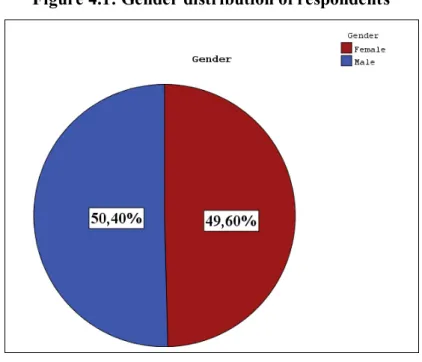
The graphs below contain information about the characteristics of the sample of 252 respondents. The numbers of women and men respondents are nearly the same, respectively 125 female and 127 male respondents.
Figure 4.1: Gender distribution of respondents
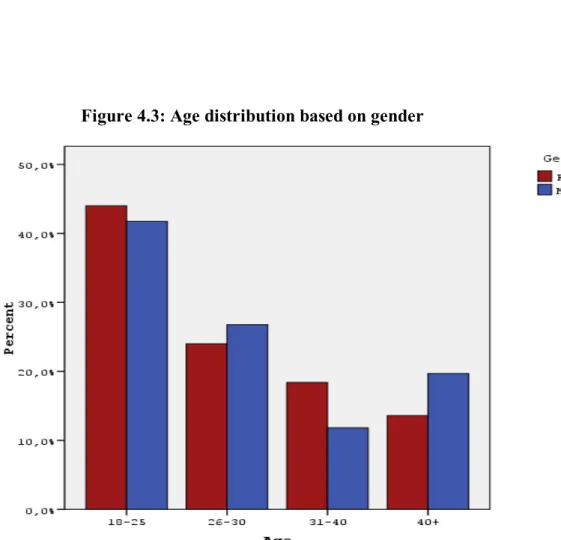
The majority of respondents are 18-25 years old (42,9 per cent), followed by the age group 26-30 (25,4 per cent). 15,1 per cent of the respondents belonged to 31-40 age group and lastly 16,7 per cent of the respondents are over 40 years old.
30
Figure 4.2: Age distribution of respondents
31
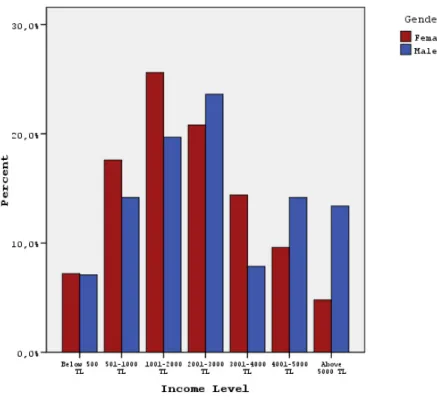
In the figures below (Figure 4.4 and 4.5) monthly income distribution of respondents and the percentages of monthly income distribution based on gender can be seen. The majority of the respondents have their monthly income in 1001-2000 TL and 2001-3000 TL groups.
Figure 4.4: Monthly income distribution of respondents
32
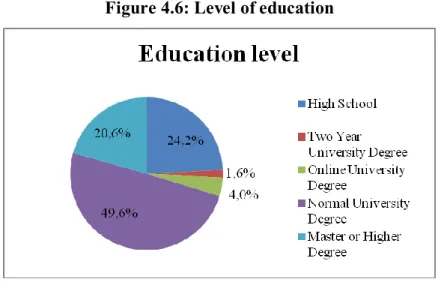
Approximately 55,2 per cent of the respondents have graduated from a university (normal, online degree or two year). It can be said that the education level is high because more than 50 per cent of respondents have a university degree and 20,6 percent of them have master or higher degree.
Figure 4.6: Level of education
In our sample, when we consider the gender of respondents with respect to the education level, university or higher degree is higher in women; more than 50 per cent of the university graduates are women.
33
Our sample have made impulse purchase at least once, the respondents mostly said that they sometimes engage in impulse buying (nearly 45 per cent) and approximately 30 per cent of them said that they often buy things impulsively.
Figure 4.8: Impulse buying frequency of the respondents
Most of the respondents’ monthly expenditure on convenience products is between 251 and 500 TL (38,49 per cent) followed by less than 250 TL (31,75 per cent).
34 4.2 RESULTS
There were 254 respondents who filled out the survey distributed online. At the beginning of the analysis, missing value analysis has been made to the questions. There were forty four questions in total; six questions to test Impulse Buying Behavior, eight to test Impulse Buying Intention, seven for Excitement, eight for Esteem, six for New Product Knowledge, three for Opinion Leaders and WOM and lastly six questions to test Compliance to Social Norms. Since the survey tool that is used enabled the researcher to make answering all the survey questions compulsory, there were not any missing data. However, two survey results are excluded from the analysis because of their age group. They were the only respondents who belonged to below 18 age group and since the two answers are insignificant to the analysis these indicators are removed and to increase the quality of the questionnaire in the analysis some modifications are made.
To test scale dimensionality and validation of the four constructs both exploratory and confirmatory factor analysis were performed. Kaiser-Meyer-Olkin Measure of Sampling Adequacy of the factor test was 0,788 and the Bartlett's Test of Sphericity significance was 0,000. These results show that sample size is satisfactory to perform factor analysis. The communalities of the items are higher than 0, 50. After these tests, Rotated Component Matrix has been performed. According to the results, several items are eliminated at the data reduction process; the items can be seen at Table 4.1. The reason behind the eliminations is that they were not matching with any or the factors.
35 Table 4.1 List of eliminated questions Impulse Buying Behavior
I carefully plan most of my purchases.
Even when I see something I really like, I do not buy it unless it is a planned purchase.
Impulse Buying Intention
If I heard that a new convenience product was available through a local convenience store or advertisements, I would be interested to buy it.
I will consider buying a new convenience product, even if I have not heard of it yet.
Excitement
Excitement is one of the important factors of my daily life. I can say that I am a thrifty person.
In general, I have a calm nature.
New Product Knowledge
In general, I am the last in my group of friends to know the names of the latest convenience products.
Social Norms
I do not need to talk to others before I buy a convenience product. I rarely ask other people about what convenience products to buy.
After the elimination of these ten items, factor analysis has been performed again. The factors emerged from the analysis slightly differed from the proposed thesis model. Esteem factor has been divided into two groups namely as Respect (having respect from others and self respect) and Confidence (satisfaction with the self and feeling confident). Moreover, social norms changed as Social Influence. There were not any constructs has been excluded but with the elimination of the items some scales are changed accordingly.
36 Table 4.2 Factor loadings of the items Impulse Buying Behavior
Generally speaking, I would consider myself to be an impulsive shopper. I often buy things spontaneously.
When I shop I tend to decide what I want to buy while I am looking around the store. When I go shopping, I buy things I had not intended to purchase.
Impulse Buying Intention
I buy things according to how I feel at the moment.
When I’m in a down mood, I go shopping to make me feel better. For the most part, I tend to shop on impulse when there are sales. I tend to spend money as soon as I earn it.
I often have an unexplainable urge, a sudden and spontaneous desire, to go and buy something. I sometimes feel that something inside pushed me to go shopping.
Excitement
To me, shopping is an adventure. I find shopping stimulating.
I feel excited when making a purchase.
I feel a sense of thrill when I am trying and buying something new. Respect
It is important for me to be well respected in my daily life. I give importance to have self-respect in my daily life. Relationship with others is really important for me. Confidence
On the whole, I am satisfied with myself. I feel confident about my abilities.
I feel that I am a person of worth, at least on a equal plane with others. I feel good about myself.
I feel that others respect and admire me. New Product Knowledge
I know about new convenience products before other people do. I have heard of most of the convenience products that are around. I am often among the first people to try a new product.
When I see a product somewhat different from the usual, I check it out. People think of me as a good source of shopping information.
Word of Mouth
I rely on word of mouth/opinion leaders when purchasing a new convenience product. I rely on word of mouth/opinion leaders when purchasing all convenience products. I do not rely on word of mouth/opinion leaders when purchasing any convenience products. Social Influence
When I consider new convenience products, I ask other people for advice. I like to get other’s opinions before I buy a new convenience product. It is important to me to fit in with the group I’m with.
My behavior often depends on how I feel others wish me to behave.
Factor Loading 0,792 0,851 0,770 0,672 0,550 0,788 0,667 0,626 0,845 0,844 0,742 0,872 0,854 0,744 0,924 0,895 0,721 0,847 0,792 0,375 0,845 0,624 0,845 0,768 0,839 0,683 0,742 0,740 0,660 0,494 0,577 0,616 0,389 0,515