REPUBLIC OF TURKEY
BAHCESEHIR UNIVERSITY
THE EFFECT OF VIRAL MARKETING ON
Y GENERATION’S PURCHASING BEHAVIOR
MA Thesis
EDA İSKEÇELİ
REPUBLIC OF TURKEY
BAHCESEHIR UNIVERSITY
GRADUATE SCHOOL OF SOCIAL SCIENCES
MARKETING (EN, T)
THE EFFECT OF VIRAL MARKETING ON
Y GENERATION’S PURCHASING BEHAVIOR
MA Thesis
EDA İSKEÇELİ
Thesis Advisor: DOÇ. DR. ELİF KARAOSMANOĞLU
THE REPUBLIC OF TURKEY BAHCESEHIR UNIVERSITY
GRADUATE SCHOOL OF SOCIAL SCIENCES MARKETING
Name of the thesis: The Effect of Viral Marketing on Y Generation’s Purchasing Behavior
Name/Last Name of the Student: Eda Iskeceli Date of the Defense of Thesis: 10.06.2013
The thesis has been approved by the Graduate School of Social Sciences
Yrd.Doc.Dr. Burak Kuntay Graduate School Director
Signature
I certify that this thesis meets all the requirements as a thesis for the degree of Master of Arts.
Dr. Selçuk Tuzcuoglu Program Coordinator
Signature
This is to certify that we have read this thesis and we find it fully adequate in scope, quality and content, as a thesis for the degree of Master of Arts.
Examining Committee Members Signature____ Thesis Supervisor --- Doc. Dr. Elif KARAOSMANOGLU
Thesis Co-supervisor --- Yrd. Doc. Dr. Caner GIRAY
Member ---
iii
ABSTRACT
The Effect of Viral Marketing on Y Generation’s Purchasing Behavior
Eda İskeceli Marketing (T)
Doc. Dr. Elif Karaosmanoğlu
June, 2013, 71 pages
In a world where people are showing increasing resistance to traditional form of advertising and getting lost in typical marketing communication tools, with its online social and consumer communities offering interactivity; internet plays a significant role in information distribution and consumers’ choices. Being a relatively new concept, viral marketing is multi interpreted. It is often defined as group of online techniques which are implemented in existing and well-known social network channels to produce and increases brand awareness, through world-of mouth communication and spreading the content by its influencers.
This dissertation seeks to explore the use of viral marketing on the internet, and assesses its effectiveness, in terms of generating potential sales and increasing brand awareness. Furthermore the thesis examines findings from questionnaire filled with Y generation and their feedbacks on how viral marketing affect their consuming habits.
32 questions were employed by FreeOnlineSurveys.com, in order to elicit a definition of viral marketing, whether it is creating a brand awareness or not and effectiveness on consumption behavior based on a group of Y generation’s answers.
All respondents belong to Y generation and mainly marketing and communication professionals.
iv
ÖZET
Viral Pazarlamanın Y Jenerasyonu’nun Satın Alım Davranışları Üzerindeki Etkileri
Eda İskeçeli Pazarlama (T)
Doc. Dr. Elif Karaosmanoğlu
Haziran, 2013, 71 sayfa
Son yıllarda tüketiciler, geleneksek pazarlama yöntemlerine karşı direnç göstererek ilgilerini yitirmeye başladılar. Teknolojinin gelişmesi ile bireyler daha çok bilgiye erişip, bu bilgileri yakınları veya diğer insanlarla paylaşarak, satın alım davranışlarını şekillendirmeye başladı. Yeni bir anlayış olarak viral pazarlama, çeşitli yollarla, sosyal ağları ve interneti etkin bir şekilde kullanarak marka bilinirliği yaratmak ve ağızdan ağza pazarlama yöntemiyle, müşteri kazanmak olarak tanımlanabilir.
Yapılan bilimsel tez çalışması viral videoların, Y jenerasyonu üzerindeki satın alım davranışlarına etkisini ölçümlemek amacıyla kaleme alınmıştır. Yapılan bu çalışmada, viral videoların Y jenerasyonun tüketim davranışları üzerinde gerçekten bir etkisi olup olmadığı ve etkisi olmasının altında yatan duygusal veya rasyonel nedenler ortaya konulacaktır. Buna ilaveten, bu bilimsel tez Y jenerasyonuna ait bireylerin, viral pazarlama örneği olan bir videoyu izledikten sonra, bu videonun onlar üzerindeki satın alım davranış değişikliklerini içersen sonuçlar içermektedir.
FreeOnlineSurveys.com internet sitesi aracılığı ile viral pazarlama ile ilgili 32 farklı soru sorularak, viral pazarlamanın marka farkındalığı yaratıp yaratmadığı, Y jenerasyonunun satın alım davranışları üzerinde etkili olup olmadığı sorgulanmıştır. Tüm ankete cevap veren bireyler Y jenerasyonundan olup, çoğunlukla pazarlama ve iletişim profesyonelleridir.
v CONTENTS TABLES ... 4 FIGURES ... 4 LIST OF ABBREVIATIONS ... 6 1. INTRODUCTION ... 7
1.1 AIM OF THE STUDY ... 7
1.2 SCOPE OF THE STUDY………...………...8
1.3 HYPOTHESES ... 9
2. LITERATURE REVIEW………..11
2.1 FROM WOM TO VIRAL MARKETING... 11
2.2 VIRAL MARKETING ... 13
2.3 KEYS TO SUCCESSFUL VIRAL MARKETING…………...…………...18
2.4 CONSUMER SIDE OF VIRAL MARKETING………...21
2.5 THE DEFINITION AND THE IMPORTANCE OF GENERATION Y...26
2.6 THEORETICAL MODEL ON THE EFFECT OF VIRAL MARKETING ON GENERATION Y’S CONSUMPTION BEHAVIOR……….29
3. DATA AND METHODOLOGY………..33
3.1 AIM AND SCOPE OF THE STUDY ... 33
3.2 STUDY DEVOLOPMENT ... 33
3.3 DATA COLLECTION INSTRUMENTS AND CONSTRUCT MEASUREMENT……….34
3.4 SAMPLE DESIGN AND SELECTION………41
4. ANALYSIS AND RESEARCH FINDINGS………41
4.1 INITIAL DATA ANALYSIS……….42
4.2 SAMPLE CHARACTERISTICS……….42
4.3 DESCRIPTIVE AND FACTORIAL ANALYSES ON MAIN CONSTRUCTS……….……43
4.4 MODEL TESTING AND RESULTS………….………..…………48
5. DISCUSSION AND CONCLUSION……….54
5.1 MANAGERIAL IMPLICATIONS………..56
vi
REFERENCES………58 APPENDICES……….66
vii
TABLES
Table 1.1: Proposed Hypotheses of the Theoretical Framework and the Results ...10
Table 2.1: Different Emotions Behind Viral Marketing…………...18
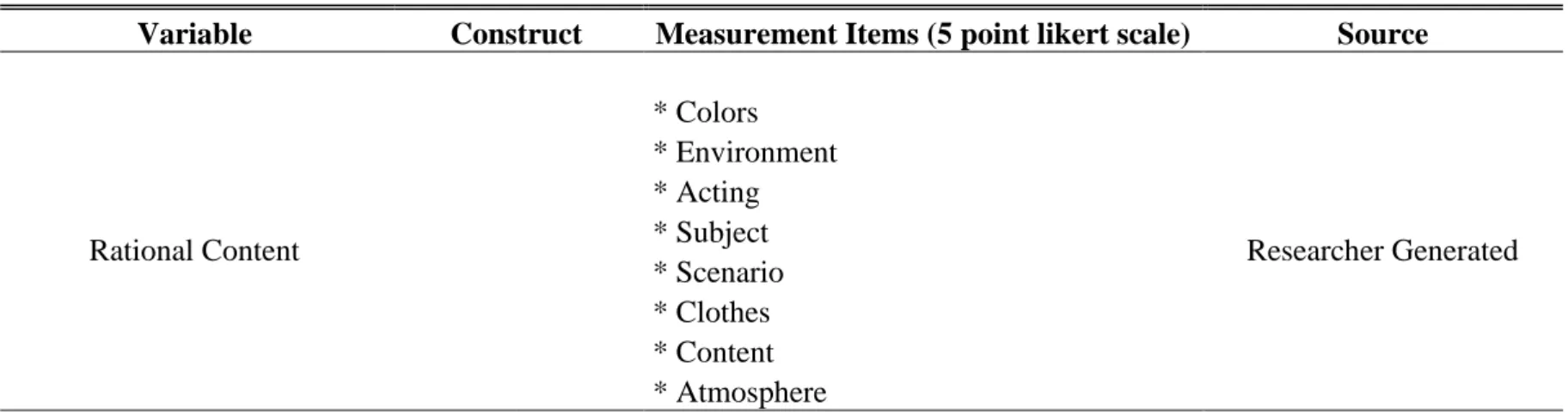
Table 3.1: Measurement Items of Rational Content in the Viral Videos………36
Table 3.2: Measurement Items of Positive Anticipated Emotions in the Viral Videos.. 37
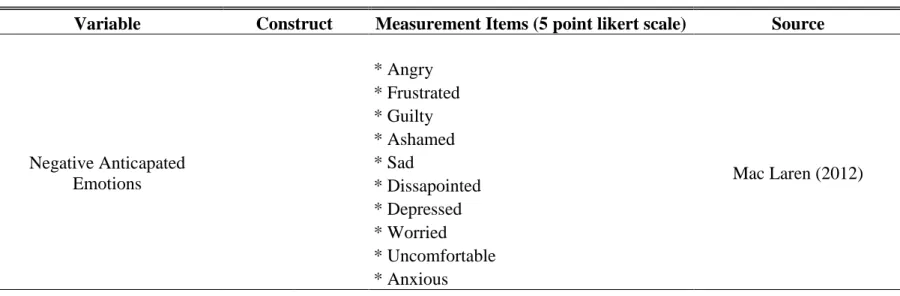
Table 3.3: Measurement Items of Negative Anticipated Emotions in the Viral Videos.38 Table 3.4: Measurement Items of Consumption Behavior…………...39
Table 3.5: Social Media Usage (N=161)……….40
Table 3.6: Age Interval of the Sample (N: 161)………..40
Table 3.7: Learning Behavior (N=161)………...41
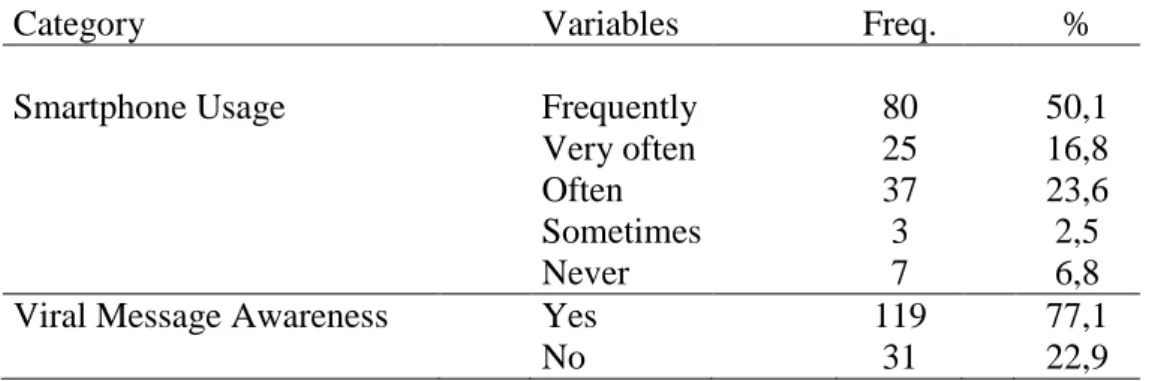
Table 4.1: Smartphone and Viral Message Awareness Statistics (N=152)……….42
Table 4.2: Demographic Profile of the Sample (N: 152)………42
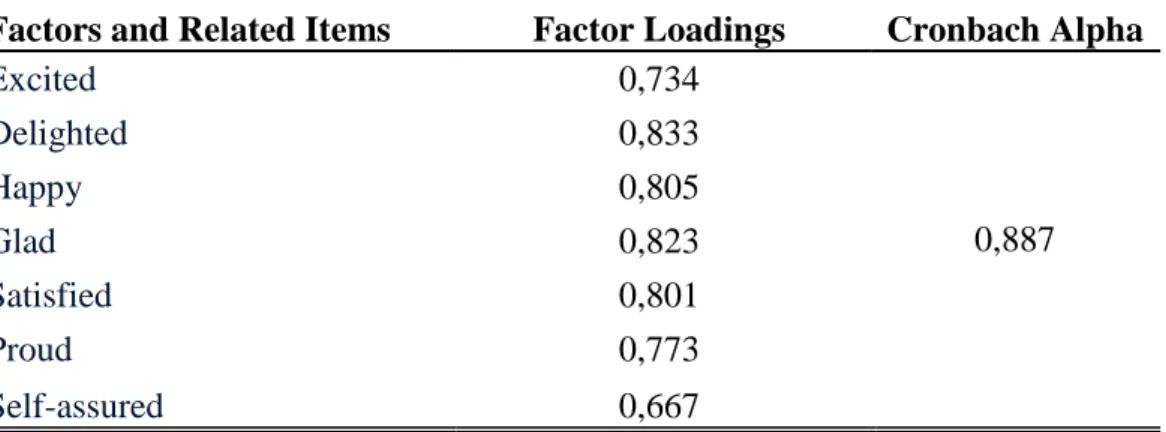
Table 4.3: Constructs Validation of Positive Anticipated Emotions………...44
Table 4.4: Construct Validation of Negative Anticipated Emotions………...45
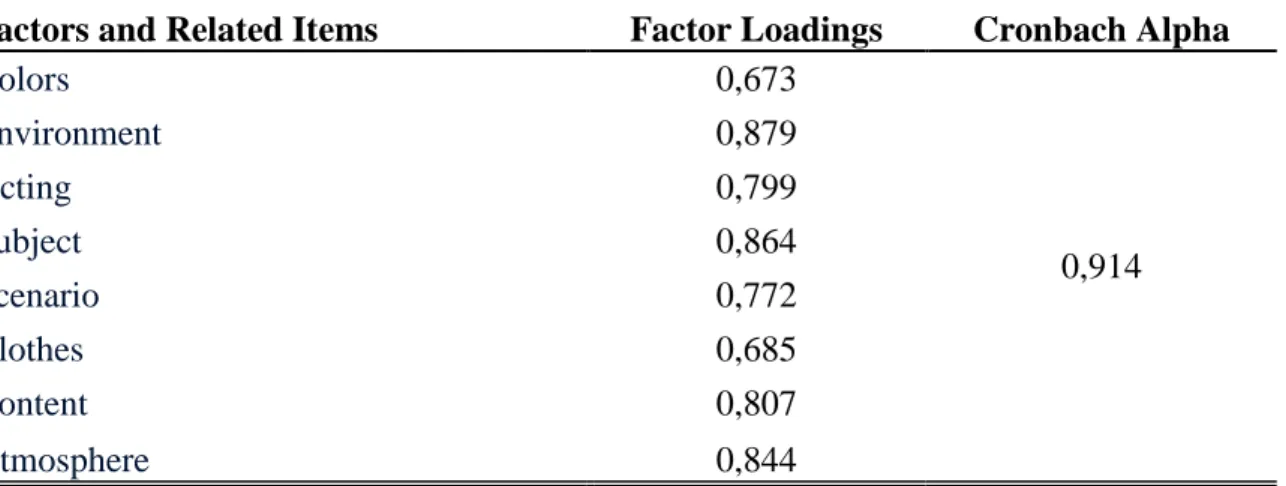
Table 4.5: Construct Validation of Rational Content of Viral Video……….47
Table 4.6: Regression Analyses of Hypotheses (H1- H2- H3)………...50
Table 4.7: Regression Analyses of Hypotheses (H4 – H5 – H6)………51
Table 4.8: Regression Analyses of Hypotheses (H7 – H8 – H9)………52
viii
FIGURES
Figure 2.1: AIDA Model………...19 Figure 2.2: Viral Marketing Consumer Behavior Process, Buying Act………..21 Figure 2.3: Theoretical Model ………...30 Figure 3.1: Screenshots of the viral marketing video shown to participants…..34
ix
LIST OFABBREVIATIONS
AdAge : Advertising Age
GENY : Generation Y
eWOM : Electronic Word of Mouth WOM : Word of Mouth
1. INTRODUCTION
Viral marketing, seeks to increase awareness or adoption of a product by taking advantage of the relationship network among consumers-awareness or adoption spreads from consumer to consumer. As an example, friends or acquaintances may tell each other about a product or service which will increase awareness and possibly creates explicit advocacy. Briefly, viral marketing is defined in Volume III of the International Journal of Business Science and Applied Management, as “a technique which utilizes the Internet to transmit and spread messages among individuals who will filter and forward the messages to their peers, who may be potentially interested in the message’s content” (Woerndl, Papagiannidis, Bourlakis, & Li, 2008).
Also commonly referred to as “buzz”, companies that mercantile in viral marketing techniques must be aware of how to maintain a healthy balance in inducing consumers to spread their messages, while not making them feel as though they are only a part of the marketers’ promotional game. Similar to any other form of advertising, viral marketing does not always work effectively. The key points included the right choice of the channel, brand and the target consumer for a successful viral marketing.
However, it is a crucial concept for today’s marketing professionals to understand and be able to effectively utilize the target consumers.
This study focuses on viral marketing and its current impact on Y generation’s purchasing behavior as a viable form of advertising.
1.1 AIM OF THE STUDY
The aim of this thesis is to briefly understand the underlying motivations
whether the emotional content or the rational content actually, motivates Y generation to share viral marketing videos. Moreover, the three steps below
2
would be followed to understand the consumption behavior of Gen Y, and its relation with viral marketing videos.
a. Examine Y generations’ profile, age groups, living trends, internet usage and details that helps to determine the target segment
b. Access to Y generation customers attitude and reactions to viral marketing through primary and secondary data analysis
c. Find out the effects of viral marketing on Y generations’ consumption attitudes
1.2 SCOPE OF THE STUDY
The scope of the study encloses a specific target group- Generation Y’s consumer behavior towards to viral marketing activities. The concept is extending by the definition of viral marketing and how word of mouth marketing (WOMM) turn into a viral marketing concept. Moreover study examines the rational and emotional factors as a motivation of sharing a viral content.
The dissertation organized as follows. First of all it reveals the WOMM and viral advertising concept followed by definition and importance of mobile marketing that help to create an effective viral marketing campaign and how it creates WOMM among consumers. Next, the paper describes why consumers share information virally and the need of Y generation for viral marketing. Additionally, the paper includes analysis of a group of Y generation whom exposed to a pre-defined viral video, and examines the emotional and the factual tone of viral advertising. Additionally, the project addresses the purchasing behavior of Y generation and how it is getting influenced by viral advertisements. Last, this study concludes with the future trends and lifeline of viral marketing and possible effects on consumer behavior.
3
1.3 HYPOTHESES
This thesis composes a new theoretical framework in order to understand viral marketing concept deeply, with the analysis of different levels of Y generation consumers, involvement with the rational versus emotional tone of the content of the viral videos and their effect on consumption behavior related to the relevant viral advertisements
To testhow viral marketing has an effect on Generation Y’s consumer behavior the following hypotheses have been proposed. (Table 1.1)
4
Table 1.1: Proposed Hypotheses of the Theoretical Model and Results
Hypotheses Results
H1 Positive anticipated emotions are more likely to change attitude toward the brand Rejected H2 Negative anticipated emotions are more likely to change attitude toward the brand Rejected H3 Rational content of the video is more likely to change attitude toward the brand Supported H4 Positive anticipated emotions are more likely to change attitude toward the employer brand Supported H5 Negative anticipated emotions are more likely to change attitude toward the employer brand Rejected H6 Rational content of the video is more likely to change attitude toward the employer brand Supported H7 The more positive anticipated emotions are perceived, the higher the sharing motivation Supported H8 The more negative anticipated emotions are perceived, the higher the sharing motivation Rejected H9 The more rational (non-emotional appeals) the video is perceived, the higher the sharing
motivation Supported
H10 The more positive attitude towards the brand, the higher the consumption behavior. Rejected H11 The more positive attitude towards the employer brand, the higher the consumption behavior. Supported H12 The more people are motivated to share the video, the higher the consumption behavior. Supported
5
2. LITERATURE REVIEW
2.1 FROM WOM TO VIRAL MARKETING
The progress of online word-of-mouth abilities can be understood through the objective of extension of innovation theory. The theory suggests that extension happens when an innovation is intercommunicated through various channels among members of a social network system. Originality is an idea, practice, or object that an individual or group of people’s perception as new and surprising (Rogers, 1995). As Rogers claimed, mass media channels are much more significant for learning about an innovation, whereas interpersonal communication is extremely important for inducement. Thus, consumers communicating via e-mail and/or social networking sites may persuade more willingly than mass media advertising (Jenkins, 2011).
Collective action theory, in specific, simulates the strength that lays in common group activities and interests and the tracking interpersonal pursuit of a public good (Marwell & Oliver, 1993). Internet is a useful and easy way of sharing a viral video advertisement without much effort. Viral success is mostly reached by unsystematic and collective act of sharing, linking and forwarding of advertisement videos.
Katz’s explanation of the two-step flow of communication can provide understanding for the active and passive roles that people take part in and explain how collective action occurs in an online environment (Katz, 1957). The framework of this theory will help to better explain how buzz is created, and how people share information online. Influences stemming from mass media first reach opinion leaders who, then, pass on what they read or hear to those of their everyday associates for whom they are influential.
Opinion leaders are typically those who pick up information, are socially well connected, and are trusted and looked at by their social circles to pass on knowledge or
6
opinions. This interpersonal influence is an important aspect of information sharing because rather than the mass media the opinion leader sharing the information is usually a trusted source (Katz, 1957).
During the last decade, customer satisfaction and perceived quality of products and services have been significant topics in the marketing literature. This is due to the empirically verified belief that increases in customer satisfaction and perceived quality will finally result in higher profitability (Wangenheim, 2007). On the other hand, Buttle declares that the focus of research on satisfaction and quality has slowly formed to a more “outcome-oriented view” of assessing the returns on service quality and satisfaction based on understanding of the associated costs and benefits. In the last ten years (Buttle, 1998, pp76-89).
A strategy called “viral marketing” using by many companies to promote their products and services in order to gain more profit with low marketing expenditures. Before the “viral marketing” term appears, a marketing strategy called “word of mouth” was used to explain the new trend of ‘sharing behavior’ among people. Haywood (1989) believed that Word-of-Mouth (WOM) refers to oral, person-to-person communication between a receiver and a communicator which the receiver perceives as a noncommercial message, regarding a brand, product or service.
Even though WOM strategy works for company’s marketing strategies and make them gain huge benefits, the increase of technology usage has upgraded the word of mouth strategy to a new strategy called “viral marketing” (Richins, 1984). In recent years, online consumers’ communication environment has been developed and enriched. As a result WOM has become important and WOM on Internet was named “viral marketing”.
Godes & Mayzlin claimed that Viral or word-of-mouth marketing has become significantly popular because it has a trendy medium—the Internet (Godes & Mayzlin, 2004). According to one venture capital firm, 76 percent of new business plans have the words "viral marketing" in them (File, Judd, & Prince, 1992). Using e-mail, social media platforms and YouTube makes it incredibly easy to pass information on to a
7
friend or colleague, or even people you do not know, especially when it involves something fun or free. Since millions of people all around the world using the Internet, the potential for exponential growth is getting huge.
2.2 VIRAL MARKETING
Rapid grow of technology and expansion of new marketing channels made the competition among companies furious. Fifer, 2006 pointed out that in order to be an assertive player in the market, firms should try to make good use of every single marketing channel which helps to enlarge their market share and build a strong brand. The traditional media channels like television, radio, newspapers and printed Ads were over used in the last decades and recently, people start to ignore those types of marketing campaigns. Audiences were get used to receive information by these old fashioned Medias and need something new, like a new “flavor” of the information they receive (Fifer, 2006).
The early marketing thoughts were focused on how to bring products to the market and serve them to consumers and keep it available at the market. While the economy developed, organizations had to become more market and customer positioned. Relationship marketing, with its focus on the building of ongoing customer relationships, should provide a broader and longer-term view of the role of marketing. It should be a synthesis of marketing, customer service and quality management (Christopher, Payne, & Ballantyne, 1991). Customers get bored with the traditional mediums and they want to see something new which will make them interested and happy. So the new mediums may work more effectively (Anderson, 1998).
People lost their reliability to traditional marketing communication tools which every company uses frequently. Marketers’ suggestions or advertising is not enough for consumer to make a purchase anymore. Czinkota argued that only eliciting information that companies think customers would need, is not working and also not enough to persuade customers. Moreover the old fashioned tools not fulfill their needs and satisfy them. Customers already become smart enough; they do not like to be persuaded by
8
marketers or advertisings in many situations (Czinkota, 2007). They choose to be more active in the buying process and use their own knowledge and standards to decide what they need, and what they happy to buy. A strong brand can make customers have faith in a company and its products. This view seems acceptable for Palmatier who claims relationship marketing and customer relationship management have taken a central position in marketing strategy in the past two decades (Palmatier, 2008). A confluence of factors, including the transition to service-based economies; advances in communication, logistics, and computing technologies; increased global competition and enhanced the salience of “relationship-based loyalty” to sellers compared with other marketing mix factors. The technology changes that have occurred in the recent years have been strongly reflected the marketing of product and services in the market. Companies have to adapt these changes to keep their competitiveness because of many substitutes and competitors in the market.
Scott D.M claims that, ‘One of the coolest things about Web is that when an idea takes off, it can propel a brand or company to seemingly instant fame and fortune. For free. Whatever you called it- viral, buzz, word-of-mouse, or word of blog marketing- having other people tell your story drives action. One person sends it to another, than the person sends it to yet another, and on and on’. (Scott D. M., Word of mouse empowers you, 2008). The communication in the Internet market has become more significant and therefore social media web sites such as Facebook, YouTube, Twitter, blogs, and many other more have become one of the most important ways for companies to market themselves (Griffith & Lusch, 2007).
Viral marketing is a strategy that boosts individuals to pass along a message to other people. If a large number of receivers forward a message to a large number of people, the growth of the message span quickly. A viral message can be exploded to thousands and millions of people, therefore it named viral marketing. Off the Internet viral
marketing also is called “word of mouth” (Scott D. M., 2007).
The amount of private persons that use social media is extremely high. According to Facebook Inc.; the company has 1.01 billion active users at the end of September 2012
9
(Sengupta, 2012). Active users of such kind of social media web sites use these communities every day; at least two or more times to communicate with their friends and to create new contacts. Viral marketing has become a huge opportunity for companies to advertise on the Internet. “Brands big and small launch viral videos via YouTube, post new product information on their Facebook and Twitter pages, court the blogosphere and send forth armies of evangelists to spread the gospel by word of mouth to make people aware of their products and services in order to hopefully create a need and awareness to their brands. For companies to adapt these new media strategies, it is not only a cost saving method but especially in time of economic recession, it is also giving companies the opportunity of increasing brand awareness and accessing to the most influential marketing strategy of them all: online word of mouth marketing; viral marketing (Ferguson, 2008).
In a viral marketing campaign the consumers are the ones that make the actual promotion, enforce the brand’s originality and its awareness. According to eMarketer reports, 46% of the online users ask for advice between four and seven remarks
regarding the wanted products before buying them (Roell, 2008). Persuading people to talk about products and services, marketers should pin them to get involve with free promotion process. A successful viral marketing campaign is a leading point for “the foundation” to the upcoming campaigns. The online promotion tools, search engines, online messaging rates and many more are influenced by the viral marketing
campaign’s successful results. With the evolution of technology, and the growth of the online platforms, the arena of many companies have move from realistic world to a new digital
world— internet (Castells & Gustavo, 2005). Mobile Marketing
Mobile marketing has the potential to tackle marketers’ major challenge today in order to get consumers’ attention (Barwise and Strong, 2002; Pousttchi and Wiedemann, 2006). The marketing tool offers three basic marketing strategies – push, pull, and viral strategies. Marketers point customers to communicate content in push strategies. In pull strategies consumers openly ask content from marketers. On the other hand in viral marketing strategies, consumers share information among them.
10
WOM refers to oral, person-to-person communication between a communicator and a recipient who perceives the respective message as non-commercial although the subject is a brand, product, or service (Arndt, 1967). WOM is an effective and affordable way to advertise products and services. It helps a company use little money to make mass promotions. This view was also supported by Buttle, he believed that customers are easier to be persuaded through WOM as they think it is a noncommercial way. (Buttle, 1998). They consider their self as they are on the active position to receive information and make a buying decision but not persuaded to do that.
Viral marketing got a new name electronic WOM (e-WOM) and it contains passing on or referring news, information or entertainment to other individuals (Cruz & Fill, 2008). WOM covers all interpersonal communications (Stokes & Lomax, 2002). It is critical to understand that viral marketing has developed as a result of improvements in the technology and is regarded as a critical electronic extension of WOM communication, not a mere development of WOM (Bickart & Schindler).
The term viral marketing was introduced to the world in 1997. Since then, many arguments exist about its definition. According to Subramani& Rajagopalan, “viral marketing” is very similar to word-of-mouth advertising in which consumers tell other consumers about the product or service (Subramani & Rajagopalan, 2003). But Yang&Allenbay argue this view and think that the true viral marketing differs from word-of-mouth in that the value of the virus to the original consumer is directly related to the number of other users it attracts. (Yang & Allenbay, 2003) On the other hand, Shirkey suggests that, in generally, viral marketing would be word-of-mouth advertising to most people but he adds also that the concept describes viral marketing as a way of getting new customers by encouraging honest communication among consumers (Shirkey, 2005).
According to Senecal and Nantel (2004), buying is part of a social process, it involves a one-to-one interaction between the company and the customer and many exchanges of information and influence among the people who surround the customers. Moreover, they suggest that many efficient networks imply hubs, groups, and connections among
11
lot of people. Among these networks, people notice an enduring flow of green sparks between certain nodes.
Wilson (2000) said that viral marketing is some sort of virus that you start with one customer and he/she will tell people and pass it on continuously, and once the virus spread to another person one by one it continues to span. Dichter (2001, p47) claimed that, “viral marketing is the idea that you incite your customers or referral sources to pass on something about your business to their network of colleagues and friends”. Viral marketing refers to any strategy that emboldens customers to share a marketing message to others, creates a huge potential for exponential growth in the message's exposure and influence (Hogon, Lemon and Libai, 2004). In Nalor’s (2002) opinion, viral marketing is a marketing technique that relies on some aspects of the system to promote itself as initial targets pass the promoted products or services to the others.
Viral marketing strategy can be seen as viruses or chains. One example of viral marketing is encouraging current and potential customers to tell others about a company's products and services, and then encouraging those others to tell even more consumers, make the information go forward continuously. (Subramani & Rajagopalan, 2003). So it is easy to spread the message to millions of customers in a short time.
Viral Marketing means “to make clients talk about the related products, brands and specifications, to make them recommend the product. Recognizing and recalling has also an important role while going viral, for increasing the product’s value among consumers. It proves that companies should understand the potential clients carefully and try to penetrate the marketing messages through internet, with the purpose of offering value through the information they send to them. That is also can called, respecting the consumer. And it is the most crucial point for viral marketing.
Viral marketing seems like a helpful technology for both companies and customers. Companies can use a small budget for promoting their products since the information can be transferred mouth to mouth. In the customers’ side, viral marketing helps them feel better as they think that they give the purchase decision by themselves and they get
12
this information from more reliable source than marketers or advertisers (Wangenheim & Bayon, 2007). Moreover people get knowledge about the promoted products by devastating viral videos which they do not get bored while watching.
2.3 KEYS TO SUCCESSFUL VIRAL MARKETING
Creating innovative content and make it ultimately share by masses is an important point of viral marketing. There are many ways that businesses can create successful viral marketing campaigns to aid to growth of their business and get it known world-wide. Scott M.D, advises marketers to try as more as they can and create several viral marketing promotions. That is because viral campaigns are heavily influenced by luck, meaning that someone has to found the information interesting enough to share with others (Scott M. D., 2008).
Wilson claims that a successful viral marketing should include the following strategies; 1. Give away products or services
2. Provides effortless transfer to others 3. Scale easily from small to very huge
4. Exploits common motivations and behaviors 5. Utilizes existing communication networks
6. Takes advantages of others’ resources (Wilson, 2005).
It is very important to design a good message for the products because this raises the opportunity for it to become profitable. It is hard to construct a successful viral message, but if you succeed with it you can get a big success from a small investment (Bazadona, 2000). The AIDA model is a well-known model, which can be used to influence consumers purchasing behavior. As seen at the figure 1, a viral message according to AIDA has a good chance to take the consumer all the steps from awareness of a need to purchase decision in the consumer buying process. AIDA(S) stands for getting Attention, maintain Interest, arouse Desire, obtain Action and Satisfaction.
13
Figure 2.1: AIDA Model
A: A good message with the product in the centre catches the peoples’ Attention.
I: A strong headline and letting people
know they can afford it creates an Interest.
D: Make the customer wanting it and how
it will satisfy their life. To create a Desire.
A: Tell the customer how easy they can get
Source: Cudmore, 2010 it, Action towards purchase.
S: Make the customers Satisfied so they
will recommend and pass along the
message to others such as friends and family.
Effective Viral Marketing Campaigns
Viral marketing was first recognized in 1997 following the rapid growth of the email service “Hotmail” through the “invite friends” request. This view was supported by Altoft who claims that ‘In today’s era of social networking it’s easy to think how quickly the likes of FaceBook and MySpace grew but the real viral marketing pioneer was Hotmail (Altoft, 2008). In December 1996 Hotmail had 500,000 registered users – less than a year later they had over 12,000,000 users. This astonishing growth rate was down to the fact that every single email sent from Hotmail included a small advert promoting the service in the footer’. Wilson, explains the classic example of viral marketing is Hotmail.com, one of the first free web-based email services. The strategy is simple:
1. Give away free email addresses and services;
2. Attach a simple tag at the bottom of every free message sent out: “Get your private, free email at http://www.hotmail.com”;
3. Then stand back while people email to their own network of friends and associates;
14
5. Sign up for their own free email service; and then
6. Propel the message still wider to their own ever-increasing circles of friends and associates.
Like tiny waves spreading ever farther from a single pebble dropped into a pond, a carefully designed viral marketing strategy ripples outward extremely rapidly (Wilson, 2005).
The film ‘The Blair Witch Project’ is also considered to be a pioneer for viral marketing techniques, with its use of the Internet to communicate ‘leaked’ information to the wider audience (Mohr, 2007). Marketing in this way had not been seen before on the Internet. Previously, companies who decided to use the internet to advertise themselves rarely produced material that created a viral buzz. Instead, corporate video about a company, which often was common and predictable, was produced. For example snippets of a Managing Directors Speech may have been uploaded. However, this is not something that would excite viewers, and certainly wouldn’t encourage them to tell others to watch the material (Sternberg & Bell, 2001).
Using viral marketing related to online media channels can make the promotion effect like a nuclear explosion because any information can be delivered easily and quickly through internet. It seems like, bringing information from the “Stone Age” to “21st
century” with an incredible speed. For example, it was on the 15th of July, 2012 that the world was first witness to PSY’s Gangnam Style. From then on, the video has spread its wings far and wide to reach out to close to a billion viewers (845,851,259 as of 29 November, 2012). The success of Gangnam Style showcases just how powerful the Internet can be in being able to “virally” spread your content across the globe. (Social Maximizer, 2012).
Base on its advantages and low cost, more and more companies choose to use internet in order to advertise and promote their products or services. Since more and more companies involved in internet market, several online promotion techniques are recognized by marketing researches and without doubt, viral marketing will be at the center of this research as it can reach too many consumers in a short time. This view is
15
supported by Fairbank who claims that there are many advantages to viral marketing for businesses. Individuals who write about businesses (in blogs or chat rooms) create free advertising as they do it of their own accord (Fairbank, 2008). When compared to the costs of traditional marketing and promotional techniques (which could be hundreds of thousands of pounds for some high profile businesses) it is clear that viral marketing would save them a considerable amount of money.
2.4 CONSUMER SIDE OF VIRAL MARKETING
Consumer Sharing Via Online Word of Mouth
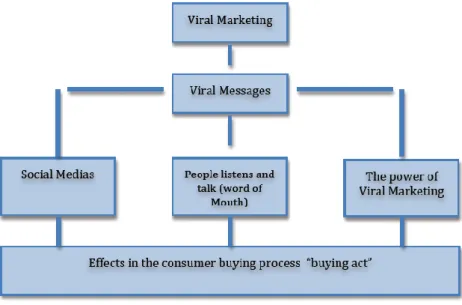
Writer of “The Anatomy of Buzz Revisited,” Emanuel Rosen, defines “buzz broadly to include word of mouth (or consumer-to-consumer communication regarding brands), plus word of Web (online word of mouth), as well as all other interpersonal communication, including second-hand buzz and consumers visually displaying brands” (Rosen, 2009). Today’s internet users are exchanging opinions and experiences related to most of the products and services with individuals inside and outside of their personal communication networks. In figure 2, Gholamzadeh & Jakobsson shows how viral marketing consumer buying process is starting up with social media and exchange of ideas between consumers (Gholamzadeh & Jakobsson, 2011).
Figure 2.2: Viral Marketing Consumer Behavior Process, buying act
Source: Jakobsson and Gholamzadeh, 2011
16
This technique of exchange opinions and experiences via internet is known as online word-of-mouth and has become extremely popular in recent years (Mitchell, Shachar, & Peres, 2013). The ritzy digital age has made it easier to pass along information and knowledge. The Internet evolves and hastens the ability to stay in touch with contemporaries. The Internet originates an environment where experiences and opinions can be viewed and shared by masses. Within the evolution of online word-of-mouth anyone can receive and share information fast and easily. It is also common for information that becomes viral to be seen on other platforms after it gets popular among internet. There are lots of YouTube videos that have had millions of views have been shared between viewers will capture the attention of media.
People chat and share experiences without any impulsion. Thus, conversations among people could be promoting, or helps marketing specific brands or services, or new product that they started to use. These actions are to deepen social connection (Berger & Milkman, 2005). When shared with other people on different social networks, messages are considered more credible. A brief understanding of how and why people share content online would be beneficial for marketers and advertisers.
Why Consumer Share Information and Content Virally
Consumer behavior is depends on various factors but especially emotional factors can and should not be ignored by marketers. The role of emotion in marketing also needs to be considered as a motivation for consumer sharing (Holbrook & O'Shaughnessy, 2006). The advertisement which involves emotional content has the ability to form or reform a consumer’s attitude towards a product or a service.
According to former researches, individuals are more likely to share positive content that satisfies emotions (Lindgreen et.al, 2007). Berger& Milkman’s findings propose that not only people share content that contains useful information, but sharing evolves from emotional experiences. Their research suggested that people share messages with emotional content in order to allow other people to understand how they feel, obtain sensation, reduce feelings of dissonance, strengthen social connections, and enhance identity. (Berger & Milkman, 2005).
17 The Role of Emotion in Sharing an Online Content
Phelps, Lewis, Mobilio & Perry made a significant study on online word-of-mouth; analyzing consumer feed backs and motivates to pass along an e-mail (Phelps, Lewis, Mobilio, & Perry, 2004).
They conducted the motives to share an e-mail and the common behavior towards passing them along with other people. That research shows that there is a positive correlation between the message’s extension and attitudes toward pass along e-mails. The most likely content which is passes along more than others is positive emotional content e-mails. Positive emotional contents found to be capable of changing preexisting moods. When Lindgreen made experiments of online video messages, the most important factor of the ten viral campaigns which they studied was, the ability of the message to capture the imaginations of the recipients (Lindgreen et.al, 2007). Something about the message must intrigue the recipient enough to make him/her to believe that it would be of equal interest to others. Also in Welker’s opinion, some people share messages as an extension or reflection of their own self-image (Welker, 2002).
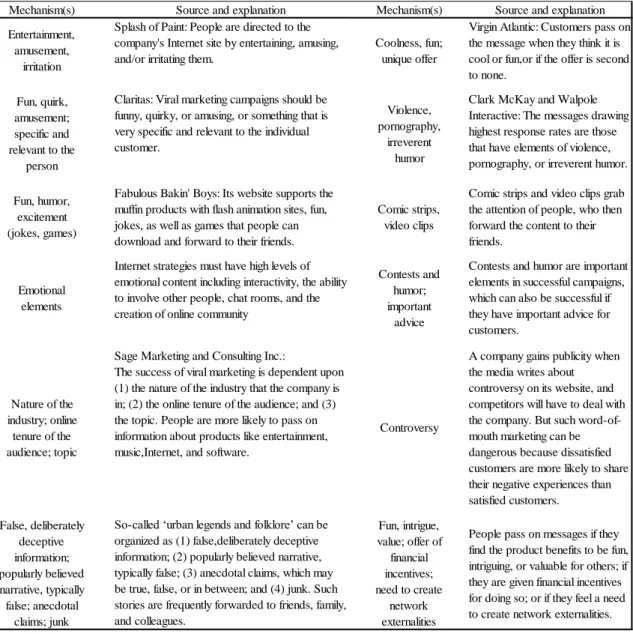
People like to share information so that they can get attention and seem intellectual. Sharing specific messages such as a kind-hearted message can indicate the type of person an individual is (Lynch, 2002). In table 1.1, Lindgreen and Vanhamme, 2005 explains the different emotions behind viral marketing activities.
18
Table 2.1: Different Emotions behind Viral Marketing
Source: Lindgreen and Vanhamme, (2005), Why Pass on Viral Messages? Because They Content Emotionally, p.g 293.
A message is more effective and most likely to be shared when the people are already in the same mood with the viral content. A positive message will be shared more with someone who is already in a good mood and in contrast negative message is likely to be shared when the person is in a bad mood. Recent researches shown that if the receiver feels a strong emotional attachment to the message it is likely to go viral (Lindgreen et.al, 2007).
Mechanism(s) Source and explanation Mechanism(s) Source and explanation
Entertainment, amusement,
irritation
Splash of Paint: People are directed to the company's Internet site by entertaining, amusing, and/or irritating them.
Coolness, fun; unique offer
Virgin Atlantic: Customers pass on the message when they think it is cool or fun,or if the offer is second to none. Fun, quirk, amusement; specific and relevant to the person
Claritas: Viral marketing campaigns should be funny, quirky, or amusing, or something that is very specific and relevant to the individual customer.
Violence, pornography,
irreverent humor
Clark McKay and Walpole Interactive: The messages drawing highest response rates are those that have elements of violence, pornography, or irreverent humor.
Fun, humor, excitement (jokes, games)
Fabulous Bakin' Boys: Its website supports the muffin products with flash animation sites, fun, jokes, as well as games that people can download and forward to their friends.
Comic strips, video clips
Comic strips and video clips grab the attention of people, who then forward the content to their friends.
Emotional elements
Internet strategies must have high levels of emotional content including interactivity, the ability to involve other people, chat rooms, and the creation of online community
Contests and humor; important
advice
Contests and humor are important elements in successful campaigns, which can also be successful if they have important advice for customers.
Nature of the industry; online
tenure of the audience; topic
Sage Marketing and Consulting Inc.:
The success of viral marketing is dependent upon (1) the nature of the industry that the company is in; (2) the online tenure of the audience; and (3) the topic. People are more likely to pass on information about products like entertainment, music,Internet, and software.
Controversy
A company gains publicity when the media writes about controversy on its website, and competitors will have to deal with the company. But such word-of-mouth marketing can be dangerous because dissatisfied customers are more likely to share their negative experiences than satisfied customers. False, deliberately deceptive information; popularly believed narrative, typically false; anecdotal claims; junk
So-called ‘urban legends and folklore’ can be organized as (1) false,deliberately deceptive information; (2) popularly believed narrative, typically false; (3) anecdotal claims, which may be true, false, or in between; and (4) junk. Such stories are frequently forwarded to friends, family, and colleagues. Fun, intrigue, value; offer of financial incentives; need to create network externalities
People pass on messages if they find the product benefits to be fun, intriguing, or valuable for others; if they are given financial incentives for doing so; or if they feel a need to create network externalities.
19
According to Phelps, Lewis, Mobilio & Perry, the most messages which are likely forwarded, includes strong emotions like humor, fear, happiness, sadness or inspiration. Very humorous jokes, frightening virus alerts or product warnings, touchingly sad stories, and inspirational messages are those kinds of e-mails that even the most Infrequent Senders’ threshold for passing. Results of research points out that humor and surprise are the two most important qualities for viral messages. Humor includes an element of surprise and also makes user open attachments, click on a link or forward things to friends (Rigby, 2004).
Surprise occurs from the result of an unexpected action or occurrence. For instance when a product, service or attribute, is unexpected, and the result is amazement or astonishment, surprise occurs accordingly. Lindgreen declares that humor mostly includes surprise and because of that if another emotion is used with humor in the same content the message will be likely to share (Lindgreen et.al, 2007). Humor also lets people escape from reality for an individual time and allows one to experience and emotional response to the message, such as joy and surprise.
Previous research by Berger and Milkman, on the viral marketing and social communication of online content provides useful data for other researchers to follow (Berger & Milkman, 2005). They used elements and characteristics of the online video advertisements that have gone successfully viral in their researches. Berger and Milkman (2009), provide the first exploration to demonstrate characteristics of online content that are linked to virality by using New York Times website. By using the dataset of all articles published during a three-month period, the authors examine how emotions are shaped in virality. More positive content is more viral than negative content, but the relationship between emotion and social transmission is more complex than valence alone and is driven in part by arousal.
Either positive or negative emotions that include high arousal are more viral than the others. On the other hand, content with a low arousal emotion like sadness is less viral. These results hold controlling for how surprising, interesting or practically useful
20
content as well as external drivers of attention (e.g., how prominently content was featured)” (Berger & Milkman, 2009, pg.2).
The emotional and rational content of the relevant videos, used in this study to understand if viral marketing is useful to promote a product or a service or not. Moreover, what motivates especially younger people to share a viral video about a product and what factors actually make them purchase the relevant product. The elements used in this study will be helpful in determining which factors are essential for designing a successful viral advertisement. Table 1, from a research executed by Dobele et al. (2007), elicits a comprehensive look at the emotions that will be used to analyze the content of this research for viral marketing videos. On the whole, if viral marketing advertisements focused on Y generation’s human characteristics and be able to touch the receiver’s emotions at a point, messages will span virally through OWOM.
The following section will be discussing the characteristics of Y generation and focuses on why they are more likely to share viral videos.
2.5 THE DEFINITION AND THE IMPORTANCE OF GENERATION Y
Who is Generation Y?
The term Generation Y, is come in sight in 1993, by Ad Age Magazine editors in order to define the teenagers of the day, which differs from Generation X. The term has adapted globally, and used to define usually people who born after 1980 (Advertising Age, 1993).
In their book, Millenials in Generations: The History of America’s Future; Strauss and Howe (1991), used 1982 as the starting day of Generation Y, end the last birthday of Generation Y mentioned as 2004.
Generation Y was not the only term to describe that group of people. It has been given many names- the Net Generation, the Milennials, the Dotcoms and Thumb Generation (referring to their dexterity with remote controls, computer keyboards and mobile phones), and Echo-Boomers ( as the product, both biologically and socially, of their
21
Baby Boomer parents). Yers have been described as Paradoxial Generation, due to their seemingly contradictory approach of life ( they drink and take drugs but eat organic food, they are obsessed with technology but fear it is depriving them of deeper personal relationship, they want to get married but resist settling down with a partner) (Huntley, 2006).
Viral Marketing and the Need of Y Generation Customers
Online social networks like FaceBook, Twitter, YouTube and many more are highly considered as a significant source of information about which product to buy or which service to use. These Web sites provide a low cost and convenient way for consumers to stay connected with the members of the Web site. These online social networking platforms also allow user to publish and control content about them easily (Fung & Lee, 2007).
Viral marketing is a way of designing a process where people who share common interest can meet and communicate with each other therefore emerging as a significant marketing strategy to pass along to so many people and stimulate the trial, adoption, and use of products and services (Her, Kardes and Kim, 1999). In that matter, it can be said that the terms virality and viral marketing are familiar to Generation Y. This view is supported by Hare (2012), he states that ‘Gen-Y is happy to endorse products they support, and want to share those with their friends. Take the recent The Dark Knight Rises viral campaign. Millions of people worked together to unlock the puzzle that went live on April 30th. This is one of the most anticipated movies in the last 3 years, and the released the final trailer via a massive viral campaign. Fans like me were treated to the hard work of others who quickly began sharing the newly revealed trailer via Social Networks. Soon the entire Internet was a buzz promoting the new trailer in the early morning hours. We were all working together again to share this small moment with our peers. This is why viral marketing is so successful with Gen-Y or Millennials. It appeals to all the things that excite them. And viral marketing is not excusive to the online world. Keeping with the Batman films theme, I recently walked into a local watering hole here in Boston, and proudly displayed on the cash register was a bumper sticker proclaiming: “I believe in Harvey Dent”, a fictional character from 2009’s The Dark
22
Knight, and a integral piece in the viral marketing of that particular film. Viral marketing can be highly annoying some of the time; however it is terribly effective most of the time’ (Hare, 2012).
Recent research which released from Yahoo and Carat Interactive by Harris Interactive and Teenage Research Unlimited gives a brief idea about Generation Y and its media usage. The use of media by Gen Y differentiates with older generations because of the digital world’s empowerments. “What makes Gen Y people different is the way they are consuming media,” says Beth-Ann Eason, vice president, Category Management at Yahoo!. “Research that Yahoo! And Carat commissioned earlier this year showed that not only are teens spending more time with the Internet than TV, but that they also use the Internet as the hub of their media activity. The Internet is the medium from which all other media decisions get made, and that’s a powerful tool for marketers.”
Internet is a way of life for Gen Y. Not only they are online for media engagement but also they are using internet to communicate with each other and share valuable information. Eason also declares that, “Viral Marketing is an invaluable tool to use when connecting with GenY. When a product launches, GenY is best equipped to generate significant buzz and accelerate any program with ‘word of mouse.’ The kids in this group are online consistently, have huge networks of friends and talk frequently.” Concludes Eason of Yahoo!: “In the future, GenY will look at the Internet as a place to not only discover (today) but to confirm and validate (Yahoo and Carat Interactive, 2003).
Today information about all brands is available online and it is easy to get information about new products and services which drives search activity on the Internet and word of mouth. To learn new things and get information about the products, Generation Y generally Google that brand first and then later on, they actually get in the store or use samples to understand the benefits of the product. In contrast to other generations, Generation Y seeks the information by not listening but actually trying or searching it online personally.
23
In the future, trends will generate from the Internet through rich media and targeting marketing programs. These Internet trends will integrate testimonials as well as transactions, speeding up the process of getting a great product into the hands of the GenY Consumer (Meskauskas, 2003).
According to Wangenheim (2007); more and more people get used to surf on internet and this situation leads many marketers to focus on internet to promote their products and services. Especially young people prefer using internet for traditional mediums. So a company has to pay more attention for Y Generation in order to have big market share in the future (Bayus, 1985).
While targeting Gen Y through internet, as well as the attitude toward the brand the attitude toward the employer brand has an important role. The internal marketing concept is about firms’ employees are the main target group of any company (George & Gronroos 1989; George 1990), the rationale being that employees are internal customers and jobs are internal products. Job products should be interesting thereby satisfying the needs and wants of these internal customers, while addressing the overall objectives of the organization (Berry & Parasuraman 1991).
The following section will discuss the data and methodology, analysis and research results in order to understand Gen Y’s consumption behavior and how it is related to viral marketing advertisements that they are exposed to. Moreover, rational and emotional content of the viral videos and how they affect the receiver of the viral videos will be analyzed.
2.6 THEORETICAL MODEL ON THE EFFECT OF VIRAL MARKETING ON GENERATION Y’S CONSUMPTION BEHAVIOR
In order to designate the effects of viral marketing advertisements on Gen Y’s consumption behavior, which are defined previously in the in the literature review; a research model was proposed (see Figure 2.3) with the involvement of positive anticipated emotions, negative anticipated emotions and rational content; their impact
24
on attitude toward the brand, attitude toward the employer brand and sharing motivation and finally their impact on consumption behavior.
To determine the Generation Y consumers, social media usage, learning behavior, education level and age factors are used as control variables.
Figure2.3. Theoretical Model
In the literature review, it is assumed that primary factors that are effecting the viral video sharing motivation are positive anticipated emotions and negative anticipated emotions. (Berger & Milkman, 2009). Also, people are willing to share a viral message if they are finding the content of the message interesting. (Woerndl, Papagiannidis, Bourlakis, & Li, 2008).
Attitude toward the Brand:
GEN Y
Control Variables:
•
Social Media Usage
•
Learning Behavior
•
Age
Consumption
Behavior
Attitude Towards
the Brand
Sharing
Motivation
Positive Anticipated
Emotions
Negative Anticipated
Emotions
Rational Content
Attitude Towards the
Employer Brand
25
There is comprehensive evidence that positive attitude toward a brand mostly relate to the consumption of that brand (e.g. Bird et al. 1970, Barwise & Ehrenberg 1985, Castleberry & Ehrenberg 1990, Dall’Olmo Riley 1995). Therefore in the study, positive anticipated emotions are measured and a hypothesis is proposed as, because of the relationship between attitude toward the brand and positive anticipated emotions.
H1: Positive anticipated emotions are more likely to change attitude toward the brand
H2: Negative anticipated emotions are more likely to change attitude toward the brand
H3: Rational content of the video is more likely to change attitude toward the brand
Attitude toward the Employer Brand:
The internal marketing concept argues that the organization’s employees are the first market of any company (George & Gronroos 1989; George 1990). Job products must attract, develop and motivate employees, thereby satisfying the needs and wants of these internal customers, while addressing the overall objectives of the organization (Berry & Parasuraman 1991). Thence, in this study the underlying motivations that affect employer brand are measured.
H4: Positive anticipated emotions are more likely to change attitude toward the
employer brand
H5: Negative anticipated emotions are more likely to change attitude toward the
employer brand
H6: Rational content of the video is more likely to change attitude toward the employer
brand
Sharing Behavior of a Viral Video:
Recent studies shown that if a receiver feels attach to the video that they are exposed to, the message is likely to be share by that person. In other words, someone who is in a
26
good mood, is likely to share a content which is positive, in contrast negative messages is more likely to go viral, when the person is in a bad mood (Lindgreen et.al, 2007)
H7: The more positive anticipated emotions are perceived, the higher the sharing
motivation
H8: The more negative anticipated emotions are perceived, the higher the sharing
motivation
H9: The more rational (non-emotional appeals) the video is perceived, the higher the
sharing motivation
Consumption Behavior:
According to eMarketer reports, 46% of the online users ask for advice between four and seven remarks regarding the wanted products before buying them (Roell, 2008). As a result of the taken information from reliable sources online, it is suggested that consumers are expecting to have affirmative information before they consume a product or use a service. Thus, it is suggested in the study that positive attitude toward the brand could increase the possibility of consuming that specific brand.
H10: The more positive attitude towards the brand, the higher the consumption
behavior.
H11: The more positive attitude towards the employer brand, the higher the
consumption behavior.
According to AIDA model, which is mentioned in the literature, creating a desire for people to consume a specific product is start with the message of the product. If the design of the message is good enough for people to share, it will raise the opportunity for company to become profitable. (Bazadona, 2000). As a result, it is assumed in the study that consumption behavior is likely to occur, if people are willing to share a viral content about that specific brand that they are consuming.
27
H12: The more people are motivated to share the video, the higher the consumption
behavior.
3. DATA AND METHODOLOGY
3.1. AIM AND SCOPE OF THE STUDY
The aim of this study was to ascertain the viral marketing concept, its impacts on the consumption behavior of specified consumer group, Generation Y. Moreover, the effect of attitude toward the brand and effect of attitude toward the employer brand was also explored.
3.2. STUDY DEVELOPMENT
To measure the effect of viral marketing on consumption behavior, a beer brand Heineken’s viral marketing video has been chosen in order to show the respondents. Before respondents exposed to the video, the determinant questions was given in order to indicate the respondents’ thoughts about the brand.
“What is the top 3 global company that you would like to work for?” ‘‘What is your opinion about Heineken as a beer brand? ”
‘‘Would you ever wish to work for Heineken?”
Those three questions basically asked before the respondents actually watch the viral video that has been determined, in order to understand the effect of the viral content more clearly. All the other questions in the survey, asked after respondents’ got exposed to the viral video.
28
3.3. DATA COLLECTION INSTRUMENT AND CONSTRUCT MEASUREMENT
The main approach to setup questionnaire was to analyze Gen Y consumers’ viral message perception, and underlying motivations that push them to share the viral
content. Moreover the attitude toward the brand, attitude toward the employer brand and consumption behavior of the related brand was questioned. In this study, most of the questions are prepared by using 5-point Likert item.
In order to understand the viral marketing concept and its effect on consumption behavior, a popular viral video is chosen. The beer brand Heineken’s video has been watched by more than 5 million people on the video sharing web site, YouTube. The survey questions are all based on that specific viral video. During the selection of the video, its popularity and the comments of the people which shared the video before, has been analyzed in order to find a popular online video which actually gone viral.
The viral video was about candidates who applied to Heineken; for an event and sponsorship intern. The video includes job interviews of several candidates and their experiences during the interviews. (See Figure 3.1)
29
Figure 3.1: Screenshots of the viral marketing video shown to participants
Before the video has been showed to respondents, general questions about the brand Heineken were asked. The three questions which are asked before the respondents watched the video were about the respondents’ opinions about the brand and employer brand.
30
Emotional appeals are characterized with several different components. For the positive emotional appeals; excited, delighted, happy, glad, satisfied, proud and self assured had been used as components. In contrast to test the negative appeals effect; angry, frustrated, guilty, ashamed, sad, disappointed, depressed, worried, uncomfortable and anxious components had been used. Likewise rational content was underlined by the following components; colors, environment, acting, subject, scenario, colors, clothes, content, atmosphere and people. 5 point Likert scale was used ( See Table 3.1 & 3.2 & 3.3 ).
As outcome variable, the impact of viral marketing videos on Generation Y’s consumption behavior was searched. Outcome variable for the proposed theoretical model was consumption behavior. Therefore, questions were prepared to analyze how respondents would act when they exposed to a pre defined viral video of a specific brand. 5 point Likert scale was used to generate survey questions about consumption behavior in the survey. ( See Table 3.4).
31
Table 3.1: Measurement Items of Rational Content in the Viral Videos
Variable Construct Measurement Items (5 point likert scale) Source
Rational Content * Colors Researcher Generated * Environment * Acting * Subject * Scenario * Clothes * Content * Atmosphere
32
Table 3.2: Measurement Items of Positive Anticipated Emotions in the Viral Videos
Variable Construct Measurement Items (5 point likert scale) Source
Positive Anticapated Emotions * Excited Prior (2010) * Delighted * Happy * Glad * Satisfied * Proud * Self-assured
33
Table 3.3: Measurement Items of Negative Anticipated Emotions in the Viral Videos
Variable Construct Measurement Items (5 point likert scale) Source
Negative Anticapated Emotions * Angry Mac Laren (2012) * Frustrated * Guilty * Ashamed * Sad * Dissapointed * Depressed * Worried * Uncomfortable * Anxious
34
Table 3.4: Measurement Items of Consumption Behavior
Variable Construct Measurement Items (5 point likert scale) Source
Attitude Toward the Brand
* My thoughts about the brand Heineken has changed in a positive way
Researcher Generated
Attitude Toward the Employer Brand * My thoughts about working in Heineken has changed after watching the video in a positive way
* My thoughts about working in Heineken has changed after watching the video in a negative way
* Heineken is a company that I would like to work for
35
3.4. SAMPLE DESIGN AND SELECTION
For this study, target group was Generation Y, so three different components are determined to verify the Generation Y respondents.
One of the significant points of the proposed theoretical model was to narrow the consumer profile to Generation Y in order to analyze a specific target group. In order to differentiate Generation Y from other respondents; social media usage, learning behavior and age factors are used as components. (See Table 3.5, 3.6 and 3.7). Items measuring social media usage of the Generation Y consumers were taken from the studies Huntley (2006). Learning behavior component was adapted from the study of Meskauskas (2003). Lastly, age factor component was taken from the studies of Strauss and Howe (1991).
Table 3.5: Social Media Usage (N=161)
Category Variables Freq. %
Social Media
Web Account Usage Very Often 58 36,0
Often 63 39,1
Not Often 28 17,4
Never 12 7,5
Table 3.6: Age Interval of the Sample (N: 161)
Category Variables Freq. %
Age 26 - 30 53 32,3 21 - 25 42 26,0 31 - 35 51 30,4 36 - 40 9 6,2 16 - 20 7 4,9 10 - 15 0 0,0