EDITORIAL BOARD
Editor-in-chief Mensura Kudumovic Execute Editor Mostafa Nejati Associate Editor Azra Kudumovic Technical Editor Eldin Huremovic
Cover design Mirza Basic Mirza Basic
Members
Paul Andrew Bourne (Jamaica) Xiuxiang Liu (China)
Nicolas Zdanowicz (Belgique) Farah Mustafa (Pakistan) Yann Meunier (USA)
Suresh Vatsyayann (New Zealand) Maizirwan Mel (Malaysia) Budimka Novakovic (Serbia)
Diaa Eldin Abdel Hameed Mohamad (Egypt) Zmago Turk (Slovenia)
Chao Chen (Canada)
Farid Ljuca (Bosnia & Herzegovina) Sukrija Zvizdic (Bosnia & Herzegovina) Damir Marjanovic (Bosnia & Herzegovina) Emina Nakas-Icindic (Bosnia & Herzegovina) Aida Hasanovic(Bosnia & Herzegovina) Bozo Banjanin (Bosnia & Herzegovina) Gordana Manic (Bosnia & Herzegovina) Address of the Sarajevo, Bolnicka BB
Editorial Board [email protected] http://www.healthmedjournal.com Published by DRUNPP, Sarajevo
Volume 6 Number 10, 2012 ISSN 1840-2291
Health
Journal of Society for development in new net environment in B&HMED
Sadržaj / Table of Contents
HealthMED journal with impact factor indexed in:
- Thomson Reuters ISI web of Science, - Science Citation Index-Expanded, - Scopus,
- EBSCO Academic Search Premier, - EMBASE
- Index Copernicus, - getCITED, and etc.
Basic assistance for mental health in
Northeast Brazil ... 3244 Modesto Leite Rolim Neto, Alberto Olavo Advincula Reis, José Cezario de Almeida, Nadia Nara Rolim Lima, Saulo Araújo Texeira, Marina Lucena de Aguiar Ferreira The study on physiological indexes of exam
anxiety in medical students ... 3248 Abbas Mosoudzadeh, Nasrin Bali-Lashak, Sara Asadpour, Reza Alizadeh-Navaei
Arterial elasticity measurement in patients
with Behcet’s disease ... 3255 Hakan Ucar, Kemal Karaagac, Osman Akin Serdar,
Zeynel Abidin Yetgin, Yusuf Akturk, Esra Ugurlu Karaagac, Hayriye Saricaoglu
The effect of memory reinforcement on creating dependency in male mature mice using
conditioned place preference (CPP) method ...3261 Ebrahim Hosseini, MahmoudVessal, Sanaz Bahaodini, Maryam Rafieirad
A prospective trial of epidural versus intravenous meperidine analgesia during
labor: Effects on perinatal and maternal outcome ...3268 Feyza Yayci, Eyup Yayci, Sibel Devrim, Meltem Ince Gul, Melek Gura
An ex vivo comparison of three electronic
apex locators ... 3275 Joanna Baginska, Ewa Linczuk, Bartlomiej Botulinski, Anna Kierklo
The effect of caffeic acid phenethyl ester on QT interval in cirrhotic rats ... 3281 Mahin Dianat, Samira Saadat Fard, Mohammad Badavi, Akram Ahangarpour
Examining the relation between sociotropic and autonomic and problem solving abilities
of nursing students ... 3286 Birsen Altay, Huriye Demet Cabar, Bilge Bal Ozkaptan, Kubra Gumus
Children’s mental health in northeast Brazil:
Vulnerability and public policies ... 3298 Modesto Leite Rolim Neto, Alberto Olavo
Advincula Reis, Jose Cezario de Almeida, Marina Lucena de Aguiar Ferreira, Nadia Nara Rolim Lima
Study subclinical Hepatitis A infection inambulatory patients, with nonspecific abdominal complaints in Mofid hospital
of Tehran Iran ... 3302 Fariba Shirvani, Naimeh Taslimi, Abodlah Karimi,
Mohammad Rahbar
Body image dissatisfaction and risk factors among female adolescents:
A sample from Turkey... 3307 Perim Turker, Murat Bas, Mendane Saka, Sinem Metin Mothers’ knowledge, attitude, and practice: The performance of the nationwide
integrated maternal health care project ... 3316 Forouzan Akrami, Gohar Mohammadi,
Mohammad Esmaeil Motlagh, Ali Ramezankhani, Shahrzad Valafar
Clopidogrel resistance in patients with type 2 Diabetes Mellitus: A comparison between
oral antidiabetic agents and insulin... 3323 Zuhal Ariturk, Habib Cil, Ercan Gunduz, Celal Yavuz, Hasan Kaya, Faruk Ertas, Mustafa Oylumlu,
Serdar Soydinc
Circulating levels of Homocysteine, Zinc, Iron and Copper in pregnant women with
pre-eclampsia ... 3329 Zoleikha Atarod, Hamed Roohanizadeh, Marzieh
Saberi, Seyyed Abbas Hashemi, Mehran Fazli Risk of depression and anxiety in high school
students and factors affecting it ... 3333 Zehra Tezvaran, Hulya Akan, Oguzhan Zahmacioglu
Effects of intraoperative skin surface warming on postanesthetic recovery and shivering: A prospective, randomized,
clinical trial ... 3340 Salih Yildirim, Canan Baran Unal, Isa Dongel,
Cevdet Duger, Ali Feyzullah Sahin, Idris Ersan Continuing education of intensive and
emergency units nurses during clinical shifts ... 3346 Abbasali Ebrahimian, Nader Khalesi, Maedeh Tourdeh Attitudes of nursing students towards older
people in Turkey ... 3351 Bilge Bal Ozkaptan, Birsen Altay, Huriye Demet Cabar Conceptual skill in physicians: An overlooked
basic competency ... 3359 Khajavi Abdoljavad, Vatankhah Soudabeh,
Maleki Mohammad Reza, Barati Ahmad, Alami Ali, Heyrani Ali
The effects of self-perceived fatigue on functional mobility and balance in the
community-dwelling elderly ... 3366 Zeliha Baskurt, Ferdi Baskurt, Celal Haydar Demir
Nutritional status and possible causes of
obesity in preschool children ... 3372 Biljana Ilic, Zoran Igrutinovic, Mile Despotovic,
Improvement of anxiety resources scale of school-age children with oncological disease
under condition of illness and hospitalization ... 3378 Selver Guler, Huriye Demet Cabar
Ethical performance in delivery of sexual and reproductive health services: A Delphi
study focused on the right of confidentiality ... 3385 Tahmineh Farajkhoda, Robab Latifnejad Roudsari,
Mahmoud Abbasi
Assessment of kinesthetic awareness and fine motor dexterity in music students with
performance-related hand disorders ... 3995 Zeliha Baskurt, Ferdi Baskurt, Bilge Kara
Burnout syndrome among special education
professionals ... 3403 Nikola Petkovic, Dragana Macesic Petrovic,
Vasilije Balos, Miroslav Misic, Milos Djordjevic The level of awareness regarding conflict and violence in university students and the
affective factors in Turkey ...3413 Seyda Dulgerler, Oguz Polat, Serap Yildirim, Serap Ozer Subtypes of Interstitial cells of Cajal in normal
and inflamed appendix in children ... 3418 Dragoljub V Zivanovic, Mirjana Abramovic,
Goran Radenkovic, Andjelka Slavkovic, Zoran Marjanovic, Verica Avramovic, Zlatko Djuric The effect of intravenous pamidronate treatment for type i osteogenesis imperfecta patients have on their bone mineral density,
fracture rate, and mobility ... 3425 Zekeriya Oztemur, Hayati Ozturk, Esra Circi, Okay
Bulut, Serdar Uner, Ahmet Altun, Gunduz Tezeren Quality of family interactions and mental
development of preschool children ... 3430 Radmila Milovanovic, Gordana Budimir-Ninkovic
The knowledge of teenagers about breast
self-examination ... 3440 Huriye Demet Cabar, Dilay Argun Acil,
Birsen Altay, Yelda Guler
Analysis of implementation of the strategic management concept in the healthcare
system of Serbia ... 3448 Marko M. Mihic, Vladimir Lj. Obradovic,
Marija Lj. Todorovic, Dejan C. Petrovic Effect of cigarette smoking on nasal mucociliary transport rate:
Rhinoscintigraphic evaluation with using
99mTc-macroaggregated albumin ... 3458 Zeki Dostbil, Yusuf Dag, Abdurrahman Abakay,
Salih Bakir, Cengizhan Sezgi, Ozlem Abakay, Hadice Sen
Frequency of ischemic stroke subtypes in
relation to risk factors for ischemic stroke ... 3463 Natasa Turanjanin, Mirjana Jovicevic, Ksenija
Contraception use and attitudes of women
and health care providers ... 3469 Aleksandra Kapamadzija, Tihomir Vejnovic,
Slobodana Mihaldzic Tubic, Radojka Ratkovic, Sladjana Koledin, Gordana Radeka, Vesna Kopitovic Human ischemia modified albumin can be
a predictive biomarker for the detection
of peripheral ischemia duration ... 3478 Celal Yavuz, Ahmet Caliskan, Suleyman Yazici,
Oguz Karahan, Orkut Guclu, Sinan Demirtas Case study: school experience of children
with attention deficit hyperactivity disorder ... 3482 Olivera Knezevic-Floric, Sladjana Zukovic,
Stefan Ninkovic
Thromboelastographic comparison of the effects of different fluid preloading regimens delivered before spinal
anesthesia ... 3488 Irsat Ozen, Turkan Togal, Mustafa Said Aydogan,
Mehmet Ali Erdogan, Hamza Nakir, Nurcin Gulhas, Huseyin Ilksen Toprak, Mehmet Ozcan Ersoy The reasons for sharing needle using and syringe among injection drug users in the
city of Ahvaz: A qualitative study ... 3494 Morteza Mansourian, Mahnaz Solhi, Tahereh Dehdari, Mohamad Hosain Taghdisi, Fereshteh Zamani-Alavijeh, Hadi Rahimzadeh Barzoki, Hamid Asayesh
Surgical treatment of retroperitoneal
Pelvic tumors ... 3501 Ljiljana Ivanovic, Srdjan Djurdjevic, Mirjana Bogavac,
Dragan Nikolic, Marijana Basta-Nikolic Serum homocysteine, folate and B12 concentration in patients with coronary
artery disease: A case-control study ... 3506 Seyyed Farzad Jalali, Amir Saeed Hosseini,
Zeinab Shirvani Farsani, Ali Bijani Radiographic interpretation of the abnormalities of the follicles of
impacted teeth ... 3512 Branko Mihailovic, Milan Miladinovic, Milos Duka,
Zoran Vlahovic, Nebojsa Mitic, Dejan Dubovina Psychic vulnerability and the increase of
crack addiction in Brazil ... 3517 Jose Cezario de Almeida, Alberto Olavo Advincula Reis, Luiz Carlos de Abreu, Modesto Leite Rolim Neto Endoscopic management of non-variceal
upper gastrointestinal bleeding ... 3519 Praveen Kumar Yadav, Zhan-Ju Liu
Evaluation of computer workstation ergonomics and prevalence of the musculoskeletal symptoms - A cross sectional study of Macedonian office
workers ... 3532 Viktorija Prodanovska-Stojcevska, Jovica Jovanovic,
Comparative analysis of three different short tandem repeat multiplex system approaches
in fingerprint DNA analysis ... 3538 Anida Causevic-Ramosevac, Lejla Kovacevic,
Dzenisa Buljugic, Mirela Dzehverovic, Jasmina Cakar, Damir Marjanovic
Abstract
Introduction: Brazilian northeast region is
hi-storically affected by socioeconomic problems that made this region more needful for strategies regar-ding to psychiatric disorders assistance.
Methods: This study includes original analysis
based on data of secondary level health assistan-ce, extracted from Brazil’s Hospitalar Information System, Basic Assistance Information System and Brazilian Institute of Geographic and Statistics.
Results: Between 2008 and 2010, more than
two hundred million dollars were spent by Brazili-an federal government to achieve better quality in the assistance for mental health in Northeast. The service network responsible for the treatment of mental disorders in primary care involves a wide range of professionals and establishments.
Conclusion: In northeastern Brazil,
socioe-conomic and geographic conditions contribute to a particular state of vulnerability for the deve-lopment of psychopathologies. The association of primary care and an integrated network of public health, however, have improved the attention to mental disordersin this region.
Key words: Basic Assistance, Mental health,
Northeast Brazil.
Background
In Brazil, the fifth world’s largest country in territory extension, there are completely different regions with different profiles of mental disorders and, mainly, unequal coverage for psychosoci-al care1. Brazilian northeast region is historically
affected by socioeconomic problems, such as in-come concentration, archaic rural economy, dry weather and principally lack of efficient
social-based governmental policies. This reality made this region more needful for strategies regarding to psychiatric disorders assistance2.
Brazilian Federal Constitution was promulga-ted in 1988, creating a public health care system (Sistema Único de Saúde – SUS). This fact deter-mined institutional conditions to establish new he-alth policies, including those oriented for mental health attention3. Brazilian laws were unveiled to
ensure the free transit of people with mental disor-ders, consolidating an open and community-based model of mental health care4. This model is based
in a network of services composed by the Centers for Psychosocial Assistance, the Therapeutic Re-sidential Services, the Centers for Living and Cul-ture and the specialty unities in general hospitals5.
Nowadays, the primary care strategies in Brazil seeks to improve health and quality of life, priori-tizing actions aimed at preventing and promoting health in a comprehensive and continuous in co-untry6. It has some fundamental principles:
inte-grity, gratuity, quality, equity and social participa-tion7. Family health program (Estratégia de Saúde
da Família – ESF), as well as the skills of the mul-tidisciplinary team consists in a duty to mobilize the capabilities and resources of the patient and the community, emphasizing the role of each in-dividual as the protagonist in the solution of their
problems8, and seeking recognition of the needs
of the community, both learned from the esta-blishment of a social bond with this, and through permanent contact with the environment in which territorial inserts, allowing the evaluation of more complex matters, including, health mental9.
Innovative experiences have been conducted, starting from the association between mental he-alth and primary care, and have achieved
consi-Basic assistance for mental health in Northeast
Brazil
Modesto Leite Rolim Neto1, Alberto Olavo Advincula Reis2, Jose Cezario de Almeida3, Nadia Nara Rolim Lima4, Saulo Araújo Texeira4, Marina Lucena de Aguiar Ferreira4
1 Faculty of Medicine of Federal University of Ceara - UFC, Juazeiro do Norte, CE, Brazil, 2 Faculty of Public Health of University of Sao Paulo - USP, Sao Paulo, SP, Brazil,
3 Faculty of Medicine of Federal Campina Grande University - UFCG, Cajazeiras, PB, Brazil,
4 Technology to Information, narrativity, Society and Plural Identities Research Group - CNPq/UFC, Juazeiro do
derable success10. Although not precisely outlined,
widely recognized actions to assist people with psychological distress were created in the sphere of family health care11. One example is the
deve-lopment of actions which contributed to organize groups and activities related to the community, as the theoretical support, and regarding to the influence of social factors in those disorders12. Is
important to highlight the actions that promote an early identification of mental disorders, what sho-uld occur at this level of attention13.
This study aims to contextualize mental health and primary health assistance in Brazil, to descri-be and analyze the development status of mental health public policies, focusing the northeast regi-on of the country and the populatiregi-on of children and adolescents (under the age of 19).
Methods
This article analyzes the evolution process of mental health and its care in Brazil, notably in country’s northeast region and for the age-group of children and adolescents. We surveyed origi-nal data from official sources and revised studies regarding this subject in order to understand the processes involving mental health in one of the country’s poorest regions.
We included, in this study, original analysis ba-sed on data of secondary level health assistance, extracted from Brazil’s following databases: Hos-pital Information System (Sistema de Informações Hospitalares – SIS/SUS), Basic Assistance In-formation System (Sistema de Informação de Atenção Básica – SIAB). We also searched data from Brazilian Institute of Geographic and Stati-stics (Instituto Brasileiro de Geografia e Estatísti-ca – IBGE), notably those about socioeconomic indices and population amount. Information con-tained in these systems is publicly available on in-ternet and refers to all nine states involved in our research, which compose the northeast region of Brazil. Official databanks have also information about all Brazilian regions, although we have dis-carded these additional data.
Original data about mental health and, in a more specific way, children and adolescent men-tal health, were complemented by a careful review of published articles. This analysis involved the
following subjects: primary and secondary health assistance models which give support to mental health, psychiatric reform, public policies and ser-vices destined to public health system users. The-se studies were published between 2003 and 2011 in indexed journals. We did not restrictions about language. A general reading was performed to obtain an overview if these scientific publications. This work is based, overall, in information that co-mes from Brazilian Ministry of Health (Ministério da Saúde do Brasil) and available on internet.
Results
Northeast is Brazil’s third larger region in ge-ographic area. Nowadays, more than 49 million people live in Northeast region, what corresponds to almost 30% of total Brazilian population, repre-senting the second larger population, only surpa-ssed by the Southeast region of the country, the richest and most industrialized area of Brazil.
Official investments to improve the care for mental health in northeast Brazil have increased along the years, specially concerning to national
government14. Between 2008 and 2010, more than
two hundred million dollars were spent by Brazi-lian federal government to achieve better quality in the assistance for mental health in this Brazilian region. Table 1 shows the amounts spent in this area along the last three years.
Table 1. Investment in mental healthcare: Northe-ast Brazil15 Year Amount 2008 US$ 66,977,700.00 2009 US$ 70,750,400.00 2010 US$ 74,900,700.00 Total US$ 212,633,800.00
This information shows a better distribution of resources, which has occurred in Brazilian public policies, early centralized in South and Southeast re-gions, and also how these public actions are oriented to these important disturbs, that are responsible for an important deficit of patients’ quality of life16.
According to database of secondary level health care, which involves specialty centers, clinics and hospitals, in 2005 and 2006, Northeast region was at the second position in number of hospitalization due to psychiatric illnesses, following the Southeast
region. In the five following years, Northeast region occupied the third place, led by South and Southeast regions15. Yet analyzing data from secondary level,
we see that these hospitalizations are more central-ized in urban areas than in rural ones in a proportion of 3: 1, for the same referred period16.
In secondary attention, based on data about re-sults of public health care policies in Brazil, we can highlight the performance of northeast region between 2002 and 2011 regarding to the expres-sive increase of the Centers for Psychosocial Assistance (Centros de Assistência Psicossocial – CAPS). One index that measures the public as-sistance for mental health in Brazil is the rate of CAPS unities per 100.000 inhabitants. Northeast region had the largest increase of this index in the referred period, as seen on table 2.
Table 2. Mental health assistance coverage in Northeast Brazil between 2002 and 201117
Year Psychosocial Assistance Centers / 100.000 inhabitants
2002 0.12 2011 0.83 2002-2011 591 %
Despite of these huge investments directed to care for mental health disorders, they still provoking substantial losses. Between 2008 and 2011, 470 de-aths were registered due directly to mental disorders in northeast Brazil. Pernambuco was the state with the highest number of deaths and also presents the lowest coverage of CAPS between the surveyed sta-tes18. It is important to highlight that Bahia and
Ce-ará, although have good coverage indicators (CAPS unities per 100.000 inhabitants), present high num-bers of deaths in the period, respectively, 75 and 71 cases. This shows that CAPS creation is not suffici-ent to improve health indicators19. Training of health
professionals involved in the treatment of these pati-ents still extremely important.
We can also infer a substantial progress in care of mental disorders in children and adolescent in the states of northeast region. The considerable increase in the number of Centers for Psychosocial Assistance specialized in children and adolescent care (Centros de Atenção Psicossocial Infantil – CAPSi) demonstrates this phenomenon. Today there are 34 of these secondary attention unities in northeast region20. But this coverage growth does
not occur uniformly within the region and there has been centralization of services in some states, such as Ceará and Bahia. This fact is extremely detrimental to the performance of health policies and, consequently, its users tend to not receive appropriate care. Therefore, these children and adolescents are exposed to a greater burden of risk factors and have a small amount of local support and treatment of their disorders21.
The service network responsible for the tre-atment of mental disorders in primary care invol-ves a wide range of professionals and establis-hments from the Community Health Agent (Agen-te Comunitário de Saúde – ACS) to the secondary attention centers for family health (Núcleo de Assistência à Saúde da Família – NASF). In 2011, across the northeast region, ACS are present in 1,790 cities, involving approximately 40% of he-althcare professionals and ensuring a coverage of 87.03% of the population. The number of NASF unities in the northeast Brazil, in the same year, reached approximately 48% of total22.
Conclusion
The national mental health policies have evol-ved, leading to changes, even when slight, in the profile of services and management of patients. It is undeniable that the association of primary care and the creation of an integrated network of care contribute greatly to the appropriateness of acti-ons in mental health, valuing the multidiscipli-nary care of the subject in psychological distress and gradually abandoning the position of asylum care. However, it is unquestionably the persisten-ce of failure in addressing the psychiatric patients, whether in the face of the diagnosis, treatment or rehabilitation, or by insufficient professional tra-ining, resource scarcity or lack of healthcare co-verage. Government has lead important and un-deniable progresses in public policies for mental health and these actions already can be inferred by the improvement in several indices, which de-monstrate a strong rearrange of psychosocial care, especially in northeast region.
In northeastern Brazil, socioeconomic and ge-ographic conditions contribute to a particular state of vulnerability for the development of psychopat-hologies. In general, this region follows a national
trend of expanding primary care and decreasing the availability for psychiatric beds, with a notable decentralization of the South-Southeast in benefit of North and Northeast regions. Literature pre-sents few studies about mental disorders in northe-ast Brazil as a whole. The consequence is the poor availability of data and absence of an actual epide-miological profile, making the adequacy of health policy and evaluating the effectiveness of these actions with the target population.
However, is important to seek innovations for the management of patients with psychopathologies and for the improvement of the attention coverage. Some challenges remain in the field of mental health, such as improving support network, expanding diagnostic and therapeutic resources, encouraging social rein-tegration of the psychiatric patient, promoting joint approach to mental and socioeconomic status, trai-ning health professionals regarding to the autonomy of the subject individuals and mental patients.
Acknowledgements
This study was supported by grants the Ceará Federal University – UFC.
References
1. Silveira DP, Vieira ALS. Mental health and primary care: analysis of a local experience. Cienc Saude Co-letiva. 2009; 14: 139-148.
2. Andrade SR, Büchele F, Gevaerd D. Salud mental en servicios básicos de salud en Brasil. Enfermería Glo-bal 2007; 6: 1-12.
3. Ministério da Saúde (Brasil). Saúde mental no SUS: acesso ao tratamento e mudança do modelo de atenção. Brasília: MS, 2006.
4. Tanaka OY, Ribeiro EL. Mental health in primary care: ways to reach an integral care. Cienc Saúde Coletiva. 2009; 14: 477-486.
5. Ministério da Saúde (Brasil). Portaria nº 1.169, de 7 de julho de 2005. Brasília: MS, 2005.
6. Figueiredo MD, Campos RO. Mental health in the primary care system of Campinas, SP: network or spi-der’s web? Ciênc.saúdecoletiva 2009; 14: 129-138. 7. Neves HG, Lucchese R, Munari DB. Mental health in
primary attention: needed constitution of competenc-es. Rev. bras. enferm. 2010; 63: 666-670.
8. Antonacci MH, Pinho LB. Living with mental illness: the family perspective on primary care. Rev Gaúcha Enferm. 2011; 32: 136-42.
9. Kessler RC. The effects of stressful life events on de-pression. Annu Rev Psychol. 1997; 48: 191.
10. Kendler KS, Gardner CO, Prescott CA. Personality and the experience of environmental adversity. Psy-chol Med. 2003; 33: 1193-1202.
11. World Health Organization. The Global Burden of Disease: 2004 (Update 2008). Geneva: WHO, 2008. 12. Lopes CS, Foerstein E, Chor D. Eventos de vida pro-dutores de estresse e transtornos mentais comuns: resultados do Estudo Pró-Saúde. Cad Saude Publi-ca. 2003; 19: 1713-20.
13. Ministério da Saúde (Brasil), Secretaria de Atenção à Saúde. Saúde mental no SUS: acesso ao tratamen-to e mudança do modelo de atenção, Projetratamen-tos, Pro-gramas e Relatórios Série C. Brasília: MS, 2007. 14. Ministério da Saúde (Brasil), Secretaria de Atenção
à Saúde, Departamento de Atenção Básica. Ca-dernos de Atenção Básica, Textos Básicos Série B. Brasília: MS, 2009.
15. DATASUS. Ministério da Saúde/Secretaria de Atenção à Saúde (SAS): Sistema de Informações Hospitalares do SUS (SIH/SUS). Brasília: MS, 2011. 16. Ministério da Saúde (Brasil), Secretaria de Atenção
à Saúde. Saúde mental e atenção básica: o vínculo e o diálogo necessários. Brasília: MS, 2006.
17. DATASUS. Ministério da Saúde/Secretaria de Atenção à Saúde (SAS): Sistema de Informações sobre Mortalidade (SIM/SUS). Brasília: MS, 2011. 18. DATASUS. Ministério da Saúde/Secretaria de
Atenção à Saúde (SAS): Sistema de Informações Hospitalares (SIH/SUS). Brasília: MS, 2011.
19. World Health Organization. Primary prevention of mental, neurological and psychosocial disorders. Geneva: WHO, 1998.
20. Collins PY, Patel V, Joestl SS, March D, Insel TR, Daar AS. Grand challenges in global mental health. Nature. 2011; 475: 27-30.
21. Reinaldo AMS. Mental health in the basic attention as a historic process of community psychiatric evo-lution. Esc Anna Nery Rev Enferm 2008; 12: 173 - 8. 22. Ferriolli SHT, Marturano EM, Puntel LP. Familiy
context and child mental health problems in the Fa-mily Health Program. Rev. Saúde Pública 2007; 41: 251-259.
Corresponding Author Modesto Leite Rolim Neto, Universidade Federal do Ceara, Juazeiro do Norte – CE,
Brazil,
Abstract
Background and Objective: Exams are used
as the most important tool for the educational pro-gress in all of the educational levels. Success or failure in an exam usually has a crucial effect in a person’s future; consequently it brings about anxiety for most of the people’s potentiality. The purpose of this study is to assess the physiological indices of anxiety in the medical students.
Material and methods: This analytical study
was carried out on 46 medical students of Mazan-daran University of Medical Sciences. To measure physiologic indices, including blood pressure, pul-se, and temperature were performed on students before and after physiological exam and also blo-od test for the study of bloblo-od indices (cortisol and CBC) before exam was performed and spiel burger trait–state anxiety questionnaire was used to asse-ss the anxiety rate. Statistical studies were done by descriptive statistics and paired t-test.
Findings: From physiological indices, rate of
heartbeat increased significantly (P=0.01) after exam. The study of blood indexes also indicated that cortisol level and the other blood indices except (eosinophil, monocyte and lymphocyte) were nor-mal. According to assessment of spiel burger que-stionnaire, the relation of trait – anxiety was signi-ficant (P=0.02) before and after exam in students. So that 4% of the students had strong trait–anxiety (hidden) before the exam and 11% of them had strong trait–anxiety after the exam.
Conclusion: The study of physiological indices
of test anxiety in medical students indicated a si-gnificant difference on trait-anxiety (hidden) before and after exam, and difference was also significant on tachycardia of test subjects after exams. Along this way, the education of contrastive guide lines seems essential in student’s anxiety reduction.
Key words: Physiological indices, exam
anxi-ety, Medical students.
Introduction
Exam anxiety is excessive worry about the func-tion in an exam. It is an unpleasant emofunc-tional re-action to the assessment situation. This emotion is determined by mental feeling from tension, anxiety and automatic nervous system excitement (1). Res-ponse to stress is due to activity of different axes such as hypothalamus axis, hypophysis adrenal (2).
Exam anxiety is a kind of mental preoccupation that mostly leads to negative cognitive assessment, lack of concentration and unpleasant physiologi-cal reactions (3). Ergene expresses exam anxiety as a scientific elements and concept for a series of conceptual, physiological and behavioral res-ponses that accompanies worrying about negative repercussions or assessing situations (4).
According to the results of the different rese-arch, the outbreak rate of exam anxiety has been reported from 10% to 30% (5). In addition, emo-tional concept of exam anxiety accompanies with physical signs and tension that leads to digestive disorders, increase in heartbeat, blood pressure and hypothermia (6-8).
In a test that was carried out on 11 graduates, it was observed that students who had more stress before the exam, had cortisol increase. Students, who got lower grades, had more stress and higher cortisol level (9).
Psychological studies of the blood samples from 37 medical students before and during exam indicated that medical college exams are adequ-ately stressful to change the production of blood cells including increase in neutrophil and heat oblast while there is reduction in eosinophil, lymp-hocyte, monocyte and basophile. On the other hand, stress can change the parameters of blood cells in healthy people (10).
In a study carried out to assess the anxiety rate of the morphological and physiological effects of the chronic saline administration, signs from
corti-The study on physiological indexes of exam
anxiety in medical students
Abbas Mosoudzadeh1, Nasrin Bali-Lashak1, Sara Asadpour2, Reza Alizadeh-Navaei3
1 Psychiatry and Behavioral sciences research center, Mazandaran University of Medical Sciences, Iran, 2 Tehran university of Medical Sciences, Iran,
sol level increase , thymus and spleen suppression, and cognitive activities have been observed that are stress signs (11).
In addition to the carried out studies, many case reports were done. One case report carried out on a 48-year –old patient indicated that anxiety increase caused the rise and release of adrenal simpatico hor-mones, and heartbeat and systole pressure rises (12).
In a far –sighted study that dealt with the stress rate and educational function of freshmen at medi-cal university, 121 students were surveyed before the start of the class and again 8 month later. The results indicated that the academic data before and during university did not have a significant relati-on with stress resprelati-onses (13).
Another study compared emotional and physi-ological responses and assessed their relational control with individual characters. In that asse-ssment, physiological responses included heart system activity, adrenocortical system and body immune system. Study was done on 11 women and 12 men. The results indicated that people with higher self confidence had more flexibility and adaptability to the situations than people with lower self confidence (14).
In a study, which examined the temperature, the (oral) temperature average in medical students before the exam was 108 degrees Fahrenheit that was higher than the lab conditions. This indicates the emotional hyperthermia among students and the temperature before the exam was practically same among the students with high grades and the students with low grades (15).
Various studies examined the effect of stress such as exam stress on activity of different parts of human body including automatic nervous system and increase in pulse rate (16-18).
About the effect of exam stress on the axis ac-tivity of hypothalamus, hypophysis and adrenal (cortisol changes), several studies were carried out in Iran and abroad (19-22). However, most of the studies worked only on one of the physiolo-gical factors, while exam anxiety causes various physiological responses in human. Assessment and measurement of these responses provides the possibility of the assessment of conditions (initia-tors), (predisposes) and (maintainers).
Anxiety tests are created in many body par-ts, but 4 body parts have more sensitivity. These
parts include heart and blood vessels, axis of hy-pophysis – adrenal of blood cells and temperatu-re control mechanism (23). Studying medicine is often associated with prolonged state of having to cope with multiple stressors (24). Therefore, with current study, we not only examine these indexes for recognition of conditions (initiators), (predis-poses) and (maintainers), and possibility of con-fronting with them, but also gain crucial results.
Material and Methods
This was a descriptive study that 46 medical stu-dents of Mazandaran medical university were cho-sen in 2008 to participate in the study. Consequently and explanatory meeting was held, in which test subjects were informed from the project works, the ideal goals and the administrative steps. Then each of the test subjects received one ID code that was identified with this code until the end of the test.
Students were chosen randomly and according to a study recall. Samples of 46 students gained according to the sample selection in assurance li-mit of 95% and ratio of effect size to SD is 90%.
In the current study, measurement of anxiety hyperthermia was examined to assess the tempe-rature control mechanism.
Test subjects’ temperature rate was measured and recorded through the oral thermometer befo-re entering the meeting. The same procedubefo-re was carried out after the exam. Then to measure the blood pressure, each student’s blood pressure was recorded in an auditory way, after that heartbeat was recorded for 3 minutes and a half, and the same procedure was done after the test, too.
Blood – sampling was done only in one-step (level) because cortisol rate does not change until long time and students refused the blood – sam-pling after the exam. In the study, blood indexes, hemoglobin rate, Hematocrit, Hematoblast, Neu-tophil, Eosinophil, Monocyte and lymphocyte. To achieve this goal, 10 ml of blood was taken from vein Z hours before the test at the exam salon. In order to prevent the fall of blood pressure, test su-bjects were given a glass of diet soda each to drink after blood sampling. Blood was gathered in the plastic containers with anti- clotting materials and was placed into ice container. Then the samples were transferred to a physiological lab. In
additi-on, immediately after transfer to Zare hospital lab, the samples were under centrifuge with 1000 rpm for then minutes.
Student’s anxiety rate was measured before and after the exam with the use of spiel Berger trait – state anxiety questionnaires (25). The abo-ve-mentioned questionnaire included 40 articles that 20 are related to the hidden anxiety. Stability of the above – mentioned scales were according to norm – finding study for the clear anxiety was 91% and for the hidden anxiety was 90%.
The clear and hidden anxiety of test subjects was classified into six levels according to the ear-ned marks – low level (20 to 31), normal to down (31 to 42), normal to up (43 to 52), almost serious (53 to 62), serious (63 to 74) and too serious (73 and more).
This questionnaire had 40 questions with mul-tiple choices of (almost) never – sometimes – of-ten- almost always). For the state – anxiety, mean score and deviation standard were respectively 41.807 and 10.98. For the trait – anxiety, mean score and divination standard were respectively A2.165 and 9.77. For the final change, mood des-cription and subject score were used.
It should be mentioned that for the observation of the medical principles before the start of this study and after holding the explanatory meeting, the volunteer students were chosen at first and then the subjects were asked to give letters of sa-tisfaction for cooperation in this project.
Finally, the raw data analyzed using SPSS softwa-re, to see if the statistical sample is normal; kolmogo-rov – smirnov (KS) test was used, as well. Statistical test of paired sample tests were used due to normality of society. Pierson coefficient correlation was used to determine the relation between the variables.
Findings
From the total 46 under study subjects, 41% were boys and 59% were girls.
Table No.1 shows correlation rate to studied variables before and after exam, about hyper-thermia rate of anxiety after the normality deter-mination by the KS test. Subjects’ average tem-perature changes before and after exam was more than (-0.07) in male subjects and less than (0.02) in the female subjects .but this difference was not
significant statistically (P=0.56) and hyperthermia changes of anxiety were not also significant in all of the subjects (P= 0.82).
Table 1. Correlation coefficient of parameter be-fore and after exam
Parameters Y Sig (2-tailed)
Hyperthermia 0.33 0.8227
Systole pressure 0.247 0.098 Diastole pressure 0.152 0.313
Heartbeat 0.377
The current study indicated that the mean of changes of systole blood pressure was not statisti-cally significant (P= 0.3) in all the students befo-re and after the exam. In addition, the diffebefo-rence between girls and boys from the view of change rate in male students before and after exam was less and it was more in female students. However, the difference of these two groups was not statisti-cally significant (P=0.38).
Considering the changes in diastole blood pre-ssure, the mean of changes in the boy subjects was less (1.5) and the rate of changes in diastole blood pressure was more (74), in the girl subjects. Never-theless, this difference was not statistically signifi-cant (P=0.63).The mean of changes in diastole blo-od pressure was not statistically significant (P=0.3) in all of the students before and after the exam.
Pierson test (Table 1) showed the rate of chan-ges in the heartbeat before and after exam was si-gnificant in all of the students (P=0.01, r=0.37).The mean of heartbeat changes was (5.4) in male gro-up and it was (0.07) in the female subjects and the difference was statistically significant (P=0.013).
The study of blood indexes indicated that the cortisol rate and other blood indexes (except Eosi-nophil , monocyte and lymphocyte) was normal, and the difference was significant (P=0.16) in the-se two materials.
Table 2 indicates the difference of boys and girls from the view of anxiety level with the stu-died components by the spiel Berger trait –state questionnaire. The mean of the trait anxiety que-stions before and after the exam was less than 0.11 for boy students and it was more (-0.16) for girl subjects and the difference was not statistically significant (P=0.4); the mean of trait – anxiety questions was not statistically significant (P=0.66) before and after exam for all of the students.
The mean of state-anxiety questions was less for boy subjects (0.23) before and after the exam and it was more for girl subjects (-0.08), and the differen-ce was not statistically significant (P=0.37).
The mean of state – anxiety questions was not statistically significant (P=0.78) before and after the exam for all of the students.
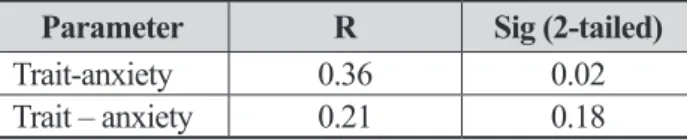
The date of table 3 indicates that correlation coefficient of the trait – anxiety was significant before and after the exam through the Pierson test. Table 3. Correlation coefficient of parameters af-ter and before the exam
Parameter R Sig (2-tailed)
Trait-anxiety 0.36 0.02
Trait – anxiety 0.21 0.18
Based on the findings of table 4, regarding anxiety level of (hidden) trait –anxiety rate before the exam, the most of frequency rate (48.9%) was in the level of average to down (42-32) before the exam, and the most of frequency rate (45%) was in the level of average to down. The least of frequ-ency rate in the hidden anxiety before the exam
was related to almost serious anxiety (4.4%) that increased to (11.1%) after the exam.
Table 5 indicates that in study of questionnaire of (trait-state) anxiety, 71%.of students had before – the – exam – anxiety of low and average to down that the state – anxiety of this group decreased to 69% after the exam and almost 2% of the subjects had serious state anxiety before and after exam.
Discussion
The results of this study indicated that the hyperthermia rate of anxiety in medical students does not change before and after the exam. This result is identical to the results of the other resear-chers such as Comunian(6) and Gjesme(7). They showed that exam anxiety causes tension and increases hyperthermia.
In addition, in the Muldoon’s study (26), tem-perature degree of 22 subjects during 15 and 60 minutes before the annual psychological exam was 6% more than this number during 2 or 3 mi-nutes before or after the exam.
Table 2. The difference of boys and girls from the view of anxiety level with the studied components
Parameter Before the exam M ± SD After the exam Sig (2-tailed)
Trait –anxiety 2.22 ± 0.791 2.29 ± 1.078 0.667
State –anxiety 2.23 ± 0.792 2.17 ± 0.972 0.781
Table 4. Frequency distribution of trait anxiety for the subjects
Parameters Trait-anxiety before the exam Trait –anxiety after the exam
Frequency Percent Frequency Percenut
Low 9 20 9 21.4 Average to down 22 48.9 19 45.2 Average to up 12 26.7 7 16.7 Almost sever 2 4.4 5 11.9 Severe 0 0 2 4.8 Total 45 100 42 100
Table 5. Frequency distribution of anxiety for the subjects
Parameters Trait-anxiety before the exam Trait –anxiety after the exam
Frequency Percent Frequency Percenet
Low 8 17.8 10 22.8 Average to down 24 52.3 19 45.2 Average to up 12 26.7 8 19 Almost serious 0 0 4 9.5 Severe 1 2.2 1 2.4 Total 45 100 42 100
These findings indicate that despite the res-ponse appearance to anxiety in all physiological systems, it is the most suitable of all, considering the performance ability, decrease of pessimism and determination of temperature increase rate.
The statistical analysis indicated that there is a significant relation between the rate of heartbeat changes and exam anxiety in all of the students before and after exam. When there is stress, he-artbeat increase and pulse are the physiological response of body; consequently, the achievement to such a result is justifiable, fuller and et al. (27) also indicated that psychological aspects such as character structure influence on heart response rate and heartbeat changes.
The current study also demonstrated that the average of heartbeat changes in the group of fe-male students was more than the group of fe-male students that such a difference has been confirmed in various studies (28-30).
However, such a result is predictable because girls are usually more emotional and emotional people show more sensitivity to issues such as an exam. Because the cortical density is measured to assess anxiety response of hypoplysis adrenal axis and hypophysis axis –adrenal – is influenced by new factors and negative emotions, it is mentio-ned as a crucial index for anxiety (10).
The results of the carried out studies on cor-tical, before the subjects’ exam indicated that its rate in both genders (boys and girls) was normal. In as much as the cortisol rate is rhythmic, most researches that have been done since 1980 and la-ter have rope red the increase in cortisol rate befo-re and during the exam while almost none of them have not measured the cortical rate before and af-ter the exam(31).
Some current researches demonstrated that a few minutes after anxiety, MCH and RDW chan-ge in number of red blood cells, hematocrit and hemoglobin after the anxiety gained from the so-lution of the problem 50 that increase has been reported in number of red blood cells, hematocrit and hemoglobin (10).
Some researches indicated that anxiety has a negative effect on the immune system and indexes but these effects will appear on the long- term, while its short term influence, based on the carri-ed-out research, is increase in the activity of the
white blood cells (32), that the white blood cells were studied in this research. The results obtai-ned from the blood indexes showed in the current study that the whole blood indexes were normal except eosinophil , monocyte and lymphocyte be-fore the exam. While the research results of Qure-shi and et.al (10) showed that exams incur change in the production of blood cells (increase in ne-utrophil and platelet and decrease in (eosinophil, monocyte, lymphocyte and busophil).
The current study results showed that the rate of systole and diastole changes was not statistically significant in the medical students. This result con-tradicts with the results of other researchers such as Liberty and et.al (8), because they showed that the exam anxiety in subjects accompanied with the increase in the heartbeat and blood pressure. And also a research that was carried out by Nourjah and et.al (32) on 237 students, distinguished that systo-lic and diastole blood pressure of the first and last exam has changed compared to the normal condi-tions and it has increased. In addition, the changes were statistically significant. The contradiction in the current research results with the after researches might be due to the difference in the number of samples, educational major, sampling location and society or the time of project performance.
In this research, the difference of trait anxiety rate with spiel Berger questionnaire was statisti-cally significant that corresponds with the study of Keogh and et.al (33). In this research, the exam anxiety was called trait anxiety that examines reflect when they are under cognitive changes and this stu-dy is correspondent with a research carried out by Paragament and et.al (34). In the current study, it has also been determined that the mean of trait and state before and after the exam was less in male stu-dents and was more in female stustu-dents that showed similarity with the study of Zeidner and et.al (35). Moreover, Ferrando and et.al (36), because they ga-ined the female anxiety rate more than the males in the analysis of the gender role in the exam anxiety, while the study contrasted with the study carried out by Mwamwedna and et.al (37).
From all of the findings as confirmation for the results of the similar studies, it can be concluded that the exam anxiety is effective on the physio-logical indexes (heartbeat changes) and their trait anxiety was significant before and after the exam.
Therefore, the education of contrastive guide-lines seems necessary for the decrease of the stu-dent anxiety.
References
1. Guida, FV, Ludlow, LH. A cross- cultural study of anxiety. Lowth 1989; 20; 178- 190.
2. Rohleder N, Schommer NC, hellhammer DH, Engel R, Kirschbaum C. Sex differences in glucocorticoid of proinflammatory cytokine production after psychoso-cial stress. Psychosom Med 2001; 63(6):966-72. 3. Sarason IG. Stress and anxiety. 2nd ed, New York,
Hemisphere/ Hastead, 1975.
4. Ergene T. Effective intervention of test anxiety reduc-tion. School Psychology 2002;4: 313- 328.
5. MCRenolds RA. Morris, RJ, Kratochwill, TR. Cogni-tive- Behavioral Approaches in Educational Setting. 1983: New York, Guilfoord Press.
6. Comunian AL. Anxiety, cognitive interference and school performance of Italian children. Psychol Rep 1993; 73 (3pt 1): 747- 54
7. Gjesme T. Worry and emotionality components of test anxiety in relation to situational and personality de-terminants. Psychol Rep 1983: 52(1): 267-80.
8. Liebert RM, Morris LW. Cognitive and emotional components of test anxiety: a distinction and some initial data Psychol Rep 1967: 20(3):975-8.
9. Ng V, koh D, Chia SE. Examination stress, salivary cortisol, and academic performance. Psychol Rep 2003; 93(3 Pt 2): 1133-4.
10. Qureshi Faiyaz, Jane Alam, masood Ahmad Khan and Ghazala Sheraz Effect of Examination stress on blood cell parameters of students in a Pakistani medical college. J Ayub Med Coll Abbottabad 2002; 14(1):20-22
11. Kondashevskaya MV, Nikolskaya KA. Problem of controls in physiology and pharmacology: psycho-physiological and morphofunctional effects of chro-nic saline administration. Biology Bulletin 2008; 3:56- 63.
12. Deva C, Bansal S, Gombar S. Ventricular Tachycar-dia encountered in the pre-induction period in an anxious patient case reports 2000.
13. Stewart SM, Lam TH, Beston CL, et al. A Prospec-tive Analysis of Stress and Academic Performance in the first two years of Medical School. Med Educ 1999; 33(4): 243- 50.
14. Institute of psychology, university of Regensburg, federal republic of Germany psychological and physiological. Responses during an exam and their relation to personality characteristics. Psychoneu-roendocrinology 1997; 22(6):423-41
15. Universidad de los ande, merida, Venezuela Emo-tional hyperthermia and performance in humans. Physiol Behav 1995; 58(3): 615-8.
16. Flim TV, England BY. Social economics of child-hood glucocorticoid Stress response and health. Am J phys Anthropol. 1997; 102 (1): 33-53
17. Rohrmann S, Netter P, Hennig R, Hodapp V. Repres-sion- Sensitization, gender, and discrepancies in psy-chobiological reactions to examination Stress. Anxie Stress Cop, 2003. 16(3): 321- 329.
18. Sakuragi S, Sugiyama Y.Interactive effects of task difficulty and personality on mood and heart rate variability. J Physiol Anthropol Appl Humman Sci. 2004; 23(3):81-91
19. Al-Ayadhi LY. Neurohormonal changes in medical students during academic stress. Ann Saudi Med 2005, 25(1): 36-40
20. Lacey K, Zaharia MD, Griffiths J, Ravindran AV, Merali Z, Anisman H. A prospective study of neuro-endocrine and immune alterations associated with the stress of an oral academic examination among graduate students. Psychoneuroendocrinology 2000; 25(4):339-56.
21. Krahwinkel T, Nastali S, Azrak B, Willershausen B. the effect of examination stress conditions on the cor-tisol content of saliva a study of students from clinical semesters Eur J Med Res 2004; 9(5) 256- 60.
22. Harris A, Martin BJ. Increased abdominal pain dur-ing final examinations. Dig Dis Sci 1994; 39(1): 104- 8.
23. Spangler G. psychological and physiological re-sponses during an exam and their relation to Per-sonality characteristics. Psychoneuronendocrinol-ogy 1997; 22(6):423- 41.
24. Jevtic M, Backovic D, Zivojinovic-Ilic J, Maksimov-ic M, BjelanovMaksimov-ic J. Burnout syndrome in medMaksimov-ical students during clinical training. HealthMED 2012; 6(2):571-577
25. Spielberger C D, Vagg PR. Test anxiety: theory, as-sessment and treatment. Taylord Franeis Washang-ton, DC,US;XV.(1995).
26. Muldoon, M.F., Herbert, T.B. Patterson, et al. Effects of acute psychological stress on serum lipid levels, hemoconcentration, and blood viscosity. Archives of internal medicine 1995; 155:615- 620.
27. Fuller B. The effects of stress anxiety and coping style on hearth rate variability. Inter journal of psy-chophysiology 1992; 12:81- 86.
28. Kudielka BM, Buske- kirschbaum A, hellhammer DH, Kirschbaum C. Differential heart rate reactiv-ity and recovery after psychosocial stress (TSST) in healthy children younger adults, and elderly adults: the impact of age and gender. Int J Behave Med 2004; 11(2): 116-21.
29. Lindfores P, Lundberg U. Is low cortisol an indica-tor of positive health? Stress and Health 2002; 18: 153-160.
30. Polk DE, Cohen S, Doyle WJ, Skoner DP, Kirsch-baum C, State and triat affect as predictors of salivary cortisol in healthy adults. Psychoneuroendocrinol-ogy. 2005; 30(3): 261-72.
31. Maes M, Vander Planken M, Van gastel A, et al. In-fluence of academic examination stress on hemato-logical measurements in subjectively healthy volun-teers. Psych Research 1998; 80:201- 212.
32. Noorjah P, Gharegozli Z. The survey of exam in-duced stress on blood pressure in students of dor-mitory Hesarak. Basic Medical Sciences 2002; 15(1):32-42. [Persian]
33. Koegh E, French CC. Test anxiety evaluative stress and susceptibility to distraction from threat. Euro-pean journal of personality 2001; 15(2) 123- 41. 34. Paragament KJ. The psychology of religion and
coping. New York: Guilford press; 1997.
35. Zeidner M, Safir MP. Sex, ethnic and social differ-ences in test anxiety among Israeli adolescents. J Genet Psychol 1989; 150(2): 175- 85.
36. Fernando PJ, Varea MD, Lorenzo U. A psychometric study of the test anxiety scale for children in a Spanish sample. Pers Individ Dif 1999; 27(1):37- 44.
37. Mac Donald SA. The prevalence and effects of test anxiety in school children Educational psychology 2001; 21: 89- 101.
Corresponding Author Nasrin Bali-Lashak,
Psychiatry and Behavioral sciences research, Mazandaran University of Medical Sciences, Sari,
Iran,
Abstract
Behcet’s syndrome is a chronic, multisystem disorder characterized by recurrent oral and genital ulceration, skin lesions and uveitis. In addition, 25% of patients develop vascular complications, which may include superficial thrombophlebitis, deep vein and arterial thrombosis and arterial aneurysm formation. Pulse wave velocity (PWV) is an impor-tant factor in determining cardiovascular mortality and morbidity. It is an index of arterial wall stiffness and inversely related to the arterial distensibility. In this study we investigated the arterial distensibility in Behcet’s Disease (BD) by PWV. We studied 50 patients with BD and 20 healthy subjects without known cardiovascular disease. Arterial distensibi-lity was assessed by All patients underwent pulse wave analysis (HDI/Pulse Wave model CR-2000) to determine large and small vessel compliances. Large arterial elastisite index (LAEI) and small arte-rial elastisite index (SAEI) of the radial artery were determined from an internal algorhythm based on diastolic decay features of the calibrated radial pul-se contour using a modified Windkespul-sel model. The mean ages, systolic blood pressure, diastolic blood pressure, large arterial elastisite index (LAE), small arterial elastisite index (SAE) of Behcet’s disease and control subjects were 37±8.323 and 37±7.984 years, 125,8±3 and 124,3±11.4 mmHg, 68.5±7.7 and 68.5±7.7 mmHg, 13.3±3.6 and 13.6±3.64 mL/ mm Hg X 10, 5.2±2.43 and 6.01±2.6 mL/mm Hg X 100 respectively. Differences between all para-meters studied were not found to be statistically significant (p>0.05). Furthermore, in patients group there were no significant correlation between disea-se duration and LAEI(C1) and SAEI(C2) (p=0.267
and p=0.456, respectively). Eventually, no signi-ficant correlation was shown between increase in systemic involvement, LAEI and SAEI values (p=0.447 and p=0.345, respectively).
In this study, it was shown that Behcet’s disea-se did not change arterial stiffness parameters udisea-sed as a strong indicator of atherosclerosis. Further, it was determined that disease duration and increa-se in systemic involvement did not alter arterial stiffness parameters.
Key words: Behcet disease, endothelial
dys-function, arterial stiffness.
Introduction
Behcet’s Disease (BD) is a chronic, multi-system disorder characterized by recurrent oral and genital ulceration, skin lesions and uveitis1.
A wide spectrum of clinical features is observed, including involvement of the ophthalmic, muscu-loskeletal, vascular, central nervous, and gastroin-testinal systems. Diverse vascular complications, such as deep vein thrombosis, myocardial in-farction, arterial aneurysm, and arterial thrombus formation have been noted in patients with BD in about 20% to 35% of cases, predominantly in male patients and those with venous lesions2.
The etiologic mechanisms underlying vascular disease in Behcet’s syndrome are not well understo-od. Histopathologic studies have demonstrated that the predominant lesion is vasculitis, affecting both the vessel wall and perivascular tissues1. The
histo-pathological features are mainly characterized by vasculits, with prominent neutrophil and monocyte infilatration in perivascular lesions with or without fibrin deposition in the vessel wall3. Although the
Arterial elasticity measurement in patients
with Behcet’s disease
Hakan Ucar2, Kemal Karaagac1, Osman Akin Serdar3, Zeynel Abidin Yetgin2, Yusuf Akturk4, Esra Ugurlu Karaagac5, Hayriye Saricaoglu6
1 Bursa Postgraduate Hospital, Department of Cardiology, Turkey,
2 Bursa Sevket Yilmaz Postgraduate Hospital, Department of Cardiology, Turkey, 3 Uludag University Faculty of Medicine, Department of Cardiology, Turkey, 4 Bursa Acibadem hospital, Department of Cardiology, Turkey,
5 Bursa Bahar hospital, Department of Biochemistry, Turkey,
pathogenic mechanism of vascular involvement in BD is under investigation, endothelial cell dysfunc-tion is thought to play an important role in the de-velopment of these lesions4-5. Endothelial
dysfunc-tion leading to abnormal coaguladysfunc-tion or fibrolytic activity and impaired brachial artery flow-mediated dilatation has been demonstrated in BD. Because flow-mediated dilatation is endothelium-dependent and is largely controlled by the release of lial nitric oxide (NO), an impairment in endothe-lium-dependent flow-mediated dilatation suggests a decreased endothelial NO activity6. This lack of
activity may contribute to the vascular lesions often seen in BD. In addition, endothelial NO has been found to directly regulate large artery stiffness in vivo7-8. Arterial stiffness is a reliable and strong
in-dependent predictor of subsequent cardiovascular events and mortality, it may be closely related to the process of atherosclerosis9-10. Since stiffened
ar-teries transmit pulse waves faster than do the more elastic blood vessels, pulse wave velocity(PWV) is an ideal indicator of arterial stiffness. In addition, arterial abnormalities may be attributed to functi-onal changes like endothelial dysfunction and also structural alterations such as atherosclerosis11-12.
Acute systemic inflammation and chronic syste-mic vasculitis are noted to be associated with en-dothelial dysfunction13-14. Moreover, inflammation
is known to be an important risk factor for future cardiovascular events15.
This study investigated the arterial stiffness of different arterial regions in BD patients and we then assessed whether arterial stiffness was affec-ted by the clinical parameters of BD.
Patients and Methods
This study included 50 patients with BD who fulfilled the International Study Group (ISG) cri-teria16, along with 20 healthy controls matched to
the patients for age, sex, blood pressure, heart rate, height, and total cholesterol and glucose levels. The frequency of smokers, if any, was also taken into account. Exclusion criteria were a previous history of coronary artery disease, myocardial infarction or stroke, arrhythmias, infectious diseases, neoplasm, renal or liver failure, alcohol abuse, and smoking or recent smoking history (quit smoking during the previous 12 months). Hypertension (defined by
blood pressure > 140/90 mm Hg or the current use of antihypertensive medications), history of high hyperlipidemia (LDL cholesterol > 160mg/dL) or obesity (body mass index > 30 kg/m2) and diabetes mellitus (fasting glucose ≥ 140mg/dL) were also considered as exclusion criteria.
At examination, the presence of two or more of the following Behcet’s clinical features was con-sidered as active disease: oral ulceration, genital ulceration, skin lesions, ocular lesions, active ma-jor vessel disease, and active mama-jor organ involve-ment including active gastrointestinal or neurolo-gical lesions. During the course of the disease, the presence of one or more of the following clinical features defined severe disease17: posterior
uvei-tis or retinal vasculiuvei-tis, gastrointestinal ulcerations with bleeding or perforation, major organ invol-vement, and major vessel involvement. In additi-on, BD patients with venous or arterial occlusive diseases or arterial aneurysm were considered as having vascular lesions; however, those with su-perficial thrombophlebitis were not considered as such. The duration of the disease in the BD group was calculated from the time from which the ISG criteria were fulfilled to the time of examination. The mean of this time period was 5.6 ± 4.1 years.
Using standard laboratory methods, the levels of total cholesterol and glucose were measured with fasting blood samples from all subjects. The study was approved by the Hospital Ethics Com-mittee, and informed and written consent was obtained from each subject.
Measurements of PWV
PWV was measured in the morning with the pa-tient in a supine position after 15 minutes of bed rest in a quite room, following 12-hour abstinence from smoking, alcohol and coffee consumption. A single trained observer performed all the measurements. All patients underwent pulse wave analysis (HDI/ Pulse Wave model CR-2000) to determine large ar-terial elastisite index (LAEI, C1) and small arteryel elastisite index (SAEI, C2). Large (C1) and small (C2) vessel compliances of the radial artery were determined from an internal algorhythm based on diastolic decay features of the calibrated radial pul-se contour using a modified Windkespul-sel model.
Statistical analysis
Statistics were obtained using the ready-to-use program of SPSS version 13.0. Two indepen-dent variables were compared by means of the Student’s t-test. If normality assumption was vi-olated non-parametric Man-Whitney U was used for continuous variables. The categorical data were analysed using the chi-square test, Biva-riate correlations between two continuous varia-bles were evaluated using the Pearson correlation coefficient when indicated All of the values are expressed as mean±standard deviation; p<0.05 was accepted as statistically significant.
Results
Clinical and biochemical characteristics. The mean time of disease duration was 5.6 ± 4.1 years. Table 1 summarises Clinical features of 50 patients with Behcet’s disease. Oral aphthae (in 29 patients, %42), genital ulcers (in 5 patients, %10), erythema nodosum (in 7 patients, %14), uveitis (in 9 patients, %18), arthritis (in 17 patients, 34%), thrombophle-bitis (in 2 patient, %4), and neurologic involvement (in 2 patient, %4) were detected over the entire di-sease duration. were detected over the entire didi-sease duration. Thirty-two of the patients were on therapy with colchicine, four were on immunosuppressive therapy, and eighteen were on corticosteroid.
Table 2 summarises clinical features and cardi-ovascular variables of the study group. No diffe-rences between patients with BD and controls were found for mean age, sex ratio, height, sistolic and diastolic blood pressure, serum glucose, and cho-lesterol levels, large arterial elastisite index(LAE), small arterial elastisite index(SAE). Furthermore, in patients group there were no significant correla-tion between disease duracorrela-tion and indeces of arteri-al elastisite (LAEI - SAEI) (p=0,267 and p=0,456, respectively)(figure 1-2). Eventually, no significant correlation was shown between increase in systemic involvement and LAEI and SAEI values (p=0,447 and p=0,345, respectively)(figure 3-4).
Table 1. Clinical features of patients with Behcet’s disease
Clinical features patients %Number of
Oral ulcerations Genital ulcerations
Erythema nodosum-like lesions Ocular lesions
Peripheral arthritis Thrombophlebitis
Central nervous system lesions Active disease Severe disease Immunosuppressant use Corticosteroid use Cholsisin 29 (%42) 5 (%10) 7 (%14) 9 (%18) 17 (%34) 2 (%4) 2 (%4) 10 (%20) 8 (%16) 5 (%10) 18 (%36) 32 (%64)
Table 2. Comparisons of the demographic data, laboratory values and cardiovascular parameters between patients with Behcet’s disease and the controls
Behcet’s group (n: 50) Control group (n: 20) p value
Age (year)
Gender (man/female) Height (cm)
Weight (kg)
Body mass index(kg/m2)
Systolic BP (mm Hg) Diastolic BP (mm Hg) Serum glucose (mg/dL) Triglyceride(mg/dL) Total cholesterol (mg/dL) HDL-cholesterol (mg/dL) LDL-cholesterol (mg/dL) LAEI(C1)(cm3-mmHg-1) SAEI(C2)(cm3-mmHg-1) 37±8,323 25/25 1,65±0,008 67,48±12,6 24,48±4,2 120,5±9,7 68,5±7,7 85,2±9,5 110,04±27,06 166,8±26,5 48,6 ± 5,2 96,9 ± 23,4 13,3±3,16 5,2±2,43 37±7,98 11/14 1,64±0,008 70,4±13,1 25,8±3,2 124,3±11,4 72,3±8,1 80,9±12,4 107,2±35,8 176,8±33,1 51,9±10,6 102,3±25,5 13,6±3,64 6,01±2,6 NS NS NS NS NS NS NS NS NS NS NS NS 0,45 0,21 NS, nonsignificant; HDL, high-density lipoprotein; LDL, low-density lipoprotein; BMI, body mass index; BP, blood pre-ssure; LAE, (C1): large arterial elastisite index(large vessel compliance),; SAE, (C2): small arterial elastisite index(large vessel compliance), Data are expressed as means±SD
Figure 1. Comparison the number of the sys-tems that are effected by Behçet’s disease with LAEI, LAEI: Large Arterial Elastisite İndex
(cm-3-mmHg-1)
Figure 2. Comparison the number of the sys-tems that are effected by Behçet’s disease with SAEI, SAEI: Small Arterial Elastisite İndex
(cm-3-mmHg-1)
Figure 3. Comparison the duration of Behçet’s disease with LAEI
LAEI: Large Arterial Elastisite İndex (cm3-mmHg-1)
Figure 4. Comparison the duration of Behçet’s disease with SAEI
SAEI: Small Arterial Elastisite İndex (cm3-mmHg-1)
Discussion
Behçet’s disease is a chronic inflammatory vas-culitis. Vascular involvement is one of the major complications of Behçet’s disease, during the cour-se of the dicour-seacour-se. Venous involvement is more of-ten than arterial involvement. Approximately 30% of patients seen vascular complications such as ve-nous thrombosis and arterial thrombosis18. Despite
uncertainty in the pathogenic mechanism of vascu-lar lesions in BD, vascuvascu-lar endothelial dysfunction has been recognized in BD and is thought to play an important role in the vascular lesions5-19-20-21.
Acute systemic inflammation and chronic systemic vasculitis are associated with endothelial dysfuncti-on13-14. Moreover, inflammation is an important risk
factor for future cardiovascular events15. In this
stu-dy, we evaluated the tendency to atherosclerosis of patients with BD. Significant differences were not found for large artery elasticity index (LAEI) and small artery elasticity index (SAEI) values which were used as arterial elasticity parameters betwe-en Behcet’s patibetwe-ents and controls. İn patibetwe-ents group there were no significant correlation between dise-ase duration, incredise-ase in systemic involvement and arterial stifness indexes.
An investigation made in Turkey by Kurum et al22 supports our results. In this study they found no
significant difference about arterial stifness of pati-ents with Behcet’s disease when compared to he-alhty subjects. Their measurements were made by a device that measures carotis-femoral pulse wave velocity automatically, Complior Colson (France). PWV measurements were made using parameters

![Table 2 shows the odd ratios (OR) for BID and selected risk factors. The results indicate that par-ticipants who were overweight or obese [OR: 5.1 (3.5–7.5), p<.01] had abnormal attitudes to eating [OR: 2.1 (1.5–2.9), p< .01], engaged in binge ea](https://thumb-eu.123doks.com/thumbv2/9libnet/4021607.55617/71.892.95.810.496.1158/selected-factors-indicate-ticipants-overweight-abnormal-attitudes-engaged.webp)