THE CONCEPT OF AUTHENTICITY IN THE PROTECTION OF INDUSTRIAL HERITAGE: THE CASE OF SAMSUN TOBACCO FACTORY
BUILDING
A Master’s Thesis
by
MERVE KURT
Department of
Interior Architecture and Environmental Design İhsan Doğramacı Bilkent University
Ankara February 2014
THE CONCEPT OF AUTHENTICITY IN THE PROTECTION OF INDUSTRIAL HERITAGE: THE CASE OF SAMSUN TOBACCO FACTORY
BUILDING
Graduate School of Economics and Social Sciences of
İhsan Doğramacı Bilkent University by
MERVE KURT
In Partial Fulfilment of the Requirements for the Degree of MASTER OF FINE ARTS
in
THE DEPARTMENT OF
INTERIOR ARCHITECTURE AND ENVIRONMENTAL DESIGN IHSAN DOĞRAMACI BILKENT UNIVERSITY
ANKARA February 2014
I certify that I have read this thesis and have found that it is fully adequate, in scope and in quality, as a thesis for the degree of Master of Fine Arts in Interior Architecture and Environmental Design.
--- Assistant Prof. Dr. İnci Basa Supervisor
I certify that I have read this thesis and have found that it is fully adequate, in scope and in quality, as a thesis for the degree of Master of Fine Arts in Interior Architecture and Environmental Design.
--- Assistant Prof. Dr. Maya Öztürk Examining Committee Member
I certify that I have read this thesis and have found that it is fully adequate, in scope and in quality, as a thesis for the degree of Master of Fine Arts in Interior Architecture and Environmental Design.
---
Assistant Prof. Dr. Yasemin Afacan Examining Committee Member
Approval of the Graduate School of Economics and Social Sciences
--- Prof. Dr. Erdal Erel Director
ABSTRACT
THE CONCEPT OF AUTHENTICITY IN THE PROTECTION
OF INDUSTRIAL HERITAGE: THE CASE OF SAMSUN
TOBACCO FACTORY BUILDING
Merve KURT
M.F.A. in Interior Architecture and Environmental Design Supervisor: Assist. Prof. Dr. İnci Kale Basa
February, 2014
The gradual changes in almost all aspects of life brought about by the industrial developments left their spatial and social traces. These sometimes revolutionary variations have inscribed their identity in entire cities. The protection of these traces lies behind the protective thought and activities for cultural heritages. Industrial heritage, as one of the important constituents of the cultural heritage, has become a central issue for the world heritage protection activities. Within a historical perspective, through the late 18th and 19th centuries’ Industrial Revolution, all production processes and methods have seen radical changes and the new industrial technology affected the factories and
manufacturing sites. These changes, however, were not confined to these past centuries. The rapid advancements in industry continued to force adjustments of these industrial sites or brought their abandonments. Today, there are many studies, groups, conferences, thus a powerful discourse upon the protection and re-evaluation of industrial heritage. In the protection and re-evaluation process, “authenticity” appears as an important concept. With this in mind, this study investigates the importance of authenticity within the concept of collective memory and analyses its status in the process of the industrial heritage protection in architecture. Through the case study of Samsun Tobacco Factory (1886), which was turned into a shopping mall in 2012, these arguments are developed and the analysis is made. This study aims to put a special emphasis on such sites as a value for the socio-cultural dynamics and historical sustainability of the urban life and bring a criticism upon their commercialized re-evaluation and reuse that may create incompatibilities with the spatial/architectural authenticity and with the collective memory of a city.
Keywords: Industrial Heritage, Authenticity, Samsun, Tobacco Factory, Re-evaluation
ÖZET
ENDÜSTRİ MİRASININ KORUNMASINDA ÖZGÜNLÜK
KAVRAMI: SAMSUN TÜTÜN FABRİKASI BİNALARI
ÖRNEĞİ
Merve Kurt
İç Mimarlık ve Çevre Tasarımı Bölümü, Yüksek Lisans Tez Yöneticisi: Y. Doç. Dr. İnci Kale Basa
Şubat, 2014
Endüstriyel gelişmelerle birlikte hayatın hemen her alanında aşama aşama yaşanan değişimler, arkalarında mekansal ve sosyal izler bırakmışlardır. Bunlar bazen, şehirlerin genelinde kimliklerini kazıyan devrim niteliğinde değişiklikler olabilir. Bu izlerin korunması, kültürel mirasın korumacı düşünce ve aktivitelerine bağlıdır. Endüstri mirası, kültürel mirasın önemli bir bileşeni olarak, dünya mirası koruma çalışmalarının önemli bir konusu olmuştur. Tarihsel bir bakış açısından, geç 18. yüzyıl ve 19. yüzyıldaki endüstri devrimi boyunca tüm üretim süreçleri ve yöntemleri köklü değişikliklere uğramıştır ve yeni endüstri teknolojisi fabrikaları ve üretim alanlarını etkilemiştir. Ancak bu değişiklikler, bu geçmiş yüzyıllarla sınırlı değildir. Endüstrideki hızlı gelişmeler endüstriyel alanlarda bazı
ayarlamaları gerekli kılmış veya bu alanların artık kullanılmaz olmasına neden olmuştur. Günümüzde, endüstri mirasının korunması ve yeniden değerlendirilmesi için birçok araştırma, gruplar, konferanslar, yani, güçlü bir söylemin varlığı söz konusudur. Koruma ve yeniden değerlendirme sürecinde, "özgünlük" önemli bir kavram olarak karşımıza çıkmaktadır. Durum böyleyken, bu çalışma, özgünlük kavramının, kolektif hafıza açısından önemini araştırmakta ve mimaride endüstri mirasının korunması sürecindeki konumunu analiz etmektedir. Tezin örnek çalışması olan ve 2012 yılında bir alışveriş merkezine dönüştürülen Samsun Tütün Fabrikası (1886) aracılığıyla, bu argümanlar geliştirilmiş ve analiz gerçekleştirilmiştir. Bu çalışmanın amacı, böyle alanların sosyo-kültürel dinamikler ve şehir hayatının tarihinin sürdürülebilirliği açısından önemini vurgulamak ve ticarileşmiş yeniden değerlendirme ve yeniden kullanımlarının mekansal/mimari özgünlük ve şehrin kolektif hafızası açısından uyuşmazlıklara neden olabileceği yönünde bir eleştiri getirmektir.
Anahtar sözcükler: Endüstri Mirası, Özgünlük, Samsun, Tütün Fabrikası, Yeniden Değerlendirme
ACKNOWLEDGEMENTS
First of all, I would like to express my deepest gratitude to my supervisor Assist. Prof. Dr. İnci Basa for her guidance, patience, encouragements and insight throughout the preparation of this thesis. It is also my duty to express my thanks to my other committee members Assist. Prof. Dr. Maya Öztürk and Assist. Prof. Dr. Yasemin Afacan for their valuable comments and suggestions.
I would like to offer sincere thanks to my friends Meltem Eranıl Demirli and Başak Zeka for their unshakable faith in me and their support during the whole thesis process as well as for their invaluable technical and moral support. I also would like to thank to my best friends; Beyza Şenocak, Eda Buladı, Z. Cansu Erkuloğlu, Kubilay Kütük and Anıl Kardeş for their endless friendship carried on beyond the university life.
Finally, special thanks go to my dear small family, my mother and father for always believing in me. I express my deepest gratitude to Yakup Kurt and Kadriye Kurt for their endless love, invaluable support, encouragement and patience throughout my whole life. They are the only ones I adore and love the most in my life.
ABBREVIATIONS
UN: United Nations
TMMOB: Türk Mühendis ve Mimar Odaları Birliği (Union of Chambers of Turkish Engineers and Architects)
UNESCO: United Nations Educational, Scientific and Cultural Organization
TICCIH: The International Committee for the Conservation of the Industrial Heritage
ICOMOS: International Council on Monuments and Sites
AIA: The Association for Industrial Archaeology
DOCOMOMO: Documentation and Conservation of Modern Movement Buildings and Sites
TABLE OF CONTENTS
ABSTRACT ... iii ÖZET... v ACKNOWLEDGEMENTS ... vii ABBREVIATIONS ... viii TABLE OF CONTENTS ... ix LIST OF FIGURES ... xi CHAPTER 1: INTRODUCTION ... 11.1. Definition of the Problem... 1
1.2. Aim of the Study ... 5
1.3. Structure of the Study ... 8
1.4. Methodology and Literature Review ... 10
CHAPTER 2: LITERATURE REVIEW ... 13
2.1. Industrial Heritage ... 13
2.2. Re-evaluation, Reusage and Protection of Industrial Heritage ... 18
2.2.1 Industrial Archaeology ... 18
2.2.2. Protection and Re-evaluation of Industrial Heritage ... 21
2.2.3. International Organizations on Industrial Heritage ... 24
2.2.3.1. TICCIH -The International Committee for the Conservation of the Industrial Heritage ... 24
2.2.3.2. DOCOMOMO - Documentation and Conservation of Modern Movement Buildings and Sites ... 25
2.2.3.3. AIA - The Association for Industrial Archaeology ... 26
2.3. Regeneration of Industrial Heritage Buildings ... 27
2.3.1. Collective Memory ... 30
2.3.3. Socio-cultural interest/ concern ... 33
2.4. Industrial Heritage and Its Conception in Turkey ... 34
CHAPTER 3: AUTHENTICITY IN PROTECTION OF INDUSTRIAL HERITAGE ... 41 3.1. What is Authenticity? ... 41 3.1.1. Venice Charter ... 46 3.1.2. Unesco ... 47 3.2. Attributes of Authenticity ... 49 3.2.1. Application of Authenticity ... 49
3.3. A Framework for Authenticity ... 51
CHAPTER 4: SAMSUN TOBACCO FACTORY BUILDING: A REMAIN OF INDUSTRIAL CULTURE ... 55
4.1. The Tobacco Industry and Production in Samsun ... 55
4.2. History of the Samsun Tobacco Factory ... 59
4.3. Samsun Tobacco Factory in the Urban Context ... 68
4.4. Architectural Characteristics of The Factory Building ... 72
4.4.1. A BLOCK ... 75 4.4.2. B BLOCK ... 80 4.4.3. C and D BLOCKS ... 84 4.4.3.1. C BLOK ... 86 4.4.3.2. D BLOCK ... 87 4.4.4. E BLOCK ... 88
CHAPTER 5: ANALYSIS OF SAMSUN TOBACCO FACTORY BUILDING 91 5.1. Analysis of ‘Samsun Tobacco Factory’ and Its Authenticity as an Industrial Heritage ... 91
5.1.1. A BLOCK ... 95
5.1.2. B BLOCK ... 96
5.1.3. C- D BLOCK ... 100
5.2. An Abandoned Architectural Remain in the City Centre ... 103
5.3. Impacts on the 19 Mayıs District as a Collective Memory ... 108
5.4. A Discussion and Evaluation of Authenticity in Samsun Tobacco Factory Example ... 111
LIST OF FIGURES
Figure 4.1. Samsun Tobacco Factory 1886 – 1994 ………...……..60
Figure 4.2. Samsun Tobacco Factory Location ………...……..61
Figure 4.3. Samsun Tobacco Factory ………...……..61
Figure 4.4. Female Workers in the Factory ………...………63
Figure 4.5. Samsun Tobacco Factory 1994 – 2012 ………....….64
Figure 4.6. Samsun Tobacco Factory in the Urban Context………....……68
Figure 4.7. Factory Walls ………...71
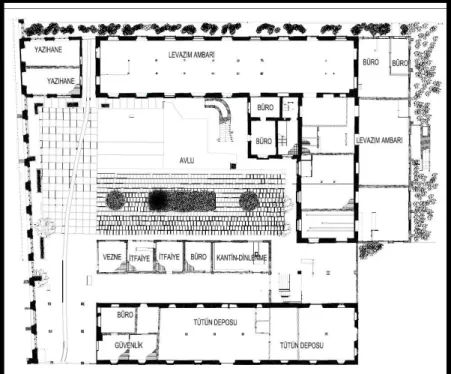
Figure 4.8. Plan of the Factory Building ………....…....74
Figure 4.9. Elevations of Factory Building ………...74
Figure 4.10. A Block Plan ………...…75
Figure 4.12. A Block Plan First Floor Plan ………...………77
Figure 4.13. A Block Courtyard ………...……...…79
Figure 4.14. A Block Courtyard ………...….….79
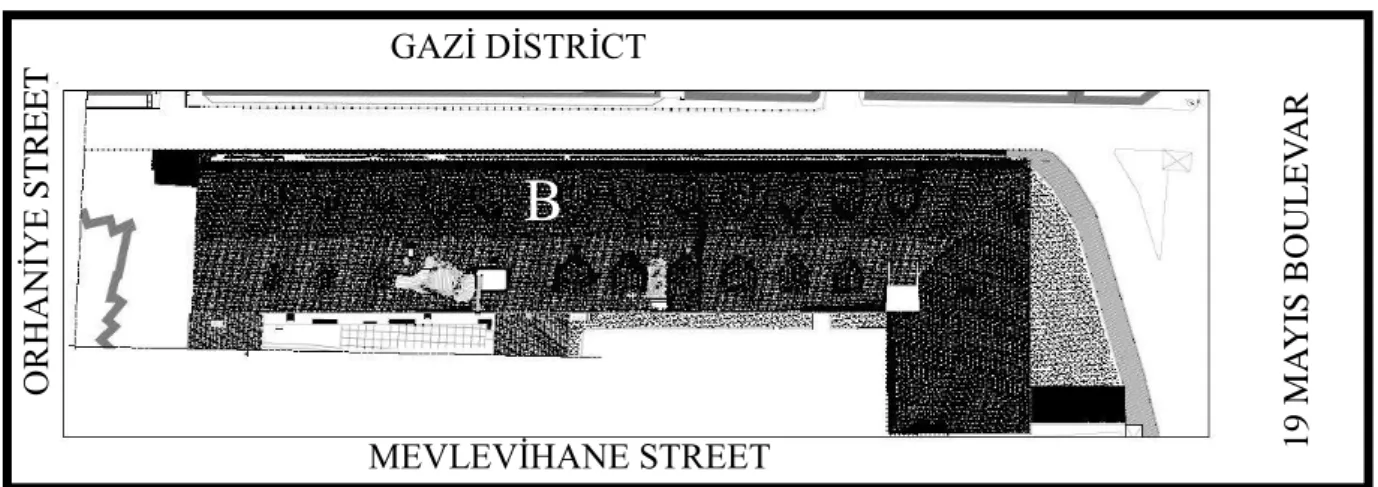
Figure 4.15. B Block Layout Plan ………..…..….80
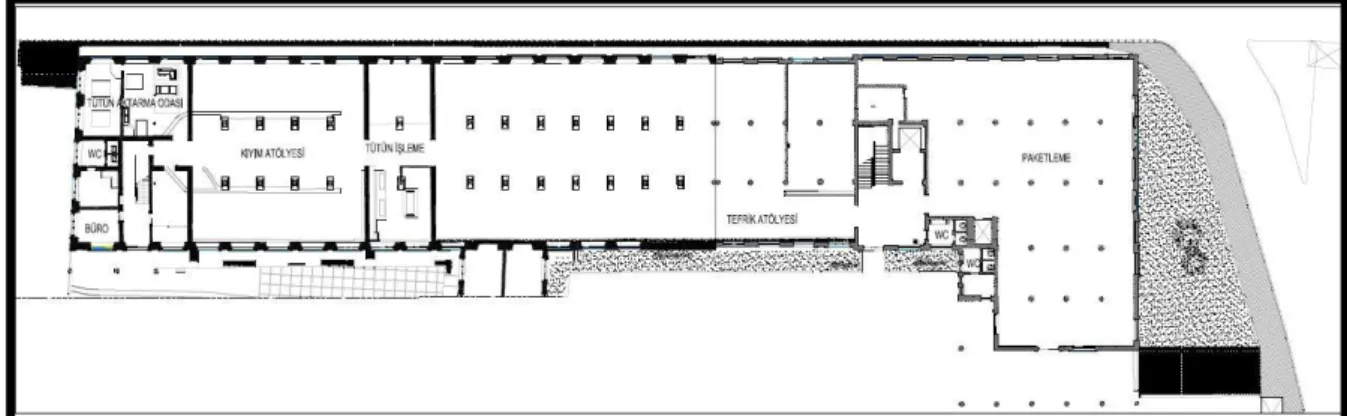
Figure 4.16. B Block Ground Floor Plan ……….….…82
Figure 4.17. B Block First Floor Plan ………...83
Figure 4.18. B Block Yard ……….…83
Figure 4.19. C – D Blocks Layout Plan ……….…85
Figure 4.20. C – D Blocks ……….….…86
Figure 4.21. C Block First Floor Plan ………..…..87
Figure 4.22. D Block First Floor Plan ……….…..88
Figure 4.23. E Block First Floor Plan ………....89
Figure 5.1. Sketch of Bulvar AVM Buildings ………...….92
Figure 5.2. Construction Site of the Factory Buildings ………....92
Figure 5.3. Construction Site of the Factory Buildings ………....93
Figure 5.5. B Block Bulvar AVM ………...………97
Figure 5.6. B Block Bulvar AVM ………...…98
Figure 5.7. B Block Interior Space of Shop………...98
Figure 5.8. B Block Interior Space of Shop ………....…99
Figure 5.9. C-D Block Interior ………...100
Figure 5.10. C-D Block Interior ………....…101
Figure 5.11. C-D Block ………..101
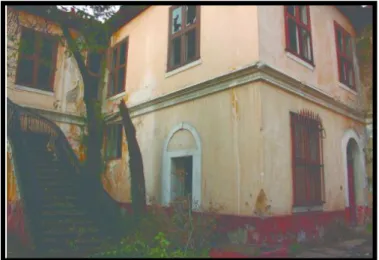
Figure 5.12. Ruined Factory Roof – Before Re-evaluation ………..104
Figure 5.13. Factory Window Remains Example – Before Re-evaluation …...104
Figure 5.14. Factory entrance and walls ………....105
Figure 5.15. Indoor of the Factory ……….…....105
Figure 5.16. Factory Remains – Before Re-evaluation ………...106
Figure 5.17. Factory Yard – Before Re-evaluation ………....106
Figure 5.18. Factory Yard – Before Re-evaluation ……….….…..107
Figure 5.19. The Evolution of the Factory to Bulvar AVM ………...109
Figure 5.21. After Re-evaluation – Bulvar AVM Walls ……….….112
Figure 5.22. A Blocks of Bulvar AVM ……….…..113
Figure 5.23. Bulvar AVM Stairs ……….………113
CHAPTER 1
INTRODUCTION
1.1. Definition of the Problem
Old industrial buildings have mostly been abandoned because they failed to adapt to the city growth they gradually assumed a central location. Furthermore, due to their central location within the developed urban texture majority of such buildings constituted a serious problem in terms of being inappropriately situated. The concept of industrial heritage fundamentally appeared when these buildings began to be destructed to open up place for new city arrangements.
An additional conception in the protection of the industrial heritage is that these industrial buildings and complexes began to be seen to constitute the local collective memory, mostly with not less architectural and social value than other historical buildings. In this respect, in the regeneration process of these settlements their role in the local collective memory should not be undermined.
In order to protect the industrial heritage buildings that are not functionally active anymore, re-evaluating and reusing are evidently the best ways in terms of incorporating them into the urban life and urbanites’ everyday practices. In this process, certainly, the demands and realities of urban life that are to a significant extent shaped through economic strains cannot be disregarded. However, it is very important that the authenticity of the heritage, for instance its architectural quality, must be considered as the key aspect of the protection process as much as the conditions allow. The industrial heritage buildings, by no means, should be regarded simply as ordinary old places to destroy or totally change. Despite their usually modest outlooks, they reflect not only the industrial background, but also indicates urban inhabitants’ way of living in a certain period, the social history of a city, and sometimes even of a country. This perspective evidently refers to a conceptual framework that the industrial heritage buildings and sites must be evaluated within this broad understanding.
In the western world, especially in England -due to the country’s leading role in industrialization, there exist many applications regarding the conservation of the industrial heritage. In Turkey, protection of the industrial buildings also became a significant issue in the last decades. Istanbul has an important number of remarkable projects in terms of protection and regeneration of both the buildings and their environments within the urban texture such as Hasanpaşa Gashouse, Silahtarağa Power Station and Dolmabahçe Gashouse, each turning into cultural centres – or at least there are projects to do so.
Certainly, these old industrial buildings have more cultural impact on the urban life when they are regenerated by cultural concerns, rather than commercial interests. In the developed countries, we observe that the architectural heritage of industry is, to a great extent, taking up place in the city life as museums, exhibition halls, cultural centres and educational spaces. As the powerful spatial representatives of the past, they are mostly associated with cultural facilities that would both enrich the contemporary cultural life of the citizens and preserve their symbolic values. When an industrial heritage building is turned into a cultural environment, its authenticity as cultural monument is reserved more properly. With a conception that they are the important components of the urbanscape, their new role within the transforming urban environments has to be well defined. As Legnér (2007:8) states;
“Together with (this) new perception of how cities should be managed rather than governed, the image of urban landscape has become more important to manage. Simply put, it is deemed of crucial importance how a city is perceived by outsiders such as tourists, creative professionals and business leaders. This is especially the case in industrial cities wishing to make the transition to a post-industrial economy”.
While the image of urban landscape is considered, due to their cultural and historical values, the industrial heritages must be viewed as the principal elements to be conserved. Only when the authenticity is paid attention to, these values can be protected successfully. It can be speculated that due to the possible flexibility in their layouts, cultural reuse is in advantage of authenticity.
Within this context, the 'Samsun Tobacco Factory Building' in Samsun, an important city of Black Sea region of Turkey, is examined as a case study. Its architectural features and historical background are scrutinized for the purpose of critically analysing the present regeneration approach with a special focus on the concept of authenticity. In this analysis, it is vital to remember that the building was deserted and disintegrated from the city life for decades long, as it was physically destructed and almost threatened by demolishing. Very long period of neglect may seem to have economic reasons, but it can also explicitly be associated with an unawareness/unconsciousness of the values of industrial heritage. In the recent years, the complex has been re-evaluated and reused as a ‘shopping mall’. The dominant commercial interest in this process leaves a very restricted room for the remembrance of a collective past, in terms of industrial culture of the district and the spatial practices of the former citizens. In this perspective, against its current potential in transforming the very central district of 19 Mayıs District in Samsun, its limited cultural contribution to the public realm is problematized. More specifically, its commercial reuse is discussed whether it constitutes a barrier in the protection of the authenticity of the building. Here it is important to underline that, this study does not only discuss the facade properties of the building, but also its interior quality is as an essential problem with authenticity.
As such, within this study’s the definition of the problem authenticity is considered as a fundamental issue that occurs in the re-evaluation of industrial heritage buildings; especially in the interior spaces; in relation to its reuse with a commercial interest. This problem cannot be detached from the specific spatial
concerns and requirements of shopping malls, the places aiming for selling products according to the retailing based spatial policies and organizations of each company. It is not difficult to imagine that especially in terms of the interior architectural qualities, there may occur some contradictions between the existing structures’ specificities and the companies’ spatial priorities. According to this definition, the main research question can be set as “To what extent is the authenticity of industrial heritage buildings affected by their reuse, particularly when they are re-evaluated for a commercial function?” The examination of Samsun Tobacco Factory building as a case study enables us to research this problem.
1.2. Aim of the Study
The aim of this study is to include the roles of authenticity when industrial buildings are regenerated for new uses and to focus on what regards as collective memory. Taking as a subject of study a recently re-evaluated factory building for a commercial reuse, the study sets the goal of illustrating and interpreting the theoretical analyses of industrial heritage protection as contemporary phenomena. Within this conception, the study mainly questions “What is the importance of "authenticity" in the protection of industrial heritage buildings?”. The question of “To what extent is the authenticity of industrial heritage buildings affected by their reuse, particularly when they are re-evaluated for a commercial function”, is reviewed as a relevant argument within a belief in the vital importance of emphasizing the industrial heritage as a cultural value. For the next generations,
protecting the industrial heritage buildings is a crucial issue by taking hold of main features of these buildings besides making them take part in the city life with a suitable function. Within this context, the thesis hypothesizes that the problem of authenticity may occur in the re-evaluation of industrial heritage buildings, and especially in the interior spaces, in relation to its reuse with a commercial interest.
This supposition is based on the evident secondary status assigned to interior space position of interior spaces (in comparison to the façade and form dominant understanding) in the prevailing architectural discourse.
Despite its obvious importance as a protection value of the industrial heritage buildings in an ideal protection process, the concept of authenticity still seems to be a debateable issue of the factual protection processes. Viewed in this way, as said, this study basically aims to contribute to the general understanding of industrial heritage and the routes to be followed during the protection of this heritage. However, moreover, its key contribution is that this study promotes the usage of concept of authenticity in re-evaluating and reusing the industrial heritage. The study, thus, puts a strong emphasis on the strategies that endeavour to impose a mode of understanding, which treats the concepts of authenticity and collective memory as compulsory constituents of the re-evaluation process of industrial heritage.
These arguments are developed through a specific case by a critical analysis of the process of the re-evaluation and reuse of an industrial heritage building that was decades long abandoned in a very central urban allocation. The case study,
Samsun Tobacco Factory Building, gives opportunity for a multi-faceted discussion, how the architectural remains of industrial heritage may best contribute to the urban public life; whether as commercial spaces or as cultural spaces, such buildings become more meaningful for the urban public realm. However, as the study purposes to discuss in line with its hypothesis, turning industrial heritage into the commercial spaces may result in lost in their authenticity, meaning and place in the collective memory.
Structured upon this base, this study calls for more attendance to the societal aspect of industrial heritage as a cultural and historical value, with all its originality and meaning. As stressed, it aims to establish a sense of cultural and historical responsibility in the comprehension of protection issues of industrial heritage buildings, particularly in the reuse practices in real-world circumstances, which is not delimited with scholar activities. In this respect, while emphasizing and illuminating the sometimes hidden and ambiguous role of the cultural characteristics of these buildings, the engagement of the concept of authenticity is indicated as a strategic actor. In other words, the present stress on this concept can be mainly framed, as it is the key component for the genuine understanding and experience of cultural values and historical meanings. Likewise, the meaning of industrial heritage within a city’s or a country’s collective memory is mentioned via the case study, with a concern of the importance of remembrance for the society within the current globalized world of sameness.
Finally, this study aims to encourage future investigations on the industrial heritage of Turkey and it generates suggestions for further studies. In this study,
the problem of the authenticity of industrial heritage buildings affected by their reuse period is discussed. The Samsun Tobacco Factory building has an importance to provide us substantial research opportunities in this aim.
1.3. Structure of the Study
Having outlined the problem definition and the aim in the previous sections, the structure of the study can, now, be introduced. In the introductory part of the study, besides the definition of problem and the aim of the study, its textual structure, and methodology and literature review are handled.
The second chapter focuses on the general concept of industrial heritage. According to its definition, protection, re-evaluation, and reuse, industrial heritage is scrutinized. Connected with these, the aims, the effects and activities of the important and influential international organizations that concentrate on the industrial heritage are illustrated. The different conceptions and attitudes of industrial heritage in Turkey are briefly addressed and discussed.
The third chapter introduces the main concern of the study, the concept of authenticity in the protection and re-evaluation of the industrial heritage. Having declared the main concern as such, the concept of authenticity is explained and framed with a special focus on Venice Charter, UNESCO and Nara Documents. Here it is important to remark that the documents play a very vital international role in the worldwide awareness of authenticity as a crucial aspect in the
protection and re-evaluation, thus, in the reuse of industrial heritage buildings and environments.
In the fourth chapter of the study, the Samsun Tobacco Factory building complex, a cluster of buildings and courtyards, is presented and discussed as the case study. In other words, the study illustrates its claims and discusses its arguments by applying its conceptual framework to the developments that have been experienced within this special heritage. The Samsun Tobacco Factory is reviewed through its history and fundamental role within the tobacco industry in Samsun, Turkey. The scope of the historical review is considered essential since the perception of the factory throughout the decades indicates a specific collective urban memory. Within this chapter, the architectural characteristics of the building complex are studied with both a special focus on urban context and interior quality. The original outdoor and indoor spaces are analysed for making a basis of testing the architectural authenticity in the reuse process. More specifically, the way this case study has been approached can be considered and addressed as a “test of authenticity” (Stovel, 2007) in the protection and reuse of industrial heritage. As a matter of fact, the value and conception of industrial heritage buildings in Turkey is still an important socio-cultural urban problem despite some good and positive attempts.
The fifth chapter analyses the ‘Samsun Tobacco Factory’ as an important remain of industrial heritage in Turkey. The restoration and reuse processes of the factory as a shopping mall are discussed with a special focus on the concept of authenticity. As a strong reflection of the collective urban memory, the impacts of
the building complex on the 19 Mayıs district, an important and central urban area of the city of Samsun, is examined. Within this conception, in order to frame the innovative emphasis of this thesis, this chapter interprets the authenticity and collective memory as the conceptual parts of a dual identity in the protection process of the industrial heritage.
Finally, the last chapter opens up a concluding discussion on the protection and re-evaluation of industrial heritage considering the role of authenticity and emphasizing the importance of collective memory for the social and cultural urban sustainability. This chapter optimistically aims to cast light upon the further studies that would contribute to a positive understanding of the industrial remains. For this purpose, these industrial remains’ capacities of emblematizing the past, as well as bridging the generations as the spatial tools of a social and cultural cohesion of urban life, are conclusively underlined.
1.4. Methodology and Literature Review
The study is structured by a theoretical framework, which is built upon a comprehensive literature review. Its general theoretical position in sharpened by the concept of authenticity and collective memory. Stovel’s (2007) insightful study upon authenticity, analysis of test of authenticity, and Assman’s (1988) well-framed study upon collective memory are the two important sources of the theoretical approach within this study. The study necessitates the detailed investigation and documentation of the case study of “Samsun Tobacco Factory”
building and the critical observation of the site, where the complex is located. The interpretation of the building and the site in terms of their original architectural and spatial (indoor and outdoor) characteristics are derived from and developed by the research of the old and current documents, that were obtained from various sources, such as the official and governmental local institutions and printed documents of the factory. For an architectural analysis, of the case study, the original and new architectural plans and sections are compared. The old and new documentary photographs from both interior and outdoor spaces of the factory throughout the decades are examined to better understand the existing condition within a historical perspective and continuity. The changes in the architectural characteristics of the factory, and spatial interventions during the re-evaluation process are reviewed to ‘test’ the protection of authenticity.
The primary sources from the official archives of municipality, such as the pictures and plans, the governmental archives of Samsun, local newspapers and journals are used as the references to explore and display the historical process. These sources allow one to compare the old and new versions of the factory and also to experience the background of the factory. The ‘invisible concepts’ such as cultural history or collective memory within Samsun and the district of 19 Mayıs become ‘visible’ through these sources.
Theoretical arguments are carefully explicated in order to integrate and set the theoretical framework into a factual ground by using the official documents as well as architectural drawing sets and reports. With this context, Samsun Tobacco Factory Building is examined according to Venice Charter, UNESCO and Nara
Conference Documents. This way of examination is defined as the “test of authenticity” in the protection and reuse of industrial heritage, which proposes a well-structured method of analysis.
As stressed before the theoretical framework of the study defines the industrial heritage as a fundamental dimension of cultural urban value, rather than an issue of the industrial discourse. Similarly, the study points out the protection of the architectural authenticity of the industrial remains as the central issue of the industrial heritage protection and reuse process. Moreover, the study benefits from its historical framework by addressing the concept of collective memory in Samsun case. From its very first establishment to the following decades and turn of the century, the study emphasizes “Samsun Tobacco Factory” building through its special meaning for the city, which can be named as the ‘spirit’ of the building -something beyond its physical appearance. This respect supports the reason why such complexes should be sensitively touched due to their specific historical and cultural contexts.
The general literature review of the study aims to frame the context of the industrial heritage by focusing on the issues of conservation and regeneration; the review covers both the emergence of the international awareness and current discussions. Additionally, the literature review theoretically reinforces the concept of authenticity in the protection process of the industrial heritage.
CHAPTER 2
LITERATURE REVIEW
2.1. Industrial Heritage
The technological developments began with industrial revolution in the early nineteenth century are still in progress today. The rapid changes in production technologies have thoroughly affected the economic and social conditions, and so the industrial structures in evidently. Most of the industrial buildings, even the ones that are known as the first and/or important examples for the period they were built, have become non-functional under the changing conditions through time. These developments brought about the contemporary concepts of “industrial heritage” and “industrial archaeology” and also the issue of re-evaluating and reusing these structures (Özüdoğru, 2010: 23). Within this section, the concept of industrial heritage will be introduced through the definitions from the related literature.
new devices and methods of production. The religious, political, scientific and philosophical movements of 16th and 17th century prepared that change. Machinery age entered into people’s lives with the first step of industrialization. That affected the populations of agricultural societies. The production processes moved into big factories. The raw materials and methods changed; new factories were constructed. Today’s heritage of industrialization began to be constructed in these years. Most of the industrial countries went through a progress in which traditional production spaces declined. Together with economic structural changes, the changes in modern urban life also created some negative effects upon city landscapes (Lawless, 1989; Couch et al 2003). The industrial heritage buildings, as an important component of the urban scape and city landscape, appeared to be protected in general within these fast changing conditions, as the remainders of their periods’ scientific, technological, architectural, social and cultural developments. This underlines why industrial heritage must be protected, and regenerated to reflect these processes and developments to today’s, as well as tomorrow’s world.
The general protection applications actually date back to a prolonged span of time. At first, the protection practices were applied to the buildings with national or religious symbols, mainly due to their aesthetic and social particularities, and pompous physical appearances. Then, these applications included the environments of these buildings as well. Within time, the scope of protection exceeded the single-building scale and turned into a concept including the vast areas in the city (Ahunbay, 2007). However, the mainstream understanding and
the practice of re-evaluating, repairing and reusing of industrial heritages with scientific methods began only in the mid - 20th century (Council of Europe, 1985).
The industrial heritage can be defined as the physical remains of the industrial sites, mainly the factory buildings and manufacturing areas and equipments. It can be broadly viewed as the study and care of sum of the cases belonging to the history of the industrial societies. The sources of industrial heritage are important, as they are, from one point of view, the symbols that stand for the success of the industrial societies (Feroğlu, 2008:08). They can also be viewed as the valuable marks of technology and modern life. However, the focus of the studies for industrial heritage should not be limited within these conceptual boundaries. In line with the contemporary protection approaches, this study promotes the cultural value of the industrial heritage as its most important asset to be considered.
Today’s industrial heritages in terms of physical remains are mainly the result of the Industrial Revolution in the late 18th century and the 19th century beginning in Europe. The developments during and after the Industrial Revolution changed “familiar landscapes, disrupted the habits and challenged established values” (Alfrey and Putnam, 1992: 2). Industrial culture brought its own places, architecture and landscapes. The construction of industrial sites and factory buildings actually begins at those times. These industrial sites and buildings affected not only the local economies but also shaped the everyday experiences of the urban life through the new production routines. These industrial sites that were fully active and functioning then, within the rapid technological changes turned into non-functional, thus, mostly abandoned places. These facts can be seen as the
occurrence of the conception of industrial heritage, which can be thought as the care of protection and concern of re-evaluation of these sources.
According to the “Nizhny Tagil” Regulation, prepared by TICCIH, The International Committee for the Conservation of Industrial Heritage, in July 2003, industrial heritage is consisted of the remnants of industrial culture with historical, technological, social, architectural and scientific value. These remnants are defined as the places such as buildings, machines, workshops, factories, mines, operational and refinement sites, warehouses, storages, the places where energy is produced, transferred and used, transportation and the whole sub-structure, and the places used for social activities such as sheltering, praying and education related with industry (Özüdoğru, 2010: 25).
Within this understanding, the industrial heritage stands for the history of the cities; they are not only the domains of the economic background of the city but also the important agents of cultural memory. As Falser states, they are the “guardians of the past”. According to him, “industrial sites testify to the ordeals and exploits of those who worked in them” and they are “important milestones in the history of humanity, marking humanity's dual power of destruction and creation that engenders both nuisances and progress” (Falser, 2001: 9). In the last four decades, the importance of industrial sites and buildings has become more important in terms of cultural heritage. As Falser reminds “industrial heritage includes not only the mill and factory, but the social and engineering triumphs spawned by the new technologies: Neolithic flint mines, Roman aqueducts, company towns, canals, railways, bridges and other forms of transportation and
power engineering” (Falser, 2001: 9). As seen, the idea of a comprehensive industrial heritage that can better be defined as the values of industrial culture comprises many different examples and tasks within the topic of industrial heritage. "A heritage must be reused for social and economic reasons, it is more important to approach them as cultural assets, which must be evaluated, reused, and conserved for future generations" (Altınoluk, 1998:19). Accordingly, each different source of industrial heritage, including both the physical remains and the historical memory, must be maintained and managed with specific and scientific methods to be conveyed to the next generations
In considering the careful managing of (the structures of) industrial heritage, a good strategy which combines the sources and the reuse is necessary. Although the circumstances may not always allow, the benefits of such a strategy can be seen via an evaluation of the possible uses with a wider perspective and innovative thinking beyond the financial interests. Alfrey and Putnam emphasize the significance of the heritage resources in a successful heritage management (Alfrey and Putnam, 1992: 134). However, how the reuse projects are shaped are of utmost importance within this process. The value and success of this process is reinforced with the awareness of the importance of authenticity, a concept that is very critical in industrial heritage management.
In industrial heritage, there may be different potential histories, which might be undervalued or left unsearched. Here the importance of industrial archaeology intervenes (Palmer, 2005). This more scientific and systematic study of the industrial heritage concentrates on the material (and immaterial) evidences of the
past technologies, including all items, machines, infrastructures and documents associated with production techniques and transportation of the products.
2.2. Re-evaluation, Reusage and Protection of Industrial Heritage
2.2.1 Industrial Archaeology
Industrial archaeology has an important role in the conservation, re-evaluation and reuse of the industrial heritage. Due to their conceptual similarities and common interest in the industrial history, it can be confused with the concept of industrial heritage from time to time. In fact, TICCIH Regulation gives us the best clues about the distinction between the industrial heritage and industrial archaeology through their specific definitions; industrial heritage, as defined above, are the remnants with cultural, social, industrial and historical values, while industrial archaeology is defined as an area which investigates the tangible and intangible documents, the structures forming the industrial production, locational configuration and cityscapes (Ticcih.org, 2013).
Through time, a great number of industrial sites in various scales and productivity capacities have been constructed. These have been inescapably affected by time, new technologies and changing power sources. With the help of industrial archaeology, these can be analysed with scientific and functional methods (Palmer and Neaverson, 1998: 5). As the investigation of industrial heritage sources began in Europe, the first studies of industrial archaeology are believed to be started mainly in Britain and then spread to the rest of the world
(Palmer and Neaverson, 1998: 8). Industrial archaeology began to take place in the concept of protection in the second half of the 20th century. It has been a very common situation around the world that most of the ‘old’ industrial sites and factories, the ones that could not fulfil the ‘contemporary’ requirements of the changing world, are closed because of their either unproductive operations, non-efficiency in technology or pollution to the city (Köksal and Ahunbay, 2006:132). The systematic documentary study of these structures, and their excavations when necessary, brought the concept of industrial archaeology.
As Meskell pointed out “Heritage is iterated and enforced by the multinational bodies with archaeologists frequently interact” (Meskell, 2005: 128). These international bodies, such as UNESCO and ICOMOS, approached the protection of industrial heritage from a scientific and systematic way. Thus, industrial archaeology, as a scientific branch of industrial heritage, became a discipline, which systematically investigates the sources of industrial history. The development of the concept of the industrial heritage resulted in the necessity of documentation and researches, which brought the concept of industrial archaeology. About the first dates and the outcome of the industrial heritage, Lequin (1987) states that;
“We all agree that it came to the fore in the mid-1970s at the moment when the threat hanging over it was realised. …I would add however before subscribing totally to this analysis that, as our discussions have shown, the great period of economic growth before the crisis of the 1970s destroyed more of our industrial heritage than the crisis which came around 1975” (Council of Europe, 1987: 10).
The activities for the protection of the industrial heritage brought the necessity for the industrial archaeology. The industrial buildings within the focus of industrial archaeology are either neglected to destruction or exposed to changes such as temperature, harmful gases, and over-pollution and production method changes. Through the comprehensive discussions regarding the general field of industrial heritage, the importance of this discipline is understood. It is acknowledged as a method of analysing a period of history by utilizing the proofs existing; not only the documents. The elements of a period might be defined unclearly or uncertainly, but industrial archaeology investigates the periods rigorously. “It is probably true to say that industrial archaeology concentrates on the period when the manufacture of goods ceased to be at the level of domestic or craft production and moved into industrial or capitalist production” (Palmer and Naeverson, 1998: 15). The production mentioned here do not have to be factory productions; homemade goods domestically produced are also part of the industrial history. However, the investigation area of industrial archaeology is essentially includes non-domestic productions and production areas and places.
An important remark about the industrial archaeology is that it is an interdisciplinary research area. It is related with architecture in terms of analysing the techniques used by the architects while designing the industrial buildings; under the concept of “archaeology” in terms of investigating the site and researching the topography of the area, where once the industrial buildings were constructed and their transportation specifications and development processes; sociologic in terms of analysing the life areas of the people working in these buildings and eco-political in terms of analyzing the economic and political
processes (Campagnol, 2011:1). Although this thesis defines its position by referring to the concept of the industrial heritage, it espouses the interdisciplinary nature inherent in the study field of industrial archaeology.
2.2.2. Protection and Re-evaluation of Industrial Heritage
Due to the ever-growing international concern, the problem of protection and re-functioning of the industrial heritage is increasingly being included in the agendas of the authorities and professionals all around the world. It became a natural fact that, similar to that of other historical structures, the protection of industrial heritage buildings must be handled in the frame of a scientific approach, and this recognition makes the well-planned works and researches necessary. It is by now obvious that they deserve a similar attention with the other historical artefacts and buildings, since these industrial structures reflect a certain type of production from past to contemporary times. Besides being the special products of the realms of architecture and engineering, these structures also have the qualifications of reflecting the production history, technology and social, economic and political structure of a certain period.
The industrial heritage is protected with different ways. For example, Höhmann, who has studies upon this subject, divides the methods used to protect the industrial heritages into four groups (Höhmann, 1992):
2. Protecting with a slight change and close to its older function. This method is generally preferred for the technical monuments, which have not lost their function much.
3. Protecting by turning the building into a museum. However, this is not proper for every heritage. The heritage buildings, which have not lost their original equipment yet, or not ruined much, may be proper for such protection method.
4. Reusing the industrial heritages with new functions. Lack of a regular repair and maintenance result in destruction in shorter periods of time. Time, natural effects, financial purposes, vandalism and many other factors accelerate this destruction. This is why re-functioning seems a reasonable solution.
However, the main purpose of re-using an industrial heritage must be reviving the building and prolong its life (Köksal, 22). The case study of Samsun Tobacco Factory has been protected with this promise. Since it was left in functional, thus non-functional for a long time, this method could not be applied properly, which means the heritage was not protected thoroughly.
The importance of protecting the cultural heritage, so the industrial heritage, has become important in the past thirty years. One of the significant and international studies is United Nation’s (UN) activity upon protection of the World Heritage. UNESCO World Heritage Convention was adopted after the 1972 UN Conference in Stockholm on Human Environment. “It brought together the conservation of cultural and natural heritage under a single legal instrument”
(Falser, 2001: 5). Conservation of the industrial heritage structures means the protection of the ones existing to be used or exhibited; re-evaluation, on the other hand, means re-construction of the structures. The critical point here is to decide which ones are worthy to protect and which ones need to be re-constructed as some other building. As an example, the case study of this thesis, the Samsun Tobacco Factory, is one of the industrial heritages, which needed to be protected with a historical consciousness, through certain repairs and protection measurements.
Cities are complex cultural structures; so they are the part and also the reason of the changing historical and geographical facts. In this conception, industrial buildings and complexes within the urban texture play an important role in the ‘reading’ of a city. Recently, there are many studies upon the characteristics of the cities. For instance, the modernity of each era has produced its own architectural mode and urban texture. Thus, it is important to evaluate the remnants of industrial heritage in their urban context especially if they are located in an urban area.
As an old factory with a very central urban location, the present case study necessitates an evaluation of the intertwined relationship between the industrial culture and the urban social texture. The Tobacco Factory in Samsun, in the Black Sea Region of Turkey, has been re-evaluated recently to be turned into a shopping mall. Obviously the present international concern about the industrial heritage requires a re-evaluation of the architectural remnants that should naturally include protection in itself with a purpose of keeping the industrial heritage ‘alive’ for the
present and next generations for the sustainability of social and cultural values. Considering this important responsibility, this study problematizes the reuse of Tobacco Factory Building as a shopping mall, a function with limited cultural/ historical references in terms of the ‘spirit’ and ‘memory’ of the industrial heritage building.
2.2.3. International Organizations on Industrial Heritage
2.2.3.1. TICCIH -The International Committee for the Conservation of the Industrial Heritage
TICCIH, The International Committee for the Conservation of the Industrial Heritage, is the first international organization founded that focuses upon the industrial heritage. This influential organization works worldwide for the study and protection of the industrial heritage. TICCIH defines its objectives in its official webpage as:
- To encourage a cooperation internationally to preserve, conserve, examine, document, research and provide trainings upon the industrial heritage.
- To promote the protection of the remains of industrial heritage; sites, structures, plants, machineries and equipment;
- To gather experts from all over the world including; “historians, conservators, museum curators, architects, archaeologists, students, teachers, heritage professionals and anyone with an interest in the development of industry and industrial society” (Ticcih.org, 2013).
TICCIH members consist of both individuals and institutional bodies. This organization “is recognized by the International Council on Monuments and Sites (ICOMOS) as a designated consultant in all matters related to the study and preservation of industrial heritage” (Ticcih.org, 2013). TICCIH also provides information for the list of World Heritage.
2.2.3.2. DOCOMOMO - Documentation and Conservation of Modern Movement Buildings and Sites
This Organization takes its name from “Documentation and Conservation of Buildings, Sites and Neighbourhoods of the Modern Movement”. DOCOMOMO, which was founded in 1988 with the motion that modern architectural heritage was under threat, holds international conferences since 1990 to raise the consciousness upon the architectural heritage. It aims at protecting the dynamic soul of the machinery age (TMMOB, 2006).
The main objectives of the DOCOMOMO are;
- To increase the attention towards the modern architectural heritage and its ideological basics,
- To stir the sense of responsibility to protect this heritage,
- To provide information exchange regarding protection technologies, history and trainings.
DOCOMOMO also supports the protection activities of the important modern heritage buildings under the threat of destruction. These activities and objectives clearly include the industrial heritage structures. This organization has more than 2000 members with its working groups in 49 countries in Europe, Asia, Japan, Australia and America. It also publishes DOCOMOMO Journal twice a year.
2.2.3.3. AIA - The Association for Industrial Archaeology
“The Association for Industrial Archaeology” is a body promoting the research, recording, preservation and presentation of the industrial heritage of the United Kingdom. It was founded in 1973. This association promotes the studies regarding industrial archaeology and contributes to the improvement of research, recording and documentation of the industrial heritages. The AIA has its offices at the Ironbridge Institute and is currently chaired by Tony Crosby.
AIA publishes quarterly the newsletter “Industrial Archaeology News”. This newsletter includes news and information upon the developments regarding the industrial archaeology not only in the United Kingdom but also from other parts of the world. AIA is based on in Britain but it has “an international membership because industrial processes have always transcended borders” (Light, 2011:3).
The purposes and activities of the association are summarized in their webpage as follows:
“The AIA promotes the study, preservation and presentation of Britain's industrial heritage. ...The AIA is the national organisation for
people who share an interest in Britain's industrial past. It brings together people who are researching, recording, preserving and presenting the great variety of this country's industrial heritage. Industrial architecture, mineral extraction, heritage-based tourism, power technology, adaptive reuse of industrial buildings and transport history are just some of the themes being investigated by our members. Every year the Association monitors over 200 hundred applications to alter or demolish industrial sites and buildings. We work with other amenity groups to protect Britain's heritage and represent Britain on the International Committee for the Conservation of the Industrial Heritage.” (industrial-archaeology.org, 2013).
AIA is a non-profit charity and a limited-by-guarantee company, promoting the studies especially at a national level. However, its members throughout the world take advantage of its studies and contribution to the industrial archaeology. Despite its British oriented interest in the industrial culture and history, it imposes an important international commitment towards the recording and researching of the industrial heritage in other geographies.
2.3. Regeneration of Industrial Heritage Buildings
In today’s fast changing world, landscapes, cities and buildings are undergoing a fast change as well. Technology, globalization and the business world; and more importantly, the increasing number of population have required more places to live, work and use. While the urban textures are reshaped through the newly designed and constructed buildings, another art of architecture through the regeneration processes of the industrial heritage buildings influence the new urbanity. From an ideal perspective, this second group of projects endeavours to implement respect towards the cultural history of the city.
Within the context of rapid urban regeneration and the technological changes, industrial heritage has an important place to be critically considered. This heritage and the policies to protect it appear as a contemporary problem of cultural sustainability in the ever-changing environments that can hardly keep their identities. In such an understanding, industrial heritage is also significant in terms of preserving the collective memory of the local people (Cizler, 2012). Cultural values of a period are reflected through these buildings and sites in the urban life. In this respect, regeneration must, by no means, indicate the destruction of these buildings, since this would mean the destruction of the historical and cultural values of a certain period.
From a less historicist and more economic viewpoint, especially when they are privately owned, the architectural remains of the industrial heritage are places that mostly lost their economic attractiveness. Thus, another motive behind regenerating the industrial heritage spaces is to re-evaluate and finally to reuse them. The potential that they can be transformed to an attractive urban space, not only to the local people but also for the tourists, shape their future function. However, while mentioning the “regeneration”, the understanding is generally “to make these buildings look more modern and brand-new”, which is a misinterpreted understanding of protection. Against such a problematic approach, a historically conscious attitude needs to be propagated, especially if the building is not legally protected. For a sustainable urbanity, the reflection of history and culture within industrial heritage spaces and buildings must be protected; and this is only possible through considering the authenticity; their spatial originality. Graham argues, “Heritage provides meaning to human existing by conveying the
ideas of timeless values and unbroken lineages that underpin identity” (Graham (2000) in, Mengüşoğlu & Boyacıoğlu, 2013:118). However, the “timeless values” may be damaged through the reuses of the industrial heritage with the main purpose of combining them with modern urban life, particularly when there is a commercial interest.
Modern, technological and fast-changing urban life must include the footprints of its history. However, regeneration of the industrial heritage, which is the result of that motivation, does not always provide that. The globalization, actually, may seem as the basic reason behind the regeneration of the old, historical buildings including the industrial heritage buildings. Globalization is the compound of today’s economic and social dynamics. Especially during the last two decades, this concept has become more important, since it systematized the production of urban spaces as well. During the socioeconomic developments of the globalization process, more space became necessary for people to reside and work in the cities, but especially commercial urban spaces became central to the new spatial practices. This process has especially affected the countries where the population is high. So the cities have been transformed in terms of their urban texture and architectural language. Turkey, as one of such countries with many cities under spatial transformation, experienced a growth in construction activities, including the re-evaluation of the historical places. When the profit-oriented demands of economic developments are considered, it is understandable that the industrial heritage buildings and sites may easily be addressed as convenient spaces for the new usages, especially for consumption.
2.3.1. Collective Memory
The term ‘collective memory’ has become subject to many studies. Its contemporary meaning can be traced to 19th century studies such as “Émile Durkheim (1858–1917), who wrote extensively in The Elementary Forms of the Religious Life (1912) about commemorative rituals, and to his student, Maurice Halbwachs (1877–1945), who published a landmark study on The Social Frameworks of Memory in 1925” (Vamvakidou, et al., 2012: 8).
“The specific character that a person derives from belonging to a distinct society and culture is not seen to maintain itself for generations as a result of phylogenetic evolution, but rather as a result of socialization and customs” (Assman, 1988: 125).
“Phylogenetic evolution” is related with the evolution itself, evolution of the species within their environment. As Assman states, the social environment and the traditions, habits and the culture of this society are effective in individuals’ characters. However, this cannot be explained simply by individual memory. There, the collective memory intervenes. Assman (1988) further states that the cultural memory is the solution for the dilemma between the collective and individual memory theories. Cultural memory, on the other hand, is extremely related with the collective memory. Halbwachs, the very key figure of the conception of the collective memory, clearly expresses the importance of the framework drawn by the memory in human being’s cognition.
“More is involved than merely the discomfort accompanying a change of motor habits. Why does a person become attached to objects? Why does he wish that they would never change and could always keep him company? Let us leave aside for the moment any considerations of convenience or
aesthetics. Our physical surroundings bear our and others' imprint. Our home - furniture and its arrangement, room decor - recalls family and friends whom we see frequently within this framework. If we live alone, that region of space permanently surrounding us reflects not merely what distinguishes us from everyone else” (Halbwachs, 1950: 1-2).
Collective memory is, thus, the product and also the process of a society. As Halbwachs states, it is the collection of the habits of people; a society regarding their surroundings. A society cannot be demoted to pieces disconnected with each other without losing anything; in such a process, the “wholeness”, which protects the society, is lost. For the cities, as well as societies, the problem is to underestimate the importance of the wholeness (Lefebvre, 1998: 76). The process of the tracks of the formation of the city is the history of the city and the sequence-of-events constitutes the collective memory of a city. The soul of the city is connected with the history of the city; and, it is shaped through the buildings, spaces and events. They, together, turn into the symbols of this city in time and become the guideline for the city structure (Eisenman, 2006: 163). A city’s collective memory, as understood, is connected with its history; so the historical remnants such as the architectural remains of an industrial heritage. When their once specific urban function, that might have possibly shaped the society’s everyday life and cultural wholeness (or maybe conflicts and social fragmentations then), the industrial heritage buildings must be comprehended as the privileged components of the soul of a city.
“Through heritage sites, historically based-identities which maintain class relations may be presented as a way to maintain the status quo. Conversely, new identities may be established and portrayed through heritage sites as a representative venue where the collective voice of the group is presented. In either instance, each site will minimize historical conflict and overlook
contradiction to some degree, as a way of presenting an authoritative image” (Berg, 2011: 88).
This heritage, the buildings and the sites that have been passed down from previous generations, must be preserved so that the collective memory of the society there can be protected. Here, the importance and relevance of the concept of authenticity should be emphasized once more and particularly within the context of collective memory. Within time, the city enlarges itself and it gains a consciousness and a memory (Rossi, 1984). Ultimately, the historical, social and cultural value of the industrial heritage can be safely protected within the collective memory as long as the concern for the authenticity of the heritage is considered as a central issue in the protection and re-evaluation process.
2.3.2. The Lost Industrial Heritage
The documentation of industrial buildings, structures and sites constitutes the first step of a protection process, and thus must be achieved carefully and sensitively for success. The documentation process, in this sense, is as important as the protection of the building itself. In the event that industrial heritages are erased from our collective memories, such data may be the only traces that can give information about our lost products (Severcan, 2006: 137).
When the studies and regeneration and protection processes do not meet the expectations, the industrial heritages become lost by time. Lost industrial heritage buildings are especially in the study area of industrial archaeology and its
scientific methods. Through the in-depth researches the content of the lost heritage is ‘excavated’ (and, sometimes physically), documented and registered.
It has often been hard to see industrial culture as heritage at all, since heritage has by convention been defined as relics from a pre-industrial history. Even where value has been accord to industrial traces, there has been a tendency to focus on certain kinds of residue or to characterize them in certain circumscribed ways – as monumental, sublime, old, rare or technologically significant (Alfrey and Putnam, 1992: 9).
2.3.3. Socio-cultural interest/ concern
The remains of industrial history have become critically important for the understanding of world heritage and preservation practices. The practices of industrial heritage “have in several cases been developed depending on what sort of object is in focus for the activities, and in a very general sense the field could be divided according to “typical” cultural heritage objects which can be understood in terms of different social systems or contexts” (Lagerqvist, 2010: 5). The socio-cultural interest for the industrial heritage led to the interpretation of these remnants within various contexts such as authenticity, social and cultural values and collective memory.
Most of the industrial heritage remnants have turned into a certain type of symbols representing a society’s industrial history and development. They are