Validity and Reliability of the Quality of Life in Epilepsy Inventory
(QOLIE-31) for Turkey
Mukadder MOLLAOĞLU
1, Zehra DURNA
2,3, Ertuğrul BOLAYIR
4Correspondence Address: Dr. Mukadder Mollaoğlu, Department of Nursing, Cumhuriyet University Faculty of Health Sciences, Sivas, Turkey E-mail: [email protected]
Received: 27.03.2014 Accepted: 03.08.2014 Available Online Date: 07.07.2015 1Department of Medical Nursing, Cumhuriyet University Faculty of Health Sciences, Sivas, Turkey 2Department of Medical Nursing, Bahçeşehir University Faculty of Health Sciences, İstanbul, Turkey 3İstanbul Bilim University Florence Nightingale Hospital, High School of Nursing, İstanbul, Turkey 4Department of Neurology, Cumhuriyet University Faculty of Medicine, Sivas, Turkey
Introduction: The purpose of this study was to evaluate reliability and validity of the 31-item Quality of Life in Epilepsy Inventory (QOLIE-31) in Turkish epileptic patients.
Methods: This study was performed methodologically. To standardize the inventory, using a standard “forward–backward” translation and cultural adaptation procedure the English version of the QOLIE-31 was translated to Turkish. Language equivalence of the scale was provided. The opinions of experts were considered regarding the content validity of the scale. Reliability of the scale was determined with the test–retest reliability, item-total correlation and internal consistency analysis. For the construct validity, QOLIE-31 was compared with Nottingham Health Profile (NHP) scale and pre validity was determined.
Results: One hundred and forty-eight epileptic patients (62 females, 86 males), with a mean age of 32.5 (SD: 10.71) years were enrolled in the study. Content Validity Index of instrument was .85. Alpha reliability was .91. Item-total correlations were between .46 and .74 (p=.001). The mean
score for the quality of life of epileptic patients was found to be moderate level (56.4; SD: 17.3). The mean score of Seizure Worry subscale was the lowest (48.9, SD: 29.82), while social function subscale (60.1, SD: 20.12) was found to be highest. As expected, correlations between QOLIE-31 and NHP subscales were fairly strong, particularly between those subscales with close or interdependent content. Thus, Emotional Well-Being correlated with NHP Emotional Reactions, Social Isolation and Pain; Social Function with NHP Social Isolation and Physical Mobility; Seizure Worry with NHP Social Isolation and Emotional Reactions; and Cognitive Function with NHP Energy, Emotional Reactions and Pain.
Conclusion: The Turkish version of the QOLIE-31 questionnaire has good structural characteristics, is a reliable and valid instrument and can be used for measuring the effect of epilepsy on the quality of life. Keywords: Epilepsy, psychometric properties, quality of life, Turkish version of quality of life in epilepsy-31 inventory
ABSTRACT
©Copyright 2015 by Turkish Association of Neuropsychiatry - Available online at www.noropskiyatriarsivi.com 289
INTRODUCTION
Epilepsy, the second most common neurological disease after migraine, is known to change the self-perceived health status while causing problems related to speech, cognition, attention and memory (1,2). One of the most significant psychosocial problems among epileptic patients is the economic status (3,4). Compared with patients with other chronic diseases, emotional well-being and functional limitations are influenced more in epileptic patients (5). Moreover, epileptic patients have been shown to have a higher tendency for accidents (6,7,8) while facing difficulties in proceeding with their daily activities because of physical problems and the side effects of the antiepileptic drugs (9,10). Most epileptic patients encounter limitations in social activities and many of them hide their disease because the abovementioned problems reduce their self-esteem, leading to feeling desperate, depressed and socially isolated, all of which de-crease the quality of life of these individuals (11,12,13,14).
Type and number of seizures are not sufficient to fathom the influence of epilepsy on an individual. The quality of life in epileptic indi-viduals can only be assessed by an integral approach consisting of physical, psychological, social and economical assessments (2,15). The quality of life in epilepsy is evaluated based on the following physical and psychosocial dimensions: seizures and other symptoms, physical function, functional activities, social function, emotional status, cognitive status, sleep/rest, energy, perceived self-health and overall life satisfaction (15,16).
Although epilepsy is a widespread and serious chronic disease, in our country, the studies on quality of life in epilepsy are limited. While the psychosocial aspect of the disease has been underscored since years, its impact on the quality of life has been a subject of interest only recently. Lately, investigators have been able to perform more potent studies with the advent of questionnaires measuring quality of life
in epileptic patients. Among those questionnaires evaluating the quality of life, we can mention Epilepsy Surgery Inventory-55, Epilepsy Psycho-Social Effects Scale (EPSES), Liverpool Assessment Battery and Quality of Life in Epilepsy-89 (QOLIE-89) and Quality of Life in Epilepsy-31 (QOLIE-31), which has been derived from the QOLIE-89 (3,14,15,16,17,18,19,20,21). The aim of this study is to develop the Turkish version of the Quality of Life in Epilepsy-31 questionnaire.
METHODS
Patients
Our study consisted of all the adult epileptic individuals and their relatives between 17–65 years of age who visited our Neurology Outpatient Clin-ic between June and December 2013. The criteria included individuals who had no important medical or psychiatric problems that would affect the quality of life other than epilepsy, were able to answer the items in the questionnaire, were under antiepileptic treatment, had no history of craniotomy within the past 1 year and were literate and willing to par-ticipatate in the study. Those individuals who had an active medical and psychiatric disease, were not under antiepileptic treatment, had a history of craniotomy within the past 1 year, or had a cerebrovascular disease were excluded from the study. The sample included 148 epileptic patients and their families. Of the epileptic patients, 11 did not want to participate in the study and five had problems in comprehending and answering the questions (because of cognitive disorders), leading to their exclusion from the study as well.
Data Collection Tools
We employed Quality of Life in Epilepsy-31 (QOLIE-31) questionnaire as the main data collection tool. Nottingham Health Profile (NHP) was used to test the construct validity of QOLIE-31 (2,18). Considering the frequent use of NSP in the literature as a similar test, we evaluated the convergent validity of QOLIE-31 and NHP (22,23,24).
Quality of Life in Epilepsy-31 inventory (QOLIE-31): The
va-lidity and reliability of QOLIE-89 inventory for Turkish patients have been validated by Mollaoğlu et al. (2). QOLIE-31 inventory consists of 31 items. Its derivative, the Quality of Life in Epilepsy-31 Inventory (QOLIE-31), comprises 31 of the 89 items, excluding 36 of the SF-36 and other nonspecific topics (e.g., pain); it includes those subscales that appeared to be most important from reports by patients with epilep-sy. In total, the questionnaire comprises seven different scales: Seizure Worry (five items), Emotional Well-Being (five items), Energy/Fatigue (four items), Social Function (five items), Cognitive Function (six items), Medication Effects (three items), Overall Quality of Life (two items), In addition, there is three single item covering overall health. The scale is scored from 0 to 100. High scores reflect that the quality of life is high (22). QOLIE-31, has been used in many studies (2,23,24,25,26). This scale was administered to individuals aged ≥17 years. This scale can be administered via telephone (22).
Nottingham health profile: Nottingham health profile (NHP) is a
questionnaire developed to measure the subjective health status. The dif-ferent aspects of people in this form are questionable. Answers to these questions are personal. NHP has two sections. The first section includes 38 items related to health (deal with pain, energy, sleep, mobility, emotion-al reaction and sociemotion-al isolation). The second section is about the affected life areas and consists of seven items (deal with problems regarding oc-cupation, housework, social life, family life, sexual function, hobbies and
holidays). The second section of NHP is permissive and can be ignored without ruining the test result. It can be completed in 10 min (27,28). Turkish validity and reliability study of NHP was conducted (28).
Translation of the QOLIE-31
The QOLIE-31 questionnaire has been derived from the QOLIE-89 scale, for which the validity and reliability studies for the Turkish society are still ongoing. First, it was translated by a professional translator and then the separate forms were combined in one. The resulting form was back-trans-lated by two academicians who had lived in USA and Great Britain for many years; thus, they knew both languages (English and Turkish) very well. The items were compared and checked one by one for compatibil-ity and no semantic change was detected. The form was redacted by an academician teaching lessons of Turkish Language and Literature (29,30). Moreover, it was compared with the QOLIE-89 scale, which had been checked for validity and reliability (2) and the validity of its language was approved.
290
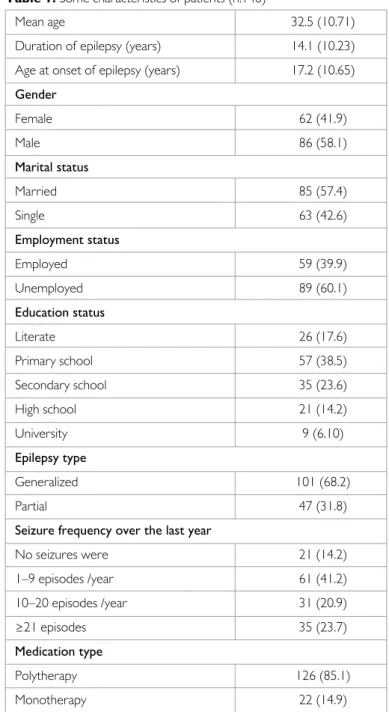
Table 1. Some characteristics of patients (n:148)
Mean age 32.5 (10.71)
Duration of epilepsy (years) 14.1 (10.23) Age at onset of epilepsy (years) 17.2 (10.65) Gender Female 62 (41.9) Male 86 (58.1) Marital status Married 85 (57.4) Single 63 (42.6) Employment status Employed 59 (39.9) Unemployed 89 (60.1) Education status Literate 26 (17.6) Primary school 57 (38.5) Secondary school 35 (23.6) High school 21 (14.2) University 9 (6.10) Epilepsy type Generalized 101 (68.2) Partial 47 (31.8)
Seizure frequency over the last year
No seizures were 21 (14.2) 1–9 episodes /year 61 (41.2) 10–20 episodes /year 31 (20.9) ≥21 episodes 35 (23.7) Medication type Polytherapy 126 (85.1) Monotherapy 22 (14.9)
Content Validity
The content validity of QOLIE-31 was presented to the opinions of 12 experts in terms of language equivalence (31,32,33). The scale was evalu-ated and some expressions were revised by a review group of 12 experts, nine academicians who had worked on quality of life in neurological and health sciences and three neurologists. The content validity index (CVI) was used to evaluate the expert views (29). The assessment scores were defined as follows: (1) not relevant, (2) somewhat relevant (the items/ expressions should be more appropriate), (3) quite relevant (appropriate but some minor changes are required) and (4) highly relevant. All the ex-perts gave the highest score for the content validity of the questionnaire, confirming the content validity of the test (30,31,32).
Procedure
First, the patients who had been diagnosed with epilepsy by a neurolo-gist were reached from their addresses (2,11,21) via phone call and they were informed about the aim of the study, asking for an interview at their homes. The ones who agreed to participate in the study were visited at their homes and interviewed in a room including one of their relatives by asking the questions in the survey forms and noting the answers. The interview took approximately 15–20 min.
Statistical Analysis
The analysis and assessment of the collected data were performed by a computer using Statistical Package for the Social Sciences version 17.0 (SPSS Inc., Chicago, IL, USA) package program. The grouped variables were evaluated by frequency and percentage values, whereas the numer-ical variables were evaluated by arithmetic mean and standard deviation values. Cronbach’s alpha and item-total correlations were employed in the internal consistency assessment of the questionnaire. Pearson’s correla-tion technique was applied to analyze the test–retest reliability. Conver-gent reliability was performed on QOLIE-31 and NSP scales via Spearman and Pearson correlation analyses. A statistics expert from the Cumhuriyet University provided counseling for the selection of the statistical methods and confirmation of the results.
Ethical Consideration of the Study
The adaptation of the questionnaire to the Turkish language was ap-proved by the RAND Health Group via their cooperation through the internet. The patients included in the study were informed, both verbally and in written form, about the aim and method of the study
while assuring them on maintaining the anonymity of the volunteers participating in the study.
RESULTS
Sample Characteristics
The mean age of the sample group, which consisted of epileptic individuals, was 32.5 years (SD, 10.71); 58.1% were male, 57.4% were married, 60.4% were unemployed, 38.5% were primary school graduates and 68.2% had been diagnosed with generalized tonic-clonic seizure. The mean age of seizure onset was 17.2 years (10.65), while the average duration of dis-ease was 14.1 years (10.23). Twenty-one (85%) of the epileptic individuals had no history of seizures within the past year, 41.2% (n=61) reported 1–9 seizures per year, 20.9% (n=31) reported 10–20 seizures per year and 23.7% (n=35) reported >20 seizures per year. Other characteristics of our sample are listed in Table 1.
Reliability of the QOLIE-31 Questionnaire
Test–retest: We investigated the test–retest reliability via Pearson’s
correlation. QOLIE-31 was applied by personally interviewing 30 patients and the test was repeated after 2 weeks on the condition that no im-portant disease or serious event that is capable of having an effect on their health occurred. The comparison of the correlation coefficients ob-tained from the first and second tests revealed the time-invariance of the questionnaire items. The final scale scores of the QOLIE-31 questionnaire (n=148) demonstrated a test–retest correlation coefficient interval of .74–.88 (Table 2).
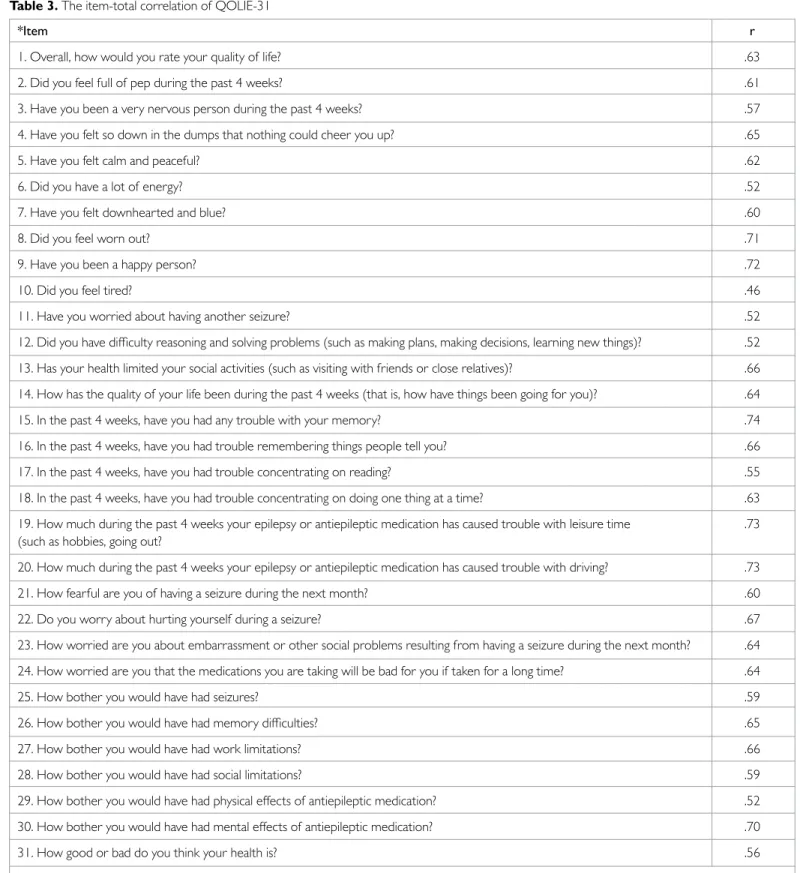
Moreover, item-total score correlation coefficients were observed to vary between .46–.74 (Table 3). In view of the literature data and our results, most of the QOLIE-31 items were determined to show no change over time.
Internal Consistency
Item-total correlations and Cronbach’s alpha analyses were used for the internal consistency check. Table 2 shows Cronbach’s alpha values of the questionnaire. Accordingly, the final overall Cronbach’s alpha value of the questionnaire was 0.91, varying between 0.67 and 0.84 for the scales. Moreover, we checked the mean total values for QOLIE-31 questionnaire and its subdimensions. The final overall score of the questionnaire was 56.4±17.3, while the lowest mean score among the scales was 48.9±29.82 291
Table 2. QOLIE-31 subscale mean scores, internal consistency and reliability
Number Cronbach’s Mean
QOLIE-31 sayısı Alpha Test–retest reliability (0–100) SD Min–Max
Seizure Worry 5 .82 .86 48.9 29.82 0–100
Overall quality of life 2 .67 .84 51.8 21.50 0–90
Emotional well-being 5 .80 .76 51.8 20.04 10–100 Energy/fatigue 4 .78 .74 52.18 28.0 0–100 Cognitive function 6 .84 .86 58.3 23.8 0–100 Medication effects 3 .72 .78 56.3 27.1 0–100 Social function 5 .78 .88 60.1 20.12 0–100 Overall score 30 .91 .88 56.4 17.3 3.45–88.63
for Seizure Worry and the highest mean score was 60.1±20.12 for Social Function (Table 2).
Construct Validity
With this aim, we employed convergent validity reliability test. There was a close relationship between the scales of QOLIE-31 and NSP. The relation-ship between Emotional Well-Being scale of QOLIE-31 and the Emotional
Reactions (r=.113), Social Isolation (r=.171) and Pain (r=.159) scales of NSP were particularly significant. Moreover, there was a relationship be-tween Seizure Worry scale of QOLIE-31 and Social Isolation (r=−.196) and Emotional Reactions (r=−.161) scales of NSP. The relationship be-tween Cognitive Function scale of QOLIE and Energy (r=−.159), Emo-tional Reactions (r=−.211) and Pain (r=−.196) scales of NSP was signif-icant (Table 4).
292
Table 3. The item-total correlation of QOLIE-31
*Item r
1. Overall, how would you rate your quality of life? .63
2. Did you feel full of pep during the past 4 weeks? .61
3. Have you been a very nervous person during the past 4 weeks? .57
4. Have you felt so down in the dumps that nothing could cheer you up? .65
5. Have you felt calm and peaceful? .62
6. Did you have a lot of energy? .52
7. Have you felt downhearted and blue? .60
8. Did you feel worn out? .71
9. Have you been a happy person? .72
10. Did you feel tired? .46
11. Have you worried about having another seizure? .52
12. Did you have difficulty reasoning and solving problems (such as making plans, making decisions, learning new things)? .52 13. Has your health limited your social activities (such as visiting with friends or close relatives)? .66 14. How has the qualıty of your life been during the past 4 weeks (that is, how have things been going for you)? .64 15. In the past 4 weeks, have you had any trouble with your memory? .74 16. In the past 4 weeks, have you had trouble remembering things people tell you? .66 17. In the past 4 weeks, have you had trouble concentrating on reading? .55 18. In the past 4 weeks, have you had trouble concentrating on doing one thing at a time? .63 19. How much during the past 4 weeks your epilepsy or antiepileptic medication has caused trouble with leisure time .73 (such as hobbies, going out?
20. How much during the past 4 weeks your epilepsy or antiepileptic medication has caused trouble with driving? .73 21. How fearful are you of having a seizure during the next month? .60
22. Do you worry about hurting yourself during a seizure? .67
23. How worried are you about embarrassment or other social problems resulting from having a seizure during the next month? .64 24. How worried are you that the medications you are taking will be bad for you if taken for a long time? .64
25. How bother you would have had seizures? .59
26. How bother you would have had memory difficulties? .65
27. How bother you would have had work limitations? .66
28. How bother you would have had social limitations? .59
29. How bother you would have had physical effects of antiepileptic medication? .52 30. How bother you would have had mental effects of antiepileptic medication? .70
31. How good or bad do you think your health is? .56
DISCUSSION
According to the literature, the methods to assess the reliability of the ques-tionnaire are item analysis, internal consistency and time invariance (33). Accordingly, we employed test–retest analysis to measure time invariance, item-total correlation and Cronbach’s alpha correlation coefficient. In this study, the item-total correlation interval was 0.46 and 0.74, indicat-ing that item-total correlation was at relevant reliability levels. The testindicat-ing of the reliability of items with item-total correlation test is based on the fact that there should be a positive and linear relationship between the reactions against an item of the questionnaire and the reactions to the entire questionnaire (34). Thus, it is understood that the items of the questionnaire effectively distinguish the quality of life.
Internal consistency is explained with the assumption that each scale con-sisted of independent units and each of these units are believed to have equal weight within the whole questionnaire. It is generally evaluated by the Cronbach’s alpha reliability coefficient. The recommended reliability level for the studies is thought to be .70 (32,33,34). In this study, with the exception of Overall Quality of Life, Cronbach’s alpha value was found to be above .70 for the other scales. In two studies conducted in Spain and Greece, the Cronbach’s alpha value for the Overall Quality of Life scale was .55 and .59, respectively (24,35). These authors associated the low Overall Quality of Life values with limited number of items in this scale, proposing that the number of items should be increased. On the other hand, in the original study, the Cronbach’s alpha value was found to be .78–.92 for seven scales of the questionnaire. Our results appear to be similar with those of the original study and other studies, with Cronbach’s alpha values indicating a high internal consistency (24,25,36). The results suggest that our Quality of Life in Epilepsy questionnaire is a reliable mea-surement tool for epileptic patients.
Regarding the test–retest reliability, the correlation value of the scales of our questionnaire was observed to be close to 1.00, which suggests the presence of a strong relationship between the two measurements (31). The test–retest correlation value was .89 (22) in the original study, while varying between .68–.96 in other studies (1,23,24,25,26). The results show that the Turkish version of the questionnaire is consistent, producing the same results in repeat tests.
Item-total score correlation coefficient is measured by calculating the cor-relation between the related item and the overall scores. The literature
suggests that the item-total correlation coefficient should be >0.30 and that the items not complying with this should be excluded from the ques-tionnaire (32,34). In light of these data, the item-total score correlation coefficients of the QOLIE-31 were observed to vary between 0.46–0.74, indicating that no exclusion of any item was necessary.
Construct validity is tested via one of the three methods: groups method (discriminant validity), factor analysis (exploratory and confirmatory analy-ses) and similar scale validity (convergent validity) (2,18). Considering that NSP is used as a similar scale in the literature, we applied a convergent reliability analysis between QOLIE-31 and NSP (23,24). The emotional well-being, social function, Seizure Worry and cognitive function scales of the QOLIE-31 test were found to be strongly correlated with the items of NSP. Between the two forms, there was a particular relationship between the scales focusing on the psychological and social statuses of the patients. Psychological and social factors are known as significant determinants of quality of life (37). Our study indicated a consistency between the psycho-logical and social scales of the two questionnaires as well. This relationship has also been confirmed by another study (38).
In this study, according to the QOLIE-31 overall score, the quality of life in epileptic patients was found to be at a moderate level. However, the qual-ity of life in our study was lower than that in other studies conducted in different countries (9,15,17,18,20,22,23,24,25,26,35). A study performed in Greece (35) used QOLIE-31 and found higher overall and final scale scores than those in Turkey. Vinckrey et al. (22) conducted an original study wherein the sample group displayed a higher quality of life level than the patients in our study group. Moreover, a Malaysian study performed in 2013 found higher overall quality of life levels among epileptic patients than those included in our study (39). Other studies have revealed similar results (9,15,18,20,23,24,25,26).
On the contrary, a study conducted in Iran (2013) revealed lower quality of life scores for Iranian patients than Turkish patients. Both overall quality of life and scales such as energy/fatigue, cognitive function, medication effects and social function scores demonstrated lower scores for Irani-ans. In other words, Iranian epileptic patients were observed to have less energy, suffer from more severe medication effects, have higher degree of cognitive impairment and reduced social functions, all of which add up to a lower quality of life than their Turkish counterparts. A similar study performed in Russia in 2012 (40) showed higher quality of life scores in Turkish patients than in Russian patients. Thus, in light of these studies, we 293
Table 4. Correlation between the scores QOLIE-31 and NHP
NSP
QOLIE-31 Energy Pain Emotional reactions Sleep Social isolation Physical functioning
Seizure worry -.079 -.060 -.161* .043 -.196* -.111
Overall quality of life .037 .075 .032 .052 -.003 .029
Emotional well-being .118 .159 * .113* .017 .171* .119 Energy/fatigue .091 .151 .1482 .024 .095 .112 Cognitve function -.159* -.134* -.211 * .012 -.144 .039 Medication effects -.054 -.125 -.057 .066 -.076 -.090 Social function -.179 -.132 -.101 -.032 -.185* -.167* Overall score .301 .436 .135 .636 .143 .728
can state that while the quality of life among Turkish epileptic patients is lower than that in Europe (23,24,25,41,42) and in USA (26), it is higher than in Iranian (17) and Russian (40) epileptic patients. We can associate these differences by factors such as access to healthcare services, cultural differences and economic reasons. This result warrants further studies with larger samples focusing on investigating the international differences, developing solutions for countries having epileptic patients with low quali-ty of life and improving the biopsychosocial healthcare services presented to epileptic patients.
On the other hand, another study using QOLIE-89, which was performed in the same region between 1999 and 2000 (2,21), showed remarkably increased quality of life scores. Among the reasons behind this difference, we can mention the changes in the healthcare system, new regulations, success in creating a healthcare personnel giving more importance, being more sensitive to the patients and the differences between the applied questionnaires. In our study group, Seizure Worry score was the highest. The main reasons behind this worry are believed to be the spontaneous character of the seizures, fear of having a seizure in public, fear of social stigma and risk of suffering an accident during the seizures (8,10,13,21). In conclusion, QOLIE-31 questionnaire (Quality of Life in Epilepsy) was found to be an easy-to-apply, valid and reliable measurement tool that can be easily adapted to the Turkish society.
Acknowledgements: Thank Dr. Ziynet Çınar, Department of Biostatistics,
Cumhuriyet University, Cumhuriyet, Turkey, for her help in data analysis.
Conflict of Interest: No conflict of interest was declared by the authors. Financial Disclosure: The authors declared that this study has received no
fi-nancial support.
REFERENCES
1. Nubukpo P, Clement JP, Houinato D, Radji A, Grunitzky EK, Avode G, Preux PM. Psychosocial issues in people with epilepsy in Togo and Benin (West Af-rica): II. Quality of life measured using the QOLIE-31 scale. Epilepsy Behav 2004; 5:728-734. [CrossRef]
2. Mollaoğlu M, Durna Z, Eşkazan E. Epilepsili Hastaların Yaşam Kalitesinin QOLIE-89 (Epilepside Yaşam Kalitesi Ölçeği) ile Değerlendirilmesi. Epilepsi 2001; 7:73-80. 3. Jennum P, Gyllenborg J, Kjellberg J. The social and economic consequences of
epi-lepsy: a controlled national study. Epilepsia 2011; 52:949-956. [CrossRef]
4. Pugliatti M, Beghi E, Forsgren L, Ekman M, Sobocki P. Estimating the cost of ep-ilepsy in Europe: a review with economic modeling. Epilepsia 2007; 48:2224-2233. [CrossRef]
5. Hermann BP, Vickrey B, Hays RD, Cramer J, Devinsky O, Meador K, Perrine K, Myers LW, Ellison GW. A comparison of health related quality of life in pa-tients with epilesy, diabetes and multiple sclerosis. Epilepsy Res 1996; 25:113-118. [CrossRef]
6. Lunardi Mdos S, Soliman LA, Pauli C, Lin K. Epilepsy and occupational acci-dents in Brazil: a national statistics study. Arq Neuropsiquiatr 2011; 69:332-335. [CrossRef]
7. Wirrell EC. Epilepsy-related injuries. Epilepsia 2006; 47:79-86. [CrossRef]
8. Lawn ND, Bamlet WR, Radhakrishnan K, O’Brien PC, So EL. Injuries due to seizures in persons with epilepsy: a population-based study. Neurology 2004; 63:1565-1570. [CrossRef]
9. Loring DW, Meador KJ, Lee GP. Determinants of quality of life in epilepsy. Epilepsy Behav 2004; 5: 976-980. [CrossRef]
10. Pal SK, Sharma K, Prabhakar S, Pathak A. Psychosocial, demographic,and treat-ment-seeking strategic behavior, including faith healing practices, among patients with epilepsy in northwest India. Epilepsy Behav 2008; 13:323-332. [CrossRef]
11. Mollaoğlu M, Bolayır M, Taş A. Epilepsi hastalarının Beck depresyon ölçeği ile değerlendirilmesi. Epilepsi 2003; 9:144-150.
12. Jones JE, Hermann BP, Barry JJ, Gilliam F, Kanner AM, Meador KJ. Clinical as-sessment of Axis I psychiatric morbidity in chronic epilepsy: a multicenter
in-vestigation. J Neuropsychiatry Clin Neurosci 2005;17:172-179. [CrossRef]
13. Prueter C, Norra C. Mood disorders and their treatment in patients with epilepsy. J Neuropsychiatry Clin Neurosci 2005;17:20-28. [CrossRef]
14. Patten SB, Beck CA, Kassam A, Williams JV, Barbui C, Metz LM. Long-term medical conditions and major depression: Strength of association for specific conditions in the general population. Can J Psychiatry 2005; 50:195-202. 15. Guekht AB, Mitrokhina TV, Lebedeva AV, Dzugaeva FK, Milchakova LE,
Lok-shina OB, Feygina AA, Gusev EI. Factors influencing on quality of life in people with epilepsy. Seizure 2006; 16:128-133. [CrossRef]
16. Szaflarski JP, Szaflarski M. Seizure disorders, depression and health related quality of life. Epilepsy Behav 2004; 5:50-57. [CrossRef]
17. Mohammadi N, Kian S, Davoudi F, Akbarian Nia SMA, Nojomi M. Psychomet-ric evaluation of the Persian version of the quality of life in epilepsy invento-ry-31. Iran J Neurol 2013; 12:144-148.
18. Baker AG, Jacoby A, Buck D, Stalgis C, Monnet D. Quality of life of people with epilepsy: a European study. Epilepsia 1997; 38:353-362. [CrossRef]
19. Batzel LW, Dodrill CB, Dubinsky BL, Ziegler RG, Connolly JE, Freeman RD, Farwell JR, Vining EP. An objective method for the assessment of psychosocial problems in adolescents with epilepsy. Epilepsia 1991; 32:202-211. [CrossRef]
20. Devinsky O. Clinical uses of the quality-of-life in epilepsy inventory. Epilepsia 1993; 34(Suppl 4):39-44. [CrossRef]
21. Mollaoğlu, M. Durna, Z. Dener, Ş. Quality of life in people with epilepsy in Sivas, Turkey. Neurol Psychiatr Brain Res 2004; 11:189-194.
22. Vickrey BG, Perrine K, Hays RD, Hermann BP, Cramer JA, Meador KJ. Quality of Life in Epilepsy QOLIE-31 (version 1.0): Scoring Manual and Patient Inven-tory. Santa Monica; CA: RAND; 1993.
23. May T, Pfa¨fflin M, Cramer JA. Psychometric properties of the German trans-lation of the QOLIE-31. Epilepsy Behav 2001; 2:106-114. [CrossRef]
24. Torres X, Arroyo S, Araya S, de Pablo J. The Spanish version of the Quali-ty-of-Life in Epilepsy Inventory (QOLIE-31); Translation, validity and reliability. Epilepsia 1999; 40:1299-1304. [CrossRef]
25. Picot MC, Crespel A, Daures JP, Baldy-Moulinier M, El Hasnaui A. Psychomet-ric validation of the French version of the quality of life in epilepsy inventory (QOLIE-31): Comparison with a generic health-related quality of life ques-tionnaire. Epileptic Disord 2004; 6:275-285.
26. Cramer J, Perrine K, Devinsky O, Bryant-Comstock L, Meador K, Hermann B. Development and cross-cultural translations of a 31-Item Quality of Life in Epilepsy Inventory. Epilepsia 1998; 39:81-88. [CrossRef]
27. Coons SJ, Rao S, Keininger DL, Hays RD. A comparative review of generic quali-ty-of-life instruments. Pharmacoeconomics 2000; 17:13-35. [CrossRef]
28. Kücükdeveci AA, McKenna SP, Kutlay S, Gürsel Y, Whalley D, Arasil T. The development and psychometric assessment of the Turkish version of the Nottingham Health Profile. Int J Rehabil Res 2000; 23:31-38. [CrossRef]
29. Burns N, Grove S K. The practice of nursing research conduct, critique&utili-zation. 3rd Edition; Philadelphia: W. B. Saunders Company: 1997.p.226-815. 30. Karasar N. Ölçme ve Araçlarında Aranan Nitelikler. Bilimsel Araştırma
Yon-temi. 19. Baskı. Ankara: Nobel Yayın Dağıtım; 2009.
31. Burns N, Grove SK. The Practice of Nursing Research Conduct, Critique,and Utilization. 2nd ed., Philadelphia: W.B. Saunders Company; 1993.p.385-389. 32. Tezbaşaran AA. Likert Tipi Olçek Geliştirme Kılavuzu. Psikologlar Derneği
Yayınları. Ankara: Ozyurt Matbaası; 1996.
33. Batı H, Tetik C, Gürpınar E. Assessment of the validity and reliability of the Turkish Adaptation of the Study Process Questionnaire (RSPQ- 2F). Türkiye Klinikleri J Med Sci 2010; 30:1639-1646. [CrossRef]
34. Aksayan S, Gözüm, S. Kültürlerarası ölçek uyarlaması için rehber I: Ölçek uyar-lama aşamaları ve dil uyaruyar-laması. Hemşirelikte Araştırma Geliştirme Dergisi 200; 4:9-14.
35. Piperidou H, Terzoudi A, Vorvolakos T, Davis E, Heliopoulos I, Vadikolias K, Giassakis G, Aggelopoulos P, Georgios G, Karlovasitou A. The Greek version of the Quality of Life in Epilepsy Inventory (QOLIE-31). Qual Life Res 2006; 15:833-839. [CrossRef]
36. Beghi E, Niero M, Roncolato M. Validity and reliability of the Italian version of the Quality-of-Life in Epilepsy Inventory (QOLIE- 31). Seizure 2005; 14:452-458. [CrossRef]
37. Meldolesi GN, Picardi A, Quarato PP, Grammaldo LG, Esposito V, Mascia A, Sparano A, Morosini P, Di Gennaro G. Factors associated with generic and disease-specific quality of life in temporal lobe epilepsy. Epilepsy Res 2006; 69:135-146. [CrossRef]
38. Choi-Kwon S, Chung C, Kim H, Lee S, Yoon S, Kho H, Oh J, Lee S. Factors affecting the quality of life in patients with epilepsy in Seoul, South Korea. Acta Neurol Scand 2003; 108:428-434. [CrossRef]
39. Norsa’adah B, Zainab J, Knight A. The quality of life of people with epilepsy at a tertiary referral centre in Malaysia. Health Qual Life Outcomes 2013; 11:143. [CrossRef]
40. Melikyan E, Guekht A, Milchakova L, Lebedeva A. Health-related quality of life in Russian adults with epilepsy: the effect of socio-demographic and clinical factors. Epilepsy Behav 2012; 25:670-675. [CrossRef]
41. Tlusta E, Zarulova J, Simko J. Clinical and demographic characteristics pre-dicting QOL in patients with epilepsy in the Czech Republic: how this can influence practice. Seizure 2009; 18:85-90.[CrossRef]
42. Lám J, Rózsavölgyi M, Soós G, Vincze Z, Rajna P. Quality of life of patients with epilepsy (Hungarian survey). Seizure 2001; 10:100-106. [CrossRef]