ISTANBUL BILGI UNIVERSITY INSTITUTE OF SOCIAL SCIENCES
CULTURAL STUDIES MASTER'S DEGREE PROGRAM
THE POLITICS OF FEAR ON EKŞİ SÖZLÜK AFTER THE REİNA MASSACRE
Nazlı Güher BEYDEŞ BEYHAN 115611008
Assoc. Prof. Nazan HAYDARİ PAKKAN
ISTANBUL 2018
Foreword
First and foremost, I would like to express my great appreciation to my thesis advisor Assoc. Prof. Nazan Haydari Pakkan for her guidance and motivation. Her advice on not to think didactically helped me develop and accomplish this thesis. Besides my advisor, I would like to thank my father for his continuous emotional support throughout my life. I would also like to remember my mother for planting me the enthusiasm for being curious. Last but not the least, I would like to thank my husband for listening to me numerous times about this thesis and giving me emotional support all the time.
TABLE OF CONTENTS
ABBREVIATIONS ... vi
LIST OF FIGURES ... vii
LIST OF TABLES ... viii
Abstract ... ix
Özet ... x
INTRODUCTION ... 1
CHAPTER ONE: LITERATURE REVIEW ... 10
1.1. Fear and Anxiety ... 10
1.2. Terror Attacks, Fear, Anxiety and Societal Trauma ... 11
1.3. Political Consequences of Fear According to Psychological Approach ... 13
1.4. The Politics of Fear ... 15
1.5. Terror Attacks, the Politics of Fear and Media Framing ... 19
1.6. The Politics of Fear and the War on Terror Narrative ... 24
1.7. The Politics of Fear and Social Media ... 29
CHAPTER TWO: THE POLITICAL ATMOSPHERE IN TURKEY ... 32
2.1. Terror Attacks, Polarization and Fear ... 32
2.2. January 1st, the Reina Massacre ... 35
2.3. The Global War on Terrorism Against ISIS ... 37
CHAPTER THREE: EKŞİ SÖZLÜK AS A SOCIAL MEDIA SITE ... 40
3.1. The Information Society/The Network Society/Social Media ... 40
3.2. Ekşi Sözlük as an UGC Website ... 43
3.3. Ekşi Sözlük as a Research Space ... 45
CHAPTER FOUR: METHODOLOGY ... 48
4.1. Fairclough’s Critical Discourse Analysis ... 48
4.2. Research on Social Media and Critical Discourse Analysis ... 52
4.3. Applying Fairclough’s Critical Discourse Analysis to Ekşi Sözlük ... 53
CHAPTER FIVE: DISCUSSION ... 66
5.1. Genre, Discourse, Intertextuality, and Dialogicality of Ekşi Sözlük ... 66
5.2. Security/Intelligence/Surveillance ... 72
5.3. Us vs. Them ... 76
5.4. Secularism and Western Values ... 81
5.5. Turkey Being Dangerous ... 85
5.6. Foreign Policy/Military Intervention/Other Countries’ Plots ... 86
5.7. Reproduction of the War on Terror Narrative and Social Practice .... 87
CONCLUSION ... 95
REFERENCES ... 102
ABBREVIATIONS AKP: Justice and Development Party
ASALA: Armenian Secret Army for the Liberation of Armenia CDA: Critical Discourse Analysis
CHP: Republican People's Party
FETÖ: Fethullah Terrorist Organization GWOT: Global War on Terorism
HDP: Peoples' Democratic Party
ISIS: Islamic State of Iraq and al-Sham MİT: National Intelligence Organization PKK: Kurdistan Workers' Party
PTSD: Post-traumatic Stress Disorder TAK: Kurdistan Freedom Hawks UGC: User-generated Content YPG: People's Protection Units
LIST OF FIGURES
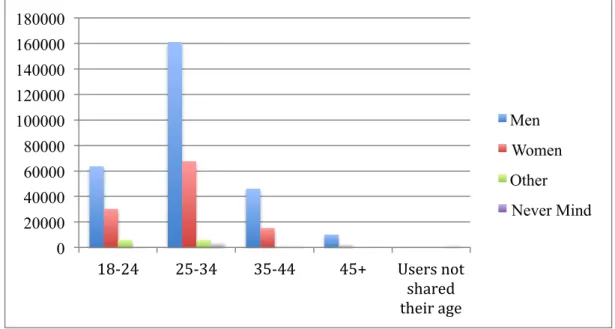
Figure 1.1 Stress-Based Model of Political Extremism ... 14 Figure 1.2 A Simple Model of Threat Inflation ... 25 Figure 3.1 The Age and Gender Distribution of Ekşi Sözlük ... 44
LIST OF TABLES
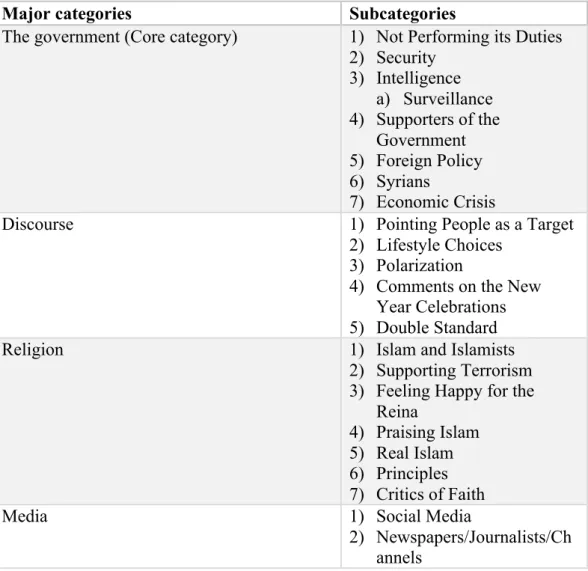
Table 4.1 Distribution of Ekşi Sözlük Entries According to Grounded Theory
... 56
Table A.1 Headings of Ekşi Sözlük and Their Archived Weblinks ... 126
Table A.2 Security/Intelligence/Surveillance ... 130
Table A.3 Us vs. Them ... 141
Table A.4 Secularism and Western Values ... 165
Table A.5 Turkey Being Dangerous ... 185
Abstract
The politics of fear is a concept that refers to the political figures’ exaggeration of threats, which has been discussed to have a considerable impact on citizens’ perception of threats and support for policies. A vast majority of the studies have discussed the war on terror narrative as a way of implementing the politics of fear. In addition to the narratives of the political figures, media discourses have also been defined as significant tools for mediating fear. Thus far, a relatively small body of literature has been concerned with the role of the citizens and social media in the (re)production of the fear. By drawing from the Reina massacre, this study addresses the (re)production of the war on terror narrative by the citizens in the social media. As a social media example Ekşi sözlük was investigated for this study. Norman Fairclough’s three-dimensional conception of critical discourse analysis was used to analyze 280 entries on Ekşi Sözlük. One significant finding of this study is that the implementation of the politics of fear was constructed as a threat. Results show that there are many factors behind for a threat to be constructed by individuals such as identity, national identity, and the political atmosphere of the country. Furthermore, this study shows that what the political figures present as threats are not always perceived as threats by the citizens.
Keywords: the politics of fear, the war on terror narrative, social media, Ekşi Sözlük, the Reina massacre, critical discourse analysis
Özet
Korku politikaları kavramı siyasi aktörlerin, vatandaşların tehditleri algılamasında ve politikalara destek vermesinde büyük bir etkisi olduğu söylenen, tehditleri şişirmesine işaret etmektedir. Çalışmaların büyük bir çoğunluğu teröre karşı savaş anlatısını korku politikalarını uygulama yolu olarak tartışmıştır. Siyasi aktörlerin söylemleri dışında, medyadaki söylemler de korkunun yayılmasında önemli bir araç olarak görülmüşlerdir. Şimdiye kadar vatandaşların ve sosyal medyanın korkunun yeniden üretimindeki rolü literatürde oldukça az yer bulmuştur. Bu çalışma Reina katliamını esas alarak teröre karşı savaş söyleminin vatandaşlar tarafından sosyal medyada yeniden üretilip üretilmediğini incelemektedir. Bu çalışma için sosyal medya örneği olarak Ekşi Sözlük incelenmiştir. Norman Fairclough’un üç boyutlu eleştirel söylem analizi Ekşi Sözlük’te yazılmış 28 başlıktaki 280 girdiyi analiz etmek için kullanılmıştır. Bu çalışma teröre karşı savaş söyleminden bazılarının yeniden üretildiği bazılarının ise değişim geçirdiği ikircikli bir tablo gözlemlemiştir. Çalışmanın dikkate değer sonuçlarından biri vatandaşların korku politikalarının uygulanmasını bir tehdit olarak inşa etmeleri olmuştur. Sonuçlar, tehdidin inşasında kimlik, ulusal kimlik, ve ülkedeki siyasi atmosfer gibi birçok faktör olduğunu göstermektedir. Bunun yanında, bu çalışma siyasi aktörlerin tehdit olarak sunduklarının vatandaşlar tarafından her zaman tehdit olarak algılanmayabileceğini ortaya koymaktadır.
Anahtar kelimeler: korku politikaları, teröre karşı savaş anlatısı, sosyal medya, Ekşi Sözlük, Reina katliamı, eleştirel söylem analizi
INTRODUCTION
In the literature, terror attacks have been widely mentioned as traumatic events with psychological consequences such as post-traumatic stress disorder. These traumatic events such as terror attacks remind us of possible other threats (Zara, 2017). A poll by Gallup suggests that the majority of the people living in the U.S. have a fear of being killed in a terrorist attack (as cited in Gardner, 2009, p. 297). Similarly, the research carried out by Türkiye Çalışmaları Merkezi (2016) in Turkey shows that 76.1% of the participants think ISIS (Islamic State of Iraq and al-Sham) poses a serious threat for Turkey. According to this poll, Turkey’s biggest problem is terror for 35.0% of the participants in 2016, which is slightly less than 2015 with 39.7% (Türkiye Çalışmaları Merkezi, 2016, p. 10). Anxiety and fear are usually perceived as justified reactions after terror related events (Herman, 1997, p. 34). When people’s fear of terrorism is used for other purposes such as political gain, we come upon the politics of fear. Aly (2013) argues “the politics of fear concerns the manipulation of widespread community anxieties about danger, risk, or threat by decision makers to achieve particular goals” (p. 162). The construction of the other is usually perceived as a key factor in manipulating the threats, hence implementing the politics of fear (Kellner, 2007).
The literature of the politics of fear is often related to the areas of health and terrorism. The health-focused approaches involve Ebola (Nunes, 2017; Towers et al., 2015), chemicals and cancer (Gardner, 2009), H1N1 (McCauley, Minsky & Viswanath, 2013), potential risks of nuclear energy (Koerner, 2014). However, the vast majority of studies are on terrorism. The use of the war on terror narrative by the politicians is often discussed within the framework of the politics of fear. The concept of the war on terror narrative has appeared after President Bush’s declaration on “the war on terror” following the 9/11 attacks (Kellner, 2007). Bush’s discourse on 9/11 has been described as polarizing of two opposites (Kellner, 2007). Recently, President Donald Trump’s electoral campaign, which was built on restricting the Muslims’ entrance to the U.S., has also been described as another example of the politics of fear (Zelizer, 2015).
The specific objective of this study is to look at the reproduction of the politics of fear by investigating the war on terror narrative on Ekşi Sözlük. Although the concept of the war on terror has been associated with Bush and 9/11, it is still present with the global fight against ISIS (Brands & Feaver, 2017, p. 1). Houtum and Lacy (2016) argue that the measures taken for the sake of security and the military operations of countries like France are now accepted as the norm (p. 88). To put it another way, Houtum and Lacy (2016) suggest that the politics of fear have been implemented in these countries. Turkey is one of the countries that have joined the war on terror against ISIS and has carried out military operations. However, Turkey’s fight against ISIS has also been objected to criticism, which suggested that the motive behind the military operations has actually been to fight YPG (People's Protection Units) (Aydıntaşbaş, 2016; Bremmer 2015). Furthermore, Kanlı (2017) argues that the terrorism is used against the notion of “stability” in AKP’s (Justice and Development Party) discourse during the election period, which refers to a politics of fear. Yaşlı (2016) argues that the government has inflated the security threats. 27 terror attacks were carried out in Turkey by different terrorist organizations in 2016 (“2016’daki Bombalı Saldırılar,” 2016). One of them was the Reina massacre, occurred in the first hours of the New Year. For this study, The Reina massacre has been investigated to see what the citizens construct after frequent traumatic events and how they can be explained. Although the vast majority of the past research has been on leaders and the traditional media, this study aims to investigate what citizens construct on social media. The question of what constitutes the war on terror has been mostly approached in a similar fashion by various studies. By bringing the widely discussed dimensions together, De Castella and McGarthy (2013) identify five common themes of the war on terror narrative. First one is the construction of the “us” versus “them” that also attribute opposing qualities to these sides (De Castella & McGarthy, 2013, p. 87). Second one is suggesting that these attacks are actually a crime against what that society has been built on, such as particular “values” that the terrorists like to wipe out (De Castella & McGarthy, 2013, p. 88). Authors use the term “Western” in defining these values (De Castella &
McGarthy, 2013, p. 88). Third one is not giving clear information, and advocating for the intelligence services to operate covertly which inhibits people to have a good judgment about what is actually going on (De Castella & McGarthy, 2013, p. 88). Additionally, any action that has a possibility of inhibiting the terrorist threat is justified such as more “military spending” and “surveillance” (De Castella & McGarthy, 2013, p. 88-89). Furthermore, some acts of violence against the terrorists are also justified (De Castella & McGarthy, 2013, p. 89). Fourth one is about government and other officials’ refusal of taking responsibility for the failure of preventing terrorism while also justifying the present and future actions of the government for the sake of counterterrorism (De Castella & McGarthy, 2013, p. 89). Fifth one is actually from the “crime narrative” which de Castella and McGarthy (2013) explains as the idea that people are in constant danger (p. 90). As De Castella and McGarthy’s (2013) definition on the war on terror narrative takes the leaders’ discourse into account and this study aims to investigate citizen discourse, their themes have been adapted to this study with several modifications. Five themes are defined and some questions are attributed to them. First one is security/intelligence/surveillance. The questions are: what kinds of precautions are supported in order to enable security? Are more control, surveillance, death penalty etc. mentioned? Do people mention MİT (National Intelligence Organization) and suggest that the intelligence should not be transparent? What do people think about the presidency system? The last question is important as Yaşlı (2016) argues that security was associated with the presidency system in the government discourse after the elections while also making a reference to Yeni Akit’s headline “either presidency or chaos”. Second one is us vs. them. The questions are: Is there an othering in the text that people are divided into us and them? If there is, who are these two groups and what qualities are attributed to them? Who is blamed for the attack? Third one is secularism and Western values. The questions are: Do people perceive this attack as a way to destroy secular and Western lifestyle in Turkey? Because the attack had occurred during New Year celebrations and there have been discussions that the attack aimed at the secular lifestyle, what people suggest on secularism and
Western values should be taken into consideration. According to Gellner, Kemalist secularism requires the adoption of the Western lifestyle practices and “celebrating New Year” is one of them (as cited in Göle, 2017, p. 23). That’s why celebrating the New Year is described with secularism in this theme. Fourth one is Turkey being dangerous. The questions are: Do people think they are in constant danger and now see the world and Turkey as dangerous? Do people think the future is unpredictable? Fifth one is foreign policy/military intervention/other countries’ plots. The questions are: What is supported as a foreign policy? Do people support military action in Syria or Iraq? Do people think that other countries have planned this attack and suggest they are plotting for more? The notion and the question of other countries’ plots come from a long-standing discourse in Turkey. According to Göçek (2011) the habit in Turkish society that prevents people from perceiving the situations optimistically and encourages them to be alert as a necessity comes from the idea that the foreigners are plotting for something in Turkey (p. 35). Additionally, there was military operation against ISIS in Syria named Operation Euphrates Shield (“TSK’dan Fırat Kalkanı Açıklaması: ‘32 Köy Temizlendi,’” 2016). Whether people are supporting a military intervention or not is more meaningful in this context as there was already an ongoing operation.
While the vast majority of the studies show a common understanding of the politics of fear in the literature, as Cramer and Thrall (2009) suggest there are different approaches in evaluating the politics of fear. These are “realist, psychological, domestic political, and constructivist” approaches (Cramer & Thrall, 2009, p. 2). The differences between these approaches are about how and why the elites use the politics of fear and how the public responds to it (Cramer & Thrall, 2009). In this study, a constructivist approach is taken for investigating the war on terror narrative, which discusses the politics of fear in relation to individuals’ identity including the national identity while also taking the elites and the media into consideration (Cramer & Thrall, 2009, p. 9-11).
There are several reasons in this selection of the constructivist approach. First of all, the psychological approach is often not applicable to the textual
analysis as researchers with this approach are mostly concerned with people’s mental processes, which cannot be accessed through the text. Realist approach might be ignoring a lot of factors and mostly explain why the leaders implement the politics of fear. Domestic political approach is actually what the vast majority of the studies take for granted. It assumes that the public is manipulated by the leaders and the media. Domestic political approach might be ignoring some factors by taking less attention to the differences in the society, such as identity. Conversely, the constructivist approach stress the importance of identity in the politics of fear as they think threat is a constructed concept (Cramer & Thrall, 2009, p. 9). Another reason for choosing constructivist approach is the political atmosphere in Turkey. Turkey has been frequently exposed to deadly terror attacks throughout 2016. Moreover, it is argued that the government implements the politics of fear by its polarizing discourse (Yaşlı, 2016). A study by German Marshall Fund (2016) suggests evidence that Turkey is a polarized country (“Turkey Growing Increasingly Polarized: German Marshall Fund Study,” 2016). In a polarized country like Turkey where identities and partisanship have great importance, constructivist theory provides the best approach to discuss what and who is perceived as a threat and what is proposed to deal with it.
While leaders’ discourses have been extensively criticized, data from several studies show that the media has also been criticized for mediating the war on terror narrative (Altheide, 2007; Kellner 2007; Evans, 2012, Nacos, Bloch-Elkon and Shapiro, 2011; Russ-Mohl, 2013; Entman, 2013; Simons, 2008, Nacos, 2013, Berkowitz, 2007). Traditionally, the media has been criticized for delivering terror attacks by specific framings. This criticism relies on the assumption of the constructive side of the media. Communication and media aspects of the war on terror and the politics of fear have often focused on newspapers, magazines, and TV programs. Surprisingly, there is a relatively small body of literature that is concerned with social media. Hinton and Hjorth (2013) argue that in Web 2.0, users are playing an active role rather than being a passive audience (p. 18). Social media has provided multiple sources for news and opinions. Lewis, Zamith and Hermida (2003) describe social media as a “newsroom”. In his analysis of social
movements, Castells (2015) argues that they were successful because the social media became a meeting point of people from diverse backgrounds (p. 2). Conversely, Nohrstedt and Ottosen (2008) suggest that it is questionable that the digital spheres show any discussions differently than the traditional media (“New Media,” para. 4). Although it should be noted that authors are also discussing whether social media can produce a peace narrative. Cottle (2014) suggests that “new and old media increasingly enter into disasters, shaping them from the inside out, and outside in, reconfiguring disaster social relations, channeling forms of political control…” (p. 3). In the same vein, Seeck and Rantanen (2015) suggest that its participatory nature and the feature which allows one to react instantly, make social media more powerful in mediating the news than the traditional media while also making an influence how the traditional media constructs its news in certain situations (para. 3). These examples suggest investigating social media is important. Nitsch and Lichtenstein (2013) investigated the social media in comparison with traditional media in their study of the war on terror. For their research on Ebola, Towers et al. (2015) investigated Twitter and Google and argue that investigating online spheres is a recent trend (“Introduction,” para. 1). Although there is a limited research on the relationship between social media and fear, the increasing use of and attention to social media make it significant for exploring this relationship. Furthermore, according to Reuters Institute’s report, Turkey is one of the countries where social media is widely used (Doğramaci & Radcliffe, 2015). After the terror attacks in Turkey, a hospital in Turkey even suggested not using social media as a news source in order to cope with the fear of terrorism (“Terör Korkusuyla Nasıl Baş Edersiniz?,” n.d.). The studies on the politics of fear have traditionally investigated the discourses of the leaders and the media yet the citizens’ discourse often remained unexplored in the literature. Social media provides a huge platform to discuss the reactions of the public, as it is also a participatory space for the citizens.
This study takes Ekşi Sözlük as the base of the research. Ekşi Sözlük is a popular website in Turkey that authors write their subjective opinions on concepts, events, political figures etc. Ekşi Sözlük was selected over other social
media platforms, such as Facebook or Twitter to discuss the reactions of the public during the times of crisis for several reasons. Twitter and Facebook contain private pages with limited access. A major advantage of Ekşi Sözlük is that it is open to everyone. Twitter filters the results because its APIs are not open to everyone as Bruns and Burgess suggest (2016, p. 26). Furthermore, the presence of social media bots might take the study to a deadlock. Facebook and Twitter also introduce some ethical concerns as some users display their actual names. On Ekşi Sözlük users don’t use their actual names but use nicknames. Wimmer and Dominick (2011) remind us that there are some considerations while carrying out a research online. Wimmer and Dominick (2011) suggest that it is not ethically wrong to use data from places that are accessible while also considering the permission of the administration of the website (p. 81). As acknowledged by Ekşi Sözlük, entries can be used as long as they don’t involve commercial purposes (ekşisözlük, 2017a). Ekşi Sözlük is also a local website in Turkey and provide a significant platform to follow the local discussions in Turkish.
Several methods currently exist for digital media research such as using software programs to “visualize” the data, although it has been found problematic, (Brooker, Barnett, Cribbin & Sharma, 2016), ethnography (Striling, 2016). However, as this research aims to look at the narrative, digital methodologies were not found to be meaningful. Norman Fairclough’s (1993) three-dimensional conception of CDA (critical discourse analysis) was applied to the entries on Ekşi Sözlük (p. 73). Fairclough (1993) developed a “three-dimensional conception of CDA” that explains texts, discursive practice and their relationship to the social practice (p. 73). According to Fairclough (2003) all three analyses are important and their relationships are in “a dialectical relation” (p. 28). A major advantage of Fairclough’s CDA is that it is applicable to Ekşi Sözlük as it is designed to investigate what is written instead of visuals such as videos, pictures etc. that Fairclough usually concentrates on a social change in the society and investigates it in the leaders’ discourses, political parties’ brochures etc. Various changes take place in the society following the repetitive exposure to traumatic events and how does that turn out linguistically, is best observed by applying CDA.
The current study found that an ambivalent discourse, as some features of the war on terror narrative were present while some were transformed. The identity of the authors, Turkish national identity, and the political and religious polarization in Turkey help interpreting the results on Ekşi Sözlük. The findings of the study suggest that the politics of fear has many layers and considerations that it is not possible to talk about a direct relationship with leaders’ and the media’s discourse in some cases. Although, it should be noted that the study has limitations and it is not possible to generalize the results. However, it might thus be suggested that more research should be done on the citizens’ discourse after such crisis times in order to have a better understanding of the subject.
Chapter One is a “Literature Review”. General description of fear and anxiety, and terror as a traumatic event are discussed. What do terror attacks mean for the individuals and the society are discussed in the next section. Then, major studies on the politics of fear are introduced. First one is the psychological approach. Then, the politics of fear are discussed with health and terrorism issues. The politics of fear and media framing is discussed in the following section. This section introduces the past research and explains why the media has been criticized. Afterwards, the war on terror narrative is introduced as a way of implementing the politics of fear. Different approaches of the politics of fear are introduced in this section. The research questions are also given in this section. First chapter ends with the discussions on the social media as a research space for investigating the war on terror narrative. Chapter Two is “The Political Atmosphere in Turkey”. In this chapter, at first, some information on the polarization and the politics of fear are given. Then the Reina massacre and the discussions in the media after the massacre are discussed. Finally, the involvement of the U.S. and the members of the European Union in the global war against ISIS is discussed. Turkey as one of the countries in GWOT (Global War on Terrorism) is discussed with the criticisms it has faced both internally and internationally. Chapter Three is “Ekşi Sözlük as a Social Media Site”. First, the discussions on information and network society are given. Then, the concept of Web 2.0 and the social media are discussed. Ekşi Sözlük is introduced in the next
section. Then, past research on Ekşi Sözlük is discussed. Advantages of working on Ekşi Sözlük are also discussed in this section. Chapter Four is “Methodology”. First an introduction is presented to have a general look at the critical discourse analysis, followed by the description of Fairclough’s “three-dimensional conception of CDA”. What was investigated and what was not investigated for this study is discussed. In the next section, past research on social media that have used the critical discourse analysis is discussed. Benefits of using critical discourse analysis in social media texts is discussed in this section. How the sample is selected is described in the next section. The categorization that was made according to the grounded theory coding techniques and its results are presented. Chapter Five is “Discussion”. This chapter discusses the five themes that have been investigated in the study with its discussions in the Turkish context by using the constructivist approach. The study closes with conclusions on its limitations and discussions on future research.
CHAPTER ONE LITERATURE REVIEW
This research aims to look if the citizens on social media reproduce the politics of fear or not. The politics of fear is investigated through the war on terror narrative by adopting a constructivist approach. This literature review starts with the basic definition of fear and gives information on disorders as PTSD (Post-Traumatic Stress Disorder) that have a likelihood to occur after traumatic events like terror attacks. Then, the political usage of fear is introduced with the politics of fear and the war on terror narrative. Different approaches in the literature on the politics of fear are discussed. Discussions on the leaders’ discourses and the media framings are presented. Discussions on social media as a research space for investigating the war on terror narrative are also presented in this chapter.
1.1. Fear and Anxiety
According to LaBar (2011) “Fear is a negatively valenced emotion elicited in response to an impending threat that motivates a defensive reaction to protect the organism” (p. 751). In the same sense, Plutchik (2003) argues that the physiological and psychological reactions that people give when they feel fear, aim at preventing one from dying (p. 322). What Plutchik (2003) and LaBar (2011) suggest implies that fear is a normal reaction that occurs when one is faced with a danger, and it is seen in all humans. LaBar (2011) suggests that because working on fear requires eliciting fear, research is not easily carried out (p. 751). Öhman (2008) argues that terrorism which is unexpected and capable of killing people while they go about their daily lives; turn fear into a part of our lives (p. 709).
According to LaBar (2011) anxiety and fear are intertwined emotions (p. 751). Anxiety is almost always explained with fear in textbooks and studies that deal with emotions. Plutchik (2003) argues that the difference between anxiety
and fear is that the former is more directed at the future (p. 315). Aly and Green (2010) argue that the difference is the uncertainty about the elicitor in anxiety (p. 269). Furthermore, Aly and Green (2010) suggest that fear is not always the first reaction when there is a threat yet anxiety is (p. 269). Conversely, according to LaBar (2011) anxiety comes after fear when one cannot overcome fear. (p. 751). Overall, these studies highlight that there are opposing views on fear and anxiety, some suggesting fear coming before anxiety and others vice versa. Considering LaBar’s (2011) argument on the hardship of carrying out a research in this area (p. 751) scientists' definition of concepts might have been remained vague.
1.2. Terror Attacks, Fear, Anxiety and Societal Trauma
Terror is defined as “extreme fear”, “the use of extreme fear to intimidate people” and “terrorism” by Oxford Dictionaries (“Terror,” n.d.). Terrorism is defined as “the unlawful use of violence and intimidation, especially against civilians, in the pursuit of political aims” (“Terrorism,” n.d.). Rabinovitch (2017) discusses the emergence of terror and terrorism concepts in his work and suggests that both violent acts carried out by the state and other organizations, the former on the purpose of social control for their own sake and the latter to influence and construct fear in people, defined what terrorism was in France in earlier times (p. 21). The assassination attempt to Bonaparte by Catholic Chouans induced the definition of terrorism to be added to the dictionary and started being used academically (Rabinovitch, 2017, p. 21). Rapin (2013) however, criticizes the studies on terrorism due to the definition of terrorism varying from source to source. He also suggests that this vagueness causes these studies to have low reliability (p. 299). Hence, it is possible to suggest that the definition of terrorism is not universally agreed. It is also interesting to note that terror is also used for defining terrorism as seen in Oxford Dictionaries’ definition given in this section. Aly and Green (2010) remind us that, feelings such as fear and terror coming to existence after terrorist attacks are the reason behind the frequent usage of the term terror for addressing terrorism in the language (p. 269).
Terror attacks are categorized as traumatic events in the literature (Zara, 2017). Furthermore, it is argued that terror attacks have consequences such as societal trauma (Aker, 2017). Traumatic events are described as both individual and societal events that challenge one’s functionality and mental health (Zara, 2017). Herman (1997) discusses terror as an event that causes trauma and suggests that people think they are powerless when they are faced with a trauma that pushes them (p. 33). Moreover, Herman (1997) argues that people have psychological and physiological responses when they are faced with a hazard and none of them are atypical, including fear, and not being able to do anything causes trauma in these incidents (p. 34). PTSD is one of the possible reactions that are observed in people after terror attacks while it is also suggested that some people are more prone than others including many factors behind it (“Effects of Traumatic Stress after Mass Violence, Terror, or Disaster,” n.d.). Hamblen and Slone (n.d.) suggest that the more you are close to a terrorist attack the more likely that you are going to have PTSD, while the relatives of the ones that were exposed to the attacks are not excluded. What’s more, direct exposure to the attack is not a necessity for trauma as it can manifest itself as secondary traumatic stress by hearing the experiences of victims (“Secondary Traumatic Stress,” n.d.). Discussions on secondary traumatic stress show that it is possible for people to be exposed to trauma by different sources. According to Zara (2017) psychologists, doctors, journalists, and the ones reading the news are exposed to secondary traumatic stress. Similarly, Paker (2017) suggests that people are exposed to trauma indirectly by printed, visual, and social media. Although they don’t discuss trauma, Jaśko, Kossowska and Sekerdej (2013) show that fear of terrorist attacks can be present in societies even when they are not exposed to terrorist attacks (p. 172). Similarly, Aly and Green (2010) argue that people are exposed to terrorist attacks through the media even when they have no geographical proximity (p. 269). In the same vein, Hamblen and Slone (n.d.) argue that being exposed to news of terrorist attacks increase the likelihood of having PTSD. These researchers indicate that people who experience trauma are not particularly
the ones present in the attack but also those who are presented with the trauma through media.
Trauma says that there is someone dangerous out there, the world is dangerous and humans are dangerous and the withdrawal from the social life is a normal reaction after traumatic events (Zara, 2017). While researches indicate that PTSD is a possible reaction after terrorist attacks, it is not the only reaction and not every traumatic event turns out as PTSD (Hamblen & Slone, n.d). A protection from the psychopathology includes preventing people from seeing traumatic scenery such as the removal of bodies (Aker, 2017). Expressing positive feelings to each other, which is crucial in pain and healing cycle, is given as one of the solutions to overcome the traumatic events (Zara, 2017).
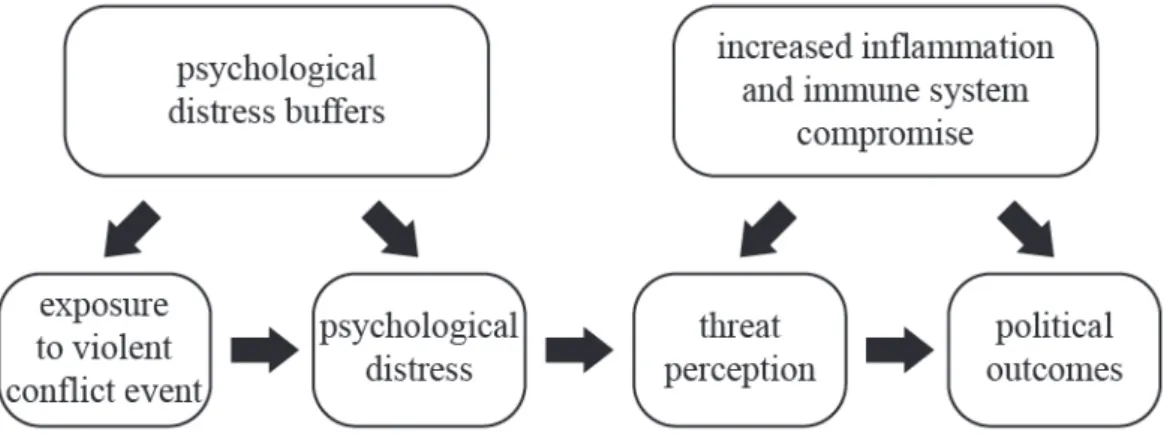
1.3. Political Consequences of Fear According to Psychological Approach There are different approaches in the literature concerning the politics of fear. There is a large number of published studies arguing that the leaders, or the media is responsible for creating fear and othering which have an effect on people’s political decisions (Nacos, Bloch-Elkon, & Shapiro, 2011; Russ-Mohl, 2013; Entman, 2013; Simons, 2008; Berkowitz, 2007; Evans, 2012; Kellner, 2007; Nacos, 2013; Altheide, 2006). Conversely, some researchers highlight that this relationship is not simple and there are some other factors that should be taken into account (Canetti, Rapaport, Wayne, Hall, & Hobfoll, 2013; Jaśko, Kossowska, & Sekerdej, 2013; Rapin, 2013; Gadarian, 2013; Thrall, 2009, Aly, 2013). Psychological approach is one of them in the literature. Publications that concentrate on the psychological effects of terror attacks discuss the political consequences of having fear. In these studies, it is suggested that the media and other figures did not particularly intervene in people’s decisions but there are personal factors. The Figure 1.1 by Canetti, Rapaport, Wayne, Hall, & Hobfoll (2013) show how political decisions are shaped by psychological distress (p. 204).
Figure 1.1 Stress-Based Model of Political Extremism
Source: Reprinted from The Political Psychology of Terrorism Fears (p. 204), by Canetti, Rapaport, Wayne, Hall, & Hobfoll 2013, New York, NY: Oxford University Press. Copyright (2013) by Oxford University Press. Reprinted with permission.
Gadarian (2013) remarks her suspicion of the relationship that has made between terrorism and media as she suggests that the reasons behind what people construct with those news is missing in most of the researches concentrating on this subject (p. 67). Gadarian (2013) suggests that support given to the policies after 9/11 was shaped by people’s political tendencies (p. 67). According to Gadarian (2013) believing the news to be sincere about the dangers play a significant role in accepting or rejecting the messages (p. 68). In their investigation of the support for policies and their relationship with emotions, Wetherell, Weisz, Stolier, Beavers and Sadler (2013) suggest that supporting vindictive actions are more likely when one feels angry (p. 129), on the other hand, aggressive cross-border actions are rejected when one is fearful (p. 130).
In her analysis of Northern Ireland, Monaghan (2013) claims that protecting oneself by reducing contact with associates of the outgroup is one of the results, if a group is perceived to be spreading fear (p. 143). By saying that Monaghan (2013) expresses the importance of identity factor in societies like Northern Ireland as she argues that people are dividing each other in this specific context (p. 150). Aly (2013) argues that the reason behind people having fear is
not fully explained by the polls and surveys (p. 160). According to Aly (2013) the othering according to religious choices, restrictions of rights of citizens for the sake of being safe, anxiousness in the society, and the implementation of the politics of fear with a terrorist attack, the thoughts of dying and getting hurt describes best what constitutes fear and other negative emotions in Australian context (p. 163). By stating that Aly (2013) shows that for some societies, the possible emergence of politics of fear can be a fear factor itself. In their study in investigating right-wing authoritarianism in Italian context, Manzi, Roccato and Russo (2015) found that having a meaningful perception of oneself and one’s life determine if one abstains from right-wing authoritarianism in times of crisis that disturbs people’s sense of controlling events (p. 119). In their analysis of fear from terrorism in Polish context, Kossowska et al. suggest that how terrorists are perceived determines which of the counterterrorism actions people would support, as well as their likelihood of having fear (as cited in Jaśko, Kossowsko, & Sekerdej, 2013, p. 176).
Evidence from these examples show that, when it comes to fear of terrorism and its political consequences, there are numerous factors including individual and psychological ones. Considering all this evidence, it seems that although the researchers suggest that the political consequences of fear depend upon many factors and they might be the result of a purely psychological defense mechanism without any impact from the media or political figures, they show that in times of disruptive events, there are examples of constructing the other and supporting retaliatory policies etc.
1.4. The Politics of Fear
Thus far, a number of studies discuss the concept the politics of fear. The politics of fear has taken place in the literature by several phrasings such as “culture of fear” by Furedi (2002), “discourse of fear” by Altheide (2006, p. 420), “threat inflation” by Cramer and Thrall (2009, p. 1), “threat society” by Nohrstedt and Ottosen (2008, “Introduction,” para. 1). Taken together, studies support the
notion that the politics of fear emerge when fear is consciously and deliberately used in order to achieve political power, change policies, pass laws, start wars, etc. (Gardner, 2009; Altheide, 2006; Aly, 2013; Kellner, 2007; Evans, 2012). A great deal of research on the politics of fear is concerned with terror although health is another theme discussed in the literature.
The terror-focused research on the politics of fear is more likely to be discussed by sociologists and communication researchers, whereas health professionals usually conduct the health-focused research. Nunes (2017) discusses the hardship Médecins Sans Frontières faced during the Ebola crisis in his work and argues that the suffering of the victims managed to create no more than a little awareness on Ebola worldwide. In fact its threat for more developed countries due to the implementation of the politics of fear made Ebola a focus of interest (p. 8). Quantitative methods have been frequently used in the research concerning the fear for health and its relationship with the media. In a focus group study by McCauley, Minsky and Viswanath (2013) the othering of Latinos after H1N1 news was investigated and their research showed that media coverage made an effect on the participants of the study while also suggesting that the perception of threat varied due to racial and ethnical factors (“Discussion,” para. 1). In the same vein, relationship between news and fear for Ebola was studied by Towers et al., (2015) by comparing the news coverage with the search of Internet and tweets, and they found out that people were searching for Ebola after there were news coverage about it in the media, yet only a few of them included items associated with concern in their searches (p. 10). Similarly, Mesch, Schwirian and Kolobov (2012) investigated whether people’s concern over the news of swine flu had increased and their results showed that people who were more curious with the H1N1 news were more likely to be concerned, although it was given as a correlation (p. 330). In his content analysis, Koerner (2014) investigated the relationship between nuclear accidents and related news headlines and showed evidence that nuclear energy was framed negatively in most of the headlines (p. 244). Similarly, Gardner (2009) investigates fear of cancer in his work and suggests that the idea that chemicals are substances to be feared is disseminated
by the media in order to arouse interest, although he doesn’t find the media as the only perpetrator (p. 277). In all studies presented here, fear has been discussed with its relationship with the media, including social media.
Apart from the health-focused researches in the literature, a great deal of the previous researches on the politics of fear had been on terrorism. The vast majority of studies on the politics of fear that focuses on terror are concerned with political figures, elites and the media. The Bush administration and its application of the politics of fear have been widely discussed in the literature. According to Nacos, Bloch-Elkon and Shapiro (2011) support for Bush administration’s policies was achieved through the politics of fear after 9/11 (p. 55). Kellner (2007) suggests:
The Bush administration, aided and abetted by U.S. corporate media, manipulated a politics of fear to push through a right-wing agenda that included the Patriot Act, massive changes in the legal system, a dramatic expansion of the U.S. military, and U.S.-led military intervention in Afghanistan and Iraq. (p. 622)
Similarly, Evans (2012) argues that some policies such as torture were justified by constructing the other based on culture due to the Bush administration and the media being “constant reminders” of terrorism (p. 73). Conversely, when talking about the government’s attitude after 9/11, Alterman (2004) maintains that it was not possible to make a generalization, and not all government officials were using the politics of fear as there were some who were not deceiving people (p. 1132). When talking about the Bush administration, Stern (2004) suggests that even though the politicians had used the politics of fear, that didn’t mean there was nothing to fear from (p. 1145). Oates (2006) compared the electoral discourse of leaders and found that the politics of fear were used in both Kerry’s and Bush’s campaigns (p. 431). Social control has been a theme discussed in the literature, highly intertwined with the theme security. In his talk on the Bush administration, Arato (2004) argues that what was threatening was not the terrorist attacks themselves but “the secular increase of presidential power” (p. 1136). While discussing the media and the politics of fear, Altheide (2007) argues that the
depiction of rights such as “privacy” coded as unimportant, the stigmatization of people who were against the constructed discourse, the association that was made between being safe and being under control, constructed the politics of fear after 9/11 (p. 288). Similarly, Robin (2012) discusses the fear discourse in political communication and argues that violation of liberties was legitimized for the sake of being secure (p. 118). According to Altman (2017) Donald Trump has been using the politics of fear by using a discourse that suggests the country and the world are full of dangers. It is clear that Trump’s statements are implying some kind of a security problem. Shugerman (2017) suggests that the ban that prevents citizens of several countries to enter the U.S. has found justification by Donald Trump after the terrorist attacks in the world. Glassner (2016) argues that it is not new that politicians are using the politics of fear yet “Trump is especially effective”. Glassner (2016) maintains that the politics of fear has been used both by Clinton and Trump for the fears they both represent. Evidence shows that the ones using the politics of fear, mostly leaders in the literature, construct a discourse about the threats the citizens face and the safety they are going to provide for them, which justifies their actions such as policy changes and starting a war. The war in Iraq (Cramer & Thrall, 2009; Nacos Bloch-Elkon and Shapiro, 2011, p. 55; Kellner, 2007, p. 622), the invasion of Afghanistan (Nacos, Bloch-Elkon, & Shapiro, 2011, p. 5; Kellner, 2007, p. 622), Kellner 2007), and the Patriot Act (Nacos, Bloch-Elkon, & Shapiro, 2011, p. 5; Kellner 2007, p. 622; Evans, 2012, p. 74) are some of the related examples in the literature focusing on 9/11.
Right-wing discourse has been discussed in the literature as one of the features of the politics of fear. Gardner (2009) argues that the Democrats have failed because they did not concentrate on subjects related to terror, which helped the Republicans win (p. 321). Not concentrating solely on terrorism, Wodak (2015) suggests that the theme of the risk that some people pose for others is a feature of the politics of fear that parties with “right-wing populism” carry out (p. 1). Arato (2004) stresses the right-wing factor in the politics of fear and explains that what they do is a construction of a nonexistent threat (p. 1134).
Us and them divisiveness, or in other words, othering, has been another theme discussed with the politics of fear. In her work on analyzing the politics of fear implemented by Israel, Shalhoub-Kevorkian (2015) argues that othering Palestinians is accepted as a norm in Zionism (p. 25). Houtum and Lacy (2017) suggest that multiculturalism is one of the concepts that today’s European countries are against which, hence, constructs a picture where the politics of fear is legitimized (p. 85). Similarly, in his analysis of Bush’s discourse, Kellner (2007) suggests that the divisive discourse used for people and negative and positive features attributed to the particular sides, rendered it no different than the terrorists’ or even Nazis’ (627).
While the vast majority of the literature on the politics of fear has focused on the U.S. and especially the Bush administration after 9/11, the concept has also been discussed with other countries and political figures. Republican senator Joseph McCarthy’s discourse and the atmosphere he had created by othering the communists was described as the politics of fear (Griffith, 1987). Gel’man (2015) suggests that suppressing the opposition of the administration is what constitutes the politics of fear in Russia (p. 7). Gel’man (2015) also suggests that a new law in Russia controls the money transfers as a counterterrorism policy (p. 18). The Brexit campaign in Britain has also been discussed with the politics of fear as Kirişçi and Ekim (2016) suggest that immigrants coming to the country have been a concern for people living in Britain, which was manipulated through the politics of fear by the Brexit campaigners. Jones (2012) argues that one of the reasons of the construction of the walls in the United States, India and Israel is due to the politics of fear implemented on security after the terrorist attacks (p. 6).
1.5. Terror Attacks, the Politics of Fear and Media Framing
In section 1.3 fear and political consequences of fear were described with the psychological approach that mostly ignores political figures or the media. However, the vast majority of studies that concentrate on the politics of fear have discussed it with its relationship with the media. While discussing texts,
Fairclough (2003) argues “…the capacity to influence or control processes of mediation is an important aspect of power in contemporary societies” (p. 31). This description is important to understand the approach of the researchers in the literature as most of the discussion is about the power the media has in influencing people. Evans (2012) discusses the media as being one of the “constant reminders… of the threat” after 9/11 (p. 73). Similarly, the repetition of the theme of war in TV channels is criticized by Kellner (2007, p. 625). Miller and Mills (2009) investigated terror experts in the media and showed that most of the experts were constituted of people who were going with the norms of the Bush administration (p. 422). Their research shows that a little voice was heard in the media that challenged the Bush administration’s policies for counterterrorism. In his work on investigating the fear and fear related concepts in several news sources, Altheide (2006) shows evidence that fear was correlated by the terror attacks in the news after 9/11 more than before (p. 426). In her focus group research, Oates (2006) investigated the news and electoral campaigns as well as citizens’ responses in the U.S., Russia, and Britain and provided evidence that in the U.S. and Russia, fear was adopted by people due to constantly being exposed to shallow usage of terrorism in the political communication and the media (p. 432). In her work on the coverage of PKK (Kurdistan Workers' Party) in the media, Baybars-Hawks (2010) investigated the headlines of Hürriyet in the time span of 13 years and found that news were mostly the ones inducing sentimentality that provided an environment to the production of fear (p. 116). According to Nacos, Bloch-Elkon and Shapiro (2011), most of the actions that Bush administration advocated after 9/11 also took place in the media by the exaggeration of threats and cues of war (p. 5). Also, the fact that the journalists who were working for the aims of the U.S. and Britain were the ones disseminating the news from the war zones after 9/11 is criticized by Kellner (2004, p. 332). In Language Wars, Jeff Lewis (2005) discusses the fact that terrorism is fed by the media as it is its’ place for communication (p. 28). Similarly, in his analysis of the war in Iraq and coverage of the media, Russ-Mohl (2013) argues that advocating for the Bush administration’s policies, setting the
war as the most important topic, portraying it in a specific way and thus lacking any critical voice made the American journalism unsuccessful in the Iraq War (p. 224). Entman (2013) suggests that American journalism was selective in their reporting not only by ignoring the reports that foreshadowed that the military action wouldn’t be successful but also advocating for war and Bush’s policies on the other hand (p. 209). Simons (2008) takes another approach and discusses the pressure the media had during its reporting of the war and argues that posing a danger for the “security and national stability” were some of the accusations of the government to the critical voices in the media (p. 87). Figenschou and Thorbjørnsrud (2016), in their in-depth interview with the editors after a terror attack in Oslo provided evidence that a significant number of editors used their power to mediate the conversation after the attack by inhibiting people to write comments in the online newspapers (Figenschou & Thorbjørnsrud, 2016, p. 6). The reason behind this action was given as the fear stemming from the possibility of the terrorists commenting in these spheres (Figenschou & Thorbjørnsrud, 2016, p. 7). According to their interview, this incident was a turning point that started more control being inserted to the sections where citizens leave their comments (Figenschou & Thorbjørnsrud, 2016, p. 7). The authors do not criticize this control that aims to have a more peaceful conversation.
While one of the issues with the media has been the lack of alternative voices concerning the terror attacks and news coverage, frames including stereotyping and othering have been other issues that the authors address. Steuter and Wills (2009) investigated the Canadian Media and found evidence that the American media’s framings such as the depiction of the enemy as an animal were used in the news (p. 18). Gareeva, Bolshakov, Ivanov and Teryoshina (2016) investigated the coverage of one Russian and one U.S. news source and showed that there were differences between the Russian and the U.S. media in covering terrorism that by taking the side of the government, the Russian media made what was disseminated more ambiguous when compared to the U.S. media (p. 21). Altheide (2007) suggests that in the period of post-9/11, the lives of the Arabs were depicted as worthless by the dissemination of racism and stigmatization of
the U.S. media, which also took place for another community in the past (p. 292). Conversely, in their investigation of several news sources after 9/11, Nacos and Torres-Reyna (2003) argue that Muslims and Arabs living in the U.S. were represented well after 9/11 (p. 151). However it is important to note that their study was designed for Americans and did not include Muslims and Arabs abroad in general. In another study, Nacos (2013) criticizes the media’s attitude on torture after 9/11 and argues that the advocates of torture took more space in the media than the ones against it (p. 338). Similarly, Berkowitz (2007) investigated the discourse of the U.S. news after 9/11 and provided evidence of the presence of an “us” and “them” division.
While the media has been found guilty for disseminating the leaders’ discourse and stereotypes with a few critical voices, different writers suggest different reasons for it. Nossek (2007) argues that in the literature, terror and media relationship has been studied with three approaches and while some blame the media for the fear, others observe a political power over media and finally the media is suggested to be caring about earning a profit (p. 276- 277). Alterman (2004) suggests that media uses fear for money as “fear is a very saleable product” (p. 1132). In their analysis of the media after 9/11, Nacos, Bloch-Elkon and Shapiro (2011) suggest that due to the economic reasons, taking attention was more important for the media than informing the citizens and this resulted in a change in these most respected institutions (p. 9). According to Russ-Mohl (2013) how the coverage of “war and terrorism” brings money for the media wasn’t mentioned enough (p. 226). Taken together, these studies support the notion that the media is making the impact by covering the terrorist attacks. The relationship between terror and the media takes another discussion with authors suggesting that they also feed each other. This view is mentioned by Nossek (2009), who discusses the relationship between terrorist attacks and the media in her work (p. 269). Weimann (2015) argues that the media benefits from terrorists by making them the news (p. 7). The danger of terrorists’ usage of the social media has also been discussed in the literature. Weimann (2015) suggests that because deciphering the actual name isn’t necessary and it is a public sphere open to
anyone and terrorists are frequently using digital spheres. (p. 8). In the same vein, Taştekin (2016) argues that ISIS frequently uses its own print and social media to spread its messages (p. 275-282). Hopkins (2017) criticizes the fact that digital spheres were exposed with contents of people who were, at least, ISIS exponents, if not its members.
Researches on the politics of fear and thus the war on terror narrative have been discussed with several countries with different contexts, yet its relationship with the media is generally theoretical, based on assumptions. There are studies that look at public opinion such as Oates’ (2006) focus-group research, yet a considerable amount of literature on the politics of fear start with quotations as how news effect people, yet little empirical data has been put forward to actually show a relationship. Looking at the news coverage and the polls, researches investigate correlation, yet not actually causation. Furthermore, what people really construct has been surprisingly missing in the literature. In his work on investigating the researches in the literature, Ross (2007) finds out that research on how people are affected by the news has been ignored (p. 220). In a research by Demos (2017) it is suggested that there are different layers to consider if one wants to look at the politics of fear and unlike the literature focusing solely on leaders, their research includes what citizens construct among many other layers (p. 15-16).
In their analysis of the war on terror narrative in the media, Reese and Lewis (2009) discuss the lack of alternative discourses against the war discourse as problematic and suggest that not much has changed (p. 780). While the media has been criticized for mediating fear and touting war as an alternative, some have discussed peace journalism. According to Shinar (2007) peace journalism has some objectives such as “professional improvement”, “strengthening human, moral, and ethical values in the media”, “contribution to the public sphere”, as well as widening scholarly and professional media horizons (para. 6-8). Conversely, Loyn (2007) argues that by giving too much importance to the journalists, as the power of change, the advocates of peace journalism not only announce their practice as the norm but also give commitments to the journalists
that are not in their job description (p. 2). In her work on peace journalism and digital spheres, Aslam (2006) stresses the importance of the collaborated work of many professionals in different areas to start a change in the traditional media, which she finds more important than the presence of peace journalism in digital spheres (p. 76).
1.6. The Politics of Fear and the War on Terror Narrative
When talking about the politics of fear, the concept of the war on terror narrative needs to be looked at. Publications that concentrate on the politics of fear, frequently discuss it with the war on terror narrative. Health focused research in the literature shows that the politics of fear is not limited to the war on terror narrative, yet the war on terror narrative is seen as a way of applying the politics of fear. The vast majority of studies mentioned in the literature review use the politics of fear and the war on terror interchangeably. While talking about the politics of fear, Evans (2012) looks at Bush’s war on terror narrative. Similarly, Kellner (2007) focuses on the war on terror and describe Bush’s actions as the politics of fear.
The term “war on terror” takes after Bush administration’s war on terrorism after 9/11 (Reese & Lewis, 2009, para. 1). Bush’s post 9/11 speech on the war on terrorism consisted of expressions as how everything was different, the probability of losing lives in military action, the likelihood of some actions not being transparent (“Text of George Bush’s Speech,” 2001). Bush also declared that the war on terror was a global one, a “civilization’s fight” (“Text of George Bush’s Speech,” 2001). By stating that, Bush attributed some qualities, such as civilized, to the U.S. and its potential allies joining the war with them. While looking at the narratives nations construct about themselves through the war on terror narrative, Soueif (2009) investigated the narratives of the U.S. and Israel and found that in these two cases they didn’t always reflect the truth (p. 33). Although the term the war on terror has been discussed mostly with the Bush administration, literature shows that other political figures are also associated with
using the war on terror narrative and that neither the narrative nor the war is not new (Chomsky, 2001; Clarke, 2004). The concept is also not limited with the U.S. but also discussed in the literature with Russia (Simons, 2006), Israel, and India (Jones, 2012). It can be suggested that what is emphasized in Bush’s war on terror is that it is a global war on terrorism that requires the involvement of other countries as well (“War on Terrorism,” n.d.).
It needs to be noted that the authors criticizing the war on terror narrative do not object preventative measures against terrorism. Additionally, neither the authors working in the area suggest that there isn’t a terrorist threat nor do they justify the acts of terrorism and terrorists. Chomsky (2011) calls 9/11 a “horrendous atrocity” (p. 37). Some studies in the literature are dedicated to the lost lives of 9/11 (Clarke, 2004; Hodges, 2011). What are found problematic are the narrative, the policies, and othering it brings in the cover of fighting terrorism.
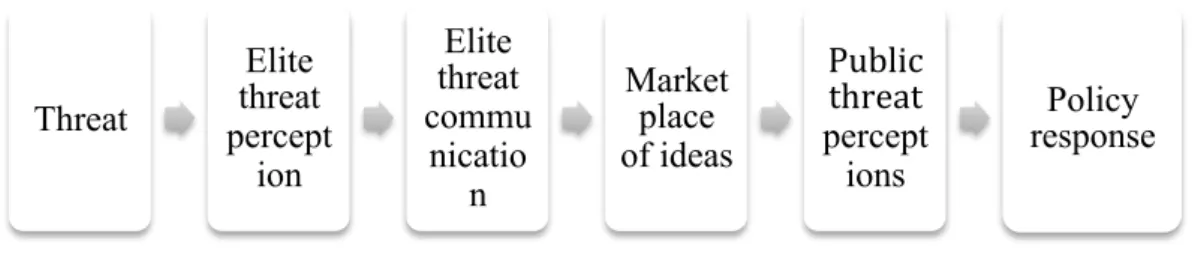
As Cramer and Thrall (2009) suggest, there are different approaches when it comes to the politics of fear: “realist, psychological, domestic political and constructivist” (p. 2), and each explain the threat inflation and the features of stages differently.
Figure 1.2 A Simple Model of Threat Inflation
Source: Reprinted from American Foreign Policy and the Politics of Fear (p. 3), by Cramer and Thrall (2009), Oxon: Routledge. Copyright (2009) by Routledge. Reprinted with permission.
Some examples of psychological approach have been explained in the section 1.3., “Political Consequences of Fear According to Psychological
Threat Elite threat percept ion Elite threat commu nicatio n Market place of ideas Public threat percept ions Policy response
Approach”. In addition, Cramer and Thrall (2009) suggest that it is hard to change what people think and when there is a disruptive event people react according to their strict codes (p. 5). Domestic political approach is basically what the researchers in the “The Politics of Fear” section suggest, that the threat inflation is a product of political manipulation (Cramer & Thrall, 2009, p. 7). However Cramer and Thrall (2009) also add that there is a minority of researchers who believe inflation of threats is actually necessary to produce awareness in citizens (p. 7). Realist approach suggests that going through every possibility and acting in accordance to it, is what leaders do when things get vague in disruptive events which sometimes induce misguided decisions (Cramer & Thrall, 2009, p. 4). Finally, constructive approach focuses on the identity factor. As Cramer and Thrall (2009) suggest:
Constructivist theories are a form of social-psychological argument and as such, have much in common with psychological theories. Constructivists argue that people’s unconscious categorization of self and other plays a critical role in threat perception, much like a cognitive bias. Likewise, constructivists also acknowledge the power of ideas to influence perception even in the face of contrary facts. (p. 10)
Thrall (2009) rejects the opinion that if people had been informed well about the truth after 9/11, things would have been different. Contrarily, Thrall (2009) suggests that even when there is information, whether people find it important or not relies in their values (p. 177). What’s more, values determine what citizens advocate as a policy in accordance to this information (p. 178). In addition, Thrall (2009) discusses the identity and partisanship factor and argues that Bush wasn’t able to actually persuade the Democrats yet the Republicans continue believing him even after his statements turned out to be false (p. 187). What Thrall (2009) basically suggests is what is true is irrelevant in people’s perceptions of threat.
For this research a constructivist approach was chosen to gain a detailed understanding of the results. One advantage of the constructivist approach is that it avoids the inadequacies of other approaches. As psychological approaches focus
on people’s mental processes and consider factors such as one’s proximity to the terror attack, it is not possible to have enough background information from a study conducted solely on texts. Realist approaches traditionally focus on leaders’ reasons of using the threat inflation, which is not the object of this study. This study is to understand how citizens construct threats. Domestic political approach gives unnecessary attention to the leaders and the media that it portrays a picture of citizens that are not independent in their decisions. Another advantage of the constructivist approach is the fact that it focuses on identity, national identity, and values of the individuals. The identity politics, which has brought polarization in the country, is discussed in the section 2.1. In an atmosphere like Turkey where identity, partisanship, and religious differences take a significant role, applying the constructivist approach is more valid than other approaches. Constructivist approach would give the information that whether people’s perceptions of threat are according to their identity or their support for the government or opposition parties has a role in what they construct.
What has been suggested in previous sections on the politics of fear is mostly what is accepted as the war on terror narrative in the literature: social control, constructing the other, security, the idea that people are under constant threat. There are numerous studies on the war on terror narrative and almost all of them are addressing to the same issues. For their research, De Castella and McGarthy (2013) define the present themes in the literature and suggest a complete picture of the war on terror narrative with five themes (p. 87-90). First one is the construction of the “us” versus “them” that also attributes opposing qualities to these sides (De Castella & McGarthy, 2013, p. 87). Second one is suggesting that these attacks are actually a crime against what that society has been built on, such as particular “values” that the terrorists like to wipe out (De Castella & McGarthy, 2013, p. 88). Authors use the word “Western” in defining these values (De Castella & McGarthy, 2013, p. 88). Third one is not giving clear information, and advocating for the intelligence services to operate covertly which inhibits people to have a good judgment about what is actually going on (De Castella & McGarthy, 2013, p. 88). Additionally, any action that has a possibility of inhibiting the